




Abstract
The reasonable dewatering rate in the single-phase water flow plays an essential role in pressure propagation and coal-bed methane production. However, current fluid velocity sensitivity experiments cannot provide an optimum dewatering rate for field coal-bed methane production. This study proposes a new method to optimize the dewatering rate for coal-bed methane wells by assuming the investigation distance reaches the well boundary when the bottom hole pressure declines to the critical desorption pressure. The effect of the stress sensitivity and fluid velocity sensitivity on pressure propagation was first simulated with COMSOL Multiphysics software. The results showed that the expansion area considering the stress sensitivity is shorter than that neglecting the stress sensitivity when the bottom hole pressure reached to the critical desorption pressure at 200 days. The expansion area with high dewatering rate will be shorter about 35 m than that with low dewatering rate at 200 days. The relationship between the maximum investigation distance and required time was established to optimize the dewatering rate by combining the pressure profile considering the influence of stress sensitivity with material balance equation. The new model indicates that the initial permeability, porosity, and cleat compressibility have an important effect on investigation distance. The simulation of these parameters’ sensitivity suggests that the bigger the ratio of initial permeability and porosity, the longer the investigation distance is, and the smaller the cleat compressibility is, the longer the expansion area is. According to this model, we need to take more than 600 days at 0.58 m/d constant dewatering rate to reach the maximum investigation distance of 0.67 mD initial permeability. This work can be conducive to choose reasonable dewatering rate in single-phase water flow for coal-bed methane well production.
Keywords
Introduction
The development of coal-bed methane (CBM) has supplied massive energy resource for the world and has successfully raised much attention in recent years (Cai et al., 2011, 2014, 2018; Moore, 2012). Although the total CBM production in China is gradually increasing in these years, there are still many CBM wells having low gas production. One of the most important factors can be attributed to the dewatering rate. Although the lower dewatering rate will cause a little damage on permeability and porosity of coal reservoir, uneconomical exploitation times are needed, while higher dewatering rate will lead to huge harm on coal reservoir and further reduce the productivity (Huang et al., 2015). Therefore, dewatering rate optimization is so important for the CBM production.
To improve the production of these CBM wells, previous researchers have investigated the mechanism of influencing the CBM production from the perspective of permeability and porosity variation, which mainly includes stress sensitivity and matrix shrinkage effect (Chen et al., 2015; Jasinge et al., 2011; Li et al., 2013). The cause of the two effects can be attributed to dewatering for CBM wells to produce the adsorbed gas. Therefore, the dewatering rate played an essential effect on CBM production by influencing the drainage area and desorption area (Sun et al., 2019b; Xu et al., 2013).
To simulate the effect of dewatering rate on production, the velocity sensitivity experiments have been conducted (Liu et al., 2018a; Tao et al., 2017a, 2017b). These experiments indicated that the higher the fluid velocity is, the higher the permeability and porosity damage is, which will largely decrease the CBM production. The damage caused by higher fluid velocity was considered as coal fines generation and migration, which further blocked the seepage path and hindered the water and gas flow (Bai et al., 2017; Shi et al., 2018). The higher dewatering rate also caused the reservoir pressure near the wellbore declining rapidly and reaching the desorption pressure early, which will reduce the drainage area expansion because of capillary force and gas–water interfacial tension (Clarkson et al., 2011; Shen et al., 2019). The critical velocity was regarded as the optimum velocity because the permeability would not decrease under this velocity by controlling the effective stress constant at different flow velocities (Tao et al., 2017b). However, the stress sensitivity happened at the beginning of dewatering and existed in the whole production (Tan et al., 2018). The optimum dewatering rate was hardly obtained from the laboratory. Besides, previous researchers have done a lot of work to make the water drainage reasonable in the field. Han et al. (2016) developed an automation data processing and control system to surveil the reservoir pressure change in real time and adjust the pump to avoid an aggressive production. Gao et al. (2018) investigated the investigation radius and pressure drawdown gradient by deconvolution algorithm and determined the suitable production performance by analyzing the relationship between working fluid level and steady gas production rate. The production properties of interfering CBM wells were analyzed to optimize the geospatial well-pattern and calculate the investigation radius and permeability for a suitable dewatering rate (Thakuria and Mirani, 2019).
According to the above analysis, the reasonable dewatering rate should meet two conditions, i.e. permeability reduction should be relatively less and the drainage area should be enough longer. From this point, some prediction models for drainage area and desorption area expansion have been proposed (Sun et al., 2017, 2019a; Wan et al., 2016). These models require to combine with the actual water production to get the drainage radius, which is not suitable for the dewatering rate optimization in the early single-phase water. Based on the characteristics of pressure propagation, a method was proposed to obtain the optimum dewatering rate for hydraulically fractured CBM well by assuming the investigation distance has reached the well boundary when the reservoir pressure decreases to the critical desorption pressure (CDP) (Xu et al., 2017), but this method neglects the variation of permeability and porosity brought by dewatering. Therefore, there are still many works to do for optimizing the dewatering rate.
In this study, a new model for optimizing dewatering rate was established for without hydraulically fractured well by considering the variation of permeability and porosity. The influence of permeability and porosity variation, and different depressurization rates on the investigation distance in single-phase water flow was simulated with COMSOL Multiphysics software. The key parameters in the new model were investigated, and this model applied to get the optimum dewatering rate was further discussed. This work will provide a new model to choose a reasonable dewatering rate in single-phase water flow for improving the CBM well production.
Governing equations for pressure propagation of CBM well
To optimize the dewatering rate, the characteristics of pressure propagation should be understood clearly. With the beginning of dewatering, the reservoir pressure near the wellbore starts to decline first. Under the pressure difference, the pressure perturbation moves outside from the wellbore and gradually expands with the dewatering like a hopper shown in Figure 1 (Li et al., 2016). When the reservoir pressure near the wellbore declines to the CDP, the adsorbed gas is released and the desorption area begins to extend, while the pressure propagation will be influenced at the gas–water flow stage because of the additional resistance between gas and water such as interfacial tension and capillary pressure. Thus, it was suggested that the investigation distance should reach the well spacing boundary before the adsorbed gas released (Xu et al., 2017). The properties and influencing factors of pressure propagation in transient single-phase water flow need to be simulated based on the governing equation for water flow.
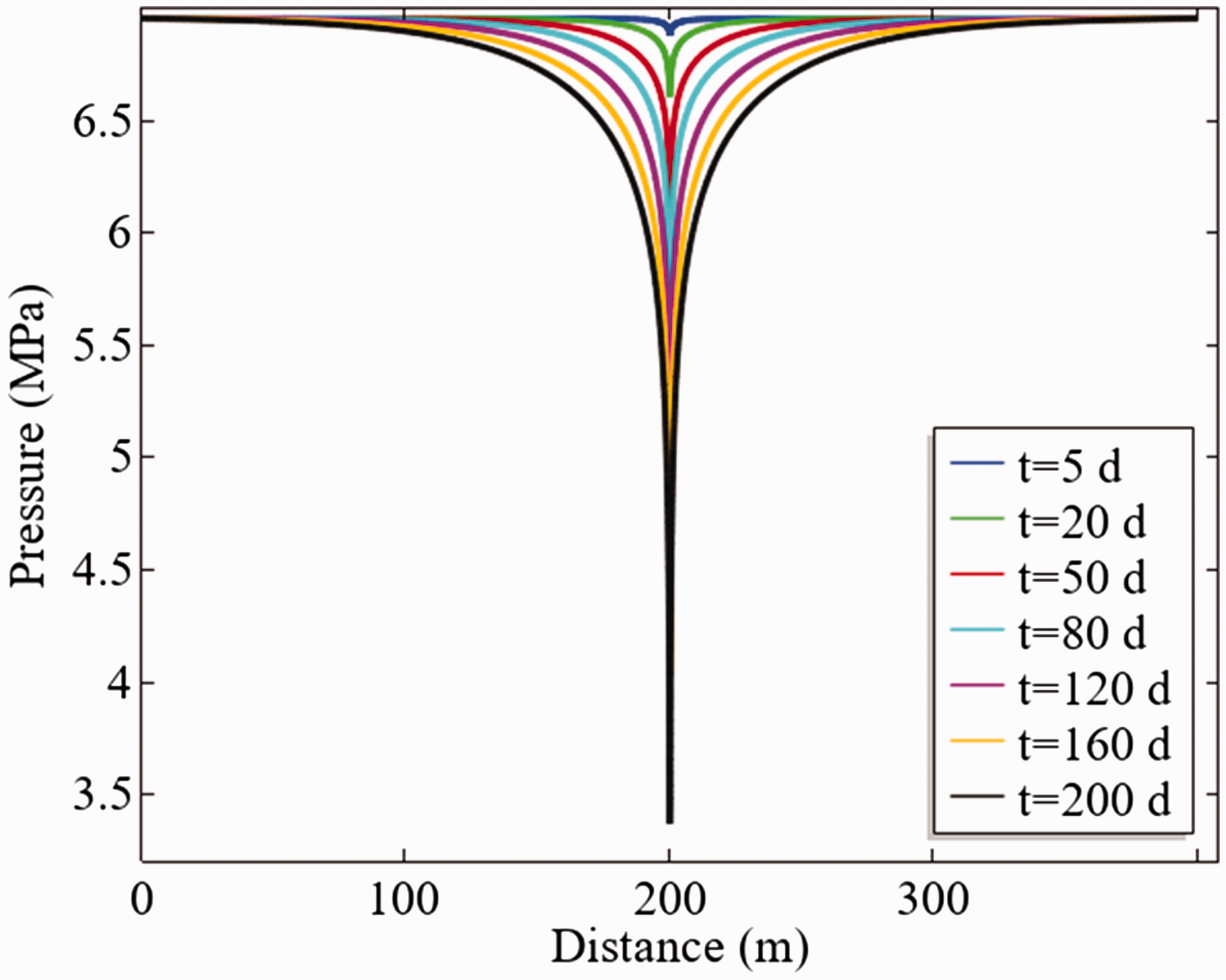
Pressure propagation in single-phase water flow.
Based on the mass balance of the water, the governing equation could be defined as follows



The water density can be considered as the constant value for lower variation with the pressure change (Li et al., 2018). Some researchers (Sun et al., 2017; Xu et al., 2017) also regarded the permeability and porosity as a constant value in the single-phase water flow. However, the effective stress will increase with the fluid pressure decrease, which makes the permeability and porosity of coal reservoir vary dynamically by the following equations in single-phase water flow (Shi and Durucan, 2004)


Therefore, equation (1) can be transformed as follows

Equation (6) can be expressed in polar coordinates system as follows

For equation (7),

Substituting equations (4) and (5) into equation (8), equation (9) can be expressed as follows

Through the above derivation, the features of pressure propagation affected by stress sensitivity will be discussed in the “Results and discussion” section.
Mathematic model of dewatering rate optimization
To maximize the expansion area, economize the production time, and avoid the influence of gas flow on the pressure propagation, it is suggested that the investigation distance should reach the well-spacing boundary when the well bottom-hole pressure (BHP) declines to the CDP. According to this theory, the dewatering rate in single-phase water flow can be calculated based on the relationship between maximum expansion distance and required time as follows (Van Poolen, 1964)


Therefore, the optimum dewatering rate could be calculated by the following equation

The theory of “continuous succession of steady states” was first applied to acquire the pressure profile, which assumes steady-state flow at any dewatering time. The assumptions of this theory are as follows: homogeneous and infinite reservoir, equivalence thickness, isotropic; vertical well locates in the center of reservoir; well produces at constant water rate; water flow in the cleat obeys Darcy’s law, matrix water is irreducible (Xu et al., 2017). Except assuming the permeability and porosity variation, other basic assumptions are same with other researches (Xu et al., 2013; Zhang et al., 2014).
According to equation (9), the equation for steady-state flow can be transferred as follows

Combining the inner boundary condition (r = rw, p = pw) with the outer boundary condition (r = re, p = pe = p0), the pressure profile can be expressed as follows

Substituting equation (14) into equations (4) and (5), the porosity and permeability profile at steady-state flow can be obtained as follows


Based on equations (15) and (16), the distribution of permeability and porosity is depicted in Figure 2. The result proves the variation of permeability and porosity at different distance and different BHPs, which emphasizes the importance of stress sensitivity effect when determining the optimum dewatering rate.
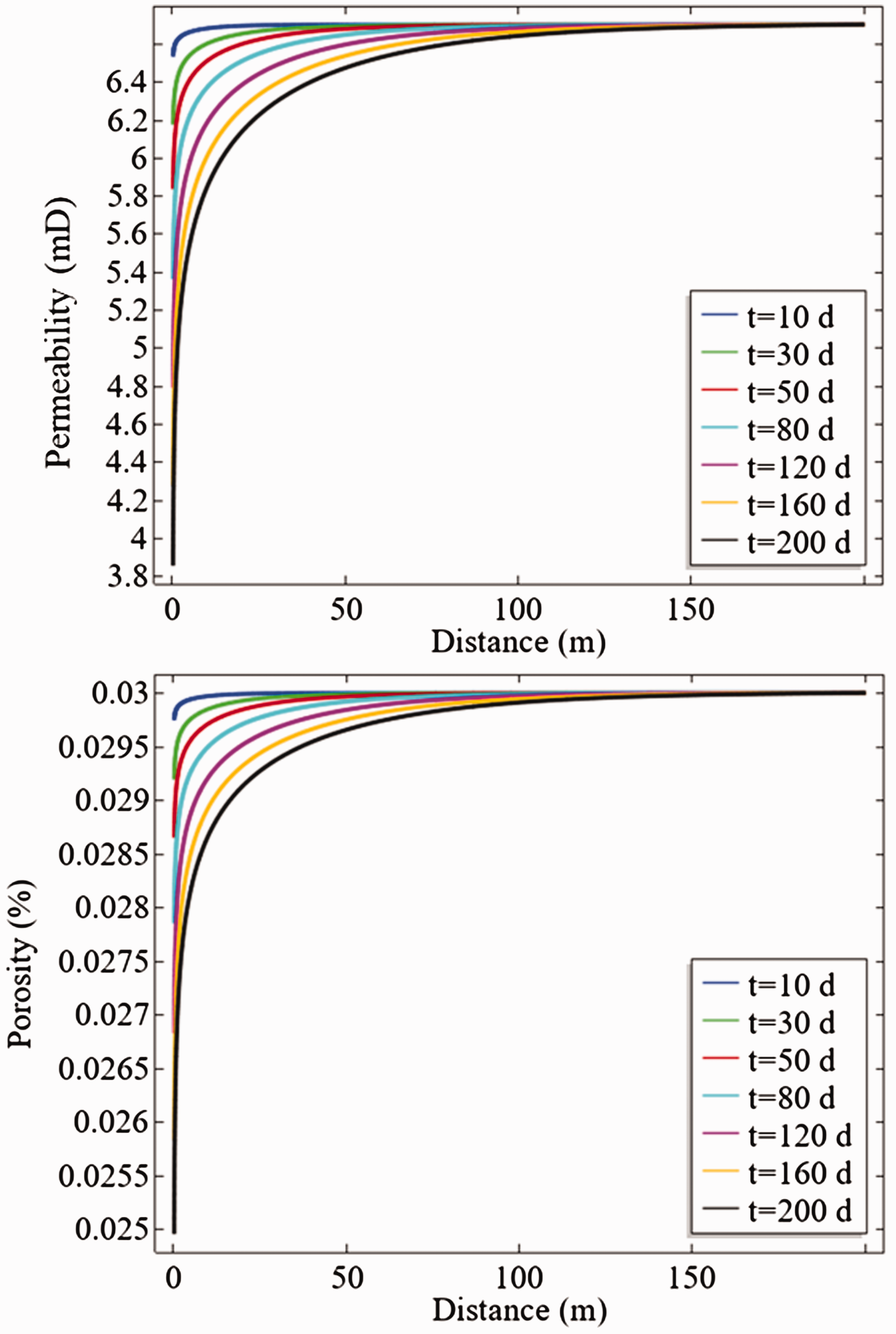
Distribution of permeability and porosity with dewatering.
The water production rate based on Darcy’s law can be given as follows




Substituting equation (14) into equation (17), the water production rate can be transformed

The cumulative water production in single-phase water flow can be described in the following formula according to the material balance equation


Combined with equation (21), equation (22) can be changed into

The cumulative water production in single-phase water flow can also be expressed as follows

When the water production rate is constant, equation (25) can be written as follows

Combining equations (24) and (26), the relationship between expansion distance and required time can be obtained as follows

As seen in equations (18), (23), and (27), the initial permeability, initial porosity, permeability and porosity variation, and cleat compressibility have main effects on the pressure propagation.
Results and discussion
Effect of stress sensitivity on pressure propagation
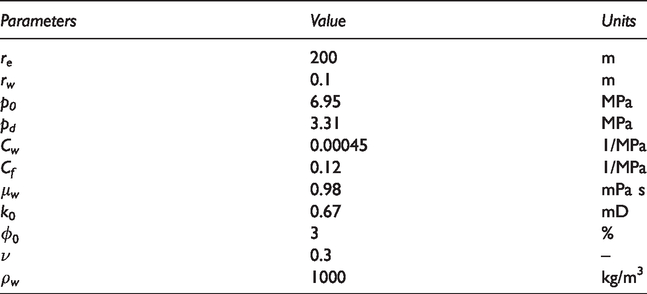
The basic simulation parameters of the reservoir are listed in Table 1. These parameter values are set according to the data from well testing in Zhengzhuang Block in China. The inner boundary condition is controlled by BHP which varies with the dewatering and decreases to the CDP with a constant depressurization rate of 0.0182 MPa/d. The outer boundary is set as constant initial reservoir pressure and the maximum investigation distance is set as 200 m.
Simulation parameters for pressure propagation.
The comparison of pressure propagation on two-dimensional plane under overlooking the stress sensitivity and considering the stress sensitivity is shown in Figure 3. Comparing Figure 3(a) with Figure 3(b), the difference of pressure disturbance area is not obvious at the beginning of dewatering because the investigation distance is so short that the permeability and porosity have a little change. When the BHP reached to the CDP at 200 days, the expansion of pressure propagation area neglecting the stress sensitivity is larger than that considering the stress sensitivity with the comparison of Figure 3(c) with Figure 3(d). This is because the decrease of permeability and porosity will slow down the expansion of pressure propagation (Liu et al., 2018b). To illustrate the influence of permeability and porosity change on pressure propagation more clearly, the comparison under different BHPs is depicted in Figure 4. The curve representing varied permeability and porosity is always above that representing constant permeability and porosity, reflecting the reservoir pressure affected permeability and porosity variation by at the same distance is higher. This phenomenon makes pressure propagation difficult and increases the drainage times. In addition, the effect of the permeability and porosity variation on the pressure perturbation is obvious with the decrease of the BHP. (Figure 4). Therefore, the impact of dewatering rate on pressure expansion should be discussed under consideration of stress sensitivity.
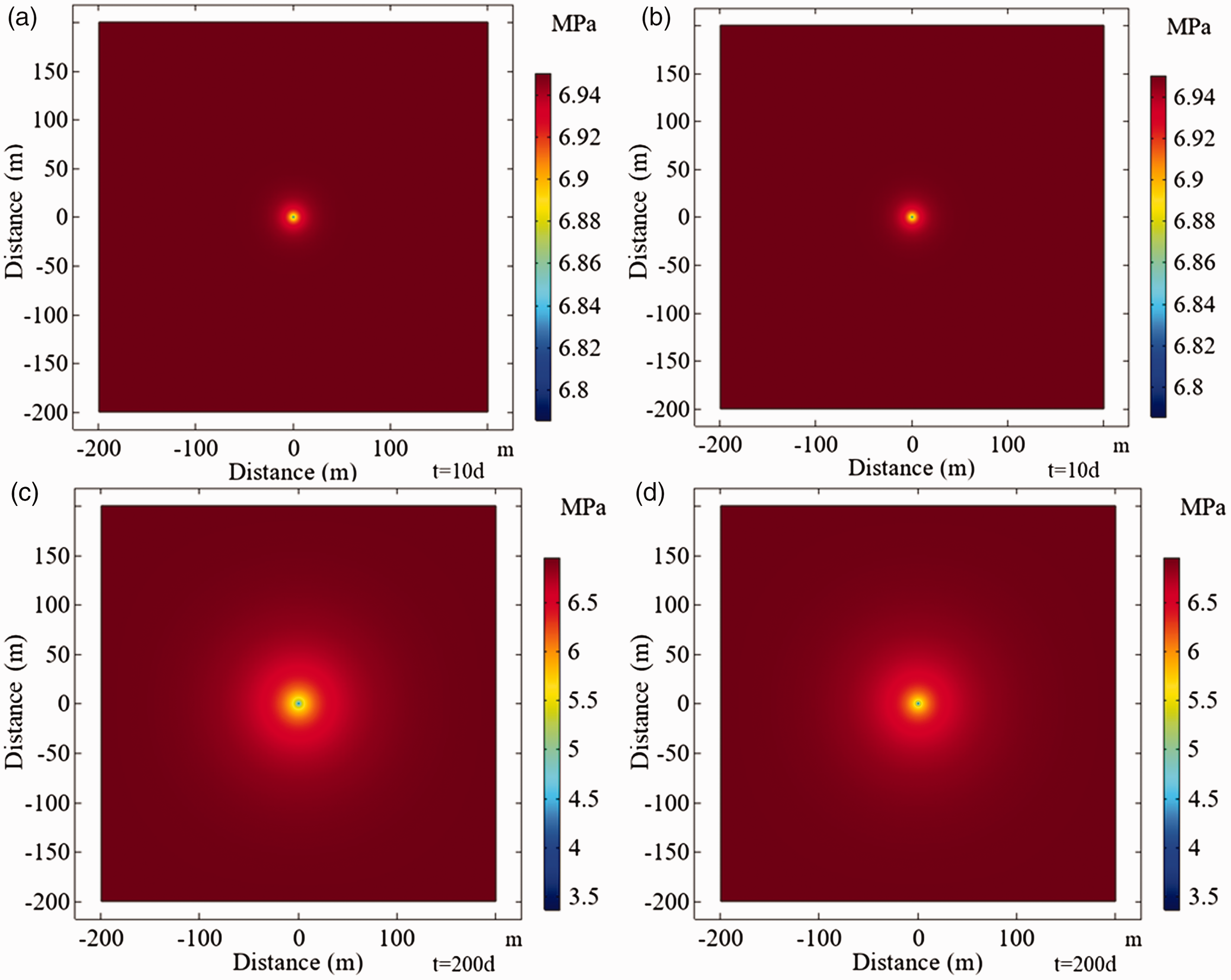
Comparison of pressure propagation on two-dimensional plane ((a) and (c)—neglecting the stress sensitivity; (b) and (d)—considering the stress sensitivity).
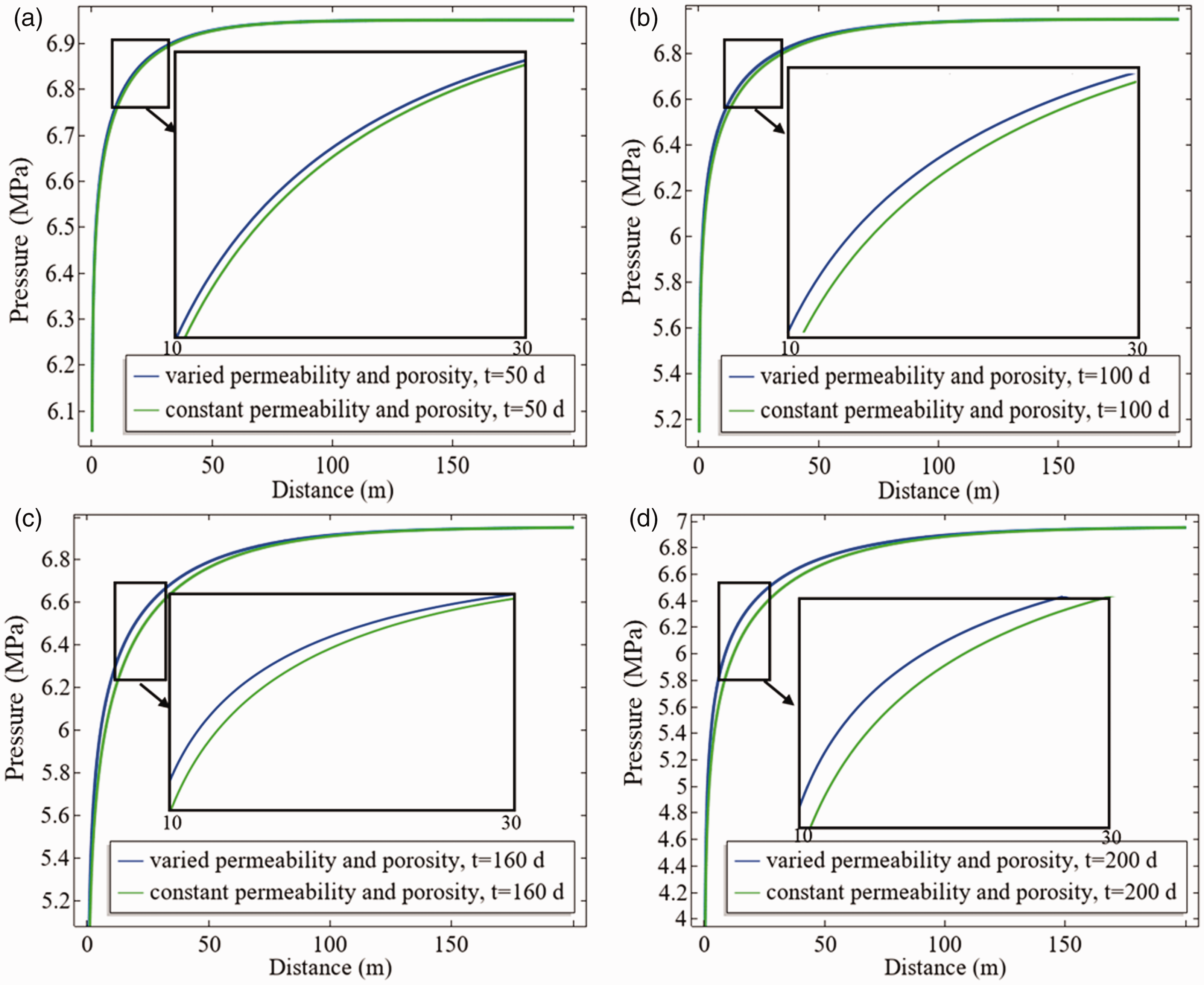
Effect of stress sensitivity on pressure propagation under different BHPs.
Effect of dewatering rate on pressure propagation
Before optimizing the dewatering rate, the effect of different dewatering rates on pressure expansion is simulated. Another constant depressurization rate is set as 0.0728 MPa/d which requires 50 days to make the BHP decrease to CDP. Other basic parameters are kept the same with 0.0182 MPa/d constant depressurization rate. The simulation result is given in Figure 5. Comparing Figure 5(a) and (c), the investigation area of low dewatering rate is larger than that of high dewatering rate when the BHP declines to the CDP. But the time of low dewatering rate is longer than that of high dewatering rate, which is similar to the previous idea (Xu et al., 2017). To distinguish the investigation distance under different days, we decide the investigation when the reservoir pressure is less than 0.99 times the initial reservoir pressure (p ≤ 0.99×p0). The result is shown in Figure 5(b) and (d) that the investigation distance enlarges with the decrease of the BHP. But the investigation distance does not reach the well boundary for both of the depressurization rates, which further proves the importance of dewatering rate optimization.
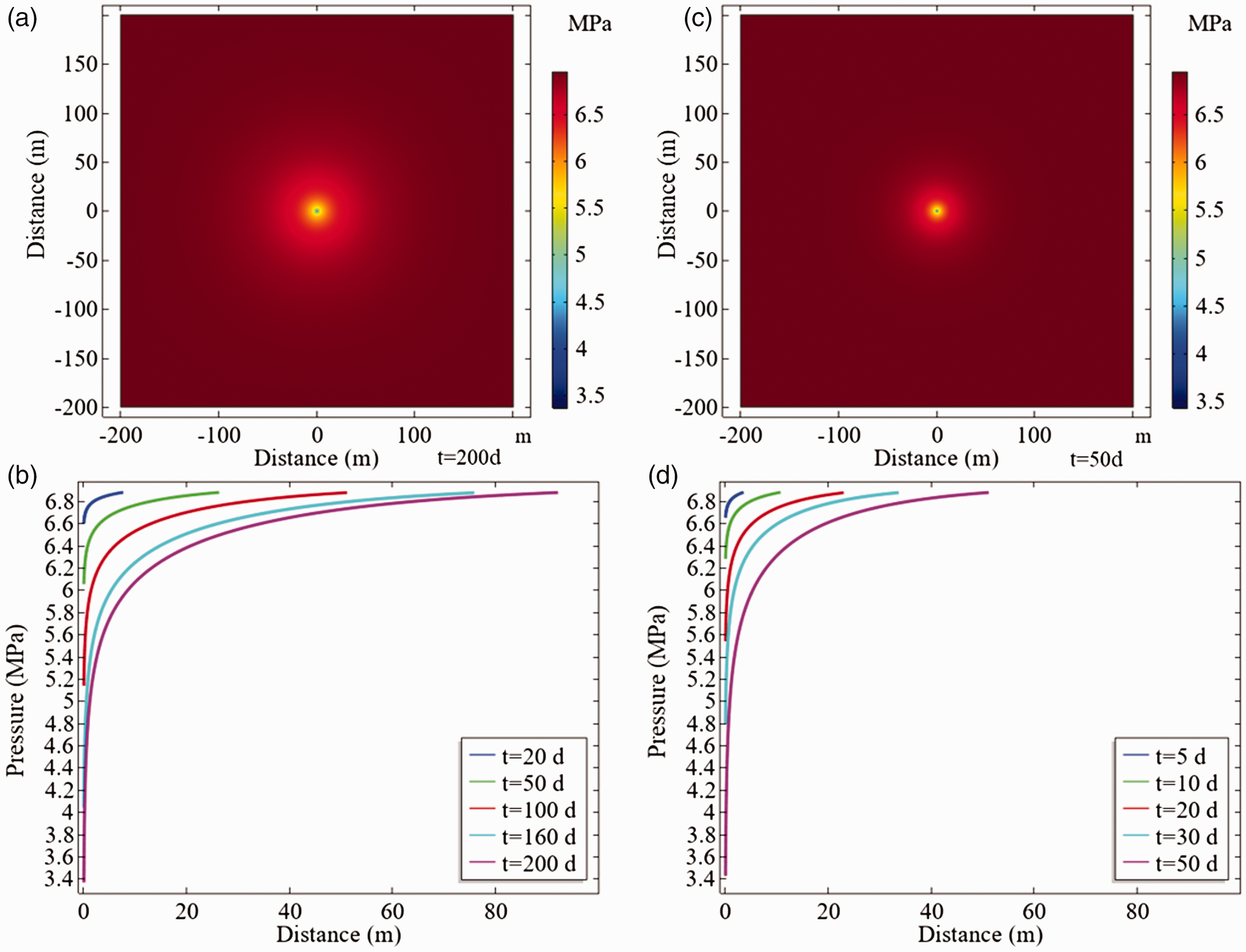
Effect of dewatering rate on pressure propagation ((a) and (b)—low depressurization rate; (c) and (d)—high depressurization rate).
Parameters’ sensitivity analysis
Considering the permeability and porosity variation with dewatering, the influence of parameters including k0,
Values of parameters’ sensitivity analysis.

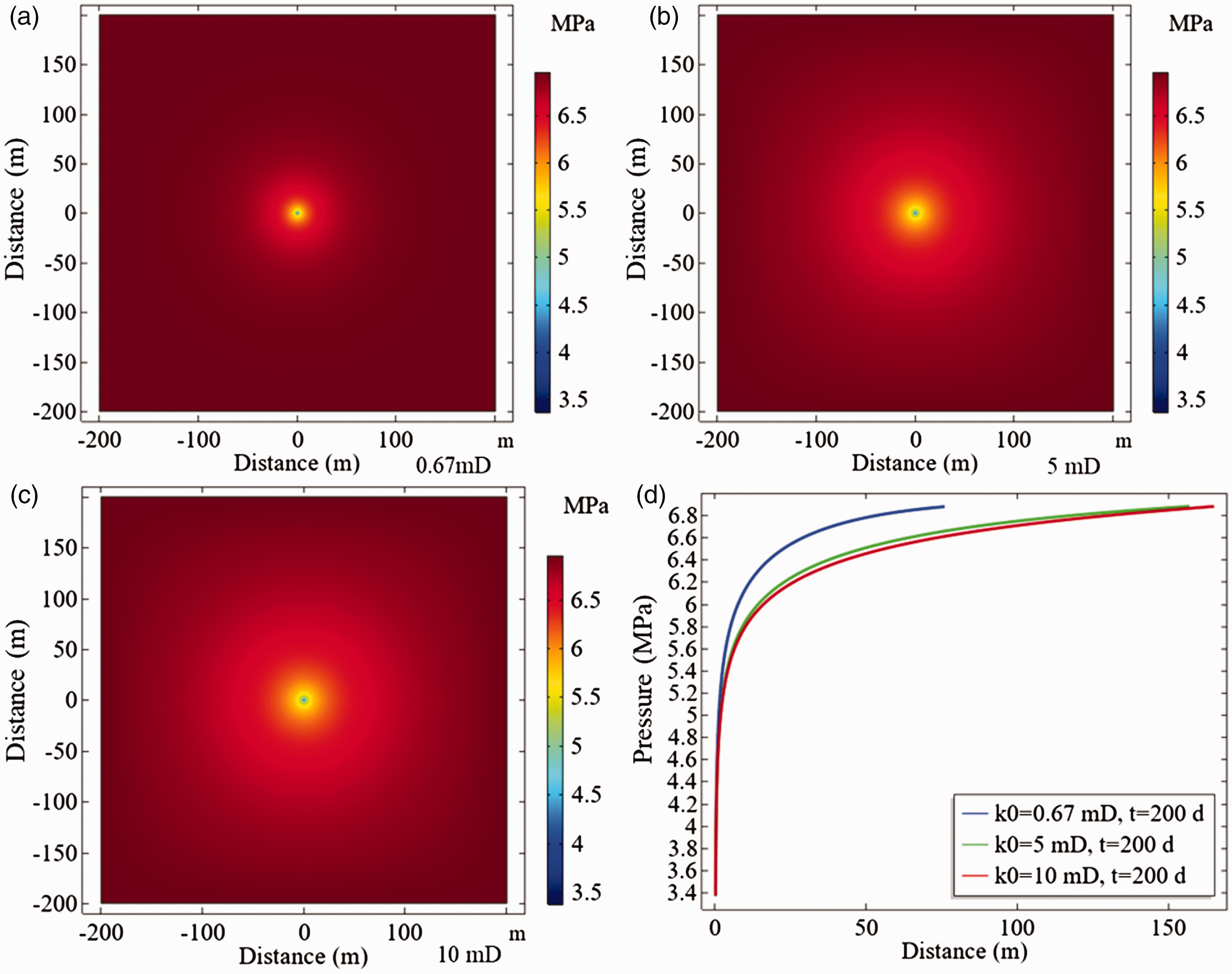
Effect of initial permeability on pressure propagation.
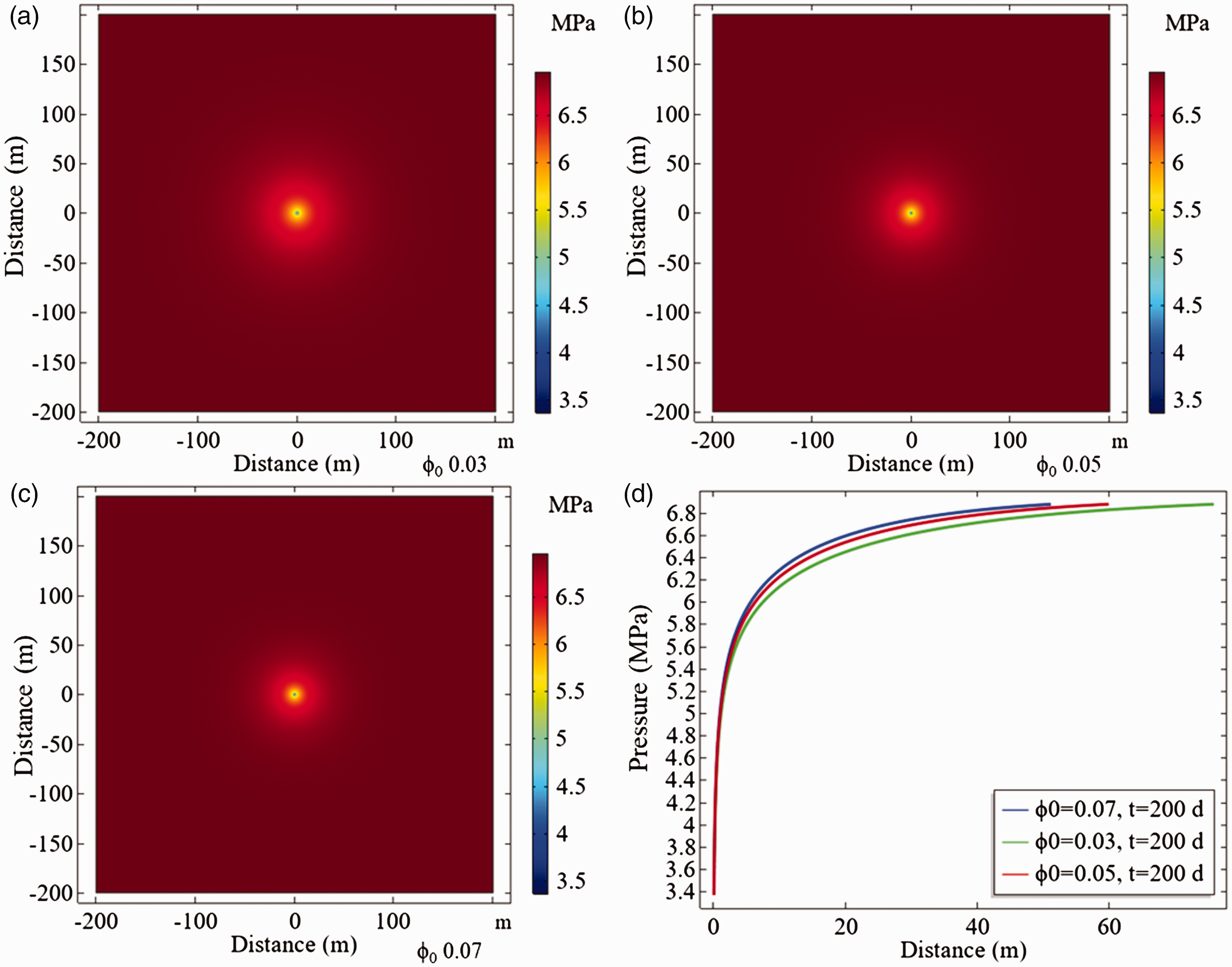
Effect of initial porosity on pressure propagation.
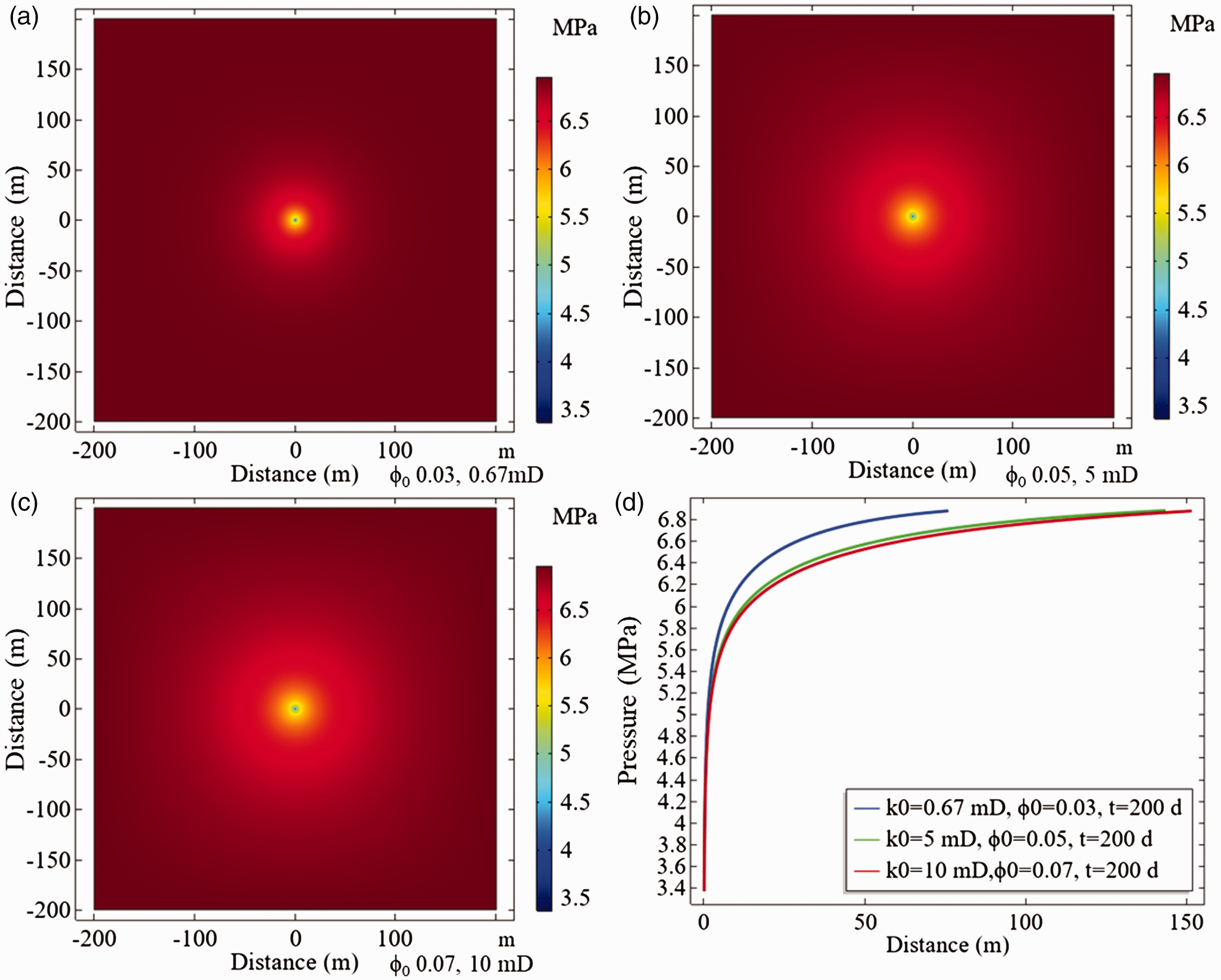
Effect of the ratio of initial permeability and porosity on pressure propagation.
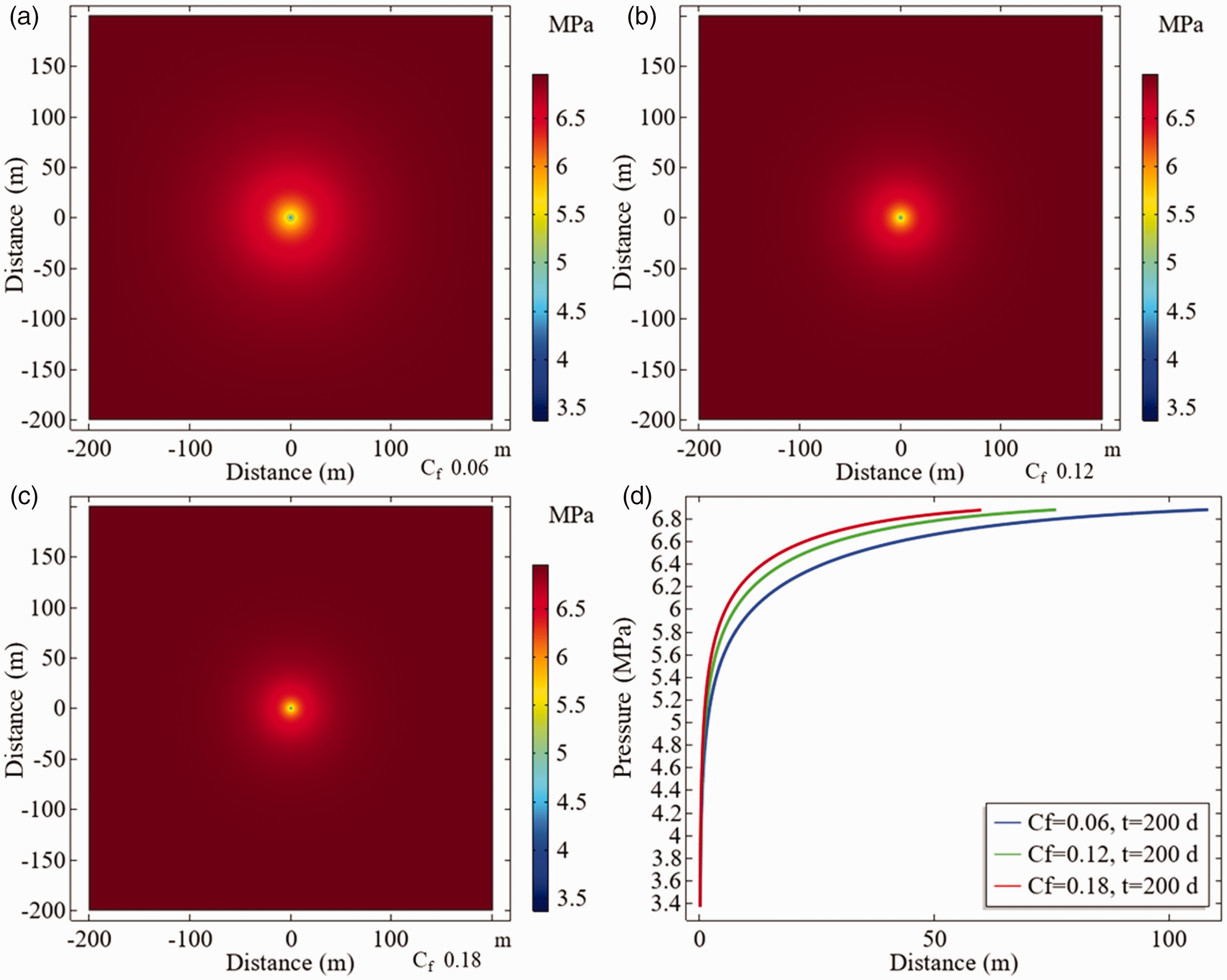
Effect of cleat compressibility on pressure propagation.
Application of dewatering rate optimization method
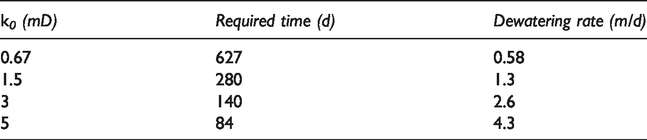
Based on equation (30), the optimum dewatering rate can be obtained when the boundary distance is given, which is always determined by the well spacing. According to the basic parameters given in Table 1, the required time to reach the maximum investigation distance at different initial permeabilities is shown in Figure 10 and the optimum dewatering rate is given in Table 3. From Figure 10, the required time to reach the maximum investigation distance will be shorter with the increase of permeability. But if the initial permeability is lower than 0.67 mD, it will take more than 600 days at 0.58 m/d constant dewatering rate to reach the 200 m investigation distance, which will make the production uneconomical. The permeability of most coal reservoirs in China is lower than 1 mD (Ju et al., 2018). If we take the optimum dewatering rate, we will spend lots of time to make gas production higher. But if the dewatering rate is over the optimum dewatering rate, the reservoir damage will be larger which is bad for gas production. That is why most CBM wells without hydro-fracture in China have low gas production. The higher permeability will shorten the required time to reach the maximum investigation distance (Figure 10), which proves the importance of hydro-fracture to improve the original permeability and take the optimum dewatering rate (Xu et al., 2017).
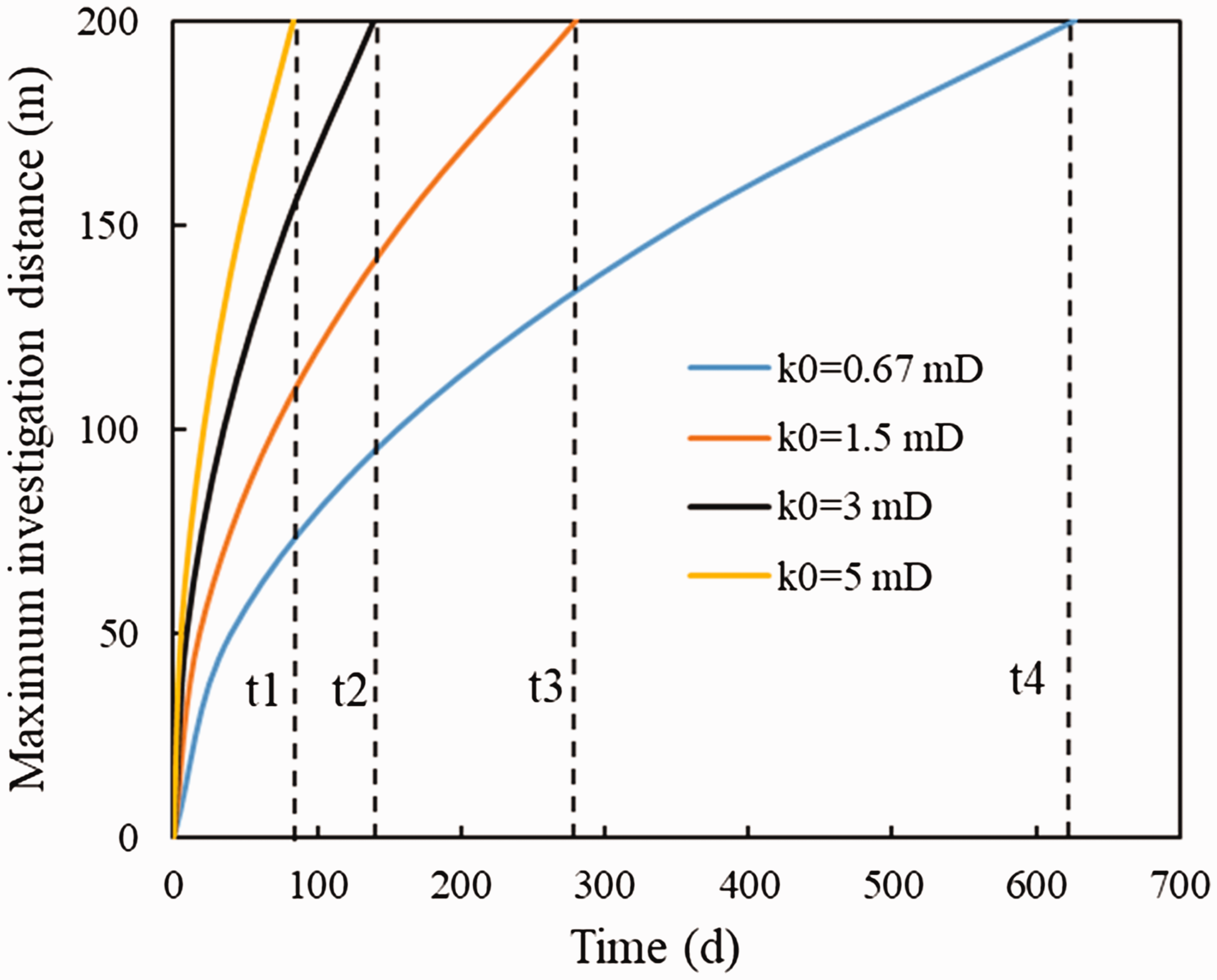
Relation between maximum investigation and required time.
Determination of optimum dewatering rate.
After that, the deviation of dewatering rate optimization is applied for CBM wells without hydro-fracture and is suitable for the higher initial permeability of CBM wells. Although the limitation of the study is not suited to the coal reservoir with lower permeability, it proves the importance of hydro-fracture and could be conductive to optimize dewatering rate model for hydraulically fractured CBM wells. We will continue our research by considering the effect of fracture length of hydraulic fracture on pressure propagation, simulating the characteristics of pressure propagation and establishing the reasonable dewatering rate model for hydraulically fractured CBM wells.
Conclusions
This paper proposes a new mathematic method to determine the reasonable dewatering rate for CBM wells. The effect of stress sensitivity, velocity sensitivity, and essential parameters on pressure propagation is simulated with COMSOL Multiphysics software. The main achievements are included as follows:
The area of pressure propagation will become shorter when considering the variation of permeability and porosity affected by stress sensitivity. The effect of stress sensitivity on pressure propagation will become more obvious with the decrease of BHP. The initial permeability, porosity, and cleat compressibility have a vital influence on the investigation distance. The bigger the ratio of initial permeability and porosity is, the longer the investigation distance is. The smaller the cleat compressibility is, the longer the investigation is. The relationship between the maximum investigation distance and required time is established to determine the optimum dewatering rate. This model is suitable for the higher initial permeability of CBM wells without hydro-fracture. The current research proves the importance of hydro-fracture and can be conductive to optimize the model of dewatering rate for hydraulic fracture well. The simulation of pressure propagation and dewatering rate optimization for hydraulic fracture well will be further investigated.
Footnotes
Declaration of conflicting interests
The author(s) declared no potential conflicts of interest with respect to the research, authorship, and/or publication of this article.
Funding
The author(s) disclosed receipt of the following financial support for the research, authorship, and/or publication of this article: This research was funded by the National Major Science and Technology Project (Grant No. 2017ZX05064), Major Special Projects of PetroChina (Grant No. 2017E-1404), and the National Natural Science Fund of China (Grant No. 41904118).
