




Abstract
In China, rapid urbanization brought about the problems of increased building energy consumption and decreased area of green space as well as poor air quality and heat island effect. Building envelope integrated green plants (BIGP), which is also called as vertical greening, is regarded as the potential solution to the energy and environmental issues. This article verifies and analyzes the energy saving potential of BIGP in China's hot summer and cold winter regions through comparative experiments between a vertical greening room and a reference room. The winter time experiment was carried out from December 2017 to January 2018, and the summer time experiment was from July to August 2018. During winter, the heat flux density of the exterior wall is reduced by 3.11 W/m2 with BIGP, and the hourly power consumption of the reference room is 1.22 times that of the room with BIGP. The energy saving rate of BIGP is approximately 18%. During summer, the heat flux density of the exterior wall of the reference room is 4.15 W/m2 larger than that of the vertical green room and the hourly power consumption is 1.33 times that of the vertical greening room. The energy saving rate of BIGP is about 25%.
Keywords
Introduction
China has experienced increased building energy consumption, decreased area of green space due to rapid urbanization. Furthermore, problems such as poor air quality and heat island effect have become more prominent. The total building energy consumption in China in 2015 reached 857 million tons of standard coal, accounting for 19.93% of the total national energy consumption. Public buildings alone consumed 292 million tons of standard coal, accounting for 34% in the building sector (Hou, 2017). Heating, ventilation, and air conditioning systems consume approximately 50–70% of the building energy to maintain comfortable indoor environment for occupants due to the poor insulation of building envelop and the inefficiency of building service systems (Huang et al., 2017).
Green space plays an important role in solving the shrinking urban green space problem. Urban vegetation reduces the energy absorbed by the solid surface by shielding solar radiation, and directly cools down the air around vegetation by evapotranspiration, which helps to alleviate the heat island effect (Alexandri and Jones, 2008; Bolton et al., 2014; Djedjig et al., 2015; Mathew et al., 2017). Green area has a great impact on the physical and mental health of urban residents. Green rate, the percentage of the green area versus the total area in sight, of over 25% can help to protect the human eyesight (Deng and Wang, 2002). The increase of urban green space will mitigate the adverse impact of urbanization and effectively control carbon emissions (International Energy Agency, 2012).
Recently, a new type of greening method is beginning to be popular, which makes full use of the structural surface of the building, including the facade, balcony, pillar, roof, to plant green vegetation. This method is called vertical greening or BIGP. It can solve many problems brought about by urbanization. Green enclosures can provide environmental and ecological benefits in densely populated urban areas, improve air quality, mitigate urban heat island (UHI) effects, and reduce storm water runoff (Ascione et al., 2013; Dunnett and Kingsbury, 2008; Hashemi et al., 2015; Wong et al., 2010). In addition, vertical greening can provide additional insulation to the building, block solar radiation, and reduce the wind speed at the building surface, which helps to reduce building energy consumption (Getter and Rowe, 2006; Perini and Rosasco, 2016).
In 1988, Hoyano (1988) analyzed how vegetation can affect indoor and outdoor microclimates and improve the thermal environment from the perspective of climatology. Akbari et al. (1997) have found through experiments that vertical greening can reduce the cooling load by 30%, equivalent to 3.6–4.8 kWh per day, and reduce the peak load by 0.6–0.8 kW. Stec et al. (2005) found that if plants are used instead of blinds of double-layer curtain walls, a 20% reduction of the air conditioning load can be achieved. In the study of the thermal performance of green walls, Cheng et al. (2010) found that vertical greening can reduce the heat flux entering the room and reduce the indoor temperature. Compared with the conventional concrete wall, the energy consumption of the air conditioning system is greatly reduced. Di and Wang (1999) found that in the hot summer, thick ivy can reduce the peak load of buildings by about 28%. Jiang and Tang (2017) conducted a thermal analysis on extensive green roofs (GRs) combined with night ventilation and found that combining GRs and night ventilation can significantly reduce the indoor air temperature and heat gains on sunny day in summer.
Some of the researches focused on the energy saving potential of Vertical Greenery Systems (VGS). For example, Coma et al. (2017) studied the energy saving potential for green wall and double-skin green facade (DSGF) in Puigverd de Lleida, Spain. The cooling experiment was carried out in July for two days and heating experiment was conducted in January for three days. Cooling energy savings of 58.9% and 33.8% was found for green wall and DSGF in comparison to the reference system without vertical greening. No extra energy consumption was observed during heating season. Perini et al. (2017) performed field monitoring on an office building configured with a green facade on the south wall in Genoa, Italy. Theoretical energy saving potential of 26% for summer season as calculated based on the monitoring on the outdoor and surface temperatures. Li et al. (2019) investigated adding partial horizontal greening (GR) and vertical greening in the courtyard area to existing public buildings in Ningbo, China. Their simulation results show reduction of cooling load and heating load of the buildings by 8.8% and 1.85%, respectively. Savings of around 28% for both cooling and heating was expected based on smart meter readings. Dahanayake and Chow (2017) conducted energy simulation of VGS and found VGS can help to reduce exterior surface temperature by up to 26 °C in hot summer and cooling energy consumption by 30% for warm temperature climate and also pointed out that it may be disadvantageous during winter periods. Pan and Chu (2016) evaluated the energy saving potential of a VGS in a public housing estate in Hong Kong. It was concluded that the VGS saved as much as 16% of the electricity consumed for air-conditioning in hot summer season. Wong and Baldwin (2016) investigated the energy saving potential of VGS on high-rise residential buildings in Hong Kong and concluded 76% savings in the electricity consumption by air-conditioning system.
Others evaluate the effect of the VGS on the temperature and heat transmission of the building. For example, Yang et al. (2018) investigated the cooling performance of DSGF of an administrative building in a university campus and found temperature drop of 0.6– 1.1°C with maximum reduction of 1.9–2.7°C in operative temperature. Sudimac et al. (2019) evaluated the thermal performance of a vegetation wall in Belgrade climate, and it was found that the external wall surface temperature was decreased by 0.56–14.3°C. Afshari (2017) developed a dynamic nonlinear lumped parameter thermal network model to evaluate the implementation of VGS on the cooling demand of buildings and UHI in UAE. Cooling load reduction of 5 − 8% and urban air temperature drop of about 0.7 − 0.9°C was found. Wong et al. (2009) performed simulation on the effect of VGS on the temperature and energy consumption of buildings. The VGS was found to effectively lower the mean radiant temperature of a glass facade building and envelope thermal transfer value. Pan et al. (2018) investigated the effect of orientation of the VGS on the thermal performance of the test rooms in Hong Kong. The highest reduction on ambient temperature of 10.1°C was showed on the north-facing VGS and the west-facing VGS has the highest reduction on the wall temperature of 6.1°C.
Very few researches were conducted on applying both green walls and roofs to the building, especially in the hot summer and cold winter regions. Meanwhile, the effect of green envelope on the thermal performance of the buildings is highly affected by the weather conditions as well as the type of vegetation plants, which results in controversial conclusions from previous studies. In order to investigate the feasibility and its energy saving potential of BIGP in the hot summer and cold winter areas in China, comparative experiments are carried out in this article. The indoor temperature, relative humidity, internal and external wall surface temperatures, and electricity demand of a room with VGS and a reference room without VGS are monitored. The set-point temperatures of both rooms are held at the same value. The energy saving of BIGP in winter and summer is analyzed, and the applicability of VGS in hot summer and cold winter areas is discussed.
Methodology and materials
To experimentally investigate the influence of VGS on building energy consumption, two experimental rooms, one with a DSGF system and GR (i.e., VG Room) and one without BIGP (i.e., Ref Room), were constructed on the roof of an office building at Hunan University of Science and Technology (Xing et al., 2019). Figure 1 shows the photograph of experimental rooms. The two rooms have the same size with a length of 3 m, width of 2.5 m, and height of 3 m. The orientations of the two experimental rooms are the same. On the south and north walls of each room, there is a 0.9 × 1.2 m single glass window without shading device. A 0.9 × 2.0 m thermally insulating door is located on the north wall of experimental room. A light wall with a sandwich structure was adopted. The wall has an overall heat transfer coefficient of approximately 1.09 W/(m2 K). The selected plant for the vertical wall and roof is Sedum linear and Schefflera, respectively. The two plants selected are evergreen with luxuriant foliage, which can withstand cold, drought, and high temperature weather.
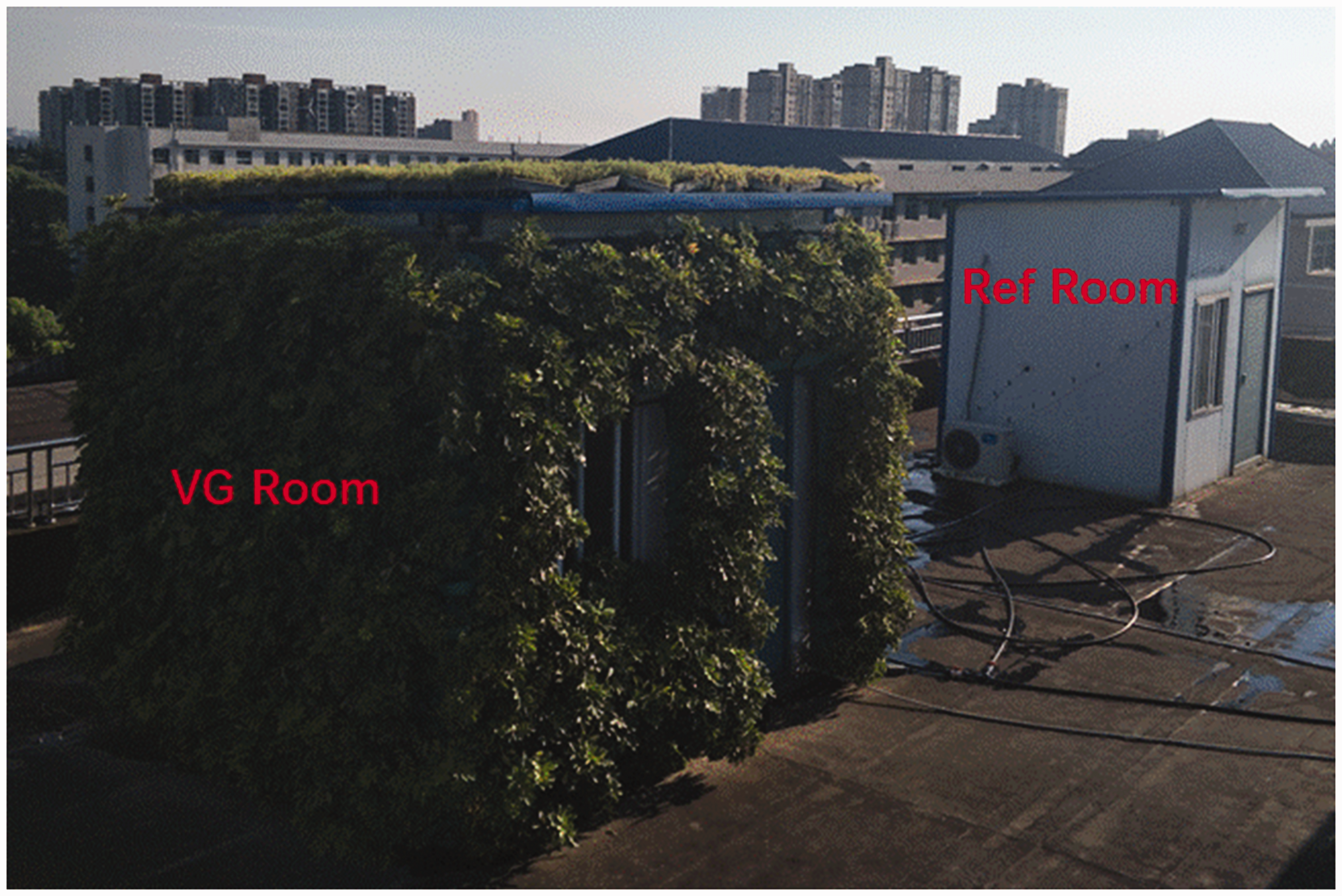
Photograph of the experimental rooms.
The experiment was carried out in Xiangtan, Huanan Province with hot summer and cold winter climatic condition. Figure 2 shows the typical yearly meteorological data of Xiangtan, including hourly outdoor air temperature (Figure 2(a)) and relative humidity (Figure 2(b)). Summer in Xiangtan spans from June to September and winter lasts from December to February of the next year. According to the typical yearly meteorological data of Xiangtan, the maximum and average outdoor air temperatures are respectively 38.2°C and 27.2°C during the summer and the minimum and average outdoor air temperature are respectively −3.2°C and 6.5°C during the winter. Thus, it is pretty cold in winter and very hot in summer in Xiangtan. In addition, Figure 2(b) shows that the relative humidity of outdoor air is higher than 70% in most time of a year, which illustrates a hot and humid climate in Xiangtan.
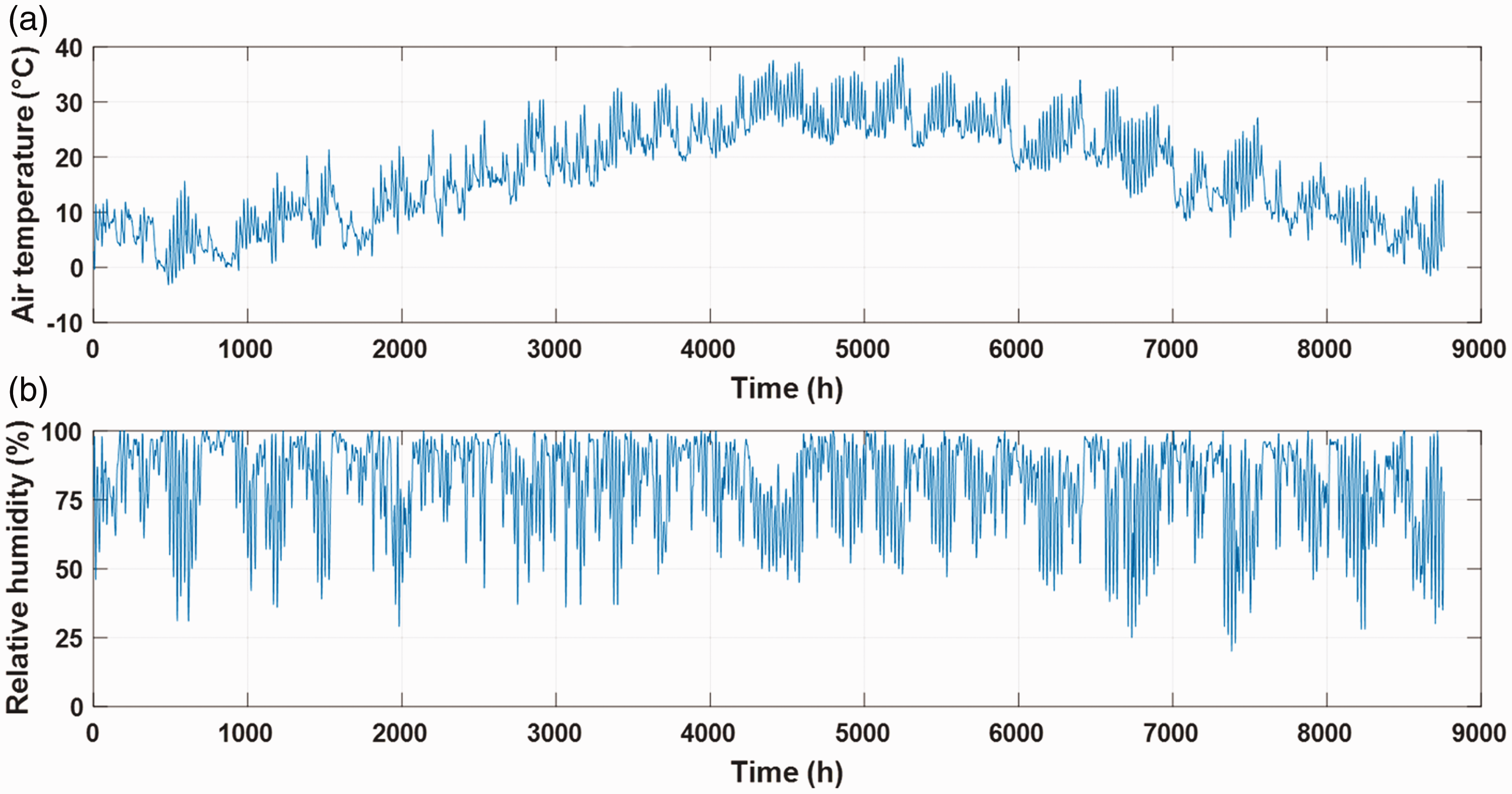
Hourly outdoor air temperature (a) and relative humidity (b) in a typical year in Xiangtan.
To explore the energy saving potential of VGS during heating and cooling seasons, contrast experiments were carried out on the two experimental rooms. The experiments were respectively implemented from 23 January 2018, to 27 January 2018 for heating and from 24 July 2018, to 1 August 2018 for cooling, when it has the typical summer or winter climate characteristics of Xiangtan. In winter experiment, an ordinary electric heater with a rated heating capacity of 1.5 kW is used for heating each room. The set-points of the indoor air temperature of the two rooms are both 18°C and controlled by a temperature control switch. In the summer experiment, an air conditioner is used for cooling to maintain the indoor air temperature of each room around the set-point of 26°C. The type of the air conditioner is KFR-26GW/WDAD3 (Media) and its rated cooling capacity is 2.7 kW.
The power consumptions by the electric heater and the air conditioner were measured using power meters. The heat transfer rates through the walls of the two experimental rooms were recorded by heat flux self-recording meters. The heat flux is the heat transfer rate between the indoor and outdoor surface while the energy consumption refers to the power consumed by the heater/air-conditioner to maintain the indoor temperature at set point. In this article, the heat flux transferred from indoor to outdoor was set as positive value. Thus, the heat flux value in winter is positive while in summer is negative. The higher the absolute value of the heat flux is, the higher the energy consumption will be.
Besides power consumption and heat flux, some thermal environment parameters were monitored simultaneously. The indoor and outdoor surface temperatures of the walls and roofs were measured using 20 T-type thermocouples and automatically collected and recorded by a data acquisition system manufactured by Agilent. The indoor temperature and relative humidity at the height of 1.2 m in the rooms are measured. At the same time, a temperature and humidity self-recording instrument is installed at the interlayer to measure the air temperature and humidity. More detailed information about monitoring and measurement system, such as measuring point arrangement, the accuracy, measurement range, and sampling interval of all the above-mentioned instruments, can be found in earlier research by the authors (Xing et al., 2019).
The collected data are exported to a Microsoft Excel spreadsheet and the data of the first few minutes is discarded due to their unstable feature. The outliers are deleted when the outlier data sharply increases or decreases in a few minutes. Missing data were replaced by the mean value of before and after the gap. Measurement data without fault were used for performance analysis of VGS.
Results and discussions
Analysis of winter experiment results
The period from 23 January 2018 to 27 January 2018 was selected as the analysis period for the winter test. Solar radiation intensity, outdoor air temperature, and humidity are shown in Figure 3. The average outdoor temperature, wind speed, and solar radiation are 3.62°C, 1.88 m/s, and 83.15 W/m2, respectively. The weather condition in this period can represent the typical cold winter climate in Xiangtan, Hunan. According to the heating and ventilation design standards in China, the room temperature in the hot summer and cold winter region should be held at 16–22°C (Ministry of Housing and Urban-Rural Development of the People's Republic of China (MHURD-PRC), 2012). Therefore, in this experiment, the indoor temperature set-point is held at 18°C.
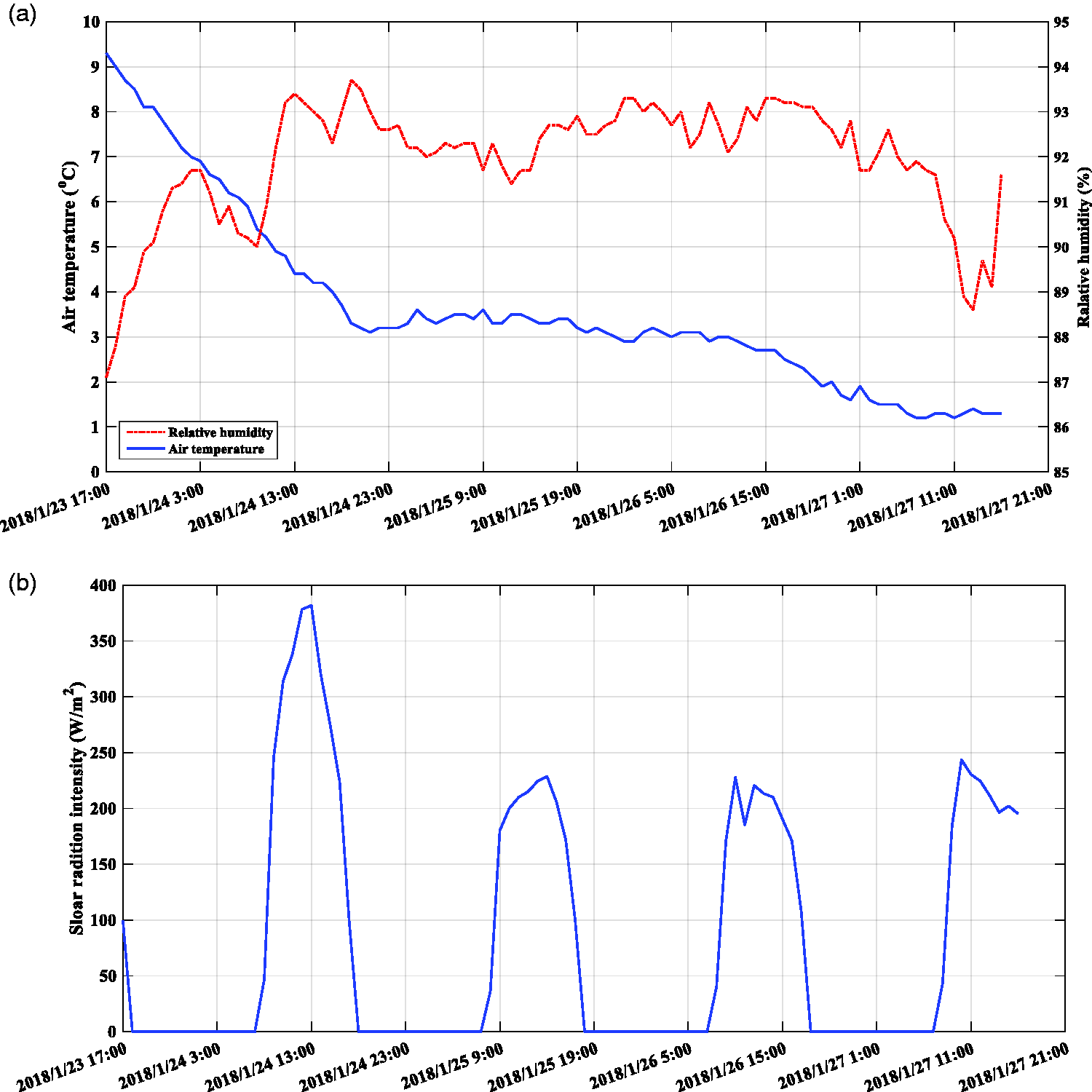
Outdoor air temperature and humidity (a) and solar radiation intensity (b) during the experiment with heating.
Figure 4 presents the power consumption trends of VG Room and Ref Room. Both display a quasi-linear curve. The power consumption of Ref Room is significantly larger than that of the VG Room. This is because the plants outside the VG Room can increase the thermal resistance of the room and reduce the overall heat loss of the room.
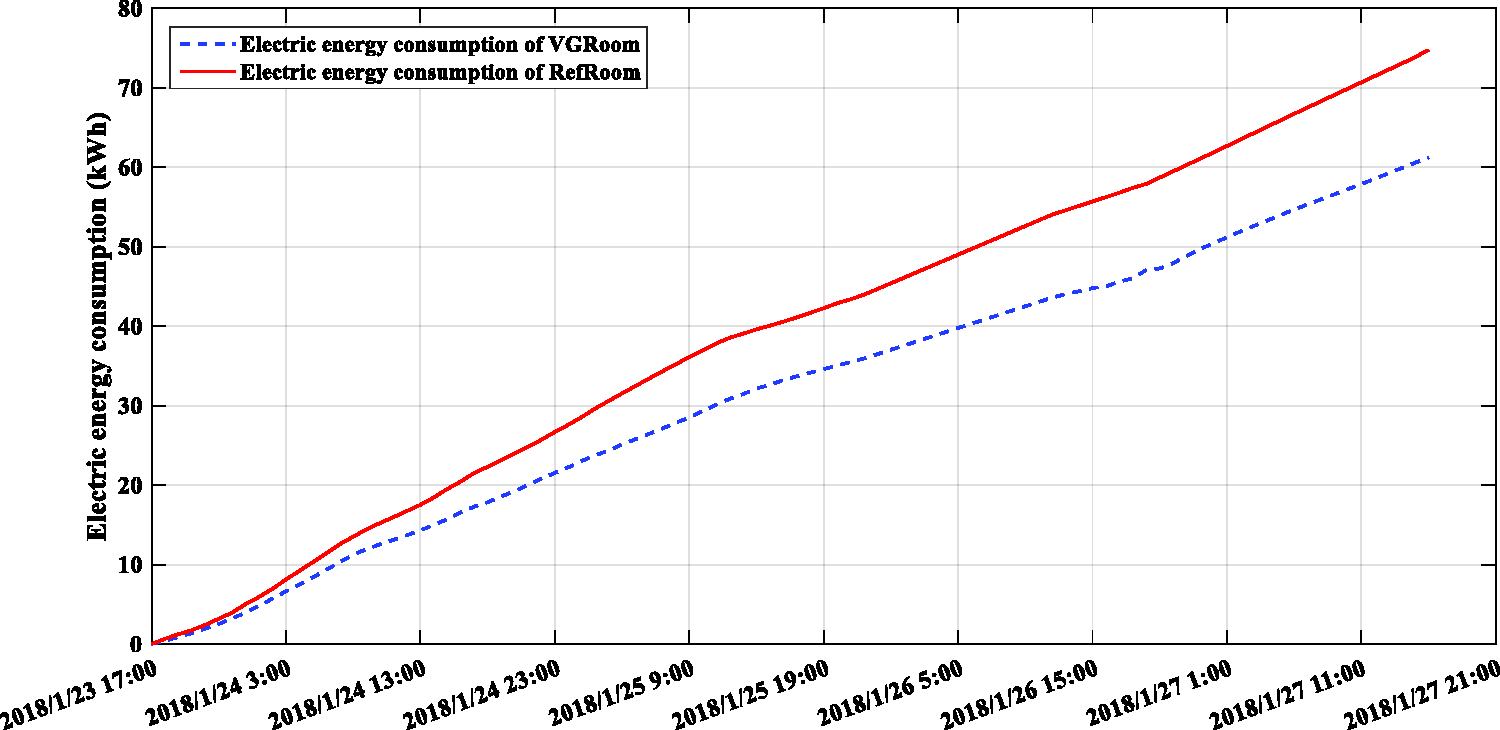
Comparison of power consumption in VG Room and Ref Room during heating experiment.
According to the heat flux density trend on the inner surface of the south wall of the VG Room and Ref Room in Figure 5, the average difference of heat flux between the VG Room and the Ref Room is 3.11 W/m2.
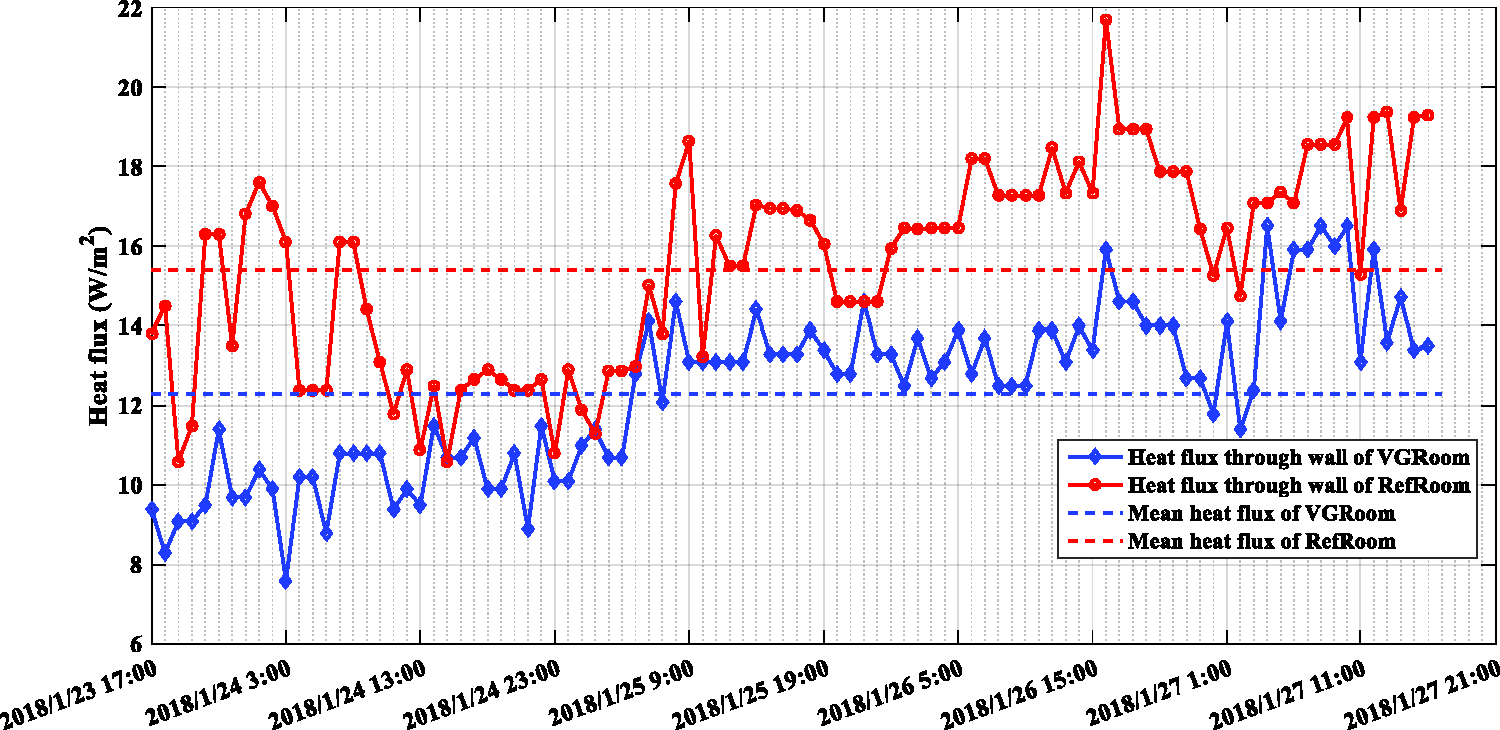
Heat flux of the south wall of VG Room and Ref Room during heating experiment.
Table 1 shows the total consumption of electric energy, the average heat flux through the walls and the roofs in the experiment. The average heat flux can be calculated as follows

Results on the total electric energy consumption and average heat flux during heating experiment.
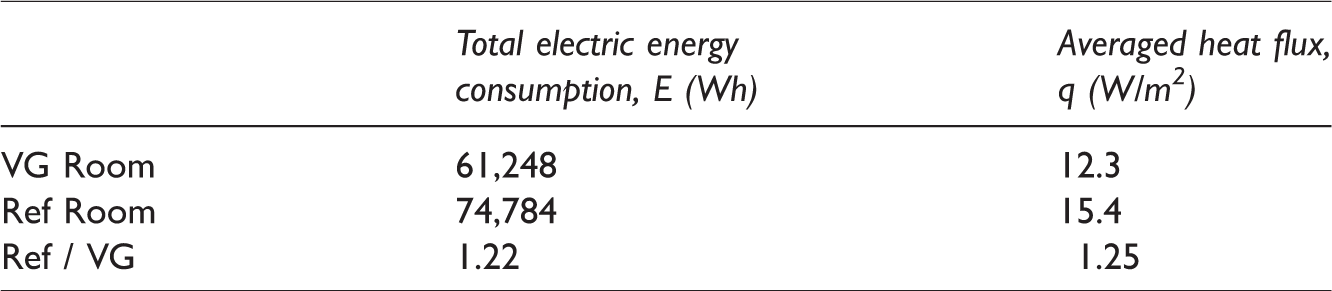
By calculation, the power consumption of the Ref Room is 1.22 times that of the VG Room, and the average heat flux density of the Ref Room is 1.25 times that of the VG Room, which indicates that the experimental data has reliability within the allowable error range. It can also be found that the overall heat loss calculated from the average heat flux density is slightly less than the average hourly power consumption, because the composition of the room heat load also includes the heat load caused by infiltration.
Dinsdale et al. (2006) found that double-layer green curtain wall (DSGF) can help to reduce heating load by 25% in winter. Köhler (2008) conducted a study on traditional climbing plant walls, showing that vertical greening can reduce heat loss by 25% in the north facade. In the study of the thermal insulation effect of green walls, Djedjig et al. (2017) found that green walls can save 20% of energy in winter.
The following formula is used to calculate the energy saving rate (ESR) of the VGS

Summer experiment results analysis
The cooling experiment was carried out from 24 July 2018 to 1 August 2018 for 192 h. The solar radiation intensity and environmental parameters for this time period are shown in Figure 6. The main purpose of this experiment is to explore the energy performance of the VGS to reduce the cooling load through the vegetation layer to block the transmission of solar radiation, so as to determine the applicability of the VG wall in summer. The outdoor average temperature is 28.47°C with average solar radiation of 233.94 W/m2, which can represent the typical hot summer climate in Xiangtan, Hunan. According to the design standard of heating and ventilation in China, the room temperature in hot summer and cold winter region should be held at 24–28°C (MHURD-PRC, 2012). Therefore, in this experimental study, the room temperature set-point was held at 26°C.
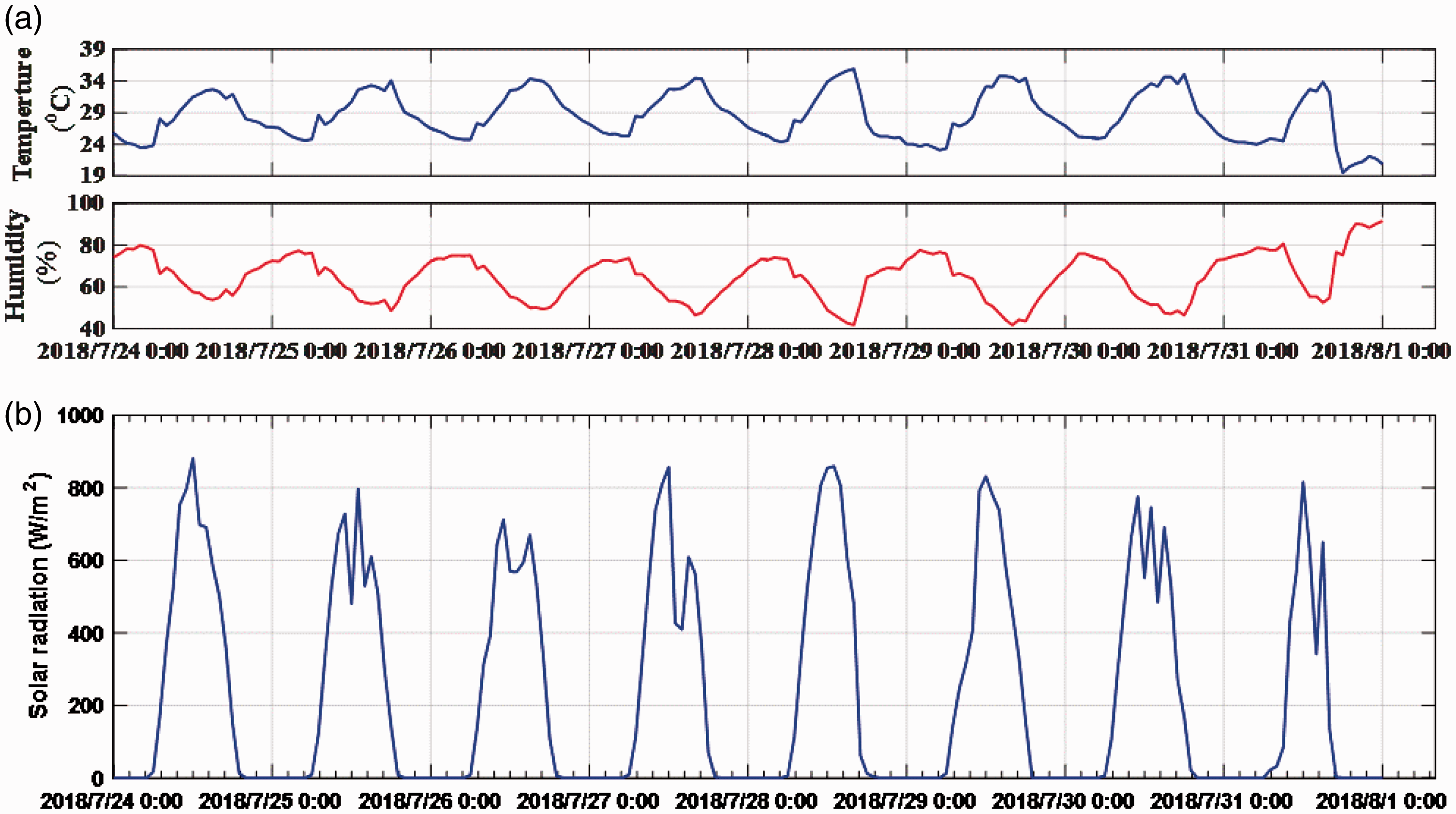
Outdoor air temperature and humidity (a) and solar radiation intensity (b) during the experiment with cooling.
Figure 7 displays the power consumption trends of the VG Room and the Ref Room. It can be observed that the power consumption of the Ref Room is significantly larger than that of the VG Room. This is because the plants outside the VG Room can effectively reduce solar radiation on the external wall surface and increase the thermal resistance of the room and thus reduce the overall heat gain of the VG Room. In Figure 7, the average hourly power consumption during 0–8 and 18–24 h is less than that in the daytime. It is because there is no solar radiation at night and the outdoor temperature is lower than that in the daytime, resulting in the decrease of heat gains from both houses. The average hourly power consumption in the period of 8–18 h is high, which is especially apparent for the Ref Room. Therefore, during the daytime, due to the shading effect of the VGS on solar radiation, energy conservation is more obvious than at night.
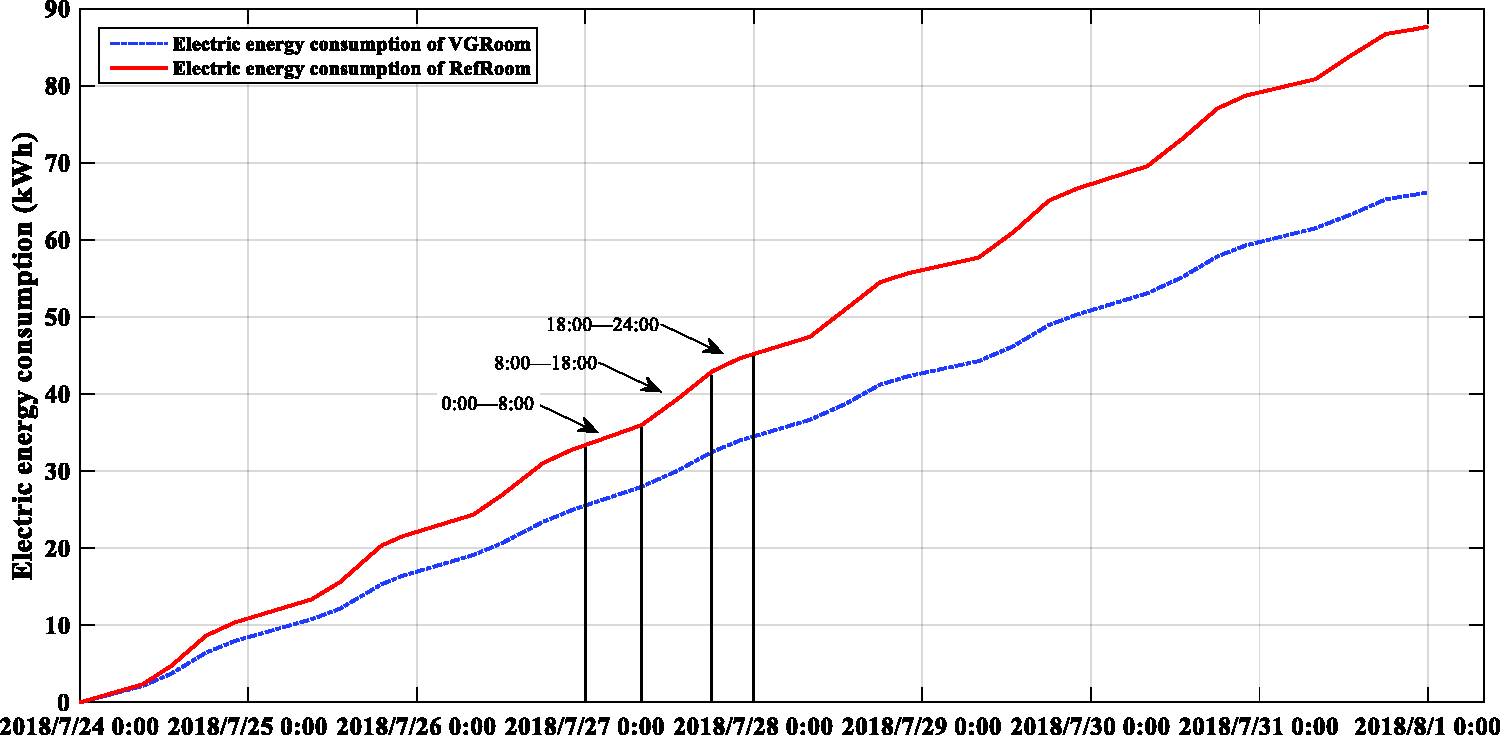
Comparison of power consumption in VG Room and Ref Room during cooling experiment.
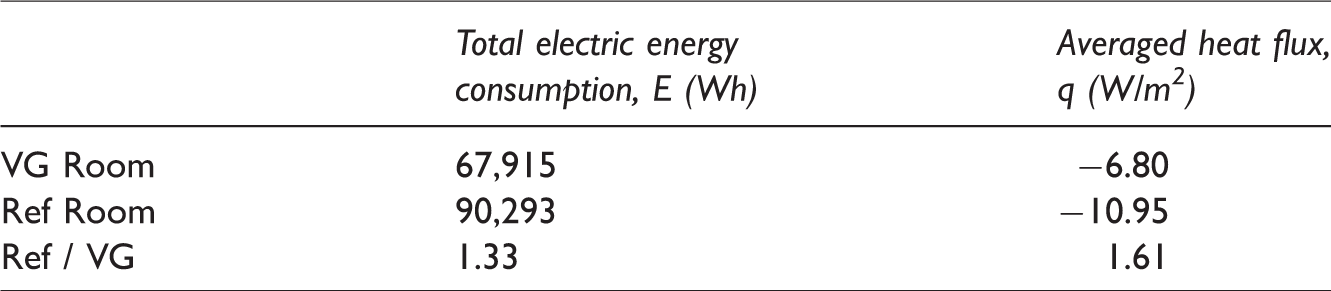
Since the indoor temperature is lower than the outdoor temperature when the air conditioner is turned on in summer, heat is transferred from the outdoor to the indoor, and the heat flux value is negative. According to the heat flux on the inner surface of the south wall of the VG Room and the Ref Room, which is shown in Figure 8, it can be observed that the heat flux of the Ref Room is significantly larger than that of the VG Room. Table 2 lists the total consumption of electric energy in summer, and the average heat flux through the walls and roof in the experiment. The results show that the total electrical energy consumption of the Ref Room is 67.2 kWh, which is 1.34 times that of the VG room. The average heat flux in the Ref Room measured during the test was −10.95 W/m2, while the average heat flux in the VG Room was −6.88 W/m2. The difference of average heat flux is 4.15 W/m2. According to the experimental results, the VGS has an ESR of 25% in summer.
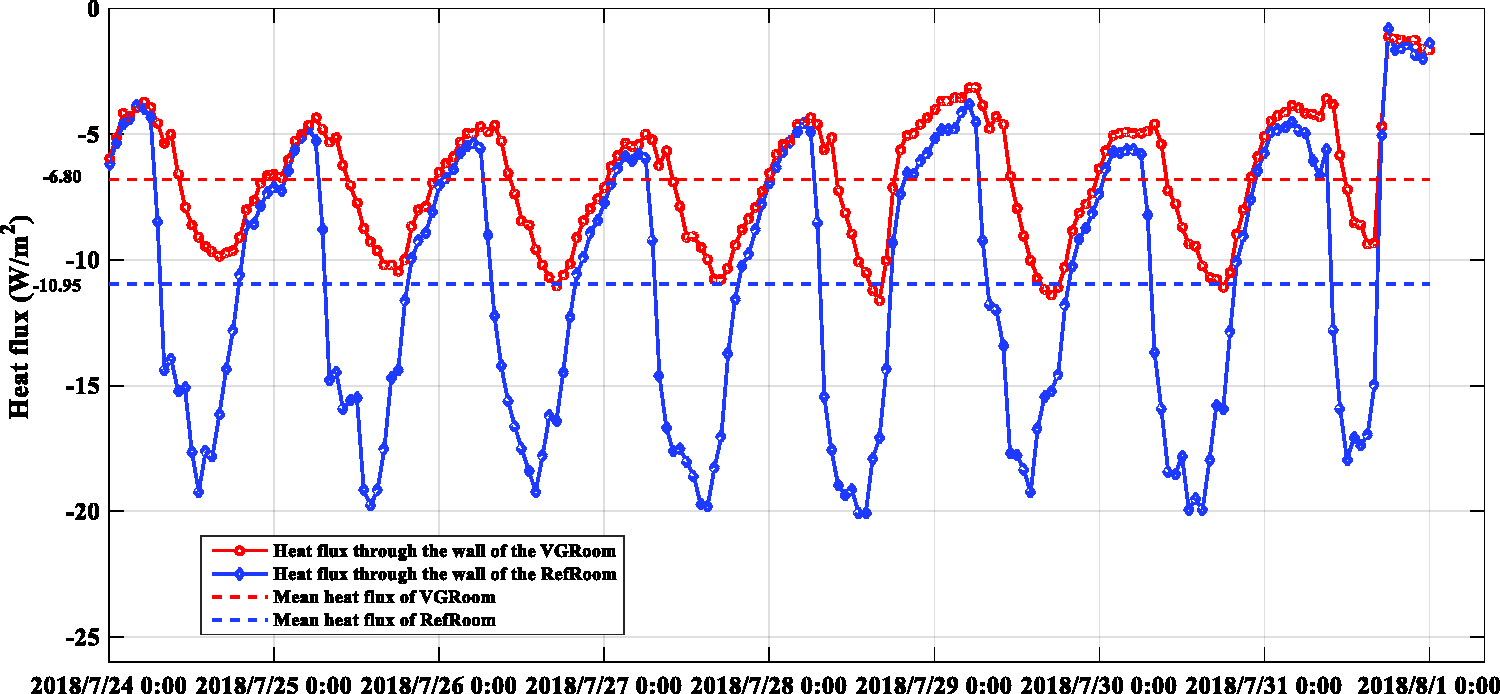
Heat flux of the south wall of the VG Room and Ref Room during cooling experiment.
Results on the total electric energy consumption and average heat flux during cooling experiment.
Conclusions
In this study, the energy conservation of BIGP in winter and summer was evaluated through experiment in the hot summer and cold winter regions in China. The results showed that VG system can help to reduce the energy consumption both in summer and in winter.
In winter, the VGS provides additional insulation to the envelope, and the heat flux from indoor to outdoor is reduced by an average of 3.11 W/m2 through the external wall, and the ESR is about 18%. Therefore, the BIGP is suitable for application considering the energy saving capacity of the heating season.
In summer, due to the shading effects, the additional insulation provided by the VGS and the passive evaporative cooling effect of the VGS, the heat transferred rate from the outside to the indoors is reduced by an average of 4.15 W/m2 through the external wall and the ESR of the air conditioning system in summer reaches 25%. Therefore, the BIGP can also be applied in summer.
The energy performance of BIGP in winter is lower than in summer, and the average heat flux in winter is greater than that of summer due to the shading effects and the evaporation effect of the vegetation layer on the surface of the VGS (Safikhani et al., 2014). Thus, BIGP is more suitable for application in summer.
Footnotes
Declaration of conflicting interests
The author(s) declared no potential conflicts of interest with respect to the research, authorship, and/or publication of this article.
Funding
The author(s) disclosed receipt of the following financial support for the research, authorship, and/or publication of this article: The Hunan Provincial Innovation Foundation for Postgraduate (Grant No. CX2018B664), the Natural Science Foundation of Hunan Province (Grant No. 2017JJ3090), the Science research project of Hunan Provincial Department of Education of China (Grant No. 18C0322), the Doctoral Scientific Research Foundation of Hunan University of Science and Technology (Grant No. E51853), and the Science Foundation of Hunan University of Science and Technology (Grant No. KJ1715).