




Abstract
Upper Triassic coaly and lacustrine source rocks complicate efforts to determine the source of hydrocarbons in Sichuan Basin. Total organic carbon analyses, pyrolysis experiments, petrological examinations, and gas chromatography and gas chromatography–mass spectrometry determinations were conducted on coals, carbonaceous mudstones and mudstones collected from two outcrop sections and cores of nine wells. Results revealed that the abundant organic carbon content will prolong the hydrocarbon generation cycle for coals and then the hydrocarbon generating capacity of coals will be enhanced by salinization, thereby contributing bacteria and algae microorganisms into humic coal of the Xujiahe Formation. Compared with mudstone, coal with the same maturity has a stronger adsorption effect on free hydrocarbons. When Ro is greater than 1.35, coal still has a strong hydrocarbon generation ability. The stable water column stratification and euxinic bottom water conditions are evidenced from the lower Pr/Ph and the higher gammacerane indices. The mixing of sea water has been proven by the existence of 4α,23,24,-trimethylcholestanes.
Introduction
Previous studies have demonstrated that coal measures have significant liquid hydrocarbon potential (Chen et al., 2001; Van Koeverden et al., 2010). Condensates are extensively produced in the terrigenous Upper Triassic Xujiahe Formation in the central and southern parts of Sichuan Basin (Huang et al., 2014). Oil cracking gas was discovered in the middle part of the West Sichuan Depression and in the southern Sichuan Basin (Wang et al., 2013). However, many researchers hold the view that the Xujiahe Formation gas pools are self-generated and self-storage for coal derived gas (Dai et al., 2009; Wu et al., 2011). To explain the complexity of Xujiahe Formation source rocks, this paper divides the coal measures into mudstones, carbonaceous mudstones and coals through large-scale sampling in the basin, to discover the particularity of the formation’s source rocks. The purpose of this study is to compare the potential source rocks of mudstone and coal samples from the Xujiahe Formation of the Upper Triassic in the Sichuan Basin, including an evaluation of hydrocarbon generation potential, the maceral composition of organic materials and the biomarker distribution. Analytical data was also used to interpret the depositional environments of the source rock. These results will assist with future explorations in transitional sea and land strata.
Geological features of Xujiahe formation
Xujiahe Formation is vertically divided into six source rock intervals; from bottom to top there are Xu1, Xu2, Xu3, Xu4, Xu5, and Xu6 (Figure 1). The Xu1, Xu3, and Xu5 sections consist mainly of black shale and mudstone. Siltstone, sandstone, coal layers, and coal streaks are the main source rock and capping layer, while Xu2, Xu4, and Xu6 sections are mainly gray packs and streaks, and clay shale, which is the main gas bearing reservoir section. Xujiahe Formation’s Xu1, Xu3, and Xu5 source rock, together with the Xu2, Xu4, and Xu6 reservoir sections make up three broadly distributed gas bearing systems. The Sichuan Basin transformed from marine facies to continental facies during the Late Triassic. The Xu1 period is the original evolvement stage of the foreland basin, and the western area of Sichuan was connected to the west sea trough during the sedimentary period. Most of the sedimentary area is littoral facies, paludal facies, and tidal-flat facies, with a thickness of approximately 400 m that thins down and pinches out toward the east. The Xu2–Xu3 periods occurred during the formation stage of the foreland basin. The Xu2 section evolved with the underwater distributary channel; the channel’s middle mainly comprises the delta front mouth bar sedimentation, and the west and southwest mainly comprise the shallow lake facies sedimentation. The Xu2 section is mainly sand stone, with a thickness of 100–200 m around middle Sichuan; west Sichuan is the sedimentary center, with a thickness of 200–600 m. The Xu3 section is distributed across the basin, with mainly lacustrine facies and paludal facies sedimentation; the sediments are mainly mudstone with a thickness of 100–400 m in the western Sichuan area, while they are less than 100 m in the other central parts of Sichuan. The Xu4–Xu6 periods comprise the development stage of the foreland basin. The Xu4 section shows mainly mouth bar–sheet sand sedimentation, and mainly comprises the shallow lake facies sedimentation in the southwest area. The stratum thickness is 200–1000 m at the West Sichuan depression basin, 100–200 m at the basin’s middle, and denuded at the northwest part of Sichuan. The Xu5 section mainly comprises the shallow lake subfacies, with a thickness of 400–600 m. The sedimentary center is in the western Sichuan area, and it drops to less than 100 m in the eastern Sichuan area. The Xu6 section mainly comprises the inner alluvial fan and sedimentary delta. The sedimentary thickness increases from northwest to southeast at 0–300 m, while the thickest and relatively well-preserved stratum is in the southern area. The sedimentary center is in the Western Sichuan area, and it drops to less than 100 m at the eastern Sichuan area. The basin uplifts as a whole after the Jurassic.
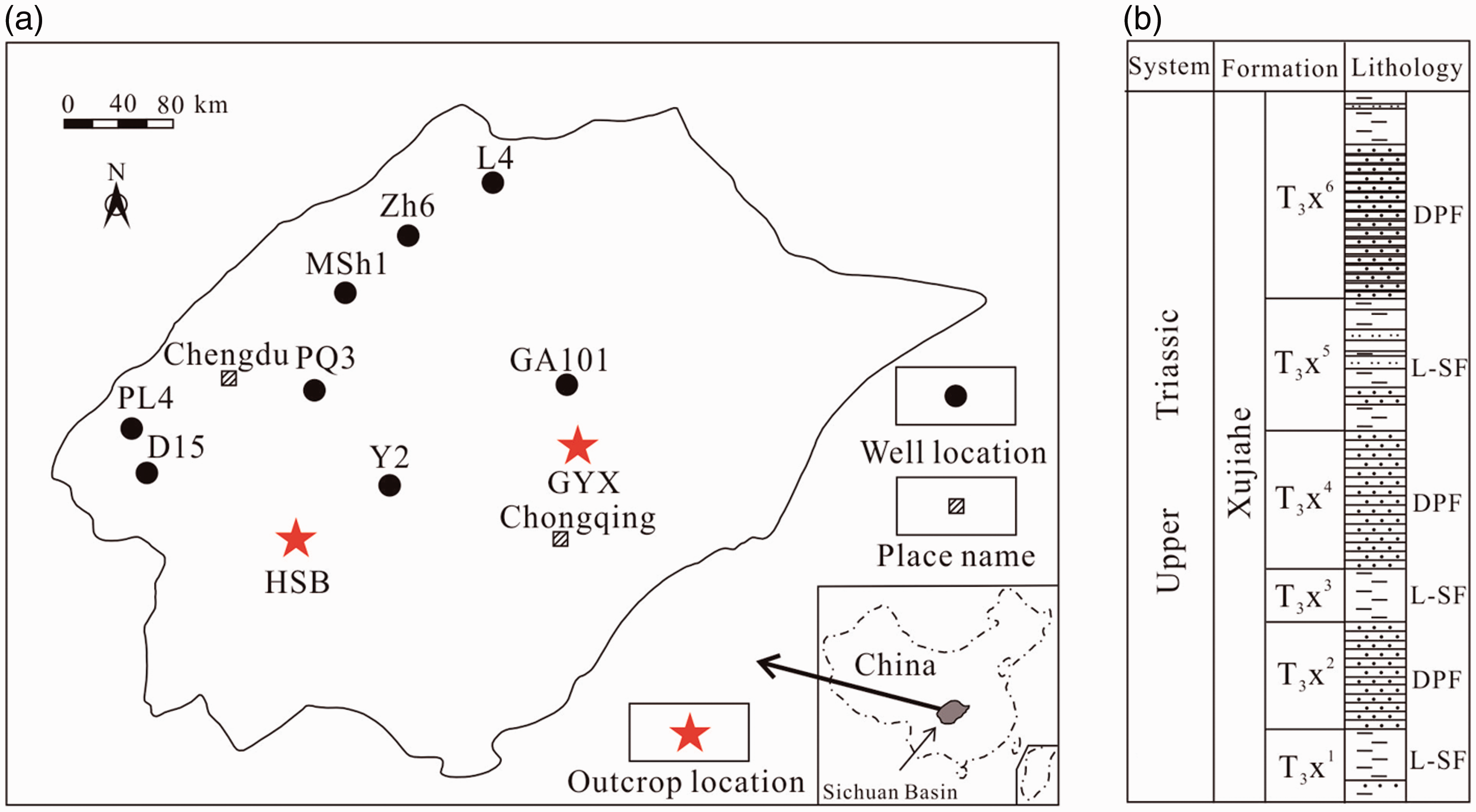
Sampling location distribution figure (a) and Xujiahe formation profile (b) (L-SF stands for the lake marsh facies, DPF is a shorthand for the delta plain facies).
Material and methods
A total of 599 samples of the Xujiahe Formation were collected from two measured sections (GYX outcrop and HSB outcrop) and cores recovered from nine wells in the Sichuan Basin, including 85 coals and 513 mudstones. To minimize the effects of surface weathering, the surface material was removed before sampling. In addition, samples were visually selected from dark-colored fine-grained core intervals. All samples were analyzed for total organic carbon (TOC) and Rock-Eval pyrolysis. Six coals and 23 mudstones were selected for organic petrology. Extracts from fourteen of these samples were selected for analysis by gas chromatography (GC) and gas chromatography–mass spectrometry (GC-MS).
TOC analysis and Rock-Eval pyrolysis
TOC values were obtained by a LECO™ TOC analyzer. Crushed samples (approximately 100 mg and 120 mesh) were heated to 1200°C in an induction furnace after removing carbonate using hydrochloric acid (HCl).
Pyrolysis data was collected using a Rock-Eval II Plus pyrolysis analyzer, including the free hydrocarbons (S1), the pyrolysate hydrocarbons (S2), the temperature of maximum generation (Tmax), the hydrogen index (HI), and the production index (PI). The S1-signal denotes the amount of hydrocarbons liberated at 300°C equivalent to the volatile portion of the bitumen present in the rocks. The S2 peak indicates the amount of hydrocarbons generated during temperature-programmed pyrolysis (300–600°C), which are representative of a completely thermal degradation of source rocks with an increase in burial depth. S1 and S2 are expressed in mg of hydrocarbons per gram (mg HC/g) of rock. S3 is the quantity of CO2 formed by pyrolysis of the organic matter (OM) expressed in milligrams of CO2 per gram of rock (mg CO2/g). Tmax (°C) is the temperature at which the maximum of the S2 peak is reached and represents an estimate of thermal maturity. The HI is the normalized S2 value (S2/TOC) with a symbol of mg HC/g TOC, which can be used to estimate the types of OM. The Oxygen Index (OI) represents the normalized S3 value (S3/TOC) in the form of mg CO2/g TOC. The PI or transformation ratio (PI = S1/[S1 + S2]) demonstrates the level of thermal maturation and the presence of migrated hydrocarbons.
Vitrinite reflectance and macerals
Mean random vitrinite reflectance measurements of the entire rock for both coals and mudstones were performed using a Leitz MPV-3 microscope photometer. A visual estimation of the relative abundance of maceral content was determined using a Zeiss incident light microscope and a Swift point counter.
Solvent extraction, liquid chromatographic fractionation, GC-flame ionization detector (FID) and GC-MS
Analyzed powdered samples were extracted with chloroform for approximately 72 h in a Soxhlet apparatus. After the precipitation of asphaltenes, the extractable organic matter (EOM) was separated by the column chromatography of a silica gel alumina into saturated, aromatic and polar (Nitrogen, Sulfur and Oxygen [NSO]) fractions, with hexane, benzene, and alcohol as the developers.
The gas chromatography of the saturated hydrocarbon fraction was conducted on a Hewlett Packard 5890 equipped with a flame ionization detector (FID) as well as a fused silica capillary column (30 m × 0.22 mm ID × 0.25 um film thickness). The oven temperature was initially set to rise from 100°C to 310°C at a rate of 8°C/min and then maintained at the latter temperature for 40 min. The injector was set at 310°C in the split/splitless mode with a splitless time of 60 s, and helium was used as the carrier gas at a head pressure of 20 psi. The temperature of the detector was held at 320°C.
A GC-MS analysis of the saturated hydrocarbon fractions was carried out using a Finnigan MAT TSQ 700 GC-MS system fitted with a Varian 3400 gas chromatograph with containing a DB5-MS fused silica capillary column (30 m × 0.32 mm ID × 0.25 um film thickness). Helium was used as carrier gas with a head pressure of 30 psi. The sample was injected in the split/splitless mode at 320°C. The oven was initially held for 5 min at 70°C, programmed from 70°C to 240°C at a rate of 4°C/min, then from 240 to 300°C at 2°C/min, and was finally maintained at 300°C for 30 min. The selected ion monitoring capabilities of the data acquisition system permitted specific ions to be monitored, such as tricyclic terpanes and hopanes (M/Z 191) and steranes (M/Z 217). GC-MS analyses of aromatic fractions were carried out using the same instrument and the analytical conditions as saturated fractions.
All analyses were performed in the Key Laboratory of Petroleum Geochemistry, at the Research Institute of Petroleum Exploration and Development of PetroChina.
Results
TOC and Rock-Eval data
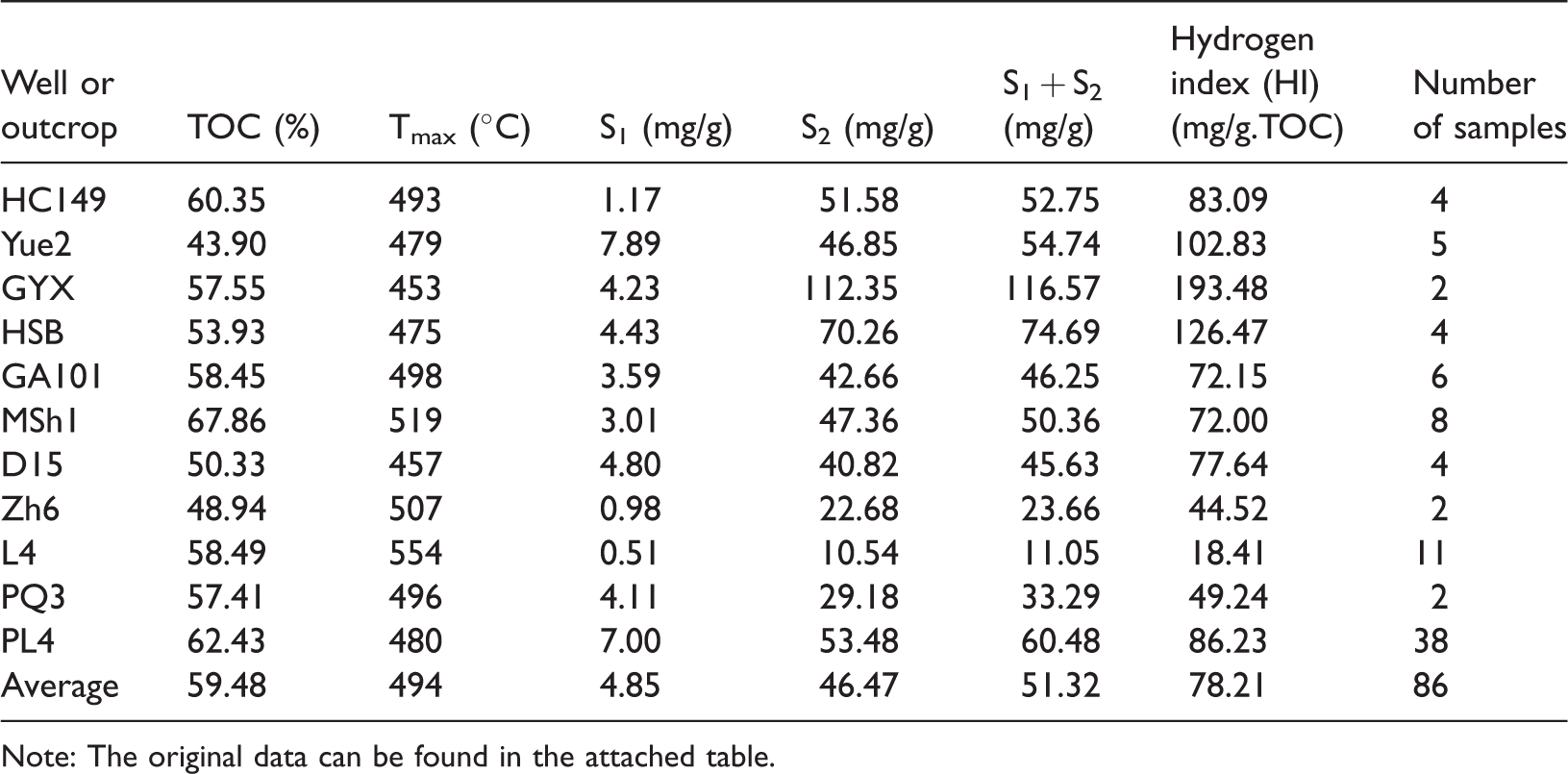
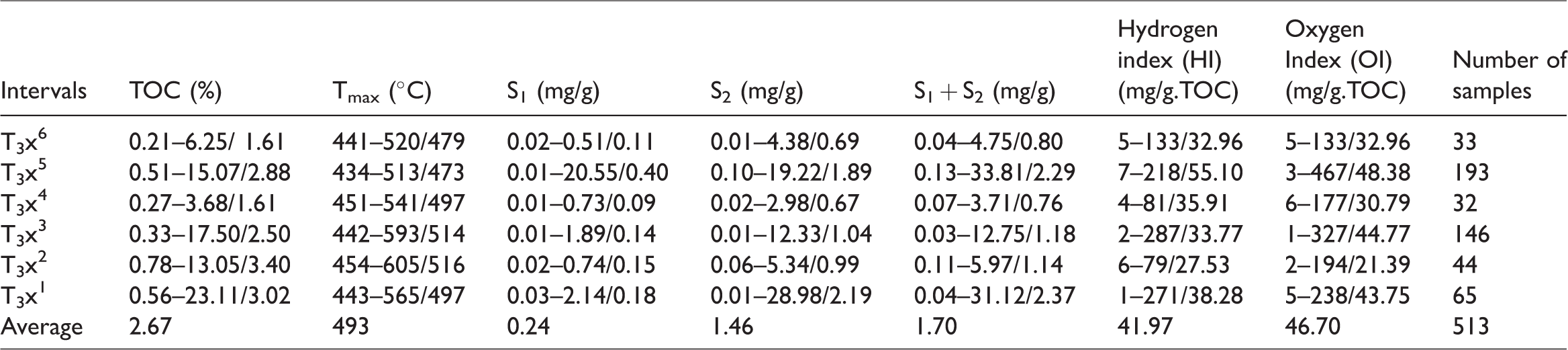
Rock-Eval and TOC data of the coal and mudstone samples are summarized in Tables 1 and 2, respectively. These tables provide information on the OM in cores and outcrops, including the quantity and type of OM, the level of maturity and the source rock’s potential.
Data of Rock-Eval and total organic carbon (TOC) of coal samples.
Note: The original data can be found in the attached table.
Rock-Eval and total organic carbon (TOC) data of mudstones from different intervals.
TOC
The quantity of OM in rock is expressed as the total organic carbon formatted as a weight percentage of the total rock. In the opinion of Horsfield (Horsfield et al., 1988), rocks with a TOC ranging between 25% and 75% are coals, while the TOC value of mudstones is less than 5%. The average TOC contents of coals from different wells or outcrop sections vary from 43.90% to 67.86% with an average of 59.48% (Table 1). Most of the coal samples have TOC contents distributed within the range of 60–80%.
The TOC values of 513 mudstone samples are from 0.21% to 23.11% with an average of 2.67% (Table 2), and most of the mudstone have TOC contents distributed between 1.0% and 5.0%. Mudstones with a TOC of 6–25% are known as carbonaceous mudstones. The number of carbonaceous mudstones accounts for 10% of all mudstones. TOC contents of the T3x4 and T3x6 intervals are lower than those of the T3x1, T3x2, T3x3, and T3x5 intervals for mudstones. The highest average TOC contents are present in the T3x2 member with a mean value of 3.40%, which was once considered as a reservoir.
Rock-Eval data
Rock–Eval pyrolysis is a commonly used technique in determining the type and maturity of OM and in assessing hydrocarbon generating potential (Peters, 1986). The Tmax values were distributed widely (Figure 2), ranging mainly between 434°C and 605°C. This distribution of Tmax values has no difference between coal and mudstone samples. The potential yield, defined as the sum of the Rock-Eval S1 and S2 values, is an evaluation of the genetic potential of a source rock. The Rock-Eval pyrolysis potential (S1 + S2) of the Xujiahe Formation mudstone is from 0.03 mg/g to 31.12 mg/g with an average of 1.70 mg/g. For mudstone, the S1 + S2 values of the T3x1 and T3x5 intervals are high, with averages of 2.37 mg/g and 2.29 mg/g, respectively, while the S1 + S2 values of the T3x4 and T3x6 intervals are low with averages of 0.76 mg/g and 0.80 mg/g, respectively. The S1 + S2 values of the T3x2 and T3x3 intervals are moderate, with averages of 1.14 mg/g and 1.18 mg/g, separately. For coal, the S1 + S2 values of eight wells and two outcrop sections range from 11.05 mg/g to 116.57 mg/g, with an average of 51.32 mg/g, which is three times that of mudstone samples. Obviously, the former has a higher content of organic carbon. HI values of mudstones and coals show a wide scatter, with former ranging from 1 mg/g to 287 mg/g and an average of 41.97 mg/g, while the latter distributes between 18.41 mg/g and 193.48 mg/g with an average of 78.21 mg/g (Tables 1 and 2), which is nearly two times that of mudstone sample.
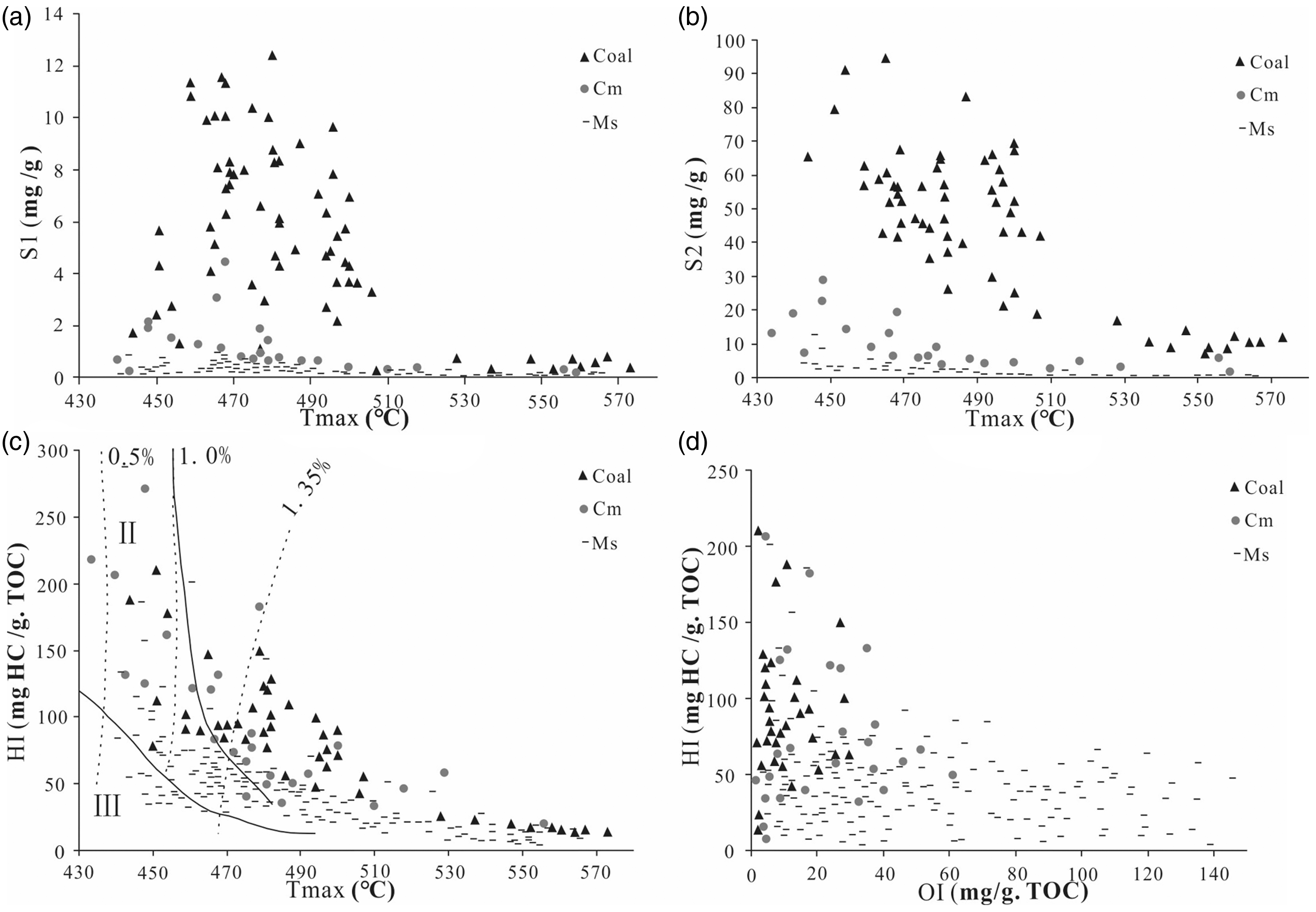
Plot of (a) S1, (b) S2 versus Tmax; plot of HI versus (c) Tmax and (d) OI, respectively. (c) modified after Isaksen et al., (1998).
Maceral composition and vitrinite reflectance
Maceral composition
The maceral composition and vitrinite reflectance measurements of the coal and mudstone samples are shown in Table 2. The vitrinite group constitutes the majority maceral type present in the studied coals and mudstones. The vitrinite content from coals ranges from 30.4% to 80%, with an average value of 59.2%. However, this type of maceral comprises 1.0–9.2% of mudstones, with a mean value of 2.8%. The vitrinite is subdivided into telinite, collinite, telocollinite, and collodetrinite. The collinite content is the highest among vitrinite with averages of 39.5% in coals and 1.7% in mudstones.
The inernite is also abundant and ranges from 4% to 11.8% with average values of 6.5% in coals, and between 0% and 1.6% with an average of 0.3% in mudstones. Inernite mainly comprises semifusinite ranging from 2.4% to 10.4% in coals and 0–1.4% in mudstones, with minor amounts of fusinite and inertodetrinite.
Liptinite mainly comprises liptodetrinite, sporinite, cutinite, and resinite. The content is very low and ranges from 0% to 3.2% and 0% to 2.6% in coals and mudstones, respectively, with averages of 1.1% and 0.5%, respectively. Although there is little difference in the total amount of the liptinite in these two types of source rocks, the species of the liptinite are much more diverse in coals. Liptodetrinite dominates the liptinite group of mudstones, while sporinite, cutinite, and resinite, belonged to terrestrial OM; all appear in coals except for liptodetrinite. If the mineral asphalt matrix is considered, the content of sapropelinite derived from degraded algae is also high and varies separately from 0% to 23.2% and from 0% to 8.4% in mudstones and coals, respectively; moreover, some alginates are present among the sapropelinite group. The average content of alginate from mudstones is 0.9%, while just one coal sample contained 0.2% of alginate.
Vitrinite reflectance
Mudstones in Table 2 show the vitrinite reflectance (Ro) values ranging between 0.54% and 1.85%. Samples from the GYX profile in the eastern basin show that Ro values vary from 0.62 to 0.80% and samples of the HSB section in the south of the basin contain a Ro distribution of Ro between 0.54% and 0.99%, thus indicating that these source rocks are in the stages of immaturity or early maturity. Samples from well PQ3 and well PL4 in the west part of the basin show Ro values of 0.90–1.87%, thereby suggesting that source rocks are in the stages of maturity and high maturity. However, samples of the middle Sichuan Basin from well GA101 and well Yue 2 have Ro distributions ranging from 1.31 to 1.67 and 0.59 to 1.30, indicating mainly the characteristic of maturity compared with the western samples. The Ro values of the four coal samples measured exhibit the stages of low-maturity and maturity with a scope between 0.70 and 1.27.
Bitumen composition and organic geochemistry
GC and GC-MS analyses were carried out on 14 samples ranging from T3x1 to T3x6 intervals (Table 3). C13+ gas chromatograms of saturated hydrocarbons show a unimodal distribution with a dominance of short-chain n-alkanes and a maximum range from C17 to C18, CPI (carbon preference index) values vary from 0.99 to 1.37, except for two values of mudstone samples collected from Z6, which were 0.31 and 0.57 (Table 3). The values of C21−/C22+ lie between 1.02 and 4.45 with an average value of 1.98, as indicated by the enhanced proportions of nC15, nC17 and C19 alkanes. OEP (odd/even predominance) values can be classified into two groups. In coals from Well GA101 and mudstones from Well Z6, OEP values vary from 0.84 to 0.91, while other mudstones have a distribution of OEP values between 1.1 and 1.35. This slight difference is also shown in n-alkanes maxima at, separately, n-C18 and n-C17.
Maceral composition (Vol%) and vitrinite reflectance values of mudstones and coal samples.
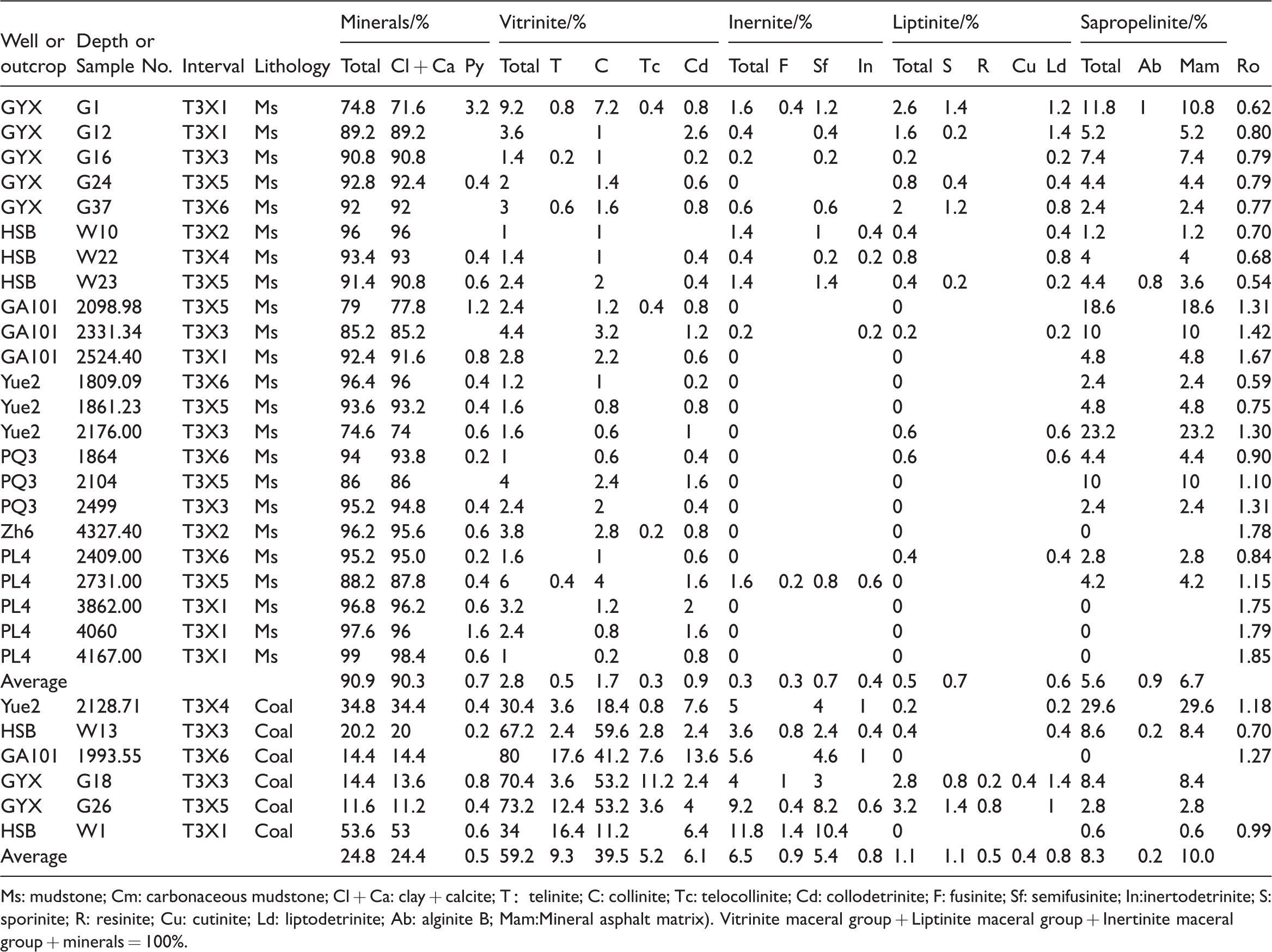
Ms: mudstone; Cm: carbonaceous mudstone; Cl + Ca: clay + calcite; T:telinite; C: collinite; Tc: telocollinite; Cd: collodetrinite; F: fusinite; Sf: semifusinite; In:inertodetrinite; S: sporinite; R: resinite; Cu: cutinite; Ld: liptodetrinite; Ab: alginite B; Mam:Mineral asphalt matrix). Vitrinite maceral group + Liptinite maceral group + Inertinite maceral group + minerals = 100%.
Gas chromatography (GC) of saturated hydrocarbons and biomarkers of saturated and aromatic hydrocarbon extracted from source rocks of Xujiahe Formation.
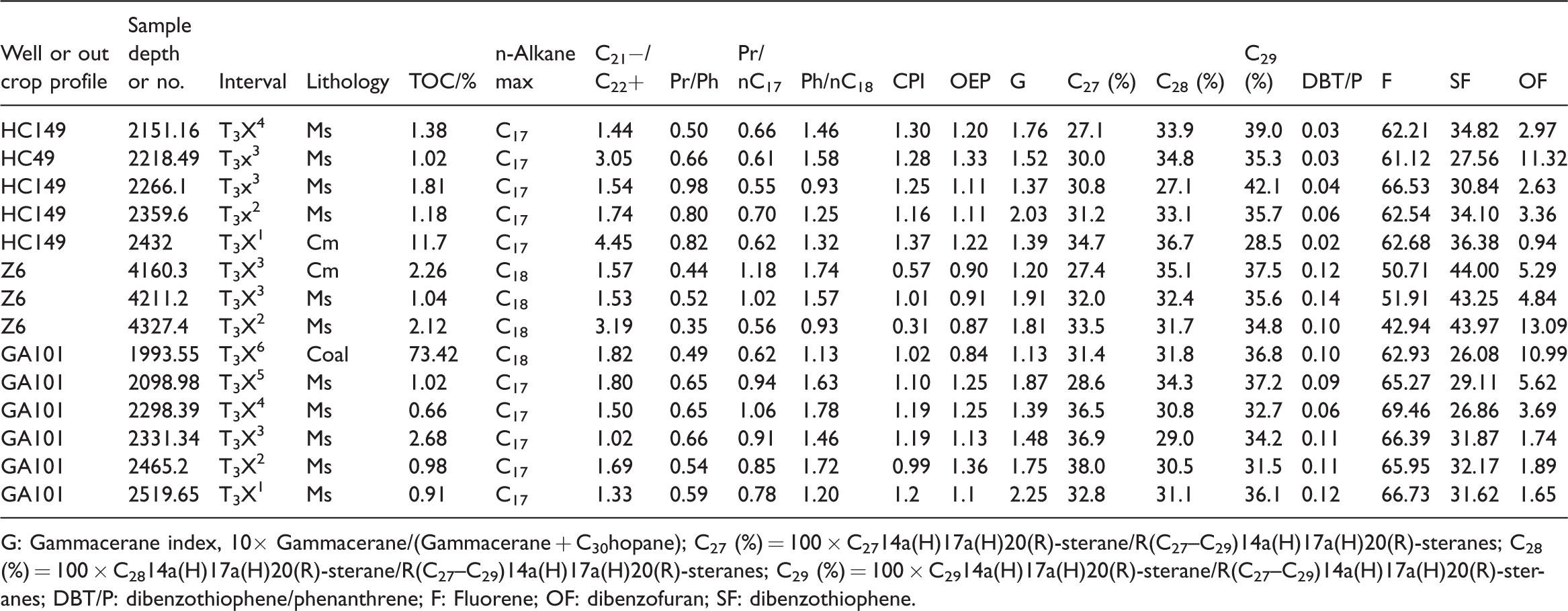
G: Gammacerane index, 10× Gammacerane/(Gammacerane + C30hopane); C27 (%) = 100 × C2714a(H)17a(H)20(R)-sterane/R(C27–C29)14a(H)17a(H)20(R)-steranes; C28 (%) = 100 × C2814a(H)17a(H)20(R)-sterane/R(C27–C29)14a(H)17a(H)20(R)-steranes; C29 (%) = 100 × C2914a(H)17a(H)20(R)-sterane/R(C27–C29)14a(H)17a(H)20(R)-steranes; DBT/P: dibenzothiophene/phenanthrene; F: Fluorene; OF: dibenzofuran; SF: dibenzothiophene.
The smallest value of gammacerane appears in coal at 1.13 and carbonaceous mudstone has a moderate value of 1.39. Mudstones have a distribution between 1.2 and 2.25 with a mean value of 1.70.
The C27–C29 regular sterane distribution in most of the samples is uniform and each sterane accounts for approximately 1/3, indicating a mixed origin for the OM. One coal sample has a higher content of C29 homologues (36.8%), while one carbonaceous mudstone sample shows a high content of C28 with 36.7%. For mudstones, three samples collected from the GA101 well show the advantage of C27 between 36.5 and 38.0; the other nine mudstone samples reveal C29 ranging from 34.8 to 39, with an average value of 37.0.
Discussion
Source rock potential
S1 values reflect the content of free hydrocarbons, meanwhile, Tmax values denote the maturity of the samples. The S1 vs. Tmax diagram conveys that when Tmax is less than 510°C, the difference in the adsorption capacity of free hydrocarbons is very significant in coals, carbonaceous mudstones, and mudstones, and it will not be obvious when Tmax is greater than 510°C(Figure 2(a)). S2 represents the pyrolytic hydrocarbon content in a unit mass of source rocks. The S2 values of coals are always greater than mudstones in the range of the Tmax from 430°C to 570°C, and the situation is similar between carbonaceous mudstones and mudstones(Figure 2(b)); these indicated that the abundant organic carbon content prolongs the hydrocarbon generation cycle for source rocks. The HI vs. Tmax diagram indicated that the OM of most of the samples is made up of the Type II kerogen, with a strong potential for oil generation (Figure 2(c)). Meanwhile, the HI of coals was abnormally high, with the equivalent of Tmax between 470°C and 510°C. The HI and OI of coals, carbonaceous mudstones, and mudstones were plotted on an X/Y graph (Figure 2(d)). The distribution of the HI was roughly the same for these three types of hydrocarbon source rocks. However, coals contained lower OI values than those of mudstones. Bordenave et al. proposed that low OI values in coals with maturities above 0.6% Ro were caused by the generation of CO during pyrolysis that were undetected by the thermal conductivity detector (TCD) (Bordenave, 1993); moreover, low OI values were related to the type of OM, thus indicating the oil-proneness of the studied coals. Aside from some mudstones with a low maturity collected from the two outcrops of GYX and HSB as well as Well Yue2, most samples of coals and mudstones have low OI values below 50 mg CO2/g TOC.
However, the hydrocarbon potential of coals is overestimated because thermally cleaved fragments might easily escape from the coal in Rock-Eval, showing an open pyrolysis (Schenk and Horsfield, 1993). Coals have considerable self-adsorption and are somewhat plastic under burial conditions, thus resulting in a difficulty of hydrocarbon expulsion, although coal pyrolysis experiments of coals exhibit that they have high genetic potential. HI values of 200 mg HC/g TOC have been proposed as the minimum values for liquid hydrocarbon expulsion from coal (Pepper and Corvi, 1995) (Isaksen et al., 1998). The strong adsorption of coals makes these petroleum-like substances more residual in coal measures and are composed of aromatic hydrocarbon-rich products. When the coal measures undergo a higher degree of thermal evolution, this part of OM can be used as a parent material for pyrolysis gas. With the increase of maturity and the decrease of organic carbon content, the adsorbed hydrocarbons can be resolved or broken down into small gas molecules, which are relatively easily discharged from coal.
Source of OM
The presence of more terrigenous OM (mainly vitrinite + inertinite > 35%) in coal samples than in mudstone samples (vitrinite + inertinite < 11%) suggested that the former is more gas-prone than the latter. In mudstone samples, the maximum content of sapropelinite is up to 23.2%, and consisted mainly of a mineral asphalt matrix. The amorphous organic matter (AOM) is derived mainly from algal OM deposited into reducing environments. We paid attention to the Yue2 samples, which has both the characteristics of the coals and mudstones.
The n-alkane distribution in the majority of the three types of samples were unimodal with the maximum ranging from C17 to C18 and CPI values close to 1 indicating algal OM input and/or high maturity. The ratios of pristane to the n-C17 alkane (Pr/n-C17) and phytane to the n-C18 alkane (Ph/n-C18) were used to distinguish the kerogen types of the coal, carbonaceous mudstone and mudstone samples. However, for this figure, the differences of Pr/n-C17 and Ph/n-C18 are not obvious in coals, carbonaceous mudstones, and mudstones (Figure 3); moreover, most of these three types of samples are scattered within the scope of the Type II–III kerogen, which resulted from an increased algal input and more reduced depositional conditions.
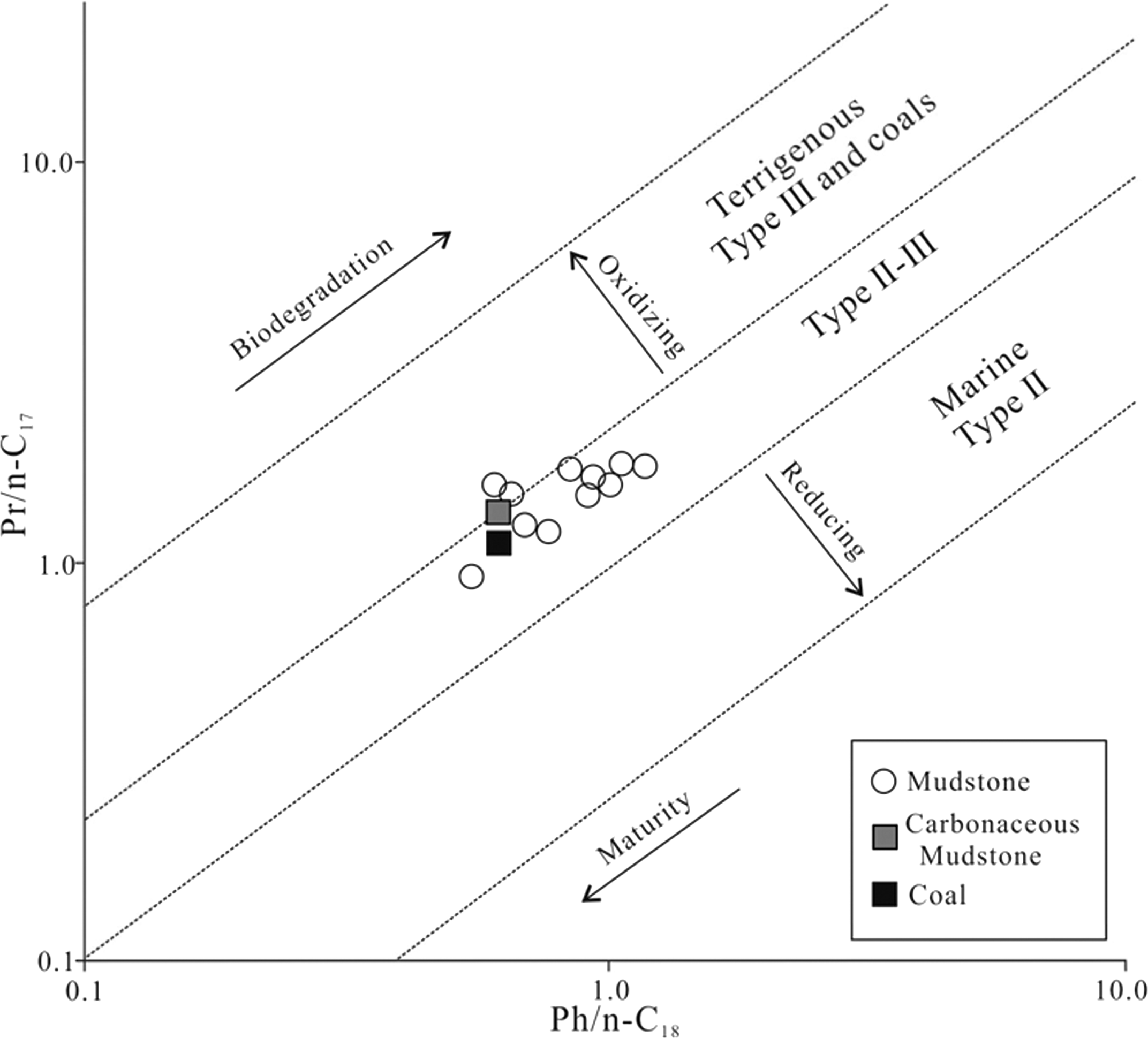
Plot of phytane/n-C18 versus pristane/n-C17 ratios, showing the variations of organic matter type, thermal maturity and depositional environmental from (Peters et al., 2005).
M/z191 mass fragmentation of the saturated fraction, which was extracted from a typical coal sample of the Xu6 interval in Well GA101, showed a high content of tricyclic terpane attributed to algal OM (Aquino Neto et al., 1992), elevated maturities(van Graas, 1990) and phase fractionation of gas condensates(Karlsen and Skeie, 2006). Combined with the Tmax value of 498°C, which was close to Ro 1.3%, the elevated tricyclic terpane was attributed to the algal input. Additionally, liptinitic macerals, such as sporinite and cutinite, are abundant in coals and facilitate the presence of tricyclic terpanes.
Gammacerane (G), an indicator of a marine input (Moldowan et al., 1985) and/or OM deposited under a stratified anoxic water column (Damsté et al., 1995), was thought to have formed by a reduction of tetrahymanol derived from phototropic bacteria, such as bacterivorous ciliates developed at the interface between the oxic and anoxic zones in stratified water columns; these are abundant in saline marine and lake environments (Ten Haven et al., 1989; Sinninghe Damsté et al., 1995; Zhu et al., 2005). The Xu6 coal sample from Well GA101 has the lowest value of gammacerane (1.13). The two gammacerane values of the carbonaceous mudstones are 1.20 and 1.39, respectively. The distribution of gammacerane values of mudstones ranges from 1.37 to 2.25, with an average value of 1.74; these results indicate that the paleolake produced a stratified water column with hypersalinity.
C27 steranes originate predominantly from marine plankton, C28 steranes originate from yeast, fungi, plankton, and algae, and C29 steranes originate from terrigenous higher plants and brown and green algae (Huang and Meinschein, 1979; Volkman, 2003; Volkman, 1986). Although more recent research has demonstrated that C29 steranes are also present in numerous microalgae such as diatoms and freshwater eustigmatophytes, the sterane temary plot is still useful in reflecting the source of organic material in sediments and in petroleum (Riboulleau et al., 2007). Chen et al. found that the content of C27 sterane from coals and carbonaceous shales is less than 10% (Chen et al., 2001). However, those of coal and carbonaceous mudstone samples from this study ranged from 27.4% to 34.7% with an average value of 31.17%, which was slightly lower than the C27 sterane value of mudstone samples (32.49%). The distribution pattern of regular sterane plots in the middle of the sterane ternary indicates that the organic material is mainly derived from lacustrine zooplankton and phytoplankton accounted approximately for two-thirds of the OM (Figures 4 and 5).
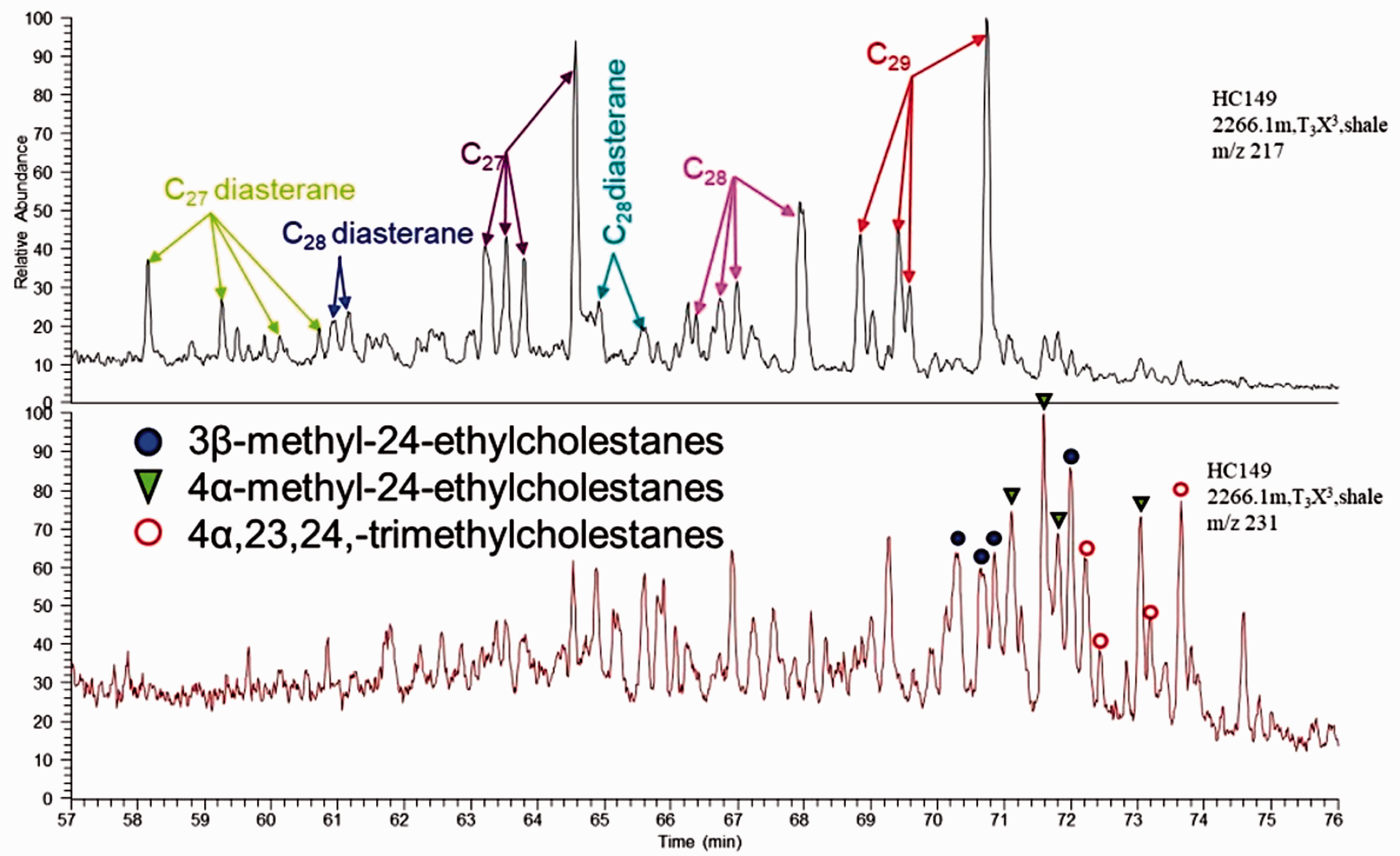
MS of steranes of saturated hydrocarbon extracted from shale of T3x3 collected from HC149.
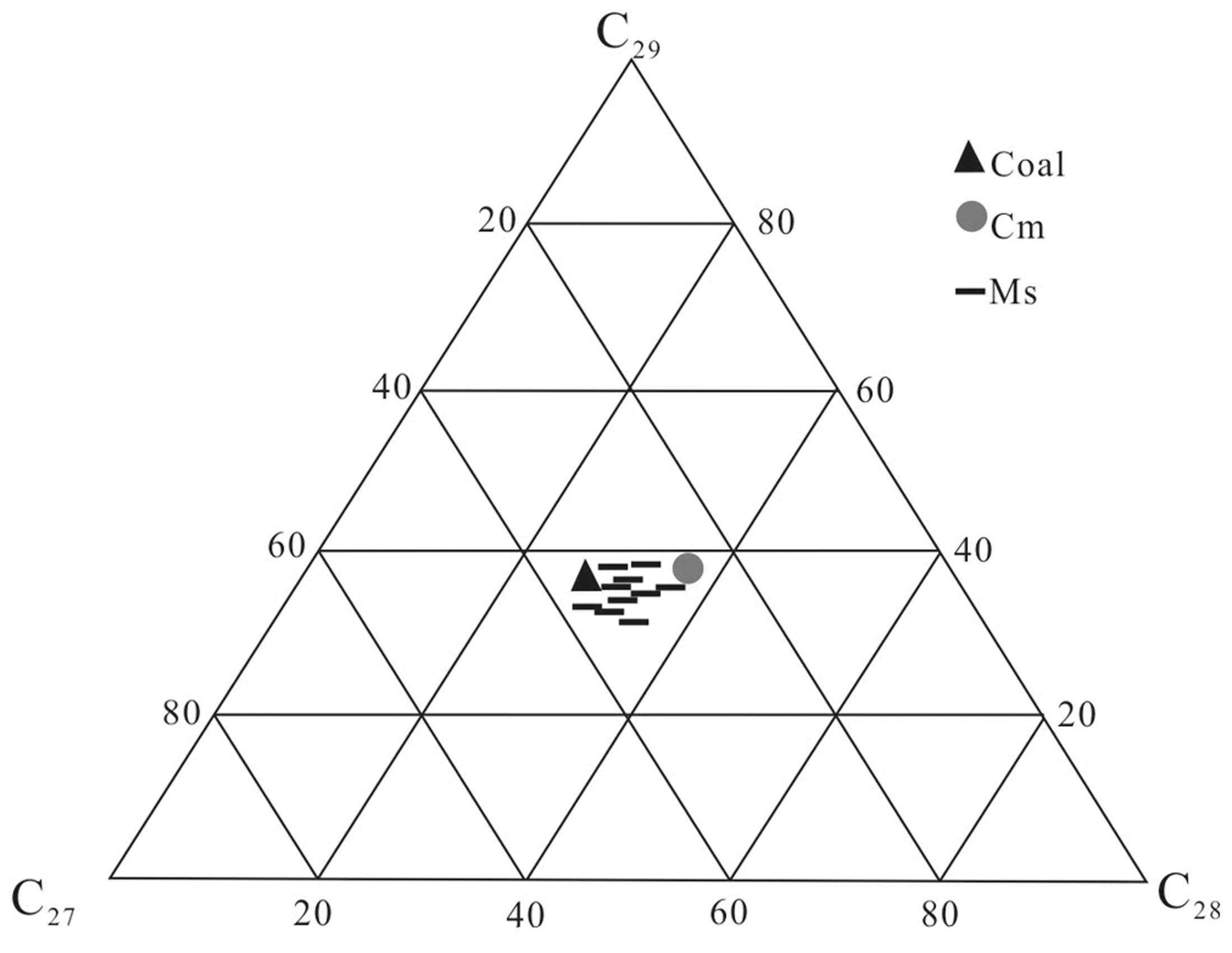
Triangular diagram of C27,C28 and C29 regular steranes.
Molecular indicators of depositional environment
The pristane/phytane (Pr/Ph) ratio is a commonly used parameter for studying oxic/anoxic conditions (Montero-Serrano et al., 2010). However, we pay particular attention to the differences in thermal maturity (Koopmans et al., 1999) and variable source input (Ten Haven et al., 1987) when Pr/Ph values are considered to determine the depositional environment of organic material. Peters et al. proposed that Pr/Ph < 0.6 indicates anoxic, commonly hypersaline or carbonate environments (Peters et al., 2005). This index can be applied perfectly to Well Z6 in western Sichuan, while most of the samples from the same intervals have larger values of Pr/Ph in the center of Sichuan Basin, such as Well GA101 and HC149. The vertical change trend of Pr/Ph is also different between Well GA101 and HC149, while the variation trends of the former being negatively correlated with buried depth, also reflected the anoxic and hypersaline environments and OM input of the algae. However, Well HC149’s variation trends positively correlated with the burial depth, a result which was seemingly influenced by thermal maturity.
Dibenzothiophene/phenanthrene (DBT/PHEN) and Pr/Ph have been used as an indicator of the source rock depositional environment and lithology (Hughes and Dzou, 1995). Three types of hydrocarbon source rocks were deposited in a lacustrine sulfate-poor environment; this was concluded based on the diagram in Figure 6.
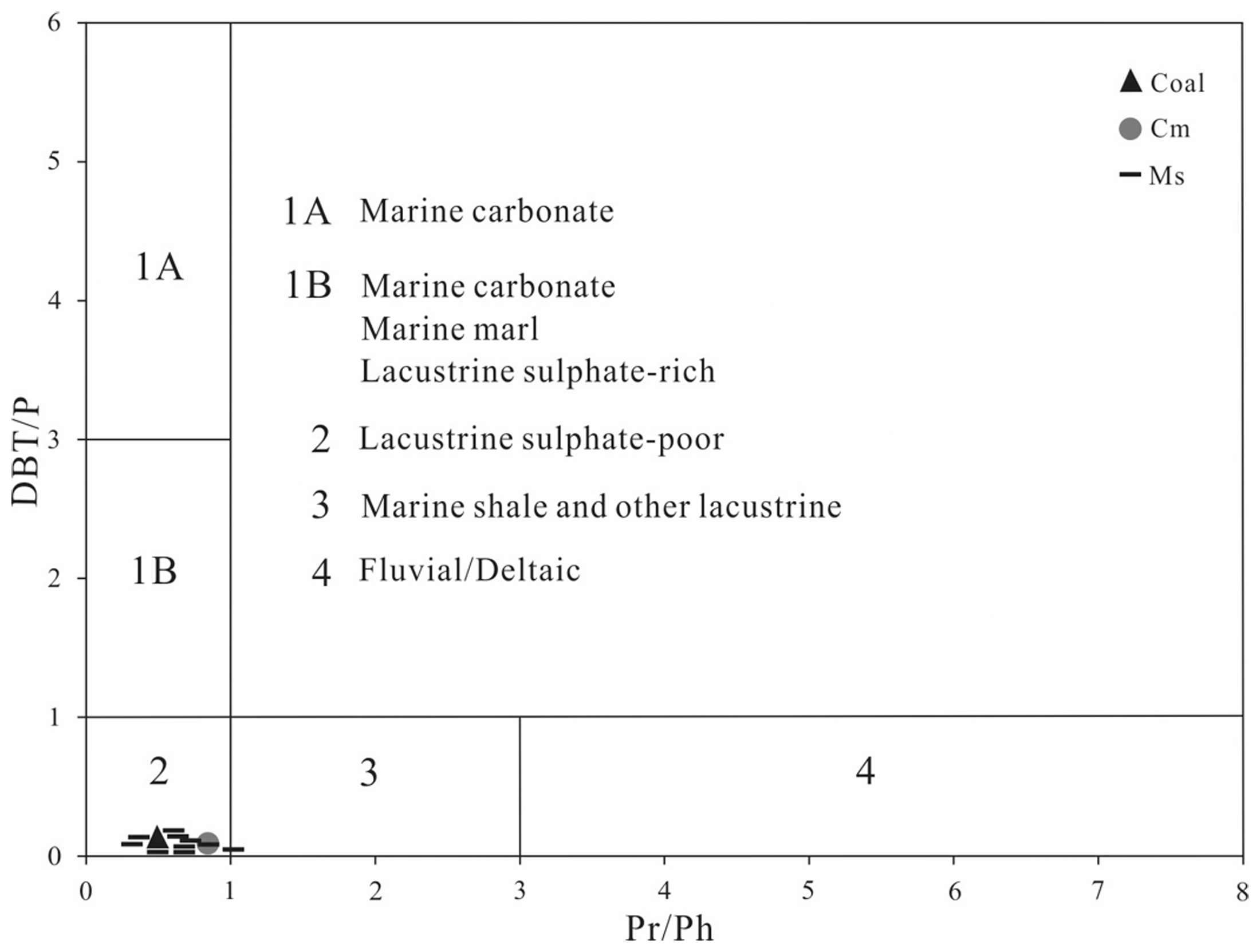
Plots of Pristane/Phytane (Pr/Ph) ratio versus dibenzothiophene/Phenanthrene (DBT/PHEN) modified after (Hughes et al., 1995).
4-Methylsteranes are commonly found in marine, evaporitic and especially freshwater environments (Peters et al., 2005). The precursors of 4-methylsteranes are presumed to be 4-methyl sterols, and are originated mostly from algae (de Leeuw et al., 1983), such as the dinoflagellate believed to be the main source (Summons et al., 1987), which thrives in freshwater settings. There are abundant methylsteranes in the saturated hydrocarbon fraction, including 3β- and 4α-methylsteranes, which are associated with a certain amount of 4α,23,24,-trimethylcholestanes (dinosterane) that usually exist only in marine sediments. However, the representative mudstones in different intervals of the Xujiahe Formation from the HC149 well all contain dinosterane, which is related to the mixture of seawater in lacustrine water.
The content of dibenzofuran is very low whether in coals or mudstones and is equivalent to the content in marine and saline lakes, which proves the strong reducibility of the sedimentary environment of the Xujiahe Formation (Figure 7). Furthermore, samples collected from the HC149 and GA101 wells in central Sichuan contain higher contents of fluorence than do those from Z6 well in western Sichuan; these results indicate that the reduction of the water body in western Sichuan is more effective and that the input of higher plants in the central part of Sichuan is more abundant. This is further confirmed by the different level of dibenzothiophene in the two regions.
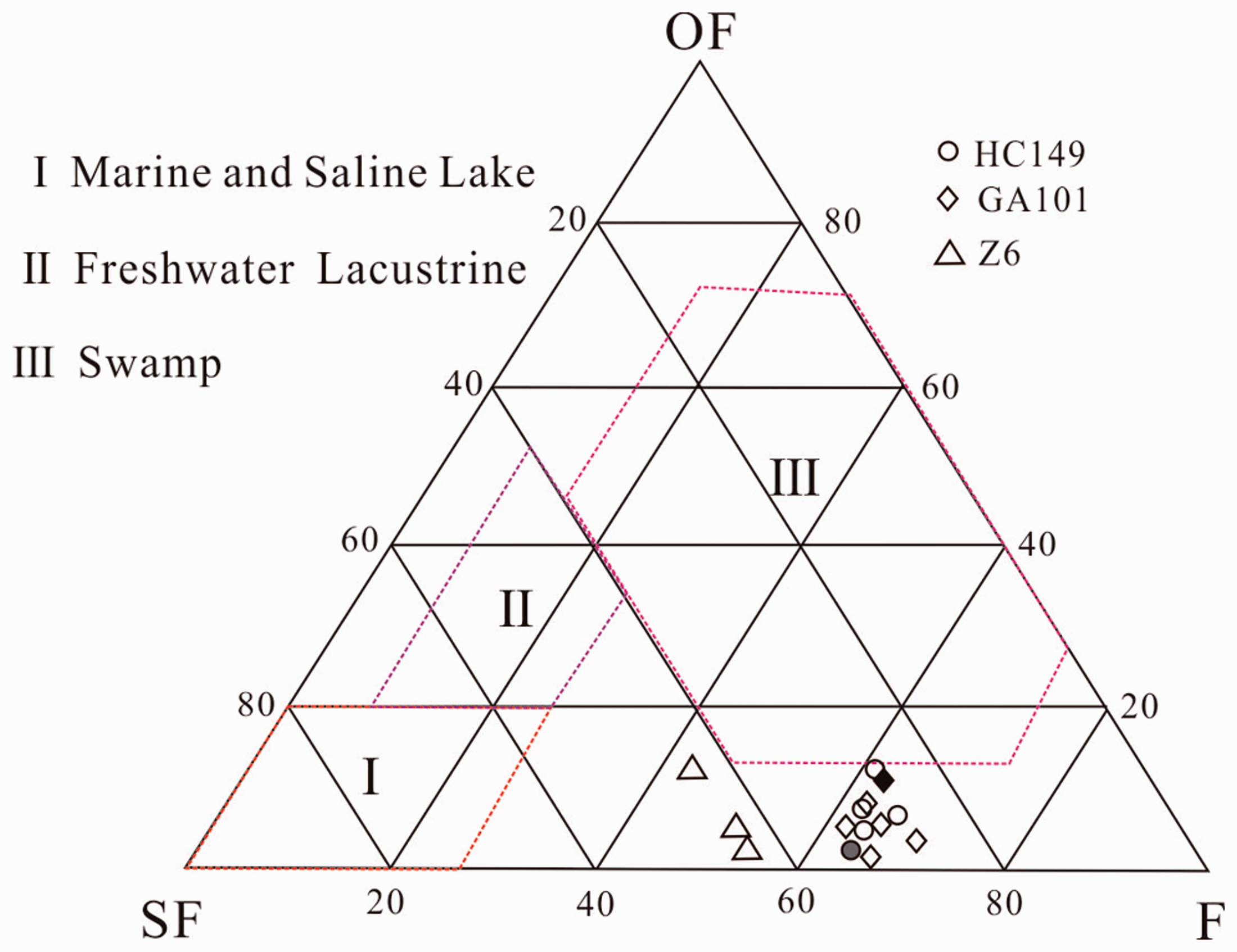
Triangular diagram of F, SF and OF. F: Fluorene; OF: dibenzofuran; SF: dibenzothiophene. White, gray and black markers represent mudstone, carbonaceous mudstone and coal, respectively, modified after Cheng et al., (1995).
Conclusion
Samples of mudstones and coals from the Upper Triassic Xujiahe Formation in the Sichuan Basin were studied regarding their organic geochemical characteristics and petrological characteristics. The following conclusions can be drawn.
The abundant organic carbon content will prolong the hydrocarbon generation cycle for coals and then the hydrocarbon generating capacity of coals will be enhanced by salinization. Compared with mudstone, coal with the same maturity has a stronger adsorption effect on free hydrocarbons. When Ro is greater than 1.35, coal still has a strong hydrocarbon generation ability.
The organic material was likely deposited in anoxic and hypersaline conditions, especially in the western areas, likely attributable to the increased marine influence towards the west. The stable water column stratification and euxinic bottom water conditions are evidenced from the lower Pr/Ph and the higher gammacerane indices. The mixing of sea water has been proven by the existence of 4α,23,24,-trimethylcholestanes. The contribution of bacteria, algae and microorganisms in humic coals of the Xujiahe Formation is greater.
Footnotes
Acknowledgements
Careful reviews and constructive suggestions of the manuscript by anonymous reviewers are also greatly appreciated.
Declaration of conflicting interests
The author(s) declared no potential conflicts of interest with respect to the research, authorship, and/or publication of this article.
Funding
The author(s) disclosed receipt of the following financial support for the research, authorship, and/or publication of this article: The authors gratefully acknowledge the supports from the National Oil and Gas Major Project of China (2016ZX05007-001).