




Abstract
To investigate the physical properties of anthracite reservoirs with different metamorphic grades (Ro,max), 38 anthracite samples with an Ro,max value between 2.5 and 4.2% from the Guxu and Jincheng mining areas in China were selected to conduct proximate analysis and determine the macerals, pore size distribution, adsorption capacity, in-situ gas content and permeability. The results showed that a coalification jump at Ro,max=3.7% existed in the anthracite stage and greatly influenced the evolution of physical properties. Before the coalification jump point, a series of micropores and transition pores was formed during metamorphism, which increased the specific surface area of the reservoir. This phenomenon further increased the adsorption capacity and gas content. The formation of methane during metamorphism also provided a material basis for the enrichment of methane. After the coalification jump point, a decreased specific surface area was observed due to compaction of micropores and transition pores, thereby reducing the adsorption capacity and gas content. The end of gas generation also caused the gas content to increase with increasing Ro,max. The burial depth (overlying geostress) and metamorphism degree were key factors in controlling the permeability. The change in the metamorphic degree controlled the formation of microfractures, and the burial depth controlled the degree of fracture closure. The physical properties of reservoirs changed notably before and after the coalification jump point of high-rank coals. Therefore, more attention should be paid to coalification in the process of reservoir evaluation and development of high-rank coal reservoirs.
Introduction
Anthracite is a type of high metamorphic grade coal whose maximum reflectance under oil immersion conditions (Ro,max) is greater than 2.5%. Anthracite reservoirs in China are high in gas content and rich in coalbed methane (CBM) resources (Qin et al., 2018; Tao et al., 2014). Compared with the mature development of CBM in low- and medium-rank coal reservoirs in the United States (Ayers, 2002; Montgomery, 1999), Australia (Bustin, 1997; Papendick et al., 2011) and Canada (Aravena et al., 2003), anthracite reservoirs are the earliest commercial CBM reservoirs in China (Lau et al., 2017; Qin et al., 2017). There are more studies on medium- and low-rank coal reservoirs (Shi et al., 2018; Wang et al., 2018a, 2018b), while studies on higher rank coals are relatively few (Flores, 2013; Jian et al., 2015; Zhang et al., 2017), particularly focused on the changes in physical parameters during metamorphism.
Gabzdyl and Probierz (1987) studied the industrial analysis and microscopic composition of anthracite in the Upper Silesian Coal Basin, Poland, but the maximum reflectance Ro,max of the selected samples was only 2.6%, which could not fully reflect the physical parameters of the anthracite stage. Other scholars have performed related research, but their samples were relatively small, and there was no targeted research on anthracite (Faiz and Cook, 1991; Laxminarayana and Crosdale, 1999; Levy et al., 1997). Chinese researchers have conducted extensive research, due to the abundance of anthracite resources, on the pore structure, permeability, gas content and other aspects (Cai et al., 2011; Li et al., 2011; Liu et al., 2015; Nie et al., 2015; Shan et al., 2015; Zhang et al., 2017). Pore and fracture characteristics are important research topics for CBM development. It is widely recognized that anthracite reservoirs have the largest specific surface area and methane adsorption capacity compared to medium- and low-rank coal reservoirs (Liu et al., 2015; Nie et al., 2015; Shan et al., 2015), but research on the pore evolution with metamorphism under long metamorphic conditions is still lacking. The developmental characteristics of pores and fractures affect the gas-bearing state and permeability of reservoirs, which in turn affects the enrichment and development of CBM resources. Much research has also been conducted on the gas content and permeability of anthracite reservoirs (Cai et al., 2011; Li et al., 2011; Liu et al., 2015; Niu et al., 2017; Pan et al., 2016, 2017; Xia et al., 2017; Zhang et al., 2017). Most of the research was only focused on a certain aspect. In the process of metamorphism, the reservoir parameters are gradually changing, which will affect the enrichment and migration of methane, but comprehensive analysis is lacking.
Because the distribution of anthracite reservoirs in China is mainly in the Southern Qinshui Basin and southwest China, the Ro,max value of the Southern Qinshui Basin coal lies mainly between 3.5 and 4.5% and that of the coal in southwest China lies mainly between 2.5 and 3.5% (Qin et al., 2017). The metamorphic grade of anthracite in the Southern Qinshui Basin and southwest China are distributed on both sides of the fourth coalification jump (Qin, 1994; Stach and Murchison, 1982). This characteristic allows us to study the influence of the coalification jump on the reservoir physical properties of anthracite reservoirs and to analyse the physical properties of anthracite with metamorphism. The successful commercial development of CBM in anthracite reservoirs of the Southern Qinshui Basin has also stimulated CBM development in southwest China (Li et al., 2015, 2016). The analysis and comparative study of anthracite reservoirs in the aforementioned two places is conducive to CBM development and exploitation of anthracite reservoirs. Therefore, this paper takes the Jincheng mining area in the Southern Qinshui Basin and the Guxu mining area in the Southern Sichuan Basin (Figure 1) as examples to systematically study the characteristics of the physical properties of anthracite reservoirs of different metamorphic degrees.
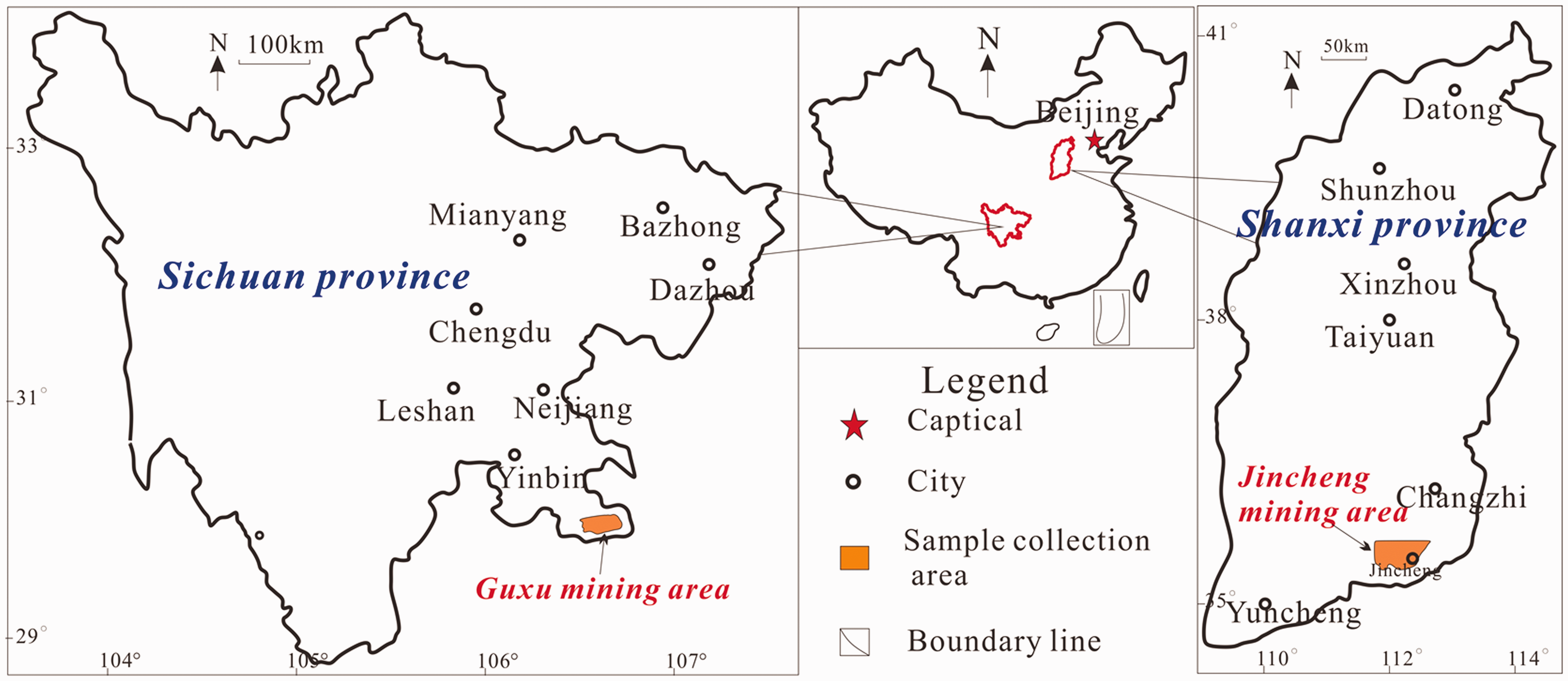
Positions of Jincheng and Guxu and the distributions of the sampling locations.
In the current work, we selected 37 samples from different locations in Jincheng and Guxu, two important anthracite blocks in China. The samples were used to determine the proximate analysis, macerals, pore size distribution and adsorption capacity, while in-situ gas content and permeability results were collected from CBM wells. These data were used to analyse the physical and evolutionary characteristics of the anthracite reservoirs, which will provide guidance for CBM development of anthracite reservoirs.
Geological setting and analytical procedures
Geological setting
The Jincheng mining area is located in Jincheng City in the Southern Qinshui Basin, including the Fanzhuang, Panzhuang, Zhengzhuang Blocks, etc., which is the most successful area for CBM development in China. The overall structural feature is a complete horseshoe-shaped slope belt. The stratum is broad and gentle, the dip angle of the stratum is approximately 4° and a fault has not developed. There is a set of arc-shaped fault zones in the southern part of the area. Low-lying parallel folds are generally developed, and the distribution direction is mainly North-North-East. The area and amplitude of the folds are small, showing long-axis folds (Wang et al., 2015). The main coal-bearing strata in the area are the Shanxi Formation and Taiyuan Formation (Figure 2(a)). The Shanxi Formation contains three layers of coal. The target coal seam of CBM production is the #3 coal, which is developed in the lower part of the Shanxi Formation with an average thickness of 5.82 m (Yang et al., 2017). The #3 roof is mainly composed of mudstone, siltstone, silty mudstone and other tight rock, and the floor is mostly mudstone and siltstone (Wang et al., 2015).
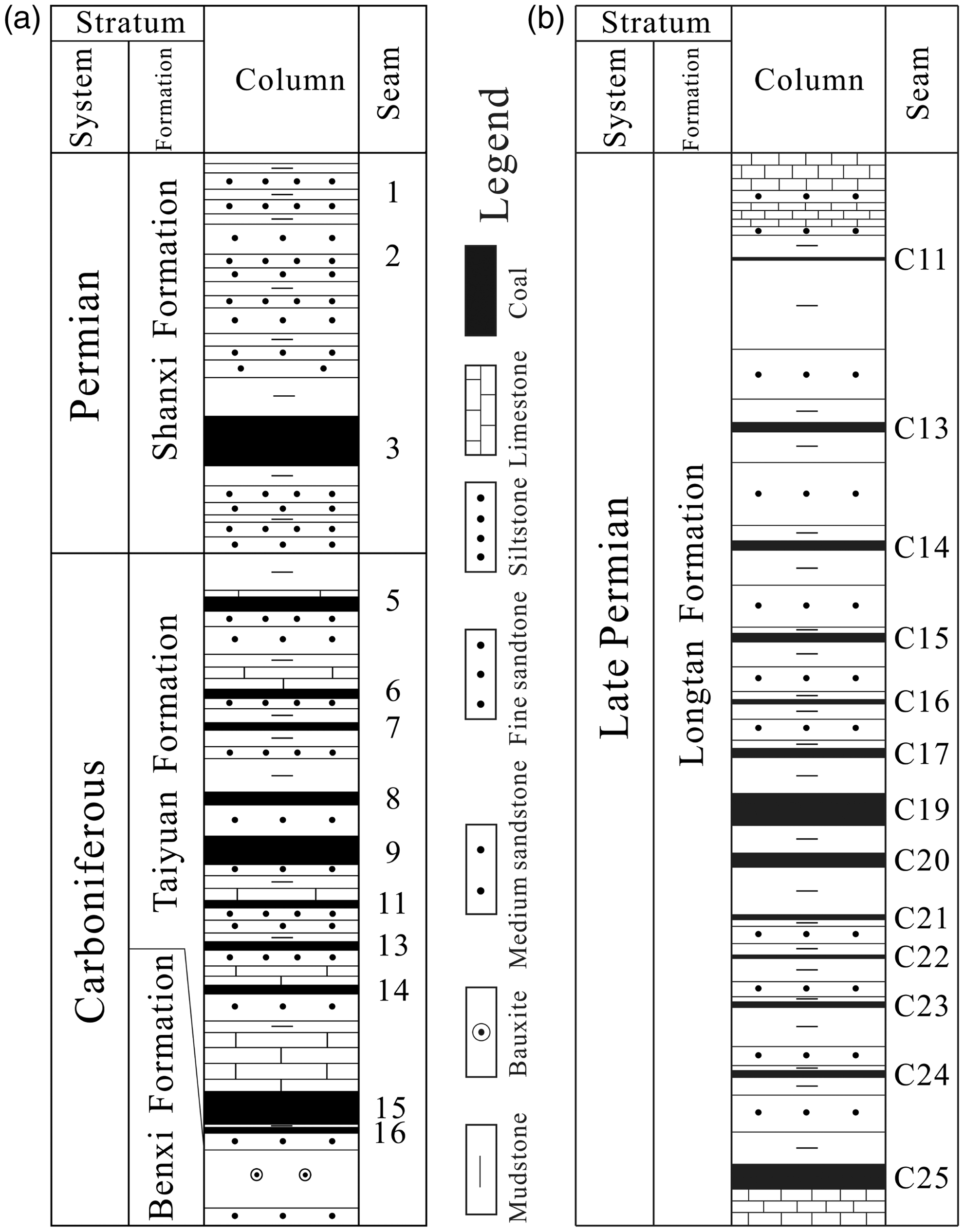
Stratigraphic columns of coal-bearing strata of the south of the Qinshui Basin (a) and the Guxu coalfield (b) (Dai et al., 2016; Wang et al., 2015).
The Guxu mining area is located in southeastern Sichuan Province, southwestern China. The Gulin anticline is developed in the Guxu mining area and contains secondary folds. The north wing of the Gulin anticline mainly exhibits open folds, whereas the southern wing exhibits tight folds (Dai et al., 2016). The coal-bearing strata in the area belong to the Late Permian Longtan Formation, which contains more than 30 layers of coal, and the target coal seams for CBM production are #C25 and #C19 (Figure 2(b)). The #C25 coal seam thickness ranges from 1.28 to 11.89 m with an average thickness of 4.60 m. The roof consists of grey thin-layered mudstone, sandy mudstone and muddy siltstone, and the floor is clay mudstone that contains fragments of plants and fossilized roots. The #C19 coal seam thickness ranges from 0.79 to 1.84 m, the roof is a thin dark grey mudstone with a small amount of calcium nodules and the floor is clay mudstone (Dai et al., 2016).
Analytical procedures
A total of 38 anthracite samples were collected from target seams in Jincheng (16 samples from #3) and Guxu (22 samples from #C25) in CBM wells. The sampling positions were evenly distributed in both areas and numbered J-1 to J-16 and G-1 to G-22, respectively.
The maximum reflectance of vitrinite (Ro,max, 500 points) and coal macerals were measured by a light microscope under oil immersion conditions according to the ISO 7404–5-2009 standard. Proximate analysis of the samples was conducted according to the ISO 17246–2005 standard.
Based on the material composition analysis results, 23 samples (11 from Jincheng and 12 from Guxu) were collected to analyse the characteristics of pore size distribution by an AutoPore IV 9510 mercury intrusion apparatus. The contact angle between the mercury and coal surface was 140°, and the surface tension of mercury was 480 dyne/cm. The pore diameter was larger than 3.0 nm at a mercury injection pressure of 413 MPa according to the Washborn equation, and the errors in compression of the coal matrix caused by high pressure were corrected based on Suuberg et al. (1995). The classification of pores was made by the decimal classification scheme: macropores (>1000 nm), mesopores (100–1000 nm), transition pores (10–100 nm) and micropores (<10 nm) (Хoдoт et al., 1966).
A methane isothermal adsorption test was conducted according to ASTM standards (ASTM) using an ISO 300-type gas adsorption instrument. Before the test, the samples were ground to 60–80 mesh and were placed in a box containing a saturated K2SO4 solution at a constant temperature (30°C) to water wetting balance. The highest adsorption pressure was less than or equal to 12 MPa with six pressure points, and the adsorption equilibrium time of each pressure point was generally greater than 12 h.
The gas content consisted of three parts (lost gas, desorbed gas and residual gas) and was tested according to the U.S. Bureau of Mining (USBM) method (Diamond and Schatzel, 1998). The injection/falloff pressure test indicated the reservoir permeability and other parameters of the original formation, such as the reservoir pressure and minimum main horizontal stress (Zhou and Yao, 2014). The injection/falloff test was a single-well pressure transient test. The basic method was to place the test string, packer and pressure gauge at the predetermined position in the well and inject water into the coal reservoir by a small injection pump with a constant discharge for a period of time such that the pressure distributed around the wellbore was greater than that of the original reservoir. The well was then shut in and the water injection pressure and the original reservoir pressure gradually became balanced. During the injection and shut-in phase, a pressure gauge was used to record the change in the bottom hole pressure with time to measure the response parameters of the coal seam at each stage (Zhou and Yao, 2014).
The material composition, pore structure and adsorption characteristic parameters of the anthracite reservoirs were measured in the laboratory by collecting core samples from field CBM wells, while the permeability and reservoir geological parameters were obtained through injection/falloff tests in field wells. All test results were from the same sample, which eliminated the effects of sample heterogeneity and ensured accuracy of the results.
Results and discussion
Maceral composition and proximate analysis
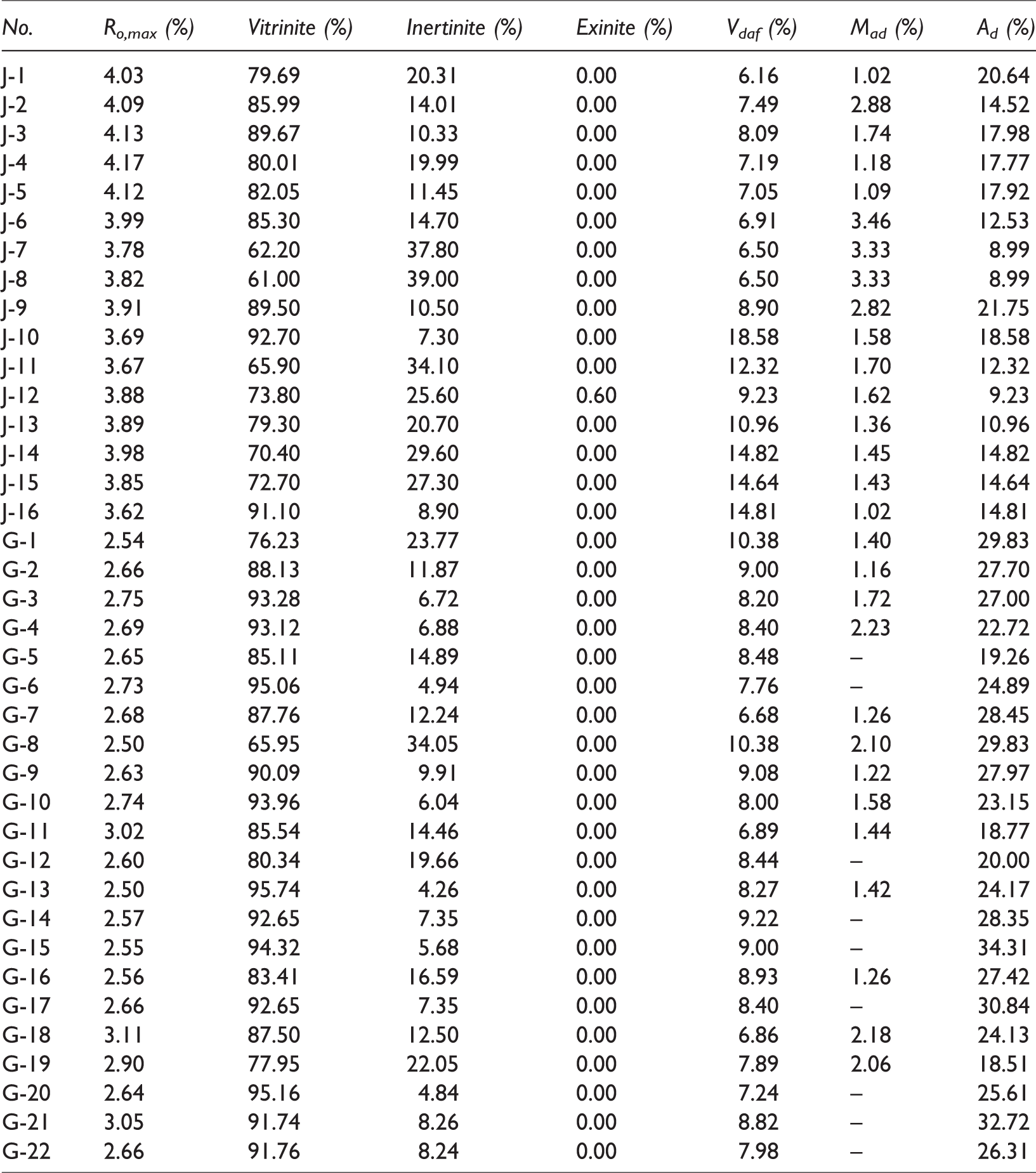
The macerals changed during the metamorphic process, which affected the adsorption capacity and the hydrocarbon generating potential of the coal (Crosdale et al., 1998; Laxminarayana and Crosdale, 1999). The basic data of coal samples can be seen in Table 1. The vitrinite content was between 61.00 and 94.70% (an average of 80.77%), and the inertinite content was between 3.50 and 39.00% (an average of 13.73%) (Figure 3). There was almost no exinite, which is not common in medium- and low-rank coal reservoirs (Figure 3). As the metamorphic degree increased, the content of vitrinite increased, while the behaviour of the inertinite content was the opposite (Figure 3(a) and (b)). Anthracite is a highly metamorphic coal. During the metamorphic process, exinite first vaporizes to form vitrinite, followed by inertinite, which causes the exinite to disappear and the vitrinite to be enriched (Ayaz et al., 2016; Ward et al., 2005). The volatile content (Vdaf) was between 5.18 and 18.98% and gradually decreased with increasing Ro,max (Figure 4(a)), and the change rate of the Jincheng coal was notably greater than that of the Guxu coal. The moisture content (Mad) of the Guxu coal gradually decreased with increasing Ro,max (Figure 4(b)). The reason for the decrease in Mad was the decomposition of hydrophilic functional groups, specifically the decomposition of hydroxyl and carboxyl groups (Bustin and Guo, 1999). The content of ash (Ad) varied greatly, ranging from 8.14% in the Jincheng coal to 34.31% in the Guxu coal (an average of 14.81%) (Figure (5)). The Jincheng coal was a low ash coal and the Guxu coal was a rich ash coal. Because the Guxu coal was close to the ancient land, there was more terrigenous debris, which led to an increase in the ash content (Dai et al., 2016).
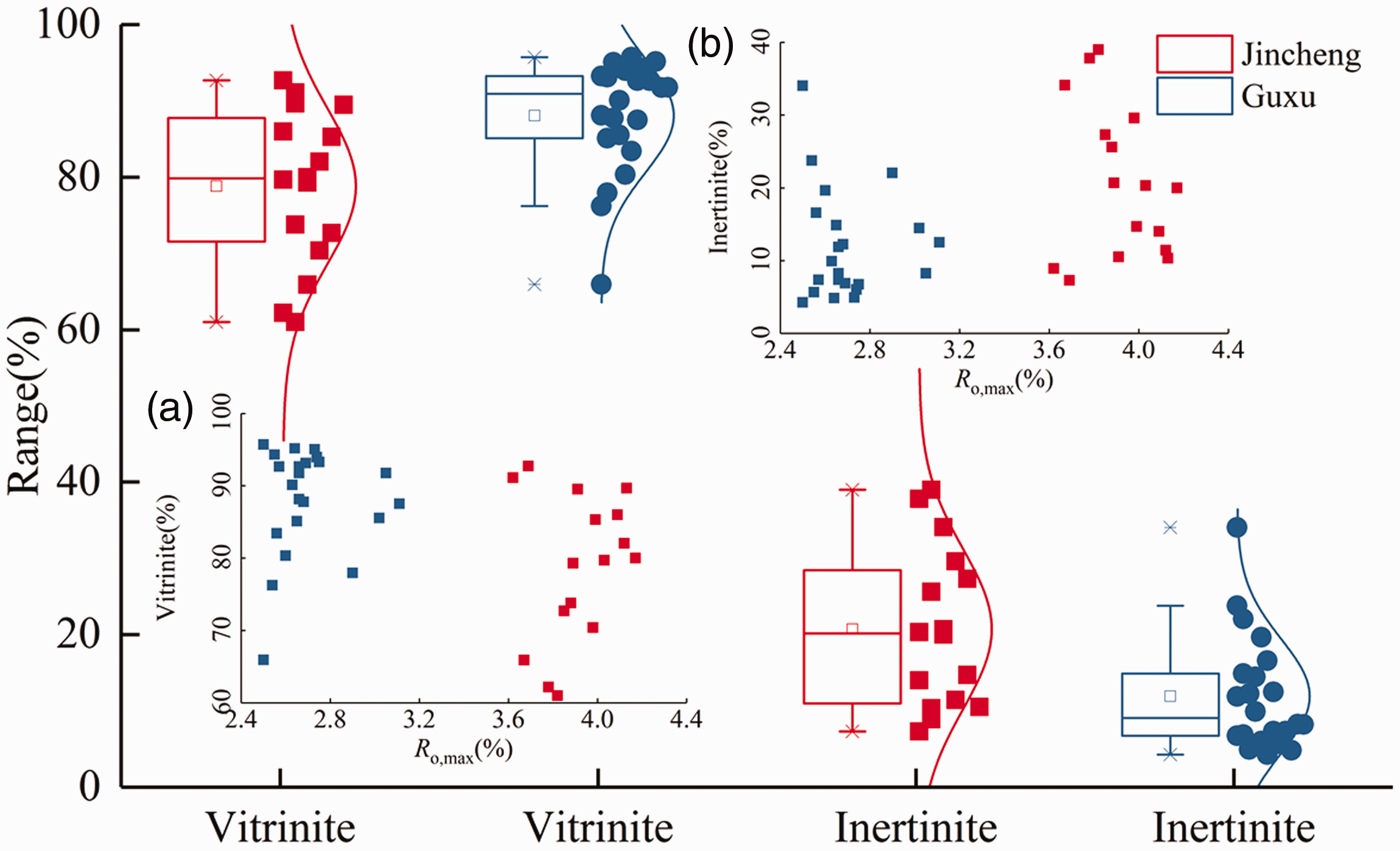
Distribution of maceral and evolution with Ro,max of anthracite.
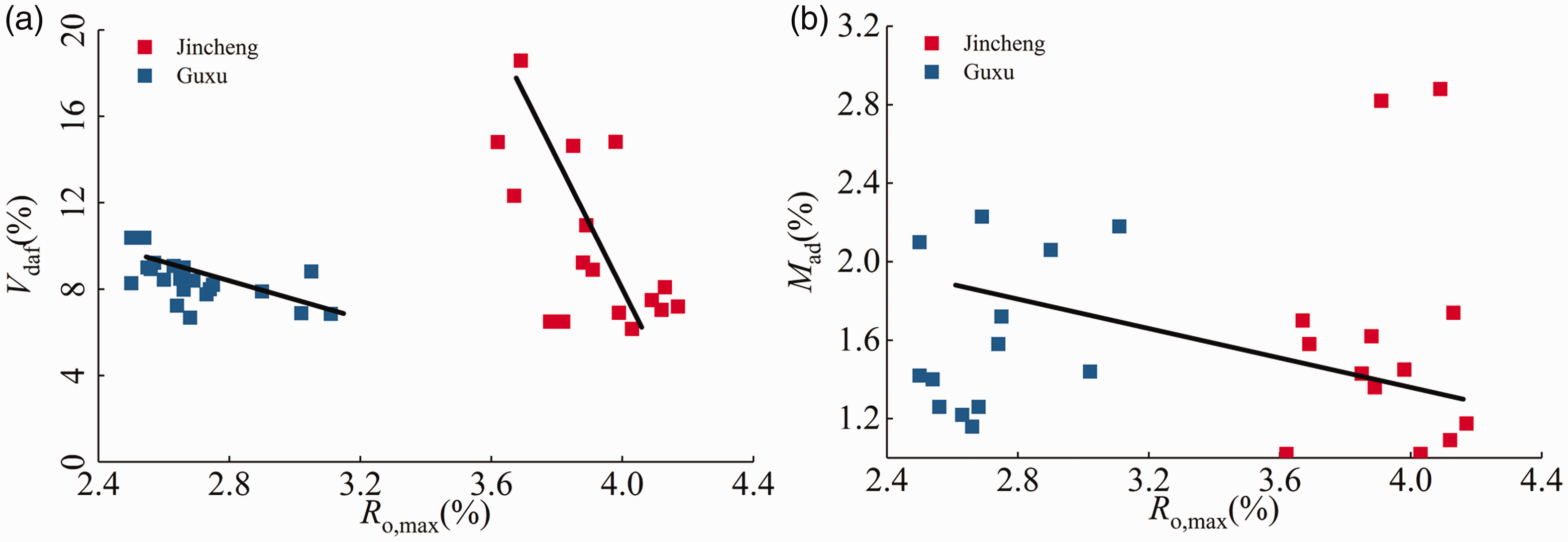
The relationship between Vdaf, Mad and Ro,max.
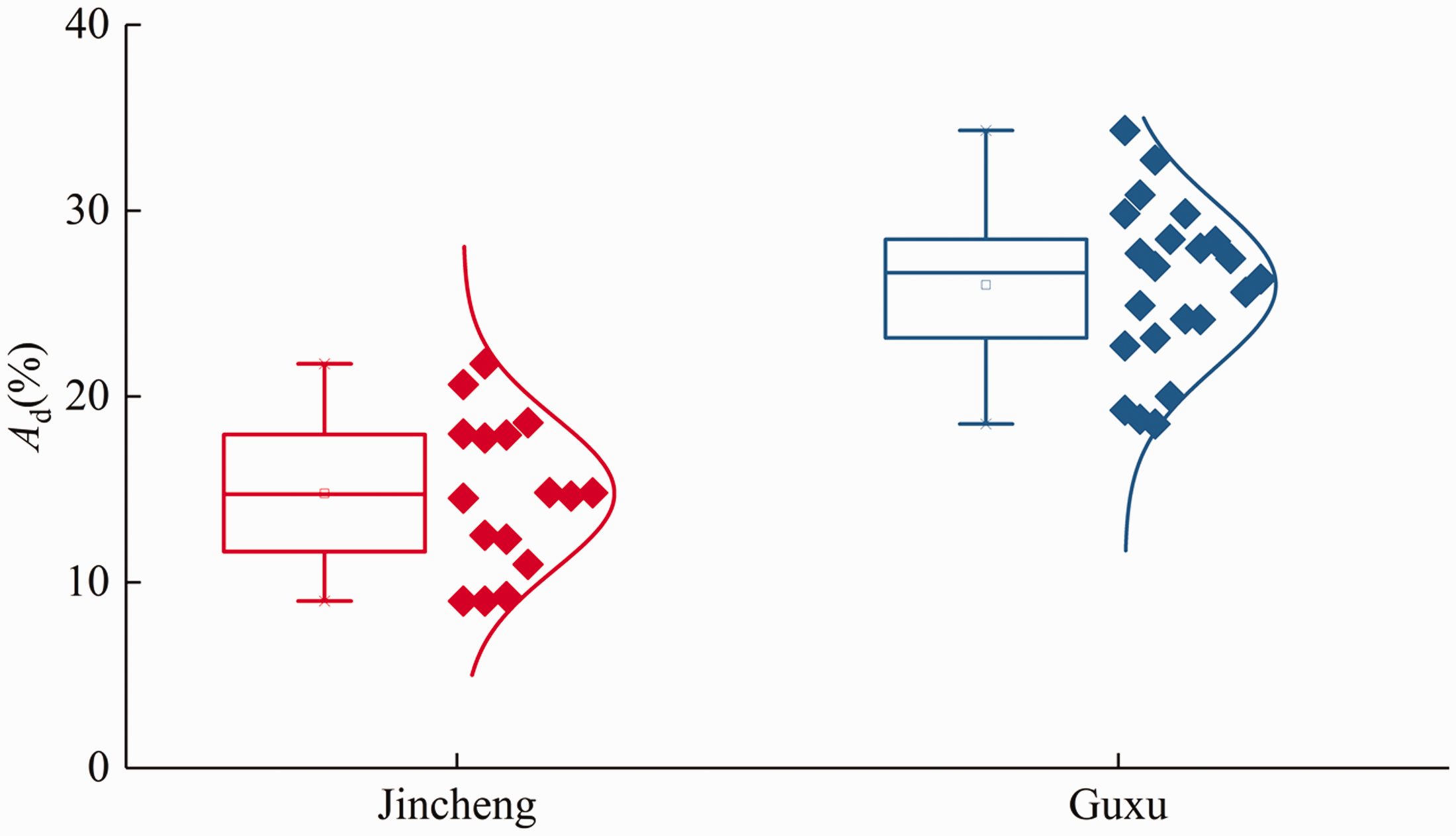
Box chart of Ad of anthracite.
Pore and permeability characteristics
Pore size distribution
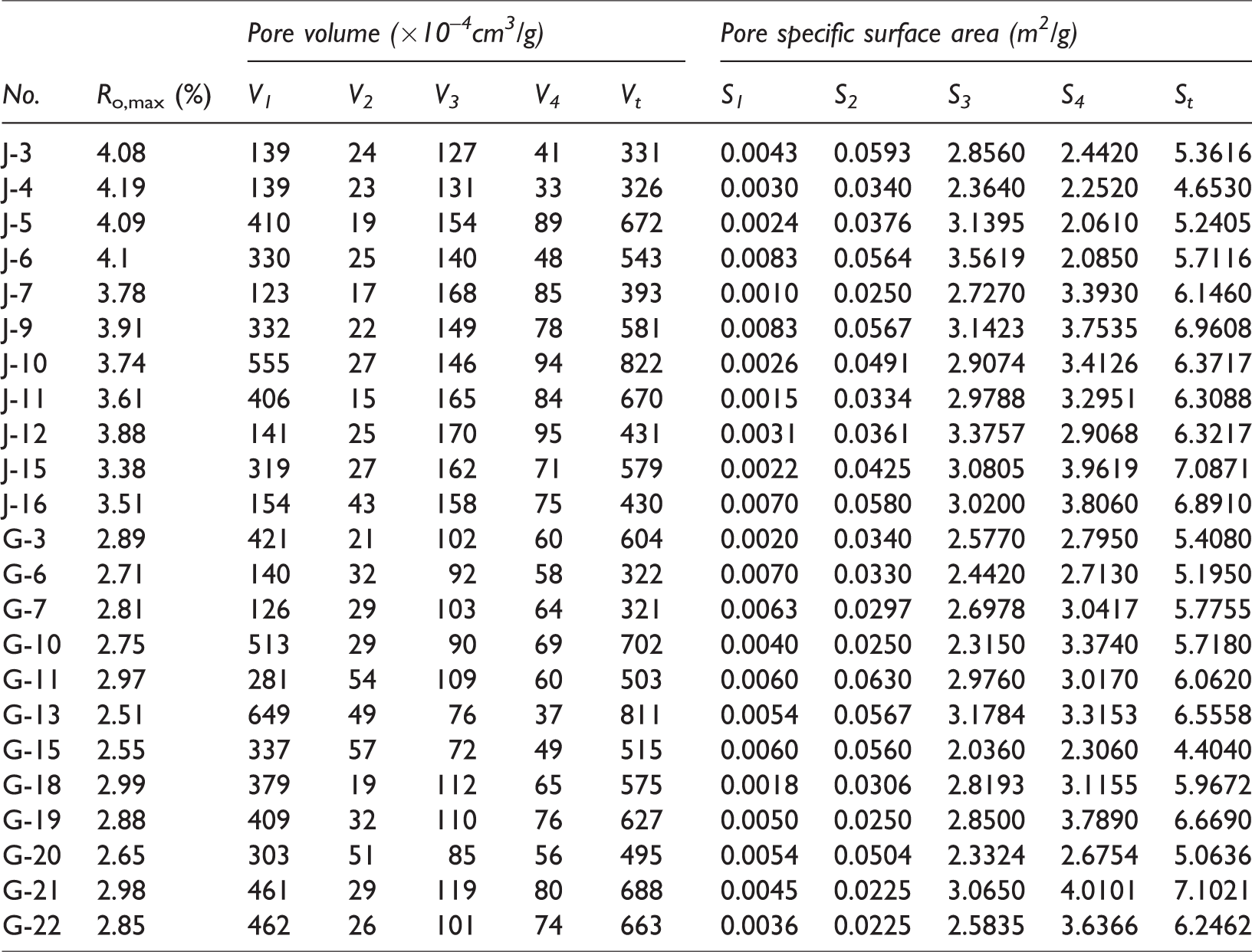
Mercury intrusion experiments were carried out on 23 coal samples with different Ro,max values of anthracite (Table 2). The mercury injection experiments showed that the total pore volumes ranged from 0.0327 to 0.0790 cm3/g, with an average of 0.0534 cm3/g. The contributions of macropores (V1), mesopores (V2), transition pores (V3) and micropores (V4) to the total pore volume were 30.01–73.87%, 30.01–73.87%, 30.01 –73.87% and 30.01–73.87%, respectively (Figure 6). The average percentage contribution to each class of pores was approximately 54.05% from macropores, 5.13% from mesopores, 26.60% from transition pores and 14.23% from micropores. As shown in Table 3, the total pore specific surface area ranged from 4.4040 to 7.1021 m2/g, with an average of 5.9661 m2/g. The contributions of macropores (S1), mesopores (S2), transition pores (S3) and micropores (S4) to the total pore specific surface area were 0.02–0.15%, 0.32–1.27%, 40.49–62.36% and 36.50–59.01%, respectively. The average percentage contribution to each class of pores was approximately 0.08% from macropores, 0.70% from mesopores, 47.64% from transition pores and 51.59% from micropores. Macropores and mesopores accounted for 59.18% of the total pore volume but only accounted for 0.77% of the total specific surface area, whereas the transition pores and micropores accounted for 40.82% of the total pore volume and 99.23% of the total specific surface area, respectively. The large specific surface area of anthracite reservoirs provides a location for the presence of methane (Liu et al., 2015), but the smaller pore size also creates greater resistance to the migration of methane (Jian et al., 2015), which is a very contradictory issue for CBM development.
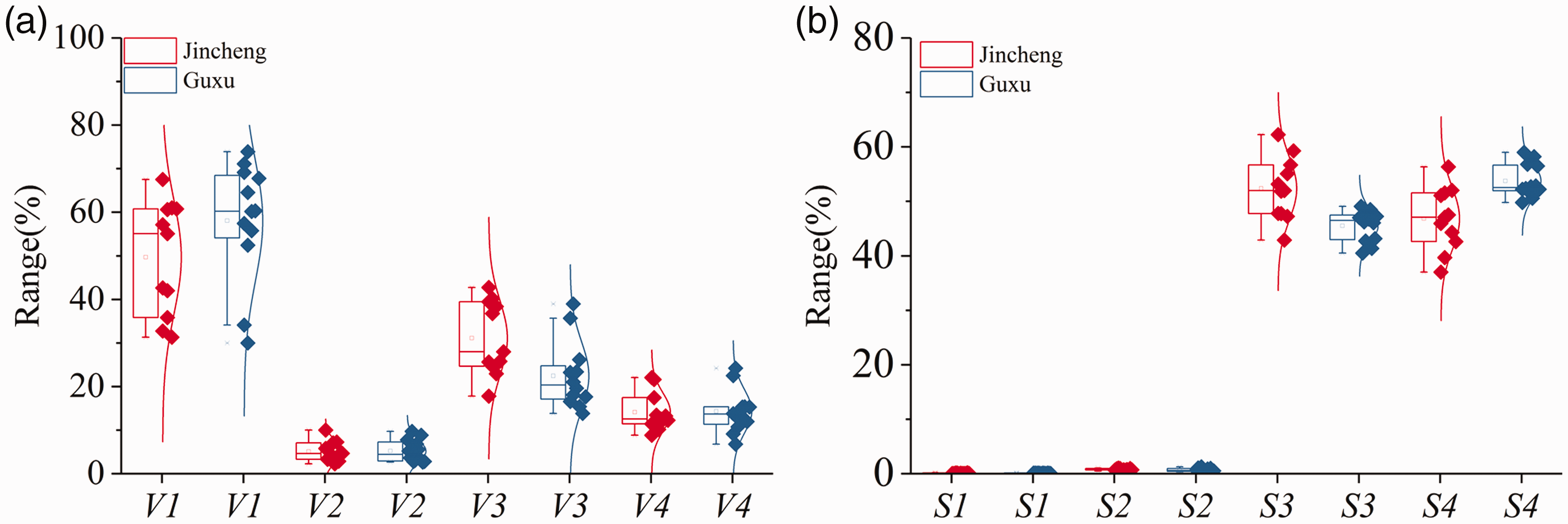
Distribution of pore volume and specific surface area distribution of anthracite.
Anthracite proximate analysis and macerals of Jincheng and Guxu coals.
Anthracite coal reservoir pore size distribution of Jincheng and Guxu coals.
Anthracite reservoir physical property parameters of Jincheng and Guxu coals.
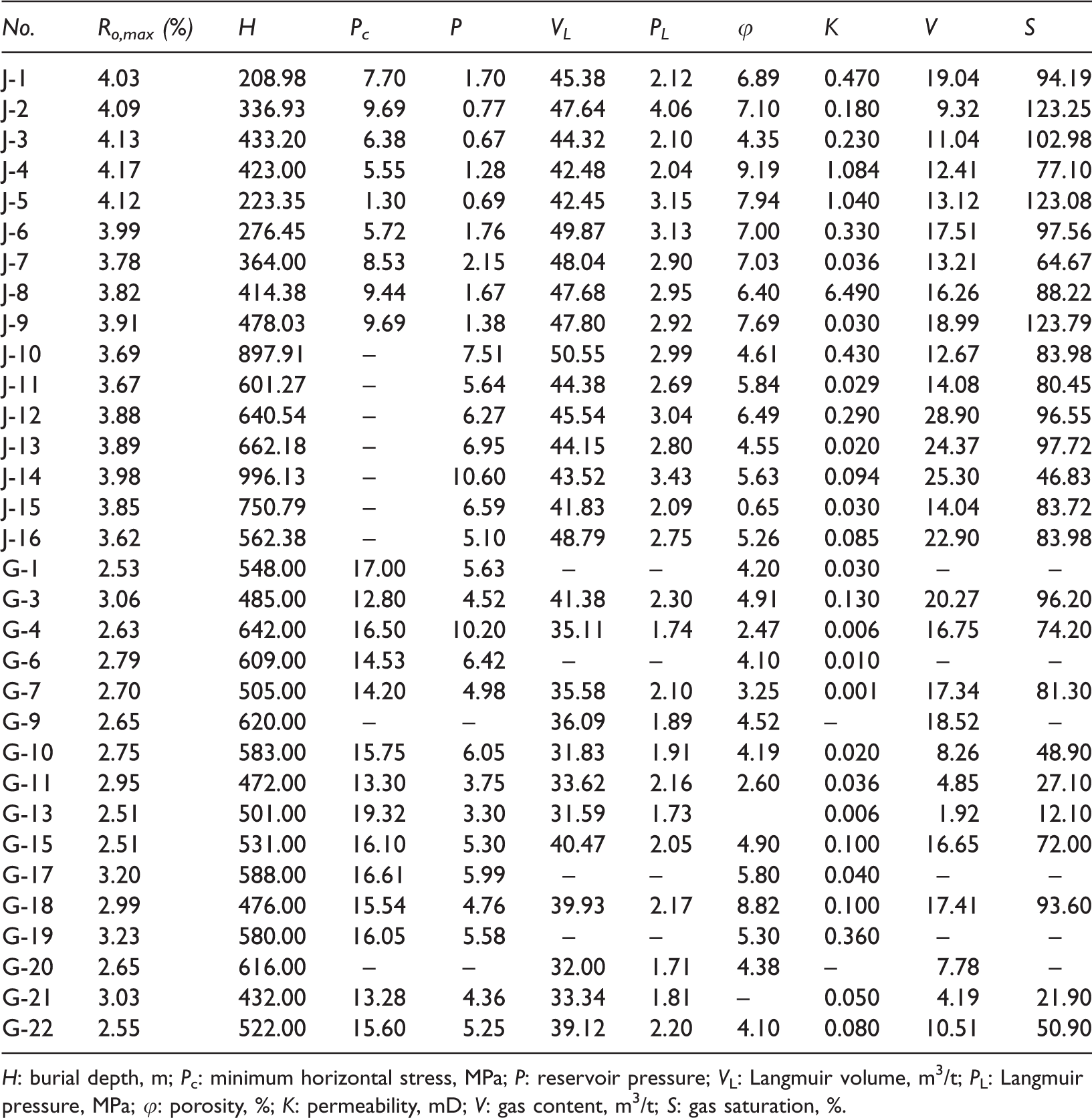
H: burial depth, m; Pc: minimum horizontal stress, MPa; P: reservoir pressure; VL: Langmuir volume, m3/t; PL: Langmuir pressure, MPa; φ: porosity, %; K: permeability, mD; V: gas content, m3/t; S: gas saturation, %.
The volume of macropores and mesopores slowly decreased with increasing Ro,max, while the micropore and transition pore volume first increased and then gradually decreased with increasing Ro,max, with a maximum occurring at Ro,max = 3.7% (Figure 7(a)). The specific surface area of micropores and transition pores showed the same trend as that of the micropore and transition pore volume, and a maximum also occurred near Ro,max=3.7% (Figure 7(b)). The transition in micropores and transition pores occurred because of the coalification jump that occurred at Ro,max=3.7% (Bustin and Guo, 1999; Kopp and Harris, 1984; Stach and Murchison, 1982). Before the coalification jump point, the degree of condensation and aromaticity of the aromatic fused rings gradually increased, and the molecular structural unit of coal appeared to be directional. Micropores and transition pores were formed in this process, while the large and mesopores were gradually reduced (Bustin and Guo, 1999; Kopp and Harris, 1984; Stach and Murchison, 1982). Meanwhile, during the ring condensation process, the condensed aromatic rings gradually changed from fragmented to ordered, and the methyl branches on the aromatic ring layers frequently fell off, forming a large amount of methane. A series of tiny pores was formed during this process, which led to an increase in the number of micropores and transition pores and an increase in the volume. Then, as the aromatic ring rank was further enhanced, methane branches stopped falling off, and the gas generation stage ended, no additional pores were formed. Meanwhile, the increase in rank led to an increase in aromatic laminates, which reduced the pore volume of micropores and transition pores through compression (Bustin and Guo, 1999; Kopp and Harris, 1984; Stach and Murchison, 1982). This change affected the reservoir’s adsorption capacity and gas content, which will be discussed below.
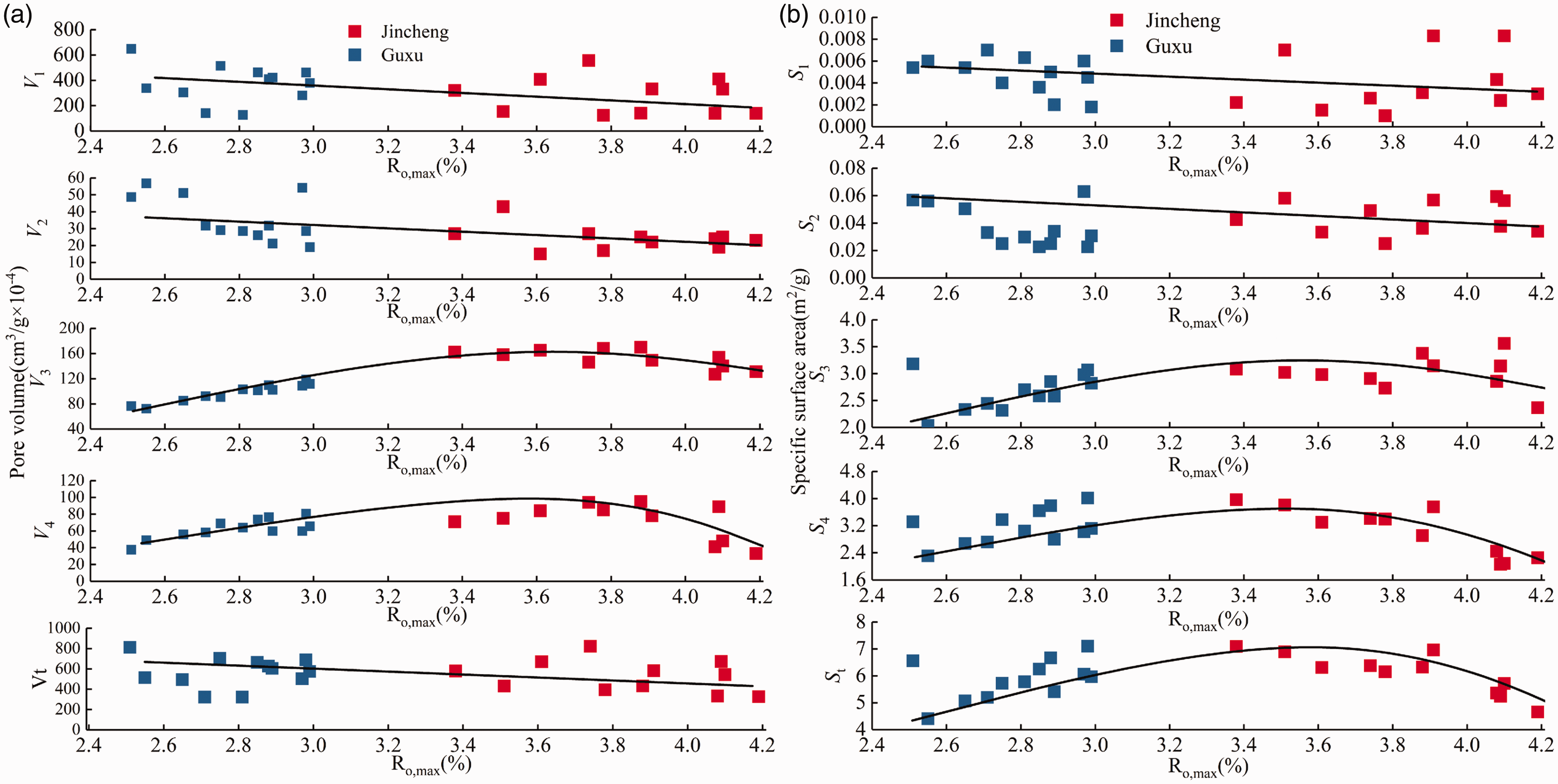
The relationship between pore volume, specific surface areas and Ro,max.
In-situ permeability/porosity
The in-situ permeability ranged from 0.006 to 6.490 mD, with an average of 0.390 mD, which is much lower than that of medium- and low-rank coal reservoirs (Flores, 2013; Qin et al., 2018). According to the classification of permeability standards of Su and Fang (1998), high permeability was defined as being greater than 1 mD and accounted for 6.7%, medium permeability ranged from 0.1 to 1 mD and accounted for 34.3%, low permeability ranged from 0.01 to 0.1 mD and accounted for 48.4%, and super-low permeability was defined as being less than 0.01 mD and accounted for 10.7% of the reservoir. As shown in Table 1 and Figure 8, most of the in-situ permeability in the Jincheng coal was classified as belonging to a medium-high permeable reservoir, while the Guxu coal belonged to a low to super-low permeable reservoir. According to current data, the average permeability in Jincheng is 0.680 mD, while that in Guxu is 0.069 mD, which is only one-tenth of that in Jincheng. This phenomenon is also one of the reasons why Jincheng experienced the earliest commercial CBM development in China.
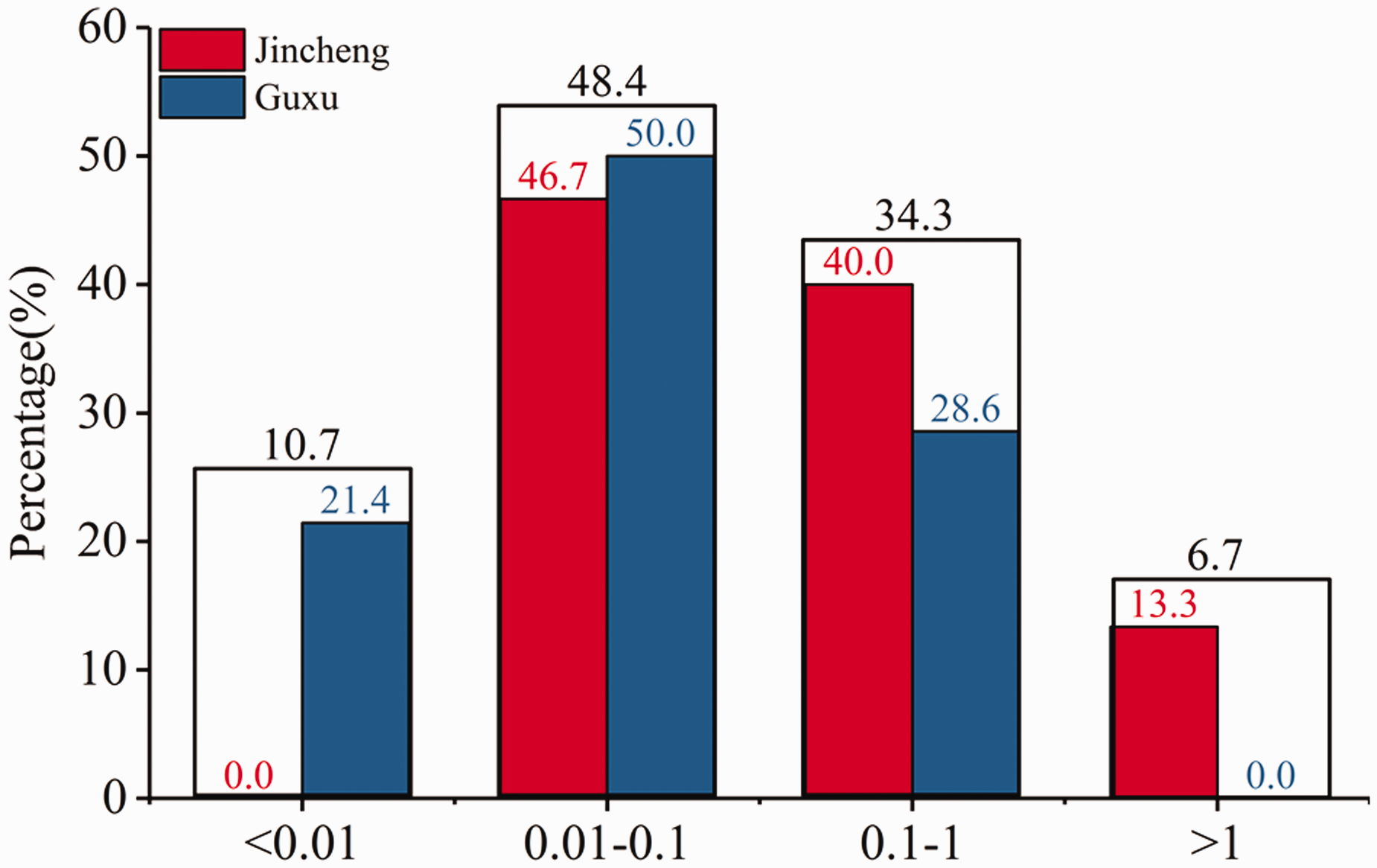
Permeability distribution histogram.
The porosity ranged from 2.60 to 9.19%, with an average of 5.53%. The porosity increased with increasing Ro,max (Figure 9), which was contrary to the behaviour of the total pore volume (Figure 7). The porosity in this study was obtained by injection/falloff testing, which was the same as the permeability test methods and contained a fracture space. The pore volume measured by the mercury intrusion method above primarily reflects the pore space below 10,000 nm and excludes fractures (Dawson and Esterle, 2010; Laubach et al., 1998).
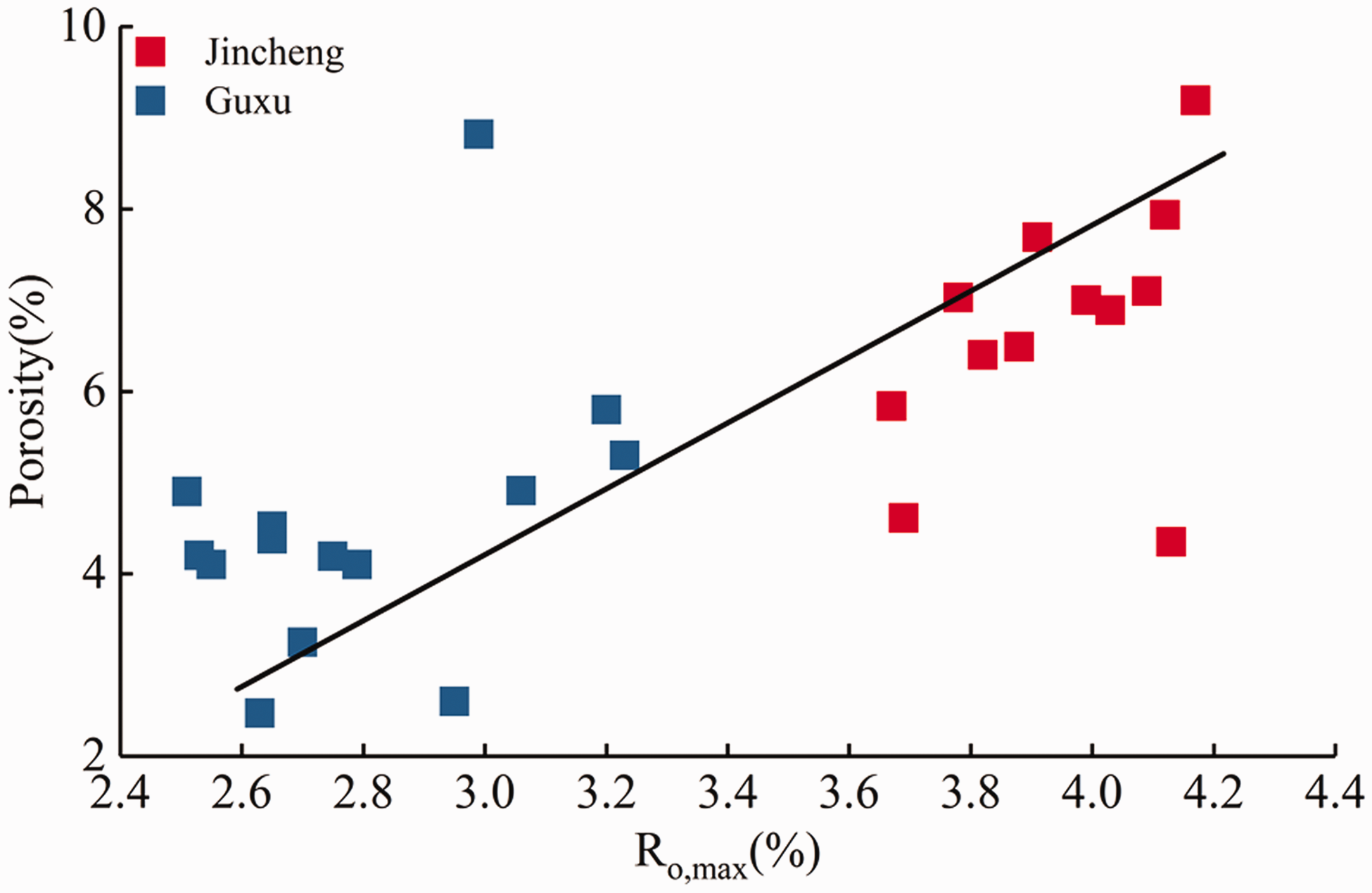
The relationship between porosity and Ro,max.
Coal reservoir permeability is affected by many factors: burial depth (overlying geostress), horizontal stress, coal rank and coal texture (Moore, 2012; Pan and Connell, 2012). The permeability exponentially decreased with increasing burial depth (Figure 10(a)). The influence of the burial depth on permeability was caused by the geostress produced by overlying strata, which led to the closure of fractures (Somerton et al., 1975). The decreasing trend of the permeability of the Jincheng coal with burial depth was the same as that of the Guxu coal, which implies that the overlying stress had a great controlling effect on the permeability. The permeability exponentially decreased with the increase in the minimum horizontal stress, as with the burial depth (Figure 10(b)). There was a strong corresponding relationship between the burial depth and minimum horizontal main stress regardless of the overall downward trend or the change characteristics of both mining areas (Figure 11). Rock mass deformation due to the overlying stress is one of the causes of the minimum horizontal main stress formation (Moore, 2012). The permeability exponentially increased with increasing porosity (Figure 10(c)). The larger porosity could reflect the width of reservoir fractures to a certain extent, which is favourable for fluid migration, i.e., a greater permeability (Laubach et al., 1998). The permeability also exponentially increased with increasing Ro,max (Figure 10(d)). The increase in Ro,max indicated the formation of a certain number of microfractures that led to an increase in permeability (Cao et al., 2000; Dawson and Esterle, 2010). In the high metamorphic stage, the aromatic ring layer in the coal evolved from a random staggered distribution to a directional arrangement, and the connections between the aromatic ring layers were reduced. When subjected to stress during metamorphism or volumetric shrinkage deformation of the gelled components in coal, the coal mass is prone to fracturing to form microfractures (Qin, 1994; Stach and Murchison, 1982). The formation of such microfractures increases the reservoir permeability. The relationship between the porosity and the degree of metamorphism is similar to that of permeability, as shown above (Figure 9). This is because an increase in the degree of coal metamorphism results in the formation of micro-fractures as well as an increase in the reservoir pore space (Moore, 2012).
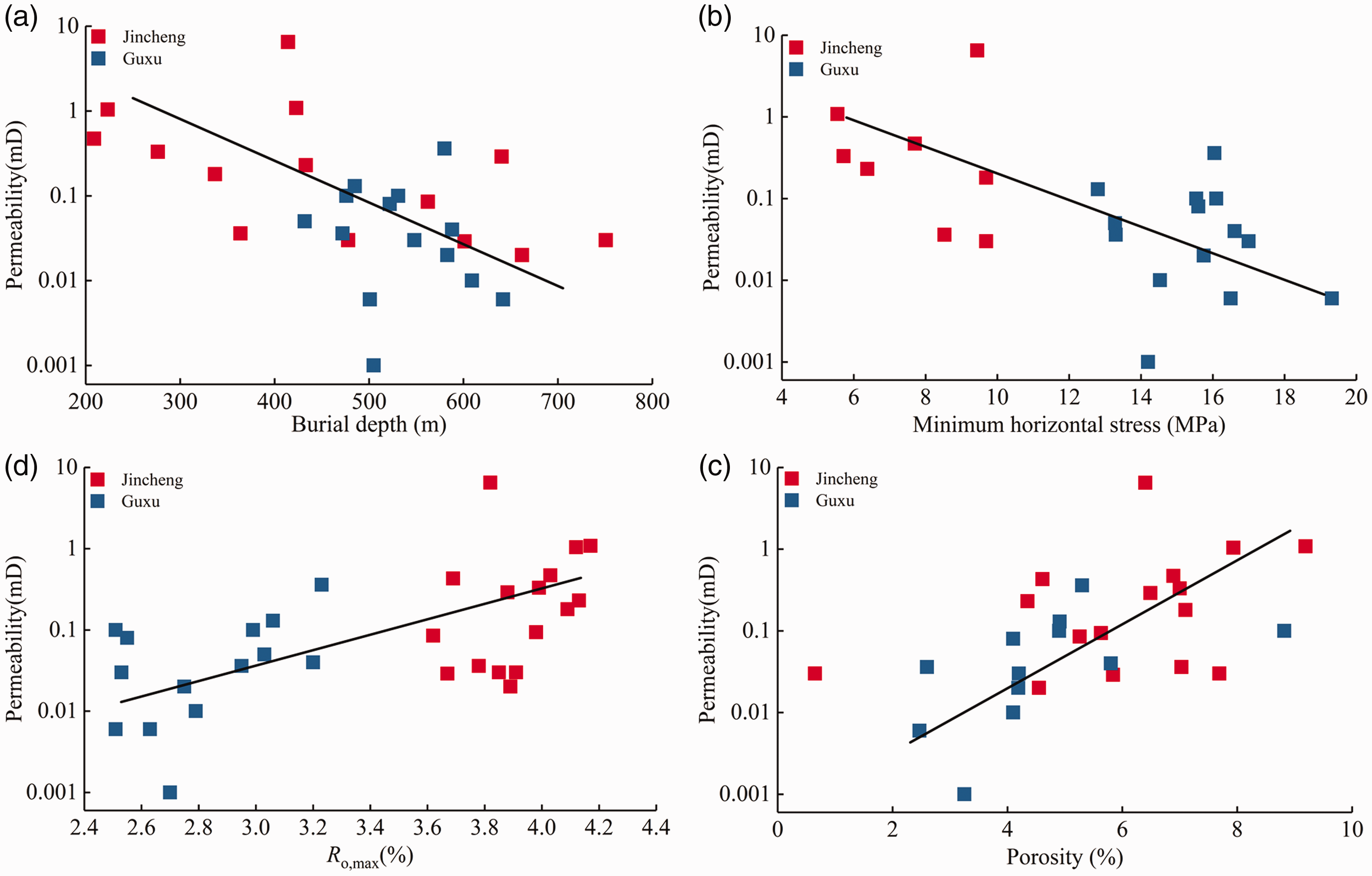
The relationship between burial depth, minimum horizontal stress, porosity, Ro,max and permeability.
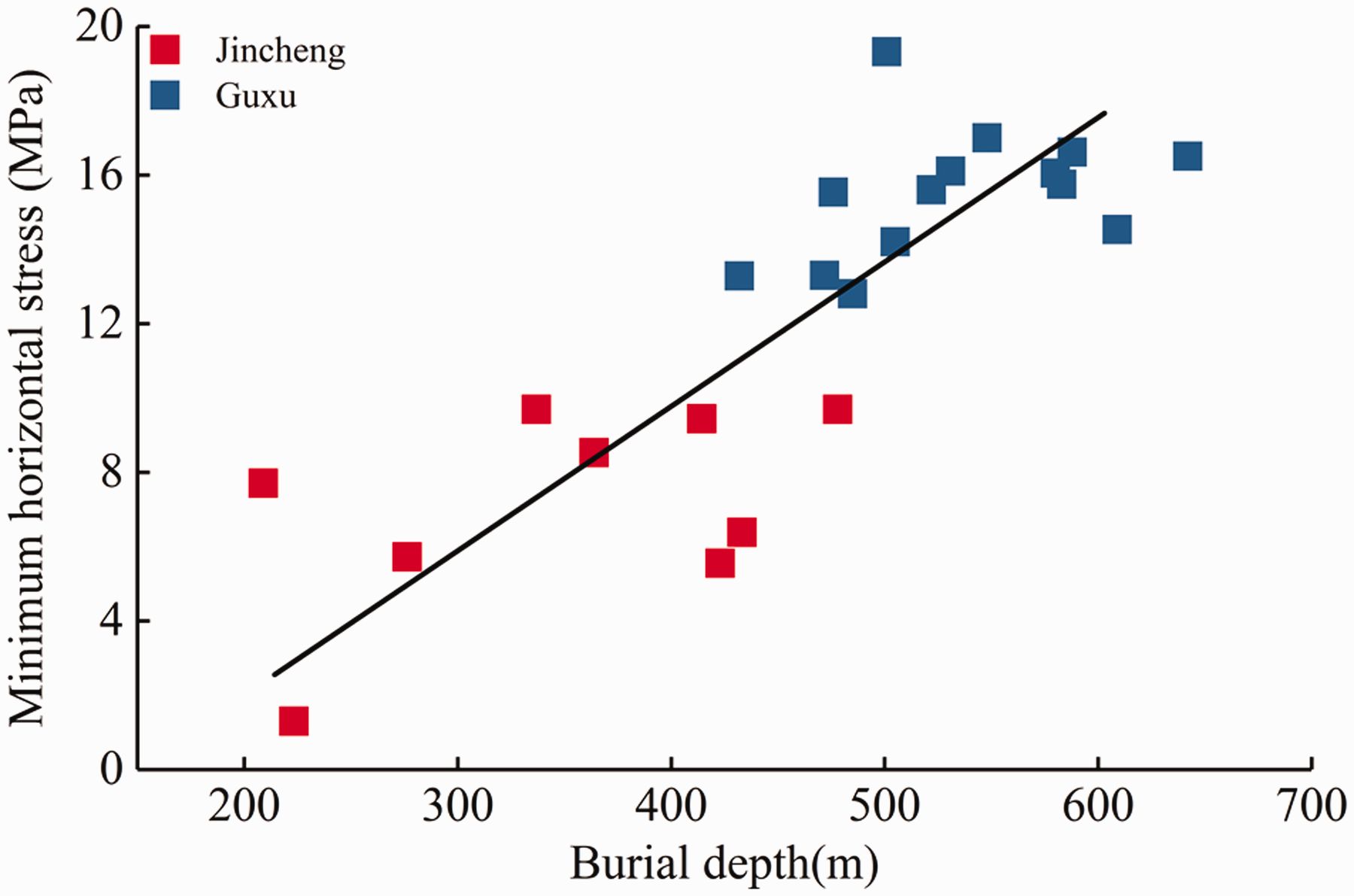
The relationship between minimum horizontal stress and burial depth.
The Jincheng mining area had greater permeability compared to the Guxu mining area, which is caused by two reasons. On the one hand, the Jincheng mining area had a higher degree of coal metamorphism and more developed fractures. On the other hand, the depth of the coal reservoir in the Jincheng mining area was shallower, and the fracture openings were larger than those of the reservoir in the Guxu mining area.
Gas-bearing characteristics
Methane adsorption
The methane adsorption capacity is an important parameter used to estimate the gas-bearing potential of CBM reservoirs (Faiz and Cook, 1991; Laxminarayana and Crosdale, 1999). Figure 12 shows that anthracite has a greater adsorption capacity, with the Langmuir volume (VL and daf base) ranging from 23.07 to 58.89 m3/t (an average of 40.68 m3/t), and the Langmuir pressure (PL and daf base) ranging from 1.65 to 4.36 MPa (an average of 2.56 MPa). The adsorption amount increased quickly in the lower pressure region (<4 MPa), and then slowly increased as the pressure increased, indicating that it was easy for methane to desorb at low pressures during the development process, which meant that the gas production per unit pressure drop during the early stages would be low than that in later stages (Meng et al., 2016). With regard to medium- and low-rank coals, a larger adsorption capacity tended to indicate a greater gas content. However, a higher Langmuir pressure indicated that the difficulty of methane desorption gradually increased (Wang et al., 2014). The average VL for the Jingcheng coal was 45.90 m3/t, which was much higher than that of the Guxu coal (36.38 m3/t). This result was due to the larger specific surface area of the Jincheng coal.
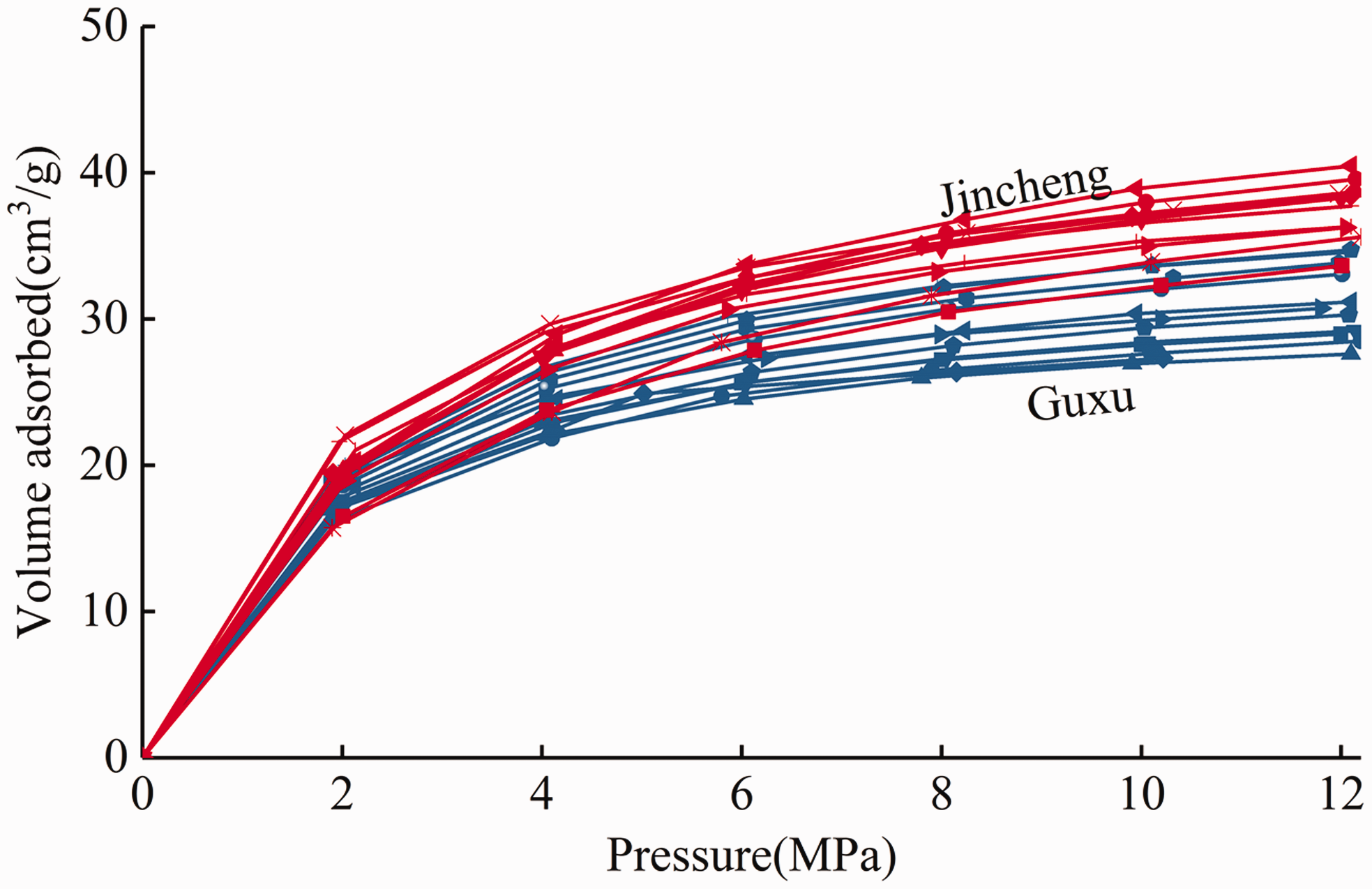
Iso thermal adsorption curves of coal samples.
There still exists controversy over the relationship between adsorption and coal rank. Previous studies have considered that the methane adsorption capacity of coal reservoirs is a U-type change with increasing Ro,max and that the adsorption capacity of an anthracite reservoir gradually increases with increasing Ro,max (Gan et al., 1972; Faiz and Cook, 1991; Laxminarayana and Crosdale, 1999; Levy et al., 1997). However, different researchers disagree on the lowest point of the U-type change. Laxminarayana and Crosdale (1999) believe that the contents of clarain and durain reached their minimum at Ro,max=1.17% and Ro,max=1.72%, respectively, but Gan et al. (1972) argue that these parameters reached their lowest value at Ro,max=1.3%. However, they did not perform a targeted analysis of anthracite. The current results showed that VL had a parabolic shape with increasing Ro,max in the anthracite reservoir and reached a maximum at Ro,max=3.7% (Figure 13(a)). The methane in the coal reservoir was mainly adsorbed on the surface of the coal matrix. The larger specific surface area indicated a greater amount of adsorption (Figure 13(b)). As shown in Figure 7, Ro,max=3.7% is the coalification point, where the specific surface area reached its maximum, and resulted in the adsorption capacity reaching its maximum value. The influence of macerals on the adsorption capacity has been controversial. Some scholars believe that vitrinite has more abundant micropores (<2 nm) and a larger specific surface area, which means a stronger adsorption ability and that its micropores are not developed in inertinite (Crosdale et al., 1998; Ettinger et al., 1966). However, Faiz and Cook (1991) believe that there is no direct relationship between the two parameters. The current data showed that VL had an clear positive correlation with the vitrinite content (Figure 13(c)) and a negative correlation with the inertinite content (Figure 13(d)), which is consistent with the research of most scholars (Crosdale et al., 1998; Ettinger et al., 1966). The VL of the Jincheng coal was notably larger than that of the Guxu coal because of the greater specific surface area of the Jincheng coal (Figure 7).
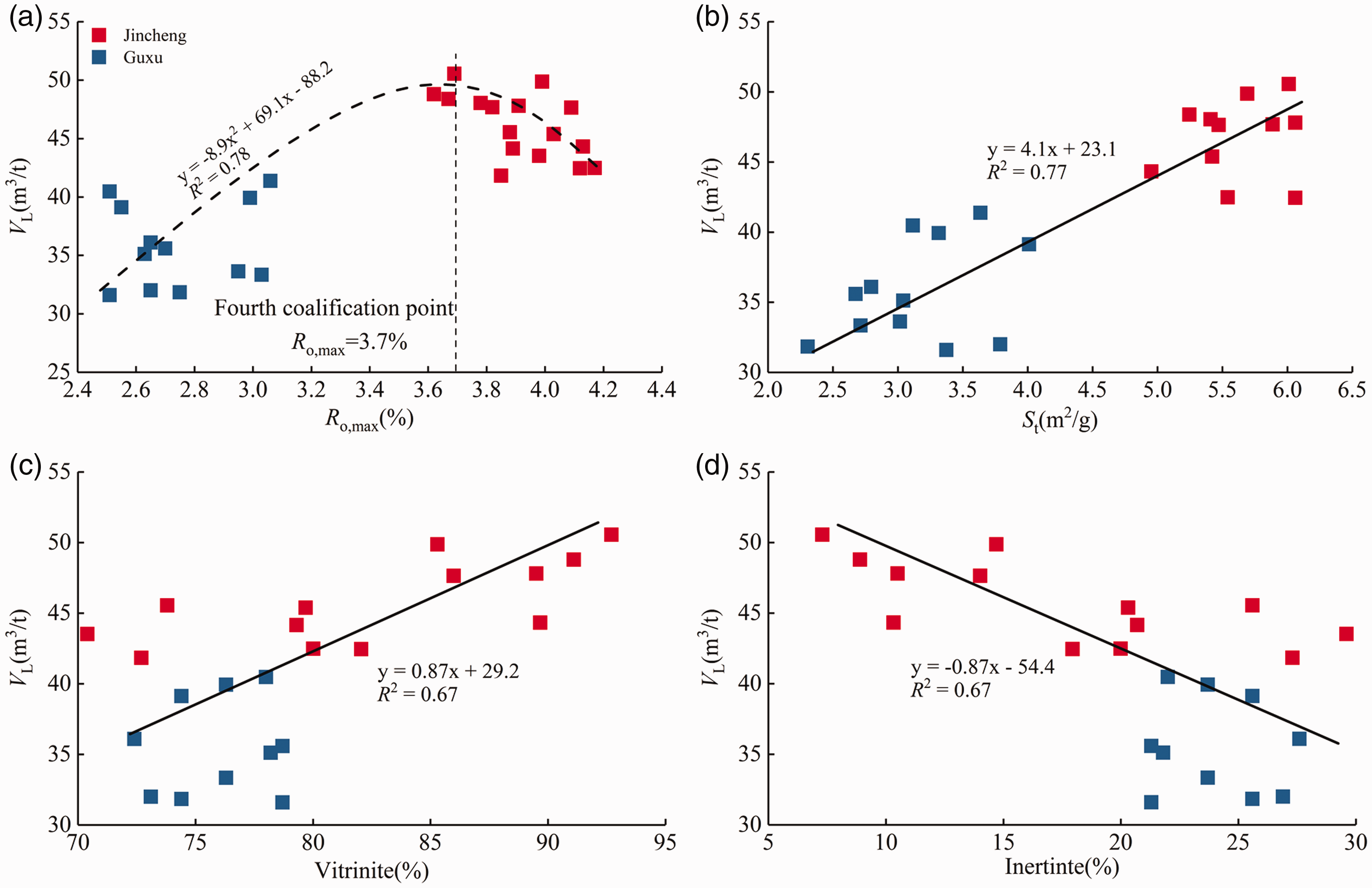
The relationship between VL and Ro,max, St, vitrinite, inertinite.
Gas content/saturation
The gas content is the most direct parameter to evaluate CBM resources and development potential in a given area. The reservoir gas content of the two mining areas was determined by the USBM method. The results showed that the gas content (daf base) ranged from 1.92 to 33.33 m3/t (an average of 15.39 m3/t) (Figure 14(a)). The average gas content in the Jincheng and Guxu coal was 17.10 and 12.0 m3/t, respectively (Figure 14(a)). The gas saturation is a key indicator of the coalbed methane constituency, and it is an important parameter to measure the difficulty of CBM extraction. The gas saturation is calculated from the ratio of the gas content to the maximum adsorption under reservoir pressure conditions:

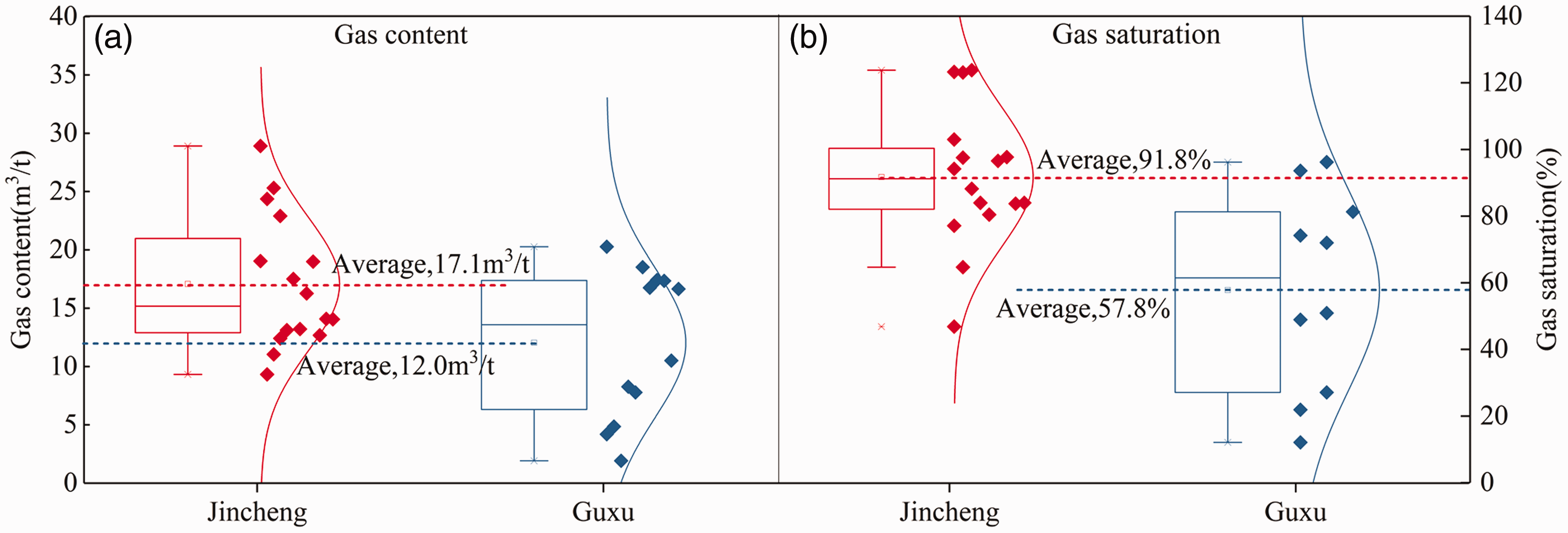
Box chart of gas content and saturation.
There are many controlling factors for the gas content, which are not only related to VL and Ro,max but are related to the burial depth, structural position and hydrogeological condition of the research area (Kędzior, 2014; Scott et al., 2007). The methane in coal reservoirs mainly exists in the adsorbed state, and the adsorption capacity of coal reservoirs greatly affects the gas content (Perera et al., 2012). The larger the VL, the greater the gas content (Figure 15(a)). There was a positive linear correlation between the gas content and VL in the Guxu coal, whereas the same relationship was not notable in the Jincheng coal. The gas content first increased and then decreased with increasing Ro,max with a maximum of approximately Ro,max=3.6%, which was near the fourth coalification jump point (Ro,max=3.7%) (Figure 15(b)). Before the coalification jump, a large amount of methane was generated due to breakage of the methyl branches on aromatic rings during condensation (Kopp and Harris, 1984; Stach and Murchison, 1982). In addition, the increase in the pore specific surface area provided adsorption locations for methane (Figure 7), and therefore, the gas content increased with increasing Ro,max. After the coalification point, the pyrolysis of coal stopped, and the specific surface area decreased, resulting in a decrease in the gas content with increasing Ro,max. The Ro,max of the Guxu coal was less than 3.7%, which means that its coalification degree had not yet reached the jump point, while the Ro,max in the Jincheng coal had reached the jump point. The latter meant that a higher metamorphic degree in the Guxu mining area during CBM exploration may indicate more abundant resources, while the metamorphic degree in Jincheng indicated the opposite. The gas content gradually increased with increasing burial depth (Figure 15(c)). Previous studies have shown that there is a maximum between the burial depth and gas content under the effect of ground temperature and pressure (Faiz et al., 1999; Qin et al., 2018). Faiz et al. (1999) studied and observed that the gas content reached a maximum at approximately 600 m in the coal reservoirs in the Sydney Basin, and in China, the maximum occurred at approximately 800 m (Qin et al., 2018). Pressure and temperature play alternating dominant roles in the gas content at different burial depths: pressure plays a positive main role in the adsorption capability when the gas content of the reservoir is lower than the maximum value, whereas a negative main effect was caused by temperature on the adsorption capacity above the maximum gas content. Because the depth of the samples selected in the paper was less than 800 m, there was no turning point in the gas content. The gas content gradually increased with increasing reservoir pressure (Figure 15(d)), which was similar to its behaviour with increasing burial depth due to the reservoir pressure mainly being caused by the burial depth.
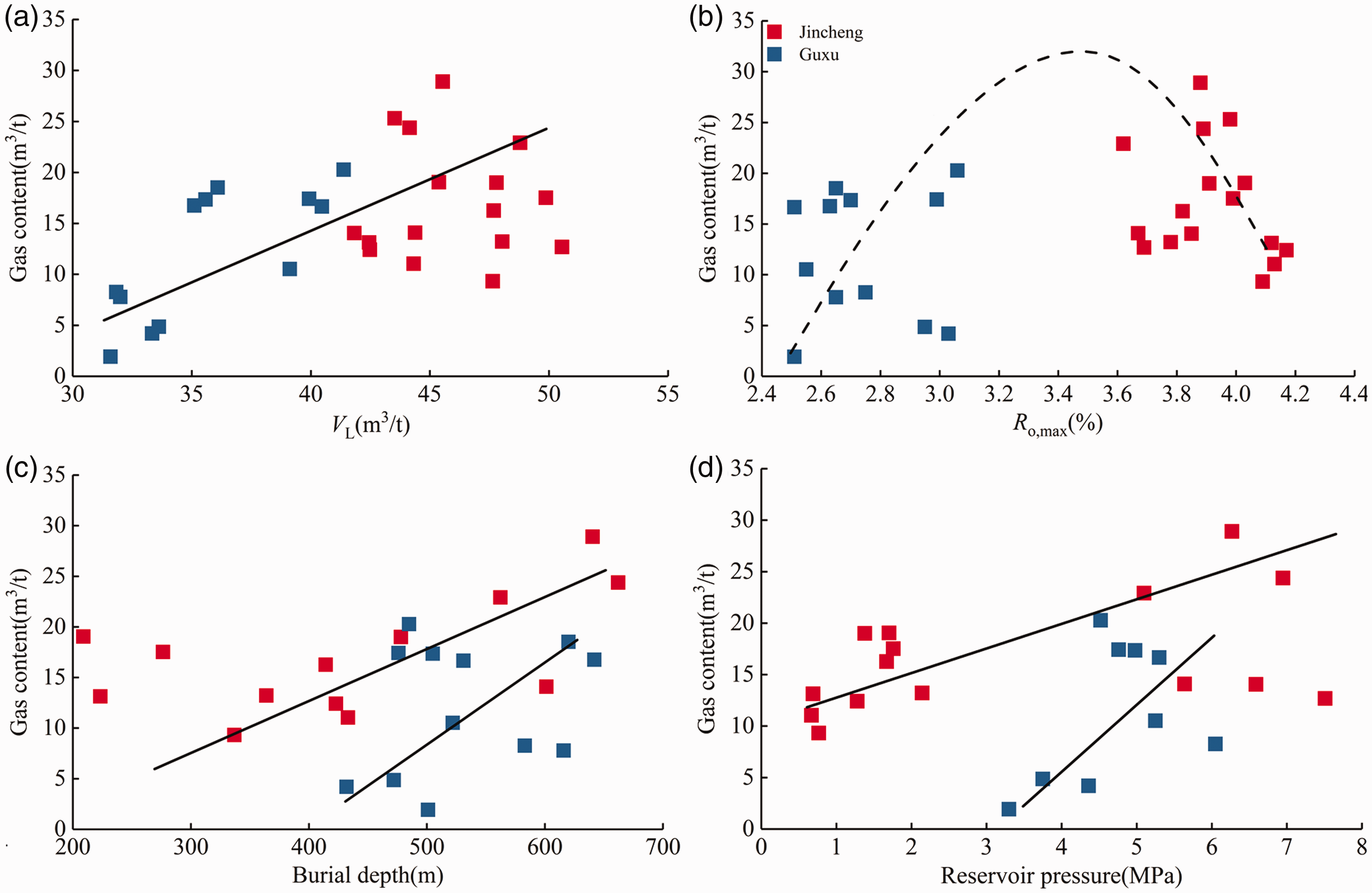
The relationship between VL, Ro,max, burial depth, reservoir pressure and gas content.
The data above show the controlling effect of the coalification jump on the physical properties of anthracite reservoirs. Anthracite reservoirs were the earliest commercial CBM reservoirs in China and are mainly concentrated in the Jincheng area, in the Southern Qinshui Basin. From the data of this study, there was a linear negative correlation observed between the physical parameters and the degree of coal reservoir metamorphism in the Jincheng mining area after the fourth coalification jump (Figures 7, 13(a), and 15(b)). China has abundant anthracite resources, including southern Sichuan and Guizhou. The degree of coal reservoir metamorphism in these areas is not as high as that in the south of the Qinshui Basin, and the degree of coal reservoir metamorphism is mainly distributed before or at the fourth coalification jump point (Li et al., 2016). The data in this paper show that there was an opposite relationship between the reservoir physical properties and metamorphic degree before and after coalification. Therefore, we cannot directly apply the reservoir evaluation and development experience of the Southern Qinshui Basin to other anthracite reservoirs in China.
Conclusions
In the current work, the anthracite reservoirs in the Jincheng and Guxu mining areas were selected as examples to study the reservoir physical property parameters and evolution law with different metamorphic degrees (a value of Ro,max ranging from 2.5 to 4.2%). The conclusions are as follows:
The coalification jump had a great influence on the physical properties of anthracite reservoirs. Before the jump point (Ro,max=3.7%), the pore volume and specific surface area of micropores and transition pores, adsorption capacity and gas content first increased and then decreased with increasing Ro,max and reached their maximum at approximately Ro,max=3.7%. Before the coalification jump point, the degree of condensation and aromaticity of the aromatic fused rings gradually increased, and the molecular structural unit of coal appeared to be directional. The latter resulted in the formation of a series of micropores and transition pores. The increase in the number of micropores and transition pores provided locations for the adsorption of methane, thus increasing the adsorption capacity and gas content. Meanwhile, the methyl branches in aromatic ring layers broke off during the ring condensation process, forming a large amount of methane, which was also conducive to an increase in the gas content. Afterwards, as the aromatic ring rank was further enhanced, methane branches stopped breaking off, and the gas generation stage stopped; therefore, no additional pores were formed. The increase in rank led to an increase in aromatic laminates, which reduced the pore volume of micropores and transition pores by compression, leading to a decrease in the adsorption capacity and gas content. Micropores and transition pores are extremely developed, accounting for 40.55% of the total pore volume and 99.18% of the total surface area, respectively. The in-situ permeability ranged from 0.006 to 6.490 mD (an average of 0.390 mD), which was much lower than that of medium- and low-rank coal reservoirs. The permeability decreased exponentially with the increase in the burial depth and minimum horizontal main stress and increased with increasing Ro,max and porosity. The burial depth (overlying geostress) and metamorphic degree were key factors controlling the permeability change. In the anthracite stage, the change in metamorphic degree controlled the formation of microfractures, while the burial depth controlled the degree of fracture closure. The gas content ranged from 1.92 to 33.33 m3/t (an average of 15.39 m3/t), and the gas saturation was between 12.10 and 123.79% (an average of 69.81%), which were higher than those of medium- and low-rank coal reservoirs. There was a positive correlation between the gas content and Langmuir volume, burial depth and reservoir pressure. Before the coalification jump, the formation of pyrolysis gas was an important mechanism to increase the gas content.
Footnotes
Declaration of conflicting interests
The author(s) declared no potential conflicts of interest with respect to the research, authorship, and/or publication of this article.
Funding
The author(s) disclosed receipt of the following financial support for the research, authorship, and/or publication of this article: This study was supported by the development of large oil and gas fields and CBM in major national scientific and technological projects (2016ZX05043-004-001), the Independent innovation project for “Double First-Class” construction of China University of mining and technology (2018ZZCX05), the National Natural Science Foundation of China (41772158), Key Laboratory of Coalbed Methane Resources and Reservoir Formation Process of the Ministry of Education (China University of Mining and Technology; No. 2018-006), Shanxi Coalbed Methane Joint Research Fund Project (2012012013) and Coal, Coal Gas Geology Shanxi Provincial Key Laboratory Open Project Resources Project (MDZ201701).