




Abstract
An experimental investigation of solar-assisted heat pumpa drying mango has been conducted. A new solar-assisted heat pump drying system with a secondary heat recovery was setup, which can operate independently in solar drying mode and heat pump drying mode, or operate in a joint mode. An evaporator of the heat pump and a heat exchanger were adopted to recover the waste heat from the exhaust moist air from the drying chamber for increasing the utilization of energy. The mango slices of 80 kg were spread over 40 trays in the form of a single layer for the drying test with the hot air of 45°C. The experiments were conducted to dry the mango with solar drying mode and heat pump drying mode for studying the performance of the new drying system. The time durations were 6.5 h with the solar drying mode and 10.7 h with the heat pump drying mode for drying the mango, respectively. Moreover, the efficiency of the solar-assisted drying mode was 6% higher than the heat pump drying mode and the power consumption of 3.5 kW h could be saved by using the solar-assisted heat pump mode. The coefficients of performance were 3.48 and 3.69 for the heat pump drying mode and the solar-assisted heat pump mode, respectively. The average efficiency of the heat exchanger for recovering the waste heat could reach 41.7% during the whole working process.
Introduction
Drying process is an energetic intensive activity and plays a significant role in many industrial applications such as food, textile, paper, and in many other processing industries (Abdulmalek et al., 2018). Solar energy has been considered as one of the main heat sources employed to reduce the conventional energy consumption for the drying process. A lot of researchers have studied various solar dryers. An indirect forced convection solar dryer has been presented for drying mango; the solar dryer could attain an average thermal efficiency between 30.9 and 33.8% with the drying air temperature of 52°C (Wang et al., 2018). A solar distillation cum drying unit with parabolic reflector was made and heat transfer coefficients were evaluated by experimental analysis (Manchanda and Kumar, 2017). A solar dryer comprising of two different solar collectors was developed, which used an air-type solar collector with an area of 12 m2 for direct heating and a flat-plate type solar collector for the accumulation of converted heat energy (Čipliene et al., 2015), by combining operation of two different solar collectors, the solar irradiance variability could be compensated and the stability of the drying process could be ensured.
However, the solar energy is insufficient for drying especially in the early morning or night, thus some new systems with energy storage, assisted or auxiliary heat source are designed and constructed. A solar energy system with a thermal storage was proposed; the solar energy could cover 43% of the total drying load (Büyükakın et al., 2017). In order to improve the thermal efficiency of solar dryer, some exhaust air recirculation dryers were suggested. A type of solar air collector and air-to-air heat recovery unit were added to the infrared dryer to reduce specific energy consumption; the heat recovery unit could provide 23–28% of total input energy (Aktaş et al., 2016). A heat pipe evacuated tube solar dryer with heat recovery system was designed and constructed, in which water was used as working and recovery fluid in the solar and dryer loops. In the volumetric flow rate of 0.0328 m3/s, the maximum outlet air temperature of the dryer was approximately 44.3°C and the maximum exergetic efficiency of the system was approximately 11.7% (Daghigh and Shafieian, 2016). An enclosed fixed frequency air source heat pump with an air bypass duct was applied in drying carrot chips to investigate the drying performance; the experimental results showed that the system performance could be effectively improved by controlling air flow ratios, which was better than increasing inlet air temperature of drying chamber (Shengchun et al., 2018). The integration of solar energy with heat pump is considered as an energy efficiency option, which eliminates the drawbacks with conventional drying systems of exclusively using an ambient source heat pump (Mohanraj et al., 2018). An in-store drying system composed of flat plate air collectors and a heat pump was proposed to make full use of solar energy and to reduce the consumption of electricity. With the solar-assisted heat pump drying system, the power consumption to reduce the moisture content of grain by 1% was 1.24 kW h/t, which was much lower than the official standard in China (Li et al., 2011). A solar drying system was comprised of a solar air collector, a parabolic trough collector, and a heat pump system; the heating coefficient of performance (COP) of the solar energy drying system was 10 (Ceylan and Gürel, 2016).
Although the solar-assisted heat pump systems could ensure continuous drying operation, at the end period of drying, the exhaust air from the drying cabinet or chamber contains a lot of heat energy; if the waste heat could be recovered to preheat the fresh air or provide more heat to the evaporator of the heat pump, the performance and heat coefficient of the system would be improved greatly. Furthermore, when the air source heat pump worked in a low temperature environment, the surface temperature of the evaporator would decrease to below 0°C and thus the frost might be formed and accumulated there, which would deteriorate the performance and it is also a fatal problem for the air source heat pump (Song et al., 2018). Nevertheless, if the exhaust air from the drying cabinet can be recovered to heat the evaporator and increase the surface temperature of the heat pump, the frost deposition and accumulation on the surface of the coil would be avoided.
The paper designed a solar-assisted heat pump drying system with a secondary heat recovery, which was expected to overcome the shortcomings of the existing system and improve the drying performance. The performance of the system was tested, and the power consumption, the COP, and efficiency of the heat exchanger were calculated.
Materials and methods
System descriptions
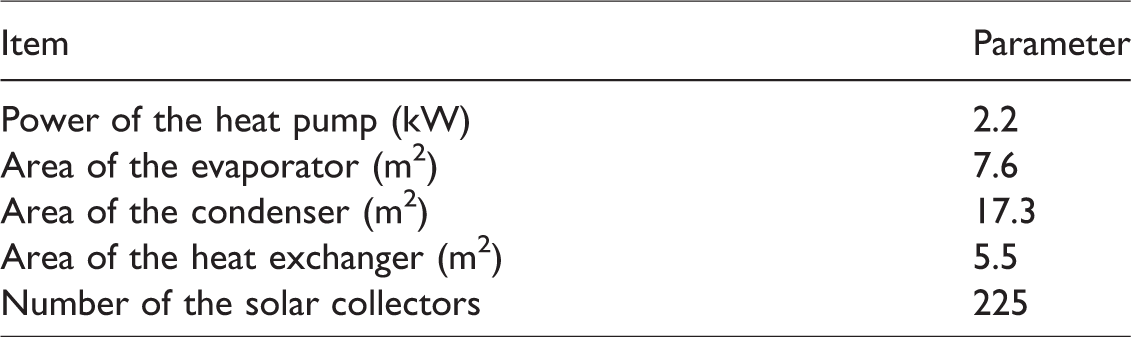
The system was designed by the Solar Energy Research Institute of Yunnan Normal University, Kunming, China. The system consists of two main subsystems which are the solar drying subsystem and the heat pump drying subsystem, as shown in Figure 1(a). The operational logic of the heat recovery solar-assisted heat pump drying system has been shown in Figure 1(b). The solar drying system consisted of the array of solar evacuated tube air collector (each tube with the diameter of 58 mm and the length of 1800 mm), a variable speed fan, and a drying cabinet. The variable speed fan was used to control the temperature of the drying cabinet through adjusting the air volume flow entering the drying cabinet. The solar air collectors were divided into nine groups and each group included 25 tubes, as shown in Figure 1(c). Three groups of the solar collectors were connected in series as a branch and then parallel connected with the other two branches. And the heat pump drying subsystem consisted of a heat pump, a heat exchanger, and some circulating air ducts. Some main specification and characteristic of the combined drying system are presented in Table 1.
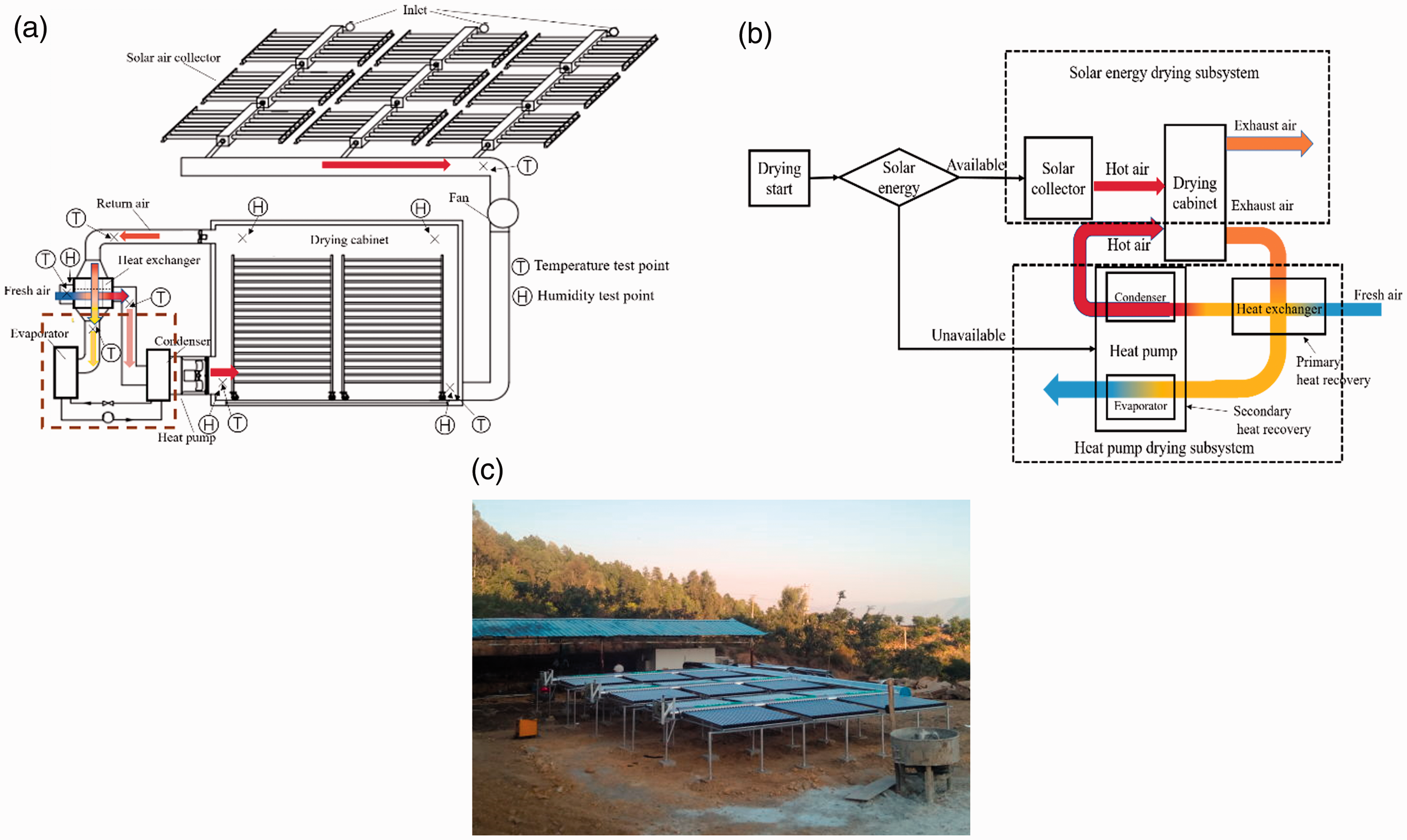
(a) Schematic diagram of the heat recovery solar-assisted heat pump drying system, (b) operational logic of the system, and (c) photograph of the heat recovery solar-assisted heat pump drying system.
Some main specification and characteristic of the combined drying system.
The principle of heat recovery solar-assisted heat pump drying system is as the following: the solar air collectors heat the air up to a certain temperature point according to the speed of the fan during daytime hours and then blow the hot air into the drying cabinet. While the hot air from the solar collectors has insufficient energy to carry out the drying process, the heat pump subsystem would be used to continue the drying process. Heat and moisture are exchanged in the drying cabinet, the moist air coming from the drying cabinet is blown across through the heat exchanger, subsequently passes through the evaporator of the heat pump and is directly discharged. When the exhaust air from the outlet of the drying cabinet is allowed to pass the heat exchanger and evaporator successively, the thermal energy of the exhaust moist air is used to preheat the fresh air first and then provide some thermal energy to the heat pump, which can be considered as the procedure of the secondary heat recovery. The secondary heat recovery is a very effective way to improve the thermal efficiency of the heat pump system especially in winter or low ambient temperature conditions.
Experimental material and procedure
The fresh mango products used in the experiments were bought from the local market (Lijiang, Yunnan, China). The washed mangos were peeled and sliced to remove the core away. The handled mango slices were placed in some bamboo meshes to drain out excess water, as shown in Figure 2. Then, the mango slices of 80 kg were weighed and spread over 40 trays in the form of a single layer which were placed in the drying cabinet. The samples were weighed during the drying experiment every 30 min by using a digital balance with an accuracy of 0.05 g. And the drying temperature was set at 45°C, changing the speed of the fans to control the drying air temperature of the hot air, two T-type thermocouples connected to a controller were placed at the outlet of the solar collectors and the heat pump to test the temperature of hot air then give an information to the feedback controller, respectively. When the mango slices were dried to a final moisture content of 20% wet basis, the drying process would be stopped.
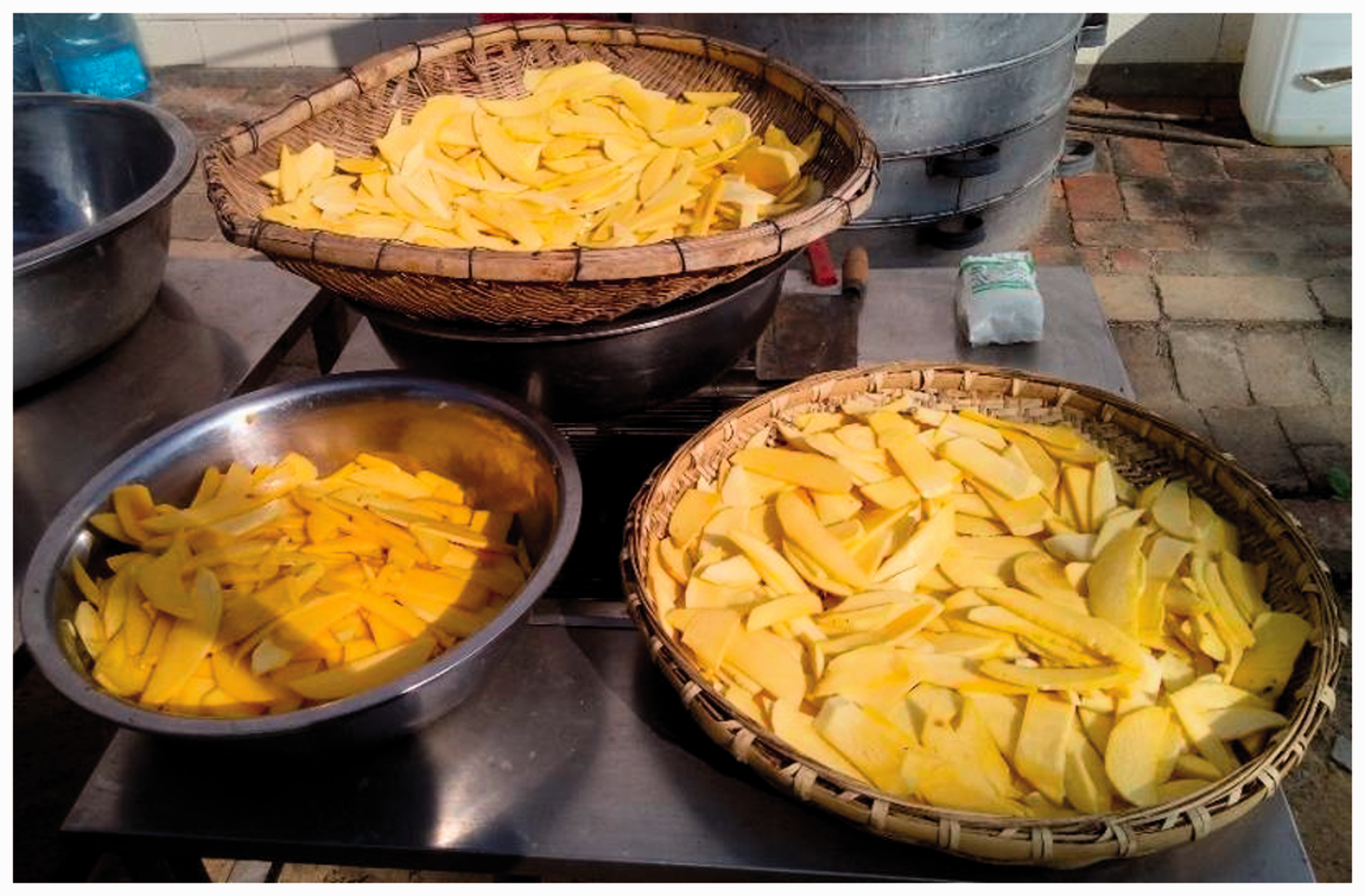
Mango slices after preprocessing.
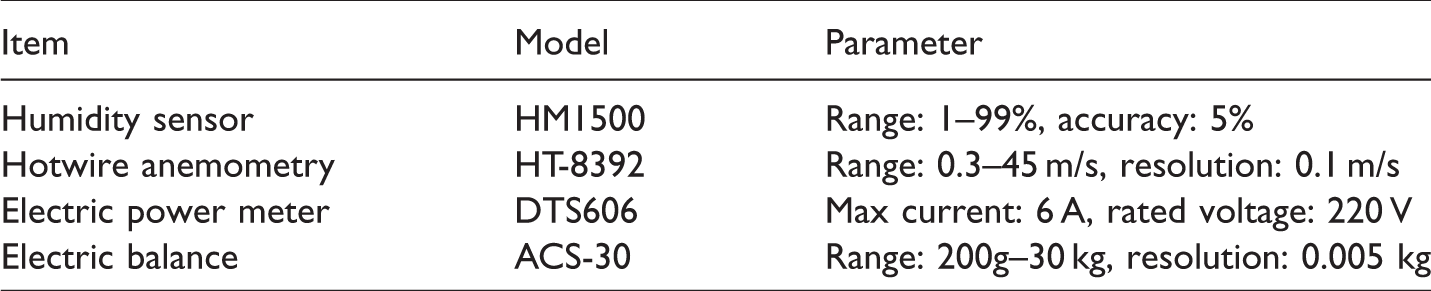
Several T-type thermocouples with 0.1°C resolution were used for measuring the outlet temperature of the solar collector, the inlet and outlet temperature of the drying cabinet, ambient temperature, and the temperature of fresh air passed over the heat exchanger. A solar pyranometer (TBQ-2, Tianyude Corporation, China) with an accuracy of ±0.2% was used to measure the global solar irradiance on the collector surface. An electric power meter was used to measure the power consumption of the heat pump during the drying process. Some main specifications of the experimental facilities are presented in Table 2, and the test points of the temperature and humidity have been shown in Figure 1(a). The experiments were conducted on clear sunshine days of August 2016 in the location of Huaping county, Lijiang, China.
Some main specifications of the experimental facilities.
For the solar drying subsystem, the efficiency of the solar collector was calculated as follows


For the heat pump subsystem, the COP can be calculated as follows

For the drying system, the specific moisture extraction rate (SMER) can be expressed as (Qiu et al., 2016)

The moisture content (M) on dry basis was estimated using (Chandrasekar et al., 2018)

Results and discussion
Several drying tests were done using the drying system and now the result of a sunny day was chosen to analyze the performance. It was a typical sunny day in September, Lijiang, the average daily ambient temperature and the daily total solar radiation during the testing period were 20°C and 9.73 MJ/m2, respectively. Figure 3 shows the variations of the solar irradiation, the outlet temperature of the solar collectors, and the temperature of the drying cabinet when it was operated under the mode of solar drying subsystem worked alone. The running time of the solar drying subsystem was from 11:20 a.m. to 5:50 p.m.; the variation range of the solar irradiation and hot air outlet temperature of solar collector was from 206 to 916 W/m2 and 26.6 to 101.3°C, respectively. However, the temperature in the drying cabinet was almost steady at 45°C and just fluctuated only within 5°C, due to adjusting the air volume flow through the automatic control of a frequency converter according to the air temperature. The average heat efficiency of the solar drying subsystem was 33.4%, which could be considered a good performance compared with some previous study (Wang et al., 2018).
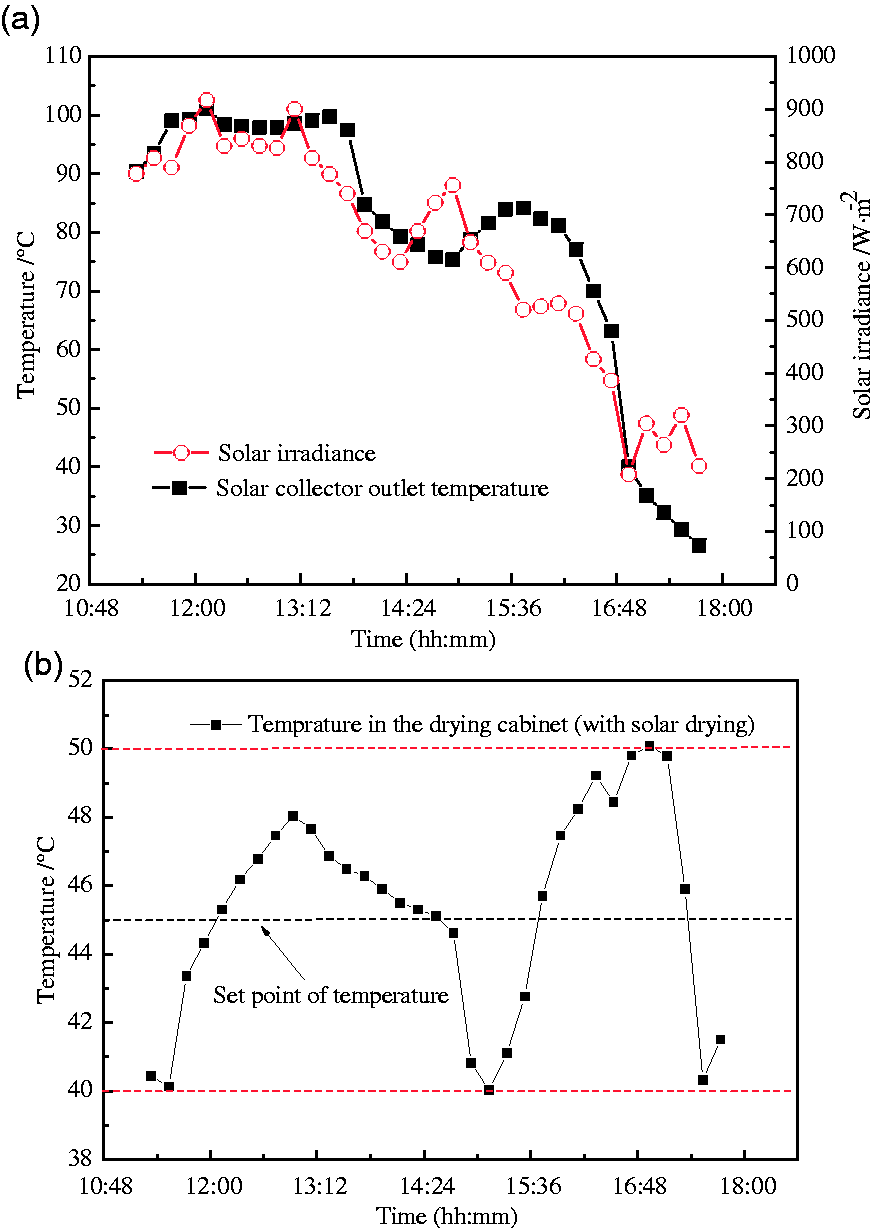
(a) The variation of the solar irradiation and hot air temperature in the outlet of solar collectors under the solar drying mode and (b) the variation of the temperature in the drying cabinet during the period of solar drying mode.
It can be seen from Figure 3 that when it was 4:50 p.m., the hot air temperature at the outlet of the solar collector had been below 40°C which was impossible to provide enough thermal energy to keep the temperature of the drying cabinet on the working condition. Thus, the heat pump drying mode should be started from that on.
Figure 4 shows the variation of the temperature in the drying cabinet when the heat pump worked alone. The working period of heat pump drying was from 6:00 p.m. to 4:40 a.m.; the temperature of the drying cabinet fluctuated between 40 and 50°C, within a range of 10°C. The reason is that the working temperature of the heat pump was set at 45°C, when the temperature of the drying cabinet reached the set point, the heat pump would be stopped, then if the temperature went below the set point, the heat pump would be restarted again. During he working periods of the heat pump subsystem, the heat exchanger was used to preheat the fresh air by extracting thermal energy from the exhaust air while passing through the heat exchanger. The temperature of the exhaust air flown out of the cabinet was approximately 45°C—a lot of heat would be lost if the exhaust air got into the environment directly without any heat recovery. When the ambient temperature is low, especially, on a cold winter’s evening, it would be very effective to preheat the fresh air using the method of heat recovery from the exhaust air with a heat exchanger.
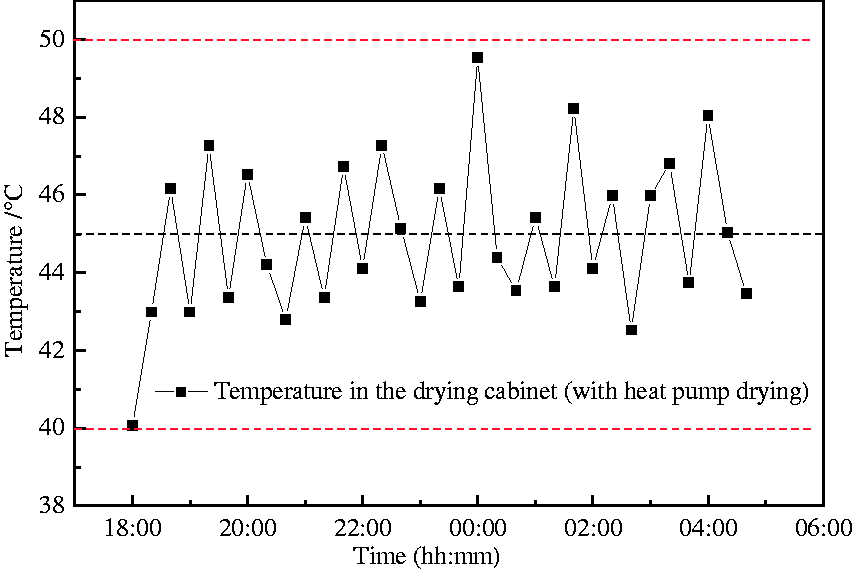
The variation of the temperature in the drying cabinet during the heat pump drying mode.
The performance and efficiency of the heat exchanger could be investigated from Figure 5. The exhaust air with a temperature fluctuation (38.4–44.7°C) was blown from the drying cabinet through the heat exchanger, transferring heat to the fresh air by heat conduction and then flowing across the condenser of the heat pump for transferring heat to the condenser again. The temperatures of the exhaust air were between 27.9 and 33.1°C after passing through the heat exchanger; the temperature difference before and after heat transfer was around 10°C. Similarly, the temperature of the fresh air was heated by 10°C approximately after passing across the heat exchanger. For example, when it was 4:00 a.m., the ambient temperature was the lowest (17°C) but the fresh air had been heated to 25°C by the exhaust air before it got into the drying cabinet. The energy saving effect is very obvious using the heat exchanger to increase the inlet air temperature. And the recovery efficiency is an important factor for the heat exchanger, which has been calculated and shown in Figure 5(b). The recovery efficiency of the heat exchanger was between 30.4 and 55.3%; the average efficiency in the whole working process was 41.7%.
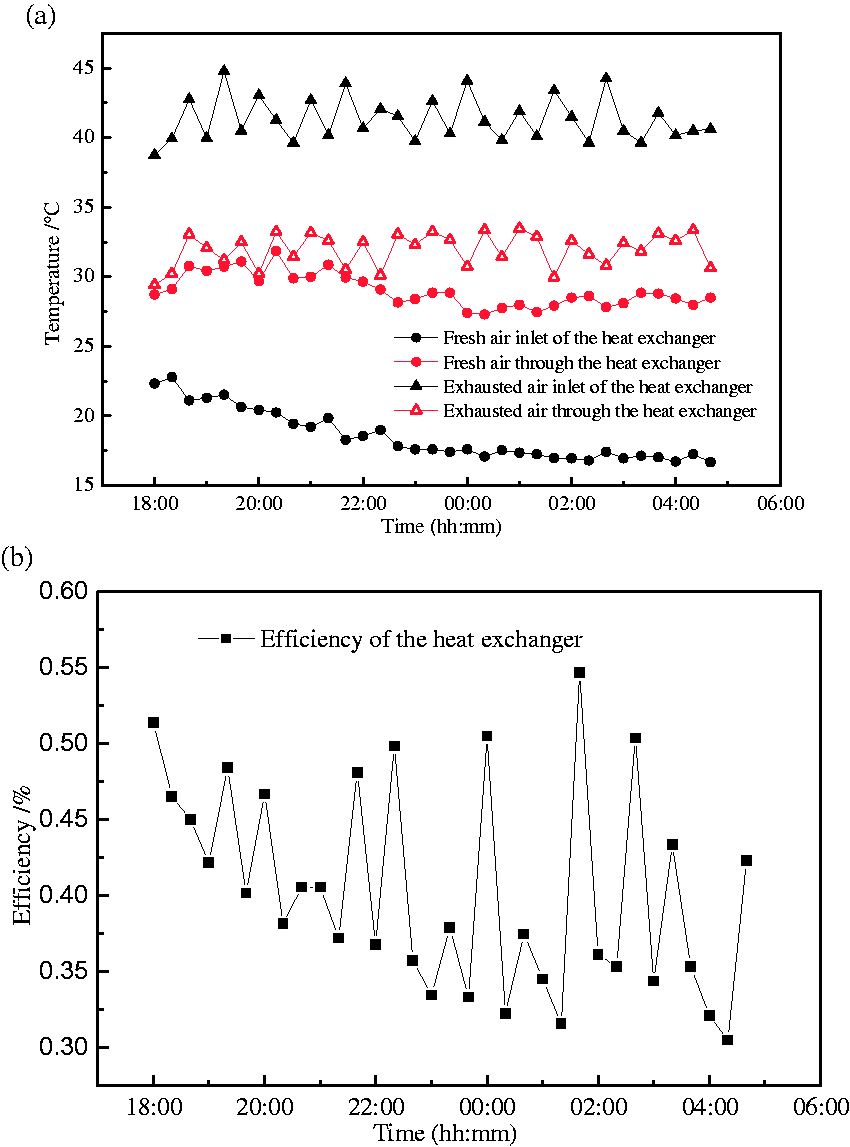
(a) The temperature variation of the fresh air and the exhaust air before and after passing through the exchanger and (b) the recovery efficiency of the heat exchanger.
It took 17 h and 10 min for the solar-assisted heat pump drying system to dry the mango slices—the moisture content of which had been decreased from 3.42 to 0.25. In the whole drying process, the solar drying subsystem had been operated 6 h and 30 min, and the heat pump drying subsystem had been operated 10 h and 40 min. The power consumption of the system was 27.8 kW h and the heating capacity of the system was 369,295.2 kJ during the whole drying process. It could be calculated that the SMER and the average heat coefficient of the system were 2.05 kg/kW h and 3.69, respectively. In order to contrast the performance of the solar-assisted heat pump drying system with the heat pump drying system, the mango slice of 80 kg was dried using the heat pump drying subsystem alone—the drying temperature was set at the 45°C too. The drying result of the heat pump drying subsystem is shown in Table 3. The COP of the integrated system could be improved by 6% when compared with a heat pump drying system and the power consumption of 3.5 kW h could be saved. The power consumption saved by the solar-assisted heat pump system seems to be very little, because the operating time of the solar drying subsystem was short, just from 11:20 a.m. to 5:50 p.m. (6.5 h); if the operating time of the solar drying subsystem could be extended, more power consumption could be saved. Figure 6 is the photograph of the dried mango slices using the solar-assisted heat pump system (left) and the heat pump drying system (right)—they are almost identical in taste and appearance.
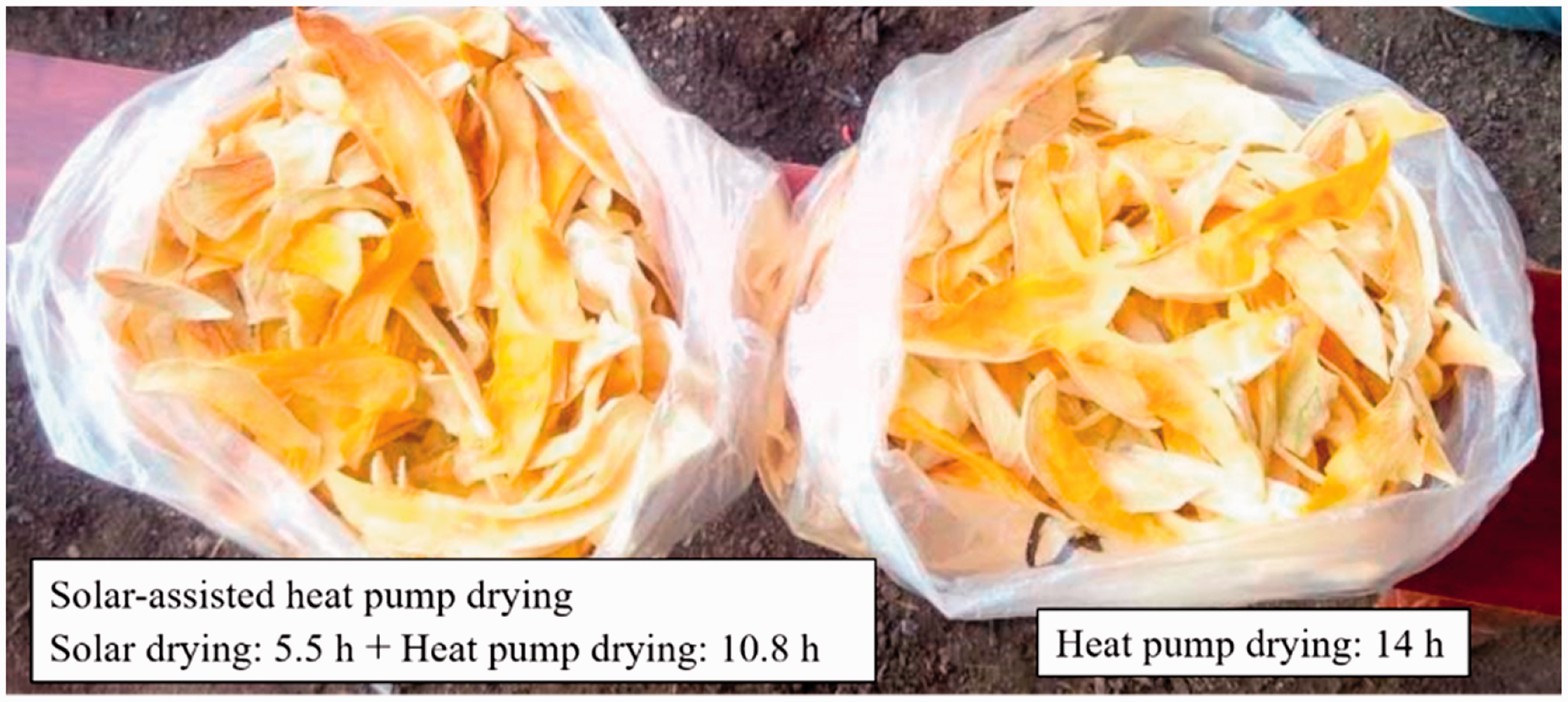
The mango slices dried using different drying system.
The comparison of solar-assisted heat pump system and the heat pump drying system.
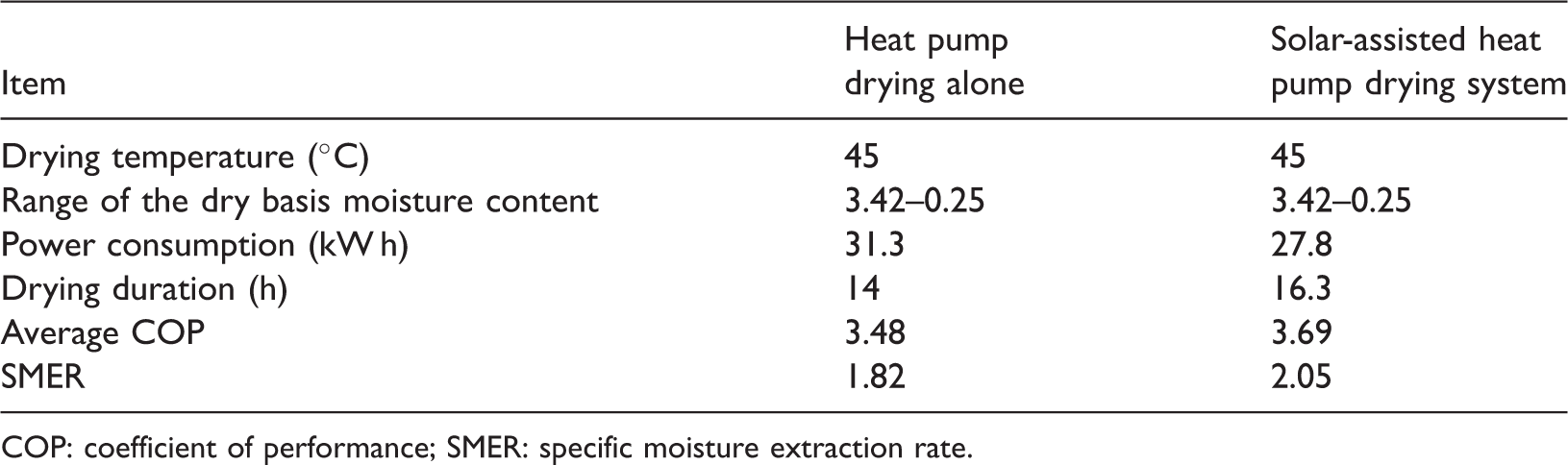
COP: coefficient of performance; SMER: specific moisture extraction rate.
Conclusion
The performance efficiencies of solar-assisted heat pump drying system have been investigated. Integration of solar collector units, drying cabinet, and heat pump has been done and repeated drying tests of the system for drying and heat recovery purpose have been conducted. Mango slices have been dried within 1030 min with a 45°C inlet drying medium temperature in the drying cabinet. The fresh mango slices at a dry basis moisture content of 3.42 were dried down to 0.25 with 390 min solar drying and 640 min heat pump drying. The SMER of the mango drying was 2.05 kg/kW h for the solar-assisted heat pump system. The efficiency of the solar drying system was 33.4% and the heating COPs of the whole system and heat pump subsystem were 3.69 and 3.32. The power consumption was 27.8 kW h and 3.5 kW h saved, the COP had been improved by 6% by using the secondary heat recovery, and the average efficiency of the heat exchanger in the whole working process was 41.7%. This study is open to further study on enhancement of the thermal energy saving capacity.
Footnotes
Declaration of conflicting interests
The author(s) declared no potential conflicts of interest with respect to the research, authorship, and/or publication of this article.
Funding
The author(s) disclosed receipt of the following financial support for the research, authorship and/or publication of this article: This work was supported by the Collaborative Innovation Center of Research and Development of Renewable Energy in Southwest China (Grant No. 05300205020516009) and the National Natural Science Foundation, China (Grant No. 51566017).