




Abstract
Waterflooding is an important functional process for low-permeability reservoir development. However, production practice shows that water breakthrough and floods along natural fractures are ubiquitous in low-permeability reservoirs. Therefore, controlling the water injection pressure to prevent water breakthrough and floods along natural fractures is an effective measure for improving the waterflooding development effect. In this paper, an approach is proposed for determining the water injection pressure based on the opening pressure of natural fractures in fractured low-permeability reservoirs. The opening pressures of natural fractures calculated by the analytical method in the paper and the formation-parting pressures are compared based on the production performance in two different fault blocks F16 and Z3 of the Zhouqingzhuang Oilfield in the Bohai Bay Basin, China. The results show that the calculated opening pressures of the natural fractures in fault blocks F16 and Z3 are 31.4 and 42.9 MPa, respectively, and they are close to the opening pressures of natural fractures obtained from the step-rate tests in injection wells (28.6 and 41.1 MPa); whereas, the formation-parting pressures (44.5 and 47.6 MPa) are greater than the opening pressures of natural fractures. This suggests that the opening pressures of natural fractures can be used, instead of the formation-parting pressure, for the maximum threshold of the water injection pressure. Its effectiveness has been confirmed via comparison to the production performances of the other two wells in the Zhouqingzhuang Oilfield and several fractured low-permeability reservoirs in the Ordos Basin, China. This study will have beneficial applications in the design of waterflooding development in low-permeability reservoirs characterized by the presence of natural fractures.
Keywords
Introduction
Recently, oil and gas exploration and development have suggested that low-permeability reservoirs play an important role in global oil and gas resources. Affected by the late tectonic stress, low-permeability reservoirs, which have tight and brittle rock, easily develop natural fractures, becoming fractured low-permeability reservoirs (Laubach, 2003; Li, 1997; Lorenz et al., 2002; Nelson, 1985; Van Golf-Racht, 1982; Zeng, 2004). Fractured low-permeability reservoirs consist of fractured porous media with double-porosity behavior (Adler et al., 2012; Bai et al., 1993; De Smedt, 2011; Phillips, 2009), and their seepage systems comprise low-transmission matrix blocks and potentially high transmission fractures (Bai et al., 1993; De Swaan, 1978). Because fractured reservoirs have low matrix permeability, it is difficult to effectively develop low-permeability reservoirs without applying additional energy. Therefore, waterflooding is generally used to improve oil recovery in low-permeability reservoirs (Li, 1997; Morrow and Buckley, 2011). However, during the waterflooding development of fractured low-permeability reservoirs, increasing water injection pressure easily causes natural fractures to open and even extend, and the permeabilities of fractured reservoirs present strong anisotropies and dynamic variations (Longo and Di Federico, 2015; Yao et al., 2015). Consequently, injected water readily flows along fractures quickly leading to water breakthrough and floods in oil wells, which greatly reduces the waterflooding effect (Li, 1997, 2003; Shedid, 2006; Wang et al., 2011; Warren and Root, 1963; Yuan et al., 2004). Therefore, in order to improve the waterflooding effect, it is essential to determine the appropriate magnitude of water injection pressure to avoid water breakthrough and floods along natural fractures in low-permeability reservoirs.
In recent years, many scholars have studied waterflooding development in fractured reservoirs from the perspectives of petroleum geology and reservoir engineering (Dang et al., 2011; De Swaan, 1978; Finkbeiner et al., 1997; He and Pang, 1986; Karimi-Fard and Firoozabadi, 2003; Owens and Archer, 1966; Rezaei and Firoozabadi, 2014; Suzuki et al., 2015; Tuckwell et al., 2003; Xie, 2015b). The influence of the water injection pressure magnitude on the waterflooding development effect for low-permeability reservoirs has been discussed (Azeemuddin et al., 2002; Cao et al., 2012; Chen, 1986; Wang et al., 2007; Zeng and Liu, 2010; Zeng et al., 2004; Zhou and Fang, 2005). The current practices of injecting water in many natural fracture reservoirs show that currently operators generally use the formation-parting pressure as a guide for injection pressures, such as using the formation-parting pressure as the maximum threshold value of the water injection pressure or controlling the water injection pressure being less than 80–90% of the formation-parting pressure (Cao et al., 2012; Gulick and McCain, 1998; Huang, 1984; Li et al., 2014; Singh et al., 1987; Zhang et al., 2010; Zheng et al., 2001). However, the current practices of injecting water in many natural fracture reservoirs also display that water breakthrough and floods along natural fractures are widespread (Li et al., 2014; Xie et al., 2015a; Zhang et al., 2004; Zheng et al., 2001). In addition, some researchers attempt to employ other methods for water injection pressure determination in water injection processes (Xie et al., 2015b; Zhang et al., 2004; Zhou and Fang, 2005). Zhang et al. (2004) proposed the water injection pressure being greater than fracture extensional pressure to reduce the number of water injection wells. Zhou and Fang (2005) put forward different methods for determining the maximum threshold of the water injection pressure in different kinds of reservoirs, such as the pseudo-Poisson’s ratio method for fractured reservoirs and the minimum fracturing-parting gradient method for tight reservoirs. Xie et al. (2015b) determined that the water injection pressure is influenced by the state of natural fractures and the in situ stress. Based on a tri-collinear fracture model and a new form of the mode II fracture criterion, Xie et al. (2015b) proposed a calculation method for water injection pressure by considering many mechanical parameters and natural fracture parameters of rocks. The method of determining water injection pressure is critical to waterflooding development in low-permeability reservoirs. However, this topic remains to be fully elucidated.
In this paper, with a case study of the Zhouqingzhuang Oilfield in the Bohai Bay Basin, China, an approach is proposed for determining the water injection pressure based on the opening pressure of natural fractures in low-permeability reservoirs, which are characterized by the presence of natural fractures. First, the natural fracture characteristics in the middle–upper part of the Paleogene Shahejie Formation of the Zhouqingzhuang Oilfield are described based on cores and thin sections. Then, the opening pressures of the natural fractures in two different fault blocks are calculated by the analytical method in the paper. Next, the opening pressures of natural fractures and the formation-parting pressures are compared based on the production performance. The results indicate that the opening pressures of natural fractures can be used, instead of the formation-parting pressure, for the maximum threshold of the water injection pressure. This statement is also validated via the production performances of the other two wells in the Zhouqingzhuang Oilfield and several fractured low-permeability reservoirs in the Ordos Basin. The opening pressure of natural fractures may be used for the water injection pressure determination in similar fractured low-permeability reservoirs in basins around the world.
Data and materials
Structure
The Huanghua depression in the Bohai Bay Basin, China, is located to the west of the Bozhong depression, northwest of the Chengning uplift, and east of the Cangxian uplift (Figure 1(a)) (Li et al., 2011; Zhang et al., 2008). The Zhouqingzhuang Oilfield, controlled by boundary fault F1, is located in the center of the Huanghua depression. The fault blocks are divided by fault F2 into fault block F16 and fault block Z3 in the Zhouqingzhuang Oilfield (Figure 1(b)). In order of descending prevalence, northeast–southwest (NE–SW) faults, northwest–southeast (NW–SE), north–south, and nearly east–west (E–W) faults are present in the middle–upper part of the Paleogene Shahejie Formation in the Zhouqingzhuang Oilfield.
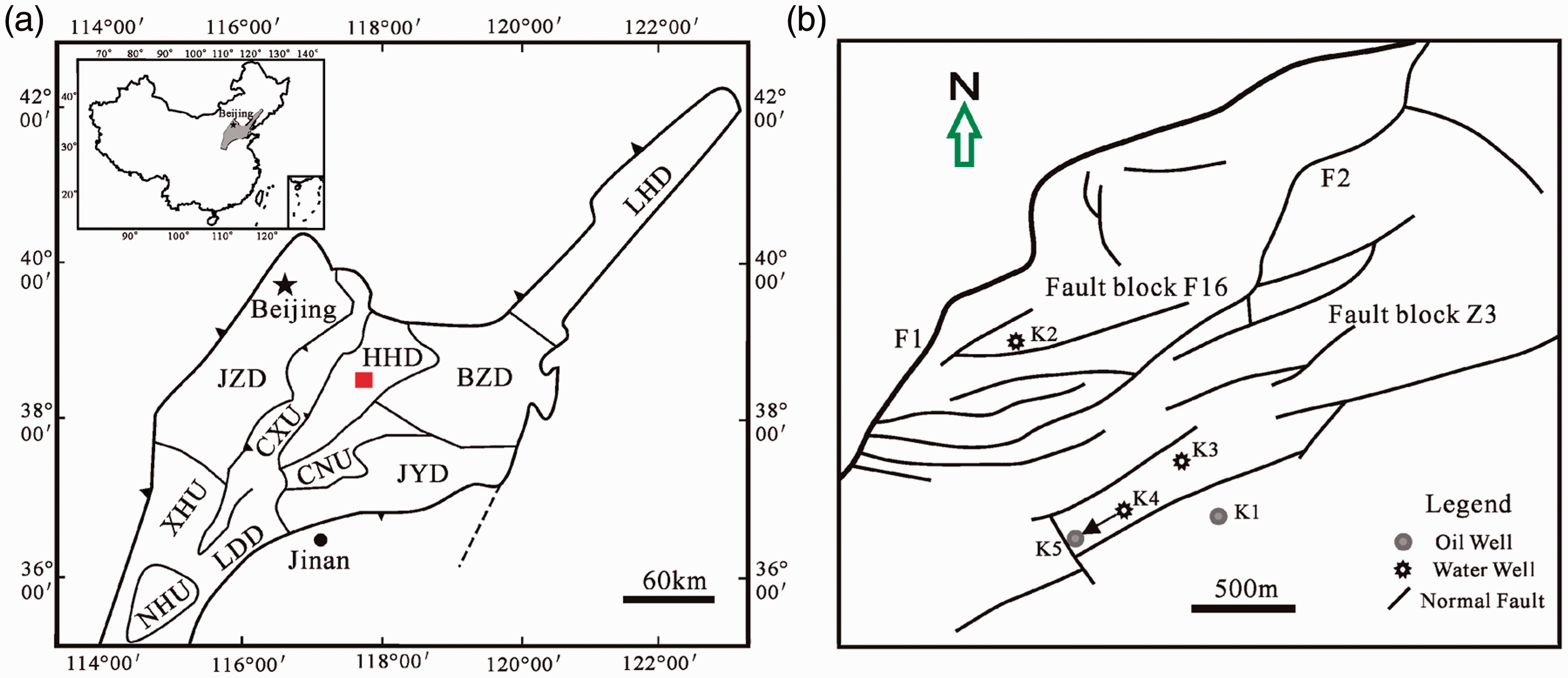
(a) Location of Zhouqingzhuang Oilfield (red box) in the Bohai Bay Basin, China (modified from Allen et al. (1997) and Zheng et al. (2005)). BZD: Bozhong depression; CNU: Chengning uplift; CXU: Cangxian uplift; HHD: Huanghua depression; JYD: Jiyang depression; JZD: Jizhong depression; LDD: Linqing-Dongpu depression; LHD: Liaohe depression; NHU: Neihuang uplift; XHU: Xingheng uplift. (b) Map showing fault blocks, faults, and wells in the middle–upper part of the Paleogene Shahejie Formation in the Zhouqingzhuang Oilfield; the arrow indicates the direction of injected water movement, which is detected by tracer monitoring tests.
Reservoir
The main reservoirs of the Zhouqingzhuang Oilfield are the middle–upper and bottom parts of the Paleogene Shahejie Formation (Figure 2). The study stratum is the middle–upper part of the Paleogene Shahejie Formation. The depositional environment of the study stratum has been documented in previous research (Chen et al., 2012; Wang et al., 1994). Lacustrine carbonates are the main deposits, and the reservoir lithology is mainly composed of muddy limestone, argillaceous dolomite, and bioclastic limestone. According to the statistical data of thin sections, the storage spaces consist mainly of intergranular pores, intragranular pores, moldic pores, visceral foramen, and microfractures. Based on 581.6 m (1908.1 ft) of cores from 16 wells and 340 thin sections from 14 wells, it can be concluded that fractures are abundant in this reservoir. The average porosity of the reservoir is 22%, and the average air permeability is 17 × 10−3 µm2 (17 md); therefore, the reservoir can be classified as a fractured low-porosity and low-permeability reservoir. The formation-pressure coefficient of the study stratum is 1.07. According to the data from a water analysis test, the water density is 1.007 g/cm3 (Table 1).
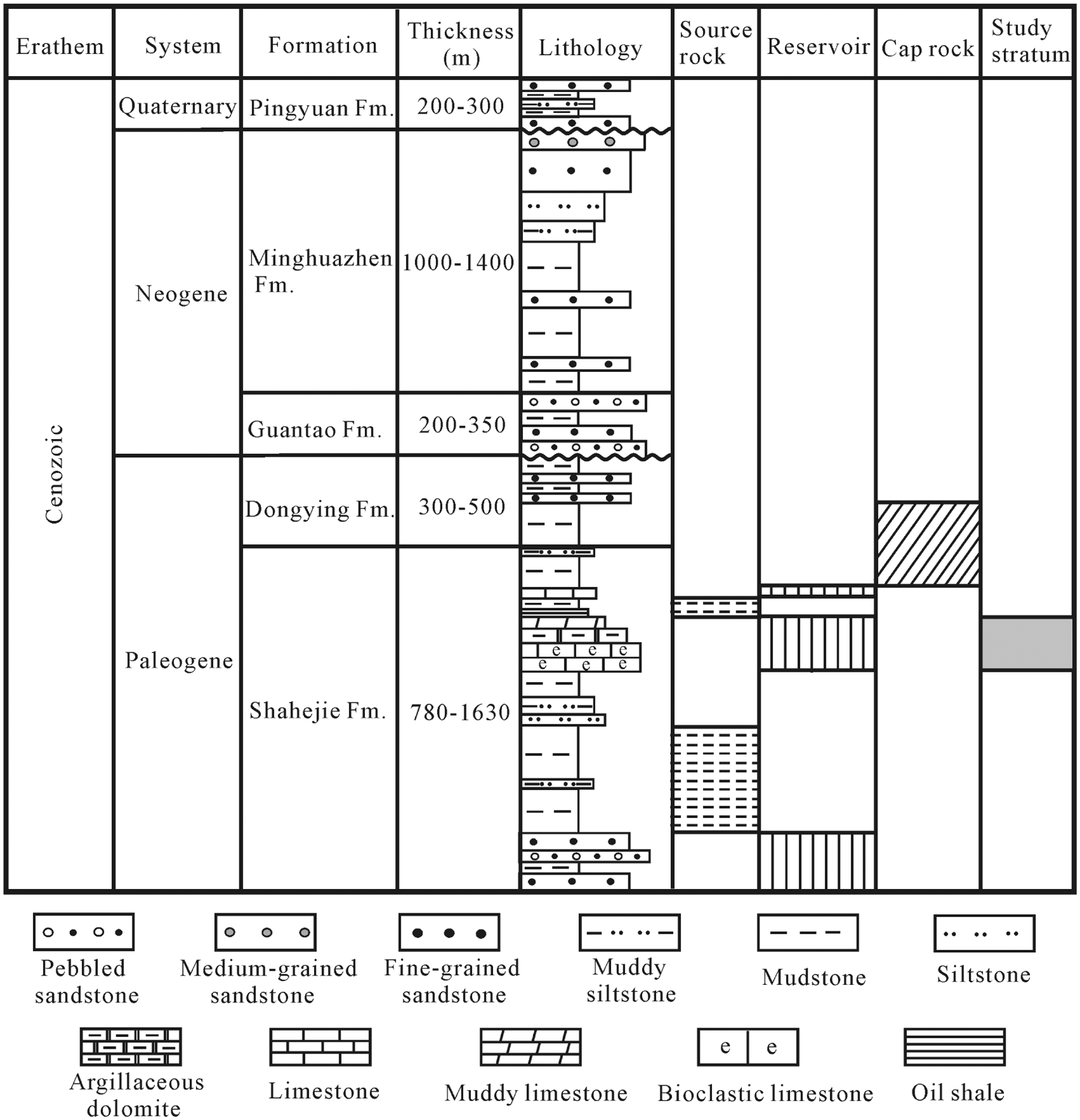
Schematic stratigraphy and hydrocarbon source rocks, reservoirs, and cap rocks of Cenozoic Formation in the Zhouqingzhuang Oilfield, Bohai Bay Basin, China. Fm.: formation.
The reservoir parameters of the middle–upper part of the Paleogene Shahejie Formation.

Present-day stress
The present-day stress has an impact on the waterflooding development, the well pattern deployment, subsurface fracture conservation, and hydraulic fracturing (Zeng and Tian, 1998). The maximum horizontal stress orientation is generally determined via hydraulic fracturing, borehole breakouts, differential strain analysis, and induced fractures during drilling (Amadei and Stephansson, 1997; Bell and Bachu, 2003; Brudy et al., 1997; Li and Zhang, 1997; Zoback and Haimson, 1983). According to the borehole breakout data, the direction of the maximum horizontal principal compressive stress was determined to be NE–SW in most areas and E–W in some areas of the Huanghua depression (Figure 3). The magnitudes of the maximum and minimum principal stresses are generally obtained from hydraulic fracturing and rock acoustic emission experiments (Hayashi and Haimson, 1991; Michihiro et al., 1985). Because the present-day stress data are not available for the study stratum, the maximum and minimum principal stress gradients of the low-permeability sandstones from the bottom of the Paleogene Shahejie Formation were estimated at 0.0192 and 0.0162 MPa/m, respectively, based on hydraulic fracturing data. The hydraulic fracturing data show that the preferential direction of artificial fractures is NE–SW in low-permeability sandstones from the bottom of the Paleogene Shahejie Formation, which indicates that the direction of the maximum horizontal principal compressive stress is NE–SW in this area. The result is in accordance with the direction of the maximum horizontal principal compressive stress in most areas of the Huanghua depression.
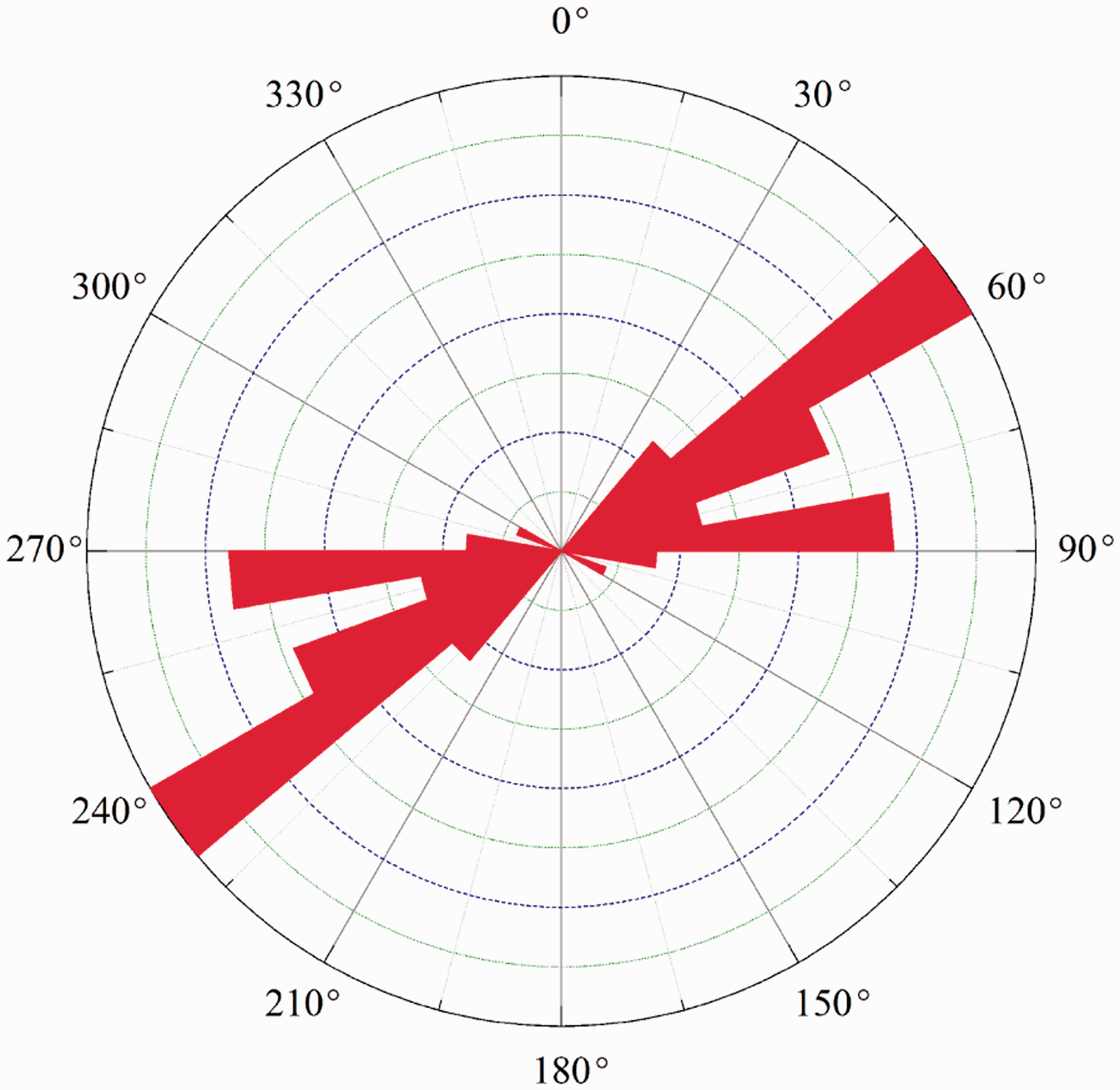
Rose diagram of the maximum horizontal principal compressive stress in the Huanghua depression. The maximum horizontal principal compressive stresses are derived from breakout boreholes in 32 wells with two different records: a four-arm Schlumberger dipmeter log and a Deasy-Atlas dipmeter log. The data are from Qu et al. (1993), and the number of data is 32.
Production history
The Zhouqingzhuang Oilfield was put into development by waterflooding in the 1970s, and it is now in the late stage of development with a comprehensive water cut of 86.9% (Zhao and Chen, 2011). According to the analysis of water cut variation in 78 oil wells, 43 oil wells experienced water breakthrough and floods, which could occur relatively suddenly (Figure 4). The aforementioned water breakthrough and floods are important features of the fractures (Nelson, 1985). Fractures are the main factor leading to quick water breakthrough and floods in this area.
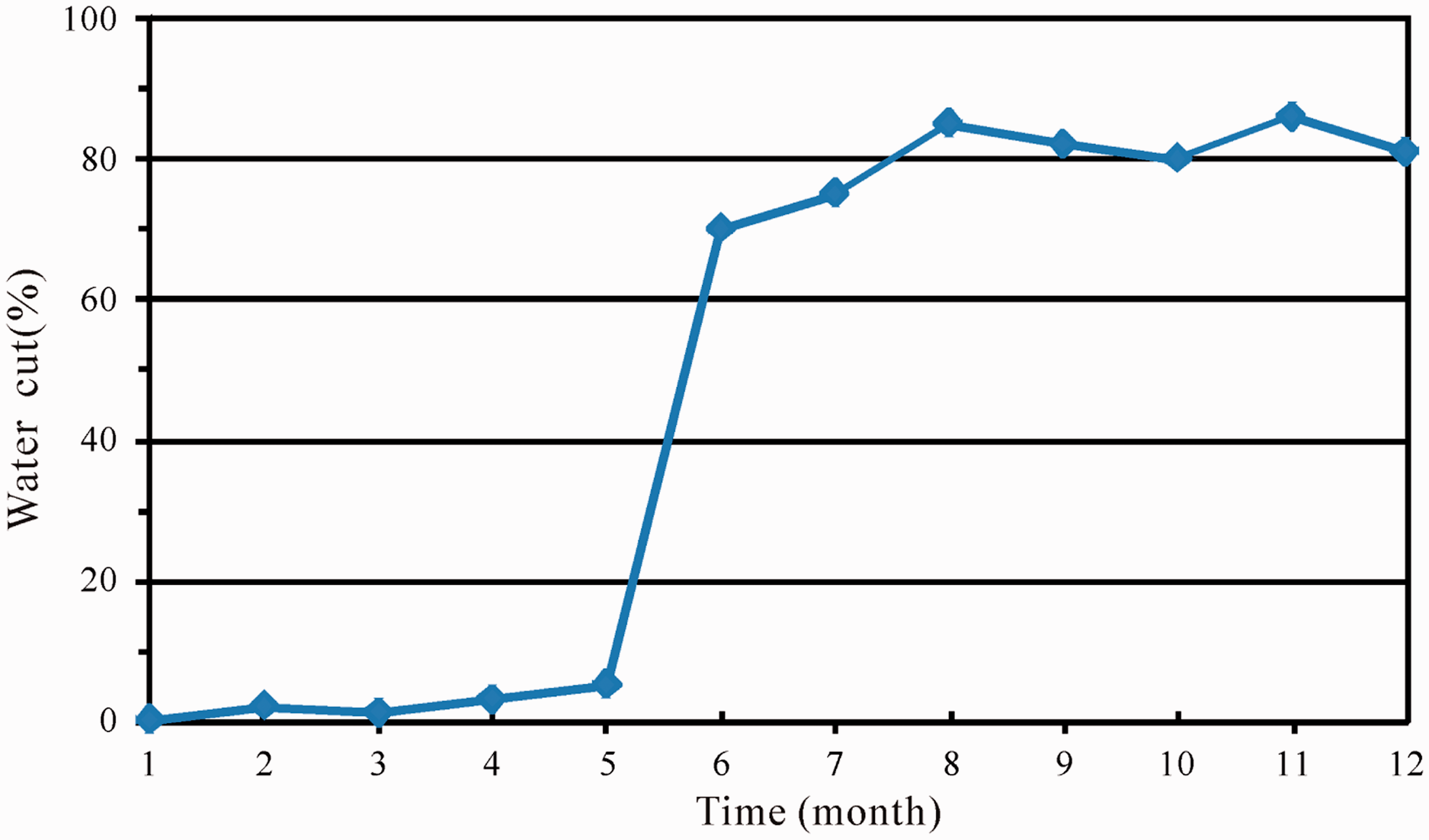
Water cut in well K1. See Figure 1 for the well location.
Natural fracture characteristics
The oriented cores and tracer monitoring data show that three assemblages of approximately E–W, NE–SW, and NW–SE fractures have developed in the middle–upper part of the Paleogene Shahejie Formation of the Zhouqingzhuang Oilfield. Fractures striking NE–SW are the most frequent among these fractures (Figure 5). Fracture intensity has units of inverse length and is defined as the number of fractures per meter of core length in one dimension (Ortega et al., 2006; Rohrbaugh et al., 2002). The intensity of tectonic fractures in cores (Figure 6) of different wells ranges from 0.3 m−1 (1.0 ft−1) to 5.8 m−1 (19.0 ft−1) and averages 1.8 m−1 (5.9 ft−1). The large difference in fracture intensity between different wells suggests that the fracture development in the subsurface has strong heterogeneity. The fracture heights in cores are less than 1.1 m (3.6 ft), basically within 0.1–0.3 m (0.3–1.0 ft), indicating that fractures are chiefly developed within layers. Fracture apertures are always less than 100 µm (3.90 × 10⁻³ in.); generally, they are within 20 µm (0.79 × 10⁻³ in.), but some vary from 50 µm (1.97 × 10⁻³ in.) to 100 µm (3.90 × 10⁻³ in.) in thin sections.
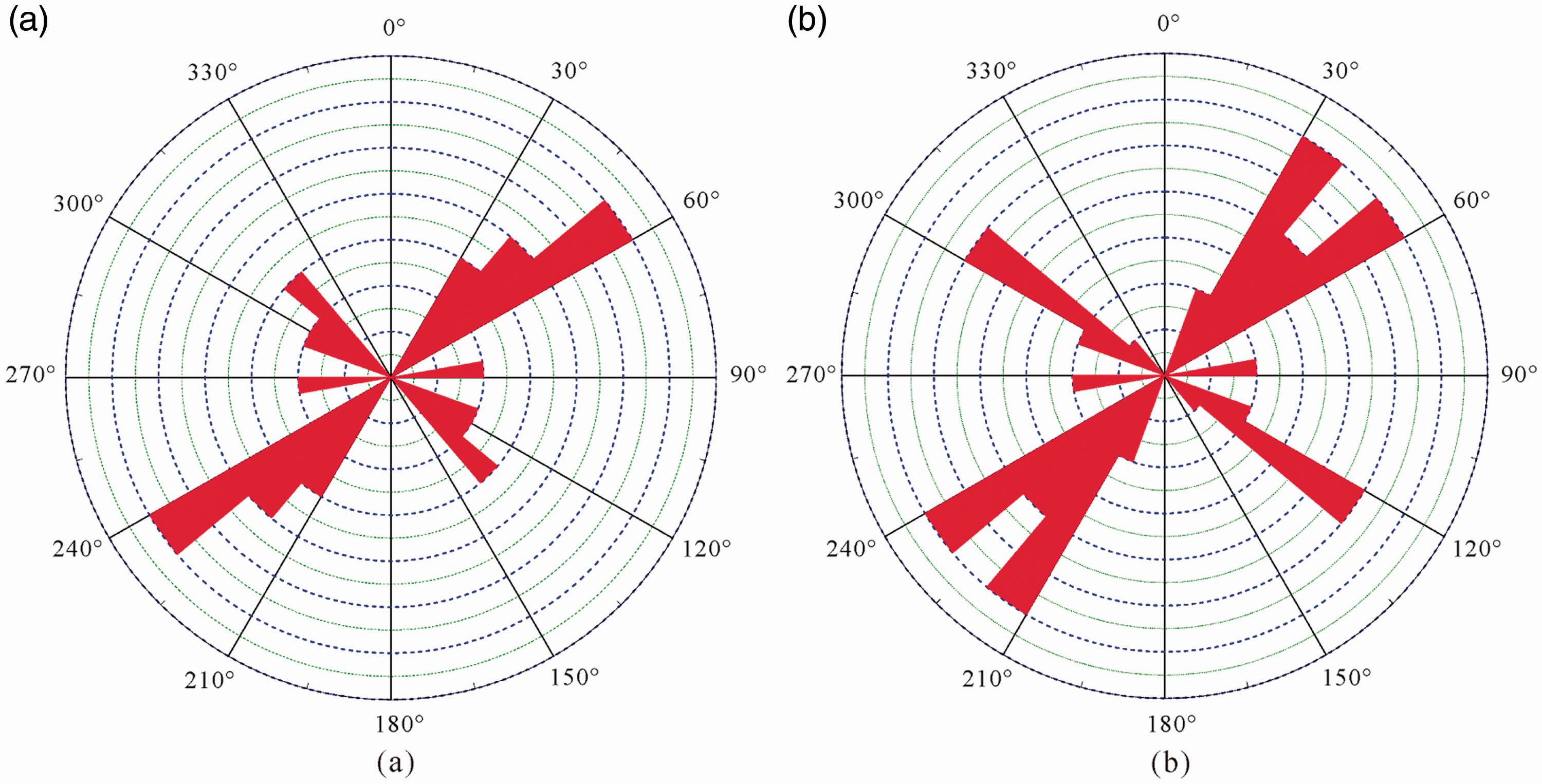
Rose diagrams of fracture strikes: (a) Derived from oriented cores and (b) derived from tracer monitoring data. The results show that three assemblages of approximately E–W, NE–SW, and NW–SE fractures are present in the middle–upper part of the Paleogene Shahejie Formation of the Zhouqingzhuang Oilfield.
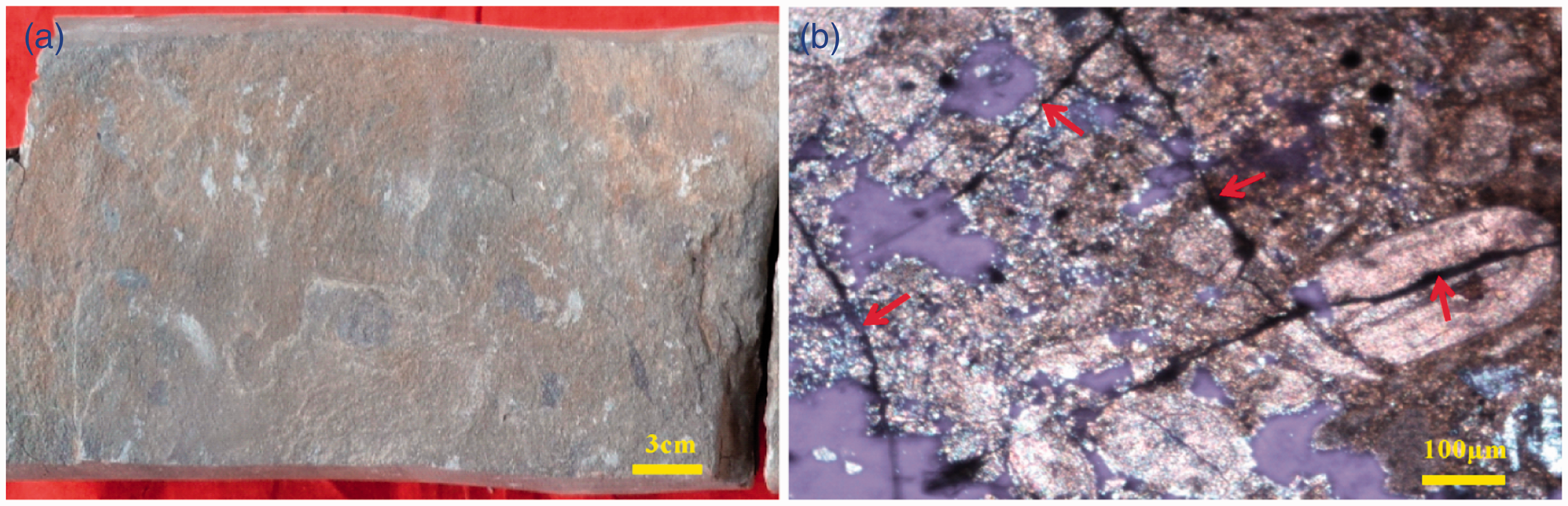
(a) Photo of a tectonic fracture surface with high dip angle in a core (depth 3084.0 m (10118.1 ft)). (b) Photo of microfractures in a thin section (depth 2832.8 m (9294.0 ft)). The arrows show two assemblages of microfractures.
Based on the Monte Carlo method (Howard and Nolen-Hoeksema, 1990), the average porosity of fractures is 0.21%. Furthermore, the permeabilities of samples with microfractures, those only visible through a microscope, are 18.3 × 10⁻³ µm2 (18.3 md), and the permeabilities of samples with macrofractures, those visible to the naked eye, are greater than 50 ×10−3 µm2 (50 md). Compared to the matrix permeability, macrofractures play an important role in permeability improvement of the low-permeability reservoir. The apertures, connectivities, and permeabilities of natural fractures are influenced by the present-day stress field (Connolly and Cosgrove, 1999; Davies and Davies, 1999; Finkbeiner et al., 1997; Li and Zhang, 1997; Olson et al., 2009; Zeng, 2004; Zeng and Li, 2009). Fractures striking NE–SW, which are nearly parallel to the direction of the maximum horizontal principal compressive stress, play a dominant seepage role in the study area.
Method
The current underground conservation of natural fractures is chiefly controlled by the static confining pressure perpendicular to the fracture surface, which is associated with fracture occurrences, burial depth, pore fluid pressure, and present-day stress (Zeng, 2008; Zeng and Li, 2009). According to the static confining pressure perpendicular to the fracture surface, Zeng (2008) put forward a method for calculating the opening pressures of different sets of natural fractures in the condition of static confining pressure. Considering the difference between hydrostatic pressure and the pore fluid pressure during waterflooding, the opening pressure of a natural fracture is




According to the underground opening condition of different sets of natural fractures, we propose that the water injection pressure during the water injection process is

Results
Based on the in situ stress data from the bottom of the Paleogene Shahejie Formation, statistic fracture data, water density analysis data, rock density data, and rock Poisson’s ratios from the ordinary monoaxial and triaxial rock mechanics tests, the opening pressures of natural fractures with different sets in 20 wells from fault blocks F16 and Z3 are calculated by using the method proposed in the paper. The average opening pressures of fractures striking NE–SW in fault blocks F16 and Z3 are 31.4 and 42.9 MPa, respectively; those of fractures striking NW–SE are 34.2 and 45.8 MPa, respectively; those of fractures striking E–W are 33.5 and 44.1 MPa, respectively (Table 2).
Average opening pressures of natural fractures with different sets calculated by the analytical method in the paper in different fault blocks.

E–W: east–west; NE–SW: northeast–southwest; NW–SE: northwest–southeast.
Discussion
Owing to low-permeability reservoir characteristics, such as filmy pore throats, poor connectivity, strong seepage resistance, and especially the formation damage processes during water injection, the bottom-hole pressures of water injection wells have difficulty permeating the well, which results in the gradual increase of water injection pressure (Civan, 2015; Li, 1997; Moghadasi et al., 2003, 2004). Simultaneously, small-scale natural fractures (i.e. small in heights, lengths, and apertures) are not connected to each other. Therefore, natural fractures have little influence on injected water imbibition and flow in the early stage of waterflooding development. During water injection, the bottom-hole pressure of the water injection well increases. When the injection pressure reaches or exceeds the opening pressure of natural fractures in the middle and late stages of waterflooding development, the natural fractures will be forced to open and even propagate. Consequently, natural fractures become connected and form seepage channels for injected water, promptly causing water breakthrough and floods along natural fractures in oil wells. Water breakthrough caused by natural fractures is the main cause of rapid floods in oil wells in fractured low-permeability reservoirs (De Swaan, 1978; Li, 1997, 2003; Yuan et al., 2004).
In the past, the maximum threshold value of water injection pressure was determined by the formation-parting pressure (Cao et al., 2012; Gulick and McCain, 1998; Huang, 1984; Singh et al., 1987). The formation-parting pressure can be deduced from step-rate tests in injection wells (Azeemuddin et al., 2002; Singh et al., 1987; Yuan et al., 2004), calculated based on the in situ stress, pore fluid pressure, and rock tensile strength (Huang and Zhuang, 1984; Wang et al., 2006), or it can be deduced from the formation-parting pressure gradient, which is obtained from a large quantity of in situ hydraulic fracturing data (He and Pang, 1986; Wang et al., 2006; Zeng and Tian, 1998). Based on hydraulic fracturing data, the formation-parting pressures of fault blocks F16 and Z3 in Zhouqingzhuang Oilfield (Figure 1) are 44.5 and 47.6 MPa, respectively (Yuan et al., 2004).
The analysis of a step-rate test is generally based on the conventional technique of plotting the bottom-hole injection pressure or wellhead injection pressure versus the water injection rate (Azeemuddin et al., 2002; Singh et al., 1987; Yuan et al., 2004). In general, the water injection rate has a linear positive correlation with the water injection pressure. However, when the water injection pressure reaches a value that causes natural fracture opening or crack formation, the natural or injection-induced hydraulic fractures could improve the permeability of the low-permeability reservoirs or provide fluid flow channels, so water would be more easily injected. Therefore, the water injection rate increases more rapidly compared to the wellhead injection pressure, and the slope of linear regression between the water injection rate and wellhead injection pressure decreases, resulting in an obvious inflection point in the plot of wellhead injection pressure versus the water injection rate (Figure 7). If closed natural fractures exist around the bottoms of the water injection wells, the bottom-hole pressures of the water injection wells corresponding to the inflection points indicate the opening pressure of closed natural fractures; otherwise, it reflects the formation-parting pressure (Yuan et al., 2004). As the wellhead injection pressure can be read in situ, the bottom-hole pressure is the sum of the wellhead injection pressure, hydrostatic fluid column pressure, friction pressure of the production tubing, and water-nozzle lost pressure (Zhang, 2006)

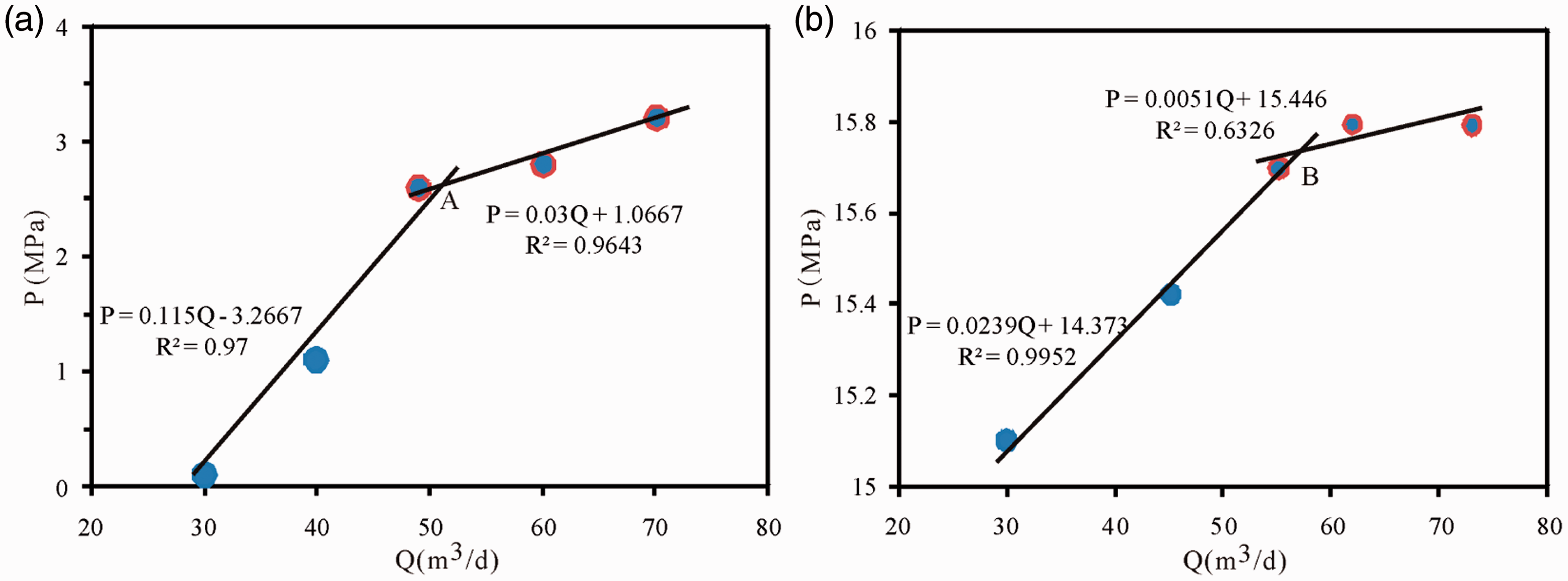
Wellhead injection pressure versus water injection rate for different fault blocks in the Zhouqingzhuang Oilfield (modified from Yuan et al. (2004)). P is wellhead injection pressure, i.e. production-tubing pressure (MPa), Q is water injection rate (m3/d). (a) Well K2 in fault block F16 and (b) Well K3 in fault block Z3. The locations of wells and fault blocks are in Figure 1. The inflection point is the intersection of the two linear regression straight lines. At the inflection points A and B, the wellhead injection pressures are 2.6 and 15.7 MPa, respectively, and the water injection rates are 51.0 and 57.1 m3/d, respectively.
In general, the opening pressures of existing natural fractures are less than the formation-parting pressure (Singh et al., 1987; Yuan et al., 2004). Natural fractures are present in fault blocks F16 and Z3 of the Zhouqingzhuang Oilfield (Figure 1). Therefore, the bottom-hole pressures of the water injection wells corresponding to the inflection points may indicate the opening pressures of closed natural fractures in fault blocks F16 and Z3. According to the plots of wellhead injection pressure versus water injection rate, at the inflection point, the average wellhead injection pressures of fault blocks F16 and Z3 are 4.4 and 15.3 MPa, respectively. According to equation (6), the corresponding average bottom-hole pressures of the water injection wells in fault blocks F16 and Z3 are 28.6 and 41.1 MPa, respectively. Thus, the opening pressures of the natural fractures in fault blocks F16 and Z3 are 28.6 and 41.1 MPa, respectively (Table 3).
Comparison of the opening pressures of natural fractures derived from different methods in different fault blocks of the Zhouqingzhuang Oilfield. The data of formation-parting pressures, wellhead injection pressures, and water injection rates at the inflection points come from Yuan et al. (2004).
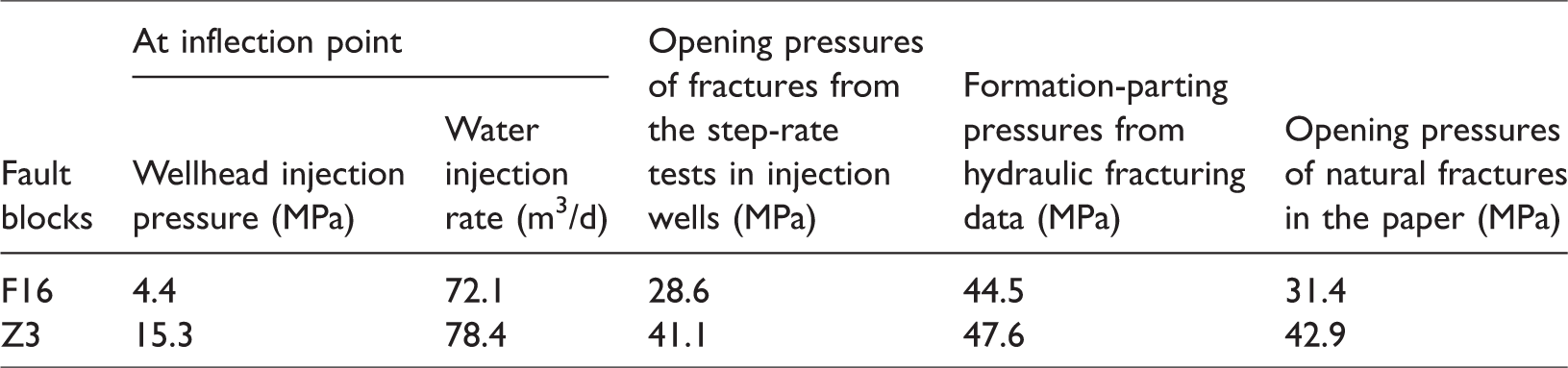
Comparing the formation-parting pressures evaluated from the hydraulic fracturing data of fault blocks F16 and Z3 and the opening pressures of fractures estimated using the step-rate tests in injection wells shows that the latter are lower than the former (Table 3). If the formation-parting pressure is used as the maximum threshold value of the water injection pressure, it will fail to prevent fractures from opening, thereby causing water breakthrough and floods (Figure 4). Therefore, it is unreasonable to utilize the formation-parting pressure as the maximum threshold of the water injection pressure in a low-permeability reservoir characterized by the presence of natural fractures.
The opening pressures of natural fractures with different sets (Table 2) indicate that the opening sequence of fractures during waterflooding in the study area is that NE–SW fractures are the first to open, followed by E–W fractures and NW–SE factures. If the pressure acting on the direction normal to fracture plane is less than the opening pressure of NE–SW fractures, all the fractures remain closed underground. Therefore, the opening pressures of natural fractures in fault blocks F16 and Z3 are 31.4 and 42.9 MPa, respectively. They are less than the formation-parting pressures and close to the opening pressures of natural fractures obtained from the step-rate tests in injection wells (Table 3). The opening pressures of natural fractures in the paper are calculated using the analytical method based on the regional in situ stress data from the bottom of the Paleogene Shahejie Formation. If the opening pressures of natural fractures are calculated using the well-point stress of the study stratum by the analytical method, they may be closer to the opening pressures of natural fractures obtained from the step-rate tests in injection wells, which may reflect the actual opening pressure of natural fractures underground. If the water injection pressure is less than the opening pressure of natural fractures calculated using the analytical method, it can effectively prevent natural fractures from opening during waterflooding development. Therefore, the opening pressures of natural fractures calculated using the analytical method in the paper are more appropriate than the formation-parting pressures for the determination of the maximum thresholds of water injection pressures in low-permeability reservoirs.
The production performances of wells K4 and K5 in the Zhouqingzhuang Oilfield also indicate that when the water injection pressure is greater than the opening pressure of natural fractures, natural fractures are forced to open and propagate, leading to water breakthrough and floods along natural fractures. A tracer was sent into the injected water of well K4 and monitored in five oil wells around well K4; the tracer was found in well K5 located southwest of well K4 (Figure 1). This result shows the good connectivity between wells K4 and K5. Figure 8 shows the relation between the water cut changes of well K5 and the water injection pressures of well K4. The water cut of well K5 was always less than 10% for the first 54 months without waterflooding development. The opening pressure of the NE–SW natural fractures in well K4 is 40.6 MPa according to the analytical method in the paper. During the first four months of waterflooding development in well K4, the water injection pressure was less than the fracture opening pressure and water was difficult to inject. Simultaneously, the water cut of well K5 was less than 10%, which corresponded to the period without waterflooding development. Then, the water injection pressure was raised, and it exceeded the fracture opening pressure (40.6 MPa); the water cut of well K5 also increased quickly. When the water injection pressure of well K4 was reduced, the increasing rate of the water cut also slowed down in well K5. When the water injection pressure of well K4 was raised above the fracture opening pressure after 72 months, the water cut of well K5 rapidly increased again and well K5 was quickly flooded. The aforementioned phenomena suggest the influence of natural fractures on water injection and fluid flow. When the water injection pressure of well K4 was less than the fracture opening pressure, the natural fractures were closed and the water cut of well K5 was caused by pores. When the water injection pressure of well K4 exceeded the fracture opening pressure, NE–SW fractures were forced to open and propagate, and the water flow speed from well K4 to well K5 increased, which led to a rapid increase in the water cut of well K5.
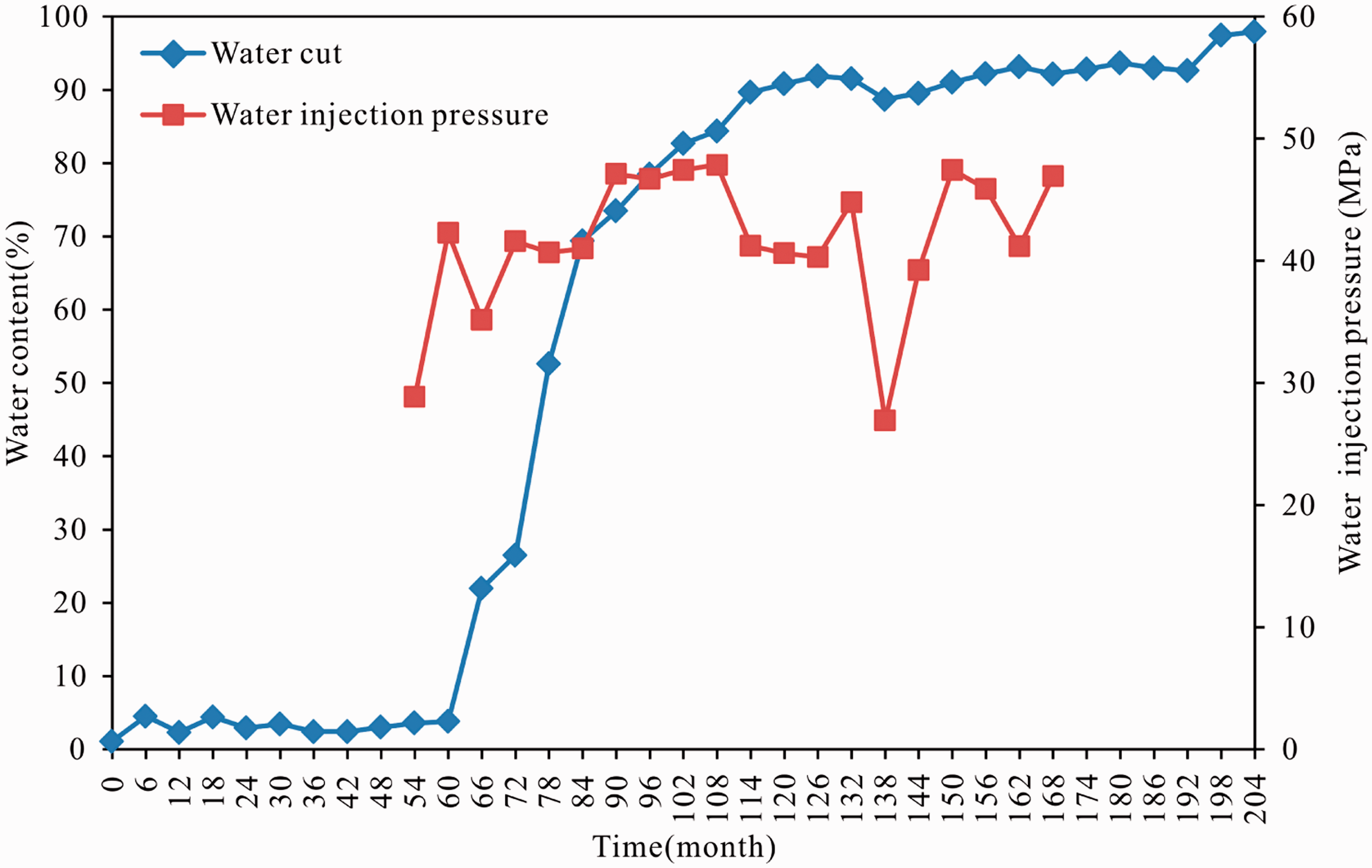
Water injection pressure of well K4 and water cut of well K5 in the Zhouqingzhuang Oilfield. See Figure 1 for the locations of wells K4 and K5.
The approach proposed in the paper for determining the opening pressures of natural fractures has also been applied to determine the water injection pressure in fractured low-permeability reservoirs of Jingan Oilfield, Ansai Oilfield, Huaqing Oilfield, and Jiyuan Oilfield in the Ordos Basin. In the past, the formation-parting pressures were used as the maximum thresholds of water injection pressures in low-permeability reservoirs of the aforementioned oilfields; however, water breakthrough or floods were present when the water injection pressures did not reach the maximum thresholds (Lin et al., 2016; Liu, 2011; Wu, 2014; Zhang et al., 2011). After using the opening pressures of natural fractures proposed in the paper to determine the maximum thresholds of water injection pressures, the maximum thresholds of water injection pressures are less than the previous ones by 2.2–10.2 MPa, which are more consistent with the actual production practice. For example, wells K6 and K7, which are in the same well group of the Ansai Oilfield, are water injection well and oil well, respectively. The developed oil-bearing layer is the six member of Yanchang Formation with depth of 1030–1119 m in the Ansai Oilfield. According to hydraulic fracturing data, the formation-parting pressures of the sixth member of Yanchang Formation range from 27 to 29 MPa in the Ansai Oilfield. The formation-parting pressures were used as the maximum thresholds of water injection pressures. The production performances of wells K6 and K7 showed that when the water injection pressure of well K6 was greater than 22 MPa at the 57th month, the water cut of well K7 rapidly increased, and then well K7 was flooded (Figure 9). This production performance suggested that the water injection between wells K6 and K7 was influenced by natural fractures and natural fractures had been open since the 57th month. Thus, the opening pressure of natural fractures was less than 22 MPa. Whereas, based on the method proposed in the paper, the opening pressure of natural fractures is 21.4 MPa. If the opening pressure of natural fractures proposed in the paper is used for the water injection pressure determination, the water breakthrough and floods between wells K6 and K7 could be avoided. These industrial applications also validate the feasibility of this method proposed in the paper for the determination of water injection pressure in fractured low-permeability reservoirs.
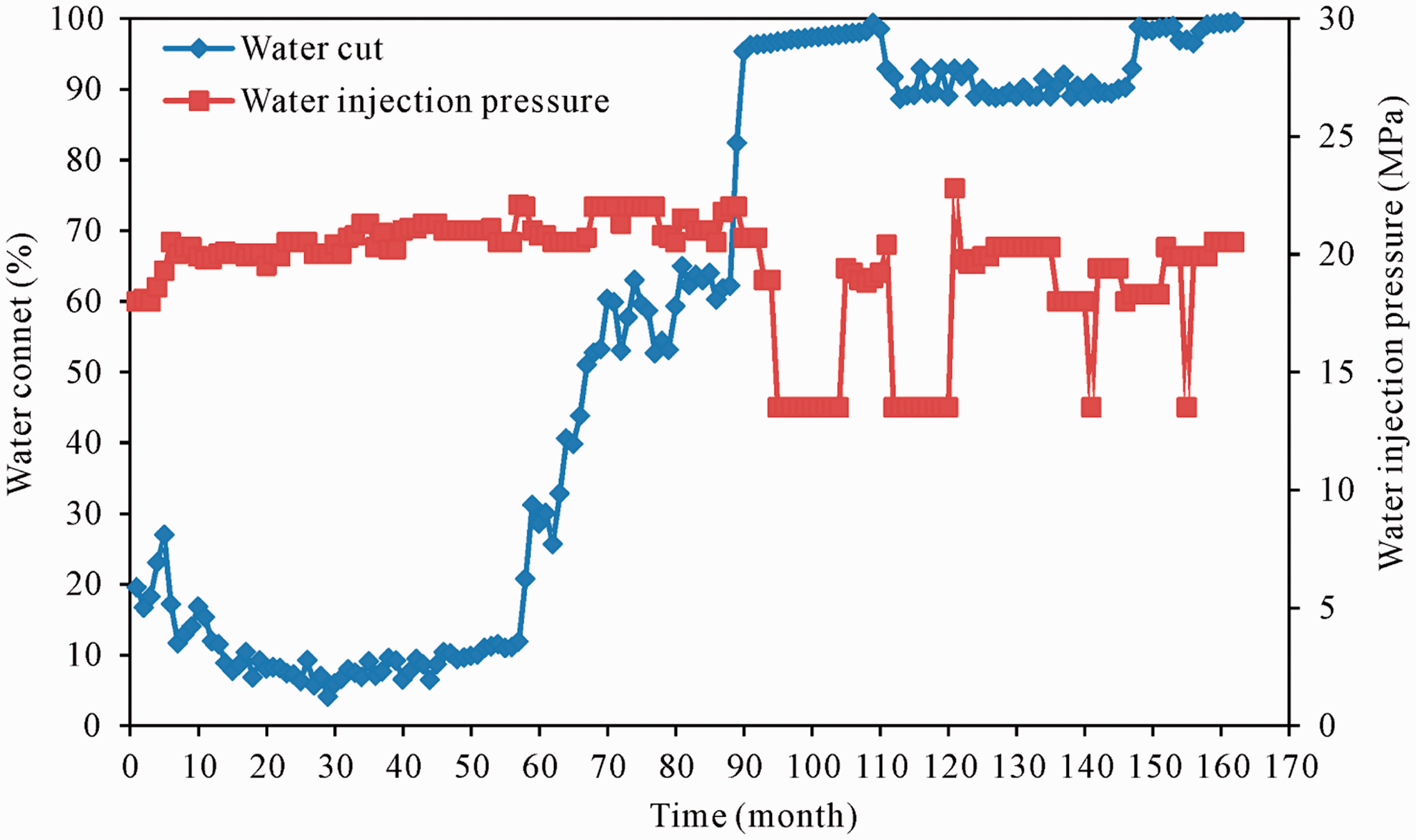
Water injection pressure of well K6 and water cut of well K7 in the Ansai Oilfield, Ordos Basin, China.
Conclusions
Three assemblages of approximately E–W, NE–SW, and NW–SE fractures are developed in the middle–upper part of the Paleogene Shahejie Formation of the Zhouqingzhuang Oilfield. Fractures striking NE–SW are the most abundant among these fractures. Water breakthrough caused by natural fractures is the main cause of rapid floods in oil wells in fractured low-permeability reservoirs.
The development practice of Zhouqingzhuang Oilfield shows that when the water injection pressure is far less than the formation-parting pressure, nature fractures are opened, and it causes water breakthrough and floods in oil wells. The formation-parting pressure cannot be used as the maximum threshold of water injection pressure.
The current underground conservation of natural fractures is influenced by fracture occurrences, burial depth, pore fluid pressure, and present-day stress. Considering the difference between hydrostatic pressure and the pore fluid pressure during waterflooding, the opening pressures of natural fractures can be estimated by the analytical method in the paper. The opening pressures of natural fractures calculated by the analytical method in the paper are close to the opening pressures of natural fractures obtained from the step-rate tests.
In order to effectively avoid water breakthrough and floods along natural fractures during waterflooding in fractured low-permeability reservoirs, it is necessary to control the water injection pressure being less than the opening pressure of natural fractures. The approach proposed in the paper for determining the water injection pressure based on the opening pressures of natural fractures may provide a means for water injection pressure determination in low-permeability reservoirs.
Footnotes
Acknowledgements
We thank Bai Wuhou, a senior engineer at the Dagang Oilfield Branch Company, PetroChina, for his constructive advice. The authors are particularly grateful to Dr Sun Yuzhuang and anonymous reviewers for their constructive comments and suggestions, which improved the manuscript significantly.
Declaration of conflicting interests
The author(s) declared no potential conflicts of interest with respect to the research, authorship, and/or publication of this article.
Funding
The author(s) disclosed receipt of the following financial support for the research, authorship, and/or publication of this article: This study is financially supported by the National Key Science and Technology Special Project (2017ZX05013-004), Science Foundation of China University of Petroleum, Beijing (No. 2462017YJRC057) and Open Foundation of State Energy Center of Shale Oil Research and Development (No. G5800-16-ZS-KFNY004), and we thank the sponsors of these projects.