




Abstract
The oil and gas in the Palaeogene lacustrine carbonate rock reservoirs in the Bohai Sea accumulated during several periods. The reservoir porosity formed during each period affected the degree of accumulation that occurred. In this paper, the percentages of particles, authigenic minerals and pores in the reservoir bed were calculated with the statistical method of microstructure analysis. The formation time was determined with an isotopic analysis of the authigenic carbonate minerals and the homogenization temperature of the gas–liquid inclusions. The percentages of the primary intergranular pores that formed during the different stages were recovered based on the compaction features both before and after the formation of the major authigenic minerals. The evolution of porosity was thus described quantitatively and chronologically, employing the percentages of the residual primary intergranular pores, visceral cavity pores and dissolved pores at the different burial depths. The results indicate that in the initial sediments of the reservoir rock, the primary intergranular porosity was 32.4%. During the early burial stage, the total reservoir porosity increased by up to 46.9%, due to the addition of another type of primary pore, namely visceral cavity pores, which were generated from the decomposition of bioclasts. During the late, deep burial stage, the compaction reduced only 8.2% of the porosity, due to the support of the pore-lining dolomite precipitating during the early stage. Authigenic minerals occupied 12.6% of the porosity, and the dissolution created the secondary porosity by 3.8%. Good preservation of the visceral cavity pores and the growth of the pore-lining dolomites during the early stages are the major factors leading to the high reservoir porosity. The quantitative and chronological characteristics of the reservoir porosity evolution could be described accurately. The prediction of reservoir beds can be better guided than in previously reported methods by applying high resolution microscopic quantitative analysis technology and authigenic mineral timing analysis technology.
Keywords
Introduction
Carbonate rock reservoirs are important targets for petroleum exploration and development. Since the late 1990s, breakthroughs have been made in the field of deep carbonate rock reservoirs in China (Ma et al., 2005; Wang et al., 2013a; Wu et al., 2007; Zhang, 1999; Zhang and Yan, 2007; Zhao et al., 2014), mainly in marine carbonate rock reservoirs. However, in the field of lacustrine carbonate rock reservoirs, few breakthroughs have been made, though relevant research work began in the mid-1980s in China (Yan et al., 2014). In recent years, with the discovery of oil- and gas-bearing reservoirs in lacustrine carbonate rocks in some basins worldwide (Benson, 1993; Bustillo et al., 2002; Peng, 2011; Yan et al., 2014), the exploration of this type of reservoir has been rejuvenated. Many studies of lacustrine carbonate rocks have been carried out to provide profound understanding of their palaeoenvironments, deposition conditions, distribution and evolution patterns, deposition modes, rock types, oil generation and reservoir types (Bohacs et al., 2000; Du, 1990; Dutkiewcz et al., 2000; Freytet and Verrecchia, 2002; Tian et al., 2014; Tu et al., 2012; Xia et al., 2003; Yang et al., 2012; Zhao et al., 2005). The early work on lacustrine carbonate rock reservoir beds was concentrated on the prediction of economically valuable reservoirs, mainly through the interpretation of the palaeogeomorphology and sedimentary mode (Cao et al., 2009; Su, 2010; Zhang et al., 2010).
In more recent work, the finding and identification of factors dominating the formation and development of the reservoir beds has attracted increasing attention. This was achieved through the establishment and understanding of the relationships between deposition, diagenesis, tectonism and the physical properties of the reservoir beds (Jiang et al., 2013; Liu et al., 2011; Yang et al., 2012; Zeng et al., 2010). With the extension of oil and gas exploration and development, especially in multistage accumulating reservoirs, modified reservoirs and deep-buried reservoirs, the pore development features are the key controlling factors for the distribution of reservoirs at different accumulation stages and buried depths. Porosity evolution, which is very important for reservoir prediction, has always been difficult and a typical problem in reservoir studies. Much work on porosity evolution has focused on identifying various types of diagenesis, diagenetic sequences and the key controlling factors of diagenesis. However, porosity evolution is mostly analysed by qualitative and semi-quantitative means. For example, only a single-well depth–porosity regression curve was used to calculate the impact of mechanical compaction on porosity. However, the change in the relationship between well depth and porosity due to the formation of cements and the contribution of secondary pores to total porosity during the burial process was neglected (Liu et al., 2006; Meng et al., 2007; Wu et al., 2011). Most studies have evaluated the impact of authigenic minerals on porosity, based on the types of authigenic minerals, such as calcite, dolomite, quartz and clay minerals. However, in most of the reservoirs, the same authigenic mineral was deposited at different stages and has different influences on porosity over time. Therefore, it is necessary to study the mineral influence by quantitative methods.
In recent years, with the development of reservoir experimental techniques, some scholars have explored various quantitative and chronological study methods for porosity evolution. For example, with the help of experimental analysis, researchers reconstructed the porosity evolution history under the boundary conditions, including the diagenetic sequence, the time of diagenesis occurrence and the contribution of different types of diagenesis to porosity (Liao et al., 2014; Lü et al., 2015). In addition, they established mathematical models based on the quantitative simulation to study the porosity evolution, and so on (Cao et al., 2013; Pan et al., 2011; Qu et al., 2012). However, these studies mainly targeted clastic rock reservoirs.
Carbonate minerals in carbonate rock reservoirs, such as calcite and dolomite, could show generation structures, and cements in different generations have different influences on reservoir porosity. Most of the authigenic minerals have few inclusions, especially carbonate minerals with a generation structure usually being fine-grained. Additionally, most of them are micrite or powder crystal and it is difficult to distinguish gas–liquid inclusions, which brings challenges to the determination of the formation time of these minerals. The main challenge is how to determine the influence of authigenic carbonate minerals with different modes of occurrence on reservoirs, both quantitatively and chronologically, in order to recover the porosity evolution of carbonate rock reservoirs. In this paper, the types and occurrence of authigenic minerals are recognized by observing the microscopic features of carbonate rock reservoirs, as well as the porosity types and their contents, and then the percentage of different authigenic minerals is counted under polarized microscope. Through analysis of inclusion homogenization temperature, laser isotope in situ micro-sampling and carbon–oxygen isotope analysis, the formation temperature of authigenic minerals with various occurrences is obtained. In this way, the porosity evolution is analysed, both quantitatively and chronologically, to provide good guidance for the prediction of reservoir beds.
The study area is located in the east of the Shijiutuo Uplift in the central Bohai Sea (Figure 1), adjacent to the Bozhong Sag, which is the largest hydrocarbon generation sag to the south in the Bohai Sea and therefore has a sufficient oil and gas supply (Liu et al., 2011; Zhang et al., 2000). Abundant oil and gas reserves have been discovered in the study area (Liu et al., 2011; Wang et al., 2015). Moreover, high-quality lacustrine carbonate rock reservoirs that are rich in oil and gas have been discovered in the deep strata, with a burial depth of more than 3000 m. In the study area, such high-quality reservoirs developed in the Paleogene Shahejie Formation (E2s), which is 300–400 m thick. The underlying formation is Palaeozoic (Pz) or Proterozoic (Pt), or the Kongdian Formation (E1–2k) in the local area. The overlying formation is the Palaeogene Dongying Formation (E3d). E2s mainly contains brackish water lake facies, and the high-quality carbonate rock reservoirs mainly belong to the bioclastic shoal microfacies (Liu et al., 2011; Ni et al., 2013).
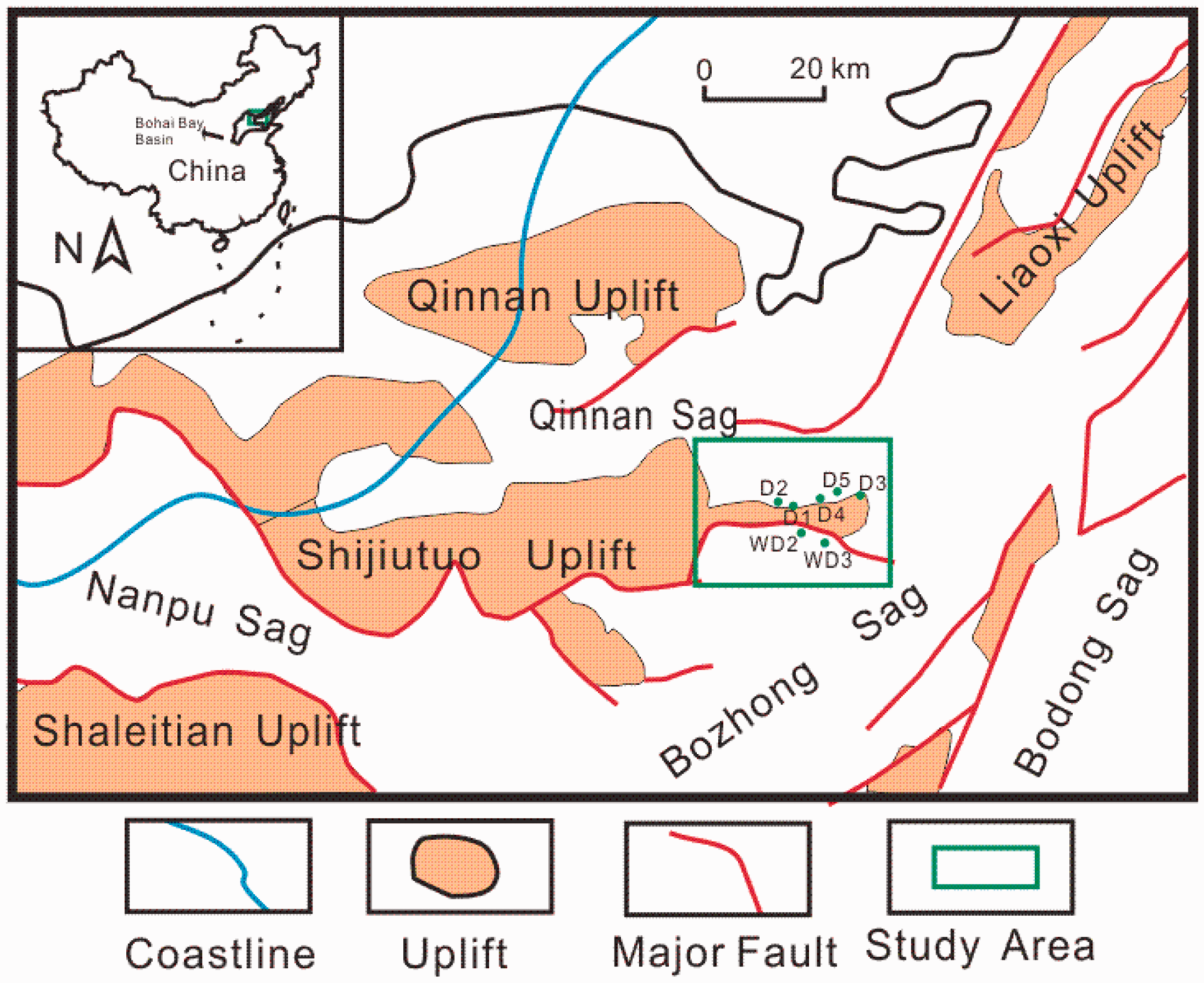
Location map and tectonic elements of the central Bohai Sea.
Materials and methods
Through polarized microscopy, fluorescence microscopy and scanning electron microscopy observations, the petrology, pore characteristics and diagenesis types of reservoir rocks are identified. Then, the relationship between the microscopic characteristics and physical properties is analysed to recognize the basic characteristics of high-quality reservoirs. Using the analysis results of cathodoluminescence, inclusion temperature and carbon–oxygen isotope, together with X-ray diffraction and vitrinite reflectance, the main diagenesis that affects porosity evolution is studied, quantitatively and chronologically, and the porosity evolution features of reservoirs are summarized.
Instruments and samples
First, 138 thin sections (blue resin-impregnated thin sections, one-third of which are stained by alizarin red) from the Shahejie Formation carbonate reservoirs, taken from seven wells (the green frame of Figure 1 shows the location of the seven wells) with cores and sidewall cores of target horizons, are selected to observe the microscopic features of the reservoir. Two to three trips of cores by 5.60–9.3 m of each trip were recovered from the objective intervals in D2, D5 and WD2. Sidewall cores were cut from the seven wells with average sample interval of 1–6 m where there were no cores but the borehole cuttings showed the lacustrine carbonate rocks are developed in some depth intervals. Then, 68 thin sections from the total 138 thin sections are chosen as representatives for point counting, and 280–330 points were counted for each thin section. The statistical items include the composition and content of the rock particles, the types and percentages of the authigenic minerals with different occurrence modes, pores, and so on, to obtain the quantitative data of the porosity evolution. Point counting was carried out under the polarizing microscope. First, the relatively even-distributed zones of the carbonate grains in the centre of the thin slices are chosen as the analysing area in small objective magnification such as 2.5 or 5. Then, each grain in one straight line is moved to the centre of the hair cross of the polarizing microscope to measure the grains themselves and the authigenic minerals, pores around the grains. It is not until one line finished that next straight line is counted.
The field emission environment scanning electron microscope, Quanta250 FEG, was performed on 115 selected samples that presented different diagenetic phenomena under a polarized microscope. It is more accurate to distinguish the occurrence sequences of all kinds of diagenesis because of the higher resolution and steric effect of the equipment. In addition, an energy dispersive spectrometer (Oxford INCAx-max20) could be used to determine the mineral types that are difficult to identify by crystal morphology.
The cathodoluminescence device, CL8200MK5, and the cathodoluminescence energy dispersive spectrometer, EDS-X2072, were used on the selected thin sections with generation structures or unclear generation structures under a polarized microscope to accurately identify the generation structures of the authigenic minerals.
The inclusion temperature measurement instrument, Linkam THMS-600, with both cold and hot platforms, was used to analyse the inclusion slices with obvious gas–liquid inclusions under a polarized microscope to measure the homogenization temperatures. The Nd:YAG laser isotope analysis instrument was applied to the authigenic carbonate minerals, which were fine-sized crystal and contained no inclusions, to measure the carbon and oxygen isotope values with a laser wavelength of 1064 nm and a focused beam spot size of 20 µm. Then, the formation temperature of the minerals was calculated by oxygen isotope thermometer. The electron probe positioning microanalysis instrument, EPMA-1720, was used to analyse the typical diagenetic minerals to determine diagenesis accurately, with a micro-area distinguishing range of 1–100 µm.
Mudstone samples were collected from the burial depth of 100 m to the maximum burial depth around the reservoir beds for X-ray diffraction analysis. This was completed to obtain the percentage of clay minerals and the relationship between the vitrinite reflectance (Ro) and well depth. Accordingly, the latest diagenetic stage of the reservoirs was induced.
Quantitative analysis of porosity evolution
To obtain the plane porosity of the residual primary intergranular pores, visceral cavity pores and intergranular dissolved pores, 68 typical thin sections were observed using the point-counting method. High-quality reservoir beds are mostly composed of grain dolostones, with grains consisting of bioclast, oolite and a small amount of arene. The initial primary pores contain primary intergranular pores and visceral cavity pores. The primary intergranular porosity occurring in the rocks whose characteristics are similar to those of sandstone is determined, referring to the sandstone sorting coefficient. The rocks of the target zones are moderately to poorly sorted. Therefore, the initial deposition intergranular porosity is determined to be 32.4%, which is the mean value of the initial primary intergranular porosity of 34% in moderately sorted sandstone and 30.7% in poorly sorted sandstone (Beard and Weyl, 1973). Since micrite filled in among the particles during deposition, the initial primary intergranular porosity is calculated by formula (1). The initial visceral cavity porosity comprises the currently preserved visceral cavity porosity and the percentage of authigenic mineral fillings. This is calculated by formula (2). The final initial primary porosity includes both the initial primary intergranular porosity and the initial visceral cavity porosity. This is calculated by formula (3).



The variation trend of the primary intergranular porosity at the early burial stage, which is equal to the compaction process when no authigenic minerals are deposited among particles, is determined by the compaction law of sandstone porosity (Athy, 1930). The regression equation is shown in formula (4). After the intergranular authigenic minerals are formed, to determine the primary porosity at each stage, a new correlation between the primary porosity and well depth is constructed, mainly based on the residual primary intergranular porosity in the typical well intervals. The regression equation is shown in formula (5). The x and y in formulas (4) and (5) represent porosity and depth, respectively.


The visceral cavity plane porosity is directly obtained by the point-counting method under a polarized microscope. To unify the plane porosity and porosity, a correlation analysis was carried out between the plane porosity of the residual primary intergranular pores and the visceral cavity pores and the corresponding porosity (Wang et al., 2013b) to convert plane porosity into core porosity. This was completed using formulas (6) and (7), where x and y represent plane porosity and core porosity, respectively.


The quantitative influence of authigenic carbonate minerals on porosity is mainly acquired from 68 thin sections by the point-counting method. Subsequently, contents of these authigenic minerals mainly include Stages 1, 2 and 3 pore-lining dolomites, and Stages 1, 2 and 3 filling dolomite and calcite.
Timing analysis of porosity evolution
Determination of the relative formation time of diagenetic minerals
First, diagenetic minerals in the reservoir rocks are determined through microscopic observation and cathodoluminescence, together with energy spectrometer and microprobe analysis. Then, the relative formation time of these diagenetic minerals is determined based on the occurrence modes (Liao et al., 2014; Lü, 2005).
Determination of the formation time of the main diagenetic minerals
The key parameter for determining the formation time of the authigenic minerals is the formation temperature, which is measured by two methods. First, the homogenization temperature is measured with the gas–liquid inclusions in the authigenic minerals. In this study, available gas–liquid inclusions have not been observed in most of the authigenic minerals, except for in the powder–fine crystalline dolomite. For example, liner and coating dolomite consists of very fine crystals, mainly as microcrystals and powder crystals. Thus, few homogenization temperature data could be obtained. Second, an isotope thermometer is used. To determine the formation time of the authigenic carbonate minerals, an in situ laser sampling technique is adopted to sample the positioned micro-area at micron resolution (Hu et al., 2014; Qiang et al., 1996). Isotope mass spectrometric analysis is performed on CO2 to acquire the oxygen isotope values of the minerals. In addition, an isotope thermometer is used to calculate the palaeo-temperature value by gas–liquid inclusion analysis. Specifically, two samples are selected with the homogenization temperature for laser isotope analysis to obtain the oxygen isotope value. Based on the homogenization temperature (T) and oxygen isotope value (δ18Oc), the isotope value (δ18Ow) of pore fluids when authigenic minerals precipitated is induced by formula (8). Then, the isotope value (δ18Ow) is put into formula (8) to calculate the formation temperature of other samples (Zheng and Chen, 2000).

After the formation temperature of the authigenic minerals is determined, combined with the palaeo-geothermal gradient, the palaeo-burial depth is calculated as follows

The palaeo-geothermal gradient 3.5°C/100 m and palaeo-surface temperature 25°C are chosen according to the regional geological background (Xiao et al., 2001).
Determining the latest diagenetic stage
The latest diagenetic stage is comprehensively determined based on the evolution features of the clay minerals, the vitrinite reflectance of mudstone and the latest formation temperature of the authigenic minerals.
Results
Basic characteristics of reservoirs
Rock types
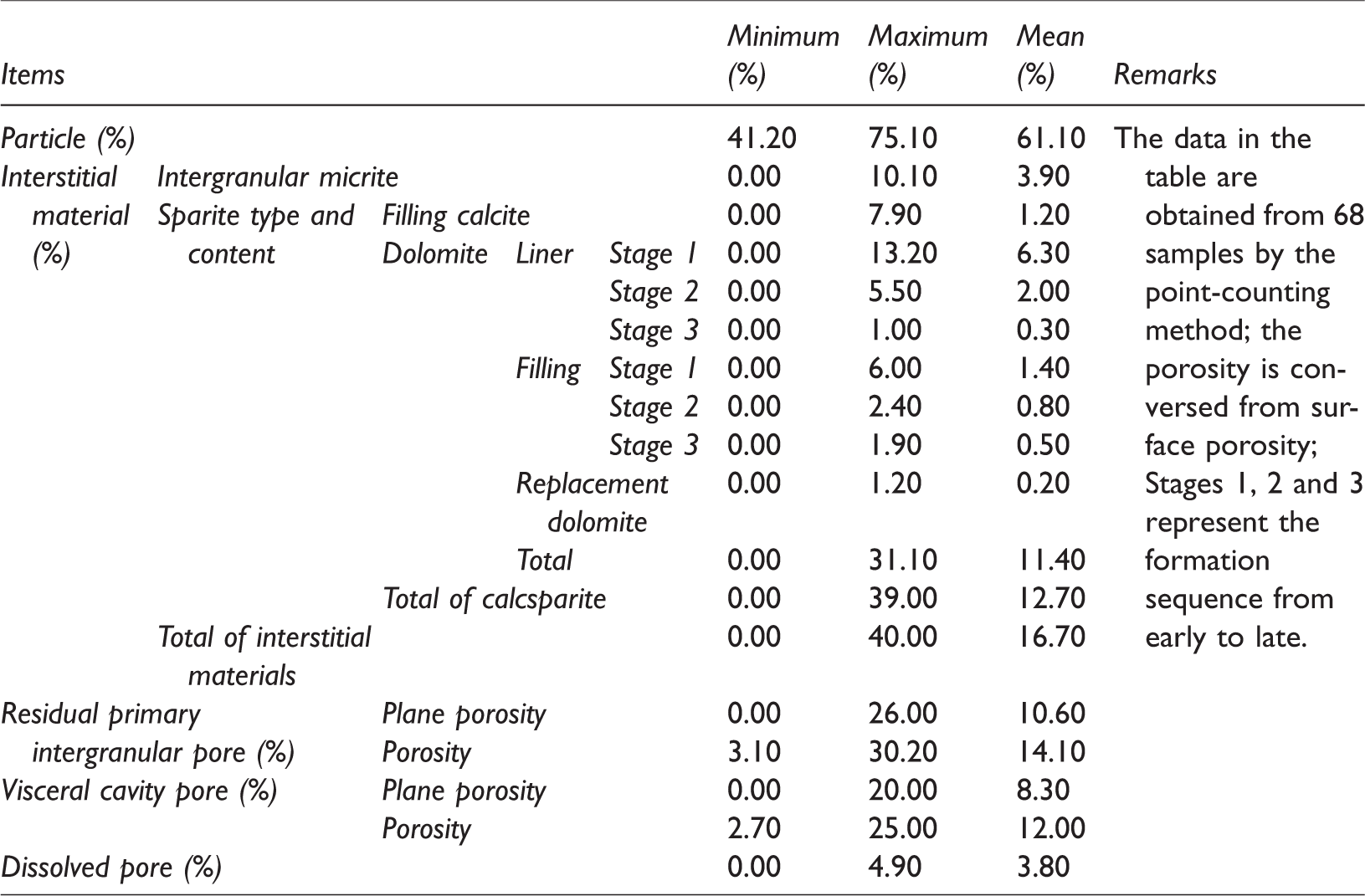
Carbonate rock reservoirs consist of various rocks in the Shahejie Formation (Figures 2 and 3). Dolostone is widely distributed in the objective area and its proportion exceeds 88%. Specifically, grain-supported dolostone is the main carbonate rock type, about 52% is bioclastic dolostone (Figure 3(a) and (b)), and other grain supported dolostones are beyond 26% such as oolitic dolostone (Figure 3(c)), doloarenite (Figure 3(d)), grain dolostone, micrite oolitic doloarenite and sparite bioclastic doloarenite) and micritic dolostone approximates 10%. Limestone is less than 11%, mainly consisting of bioclastic limestone and oolitic limestone, and is mainly distributed in the northern tectonic zone. Other rock types are rarely observed like limy dolomite and dolomitic limestone which mainly spread in well D2. The particles are mainly bioclasts, oolites and arenes. The fillings are dominated by sparites, with an average content of approximately 12.7%, where dolomite is the main component and calcite is the minor one. Micritic fillings are less than calcsparites with an average of 3.8%.
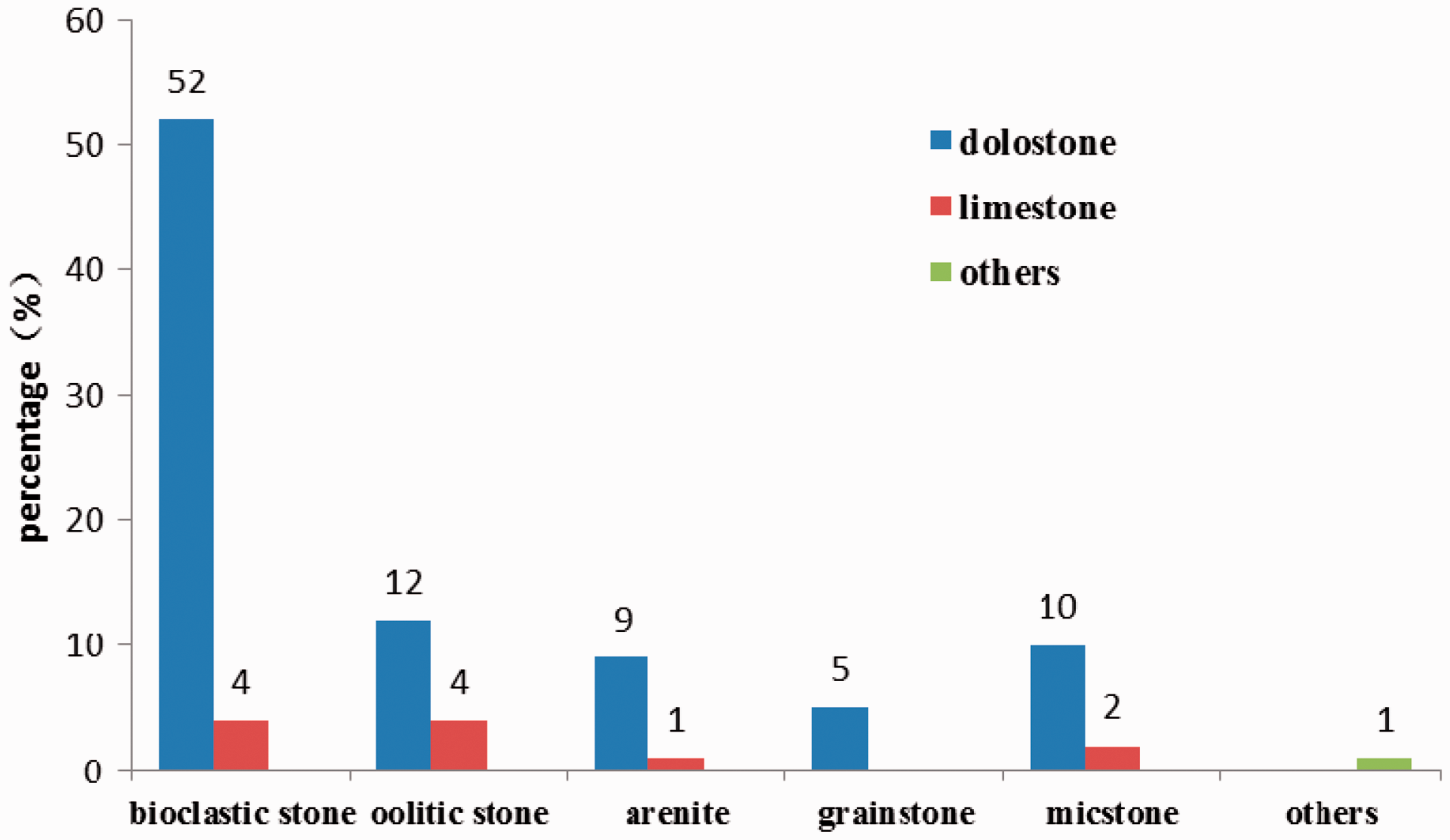
Distribution histogram of the lacustrine carbonate rock types.
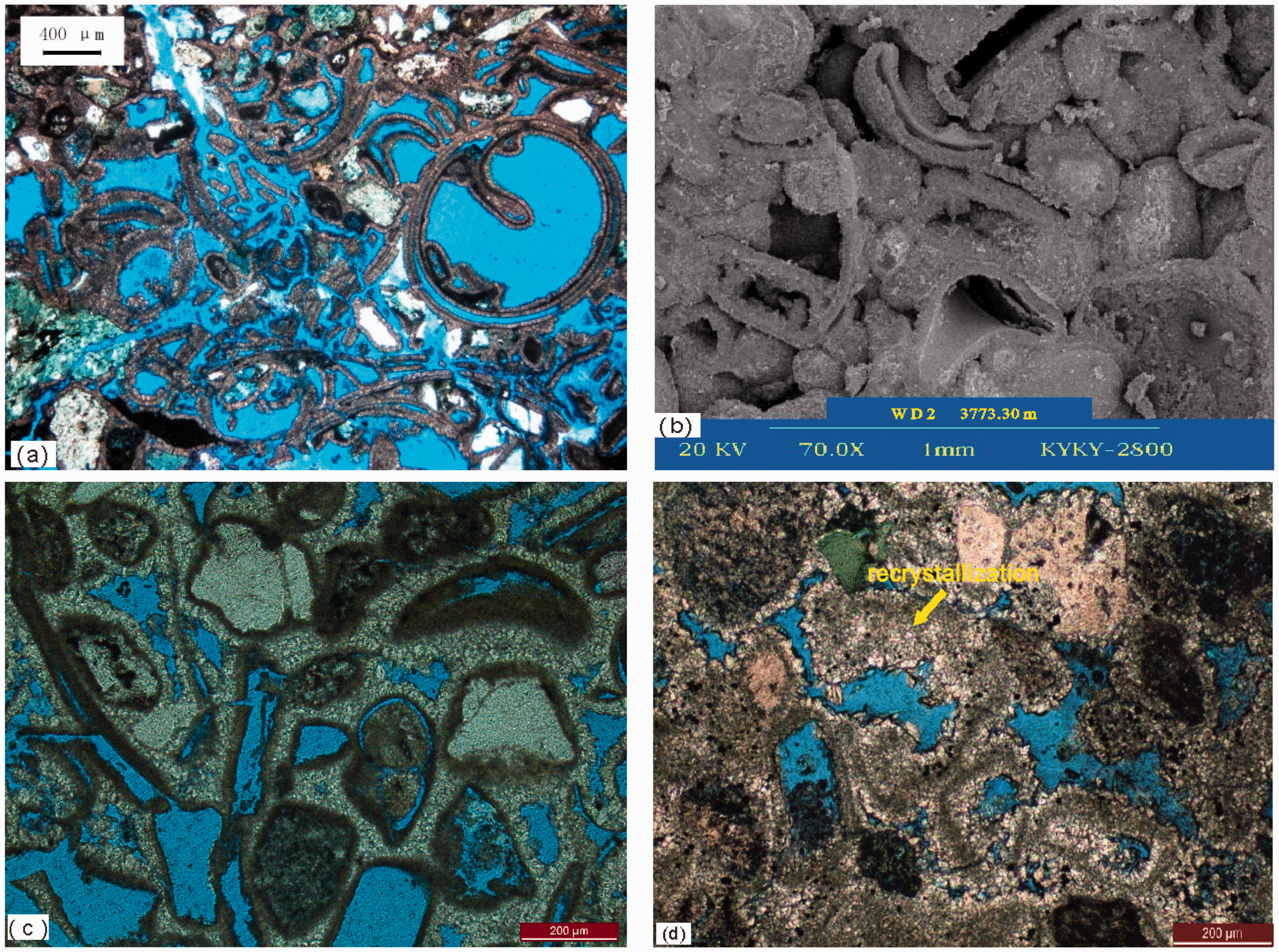
Rock types and microscopic features of the lacustrine carbonate reservoirs. (a) Micritic bioclastic dolostone, dolomite coatings and liners developed well, Well D 4, E2s, 3311.50 m. (b) Bioclastic dolostone, organic shells preserved well, Well WD 2, E2s, 3773.30 m. (c) Oolitic dolostone, a large amount of coating and liner dolomites occurred among ooids and nucleus of ooids dissolved locally, Well WD 2, E2s, 3762.60 m. (d) Doloarenite, arenites and liner dolomites dissolved unevenly, and micrite matrix partly recrystallized into powder crystals, Well D 5, E2s, 3370.05 m.
Physical properties
The porosity of carbonate rocks ranges from 0.74 to 38.20%, with an average of 26.10% and permeability ranges from 0.05 to 1960.50 mD, with an average of 454.97 mD. In particular, 77.9% of the samples have a porosity over 20%, and 76.25% of samples have a permeability over 100 mD. The relationship analysis between the rock types and physical properties shows that grain dolomite (especially bioclastic dolomite) is the high-quality reservoir in the study area, with an average porosity of 29.90%. However, other rocks with poor physical properties are non-reservoirs. For example, micrite dolomite has a porosity of only 7.70%.
Primary pores are the main reservoir space in the high-quality reservoirs, accounting for more than 97.96% of the total porosity, and mainly include visceral cavity pores and residual primary intergranular pores (Figure 3(a) to (c)). Intraparticle dissolved pores scarcely distribute (Figures 3(c) and (d) and 4(b)) and slightly contribute to the total porosity. Moreover, a small amount of intracrystalline pores (Figure 4(d)) and intercrystallin solution pores (Figure 4(b)) contribute little to the total porosity.
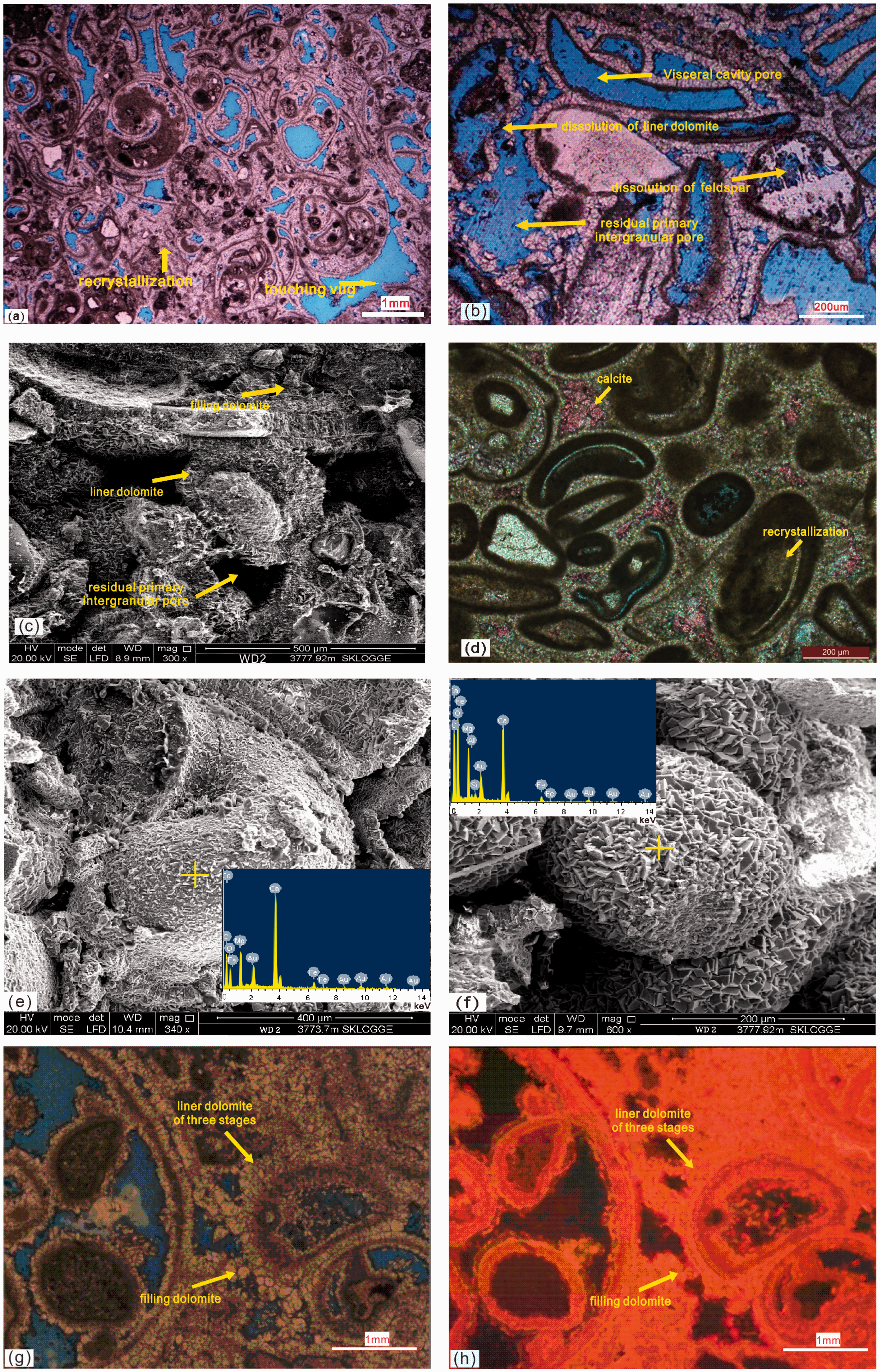
Microscopic diagenetic features of the carbonate reservoirs. (a) Bioclastic dolostone, secondary pores developed well, point contact and point–line contact, Well D 5, E2s, 3375.65 m. (b) Oolitic bioclastic dolostone with pore-lining dolomites, residual primary intergranular pore and visceral cavity pore, a small amount of feldspars, lithic fragments and dolomite encrustation dissolved, Well WD 2, E2s, 3762.60 m. (c) Bioclastic dolostone, residual primary intergranular pores developed well, pore-filling dolomite distributed in the residual pores after growth of pore-lining dolomite, Well WD 2, E2s, 3777.92 m. (d) Limy bioclastic dolostone, content of the calcite sparites is much greater and physical properties are poorer, Well WD 2, E2s, 3777.85 m. (e) Bioclastic dolostone, organic shell dolomitized and Mg/Ca (mol) is 0.43, and it indicates weaker dolomitization. The intersection point of yellow crosslines is the measuring point for EDS. Well WD 2, E2s, 3773.70 m. (f) Mg/Ca (mol) of the coating dolomite on the grain is 0.72 and it indicates more thorough dolomitization, Well WD 2, E2s, 3777.92 m. (g) and (h) Bioclastic dolostone, pore-lining dolomites with three phases display cathodoluminescence colours of dark reddish orange–reddish orange–red (from the particle margin to the centre of the intergranular pore), Well WD 2, E2s, 3375.65 m.
Major diagenetic features
Many types of diagenesis occurred in the carbonate rocks of the Shahejie Formation due to deep burial, which has a direct impact on the evolution of reservoir pores.
Mechanical compaction
Two patterns of mechanical compaction occurred in the reservoirs of the Shahejie Formation. One is strong compaction, which mainly occurs in the micritic carbonate rock, yet no pressure solution sutures can be found in the thin sections, drilling cores and sidewall cores. Because lacustrine carbonate rocks usually were interbedded with sandstones and mudstones and the average bed thickness of lacustrine carbonate rock is 0.5–3 m, there are no suitable conditions for pressure solution sutures, and instead, a few of fractures can be found. The other is poor compaction, which mainly occurs in the grain carbonate rocks, with grain contact modes of point contact and point–line contact (Figure 4(a) and (d)).
2. Authigenic minerals
The most widespread authigenic mineral is the dolomite in the carbonate rocks of the Shahejie Formation, which is characterized by high content and various occurrence modes. According to the occurrence modes, dolomite can be classified into two types. One is pore-lining dolomite with multiple generations, including Stage 1, Stage 2 and Stage 3, from early to late. It mainly contains microcrystalline, followed by powder crystalline and fine crystalline, which present as pore liners in blade shapes and drape shapes (Figure 4(e) and (f)). The other is the pore-filling dolomite that was distributed in the residual primary intergranular pores with pore liners (Figure 4(c)) or in visceral cavity pores. Its crystal size is coarser than that of pore-lining dolomite, which mainly presents as poikilitic texture, and it also filled during Stages 1, 2 and 3, from early to late. In addition, there is a small amount of replacement dolomite, which indicates dolomite replacing ooids.
The authigenic calcite is lower in content and uneven in distribution. However, content of calcite is much greater and the physical properties are poorer in the carbonate rocks with a high calcite micrite content (Figure 4(d)). Calcite is mainly present in two forms: (a) poikilitic texture among particles and (b) few fillings in the visceral cavity pores.
In addition, pyrite, ankerite and ferrocalcite are generally rare in thin sections.
3. Dissolution
The dissolution is weak generally and stronger locally which occurs in two forms: (1) fabric selective dissolution including dissolution in feldspars and lithic fragments of ooid cores, in coating dolosparites forming star-shaped pores and in pore-lining dolomite resulting in departure and fracture of pore liners (Figure 4(b)); (2) nonfabric selective dissolution contains dissolution in organic shells (Figure 4(a)), in grains like arenes (Figure 3(d)) and along fractures generating touching vugs.
4. Recrystallization and dolomitization
Recrystallization mainly shows that the micritic carbonate recrystallized into powder or fine crystal to produce some intercrystal pores (Figures 3(d) and 4(a) and (d)). Most of the coatings and organic shells are composed of dolomite, indicating that dolomitization occurred as seen using the electron microprobe analysis (Figure 4(e) and (f)). Extensive dolomitization occurred in the early diagenetic phase according to the well-preserved initial texture, and dolomite has much stronger resistance to pressure so as to benefit the preservation of primary pores.
Porosity evolution
The high-quality carbonate reservoirs of E2s are mainly composed of grain dolomite, such as sparry bioclastic dolomite and sparry oolitic dolomite, and thus, the study is focused on grain dolomite.
Quantitative variation of porosity
The quantitative analysis of porosity evolution includes: (1) the destruction of mechanical compaction on porosity, (2) destruction of authigenic minerals on porosity and (3) contribution of dissolution to porosity.
At the syndiagenetic stage, pores in rocks include primary intergranular pores and visceral cavity pores. According to statistics results (Table 1) and formulas (6) and (7), the primary intergranular pores have an average plane porosity of 10.6% and an average core porosity of 14.1%. Similarly, the visceral cavity pores have an average plane porosity of 8.3% and an average porosity of 12.0%. Then, the above porosity values are put into formulas (1), (2) and (3) to calculate the initial primary porosity which is 46.9%.
Statistics of the interstitial materials of the carbonate reservoirs.
The destruction of mechanical compaction on porosity represents two forms, which are mainly recovered based on the compaction law. First, when the burial depth was less than 400 m, no intergranular cements formed and the loss of porosity reached its maximum, due to mechanical compaction. When burial was over 400 m, point-contact particles partly resisted mechanical compaction to effectively protect the primary porosity, because of the formation of pore-lining dolomite in Stage 1. Primary intergranular porosity corresponding to palaeo-burial depth is obtained according to the above compaction law. Residual primary intergranular porosity generally decreases by 2.1% per 200 m when burial is less than 400 m, and only decreases by 0.2% per 200 m when burial is greater than 400 m.
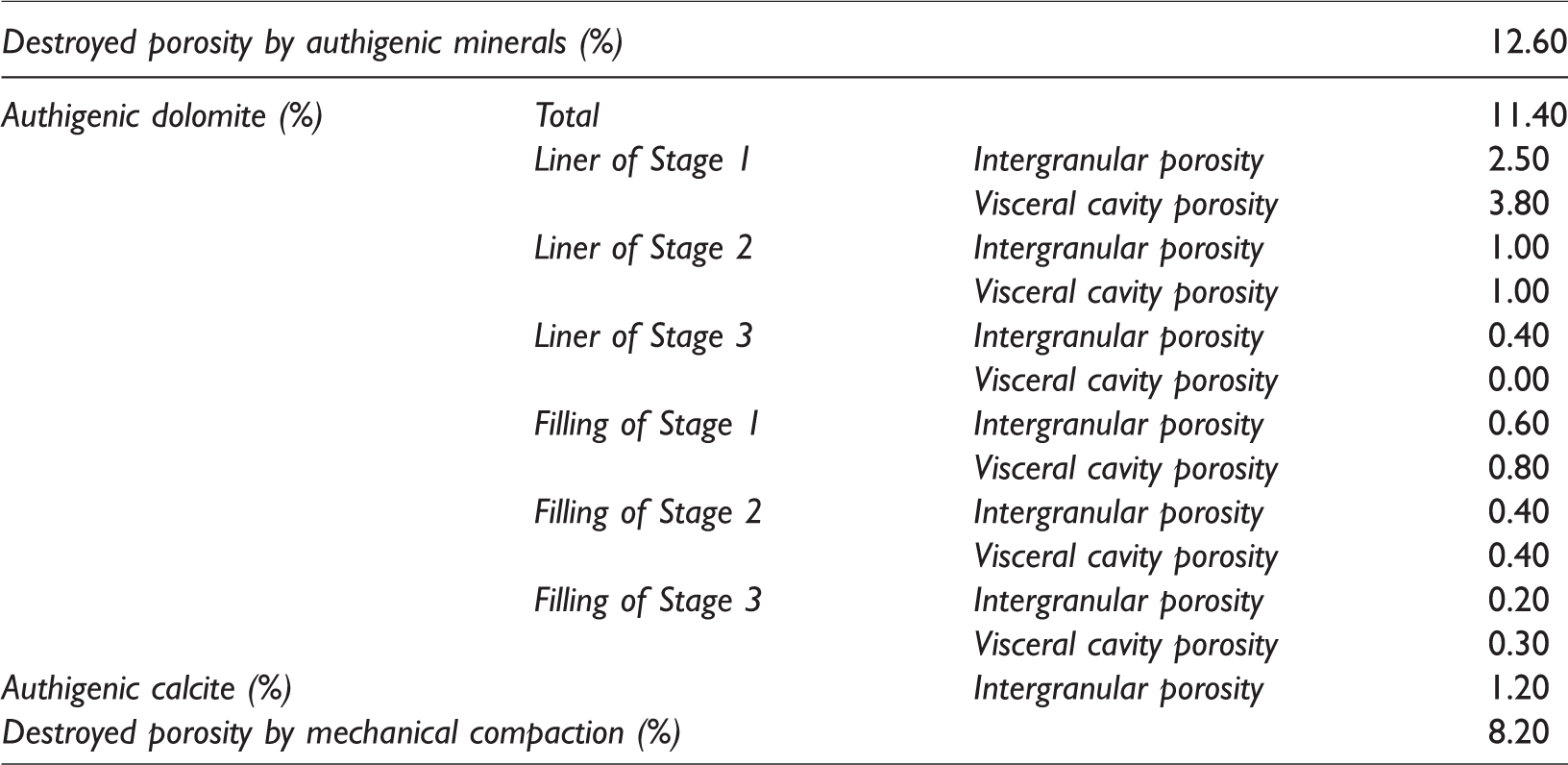
During the burial process, three stages of pore-lining dolomite, three stages of filling dolomite, filling calcite, replacement dolomite and other minerals were deposited, all of which occupy and destroyed pores, except the replacement dolomite. The destroyed amounts of various authigenic minerals on different pores obtained from 68 samples (Table 2) reveal that authigenic dolomite and calcite destroy 12.6% of porosity. The destruction of authigenic dolomite is up to 11.4%. Among the dolomites with various occurrence modes, the pore-lining dolomite of Stage 1 imposes the maximum amount of destruction on porosity. Dissolution only contributes 3.8% of porosity to the present porosity, according to the statistics of various porosities.
Destruction of the main authigenic minerals and the mechanical compaction on porosity.
Periods of porosity evolution
Relative diagenetic stage 2. Formation stage of main authigenic minerals
After carbonate rock reservoirs of E2s were buried, pore-lining dolomite formed the earliest, and then pore-filling dolomite with crystals significantly greater than that of the pore-lining dolomite deposited outside of the liners (Figure 4(c) and (g)). In local areas, a few calcites filled in the residual intergranular pores behind the pore-lining dolomite (Figure 4(d)). In addition, a small amount of replacement dolomite formed at late stages, which not only replaces grains such as oolites but also penetrates the dolomite encrustations and liners outside of the oolites. Dissolution occurred in two main stages: (1) after encrustation dolomitization and before the formation of pore-lining dolomite, and (2) after the formation of the pore liner, when dissolution occurred in feldspars and rock fragments of the ooid cores (Figures 3(c) and (d) and 4(b) and (g)).
Inclusion homogenization temperature analysis results of 27 points reveals that the authigenic dolomite in the carbonate rocks of E2s formed at the lowest temperature of 38°C initially, and then at the highest temperature of 131.1°C. The temperature distribution is in the ranges of <60, 70–80, 80–90 and > 110°C, mostly in the ranges of > 110 and 70–80°C (Figure 5).
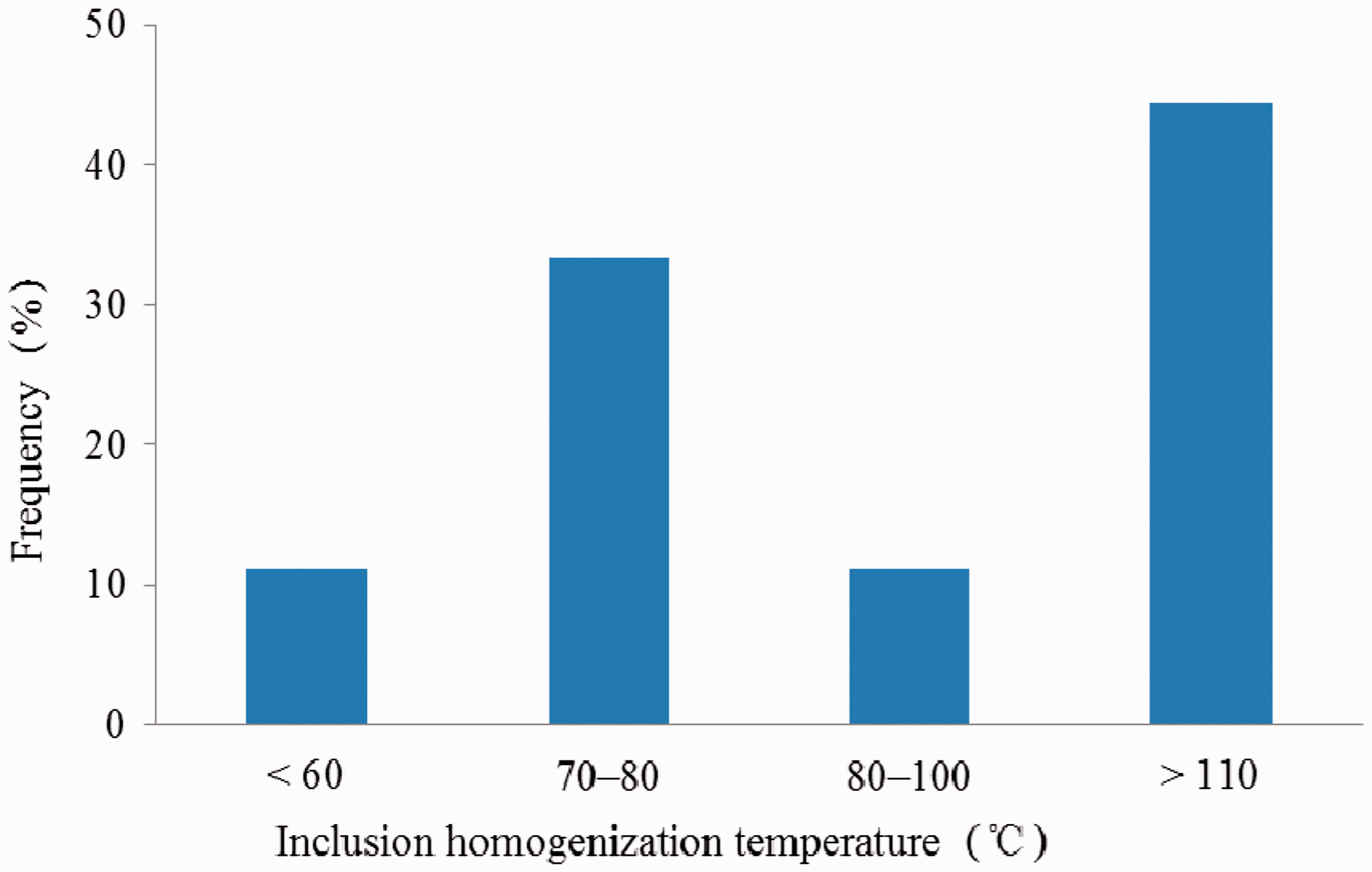
Temperature distribution histogram of the authigenic dolomite inclusions.
The isotopic temperature analysis results of authigenic minerals (Figure 6) show that pore-lining dolomite formed in three stages at palaeo-temperatures of < 40, 50–60 and > 80°C. Moreover, filling dolomite also precipitated in three stages at palaeo-temperatures of 40–50, 60–70 and 80–90°C. Biological shell microcrystalline dolomite formed at a temperature of less than 40°C. Recrystallization dolomite formed at a temperature higher than 60°C or up to 110°C.
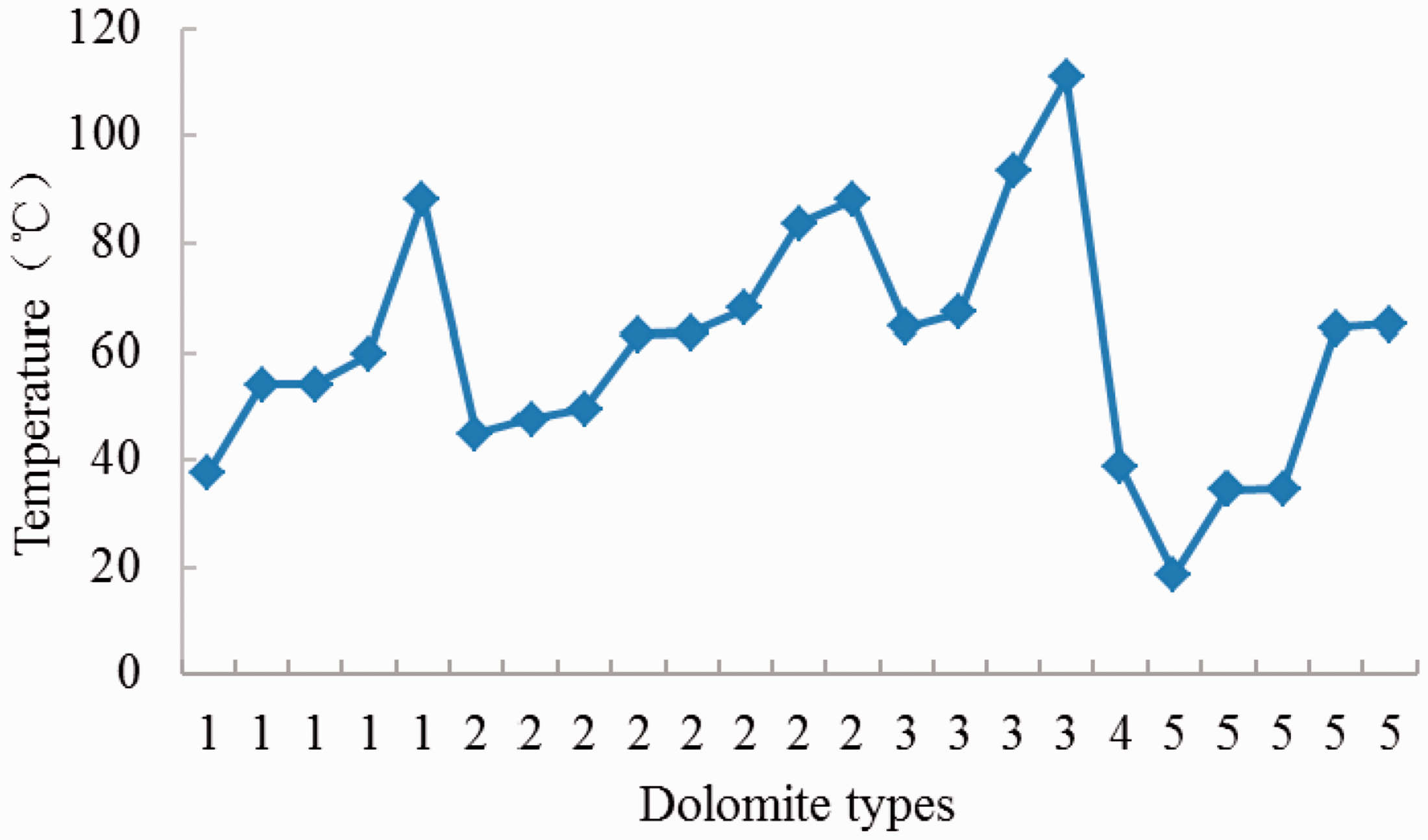
Isotope temperature distribution of the carbonate minerals with different occurrence modes. 1—pore-lining dolomite; 2—pore-filling dolomite; 3—recrystallized dolomite; 4—microcrystalline dolomite encrustation; 5—micritic dolomite.
3. Determination of the latest diagenetic stage
In mudstones around the reservoir beds of E2s, the smectite, accounting for less than 10% of the illite–smectite mixed-layer minerals, illustrates that reservoir rocks have reached the middle diagenetic stage. The vitrinite reflectance is generally over 0.9% in mudstones, indicating that organic matter is at a maturity stage. Authigenic minerals formed at the highest temperature, up to 130°C. In summary, the latest diagenetic stage of reservoir rocks is the middle diagenetic stage.
4. Analysis of palaeo-burial depth when authigenic minerals formed
Formation temperatures of authigenic minerals are placed into formula (9) to calculate the palaeo-burial depth. Coating dolomite formed at a palaeo-burial depth of 390 m; pore-lining dolomite formed at palaeo-burial depths of approximately 360, 800–1000 and, 1800 m; pore-filling dolomite formed at palaeo-burial depths of 570–700, 1090–1220 and 1680–1800 m.
Timing and quantification of porosity evolution characteristics
Based on the decrease of initial primary porosity and primary intergranular porosity, as well as the content and formation time of the major minerals during burial, chronological and quantitative evolution characteristics of high-quality reservoirs of E2s are inverted (Figure 7). As Figure 7 shows, at the early burial stage, the initial total porosity is up to 46.9%. With the increase of overlying sediments, the total porosity reduces to 36.0% at a burial depth of 500 m. Then, the total porosity decreases to 32.5% at a burial depth of 1000 m, due to the formation of early pore-lining dolomite and the destruction of mechanical compaction on porosity. At a buried depth of 1000–1800 m, the total porosity continues to decrease to 30.9%, due to the destruction of compaction, dolomite liners of Stage 3 and dolomite fillings of Stage 2 and 3. At a buried depth of 2100–2800 m, the total porosity slightly increases due to dissolution and then gradually decreases to the present porosity of 29.9%.
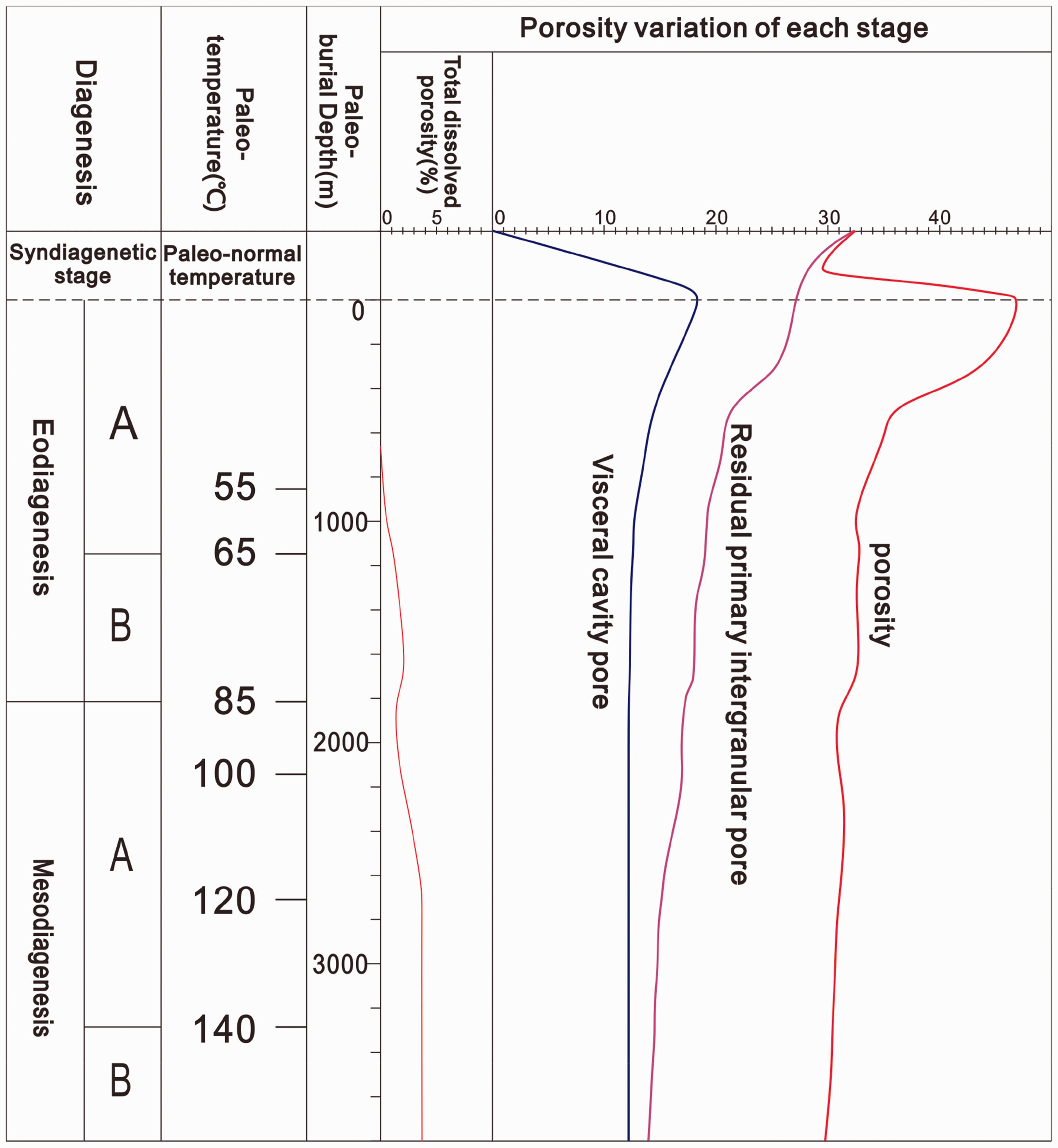
Pore evolution features of high-quality carbonate reservoirs of the Shahejie Formation.
Discussion
Determining the porosity loss at different compaction stages
For a long time, the porosity loss at different compaction stages has been regressed by the relationship between porosity and burial depth (He et al., 2013). In this method, the initial porosity is the primary intergranular porosity, and the final porosity is the total porosity which is the sum of residual primary intergranular porosity and the dissolved porosity. Moreover, authigenic minerals generating among particles play an important role in the destruction of compaction on porosity. Therefore, it is not reasonable to use a single compaction law to invert the compaction behaviour at each stage. In this study, residual intergranular porosity, rather than total porosity, is used to analyse the relationship between compaction and well depth to avoid an abnormal increase of the total porosity, owing to a large quantity of visceral cavity pores. In addition, the reservoir microscopic features reveal that the pore-lining dolomite could resist the compaction effect to some extent. Accordingly, to make the porosity loss at different compaction stages fit with the actual geology conditions, two different compaction–burial depth relationship curves are established through analysing the differences before and after the formation of liners.
Determining the porosity loss due to authigenic minerals
In the carbonate rock reservoirs of E2s, the main authigenic mineral is dolomite, the minor authigenic mineral is calcite and others are rarely developed. However, the same authigenic mineral occurs in various occurrence modes that formed in different diagenetic stages. Therefore, not only is the total content of the authigenic dolomite or calcite considered but also the percentage of dolomite and calcite in different occurrence modes must be counted separately, such as the pore-lining dolomite of Stages 1–3, filling dolomite of Stages 1–3, replacement dolomite and filling calcite. In addition, the forms of destruction of authigenic minerals on pores should be identified to distinguish whether primary intergranular porosity or visceral cavity porosity is destroyed or if the replacement has no impact on porosity. The above precise statistics not only reveal more accurate quantitative features of pores but also lay a solid foundation for further timing analysis of porosity evolution.
Timing analysis of porosity evolution by microscopic observation and experimental analysis
Inclusion and isotope temperature analysis techniques, as well as dating analysis techniques for some diagenetic minerals, are generally used for timing analysis of porosity evolution (Lü et al., 2015). However, these techniques must fully integrate with reservoir microscopic observation. The reservoir microscopic features can be directly observed by polarizing microscopy and electron microscopy and can be used to accurately determine diagenesis successions. Simultaneously, diagenetic stages can be accurately confirmed if experimental data can be obtained for use as further evidence. In this study, based on careful microscopic observation results, relative diagenesis successions are established, and inclusion and isotope temperatures are used to determine the formation periods of the main authigenic minerals.
Determination of the initial pore water isotope values
Because the oxygen isotope values of lake water are influenced by complex factors (Wei and Lin, 1995; Wu et al., 2000; Zeng et al., 2008), isotopic geological temperatures of lacustrine carbonate rocks are inferred from the palaeoenvironment (Luo et al., 2013; Zhang, 1985), and a large calculation deviation may occur. In this study, two dolomite crystals with gas–liquid inclusions are selected, which are identified as the filling dolomite of stage X from microscopic observation. The homogenization temperatures are measured, and the carbon and oxygen isotope values are determined using a laser isotope analysis instrument to analyse the CO2 in dolomite from the same position. Finally, the homogenization temperatures and oxygen isotope values are put into formula (8) to calculate δ18Ow (SMOW) of the initial pore fluid.
Determining the contribution of dissolution to total porosity
Two stages of dissolution occur in the reservoir rocks of E2s. The microscopic dissolved pores present as star-like in bioclastic coatings and as dissolution collapse in liners. The diameter of the dissolved pores in the bioclastic coatings is less than 1 µm, and the scale of the dissolved pores in liners is difficult to distinguish, and thus, only porosity due to the dissolution of the ooid cores is determined. Consequently, the dissolution porosity is simply inferred in the study. Nevertheless, dissolution porosity is not large and could not bring intrinsic change to the reservoir porosity evolution characteristics.
Validation of the timing and quantitative analysis method
The correlation coefficient for correlation analysis between plane porosity and core porosity is 0.90 in formula (6) and it is 0.88 in formula (7). The correlation coefficient approximates to 1 and assuming the confidence interval was 95% ra was close to 0.232, which indicates that the degree of the correlation between plane porosity and core porosity is high and the correlation equations have valuable significance in practice. Through compressing and cementing, the present initial primary porosity is 26.1%. It is too difficult to measure the dissolution of the cements and the micropore space which couldn’t be observed in polarizing microscope. The visible dissolution porosity is mainly generated by the dissolution of terrigenous clasts in the ooid cores and its plane porosity is about 1.6%. The really dissolution porosity must be obviously greater than 1.6%. Therefore, the deviation of the total calculating porosity to the present porosity 29.90% is less than 8.0% due to a few of micropores and fissures, and it illustrates that the timing and quantitative analysis method is effective for inverting porosity evolution of lacustrine carbonate reservoirs.
Conclusions
Deep-buried, high-quality lacustrine carbonate rock reservoirs of the Shahejie Formation in the Bozhong Sag are mainly composed of bioclastic dolostones. The main reservoir pores are primary intergranular pores and visceral cavity pores. The complicated diagenesis during the burial process has different effects on reservoir porosity evolution. The main diagenesis includes the formation of authigenic minerals, such as pore-lining dolomite of three stages, filling dolomite and calcite of three stages, mechanical compaction and dissolution. The pore-lining dolomite of the early stage is the most favourable diagenesis for the formation of high-quality reservoir beds.
In carbonate rock reservoirs of the Shahejie Formation, initial primary intergranular porosity was 32.4% during the sedimentary period, the bioclastic decomposition contributed 18.4% of the visceral cavity porosity at the syndiagenetic stage and 3.9% of pores were destroyed by micrite. As a result, the total initial porosity was up to 46.9% before burial. Porosity loss reached its greatest extent due to compaction at the shallow burial stage. The pore-lining dolomite significantly reduced the destruction of porosity via compaction, such that mechanical compaction only destroyed 8.2% of porosity. The authigenic minerals, dominated by multistage authigenic dolomite, damaged 12.6% of porosity. Particularly, destruction of porosity owing to authigenic dolomite was the greatest contributor, up to 11.4%. Dissolution only provided 3.8% of secondary porosity for the present total porosity.
Porosity evolution covers six main stages: (1) At the sedimentary stage, the decomposition of bioclasts provided 18.4% of the visceral cavity porosity, which made the primary porosity abnormally high. (2) At the extremely shallow burial stage (< 500 m), mechanical compaction provided the greatest destruction of porosity, causing the porosity to quickly decrease from 46.9 to 36.0%. (3) At the shallow burial stage (500–1000 m), the formation of pore-lining dolomite is the most significant diagenesis. Although the pore-lining dolomite of Stage 1 destroyed porosity by 6.3%, it effectively weakened the mechanical compaction, and the porosity only decreased to 32.5%. (4) At the middle-shallow burial stage (1000–2100 m), the porosity decreased from 32.5 to 30.9%, which was destroyed by authigenic minerals such as the pore-lining dolomite of Stage 3 and the filling dolomite of Stages 2 and 3. (5) At the middle-deep burial stage (2100–2800 m), the porosity slightly increased due to dissolution. (6) At the deep-burial stage (over 2800 m), because of injection of oil and gas, diagenesis almost stopped, and the reservoir porosity changed slightly, to 29.9% of the present porosity.
Footnotes
Acknowledgements
We thank the anonymous reviewers for their careful reviews and detailed comments.
Declaration of conflicting interests
The author(s) declared no potential conflicts of interest with respect to the research, authorship, and/or publication of this article.
Funding
The author(s) disclosed receipt of the following financial support for the research, authorship, and/or publication of this article: This work was supported by National Science & Technology Major Project (No. 2011ZX05023–006).