




Abstract
This paper discusses the energy-efficient operation of Fast-steam-assisted gravity drainage wellpad system in the presence of reservoir heterogeneity, different well constraints, and lateral flux communication between adjacent steam chambers. Fast-steam-assisted gravity drainage incorporates cyclic steam stimulation in an unrecovered area between steam-assisted gravity drainage wellpairs, and the well constraints of the wellpad system (including the injection pressure and steam injection rate at the injectors, bottom hole pressure, surface liquid rate, and steam rate at the producers) are simultaneously optimized to accomplish the minimum cumulative steam-to-oil ratio for a given bitumen recovery constraint. The higher injection pressures of the cyclic steam stimulation can result in greater efficiency by pushing the diluted fluid mixture to the steam-assisted gravity drainage producers through the cross-over zone between the steam chambers. At an early stage, a greater amount of steam should be injected through the cyclic steam stimulation work, and at the late stage, a lower injection pressure is needed to use the latent heat. The positive effects of the cyclic steam stimulation at the edges of the steam-assisted gravity drainage steam chambers are concentrated at localized flow paths where the lateral flux transport occurs due to spatial heterogeneity. A sensitivity analysis shows that the injection pressure and the steam rate produced for the steam-assisted gravity drainage wellpairs influence the energy efficiency of the entire thermal operation when compared to other configurations.
Keywords
Introduction
The heat-unreached zone between the steam-saturated areas results in inefficiency during production, notwithstanding that the steam-assisted gravity drainage (SAGD) process is technically marketable to recover extra heavy oil. To maximize the gravitational effect, the steam chamber should grow vertically until reaching an impermeable caprock and should then spread sideways over time (Gates et al., 2007; Gates and Larter, 2014; Kam et al., 2013; Sheng, 2013). The heterogeneity of the reservoir has a significant impact on the steam chamber growth and the overall recovery efficiency during field operations. A lack of spatial consistency in the flow properties can result in unequal growth of the steam chamber, local channeling, and irregular patterns with heat-unreached areas. The steam chamber expands rapidly in zones with a higher permeability, so it cannot grow uniformly along horizontal wells (Barillas et al., 2006; Choi et al., 2017; Coşkuner, 2009; Park et al., 2014; Zhao et al., 2014; Zhou et al., 2016). Gates et al. (2007) simulated the steam interference between two SAGD wellpairs at an oil-sands reservoir with an upper gas layer and showed unequal growth and differences in the thermal performance. Barillas et al. (2006) showed that the optimal amount to inject the steam into the bitumen deposit varied depending on the reservoir heterogeneity. Park et al. (2014) numerically investigated the negative effects of the lateral mass communication made by the reservoir heterogeneity and showed that the reservoir heterogeneity caused uneven growth of the steam chamber, steam interference, and localized flow paths. The lateral flow occurs mainly through a cross-over zone where the steam chamber meets another, so a heat-unreached zone can be produced between SAGD wellpairs and remain during the entire thermal operation (Choi et al., 2017).
Cyclic steam stimulation (CSS) using a single horizontal infill well between the SAGD wellpairs, often referred to as an offset well (wedge well or edge well), has been implemented to produce the undiluted natural bitumen where the normal SAGD does not have an influence. In general, the CSS operation starts when the steam chambers, enlarged by the SAGD work, have grown sufficiently, e.g. the steam chamber arrives at the upper caprock and propagates sideways. The cyclic process accelerates the lateral growth of the steam chamber and thereby increases the thermal efficiency during the production period. This combined process can be divided by different CSS start-up times, and the operating cycles of the steam injection, soaking, and production, which are known as hybrid SAGD (Coşkuner, 2009; Ghanbari et al., 2012; Li et al., 2011; Xu et al., 2014), Fast-SAGD (Jeong et al., 2013; Kamari et al., 2015; Polikar et al., 2000; Sarapardeh et al., 2013; Shin and Polikar, 2006, 2007), and wedge well technology (Manchuk and Deutsch, 2013). Polikar et al. (2000) showed that the Fast-SAGD made a lateral expansion of the steam chamber and reduced the amount of steam that is required. Shin and Polikar (2007) investigated the optimal conditions of the Fast-SAGD for a typical Cold Lake reservoir with the changes in the offset well location, steam injection pressure at the offset well, and steam injection rate at the SAGD injector. Jeong et al. (2013) optimized the injection pressure of the wedge well using an artificial neural network and showed that a high pressure of the CSS at an early stage was required to achieve energy efficiency.
The information collected from the well, reservoir, and facility management is critical to diagnose potential operational issues, optimize the recovery process, and ensure the operational integrity of an asset, including the surface facilities (Sheng, 2013). A wellpad system for Fast-SAGD consists of several wellpairs for SAGD operation and horizontal wells for a CSS located in the middle of the wellpairs. The well configuration and the interference of several horizontal wells should be included in the numerical analyses. However, interoperable variables, e.g. spatiotemporal parameters related to reservoir heterogeneity and various operating conditions, can deepen the complexity of the optimization matter, reducing the convergence to optimal solutions.
A motivation of this research is to search for the optimum operating parameters of the Fast-SAGD, considering reservoir heterogeneity and field applicability. The coeffects of well constraints and mass transfer between the steam chambers need to be analyzed when a short-period CSS process using offset wells is applied during SAGD. This study analyzes the optimality of well constraints on Fast-SAGD, i.e. the operation conditions of both offset wells and SAGD wellpairs. To obtain the energy-efficient operation of Fast-SAGD, the objective function is to minimize cumulative steam-to-oil ratio (cSOR) in the condition of a constraint of bitumen production volume through CSS.
Model description and Fast-SAGD operation
Figure 1 illustrates a 3D heterogeneous oil-sands reservoir and well configurations for Fast-SAGD processes. Figure 1(a) to (c) depicts the distribution of the horizontal absolute permeability (x or y directions), well configurations including three SAGD wellpairs and two horizontal offset wells for CSS, and yz plane (cross section at well toe position, y = 800 m), respectively. The upper area is the no-flow condition with irregular boundaries. The geomodel size is assumed to be 200 m wide (y direction), with a maximum 72.5 m thickness including the caprock (z direction), and 800 m along the horizontal well (x direction). The grid number is (16, 80, 29) and the grid size is (50, 2.5, 2.5 m) for (x, y, z). The wellpad system for Fast-SAGD consists of three SAGD wellpairs and two offset wells for CSS (see Figure 1(b) and (c)). The lateral distance between the wellpairs is 65 m, and the producers are installed 5 m above the reservoir bottom. The injector is 5 m above the producer. Three SAGD wellpairs are classified into “L-wells,” “M-wells,” and “R-wells,” defined according to the installation locations, while two offset wells, named “offset 1” and “offset 2,” are beside the SAGD wellpair and are drilled at the same depth of the SAGD producers.
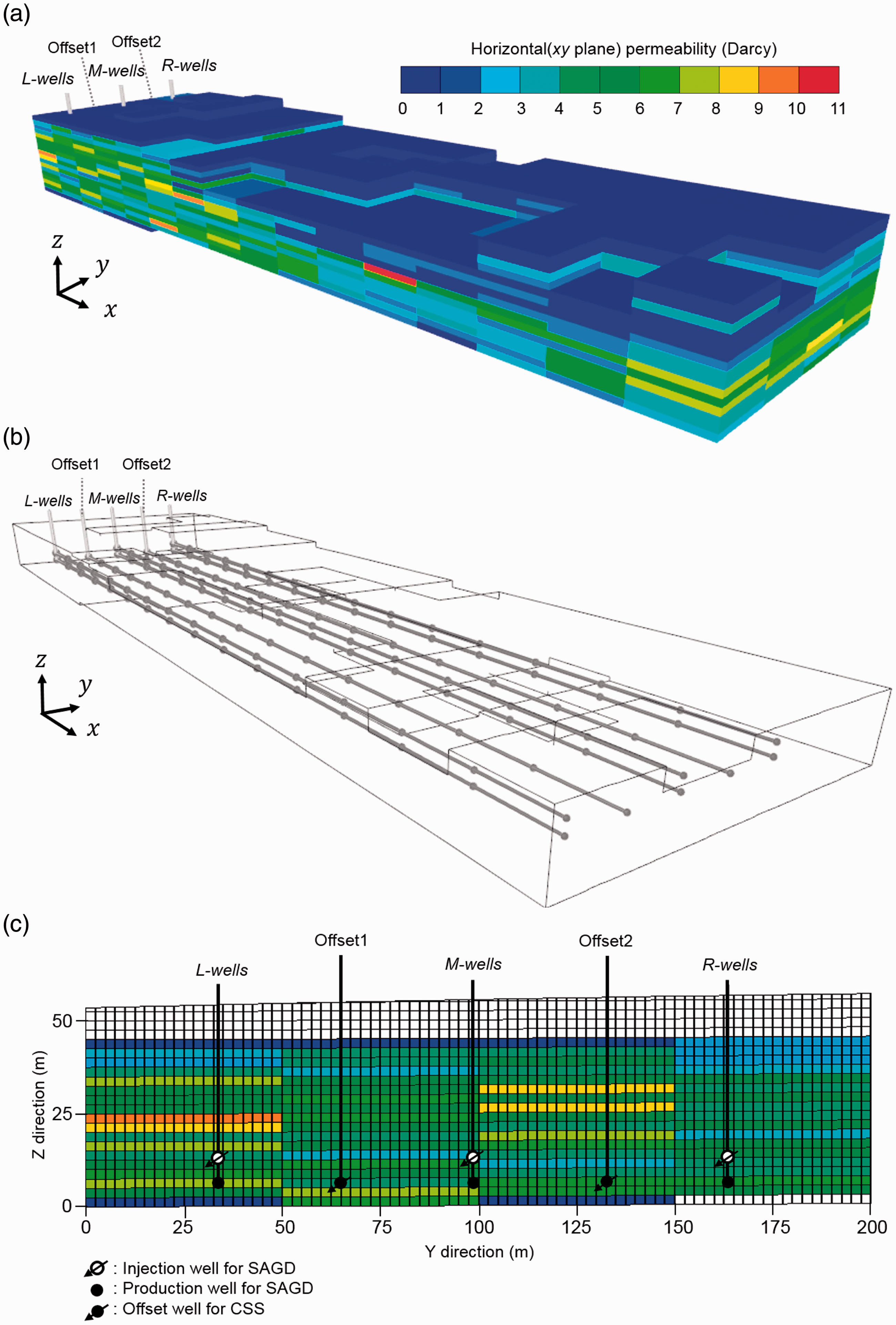
Three-dimensional reservoir model and well configuration for Fast-SAGD: (a) Distribution of horizontal permeability, (b) well locations, and (c) yz plane at well toe position.
Table 1 summarizes the reservoir properties used in the flow simulation, referenced to those of the Canadian McMurray formation (Bao et al., 2010; Dang et al., 2012; Gates and Chakrabarty, 2006). The reservoir is heterogeneous in terms of the absolute permeability, porosity, and initial oil saturation. The average permeability in the horizontal direction (x or y direction) is 3.8 Darcy and that in the vertical direction (z direction) is 0.8 Darcy, i.e. the ratio of horizontal permeability to the vertical value is constant at 4.75. The average value of the initial oil (bitumen) saturation before liquid production is set to 0.8 and that of the porosity is 27.3%. The number of active grids in which the flow occurs is 19,900. Figure 2 depicts the histograms of the heterogeneous properties to explain the range of its values. The permeability has a large range with various values while the porosity and initial oil saturation show a high frequency of the median value.
Reservoir properties and input parameters for SAGD simulation.
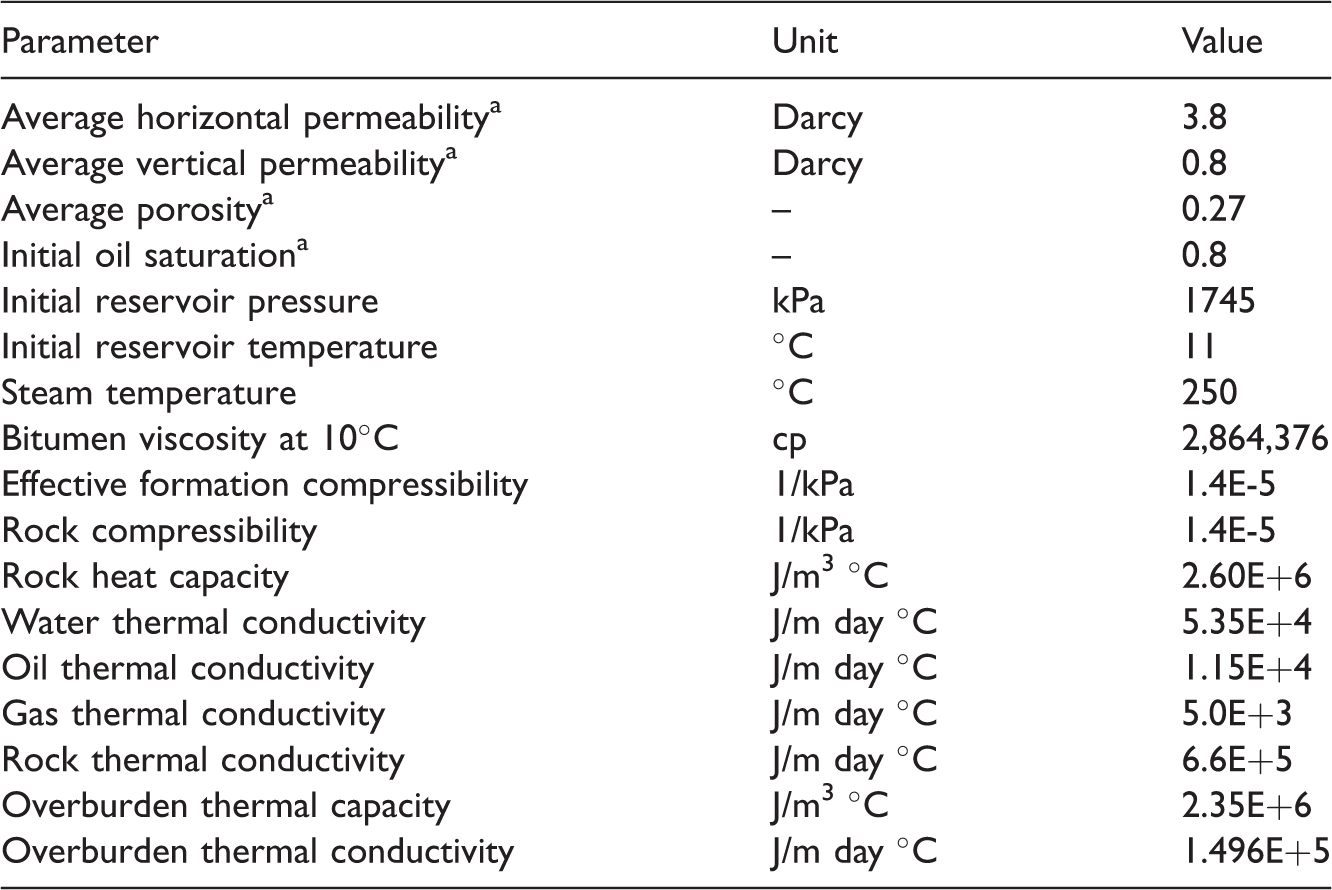
SAGD: steam-assisted gravity drainage.
aThe reservoir properties are variable and spatially heterogeneous.
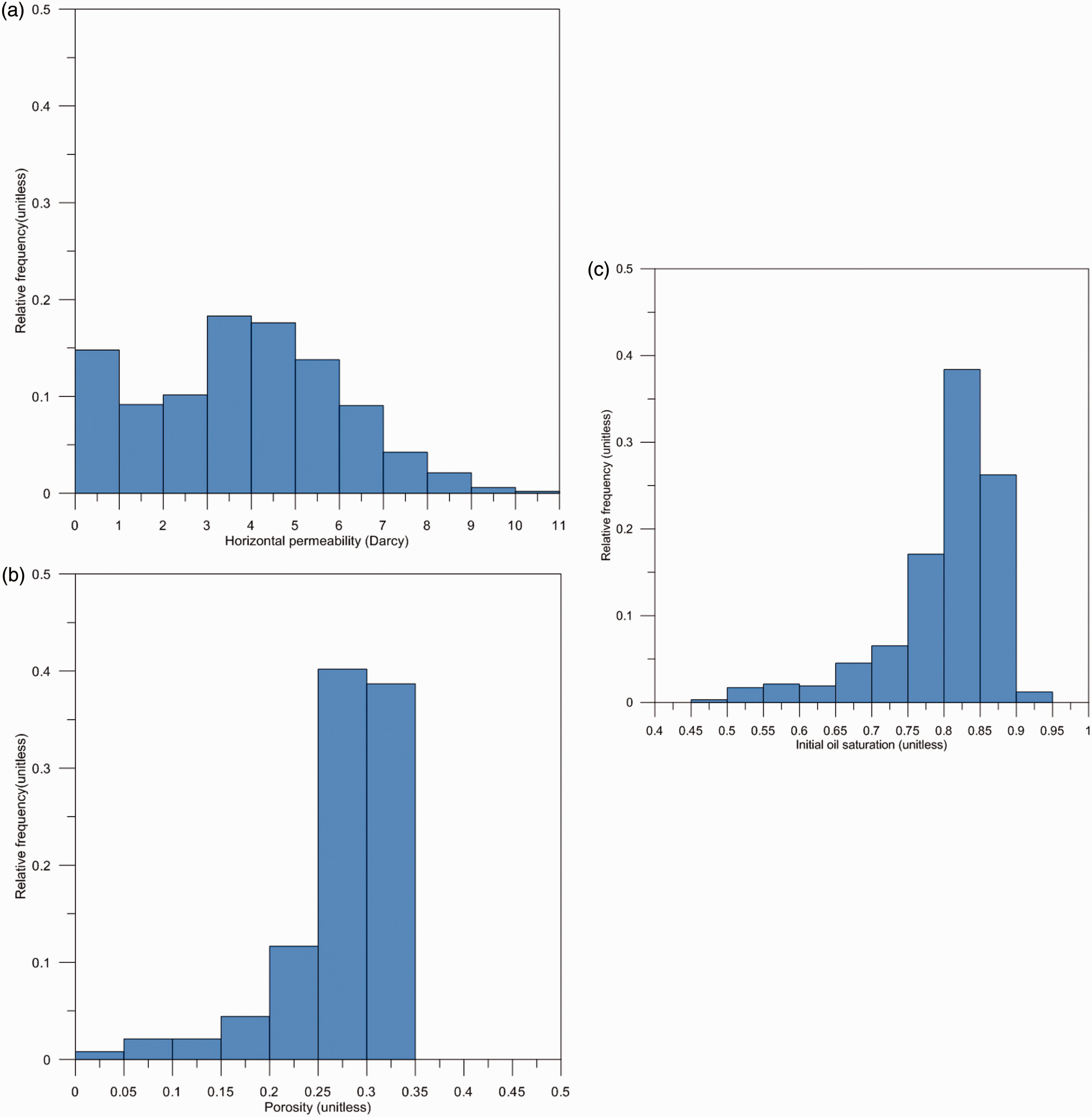
Histogram to explain the distribution of heterogeneous properties: (a) Horizontal permeability (x or y direction), (b) porosity, and (c) initial oil saturation. The vertical permeabilities (z direction) are calculated from horizontal permeability using the ratio (=4.75) for individual active cells.
Figure 3 illustrates a base case of the Fast-SAGD operation for 10 years. The operating schedule is four years Fast-SAGD, i.e. CSS with SAGD, followed by six years SAGD operation including three months of electric preheating. The CSS task consists of six cycles, and one cycle is subdivided into three stages: steam injection during one month, soaking the diluted fluid mixture for one week, and continuing production for two months. At the sixth CSS cycle, production remains until the end of production (Sheng, 2013; Xu et al., 2014).
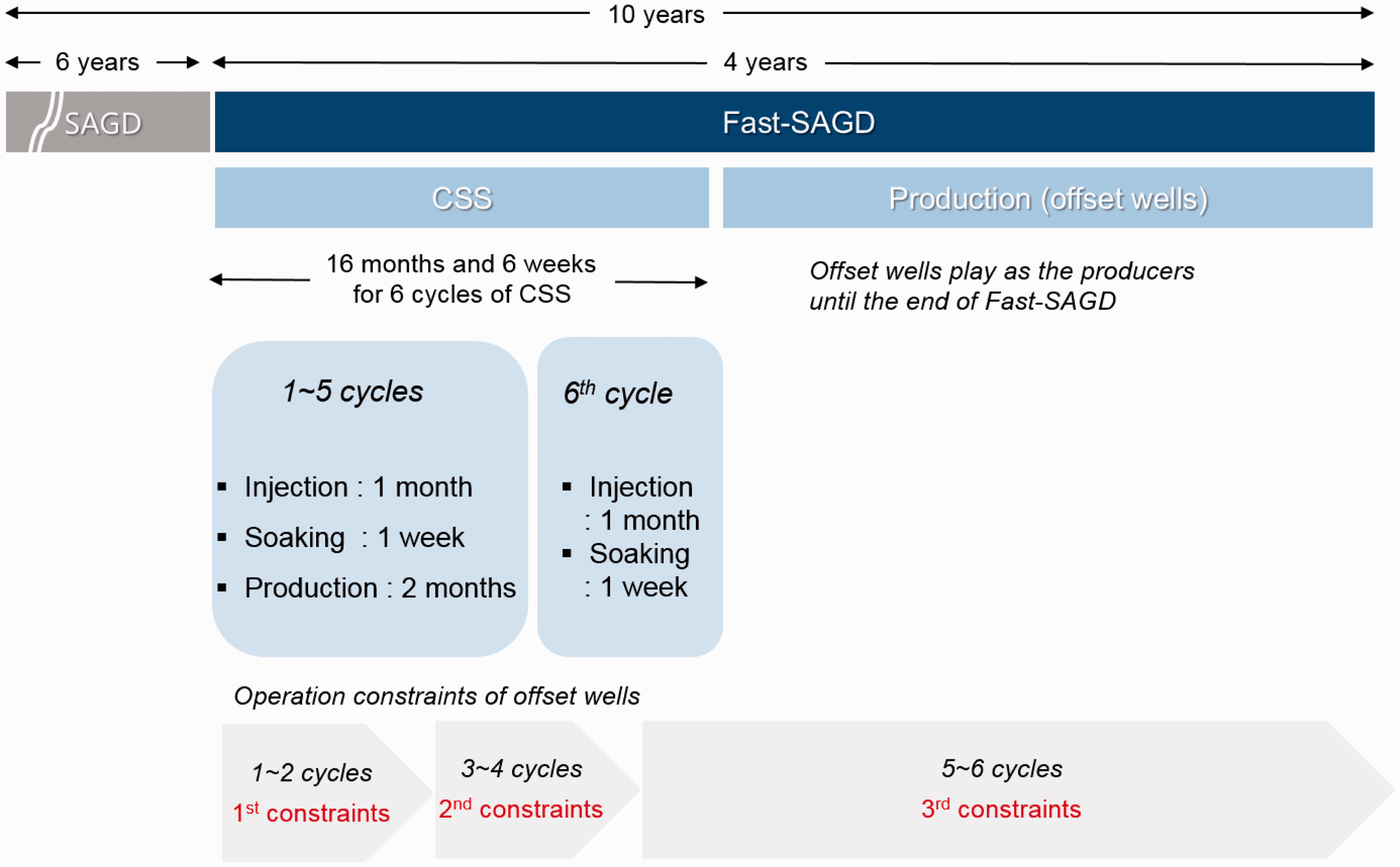
Operation schedule for Fast-SAGD process with six cycles of CSS. The base case assumes that CSS starts at the sixth year. One cycle of CSS operation consists of steam injection for one month, liquid soaking for one week, and liquid production for two months. At the final cycle, after one-week steam soaking, liquid production through offset wells continues until the end of Fast-SAGD operation. The operation conditions of offset wells change every two cycles while those of SAGD wellpairs are constant throughout the production interval.
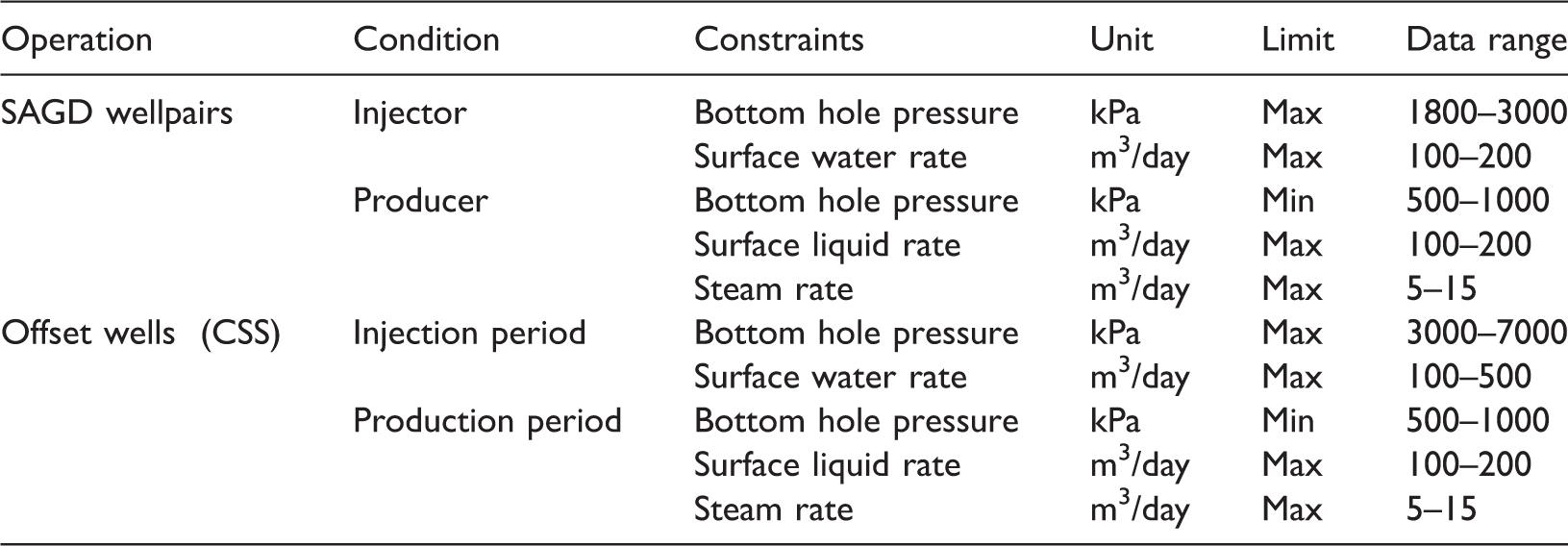
Table 2 summarizes the well constraints of the Fast-SAGD wellpad system. The operating conditions are distinguished as the steam injection and the fluid production; the injector considers the bottom hole pressure and the surface water rate, while the producer requires the bottom hole pressure, surface liquid rate, and steam rate produced. In a typical Fast-SAGD, to improve the lateral growth of the steam chamber, the injection pressure of the offset well remains higher than that of the SAGD injectors so that the range of the bottom hole pressure at the offset wells is above 3000 kPa (Dang et al., 2012). The other conditions of the offset wells are set to be the same as those of the SAGD wells. The constraints of the SAGD operation continue until the end of the oil production while those of the offset-well operation changes every two cycles.
Well constraints of SAGD wellpairs and offset wells for Fast-SAGD process.
CSS: cyclic steam stimulation; SAGD: steam-assisted gravity drainage.
An energy-efficient optimization is conducted implementing a particle swarm optimization (PSO) algorithm. The objective function, 
In equation (1),
A sensitivity analysis based on response surface methodology (RSM) is carried out to identify the influential constraints on cSOR. RSM makes the empirical polynomial function, that is to the response surface, connected to uncertain parameters with the response. The influence of the parameters is assessed by statistically analyzing the response surface changes when the independent variables act in combination to affect the selected output (see equation (2); Caers, 2011; Nam et al., 2013). The parameters are the well constraints of the Fast-SAGD operation and the response is cSOR to examine the energy efficiency

In equation (2),
Results and discussions
Optimization of Fast-SAGD operation
All trends of cSOR for 500 cases used in the PSO are derived from 1.46 to 2.21 only if considering minimizing cSOR while the maximum oil production is about 483,715 m3 (= 3,042,232 bbl; about three million barrels) regardless of considering the energy efficiency. Among these cases, the optimized scenarios are recalculated considering the production constraints of the offset wells, i.e. the total production through the offset wells should be over 10% of the total production via Fast-SAGD operation.
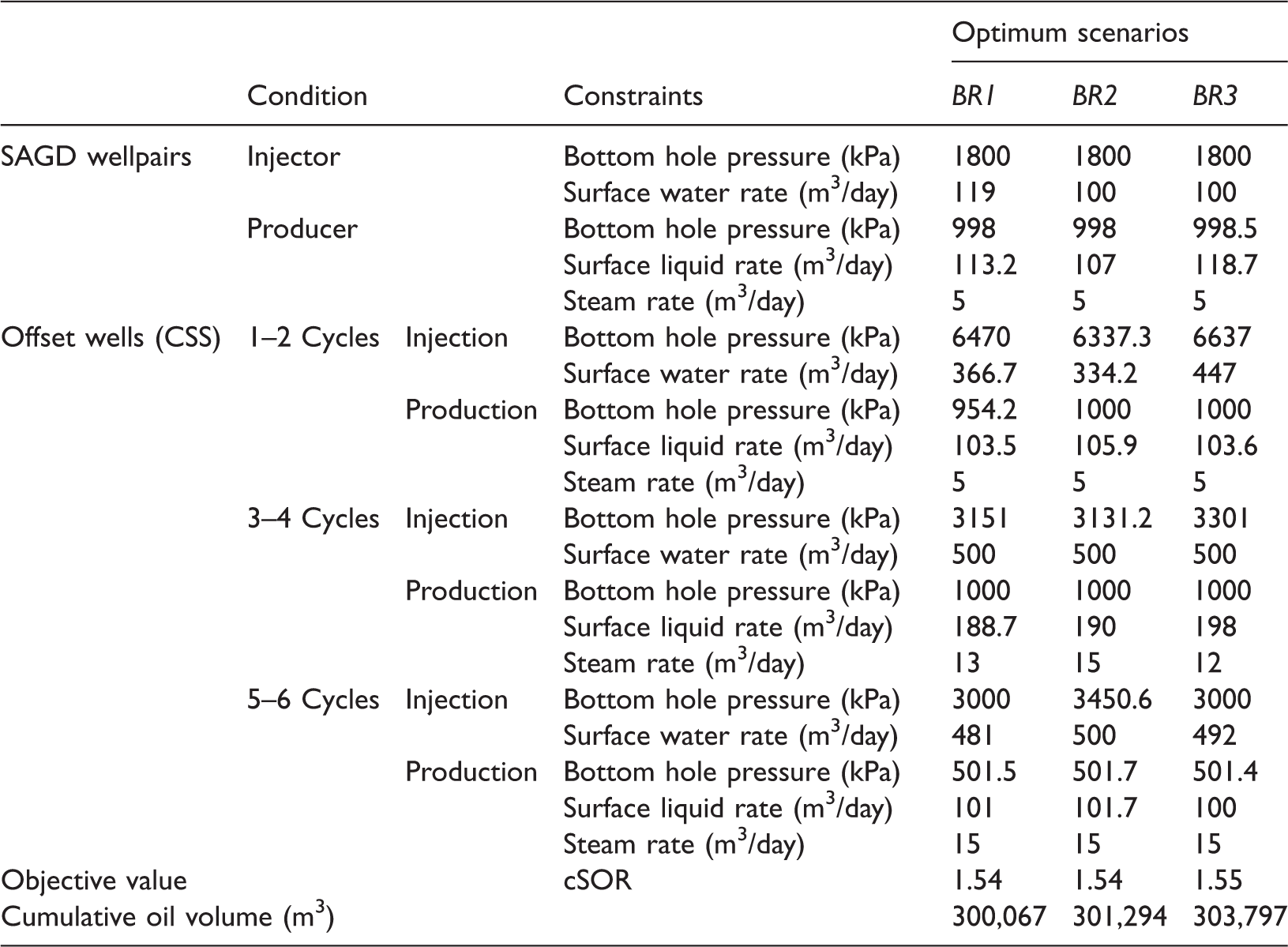
Table 3 summarizes the optimal scenarios of the Fast-SAGD operation for the base case, i.e. the CSS through the offset wells starts at six years. The top three solutions with the least cSOR are evaluated by satisfying the objective function (defined as equation (1)). The optimal cSOR is about 1.54, and the total cumulative volume is about 301,294 m3(=1,894,930 bbl). Figure 4 plots the changes of the well performance for BR1, one solution of three optimal solutions, to examine whether the optimal solutions show the appropriate operation of the conventional CSS. Figure 4(a) to (d) shows the bottom hole pressures, surface water rate injected, surface liquid rate produced, and steam rate produced, respectively. The smallest difference of the bottom hole pressure between the injector and the producer should be maintained to increase the steam residual time in the chamber, which is able to increase the energy efficiency (see Figure 4(a)). The bottom hole pressure of the offset wells shows the highest value at the first cycle and then decreases to use the latent heat in the chamber. Figure 4(b) indicates that the offset wells inject the steam with a higher pressure and larger amount of steam than those of SAGD injector, and the offset well thereby replaces the role of the SAGD injector. Figure 4(c) demonstrates the surface liquid production at the producers. The production rate during the production period at the offset wells increases to be similar to that of the SAGD producers. This means that the optimal scenario can make positive coeffects for the Fast-SAGD, and the roles of the horizontal wells are established, creating synergy. Figure 4(d) draws the steam rate that is produced and shows that the SAGD producers maintain the lowest value of the steam production while the offset wells have a higher value. This result confirms that the optimum operation of the Fast-SAGD requires higher productivity through the offset wells notwithstanding that heat loss occurs by the increase in steam and liquid production.
Summary of energy-efficient scenarios to optimize Fast-SAGD.
cSOR: cumulative steam-to-oil ratio; CSS: cyclic steam stimulation; SAGD: steam-assisted gravity drainage.
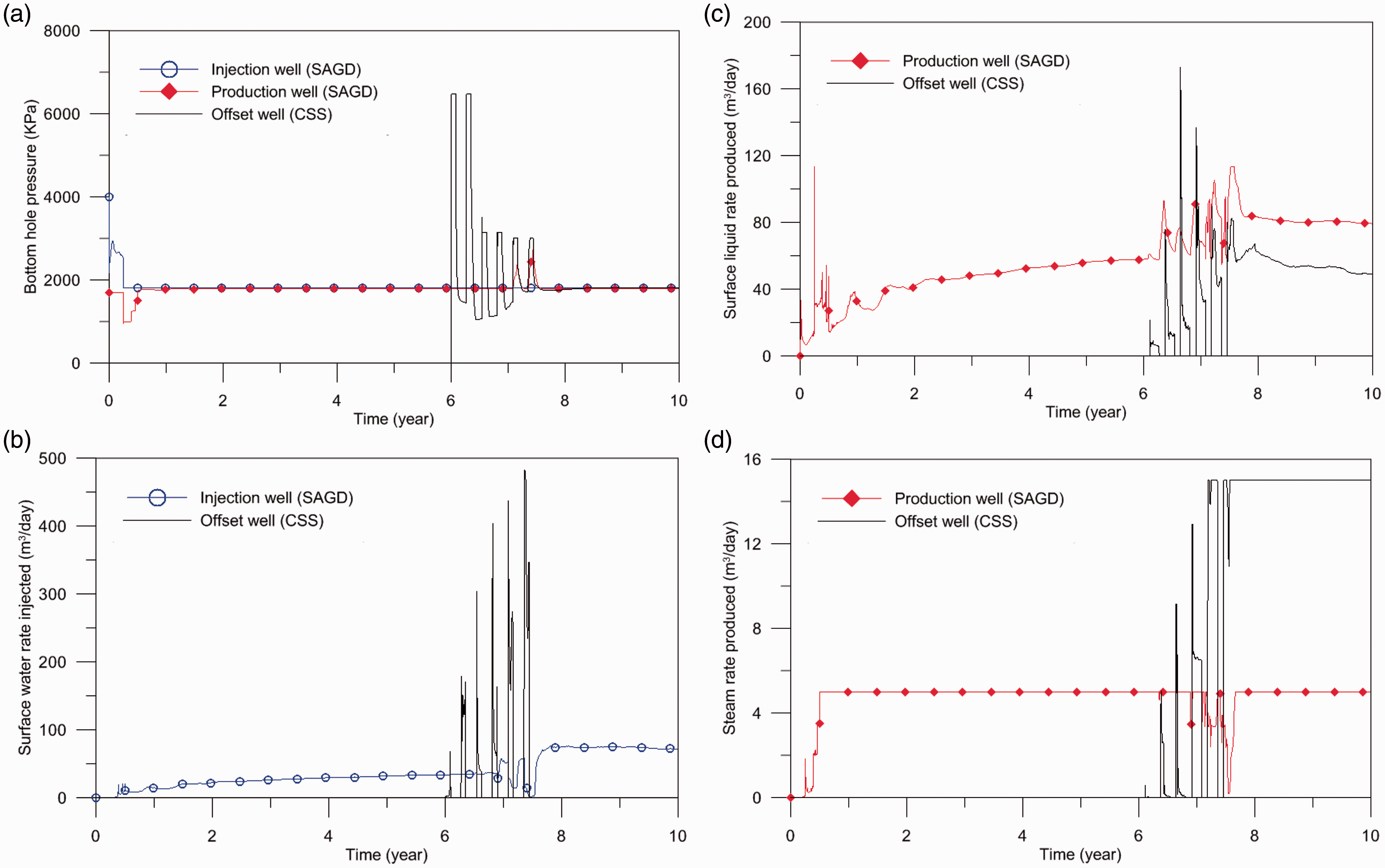
Operation schedule of the optimum scenario, BR1: (a) Bottom hole pressure, (b) surface water rate injected, (c) surface liquid rate produced, and (d) steam rate produced. CSS: cyclic steam stimulation; SAGD: steam-assisted gravity drainage.
Figure 5(a) enlarges Figure 4(b) to explain the steam injection behavior of Fast-SAGD in further detail. The offset wells show six cycles for steam injection. Until the third cycle, the effects of the CSS operation are negligible at the steam injection schedule of the SAGD process, but the associated process related to the steam injection starts after the fourth steam injection. The amount of steam injected at the SAGD injection wells steeply increases to support the next steam injection at the offset wells (refer to the increase in the amount of steam injected through the SAGD injector at seven years). When steam injection occurs through the offset wells, the amount of steam of the SAGD wells decreases (see fifth and sixth CSS cycle between seven and 7.5 years). At the end of the CSS cycles, i.e. the offset wells as the production status, the role of the SAGD injectors is strengthened whereby the amount of steam of the SAGD injectors increases (see the increase in the amount of steam after 7.5 years). Thus, this increase in the steam injection volume at the SAGD wells means there is active lateral communication between the offset wells and the SAGD wellpairs whereby the positive coeffects of the Fast-SAGD require a larger injection of steam to increase oil recovery through enlarged producible areas.
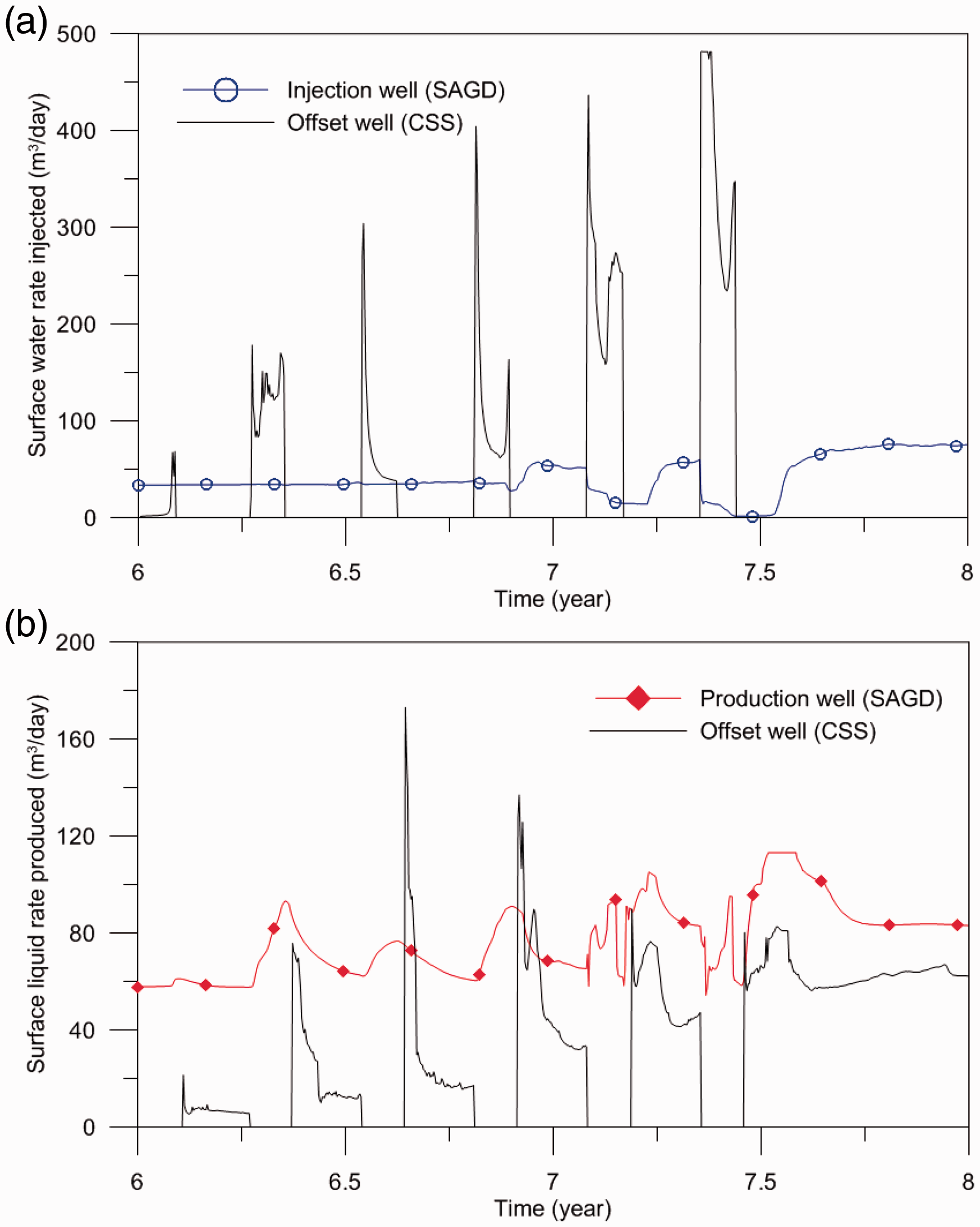
Fast-SAGD performances of BR1 from sixth year to eighth year: (a) Surface water rate injected and (b) surface liquid rate produced.
Figure 5(b) plots the surface liquid production in the period of Figure 5(a). As mentioned in Figure 5(a), the injection operation of the offset wells does not have an effect for three cycles of CSS, but at the production phase, the injected steam of the offset wells moves to the SAGD wells so that the production volume of the SAGD wells increases in the period of the injection cycle at the offset wells. By the third cycle, the offset wells support the SAGD operation, and then role switching has been active. In conclusion, Figure 5(a) and (b) shows the successful operation of Fast-SAGD with a combination of CSS and SAGD processes. The cyclic stimulation affects the SAGD operation and furthermore increases the SAGD productivity by making a lateral enlargement of the steam chambers.
Figure 6 illustrates the temperature distribution of one optimum case, BR1 at the end of Fast-SAGD operation; Figure 6(a) depicts the contouring map of the temperature at the well toe position, and Figure 6(b) draws high temperature zones over 200°C. The reservoir heterogeneity generates unequal growth of the steam chamber and three cross-over zones produce lateral communication between the offset wells and SAGD wellpairs. The higher injection pressure of the offset wells provides a lateral influx into the steam chambers that have already been generated by the SAGD operation, which helps have a more effective enlargement in the steam chambers as well as producible zones. However, the reservoir heterogeneity generates irregular unrecoverable areas where the design optimality of Fast-SAGD is difficult. As described in Figure 6, less temperature areas without lateral growth would still be unrecoverable, which requires additional artificial treatment, e.g.fracture-assisted thermal processes.
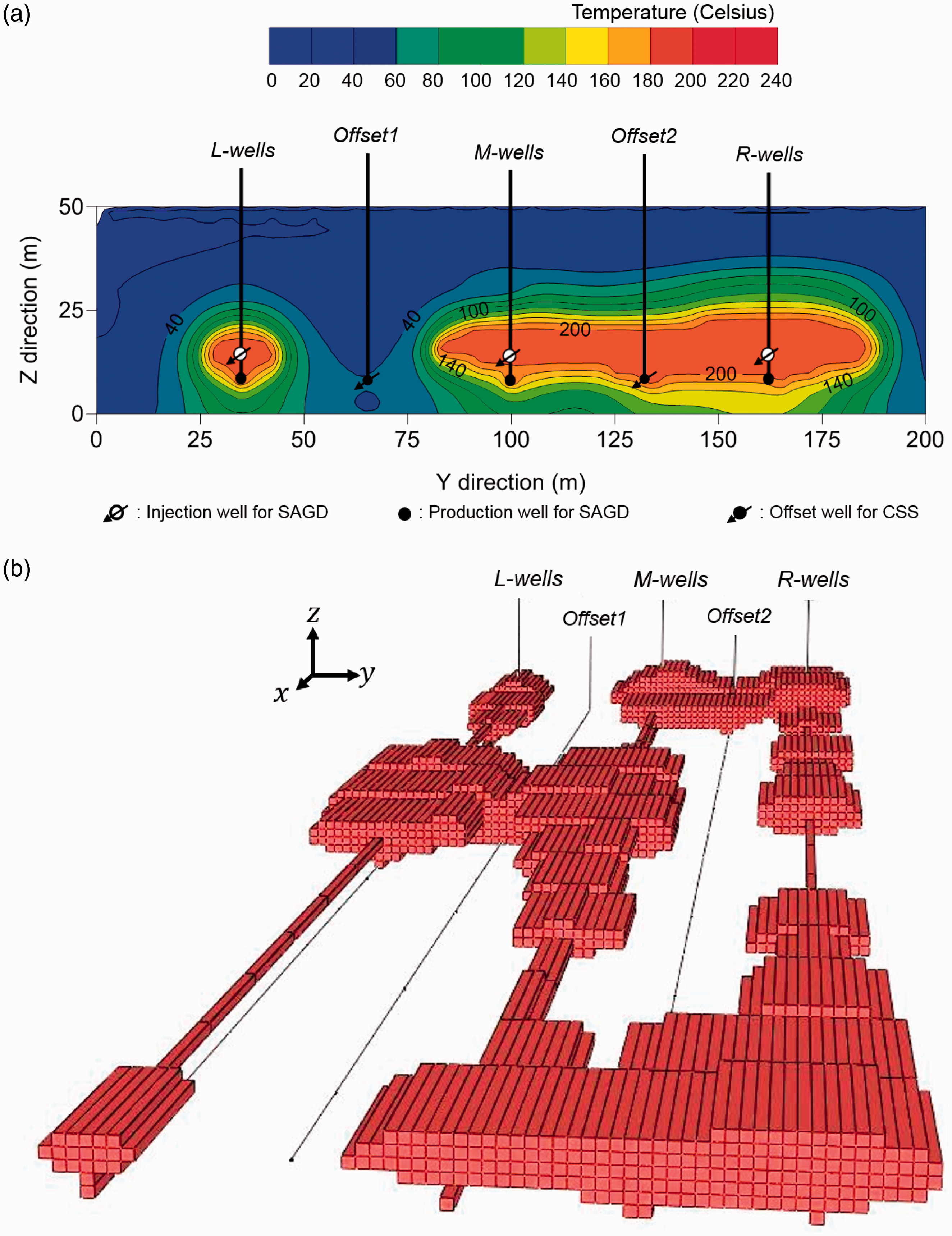
Temperature distribution within the reservoir for BR1 case: (a) A contouring map of reservoir temperature and (b) high temperature zone over 200°C.
Effects of the CSS start-up time
The starting point of CSS can influence the entire efficiency of the Fast-SAGD. If mass transfer occurs between the steam chambers enlarged by the SAGD process, the offset well should push the diluted fluid mixture to produce the steam chambers. On the other hand, if the steam chamber does not grow sufficiently, any steam injection through the offset wells may not be effective. This study examines the effects of the starting point of the CSS process. The CSS start-up time is divided into 3–8 years to obtain the optimal solution satisfying the minimum cSOR, and then the cSOR and the production trends are compared using the optimal solutions.
Table 4 summarizes the optimized cases with a different start-up time for the CSS operation. For example, WO3 refers to an optimal scenario when the CSS starts at the third year. It should be noted that the operating conditions of the SAGD wellpairs are mostly similar. The SAGD operation requires the lowest values of the bottom hole pressure at the injectors as well as the steam rate at the producers. This result reveals that to obtain the minimum cSOR, energy efficiency must be ensured by keeping high-temperature steam stored within the steam chambers and thereby minimizing the steam rate that is produced.
Summary of optimum solutions to minimize cSOR while changing the start-up time of CSS.
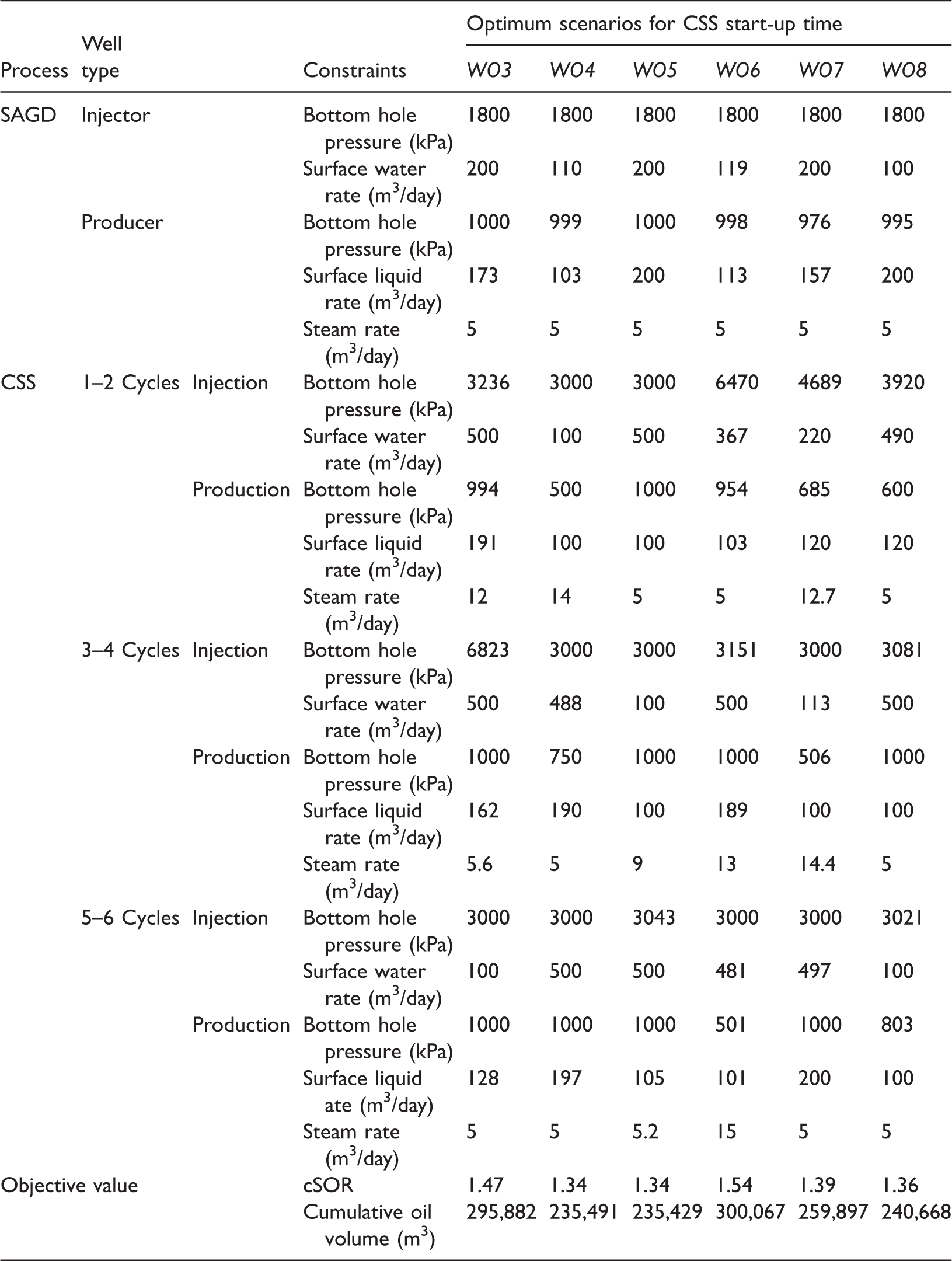
cSOR: cumulative steam-to-oil ratio; CSS: cyclic steam stimulation; SAGD: steam-assisted gravity drainage.
Unlike these similar conditions of the SAGD process, there is no common condition for the optimal CSS operation. The scenario showing the minimum cSOR is the case where WO4, i.e. the CSS starts at the fourth year. In this designed scenario, the injection pressure is limited to 3000 kPa (the minimum bottom hole pressure injected by the offset wells) over the entire period while the steam rate that is produced should be minimized from three to six cycles. Figure 7 describes the temperature distribution at the end of the Fast-SAGD operation in the case of the WO4. Figure 7(a) shows the temperature distribution at the well toe position, and Figure 7(b) illustrates the areas over 200°C in the 3D view. Figure 7 discusses the typical limitations of Fast-SAGD energy-efficient optimization while only considering the cSOR minimization. Notwithstanding that SAGD has continued for four years, the steam chambers produced by the SAGD operations are not sufficiently enlarged to meet one another, and thus their lateral growth is limited. To make this problem worse, the steam chamber generated by the CSS process is negligible, and the desired Fast-SAGD is not accomplished. An energy-efficient process without considering the recoverable volume releases the smallest amount of steam into the reservoir and increases the residual time of the steam to maintain a high temperature within the steam chamber, whereby the very energy-efficient work but small amount of oil recovery, similar to the undesired conclusion of low pressure-SAGD (Gates and Larter, 2014; Park et al., 2014).
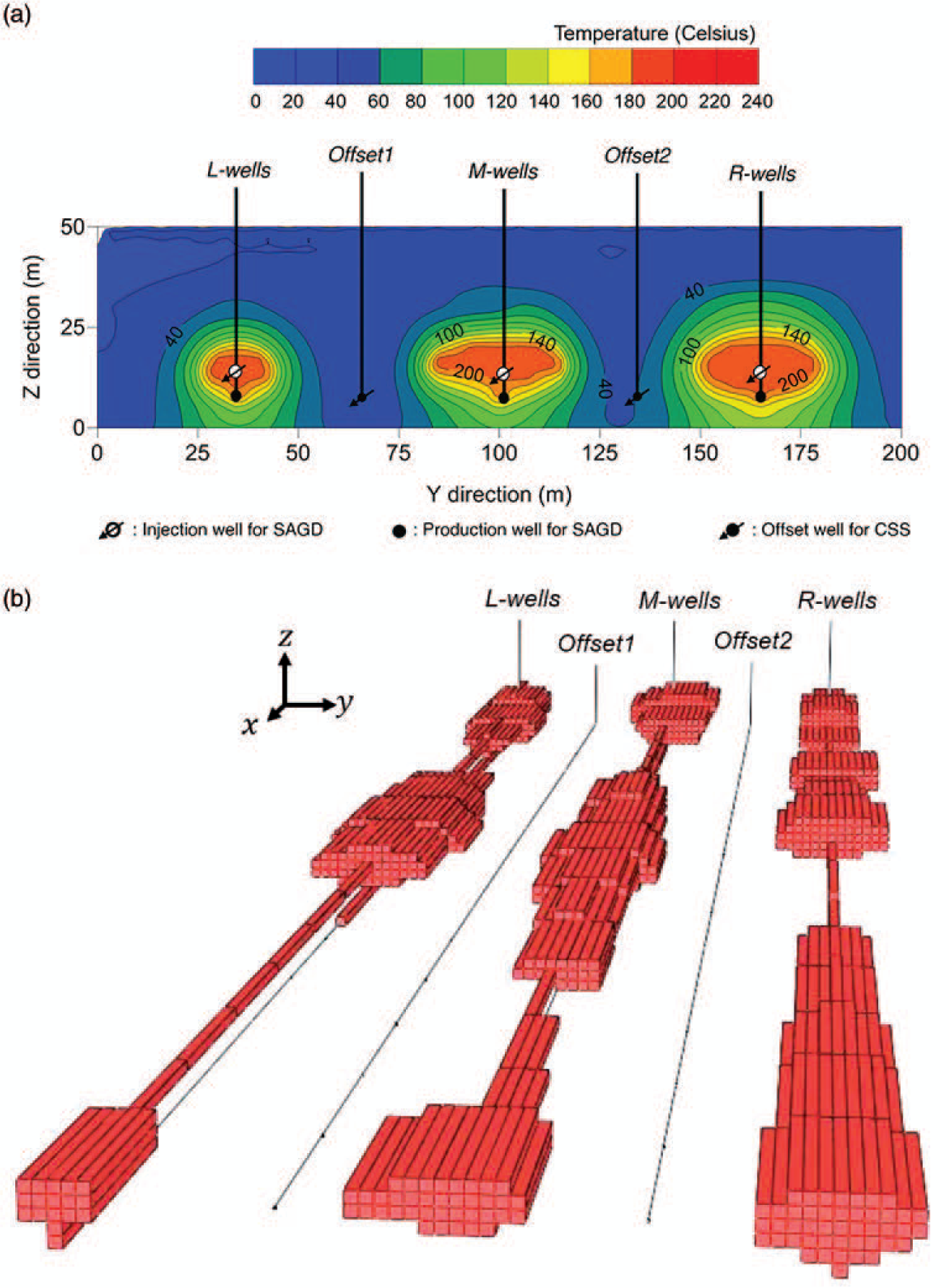
Temperature distribution within the reservoir for WO4 case that the CSS starts at the fourth year: (a) A contouring map of reservoir temperature and (b) high temperature zone over 200°C.
Figure 8 compares not only the cSOR but also the cumulative oil production according to the different starting points of the CSS process. Figure 8(a) plots the cSOR, and Figure 8(b) draws the cumulative oil production of the optimum solutions changing the start-up time of the CSS operation. Compared to the operation scenarios of WO4, WO3 shows that cSOR is 1.47 and the cumulative oil production is 295,882 m3. Figure 8(a) shows that WO3 has successful Fast-SAGD process by conducting CSS at a higher injection pressure at the offset wells. Although the steam chambers are not sufficiently enlarged, keeping a high pressure at the offset wells can produce the desired Fast-SAGD operation. This result is consistent with the observations of Jeong et al. (2013), who highlighted the necessity of starting the CSS process early and the lateral steam movement from the offset wells to the SAGD steam chambers. Compared with the WO3 trajectories, even though CSS is conducted three years later, WO6 shows a similar output and energy efficiency. To obtain more oil, the steam rate produced from third to sixth cycle maintains higher values, which results in a slightly higher value of cSOR. This comparison of WO6 with WO3 can validate the base model in which CSS at the sixth year is a suitable setting for the Fast-SAGD optimization.
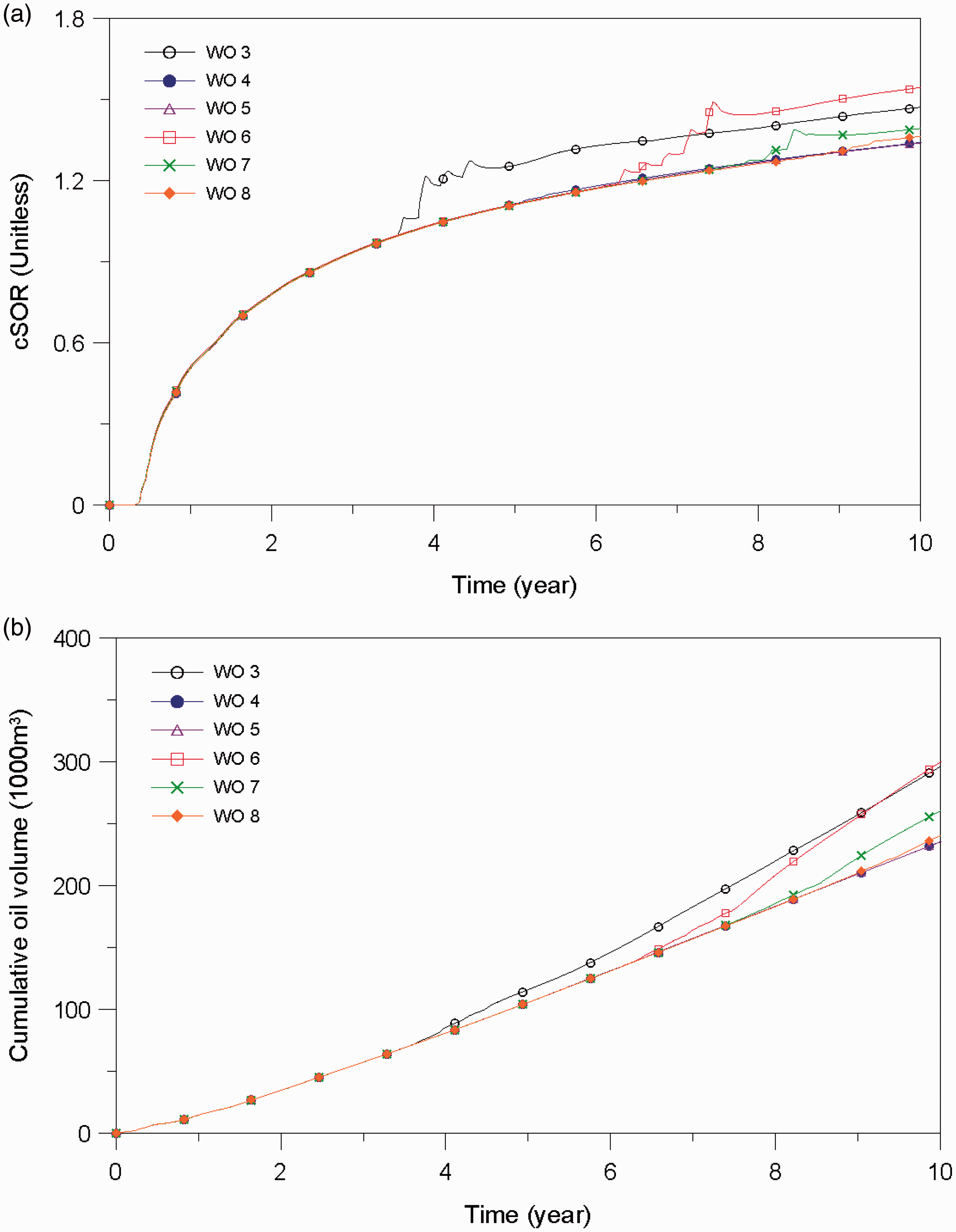
Production performances of optimum solutions as changing the start-up time of CSS: (a) cSOR and (b) cumulative oil volume produced. cSOR: cumulative steam-to-oil ratio;
Effects of the operating constraints for Fast-SAGD
Figure 9 shows the result of the sensitivity analysis to derive the significant parameters that influence the cSOR values. A total of 20 parameters are used in the sensitivity analysis. Five constraints for the SAGD wells and 15 conditions of the CSS wells are defined according to three cycles (1–2 cycles, 3–4 cycles, and 5–6 cycles), as shown in Table 3. The top 5 parameters affecting the cSOR are the bottom hole pressure at the SAGD injector, steam rate produced at the SAGD producer, bottom hole pressure at the period of the steam injection at the offset wells from the fifth to sixth cycle, and surface liquid rate produced at the offset wells, and stream rate produced from fifth to sixth cycle at the offset wells, respectively. In the base case that CSS starts at the sixth year, this result shows that the SAGD operation governs the entire energy efficiency of the Fast-SAGD, and the CSS works as an auxiliary means. This supports the purpose of the Fast-SAGD and can be the reason why the SAGD continues for 10 years while CSS continues for four years.
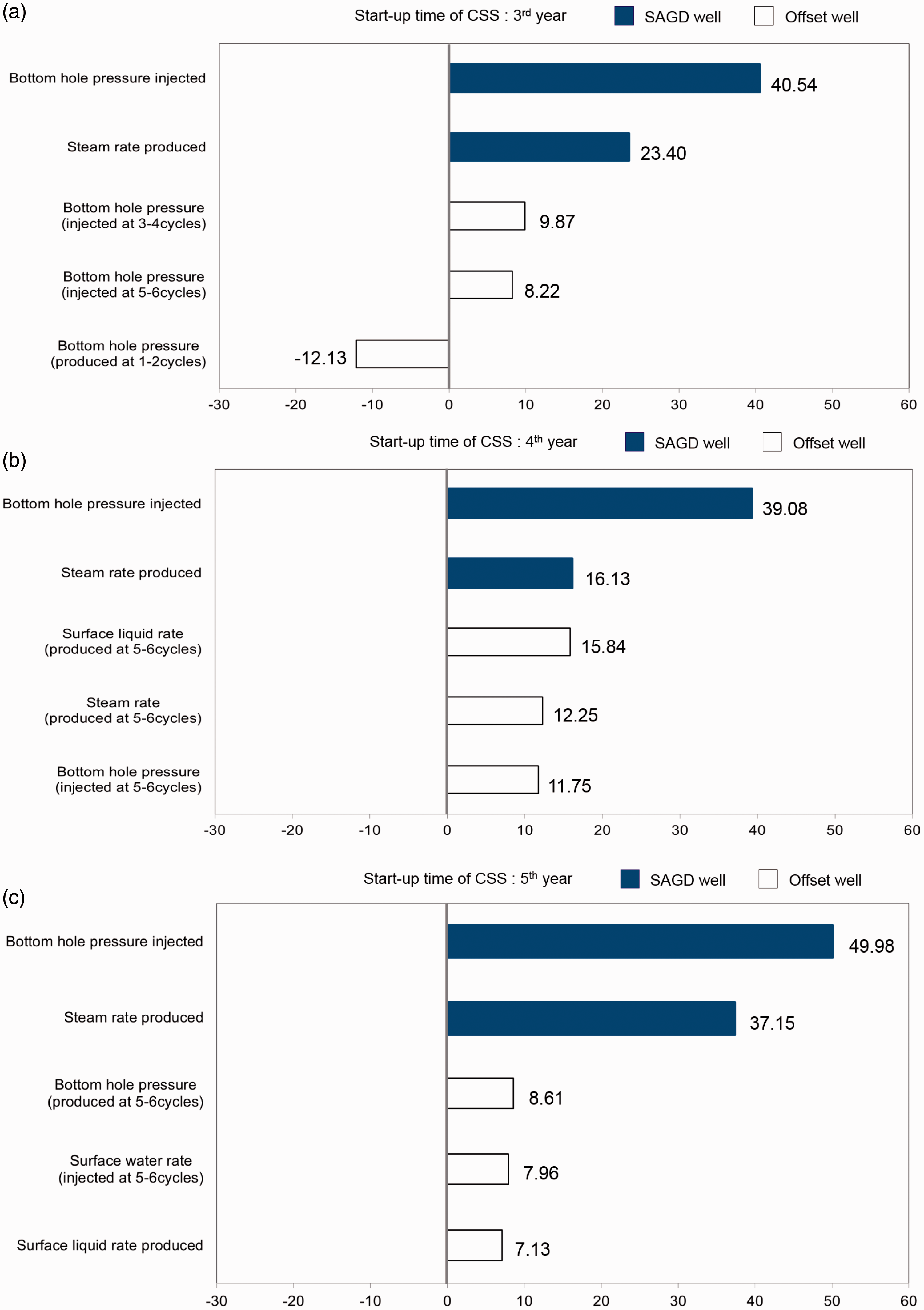
Sensitivity analysis on cSOR as changing the start-up time of CSS: (a) Three years, (b) four years, (c) five years, (d) six years, (e) seven years, and (f) eight years.
It should be noted that the influenced parameters are the bottom hole pressure and steam rate even though there is a change in the start-up time of the CSS. The SAGD operation influences the entire performance compared to the CSS work since the influential parameters of cSOR with Fast-SAGD work are the SAGD operation, i.e. the bottom hole pressure of the injector and steam rate produced through SAGD producers. The bottom hole pressures determine the amount of steam injected and produced while the steam rate produced represents how long the steam with a high temperature stays in the steam chamber. If the operators would like to produce more oil, they should maintain larger values of the bottom hole pressure and steam rate produced. On the other hand, if they focus on the energy efficiency while giving up the amount of oil produced, they should operate the Fast-SAGD with the lowest steam rate produced.
This study concentrates on the various operating constraints that affect each other and on optimizing the energy efficiency to assure more than a certain amount of oil production using CSS process. As shown in the “Results and discussions” section, it is very important to determine the objective function that is appropriate for the operating purpose of Fast-SAGD. The reservoir heterogeneity, i.e. the inconsistency of a spatial distribution in the reservoir properties, influences the irregular growth of the steam chambers, lateral mass transfer, and determination of the start-up time of the CSS process. Even though some monitoring tools have been commercialized, including the microseismicity and tiltmeters, the reservoir heterogeneity is uncertain, so it is difficult to characterize the flow behavior that occurs in native bitumen deposits. If the steam chambers developed by the SAGD operations are not enlarged enough, a higher injection pressure and the delay in the CSS operation are needed at the offset wells for successful Fast-SAGD. The numerical results confirm that the CSS operation accelerates the lateral communication among the steam chambers, but the local channeling, i.e. the concentration of mass transfer through some breakthrough zones, is not avoided due to reservoir heterogeneity. If thief zones, such as the water-bearing area overlying the oil-sands reservoir obstructs the vertical growth of the steam chamber and decreases the efficiency of the thermal process (Austin-Adigio et al., 2017; Lee et al., 2017), this study shows that the Fast-SAGD that enhances the lateral chamber growth would be one of the possible solutions.
The oil-sands formation used in this work has a relatively high permeability, so it was not difficult to inject steam without any preheating for CSS process. However, if the reservoir properties are not suitable, and it is not easy to dissolve the native bitumen using steam, additional preoperations may be necessary to make the flow paths. The optimized scenarios and the result of sensitivity analysis emphasize the importance of controlling the rate of the steam that is produced. More field-oriented methodologies for steam trap controls, e.g. mechanical or thermodynamic control, should be considered to accomplish the optimal designs of the Fast-SAGD operation.
Conclusions
This paper optimized the operational constraints for energy-efficient Fast-SAGD processes and analyzed both the performance of the steam injection and liquid production for the optimized scenarios at the heterogeneous oil-sands deposit. The reservoir heterogeneity influenced the unequal growth of the steam chamber, localized lateral flow interference, and generated irregular unrecovered areas. The flow concentrated on the localized paths among the steam chambers at the heterogeneous reservoir and thereby specific areas were undiluted during the entire Fast-SAGD period. Energy-efficient scenarios of Fast-SAGD require an intensive combination of CSS and SAGD. At an early stage, the offset wells provided the steam with SAGD chambers to enlarge them laterally, while at the late time, the active fluid transfer according to the cyclic stimulation accomplished the optimum operations.
The sensitivity analyses, i.e. the influence of the operational constraints affecting cSOR with changes in the start-up time of CSS, showed that the important factors were the bottom hole pressure and the steam rate produced at the SAGD wells. The results confirmed that the SAGD operation depended on the overall energy efficiency of the Fast-SAGD in this numerical examination. To ensure energy-efficient operation of the Fast-SAGD, the interoperational schedules between the CSS and SAGD, and the mechanisms by which high-temperature steam was stored within the steam chamber for a long time were effective.
Footnotes
Declaration of conflicting interests
The author(s) declared no potential conflicts of interest with respect to the research, authorship, and/or publication of this article.
Funding
The author(s) disclosed receipt of the following financial support for the research, authorship, and/or publication of this article: This study was supported by Basic Science Research Program through the National Research Foundation of Korea (NRF) funded by the Ministry of Education (2017R1D1A1B04033060) and also by the Korea Institute of Energy Technology Evaluation and Planning (KETEP) and the Ministry of Trade, Industry & Energy (MOTIE), Korea (No. 20172510102150).
