




Abstract
The potentiality determination of renewable energy resources is very important. The biomass is one of the alternative energy and material resources. There is great effort in their conversion to precious material but yet there is no generalized rule. Therefore, the prediction of the energy and material potentials of these resources has gained great importance. Also, the solution to environmental problems in real time can be found easily by predicting models. Here, the basic products of pyrolysis process, char, tar and gas were also predicted by artificial neural network modelling. The half of data obtained from real experimental process along with some content and proximate analysis were fed into artificial neural network modelling. After the training of the model with this data, the remaining half of the data were introduced into this artificial neural network model. And the model predicted the pyrolysis process products (char, tar and gaseous material). The predicted data and the real experimental data were compared. In addition, another aim of this study is to reduce the labour in identification and characterization of the pyrolysis products. For this purpose, a theoretical framework has also been sketched. The necessity of a generalized rule for generation of energy and matter production from biomass pyrolysis has been punctuated. As a result, the ANN modelling is found to be applicable in the prediction of pyrolysis process. Also, the extensive reduction in labour and saving in economy is possible.
Introduction
The sustainable energy and material supply have prime importance in human civilization. The oil, coal and natural gas are the basic pillars of energy and material resources. The nuclear energy is complementary to them. The sustainable energy production, storage and transportation can only be supplied with even distribution of energy resources on various forms and phases. The balanced distribution of energy resources among these phases has delicate importance for preserving the natural cycle. The human impact on nature could be mitigated by this way. These conventional resources are also called as fossil fuels. And they are distributed three phases of the matter: solid (coal), liquid (oil) and gas (natural gas). It is assumed that the huge amounts of various biomass residues had been transformed into these resources by spontaneous process under the crest of Earth. This process is an adiabatic process where heat is constant and pressure is varied.
Currently, however, renewable energy resources take great attention. These are solar energy, wind power and biomass. The recycling and regeneration of energy and materials from wastes are complementary to them. The usage of biomass has two dimensions: (1) energy and material resource, and (2) clean environment perspectives (De Wit et al., 2011; Ekpenia et al., 2014).
In this context, renewable energy resources are not only complimentary to fossil fuels but they are also the indication of compatibility of human behaviour to the nature. Biomass is the by-product of photosynthesis and basically similar to conventional energy resources. It is very well known that the fossil fuels in origin and biomass are same. The wood is the famous biomass and has been used substantially before the exploration of conventional energy resources. Apart from wood, all plant species and animal residues can also be called as biomass. There are many types of biomass compared with conventional energy sources. However, they are similar in content. They contain basically cellulose, hemicellulose and lignin in various percentages (Kim, 2015). Figure 1 summarizes and opens route to construct a new conceptual framework for the application of artificial neural network (ANN) on scientific research, which would have ended a possible new natural law in consideration with aforementioned discussion.
A new conceptual framework for the application of artificial neural network on scientific research.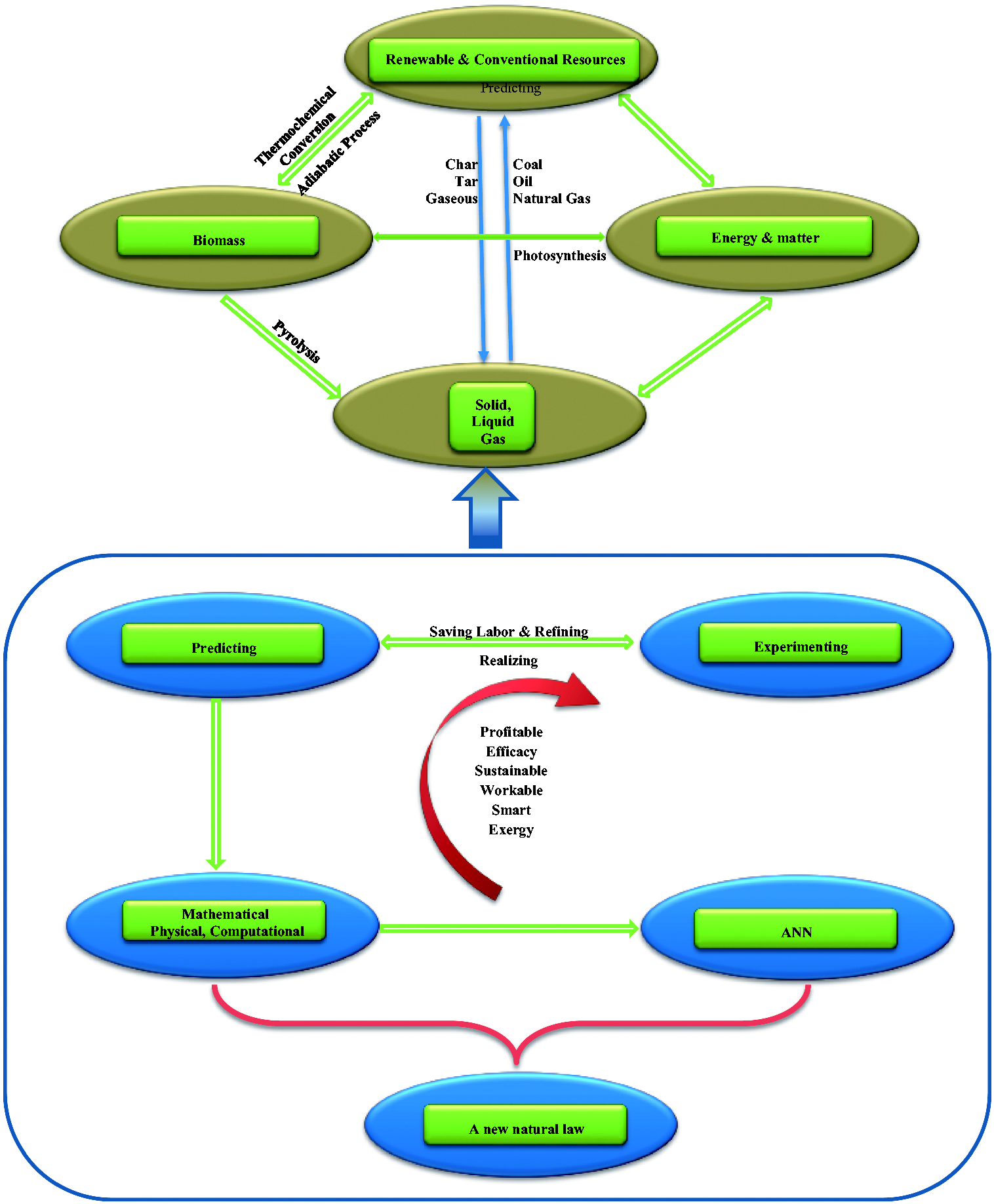
The energy recuperation and deriving valuable compounds from biomass can be achieved by many experimental and industrial techniques. The biological and chemical conversions are two main streams. The former yield basically ethanol, biogas and composts. The latter relies on thermochemical conversion technique. Here, the pyrolysis is the distinguished thermochemical conversion technique where solid biomass can be converted into solid, liquid and gas material at high temperature (400℃–700℃) in inert conditions. The basic variable is the temperature. The solid, liquid and gas materials are called char, tar and gaseous material, respectively, in pyrolysis process. The char is similar to charcoal which are precursor of the activated carbon. The tar is similar to raw oil containing both hydrophobic and hydrophilic compounds. The gas can be called a hydrogen-rich gas (Caglar and Demirbaş, 2001). The tar is called a petroleum equivalent material. Generally, the main aim of the pyrolysis process experiments is to find the easy control way of the conversion process and to make it a routine practice. Therefore, it is very important to bring some standards to pyrolysis process. Exactly at this point, ANNs take the attention to predict various values of thermal process in several dimensions. And by this way, it is possible to decrease the number of pyrolysis experiments. The content and amount of liquid and gaseous pyrolysis products can also be predicted by this model (Karaci et al., 2016; Sun et al. 2016).
The predictive power of computer programming was here readily integrated in thermochemistry. The reaction temperature is relatively high and reaction medium is very aggressive containing catalysts, radicals and ions (Lerkkasemsan, 2017). In addition, the prediction of pyrolysis products qualitatively and quantitatively is really a challenging issue even if under controlled condition. The famous ANN applications are inspired from human brain where new crosslinks occur between the neurons when new knowledge is learned. And the previously learned knowledge can be used for further predictions. The details of ANN can be found elsewhere (Karaci and Arıcı, 2014; Lee, 2003; Sunphorka et al., 2017; Vaisla and Bhatt, 2010; Veronez et al., 2011). The growing interest in ANNs stems from its basic property of learning capability.
Now it is understood that if the predictive and learning capacity of ANN can be used to decode vigorous reactive medium in pyrolysis process, it will be able to open new era in thermochemistry. The ANN forms a basin for the prediction of energy resource diversity. The achievement of ANN lies in the prediction of process with limited data as less as possible. Briefly, the superiority of the ANN model over the other mathematical, physical and statistical is having learning capability in non-linear circumstances and successively using this for further prediction (Chen et al., 2016). The beginning here is simple just to predict the solid, liquid and gas products ratios of pyrolysis products as outputs.
As stated above, all types of plant biomass materials are approximated to composing cellulose, hemicelluloses and lignin in various percentages. And these compositions were used to decode and determine the various kinetic parameters of pyrolysis process by Sunphorka et al. (2017). Additionally, biomass can be defined in composition according to their proximate analysis, that is a biomass is composed of ash, fix carbon, volatiles and moisture. Here, the function of higher heating values was tried to be the settled by using proximate analysis data (Uzun et al., 2017). And, thirdly biomass can be approximated into solid, liquid and gas products after the execution of pyrolysis process. The former two along with temperature are the input data for ANN and the third one (solid, liquid and gas products) is the output data. The input and output data can be obtained by various thermos-gravimetric methods such as gravimetry, GC/MS and FTIR/MS (Velghe et al., 2011; Zheng et al., 2009). The further separation and characterization of pyrolysis can also be achieved by miscellaneous ways.
The resulting products from pyrolysis process of biomass are quite varied due to high temperature. And there are huge amounts of data in literature. Nevertheless, the generalization of the pyrolysis process is at infancy. Therefore, many studies have been directed to prediction of products and process of pyrolysis. Generally, there are three types of prediction models: mechanistic physical models, statistical models, and neural network models. The physical and statistical models have been used to define the vigorous thermolysis reaction medium in kinetics and thermodynamics perspectives to obtain ultimate functions of the system (Aydinli and Caglar, 2013; Kim, 2015; Lopez-Urionabarrenechea et al., 2012). The kinetics of thermo-gravimetric behaviour of polymeric materials and the content of atmospheric gas oils sequentially has been predicted (Conesa et al., 2004). Xiao et al. (2009) and Mikulandric et al. (2014) predicted the gasification characteristics of the municipal solid waste and biomass separately. In two of the studies, ANN is coupled with fuzzy logic where they are called ANFIS: Fazilat et al. (2012) and Lerkkasemsan and Achenie (2014) predict the thermal degradation kinetics of polymer biomass blends and reaction kinetics of biomass. However, it seems that these types of studies are just newborn and they will be given great attention in the near future. Recently, Karaci et al. has predicted the production of hydrogen-rich gas from the catalytic pyrolysis of biomass by ANN. It is believed that hydrogen will be one of the most important energy carrier routes. The prediction of hydrogen gas production by ANN has been well suited in energy production, storage and transportation route (Karaci et al., 2016).
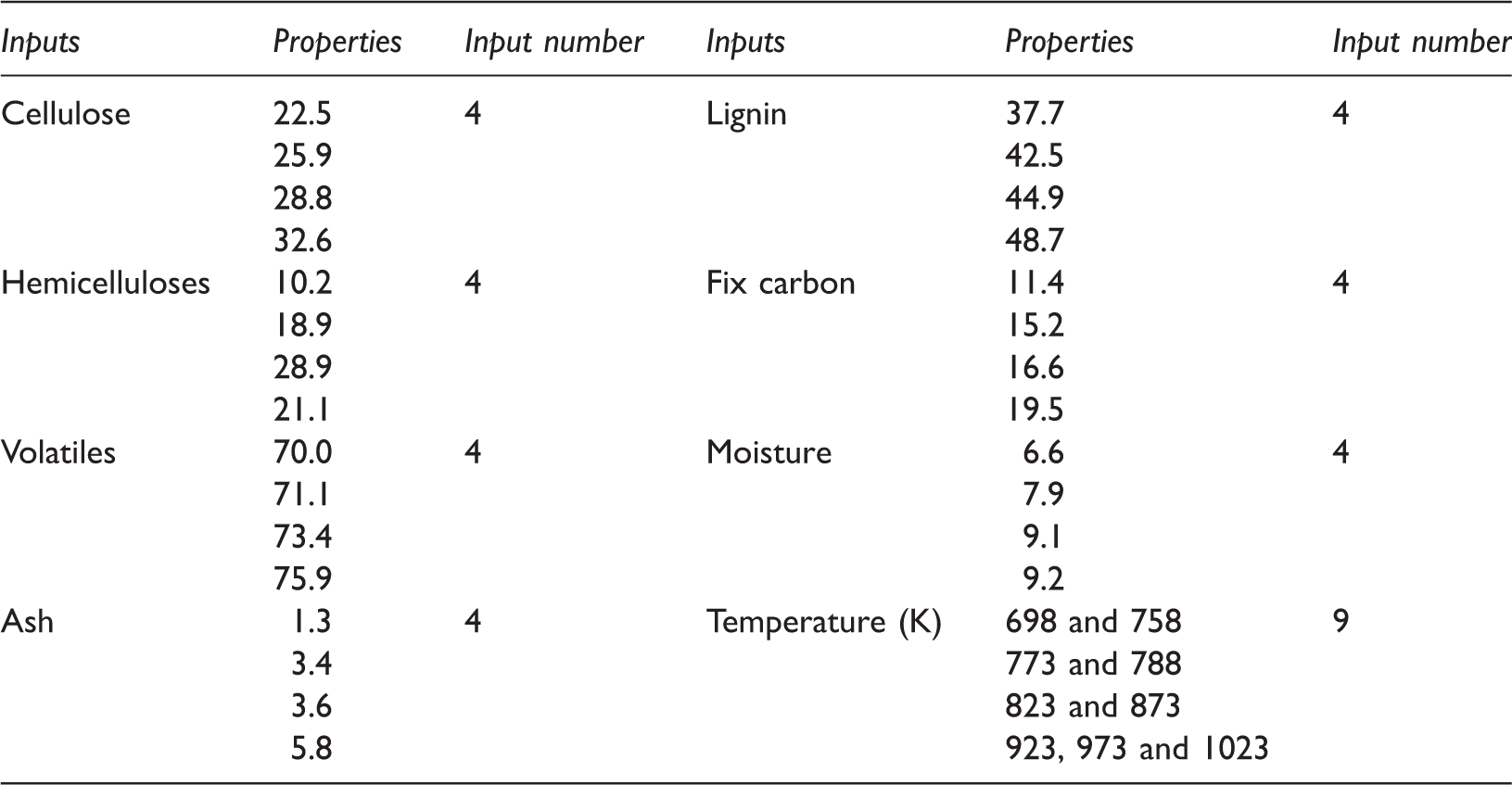
In this study, the data obtained from pyrolysis of four biomasses wastes were fed into ANN model: cotton cocoon shell (cotton-s), fabricated tea waste (fabricated tea-w), olive husk (olive-h) and hazelnut shell (hazelnut-s). They were previously pyrolysed at various temperatures, and solid, liquid and gas percentages were obtained. These percentages were used as outputs for ANN. Moreover, cellulose, hemicelluloses and lignin contents were found, and proximate analyses of the biomasses such as ash, fix carbon, volatiles and moisture were also obtained. These were used as inputs for the developed ANN. And, the distinguished variable, temperature was also used as input. Then, the ANN was developed via ‘NNTool’ ANN tool of MATLAB program. The NNtool briefly is developed and integrated into MATLAB module to train the data set by using various ANN models. The ultimate goal of this study is to predict solid, liquid and gas product ratios of pyrolysis process with acceptable error margin by this ANN model using cellulose, hemicelluloses and lignin, and ash, fix carbon, volatiles, moisture and temperature as inputs. Besides this, the predictive outputs supplied by this model were compared with experimental values. The present study uses the function estimate aspect of the ANN.
The aim of this study is to find a shortcut way to determine the energy potential products of biomass pyrolysis in context with environment, energy and economy (3 Es). And the ANN presents a valuable, executable and sustainable route and road for this type of predictions rather than the other mechanistic models. The memorization problem of this model can be avoided by tune handling of the processor. If the ANN model memorizes data during the training, while the training score approaches to 100%, the testing results in poor output. Therefore, the case of memorization was ignored and the best values were given in which the ANN model does not memorize.
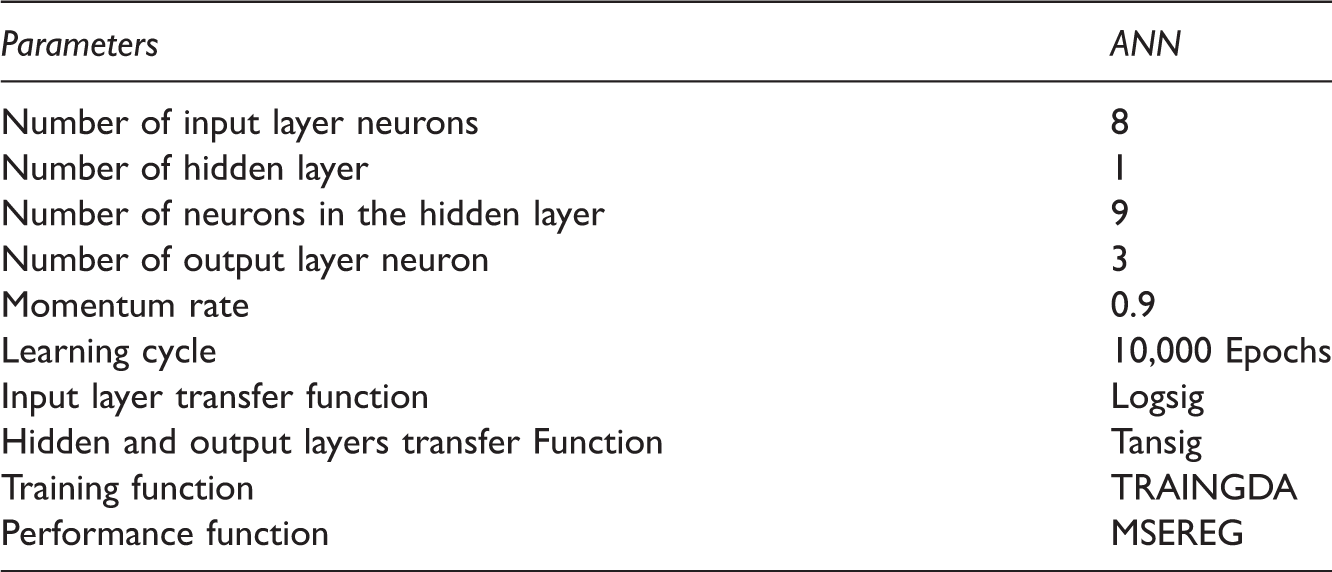
The ANN was developed with eight inputs, three outputs and one hidden layer having nine neurons to produce outputs solid, liquid and gas values. Nine data previously obtained from experimental results were given to network as a training set. After completion of the training, another nine experimental values, which have never been used in training, were given to network as inputs. It is seen that the network outputs are satisfactorily correct in comparison with experimental outputs.
Materials and methods
The biomass samples, Cotton-s, Tea-w, Olive-h and Hazelnut-s, which were supplied from different production plants, were used in the pyrolysis process. These materials are known as base wastes of plants and the cost of these is quite high (Acaroǧlu et al., 1999; Caglar and Aydinli, 2009; Yakupoglu and Peksen, 2011). The aerated samples kept in analytically balanced oven at 40℃ were milled and then screened, and only the fraction retained on the 0.063–0.150 mm sieve was used. Chemical and structural analyses of samples were carried out according to the ASTM D1103-80 and ASTM D1104-56 standard test methods, respectively.
The pyrolysis of biomass was performed in an apparatus designed for pyrolysis experiments. The main part of pyrolysis device was a stainless steel cylindrical reactor with dimension 13 cm in height and 2.5 cm in diameter and 0.4 cm in thickness inserted diagonally into the pre-heated high temperature furnace. Effective volume of this reactor is approximately 25 mL. A simple thermocouple (NiCr-constantan) was placed directly on top of the sample but did not touched it. For each run, the heater was started at ambient temperature and switched off when it reached the desired temperature. Pyrolysis experiments were performed at various temperatures: 698, 758, 773, 788, 823, 873, 923, 973 and 1023 K, which varies according to biomass samples. The residence time of each pyrolysis experiment is adjusted for 15 min arbitrarily by observing evolving gas and liquid flow. Liquids were determined by subtracting apparatus parts before and after pyrolysis runs. While char amount was weighed directly, gas product was found by difference. In this state, the apparatus can be called a pilot scale which can be easily adopted to industrial scale.
Design of ANN method
The structure and the parameters of the developed ANN
In this study, the ANN was developed to determine solid, liquid and gas values without experimenting. The ANN has backpropagation algorithm as a learning algorithm with eight inputs, three outputs and one hidden layer having nine neurons. Neuron numbers in hidden layer is selected as nine. The artificial neural network used in this ANN model is shown in Figure 2.
The system in the ANN model.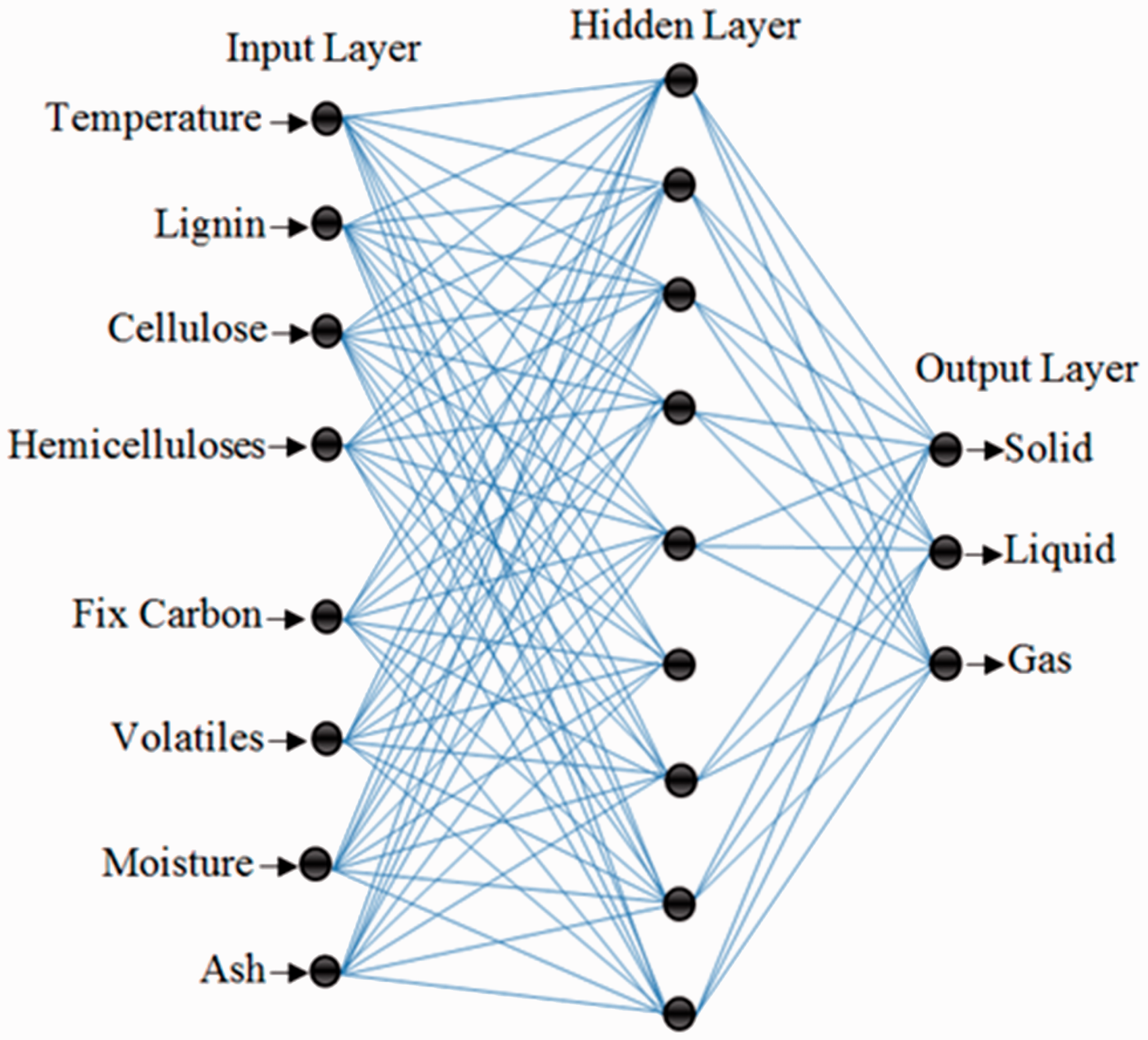
Artificial neural network inputs.
Hidden layer. The formed ANN model has one hidden layer. The neuron numbers in hidden layer are an effective parameter in learning performance of the model. If the number of the neuron in the hidden layer is too small, then the network learning procedure could not converge to an optimal value, which shows an oscillatory behaviour of the error function. Therefore, the network cannot learn the relationship among the input–output designs. If the number of the neuron is too high, then the network would just store the input–output list, and it shows a poor generalization performance. This means that the optimal ANN size should fit the data structure and construct the model definitively related to the problem (Tortum et al., 2007). After making many trials, the neuron number in hidden layer of the ANN model is fixed as nine as if the best results are obtained in that condition.
Output layer. Network is composed of three neurons according to experimental data, and as outputs, solid, liquid and gas values are produced.
Training of the ANN
The values of parameters used in the model.
Results and discussion
The ANN model presented in Figure 2 is actually a combination of the chemistry and ANN. The course of prediction can be schematized in three subsequent steps. The first layer is input layer which contains feedstock characteristics of biomass (cellulose, hemicellulose and lignin percentages), proximate analysis of biomass (fix carbon, volatiles, moisture and ash) and temperature. The third layer is the output layer which contains the results of pyrolysis process as percentages of solid, liquid and gas products. The second layer is the middle layer where ANN takes the position of that conflicting medium with many interactions. And it seems that the ANN is successive in resembling the aggressive pyrolysis medium. There is governing rule that directs pyrolysis in medium. That rule is very difficult to guess; interconnections of artificial neurons can just take the position of this rule. The temperature can be assumed to be the key variable in pyrolysis process and it is here positioned in input variables.
As it can be seen in the following part, the results predicted by the developed model is acceptable. The thermochemical conversion process even in controlled condition results in certain deviations with low reproducibility. These deviations can be up to 7% of the pyrolysis basic products (solid, liquid and gas). The parameters of the ANN model should be evaluated accordingly.
The error resulted in the ANN model during the testing and training steps is stated as mean squared error (MSE). MSE is calculated with the following equation

The statistical values of the proposed ANN model.
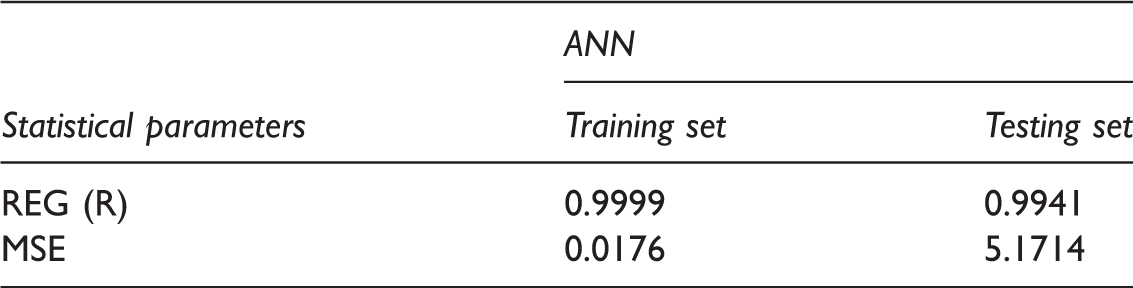
The training and testing scores for R values are enough close to zero which indicates satisfactory correlation between the experimental and computing ANN module outputs. Also, another indicator is MSE coefficient where training sets are very close the zero and testing sets are close enough the zero. The both coefficients point the satisfactory prediction. Therefore, it can be assumed that the errors between the network and the intended outputs are not significant. In result, the R and MSE values show good indication of well-trained ANN model. Characteristically, the pyrolysis process takes place at high temperatures, resulting in radicals and charged molecules. Therefore, the data collected from this process have virtual deviations which are difficult to control. The R parameter and the deviations belonging to both sets are shown in Figure 3 and Table 4. During training of the ANN model (Table 5), the data set was not introduced to it. The results obtained for test set is shown in Figure 4.
The regression graph of the (a) testing set and (b) training set of the ANN model. The comparison of the results obtained from training set belonging both for ANN model and experimental results. The comparison of the results obtained from test set belonging both for ANN model and experimental results. The comparison of the results obtained from test set belonging both for ANN model and experimental results.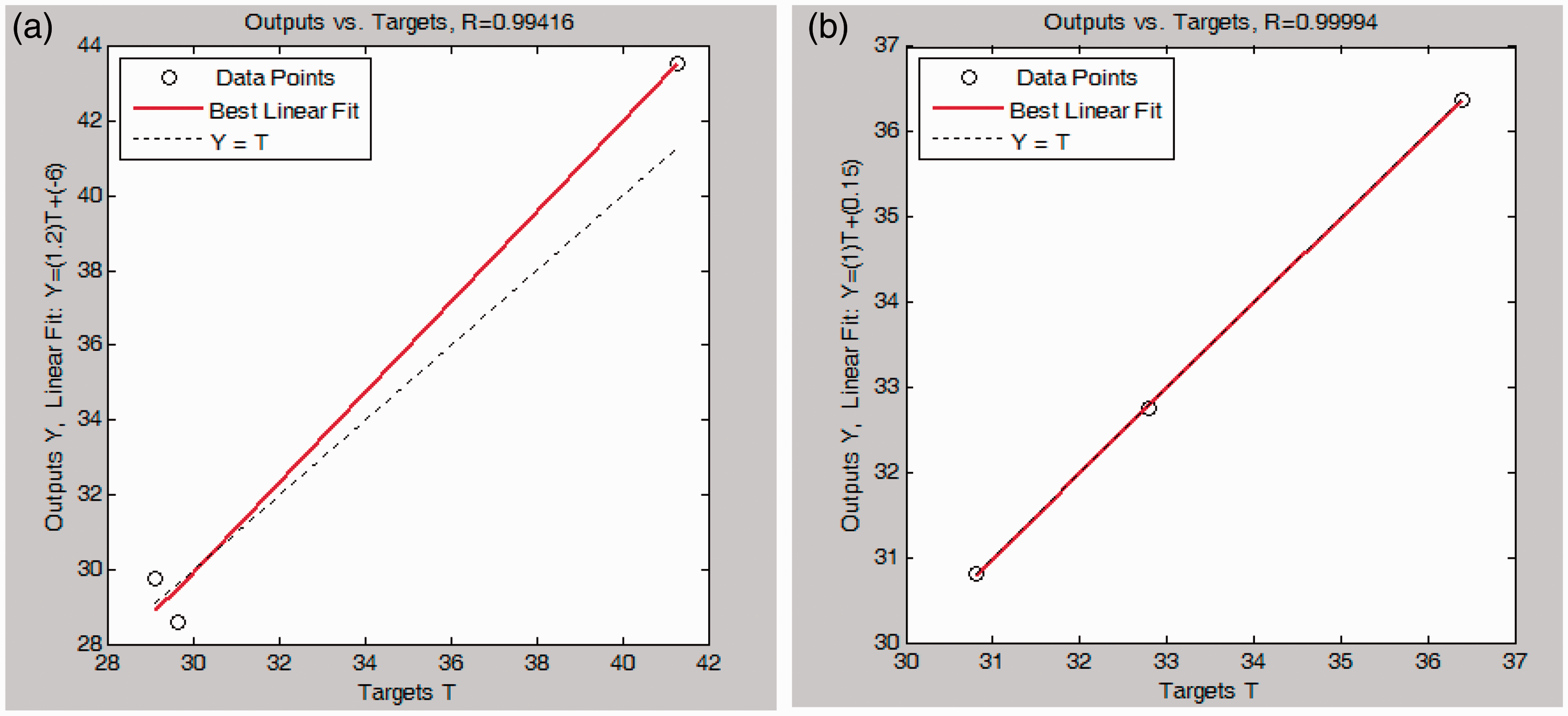
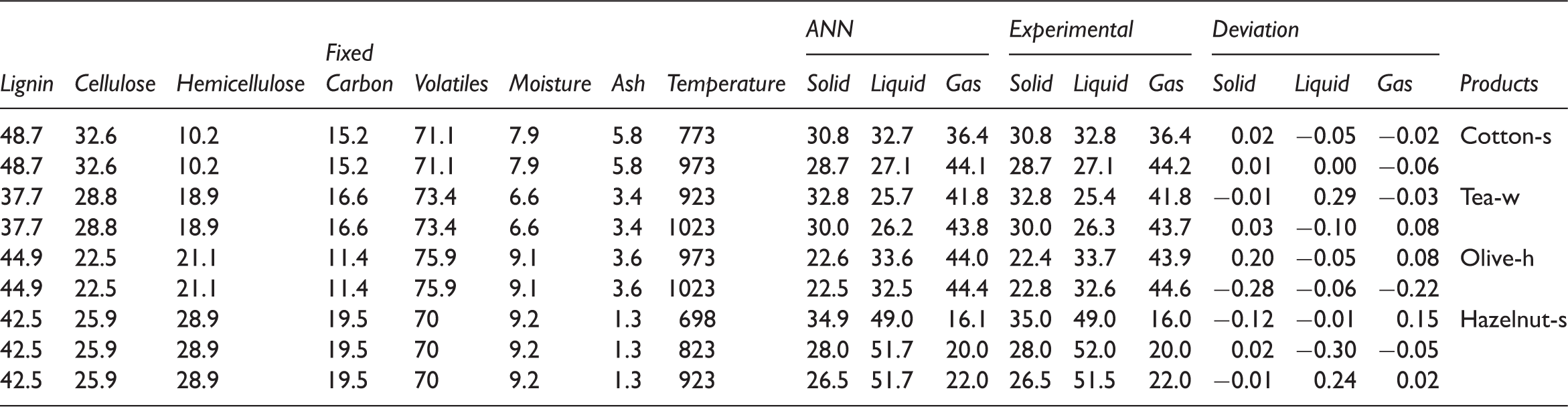
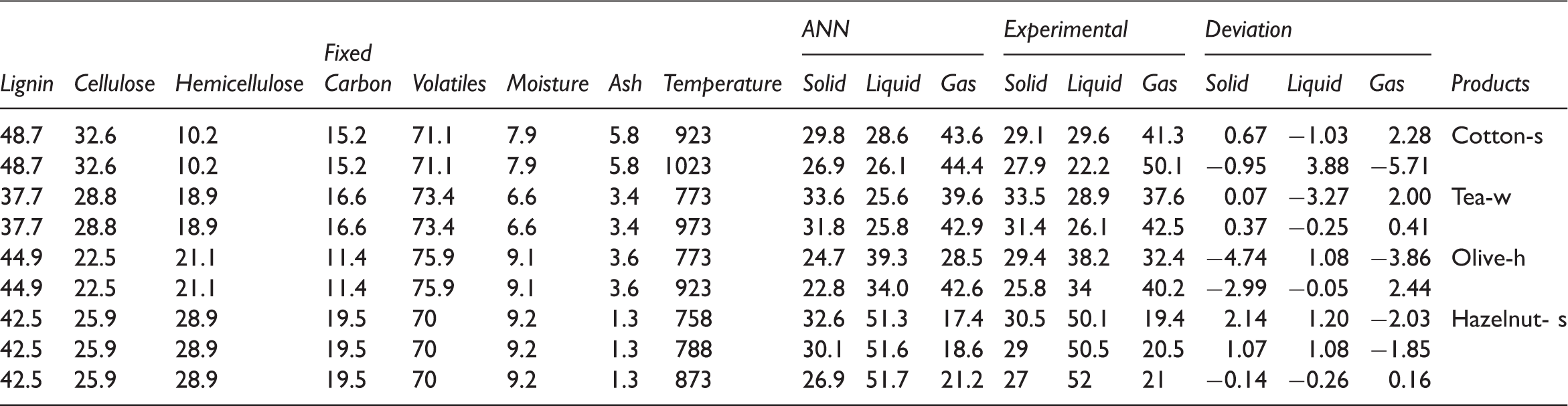
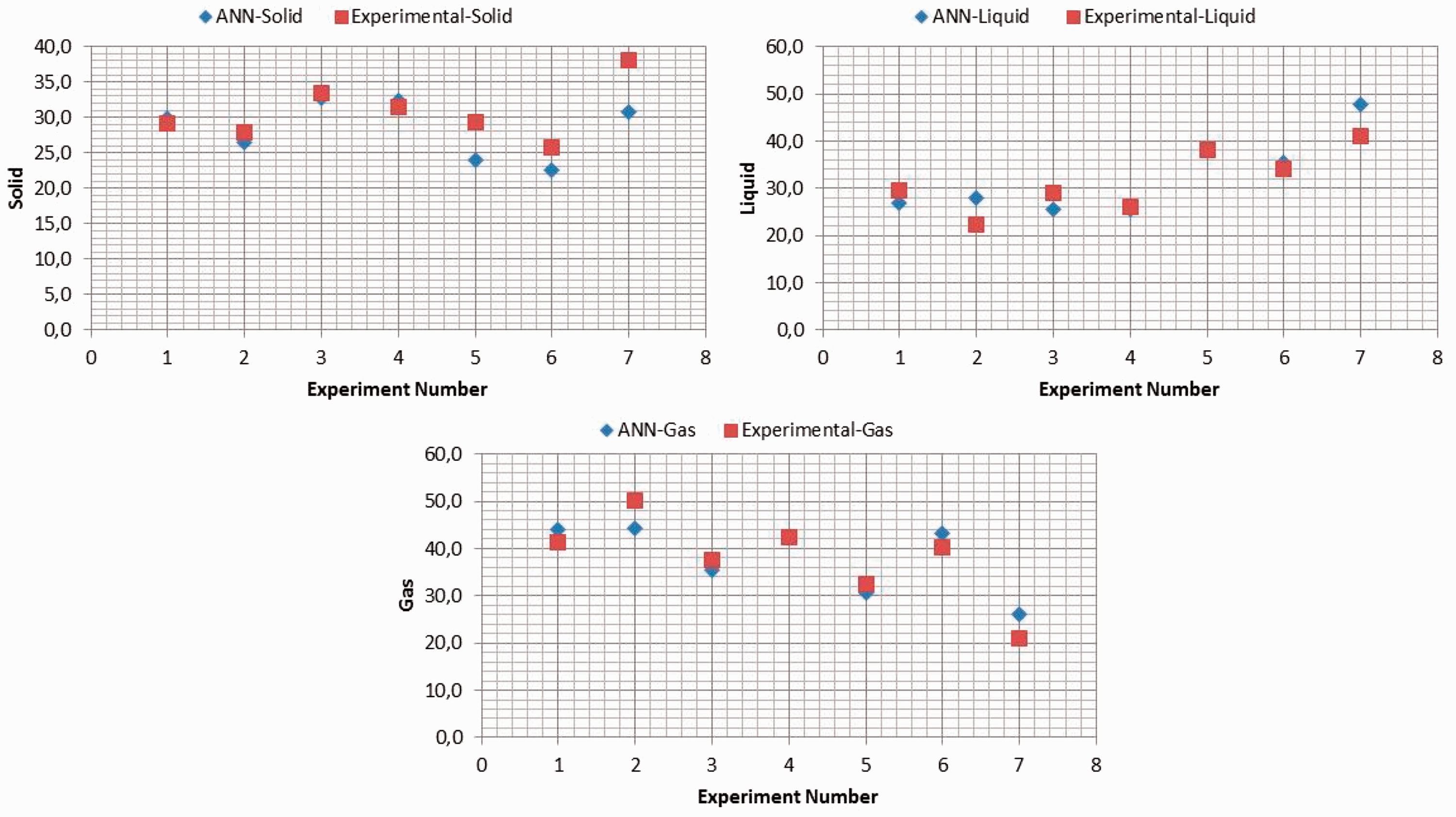
The results have impact on ANN modelling and execution of pyrolysis process. In chemistry, the material balance is compulsory, that is the sum of reactants and products should converge to unity. Here, the ANN was not informed from this boundary conditions, that is the sum of input and sum of output must be same (100%). It is also difficult to analyse completely a complex matter such as biomass before and after pyrolysis process. Logically, however, we converge them to hundred percent by adding ‘others’. Here, in terms of the collections of cellulose, hemicellulose and lignin, the biomass is defined approximately 85%. The rest is probably other organic and inorganic molecules. But we did not define it in the experimental and ANN setup. The fixed carbon, volatiles, ash and moisture content exactly makes 100%. And the solid, liquid and gas products make up 100%. Therefore, the real input and out variables are less than the variables used in the ANN model. According to the degree of freedom, the input variable is six and the output variable is just two. Since the ANN model was not informed with above boundary conditions, the ANN model freely predicts the solid, liquid and gas products. And successfully the sum of the predicted results oscillates around 100%. The deviation is at most 5% abstractly and concentrating mainly at 2%. Therefore, the results must be evaluated accordingly. In further studies, the boundary conditions may be fed into ANN model and more precise results can be obtained. The other parameters that are not covered in this study are various types of batch and continuous reactor designs, residence time, existence of flowing gas all of which can also be subjected to ANN modelling for further studies (Baruah and Baruah, 2014).
In pyrolysis process, there are other variables such as particle size of the biomass or other additives, heating rate of furnace and residence time of the biomass mixture in furnace. These can be considered and fed into ANN model to obtain more reliable results. Also the ultimate (elemental) analysis data and the molecular content of liquid and gas fractions can be used in computational prediction studies. In addition to these, there are enormous data in the literature belonging to pyrolysis process. If they are unified with the ANN model, a road to reach a general rule could be opened to obtain similar materials to coal, oil and natural gas like the transformations various biomass into real conventional resources under the crest of Earth. Like this, the ANN approximation study can be reversed to some level to guess the contents of the biomass by using solid, liquid and gas outputs or molecular species as inputs in ANNs.
As a result, various types of ANN models can be developed in combinatorial perspectives by taking into account of the input and output data of pyrolysis process. Virtually, it is very difficult to bring all the variables of chemical process to predict the resulting products and governing functions of the process in one computational model. Therefore, the models just use some parts of the data at once to reach an effective prediction. Unfortunately, the computers have not just developed so much to simulate and resolve the real-time problems. By this way, the researches take, keep and cover the data in complementary perspectives. They should be considered as a part in totals of predictive study and not refuting each other (Sun et al., 2016; Sunphorka et al., 2017; Uzun et al., 2017).
In sum, the solid, liquid and gas pyrolysis products of four different biomass wastes were predicted by the ANN model. The amounts of these products were correlated with biomass initial and ultimate content, and temperature. The hidden layer in the model takes the position of pyrolysis medium which is very complex to define chemically. The obtained results are satisfactory in terms of deviations of thermochemical reactions at high temperature.
Conclusions
The predictive power of computer programming was readily integrated in thermochemistry where the reaction temperature is relatively high and reaction medium is very aggressive containing catalysts, radicals and ions. In addition, the prediction of pyrolysis products qualitatively and quantitatively is really a challenging issue even if under controlled condition. The course of prediction was schematized in three subsequent steps. The first one is input which can be assumed to be the feedstock resources of pyrolysis process and its contents in molecular and/or elemental level. The third one is the outputs which are generally char, tar and gaseous products in pyrolysis terminology but they are called here as solid, liquid and gas products sequentially. The middle point which is the second stage can be attributed the execution of pyrolysis process where the developed ANN model takes the position of that conflicting medium with many interactions. And it seems that the ANN is compatible to resemble that aggressive medium due to its interconnections of artificial neurons. The temperature can be assumed to be the key variable in pyrolysis process but it is here positioned in input variables.
The artificial neural network-based ANN model was developed to predict the solid, liquid and gas product percentages of various biomass pyrolysis processes without doing experiments according to various temperatures and ratios of lignin, cellulose, hemicelluloses, fix carbon, volatiles, moisture and ash. The developed ANN model was trained with experimental input and output data. The randomly chosen nine experimental data were used as testing data to test the trained ANN. When these testing data were thoroughly introduced to the trained ANN, it is seen that solid, liquid and gas values are predicted that converging the real experimental values. Also, the MSE deviation implies that the ANN model can predict the solid, liquid and gas values with little inaccuracy. By this way, the percentages of biomass pyrolysis products: char, tar and gas can be predicted satisfactorily with ANN model in short time without further experimenting. Also, the prediction of various aspects of pyrolysis by this ANN model can be very useful auxiliary patch in solving real world problems. By this way, the problems encountered by today’s society such as energy depletion, waste accumulation and environmental pollution, etc. could be solved before coming out.
In chemical point of view, if it is possible to change the load factor of the variables in ANN model, the intended results will be more compatible with the experimental ones. In the future, the ANN model can take a rather difficult position in definition of chemical reactions picturing them in human brain. As a result, char, tar and gas products percentages of biomass pyrolysis can be predicted satisfactorily with ANN model in short time without further experimenting. That is, the prediction of various aspects of pyrolysis by this ANN model can be very useful auxiliary patch in solving real world problems.
Footnotes
Declaration of conflicting interests
The author(s) declared no potential conflicts of interest with respect to the research, authorship, and/or publication of this article.
Funding
The author(s) received no financial support for the research, authorship, and/or publication of this article.