




Abstract
Four coal samples from the Huoshaopu Mine and six coal samples from the Jinjia Mine, Liupanshui Coalfield, China were collected and analyzed, focusing on their petrological and organic geochemical features. The microscopic results show that the vitrinite random reflectance (Ro) of all samples is 0.97%, which is classified as high-volatile A bituminous coal. The maceral groups are dominated by vitrinite followed by inertinite. The low ratios (0.07–0.42) of saturated to aromatic hydrocarbons indicate a terrestrial plant input for the coals. Gas chromatography and gas chromatography/mass spectrometry were employed to analyze the composition of organic matter in the samples. The gas chromatography chromatograms of saturates display a monomodal outline of n-alkanes with a predominance of short chains. The odd-even preference values around 1 reflect the thermal maturity of the coals. Based on the different pristine/phytane ratios and dibenzofuran contents, we infer a relatively weak oxic coal-forming environment for Huoshaopu coals and a relatively anoxic environment for Jinjia coals. Among the aromatics, thermodynamically stable compounds, including 2-methylnaphthalene, 2,6 + 2,7-dimethylnaphthalenes, 3 and 4-methylbiphenyls, 4,4′-dimethylbiphenyl, methylphenanthrene, 2 and 3-methyldibenzofurans, were the dominant isomers in the respective homologs. The occurrence of dibenzothiophenes and benzonaphthothiophenes may confirm the paralic depositional environment of Late Permian coals from the Huoshaopu and Jinjia mines.
Introduction
Organic geochemical characteristics of coal, especially biomarker parameters, can provide important and reliable information on coal-forming environments, plant inputs, and thermal maturation. For example, the distributions of n-alkanes can explain the sources of organic matter, the degree of thermal evolution, or the influence from microbes or inorganic environments. The ratio of pristane and phytane (Pr/Ph) can indicate the oxidation-reduction degree of coal-forming environments. The odd-even preference (OEP), carbon preference index, and methylphenanthrene index can reflect the degree of coalification and thermodynamic stability. However, with further thermal maturation of coal, these organic geochemical imprints tend to provide misleading information (Willsch and Radke, 1995). Thus, care must be taken with the use of molecular parameters, especially for high-rank coals.
The Late Permian is an important coal-accumulating period in the history of coal geology, which formed the abundant coal reserves in southwest China. This region is an ideal place to study the organic geochemistry of coal-related scientific problems because the coal-bearing series developed from terrestrial deposits, continental–oceanic interaction, and marine sedimentary deposits, and accumulated many types of coal with a wide range of coal ranks (Dai et al., 2005; Shao et al., 2013). Many studies have been performed on coal characteristics, sedimentary environment, sequence stratigraphy, lithofacies paleogeography, coal-accumulating regularity, coal-bed accumulation, and the occurrence and enrichment of trace elements in the Late Permian coals of southwest China (Dai et al., 2004, 2005, 2007, 2011; Qin et al., 2016; Shao et al., 2013, 2015; Shen et al., 2012; Xie and Cheng, 1992; Zeng et al., 1998).
Sun et al. (1999) and Wang et al. (2010) studied the hydrocarbon-generating potential of Late Permian coal from Panxian, Guizhou province. Lei et al. (1998) discussed the thermal evolution characteristics and sulfur-bearing compound composition in extracts from high organosulfur coal. However, research on the detailed organic geochemistry of coals from this region, especially their molecular characteristics, remains insufficient. The purpose of this study is to determine the organic matter sources, coal-forming environments, and thermal maturation by investigating the compositional characteristics of the saturated and aromatic hydrocarbons extracted from coals, and to describe the geological significance of the Late Permian coal in the southwest of China.
Geological setting
The Liupanshui Coalfield is one of the major coal producing areas in Guizhou (Figure 1), which is traditionally known as the “Capital of Coal in Southern Changjiang River.” Geologically, coal-bearing strata are mainly thick upper Permian Longtan and Changxing Formations containing many coal seams, which gradually degrade from the middle strata to the northwest (continental facies) and southeast (marine facies). Coal-bearing strata development in the area was mainly related to the basement structure and lithofacies and the paleogeography during the coal-forming period. The eruption of the Emeishan basalt in the west during the earlier Late Permian Epoch helped to level the coal-bearing strata basement. The Panxian-Shuicheng paleofault controlled the boundary between continental facies and transitional facies, and therefore controlled the features of coal-bearing strata on both sides of the fault. The Huoshaopu (HSP) and Jinjia (JJ) mines are located in the southern section of the west and east limbs of the Panguang syncline. With the development of the coal-accumulating basin thrust fault and fold structure, the coal-bearing strata experienced denudation, and the anticlinal axis syncline became the primary coal structure. Since the southeast sea invasion, the sedimentary paleogeography changed from continental facies to marine–continental alternating facies from the northwest to the southeast, and the coal-bearing quality became gradually poorer. Furthermore, the west area of the Panguan syncline and its surroundings contain low-sulfur coal (Tang, 2012; Wang and Bao, 2014; Yang and Tang, 2014).
Location of the Huoshaopu and Jinjia Mines, Liupanshui Coalfield.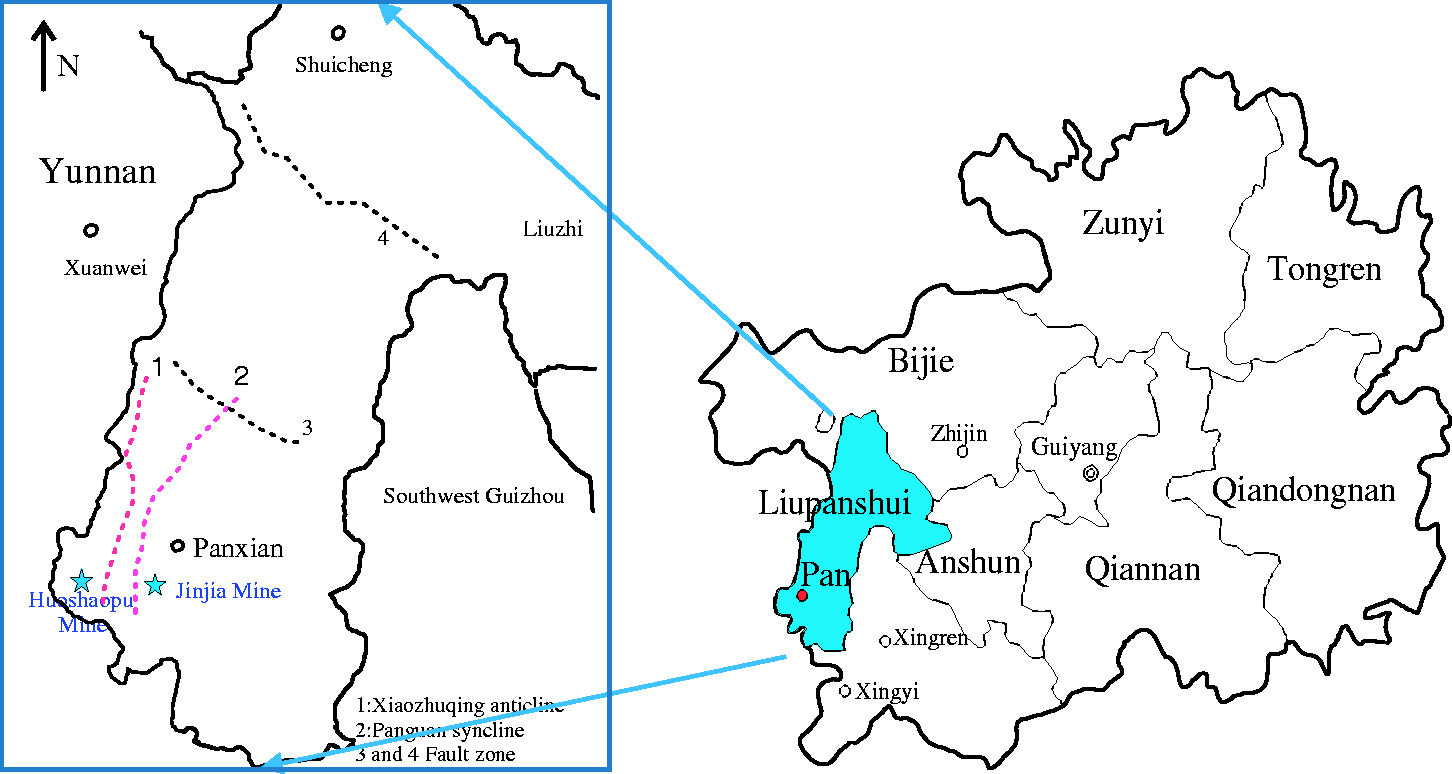
The Longtan and Changxing Formations formed in upper-delta and coastal environments, respectively (Yang et al., 1996). The Longtan Formation (Upper and Middle Permian), with a thickness of 248 m, contains 50 coal seams, of which 19 are minable. The Changxing Formation, 122 m thick, has 19 coal seams and 8 minable coal seams (Su et al., 1991; Xiong et al., 2006; Zhang et al., 1994). Thermal maturation of coal was expected to occur only to the rank of bituminous coal through hypozonal metamorphism. However, a great quantity of heat introduced by Emeishan basaltic intrusions from the Yangze Continental block of the Late Permian Period increased the coal maturity and altered the parameters of the coal-extracted hydrocarbons (Shao et al., 2015; Yang and Tang, 2014).
Materials and methods
Sample preparation and petrographic analysis
Four samples from the No. 3, 7, 12, and 17 coal seams of the HSP Mine and six samples from the No. 3 and 9 coal seams of the JJ Mine were collected following the Chinese standard method GB482-2008 (Figure 2). Sampling was conducted from the minable coal seams, and samples were named HSP-3, HSP-7, HSP-12, HSP-17, JJ-3#1, JJ-3#2, JJ3#3, JJ9#1, JJ9#2, and JJ9#3, respectively. The basic chemical properties were analyzed following the Chinese standard methods: GB/T213-2003, GB/T212-2008, GB/T214-2007, and GB/T215-2003. Petrographic analyses were performed on polished blocks to study the maceral composition and thermal maturity of the coals (GB/T16773-2008). Coal samples were crushed to a maximum particle size of 0.85–1 mm, mounted in epoxy resin hardener, and allowed to set, then ground flat on a diamond lap and subsequently polished on silicon carbide paper of different grades (1500, 2500, and 5000 mesh), using water as a lubricant. Finally, polished diamond powders of different sizes and Sonax oil were used as lubricants. Petrographic analyses used oil immersion in plane polarized and reflected light, using a DM 2500P microscope photometer equipped with fluorescence illuminators. The coal petrology was investigated at the Key Laboratory of Resource Exploration Research of Hebei Province. The maceral composition of the polished blocks was analyzed under reflected white light using a Swift point counter, and the maceral groups were determined by counting 500 points per sample. The vitrinite random reflectance (Ro) was measured using an Axioskop 40 photometer system.
Stratigraphic section of minable coal seams in the Huoshaopu and Jinjia Mines.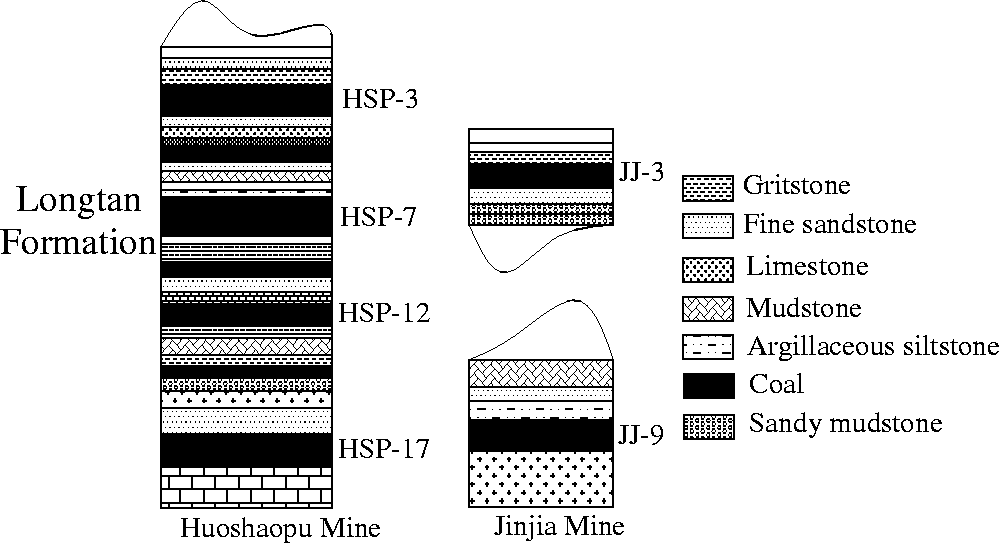
Extraction and separation
Approximately 10 g of the samples were subjected to Soxhlet extraction for 48 h using dichloromethane as the solvent. The removal of elemental sulfur was achieved by adding copper foil into the flasks during extraction. The extracts were subsequently filtered and concentrated using a rotary evaporator, and separated into aliphatic, aromatic, and polar fractions via column chromatography. A glass column (70 cm × 1.5 cm) was dry-packed with silica gel (200 mesh), prewashed with dichloromethane, and the packing adsorbent was activated at 180℃ for 12 h prior to the separation of the extracts. The saturate, aromatic, and polar fractions were successively eluted with hexane, dichloromethane, and methanol, respectively.
Gas chromatography and gas chromatography–mass spectrometry
Gas chromatography (GC) and gas chromatography–mass spectrometry (GC–MS) analyses of the saturated and aromatic fractions were performed with an Agilent 6890 GC equipped with a flame ionization detector (GC-FID) coupled to an Agilent 5973 quadrupole MSD (GC–MS). Separation was achieved using a fused silica capillary column coated with DB5 (30 m × 0.25 mm i.d., 0.25-µm film thickness). The GC operating conditions for both techniques were as follows: temperature was maintained at 60℃ for 5 min then increased to 295℃ at a rate of 4℃ min−1, with a final isothermal hold at 295℃ for 15 min. Hydrogen and helium were used as carrier gases for the GC-FID and GC–MS, respectively. The mass spectrometer was operated in the electron impact mode with an ionization energy of 70 eV and scanned from 50 Da to 650 Da. Data were acquired and processed using Chemstation software. Individual compounds were identified by comparing the mass spectra with literature and library data, and through the interpretation of mass spectrometric fragmentation patterns.
Results and discussion
Coal chemistry and petrology
Proximate analysis and sulfur contents in coals from Huoshaopu and Jinjia Mines (%).
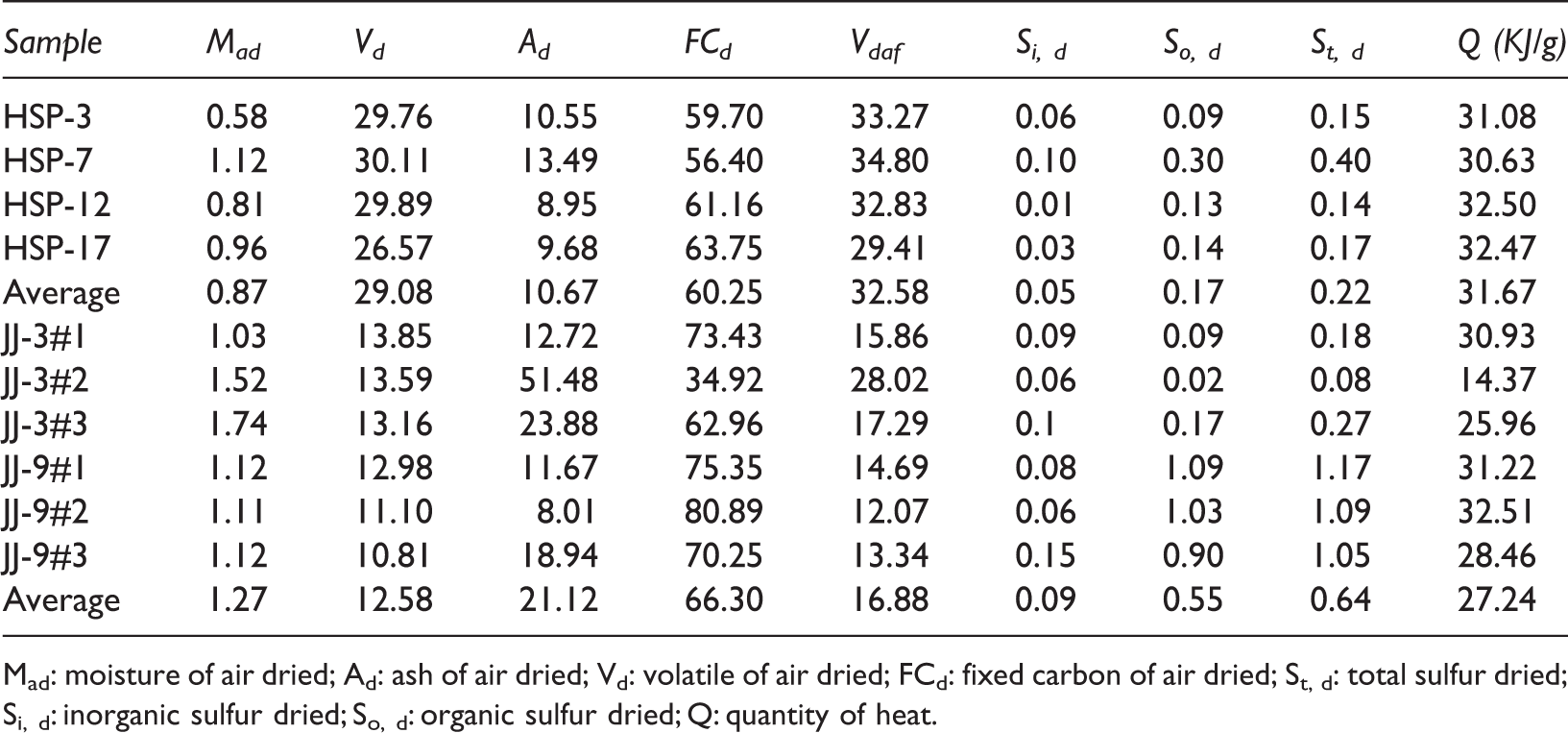
Mad: moisture of air dried; Ad: ash of air dried; Vd: volatile of air dried; FCd: fixed carbon of air dried; St, d: total sulfur dried; Si, d: inorganic sulfur dried; So, d: organic sulfur dried; Q: quantity of heat.
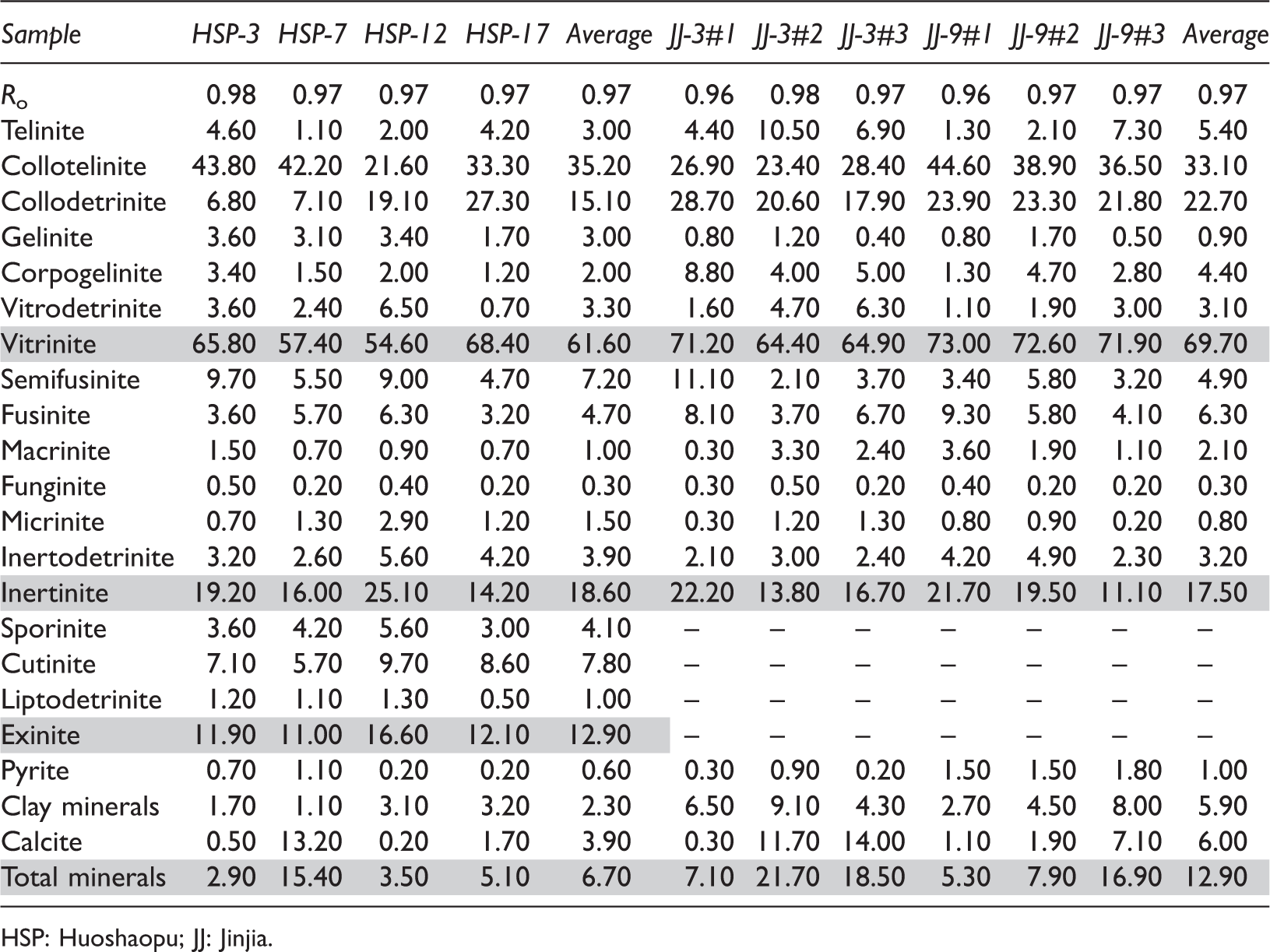
The coal is classified as high-volatile A bituminous coal (0.6%–1.0% Ro) according to an average vitrinite random reflectance of 0.97% Ro (Uribe and Pérez, 1985). In HSP and JJ mines, vitrinite is dominant (Figure 3(a)), with average contents in the coal of 61.6% and 69.7%, followed by inertinite (Figure 3(b)), with contents of 18.6% and 17.5%, respectively (Table 2). Exinites (Figure 3(c)) contain significant amounts of terrestrial liptinite maceral components, ranging from 11% to 16.6% in the HSP mine (Table 2). The observed structured exinite macerals are sporinite, cutinite, and liptodetrinite. However, the exinites of JJ samples could not be identified, probably due to the difference in sedimentary environments. The vitrinites are mostly collotelinite and then collodetrinite. The inertinites are mainly semifusinite and fusinite. Mineral matter contents are 6.7% and 11.9% on average, which are dominated by clay minerals (mainly kaolinite) (Figure 3(c) and (d)) and calcite (Figure 3(f) and Table 2).
Macerals and minerals in coals from the Huoshaopu and Jinjia Mines: (a) vitrinite (oil immersion); (b) fusinite (oil immersion); (c) cutinite (oil immersion); (d) clay (SEM, back-scattered electron image); (e) kaolinite (SEM, back-scattered electron image); and (f) calcite (oil immersion). Maceral and mineral compositions (vol.%) of coal samples from Huoshaopu and Jinjia Mines. HSP: Huoshaopu; JJ: Jinjia.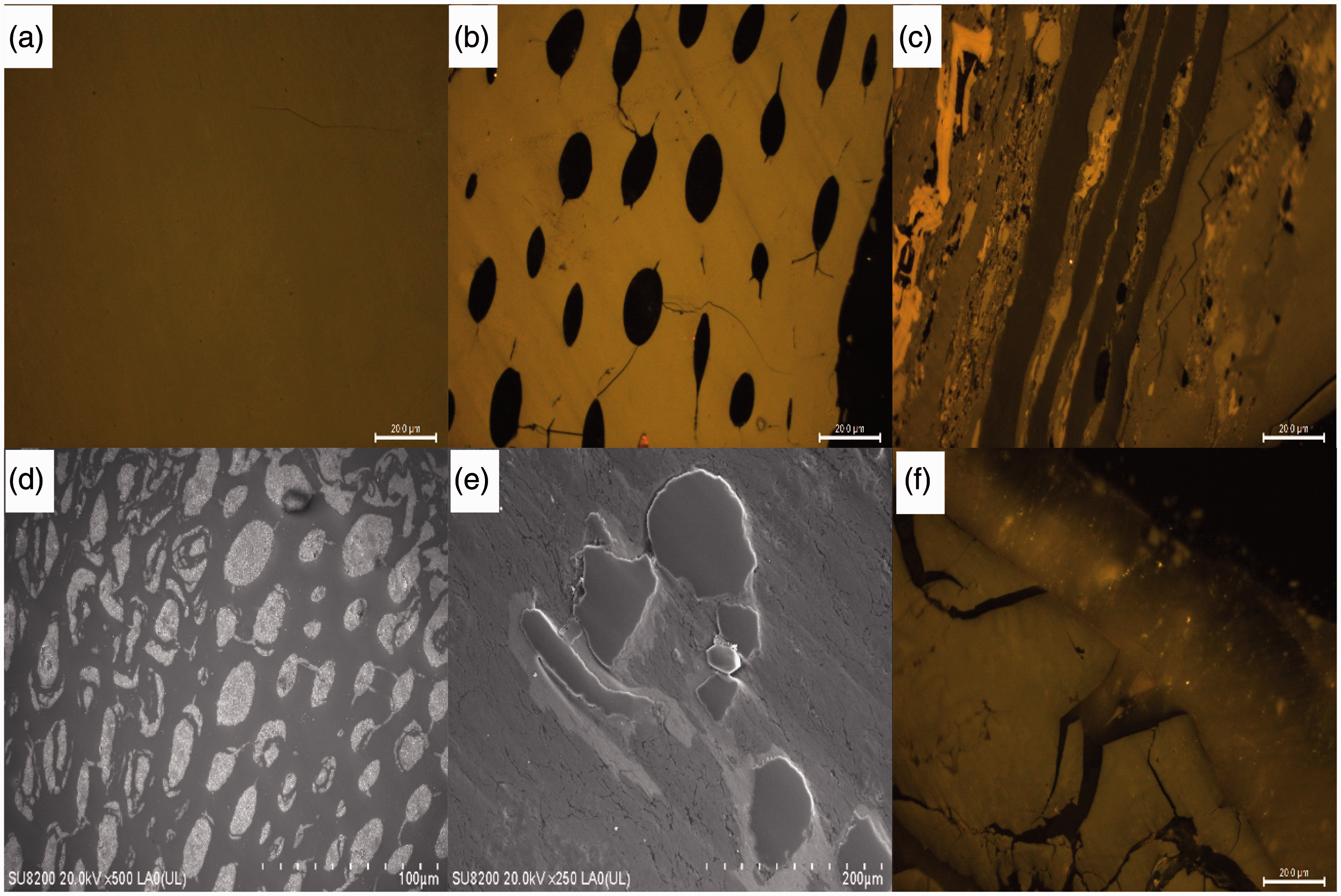
Total extract composition
Compositions (rel.%) of the total extracts from Huoshaopu and Jinjia Mines.
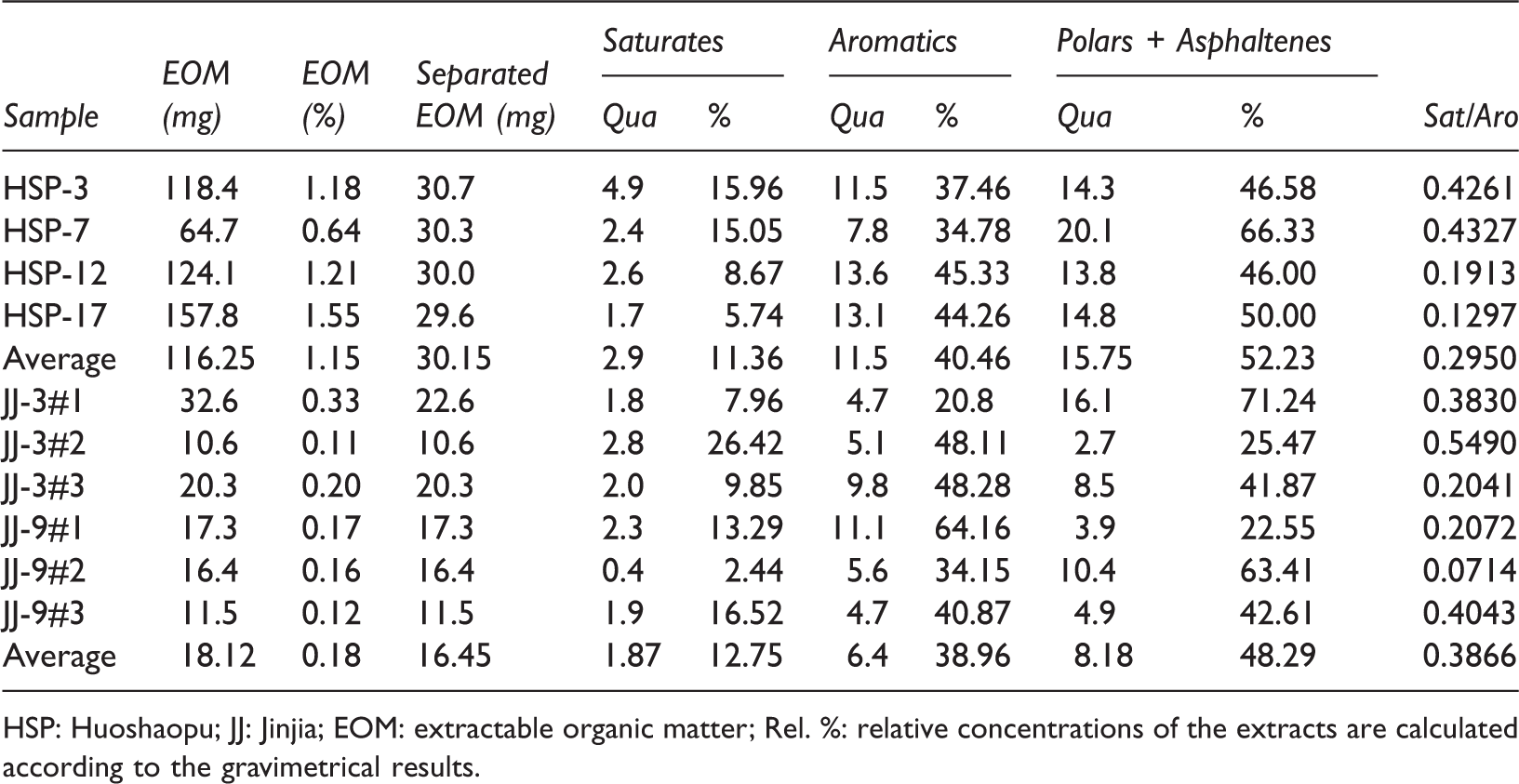
HSP: Huoshaopu; JJ: Jinjia; EOM: extractable organic matter; Rel. %: relative concentrations of the extracts are calculated according to the gravimetrical results.
Saturate fraction compositions
The GC chromatograms (Figure 4) of the saturated fractions show that they are mainly occupied by C11–C30 n-alkanes, showing monomodal shapes with a maximum at C14 or C16 for most coal samples. Conventional biomarkers such as sterane and hopane are absent due to the greater coal maturity. Generally, the distribution characteristics of n-alkanes are dominated by the thermal generation of n-alkanes, i.e., from the dominance of long-chain to short-chain n-alkanes with increased coal maturity (Radke et al., 1980; Vu et al., 2009). Thus, for these coal samples, the thermal degradation of high-molecular-weight hydrocarbons may result from their abundant low-molecular-weight n-alkanes. Consequently, the ratio values of short-chain n-alkanes with long-chain n-alkanes ( GC chromatograms of the saturated hydrocarbon fraction from HSP and JJ coal samples. Parameters of the saturates from HSP and JJ coal samples. HSP: Huoshaopu; JJ: Jinjia; OEP: odd-even preference.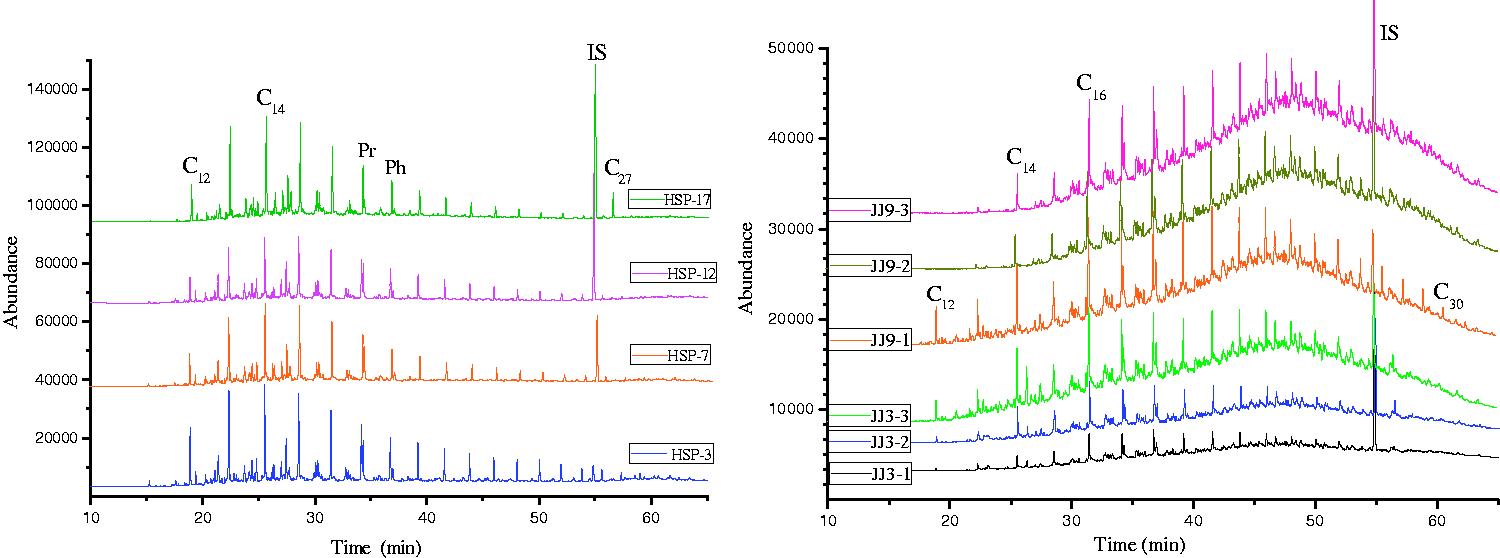
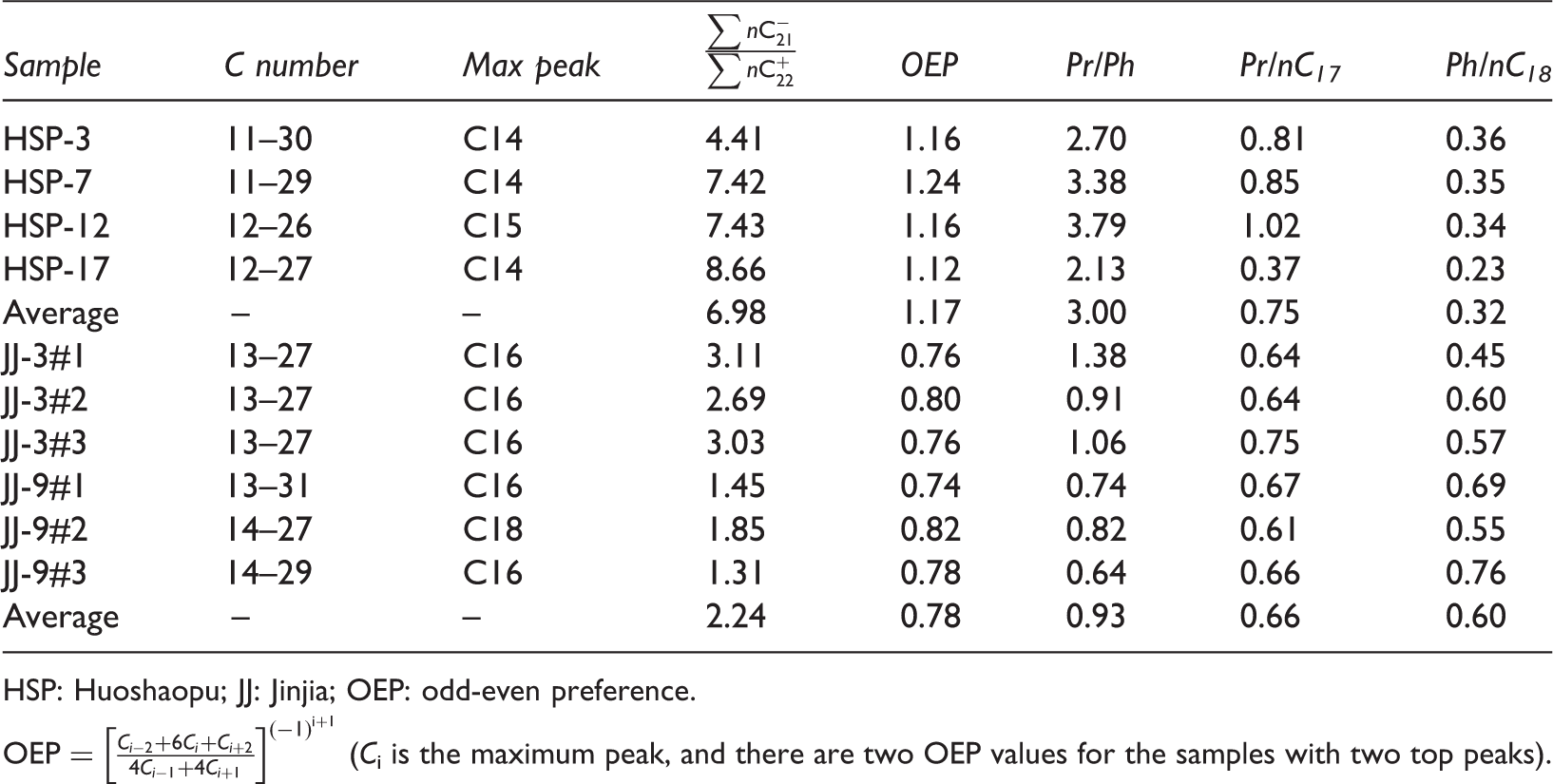
The average values of carbon odd-over-even preference (OEP) are 1.17 and 0.78 for HSP and JJ coal samples, which are approximately equal to 1, indicating the maturity of the organic matter. Ratios of pristane/n-C17 (Pr/nC17) and phytane/n-C18 (Ph/nC18) are commonly used as environmental indicators; most of the coal samples have similar Pr/nC17 and Ph/nC18 ratios. It has been reported that Pr/nC17 and Ph/nC18 decrease and reach a steady value when the coal rank is above 1.0% Ro (Norgate et al., 1999; Shen and Huang, 2007). However, in addition to thermal maturity, the depositional environment can also influence these ratios (Shen and Huang, 2007). The exceptionally higher Pr/nC17 ratios (1.02) of sample HSP-12 may result from strong biodegradation during the peatification process (Dehmer, 1995; Meng et al., 2004; Qin et al., 2010).
The Pr/Ph ratio is an indicator of the redox conditions in depositional environments. For humic coals, it has normally been found to increase initially, then reach a maximum value at approximately 0.8% Ro, and later decrease as coal rank increases (Dou and Gao, 1996; Dzou et al., 1995). In this study, the higher Pr/Ph ratios of HSP coal samples may indicate relatively weak oxic depositional conditions; however, the lower values of JJ coal samples probably reflect relatively anoxic environments during the coal-forming process.
In HSP coal samples, a series of alkyl cyclohexanes (m/z 83) are identified (Figure 5). For humic coals, alkyl-cycloalkanes are reported to occur mainly from conversion of isoparaffin and aromatic hydrocarbons, partly from cyclization of n-alkanes (Zhou, 1992). The similar carbon number distribution of alkyl cyclohexanes with n-alkanes in HSP coal samples may also result from the dealkylation from long alkyl cyclohexanes to short cyclohexanes. Alkyl cyclohexanes are also found in the JJ coal samples, but the contents are too low and can therefore be ignored.
GC/MS TIC and mass chromatograms (m/z 83 key ion) of alkyl-cyclohexanes from HSP coal samples.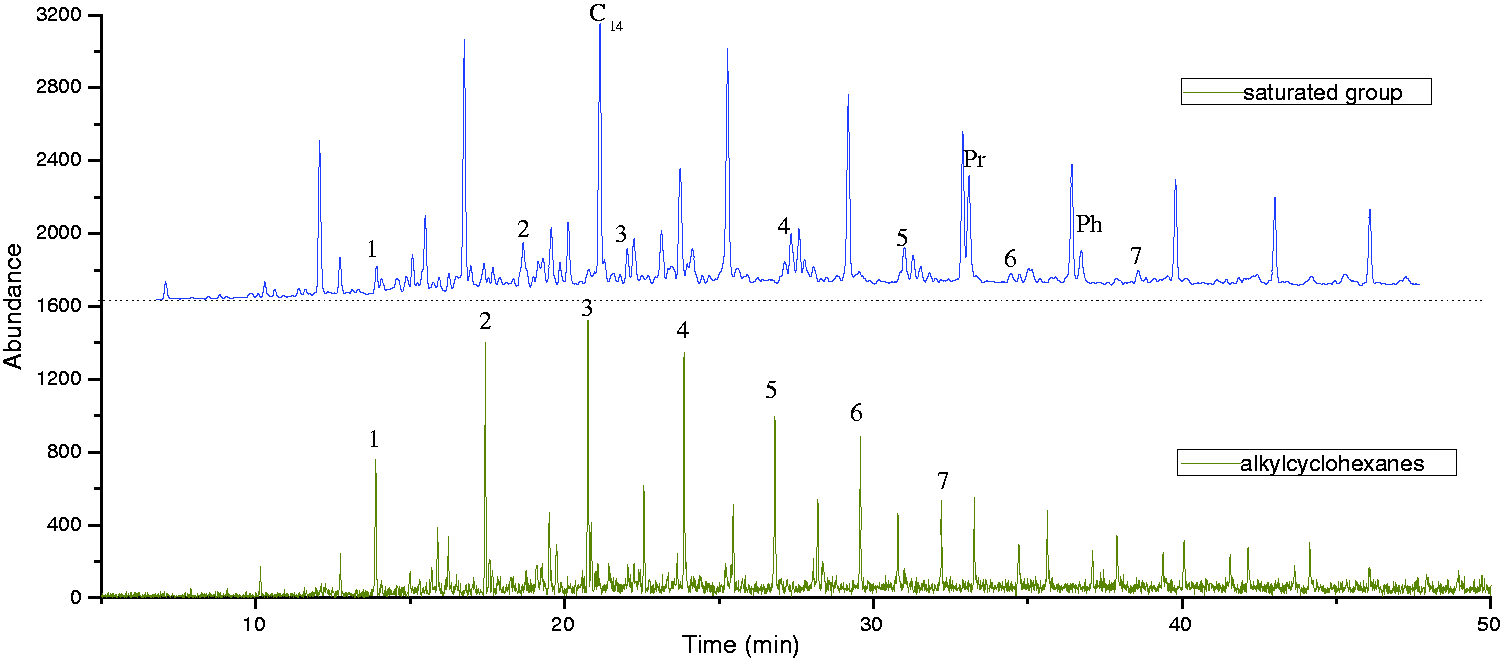
Aromatic fraction compositions
All polycyclic aromatic compounds (PACs) were eluted between naphthalene (No. 1) and 1-methylperylene (No. 113), which are tentatively identified in the total aromatics fractions (Table 5 and Figure 6). These PACs consist of polycyclic aromatic hydrocarbons (PAHs), oxygen-containing aromatic compounds (O-PACs), and a portion of sulfur-containing aromatic compounds (S-PACs). They include unsubstituted parent PACs (naphthalene, biphenyl, fluorene, phenanthrene, pyrene (Py), chrysene (Ch), perylene (Per), dibenzofuran (DBF), dibenzothiophene (DBT), and benznaphthothiophene) along with their C1-C3 alkyl derivatives. Discrepancies in distributions of PACs between HSP and JJ coals may be attributed to their different depositional environments.
Gas chromatogram with enlarged separated parts of the aromatic fraction of representative coal sample HSP-7. Peak numbers refer to compounds listed in Table 5. Relative contents (rel. %) of PACs in HSP and JJ coal samples. HSP: Huoshaopu; JJ: Jinjia; nd: not detected; Rel. %: relative contents are calculated according to the instrumental integral results.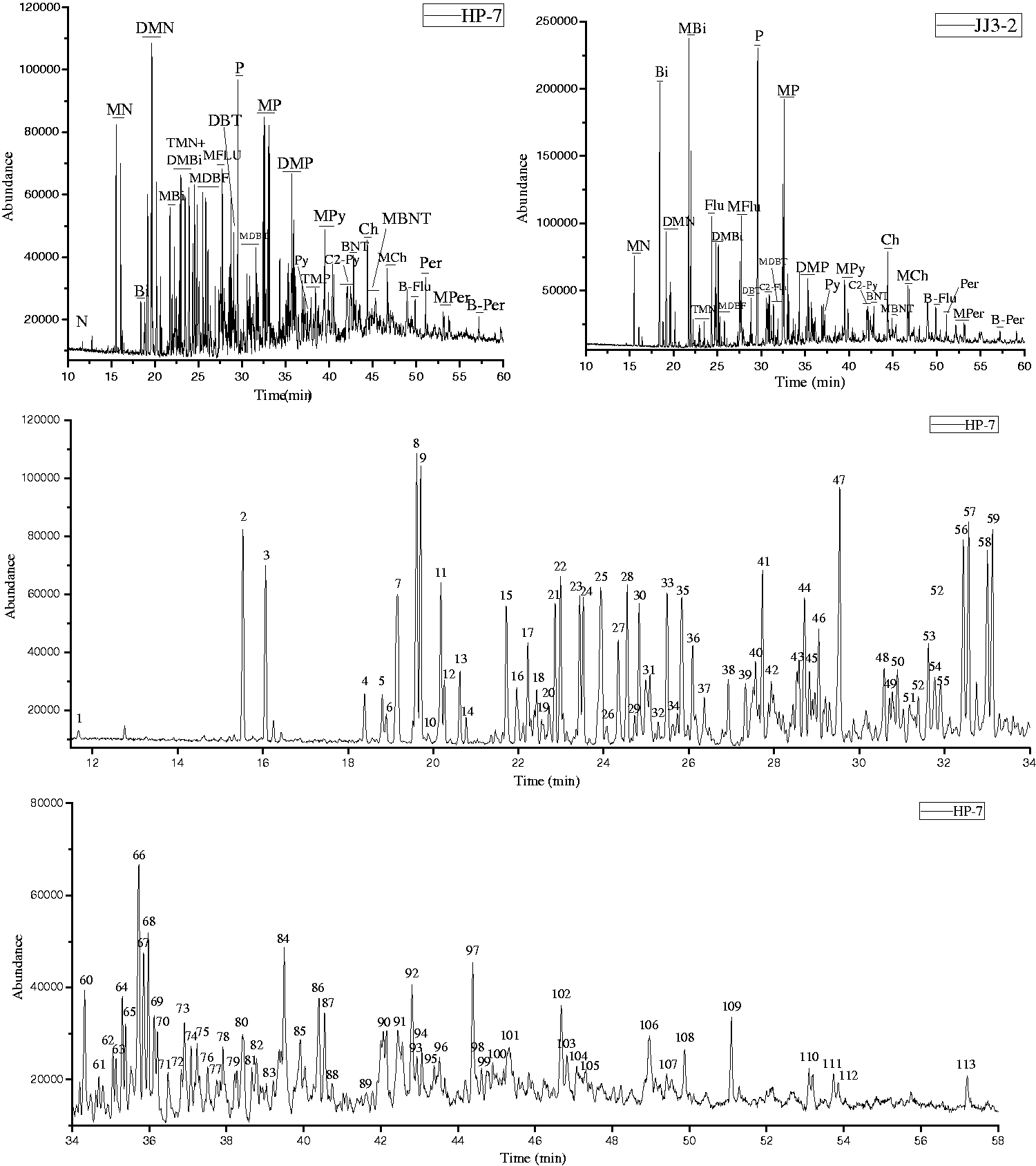

The relative contents of naphthalenes, mainly methyl derivatives, range from 7.3% to 44.33% (Table 5). The average content of naphthalenes of HSP coal samples (29.59%) is roughly three times more than that of JJ coal samples (11.29%). This may be due to their different coal-forming environments. Naphthalenes are generally dominated by 2-methylnaphthalene (2-MN, 1.47%–8.71%) and 2,6 + 2,7-dimethylnaphthalenes (2,6 + 2,7-DMN, 0.31%–5.20%) (Table 5), demonstrating a preponderance of thermodynamically stable 2-substituted isomers. Trimethylnaphthalenes display complex concentration profiles and are generally absent in JJ coal samples.
Relative contents (rel. %) main PACs in HSP and JJ coal samples.
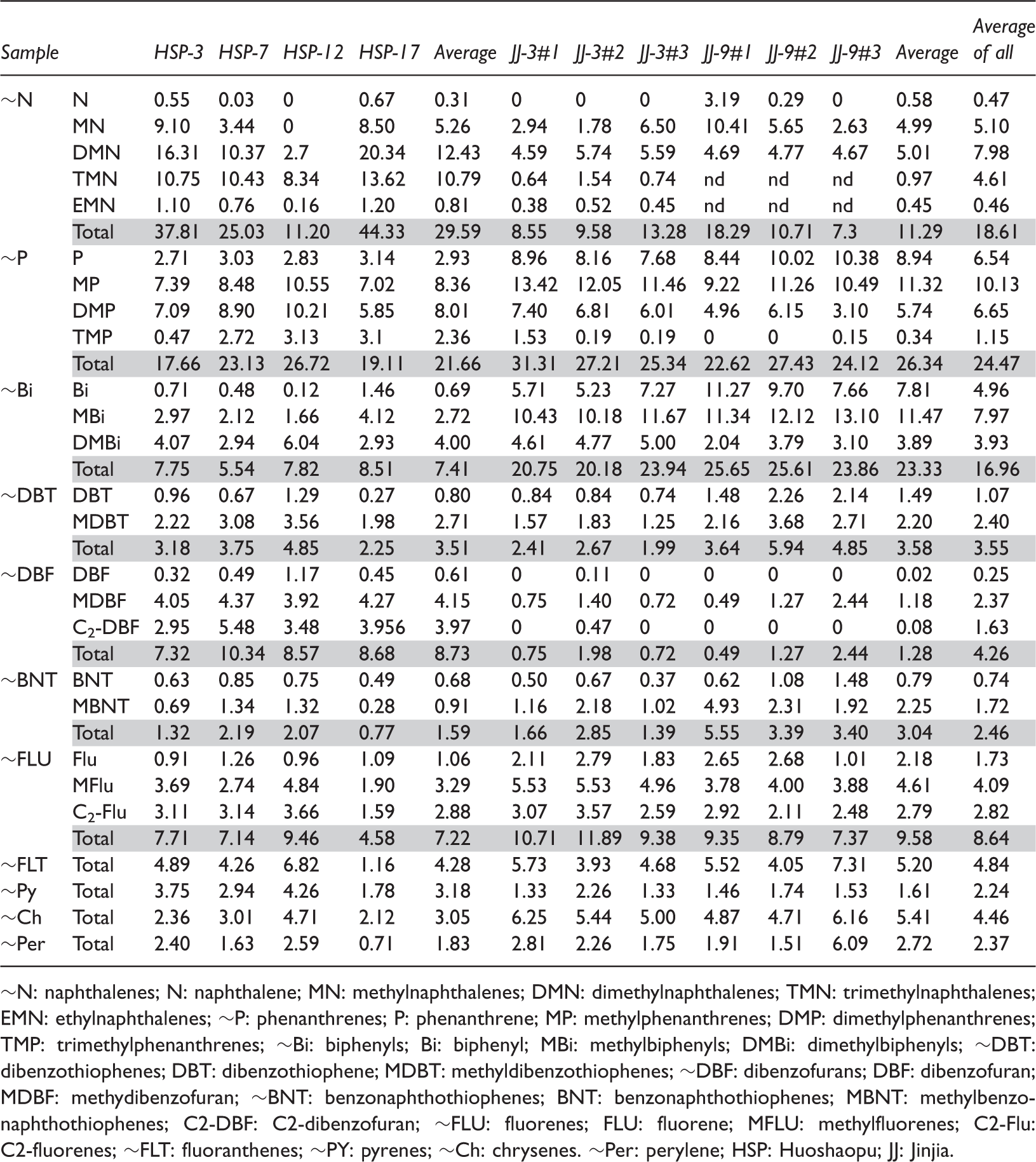
∼N: naphthalenes; N: naphthalene; MN: methylnaphthalenes; DMN: dimethylnaphthalenes; TMN: trimethylnaphthalenes; EMN: ethylnaphthalenes; ∼P: phenanthrenes; P: phenanthrene; MP: methylphenanthrenes; DMP: dimethylphenanthrenes; TMP: trimethylphenanthrenes; ∼Bi: biphenyls; Bi: biphenyl; MBi: methylbiphenyls; DMBi: dimethylbiphenyls; ∼DBT: dibenzothiophenes; DBT: dibenzothiophene; MDBT: methyldibenzothiophenes; ∼DBF: dibenzofurans; DBF: dibenzofuran; MDBF: methydibenzofuran; ∼BNT: benzonaphthothiophenes; BNT: benzonaphthothiophenes; MBNT: methylbenzonaphthothiophenes; C2-DBF: C2-dibenzofuran; ∼FLU: fluorenes; FLU: fluorene; MFLU: methylfluorenes; C2-Flu: C2-fluorenes; ∼FLT: fluoranthenes; ∼PY: pyrenes; ∼Ch: chrysenes. ∼Per: perylene; HSP: Huoshaopu; JJ: Jinjia.
The average concentrations of fluorenes in HSP and JJ coal samples are 7.22% and 9.58%, respectively (Table 6). 1-methylfluorene (1-MFLU) is the most abundant, followed by 2-MFLU (Table 5). They may derive from their precursor such as spores in coals (Sun et al., 2002), or through the cyclization of 2,3-DMBi that has been demonstrated in laboratory heating experiments (Alexander et al., 1988). Some unspecified C2-fluorene isomers are also detected in all samples.
The relative average concentrations of phenanthrenes from HSP and JJ coal samples are 21.66% and 26.34%, respectively. Among their analogs (Table 6), the average content of methylphenanthrenes (MPs, 10.13%) is the highest, followed by dimethylphenanthrenes (DMPs, 6.65%), phenanthrene (PHE, 6.54%), and trimethlyphenanthrenes (1.15%). It has been reported that the parent compound PHE or the less alkyl substituted phenanthrenes could be transformed from more alkyl substituted phenanthrenes through demethylation (Sun et al., 2013; Willsch and Radke, 1995). Thus, the higher relative contents of PHE (8.94%) and MPs (11.31%) in JJ coals than in HSP coals (2.93% and 8.36%) may indicate the deeper thermal evolution of this type of organic matter in JJ coals during the coal-forming process. The relative concentrations of MPs exhibit a distribution of 2-MP (4.29%) > 3-MP (2.84%) > 9-MP (1.57%) > 1-MP (1.44%), which is consistent with their thermodynamic stabilities.
Concentrations of DBTs in HSP and JJ coals vary between 1.99% and 5.94% (Table 6). The concentration profile of methyldibenzothiophenes (MDBTs) does not show the decreasing slope of 4-, 3-, 2-, and 1-MDBT, which is consistent with the decreasing thermodynamic stability of the isomers. It is reasonable to assume that the generation of MDBTs at this stage would still be under both thermodynamic and kinetic control.
Concentrations of DBFs range from 0.72% to 10.34%. Among methyldibenzofurans (MDBFs), the relative abundant concentrations of 2-MDBF and 3-MDBF are due to their thermodynamical stabilities as isomers of the β-type. In addition, the average contents of DBTs in HSP and JJ mines are similar (3.51% and 3.58%). However, the DBF contents are different. The higher value, 8.73%, in HSP coals may indicate an oxidizing coal-forming environment, while the value of 1.28% for JJ coals may reveal more reductive depositional conditions. This conclusion agrees with that inferred from Pr/Ph ratios.
Benzonaphthothiophenes (BNTs, 2.46% on average) are detected in all coal samples. The origin and distribution of BNTs in coals are seldom reported. However, their occurrence, together with DBTs, may support the paralic depositional environment of HSP and JJ coals (Sun et al., 2013). Apart from the PACs mentioned above, other PACs are also identified in samples. They are usually considered as combustion products of coal and include fluoranthenes, Pys, Chs, and Per.
Conclusions
Based on the analysis of coal petrology and chemistry, the total vitrinite and inertinite contents of HSP and JJ coals, whose mean vitrinite random reflectance is 0.97% (Ro), are 80.2% and 87.2%, respectively. These coals generally have low moisture contents, a low-volatile matter yield, and low ash on a dry basis, as well as low total sulfur contents, in which organic sulfur is higher than inorganic sulfur.
The extract yield (1.15%, on average) of HSP coal samples is higher than that (0.18%) of JJ samples with lower hydrogen-rich maceral contents. The low ratios of saturated to aromatic hydrocarbons, from 0.07 to 0.42, confirm the terrestrial plant input into the coals. In the saturated hydrocarbons, the superiority of short-chain n-alkanes mainly results from the thermal maturation process of the coals, whose OEP values are approximately 1. The higher Pr/Ph ratios of HSP coals indicate relatively weak oxic coal-forming conditions, compared to JJ coals, whose lower values reflect a relatively anoxic environment. The significant amount of alkyl cyclohexanes detected in HSP coals might be generated from alkanes and aromatics through thermal conversion.
A large amount of PACs were found in all aromatic fractions. Generally, the thermodynamically stable compounds, such as 2-MN, 2,6 + 2,7-DMNs, 3 and 4-MBi, 4,4′-DMBi, 2-MP, 3-MP, 2-MDBF, and 3-MDBF, were dominant in the homologs. However, the distribution of MDBTs may imply that their evolution is still under both thermodynamic and kinetic control at the present level of coal maturity. The higher contents of DBFs (8.73%) in HSP coals and lower values in JJ coals (1.28%) also confirm their respective oxidation-reduction coal-forming conditions, which is consistent with the conclusion inferred from Pr/Ph ratios. The occurrence of DBTs and BNTs both support a paralic depositional environment for the Late Permian coals from the HSP and JJ mines, Liupanshui Coalfield, China.
Footnotes
Acknowledgments
Special thanks are given to the Editor and reviewers for their careful reviews.
Declaration of conflicting interests
The author(s) declared no potential conflicts of interest with respect to the research, authorship, and/or publication of this article.
Funding
The author(s) disclosed receipt of the following financial support for the research, authorship, and/or publication of this article: We gratefully acknowledge financial support from the National Natural Science Foundation of China (No. 41472133), the Science Foundation of Hebei (No. D2014402046), and the Program for One Hundred Innovative Talents in Universities of the Hebei Province (No. BR2-204).