




Abstract
The accumulation of coal and the formation of oil shale occur in basin conditions that are unique for each of these energy resources. In particularly special conditions, they can coexist in the same basin. Many studies have been carried out on theories and models explaining coal accumulation, as well as on the metallogenic model of oil shale. This paper attempts to address the key theoretical issue of the coexistence of coal and oil shale. We study different types of basins in order to investigate the geotectonic basis of such coexistence. We conclude that the basins’ tectonic activity controls the overall characteristics of basin filling, and thus represents the external conditions for the coexistence of coal and oil shale. Episodic tectonic activity and the tectonic evolution of the basins leads to changes of the water system and material supply, resulting in various cyclic patterns of coal and oil shale formations. Past climatic conditions determine whether there were suitable materials to form coal and oil shale. We identified six main types of coexisting coal and oil shale. Our research shows that all six types can occur in the system tract of water expansion. Periodic lake flooding is conducive for the development of coal and oil shale in multiple thin layers. This paper demonstrates that there are some similarities and differences between the conditions suitable for the formation of coal and oil shale. We establish a model for the coexistence of coal and oil shale through a comprehensive analysis of basin background, basin spatial framework, stratigraphic framework, dynamic field of deposition and its evolution in the coexisting space, and the controlling mechanism of the formation, together with the coexistence process, distribution and occurrence.
Introduction
The geological exploration of energy resources sometimes finds symbiotic coexistence of coal and oil shale. The accumulation of coal and the formation of oil shale require their own unique basin environments and formation conditions. The sedimentary environments and water properties are different for coal and oil shale. Therefore, if they are found within the same basin, specific background conditions and control mechanisms must have led to their coexistence.
The paragenetic combination of coal and oil shale develops in many basins or strata in the world, such as the Huadian, Huangxian, Fushun and Songliao basins in China (Meng et al., 2012; Li et al., 2013; Sun et al., 2013). Other examples are the Delbi–Moye basin in Ethiopia (Sun et al., 1998, 2001; Wang et al., 2011), the Mae Sot basin in Thailand and the Lower Carboniferous basin of northern Canada (Cameron et al., 1994).
In the past, much attention has been paid to the hydrocarbon generation potential of oil shale (Meng et al., 2012; Sun et al., 1998, 2001, 2013; Wang et al., 2011), but little note has been made of the symbiotic sedimentation model of coal and oil shale in coal accumulating basin fillings. Exceptions were some single mineral deposit models, such as the deep lake shale depositional model of inland lake basin depressions (Sun et al., 2013), the coastal plain transgression or regression model of coal formation (Diessel, 1992a; Diessel et al., 2000), and the inland lake delta coal-forming pattern model (Wang et al., 2012). The metallogenic model for accumulation of coal or oil shale has received special attention, with some theoretical and modeling advances put forward. The key purpose of this paper is to theoretically solve the problem of symbiosis of coal and oil shale, thus not only clarifying the formation and accumulation of peat, but also explaining the metallogenic mechanism of shale deposits in specific basins. It is expected that this will reveal the key geological conditions for different forms of symbiotic development of coal and oil shale, as well as the key mechanisms of the depositional model.
The formation process of coal is very complex. Coal seams form in situ and/or in stable sedimentary environments. Peat bog generally forms in the transitional environment between water and land. The coal-forming materials are terrigenous higher plants. Oil shale formation needs an aquatic environment at a certain depth. Its material may come from aquatic plants, plankton and detrital terrigenous higher plants. However, the shale mainly results from the preservation, aggregation and evolution of lower plankton in static water environments. The special sedimentary sequence of coal and oil shale symbiosis formed in the coal measures is a result of the combination and coordination of the sedimentary environment, material supply, as well as climatic and biological changes. Coal and oil shale differ in key conditions, such as the formation environment and the accumulation mechanism. The reasons for their symbiotic accumulation are complex and cannot be explained by the mono-metallogenic model.
In recent years, we have studied the symbiotic metallogenic features and mechanism of coal and oil shale formation in typical coal accumulating basins in China. We found that there are several main scientific questions, as listed below, related to the symbiotic mechanism of the coal and oil shale depositional sequences, and that the metallogenic regularity of these two important organic minerals needs to be solved.
How many types of coal and oil shale combinations are encountered in the coal-bearing depositional sequences? What is the sedimentary origin and mechanism of each combination? What are the key roles of the different combinations in the division of basin filling sequences? Are coal and oil shale deposits in some basins (such as Bohai Bay basin of Paleogene in China) influenced by transgression? Did seawater intrusion play a key role in the formation of oil shale? How important is the influence of transgressive deposition to the symbiotic formation of coal and oil shale? In a specific sedimentary basin, is there any interaction between coal accumulation with higher plants as the main material and the accumulation of oil shale with lower organisms as the main material? If so, what is the mechanism of this interaction? What is the interdependence mechanism and key geological conditions of coal and oil shale in different symbiotic forms? What are the key symbiotic metallogenic models of coal and oil shale in basins of different tectonic background?
Basic conditions for the symbiotic formation of coal and oil shale
Environmental conditions
Oil shale research has a long history; the most representative study of this type is that of the oil shale of Wilkins Peak in the Green River basin. Although a variety of models have been successively put forward, such as the stratified lake (Bradley and Eugster, 1969), dry salt lake (Eugster and Surdam, 1973) and biochemically stratified lake (Desborough, 1978) models, the origin of the oil shale in this basin remains controversial.
Chinese scholars have also proposed several oil shale metallogenic models, such as models featuring freshwater lake, brackish water lake and swamp-bearing lake basins (Liu et al., 2009a). Shale formation, global sea level rise and global anoxic events were synchronous, thus providing good conditions for the accumulation of organic carbon in the oil shale (Liu et al., 1993). Furthermore, water density stratification occurred as a result of lake transgression, so that oil shale formed in lakes featuring anoxic environments (Xu et al., 2006). Differences in the sedimentary environments can lead to differences in oil shale quality. In general, the quality of oil shale formed in deeper waters is better (Liu et al., 2008). If frequent gravity flow and lake subaqueous fans occur in deeper waters, the oil shale quality becomes poor (Du et al., 2008; Liu et al., 2012). The macroscopic characteristics, organic components and spatial–temporal distribution of oil shale were controlled by several factors, such as the paleoclimate, paleogeography, base level change and tectonic and volcanic activity. Terrestrial plants and benthos are less abundant in semi-deep and deep lake environments. If the oil shale contains tuffaceous material, this may indicate that volcanic nutrients helped in the reproduction of algae and other plankton. Surface water has a huge capacity for producing organic matter. In contrast, bottom water is occluded, stagnant, salty and oxygen deficient, which results in the formation of good-quality thick oil shale in the sedimentary environment of layered water with suspension accretion (Liu and Liu, 2005; Yan et al., 2006).
The formation of coal and the development of peat bogs are closely related. Many kinds of depositional environments may develop peat bogs. These include alluvial-rivers, lakes, fan/braided streams, meandering rivers and deltas and barrier coast systems. The places of development, scale, episodes and distribution of peat bog in different sedimentary systems have their own characteristics (Chu et al., 2015; Ferm, 1976; Horne et al., 1978; Li et al., 2001). Coal accumulation needs ample material supply, accumulation space and tectonic subsidence or water level rise, all conducive to creating a reduction environment, for peat preservation. Several theories have been proposed for the formation of coal. Related theories are based on coal formations in continental environments, through transgressive processes (Diessel, 1992b), coal forming in transgressive events (Li et al., 2001, 2003), the episodic coal accumulation (Shao et al., 1992), allochthonous formation related to storms (Hu et al., 1997) and during marine lag periods (Shao et al., 2008).
In general, the formation of coal requires a climate with an appropriate temperature and humidity, flourishing plants, proper paleogeography for peat bog development and moderate tectonic conditions (Li et al., 2009; Zhao et al., 2014). The main control factors for the formation of oil shale are climatic and tectonic conditions (Liu and Liu, 2005). Oil shale can form under warm, humid and drought conditions. However, oil shale formation accompanied by coal requires mostly humid conditions (Yan et al., 2006).
Oil shale is concomitant with coal seams in flow closed basins forms in fresh water, nearshore in low-oxidation conditions and/or in lake swamps characterized by weak reductive conditions (Wang et al., 2006). Transgression has an important effect on oil shale development in open stream basins. For example, the content of fine dust and rock in Eocene coal formed in the Huangxian basin of Shandong province, which is as high as 25%, is likely to be affected by sea water (Wang et al., 2007). Ostracod fossils of fresh water and brackish water found in the oil shale (Xu et al., 2006), further confirm the existence of transgression in the basin, which is a typical example of coal and oil shale symbiotic metallogeny in open flow and faulted basins.
Materials in coal and oil shale symbiotic metallogeny
The original material in the kerogen of the oil shale is plankton growing in lakes or in shallow seas (e.g., gulf areas), consisting mainly of zooxanthellae algae and cyanobacteria. With seasonal changes, autogenous algae periodically booms in lakes and exhibits extremely high productivity. In the same water bodies, different algae, and even different taxa, can thrive (Kelts, 1988). In addition, pieces of higher plants growing at the edge of marshes, were taken by the wind or water flow and deposited into the water, thus supplying material for the formation of petrologen (kerogen) (Hou, 1984). Sea water intrusion, if present, can lead to the formation of stable stratification of water with different salinity. On the other hand, it can lead to the mass death of fresh water organisms in lakes and salt water organisms in the sea. At this point, the brackish water creatures begin to gradually flourish, providing abundant organic matter for the development of oil shale.
The raw material for coal formation consists of higher stem, leaf and root parts of the higher woody plants, but can also contain a small amount of lower plants. Coal was formed by the process of coalification (Li et al., 2009). Depending on the plants participating in coal formation, coal swamps can be divided into four types, as follows: (1) forest swamp; (2) open reed swamp; (3) swamp related to open waters of aquatic plants (partially submerged) and (4) moss marsh. In general, large amounts of plant material come from forest swamps, especially those in tropical or subtropical forest swamp areas (Simão and Kalkreuth, 2015; Yen and Chilingarian, 1974).
If the coal and oil shale form symbiotically in a system, the basin environment and the basic conditions of mineralization are unified. Meanwhile, alternating changes in the water system can lead to significant development of the ore-forming materials. The oil shale layer of the Eocene Jijiatun formation in the Fushun coalfield, Liaoning province of China, was formed in a semi-deep lake environment, overlying the coal seam of the Guchengzi group formation originating in a fan delta swamp (Xu et al., 2012). A number of angiosperm and cypress plant fossils were found in the oil shale of the lower Eocene Dalian River formation in the Yilan basin of Heilongjiang Province, China (Liu et al., 2012). In the paragenetic combination of coal and oil shale from the Eocene Lijiawa formation in the Huangxian basin, Shandong, the content of higher plant components in the oil shale near the coal seams is relatively high, while the content of lower plants (algae) in the coal seams near the oil shale is high and characterized by intense hydrogenation, which reflects the transformation of the ore-forming materials of the coal and oil shale in the transitional state (Wang et al., 2007).
Paleoclimatic conditions for coal and oil shale development
Climate is an important restriction factor for coal and oil shale mineralization. Coal and oil shale formed mainly in climate zones, such as the humid or partially humid subtropical conditions of the temperate and humid coastal areas characteristic of the Eocene or Eocene-Oligocene in China (González et al., 2014; He and Tao, 1994; Shi et al., 2008; Wang et al., 2005; Zhao et al., 1995, 2014). For example, in the Fushun basin of China, the oil shale of the Jijuntun Formation overlies the coal seam of the Gucengzi formation. The climate during the depositional period of the Gucengzi Formation was warm and humid, with lush plants that led to the accumulation of a large amount of peat and the eventual formation of a thick coal seam. The climate during the sedimentary period of the Jijuntun Formation was dry, characterized by river degradation and the gradual reduction of detrital material. At this time, the lake basin was in a “hungry” state, during which waters deepened, plankton massively reproduced, and a stable stratification formed in the tranquil lake, which was favorable for the formation of oil shale (Xu et al., 2012). Therefore, climate change controlled the coexistence of coal and oil shale.
The growth of organic plant material leading to coal formation is closely related to the atmospheric conditions and soil temperature. With the exception of arid deserts, plant growth increases from high latitudes to low latitudes. For example, the annual output of the forest litter layer in subtropical southern China is up to 24–35 tons per l0,000 m2, while it is only a few to more than 10 tons in the cold zone of Xiaoxinganling in northern China (Li et al., 2009). Thus, warm and humid tropical and subtropical climates provide stable, rich organic matter that is more conducive to the formation of coal than cold climates.
It is to be noted that oil shale may develop in arid or humid climate zones, whereas coal forms mostly in humid climate zones. Therefore, the symbiotic combination of both usually appears in humid climate zones.
Tectonic conditions for the symbiotic development of coal and oil shale
A comprehensive survey of the symbiotic formations of coal and oil shale worldwide shows that they mainly exist in down-faulted lake basins of the Mesozoic and Cenozoic. The development process of ancient lake basins is controlled by several factors, such as tectonic subsidence, sedimentation and climate conditions, which obviously led to changes in lake levels. Tectonic activity is the key factor for sediment filling of the continental down-faulted basins. The formation and evolution of sediments in the basins are mainly controlled by tectonic events or episodic tectonic cycles. The faulting activities led to the rise and fall of the basin basements, thus controlling the accumulation of basin sediments (Deng et al., 2008). The depositional cycle of coal and oil shale represents an indirect response to the tectonic cycle (or volatility) in the basins. The varying levels of basin tectonic activity control changes of the water system, leading to changes in the basin material base and resulting in a multi-level filling of the basins with sediments (Jiao et al., 1996). In basins with coal and oil shale symbiotic formations, fault activities significantly controlled the development, distribution and thickness of coal and oil shale (Liu et al., 2008).
The tectonic background (or regional tectonics) of the basins controls the overall characteristics of the basin filling, providing the external conditions leading to symbiosis of coal and oil shale. The episodic tectonic activity and evolution of the basin’s tectonic background govern the basin water system and changes in the basin infilling material base, thus leading to the cyclic development of a metallogenic environment conducive to coal and shale paragenetic association. By comparison, climate change is decisive in whether or not there exists the initial metallogenic material necessary for the formation of coal and oil shale. Therefore, the formation mechanism of coexisting coal and oil shale is more complicated and variable than that associated with a single energy mineral resource, and the mineralization sensitivity correspondingly increases for the symbiotic formation.
The tectonic activity in downwarped basins is moderate compared with faulted depressions, so that symbiotic combinations of coal and oil shale can hardly develop in geological profiles. Therefore, coal and oil shale in direct contact are rarely seen stratigraphically; instead, they change into each other laterally in terms of “facies change.”
In summary, the development of both coal and oil shale requires relatively stable tectonics, a warm and humid climate, less terrigenous detrital influx, suitable water depth and abundant organic matter. The differences are that coal develops in shallow swamp waters with little change of water depth, while oil shale may develop in swamps, semi-deep lakes, shallow lakes and deep lakes with significant variations of water depth. Different thickness and quality characterize oil shale formed in different water bodies. It is important to note that the aquatic environment for coal and oil shale formation can be transformed under certain geological conditions.
Types of coexisting combinations of coal and oil shale and related sedimentary mechanism
Types of coexisting combinations
Considering the vertical and lateral relationships between coal and oil shale and their distribution characteristics in the basins, we classify their symbiotic combinations into six different types (stratigraphically, from top downward) (Figure 1): (1) coal seam/oil shale (C-OS), such as the formations in the Huangxian basin in Shandong and the Jinbaotun basin in inner Mongolia; (2) oil shale/coal seam (OS-C), such as that in the Fushun basin in Liaoning and the Yilan basin in Heilongjiang; (3) oil shale/coal seam/oil shale (OS-C-OS), such as the formations in the Yilan basin in Heilongjiang and the Danzhou basin of Hainan; (4) coal seam/oil shale/coal seam (C-OS-C), encountered in the same basins as (3); (5) oil shale/other rocks/coal (OS-R-C), such as those in the Yilan basin in Heilongjiang and the Ordos basin in Shanxi and (6) coal/oil shale in terms of lateral facies change (C=OS), such as the formations in the Permo-carboniferous coal-bearing measures seen mostly in large depression basins in northern China.
Six kinds of typical symbiotic combinations of coal and oil shale. (a) Coal seam/oil shale (C-OS), (b) oil shale/coal seam (OS-C), (c) oil shale/coal seam/oil shale (OS-C-OS), (d) coal seam/oil shale/coal seam (C-OS-C), (e) oil shale/other rocks/coal (OS-R-C) and (f) coal/oil shale in terms of lateral facies change (C-OS).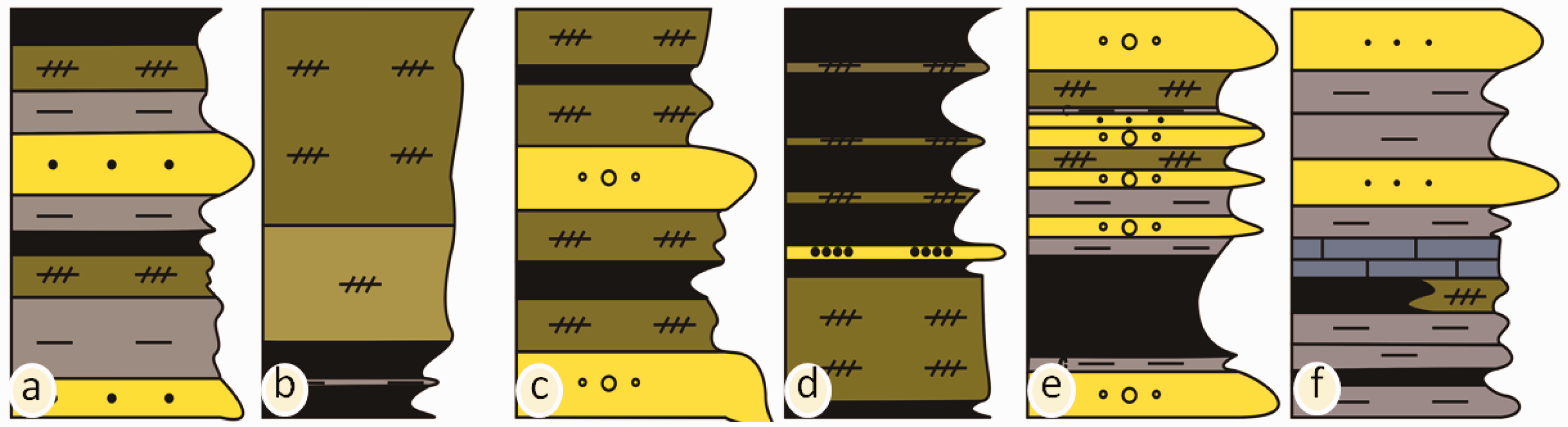
Sedimentary characteristics and evolving mechanisms of the symbiotic combination of coal and oil shale
Combination coal seam/oil shale (C-OS)
In this kind of combination oil shale is on top of the coal seam. It generally develops in the early stages of basin evolution. During this period of the coal seam formation, the tectonic environment is relatively stable, and the water in the basin is relatively shallow. This is followed by a sudden lake flooding, which leads to a rapid deepening of theater and termination of coal accumulation. With the deepening of lake water of the amount of detrital material supply gradually decreases and a temperature water stratification occurs, leading to conditions where oil shale begins to form. As an example, the thick layer of oil shale in the Jijuntun Formation covers the thick coal seam of the Paleogene Guchengzi Formation in the Fushun basin in Liaoning. During the rapid flooding period of the lake, the supply of organic matter is insufficient, so the quality of the formed oil shale is poor. Oil shale with high organic content deposits during periods of time that have stable water (Figure 2).
Vertical depositional sequence of coal and shale symbiosis in typical basins of China.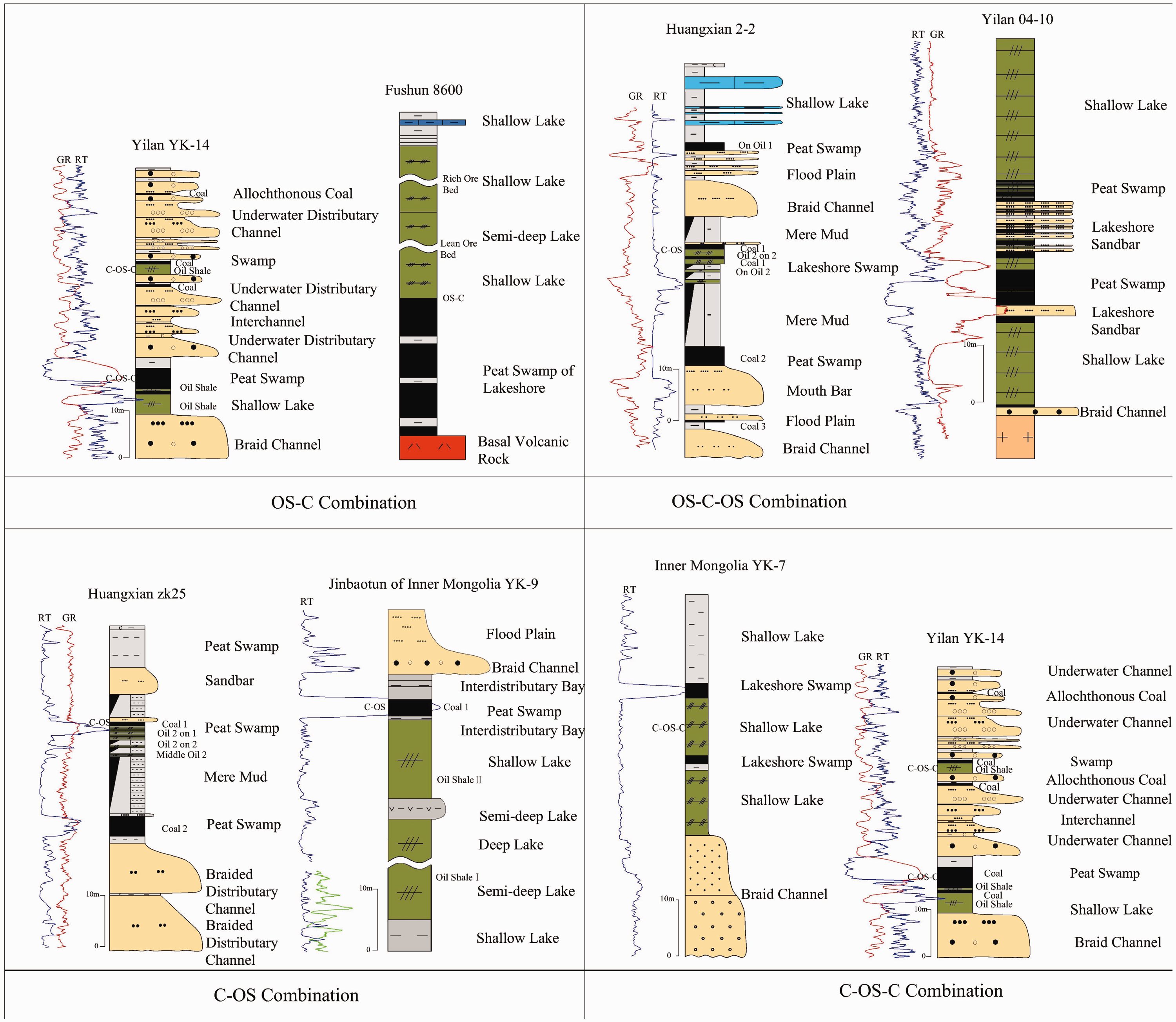
Combination oil shale/coal seam (OS-C)
This kind of combination usually develops in the later stages of basin development, with the oil shale underlying the coal seam. During the depositional period of oil shale, the lake water is deep and characterized by stable stratification. At the same time, there is a rich supply of organic matter, leading to the formation of good-quality oil shale with significant thickness. At this stage of the basins evolution, sediments keep filling the lake, eventually leading to its shrinkage. During a certain period, a fast uplift of the basin occurs, causing rapid shoaling of the lake water, quickly changing the environments of moderately deep and shallow lakes into swamps where peat accumulates and eventually coal also forms. At the late stages of basin development, the tectonic activity is relatively low, so the coal seam thickness is generally larger, such as that in the Jinbaotun basin of Inner Mongolia, where a thick and stable coal seam deposited over a thick layer of oil shale (Figure 2).
Combinations oil shale/coal seam/oil shale (OS-C-OS) and coal seam/oil shale/coal seam (C-OS-C)
These two sandwich-like patterns often accompany each other. These interesting types of deposition generally develop in the early and middle stages of basin evolution. During that time, the basin exhibits relatively active tectonics characterized by fast alternation of subsidence and uplift with modest amplitudes, resulting in the frequent alternation of sedimentary environments with significant differences. If the basin is characterized by low tectonic activity and structural stability, the conditions are suitable for the growth of peat swamps and the formation of coal. Rapid tectonic subsidence with small amplitudes causes sudden flooding of lake water, leading to quick submersion of the peat bog. After this, the basin enters into another tectonically stable period, with water of moderate depth and stable stratification, where algae can thrive in large quantities and good-quality oil shale develops. Soon after, the lake becomes shallow and turns into a peat swamp environment that is characterized by the formation of coal seams partially due to the periodic tectonic uplift. Such processes happened repeatedly, leading to the formation of the coal/oil shale/coal combination. The other symbiotic combination (coal/oil shale/coal shale) can be formed through almost the same processes. These two types of symbiotic formation can occur repeatedly, over and over again, causing coal seams to interbed with oil shale. Generally, the thicknesses of the coal seam and the oil shale are not large, except for some rather thick layers, related to the long-term of mineralization. These two combinations can be seen in the Yilan basin of Heilongjiang, the Danzhou basin of Hainan, the Huangxin basin of Shandong, the Maoming basin of Guangdong, as well as in other regions (Figure 2).
Combination oil shale/other rocks/coal (OS-R-C)
In this kind of combination, oil shale develops in coal-bearing measures, but other strata exists between the coal seams and oil shales, suggesting that there had been enough time and space for the transition to the sedimentary environment. This type of paragenetic association can be seen in the Huangxian basin in Shandong, Yilan basin in Heilongjiang, Minhe basin in Gansu and in the north central part of the Ordos basin.
Combination coal/oil shale through lateral facies change (C=OS)
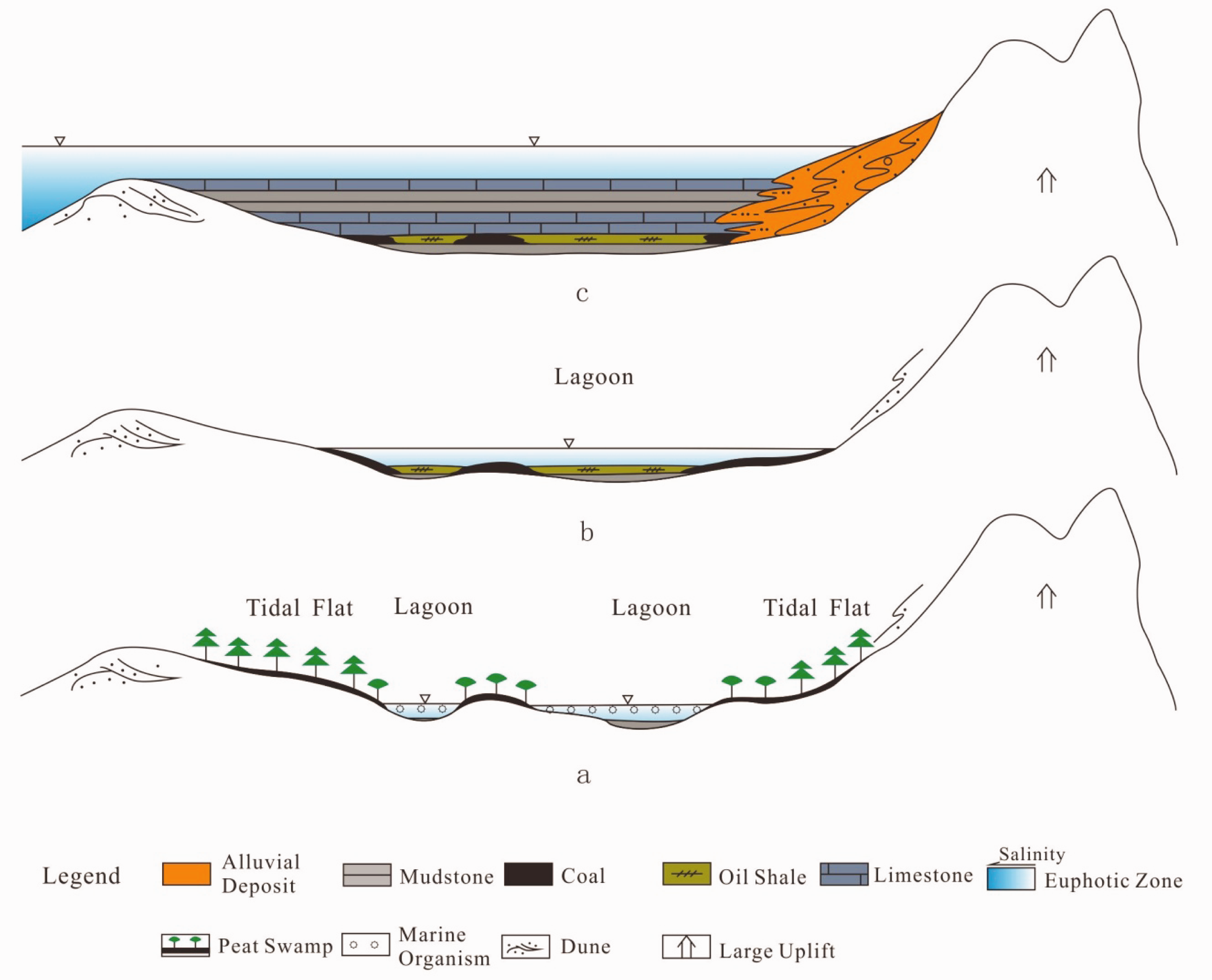
In this combination, the coal seam and oil shale at the same stratigraphic level alternate with each other through a lateral facies change, which usually occurs in a downwarped depression basin. In this case, the bottom of the basin is characterized by wavy concave and convex surfaces due to uneven subsidence. In the convex areas, at first marshes f with lush vegetation develop, while lower organisms breed in the concave areas filled with water. Therefore, the two different microenvironment units for peat and oil shale accumulation coexist, eventually leading to the formation of this type of combination. For example, coal seam #15 of the Taiyuan Formation in the northwestern part of the Yanzhou coal field in Shandong, changes locally into oil shale (Figures 3 and 4).
Coal seam #15 transforms into oil shale in the northwestern part of the Yanzhou coal field. Schematic diagram of facies change of coal and oil shale in a large depression basin.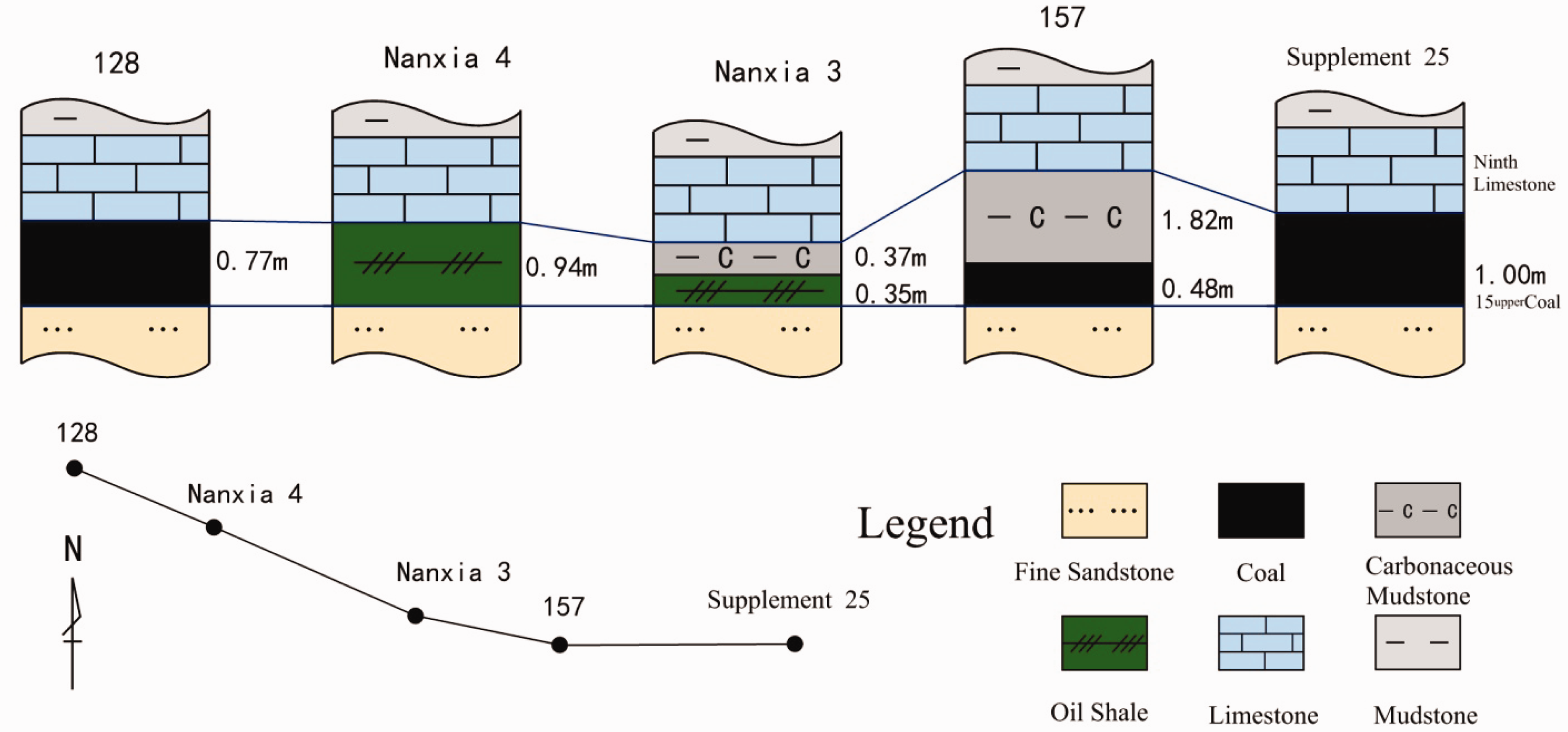
Test results from analysis of the Taiyuan Formation in the Yanzhou coal field, where #15 coal changed into oil shale through facies change.
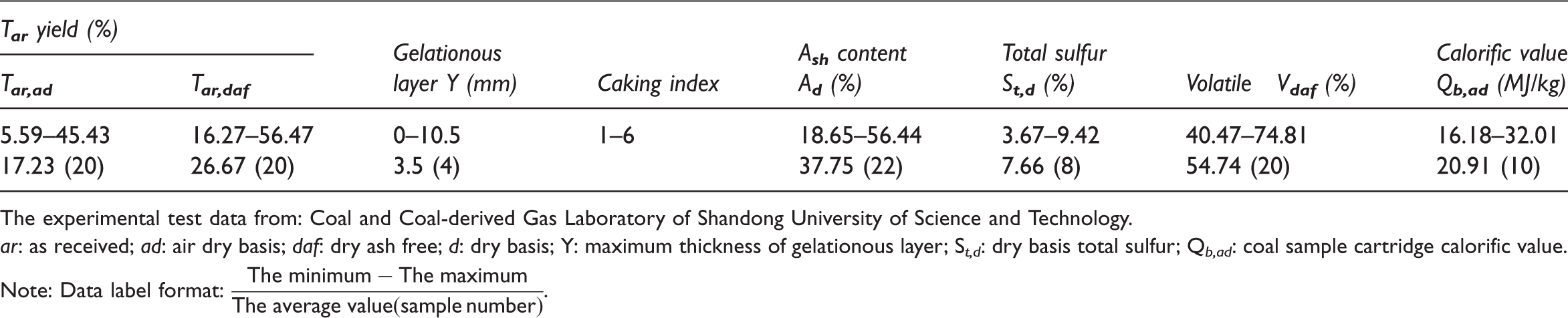
The experimental test data from: Coal and Coal-derived Gas Laboratory of Shandong University of Science and Technology.
ar: as received; ad: air dry basis; daf: dry ash free; d: dry basis; Y: maximum thickness of gelationous layer; S t,d : dry basis total sulfur; Q b,ad : coal sample cartridge calorific value.
Note: Data label format:
Characters of symbiotic combinations of coal and oil shale within the sequence stratigraphic framework
Characteristics of coal and oil shale in different system tracts
In the framework of sequence stratigraphy, different depositional system tracts are characterized by distinct sedimentary environments and mechanisms, as well as different rates of base level and accommodation changes. This inevitably leads to differences in the paragenetic association of coal and oil shale.
Lowstand systems tract
During the early stages of the basin development, its basement is uneven, and in some low-lying and relatively quiet deep waters, the thick oil shale can develop in the basin, with limited distribution. Therefore, coal seams might develop in appropriate swamp environments. At the same time, the rate of change in water depth and the A/S ratio of the basin are low, and the oil shale and coal environments cannot easily shift rapidly. Therefore, independent layers of oil shale layer and coal seams formed (Figure 5).
Paragenetic association of coal and oil shale within different systems tracts. LST: lowstand systems tract; EST: lake expanding systems tract; EHST: early highstand systems tract; LHST: later highstand systems tract.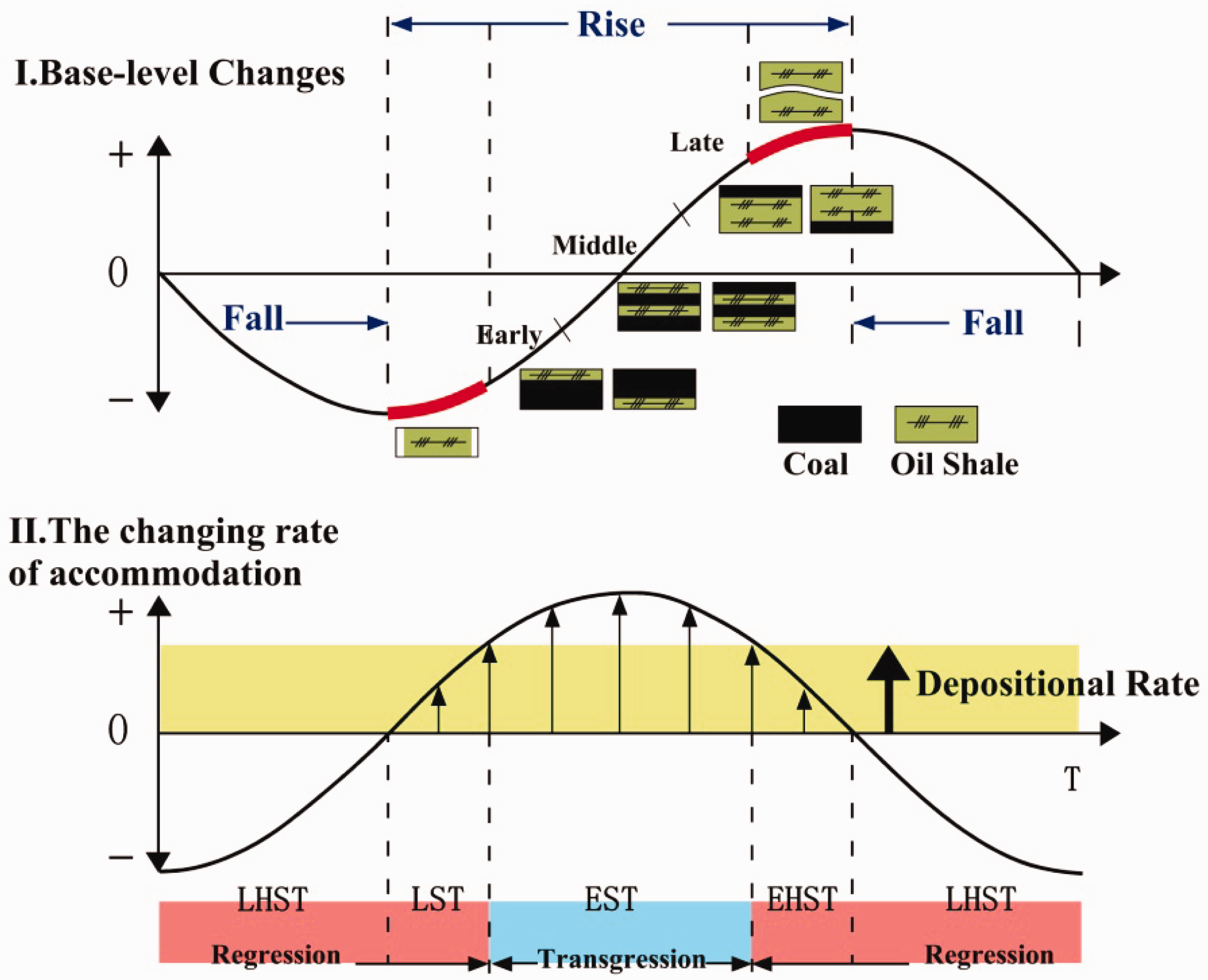
Lake expanding systems tract
Periodic flooding occurs when the expansion and retreat of the lake happens more frequently. Most types of coal and oil shale associations can develop in this system tract (Figure 5). During lake flooding periods, the lake level rises fast and the A/S ratio increases rapidly. This is associated with restricted terrigenous clastic influx at the lakeside area, and the lake is of moderate depth and with stable stratification. Seasonal algae proliferation occurs due to stronger photosynthesis, which provides rich organic matter that is conducive to the development of oil shale. At the end of the flooding, the lake level falls rapidly and the A/S ratio decreases quickly, changing the sedimentary environment into swamp conditions with coal seams overlying the oil shale. If the peat bog is flooded repeatedly, the coal seam covers the oil shale continuously. When the accumulation of coal and oil shale is independent, it is common for other sediments to deposit in between.
In the lake expansion system tract, the rate of change of the accommodation space is faster, and the expansion of the lake is characterized by multiphase and transient stages, leading to a large number of thin coal seams and layers of oil shale. During the early and late stage of the lake expansion system tract, the rate of change of the accommodation space is much slower. Therefore, in the early stage of the expansion system tract, lake water is relatively shallow and associations of thin oil shale and thick coal seams easily form. During the middle stage, the water depth is moderate, and the same combination of coal seam and oil shale, with corresponding thicknesses, easily form. During the late stage, the water is relatively deep, which is conducive to a combination of thin coal seam and thick oil shale. The basic rule is that from the early to the late stage of the lake expansion system tract, the thickness of the coal seam gradually decreases, while the thickness of the oil shale increases (Figure 5).
Early highstand systems tract
In this case, the water level of the basin and the lake shoreline are relatively stable, and the A/S ratio also changes little. Moderately deep to deep lakes usually develop under these conditions. The water depth and layering are more stable, with the terrigenous clastic influx only affecting the lakeshore area. The climate is warm and humid, which is conducive to seasonal algal blooming. This leads to the development of a very thick layer of oil shale, with its thickness increasing toward the lake center. Only in the lakeshore zone can thin associations of oil shale/coal seams develop (Figure 5). As the water becomes shallower, this combination gradually expands to the central part of the lake, leading to its atrophy and eventual disappearance.
Comparison of the characteristics of coal/oil shale combinations in typical basins
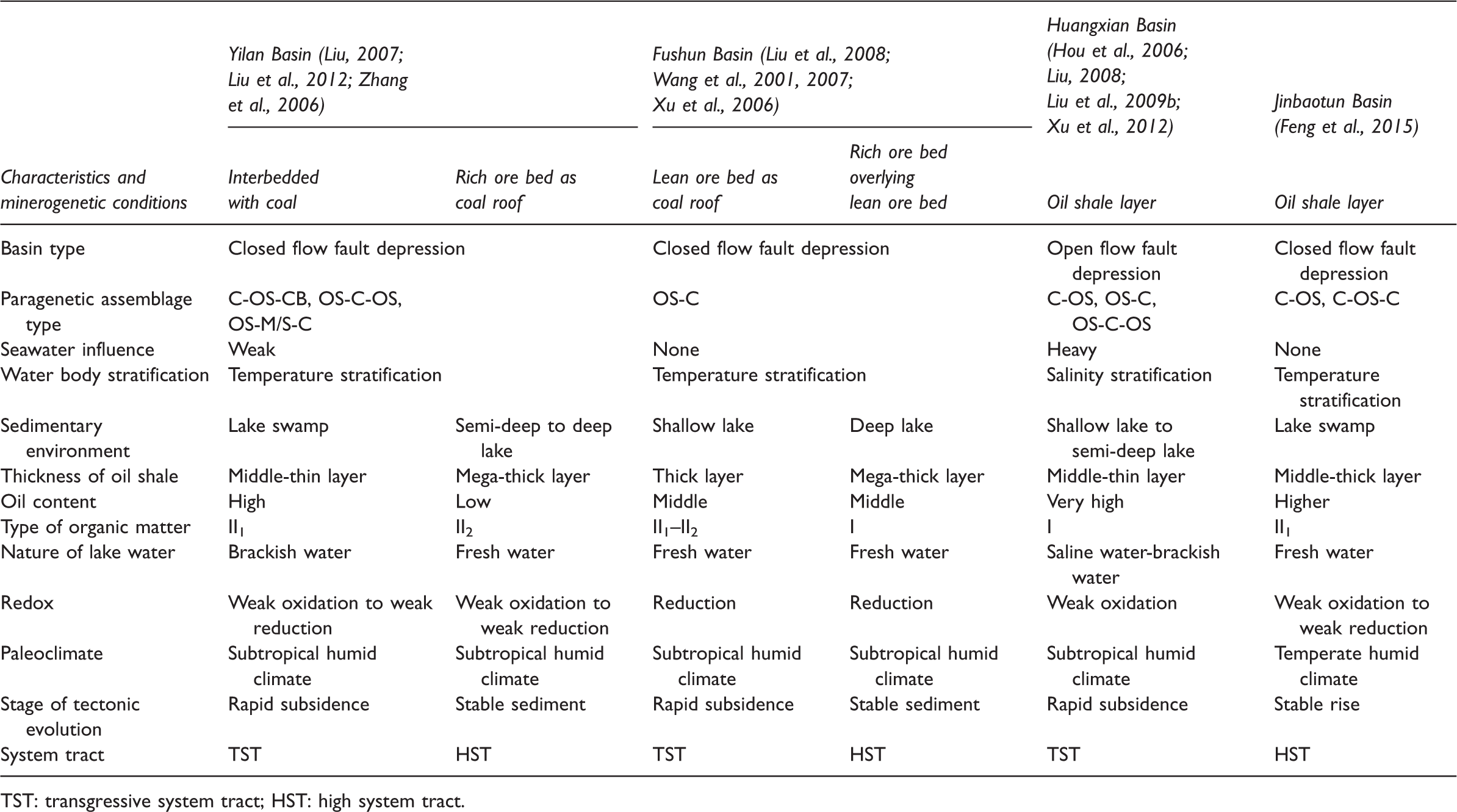
We compared basins with various combinations of coal and oil shale in terms of tectonic evolution, sequence stratigraphy, sedimentary facies, sources of ore-forming materials, water medium properties, thickness and oil shale quality (Table 2). It is obvious that symbiotic combinations of coal and oil shale generally develop in warm and humid climate zones that are characterized by large amounts of living organisms. Another factor is the tectonic evolution of the basins, where the paragenetic association of coal and oil shale mostly occurs during fast subsidence stages, and is characterized by multiple thin layers. During the early stage of subsidence, the symbiotic combination of coal and oil shale that develops is thin and with limited distribution. During the late stage, however, the combination is characterized by a relatively large thickness and wide distribution, but a smaller number of layers. Within the sequence stratigraphic framework, coal and oil shale usually occur in the lake expansion system tract, where oil shale is generally of poor quality (Wang et al., 2013). The early highstand systems tract (EHST) also develops a symbiotic combination of coal and oil shale and, to some extent, the oil shale in this case is of higher quality. The conditions are not favorable for the development of coal and shale associations in lowstand systems tracts (LST), or only a combination of small size develops. In an open flow basin, which is affected by periodic flooding with sea water, steady salinity stratification of the lake water and paleontological eruptions occur, which are conducive to the development of oil shale (Figure 6).
Symbiotic metallogenic model of a faulted basin, where coal and oil shale combinations form. Comparison of the characteristics of coal-bearing oil shale in various basins. TST: transgressive system tract; HST: high system tract.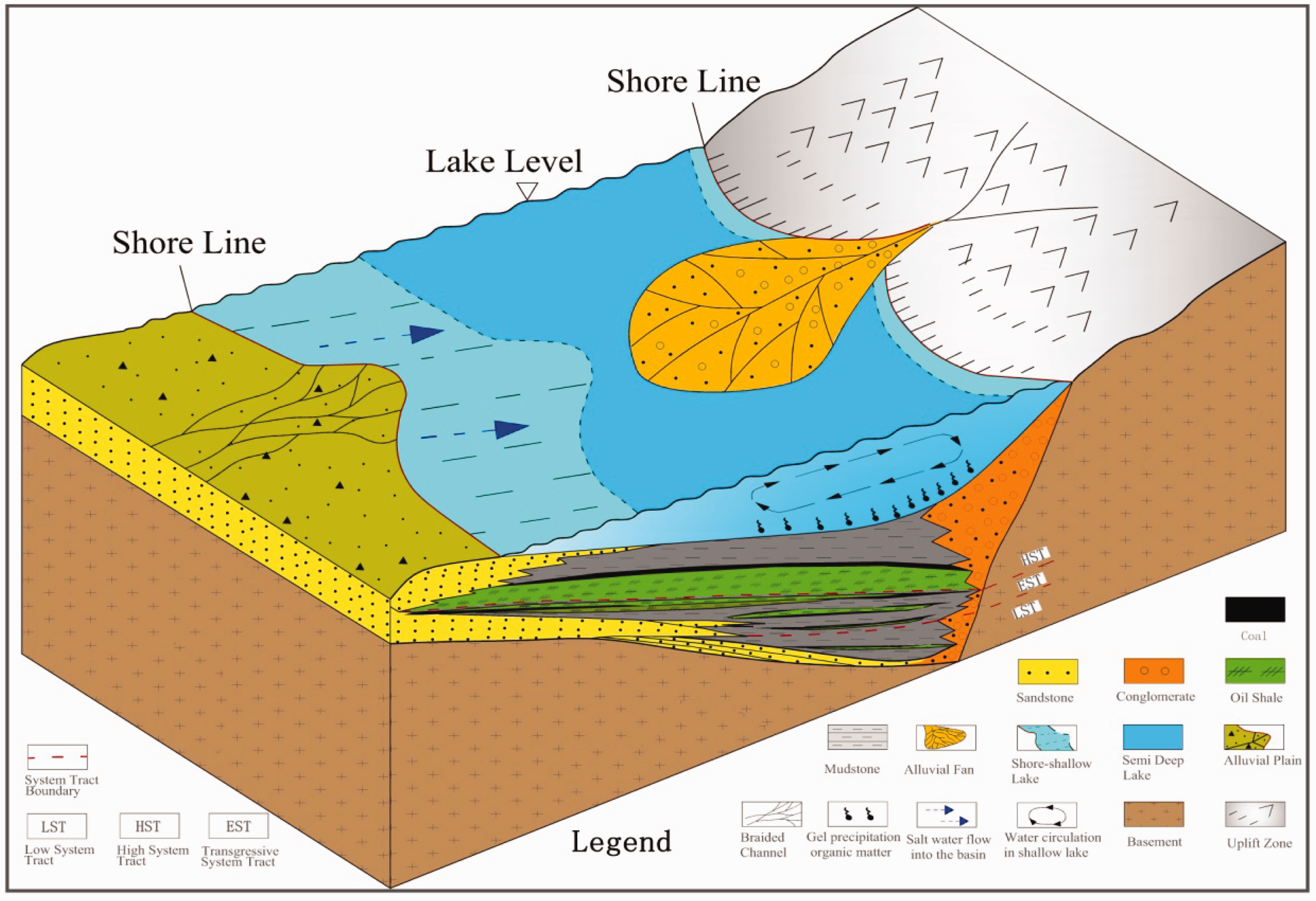
Conclusions and discussion
Coal and oil shale symbiosis represents important mineralization characteristics of energy basins. The development of combinations of coal and oil shale is a result of the synergetic effect of several factors, such as the basin background, material supply base, ancient climate and ancient tectonic conditions. The tectonic features of the basin (i.e., regional tectonics) controls the overall characteristics of the basin infilling, providing external conditions for coal and oil shale symbiosis. Episodic tectonic activity and evolution of the basin result in a shift of the basin water system, changes in the material base of the basin and cyclical development of the metallogenic environment needed for the paragenetic association of coal and oil shale. Climate change, which influences material supply, is the most decisive factor causing the occurrence of coal and oil shale. The symbiosis mechanism of formations combining coal and oil shale is more complex and variable than of the mechanism of the formation of a single energy mineral resource. For symbiotic combinations of two important energy and mineral resources to occur, coexisting in the same basin, there must be several unique factors, such as peat accumulation, shale ore-forming material formation, suitable geological background, symbiotic mode and interdependent mechanisms, as discussed in this paper. So far, we have identified six main types of symbiotic combinations of coal and oil shale that have different characteristics of development and evolution. These types are associated with different characteristics in different system tracts, within the sequence stratigraphic framework. Our study indicates that the water expansion period is critical for the development of coal and oil shale combinations, and that the lake-invasion system tract is the most conducive to the development of all kinds of symbiotic combinations. It is common for coal and oil shale associations to show vertical relationships in faulted basins. For example, oil shale can serve as a floor or roof of the coal, or can be interbeded with coal seams, but the lateral relationship of the two components is more complicated. In large downwarped depression basins, however, coal and oil shale facies usually transform into each other laterally.
Footnotes
Declaration of conflicting interests
The author(s) declared no potential conflicts of interest with respect to the research, authorship and/or publication of this article.
Funding
This work was supported by The National Natural Science Foundation of China (41272172, 41472092, 41202070, 41402086) and the Ministry of Education by the Specialized Research Fund for the Doctoral Program of Higher Education (20123718110004).