




Abstract
Turkey relies heavily on natural gas in electricity generation and imports almost all of its natural gas needs. The country’s natural gas import bill currently comprises a large proportion of the country’s total energy bill, and the government of Turkey wants to reduce the weight of natural gas in the energy mix to reduce dependency in its energy policy. In this study, three different scenarios were considered to explore whether renewable energy sources or nuclear energy can be alternatives to natural gas to reduce energy dependency. The economic and technical analyses and comparisons of these scenarios have also been carried out. First, electricity generation expansion planning of Turkey for the 2015–2030 planning horizon was realized by using a genetic algorithm. In the first scenario, besides all conventional energy sources, renewable energy sources were included in the model as an input. In the second scenario, the first scenario was repeated without natural gas. In the third scenario, all conventional energy sources are included in the first scenario, except natural gas and renewable energy source. It was concluded from these calculations that nuclear energy is not likely to have a significant place in Turkey’s future energy policy since it has a high investment cost and leads to dependence on foreign resources. Additionally, it is argued that renewable energy source cannot be an alternative to natural gas or other energy sources considering the low capacity factor and high investment costs.
Introduction
High increases in the energy demand have been experienced worldwide. It is estimated that the net electricity generation will increase from 25,000 TWh in 2020 to 35,200 TWh in 2035 (Vujić et al., 2012). Fossil energy sources are the main sources used to meet the energy demand, and more than 80% of primary energy needs are met by fossil sources like oil, coal, and natural gas (Ertör-Akyazı et al., 2012; Kilinç et al., 2014). By early 2012, 33.1% of the energy demand of the world was met by oil and 23.7% by natural gas (Biresselioglu et al., 2012; TP, 2013).
Natural gas ranks first in the electricity generation of Turkey, and almost 98% of it is imported. There has been a rise in the share of natural gas within the energy sources most preferred in Turkey over the past several years, because of its low price and low harm to the environment. This shift in preference has increased the dependency on natural gas, and it is expected that this trend will continue in the future years.
In the meanwhile, security concerns regarding energy supply have arisen due to the inadequacy of fossil sources and instabilities in many countries (Ertör-Akyazı et al., 2012) where oil is located. There has been a tendency toward renewable energy sources (RES) and nuclear energy in order to avoid greenhouse gas emissions, which might cause climate change, and also to reduce foreign dependency on energy production.
For the sustainable development of a country, fossil fuels consumption that are more benign to the environment must be reduced, and energy sources with the lowest emissions must be utilized (Dincer and Rosen, 1998). Clean, domestic, and RESs are commonly preferred for sustainable development of the countries (Atmaca and Basar, 2012; Kabak and Dağdeviren, 2014; Omri and Nguyen, 2014; Şekercioğlu and Yılmaz, 2012; Uzlu et al., 2014; Yaniktepe et al., 2013).
Nuclear energy is a base load energy source often preferred in the long-term energy plans of developing countries to support economic and industrial growth, and decrease greenhouse gas emissions. Nuclear energy investments are investments that require comprehensive planning and preparation in terms of financing and take a long time to develop (Choi et al., 2009; Vujić et al., 2012). In Turkey, currently, no operational nuclear power plant (NPP) exists, but there is a plan to put two plants into operation before 2023 (MENR, 2013; TMMOB-EMO, 2013).
The current government energy policy of Turkey focuses on domestic coal, RES, and nuclear energy in electricity generation. Turkey possesses an abundance of RES as has been expressed in a number of studies related to Turkey and energy (Gunerhan et al., 2001; Kabak and Dağdeviren, 2014; Melikoglu, 2013a; Oğulata, 2007; Özer et al., 2013; Şekercioğlu and Yılmaz, 2012; Ulgen and Hepbasli, 2002; Uzlu et al., 2014; Yaniktepe et al., 2013). The Turkish government is making plans to meet 30% of the country’s electricity demand in 2023 from RES. Turkey’s annual wind energy production potential that can be technically and economically realized is 124 TWh, the solar energy potential is 305 TWh, biomass energy potential is 197 TWh, biogas energy potential is 18–23 TWh, geothermal energy potential is 35 TWh, and hydroelectric potential is 124 TWh (Melikoglu, 2013a).
Hydroelectricity is the dominant RES among all the RES, and it is the second most utilized energy source after fossil fuel-based power plants, which are mostly operated by natural gas. For this reason, the role of hydropower has great importance in the electricity generation of Turkey. Uzlu et al. (2014) have carried out a study to estimate the annual hydroelectricity energy production of Turkey between 2012 and 2021, and compared the results with the Turkish Electricity Transmission Co. (TEİAŞ) forecasts. According to the result of their study, future hydroelectricity generation of Turkey will range from 69.1 to 76.5 TW h in 2021, and the share of hydroelectricity generation in total annual electricity demand will range from 14.8 to 18.0% (Uzlu et al., 2014). This study shows the importance of the exploitation of other RES.
The utilization of RES will contribute to a reduction in supply deficiency resulting from the consumption of fossil fuels while decreasing the foreign source dependency in energy and reducing harmful effects of global climate change (Celik, 2007; Kabak and Dağdeviren, 2014; Midilli et al., 2007; Omri and Nguyen, 2014; Özer et al., 2013; Ozgener et al., 2009; Yaniktepe et al., 2013). Given the country’s limited fossil fuel sources and the rich RES potential, a shift from fossil fuels to renewables could pave the way to reduce energy supply dependency, prevent environmental pollution, and ensure sustainable development of Turkey (Kabak and Dağdeviren, 2014; Yaniktepe et al., 2013).
This study analyzes whether RES or nuclear energy would be a better alternative to natural gas with the aim to decrease foreign dependency on electricity generation. The study comprises of three different planning scenarios. First, a plan for the basic scenario using all the source types was considered. Then, a plan was considered for the second scenario, using all the energy source types, except for natural gas. In this scenario, the share for each of the primary energy sources was calculated and compared to the first scenario which is the basic scenario from technical and economic aspects. In the third scenario, a plan without natural gas and RES was considered. The three scenarios were compared with each other, and conclusions were drawn at the end.
The natural gas dependency of Turkey in electricity generation
To meet its primary energy supply, Turkey is dependent to a great extent upon oil and natural gas, and the rate of dependency on foreign energy sources is 74% (Babali, 2012). More than 98% of natural gas, ranking in the first place in electricity generation of Turkey, is being imported (Melikoglu, 2013b). Turkey used to prefer natural gas in the 1990s due to its low price and less harm to the environment. However, increasing the share of natural gas in the energy production of the country in the ensuing years resulted in more dependency on natural gas (Biresselioglu et al., 2012; Şengüler, 2012). In 2012, foreign dependency on natural gas was 98.6% (IEA, 2013), and it is expected that this increase will continue in the future (Ozturk et al., 2011; Ulgen and Hepbasli, 2002).
When the natural gas storage constraints in Turkey are taken into consideration, the problem of natural gas supply will cause destructive results in the economy of Turkey. It is expected that future increases in natural gas prices will increase current deficit, which may jeopardize Turkey’s energy security (IEA, 2013; Melikoglu, 2013b). A significant part of the total electricity demand in Turkey, estimated to be about 53,000 GWh in 2023, will probably be met by natural gas (Melikoglu, 2013b). In this context, the natural gas import from Russia is considered risky in terms of security in energy supply (Biresselioglu et al., 2012; Ediger and Berk, 2011). The energy strategy of Turkey aims to strengthen the country’s energy security and to contribute to the energy security of Europe. In agreement with this strategy, increasing the use of domestic and RES, carrying out studies on energy efficiency, and decreasing dependence on foreign energy sources by achieving liberalization in the energy sector are among the country’s aims in the near future. Turkey has a target to diversify its energy sources and the countries it imports energy from to ensure security of supply (Babali, 2012).
The installed power and generation values of Turkey by sources.
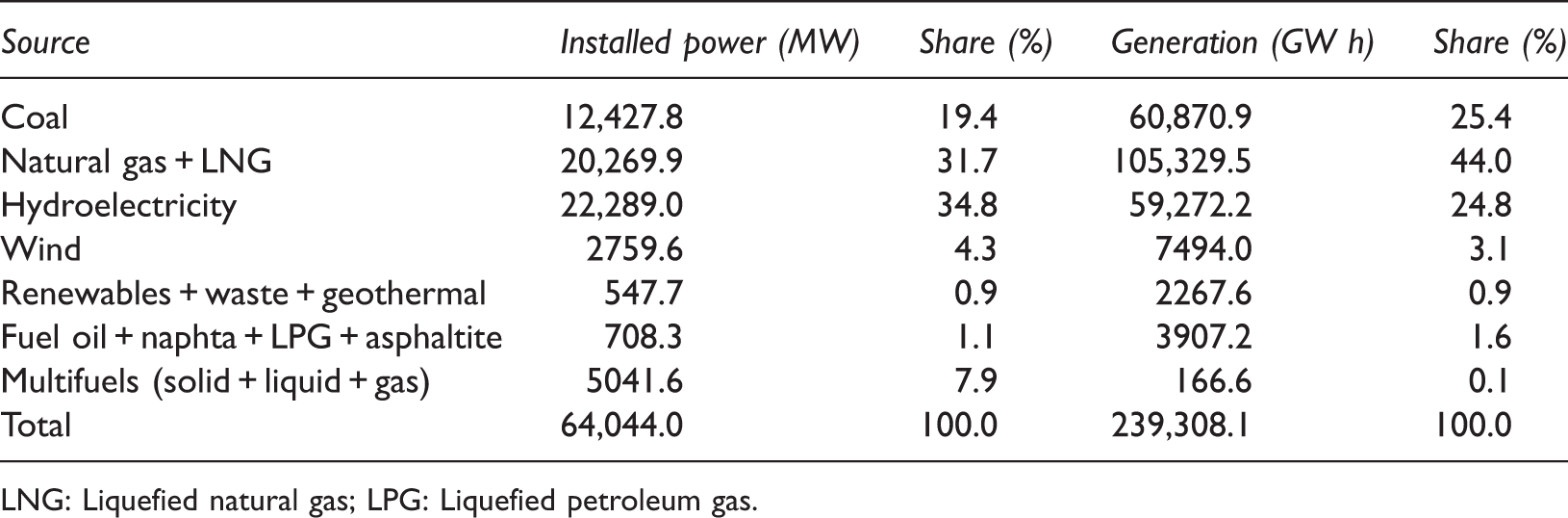
LNG: Liquefied natural gas; LPG: Liquefied petroleum gas.
When the shares of energy sources in electricity generation are examined, it is seen that natural gas with a share of 44% ranks first. The share of RES in electricity generation, except for hydroelectric power, is only 4%. This rate is rather low, considering that Turkey has quite a rich potential of RES.
Nuclear energy in Turkey
As of June 2013, the installed power value of NPPs around the world was 372,686 MW. There are 69 nuclear reactors, which are in construction, and the installed power value of these reactors—28 located in China, 11 in Russia, and seven in India—is 66,831 MW. The number of reactors that are planned to be constructed is 157, and their installed power is estimated to be 172,440 MW (TMMOB-EMO, 2013). However, issues such as disposal of radioactive wastes, security, proliferation, increased construction costs, and investment risk are considered to be important factors expected to have an effect on attaining these goals (Vujić et al., 2012).
There are many studies considering the pros and cons of NPPs. On the one hand, NPPs are base load plants that help to prevent climate change, decrease greenhouse gas emissions, ensure energy supply security and sustainable growth, as well as enhance the stability of the system. They have long operational life spans and low operation costs. Their external costs, that is the harm given to people and the environment under normal working conditions, are low when compared to fossil source plants. The share of the fuel cost of NPPs in the total cost is rather low when compared to natural gas and coal plants. These plants with high capacity factor values can also be installed in bigger capacities (Choi et al., 2009; Corner et al., 2011; Erdogdu, 2007; Ertör-Akyazı et al., 2012; Kessides, 2012; Rabl and Rabl, 2013; Sirin, 2010; Vujić et al., 2012).
On the other hand, some disadvantages related to NPPs have also been expressed. One of the disadvantages is that disposal of waste in these plants requires expertise, and it is a costly process. Its investment cost and decommissioning cost are high, and there is a nuclear accident risk. A relationship between proliferation and terrorism has been established with the use of nuclear technology and the public has a negative point of view on NPP investments (Choi et al., 2009; Erdogdu, 2007; Ertör-Akyazı et al., 2012; Kessides, 2012; Melikoglu, 2013a; Rabl and Rabl, 2013; Sirin, 2010; Vujić et al., 2012).
Commissioning a NPP in Turkey has been a work in progress for more than 40 years. Studies related to nuclear energy commenced in the country with academic studies at İstanbul Technical University and İstanbul University after the Second World War. In 1956, an agreement was signed with the North Atlantic Treaty Organization on information sharing in the nuclear field, and the Atomic Energy Commission was established in the same year. In 1957, Turkey became a member of the International Atomic Energy Agency. Between the years of 1959 and 1961, arrangements related to the legal framework regarding nuclear energy were made. In 1962, a research reactor with 1 MW nominal power was put into operation at the Çekmece Nuclear Research and Training Center. As a result of the studies carried out in the beginning of the 1970s, Mersin-Akkuyu, Sinop-İnceburun, and Kırklareli-İğneada areas were determined as the most suitable places to establish NPPs. In the years 1976, 1983, 1996, and 2008, international tenders were made for Akkuyu NPP but were cancelled later for various reasons.
In May 2010, an agreement was signed between the governments of Turkey and Russia. This agreement includes the construction and operation of an NPP consisting of four power reactors of a total capacity of 4800 MW in Akkuyu, Mersin province of Turkey. It is expected that the construction of the NPP in Akkuyu will begin in 2015, and the first reactor will be put into operation in 2019, while the other reactors will become operational in one-year intervals. In May 2013, another agreement was signed between the governments of Turkey and Japan for the construction and operation of an NPP in Sinop province of Turkey. This NPP is expected to be put into operation before 2023. If the Akkuyu and Sinop NPPs are put into operation until the end of 2023, 10% of the installed power in Turkey will consist of nuclear energy (MENR, 2013; TMMOB-EMO, 2013).
RES in Turkey
In the electricity market licensing regulation of Turkey, electricity generation plants depend on wind, solar, geothermal, wave and tidal, biomass, biogas and hydrogen energy, river or canal type hydroelectric generation plants with an installed capacity of 50 MW or below, and hydroelectric generation plants with a reservoir volume below 100 million cubic meter or a reservoir area below 15 square meter are defined as RES and supported under the renewable energy support mechanism.
Turkey has made the necessary legal arrangements required to deploy RES. According to Law No. 6094, which is on Utilization of Renewable Energy Sources for the Purpose of Generating Electrical Energy, RES are defined in detail, energy purchasing prices are determined, and incentives to regulate equipment production are introduced. Real and legal entities are granted the right to establish renewable energy-based production facilities with a maximum installed capacity of 1 MW without having to establish a company or obtain licenses. Despite having abundant RES potential, the share of RES, except hydroelectricity, in the electricity generation of Turkey is too small and beyond the energy policy targets of the country (Özcan et al., 2011).
Long-term plans aiming to decrease Turkey’s dependency on foreign energy sources include goals such as utilizing all domestic energy sources, exploiting RES as much as possible, and diversifying the supply of electrical energy production based on coal, natural gas, and hydroelectric sources.
The share of fossil fuels in electricity production will decrease with the increase in the utilization of RES. Turkey aims to decrease the share of natural gas among its energy sources to 30% with the help of the measures taken for the purpose of diversifying energy supply sources and decreasing dependency on foreign sources in energy. Domestic energy resources and RES will be exploited to their maximum potential and also, considering energy supply security, plants based on imported coal will be utilized. It is aimed to raise the share of nuclear energy in electricity generation from none to at least 5% until the year 2020, based on reports about the installation of an NPP, and also increase the utilization of domestic lignite and hard coal resources until year of 2023.
By 2023, the basic target is to increase the share of RES in the total electric energy supply to the level of 30%. To obtain this target, Turkey aims to have a 5000 MW hydroelectric power plant completed by 2013, to increase the wind energy installed power to 10,000 MW by 2015, and the geothermal energy installed power to 300 MW by 2015.
According to the Electricity Energy Market and Supply Security Strategy Paper, it is planned to fully use the hydroelectricity potential, which may be assessed technically and economically by 2023. By increasing the wind energy installed power to 20,000 MW by 2023, and the geothermal energy installed power to 600 MW, it is aimed to popularize the utilization of solar energy and to benefit from the solar potential of the country at the maximum level (Ozcan, 2014). As a result of the more effective employment of RES, use of fossil sources, mainly the import resources will be decreased (Bilgili and Sahin, 2009; Ozcan, 2014).
Ensuring adequate electricity generation is the fundamental requirement of sustainable development and the electricity demand must be met by minimizing the costs of generation which is a part of power systems planning. Widespread exploration and utilization of nonrenewable energy resources have caused serious problems on the environment and human health. These problems have to be solved. Renewable energy is one of the important solutions to tackle the problems caused by extensive utilization of fossil fuels. Despite having limited indigenous energy resources to meet its total primary energy needs, Turkey has abundant RES. Because of fossil fuels’ negative impacts on human health and the environment, energy system planning studies have been applied to find cost-effective and environmentally friendly energy solutions (Zhang et al., 2013).
Different planning scenarios
The generation expansion planning (GEP) determines when and which generation units should be constructed in a long-term planning horizon. Therefore, it is a complex optimization problem. In order to solve this problem, genetic algorithm (GA), which is a powerful optimization method in GEP (Yildirim and Erkan, 2007), was utilized in this study. The GA minimizes the objective function of the GEP, which is explained in detail in the previous study of the authors (Ozcan et al., 2014).
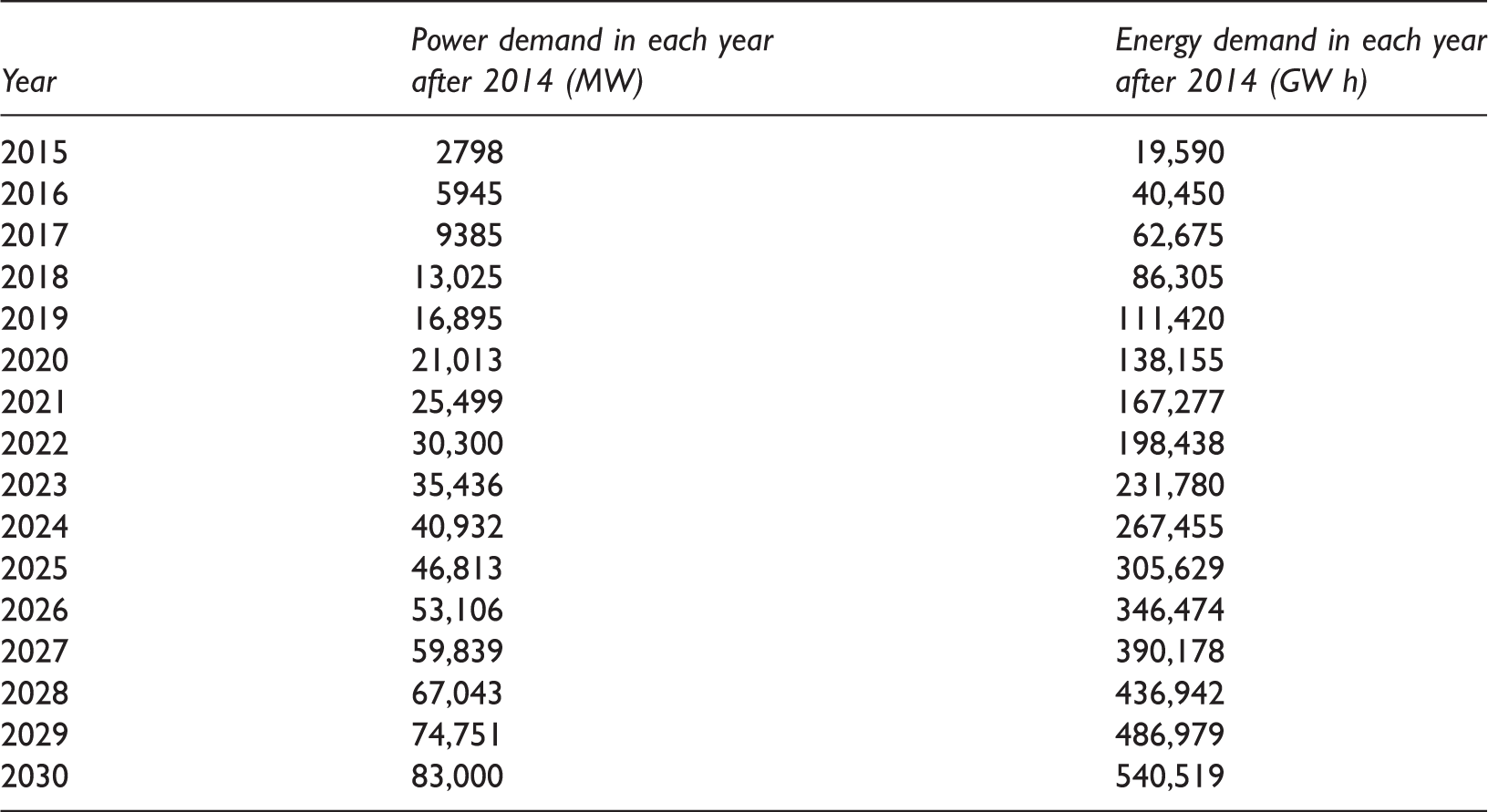
Peak power and energy demands.
Technical and economic values for unit types.
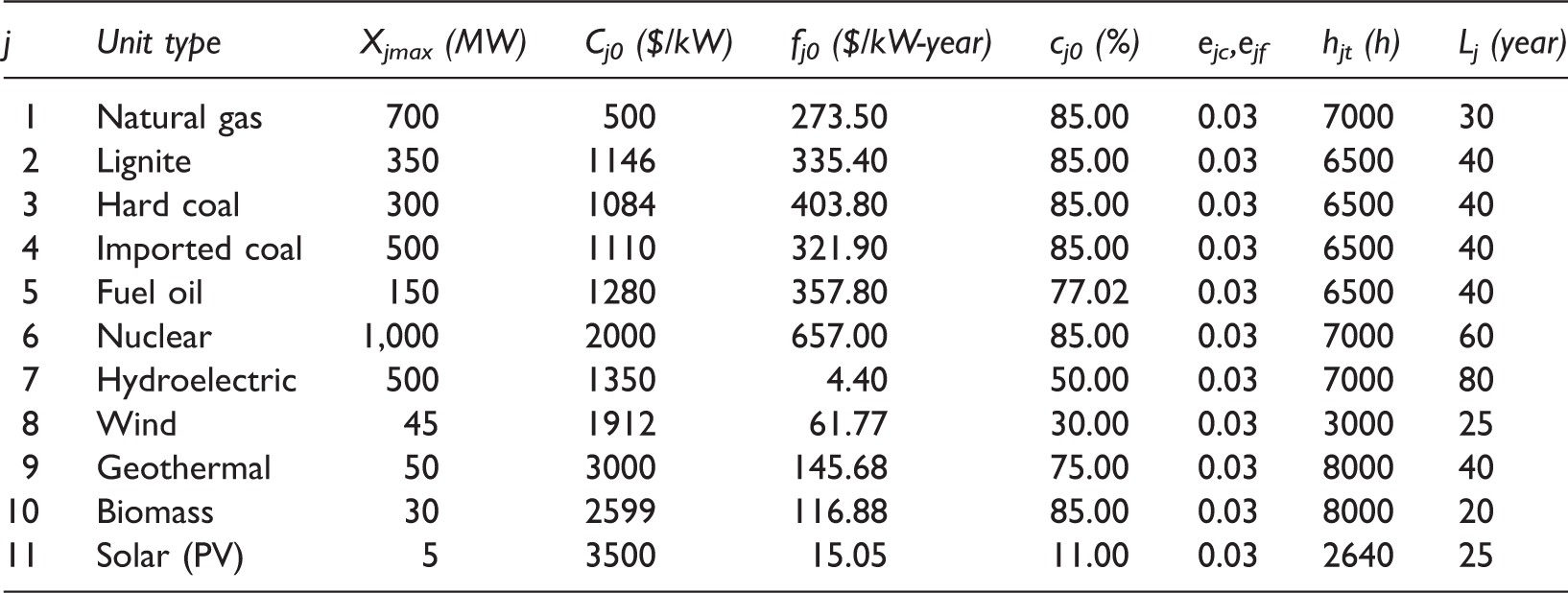
After determining the planning values, the long-term electricity GEP was carried out for three different scenarios. In the first scenario, a plan for 11 candidate plants including natural gas, fossil fuels, nuclear, hydroelectric power, and other RES was considered. In the second scenario, a plan for all the candidate power plants containing all the source types except for natural gas was considered. In the third scenario, a plan without natural gas and RES (except for the hydroelectric power) was considered. Electrical results of these three scenarios are given below.
Electrical results of the first scenario
Development of available capacity (MW) for scenario 1.
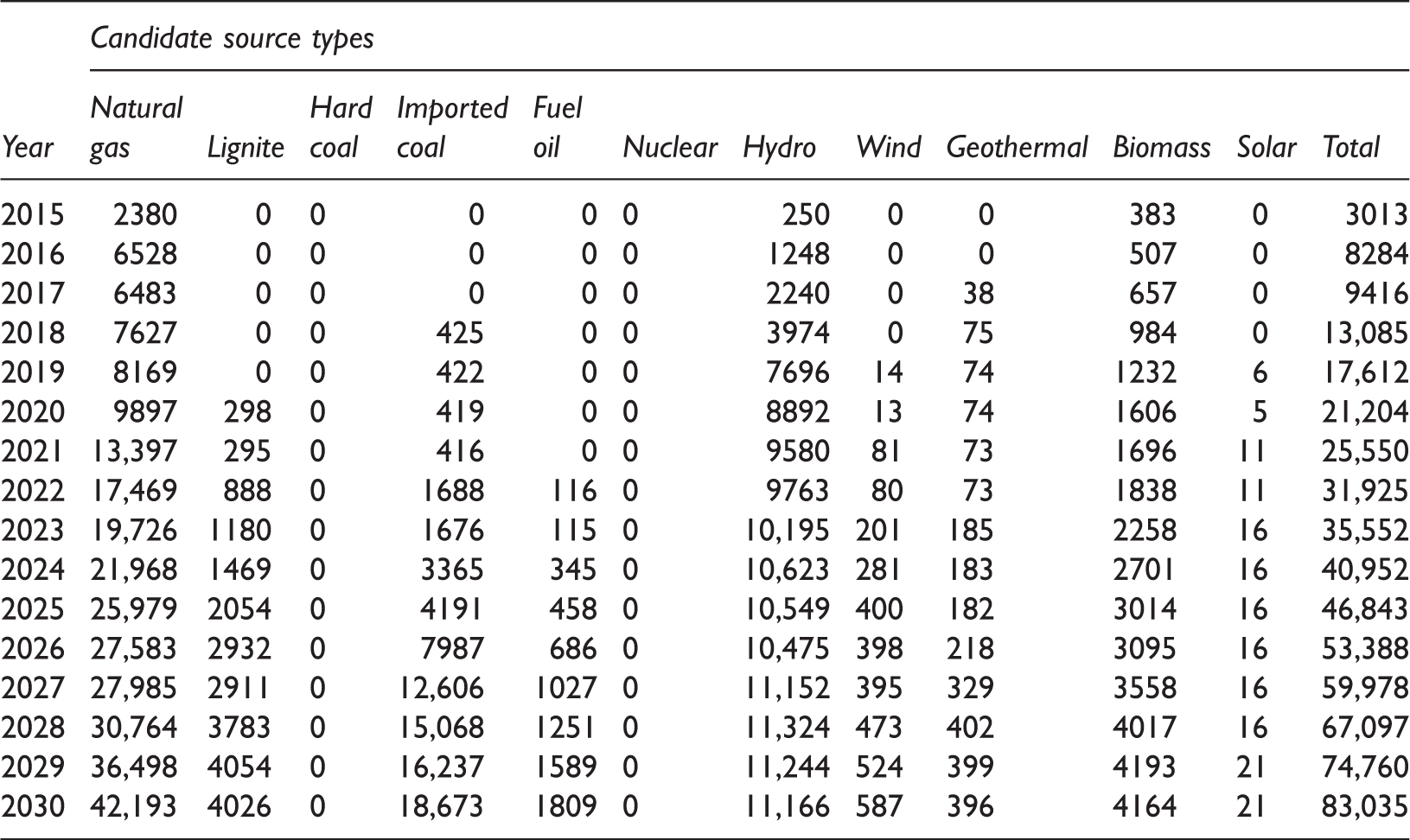
According to Table 4, the available capacity value within the planning horizon is found as 83,035 MW. In the solution obtained as a result of the planning study considered for the scenario not containing installation of an NPP, the installed power value of all RES (wind, geothermal, biomass, and solar), except for hydroelectric, is 5168 MW. Half of the installed power is met by natural gas plants.
The installed power percentages of power plant types to be put into operation within the planning horizon are given in Figure 1.
The installed power percentages of power plant types to be put into operation within the planning horizon for scenario 1.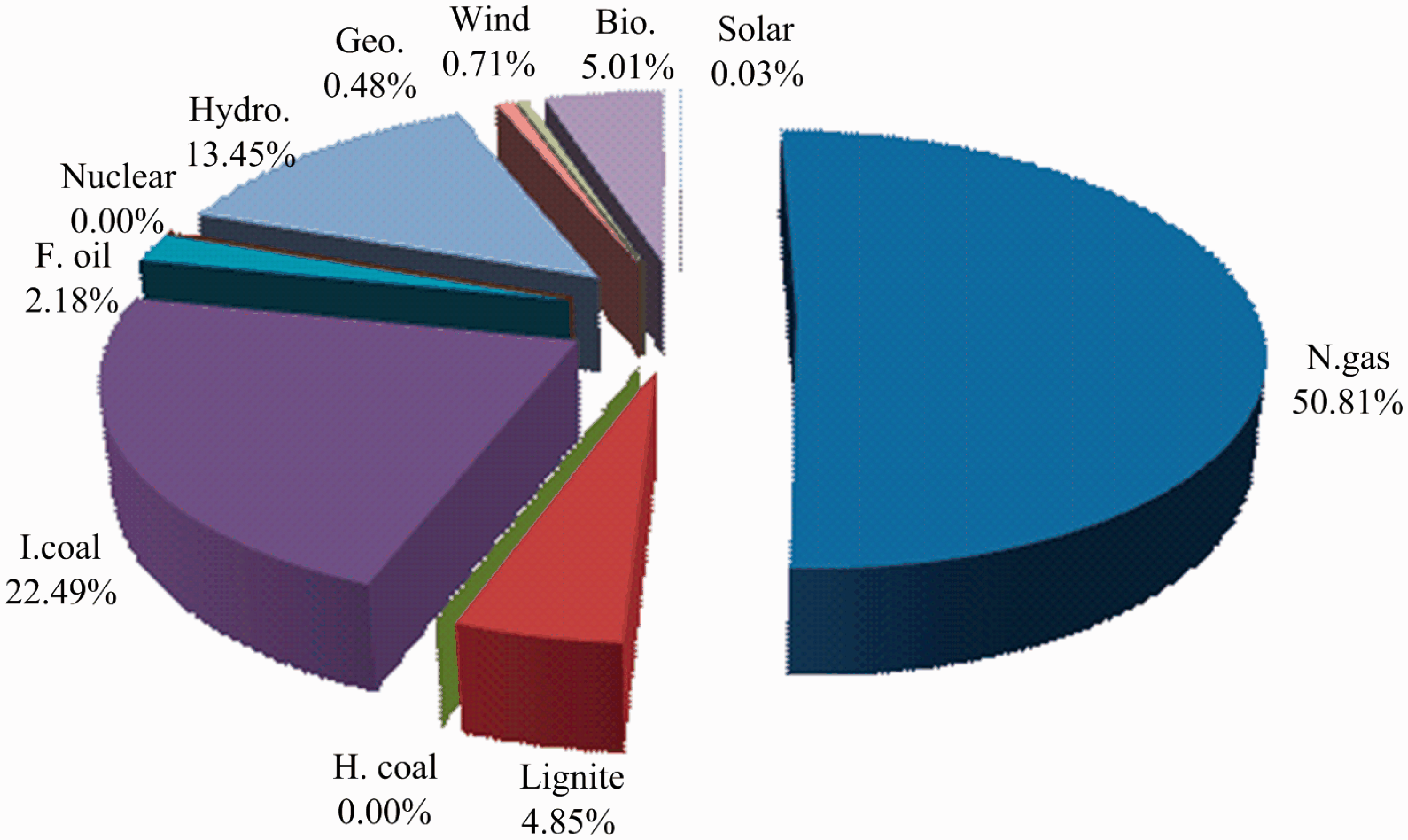
Accordingly, the ratio of wind, geothermal, biomass, and solar power plants combined within the total installed power is 6.22%. The ratio of natural gas in the total installed power is 50.81% (ranked in the first place), and imported coal ranks the second, with a ratio of 22.49%.
Electrical results of the second scenario
Development of available capacity (MW) for scenario 2.
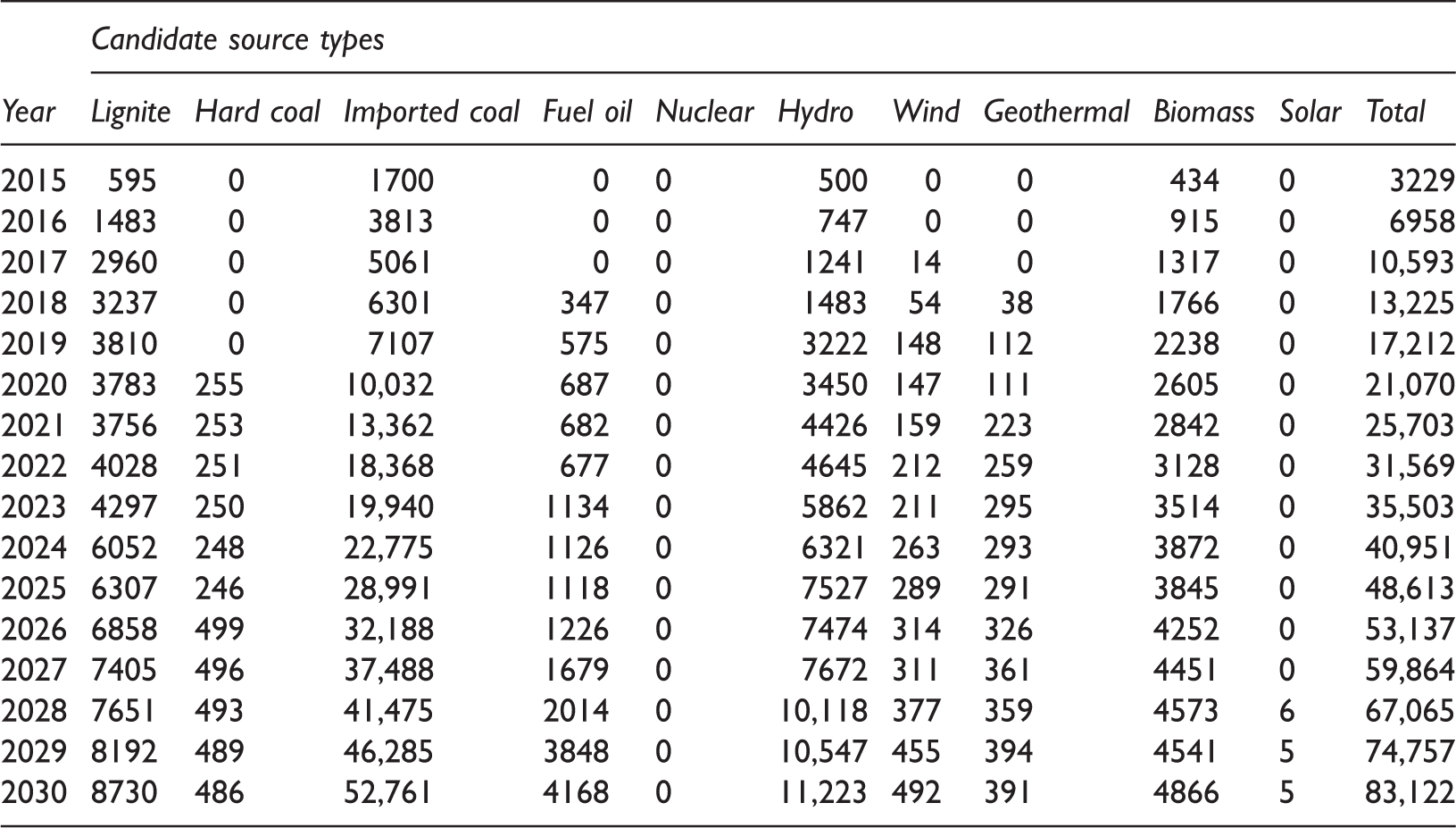
The available capacity value within the planning horizon according to data in Table 5 is 83,122 MW. In the solution obtained as a result of the planning study considered for the scenario not containing installation of a NPP, the installed power value of wind, geothermal, biomass, and solar in total is 5754 MW.
For the solution obtained for the second scenario, the installed power percentages of power plant types to be put into operation within the planning horizon are given in Figure 2.
The installed power percentages of power plant types to be put into operation within the planning horizon for scenario 2.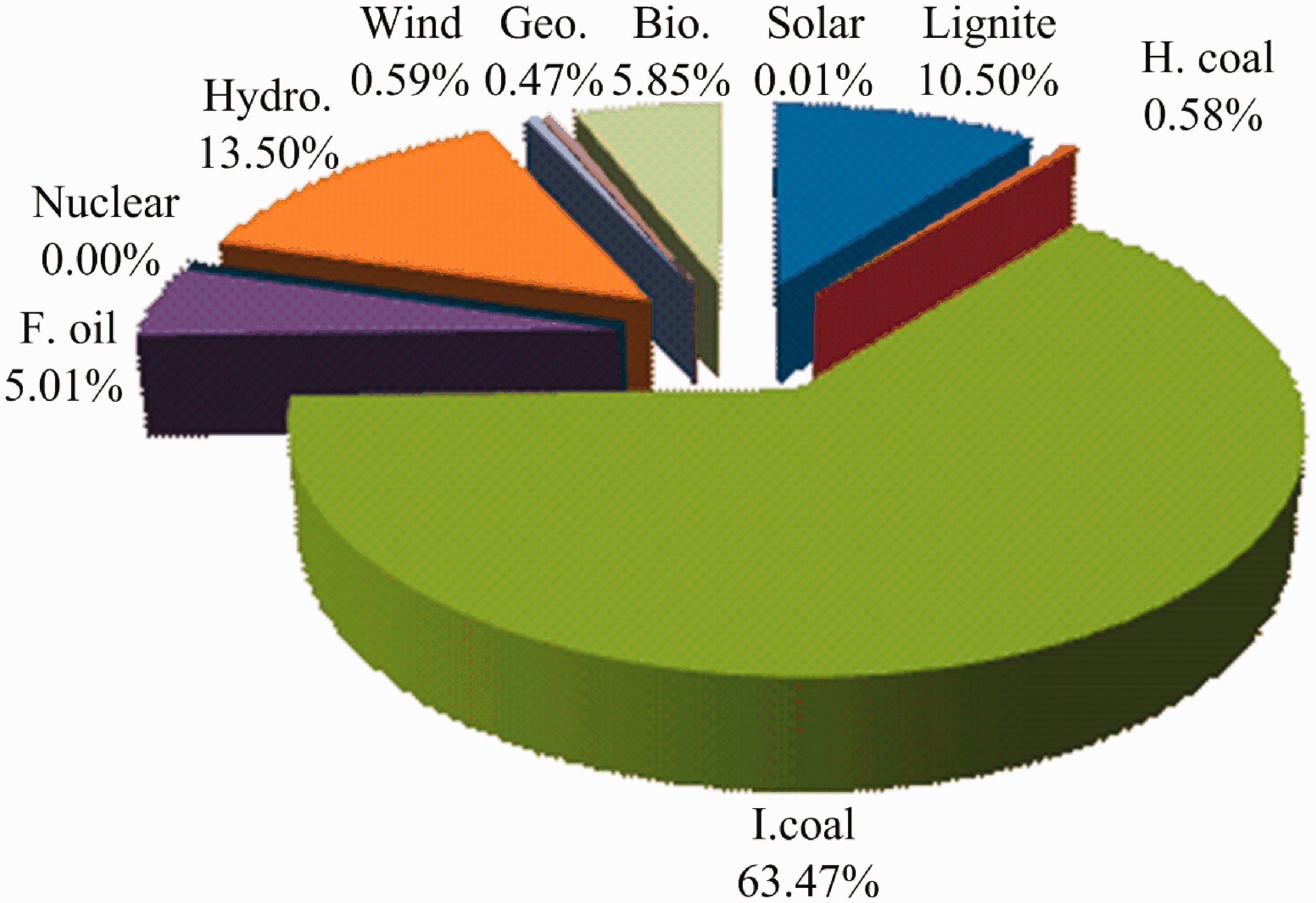
Accordingly, the ratio of wind, geothermal, biomass, and solar power plants in the total installed power is 6.92%. In this solution, not containing the natural gas power plants as a candidate type of plant, the imported coal plants have a ratio of 63.47% in the total installed power (ranked in the first place). The ratio of hydroelectric plants, ranked in the second place in terms of installed power, is 13.50%. The lignite installed power percentage is 10.50%.
The reason why imported coal is the most preferred in the second scenario, unlike what happens in the first scenario, is that it is the second most economic source among the other resources except for natural gas. Though the generation cost in hydroelectric power plants is less than it is for imported coal, they have not been installed in higher rate. This is because the economic hydroelectricity reserves have been completely exhausted. In the meanwhile, it is seen that the share of domestic lignite power plants within the total installed power has increased. In the event that the energy generation cost with lignite is equalized to energy generation cost with imported coal, dependency on imported coal could be avoided. Because the investment costs are high and the capacity factors are low, even if the O&M costs are very low, RES cannot be selected as the base load plants.
Electrical results of the third scenario
Development of available capacity (MW) for scenario 3.
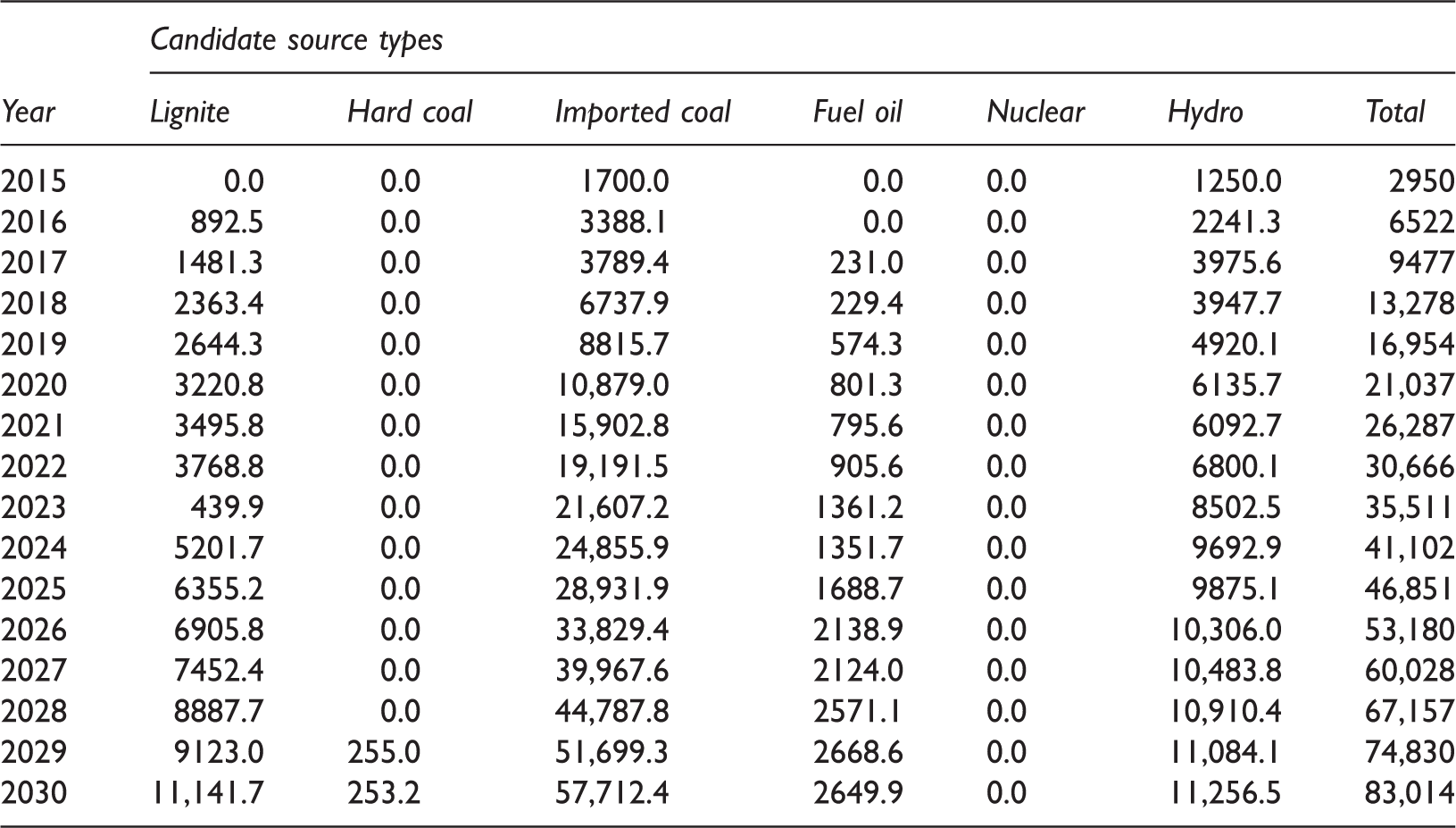
The available capacity value within the planning period according to data in Table 6 is 83,014 MW. In the solution obtained as a result of the planning study calculated for that scenario not containing installation of an NPP, the total installed power value of wind, geothermal, biomass, and solar is 5754 MW.
For the solution obtained in the third scenario, the installed power percentages of power plant types to be put into operation within the planning horizon are given in Figure 3.
The installed power percentages of power plant types to be put into operation within the planning horizon for scenario 3.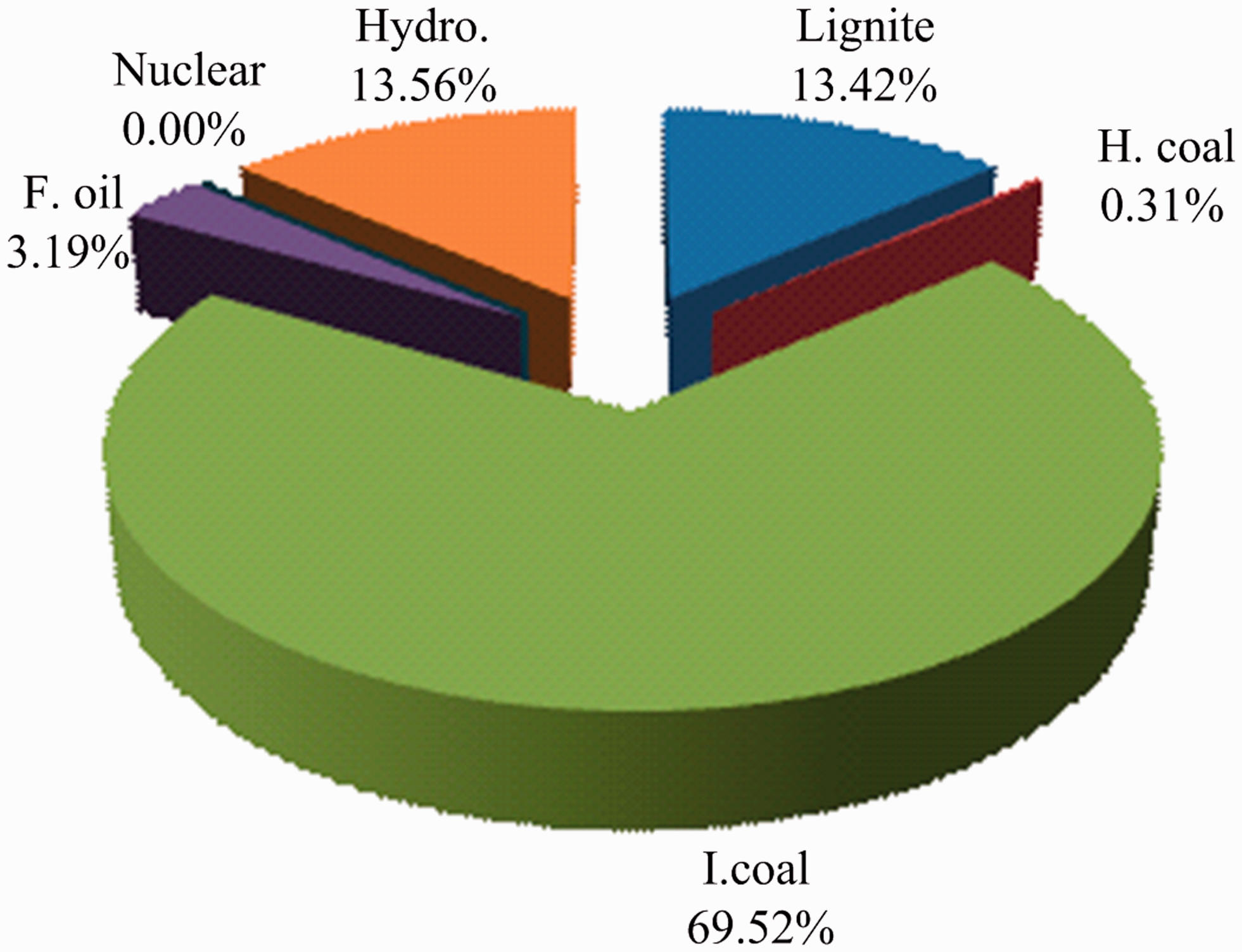
In this solution, which does not include any natural gas plants or RES other than hydroelectricity, with a rate of 69.52% imported coal plants rank the first in installed power. Hydroelectric plants have a ratio of 13.56%, ranking the second in terms of installed power. The percentage of the installed power of lignite is 13.42%. When compared to the second scenario, the third scenario shows that there has been no significant change in the ratio of hydroelectric plants while that of the installed power of lignite seems to have increased by about 3%. Excluding RES other than hydroelectricity has almost no effect on the results. It is also to be noted that nuclear energy has not been included in this scenario. When the solution obtained as a result of the third scenario is compared to the solution obtained as a result of the first scenario, it is seen that no significant change occurred in hydroelectric and hard coal installed power percentages, and the installed power percentages of imported coal and lignite power plants tripled.
Economic results of the first scenario
Figure 4 presents the cost values of the first scenario by source types.
Costs values of the first scenario.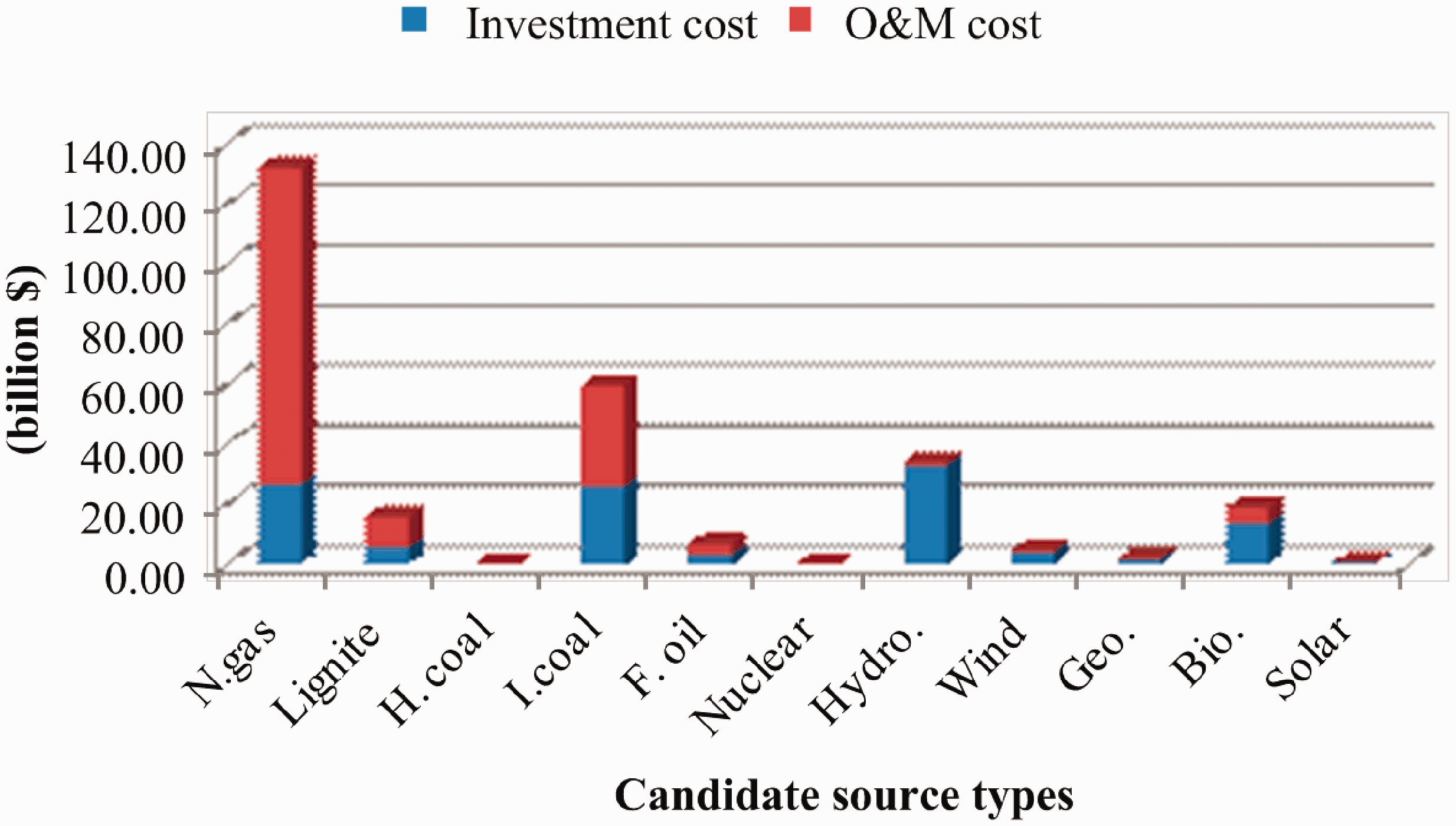
When the cost values in Figure 4 are examined, it is seen that O&M cost values of natural gas, lignite, imported coal, and fuel oil power plant types are higher than their investment costs. On the other hand, the investment costs of RES power plants like hydroelectric, wind, geothermal, biomass, and solar are higher than their O&M costs. In the solution obtained as a result of the planning study made for the first scenario, hard coal plants and NPPs are not installed and the ratio of the costs of RES, except for hydroelectric power, to the total costs is 9.75%. The cost of all RES, including hydroelectricity, constitutes 22.16% of the total cost. In the solution obtained for the first scenario, half of the installed power is provided by natural gas plants. The aggregate cost of all the natural gas power plants installed within the planning horizon constitutes 47.91% of the total energy production cost.
Economic results of the second scenario
Figure 5 presents the cost values of the second scenario by source types.
Cost values of the second scenario.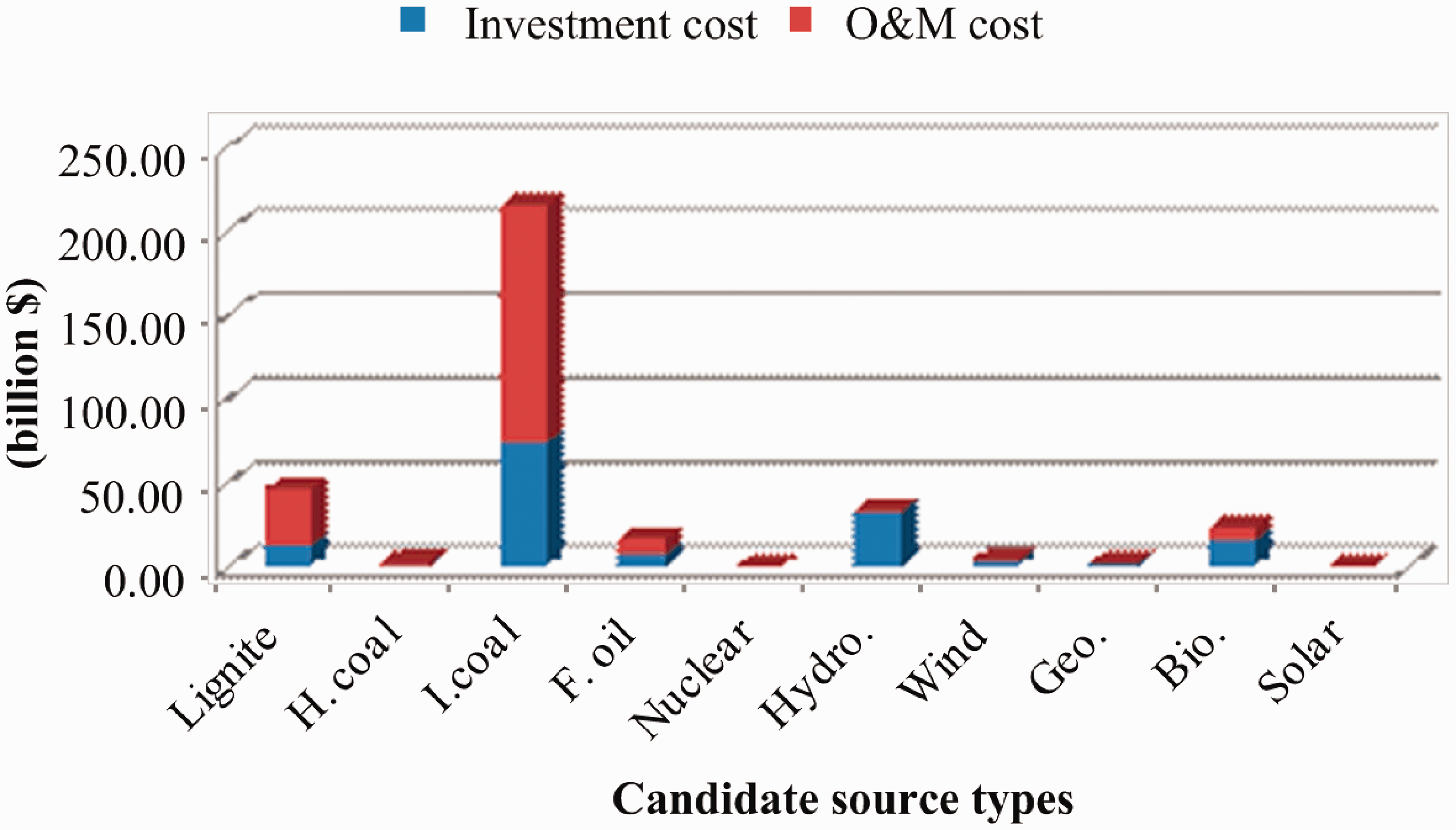
In this solution, not containing natural gas power plants as a candidate type of plant, the ratio of imported coal plants in the installed power is 63.47% (ranked in the first place), while the ratio of costs of the imported coal plants in the total cost is 62.39%. This means that while utilizing imported coal power plants instead of natural gas power plants produces the same amount of energy; it considerably increases the total cost.
Economic results of the third scenario
Figure 6 presents the cost values of the third scenario by source types. In this solution, not containing natural gas and RES except for hydroelectric power plants, the imported coal plants have a ratio of 69.52% in the installed power (ranked in the first place). The cost of the imported coal plants installed within the planning horizon constitutes 70.30% of the total cost.
Cost values of the third scenario.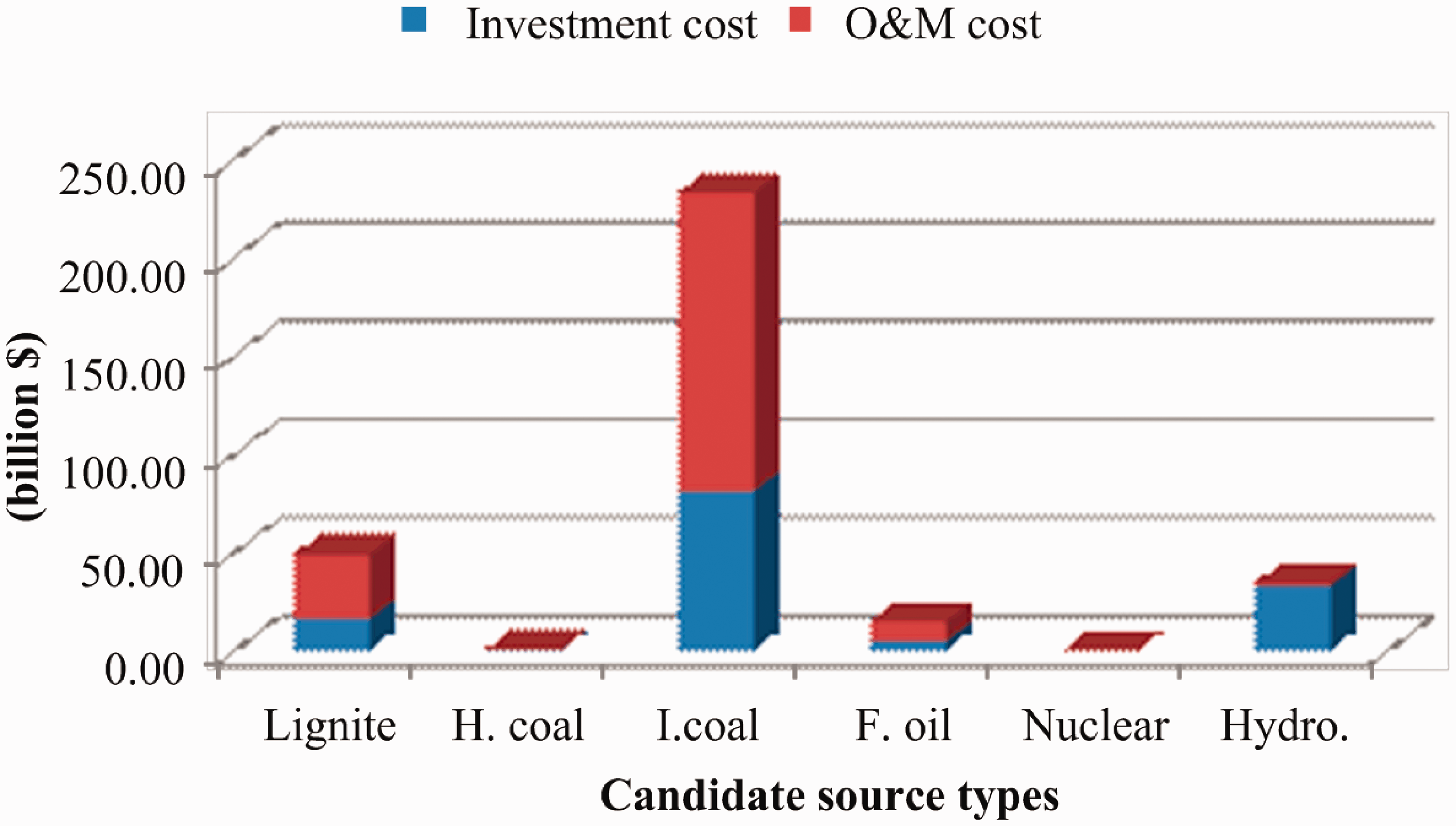
In order to provide a comparison of investments, O&M and total cost values of all three scenarios are given in Figure 7.
Comparison of investment, O&M, and total cost values of three scenarios.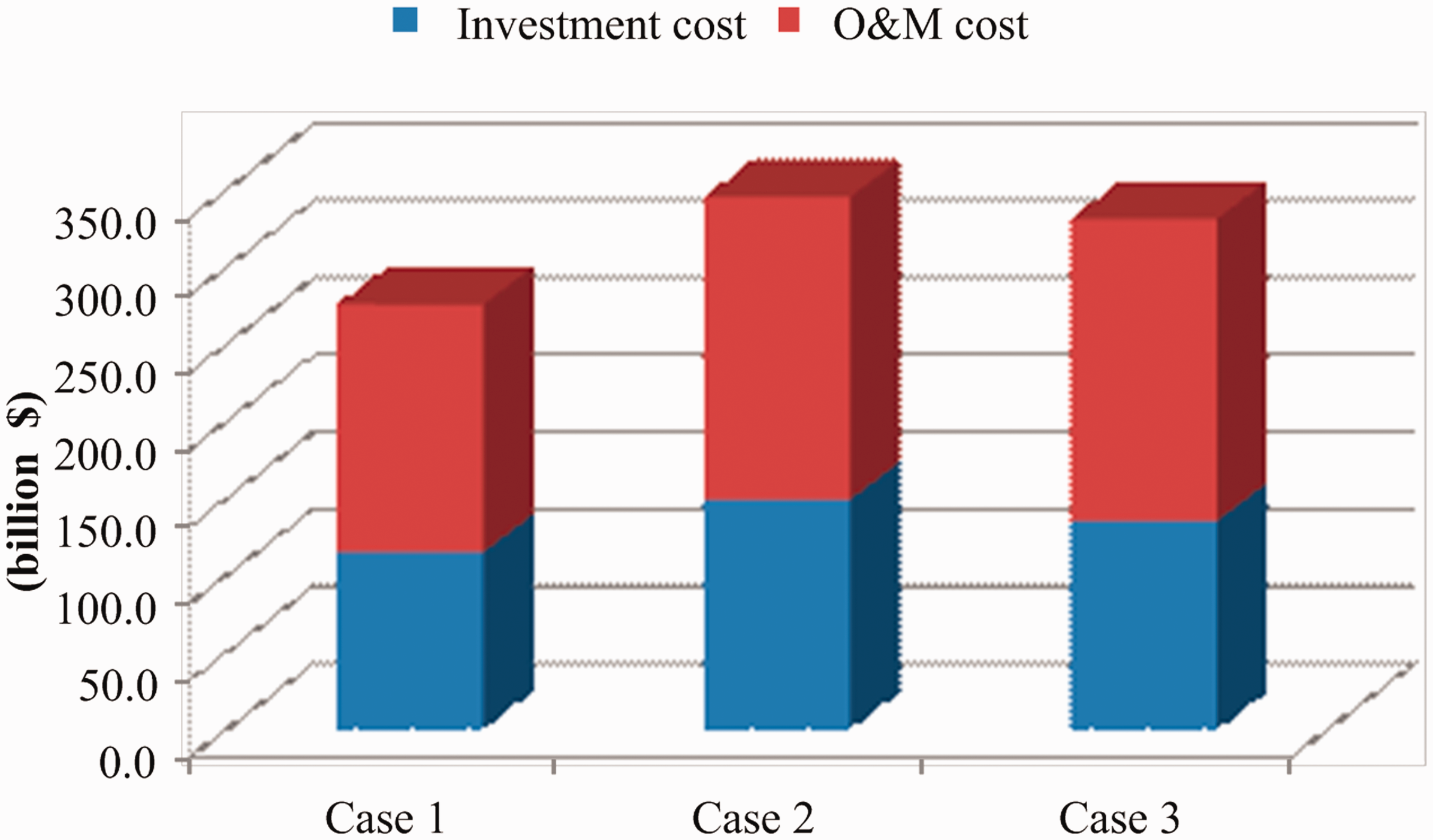
The total cost value of the first scenario is 275.79 billion dollars, and the ratio of investment cost within the total cost is 41.77%. The total cost value of the second scenario is 345.42 billion dollars, and the ratio of investment cost within the total cost is 43.24%. A preference toward imported coal power plants over natural gas power plants would increase the total cost by 69.63 billion dollars. However, this option would decrease dependence on natural gas, while increasing dependence on imported coal. It is possible to eliminate this dependence by bringing down the cost of energy production based on domestic coal to the levels of energy production costs based on imported coal. Otherwise, due to comparatively more harmful environmental impact of coal, perpetuating the dependence on natural gas would be more reasonable. If dependency on natural gas is to be continued, countries it is imported from should be varied and the methods of obtaining sources should be diversified (for instance, use of LNG may be increased).
Conclusion
In this study, the electricity GEP of Turkey covering the years of 2015–2030 planning horizon was realized by considering three different scenarios. The study explores whether RES or nuclear energy would be a better alternative to natural gas in order to decrease the high natural gas dependence in electricity generation of Turkey.
In the first scenario, a plan for 11 candidate power plants containing natural gas, fossil fuels, nuclear, hydroelectric, and renewable sources (wind, solar, geothermal, and biogas) was considered. In the second scenario, the solution was repeated for the candidate power plants containing all the energy source types except for natural gas. In the third scenario, a plan without natural gas and RES (except for hydroelectric power) was evaluated.
In the solution obtained according to the results of the first scenario not containing installation of a NPP, the ratio of RES in the total installed power was found to be 6.22%. In this scenario the ratio of natural gas in the total installed power is 50.81% (ranked in the first place), while the ratio of energy generation in plants running on imported coal is 22.49% (ranked in the second place).
In the solution obtained according to the results of the second scenario, generation dependence on nuclear energy was considered. According to this scenario, the ratio of RES in the total installed power is 6.92%. In this solution which does not contain natural gas power plants as a candidate plant, the ratio of electricity generated by imported coal plants within the total installed power is 63.47% (ranked in the first place), while the ratio of hydroelectric plants in the total installed power is 13.50% (ranked in the second place). The installed power percentage of lignite has increased to 10.50% in this scenario.
In the solution obtained according to the results of the third scenario, an NPP was not included. In this scenario, which also excluded natural gas plants and RES except for hydroelectric power, the ratio of electricity generated by imported coal plants within the total installed power is 69.52% (ranked in the first place), and the ratio of electricity generated by hydroelectric plants within the total installed power is 13.56% (ranked in the second place). The installed power percentage of lignite has increased to 13.42%. When this scenario is compared to the second scenario, it is seen that no significant change occurred in the percentage of electricity generated by hydroelectric plants, but the percentage of the electricity generated by installed power of lignite has increased by about 3%. When the results of the third scenario are compared to the results of the first scenario, it is seen that no significant change occurred in hydroelectric power and hard coal installed power percentages; however, the installed power percentages of imported coal and lignite power plants have tripled.
According to the results of this study based on the evaluation of three different scenarios, it was concluded that the dependency on imported coal will increase in case the dependency on natural gas is decreased, and in this case the total cost will increase even more. The dependence on imported coal can be avoided by utilizing the domestic coal resources for electricity generation. For this purpose, energy policies encouraging domestic generation must be developed. Otherwise, due to harmful environmental consequences of energy generation from coal, and given the fact that natural gas is a more cost-effective option, perpetuating the dependence on natural gas would be more reasonable. If dependency on natural gas is to be continued, the countries it is imported from should be varied and the methods for obtaining resources should be diversified (for instance, use of LNG may be increased).
It has been concluded that nuclear energy will not gain a prominent place in Turkey’s energy policy due to its high investment costs, safety concerns, and the creation of a new type of foreign dependency. Current attempts to install NPPs will not decrease dependence on foreign resources. On the contrary, they will increase it. Turkey relies heavily on Russia’s natural gas and oil. If the Akkuyu NPP is put into operation in the future, dependency on Russia will increase. The fuel of this plant will be supplied from Russia and Russia’s nuclear technology will be used. Besides, when the low capacity factor and high investment costs are taken into consideration, it is seen that RES cannot be an alternative to energy generation with natural gas. To promote the deployment of RES, Turkey’s primary incentive system and other opportunities for RES should be revised by taking into consideration the investors’ experiences.
Footnotes
Declaration of conflicting interests
The author(s) declared no potential conflicts of interest with respect to the research, authorship, and/or publication of this article.
Funding
The author(s) received no financial support for the research, authorship, and/or publication of this article.