




Abstract
The Eocene Es4s interval is an important petroleum reservoir of sublacustrine fan dominated at the depths of 2500–4000 m in Dongying depression, Bohai Bay basin. Based on core observation, three types of carbonate-cemented beds have been identified and commonly contain ferroan calcite and ankerite predominantly and less calcite and dolomite. Precipitation temperatures range from 34.6 to 72.8℃ for calcite and dolomite cements, and from 110 to 153℃ for ferroan calcite and ankerite cements. The high δ13CPDB values (−0.65 to +5.59‰) for calcite and dolomite suggest that dissolved inorganic carbon, derived from methanogenic fermentation of organic matter in adjacent mudstones. The low δ13CPDB values (+1.04 to +3.29‰) for ferroan calcite and ankerite probably indicate a mixture of carbon derived from decarboxylation of organic acid as well as from the dissolution of early formed carbonate cements. High plug porosity is mainly developed at the central section of sandstones vertically and the porosity decreases sharply toward the top and base of the sandstones due to extensively carbonate-cemented beds. The carbonate-cemented beds varies from 0.02 to 0.5 m in thickness and might extend from tens to hundreds meters laterally. It could be served as fluid-flow barriers and seals for petroleum, and result in reservoir deterioration and significant heterogeneity.
Introduction
Carbonate cements are normally the most abundant diagenetic minerals and pervasively distributed in siliciclastic reservoirs (Anjos et al., 2000; Ding et al., 2014; Dutton, 2008; Dutton et al., 2002). The quality of siliciclastic petroleum reservoirs is largely influenced by the abundances and distribution patterns of carbonate cements (Carvalho et al., 1995; Dutton, 2008; Nyman et al., 2014). Moreover, carbonate-cemented beds will probably form fluid-flow barriers (Anjos et al., 2000; Dutton et al., 2002; Sun, 1999) and enhance reservoir heterogeneity, especially for deep sandstone reservoirs (Dutton, 2008). Thus, understanding the origin of carbonate cements and determining their distribution pattern are important for reservoir prediction and petroleum productivity (Carvalho et al., 1995; Dutton, 2008).
The Eocene Es4s interval in the northern Dongying depression, Bohai Bay basin in eastern China (Figure 1) developed in a rift basin and is an important petroleum reservoir (Guo et al., 2010). It consists of sublacustrine fan coarse-grained conglomerates, pebbly sandstones, sandstones, and lacustrine mudstones (Guo et al., 2010; Wang et al., 2014). Mature source rocks with Ro from 0.35 to 1.0% are present in the Es4s intervals (Song et al., 2009). Carbonate cements within Es4s interval are the most volumetric minerals and have a critical influence on reservoir quality. With a wide range of burial depths (2500–4000 m), different occurrence of carbonate cements, the Eocene Es4s interval in northern Dongying depression is ideally suited to investigate the origin of carbonate cements and its implications for reservoir quality. Therefore, the objectives of this article are to (1) document the characteristics of carbonate cements, (2) determine the origin and distribution of the carbonate cements, and (3) evaluate the effect of the carbonate cements on petroleum reservoir quality.
(a) Locality map of subbasins of the Bohai Bay Basin, eastern China (modified from Guo et al., 2010); (b) Distribution of main sags and uplifts and major faults and location of section AA’; (c) Cross section AA’ showing major statigraphic units and major tectonic features within the Dongying depression (modified from Guo et al., 2010).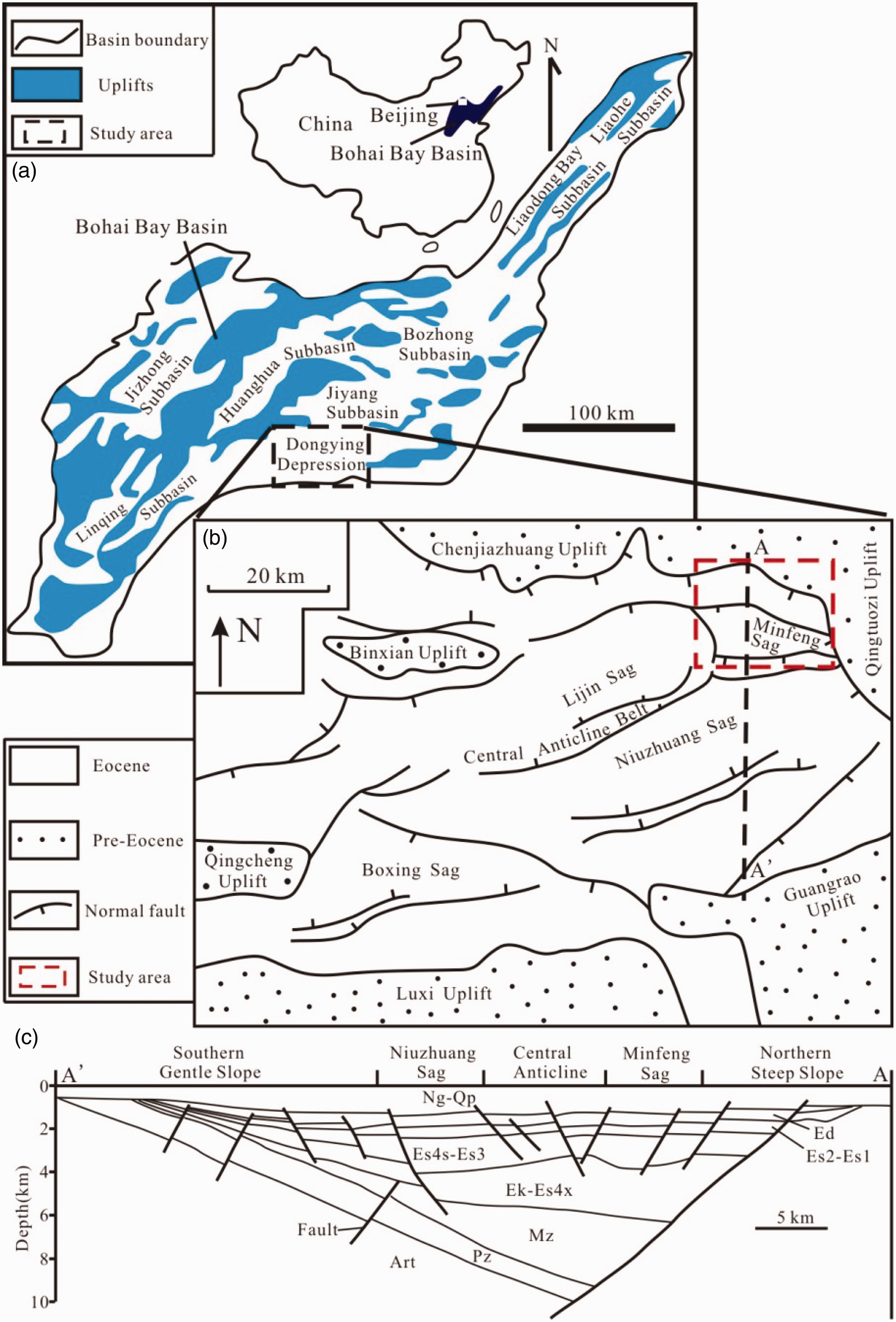
Geological setting
The Bohai Bay Basin, a large petroleum province in eastern China (Figure 1(a)), is a typical Cenozoic rift basin on the North China Craton (Dong et al., 2011; Xu et al., 2008; Zhu et al., 2014) and covers an area of approximately 200,000 km2 (Guo et al., 2010). Bohai Bay Basin is composed of seven subbasins including the Jiyang subbasin (Figure 1(a)). The Dongying depression, located in the southeastern part of the Jiyang subbasin (Guo et al., 2010; Yuan and Wang, 2001), is bounded by the Chenjiazhuang Uplift in the north, the Luxi Uplift and Guangrao Uplift in the south, the Qingcheng Uplift to the west, and Qingtuozi Uplift to the east and covers an area of 5700 km2. The Minfeng sag (Figure 1(b)) is located in the northeastern part of the Dongying depression and is bounded by Chenjiazhuang uplift in the north. The northern margin of the Minfeng sag is a steep slope related to the Chennan listric boundary fault (Jiang et al., 2013) and the axis of maximum subsidence is on the hangingwall adjacent to the boundary fault (Figure 1(c); Wang et al., 2014).
Cenozoic sedimentary rocks in Dongying depression, in ascending order, consist of the Paleocene Kongdian (Ek), Shahejie (Es), and Dongying (Ed) formations, the Neogene Guantao (Ng) and Minghuazhen (Nm) Formation, and the Quaternary Pingyuan (Qp) Formation (Figure 2). The Eocene Es4s interval is an important petroleum reservoir in deep strata in Dongying depression and is the subject of this study (Figure 2; Wan et al., 2010; Wang et al., 2014). The Es4s is characterized by dark lacustrine source rocks interbedded with calcareous mudstones, minor limestone and sublacustrine-fan sandy conglomerates, pebbly sandstones and sandstones (Figure 2). During much of the time of Es4s deposition, seasonal floods carried abundant siliciclastic sediments into the lake and large, sublacustrine fans developed adjacent to the footwall of the Chennan boundary fault and interfingered with more distal mudstones (Figure 2).
Tertiary stratigraphy of the Dongying depression and Lithologic columns of the various facies in the Es4s interval.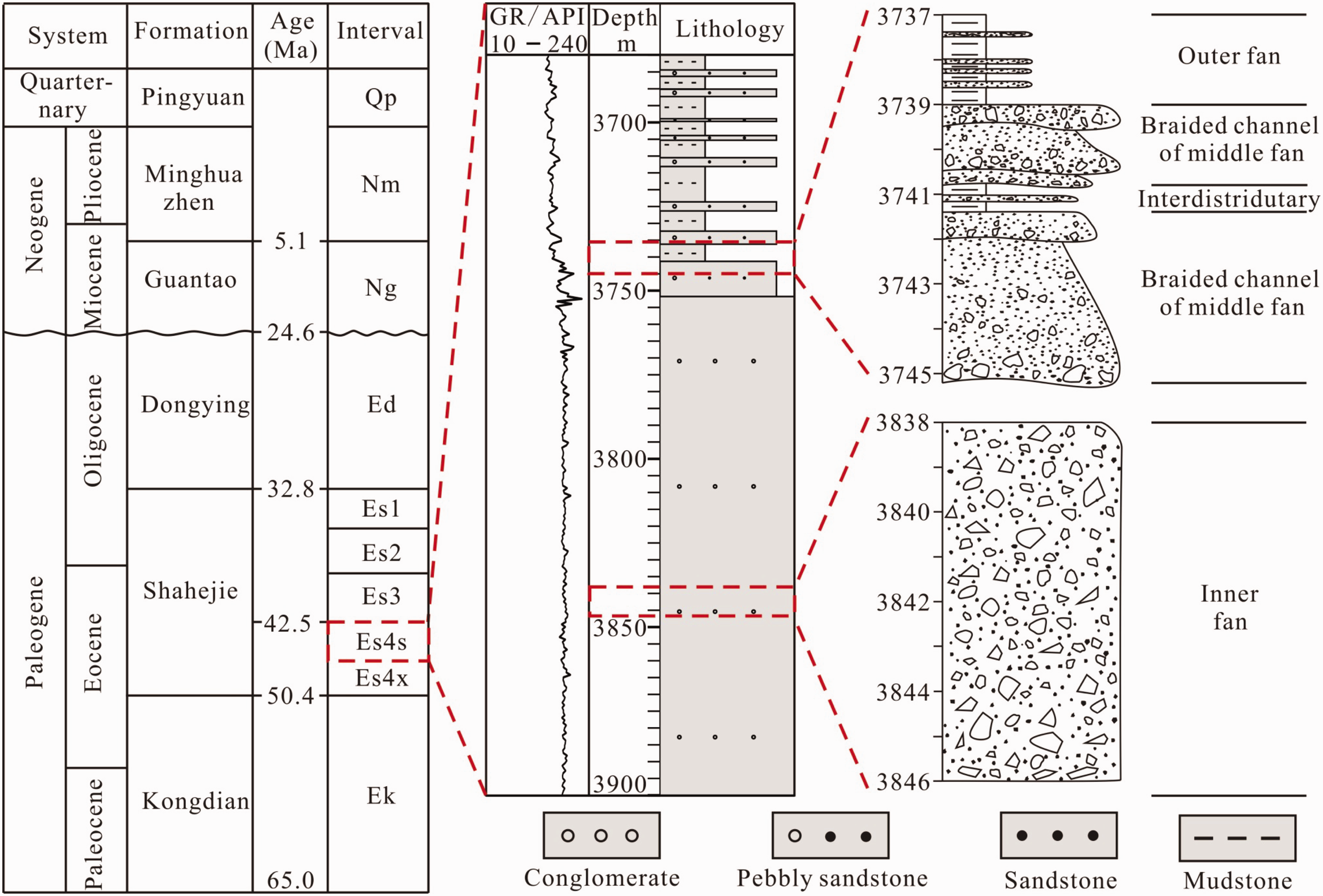
Sublacustrine fan deposits can be subdivided into inner fan, middle fan and outer fan subfacies based on their lithologies, sedimentary structures, and inferred depositional processes (Cao et al., 2014; Sui et al., 2010; Wang et al., 2014). Matrix-supported and grain-supported conglomerates are considered to have been deposited on the inner fan on steep slopes adjacent to the boundary fault and possibly triggered by fault reactivation (Figure 2; cf. Scholz et al., 1990). Pebbly sandstones and sandstones developed on more gentle slopes of the braided middle fan (Figure 2). Graded, thin-bedded siltstones and sandstones were deposited in interdistributary areas in the middle fan and on the outer fan (Figure 2) and grade basinwards into deep lacustrine mudstones.
Samples and methods
This study is based on cores from 14 sampled boreholes in the Eocene Es4s interval at depths ranging from 2500–4000 m. A total of 31 thin sections, impregnated with pink epoxy under vacuum and stained with alizarin red-S and potassium ferricyanide (Dickson, 1966), were examined using a standard petrographic microscope. Percentages of framework grains and authigenic cements were determined by average 400 point counts per thin section (Galehouse, 1971). In addition, five nonstained thin sections were polished for cathodoluminescence microscopy (CL) to distinguish different carbonate minerals (cf. Götze, 2002; Richter et al., 2003). A JSM-5500LV scanning electron microscope (SEM) equipped with a QUANTAX400 energy dispersive X-ray spectra (EDX) was used to determine the morphology and compositions of authigenic carbonate minerals in 16 gold-coated sample chips, under an acceleration voltage of 20 kV using a beam current of 1.0–1.5 nA. In addition, the compositions of carbonate cements were determined based on highly magnified backscatter (BSE).
A total of 31 samples of cements from 9 boreholes in the Es4s interval were prepared for carbon and oxygen isotope analyses. In order to target specific carbonate cement generations, microsamples (0.35–0.45 mg) of different types of cements were drilled from thick petrographic sections using a microscope-mounted dental drill. Each sample was reacted with 100% ortho-phosphoric acid at 70℃ for 4 to 8 h. Carbon and oxygen isotope data were obtained by measuring the CO2 gas evolved upon acidification of the sample. Samples were measured on an Isoprime 100 isotope-ratio mass spectrometer (IRMS) coupled with a peripheral MultiFlow-Geo headspace sampler in the Stable Isotope Facility in the Department of Geosciences at Virginia Polytechnic Institute and State University. Carbon and oxygen isotope compositions are reported in standard delta notation as per mil (‰) deviations from Vienna Pee Dee Belemnite (VPDB). Replicated measurements of the International Atomic Agency Standards (IAEA) CO-1, CO-9, and NBS-18 standards were ±0.04‰ for δ13C, and ±0.18‰ for δ18O ±0.2‰ (1σ). Carbon isotope values are calculated using

A total of 63 cylindrical plug samples (diameter = 25 mm, length = 30–40 mm) at depths ranging from 2500 to 4000 m from 10 boreholes were selected to determine plug porosity at the Exploration and Development Research Institute of the Sinopec Zhongyuan Oilfield Company. The gas expansion method was used for determining porosity and helium was used as the measuring medium (cf. Rahman and McCann, 2012). Moreover, the presence or absence of oil was collected for 31 plug samples from Geological Scientific Research Institute of Shengli Oilfield Company, Sinopec.
Results
Lithologic associations of carbonate cements
Based on core identification, sandstone cemented beds by carbonate range in thickness from 0.02 to 0.5 m (Figure 3). Conglomerates in inner fan contain abundant mud-matrix and are scarcity of carbonate cements. Three lithologic associations containing carbonate-cemented beds have been identified according to the occurrence of sandstones in middle fan and outer fan (Figure 3): carbonate-cemented beds at the top or base of oil-bearing sandstones in middle fan (type I), carbonate-cemented beds closed to mudstones in middle fan (type II) and thin carbonate-cemented beds interbedded with thick mudstones in the interdistributary areas of the middle fan and outer fan (type III).
Lithologic associations of carbonate cements in sandstone cores. (Ia) Carbonate cemented beds overlying oil-bearing sandstone, Yong924, 2888.57 m; (Ib) Carbonate cemented beds underlying oil-bearing sandstone, Yong924, 2920.78 m; (IIa) Carbonate cemented beds closed to the top mudstone and underlain by oil-bearing sandstone in the braided middle fan, Yong924, 2909.94 m; (IIb) Carbonate cemented beds closed to the bottom mudstone and overlain by oil-bearing sandstone in the braided middle fan, Yong924, 2914.22 m; (IIIa) Thin carbonate cemented beds interbedded with thick mudstones in the interdistributary of middle fan, Yong922, 2859.06 m; (IIIb) Thin carbonate cemented beds interbedded with thick mudstones, Y22-22, 3355.4 m. Ccb: carbonate-cemented beds; Obs: oil-bearinig sandstone; M: mudstone.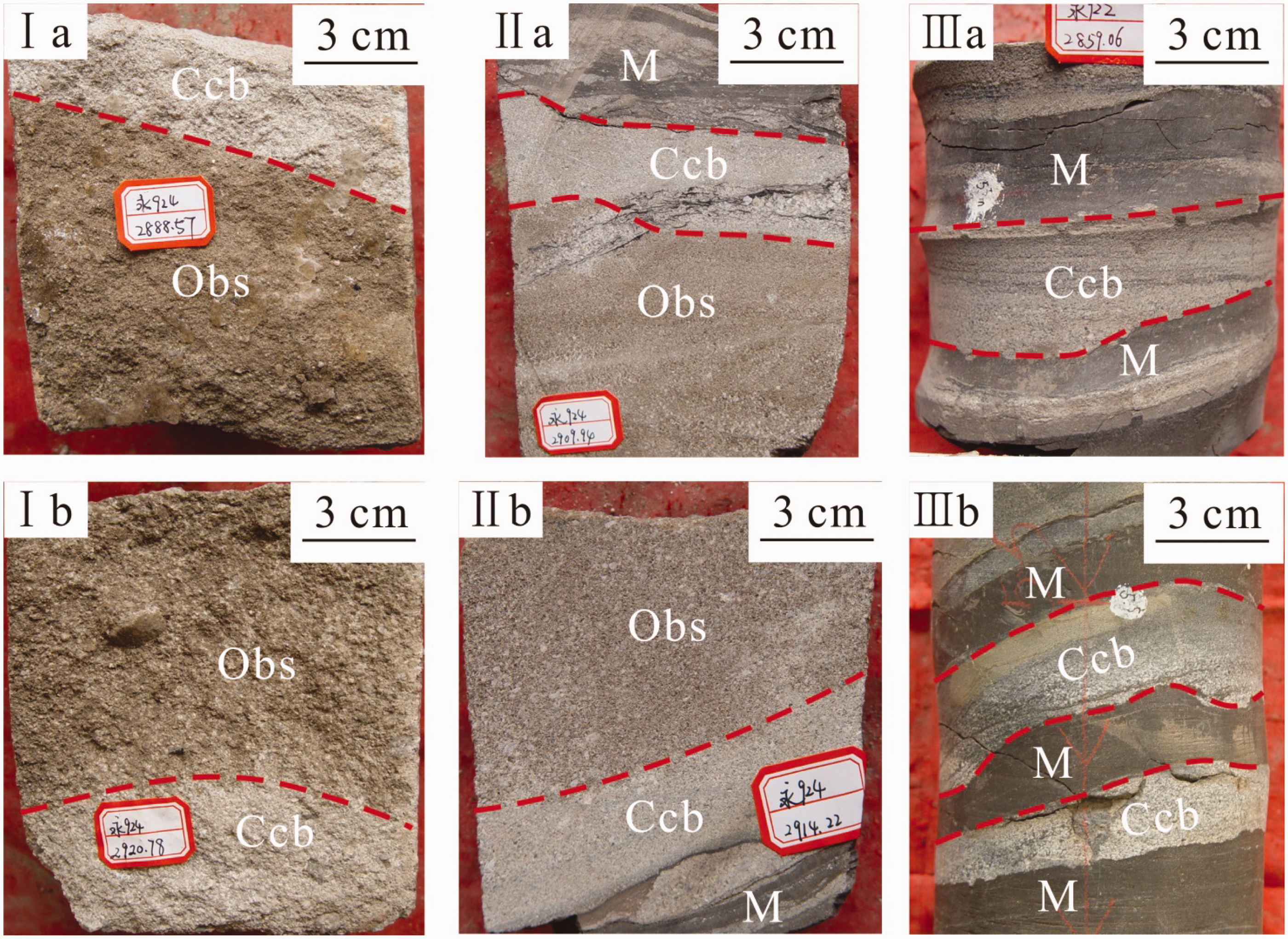
Types of carbonate cements
Carbonate cements are the most abundant diagenetic mineral and range in abundance from 2.5 to 22.5%. Cements include calcite (0.5–13.5%), dolomite (0.5–5.5%), ferroan calcite (1.5–16%), and ankerite (2–18.5%) (Figure 4). In stained thin sections, calcite cements are pink, ferroan calcite cements are purple, ankerite cements are dark blue, and dolomite cements are unstained.
Plots showing the variation in the percentages of carbonate cements with depth (31 data points from 10 boreholes in Es4s interval). The red dots refer to the samples whose distance is less than 0.6 m to the nearest mudstone–sandstone contacts whereas the black dots represent the samples whose distance is more than 0.6 m.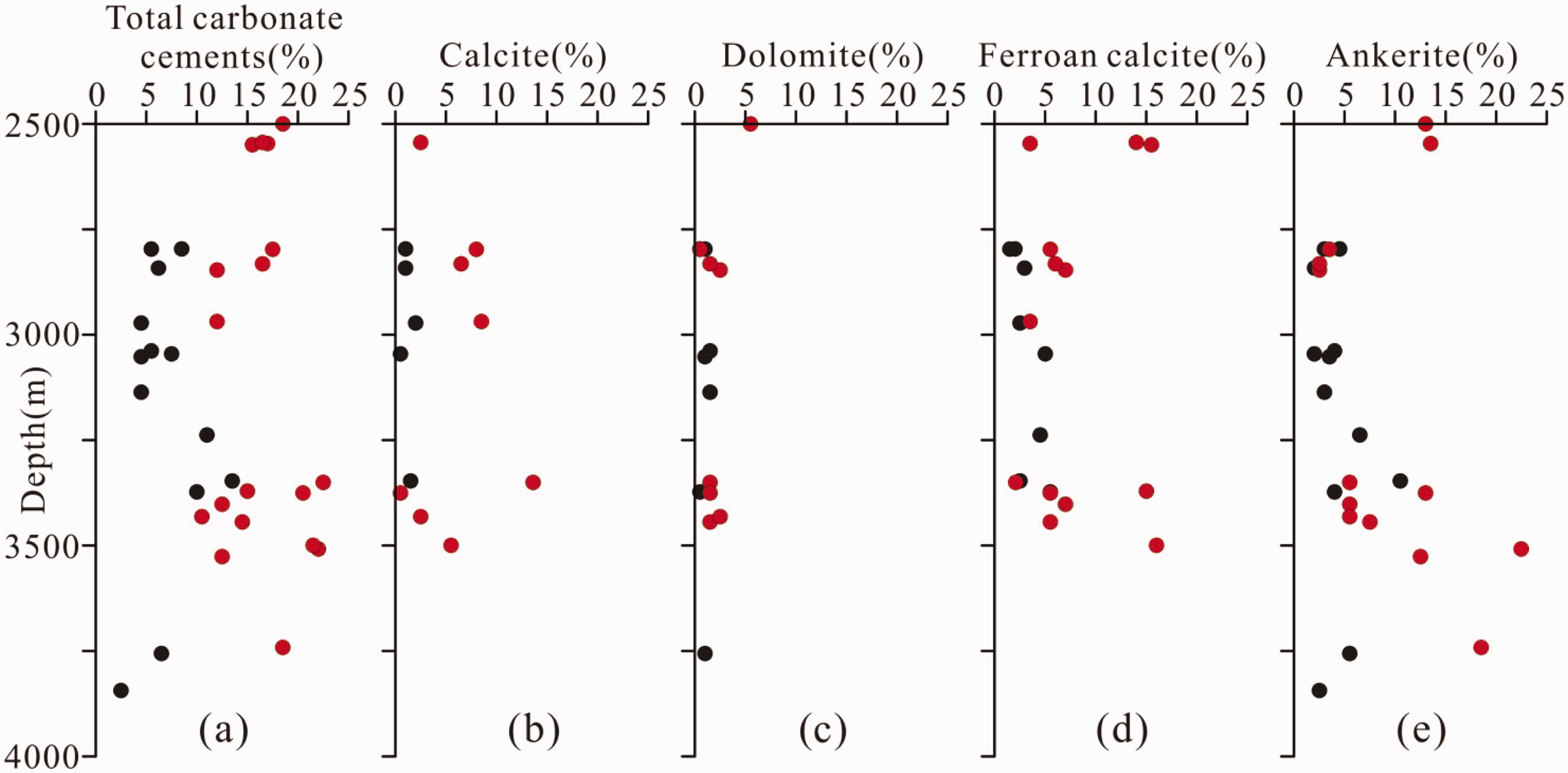
Calcite mainly occurs as poikilotopic blocky or pore-filling crystals (10–500 µm) (Figure 5(a) and (b)), which normally fills in primary pores and replaces feldspar and rock fragments. The pervasively calcite-cemented sandstones are normally with loose-packed grains and dominantly point-line grain contacts. Comparable calcite cements have been reported elsewhere (Mansurbeg et al., 2008; Salem et al., 2000). Based on CL imaging, calcite is always zoned and engulfed by ferroan calcite (Figure 5(b)).
Photomicrographs of different carbonate cements in the Es4s interval: (a) Calcite occurring as poikilotopic pore-filling cements, Well Y22-22, 3350.25 m; (b) CL imaging: Calcite engulfed by ferroan calcite, Well Y22-22, 3507.9 m; (c) Dolomite engulfed by ferroan calcite, Well Y22-22, 3402m; (d) BSE imaging: Dolomite engulfed by ankerite, Well Y22-22, 3350.25 m; (e) Ferroan calcite occurring as isolated pore filling cements, Well Yong920, 3374.1 m; (f) Ferroan calcite filling in feldspar dissolution pores, Well Yong921, 2797.54 m; (g) Ankerite rhombs as pore-filling cements, Well Yong928, 3757m; (h) BSE imaging: Biotite replaced by ankerite, Well Y22, 3239.1 m; (i) Feldspar dissolution pores filled with ankerite, Well X21, 3053.65 m. Ca: Calcite; Dol: Dolomite; Fc: Ferroan calcite; Ank: Ankerite; Bio: Biotite; Q: Quartz; F: Feldspar; Fdp: Feldspar dissolution pores.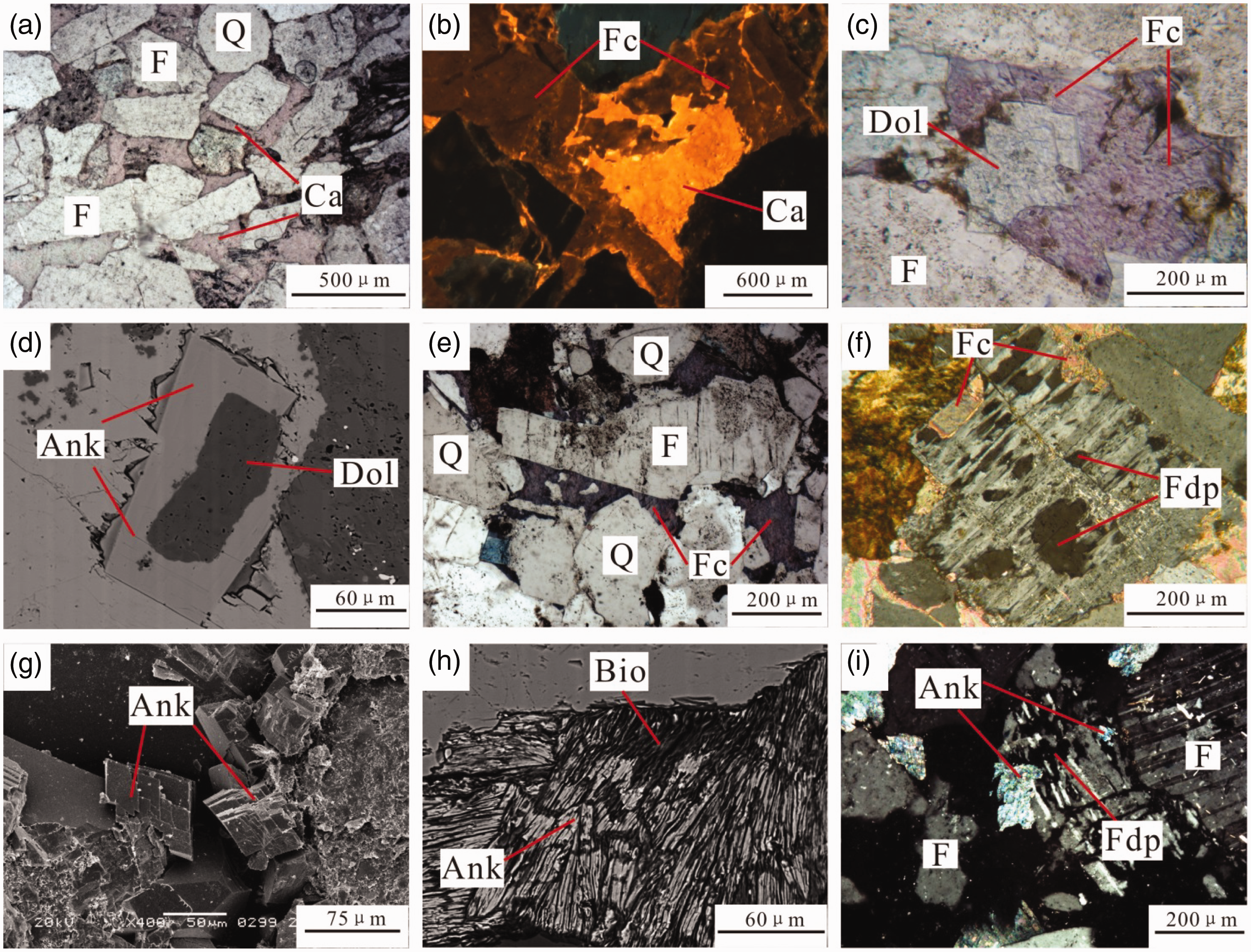
Dolomite cements occur as sparry aggregates (5–300 µm) and is commonly composed of rhombohedral crystals (Figure 5(c)), which are referred to as “euhedral or rhombohedral dolomite” elsewhere (Benito et al., 2006; Gillhaus et al., 2010; Meister et al., 2013; Schoenherr et al., 2009). It fills primary intergranular pores as poikilotopic and pore-filling cement. Based on BSE imaging, dolomite is commonly zoned and replaced by ankerite (Figure 5(d)).
Ferroan calcite typically occurs as isolated pore fillings or as scattered patchy crystals (5–200 µm) (Figure 5(e)). It typically occurs as cement, fracture and feldspar dissolution pore filling (Figure 5(f); cf. Lønøy et al., 1986), replacement of framework grains or replacement of calcite and dolomite cements (Figure 5(b) and (c)). Comparable textural relationships of dolomite inclusions within ferroan calcite cements have been reported by Benito et al. (2006).
Ankerite cements occur mainly as scattered euhedral rhombs (5–150 µm) (Figure 5(g)) and patchy aggregates (10–250 µm) (Figure 5(h); cf. Hendry et al., 2000; Kantorowicz, 1985). Ankerite normally fills grain fractures and feldspar dissolution pores (Figure 5(i), cf. Chowdhury and Noble, 1996), and replaces biotite (Figure 5(h)), calcite and dolomite (Figure 5(d)). Comparable descriptions of precursor calcite and dolomite cements replaced by ankerite cements have been reported elsewhere (Hendry et al., 2000; Kantorowicz, 1985).
Chemical compositions of carbonate cements
Quantitative SEM-EDS point analysis was used to identify chemical compositions of carbonate cements. In total, 118 points were analyzed including multiple analyses from zoned carbonate cements (Table 1). Elemental weight percentages (%) for Mg2+, Ca2+, and Fe2+ were used to calculate moles which were normalized to molecular percentages. These percentages were plotted on a ternary diagram with calcite, magnesite, and siderite end members (Figure 6).
Chemical compositions of carbonate cements in the Es4s interval (118 data points from 6 boreholes in the Es4s interval). Ca: Calcite; Fc: Ferroan calcite; Dol: Dolomite; Ank: Ankerite. Chemical compositions of carbonate cements based on SEM-EDS analyses in the Es4s interval. Bdl: below detect limit.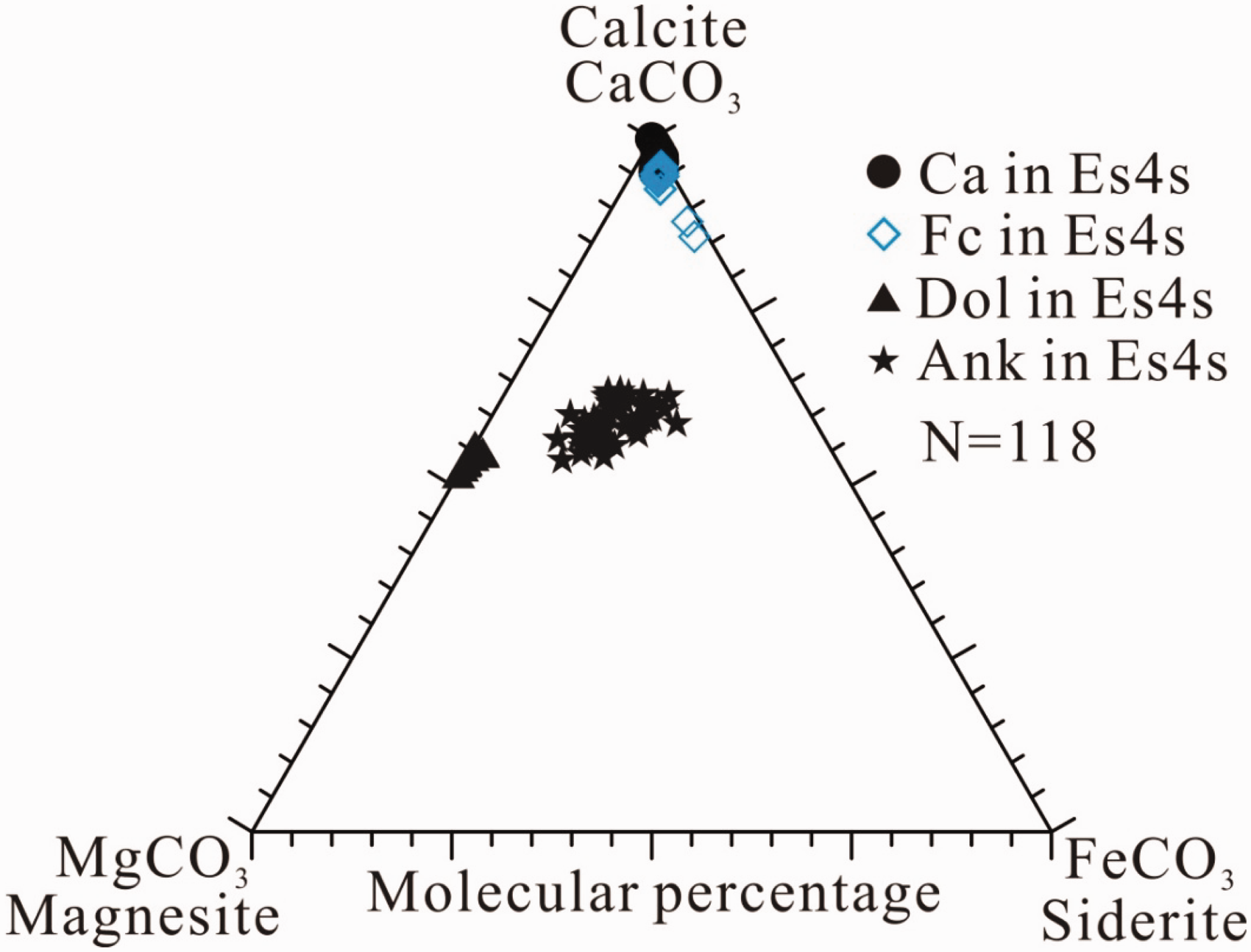

The results clearly define four distinct clusters (Figure 6). Calcite cements contain low abundances of FeCO3 (up to 3.0 mole%, ave. 2.3 mole%) whereas ferroan calcite cements are characterized by relatively high abundances of FeCO3 (3.0 to 12.4 mole%, ave. 4.0 mole%). Dolomite cements contain very low concentrations of FeCO3 (up to 1.7 mole%, ave. 0.2 mole%) but significant contents of MgCO3 (43.7 to 48.3 mole%, ave. 45.7 mole%). Ankerite cements are enriched in FeCO3 (11.5 to 23.7 mole%, ave. 15.3 mole%) and MgCO3 (16.4 to 35.9 mole%, ave. 25.4 mole%).
Isotopic compositions of carbonate cements
Oxygen and carbon isotopic compositions, calculated precipitation temperatures of carbonate cements in the Es4s interval.

Discussion
Distributions of carbonate cements
In terms of core observations, carbonate-cemented sandstones in the braided middle fan and outer fan, normally occur at or near the mudstone-sandstone contacts (Figure 3). Based on point counting data, the total amounts of carbonate cements are closely associated with the distance to nearest mudstone–sandstone contact. The total carbonate cements normally occupy more than 10% when the distance less than 0.6 m, representing 5–10% when the distance ranging from 0.6 to 2 m, and less than 5% if the distance more than 2 m (Figure 7(a)). Moreover, the carbonate-cemented beds (the distance to mudstone–sandstone contacts less than 0.6 m) commonly contain ferroan calcite and ankerite cements predominantly and less calcite and dolomite cements, especially when the burial depth is greater than 3000 m (Figure 4).
(a) Relationship between the total amounts of carbonate cements and the distance to the nearest mudstone-sandstone contacts (31 data points from 10 boreholes in Es4s interval); (b) Plot of total carbonate cements versus plug porosity in the sandstone reservoirs (31 plug porosity data as well as oil testing data from 10 boreholes in Es4s interval).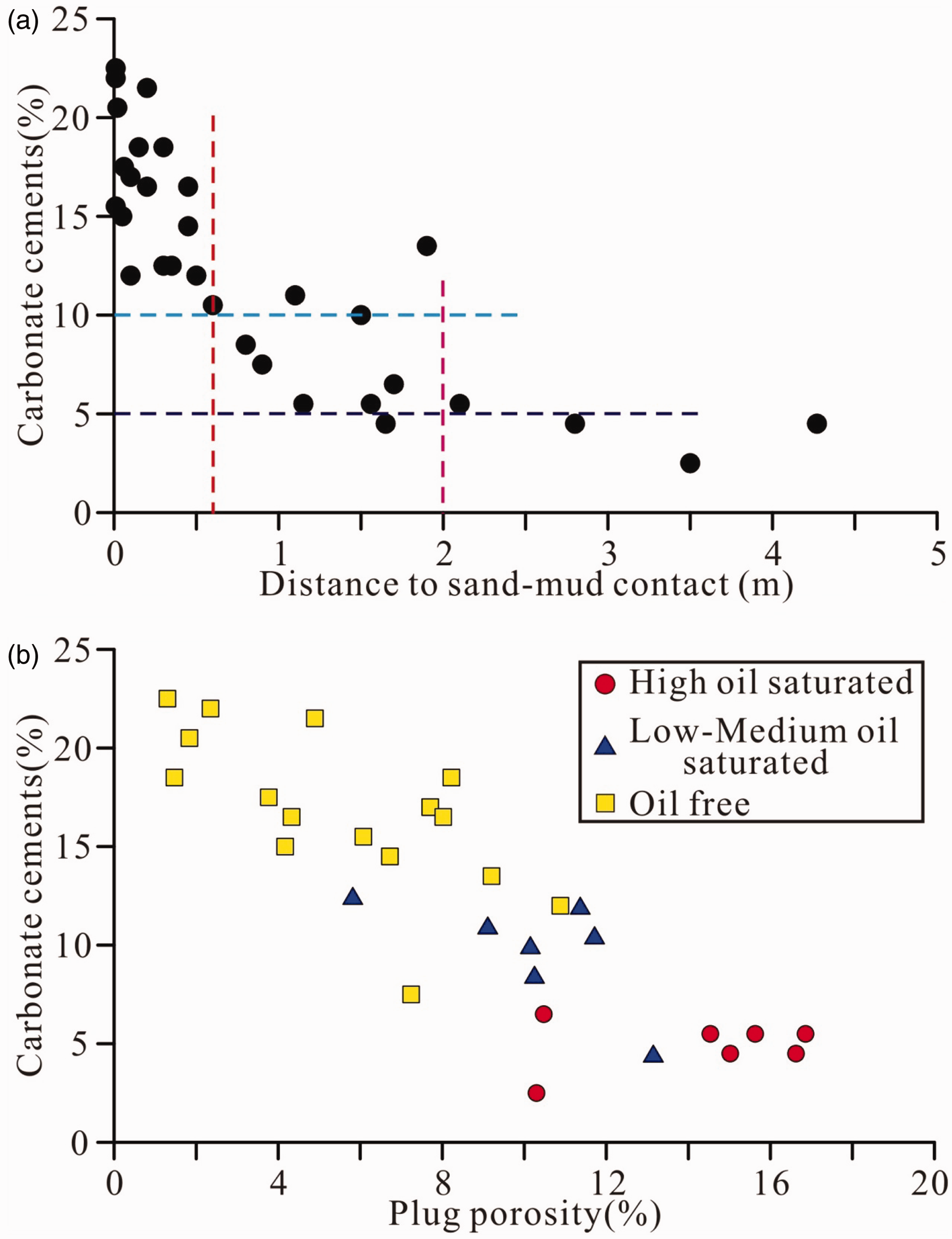
Origin of carbonate cementation
Lacustrine sedimentary dolomites from the Es4 interval have δ18OPDB values that range from −1.5 to +0.33‰ (ave. −0.85‰) (Liu, 1998). Assuming a water temperature of 10℃, the δ18O value of lake water was about −5.4‰ based on the equation (2) below of Irwin et al. (1977). This value is assumed to represent the oxygen isotopic composition of pore waters at the eogenetic stage of diagenesis. Calculated precipitation temperatures range from 34.6 to 51.2℃ for calcite cements based on fractionation equation (1) and from 49.6 to 72.8℃ for dolomite cements based on equation (2) below of Irwin et al. (1977).


The range in δ13C values for early calcite and dolomite cements in Es4s (−0.65 to +5.59‰) suggest that dissolved inorganic carbon, derived from methanogenic fermentation of organic matter in adjacent mudstones, contributed carbon to these cements (cf. Dutton, 2008; Irwin et al., 1977). Early-formed carbonate cements in adjacent mudstones occur in quantities up to 30% (Yuan et al., 2015) and have δ13C values that range from 3.7 to 7.3‰ (Zhang et al., 2013). The more positive δ13C values for early calcite and dolomite cements in Es4s are attributed mainly to dissolution of carbonate cements in adjacent mudstones in the presence of CO2 produced by methanogenic fermentation (cf. Dutton, 2008; Irwin et al., 1977), and explain the intensive calcite or dolomite cementation at or near mudstone–sandstone contacts.
Petrographic observations discussed previously are interpreted to indicate that ferroan calcite and ankerite were precipitated during the mesogenetic (deep burial) stage of diagenesis. This followed feldspar dissolution as evidenced by dissolution pores in feldspar that are commonly filled with these cements (Figure 5(f) and (i)). Previous studies have shown that pore waters become isotopically heavier in δ18O with increasing temperature as their isotopic compositions are modified by feldspar dissolution (Fayek et al., 2001) as well as other fluid-rock interactions (e.g. transformation of smectitic clay minerals in the shales) (Anjos et al., 2000). δ18OPDB values of deep-burial, pore-fluids from which ferroan carbonate precipitated are assumed to range −3 to +2‰ (cf. Anjos et al., 2000; Kantorowicz, 1985; Yuan et al., 2015). In the present study, an average δ18OPDB value of 0‰ was assumed for the fluids from which ferroan calcite and ankerite cements were precipitated. Using this assumption, precipitation temperatures can be calculated as 110–125℃ for ferroan calcite, 110–153℃ for ankerite in Es4s (Table 2, cf. Irwin et al., 1977).
Ferroan calcite and ankerite cements probably were derived from dissolution and re-precipitation of early-formed calcite and dolomite cements (cf. Mansurbeg et al., 2008; Morad et al., 2000) as evidenced by both calcite and dolomite either replaced or enclosed by ferroan calcite and ankerite (Figure 5(b) to (d)). δ13C for ferroan carbonate cements in Es4s (+1.04 to +3.29‰) probably indicate a mixture of carbon derived from dissolution of early formed calcite and dolomite in sandstones, as well as organic carbon from adjacent mudstones. In addition, ferroan calcite and ankerite cements contain variable content of irons as evidenced by chemical compositions of carbonate cements (Figure 6). The sources of iron for ferroan carbonate cements are closely associated with transformation of illite to smectite in adjacent mudstones (Dutton, 2008; Hendry et al., 2000; Kantorowicz, 1985), or derived from dissolution or replacement of iron oxides and silicate minerals (e.g., biotite; cf. Anjos et al., 2000). It is evidenced by the replacement of biotite by ankerite (Figure 5(h)). Dissolution of carbonate cements in mudstones as well as early formed calcite and dolomite cements in sandstones is attributed to decarboxylation of organic acids. These acids likely were derived from adjacent source rocks undergoing hydrocarbon maturation (cf. Hendry et al., 2000).
Implications for reservoir quality
The early formed calcite and dolomite pervasively fill in primary porosity and occlude pore throat, whereas ferroan carbonate cements fill in residual primary porosity as well as secondary porosity created by feldspar dissolution. Significant inverse relationships occur between the contents of total carbonate cements and plug porosity (Figure 7(b)). In addition, high oil saturated sandstones have high plug porosity (10.3–16.9%, ave. 14.2%) and low amounts of carbonate cements (2.5–6.5%, ave. 4.9%), whereas low-medium oil saturated sandstones representing medium plug porosity (5.8–13.1%, ave.10.2%) and medium amounts of carbonate cements (4.5–12.5%, ave.9.9%), and oil-free sandstones occupying lowest plug porosity (1.3–10.9%, ave.5.5%) and highest amounts of carbonate cements (7.5–22.5%, ave.16.6%) (Figure 7(b)). Therefore, it is indicated that carbonate cements are the predominated cements and critically influence reservoir porosity and oil saturation (cf. Dutton, 2008).
As discussed above, extensively carbonate-cemented beds are more common at or near sandstone-mudstone contacts (Figure 3). Furthermore, beds at the top and base of the sandstone body occupy higher volumes of carbonate cements than those are removed from the sandstone-mudstone contacts (Figure 7(a), cf. Dutton, 2008). Comparable distribution patterns of carbonate-cemented zones are reported elsewhere (Dutton, 2008; Nyman et al., 2014; Wolela, 2002). Therefore, minor porosity could be developed due to pervasively cemented by carbonates when sandstone reservoirs closed to sandstone–mudstone contacts (Figure 8). In comparison, abundant primary and secondary porosities commonly occur due to weak carbonate cementation when sandstones are removed from mudstone–sandstone contacts (Figure 8). Thus, high plug porosity is mainly developed at the central section of sandstones vertically and the porosity decreases sharply toward the top and base of the sandstones which are closed to mudstones (Figure 8).
Characteristics of carbonate cementation and reservoir quality with different distance to mudstone–sandstone contact in different burial of the Es4s interval.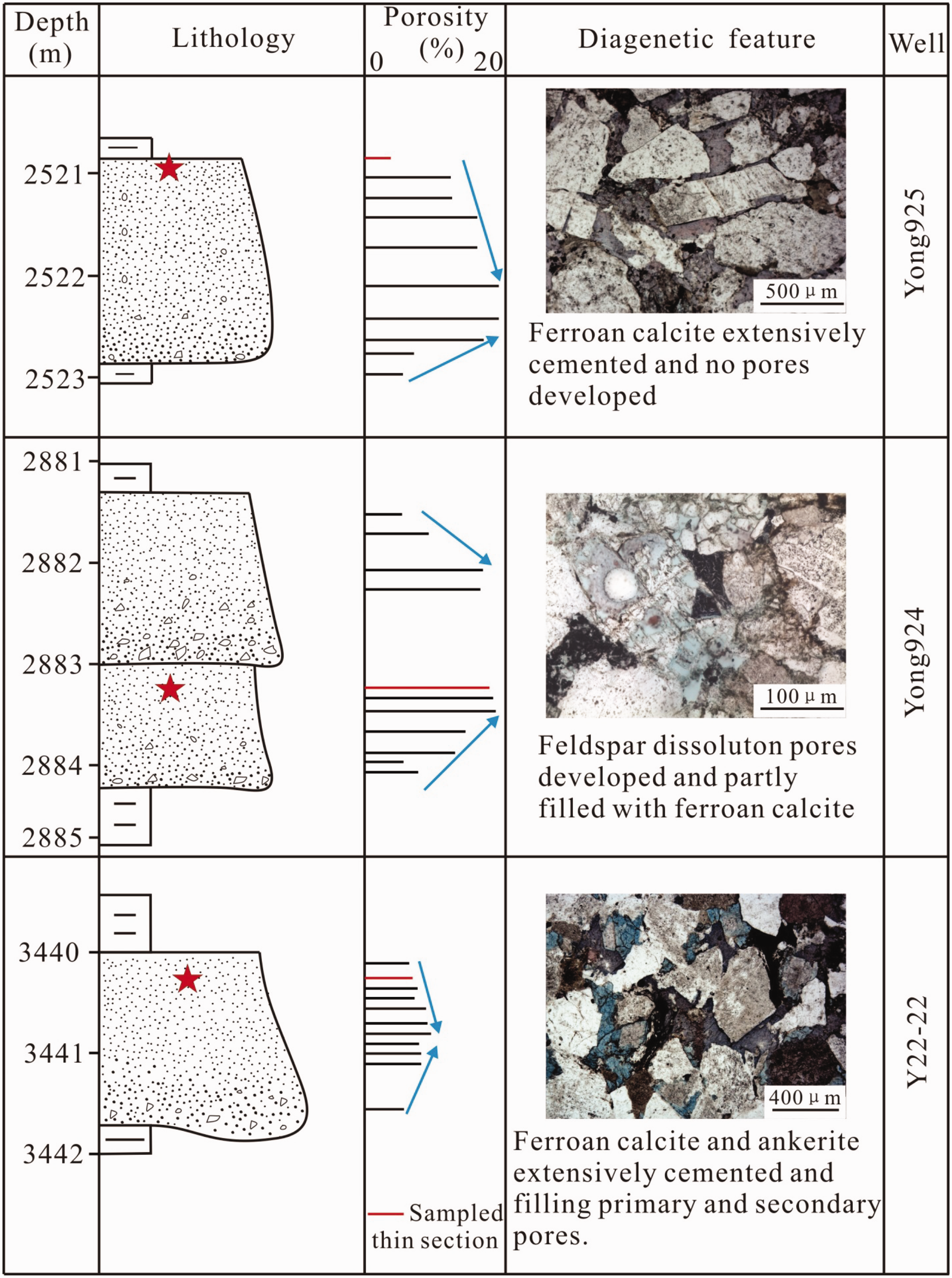
The carbonate-cemented beds which are closed to mudstones vary from 0.02 to 0.5 m in thickness vertically. However, the lateral extent of the carbonate-cemented beds observed in the core is probably difficult to determine between wells. It might vary from tens to hundreds meters depending on the source and geochemical conditions of carbonate precipitation as well as geometry and thickness of sandstone body (cf. Dutton, 2008). The carbonate-cemented beds are commonly characterized by dry beds (Figure 3) and served as fluid-flow barriers (Anjos et al., 2000; Dutton et al., 2002; Kantorowicz, 1985) or seals for petroleum (Wang et al., 2014; Winter et al., 1995). Therefore, the presence of carbonate cements is mainly contributed to reservoir deterioration and significant reservoir heterogeneity in deep burial. Thus, the origin and distribution of carbonate cements should be evaluated during reservoir development because any such fluid flow barriers could make flow paths more tortuous and these will adversely affect petroleum recovery (cf. Dutton, 2008; Kantorowicz, 1985).
Conclusions
Carbonate cements are the most abundant diagenetic minerals in Eocene Es4s interval, northern Dongying depression, Bohai Bay basin. Three types of carbonate-cemented beds are identified and normally occur at or near mudstone–sandstone contacts. The carbonate-cemented beds contain ferroan calcite and ankerite cements predominantly and less calcite and dolomite cements, especially in the deep burial.
Precipitation temperatures of calcite and dolomite range from 34.6–72.8℃, indicating early diagenetic products, whereas ferroan calcite ankerite cements are formed at 110–153℃, representing relatively late diagenetic minerals. The high δ13CPDB values (−0.65 to +5.59‰) for calcite and dolomite cements suggest that dissolved inorganic carbon, derived from methanogenic fermentation of organic matter in adjacent mudstones. The low δ13CPDB values (+1.04 to +3.29‰) for ferroan calcite and ankerite cements probably indicate a mixture of carbon derived from decarboxylation of organic acid as well as from the dissolution of early formed carbonate cements.
Carbonate cements are the most abundant cements and critically control reservoir porosity and oil saturation. High plug porosity is mainly developed at the central section of sandstones vertically and the porosity decreases sharply toward the top and base of the sandstones due to extensively carbonate-cemented beds. The cemented beds varies from 0.02 to 0.5 m in thickness vertically and might extend from tens to hundreds meters laterally. It could be served as fluid-flow barriers and seals for petroleum, and result in reservoir deterioration and significant heterogeneity in deep burial.
Footnotes
Acknowledgments
Benben Ma thanks the China Scholarship Council (CSC) for supporting his one year research stay at Virginia Tech in the U.S.A. We acknowledge Geological Scientific Research Institute of Shengli Oilfield Company, Sinopec for access to the samples and data and for permission to publish.
Declaration of conflicting interests
The author(s) declared no potential conflicts of interest with respect to the research, authorship, and/or publication of this article.
Funding
This work was supported by the National Natural Science Foundation of China (41102058), National Oil&Gas Major Project of China (2011ZX05006-003), Key Program for National Natural Science Foundation of China (U1262203), and Excellent Doctoral Dissertation supported by China University of Petroleum (LW140101A).