




Abstract
The aim of this study was to obtain pyrolysis products from cherry laurel seed in the presence of Na2CO3. Bio-liquid, solid, and gaseous products were obtained from pyrolysis of cherry laurel seed samples. Cherry laurel seed samples were heated at a rate of 15 K/min from 298 K to a maximum temperature of 775 K. The nominal heating time was 30 min. The highest yield of bio-liquid product was 39.3%, which can be obtained from the pyrolysis with 5% Na2CO3. It was observed that the yield of bio-liquid product decreases with further increase of catalyst ratio.
Introduction
Biomass is a substantial renewable resource that can be used as a source of electricity, liquid, solid and gaseous fuels, heat, and chemicals (Ozturk, 2014; Peres et al., 2013; Qin et al., 2009). The methods available for energy production from biomass can be classified into two principal categories: (a) thermochemical conversion and (b) biological conversion processes. There are three main types of thermochemical conversion processes to producing biofuels and chemicals from biomass materials: pyrolysis, gasification, and combustion (Babu and Sheth, 2007; Kumar et al., 2009).
Pyrolysis is known to be a precursor to other thermo-chemical processes and is simply defined as the chemical changes occurring when heat is applied to biomass in the absence of oxygen (Demirbas, 2009a). It is a promising route to produce solid (bio-char), bio-liquid (bio-oil), and gaseous products (mainly CO2, CO, CH4, H2, C2H6, C2H4, and minor amounts of higher gaseous organics) from biomass as alternative energy sources (Demirbas and Balat, 2007). Pyrolysis is the most effective method for producing bio-fuel with high fuel-to-feed ratios (Jahirul et al., 2012). The liquid and gaseous products can be used in engine and turbine for power generation. Bio-char product is useful as a source of renewable energy or for other applications, such as metal reductant, soil amendment, and the production of activated carbon and biocarbon electrodes (Blasi, 2008).
Temperature and residence time are two main factors for the product distribution of pyrolysis. Low temperatures and longer residence times favor the production of bio-char, whereas the high temperatures and short residence times lead to high yields of bio-liquid product (Balat et al., 2009). The most interesting temperature range for biofuel production from biomass pyrolysis is between 625 and 775 K (Demirbas, 2009b). Depending on the operating conditions (temperature, residence time, heating rate, and particle size), the pyrolysis process can be divided into three different categories: (a) conventional pyrolysis (carbonization), (b) fast pyrolysis, and (c) flash pyrolysis (Balat et al., 2009). If the aim is the production of mainly bio-liquid and gaseous products, a fast pyrolysis is recommended (Demirbas, 2005a). Fast pyrolysis is associated with tar at low temperature (675–775 K) (Bridgwater, 2003). At higher fast pyrolysis temperatures, the major product is gas. Depending on the feedstock characteristics, the process can produce 60–75 wt% of bio-liquid product, 15–25 wt% of bio-char, and 10–20 wt% of gas product (Mohan et al., 2006).
The production of bio-liquid and other products by pyrolysis of biomass species has been extensively studied during the past years (Demiral, 2014; Demirbas et al., 2013; Ertas and Alma, 2010; Özbay and Pütün, 2014). The aim of this study was to determine the yields of bio-liquid, bio-char, and gaseous products obtained from pyrolysis of cherry laurel (Prunus Laurocerasus L.) seed in the presence of Na2CO3.
Experimental
In this study, cherry laurel (karayemis or taflan in Turkish) seeds were used as biomass feedstocks. Cherry laurel is a popular fruit in the East Black Sea region of Turkey. The samples of cherry laurel were collected from Bozlu village of Besikduzu, Trabzon, Turkey. Before experiments, the air dried cherry laurel seed samples were grounded by grinder and sieved with a sieve shaker to obtain particle size between 1.5 and 2.3 mm.
The samples were subjected to pyrolysis in the presence of Na2CO3 with various percentages: 2, 5, and 7%. Cherry laurel seed samples were heated over a range of temperature from 298 to 775 K with a heating rate of 15 K/min.
The pyrolysis experiments were carried out in a laboratory scale apparatus. The scheme of the pyrolysis is shown in Figure 1. The main element of this device was a vertical reactor of stainless-steel. Figure 2 shows pyrolysis reactor. The reactor was inserted vertically into an electrically heated furnace and provided with an electrical heating system power source. The nominal heating time was 30 min. For each run, the heater was started at 298 K and terminated when the desired temperature.
Schematic representation of pyrolysis unit: (1) heater, (2) glass container, (3) thermometer, (4) heat exchanger, and (5) container. The pyrolysis reactor.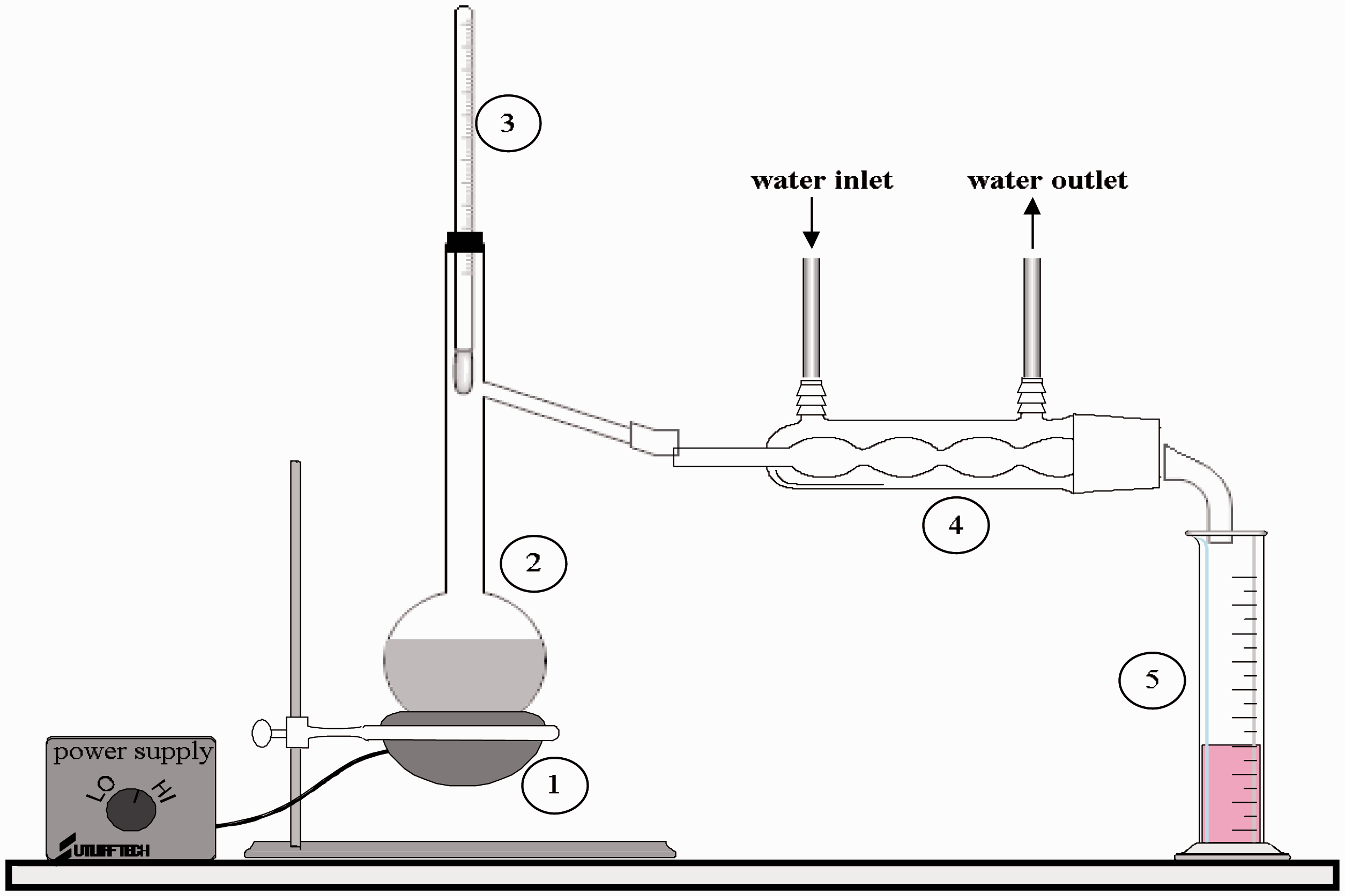
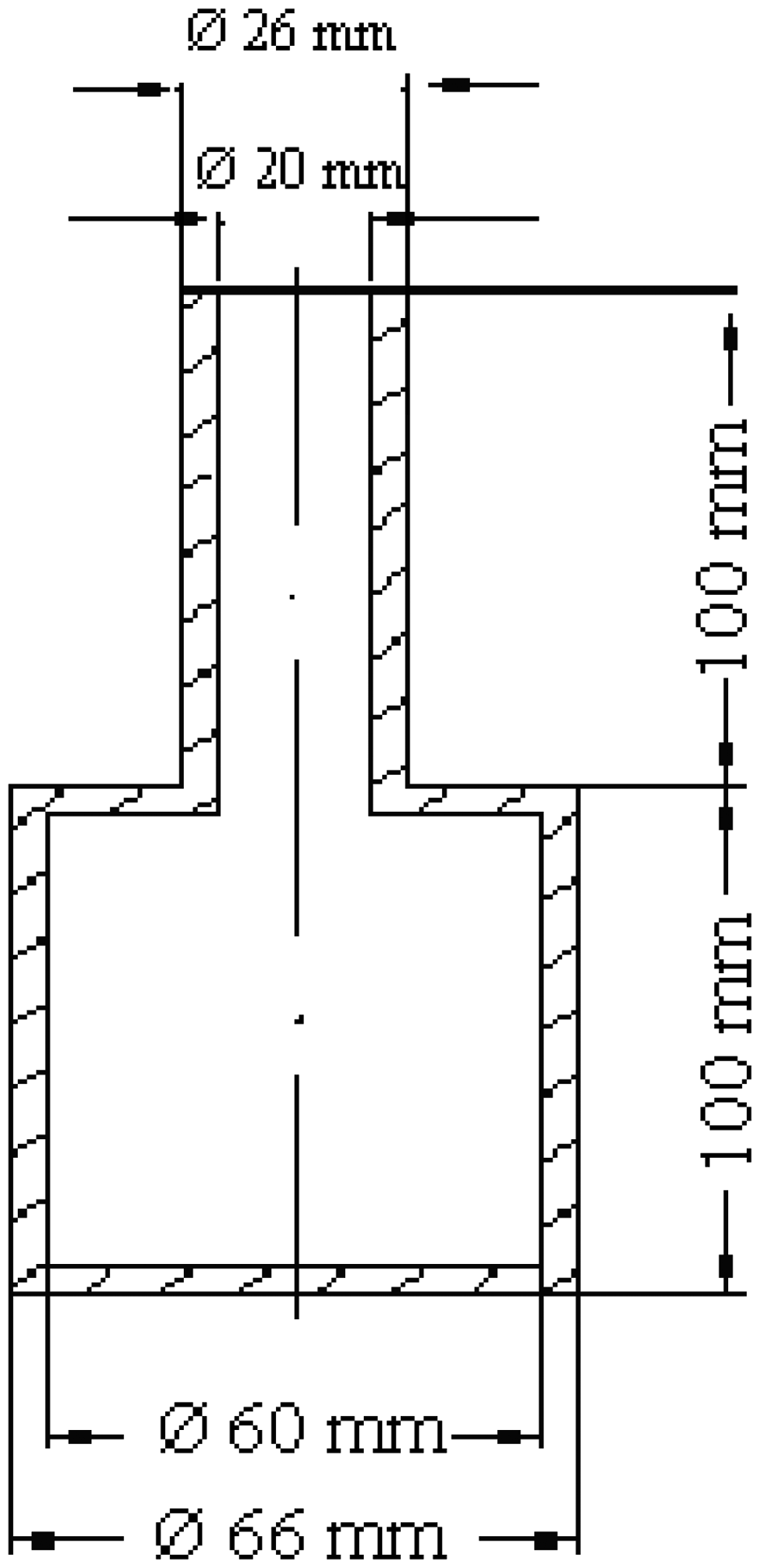
Prior to the pyrolysis experiments, the samples were oven-dried for 2 h at a temperature of 376 ± 2 K until a constant weight. All the yields were expressed as wt% of the dry and ash-free (daf) basis. The bio-liquid products from pyrolysis of cherry laurel seed samples passing into the condenser were collected in an Erlenmeyer flask at atmospheric pressure.
Results and discussion
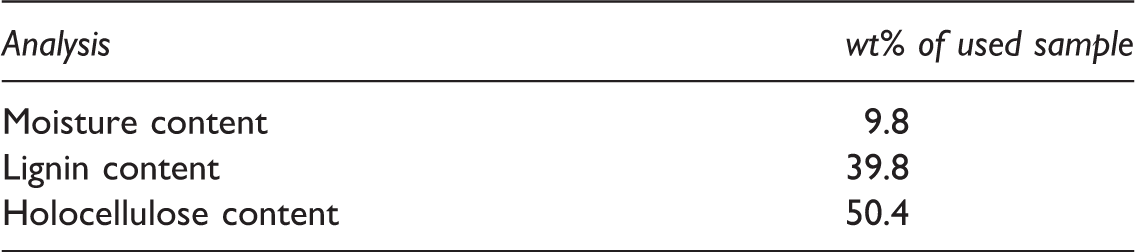
The average analyses of cherry laurel seed samples.

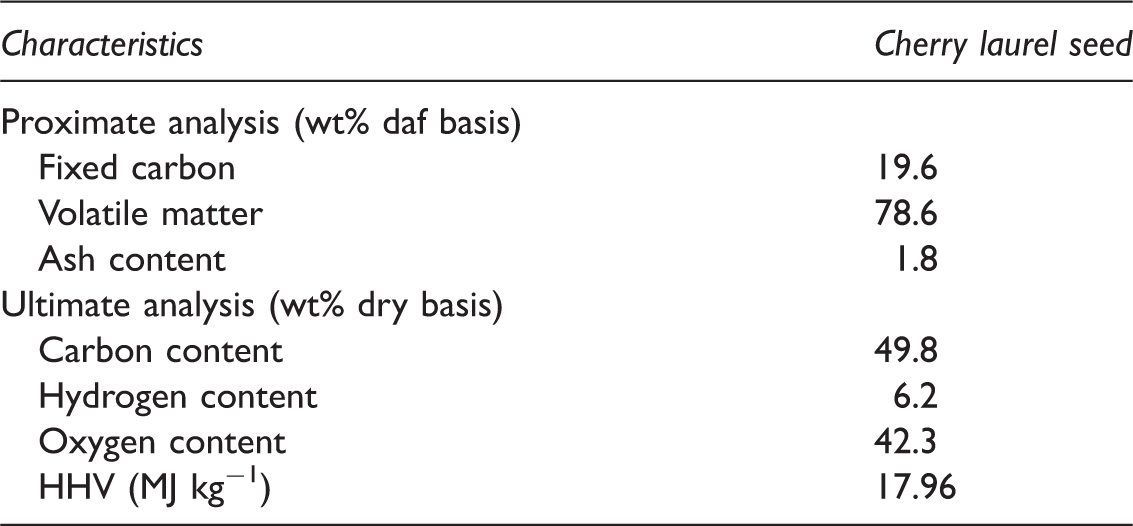
Proximate and ultimate analysis of cherry laurel seed.
HHVs of biomass materials can be calculated from the proximate analysis data such as fixed carbon and volatile matter given in the literature (Demirbas, 1997; Yin, 2011). Higher heating values of cherry laurel seed samples as a function of fixed carbon was calculated from equation (2) (Demirbas, 1997):

Volatile matter refers to the part of biomass material that is released when the biomass is heated up to 673 to 773 K (Mitchual et al., 2014). Biomass generally contains a high level of volatile matter (up to 80%). Biomass, with high volatile matter content, generally produces high quantities of bio-oil and syngas (Demirbas, 2005b). Volatile matter content of cherry laurel seed was recorded as 78.6 wt% daf (Table 2). It has a fixed carbon percentage of 19.6 wt% daf (Table 2). With high volatile matter content and low fixed carbon content, cherry laurel seed samples have a typical biomass structure.
Woody biomass has a low ash content ranging from 1 to 5% (National Institute of Building Sciences (NIBS), 2014). Cherry laurel seed has low ash content of around 1.8% (Table 2). The low ash content of biomass gives high volatile yield and bio-liquid yield increase, and it decreases gaseous yield (Lou et al., 2013).
The higher heating value (HHV in MJ/kg) includes the latent heat of vaporization of water in the combustion products, because the water vapor was allowed to condense to liquid water.
The higher heating value for cherry laurel seed was recorded as 17.96 MJ/kg (Table 2). The ultimate analysis gives the elemental composition of the samples in the dry basis. The major components of biomass fuel are carbon (30–60% of dry matter), oxygen (30–40% of dry matter), and hydrogen (5–6% of dry matter) (Chaney, 2010). It also contains a small proportion of nitrogen and sulfur (<1% of dry matter) (Chaney, 2010). The average contents of carbon, hydrogen, and oxygen for cherry laurel seed were found to be 49.8%, 6.2%, and 42.3%, respectively.
Figure 3 shows the plot for total weight loss versus time by pyrolysis of cherry laurel seed sample in the presence of Na2CO3. The total weight loss was defined as,
Plots for total weight loss versus time by pyrolysis of cherry laurel seed.
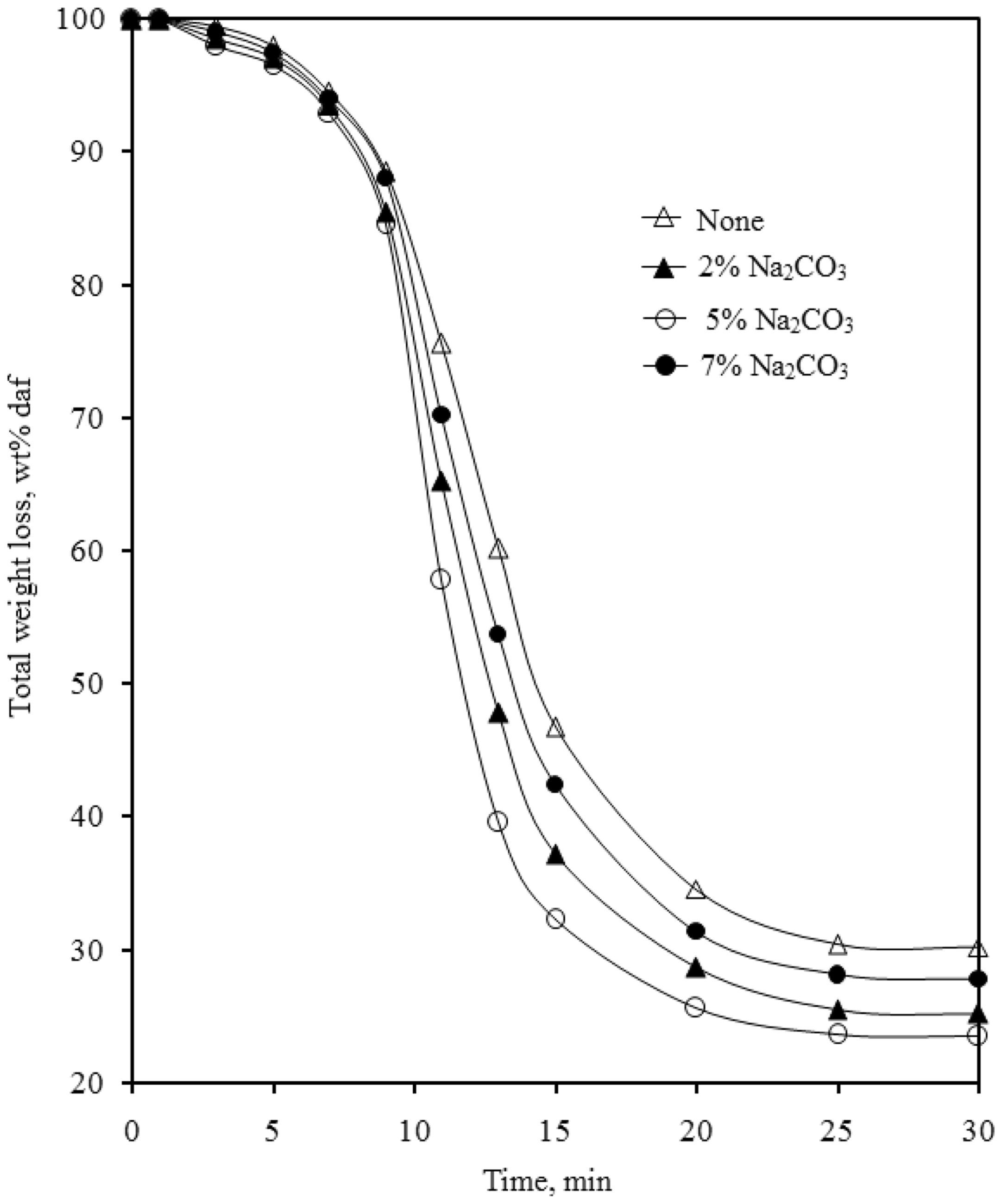
Total weight loss versus time by pyrolysis of cherry laurel seed sharply increased between 10 and 20 min for all runs. Then, it approached to the plateau value after 25 min for all runs. The yield of bio-char depends on the heating rate, residence time, and pyrolysis temperature (Cora Bulmău et al., 2010). The temperature-time history is an important parameter for pyrolysis of biomass. The temperature was raised from 298 to 775 K until 30 min. The average heating rate was 15 K/min during pyrolysis. The bio-char yields from non-catalytic run decreased from 82.5% to 30.2% between 10 and 30 min, respectively. At the same time, the bio-char yields from 5% Na2CO3 run decreased from 79.4% to 23.5% (Figure 3). The decrease in the bio-char yield could be due to the greater primary decomposition of cherry laurel seed samples at higher pyrolysis temperatures. The need for increased supplies of bio-char produced from improved and efficient pyrolytic processes is urgent (Balat and Demirbas, 2009).
Figure 4 shows the plots for yields of bio-liquid products versus time by pyrolysis of cherry laurel seed. The yield of bio-liquid products was defined as,
Plots for yields of bio-liquid products versus time by pyrolysis of cherry laurel seed.
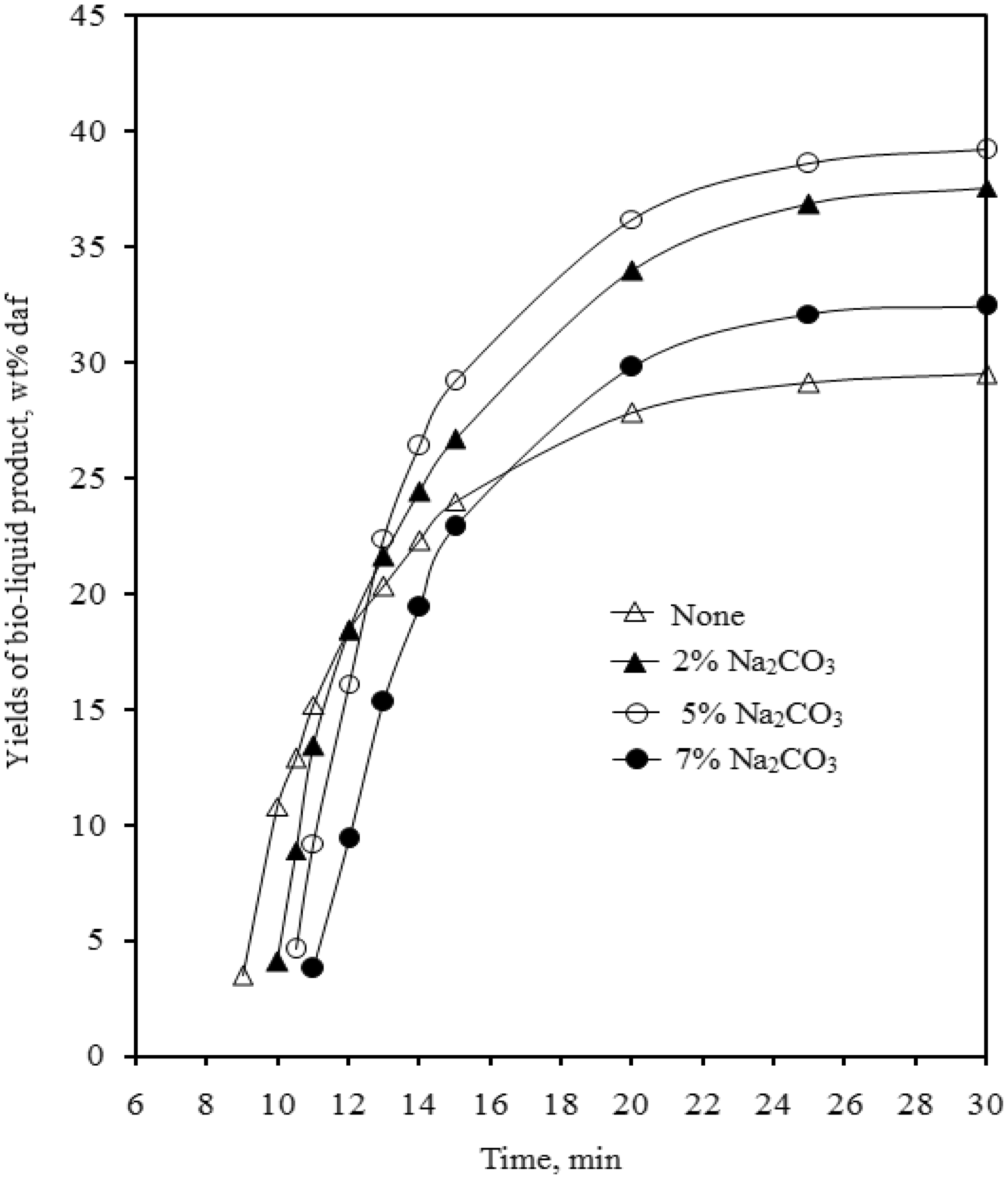
The yields of bio-liquid products sharply increases between 9 and 15 min with non-catalyst run, whereas 10 and 20 min with all catalyst runs. Then, the yields approach to the plateau value after 20 min for non-catalyst run, whereas 25 min for all catalyst runs. The yields of bio-liquid product increase with use of catalyst. It was observed that the yield of bio-liquid product increases slightly in conjunction with increasing catalyst ratio and reaches its maximum value with 5% Na2CO3 catalyst run. The yields of bio-liquid product from cherry laurel seed (wt% daf basis of the sample) for non-catalytic and 5% Na2CO3 catalytic runs were 29.5% and 39.3% for 30 min, respectively (Figure 4). It was observed that the yield of bio-liquid product decreases with further increase of catalyst ratio.
The bio-liquid products from cherry laurel seed pyrolysis are dark brown viscous oils. In general, at the beginning of the pyrolysis, the most of the bio-liquid products obtained from pyrolysis were water-rich fractions. They have a high water content (15–30 wt%) derived from the original moisture in the biomass feedstock and the product of the dehydration reactions occurring during pyrolysis (Lappas et al., 2008). Bio-liquid product typically has high oxygen content (40–50%) (Steele et al., 2009), burns smoothly and cleanly, and has a potential for alternative fuel source (Agarwal and Agarwal, 1999). Combustion tests have shown that bio-liquids could be burnt efficiently in standard or in slightly modified burners (Agarwal and Agarwal, 1999). According to Mullen and Boateng (2008), bio-liquids from wood agricultural feedstocks have a HHV about 50% and 75% that of heavy fuel oil, respectively. In generally, HHV of bio-liquid is below 26 MJ/kg (compared with 42–45 MJ/kg for conventional fuel oils) (Demirbas, 2007). Poor volatility, high viscosity, coking, corrosiveness, and cold flow properties are possibly the most challenging and have so far limited the range of their applications (Bridgwater, 2004).
Figure 5 shows the plots for yields of conversion versus time by pyrolysis of cherry laurel seed. The yield of conversion was defined as,
Plots for yields of conversion versus time by pyrolysis of cherry laurel seed.
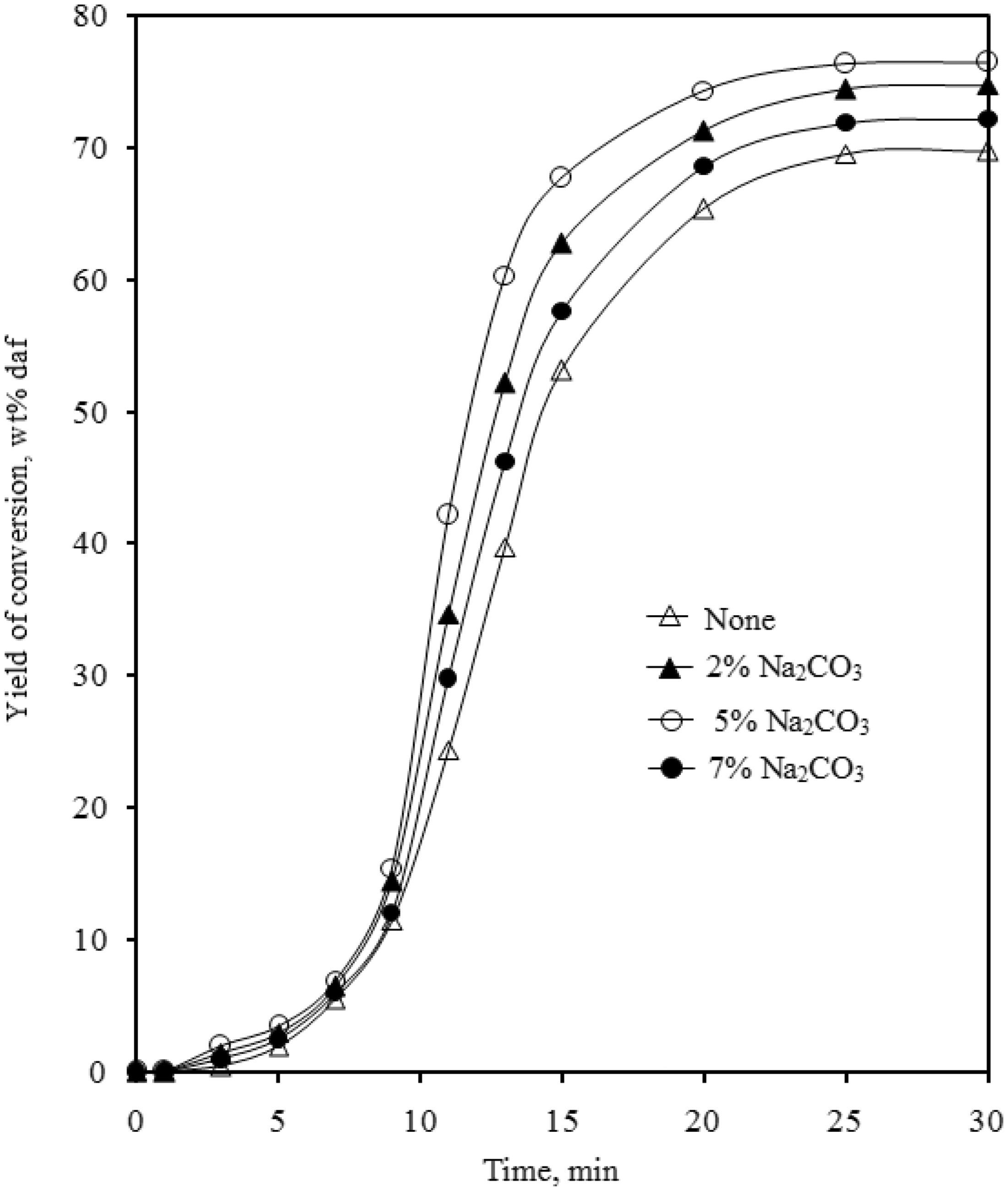
The yields of conversion versus time by pyrolysis of cherry laurel seed samples were sharply increased from 10 to 20 min from 17.5 to 65.4% for non-catalytic run and from 20.6 to 74.4% for 5% Na2CO3 catalytic run, respectively. Then, it was approached to the plateau value after 25 min for all runs (Figure 5).
The gaseous products identified during the pyrolysis of cherry laurel seed samples were mainly CO2, CO, CH4, and H2 and some low molecular weight hydrocarbons such as C2H6 and C2H4. The highest gaseous yield from cherry laurel seed samples was obtained without catalyst (40.3%) at 775 K for 30 min. The higher increase of gaseous yields at higher temperature range could be due to the cracking of the bio-liquids present in the vapor to gas and secondary decomposition of bio-chars into gas at higher temperature (Natarajan et al., 2009).
Conclusion
This study was conducted to determine the yields of bio-char, bio-liquid, and gaseous products obtained from cherry laurel seed in the presence of Na2CO3. Pyrolytic products can be used as fuels for heating or power generation. They can also be used as feedstocks for chemicals and material industries. Cherry laurel seed is an agricultural residue. The use of present agricultural residues can play an important role in reducing greenhouse gas (GHG) emissions relative to burning fossil fuels. Cherry laurel seed, as agricultural residue, is very favorable in biofuel production.
The highest yield of bio-liquid product was 39.3%, which can be obtained from the pyrolysis with 5% Na2CO3. The yield of bio-liquid product is decreased with further increase of catalyst ratio. The bio-char yield reduced from 82.5% without catalyst to 30.2% between 10 and 30 min. The highest gaseous yield from samples was obtained without catalyst (40.3%) at 775 K for 30 min.
Footnotes
Declaration of conflicting interests
The author(s) declared no potential conflicts of interest with respect to the research, authorship, and/or publication of this article.
Funding
The author(s) received no financial support for the research, authorship, and/or publication of this article.