



Abstract
Organizations face challenges in leadership succession, partly due to reduced employee interest in progressing to leadership roles. This study examined participative decision-making (PDM) as a strategy to foster leadership aspiration and whether it is particularly beneficial for women, who often encounter barriers in the workplace. A cross-sectional study in Sweden surveyed non-leaders (N = 749) and leaders (N = 240) on their leadership aspirations and perceived inclusion in PDM. Results showed PDM was positively related to aspiration in both groups. Among non-leaders, the relationship was stronger for women; among leaders, unexpectedly, stronger for men. Results and practical implications are discussed.
Introduction
Organizations are facing a critical challenge in leadership succession, with a growing concern about how to fill future leadership positions (Neal et al., 2023; Wong, 2023). This issue likely stems from a lack of aspiration for leadership roles among qualified individuals rather than a shortage of talent (e.g., HRD Connect, 2024; Visier, 2023; Wong, 2023). Reports revealed that as many as one-third of employees have no interest in ever pursuing managerial positions (Randstad Workmonitor, 2024). Additionally, over a third of middle managers report intentions of opting out, a trend that is even more pronounced among woman (Belliard et al., 2022). Organizations thus need to take action to increase leadership aspirations among their employees.
The present research examined the management practice of participative decision-making (PDM) as a promising strategy to foster leadership aspirations. PDM describes organizational processes in which employees are involved in decisions by being included in collaborative decision-making that spans hierarchical boundaries (Leana, 1987; Sagie and Koslowsky, 2000). At the organizational level, this involves employees actively contributing to decisions regarding the organization’s vision, mission, goals, and policies, requiring cooperation from all engaged parties (e.g., employees, employers, management, and the board of directors; Valverde-Moreno et al., 2021). So far, PDM has been found to have positive outcomes for both employees and organizations, including increased job satisfaction (Pacheco and Webber, 2016), enhanced self-efficacy (Behravesh et al., 2021), and reduced turnover intentions (Fattah et al., 2022). An open question is whether PDM also increases leadership aspiration.
PDM occurs at multiple levels within organizations, allowing employees—including those already in leadership positions—to be involved in decisions made at higher managerial tiers. This study examined PDM both among non-leaders and current leaders. PDM is expected to enhance leadership aspiration in both groups. Among non-leaders, this would entail an increased interest in assuming leadership roles, whereas, for current leaders, it would involve an increased interest in progressing to higher-level leadership positions.
Furthermore, this study examined the role of gender to assess whether PDM is particularly beneficial for women’s leadership aspirations. Historically, women have been more likely to opt out of pathways to higher-level leadership positions and to report lower leadership aspirations than men (e.g., Fedi and Rollero, 2016; Fritz and van Knippenberg, 2018; Netchaeva et al., 2022). This has been attributed to multiple factors, including women’s perceived lower fit with leadership roles—both self-perceived and externally ascribed—which is linked to structural barriers that hinder their leadership development and advancement (Hoobler et al., 2014; Le Ber et al., 2024). In contrast, involvement in decision-making may increase employees’ opportunities for leadership development and (especially female) employees’ perception of their fit for leadership positions (Heilman, 2012).
PDM and leadership aspirations
PDM as an organizational strategy means that participative practices are integrated throughout the organization, spanning from dyadic relationships between employees and their immediate supervisors to group levels and the entire organization (Sagie and Koslowsky, 2000). PDM was mentioned as a beneficial strategy for organizations as early as the 1950s (e.g., Dale, 1953). In the 1970s and 1980s, PDM gained considerable attention, particularly framed as a way to democratize organizations and promote equality in the workplace (Crouter, 1984; Krishnan, 1974), aligning with broader societal shifts toward political and social equality. Despite its long-standing presence in organizational research, PDM has only recently garnered attention in relation to gender differences in the workplace (Mooney, 2022; Plückelmann et al., 2024). Thus far, its potential to foster leadership aspirations, especially among women, has not been explored.
Theoretically, PDM’s relation to leadership aspirations can be understood through theories on employee motivation, such as self-determination theory (SDT; Deci and Ryan, 2000) and the job demands–resources (JD-R) model (Demerouti et al., 2001). In organizational contexts, SDT predicts that intrinsic motivation is stronger in work environments that meet employees’ needs for competence, autonomy, and relatedness (Deci et al., 2017; Rigby and Ryan, 2018). PDM practices can fulfill these needs, thereby fostering motivation among employees (Xiang et al., 2021). Likewise, the JD-R model predicts that job resources enhance employees’ motivation and work engagement (Bakker and Demerouti, 2007). Job resources may be located at the level of job tasks (e.g., autonomy), social relations (e.g., social support), the organization at large (e.g., job security), but also the organization of work (e.g., PDM; Bakker and Demerouti, 2007; Van Emmerik et al., 2009). In summary, PDM fulfills important individual needs and represents a job resource that can potentially encourage the development of leadership aspirations in various ways.
First, PDM can foster a sense of competence by enhancing leadership skills, thereby helping employees feel more capable of taking on leadership roles. In participative processes, employees learn about organizational processes and goals (Sagie and Koslowsky, 2000) and their role in them (Mukherjee and Malhotra, 2006). Employees develop decision-making and problem-solving skills by being involved in PDM processes (Zimmerman, 1995). Moreover, interactions with supervisors, inherent in PDM, further support leadership development by providing opportunities for direct learning (Day, 2000). PDM should, therefore, enhance employees’ sense of competence in their leadership abilities and foster greater aspirations for leadership roles. Consistently, belief in one’s competence in leadership skills is a key predictor of leadership aspirations (Sánchez and Lehnert, 2019).
Second, PDM can enhance employee autonomy by involving them in decisions directly impacting their roles and the organization, reducing reliance on top-down directives. This involvement fosters a sense of influence and control, which increases employees’ perceived autonomy (Sagie and Koslowsky, 2000; Spector, 1986). By empowering employees to shape their work environment and make decisions, PDM boosts motivation, engagement, and goal-setting (Ganster and Fusilier, 1989; Sagie and Koslowsky, 2000), which can, in turn, elevate leadership aspirations.
Third, contributing to the development of organizational goals and values also increases the likelihood that employees will align with these objectives and feel motivated to work toward achieving them (Han et al., 2010). The alignment of values contributes to a sense of meaning in one’s work. A sense of meaning entails a fit between a person’s values, beliefs, needs, work roles, and goals (Spreitzer, 1995; Thomas and Velthouse, 1990). Employees who perceive their work as meaningful are likely more inclined to take on leadership responsibilities and work toward goals they believe in and feel capable of contributing to.
Lastly, as PDM is a collective process, it can meet the need for relatedness by emphasizing positive relational aspects and fostering a supportive workplace environment in a leadership context. PDM actively engages employees in collaborative tasks with supervisors and colleagues (Xiang et al., 2021), fostering the development of social relationships and increasing perceived social support. Such relationships serve as a valuable resource for employees, enhancing their ability to aspire to leadership roles (Spreitzer et al., 2005). Furthermore, PDM signals that the organization values and respects employees and their contributions (Pugliese et al., 2024). In organizational environments characterized by trust and support, employees are more inclined to take on new tasks (Neves and Eisenberger, 2014), likely including leadership responsibilities. Thus, PDM could increase leadership aspirations by fostering a sense of relatedness at work, thereby increasing the likelihood of aspiring to new roles.
To conclude, PDM offers ways of enhancing employees’ leadership skill development, feelings of autonomy and control, and relational aspects with colleagues, supervisors, and the organization. In doing so, PDM contributes to a supportive organizational environment that should facilitate the development of leadership aspirations. Thus, we hypothesized that: H1: PDM is positively related to (a) leadership aspirations among non-leaders and (b) leadership aspirations among leaders.
Gender and leadership aspirations
In general, women express lower leadership aspirations than men (Fedi and Rollero, 2016; Fritz and van Knippenberg, 2020; Netchaeva et al., 2022). Past studies have examined various factors to explain this gender difference. In addition to individual characteristics and socialization processes (Boatwright and Egidio, 2003; Ely et al., 2011), the organizational context has also emerged as an important influence.
Multiple aspects of the organizational context, such as limited development opportunities and entrenched gender stereotypes in organizational practices, were found to hinder women’s leadership aspirations (Hoobler et al., 2014; Le Ber et al., 2024; Sánchez and Lehnert, 2019). Women—even those in leadership positions (Byham et al., 2024)—receive fewer opportunities to develop their leadership skills and competencies (Clerkin et al., 2024; De Pater et al., 2010). For example, women were allocated fewer challenging tasks by their supervisors compared to men (De Pater et al., 2010). Notably, these gender differences persisted even when controlling for factors such as ambition, job performance, relationship quality, and the similarity between the supervisor and subordinate. Women are also less likely to be part of networks that facilitate contact with senior employees (Woehler et al., 2021). Such interpersonal relationships, including leaders, are crucial, as they provide opportunities for learning, career guidance, and support (Clerkin et al., 2024). Additionally, women receive fewer job resources in the form of constructive feedback (Correll and Simard, 2016), and less coaching (Clerkin et al., 2024). These disparities in access to developmental opportunities constrain women’s leadership aspirations (Hoobler et al., 2014).
The lack of fit model (Heilman, 1983, 2012) provides insight into how stereotypes associated with gender are related to leadership and contribute to barriers for women. Leadership roles are associated with agentic traits stereotypically viewed as masculine (e.g., decisiveness, assertiveness; Koenig et al., 2011), while women are typically perceived as possessing more communal traits (e.g., cooperation, care; Hsu et al., 2021). This perceived lack of fit creates a barrier that hinders women’s progression into (higher) leadership roles (Heilman, 2012). As such, a lack of fit has been shown to affect both recruiters, leading to biased evaluations driven by negative expectations of women’s leadership performance (Heilman et al., 2015, 2024), and women’s self-perceptions, causing them to judge themselves as less suited for leadership roles (Bosak and Sczesny, 2008). The importance of this perceived lack of fit for leadership aspirations is evident in supervisors’ reduced expectations of women’s capabilities, resulting in lower career and development support provided to women compared to men. This disparity in support and development, in turn, contributes to lower leadership aspirations among women (Fritz and van Knippenberg, 2020; Hoobler et al., 2014).
Furthermore, the organizational context can strengthen or weaken the lack of fit, depending on the emphasis placed on masculinity as a standard for leadership, evident in procedures, practices, and norms (Eagly and Karau, 2002; Heilman, 2012). For example, transformational leadership, which emphasizes both agency and communion, is perceived as a better fit for women (Eagly and Johannesen-Schmidt, 2001). To counter a lack of fit, it is also important to change the leadership prototypes. In fact, women tend to be more motivated to pursue positions that emphasize communal aspects and foster interpersonal connections (Diekman et al., 2010; McCarty et al., 2014), and women’s leadership aspirations are partly driven by opportunities for interpersonal connections (Boatwright and Egidio, 2003).
Given existing barriers hindering women’s leadership aspirations, PDM should be particularly beneficial for promoting women’s leadership. First, PDM increases the competence needed to fit leadership roles. When PDM is successfully established as the organizational norm, female employees are included in decision-making processes and, as a result, receive skill development that they otherwise receive to a lesser extent. Being involved in decision-making processes should also help reduce the gap between women’s and men’s access to superiors, further enhancing women’s chances of acquiring skills and additional supervisory support while reducing supervisor bias and stereotypes (Nishii, 2013). Furthermore, in a cooperative environment where women are included, PDM provides women with an opportunity to demonstrate their potential as (future) leaders. Second, PDM provides a type of leadership process that combines agentic and communal behaviors, enhancing the fit of leadership positions for women (Heilman, 1983, 2012). Consistently applying PDM practices within an organization can model a form of leadership that may appeal to women due to its cooperative and interpersonal nature, aligning well with women’s career interests (McCarty et al., 2014). Women, compared to men, both prefer and are more likely to adopt a leadership style that includes PDM practices (Eagly and Johannesen-Schmidt, 2001), and they favor this form of collaborative power (Tolan et al., 2024). PDM’s collaborative and interpersonal aspects also align more closely with the communal gender norm. Leaders who employ such practices might thus model leadership styles that are more attractive to women (Eagly and Johannesen-Schmidt, 2001).
Research on predictors of leadership aspirations has primarily focused on women (e.g., Boatwright et al., 2003; Davies et al., 2005; Le Ber et al., 2024), and comparatively less attention has been directed toward men’s leadership aspirations. Research comparing the effectiveness of interventions by gender suggests that while men’s leadership aspirations may also benefit from organizational interventions, the impact is generally less pronounced and influenced by different factors compared to women (Fritz and van Knippenberg, 2018).
Taken together, women should benefit more from PDM practices regarding their leadership ambitions. Thus, we hypothesized that: H2: gender moderates the relationships between PDM and (a) leadership aspiration among non-leaders and (b) leadership aspirations among leaders, such that these relationships are stronger for women than for men.
Additional gender-related aspects within organizations are expected to influence gender-related differences in leadership aspirations and are therefore controlled for in this study. Specifically, tenure is included as a control, as prior research shows that women often need to accumulate longer tenure to gain access to participative decision-making, whereas men’s inclusion is less dependent on tenure (Mooney, 2022). Moreover, women in Sweden are more likely to hold post-secondary education than men (Statista, 2023). Individuals with higher education may perceive themselves, and be perceived by others, as more fit for leadership roles, and thus tend to have higher leadership aspirations (Fritz and van Knippenberg, 2020); thus, we controlled for educational background. Furthermore, because women’s leadership aspirations are positively influenced by having a same-gender supervisor (Fritz and van Knippenberg, 2020), we controlled for supervisor gender. Women’s leadership aspirations are positively impacted by exposure to female role models in high-power positions within the company (Le Ber et al., 2024); therefore, we controlled for the gender of top management. Additionally, the study controlled for the gender ratio within occupations, as it can influence gender stereotypes, particularly amplifying their salience when women are in the minority (Eagly and Karau, 2002; Kanter, 1977).
Method
Setting and sample
Respondents were recruited through a Swedish online panel provider (Enkätfabriken); inclusion criteria involved individuals aged 18 or older, living in Sweden, and working part-time or full-time. Respondents were informed that the survey would focus on decision-making. Respondents also received information about data storage and their voluntary participation. Informed consent was obtained from all respondents prior to the start of the survey. Respondents who completed the survey received monetary compensation from the panel provider. A total of 1204 respondents completed the survey. Of these, 215 were excluded from the analyses based on meeting one or more of the following exclusion criteria: responses with missing values on the primary variables (N = 169); implausible tenure lengths (i.e., tenure exceeding age minus 15, the minimum legal working age in Sweden) (N = 48); and reporting non-cisgender identity for themselves (trans and gender diverse, N = 5), their supervisor (“other”, N = 6), or top management (“other”, N = 5).
The final sample consisted of 989 respondents (54% women, 46% men), ranging in age from 18 to 64 (Mage = 42.70, SD = 12.41). Their organizational tenure ranged from 0 to 47 years (Mtenure = 9.15, SD = 8.58). The average percentage of women in the organizations was 53.23% (SD = 23.40). Regarding leadership positions, 24% of respondents (N = 240) were leaders, and 76% (N = 749) were non-leaders. A minority of respondents (36%) worked in organizations led by a woman compared to a man (64%). A slightly larger proportion (52%) reported having a female direct supervisor compared to a male supervisor (48%).
Measures
The survey was conducted in Swedish. Items not originally available in Swedish were translated from English using the back-translation method (Brislin, 1970).
Organizational Participative Decision-Making was assessed using three items adapted from Siegel and Ruh (1973), for instance, “In this organization, I have a high degree of influence in organizational decisions” and “In this organization, I can participate in setting new organizational policies” (1 = strongly disagree to 7 = strongly agree; α = .95).
Leadership Aspiration Among Non-Leaders was assessed using four items adapted from Gregor and O’Brien (2016), for instance, “I would like to manage other employees” and “I hope to move up to a leadership position in my organization” (1 = strongly disagree to 7 = strongly agree; α = .88).
Leadership Aspiration Among Leaders was assessed using two items adapted from Gregor and O’Brien (2016): “I want to reach high-level leadership positions in this organization” and “I want to have responsibility for the future direction of my organization” (1 = strongly disagree to 7 = strongly agree; r = .69).
Respondents’ Gender was assessed by asking respondents to indicate their gender identity in an open text field: “What is your gender identity?” Binary responses (e.g., “female”, “woman”; “male”, “man”) were coded into 1 = woman and 0 = man.
Leadership was measured using a single item: “Do you have any kind of leadership position in your organization?” The answer option was dichotomous (Yes vs. No). The answer pattern was used to categorize respondents into leaders and non-leaders and to steer them toward answering the matching questions concerning their aspirations.
The five control variables were measured and used for sensitivity analyses. As described above, these variables were selected based on their potential to affect leadership aspirations of women and men differently.
Organizational Tenure was assessed by asking respondents to indicate how many years they had worked in their current organization in an open text format.
Educational Background was assessed by asking respondents to indicate their highest completed education. Answers were dichotomized into 0 (up to university or college [without degree]) and 1 (completed Bachelor’s degree or higher).
Supervisor Gender was assessed with a single item: “My immediate boss is a …” The response options were coded 1 = woman and 0 = man.
Gender of Top Management was assessed with a single item: “The highest-ranking manager in my organization is a … ” The response options were coded 1 = woman and 0 = man.
Organizational Gender Ratio (% Women) in the respondent’s organization was assessed with one item: “In your opinion—what percentage of the employees in your organization are women?” Respondents indicated their response on a slider with the endpoints labeled 0% and 100%.
Analytical strategy
To test the hypotheses, two stepwise hierarchical regression analyses were performed using RStudio version 4.2.0 (RStudio Team, 2020). The procedure was consistent across both regressions. In Step 1, control variables (tenure, educational background, supervisor gender, gender of top management, and organizational gender ratio) were entered into the model. In Step 2, organizational PDM and respondent gender were added to assess the main effects of these variables and thus test whether PDM is positively related to aspiring to (higher) leadership positions (Hypothesis 1). In Step 3, the interaction term between organizational PDM and respondent gender was included to examine whether the relationship between PDM and leadership aspirations differed by gender (Hypothesis 2). Consistent with the recommendations by Hayes (2022) to enhance interpretability, the continuous variables—organizational PDM, tenure, and organizational gender ratio—were mean-centered.
Data and analysis code are available on OSF (https://osf.io/tx54e/?view_only=dc1977d3c1e94af0a22bf846b58f6ebc). The data were analyzed using RStudio version 4.2.0 (RStudio Team, 2020). The study followed ethical guidelines outlined in the Declaration of Helsinki (World Medical Association, 2013), and informed consent was obtained from respondents.
Results
Descriptive statistics
Table 1 provides an overview of means, standard deviations, and percentages, and Table 2 presents the intercorrelations among all variables, separated for non-leaders and leaders. Notably, women did not report significantly lower leadership aspirations than men, neither among non-leaders nor leaders. Both among non-leaders and leaders, women reported being significantly less included in PDM compared to men. Furthermore, in both samples, women were more likely than men to work in organizations with a higher proportion of women, to have a female supervisor, and to be employed in companies led by a female top manager.
Sample descriptive statistics by leadership and gender.
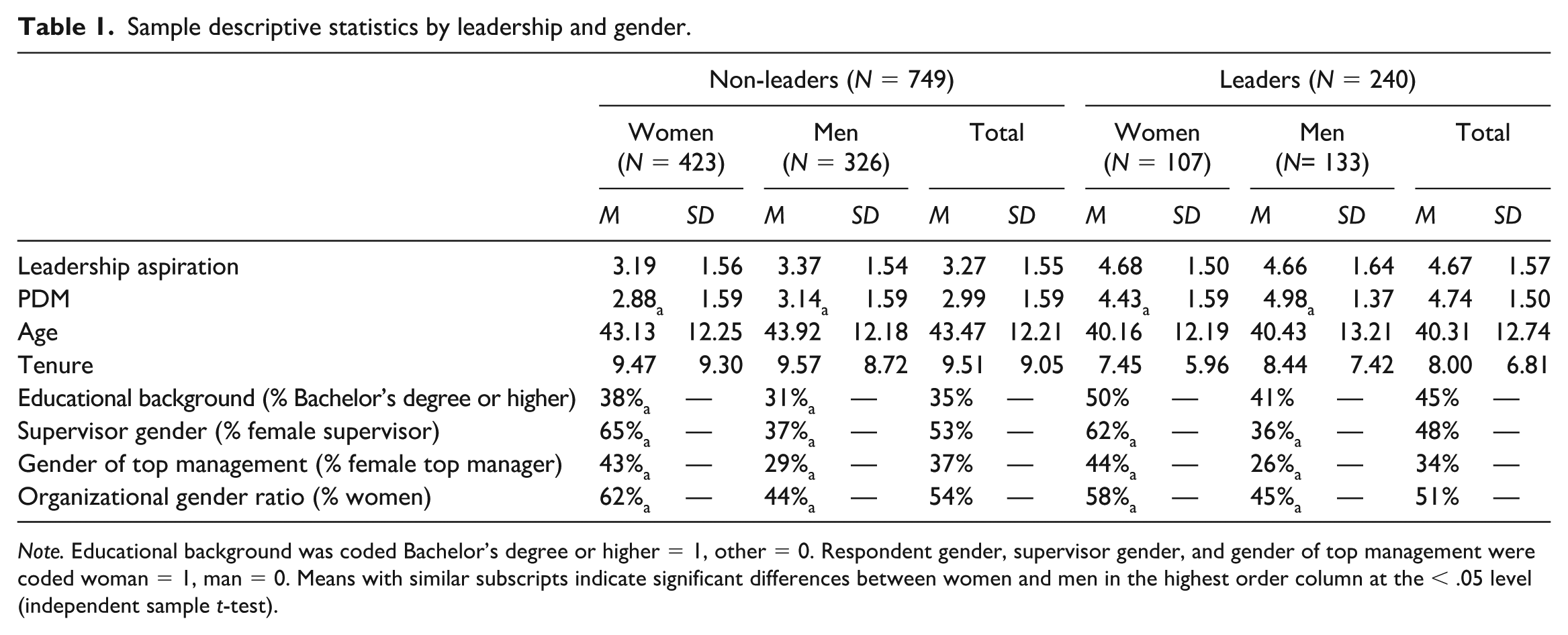
Note. Educational background was coded Bachelor’s degree or higher = 1, other = 0. Respondent gender, supervisor gender, and gender of top management were coded woman = 1, man = 0. Means with similar subscripts indicate significant differences between women and men in the highest order column at the < .05 level (independent sample t-test).
Pearson correlations of leadership aspiration, respondent gender, PDM, age, and control variables for the leader sample (N = 240) below the diagonal and the non-leader sample (N = 749) above the diagonal.
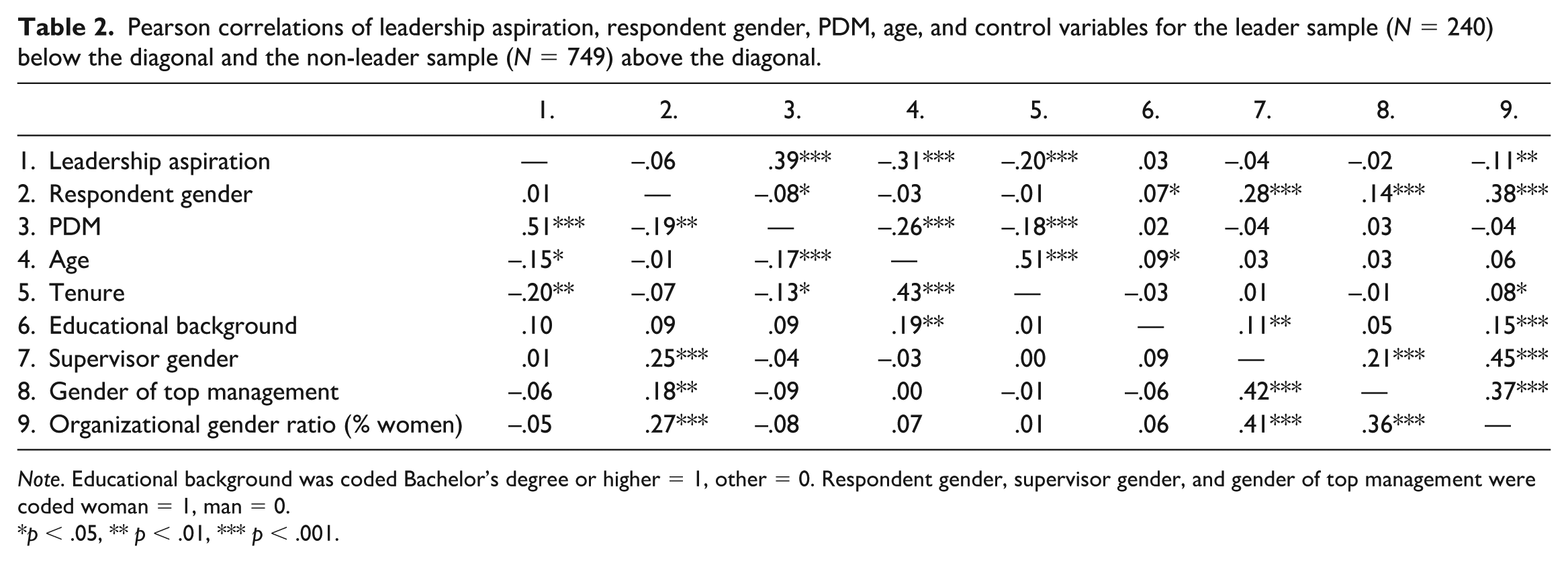
Note. Educational background was coded Bachelor’s degree or higher = 1, other = 0. Respondent gender, supervisor gender, and gender of top management were coded woman = 1, man = 0.
p < .05, ** p < .01, *** p < .001.
The leadership aspirations of non-leaders
Table 3 presents the results of the stepwise hierarchical regression analysis on leadership aspirations among non-leaders. In Step 1, the analyses revealed a significant negative effect of tenure (b = −0.03, SE = 0.01, p < .001), indicating that the longer individuals worked in the company, the lower their leadership aspirations. Additionally, organizational gender ratio (b = −0.01, SE = 0.00, p = .009) was significantly negatively related to leadership aspirations, indicating that working in an organization with a higher proportion of women corresponded to lower leadership aspirations. The remaining control variables, namely educational background, supervisor gender, and gender of top management, had no significant relationship with leadership aspirations.
Hierarchical linear regression analyses predicting leadership aspiration among non-leaders (N = 749).
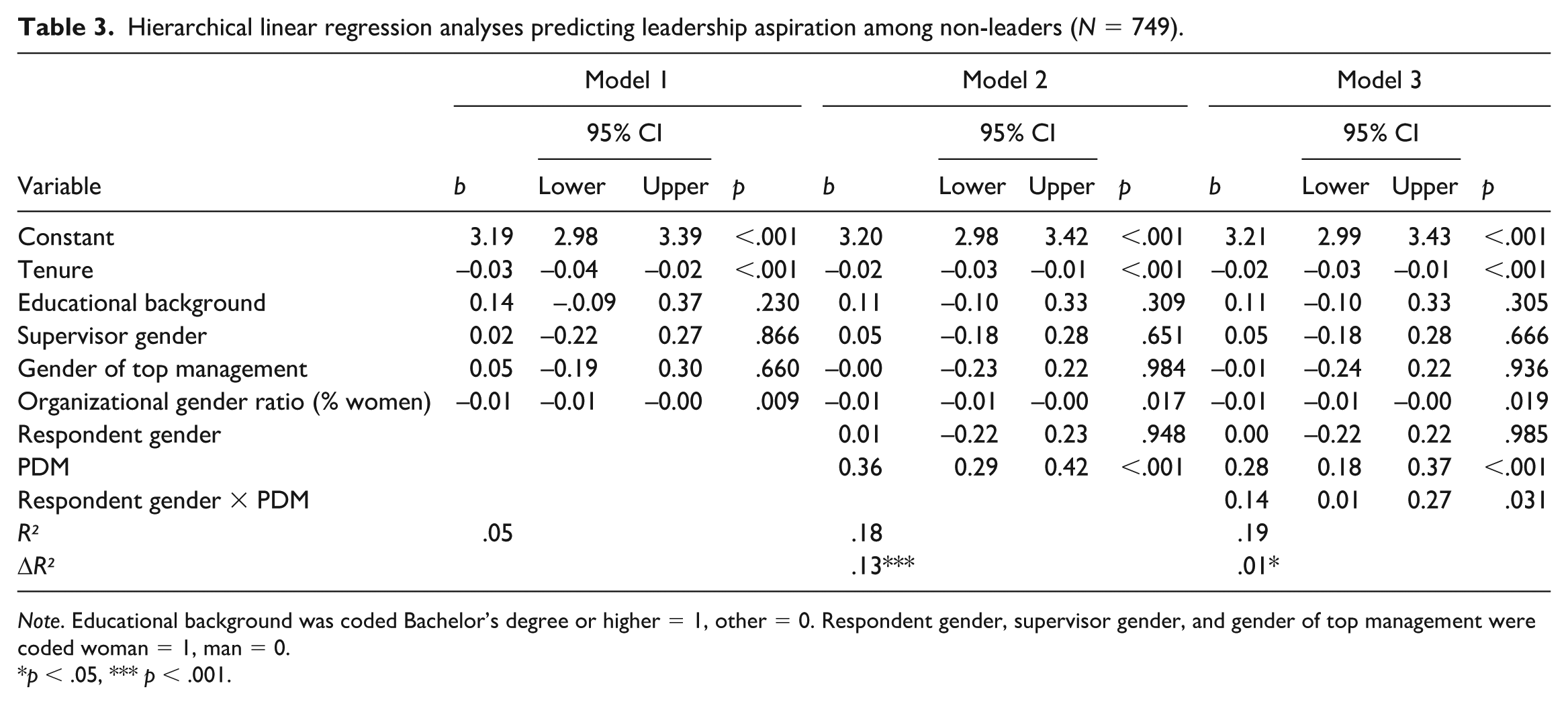
Note. Educational background was coded Bachelor’s degree or higher = 1, other = 0. Respondent gender, supervisor gender, and gender of top management were coded woman = 1, man = 0.
p < .05, *** p < .001.
Supporting Hypothesis 1a, Step 2 revealed a significant positive main effect of organizational PDM (b = 0.36, SE = 0.03, p < .001), indicating that higher PDM is associated with greater leadership aspirations. No significant effect of respondent gender was observed. Step 3 revealed a significant interaction between respondent gender and organizational PDM (b = 0.14, SE = 0.07, p = .031), indicating that the relationship between organizational PDM and leadership aspirations differs based on gender. Follow-up simple slope analyses that examined the direction of this interaction (see Figure 1) showed that PDM was significantly positively related to leadership aspirations for both women (b = 0.42, SE = 0.04, p < .001) and men (b = 0.28, SE = 0.05, p < .001). Thus, each unit increase in PDM corresponded to a 0.42-unit increase in leadership aspirations for women and a 0.28-unit increase for men. In line with Hypothesis 2a, PDM is associated with a larger increase in leadership aspirations for women than for men among non-leaders.
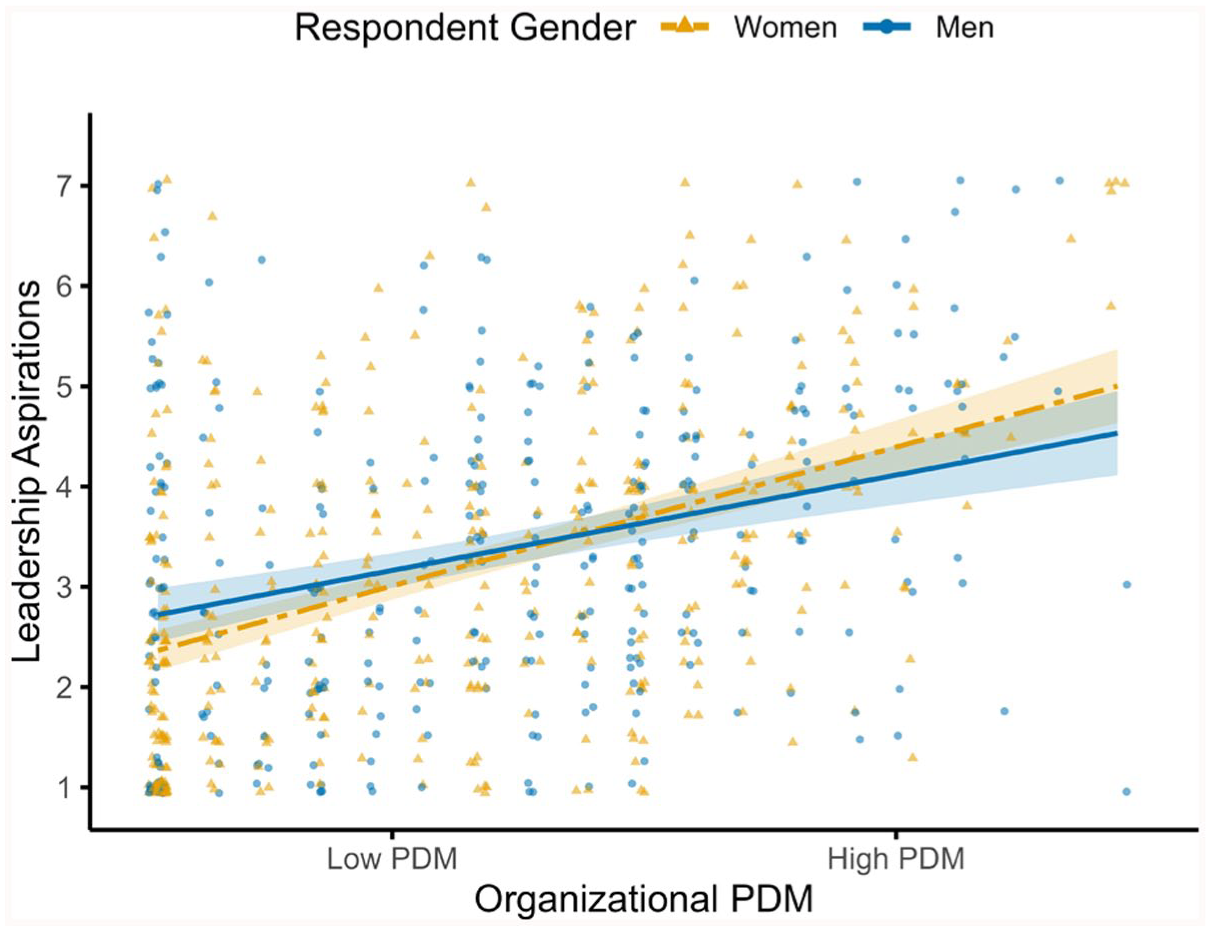
Interaction of organizational PDM and respondent gender on leadership aspiration among non-leaders.
The leadership aspirations of leaders
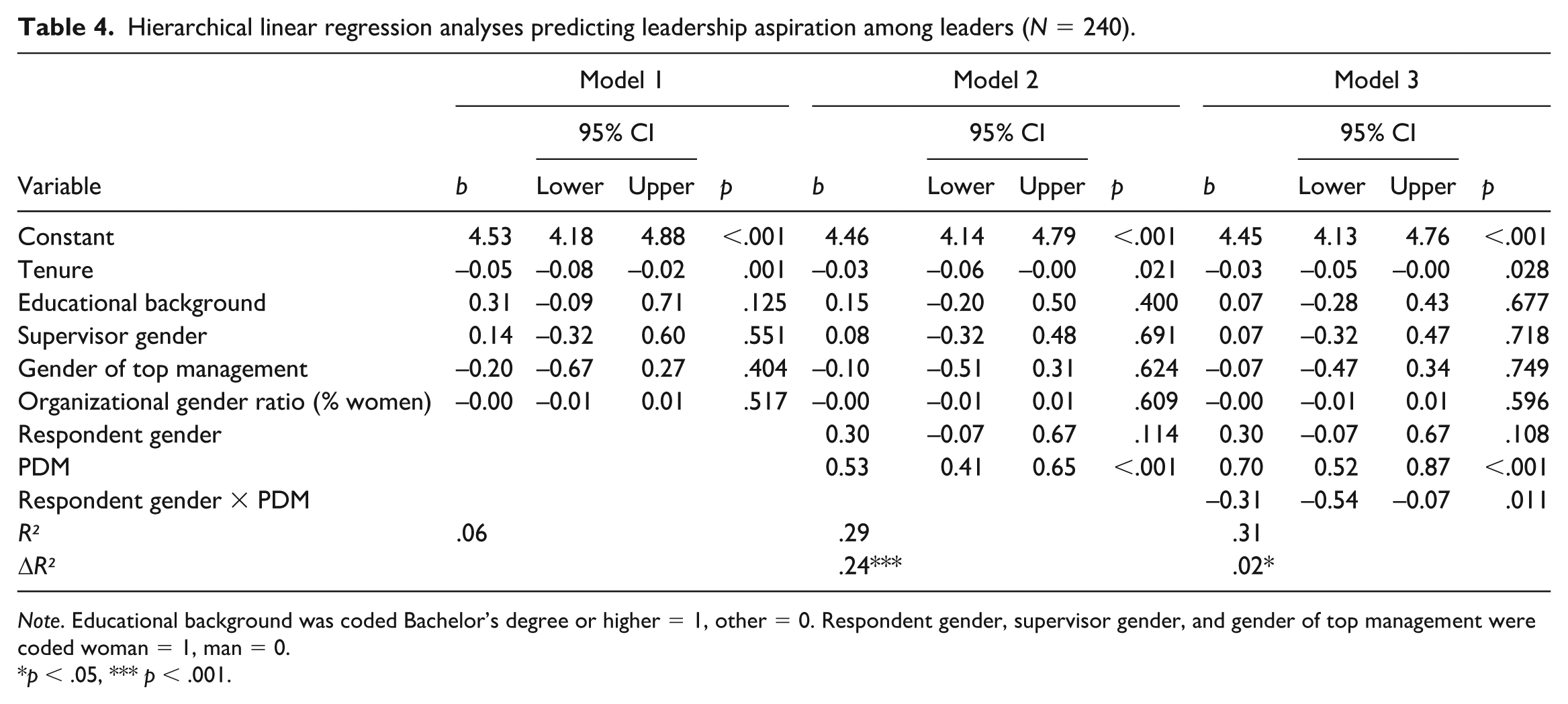
Table 4 presents the results of the stepwise hierarchical regression analysis on leadership aspirations among leaders. In Step 1, the analysis demonstrated a significant main effect of the control variable tenure (b = −0.05, SE = 0.01, p = .001), indicating that the longer individuals spent in the organization, the lower their leadership aspirations. The remaining control variables, namely educational background, supervisor gender, gender of top management, and organizational gender ratio, had no significant relationship with leadership aspirations. Supporting Hypothesis 1b, Step 2 revealed a significant positive main effect of organizational PDM (b = 0.53, SE = 0.06, p < .001), indicating that higher PDM is associated with greater leadership aspirations. Again, no significant effect of respondent gender was observed.
Hierarchical linear regression analyses predicting leadership aspiration among leaders (N = 240).
Note. Educational background was coded Bachelor’s degree or higher = 1, other = 0. Respondent gender, supervisor gender, and gender of top management were coded woman = 1, man = 0.
p < .05, *** p < .001.
Step 3 revealed a significant interaction between respondent gender and organizational PDM (b = −0.31, SE = 0.11, p = .011), indicating that the relationship between organizational PDM and leadership aspirations differs between women and men. Follow-up simple slope analyses (see Figure 2) indicated a positive association for both women (b = 0.39, SE = 0.08, p < .001) and men (b = 0.70, SE = 0.09, p < .001). However, each unit increase in PDM corresponded to a 0.39-unit increase in leadership aspirations for women but a 0.70-unit increase for men. Contrary to Hypothesis 2b, PDM is associated with a larger increase in leadership aspirations for men than for women among leaders.
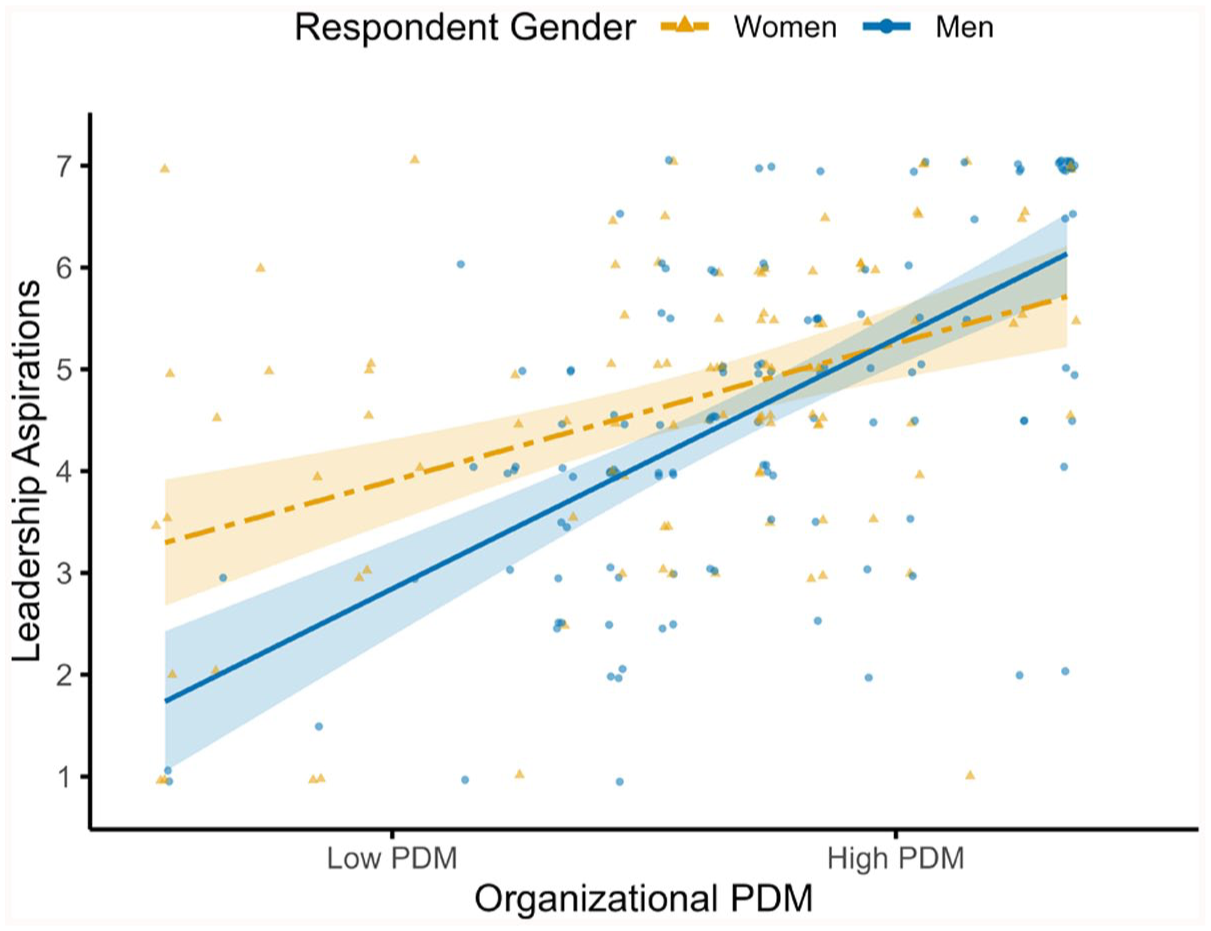
Interaction of organizational PDM and respondent gender on leadership aspiration among leaders.
Discussion
This study tested whether PDM represents a promising strategy to increase leadership aspirations among employees without current leadership responsibilities and foster advancement aspirations to higher leadership positions among employees already in leadership roles. Furthermore, the study investigated whether PDM specifically benefits women’s leadership aspirations compared to those of men.
Notably, the results did not indicate that women had lower leadership aspirations than men, either among leaders or non-leaders. As noted by Fritz and van Knippenberg (2017a), the absence of observed gender differences in leadership aspirations does not negate meta-analytic evidence (e.g., Netchaeva et al., 2022) of persistent gender differences but rather underscores the importance of contextual factors in their emergence.
Additionally, results showed that both among leaders and non-leaders, women reported lower levels of inclusion in PDM processes compared to men. These findings align with prior research suggesting that women report being less included in organizational decision-making across hierarchical levels (Plückelmann et al., 2024). One potential explanation is that even when supervisors employ PDM strategies, such as soliciting employee input, they may disproportionately involve men compared to women (Mooney, 2022), thereby creating an additional barrier to women’s leadership development.
Consistent with Hypothesis 1, both employees in non-leadership positions and those in leadership roles who reported higher levels of PDM showed more interest in engaging in a career as a (higher-level) leader. This finding is consistent with prior research pointing to the role of the organizational context in shaping leadership aspirations (Fritz and van Knippenberg, 2017a, 2018). Furthermore, the finding is consistent with theoretical frameworks suggesting that PDM functions as a job resource (Bakker and Demerouti, 2007; Van Emmerik et al., 2009) as outlined by the JD-R model (Demerouti et al., 2001), and helps fulfill employees’ psychological needs (Xiang et al., 2021) as outlined by the SDT (Deci and Ryan, 2000). The study’s findings indicate that intrinsic motivation may extend to employees’ motivation to lead, as reflected in their leadership aspirations.
Regarding gender and PDM, the results further revealed that, as anticipated (Hypothesis 2a), PDM had a stronger positive effect on leadership aspirations for women in non-leadership roles than men. This finding aligns with prior research indicating that women’s leadership aspirations benefit more from organizational interventions (Fritz and van Knippenberg, 2018). While PDM is not the same as a formal organizational intervention, organizations can implement strategies and structures to enhance PDM and establish it as a norm throughout the organization (Lengnick-Hall and Lengnick-Hall, 1992; Sagie and Koslowsky, 2000). These may include creating formal policies to involve employees in decision-making, providing training for managers to effectively implement PDM, and fostering a culture that values employee input.
Surprisingly, and contrary to predictions (Hypothesis 2b), the results among leaders revealed a different pattern. While women in leadership positions also reported lower levels of inclusion in organizational decision-making compared to men, men’s leadership aspirations appeared to benefit more from PDM than women’s. A potential explanation is that men in leadership positions may exhibit greater sensitivity to PDM practices, particularly due to the associated influence on decision-making and access to senior leaders. Previous research indicated that men in leadership positions often display a stronger orientation towards power than women (Davies et al., 2017), and their involvement in high-level decision-making processes may more effectively fulfill their desire for power and influence aspirations. Furthermore, the types of decision-making processes in which women and men are involved at the leadership level may differ. Based on gender stereotypes, women may be more frequently involved in decisions related to people-oriented issues, aligning with communal gender norms. In contrast, men may be more often consulted on strategic or operational matters, which are typically associated with leadership roles. Inclusion in these types of decisions may have a stronger influence on perceptions of leadership competence and, consequently, on leadership aspirations. Further research is needed to understand the underlying mechanisms to explain why among leaders women’s leadership aspirations appear to be less influenced by PDM than those of men: for example, by assessing which types of decisions men and women feel involved in (e.g., people-oriented vs. strategic) and how these relate to leadership aspirations by gender.
Strengths, limitations, and future research
The study contributes to the understanding of PDM’s potential benefits for women’s and men’s leadership aspirations. A key strength of this study is its relatively large sample size, including individuals from different organizations with diverse organizational cultures. Additionally, the study includes both leaders and non-leaders, allowing for an examination of leadership aspirations at different career stages.
To situate the current results within the broader literature, it is important to assess the comparability of sample composition and research design with prior studies. The present study utilizes a survey-based, cross-sectional design, consistent with prior research on gendered predictors of leadership aspirations (Fritz and van Knippenberg, 2017a, 2017b, 2018) and outcomes of participative decision-making (e.g., Fattah et al., 2022; Pacheco and Webber, 2016). In addition, our study employs previously validated measures of leadership aspirations (Gregor and O’Brien, 2016; Wolniak et al., 2023) and PDM (Lam et al., 2002; Siegel and Ruh, 1973), facilitating reliable comparisons with prior research. However, it cannot be excluded that potential sources of bias, such as sample selection and non-response, may have influenced the results and should be considered when interpreting the findings. Additionally, the study is conducted in the Swedish context, which differs from other national and cultural settings in terms of gender equality policies, cultural norms, and labor market participation. Sweden has strong institutionalized support for gender equality (Borchorst et al., 2012), comparatively strong cultural and workplace norms promoting gender egalitarianism (House et al., 2004), and its female labor force participation is one of the highest globally (World Economic Forum, 2025). Nonetheless, Sweden continues to exhibit a notable gender gap in leadership positions, particularly at top levels, and persistent occupational segregation, with women and men concentrated in different industries (Keisu et al., 2021). The finding that women and men reported similar aspirations for leadership positions, independently of their leadership status, might reflect progress toward gender equality and Sweden’s comparatively gender-equal context. Nevertheless, the results also reveal subtle barriers, as women—among both leaders and non-leaders—reported feeling less included in PDM than men, indicating that gender disparities in organizational inclusion remain present in Sweden as well. National and cultural contexts influence both employees’ experiences of participative decision-making (Valverde-Moreno et al., 2021) and women’s leadership aspirations (Le Ber et al., 2024). While the study provides important insights in a context characterized by relatively high gender equality, the generalizability of the findings to other national and cultural contexts is limited. Future research should investigate the role of PDM across diverse national and cultural contexts to clarify the influence of contextual factors on leadership aspirations.
The sample also reveals a clear pattern of horizontal gender segregation, with both women and men being more likely to work in organizations that are predominantly female-dominated or male-dominated, respectively. This distribution aligns with the persistent gender segregation seen in the Swedish labor market (Nordic Statistics Database, 2023). Our results suggest that this segregation could be of importance for employees’ leadership aspirations, as a higher reported ratio of women in their organization was associated with lower leadership aspirations among non-leaders. Further research should investigate whether aspects of female-dominated sectors, such as fewer resources for leadership development compared to male-dominated sectors (Olsson, 2009), relate to this association with leadership aspirations.
The study’s cross-sectional design limits the ability to draw causal inferences. Although the proposed associations are grounded in theoretical frameworks and previous research, future studies need to consider experimental or longitudinal designs to examine whether the implementation of PDM practices does indeed affect leadership aspirations. Such studies should also incorporate measurements of the facets outlined in the theoretical background of the study to examine the potential pathways through which PDM is connected to leadership aspirations—such as reduced perceived lack of fit, leadership skill development, and the fulfillment of psychological needs (competence, autonomy, and relatedness; Deci and Ryan, 2000).
Practical implications
The study results indicate that women report lower inclusion in PDM across all hierarchical levels. This pattern raises significant concerns regarding inclusion and equitable access to leadership-relevant experiences. Consistently lower involvement in decision-making may not only constrain women’s immediate influence within organizations but also hinder their long-term leadership development and career progression. These findings underscore the importance of organizations implementing effective strategies to foster gender equality in participative decision-making, thereby increasing women’s opportunities for leadership growth.
The results further suggest that PDM practices can be an effective strategy for organizations to foster employee leadership aspirations. Thereby, it could be a factor in mitigating the projected leadership shortage at both emerging and senior leadership levels. This is particularly important given the current leadership succession practices, which often fail to consider employees’ leadership aspirations when designing development interventions. Instead of nurturing these aspirations, these practices typically treat them as a prerequisite for identifying high-potential talent and offering leadership development opportunities (Moldoveanu and Narayandas, 2019; Silzer and Church, 2009, 2010). Such an approach may miss potential future leaders who, despite having the capability, do not explicitly express strong leadership aspirations (Epitropaki, 2018). Implementing PDM practices can facilitate leadership development at an earlier stage by cultivating leadership aspirations, thereby creating a more inclusive pathway into these roles. Additionally, interventions focused on women’s leadership development should prioritize integrating PDM practices, particularly for female employees in non-leadership roles.
Conclusion
This research contributes to the understanding of what organizations can do to foster leadership aspirations among their employees. It indicates that PDM processes likely benefit leadership aspirations among both non-leaders and leaders. Furthermore, the findings suggest that PDM is especially beneficial for women who have not yet reached leadership positions. Additionally, this study adds to the limited literature on men’s leadership aspirations, showing that men in leadership roles particularly benefit from inclusion in PDM.
Footnotes

Ethical considerations
The study followed ethical guidelines outlined in the Declaration of Helsinki.
Consent to participate
Informed consent was obtained from respondents prior to their participation in the survey.
Declaration of conflicting interests
The authors declare that there are no potential conflicts of interest concerning the research, authorship, or publication of this article. The manuscript adheres to ethical guidelines specified in the APA Code of Conduct.
Funding
This project has received funding from the European Union’s Horizon 2020 research and innovation program under the Marie Skłodowska-Curie grant agreement No 953326, the Helge Ax:son Johnsons Stiftelse, and the Stiftelsen Lars Hiertas Minne.