




Abstract
This study analyses the influence of children on female underemployment in Australia, by both (1) the age of the child(ren) and (2) the age of the youngest child. Furthermore, it examines educational attainment in determining female underemployment. The study utilises fixed effects models on 2001–2020 panel data based on the Household, Income and Labour Dynamics in Australia (HILDA) Survey to test relevant hypotheses on how the presence of children can impact the likelihood of female underemployment. While the presence of children significantly reduces the likelihood of reporting underemployment, results suggest that it is negatively related to the probability of female underemployment for children below 15 but positively associated with children 15 and above. This positive relationship with older children disappears only when restricted to the youngest child. Education matters once children are of school-going age: lower-educated mothers having children aged 5–14 are significantly less likely to be underemployed, whereas higher-educated mothers with children aged 15 and above are considerably more likely to be underemployed. The study contributes to the literature by exploring the age of the child(ren), the age of the youngest child and educational attainment in determining female underemployment.
Introduction
Underemployment is broadly defined as when an employee is willing to work more than their current (actual) hours at prevailing wage rates (Wilkins, 2004). More specifically, according to the Australian Bureau of Statistics (ABS), underemployment occurs when people work less than their usual hours for economic reasons or would prefer to work more than their usual hours. It does not, however, ask respondents to account for the impact of their preferred hours on their income, unlike the HILDA dataset used in this study, which explicitly asks respondents to take income into account (Kler et al., 2023). 1 However, given that its data are widely reported and utilised by researchers and policymakers, it would be prudent to note recent incidences of underemployment. Given previous studies (Birch and Preston, 2020; Evans and Baxter, 2013; Johnstone et al., 2011; Workplace Gender Equality Agency [WGEA], 2022), these are sex delineated.
The latest ABS data reported that in May 2024, 22.3% (6.8%) of part-time (full-time) employees were underemployed; the underemployment rate is higher for males and females in part-time than in full-time. For instance, 26.1% of part-time and 8.2% of full-time male workers were underemployed, compared to 20.4% of part-time and 4.6% of full-time female workers, as shown in Figure 1. This pattern of part-time underemployment is particularly relevant for mothers with children, who often seek flexible work arrangements due to caregiving responsibilities but may face limited working hours or opportunities that do not fully utilise their skills and experience.
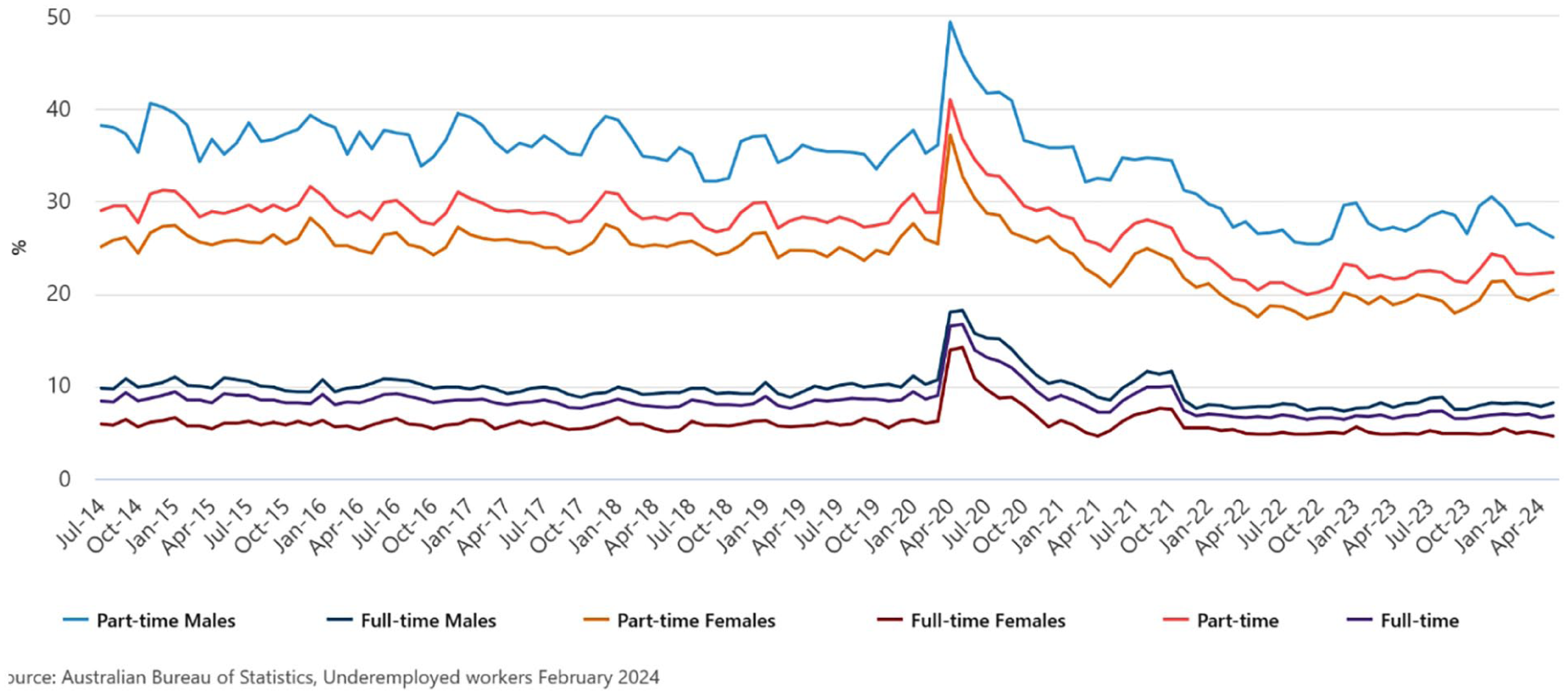
Full-time and part-time underemployment ratio by sex.
Children’s presence can significantly alter a female’s labour market participation, unlike their male peers (Baum and Mitchell, 2022; Kifle et al., 2014a). Analysis based on average results can hide significant heterogeneity within the female subset. For females with children, working limited (i.e. part-time) hours is a viable option to maintain a presence in paid and unpaid caring duties. Indeed, 47.62% (8.67%) of females (males) in the HILDA dataset used in this study claim that the main reason for working part-time hours is to care for children.
Figure 2 presents the average female underemployment rate by child presence and hours worked using the HILDA data, which accounts for the impact on income when stating preferred hours. While the average female underemployment rate is 13.78% without sub-aggregating by hours worked and child presence, it is clear that both factors combine to produce unique outcomes that are hidden when looking at the aggregated results. Females without children are more likely to be underemployed than those with children for both full-time and part-time employees, though the rate of full-time underemployment is very low, which would logically imply a negative relationship between reported underemployment and hours worked.
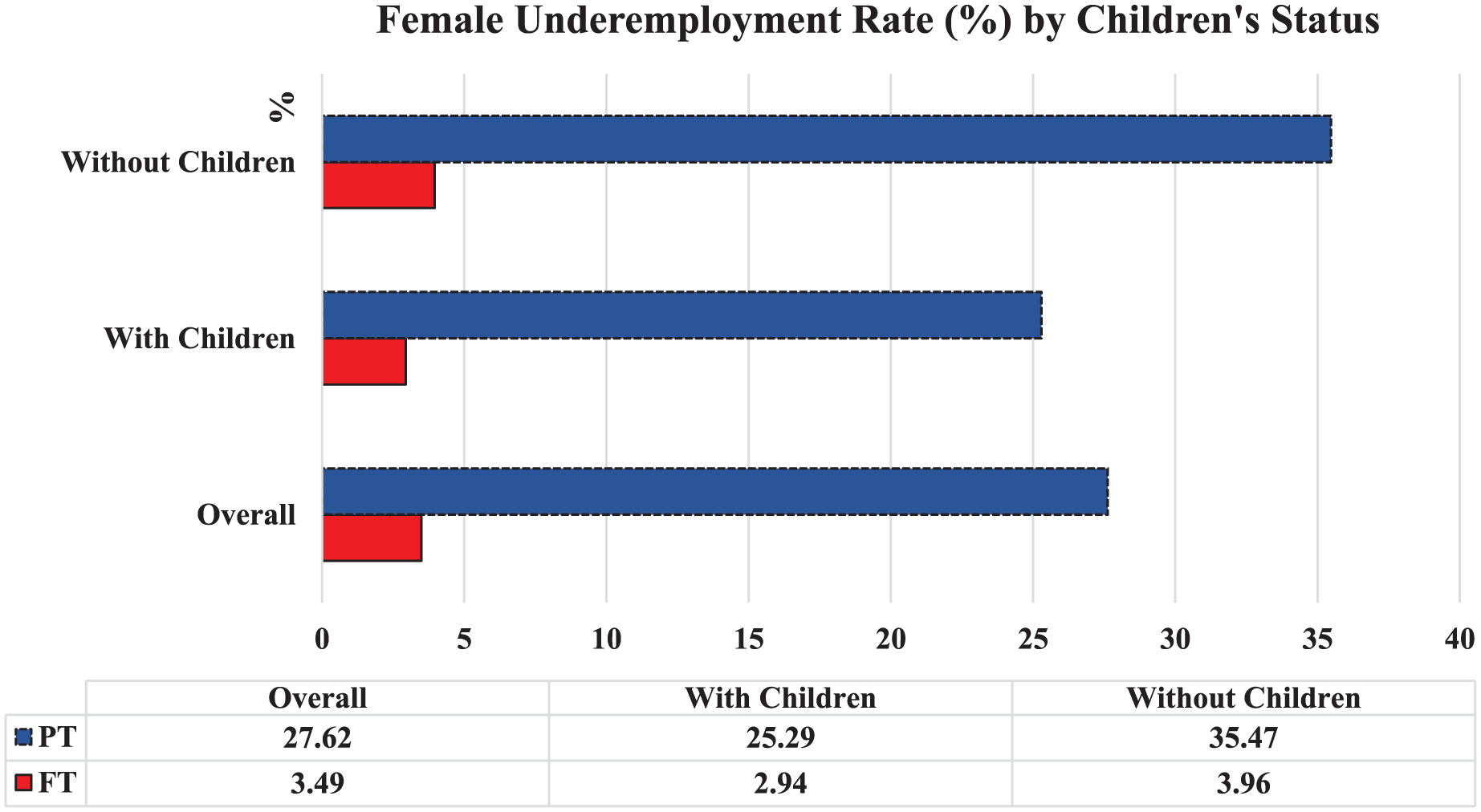
Trend in the female underemployment rate (average %) by child status and hours worked, 2001–2020 (HILDA Survey, 2020).
Figure 3 presents the average female underemployment rate by child presence, female educational attainment and hours worked. It reveals that the average underemployment rate is higher for lower-educated females with and without children than for higher-educated females.
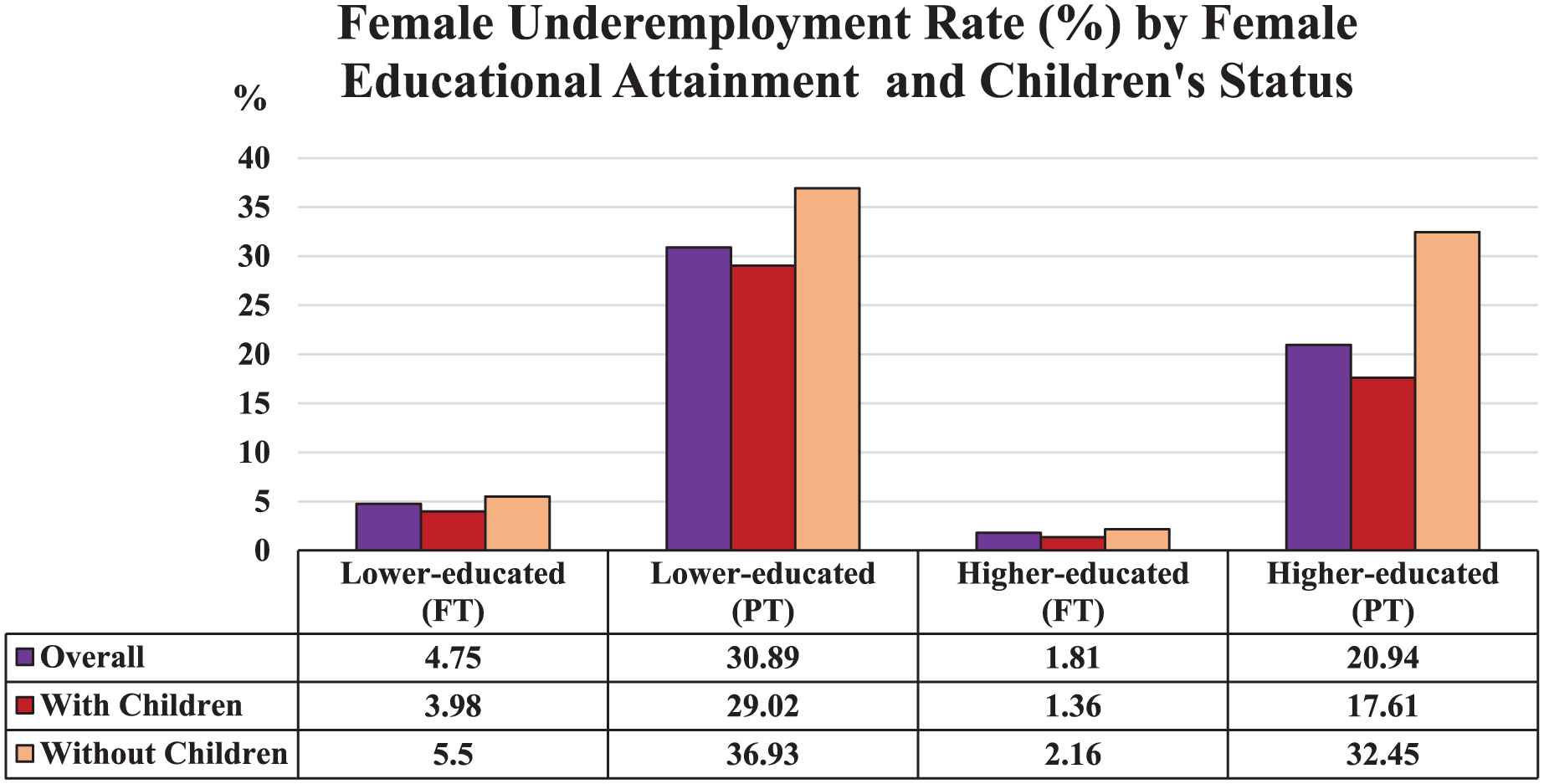
Trend in the female underemployment rate (average %) by female educational attainment and child status, 2001–2020 (HILDA Survey, 2020).
This divergence suggests that the presence of children can partly explain the differences in labour market outcomes for females, above and beyond other characteristics such as age and marital status. Policies aimed at female labour market participants may lose effectiveness should policymakers assume their characteristics to be homogeneous, as would be more befitting for males. This would mainly be the case if females without children exhibit labour market needs and preferences far closer to the average male participants than females with children (Baum and Mitchell, 2022). Further, females without children have fewer caring or domestic duties, and the conflict between paid and unpaid work is minimal (Weeden et al., 2016) relative to females with children. Thus, the underemployment phenomenon of females with children could be symptomatic of the unique characteristics that separate them from other female and male labour market participants.
Research into female labour market studies is segregated into many focus areas: equality, poverty, discrimination, labour market participation, wage determination and outcomes, and (un)employment. However, the literature could benefit from a greater understanding of anomalous labour market phenomena intertwined with children, particularly underemployment (Kler et al., 2018). Therefore, it begs the question whether this form of labour market inefficiency, whereby one’s preferred working hours exceed one’s actual working hours, is a particular concern for policymakers, as females’ transition to part-time 2 or casual 3 work, working on flexible arrangements 4 or leaving paid work altogether, will likely be prevalent in a liberal market economy such as Australia. Given that one of the important aspects of female underemployment is that the presence of children determines it, this paper investigates this issue. We pose the following research questions: (1) To what extent do children’s presence and age impact Australian mothers’ underemployment rate? (2) To what extent does the educational attainment of Australian mothers impact their underemployment? To answer these research questions, the 2001–2020 HILDA Survey data are used for a sample of employed females (aged 25–54), which will be utilised to test the impact of the presence of children on female underemployment.
This paper contributes to the existing literature in a tripartite manner. Firstly, the analysis explicitly focuses on underemployed females in paid work. While previous studies have examined female employment in Australia and the presence of children (see e.g. Argyrous et al., 2017; Baum and Mitchell, 2022; Birch and Preston, 2020; Blom and Hewitt, 2020; Brady and Perales, 2016; Evans and Baxter, 2013; Johnstone et al., 2011), relatively few studies are concerned with the underemployment phenomenon intertwined with children, and the debate on the exact influence of children on female underemployment remains undecided. To the best of our knowledge, only Kler et al. (2023) examine the issue of female underemployment in the Australian context. Their study found that the age of the children affects the likelihood of female underemployment, with younger (older) children decreasing (increasing) female underemployment; however, their study was restricted to the part-time employed only. This paper adds to the literature by further examining the impact of the child’s age and the female’s educational attainment on determining female underemployment.
Second, this study’s contribution lies in utilising panel data to account for female time-varying unobservable characteristics over two decades. This matters as female labour force participation and their average working hours have markedly changed (ABS, 2021b), and cross-sectional data will not capture such time-varying changes. It is worth noting that this paper focuses specifically on female underemployment, as the presence of children impacts female participants more than male participants, given that mothers undertake primary roles in taking care of children, especially very young children, via reduced paid working hours. In addition, childcare costs are high in Australia (OECD, 2022), along with the rising cost of living. Thus, there is a need for dual income streams at the household level, followed by flexible working arrangements to enable mothers to take care of their children.
The third contribution lies in explicitly amalgamating the main a priori determinants of female underemployment: in this case, the scope of female educational attainment and the interrelationship of female underemployment by age of children. Thus, while it is uncontroversial to suggest that child presence is a potentially significant factor underlying the heterogeneous patterns of female labour market participants, we can see more comprehensive results once we control for female educational attainment, as indicated in Figure 3.
The rest of the paper is structured as follows. The next section covers the background and a brief overview of the literature review on the influences of children and other interrelated factors in determining employed females’ underemployment. The third section discusses hypotheses. The fourth section presents the data sources and dependent and independent variables. The fifth discusses the methodology, followed by estimated results in the sixth section. The seventh section concludes with a summary of findings, policy implications and suggestions for future research.
Literature review
This section briefly overviews Australian research on the effect of child presence on female underemployment, given domestic specificities, including Australia’s very high rates of part-time and casual 5 work (Markey and McIvor, 2018) – both female-dominated (Birch and Preston, 2020; Evans and Baxter, 2013; Johnstone et al., 2011; WGEA, 2022). Given this, Australian females with children enjoy a more significant set of choices about paid employment in transitioning from full-time to part-time work compared to their peers in countries like the United States, Sweden, France, Canada and Denmark, who have a more significant share of full-time employment (Alan et al., 2024). The former can choose between full-time, part-time, or exit the labour force; within those hours, they also face a choice between fixed or non-fixed (casual) work. This has advantages and disadvantages, whereby females with children do not face a stricter binary choice between paid employment and an unpaid job. It also leads to a greater risk of entering work where the nature of the contract may not be as secure as they would prefer.
Selected research reports conclude that the presence of children leads to a reduction in paid working hours from full-time to part-time employment status, particularly for ‘first-time mothers’ (Argyrous et al., 2017; Baum and Mitchell, 2022; Evans and Baxter, 2013; Fleming and Kler, 2014; Gehringer and Klasen, 2017; Johnstone et al., 2011). For instance, Fleming and Kler (2014) emphasise that only 45% of formerly working females in Australia re-enter the workforce a year after giving birth, and 92% work part-time. As hours are reduced, the potential for reporting underemployment rises, ceteris paribus, simply based on the definition of underemployment. However, this would not occur if the reduction were based on the mother’s preference.
The contemporary environment has also witnessed an upward shift in the age of first-time mothers. For instance, in 1991, 36.5% of first-time mothers in Australia were aged between 25 and 29, but by 2019, just over half (51%) of first-time mothers were over 30 (Qu et al., 2022). This is relevant as female age is associated with the divergence of working patterns after having their first child. We also witness a more significant variation in female working patterns from age 35 onwards when they predominantly shift to part-time employment (WGEA, 2022), with longer-term deleterious effects such as a slow-down in human capital accumulation and human capital depreciation that lead to sub-optimal labour market outcomes later in life (Evans and Baxter, 2013; Fenyes, 2012), though this can be offset by more positive outcomes in non-labour market characteristics such as improved satisfaction with life (Adema et al., 2016).
This focus on the shift away from females in paid work to unpaid domestic labour has been reiterated in various other studies as well (Fleming and Kler, 2014; Flynn, 2017; Staff and Mortimer, 2012) and shown to be exacerbated further should the children be below school age (Fedor and Toldi, 2017; Flynn, 2017; Kifle et al., 2014b; Kler et al., 2023). In sum, given that Australia has a highly flexible labour force (ABS, 2023b; Birch and Preston, 2020; ILO, 2016), females with children do not necessarily face a choice between paid work and exiting the labour force. By choosing limited hours of paid work, they can remain in the labour force and, theoretically at least, increase their paid work hours when their children are old enough to start school. However, this is offset by the previously noted discount in their human capital accumulation and contemporary work experience.
Raison d’etre and hypotheses
Presence of children and female underemployment
Sex-delineated perspective research within an Australian context (Baum and Mitchell, 2022; Kifle et al., 2014a) suggests that having children results in females favouring part-time employment, unlike their male peers, who maintain their preference for full-time jobs. Therefore, mothers who engage in both activities may reallocate their paid working hours away from full-time to part-time work to balance work and family commitments, thus impacting upon their underemployment rate, though the direction of the impact is ambiguous. Reducing the hours of paid work can potentially raise females’ level of underemployment, as those who work fewer hours are more susceptible to being underemployed. However, should they voluntarily reduce their preferred hours, owing precisely to childcare, then the rate of female underemployment is more likely to fall instead. Given the assumption of a voluntary switch away from paid employment to unpaid domestic responsibilities, and using data from the HILDA Survey, our first hypothesis is as follows:
Age of children and female underemployment
The HILDA Survey indicates that, in Australia, mothers prefer part-time employment, especially when they have preschool children (0–4 years) and young children (5–14 years), but not when their children are older (15–24). 6 This illustrates how a preference for part-time employment potentially decreases underemployment, lowering (raising) the likelihood of underemployment for females with younger (older) children. The latter arises as females with older children are more likely to prefer to work longer hours.
Still, they are now constrained by stunted levels of human capital accumulation and subsequent human capital depreciation that occurred when their children were younger. For instance, on average, over the 2001–2020 period, the rate of female underemployment among those in part-time work rises with the age of children, from 20.27% for females with children aged 0–4 years, 24.59% for those with children aged between 5 and 14 years and 27.26% for those with children aged between 15 and 24 years. Therefore, although having older children increases a female’s capacity to work longer hours in a paid job as her childcare responsibilities reduce, at least time-wise, it also raises the likelihood of working fewer than their preferred hours. Higher childcare costs may raise female underemployment rates as they fail to gain their preferred hours. However, it may also lower their labour market participation if they decide that the effort is worth less than the reward of paid work (OECD, 2018). Thus, our second hypothesis using HILDA data suggests that:
Age of children, educational attainment and female underemployment
There are mixed findings on how children affect a mother’s ability to find employment once we account for her educational background (Cools et al., 2017). For instance, higher-educated females with children have a higher opportunity cost of lost earnings (Evans and Baxter, 2013; Fenyes, 2012). Noticeably, after having their first child, higher-educated females and lower-educated females tend to work fewer hours; but when the child is older, they seek more hours instead, and higher-educated females are more severely affected than lower-educated females since they have greater earning capacity (Bahar et al., 2025). This higher penalty will thus give rise to higher-educated females who are less willing than lower-educated females to trade off as much paid work for unpaid domestic duties, though, admittedly, this may take the form of having fewer children or no children (ABS, 2023a) rather than by taking less time away from paid work. Australian Institute of Family Studies data (AIFS, 2020) reported that a relatively higher percentage (20%) of Australian females with a degree or above had no children relative to females with lower degree qualifications (15%), even though these females were in their forties. Therefore, higher-educated females with children may be more likely to report underemployment than lower-educated females with children because any decision they make to reduce their working hours to account for home-based childcare is less likely to be voluntary and is more representative of the Australian ‘male-breadwinner’ culture instead (Blom and Hewitt, 2020).
However, according to marital sorting theory (Almar et al., 2023; Fernandez, 2002), higher-educated females are far more likely to partner up with their educated peers, thus allowing them more flexibility to voluntarily reduce their paid work and, therefore, lower their rate of underemployment given more significant family income as the male partner is likely to be a high-income earner (Blom and Hewitt, 2020; Preston, 2023; WGEA, 2024). In our data, the figures suggest the latter as the more likely outcome. 7 Indicative analysis shows that, on average, 9.60% of higher-educated females with children are underemployed, less than that of non-tertiary-educated females with children at 18.55%, thus lending credence to this proposition.
A more detailed analysis of the rate of female underemployment split by education and delineated by the age of the child (ren) complicates matters. Having preschool-age children, schemes such as paid parental leave and subsidised childcare increase mothers’ engagement in the labour market and give parents options for defining their preferred work–life balancing hours (Adema et al., 2016). However, the net childcare costs are a significant burden for many Australian families, and the childcare rebate only covers up to 50% of the cost of childcare (OECD, 2022), particularly impacting lower-educated mothers who are also relatively low earners. Moreover, Australia’s tax and income support system penalises mothers’ participation in the labour market; across the income scale, the interaction of the personal tax, family payments and childcare support systems 8 discourages Australian mothers with young children from fully participating in the labour force (KPMG, 2018). Thus, mothers having preschool-age children choose fewer hours of work (Fedor and Toldi, 2017; Flynn, 2017; Kifle et al., 2014a, 2014b; Kler et al., 2023), which indicates that they are also more likely to work part-time hours, and higher-educated mothers, exceptionally, may be more likely to return to full-time employment and fully utilise their investment in human capital once their children are grown up. This move to part-time work while children are young impedes their capacity to return to full-time work and regain their occupational standing. This is fuelling a rise in female underemployment in part-time work by having older-aged children. Thus, our third hypothesis using HILDA data suggests that:
Data
Data sources
This study utilises waves 1–20 of the HILDA Survey data, covering the period 2001–2020. The HILDA follows a large cohort of Australians across consecutive years. It provides a rich source of information on many aspects of Australian life under three major core themes: (1) family life, (2) income and (3) labour market activity and employment. Attrition is addressed via the continued replenishment of existing individuals to substitute for the loss of representatives of the broader Australian population.
Table 1 defines this study’s main dependent and selected independent variables and the estimated descriptive statistics based on a sample pooled from all years (2001–2020). The analytical sample in this study is focused explicitly on employed females. The dataset comprises 77,014 observations, and after restricting the sample to employed females (aged 25–54), the final analytical sample consisted of 36,100 observations. This study limits the sample to those aged 25–54 to match the typical age range for most full-time employed females. This will remove the defeating influences corresponding to teenage motherhood and motherhood in or near retirement.
Definitions of selected variables and descriptive statistics.
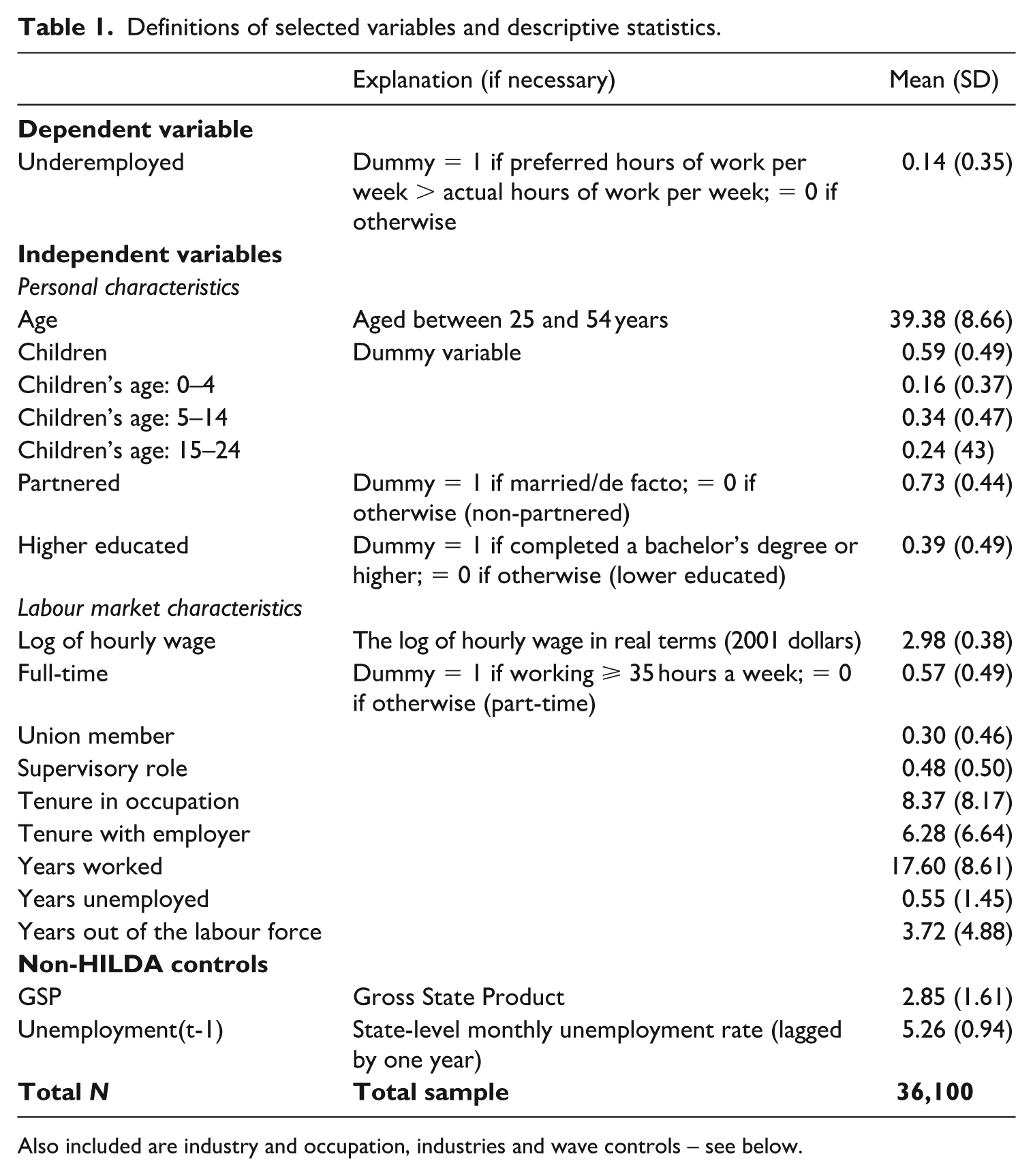
Also included are industry and occupation, industries and wave controls – see below.
Measures
Dependent variable
The dependent variable is underemployment, derived from the previously noted HILDA Survey question. On average, 14% of employed females aged 25–54 are underemployed in this study. While over 80% of females in Australia have children (AIFS, 2020), that rate falls for employed females, including our sample (59%).
Independent variables
A key independent variable of interest is the presence of children, and in this dataset, among females with children, 78% have had more than one child. Personal characteristics considered for this study include age, marital status and educational attainment. On average, 73% of employed females in this study live with a partner. It is expected that females living with a partner may lower their likelihood of underemployment relative to females with no partner, as the former can more effectively juggle paid and unpaid work and thus have a greater capacity to reduce their working hours voluntarily. As the HILDA Survey includes a wide range of labour market characteristics, this study also controls for union membership, supervisory responsibilities, tenure with the current occupation and employer, and detailed labour market experience. In addition, years out of the labour force are of interest given the effect of children in this study, albeit the reasons for being out of the labour force are unstated. This dataset also controls for industry and occupations. Finally, the analysis includes non-HILDA controls, such as the unemployment rate (lagged by one year) collected at the state level and the Gross State Product (GSP) by state and territory, to account for potential time-varying unobserved heterogeneity at the macro-level (Kler et al., 2018).
Methodology
The primary strategy is to explore the longitudinal nature of the data and utilise a linear probability model with individual fixed effects models, which control for unobserved time-invariant individual-level characteristics. The empirical model relates females’ underemployment and children’s presence using the following specification:

where:
The fundamental distinction in the panel data analysis lies in choosing between fixed (FE) and random effects (RE) models. Both estimators are designed to improve the estimation of clustered data and can eliminate bias and enhance efficiency (Dieleman et al., 2014). 9 Based on the Hausman test results, the FE estimator with cluster-robust standard errors model was utilised. The FE regressions reduce the possibility of omitted variable bias, and the estimator is identified by within-female variation in covariates over the observed period. We cluster standard errors at the individual level.
We would also like to note that the presence of children at home is possibly an endogenous variable, and the previous research on female underemployment in Australia has not considered the effect of endogeneity. Thus, an effort has been made to identify and utilise the appropriate instrument variable (IV) to control for endogeneity and examine the causal effect between the presence of children and female underemployment. This study examines several variables as potential IVs in the decision to have children, including previously reported child’s death in the family, birth control measures, twin births, the sex of the child and the presence of grandparents in the home. Nevertheless, from the HILDA dataset, identifying a potential IV for children’s presence is difficult due to limited observations, and some variables that may qualify are not available in all waves. Furthermore, some variables available in all waves are found statistically insignificant in determining the presence of children and, therefore, not utilised in the current study.
Results
The effect of the presence of children on female underemployment
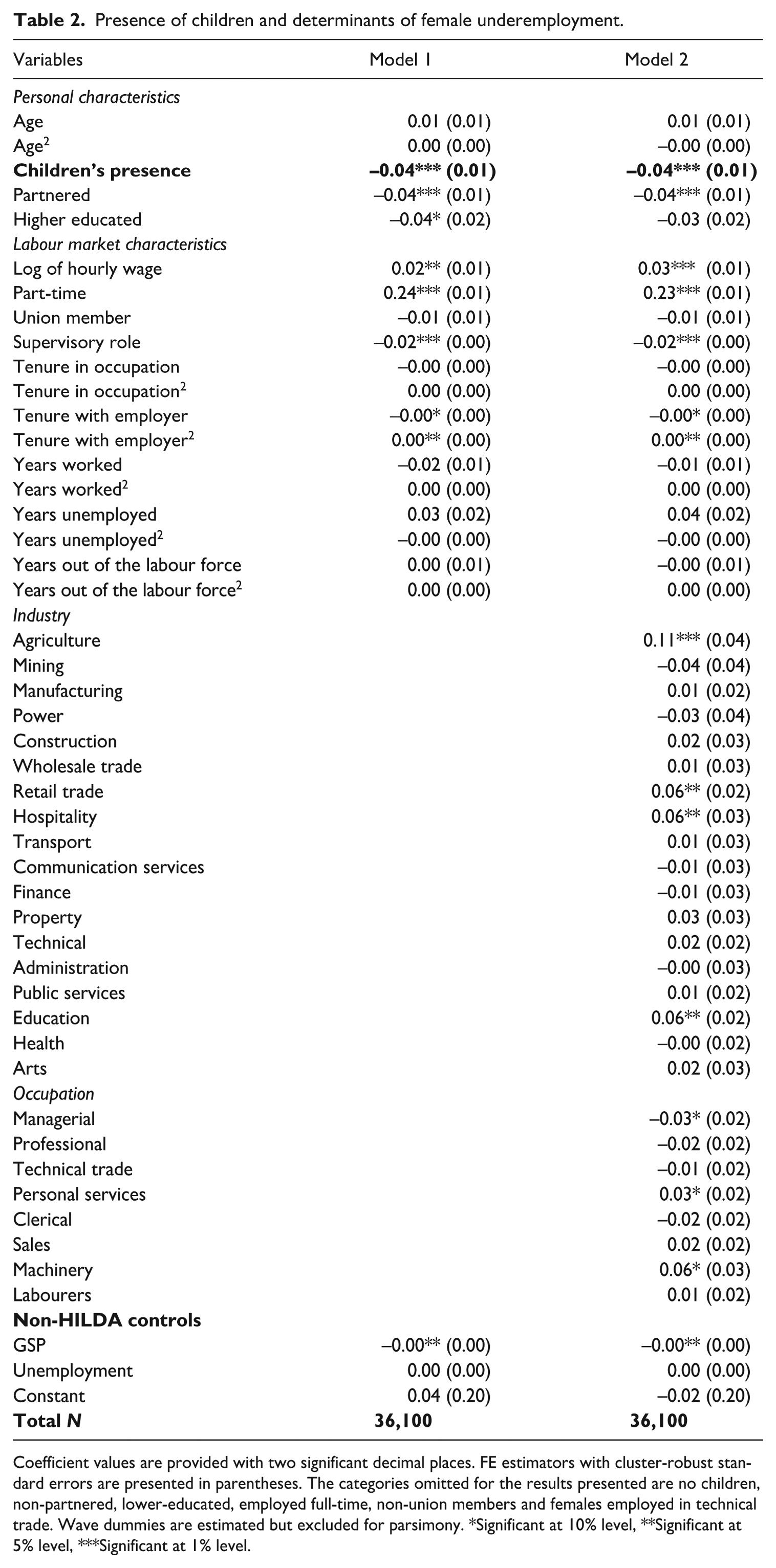
Table 2 (Model 1) presents the results of the FE estimator testing Hypothesis 1, which accounts for the determinants of female underemployment, controlling for female personal, labour market characteristics and non-HILDA controls. In addition, a robustness analysis is undertaken to investigate the potential influence of controlling for industries and occupations on female underemployment, as shown in Model 2.
Presence of children and determinants of female underemployment.
Coefficient values are provided with two significant decimal places. FE estimators with cluster-robust standard errors are presented in parentheses. The categories omitted for the results presented are no children, non-partnered, lower-educated, employed full-time, non-union members and females employed in technical trade. Wave dummies are estimated but excluded for parsimony. *Significant at 10% level, **Significant at 5% level, ***Significant at 1% level.
The estimates show, ceteris paribus, that the presence of children decreases the probability of females being underemployed by 4%, which supports Hypothesis 1. Thus, findings suggest that females with children face a trade-off between childrearing and paid work; these females prefer fewer hours of paid work, thereby reducing their probability of being underemployed.
This model estimates that the presence of a partner lowers the likelihood of underemployment among females. Indeed, having children suggests a higher probability of cohabitation and signifies joint family income. The still-present traditional gender roles represent females as caretakers who work part-time (or not at all) and males as the family breadwinner who works full-time. Thus, unlike males, there is less societal pressure for partnered females to engage (or to engage more) in the labour market if children are present. Noticeably, partnered females return to the labour market later than single mothers (Fedor and Toldi, 2017) and are less likely to be underemployed (Baum and Mitchell, 2022).
The level of education is negatively related to reporting underemployment, albeit weakly significant. This suggests that higher-educated females will report lower underemployment rates, which supports Hypothesis 3. Results for tenure (in occupation and with an employer) reduced the probability of underemployment, suggesting that a better fit between job, employee and employer is evident over time. The relationship between years unemployed and underemployment is negative and unexpectedly statistically insignificant. Thus, we cannot state with certainty that there is a relationship (for females) between unemployment and underemployment, whereas the a priori expectation based on Kler et al. (2023) was to find a positive relationship. Interestingly, the FE model reports that years out of the labour force (possibly due to childrearing or education investment) reduce the likelihood of underemployment. More precise statements would require further study, given the paucity of research in this area (the relationship between years out of the labour force and underemployment) and the inability to disaggregate the reasons for being out of the labour force. Unsurprisingly, higher economic growth shows an inverse relationship to underemployment. Similar to years unemployed, higher unemployment rates in the previous year do not influence the probability of being underemployed in the current year.
Compared to the primary specification in Model 1, the specification presented in Model 2 controls for industries and occupations. Predominantly, industries tend to be sensitive to sex, 10 which might matter as industry characteristics impact sex-delineated labour market outcomes, including differences in the number of hours worked and the underemployment rate across sectors with a male and female prevalence when children are present (Birch and Preston, 2020). Results show that females employed in female-dominated industries are more likely to be underemployed, though results suggest our overall conclusions remain unchanged, whether or not industries and occupations are controlled for, with one important distinction: education is no longer statistically related to female underemployment, contrary to Hypothesis 3. Given that it was only marginally significant in Model 1, it would be prudent to avoid making sweeping statements regarding the relationship between the level of education and female underemployment in Australia at this stage.
The effect of children’s age and the youngest child’s age on female underemployment
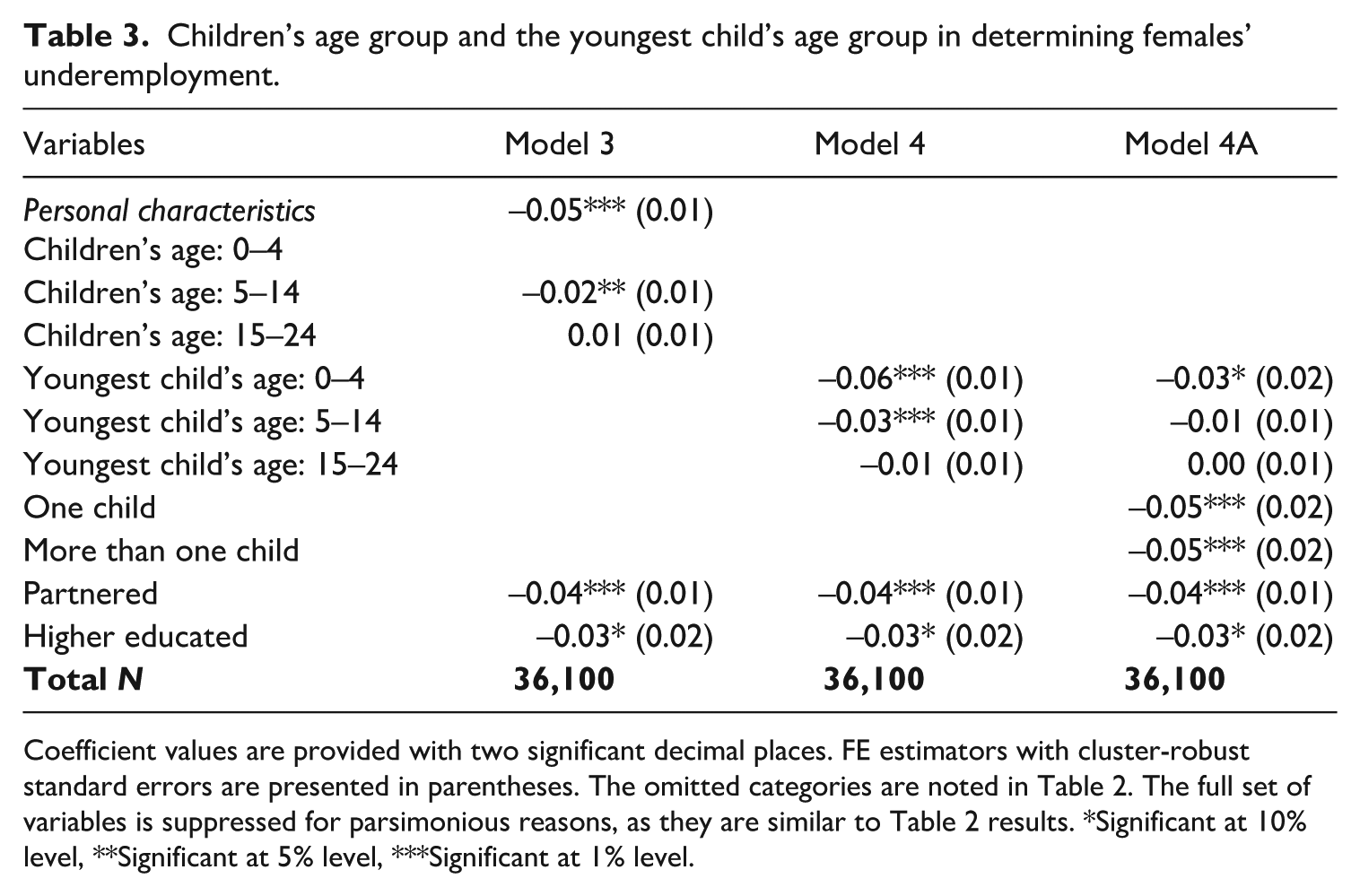
Table 3 highlights the results of children’s age in determining female underemployment (omitted category, females with no children) to test Hypothesis 2 on a positive relationship between the age of children and the likelihood of female underemployment.
Children’s age group and the youngest child’s age group in determining females’ underemployment.
Coefficient values are provided with two significant decimal places. FE estimators with cluster-robust standard errors are presented in parentheses. The omitted categories are noted in Table 2. The full set of variables is suppressed for parsimonious reasons, as they are similar to Table 2 results. *Significant at 10% level, **Significant at 5% level, ***Significant at 1% level.
Compared to the primary specification in Table 2, the variable children’s presence is substituted for by their relevant age group. The female age variable is excluded from the control variable, as there is a significant correlation between the age of the children and the mother’s age (Kler et al., 2023). Results match Hypothesis 2. The likelihood of underemployment for those with very young (0–4) and young (5–14) children differs from the likelihood of underemployment for those with older children (15–24). Those females with children under 15 are less prone to underemployment, and there is a more than twofold increase in the chance of not being underemployed for those with very young children (i.e. non-school-aged) relative to those with young children aged between 5 and 14 years. Females with older children report a higher likelihood of underemployment, which can be related to previous periods of part-time work (or perhaps no paid work) and the subsequent curtailing of human capital accumulation and work experience, which reduces their success in obtaining more hours of work, and hence increasing the propensity towards underemployment (Li et al., 2015), though the result is insignificant.
This study also examines the age of the youngest child at home, which substitutes for the variable children’s presence and children’s age group, as shown in Model 4. The likelihood of underemployment is lower and significant for employed females with the youngest aged children at home (0–4) and those whose youngest children at home are between 5 and 14, and it is lower but insignificant for those females whose youngest children at home are aged 15–24, who are now more likely to be underemployed. This outlines that females whose youngest children are aged 15 and above are likely to be in full-time employment (Baxter, 2023), as they require less parental supervision, are less likely to be dependent on parents, and therefore, their mothers are more likely to be working additional hours than when the child was younger. However, once we included the number of children as a control variable when looking at the age of the youngest child, as shown in Model 4A, the significance level is lower at 10% for the youngest children aged 0–4, and there is no significance for the youngest children aged 5–14.
Children’s age group in determining female underemployment differentiated by female’s educational attainment
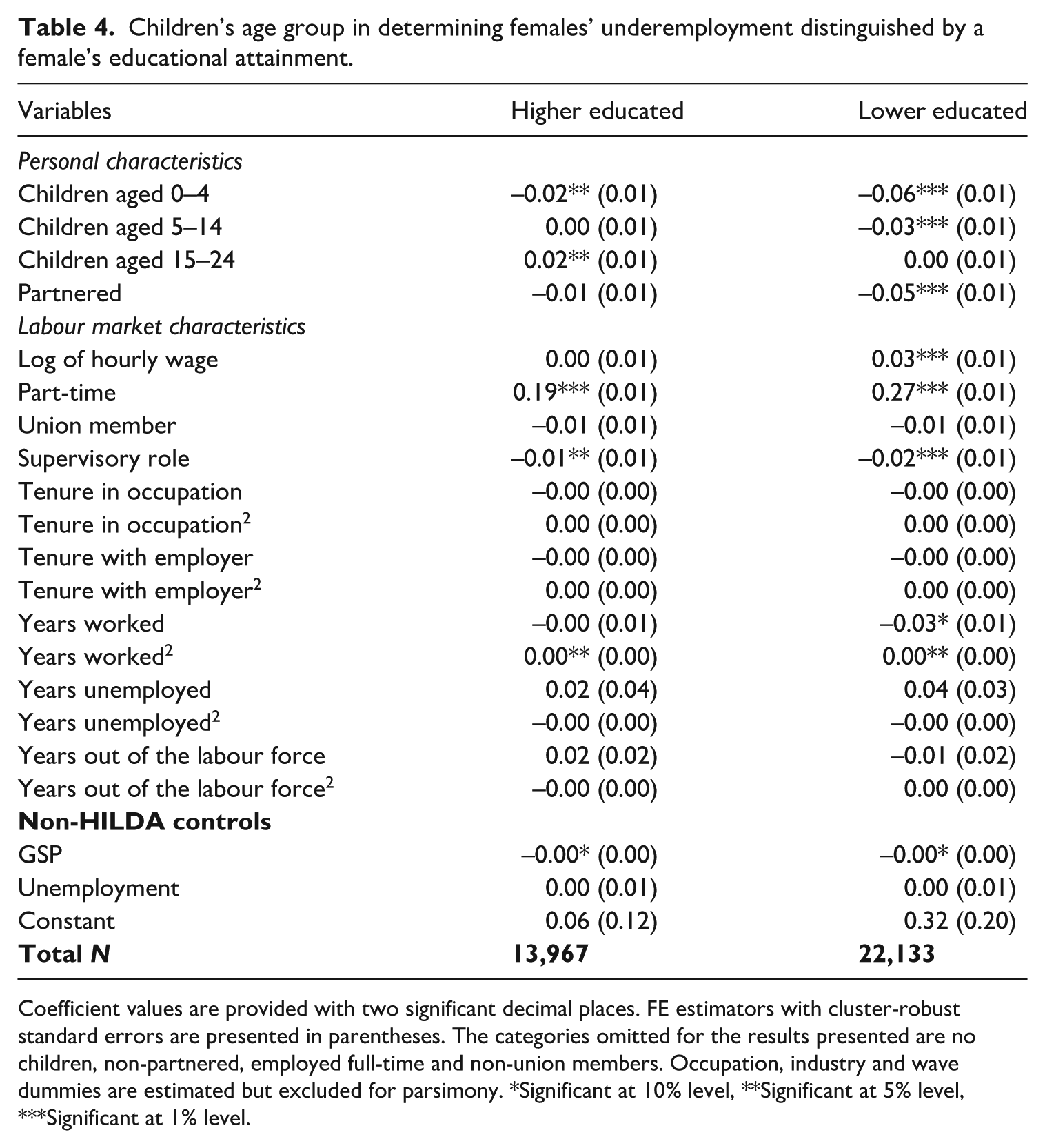
Table 4 presents the determinants of female underemployment split by educational attainment. The key variables of interest are the age group of the children. The impact of the age of children on female underemployment, divided by education, differs somewhat in outcome and magnitude.
Children’s age group in determining females’ underemployment distinguished by a female’s educational attainment.
Coefficient values are provided with two significant decimal places. FE estimators with cluster-robust standard errors are presented in parentheses. The categories omitted for the results presented are no children, non-partnered, employed full-time and non-union members. Occupation, industry and wave dummies are estimated but excluded for parsimony. *Significant at 10% level, **Significant at 5% level, ***Significant at 1% level.
Irrespective of educational status, having preschool children lowers the probability of underemployment, but much more so for lower-educated females. This continues at a lesser rate for those lower-educated females when their children are between 5 and 14. However, this impact is no longer statistically significant for higher-educated females with children of the same age group. At ages 15 and above, the presence of such children increases underemployment for higher-educated females but not lower-educated females. This result does support Hypothesis 3, which suggests that the underemployment of higher-educated mothers decreases with preschool-aged children and increases with older-age children. Meanwhile, the result for the lower-educated mothers continually decreases as the children age, although the result is only significant for children below 15 years old.
Conclusion and recommendations
This study investigated the impact of children as a significant factor in determining female underemployment. Findings reveal that children’s presence reduces female underemployment, despite females with children being the ones more likely to switch from full-time to part-time hours, engaged in casual contracts and flexible working arrangements compared to females without children, thus suggesting a voluntary reduction in paid work.
However, females’ underemployment patterns vary according to the age of their children, and the likelihood of underemployment increases with the age of their children. Having young children can impact a female’s labour market participation, which leads to a temporary reduction in employment, which could relate to childcare responsibilities, gender ideology and the motherhood penalty, and thus, have the lowest likelihood of reporting underemployment. Since non-school-aged children need greater parental care, it restricts these females from being in full-time work, and they are more likely to transit voluntarily to part-time employment. Those with younger school-aged children are also less prone to underemployment relative to the base case of females with no children, but at a lower magnitude than those with preschool children, given that the level of parental care starts to reduce while remaining somewhat significant. However, the probability of underemployment increases once the children are 15–24 years of age, albeit not for those whose youngest child reaches this age group. There are several possible explanations why females with older children may be more likely to be underemployed than females with younger children; this study posits that this is due to their ability to increase their preferred hours of work but that they then come up against impediments caused by their previous decision to cut their working hours such as human capital stock deterioration and lower accumulated stock of work experience.
Irrespective of females’ educational attainment, those with very young children report a lower probability of underemployment and, magnitude-wise, this is especially so for lower-educated females. This suggests that lower-educated females have less attachment to the labour market due to lower investment in their human capital and, thus, a lower opportunity cost in exiting, or in this case, weakening their relationship with the labour market. Complicating this situation further is the non-availability and non-affordability of childcare (Flynn, 2017). This also suggests that lower-educated females already earn less; and higher childcare costs will potentially lower their labour market participation should they decide that the effort is worth less than the reward of being in paid work (OECD, 2018), thus reducing their participation in the labour market. However, options to minimise the trade-off exist for higher-educated females as they can send their children to childcare if they still want to work full-time, especially if they are concerned about their career trajectory. This suggestion helps explain the remaining results, with higher-educated females with children aged 5–14 years reporting no significant differences in underemployment rates compared with those higher-educated females with no children. In contrast, lower underemployment rates are still evident for lower-educated females with children in this age group. Indeed, higher-educated females with older children report higher rates of underemployment relative to higher-educated females with no children. In contrast, the magnitude differences are much more muted for lower-educated females.
The further supposition from this research is that the presence of children in the family and traditional gender ideology influence females with children to adjust their hours in paid work by transitioning to part-time jobs. Though part-time jobs in Australia may maintain females’ engagement in the labour market, they also come with the cost of increasing labour market marginalisation, a lack of career progression, and a disparity in holding leadership positions.
Hence, the findings of this paper have two important policy implications. Firstly, it suggests that those households working part-time and employed in casual hours are more likely to rely on social security payments, and they are more likely to experience poverty. Indeed, statistics indicate that 18% of households where the primary income earner is female are in poverty, compared with 10% of households where the primary income earner is male. Moreover, among people in households where the primary income is wages, 7% of Australians are in poverty, and this is made up of families with children (Australian Council of Social Service [ACOSS], 2023). Thus, policymakers should incentivise businesses and organisations to consider all requests for increased work hours in part-time employment or the right to transition from part-time to full-time jobs if the transition is reasonable, especially for lower-educated employees, rather than only enhancing affordable and accessible childcare for non-school-aged children and after-school care centres for school-going children.
Secondly, the ‘workforce disincentive rate’ 11 discourages more mothers from engaging in full-time hours or more workdays, specifically those mothers with young children. Thus, policymakers should consider lowering the ‘workforce disincentive rate’. This can be done by increasing childcare subsidies and reassessing the tax system of dual-earner parents with children, as the current childcare subsidies and tax system do not favour Australian parents and discourage mothers, particularly, from being employed in full-time hours, directly increasing female underemployment in the part-time and lower pay in the long run.
Footnotes

Funding
This paper uses unit record data from the Household, Income and Labour Dynamics in Australia (HILDA) Survey. The HILDA Project was initiated and is funded by the Australian Government Department of Social Services (DSS) and is managed by the Melbourne Institute of Applied Economic and Social Research (Melbourne Institute). However, the findings and views reported in this paper are those of the authors and should not be attributed to DSS or the Melbourne Institute.
Declaration of conflicting interests
The authors declared no potential conflicts of interest with respect to the research, authorship, and/or publication of this article.