



Abstract
This study explores the delicate relation between technological innovations and work quality. It was conducted across various parts of the Dutch central government. The authors assessed how civil servants perceive changes in job demands, job resources and some relevant outcomes following the implementation of new technologies. Data were collected through an online Technology Monitor (TM) which was (at least partly) completed by 332 respondents. Results showed that employees perceived significant increases in various job demands, alongside a modest increase in the job resource autonomy after technology implementation. Additionally, civil servants who experienced more autonomy following new technology implementation reported higher levels of both work engagement and employability. In contrast, perceptions of increased workload were associated with more burnout symptoms. Interestingly, perceived increases in task variation were associated with fewer burnout symptoms, lower job insecurity and higher work engagement. These findings offer valuable insights for managers and HR professionals involved in managing technological transitions, emphasizing the importance of employee-centered strategies to safeguard and enhance the quality of work of civil servants.
Introduction
Due to rapid technological developments, such as the use of new (software) systems (e.g. Enterprise Resource Planning), digitization of files and data, artificial intelligence, automation (e.g. Robotic Process Automation; RPA) or new communication technology (such as video calling), many employees increasingly have to deal with (major) changes in the design and organization of their daily work. Ample evidence has underscored that the content and organization of work are pivotal for work being motivating, meaningful, and not (too) strenuous, and for instigating positive individual and organizational outcomes (i.e. ‘high quality work’: Parker et al., 2017b; see for an overview: Parker et al., 2017a). It is crucial to recognize that the impact of technological innovations on the workforce can run deep and is multifaceted (Brougham and Haar, 2018). In general, employees demonstrate an ambivalent attitude towards emerging technologies and the accompanying changes: some are apprehensive about being left behind, while others embrace the challenges and opportunities they bring. In addition, various consequences of (the implementation of) advanced technologies for employees’ well-being and performance have been reported (see e.g. Berkers et al., 2023; and for a review Wang et al., 2020). Although these issues have already been frequently recognized, there still is a tendency in the literature to focus on the effects of technological innovations rather than on the process of how technological innovations fundamentally reshape work design and impact employees’ well-being (Parker and Grote, 2022a; Schwab, 2017). In line with this tendency, Orlikowski and Scott (2008) argue that most scholars have primarily examined the direct relationship between working with new technology (e.g. ICT) and individual behaviours and outcomes, often neglecting its impact on the nature of work itself. By doing so, there remains a lack of clarity on how new technology shapes the nature and quality of work and, in turn, influences employees’ effectiveness and well-being. Focusing on this process is, however, essential for fully understanding the effects of new technology on individual outcomes. Without a deeper insight into how the work itself is changing, it is difficult to make sense of the often-mixed findings in this field.
In an attempt to address these issues, this article aims to put the spotlight on individual employees who have to adapt to technological innovations. We examine the extent to which technology implementation affects their work design and, in turn, their work quality. To this aim we developed an online Technology Monitor that enables us to assess how employees experience working with new technologies in terms of work design and certain employee outcomes. The study was carried out at several central government departments. The government sector operates under high levels of transparency and accountability, making it essential to study the impact of new technologies to ensure that changes are well understood, transparently implemented, and in line with the public interest. In addition, civil servants play a pivotal role in serving the public. Therefore, understanding how new technologies affect their work design is vital for ensuring their well-being, performance, job satisfaction and turnover, all of which directly impact public services. Finally, given the complex work processes and sensitive nature of government work, studying how new technologies affect work quality in this context might help tailoring technology implementation to meet specific government tasks, needs and challenges.
By investigating the delicate relation between technological innovations and work quality in a specific setting like the central government organization, we contribute to the call for more detailed, empirical studies of technology and work in specific contexts (Barley and Kunda, 2001; Parker and Grote, 2022a). In this respect Ulfert and colleagues (2024) acknowledge that although the number of publications on emerging technologies (e.g. digitalization) has grown in recent years, most studies in this field remain theoretical contributions, qualitative research, or empirical studies using vignette methodologies. This is often due to the limited availability of specific technological innovations within organizations or the challenges of accessing field sites for research. With the present study, we contribute to the field by providing a quantitative investigation in a real-life context, focusing on actually implemented technological innovations. From a practical point of view, our findings can support managers and HR professionals in learning about work design while deploying new technologies, allowing them to adequately manage technological transitions (Parker et al., 2019).
Theoretical and empirical background
Job Demands-Resources model
Technology significantly shapes work design. Work design refers to the ‘content and organization of one’s work tasks, activities, relationships and responsibilities’ (Parker, 2014: 662). Research on this topic spans several decades (e.g. Parker et al., 2017a), and it is widely accepted and proven that the way work is designed has implications for many outcomes such as employee well-being, work performance, burnout, absenteeism and other related outcomes. Among the different conceptualizations of work design, we draw on the Job Demands–Resources model (JD-R model (Bakker et al., 2023; Demerouti et al., 2001) that emphasizes how two broad categories of job characteristics (i.e. job demands and job resources) impact employee well-being (for instance burnout and engagement) and performance. Job demands refer to all aspects of a job that involve physical, mental or emotional effort. While they are not inherently negative, excessive or prolonged job demands, without sufficient job resources, can lead to stress, burnout and decreased well-being. Examples are: workload, conflicts with colleagues, dealing with difficult clients and irregular working hours. Job resources, on the other hand, refer to all aspects of a job that help employees to perform their work well, cope with (high) task demands and stimulate personal growth and development. Examples of job resources include support from colleagues and supervisors, feedback and autonomy. At a general level, and consistent with the assumptions of the JD-R model, many empirical studies show that job demands and job resources elicit two distinct processes, namely the energetic health impairment process which links job demands to burnout, and the motivational enhancement process which links job resources to work engagement (Bakker et al., 2023). Meta-analytic findings have largely confirmed that various job demands are positively related to burnout while various job resources are positively related to work engagement (Lesener et al., 2020). Additionally, empirical research has also demonstrated cross-links between variables involved in these processes, indicating that job resources can affect strain indicators (such as burnout) while job demands can impact motivational states such as work engagement (e.g. Davcheva et al., 2025; González-Romá et al., 2020; Lesener et al., 2019; Schaufeli and Taris, 2014). The introduction of new technologies in a job inevitably leads to changes in both job demands and job resources. The challenge lies in transforming technology into a valuable job resource while preventing it from becoming a (too high) job demand (Demerouti, 2022).
Next to job resources, the JD-R model also acknowledges the importance of personal resources for employee well-being and performance (Xanthopoulou et al., 2007). Personal resources are aspects of the self that are generally linked to resilience and refer to individuals’ sense of their ability to control and impact upon their environment successfully (Hobfoll et al., 2003). Examples of personal resources are self-efficacy and optimism.
Technology as a doubled-edged sword for good work design
In their seminal papers, Parker and Grote (2022a, 2022b) argue that technology has the potential to affect key aspects of work design (i.e. job demands and job resources) both positively and negatively – and therefore could be described as a double-edged sword. For instance, some technologies can reduce job autonomy by allowing algorithms to control human decisions (see for a discussion Kellogg et al., 2020). In contrast, other technologies, can enhance decentralized decision-making by making it easier for employees to access and share information and resources, thereby increasing their sense of autonomy (Grote and Baitsch, 1991). The effects of technologies on the relational aspects of work are also varied. For example, technology-mediated communication can help to overcome time and space constraints, thereby fostering social connections (Kellogg et al., 2006). Conversely, virtual working can sometimes be detrimental for employee well-being, as employees may feel lonely, less socially connected and experience less social support (Kiesler and Cummings, 2002). The same applies to skill variety. When technology takes over dull, dirty and dangerous tasks, it can create more opportunities for individuals to engage in skilled and meaningful work (Walsh and Strano, 2018). However, technology can also diminish these aspects. With digitization, cognitive tasks are increasingly being replaced, which is expected to lead to a significant loss of human workers’ skills due to a reduction of task variety (Delbridge, 2005). In addition to the aforementioned job resources, job demands can also be affected by technology implementation. For instance, the adoption of various time-saving electronic systems sometimes increases employee workload instead of reducing it because the new systems appear very burdensome and inconsistent with employees’ competencies and identities (see González Vázquez et al., 2024, for a recent overview). Physical demands may also change due to technology implementation. Whereas heavy manual labour can be replaced by automation, it may result in employees spending more time in front of computers, which can lead to different types of detrimental health effects (Lee and Žarnic, 2024). In conclusion, this brief, non-exhaustive discussion shows that the impact of technology on crucial aspects of work design (i.e. job demands and job resources) is not predetermined. As Kranzberg noted already in 1986, ‘technology is not necessarily good, nor bad: nor is it neutral’ (p. 545). We need more detailed empirical studies on technology and work in context (Barley and Kunda, 2001; Parker and Grote, 2022a, 2022b) to better understand how exactly technology shapes the design of specific jobs.
Current empirical insights
Surprisingly, there are still few empirical studies that investigate the effect of implementing new technology on job design and well-being in real work situations. In a systematic review, Plomp and Peeters (2020) discovered 14 quantitative studies between 2004 and 2019 explicitly investigating the impact of working with new technology on work characteristics and well-being. Earlier research has mainly focused on the impact of digitization on employment and labour market composition (e.g. Fernández-Macias, 2018; Frey and Osborne, 2017), and on the effectiveness of technology implementation in terms of employee acceptance and job performance (for a review see also Marangunić and Granić, 2015). The 14 scientific studies reviewed in Plomp and Peeters (2020) indicated that the introduction of new technology is often associated with an increase in job demands, particularly complexity of work and workload. This increase in job demands is associated with decreased employee well-being. Results also showed a change in job resources: particularly an increase in autonomy and feedback and a decrease in perceived control. However, the general picture seems to be that resources do not increase sufficiently to match the rising job demands.
Furthermore, and later, Strich et al. (2021) conducted a qualitative study on the implementation of an AI-based loan system, which significantly changed loan consultants’ roles. While lower-level employees could now organize loans, augmenting their role through upskilling, higher-skilled consultants experienced reduced autonomy as the AI system now made loan decisions. Consequently, the system reduced the utilization of consultants’ specialized knowledge and skills and posed a threat to their role identity. In addition, Berkers et al. (2023) investigated how robotization impacted the work design of order pickers and order packers in eight logistic warehouses. They observed that all warehouses automated tasks to enhance efficiency, often resulting in the creation of jobs with ‘left-over tasks’. The positive effects that were identified included reduced physical and cognitive demands and opportunities for upskilling. They concluded that warehouses that are neglecting work quality may face negative consequences such as work simplification, intensification and reduced autonomy for employees. Peeters and Plomp (2022) investigated the effects of implementing Robotic Process Automation (RPA) on the work experiences of civil servants and discovered a negative relationship with both job autonomy and task variety, posing a threat to employees’ work engagement. A similar, critical picture emerged from the review conducted by Parent-Rocheleau and Parker (2022) on the impact of algorithmic management (AM) on work design characteristics, because this appears to be mostly negative. On average, when algorithms are involved in management functions such as performance monitoring, goal setting, performance management, scheduling, compensation, and even job termination, work tends to become more intense, and job autonomy decreases. Worker voice diminishes because communication with the algorithm is difficult and non-reciprocal, and demands can be intensified (e.g. having to work with late notice and working longer hours). However, specific effects tend to vary for the different AM functions. In summary, this brief, non-comprehensive review illustrates that the implementation of new technology indeed functions like a double-edged sword, having both positive and negative impacts on job design and employee well-being.
The present study
As highlighted in the previous section, technology can have both positive and negative effects. Additionally, because the impact of technology on employees’ work design is partly shaped by implementation decisions made by organizational stakeholders (Berkers et al., 2020), it is not easy to predict these effects in advance. This is why we have opted for an exploratory study design with research questions. We aim to understand how working with new technology changes the work design and subsequent outcomes of civil servants. Data were collected with an online tool, called Technology Monitor (TM). The TM can be used by all civil servants who have recently (+/– 6 months prior to completing the tool) experienced the introduction of a new technology at their work. The purpose of the TM is twofold:
On the individual level, the Technology Monitor offers all participants automated, personalized feedback based on their TM scores. This feedback provides participants with information about how their job demands and job/personal resources as well as some outcomes have changed after the implementation of new technology. Additionally, respondents are provided with practical advice to enable them to better manage their work and improve their work-related well-being, performance and some other related outcomes. This includes various strategies for enhancing their professional skills and preventing or reducing work-related stress. Also, employees are informed about several programmes offered by the government that are designed to enhance both their skills and well-being. These initiatives include for example a job crafting training, various professional skills courses, career development opportunities, a 21st-century skills assessment and a career advice scheme. As such, on an individual level, the Technology Monitor aims to enhance employees’ work quality during and after a technological transition.
On the organizational level, the TM can offer (departments of) the central government the opportunity to get a good understanding of the impact of (recent) technological innovations on work characteristics, well-being and performance of employees. Understanding how technology influences work design, employee well-being, performance and other relevant work outcomes is crucial for the central government, because these insights help to develop more employee-centered ways of implementing new technologies.
In this article, we report on the analyses of the TM scores on the organizational level. We add to the literature in multiple ways. First, while scholars have recognized the role of technology, including ICT usage, in shaping work design in general (see Wang et al., 2020, for a review), less attention has been given to the specific aspects of work that change with ICT adoption. Wang et al. (2020) identify three broad dimensions of job design that might change: job demands, job autonomy and relational aspects. However, aligning with a fundamental premise of the JD-R model, we acknowledge that each job has its own unique characteristics and that it is important to focus on specific job characteristics that might change as a result of new technology implementation rather than on broad categories. Therefore, for this study we selected specific job demands and job resources based on their relevance to the work of civil servants, ensuring that the chosen demands and resources were pertinent to their roles and responsibilities. The relevance was assessed in close consultation with HR experts and a representative from the labour union. In total, the TM assesses four job demands and five job resources. Next, we incorporated a personal resource – technological self-efficacy – as an employee characteristic that might be relevant for working with new technologies. Previous research has considered technological self-efficacy as an indicator of individuals’ perceived control over technology use (Venkatesh and Davis, 1996). Lastly, we explicitly examined employees’ perceptions of changes to their job demands and resources by specifically asking them to reflect on how their job demands and job resources have changed due to working with new technologies. Gaining a deeper understanding of these shifts in the quality of work is essential for a comprehensive understanding of previous mixed findings.
Taken together, the following research questions will be addressed in this article:
How do employees experience some specific job demands, job resources, personal resources and outcomes, after the implementation of new technology?
To what extent do employees experience that these job demands and job resources have changed as a result of implementing new technology?
How are these job demands, job resources and personal resources related to some outcomes?
How are employees’ perceptions of changes in job demands and job resources due to implementing new technologies related to these outcomes?
The role of age and gender
Because literature suggests that age and gender might play a role in working with new technologies, we also examined potential gender and age differences in changes in perceived work characteristics following technology implementation. For example, Morris and Venkatesh (2000) investigated the impact of age on technology adoption and continued use in the workplace, applying the theory of planned behaviour. Their findings highlight that age significantly shapes technology adoption and usage patterns. Similarly, research indicates that older adults are often laggards in adopting new technologies and are also negatively stereotyped as low-competent and out of date relative to younger adults (Mariano et al., 2020). Furthermore, given the ongoing debate on possible gender differences in acceptance and use of new ICT (Qazi et al., 2022), it seems also important to further investigate gender differences in working with new technologies. Taken together, by incorporating both age and gender differences into our analysis of research questions 1 and 2, we aim to contribute to a more comprehensive understanding that enables the development of more targeted interventions.
Method
Sample and procedure
The study was carried out across various parts of the Dutch central government, such as some ministries and executive agencies. Data for this study were gathered through the Technology Monitor (TM). Employees working for the central government could access the Technology Monitor through a webpage hosted on a site that also featured government-related training and career programmes. This webpage provided more information about the study’s goal, a link to the TM and an informed consent form. Additionally, the link to the Technology Monitor was posted on LinkedIn pages that were exclusively accessible by civil servants. Also, a video to inform and motivate employees to complete the TM was created and posted on the Internet. During the period from June 2021 to October 2023, a total of 719 people opened the TM. Of these people, 332 completed parts of the TM and 238 completed the entire questionnaire. In this article, we focus on the 332 respondents who completed at least one question about a job characteristic. Consequently, the number of respondents (N) differs between the various analyses. Of the respondents, 176 were male (53%), 133 were female (40%) and 23 indicated a different gender or did not provide their gender (7%). Ages ranged from 27 to 68 years (M = 52.2, SD = 9.2). Of the respondents, 73% were highly educated (40% vocational education, 33% university education).
Measures
In the TM, we used existing, validated scales to ensure the reliability and validity of our measurements, whenever possible. However, we slightly modified and shortened some scales so that completing the Technology Monitor would not take too long. These adjustments were made carefully to preserve the content of the original scales as much as possible, while at the same time making the TM more user-friendly.
Job demands, job resources, personal resources and work outcomes
Our selection of specific job demands and job resources was based on their relevance for the work of civil servants, thereby ensuring that the chosen demands and resources were pertinent to their roles and responsibilities. In total the TM assesses four job demands and five job resources. For the personal resources, we chose to focus on technological self-efficacy because research has regarded technological self-efficacy as a proxy of individuals’ beliefs of control in technology use (Venkatesh and Davis, 1996). Finally, in close consultation with members of the advisory group involved in this research, we selected a mix of positive and negative work outcomes. By including both positive and negative work outcomes, we aimed to capture a comprehensive picture that reflects not only the benefits but also the challenges faced by employees who have to adapt to working with new technology. Table 1 presents an overview of the different variables included in the TM, together with the number of items for each variable, the range of the answering scale (min.–max.), the reliability coefficient Cronbach’s alpha and the references to the original scales. All job demands, job resources, the personal resource technological self-efficacy and the work outcomes meaningful work, employability and job insecurity were measured with an answering format ranging from totally disagree (1) to totally agree (5). Work engagement was measured on a scale ranging from (0) never to (6) every day. Finally, burnout was measured with nine items from the BAT-12 (exhaustion, mental distance and cognitive impairment) and the answers ranged from (1) never to (5) always. The burnout-dimension emotional impairment was left out, as it was considered less relevant for civil servants.
Variables in the Technology Monitor. a
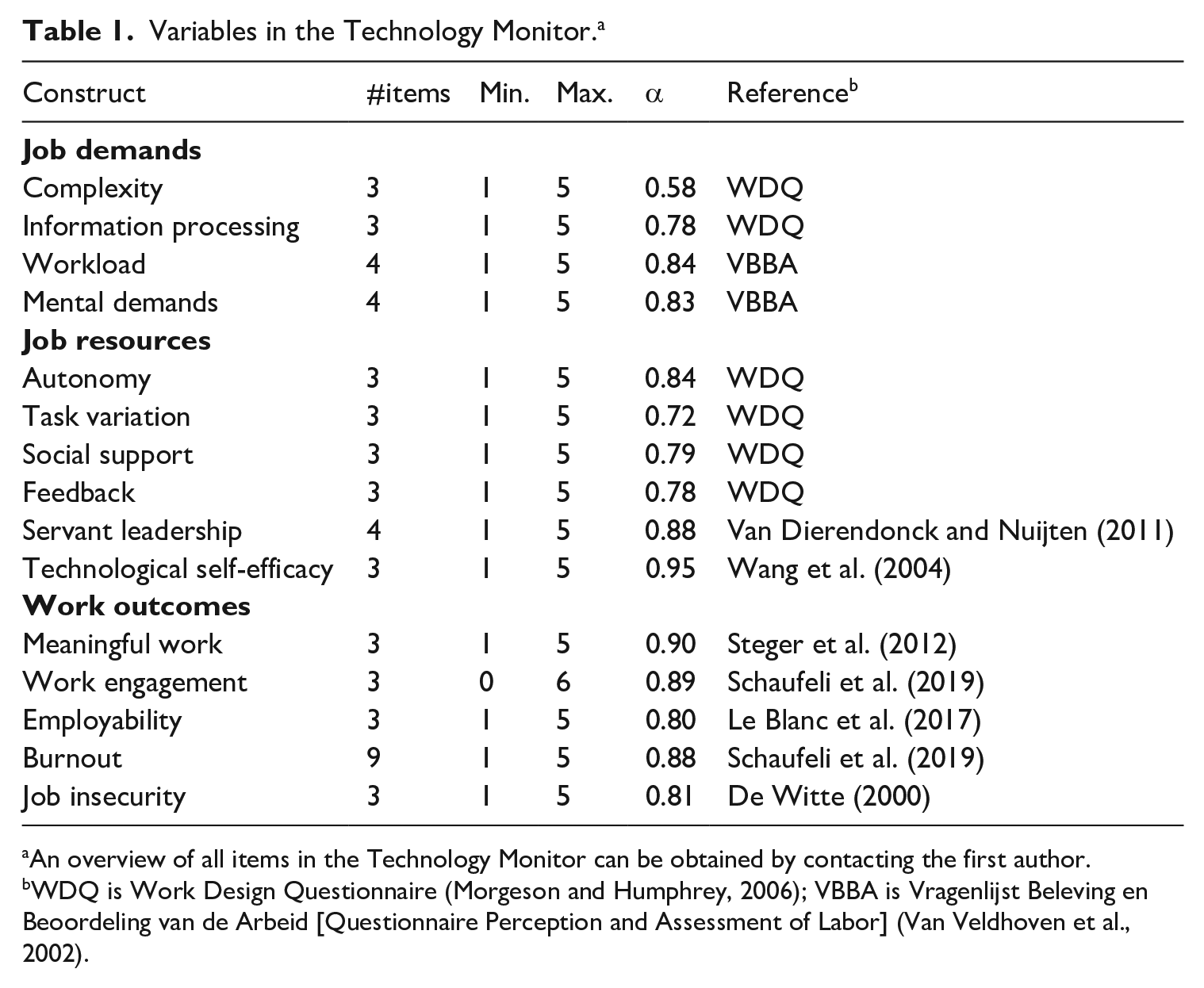
An overview of all items in the Technology Monitor can be obtained by contacting the first author.
WDQ is Work Design Questionnaire (Morgeson and Humphrey, 2006); VBBA is Vragenlijst Beleving en Beoordeling van de Arbeid [Questionnaire Perception and Assessment of Labor] (Van Veldhoven et al., 2002).
In addition, for the job demands work complexity, information processing, workload and mental demands, and for the job resources autonomy and task variation, participants were asked to indicate on a five-point scale whether this specific demand or resource has very much decreased (1), decreased (2), remained the same (3), increased (4) or very much increased (5) since the introduction of the new technology/ies.
Analyses
Descriptive statistics and correlations between the study variables were computed. Differences between groups (gender, age) in scores on the different variables were tested with t-tests and chi-square tests. Multiple regression analyses with simultaneously entered predictors were carried out to answer research questions 2 and 4 about the relationships of (changes in) job demands and job resources with work outcomes.
Results
Perception of job demands, resources and work outcomes after the implementation of new technology
The first research question concerns participants’ current perceived job demands, job resources, work outcomes and technological self-efficacy, i.e. after the new technology had been introduced. Table 2 gives an overview of the mean values of these variables. It shows that scores on the job demands, work complexity, information processing and mental demands were reasonably to very high. Respondents experienced their work as complex, had to process a reasonable amount of information and their mental demands were considerable. For workload, respondents generally felt that they had to work hard, but not to an extreme degree, and they generally had enough time to complete their work.
Descriptives of the variables in the questionnaire.
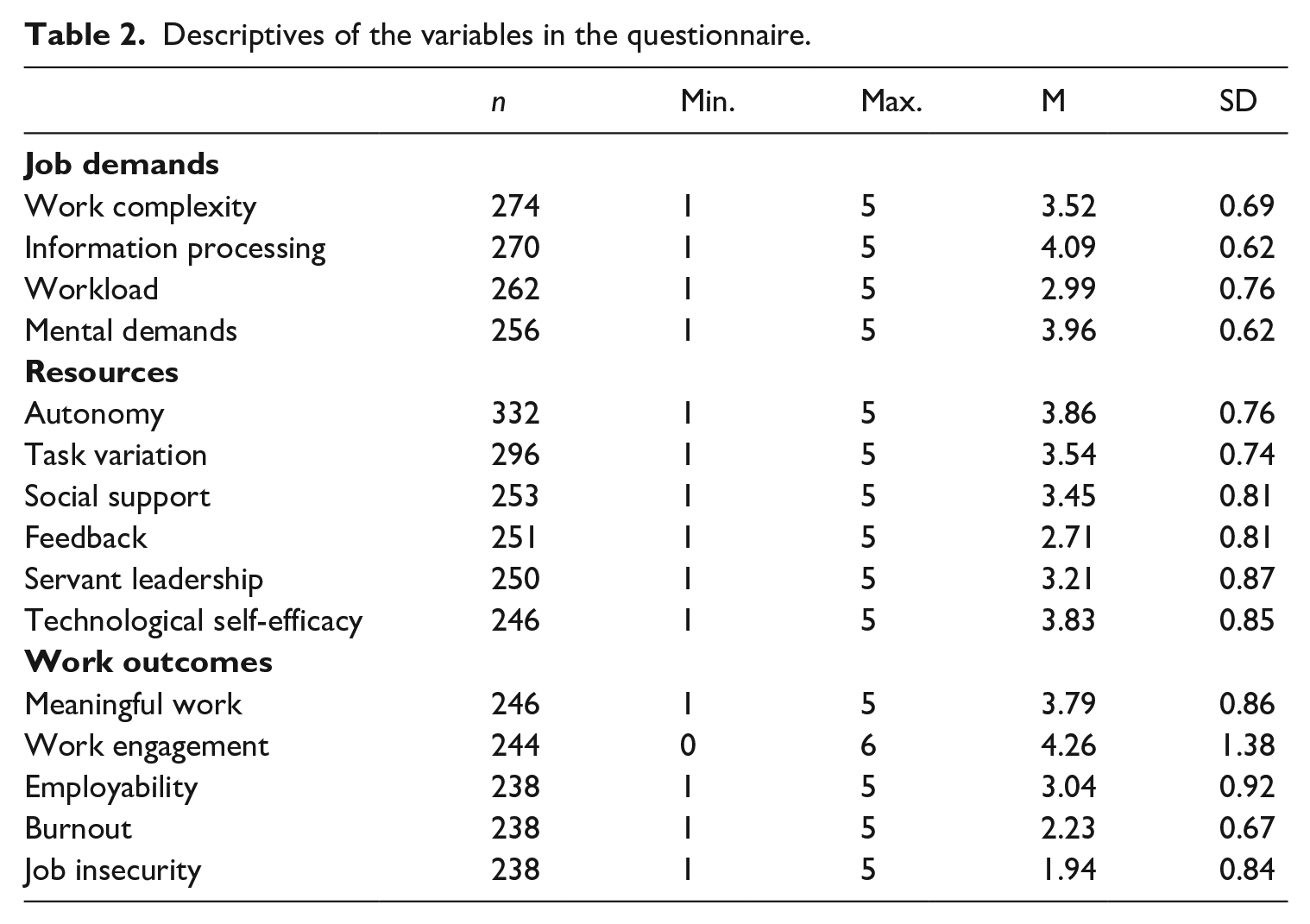
With regard to resources, most respondents experienced reasonably high autonomy and variety in their work and were reasonably satisfied with social relationships at work. Furthermore, respondents considered their supervisor’s leadership as reasonably good, but they tended to disagree with statements that they receive adequate feedback at work. It is also notable that most respondents indicated that they are confident about their ability to work with new technology. Thus, their level of technological self-efficacy is reasonably high.
Regarding work outcomes, it was found that most respondents felt that they had meaningful work, and indicated that they were engaged about their work. Respondents considered themselves moderately employable: about the same number of respondents agreed or disagreed with statements that they would quickly find another job or attractive position if needed. Most respondents experienced few burnout symptoms; however, a minority of respondents (5–15%) indicated that they often or always suffered from exhaustion, lack of interest in work, cynicism or difficulty concentrating at work. Finally, respondents experienced little job insecurity.
The perception of changes in job demands and job resources after the implementation of new technology
When explicitly asking about the experienced change in job demands and job resources after technology implementation (i.e. research question 2) it was found that the job demands work complexity, information processing, workload and mental demands remained unchanged for a substantial proportion of the respondents (Table 3). However, we also see that for all these job demands, more respondents indicated an increase in job demands than a decrease. To test this, we examined whether the average score on the different demands and resources significantly differed from 3 (‘stayed the same’), i.e. whether on average there is an increase or a decrease of the job demands and job resources after the implementation of new technology. Results showed significant increases in work complexity, t (df = 273) = 7.98, p < .001; information processing, t (df = 269) = 12.89, p < .001; workload, t (df = 261) = 7.79, p < .001; and mental demands, t (df = 255) = 10.09, p < .001.
Changes in job demands and job resources since the introduction of new technology.
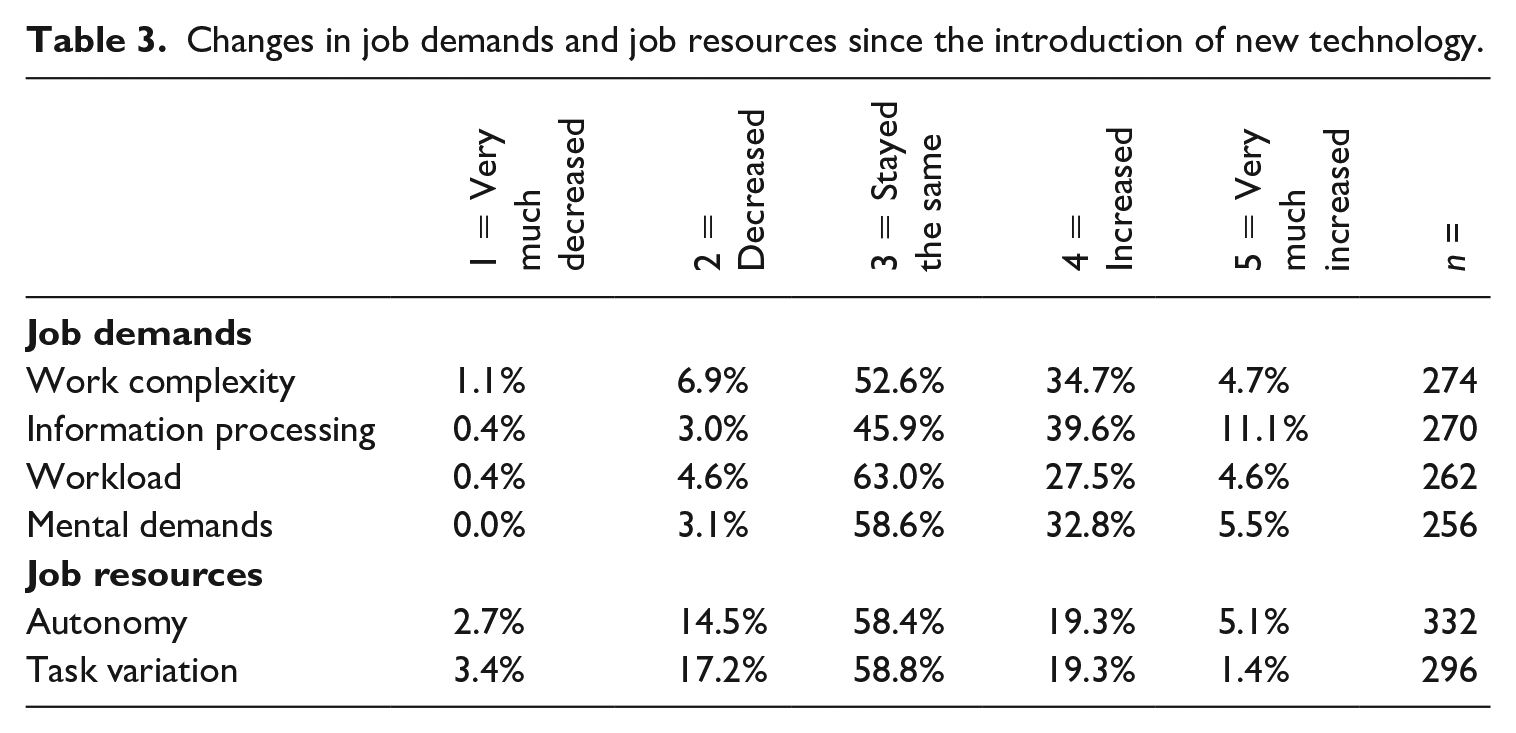
For the resources autonomy and task variation, it was found that these remained unchanged for most respondents. Moreover, the proportion of respondents for whom these resources increased was about the same as the proportion of respondents for whom these resources decreased. However, the test of whether the average scores differed from 3 showed that there was a slight increase in autonomy, t (df = 331) = 2.19, p = .029, but not in task variation, t (df = 295) = –.47, ns.
The role of gender and age
Those who did not provide their gender or did not identify themselves as male or female (n = 23) were excluded from the analyses regarding gender differences. Women rated their work as less complex (M = 3.40) than men (M = 3.65), t (253) = 2.83, p = .003, and also reported having to process less information (M = 3.99) than men (M = 4.22), t (249) = 3.26, p < .001. When examining whether the perceptions of changes in job demands and job resources were different for different genders, we only found differences between men and women regarding the perceived change in autonomy, χ2 (df = 2) = 8.95, p = .011, but not for the other perceived changes in job demands or resources (p > .08). Men more often indicated that their autonomy had decreased (23%) than women (10%). In addition, women rated their own employability (M = 3.20) as higher than that of men (M = 2.92), t (221) = –2.30, p = .011. Scores on the remaining variables did not differ significantly between men and women, p > .13.
Regarding the relationship between age and the job characteristics, the results only showed a negative association of age with workload (r = –.14, p = .038). Thus, older respondents experienced a lower workload. The other job demands and job resources were not significantly related to age. When examining the relationship of age with perceived changes in job demands and job resources, it was found that age was related to a change in autonomy (r = –.12, p = .038). Older workers were more likely to perceive a decrease in autonomy, and younger workers were more likely to perceive an increase in autonomy. Age was unrelated to any other changes in the perception of job demands or job resources, p > .10.
Finally, age was found to be negatively related to burnout symptoms (r = –.21, p = .002) and to employability (r = –.33, p < .001). Thus, older respondents experienced fewer burnout complaints than younger respondents but also rated their employability less positively.
Relationships of job demands and resources with work outcomes
To answer the third research question, we examined which job demands and resources were related to work outcomes. Table 4 presents the correlations between job demands and resources on the one hand, and the work outcomes on the other hand. In addition, a multiple regression analysis on each of the work outcomes was performed to examine which job demands and which resources uniquely contributed to each of these outcomes. All job demands and resources were entered simultaneously in the regression analysis. The results of the regression analyses are shown in Table 5. We discuss the results of the correlation analysis and the regression analysis for each work outcome separately.
Correlations of job demands and resources with work outcomes.
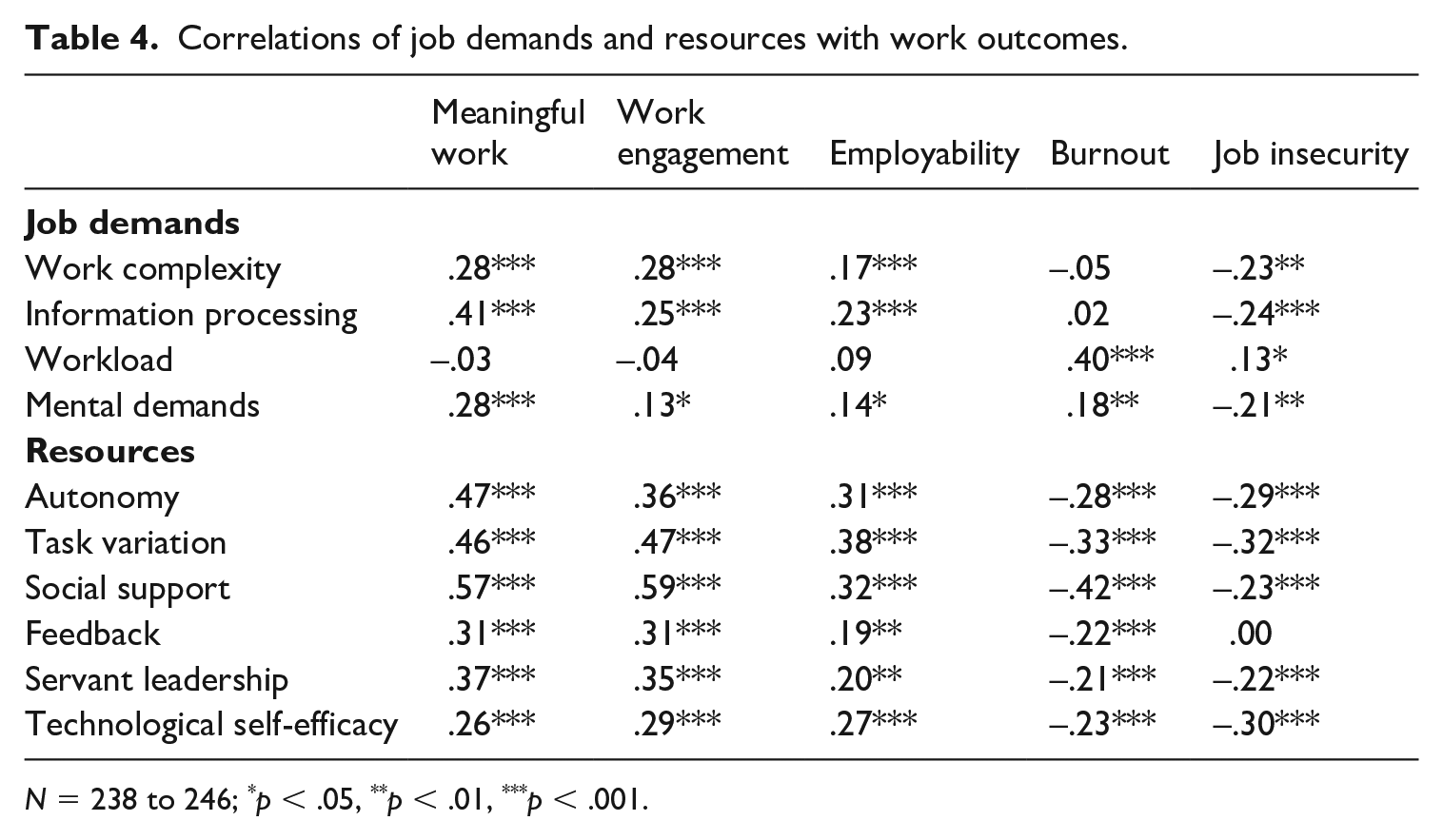
N = 238 to 246; *p < .05, **p < .01, ***p < .001.
Regression analyses of work outcomes on job demands and resources.
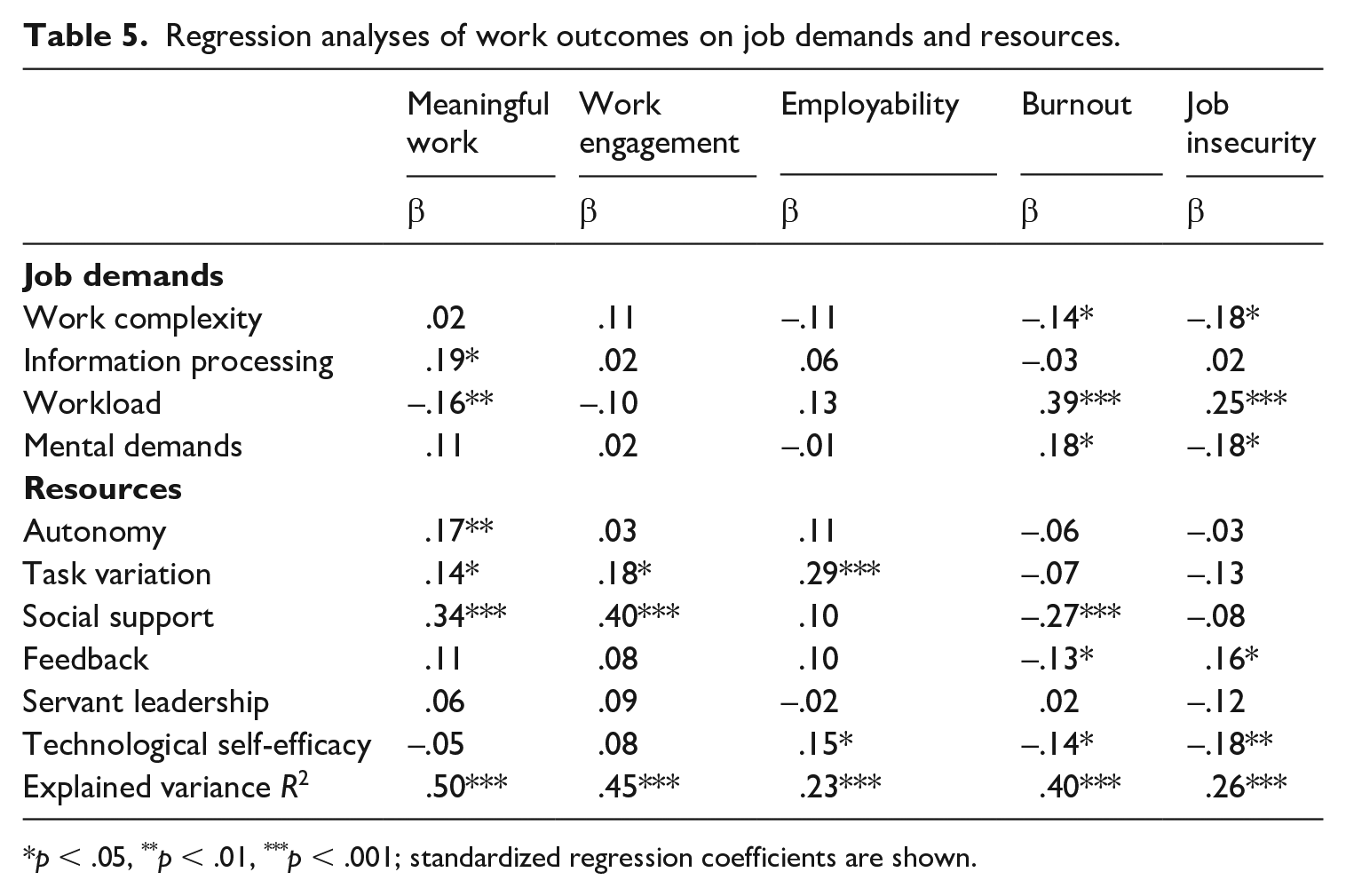
p < .05, **p < .01, ***p < .001; standardized regression coefficients are shown.
Meaningful work
Table 4 shows that all job demands, except for workload, as well as all resources were positively associated with meaningful work. In addition, Table 5 shows that especially a high level of autonomy, task variety and social support contributed to the experience of meaningful work. In addition, information processing and workload played a role: the more respondents had to process a lot of information, and the less workload they experienced, the more they considered their work to be meaningful. The regression of meaningful work was highly significant, F (10, 235) = 23.50, p < .001, and the predictors explained 50% of the variance in meaningful work.
Work engagement
For work engagement, the correlation analysis showed the same picture as for meaningful work. However, Table 5 shows that only a high task variety and especially high social support at work contributed to higher work engagement. Work engagement was not significantly predicted by any of the job demands. Forty-five percent of the variance in work engagement was explained by the predictors, F (10, 233) = 18.72, p < .001.
Employability
Although employability was significantly correlated to the same job demands and (job) resources as meaningful work and work engagement, only the (job) resources task variation and technological self-efficacy stood out in the regression analysis. So, participants’ employability ratings were higher when they had more varied work tasks, and when their self-efficacy in dealing with technological changes was higher. Just like for work engagement, employability was not significantly predicted by any of the job demands. Twenty-three per cent of the variance in employability was explained by the predictors, F (10, 227) = 6.91, p < .001.
Burnout
For burnout, both resources and job demands were important (see Table 4). Whereas high workload and high mental demands were related to more burnout complaints, Table 5 shows that more complex work seemed to protect against burnout. Of the job resources, social support and feedback contributed to a lower level of burnout complaints. In addition, technological self-efficacy was related to fewer burnout complaints. The predictors explained 40% of the variance in burnout complaints, F (10, 227) = 15.33, p < .001.
Job insecurity
Job insecurity was significantly related to all job demands and nearly all job resources. The regression analyses showed that a higher workload was related to more job insecurity. In contrast, more complex work and higher mental demands were related to lower job insecurity. Regarding the resources, it is striking that feedback contributed positively to job insecurity, although feedback did not correlate with job insecurity. Respondents with higher levels of technological self-efficacy also experienced lower levels of job insecurity. In the regression, 26% of the variance in job insecurity was explained by the predictors, F (10, 227) = 8.00, p < .001.
Work outcomes and perceived changes in job demands and resources
Finally, to answer the fourth research question, we examined how perceived changes in job demands and resources since the introduction of new technology were related to work outcomes. As shown in Table 6, multiple regression analyses for each of the work outcomes, in which the perceived changes in job demands and job resources were entered simultaneously as predictors, were performed. The table shows that respondents perceived their work as more meaningful when the implementation of new technology made their work more complex but required less information processing. Ten percent of the variance in meaningful work was explained by these perceived changes in job demands and job resources, F (6, 239) = 4.36, p < .001. Increased autonomy and task variation contributed to higher engagement. For work engagement, 15% of the variance was explained, F (6, 237) = 7.07, p < .001. Moreover, an increase in autonomy was related to higher employability, and 8% of the variance in employability was explained, F (6, 231) = 3.17, p = .005.
Regression of work outcomes at work on perceived changes in job demands and job resources.
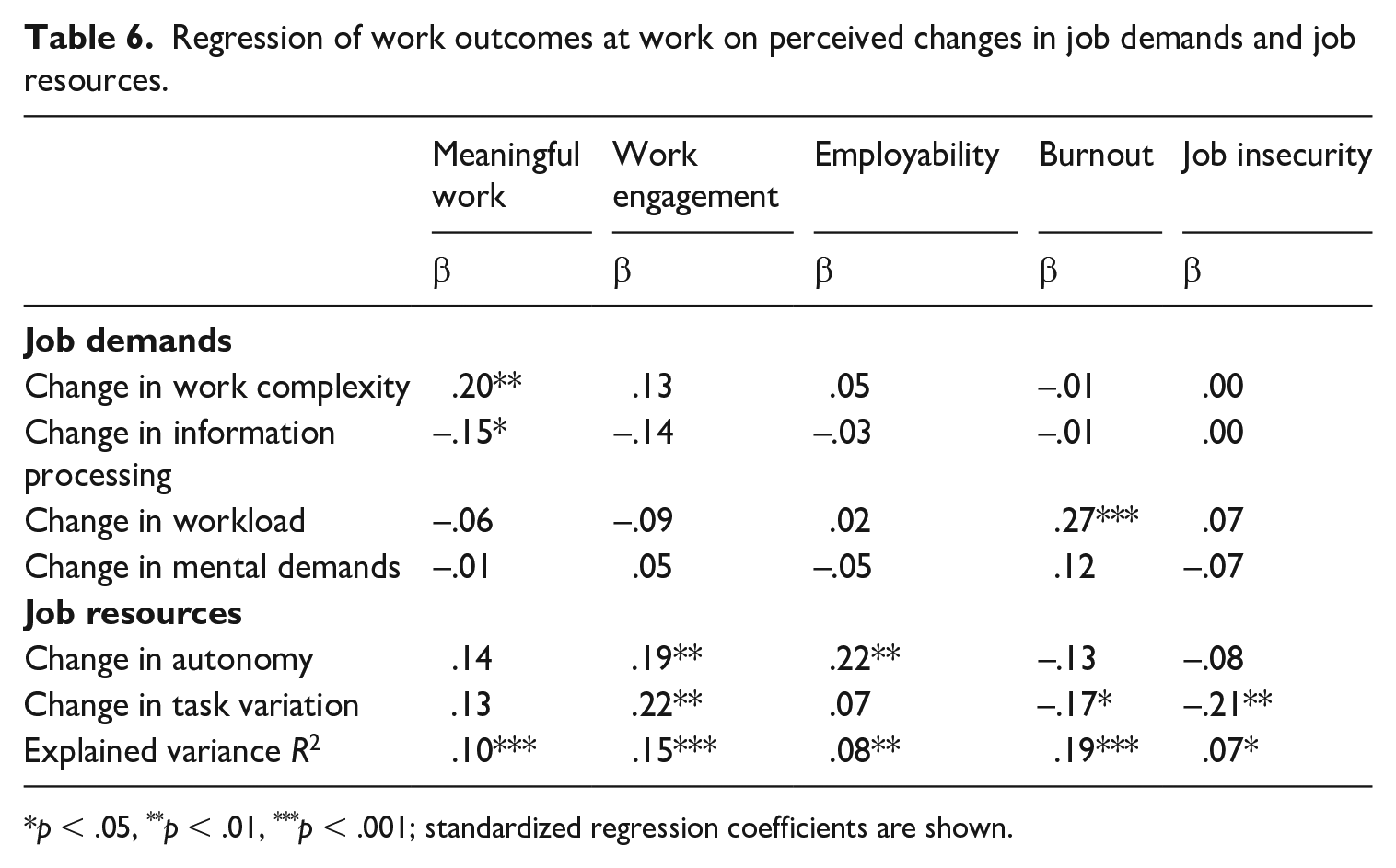
p < .05, **p < .01, ***p < .001; standardized regression coefficients are shown.
For burnout symptoms, a perceived increase in workload contributed to more burnout symptoms, while a perceived increase in task variation protected against burnout symptoms. This regression explained 19% of the variance in burnout symptoms, F (6, 231) = 9.29, p < .001. Finally, a perceived increase in task variation was related to lower job insecurity, and 7% of the variance in job insecurity was explained, F (6, 231) = 2.85, p = .011.
Discussion
To gain insight into civil servants’ experiences with the implementation of new technologies in their work, we developed an online tool called the Technology Monitor (TM). The purpose of this study was to use this TM for (1) exploring employees’ perceptions of job demands, resources and work outcomes after the introduction of new technology; (2) assessing how perceptions of job demands and job resources have changed as a result of the implementation of new technology; (3) investigating the relationships of these job demands and resources with work outcomes; and finally (4) examining how perceptions of changes in job demands and job resources due to the introduction of new technology are related to outcomes.
Job demands and job resources after the implementation of new technology
According to the TM, civil servants encountered high job demands following the implementation of new technology: they considered their work as complex, involving substantial information processing and high mental effort. Notably, their workload was not that high. Regarding the perception of change in these job demands due to the implementation of new technology, many civil servants reported an increase in job demands, and only a few experienced a decrease in job demands.
Regarding job resources, most respondents reported reasonably high levels of autonomy and variety in their work, and they were satisfied with their social relationships at work and with their leadership. However, there appeared to be room for improvement in the feedback they receive at work. Additionally, for most respondents the job resources autonomy and task variation remained (nearly) unchanged after the implementation of new technology.
The overall picture that emerges from these results is that the increase in job demands after the implementation of new technology is not accompanied by a corresponding increase in job resources. The finding that working with new technology can lead to more job demands aligns with a significant body of research on this subject (see e.g. Parker and Grote, 2022a, 2022b). As pointed out by Demerouti (2022), providing sufficient resources to cope with the increase in job demands generated by new technology at work is key to ensure and maintain good work quality.
Work outcomes after the implementation of new technology and the relation with job demands and resources
Although civil servants seem to face substantial job demands that are not fully balanced by job resources, we observed that they generally reported relatively high scores on the work outcome variables after the implementation of new technology in their workplace. Most respondents considered their work as meaningful, felt engaged and experienced few symptoms of burnout. They also considered themselves moderately employable and faced little job insecurity.
In line with work design theory (Parker et al., 2017a), our findings show that both job demands and job resources are strongly related to some of the work outcome variables, particularly to the experience of meaningful work, burnout complaints and feelings of job insecurity. Work engagement and employability seem to be affected solely by job resources, and not by job demands. Although workload was not (yet) experienced as extremely high, this job demand seemed especially important in the light of working with new technologies because it was associated with more burnout complaints, more job insecurity and less meaningful work. Moreover, among all job demands that showed an increase, workload was the only one that contributed significantly to more burnout complaints. So, consistent with existing research on burnout (cf. Schaufeli and Salanova, 2024), this study highlights the potential risks of increased workload for burnout, also during the adaptation to new technologies in the workplace. The findings on meaningful work are more mixed: an increase in work complexity is associated with more meaningful work, provided that the amount of information that needs to be processed is not too large.
Whereas many job resources contributed positively to the work outcomes, autonomy and task variety turned out to be particularly significant in this work context. More specifically, the results showed that if the implementation of new technologies at work led to a decrease in these resources, this reduced civil servants’ work engagement, employability and increased their burnout complaints and job insecurity. In addition, results also illuminated the importance of social support as this job resource related positively to all outcome variables except for employability and job insecurity. In sum, in line with recent calls from scholars in the field (see Demerouti, 2022; Le Blanc et al., 2024; Parker and Grote, 2022a, 2022b), our results suggest that it is of utmost importance to limit the increase in job demands when introducing new technology and, above all, to ensure that resources such as autonomy and task variety are still sufficiently available to support employees in the transition. However, given the exploratory nature of this study, along with its cross-sectional design and specific research context, we believe it is important to be cautious about drawing strong theoretical conclusions. Nevertheless, in line with the Job Demands–Resources (JD-R) theory, our study highlights the importance of balancing job demands and resources when introducing new technologies. This is all the more important as it has often been reported – and confirmed by our findings – that new technologies tend to increase job demands without equally strengthening job resources. This suggests that technological innovation can unintentionally heighten work strain and undermine employee well-being. The challenge, therefore, remains to ensure that technology serves as a job resource rather than merely adding to the workload (Demerouti, 2020). Finally, in general terms our results align with the longstanding and influential perspective presented in Socio-Technical Systems Theory (Guest et al., 2022; Trist, 1981), which has advocated for decades the importance of optimizing the interaction between the social system (people, roles, communication) and the technical system (tools, technology, work processes) to enhance job quality.
The role of gender, age and technological self-efficacy
We were also interested in potential differences between employees of different age groups and genders regarding the work quality of civil servants that have to work with new technology. Moreover, we also looked at the potential role of employees’ confidence in their ability to use new technology (i.e. technological self-efficacy). Investigating these differences can aid the central government to better tailor their strategies for successful adoption of new technologies to specific subgroups of employees. Our findings indicate that most respondents felt confident in their ability to work with new technologies (i.e. they exhibited a high level of technological self-efficacy). This is important, as a high technological self-efficacy appears to mitigate burnout complaints, reduces job insecurity and enhances perceptions of employability. In addition, the results of the TM show that it is important to pay attention to older employees in particular because they are more likely to experience a decrease in autonomy after the introduction of new technology at work. Recent research by Fasbender et al. (2023) indicates that organizations might enhance older employees’ future time perspective by encouraging a positive perception of new technology use. For example, HR systems aimed at fostering knowledge, skills, motivation and opportunities can effectively broaden employees’ future time perspective (Korff et al., 2017). Such an approach can increase older employees’ willingness to adopt and engage with new technologies. Regarding gender differences, our findings did not reveal significant disparities that could be utilized to refine organizational policies regarding the implementation of new technologies. This suggests that gender alone may not be a decisive factor in how civil servants adopt or interact with technology in the workplace.
Limitations and future research
A significant limitation of this study is that only a small, and likely specific, subset of civil servants who had to adopt new technology in their daily work completed the Technology Monitor. Consequently, the findings from this study cannot be generalized to the entire population of civil servants.
A second limitation concerns the TM’s focus on only a limited range of the included job resources when assessing employee-perceived changes following the implementation of new technology. For instance, social support is a crucial resource for civil servants, playing a significant role in maintaining their well-being. However, the extent to which employees perceived changes in this resource as a result of working with new technology was not assessed. Given its importance, future studies should investigate to what extent and how technological innovations impact social relationships with colleagues. Understanding these implications may help organizations in preventing technological advancements from inadvertently undermining the social support systems that are of vital importance for employees’ quality of work.
A third limitation of this study is that the TM retrospectively asked participants about their perceptions of changes in their work. A quasi-experimental design with measurements before and after the implementation of technology would have been an ideal approach for this study. However, due to practical constraints, such a design was not feasible. As a result, we opted for the current cross-sectional design, relying on retrospective reports of changes in job demands and job resources and their effects on work quality. Retrospective reports may be influenced by retrospective sensemaking (Weick et al., 2005), but this does not render them invalid. In fact, the acceptance of technology and its impact on work outcomes is likely (at least partly) shaped by the experienced changes and the narratives formed afterward. Therefore, the retrospective perception of the effects of technological changes is also suitable for the exploratory aims of this study.
Another limitation is evident in Table 1, which shows that the scale used to assess work complexity was not very reliable. This probably means that different aspects of work complexity are covered, and the validity of the scale is not necessarily low, also given its well-validated source. Nevertheless, a scale with higher reliability would be preferable, and would make it more plausible that its measurement accurately reflects the actual work complexity experienced by employees. We therefore interpret the impact of work complexity on employee outcomes with caution. Future research should consider using or developing a more robust and reliable scale to better capture the nuances of work complexity.
Finally, this study does not provide information about the specific technological innovation(s) that has/have been implemented, which can have significant implications for effects on civil servants’ work quality. Therefore, future research should focus on (the implementation of) one or more specific technological innovations. This will enable to make specific recommendations regarding potential effects on employees’ work design that have to be taken into account. Understanding these effects beforehand is crucial for a human-centered implementation process of new technologies (Berkers et al., 2023). By providing targeted insights, such focused studies are essential for informed decision-making that contributes to proactive organizational policy-making around technological workplace transformations.
Practical implications
An important recommendation for all organizational stakeholders involved in implementing new technologies in the work of civil servants is that it is important to identify whether, and if yes how, job demands change as a result of implementing new technologies. Additionally, providing adequate resources to cope with these changes in job demands is key for successful employee adaptation. However, this does not happen automatically: it requires commitment from all organizational stakeholders involved so that ultimately the quality of the work prevails over efficiency and productivity. It is also important to pay special attention to older employees when implementing new technology: they more often reported a decrease in autonomy. Furthermore, ensuring sufficient access to targeted training and education enables civil servants to become familiar with and proficient in new technology use, thereby enhancing their technological self-efficacy. Such a proactive approach helps to mitigate the risk of burnout and job insecurity among civil servants while enhancing their employability. The most crucial, yet challenging, recommendation is, however, the promotion of what is known as prospective work design. This involves integrating work design considerations during the development and implementation of technologies, rather than addressing them afterwards (Parker and Grote, 2022a). In a recent special issue on emerging technologies in the workplace, Le Blanc and colleagues (2024) recommend and elaborate on investigating crucial decisions made during the developmental stages of technology, especially those that impact the work quality. They conclude on this issue that ‘it is about time for WOP [Work & Organizational Psychology] to enter uncharted territory and study the full “life cycle” of emerging technologies at work by not only focusing on the use “phase” but also on the development, design, and implementation “phases” of these technologies from a human-centred perspective’ (Le Blanc et al., 2024: 118).
Conclusion
Utilizing a newly developed Technology Monitor, the findings of this study underscore the importance of preventing an increase in job demands among civil servants following the implementation of new technology. Special attention should be given to work complexity, information processing requirements and mental demands, as these job demands are notably high. While overall workload is not yet perceived as excessively high, results show that the introduction of new technology has led for many employees to an increase rather than a decrease in workload. In addition, it is crucial for the quality of work of civil servants to have and preserve sufficient job resources. It seems that technological changes that increase perceptions of autonomy and task variety relate positively to work quality. However, there is a risk of technological innovations diminishing these resources, which, in turn, could jeopardize civil servants’ quality of work. So, organizations should not only focus on the efficiency gains from new technologies but also invest in training, support structures and redesign of work processes to ensure that employees are equipped to cope with new demands. Lastly, potential changes in employees’ quality of work should be anticipated during, but preferably already before, the implementation of new technology. Taking such a proactive approach enhances the likelihood that new technology will be perceived as a valuable resource, aligning with its intended benefits, rather than as an additional demand.
Footnotes

Funding
This research was funded by a grant from A + O fonds Rijk, an independent Dutch Foundation for Innovation and Research within Dutch Government.
Declaration of conflicting interests
The authors declared no potential conflicts of interest with respect to the research, authorship, and/or publication of this article.