




Abstract
Māori, New Zealand’s Indigenous people, are projected to make up over 20% of the New Zealand workforce in 20 years. Employment plays a big role in determining one’s well-being. Drawing on data from 2,378 Māori who completed the survey-based Māori Identity and Financial Attitudes Study in 2017, this article examines differences in subjective well-being between workers in three categories: paid employees, employers (who employ staff) and sole traders (with no employees). Several measures are used to capture well-being across multiple domains. Sole traders were significantly more satisfied with their standard of living and health and higher in self-efficacy compared to paid employees. Māori employers were significantly more satisfied with their standard of living, future security and personal relationships, and reported greater self-esteem and financial satisfaction than sole traders and paid employees. Although only one cultural context is examined, this article demonstrates the potential benefit of understanding the implications of self-employment for Indigenous peoples.
Introduction
Māori, New Zealand’s Indigenous people, make up 17.4% of the country’s population (Stats NZ, 2022a) and are projected to make up over 20% of New Zealand’s workforce in 20 years (Stats NZ, 2021a). Māori experience generally poorer labour market outcomes compared to New Zealand Europeans (New Zealand’s largest ethnic group) and are more likely to work in jobs categorised as ‘low-skilled’ 1 (Ministry of Business, Innovation and Employment [MBIE], 2021).
This article classifies workers into three categories: paid employees, employers and sole traders. A paid employee receives compensation for services rendered to an employer. Within the self-employed bracket, we identify two distinct groups. Firstly, employers own and run their businesses while also employing staff. Secondly, sole traders, often termed sole contractors or independent contractors, operate their businesses without hiring others. While some sole traders may employ staff, our focus in this article is on those who do not. The primary distinction between employers and sole traders hinges on the employment status of staff and associated managerial duties. Yet, both categories fall under the self-employed umbrella since they own their respective businesses. In our literature review and findings, we use ‘employers’ to denote those who run businesses and have employees. Conversely, the term ‘sole traders’ specifically refers to those without any staff.
The number of self-employed Māori has risen dramatically in recent years (Business and Economic Research Limited [BERL], 2018; Nicholson Consulting and Te Puni Kōkiri, 2022). A raft of domestic policies and initiatives are in place to support Māori to enter self-employment and grow existing Māori businesses (Māori Economic Development Panel, 2012; New Zealand Trade and Enterprise, 2023; O’Connor and Whaitiri, 2022). While much has been written about Māori in the workforce, no studies have compared well-being outcomes among self-employed Māori and Māori paid employees.
This article presents the first comparative study of subjective well-being among Māori employers, sole traders and paid employees in New Zealand. We aim to distinguish between the well-being of self-employed and those who are paid employees, using data from the Māori Identity and Financial Attitudes Study of 2017. Through this exploration, we seek to better understand the implications of employment type on well-being indicators within this significant and growing demographic.
Well-being is a broad concept encompassing several dimensions of life (Danna and Griffin, 1999), including favourable attitudes and feelings and the absence of negative experiences such as stress. Accordingly, our study assesses multiple dimensions of well-being: (1) personal well-being, (2) self-esteem, (3) self-efficacy, (4) psychological distress, (5) financial satisfaction and (6) subjective health. We do not focus on the factors that determine well-being. Instead, we highlight the differences between Māori who work for themselves or for others.
In this section, we provide a brief socio-historical context, followed by a summary of Māori statistics and research relating to Māori paid employees. We then discuss statistics relating to self-employed Māori, and finally, we review international literature on the relationship between employment type and well-being.
Socio-historical context
Māori workers have been represented, studied and described in a variety of ways, with writers adopting different lenses that reflect New Zealand’s unique socio-historical context. Māori were colonised from 1840 following the signing of te Tiriti o Waitangi/the Treaty of Waitangi, an agreement between Māori rangatira (chiefs) and British representatives whom they referred to as Pākehā (New Zealanders of European descent). Settler immigration, war, land sales and confiscations saw Māori lose nearly all their lands before the close of the 19th century and subsequently integrate into New Zealand’s wider economic system (Mika et al., 2022). Much of the remaining land in Māori ownership was fractured into small and oftentimes unusable plots (Kingi, 2007). Colonisation and its processes, including mass urbanisation, discrimination (Human Rights Commission, 2014) and an unequal education system (Penetito, 2010), along with shifts in the New Zealand economy (Poata-Smith, 2013), have seen Māori historically marginalised in New Zealand society (Chapple, 2000; Ministry of Social Development, 1988) and over-represented across a range of negative statistics, including labour market outcomes (Easton, 1994).
Māori in paid employment
Māori are over-represented in roles that require lower qualifications, offer less job security and opportunities for advancement (BERL, 2018). According to MBIE, in 2021 just over half of Māori workers (56.6%) were employed in highly skilled occupations, 2 compared to 68.4% of all other ethnicities in New Zealand (MBIE, 2021). Overall, Māori earn lower hourly pay rates than New Zealand Europeans (Cochrane and Pacheco, 2022). These factors combined (i.e. low skilled work with low pay) have consistently been linked with lower personal well-being among workers regardless of ethnicity (Maulik, 2017); however, some research shows that Māori face particular challenges in the workplace.
For example, within New Zealand, there are disparities in work-related fatalities and injuries and exposure to workplace hazards between Māori workers and New Zealand European workers (Eng et al., 2011; Lilley et al., 2021). Eng et al. (2011) found that Māori men were more likely to be exposed to hazards in the workplace, while female Māori workers were more likely to report work stress than New Zealand Europeans and other non-Māori workers doing the same jobs. More recently, Denison et al. (2018) compared occupational stressors experienced by 2,344 Māori and 2,710 non-Māori participants and found that Māori had greater exposure to occupational risk factors than New Zealand Europeans. Even within the same job, Māori were more likely to be exposed to physical stressors such as heavy lifting, loud noise, repetitive tasks and working to tight deadlines compared with New Zealand Europeans and other non-Māori.
Māori have also been found to report high levels of workplace discrimination and stress across a variety of occupations (Huria et al., 2014; Sisley and Waiti, 1997), including higher-skilled professional roles (Haar and Martin, 2022; Pack et al., 2016). A recent survey of 180 Māori employees found 32% of respondents experienced stress at work due to long and busy working hours (Mental Health Foundation of New Zealand, 2021).
Several studies have examined factors that promote Māori well-being at work and highlighted the value of workplaces that are respectful of Māori values and culture (Haar and Brougham, 2011). However, the vast majority of the Māori population in paid employment work as employees for non-Māori organisations (Coleman et al., 2005), therefore not likely to work in organisations that proactively support Māori values and culture. If some organisations do espouse Māori values, research suggests these may not be genuinely honoured (Kuntz et al., 2014).
While many Māori engage in paid employment and encounter challenges in the traditional workforce, there is mounting interest and momentum towards self-employment. This shift is particularly noteworthy, especially in light of the broader historical and current challenges Māori confront in the labour market.
Self-employed Māori
It is sometimes argued that Māori have a predisposition towards self-employment (Frederick, 2004; Frederick and Chittock, 2006). However, Māori face a range of challenges when it comes to becoming self-employed, including a lack of familial role models (Fox, 1998) and low levels of savings and other assets to secure funding to start their own business (Fabling, 2018).
According to Stats NZ (2021b), the total self-employment rate for NZ was 15.8%, while the self-employment rate for Māori was only 8.6% – i.e. about half that of the national average. However, Māori self-employment rates are growing compared to other ethnic groups. For example, there was a 2.8% increase in Māori working for themselves between 2006 and 2013. This increase compares with a 3.2% decrease in self-employed persons across the total population (MBIE, 2014). The 2018 New Zealand census shows that Māori self-employment rates increased by 24.9% between 2013 and 2018, compared to a 5.3% increase in self-employment rates for the whole population (BERL, 2021). Figure 1 shows Māori employers and sole traders according to the 2001, 2006, 2013 and 2018 New Zealand censuses.
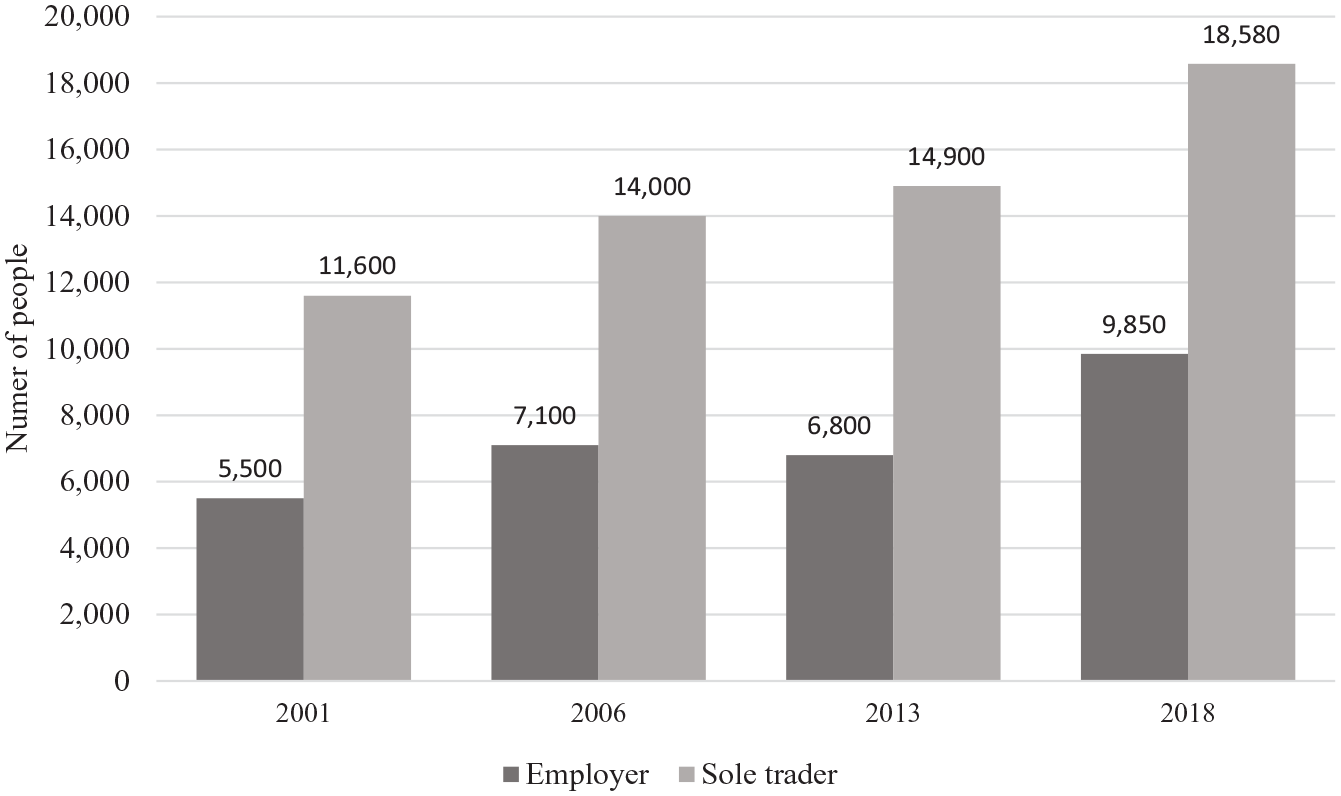
Māori employers and sole traders, 2001, 2006, 2013 and 2018.
The increase in the number of self-employed Māori may be even larger when one takes into account the propensity to undercount Māori in the New Zealand census (Stats NZ, 2018, 2022b). In 2020 researchers combined data from Stats NZ’s Integrated Data Infrastructure, New Zealand’s Longitudinal Business Database and Linked Employer–Employee Data and identified 14,700 Māori sole traders and 1,300 Māori-owned businesses not previously captured by Stats NZ (Nicholson Consulting, 2020).
The rise in Māori self-employment figures may reflect other factors. Overall, the Māori population is young. In 2018, 57% of the Māori population were under 30 years of age (BERL, 2018), and this feature flows through to employment and self-employment statistics. Māori experience unequal education and employment outcomes, but positive trends are emerging. The number of Māori gaining post-secondary school qualifications is increasing (Stats NZ, 2020), as is the number of Māori moving into higher-skilled occupations (MBIE, 2021). Highly skilled Māori may seek autonomy and the challenge that comes with self-employment (Mika, 2015) and may be better placed to access the financial means to do so. Studies have revealed a variety of other motivations for Māori to move into self-employment, including creating employment for whānau (family and extended family) and having greater independence, such as the opportunity to be creative (Simpson and Raumati, 1991).
While a growing literature base has examined the unique cultural characteristics of self-employed Māori (e.g. Manganda et al., 2022), less work has focused on their well-being. However, given that Māori are more likely to experience poorer outcomes as paid employees, some Māori may see self-employment as an improvement on working in unsatisfactory jobs or as an adaptive response to discrimination and blocked opportunities in paid employment (Henry et al., 2018; Love and Love, 2005).
Benz and Frey (2008a: 362) observed that self-employment offers ‘a higher measure of self-determination and freedom. In contrast, persons in dependent employment have to obey orders given by their superiors. . . . self-employed people enjoy their position as independent actors on the market and are not subject to a hierarchy.’
The appeal of self-employment, as articulated by Benz and Frey, could be especially liberating for Māori navigating New Zealand’s cultural and economic landscape. Gallagher (2016) shed light on the foundational values integral to Tikanga Māori (Māori customary law and ethics) (Mead, 2016). These encompass whanaungatanga, which relates to relationships primarily based on whakapapa or genealogy; mana, which conveys prestige, authority and influence; manaakitanga, denoting generosity and compassion; and utu, indicating reciprocity. These fundamental values, cited by a myriad of scholars (Barlow, 1991; Durie, 2003; Henare, 1988, 2001, 2014; Marsden et al., 1989; Mead, 2016; Walker, 1989), have been underscored in multiple studies highlighting their continued importance in fields such as business, employment and economic endeavours (Henry, 2007; McIntosh et al., 2004; Oliver and Love, 2007). Tino rangatiratanga, a core concept in Māori culture and worldview, can be translated as ‘absolute sovereignty’ or ‘self-determination’. It reflects Māori’s control and dominion over their resources, knowledge and cultural practices, asserting Māori rights to exert authority over their taonga, which includes language, lands and other resources (Durie, 2013).
Such values offer perspective on why numerous Māori may be inclined towards self-employment. Whanaungatanga, anchored in genealogy, aligns well with the autonomy that self-employment provides, fostering the reinforcement and upkeep of familial and communal bonds. The principle of mana, symbolising prestige and authority, could be upheld when one manages one’s own enterprise, thereby boosting community stature, notably the capacity to offer employment to others. Manaakitanga, highlighting generosity and compassion, takes on a more actionable meaning in a self-employed setting where business activities focus on community well-being. Similarly, the principle of utu, underscoring reciprocity, can be genuinely embodied when one has the latitude in directing one’s work-related interactions. The ethos of tino rangatiratanga, capturing Māori self-determination and stewardship over resources, is manifestly realised through self-employment, enabling Māori to exercise complete control over their endeavours, aligning them with cultural principles.
While research exploring the link between Māori self-employment and well-being is sparse, Henry’s (2017) qualitative examination of film and TV industry entrepreneurs suggests that sidestepping organisational hierarchies and control may appeal considerably to Māori. Her insights depicted entrepreneurship as a liberating avenue for those with a lineage of disadvantage and colonisation, freeing them from the confines of organisations they were once part of. In New Zealand’s context, recognising the inherent bond between self-employment and well-being is paramount, particularly for Māori. The autonomy and self-reliance associated with entrepreneurship resonate profoundly with core Māori values, potentially acting as a conduit for emancipation from hierarchical confines and the repercussions of past colonisation.
Self-employment and well-being
This section briefly reviews international literature comparing self-employed workers’ well-being to paid employees’ well-being and generates predictions for our study.
Personal well-being
The notion that self-employed workers experience greater personal well-being (overall job and life satisfaction) compared to paid employees found empirical support in several studies (Andersson, 2008; Benz and Frey, 2008b). Various explanations have been put forward, including increased work control and autonomy (Benz and Frey 2004, 2008a; George and Hamilton, 2011; Larsson and Thulin, 2019), personal preference to be self-employed as opposed to working for others (Cueto and Pruneda, 2017), elevated work motivation and engagement (Bujacz et al., 2017) and the potential to achieve work–life balance (van der Zwan et al., 2018). However, differences among self-employed workers and their circumstances mean well-being outcomes are inconsistent across studies. Some researchers report that self-employed workers experience poorer well-being, while others have found only marginal differences in well-being between self-employed workers and paid employees (Bujacz et al., 2020).
Mental health, stress, self-efficacy and self-esteem
Although some research has found that self-employed workers report better mental health outcomes than paid employees (Hessels et al., 2017; Schneck, 2014), studies yield contradictory findings (Bergman et al., 2021). Some research suggests lower stress levels among self-employed without staff, as they can reap the benefits of greater autonomy and lower levels of job pressure without the stress of managing and being financially responsible for employees (Prottas and Thompson, 2006; van der Zwan et al., 2020). Self-employment may provide more flexible working hours because it allows self-employed workers to manage their time and mitigate some stressors; however, this is not always the case (Gimenez-Nadal and Ortega-Lapiedra, 2010). As a corollary, mental health outcomes among self-employed workers are highly individualised and depend on the type of self-employment and the nature and extent of possible stressors (Bogan et al., 2022) such as financial insecurity (Annink et al., 2016), long working hours (Obschonka and Silbereisen, 2015) and higher levels of work–family conflict (Parasuraman and Simmers, 2001). Similarly, differences in mental health outcomes can be found among paid employees: that is, the type of employment and the nature and extent of possible stressors influence well-being in different ways, depending on individual circumstances (Jeon et al., 2014).
Psychologists connect certain facets of the self-concept as relevant to improved mental health in relation to employment, particularly self-esteem and self-efficacy (Gardner and Pierce, 1998). Self-esteem refers to one’s subjective sense of overall personal worth or value (Bandura, 1997) and has been found to be strongly correlated with higher job satisfaction among paid employees (Pierce and Gardner, 2004). Self-esteem has been positively associated with aspirations to start one’s own business (Laguna, 2013); however, there has been a paucity of research exploring self-esteem among different groups of self-employed workers compared to paid employees. Self-efficacy is the strong personal belief in skills and abilities to initiate a task and lead it to success (Bandura, 1997). Higher levels of self-efficacy are related to aspirations to start one’s own business (Boyd and Vozikis, 1994; Lucas and Cooper, 2005) and to being self-employed (Markman et al., 2005; Nguyen and Do, 2022).
Physical health
Self-employed workers are often reported to have better health than paid employees (Jun, 2020). Whether this is because self-employment has health benefits or because healthier workers choose to be self-employed is uncertain. One possibility is that entrepreneurs have so-called active jobs and thus may benefit from positive health consequences (Stephan and Roesler, 2010). Jun (2020) and Rietveld et al. (2015) suggest that healthier individuals tend to self-select into self-employment, which accounts for the positive health outcomes found across studies. Zhang and Carr’s (2014) examination of the health impact of being self-employed found that self-employment compared to paid employment results in better health, controlling for job stress and work intensity, cognitive performance, prior health conditions and socioeconomic and demographic factors. This positive self-employment impact stands out in the knowledge-based industry sector; however, in labour-intensive industries the benefits are less clear.
Financial satisfaction
A relatively higher proportion of working Māori earn lower hourly pay than New Zealand Europeans (Cochrane and Pacheco, 2022). Survey estimates published by Stats NZ show that the average hourly wage earned by Māori employees was 82% of the average hourly New Zealand wage in 2017 (New Zealand Treasury, 2018: i). Drawing on 2013 and 2018 New Zealand census data as well as linked employer databases, BERL (2018) found that self-employed Māori (employers and sole traders) are more likely to be found in higher-skilled roles (i.e. ANZSCO Level 1). Over 50% of Māori employers and more than 40% of self-employed Māori are in this category (BERL, 2018: 14).
They also found that, although there were variations regionally, overall, Māori employers tended to make higher incomes than the average sole trader (BERL, 2018: 32). To date, no research has examined satisfaction with income between self-employed Māori and Māori paid employees. Higher incomes are correlated with an overall increase in life satisfaction, but only to a certain extent; therefore, in this research, we asked respondents to report their financial satisfaction as opposed to actual income (Kahneman and Deaton, 2010).
Summary
While there is a lack of comparative research on differences in well-being among self-employed Māori and Māori paid employees, a number of predictions can be gleaned from existing research. Drawing on the literature on the relationship between paid employment, self-employment and personal well-being, we expect self-employed workers to experience greater personal well-being, and sole traders to report more leisure time than employers and paid employees. In terms of mental health, we could predict that self-employed workers report better mental health outcomes overall; however, results may differ depending on the nature of employment. Moreover, we could expect self-esteem and self-efficacy to be higher among self-employed workers. Self-employed workers are often reported to have better health than paid employees, and we expect to find the same outcomes for Māori. However, health outcomes may be better among sole traders and employers in higher-skilled work, reflecting previous research. Finally, in relation to financial satisfaction, given that data indicate that Māori employers make higher incomes than other sole traders and paid employees, we would expect this group to report greater financial satisfaction. In this study, we focus on a central question with an associated aim. The primary question we seek to answer is: How does the type of employment (self-employed compared to paid employee) impact the subjective well-being of Māori in New Zealand, particularly in terms of their standard of living, health and self-efficacy?
Related to this, our aim is to investigate the potential wider implications that these well-being differences might have, particularly in light of the projected growth of the Māori workforce. This includes understanding the broader impact on Māori sole traders, employers and paid employees.
Methodology
Sampling procedure
The present study uses data from Te Rangahau o Te Tuakiri Māori me Ngā Waiaro ā-Pūtea/The Māori Identity and Financial Attitudes Study (MIFAS), a nationwide longitudinal panel study of Māori identity and financial attitudes and behaviour. Its inaugural wave (2017) randomly sampled 100,000 people who identified as Māori on the 2017 electoral roll, yielding 7,019 participants (response rate = 7.02%). Houkamau and colleagues (Houkamau and Sibley, 2019; Houkamau et al., 2019) provide detailed information about the MIFAS sample, procedure and response rates. The MIFAS comprises over 340 individual items and takes approximately 30–45 minutes to complete. This article analyses specific data relative to employment, self-employment and well-being.
Participants
A total of 2,378 participants provided either partial or complete responses to our variables of interest and were included in the study. Of this sample, 62.9% were women, and the average age of participants was 44.0 years (range 18–77 years, SD = 12.03). Most participants (68.0%) reported another ethnic affiliation besides Māori, including New Zealand European (64.0%), Pacific Islander (5.0%) and Asian (1.8%).
Measures
Predictors
Employment type
Participants were asked whether they were employed (dummy coded; 0 = no, 1 = yes) and, if employed, whether they were (1) a paid employee, (2) self-employed and NOT employing others, (3) an employer of persons in their own business or (4) working in a family business without pay. For our analyses, we excluded participants working in a family business without pay, and dummy codes (0 = no, 1 = yes) were created for paid employees, sole traders and employers to allow for comparisons across groups.
Covariates
We controlled for nine demographic variables: gender, age, ethnic identity, education, relationship status, the number of children living at home, weekly working hours, weekly leisure hours and whether participants were urban or rural. For gender, we asked, ‘What is your gender?’ (open-ended), which was dummy coded for our analyses (0 = woman, 1 = man). We measured age using participants’ reported date of birth. To assess ethnic identity, we asked, ‘Which ethnic group(s) do you belong to?’ with participants able to select one or more responses from ‘Māori, New Zealand European, Samoan, Cook Islands Māori, Tongan, Niuean, Chinese, Indian, and Other (such as Dutch, Japanese, Tokelauan)’. Responses were dummy coded based on whether or not participants identified with multiple ethnic groups or as solely Māori (0 = sole Māori, 1 = Māori + other ethnicity). For education, we asked, ‘What is your highest level of qualification?’ and coded responses into an 11-level ordinal variable according to the New Zealand Qualifications Framework from 0 (no qualification) to 10 (doctoral degree or equivalent).
For relationship status, we asked participants, ‘What is your relationship status?’ and coded responses based on whether they reported a serious romantic relationship (0 = single, 1 = serious romantic relationship). For the number of children living at home, we asked participants, ‘How many other people live in the same household as you?’ with participants reporting the number of (1) adults and (2) children. Participants were also asked, ‘Please estimate how many hours you spent doing each of the following things last week’. We used participants’ hours spent ‘working in paid employment’ for weekly working hours. For weekly leisure hours, we used the combined total hours spent ‘Exercising/physical activity’, ‘Watching TV/films’, ‘Using social media (e.g., Facebook)’ and ‘Playing computer games’. Finally, whether participants lived in an urban or rural area was coded based on their residential address (0 = rural, 1 = urban).
Occupational sector
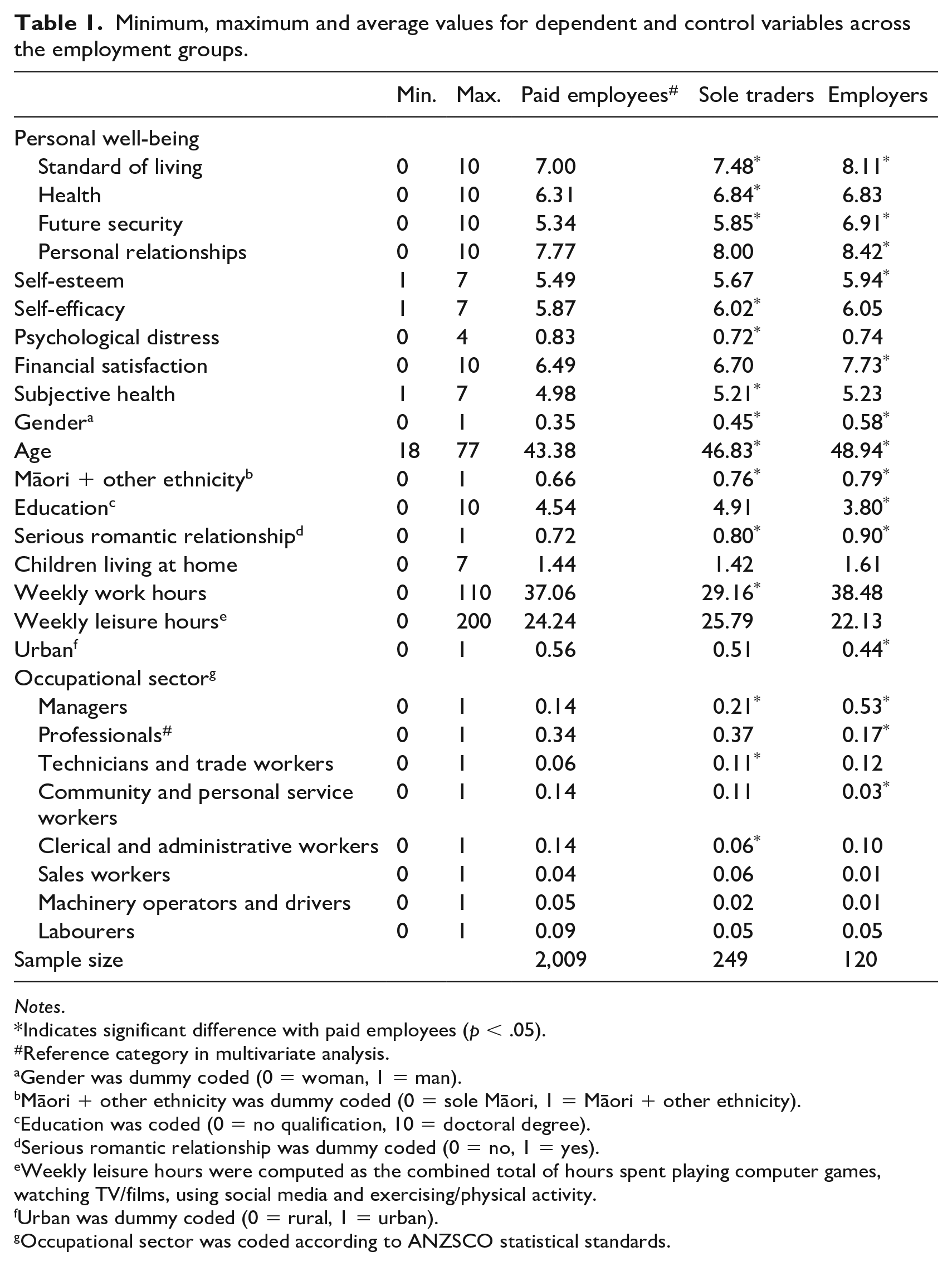
Occupational sector was determined by asking participants to report their current occupation (open-ended). We then classified participants’ responses into eight major groups (see Table 1) according to the ANZSCO.
Minimum, maximum and average values for dependent and control variables across the employment groups.
Notes.
Indicates significant difference with paid employees (p < .05).
Reference category in multivariate analysis.
Gender was dummy coded (0 = woman, 1 = man).
Māori + other ethnicity was dummy coded (0 = sole Māori, 1 = Māori + other ethnicity).
Education was coded (0 = no qualification, 10 = doctoral degree).
Serious romantic relationship was dummy coded (0 = no, 1 = yes).
Weekly leisure hours were computed as the combined total of hours spent playing computer games, watching TV/films, using social media and exercising/physical activity.
Urban was dummy coded (0 = rural, 1 = urban).
Occupational sector was coded according to ANZSCO statistical standards.
Personal well-being
We used four items from Cummins et al.’s (2003) Personal Well-being Index and asked participants to rate their levels of satisfaction with the following aspects of their life: (a) ‘your standard of living’; (b) ‘your health’; (c) ‘your future security’; (d) ‘your personal relationships’. Items were rated on a scale from 0 (completely dissatisfied) to 10 (completely satisfied) and were used individually in our analyses as four domains of personal well-being.
Self-esteem
We used three items from the Rosenberg Self-Esteem Scale (Rosenberg, 1965): noting, ‘This part of the questionnaire measures your feelings about yourself. Please circle the number that best represents how accurately each statement describes you. If one of the statements is very accurate you would select a number close to 7. If you feel neutral about a statement then you would select a number close to 4. If you feel a statement is very inaccurate you would select a number close to 1. The best answer is your own opinion, whatever that is.’ The statements were: (a) ‘On the whole am satisfied with myself’; (b) ‘I take a positive attitude toward myself’; and (c) ‘I am inclined to feel like I am a failure’ (reverse-coded). Items were rated on a scale from 1 (very inaccurate) to 7 (very accurate) and averaged to assess self-esteem (α = .76).
Self-efficacy
We measured self-efficacy by asking participants their agreement on three items from the Generalised Self-Efficacy Scale (Schwarzer and Jerusalem, 1995): (a) ‘I can always manage to solve difficult problems if I try hard enough’; (b) ‘When I am confronted with a problem, I can usually find several solutions’; and (c) ‘I can usually handle whatever comes my way’. The items were measured on a scale from 1 (strongly disagree) to 7 (strongly agree) and averaged to assess self-efficacy (α = .76).
Psychological distress
We measured psychological distress using Kessler et al.’s (2010) six-item psychological distress scale (K6). Participants reported how often they felt the following in the last 30 days: (a) ‘feel hopeless’; (b) ‘feel so depressed that nothing could cheer you up’; (c) ‘feel restless or fidgety’; (d) ‘feel that everything was an effort’; (e) ‘feel worthless’; and (f) ‘feel nervous’. The items were measured on a five-point scale from 0 (none of the time) to 4 (all of the time) and were averaged to assess psychological distress (α = .84).
Financial satisfaction
We measured financial satisfaction by asking participants to rate their levels of satisfaction with (a) ‘your financial security’; (b) ‘your ability to earn/make money’; and (c) ‘your ability to plan out a budget and stick to it’. Items were rated on a scale from 0 (completely dissatisfied) to 10 (completely satisfied) and were averaged to assess financial satisfaction (α = .79).
Subjective health
Subjective health was measured using three items from the Short-Form Subjective Health Scale (Ware and Sherbourne, 1992). Participants were asked to rate their health (in general) on a scale from 1 (poor) to 7 (excellent), as well as their agreement from 1 (strongly disagree) to 7 (strongly agree) with two items: (a) ‘I seem to get sick a little easier than other people’ (reverse-coded); and (b) ‘I expect my health to get worse’ (reverse-coded). These three items were averaged to assess subjective health (α = .54).
Results
The present study examines the effects of different forms of employment on Māori across several domains of subjective well-being. To this end, we performed multiple ordinary least squares (OLS) regressions to model our dependent variables. Specifically, we regressed (1) personal well-being, (2) self-esteem, (3) self-efficacy, (4) psychological distress, (5) financial satisfaction and (6) subjective health onto the employment types, our covariates and occupational sectors. These models were estimated using maximum likelihood with robust estimation of standard errors.
Descriptive statistics
First, we provide descriptive statistics on the prevalence of the different employment types (see Table 1). Our total sample contained 2,009 paid employees (84.5% of the sample), 249 sole traders (10.5%) and 120 employers (5.0%). In Table 1, we compare sole traders and employers to paid employees based on well-being, health and financial satisfaction, as well as the covariates used in our multivariate analyses (see also Figures 2, 3 and 4 for a breakdown of each employment group by ethnicity, gender and age, respectively). We also conducted t-tests to formally test these differences; to account for multiple testing bias, we set our criterion for significance to p < .01.
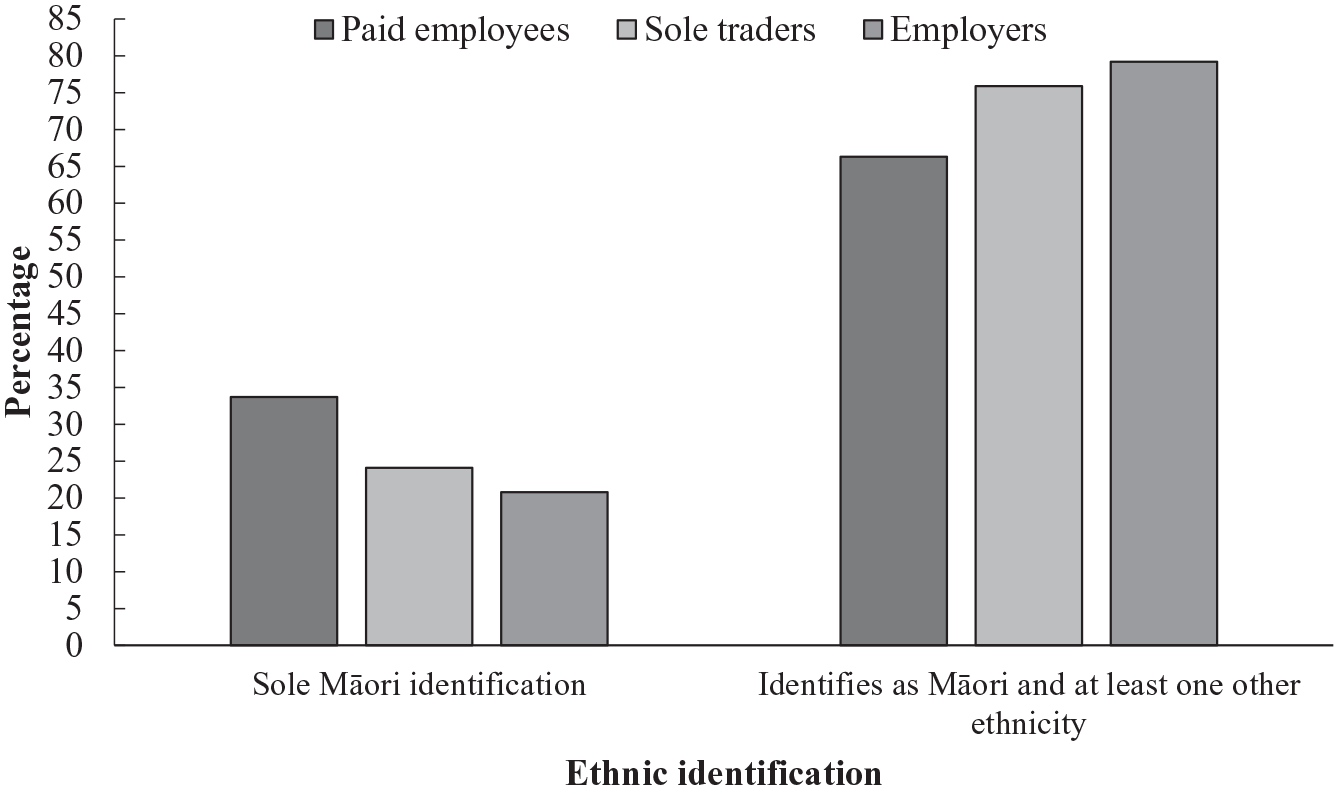
Ethnic identification by employment type.
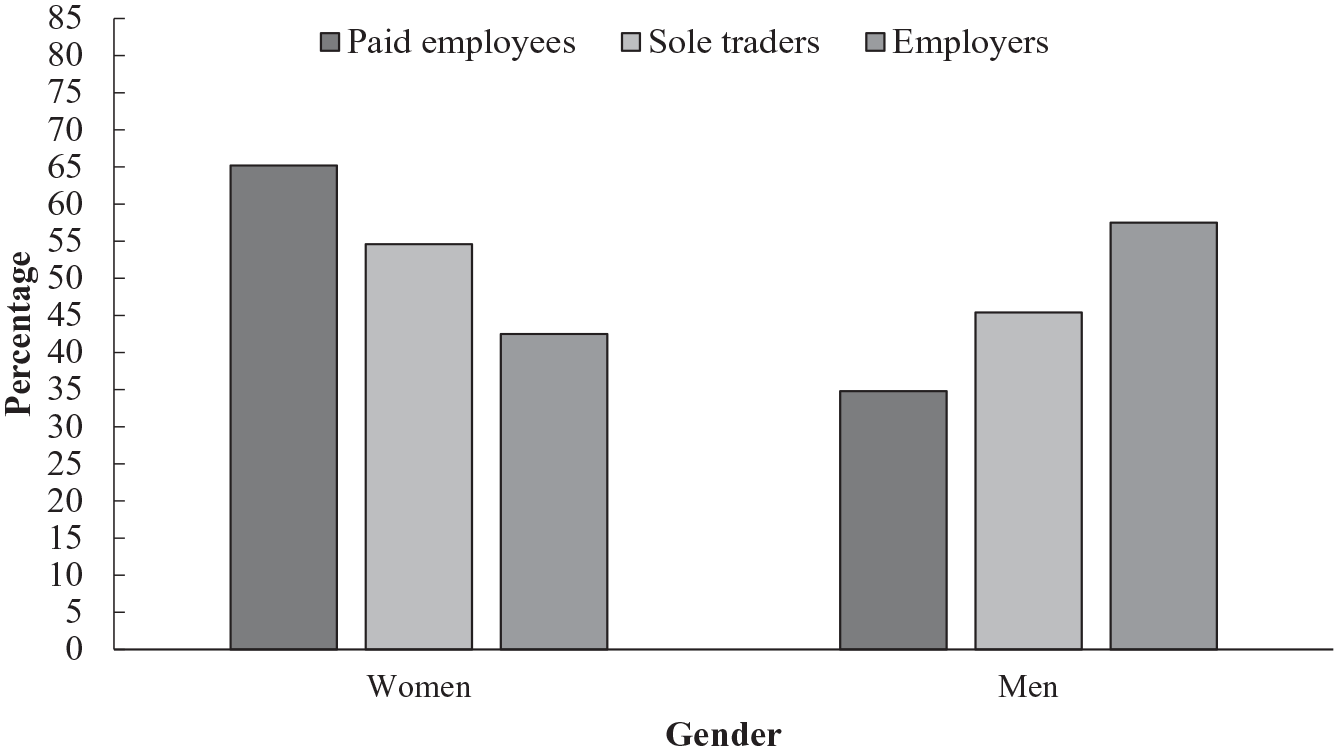
Gender by employment type.
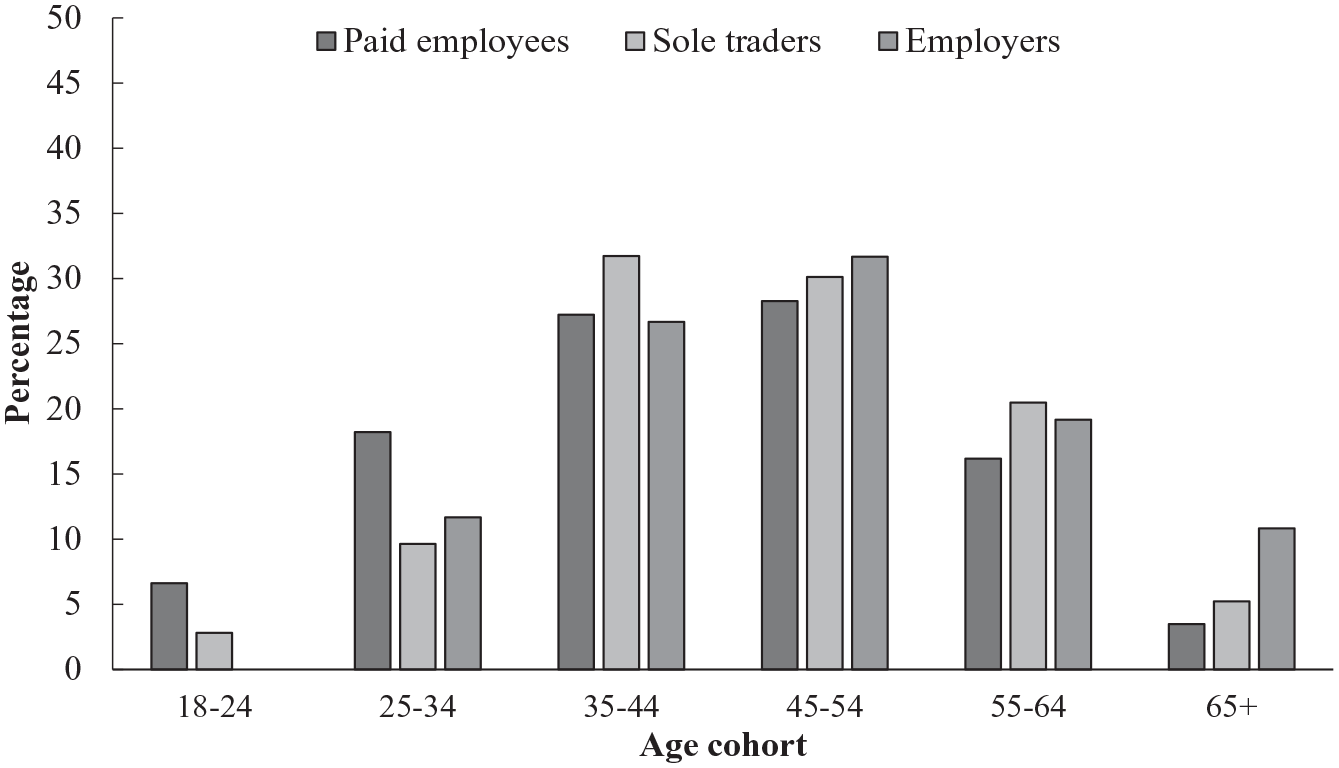
Age by employment type.
Sole traders
Compared to paid employees, sole traders were more satisfied with their standard of living (p < .001, Cohen’s d = .23), health (p < .001, d = .23) and future security (p = .003, d = .20), and reported greater subjective health (p = .005, d = .17). In terms of demographics, the sole traders group contained fewer women (54.6% vs 65.2%, p = .002, d = .22), more participants who identified as Māori and at least one other ethnicity (75.9% vs 66.3%, p = .001, d = .21) and more participants who reported being in serious relationships (79.5% vs 72.4%, p = .010, d = .16) than the paid employees group.
Additionally, sole traders were generally older (p < .001, d = .29) and spent less time working than paid employees (p < .001, d = –.49). The proportions of participants in different occupational sectors did not generally differ between paid employees and sole traders. However, the sole trader group included fewer clerical and administrative workers (p < .001, d = –.22) and fewer machinery operators and drivers (p = .001, d = –.15) than the paid employees group.
Employers
Employers (compared to paid employees) were more satisfied with their standard of living (p < .001, d = .52), future security (p < .001, d = .62) and personal relationships (p < .001, d = .30), and reported greater self-esteem (p < .001, d = .38), self-efficacy (p = .003, d = .21) and financial satisfaction (p < .001, d = .59). The employers group also contained fewer women (42.5% vs 65.2%, p < .001, d = .47), more participants identifying as Māori and at least one other ethnicity (79.2% vs 66.3%, p = .001, d = .27) and more participants in serious relationships (90% vs 72.4%, p < .001, d = .40) than the paid employees group. Additionally, employers were generally older (p < .001, d = .46) and had lower levels of formal education (p = .002, d = .27) than paid employees. Finally, the majority of employers were managers (52.5%, p < .001, d = 1.06), and fewer employers were professionals (p < .001, d = –.37), community and personal service (p < .001, d = –.33) or sales workers (p < .001, d = –.17), and machinery operators and drivers (p < .001, d = –.20) than paid employees.
OLS regressions
Table 2 shows the results of our OLS regressions. 3 Below we summarise the differences between employment types across our dependent variables after controlling for our covariates and occupational sectors, as well as differences between the occupational sectors. Interpretation of the coefficients representing the employment types is relative to the paid employees, whereas interpretation of the coefficients for the different occupational sectors is relative to the professionals group (as this is the largest sector in our overall sample).
OLS regressions with four different personal well-being domains, self-esteem, self-efficacy, psychological distress (K6), financial satisfaction and subjective health as dependent variables.
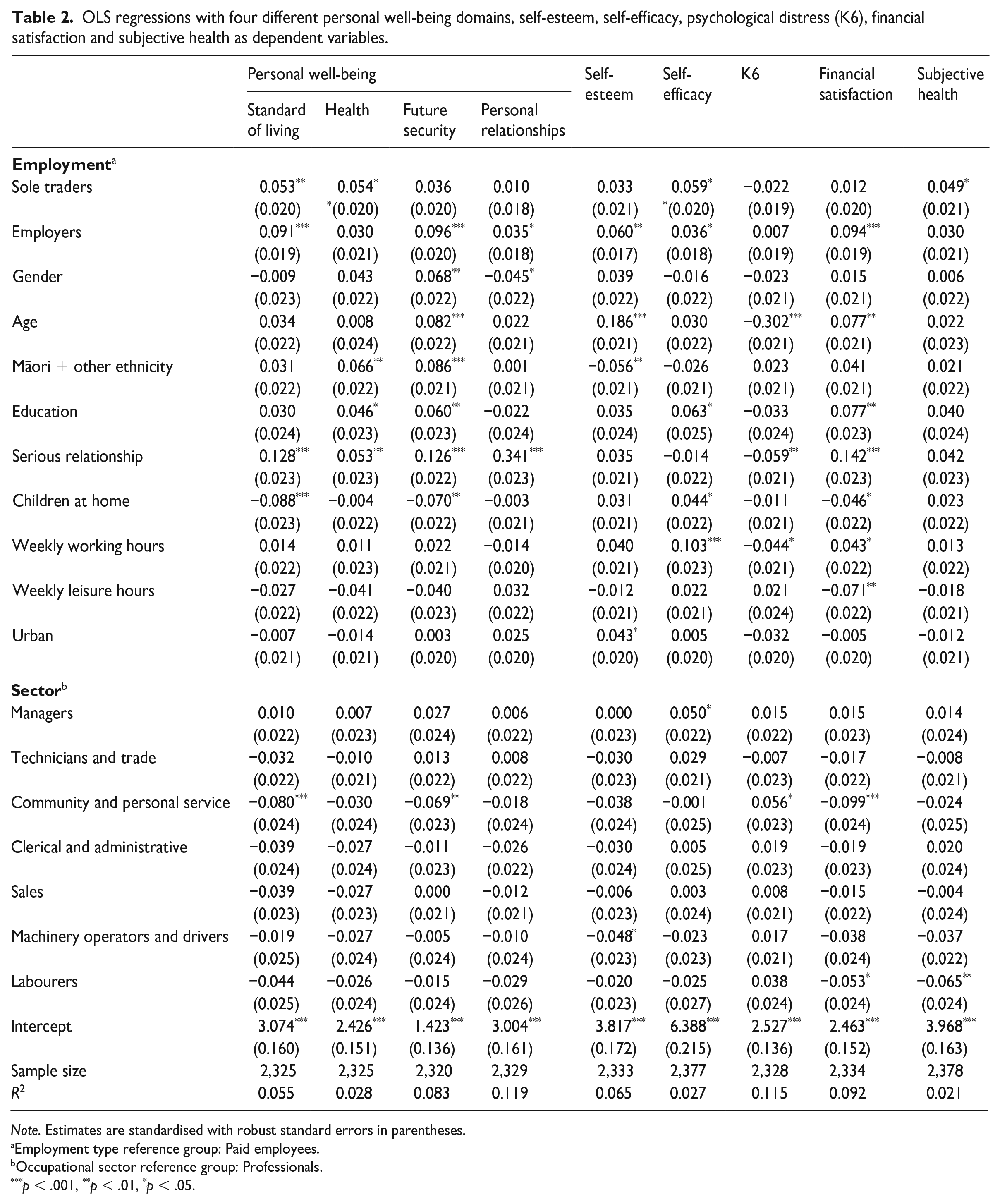
Note. Estimates are standardised with robust standard errors in parentheses.
Employment type reference group: Paid employees.
Occupational sector reference group: Professionals.
p < .001, **p < .01, *p < .05.
Personal well-being
First, we report our findings for the well-being domains after controlling for demographic and sector differences. Our results for satisfaction with standard of living reveal that sole traders (B = 0.053, SE = 0.020, p = .007) and employers (B = 0.091, SE = 0.019, p < .001) were significantly more satisfied with their standard of living than paid employees. Additionally, community and personal service workers were significantly less satisfied with their standard of living than their professional worker counterparts, even after controlling for employment type (B = −0.080, SE = 0.024, p = .001).
In terms of health satisfaction, sole traders were significantly more satisfied with their health than paid employees (B = 0.054, SE = 0.020, p = .005), whereas employers (p = .150) did not significantly differ in health satisfaction to paid employees. Likewise, participants in different occupational sectors did not differ from professionals in health satisfaction (ps ⩾ .166).
Concerning future security, employers were significantly more satisfied with their future security than paid employees (B = 0.096, SE = 0.020, p < .001), whereas sole traders did not differ from paid employees (p = .072). Community and personal service workers also reported significantly less satisfaction with their future security than professional workers (B = 0.069, SE = 0.023, p = .002). However, there were no other differences between professionals and other occupational sectors (ps ⩾ .258).
Finally, employers reported greater satisfaction with their personal relationships than paid employees (B = 0.035, SE = 0.018, p = .050), while sole traders reported similar levels of satisfaction with personal relationships to paid employees (p = .565), and no differences emerged between professionals and the other occupational sectors (ps ⩾ .232).
Self-esteem, efficacy and psychological distress
After controlling for demographic and sector differences, our analysis also revealed differences in self-esteem and self-efficacy by employment type. In terms of self-esteem, employers reported higher levels of self-esteem (B = 0.060, SE = 0.017, p = .001), whereas sole traders did not significantly differ from paid employees (p = .115). Moreover, participants in different occupational sectors did not significantly differ in self-esteem from professional workers, except from machinery operators and drivers, who reported lower levels of self-esteem than professionals (B = −0.048, SE = 0.023, p = .038).
In terms of self-efficacy, both sole traders (B = 0.059, SE = 0.020, p = .003) and employers (B = 0.036, SE = 0.018, p = .044) reported higher levels of self-efficacy than paid employees. Participants in different occupational sectors did not significantly differ in self-efficacy from professionals, except for managers, who reported higher levels of self-efficacy (relative to professionals; B = 0.050, SE = 0.022, p = .023).
In contrast, sole traders (p = .257) and employers (p = .687) did not differ from paid employees by levels of psychological distress. Similarly, only community and personal service workers were higher in psychological distress than professionals (B = 0.056, SE = 0.023, p = .016); no other differences emerged between professionals and other occupational sectors (ps ⩾ .124).
Financial satisfaction
Concerning financial satisfaction, employers reported significantly higher financial satisfaction than paid employees (B = 0.094, SE = 0.019, p < .001). However, sole traders did not significantly differ from paid employees (p = .558). Additionally, community and personal service workers (B = −0.099, SE = 0.024, p < .001) and labourers (B = −0.053, SE = 0.024, p = .030) reported significantly less financial satisfaction than professionals, even after controlling for their employment type.
Subjective health
Finally, our findings for reported subjective health reveal that sole traders reported higher ratings of subjective health than paid employees (B = 0.049, SE = 0.021, p = .021). In contrast, employers (p = .146) did not differ in health from paid employees. For occupational sectors, only labourers reported significantly lower subjective health than professionals (B = −0.065, SE = 0.017, p = .008); the remaining sectors did not differ from professionals (ps ⩾ .099).
Summary
In summary, differences in subjective well-being between types of employment emerged, even after controlling for key demographic covariates and one’s occupational sector. Namely, Māori who are sole traders were significantly more satisfied with their standard of living and health, and higher in self-efficacy and subjective health than Māori who are paid employees. However, Māori employers were significantly higher in satisfaction with their standard of living, future security and personal relationships, as well as higher in self-esteem, self-efficacy and financial satisfaction.
Significantly, Māori women were less likely to be employed than Māori men (see Figure 3). It is crucial to understand the employment dynamics of Māori women in paid roles, compared to self-employment, especially in light of the detailed research on Māori workers’ experiences. Māori are often over-represented in lower-skilled, lower-paying jobs. These roles not only restrict job security and growth opportunities but are also associated with reduced personal well-being. Māori women, specifically, grapple with a compounded set of workplace disparities as they face challenges tied both to their gender and Māori identity. Studies have shown marked differences in Māori workers’ exposure to occupational stressors when compared to New Zealand Europeans. Even in similar job roles, Māori consistently encounter more physical stressors and frequently report significant workplace discrimination and stress across different occupations. The experiences of Māori women are particularly worrisome in this scenario, given the layered challenges they may face.
Discussion
We analysed personal well-being, physical health, mental health and stress among different groups of self-employed Māori in comparison with Māori paid employees. We did not focus on the specific factors that determine well-being among self-employed workers and paid employees but rather on how they score in terms of personal well-being across several life domains. Our results show that self-employment carries a range of well-being benefits for Māori. Indications of a high level of personal well-being among self-employed workers, in general, are in line with the results from a majority of earlier studies (e.g. Andersson, 2008; Benz and Frey, 2008b; Binder and Coad, 2013; Blanchflower and Oswald, 1998; Stephan and Roesler, 2010).
Personal well-being – standard of living, health, future security, personal relationships
Our measure of personal well-being captured four dimensions – standard of living, health, future security and personal relationships – to generate an overall picture of personal well-being.
Sole traders and employers were concentrated in higher-skilled roles, including managers and professionals (a pattern that mirrors BERL’s 2018 analyses), and were significantly more satisfied with their standard of living than paid employees. Higher-skilled jobs often offer higher employment stability and income, which could reduce stress and promote well-being, and this appears to be the case for self-employed Māori.
Paid employees were over-represented among labourers, community and personal service workers and sales workers. These are all occupations associated with low rates of pay (Cochrane and Pacheco, 2022). Relatedly, paid employees were less satisfied with their future financial security, while employers were the most satisfied out of the three groups.
Interestingly, sole traders did not differ from paid employees in satisfaction with future security despite working in higher-skilled roles. This may reflect the amount of risk taken by sole traders, who are solely responsible for their business and its debts (i.e. the business and the owner are effectively one and the same). This differs, in most cases, from those who own their own business as employers. For small businesses that have the business as a separate legal entity, employers are not always personally liable for business debts, and this may provide a sense of security for this group compared to sole traders (see comments below regarding financial satisfaction).
In terms of health satisfaction, sole traders were significantly more satisfied with their health than paid employees – whereas employers did not significantly differ in health satisfaction to paid employees. Likewise, participants in different occupational sectors did not differ from professionals in health satisfaction. Our additional health measure – subjective health assessment – found sole traders reported higher ratings of subjective health than paid employees and employers. Higher health assessment and satisfaction may reflect the high level of autonomy enjoyed by sole traders, who may have more flexibility to organise their own time, report more hours of leisure and report working nearly 10 fewer hours a week than employers (i.e. 29.16 hours per week for sole traders vs 38.48 hours per week for employers). This flexibility may offer a range of benefits – including more time for physical rest and engaging in exercise and other pursuits that carry health benefits.
Employers reported greater satisfaction with their personal relationships than paid employees and sole traders. Sole traders (who were more likely to be male, in serious relationships and identify as Māori only than the paid employee group) spent less time working than paid employees, so the reasons for this finding are unclear; however, less satisfaction with personal relationships among sole traders compared to employers may reflect the overall lower sense of financial security that sole traders feel. Financial stress can influence all areas of life, and lack of it could put stress on relationships.
Self-esteem, self-efficacy and psychological distress
In terms of self-esteem, employers reported the highest level of self-esteem compared to all other groups regardless of the type of occupation they held. This could reflect the nature of self-employment, which requires individuals to lead others, make challenging decisions and often take risk, which may elevate their confidence in themselves and promote self-esteem. Both employers and sole traders reported higher self-efficacy than paid employees. Self-efficacy gradually emerges through the experiences that an individual accumulates (Bandura, 1989). This finding could reflect a range of personal competencies and perceptions that, in turn, strengthen personal beliefs regarding personal self-efficacy among self-employed workers.
Interestingly, sole traders and employers did not differ from paid employees in terms of reported psychological distress. A number of studies have found that self-employed workers are, on average, more satisfied with their lives and themselves compared to paid employees. At the same time, employing oneself or others is a complex process with many challenges and potential stressors, and we see that reflected in stress levels within our sample of self-employed Māori.
Financial satisfaction
Financial satisfaction is often a key component of well-being. Among Māori, employers earn, on average, higher incomes than both sole traders and paid employees (BERL, 2018). This may explain the higher rates of reported financial satisfaction within this group. These data may also reflect a higher level of personal financial risk taken by sole traders, who are responsible for independently making financial decisions and dealing with the consequences. For employers, who own their businesses, the degree of risk involved depends on business structure, which may offer greater protection and security financially compared to some traders.
Overall findings
This research seeks to answer one key question regarding the Māori workforce in New Zealand: How does the type of employment (self-employed or paid employee) impact the subjective well-being of Māori, especially concerning standard of living, health and self-efficacy? Our study found that Māori sole traders and employers in higher-skilled roles showed greater satisfaction with their standard of living compared to paid employees. However, sole traders did not differ from paid employees in terms of future financial security, potentially due to the inherent risks associated with being directly responsible for their business. In terms of health, sole traders reported more satisfaction compared to paid employees, possibly benefiting from the autonomy and flexibility of being self-employed. This autonomy may also explain why both employers and sole traders exhibited higher self-efficacy than paid employees.
Our research also ponders the broader implications of understanding the well-being differences between Māori sole traders, employers and paid employees, given the anticipated rise of Māori in the New Zealand workforce. The study reveals that employers are more content with their personal relationships compared to sole traders and paid employees. A potential reason might be the comparatively lower sense of financial security among sole traders, which could strain relationships. Furthermore, employers demonstrate the highest self-esteem levels, an attribute possibly linked to the leadership roles inherent in their position and their ability to offer employment to others. Interestingly, psychological distress levels did not vary significantly across the employment types, indicating that self-employment, despite its benefits, may also bring about its unique stressors.
In terms of financial satisfaction, Māori employers generally earn more than both sole traders and paid employees, leading to heightened financial satisfaction. Sole traders, due to their direct financial responsibilities, might face challenges affecting their financial contentment. The structure of employers’ businesses might provide them more financial protection than sole traders. As the representation of Māori in New Zealand’s workforce is projected to increase, these findings become pivotal. They provide invaluable insights that can guide policies and strategies aiming to enhance the well-being and financial outcomes of Māori workers.
Limitations
Although a comprehensive range of well-being measures were included in this analysis, the data are restricted by the fact that culturally specific factors were not measured. For example, the survey did not capture dimensions considered important to many Māori, including spirituality and connection to the natural environment (Panelli and Tipa, 2007). Including Māori-specific measures in future studies would provide a deeper understanding between Māori employment type and well-being (Cram, 2014).
The MIFAS did not find out why Māori were self-employed, so it is not clear which respondents were ‘pushed’ into self-employment or ‘pulled’ in by a desire to achieve specific goals. This was a crucial omission, given that job and well-being for self-employed workers have been found to be driven by whether self-employment was a choice or necessity (Binder and Coad, 2016; Nikolova, 2019).
We did not ask self-employed workers how long they have been self-employed. Some researchers have suggested that studies have overestimated the positive long-term effects of self-employment (Hanglberger and Merz, 2015). For example, Georgellis and Yusuf’s (2016) analyses of longitudinal data from the UK found that self-employed workers enjoy an initial boost in their job satisfaction by becoming self-employed, but as expectations fail to materialise and the novelty of the new venture declines, job satisfaction also declines. It is possible self-employed Māori show the same pattern over time.
These data were gathered before the COVID-19 pandemic, which had an overall negative impact on many small businesses in New Zealand. The New Zealand Government introduced a COVID-19 Response and Recovery Fund of NZ$50 billion to combat the effects of COVID-19 (New Zealand Treasury, 2020). This included wage subsidies for businesses to continue to pay employees, changes to business taxes, a business loan support scheme and mortgage repayment holidays for homeowners and small and medium businesses (Cumming, 2022). However, it is still very likely that many of the self-employed workers surveyed in 2017 have been impacted negatively (see Houkamau et al., 2021). A second MIFAS wave was conducted in 2020, and those data are now being analysed so that the results can be compared in a forthcoming paper.
We did not compare Māori with any other ethnic group in our analyses. Given that Māori paid employees tend to experience poorer outcomes compared to non-Māori paid employees, the same may apply to self-employed Māori, who may experience fewer benefits than New Zealand Europeans. Further research should explore differences in well-being outcomes between Māori and New Zealanders of different ethnic groups to explore the extent to which self-employment impacts Māori differently.
Previous research has found Māori who identify as both Māori and New Zealand European are more likely to be self-employed than those who identify as Māori only (Fabling, 2018). This was also the case in our study. While the reasons for this finding are unclear, it is consistent with several studies that have found Māori who identify jointly as European consistently experience better employment outcomes relative to those who identify solely as Māori (Houkamau and Sibley, 2014). Further research should explore the relationships between ethnic affiliation and self-employment among Māori to clarify the factors that demote self-employment for Māori who identify only as Māori compared to Māori who jointly identify as New Zealand European.
Finally, this article presents the first comparative study of subjective well-being among Māori employers, sole traders and paid employees in New Zealand. We aim to distinguish between the well-being of the self-employed and those who are paid employees, drawing on data from the Māori Identity and Financial Attitudes Study of 2017. We acknowledge a limitation in not exploring interaction effects between potentially important covariates. Specifically, the influence of variables such as ‘children at home’ on well-being might differ across sole traders, paid employees and employers. These interaction effects could offer nuanced insights into the relationships under study, and their absence is a limitation of our current analysis. Future research might delve into these interaction effects to provide a more comprehensive understanding of the determinants of well-being among Māori.
Conclusion
Running a business, or otherwise being self-employed, is one avenue for economic advancement for Māori self-determination. However, employing oneself or others is a complex process. The larger number of Māori sole traders may reflect the relative ease of working as a trader compared to the challenge of the expense of starting a business with paid employees. However, further research should explore the motivations and enablers for Māori employers and sole traders and how these may differ.
Colonisation saw Māori lose dominion over their lands and resources, and the long-term deleterious impact on Māori in the workforce has been well traversed (e.g. Easton, 1994); however, here we present a different story. Not only are Māori moving into self-employment at higher numbers than before, but this article also finds that there may be benefits to self-employment mentally, financially and physically for Māori in ways that have not been fully explored in the literature about Māori in the workforce.
The findings of the study indicate that the type of employment significantly influences the subjective well-being of Māori in New Zealand. Notably, self-employed Māori consistently report higher satisfaction levels across various well-being domains compared to their salaried counterparts. To bolster the well-being of paid employees, the government might contemplate policies and programmes that foster entrepreneurship and self-employment within the Māori community. Such initiatives could encompass providing access to capital, tailored business training and resources crucial for kickstarting a business, as well as proposing incentives tailored for Māori-initiated enterprises. Further, the government could prioritise understanding the unique challenges salaried Māori employees face, aiming to rectify well-being disparities through specialised measures. Potential actions could include strengthening job security, enhancing working conditions and ensuring equitable opportunities for benefits and professional advancement. Recognising the pivotal role of employment in shaping well-being, these measures hold the promise of paving the way for a more productive and empowered Māori workforce in the coming years.
Finally, our study on New Zealand’s Māori population explores the effects of employment type on the well-being of an Indigenous community, providing insights potentially relevant to other Indigenous groups globally. We found significant benefits of self-employment for Māori in terms of life satisfaction, standard of living and health. This aligns with observations by Henry (2017) and Benz and Frey (2008a) that self-employment leads to greater self-determination, contrasting with the hierarchy present in dependent employment.
Supplemental Material
sj-pdf-1-eid-10.1177_0143831X231224587 – Supplemental material for Better off solo? Comparative well-being of Māori employers, sole traders and paid employees
Supplemental material, sj-pdf-1-eid-10.1177_0143831X231224587 for Better off solo? Comparative well-being of Māori employers, sole traders and paid employees by Carla Houkamau, Kieren Lilly, Jamie Newth, Kiri Dell, Jason Mika and Chris Sibley in Economic and Industrial Democracy
Supplemental Material
sj-pdf-2-eid-10.1177_0143831X231224587 – Supplemental material for Better off solo? Comparative well-being of Māori employers, sole traders and paid employees
Supplemental material, sj-pdf-2-eid-10.1177_0143831X231224587 for Better off solo? Comparative well-being of Māori employers, sole traders and paid employees by Carla Houkamau, Kieren Lilly, Jamie Newth, Kiri Dell, Jason Mika and Chris Sibley in Economic and Industrial Democracy
Footnotes
Declaration of conflicting interests
The authors declared no potential conflicts of interest with respect to the research, authorship, and/or publication of this article.
Funding
The authors received no financial support for the research, authorship, and/or publication of this article.

Supplemental material
Supplemental material for this article is available online.
Notes
Author biographies
References
Supplementary Material
Please find the following supplemental material available below.
For Open Access articles published under a Creative Commons License, all supplemental material carries the same license as the article it is associated with.
For non-Open Access articles published, all supplemental material carries a non-exclusive license, and permission requests for re-use of supplemental material or any part of supplemental material shall be sent directly to the copyright owner as specified in the copyright notice associated with the article.
