



Abstract
How does plant closure affect the employment and well-being of displaced workers? This article presents the results of two surveys of workers at five manufacturing plants two and 11 years after mass layoffs. After two years, two-thirds of displaced workers had been re-employed, one in five workers was still unemployed, and one in 10 workers had retired. A decade after the plant closures, unemployment had fallen below 5%. Overall, post-displacement outcomes in Switzerland were more favourable than in other European plant closures. However, age disparities loomed large. Older workers struggled to find new jobs and often had to accept large wage cuts and unstable jobs. In particular, many workers in their late forties and early fifties were hit hard as they were too young to benefit from early retirement, but too old to start over.
Introduction
The question of how plant closure disrupts the lives of displaced workers has been of central interest in sociology for decades. In the 1930s, the seminal study by Jahoda et al. (1975 [1933]) showed how the closing of a large textile factory in an Austrian town led to prolonged unemployment and financial hardship, undermining the town’s social fabric. In recent decades, the analysis of single plant closures was replaced by studies of displaced workers, as general population surveys and register data have become readily available. Widely used surveys include the American Displaced Workers Survey (Cha and Morgan, 2010; Farber, 2017), the British Household Panel (Murphy, 2014; Upward and Wright, 2017) and the German Socio-Economic Panel (Ehlert, 2012; Vossemer, 2019), while register data have been used for studies on job displacement in Norway (Black et al., 2015; Hardoy and Schøne, 2014), Sweden (Eliason and Storrie, 2006; Hane-Weijman et al., 2018) and the US (Couch et al., 2011).
Rather than studying individual job displacements, our article returns to the older tradition of case studies of plant closures. It thus joins a handful of studies that examine the employment outcomes of workers following the closure of large industrial plants, such as the closure of two automotive plants, Ford in Genk, Belgium (Goos et al., 2021) and MG Rover in Birmingham, UK (Bailey et al., 2012), the closure of a large Nokia subcontractor in Finland (Jolkkonen et al., 2012) or the disappearance of household appliance manufacturer Moulinex in France (Roupnel-Fuentes, 2015).
Based on two tailor-made surveys, our article documents the employment outcomes during the 11 years after five medium-sized manufacturing plants in Switzerland ceased production in the aftermath of the Great Recession. As a result, hundreds of assembly-line workers, technicians, engineers and managers lost their jobs in the manufacturing sector. Our article traces the post-displacement trajectories of these workers.
Although plant closure is an exogenous event and has been likened to a natural experiment (Brand, 2015), our selection of five plants provides us with a convenience sample of mostly male manufacturing workers. Our goal is therefore not to produce causal estimates, but to document the employment outcomes following mass layoffs in the specific socio-historical context of Switzerland in the early 21st century. This context was characterised by an expanding labour market, low unemployment rates and a resilient manufacturing sector. These conditions were similar to those in Austria, Denmark, Germany or the Netherlands during the same period, and allow us to compare with previous studies on plant closure in Belgium (Goos et al., 2021), Finland (Jolkonen et al., 2012), France (Roupnel-Fuentes, 2015) and the United Kingdom (Bailey et al., 2012; Shuttleworth et al., 2005; Tomaney et al., 1999).
We follow the ‘descriptive turn in social sciences’ (Savage, 2020) that was forcefully promoted by Piketty (2014) and document three specific outcomes after mass redundancy. First, we focus on differences in employment status, examining whether the majority of displaced workers returned to a job, remained unemployed or went into (early) retirement. Second, we document material well-being over time by showing how the earnings of displaced workers evolved over the following decade. Third, we trace variation in workers’ non-material well-being by showing how their life satisfaction fluctuated over time.
We distinguish these three outcomes for one key dimension: workers’ age at displacement. Previous studies suggest that age critically affects our two variables of interest, employment and well-being (e.g. Chan and Stevens, 2001; Farber, 2005; Jolkkonen et al., 2012). A large literature suggests that the social and economic impact of job loss varies greatly depending on when it occurs in an individual’s life course. While plant closure may provide an opportunity to switch jobs for young workers, it is more likely to leave lasting scars in the careers of older workers (Gangl, 2006; Heisig and Radl, 2017; Lassus et al., 2015). Post-displacement trajectories not only vary much more by age than gender (Baumann, 2016), but also more by age than education. The same finding emerges from the American Displaced Workers Survey where age (being 55 years and older) is shown to be a greater handicap for re-employment than lack of education (having no more than a high-school degree) (Farber, 2017: 249).
Our article makes three contributions to the literature on mass redundancies. First, it adds novel evidence on how plant closure affects employment prospects in the context of low ambient unemployment and a dynamic manufacturing sector. Second, our analysis moves beyond the simple before/after comparison and tries to cover a decade after a mass redundancy. Our data consisting of two survey waves and a life history calendar allow us to trace trajectories of employment and well-being over time. Third, our analysis shows that age represents a decisive determinant of how plant closure affects displaced workers’ lives. Losing one’s job represented a benign transition in the trajectories of many younger workers, but was a critical turning point in the lives of many middle-aged workers. While workers close to retirement recovered more rapidly from mass redundancy, workers in their late forties and early fifties were durably affected.
In what follows, we first provide an overview of plant closure studies in Europe. We then present our own study from Switzerland and explain the data structure. The results section uses sequence analysis to document how employment and well-being evolved over time and shows the stark contrast in outcomes between younger and older workers. Our conclusion discusses the implications of our findings for the literature on plant closure.
Literature review
Employment after plant closure
A vast literature describes the negative consequences of job loss on employment (Eliason and Storrie, 2006), income (Vossemer, 2019), job quality (Brand, 2006), health (Black et al., 2015) and marriage (Di Nallo et al., 2022). However, job displacement of single workers may often not be random but linked to workers’ specific characteristics. Inadequate skills, poor health or a lack of motivation may cause workers to lose their job – and these same characteristics may, at the same time, hamper their post-displacement prospects (Brand, 2015). The advantage of plant closure is that displacement is truly exogenous: if an entire plant closes down, it is unlikely that a worker’s abilities and motivation are responsible for his or her job displacement. However, plant closure only tells us how workers’ lives are affected by job loss in a given socio-economic context – and the literature shows that employment prospects vary strongly over time and across countries.
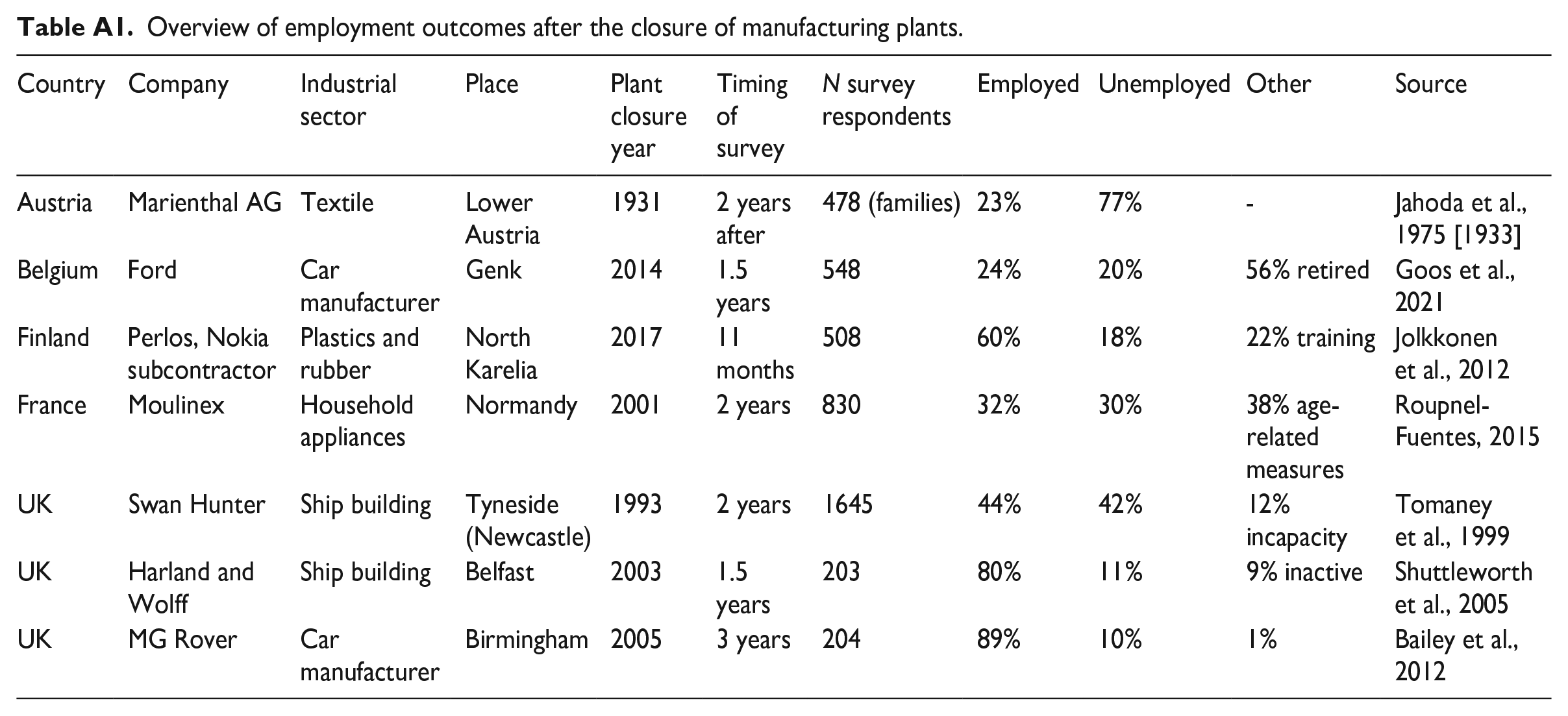
Marie Jahoda, Paul Lazarsfeld and Hans Zeisel began their pioneering study of Marienthal in 1931, two years after Austria’s banking collapse had led to the closing of the town’s main textile factory. The situation had become worse between 1929 and 1931 with the onset of the Great Depression. In 1931, only a quarter of all families in the factory town had at least one member in paid employment – and over three-quarters of families depended on meagre unemployment benefits or on emergency assistance (Jahoda et al., 1975 [1933]: 39).
In comparison, the socio-economic context was more favourable in 2007 when the Nokia subcontractor Perlos ceased production in Finland. Register data combined with a survey of 500 displaced workers showed that, one year after plant closure, 57% of workers who had registered with unemployment offices were re-employed, 18% unemployed and 22% in education or training (Jolkkonen et al., 2012: 86). In Finland in the early 2000s, the business cycle was still expanding and displaced workers benefited from strong government support. However, 2.5 years after plant closure when the Great Recession had also hit Finland, a third of displaced workers were still – or again – unemployed (Jolkkonen et al., 2012).
A more recent study focused on the closure of Ford’s car manufacturing plant in Genk, Belgium, in 2014. Based on the responses of 528 workers, the survey found that 1.5 years after plant closure, 24% were back in employment, 20% unemployed and 56% had gone into early retirement (Goos et al., 2021: 4). Ford had offered a generous early retirement scheme to all displaced workers aged 52 and older – and with a regional unemployment rate of 8%, almost all older workers took up this option. For workers below this age threshold, results look similar to those of the Finnish study with about 60% employed and 40% unemployed or inactive 1.5 years after displacement (Goos et al., 2021).
Several studies document the aftermaths of plant closure in the UK. The re-employment rates were high after the plant closure of another car manufacturer, MG Rover in Birmingham in 2005 (Bailey et al., 2012). Among the 204 workers answering a survey three years after mass redundancy, almost 90% were back in employment and 10% unemployed – with almost no retired respondents in the sample (Bailey et al., 2012: 1601). These high re-employment rates took place in a boom period when unemployment in the West Midlands had fallen below 6%.
Results look similar for the shipyard Harland and Wolff that ceased production in Belfast in 2003, during the same boom period of the early 2000s. Eighteen months after plant closure, re-employment rates among the 203 respondents reached 80%, with the remaining 20% either unemployed or inactive (Shuttleworth et al., 2005: 1660). These re-employment rates largely exceed those observed after the closure of the Tyneside shipyard near Newcastle in 1993. In the post-recession years 1993 to 1995, unemployment rates in North East England hovered above 11%, and two years after mass redundancy only 44% of displaced workers were re-employed, whereas 42% remained unemployed and 12% were on sickness leave or incapacity benefits (Tomaney et al., 1999: 407).
Finally, a French plant closure study obtained responses from 830 displaced workers after the Moulinex factories producing household appliances shut down in Lower Normandy in 2001 (Roupnel-Fuentes, 2015). With regional unemployment around 8%, only 32% of workers were back in employment two years after plant closure. In contrast, 30% were still – or again – unemployed, and 38% benefited from specific measures for older workers such as early retirement or unemployment benefits without job search obligations. Among the minority of re-employed workers, many worked part-time jobs and had fixed-term contracts.
The vulnerability of older workers
The findings of these European plant closure studies are summarised in Table A1 (Appendix) and lead us to two conclusions. First, the re-employment prospects of displaced workers differ sharply depending on the prevailing unemployment rate in a given region and period. While displaced shipyard workers in Newcastle found it hard to secure a job during Britain’s recession of the early 1990s, the great majority of displaced workers from a Belfast shipyard were re-employed during Britain’s economic boom of the early 2000s. The crucial impact of the economic context also emerges from studies using the Displaced Workers Survey for the US (Kletzer, 2001) or register data from Finland (Appelqvist, 2007), Sweden (Eliason and Storrie, 2003) and the US (Couch et al., 2011). Displaced workers with similar skill profiles struggled much more to get re-employed when the business cycle was contracting than when it was expanding.
Second, the institutional context is crucial when comparing re-employment after plant closure. The proportion of workers showing up as unemployed in plant closure studies depends on whether alternative solutions are available to the jobless – be it education and training while on unemployment benefits as in Finland, incapacity benefits as in Britain in the 1990s, or early retirement as in France in the early 2000s. The uptake of these alternative solutions – notably by older jobseekers – is an indicator of the difficulty of re-employment and may point to hidden unemployment.
Early retirement is, by definition, reserved for older workers. Yet extended unemployment benefits and disability insurance are also policy instruments that often target older workers. A large amount of literature shows that age marks a crucial dividing line in the employment prospect of displaced workers. After plant closure, older workers often face the choice between re-employment with large wage cuts, involuntary early retirement or prolonged unemployment – be it in Finland (Jolkkonen et al., 2012), Germany (Knuth and Kalina, 2002) or the United States (Chan and Stevens, 2001). The employment difficulties of displaced workers also emerge from studies using German panel data (Heisig and Radl, 2017) or the American Displaced Workers Survey (Farber, 2017).
Interestingly, older workers are also seen as particularly vulnerable by decision-makers. At the height of the Great Recession, the Obama administration pondered in 2009 two options for the ailing car manufacturer Chrysler: firm closure or continued government support. According to Barack Obama, the option of continued support prevailed because many workers were considered ‘too old to start over’ (Obama, 2020: 300).
Several reasons explain older workers’ greater difficulty to get re-employed after plant closure. Studies on age discrimination in the labour market highlight the paradox that most organisations have older workers under contract, but avoid newly recruiting older workers – because of widely held age norms that depict older workers as being less fit physically and less flexible mentally, as having outdated IT skills and little taste for further education (Oesch, 2020; Radl, 2012; Turek and Henkens, 2020; Van Dalen et al., 2009). Moreover, older workers are perceived as expensive if they demand the same wages as those earned before displacement, but are not more productive than their younger colleagues who earn less (Lassus et al., 2015).
Holding down a job may not be sufficient for workers’ well-being if post-displacement jobs are of much lower quality. Indeed, a large literature suggests that displaced workers in general and older workers in particular have to accept sizeable wage losses in the short term, in Germany (Ehlert, 2013; Vossemer, 2019), Sweden (Eliason and Storrie, 2006) and the United States (Couch and Placzek, 2010). We therefore compare work income before and after plant closure, again distinguishing the medium from the long term.
The negative impact of unemployment on subjective well-being exceeds financial aspects (Clark et al., 2008; Gedikli et al., 2023; Oesch and Lipps, 2013; Vossemer et al., 2018). Jahoda and colleagues (1975 [1933]) had already observed that displaced workers in Marienthal had a hard time going about their daily routines and participating in social life. Plant closure reduces workers’ life satisfaction because it creates economic insecurity and social isolation, and lowers workers’ self-esteem (Brand, 2015). Workers who remain unemployed for long periods may have long-lasting scars (Gedikli et al., 2023). Our analysis measures the change in life satisfaction and examines the impact that plant closure had on individuals’ non-material well-being in the mid and long run.
Institutional context, data and measures
Institutional context
Our analysis of plant closure is set in Switzerland. Over the last decades, the Swiss labour market was marked by low unemployment, strong immigration and occupational upgrading (Oesch, 2023). With strong links between firm-based vocational education and employment, Switzerland has an occupational labour market similar to Austria, Denmark, Germany and the Netherlands. While employment protection is weaker than in these countries, collective dismissals also entail legal obligations in Switzerland (OECD, 2013). However, unlike in the United States and the European Union, age discrimination in employment relationships is not explicitly banned by Swiss law (Sonnet et al., 2014).
Mass redundancies often go along with collective bargaining over social plans that may include provisions for termination pay and early retirement. Switzerland’s statutory retirement age is 65 for men and 64 for women (but also moving up to 65). The state provides few financial incentives to retire before the legal retirement age. Therefore, the affordability of early retirement crucially depends on social plans and workers’ wealth and retirement savings (Madero-Cabib and Kaeser, 2016).
Employment protection in Switzerland is weak, but unemployment benefits are comparatively generous. A contribution period of at least 18 months entitles jobseekers to a benefit period of 18 months with a replacement rate of 70% of the last wage (80% for earners of low wages and jobseekers with dependent children). For workers aged 55 and older, a contribution period of 24 months entitles them to unemployment benefits for 24 months. In parallel, the unemployed are integrated into active labour market programmes that include job search counselling and training courses.
Data
Our analysis focuses on the closure of five mid-sized manufacturing plants in 2009 or 2010. Plant 1 (Geneva) ceased the production of machine tools in the outskirts of Geneva and dismissed 170 workers, offering early retirement to workers who were within four years of the legal retirement age. Plant 2 (Biel) was a Swiss printing company in the city of Biel (canton of Bern) that stopped its operations almost overnight, dismissing all of its 260 employees with no social plan. Plant 3 (Solothurn I) produced chemicals in the countryside of Solothurn and shut down in 2009, providing early retirement to workers who were within two years of the legal retirement age. Plant 4 (Bern) produced printing machines in the city of Bern and ceased production progressively, dismissing 320 workers with the offer of early retirement to workers aged 57 and older. Plant 5 (Solothurn II) produced metal and plastic components in the canton of Solothurn and let go all of its 200 workers, providing the option of early retirement with modest benefits. These plant closures took place in 2009 and 2010 when regional unemployment was low in the cantons of Bern and Solothurn (2–3%), but notably higher in the canton of Geneva (7%).
We fielded our first survey in 2011, about two years after mass redundancy. A questionnaire was sent to 1202 individuals, including all displaced workers with valid addresses (90% of the workforce). A mixed-mode survey was responded to by 747 individuals (77% paper, 21% Internet, 2% telephone), resulting in a response rate of 62%. For both respondents and non-respondents, we added further information on socio-demographic characteristics and employment status from the unemployment insurance register (n = 357) and firm-internal data (n = 600). Our data thus contain some information on the pre- and post-displacement situation of 887 workers (for more information, see Baumann, 2016; Oesch and Baumann, 2015).
We fielded our second survey in the autumn 2020, about 11 years after plant closure, relying on computer-assisted web interviews (CAWI) for 96% of respondents and on computer-assisted telephone interviews (CATI) for 4%. The second survey contained both a conventional question-list design and a life history calendar that allowed us to reconstruct individuals’ employment trajectories over the last decade. The question list and life history calendar were responded to by 286 displaced workers.
Register data provided by some of the firms provide us with an idea of the non-response bias by contrasting the composition of the sampled population and the survey respondents with respect to gender, nationality and pre-displacement occupation. In the first survey, women, Swiss nationals, managers, professionals and technicians were overrepresented, whereas men, immigrants from Kosovo and machine operators were underrepresented (Baumann, 2016). In the second survey, Swiss and French nationals were overrepresented as well as managers, technicians and clerical workers, whereas machine operators were underrepresented.
Measures
Our analysis compares workers’ employment status and well-being at three moments of time: t0 corresponds to the year before mass redundancy, t1 depicts the situation around two years after mass redundancy and t2 around 11 years after mass redundancy. In addition, the life history calendar provides us with continuous sequences of employment, earnings and life satisfaction for a smaller share of workers.
Our measurement of the first outcome – employment status – distinguishes three main statuses: employment, unemployment/inactivity and (early) retirement. The second outcome of material well-being is measured with gross wages in Swiss francs (CHF) either provided by workers or, where missing, available in the unemployment register (for time t1). We do not correct for working hours, but show people’s take-home wages. This allows us to avoid measurement problems with varying weekly hours and, more importantly, to account for the often involuntary shift towards fewer working hours. In effect, an American study suggests that after mass redundancy, unemployment and fewer working hours account for 80% of losses in work income (Lachowska et al., 2020). As there was no inflation over the period under study – the Swiss consumer price index being flat between 2009 and 2020 – wages are at constant prices.
The third outcome – non-material well-being – is measured with a question on general life satisfaction that asked respondents to indicate how satisfied they were, in general, with their life on a scale from 0 (not satisfied at all) to 10 (completely satisfied). This question provides us with measures for time t1 and t2. For time t0, we use a retrospective question that asked respondents two years after plant closure how satisfied they were, in general, with their life before mass redundancy (see Baumann, 2016).
Given the nature of our data and the limited size of our sample, notably at t2, the focus of our analysis is descriptive and we abstain from estimating multivariate models. However, given that mass redundancy seems to constitute a particularly disruptive turning point in the life course of older workers, we systematically compare post-displacement outcomes for workers who were, at the time of plant closure, aged 16 to 45 years with workers who were 46 years and older. Moreover, we exploit the life history calendar to trace the post-displacement sequences of employment, earnings and life satisfaction over time.
Results
Employment status by plant
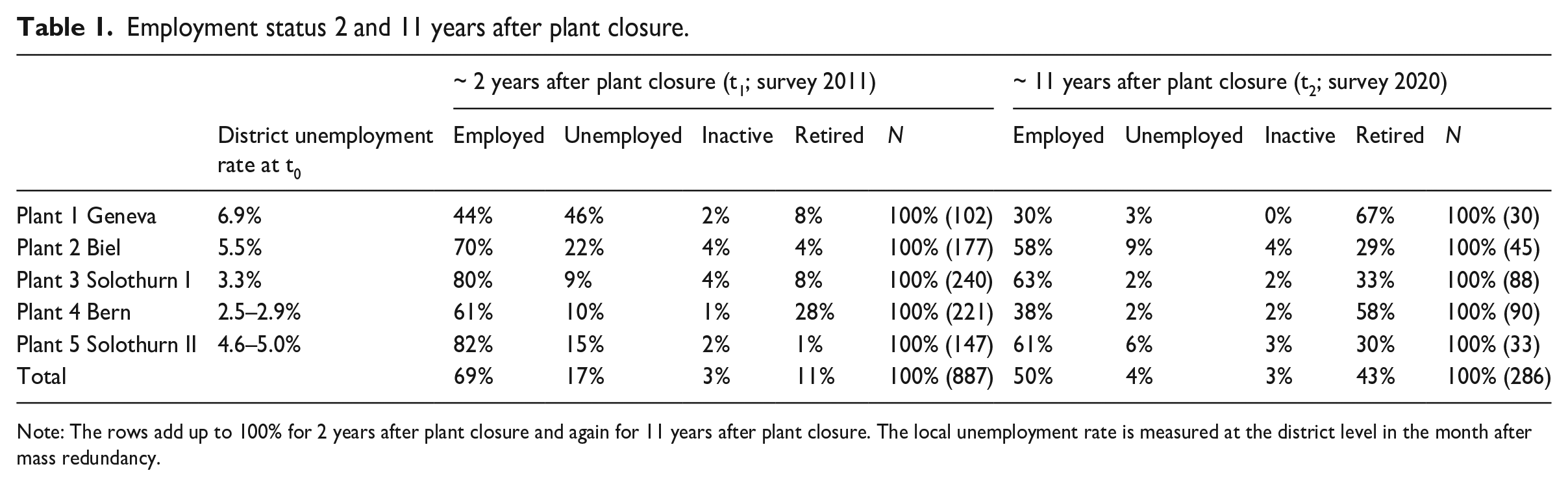
We first show employment outcomes after mass redundancy for each plant separately as well as for the entire sample (see Table 1). Overall, 69% of displaced workers were back in employment two years after plant closure (t1). Further analyses reveal that the great majority of these re-employed workers had a permanent contract (86%) and only a minority were employed on fixed-term contracts (14%). While most workers had returned to a job, one out of five workers was still unemployed or inactive two years after plant closure, and one out of 10 workers had retired, mainly thanks to early retirement offered in the social plans.
Employment status 2 and 11 years after plant closure.
Note: The rows add up to 100% for 2 years after plant closure and again for 11 years after plant closure. The local unemployment rate is measured at the district level in the month after mass redundancy.
A comparison across plants points to large differences. Unemployment rates among displaced workers exceeded 40% in the Geneva plant and 20% in the Biel plant but amounted to no more than 10% in the Bern plant and the two Solothurn plants. Part of this disparity may be due to differences in the labour market context. In the immediate aftermath of the Great Recession, local unemployment reached 7% in Geneva and 5% in Biel but remained at 3% in Bern. While there was almost full employment in Bern, the two other regions experienced lengthening job queues, with ageing manufacturing workers being relegated to the back of the queue.
Another reason for this disparity is early retirement: the generous early retirement scheme of the Bern plant (for workers aged 57 and older) led to 28% of their displaced workers going into retirement as compared to only 4% in the bankrupt Biel plant where no provision for early retirement was offered. Therefore, if we solely compare the proportion of all workers who returned to employment, differences are smaller as re-employment rates vary between 60 and 80% in four out of five plants. The only outlier is the Geneva plant where two years after the mass redundancy, more workers were still unemployed (46%) than back in the labour market (44%).
The situation looks more positive a decade after plant closure (t2). In all five plants, unemployment rates had fallen below 10%. One explanation for falling unemployment is the large increase of workers having gone into retirement. In 2020, the retired made up two-thirds of displaced workers of the Geneva plant and over half of the Bern plant. However, re-employment was still the dominant outcome when looking at the five plants combined. A decade after plant closure, half of all displaced workers were in employment as opposed to 4% being unemployed and 3% being inactive. In the Biel and both Solothurn plants, re-employment reached 60%.
For the context of Switzerland between 2010 and 2020, marked by a resilient labour market and a sizeable manufacturing sector, these results refute the pessimistic expectation that displaced industrial workers would have few other options than prolonged unemployment and retirement.
Employment status and well-being by age over time
With respect to the plant closure literature reviewed above, the re-employment rates of displaced workers that we observe are high – with the notable exception of the Geneva plant. However, these re-employment rates may hide sizeable age differences. We therefore distinguish workers aged 16–45 and workers who were 46 and older at the moment of displacement.
Figure 1 shows age-specific employment outcomes at t1 and t2 – two and 11 years after plant closure. By definition, displaced workers were all employed in the year before plant closure (t0). Two years later, at t1, 88% of younger workers were back in employment and 12% unemployed or inactive. These figures stand in stark contrast to the re-employment rate of older workers, among whom only 57% held a job at t1, with 25% of older workers still unemployed and 18% having gone into (early) retirement.
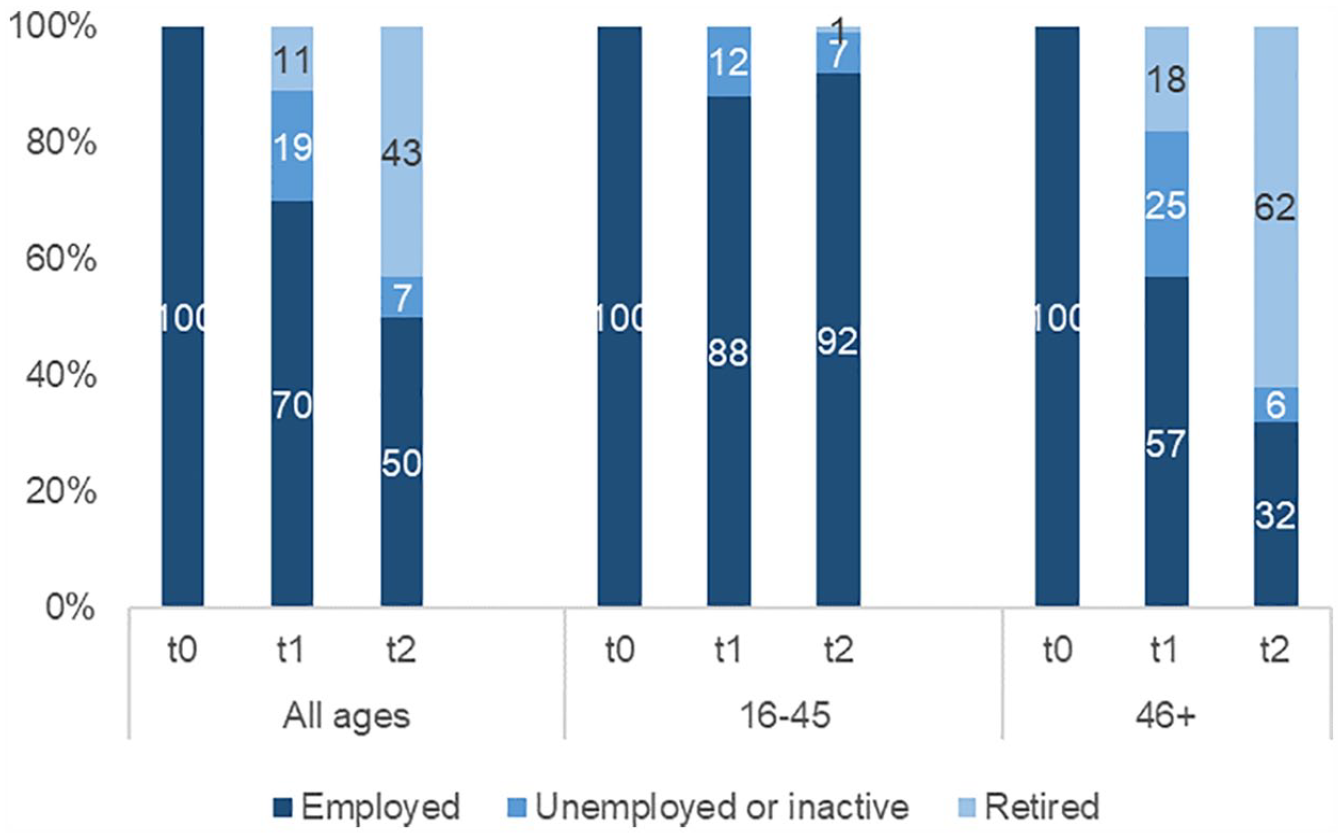
Employment status by age over time.
Eleven years after plant closure, at t2, employment rates among younger workers exceeded 90%, but had fallen to 32% among older workers. However, this age disparity is not due to older workers’ higher risk of unemployment, but the fact that almost two-thirds of older workers had retired in 2020. While we find large age-related differences in vulnerability two years after plant closure, these differences decrease over time because growing shares of older workers have gone into retirement – and, as our analysis below will show, most of the retired workers seem satisfied with their lives.
We shift our focus from employment status to displaced workers’ material and non-material well-being: work income and life satisfaction. Figure 2 shows how mean work income evolved over time for the entire sample as well as for the two age groups. Interestingly, work incomes continued to grow for younger workers in the two years after the mass redundancy, rising on average by 8%, whereas they fell for older workers by 4%.
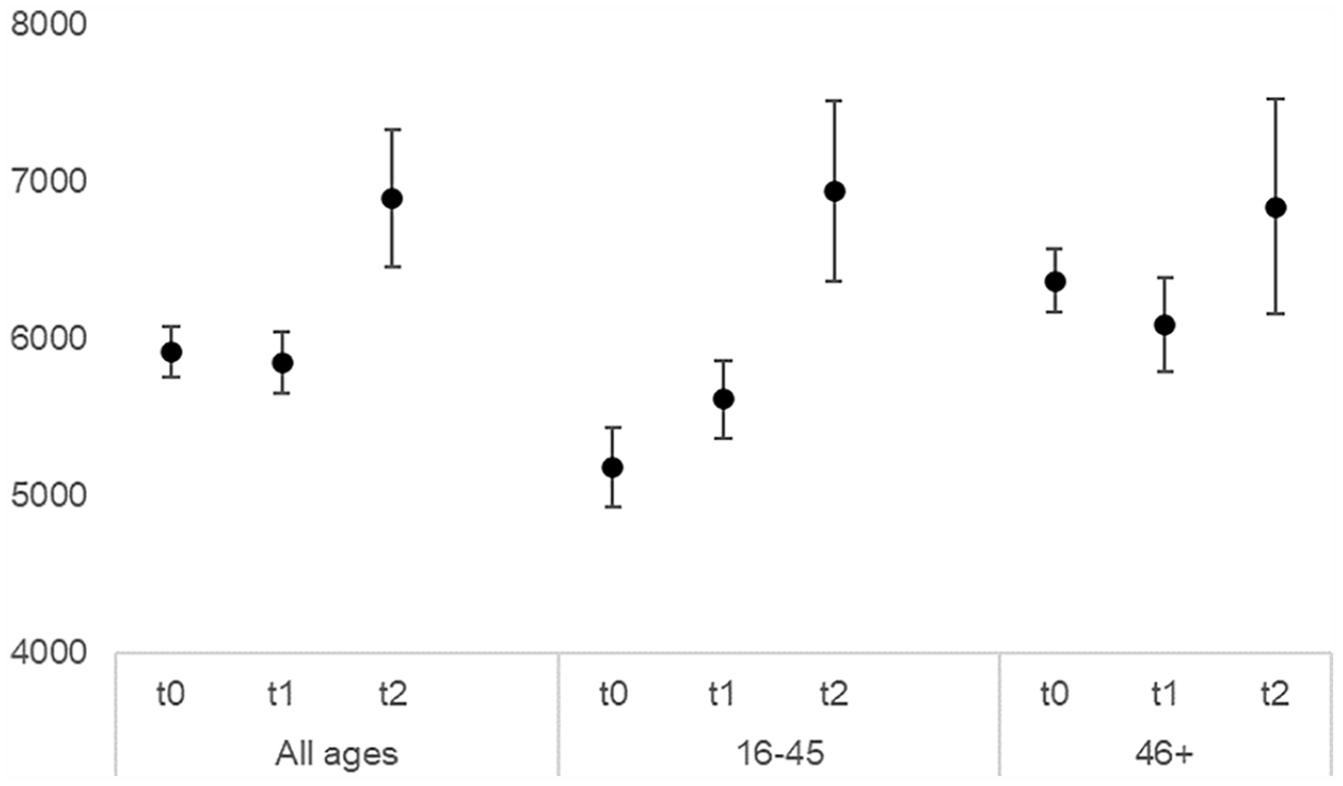
Work income by age over time (in Swiss francs).
Older workers were thus not only less likely to find a new job in the two years after the job displacement compared to their younger colleagues, but they also had to accept – on average – substantial wage cuts. However, over the longer run, their work income recovered. At time t2, work incomes were above those of the displaced workforce at time t0 for both the younger and older workers in our survey. In the decade after plant closure, younger workers caught up with the work incomes of their older colleagues. Note, however, that there is substantial internal disparity among both younger and older workers in work incomes and the confidence intervals of our estimates are particularly large at t2 due to the smaller sample size.
Not all displaced workers returned to the labour market: some remained unemployed and others went into retirement. Therefore, we examine their well-being by using the question on life satisfaction. Figure 3 shows that two years after plant closure (t1), respondents reported a lower level of life satisfaction than before plant closure. While this drop can be observed among younger and older workers, it was much larger for older workers, whose life satisfaction fell by a full point (on the scale from 0 to 10) as compared to a third of a point for their younger colleagues. Interestingly, a decade after plant closure (t2), life satisfaction of older workers had almost fully recovered and returned, on average, to the level reported before plant closure. For younger workers, life satisfaction at t2 even seems somewhat higher than at t1 and t0, but the large confidence intervals again dissuade us from drawing strong conclusions.
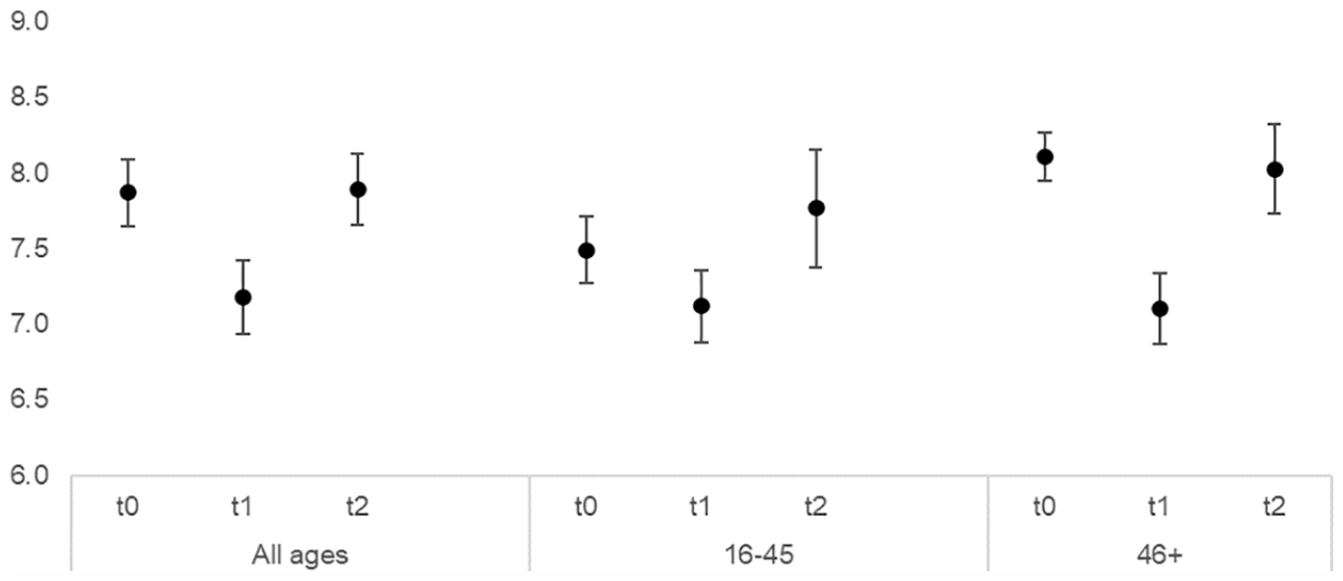
Life satisfaction by age over time (on a scale from 0 to 10).
Displaced workers’ employment trajectories
Our results for different time points may hide different dynamics and trajectories. While some workers appear not to have been negatively affected by plant closure, others experienced it as a decidedly adverse event. We therefore shift our analysis from repeated snapshots to a longitudinal perspective that takes advantage of our data’s life history calendar design. It allows us to retrace displaced workers’ trajectories over time by describing individuals’ situations according to their working status (employed, inactive or unemployed, or retired). We further divide the employed category into a group of re-employed workers who earn less than before the plant closure (wages having decreased by at least 5%) and a group of re-employed workers whose earnings were stable or increasing.
Figure 4 presents the chronogram of these trajectories for the subsample of displaced workers who completed the life history calendar. It shows that the share of individuals in unemployment and inactivity gradually decreased over time, most notably in the first two years after plant closure (quarter 1 to quarter 8), from 20 to about 10%. The decrease became slower thereafter, but unemployment continued to drop over the first five years (Q1 to about Q18) after plant closure to below 5%, with an overall re-employment rate of over 60%. Thereafter, the employment rate slowly decreased as a growing share of workers became eligible for retirement.
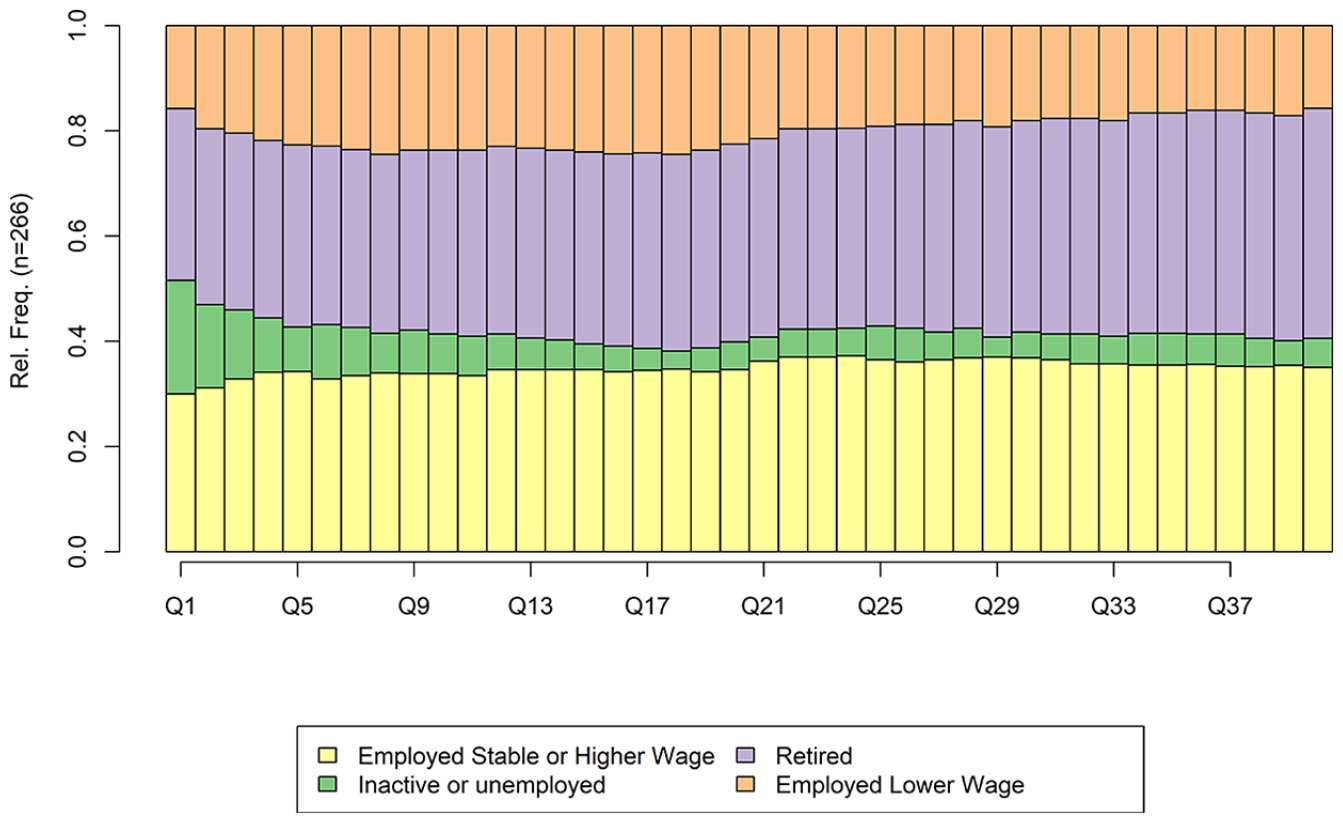
Employment trajectories of displaced workers in the 10 years after plant closure.
The chronogram further distinguishes the employment status according to the current job’s wage as compared to the wage earned before plant closure. This tells us that 30% of all respondents were able to avoid a wage cut, whereas 20% saw their wages decrease. This proportion of workers with lower wages increased over the first five years (Q1 to about Q18) after plant closure as more workers left unemployment, but slowly decreased thereafter.
In order to highlight the different employment dynamics, we use sequence analysis to create a typology of these trajectories. Sequence analysis is an inductive method that aims to identify recurrent patterns as they appear in the data. 1 Our analysis identified the following four types of sequences or trajectories.
The first type, called ‘retired’, includes 38% of respondents who moved into retirement during the first years after plant closure. Further analyses of these trajectories show that most of the respondents of this type benefited from an early retirement scheme. The second type, named ‘stable or higher wage’, regroups 36% of the respondents who were able to secure new long-term employment with a comparable or higher wage than the one earned before plant closure. Interestingly, almost a fifth of trajectories in this type started with either unemployment or a lower-wage job. The third type, named ‘lower wage’, regroups respondents who found a new job, but one that paid at least 5% less than what they had earned before plant closure. This type of work trajectory concerned 17% of all respondents. Finally, the fourth type groups displaced workers who followed highly unstable trajectories. An in-depth analysis of their trajectories highlights that most respondents of this type experienced several movements back and forth between employment and recurrent unemployment spells. Furthermore, in the periods when they were employed, they generally earned less than before plant closure. This comparatively small group of employees – 8% of all respondents – were the most negatively affected by mass redundancy. Figure 5 presents these findings.
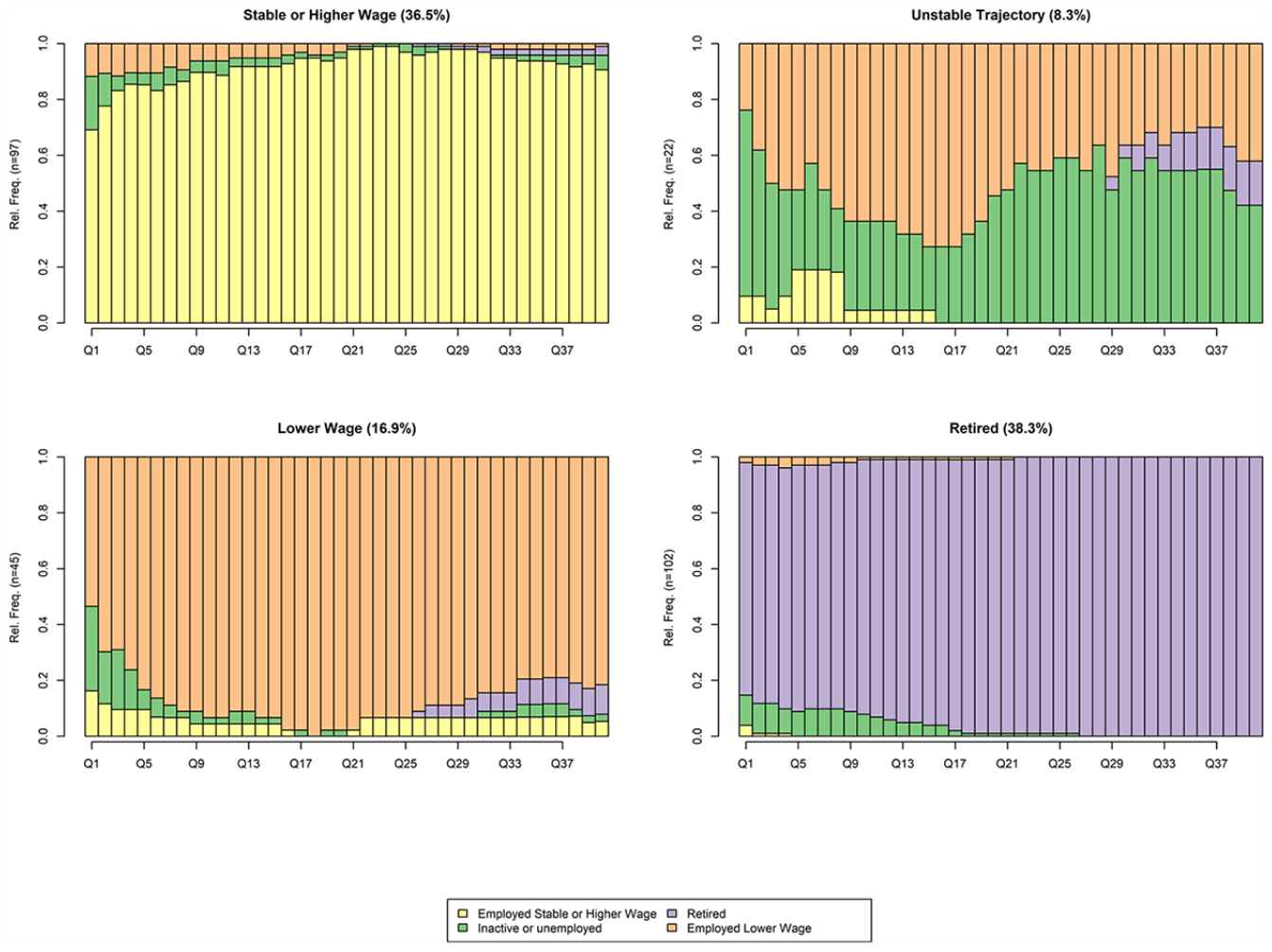
Typology of employment trajectories of displaced workers in the 10 years after mass redundancy.
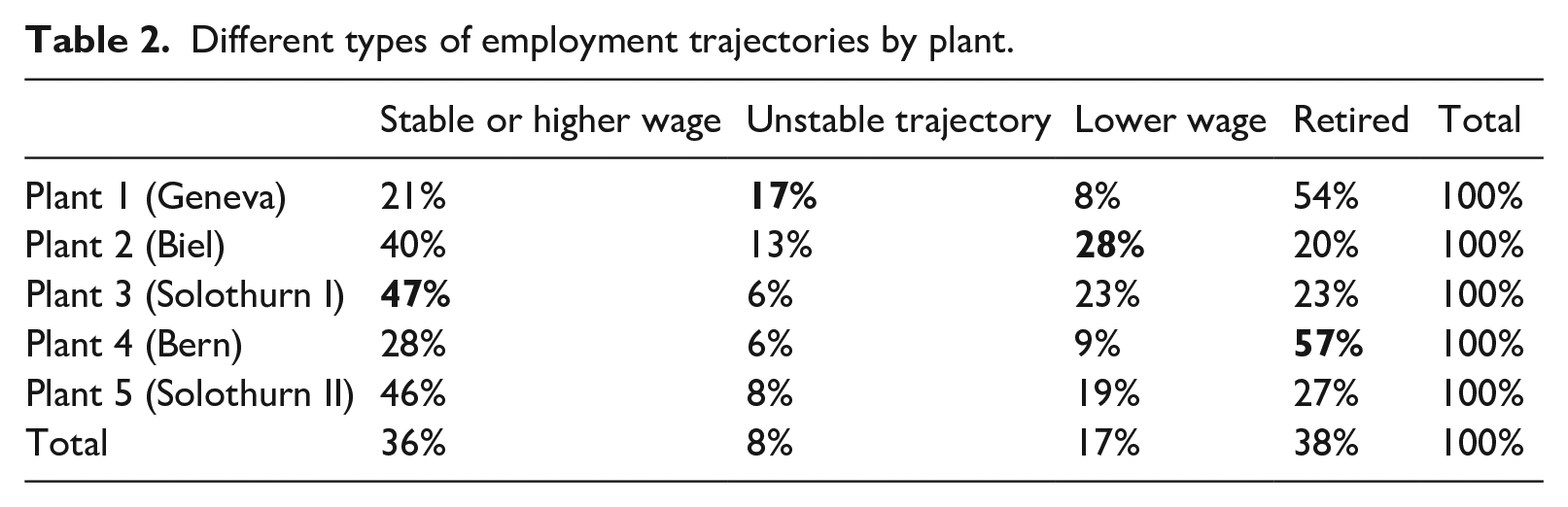
How do workers’ post-displacement trajectories vary by the context in which plants closed down? Table 2 shows that in the Bern plant, where early retirement provisions were particularly generous, the trajectory type ‘retired’ concerned over half of its workforce as compared to only 20% in the Biel plant that went bankrupt and closed almost overnight. In this latter plant, the ‘lower wage’ type defined a disproportionate share of trajectories (28%). Interestingly, the ‘lower wage’ type only played a minor role in the Geneva plant. Instead, in Geneva’s urban labour market defined by higher unemployment and many service jobs, industrial workers disproportionately went into retirement (54%) or found themselves in unstable careers (17%). The trajectory with stable and higher wages was only attained by a fifth of the former Geneva plant workers – as compared to almost half of all displaced workers in the two Solothurn plants. In comparison, manufacturing workers clearly had better prospects in the local labour markets of the Mittelland region of Solothurn, defined by low unemployment rates and a dense network of industrial firms.
Different types of employment trajectories by plant.
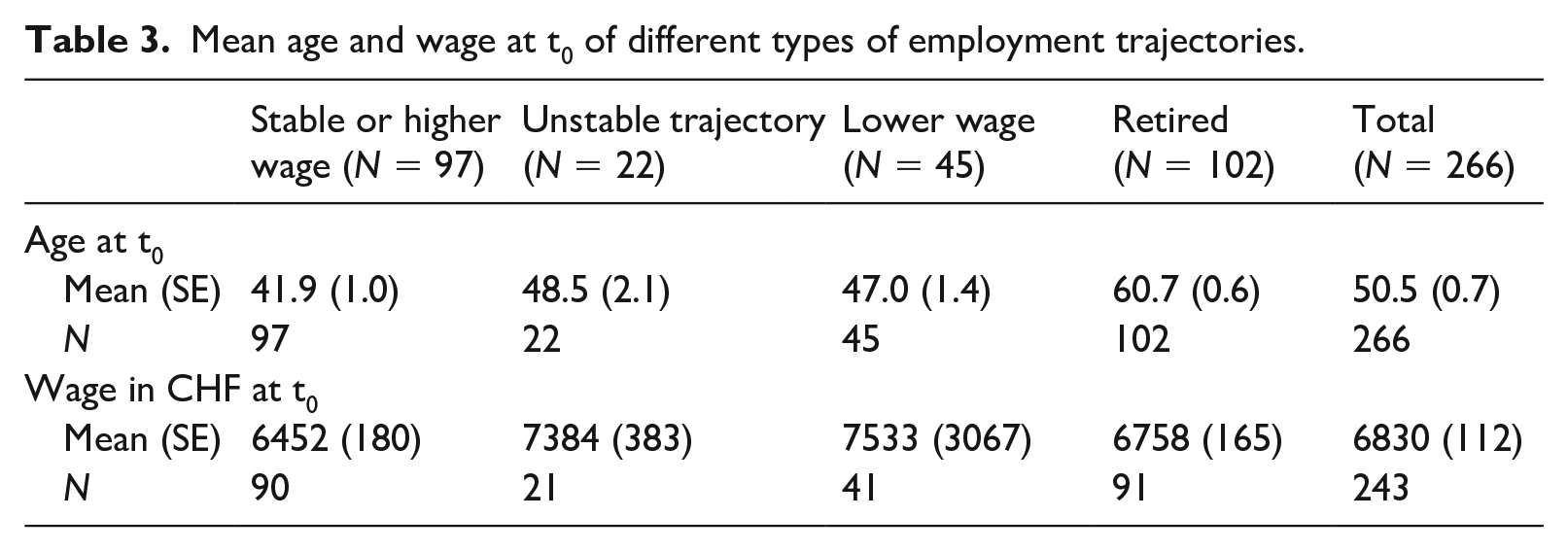
What are the characteristics of the different types of displaced workers’ trajectories? Table 3 provides a tentative answer by presenting descriptive statistics. The ‘stable or higher wage’ type regroups workers who were younger on average. Related to their younger ages, these workers also earned lower wages before plant closure (t0). These results are in line with our previous result showing that younger workers were less affected by mass redundancy. Unsurprisingly, the ‘retired’ type regroups the oldest workers, with an average age of 60.7 years. These workers had the opportunity to transition to an early retirement scheme or even to enter directly the standard pension system. Their former mean wage is close to the average of the total sample, showing that this type is not linked to a specific group of workers. Finally, the last two types of ‘unstable trajectory’ and ‘lower wage’ regroup displaced workers who were, on average, in their late forties at the time of plant closure and who, before job loss, had earned higher wages than both the retired and the ‘stable and higher wage’ type.
Mean age and wage at t0 of different types of employment trajectories.
In a last analysis, Figure 6 shows how life satisfaction evolved for the four types of trajectories from t0 to t1 and t2. On average, workers in the ‘retired’ type of trajectories were the most satisfied with life. Interestingly, their mean life satisfaction even slightly increased over time. In comparison, the displaced workers in the ‘lower wage’ and the ‘stable or higher wage’ trajectories reported similar levels of life satisfaction – and their levels were only slightly below those of the ‘retired’ type. For these two types, life satisfaction was highest in the last time point, a decade after plant closure. Finally, workers who followed the unstable type of trajectory had experienced a similar level of life satisfaction before plant closure, but reported much lower levels two years (t1) and 11 years (t2) after mass redundancy. The disparity in life satisfaction with respect to the three other types is largest in the last measurement period t2. Displaced workers who had experienced an unstable trajectory after plant closure reported a strong decrease in their life satisfaction over the decade following plant closure.
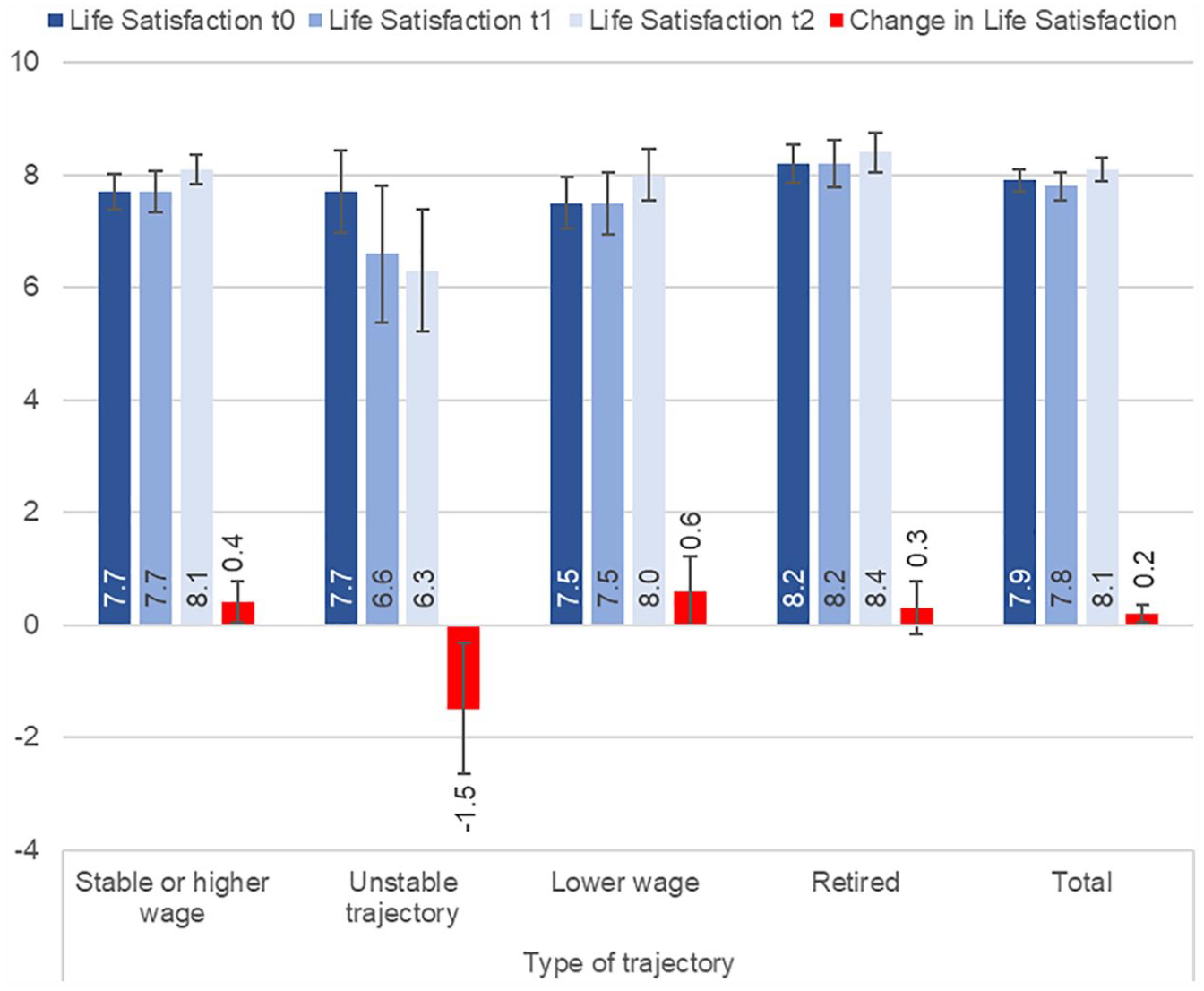
Life satisfaction (0–10) at different time points by type of trajectory.
Conclusion
Over the last two decades, surveys of displaced workers in general and of plant closure in particular have become popular instruments to estimate the causal effect of unemployment on workers’ subsequent trajectories (e.g. Brand, 2006; Couch and Plazcek, 2010; Heisig and Radl, 2017). The idea is that plant closure resembles an exogenous event, and hence a natural experiment, which allows researchers to draw causal conclusions. While the internal validity of plant closure studies has therefore been widely acknowledged (Brand, 2015; for a critique, see Schwerdt, 2011), the problem of limited external validity may not have been fully grasped. To the extent that plant closure studies refer to a given workforce in a given place and time, their results reflect a historical context that may not generalise easily to other places and periods.
Indeed, our discussion of the plant closure literature suggests that post-redundancy outcomes strongly depend on the economic and institutional setting. While the business cycle and regional unemployment determine how hard it is to find a new job, early retirement schemes drive the outcomes for many older workers. The business cycle explains why the job prospects of displaced workers were much better after MG Rover closed down in Birmingham during the boom period of the mid-2000s than when the Tyneside shipyard near Newcastle shut down during the recession of the early 1990s (Bailey et al., 2012; Tomaney et al., 1999). Institutional differences explain why the closure of Ford in Genk led to less unemployment than that of Moulinex in Normandy, because Ford offered early retirement to workers aged 52 and older (Goos et al., 2021; Roupnel-Fuentes, 2015).
Our article contributes to these plant closure studies by presenting the results of two tailor-made surveys that we fielded in Switzerland two and 11 years after mass redundancy. The length of time covered by our study is unusual for the plant closure literature. However, it comes at the price of a reduced sample size at time t2. This limitation has discouraged us from venturing into a systematic multivariate analysis of detailed subcategories because cell sizes are too small. Still, by just separating two age groups and five manufacturing plants, our analyses provide four findings that are noteworthy.
First, our study shows that in the Swiss context of low ambient unemployment and a dynamic manufacturing sector, two-thirds of displaced workers had found a new job two years after plant closure – with only one out of seven workers being employed on a fixed-term contract, the rest having permanent contracts. Although most displaced workers were back in employment, one out of five workers was still unemployed, and one out of 10 workers was retired, mainly thanks to early retirement options included in the firms’ social plans. About five years after plant closure, unemployment had further dropped to about 5%.
Our analysis for Switzerland thus shows more favourable post-displacement outcomes than plant closure studies from other European countries – with the possible exception of two British studies that took place during the economic upswing of the early 2000s (Bailey et al., 2012; Shuttleworth et al., 2005). Unlike in Marienthal, where the job losses affected almost everyone in the community and led to a corrosion of shared activities and responsibilities (Jahoda et al., 1975 [1933]), the plant closures in Switzerland in the early 2010s did not unravel the communities’ social fabric in a similar way for two reasons. To begin with, the economic slump after the Great Recession was much less dramatic than the collapse during the Great Depression. Moreover, the second half of the 20th century saw the development of modern welfare states. Unlike in the 1930s, jobless workers in the 2010s were therefore entitled to unemployment benefits, allowing them to maintain their standard of living for up to two years without working.
Second, results not only vary across countries and over time, but also within Switzerland. Two years after mass redundancy, unemployment rates among displaced workers exceeded 40% in the Geneva plant and 20% in the Biel plant, but amounted to no more than 10% in the other three plants located in Bern and Solothurn. While this contrast is partly explained by the fact that local unemployment rates were more than twice as high in Geneva than in Bern, differences in early retirement provision weighed heavily as well. By offering early retirement to workers aged 57 and older, the Bern plant allowed over a fourth of its workforce to retire, whereas the bankrupt Biel plant offered no financial support for early retirement and fewer than 5% of displaced workers were able to retire. The large variation of post-displacement outcomes across Swiss plants is further proof that the job prospects of displaced workers are crucially affected by the socio-economic context – well above and beyond their individual skills and motivation.
Third, age plays a central role as age disparities in re-employment were striking two years after plant closure. While 88% of younger workers were back in employment, only 57% of older workers had found a new job, with 25% still unemployed and 18% having retired. In the same vein, wages continued to grow for younger workers in the two years after the mass redundancy, whereas they fell for older workers, who were more likely to embark on trajectories of lower wages and unstable careers. These diverging trajectories in the aftermath of plant closure are also evident with respect to life satisfaction. Both younger and older workers reported lower life satisfaction two years after plant closure, but the drop was much larger for older workers. The large age-related differences in vulnerability in the aftermath of plant closure decreased over time because a growing share of workers were able to retire over the decade following plant closure. Retirement thus may have freed many older jobseekers from labour markets that had relegated them to the back of the job queue.
At the same time, a minority of older workers may have preferred to continue working but only had the choice between early retirement and long-term joblessness. Retirement decisions often reflect the relative power resources of employers and workers, and most older workers cannot take them unilaterally (Williams and Beck, 2015).
Fourth, due to life history calendars, our data allowed us to move beyond simple snapshots and to trace workers’ trajectories over a continuous period of 10 years after plant closure. These sequence analyses confirm, and further qualify, the finding that age represents a decisive determinant in the aftermath of plant closure. Losing one’s job represented a benign transition in the trajectories of many younger workers, but was a critical turning point in the lives of many older workers. Interestingly, the most vulnerable group may not have been workers close to (early) retirement who were able to trade their jobs for another stable life stage. Rather, displaced workers in their late forties and early fifties seemed to be hit harder because they were too young to benefit from early retirement, but too old to embark on a new career – and therefore often had to lower their professional expectations by accepting wage cuts and unstable jobs.
What are the policy implications of the finding that the impact of plant closure on people’s lives varies by life course stage? Older workers who benefited from early retirement avoided the plight of unemployment and precarious jobs. In this sense, financial support for early retirement proved crucial as it allowed older workers to open a new chapter in their lives that seems to be satisfying for most. By contrast, many middle-aged workers in their late forties and early fifties were neither here nor there: too old for new occupations and sectors, but too young for early retirement. In the aftermath of mass redundancies, displaced workers in this life course stage appear to be in greatest need of active labour market programmes such as job search counselling, further education and training as well as subsidised jobs.
Footnotes
Appendix
Overview of employment outcomes after the closure of manufacturing plants.
| Country | Company | Industrial sector | Place | Plant closure year | Timing of survey | N survey respondents | Employed | Unemployed | Other | Source |
|---|---|---|---|---|---|---|---|---|---|---|
| Austria | Marienthal AG | Textile | Lower Austria | 1931 | 2 years after | 478 (families) | 23% | 77% | - | Jahoda et al., 1975 [1933] |
| Belgium | Ford | Car manufacturer | Genk | 2014 | 1.5 years | 548 | 24% | 20% | 56% retired | Goos et al., 2021 |
| Finland | Perlos, Nokia subcontractor | Plastics and rubber | North Karelia | 2017 | 11 months | 508 | 60% | 18% | 22% training | Jolkkonen et al., 2012 |
| France | Moulinex | Household appliances | Normandy | 2001 | 2 years | 830 | 32% | 30% | 38% age-related measures | Roupnel-Fuentes, 2015 |
| UK | Swan Hunter | Ship building | Tyneside (Newcastle) | 1993 | 2 years | 1645 | 44% | 42% | 12% incapacity | Tomaney et al., 1999 |
| UK | Harland and Wolff | Ship building | Belfast | 2003 | 1.5 years | 203 | 80% | 11% | 9% inactive | Shuttleworth et al., 2005 |
| UK | MG Rover | Car manufacturer | Birmingham | 2005 | 3 years | 204 | 89% | 10% | 1% | Bailey et al., 2012 |
Acknowledgements
We are grateful to André Berchtold, Annick Berchtold and Oliver Lipps for their help in designing this study.
Declaration of conflicting interests
The authors declared no potential conflicts of interest with respect to the research, authorship, and/or publication of this article.
Funding
The authors disclosed receipt of the following financial support for the research, authorship, and/or publication of this article: This research was supported by the Swiss National Centre of Competence in Research ‘LIVES’ on ‘Overcoming vulnerability: Life course perspectives’, financed by the Swiss National Science Foundation (grant number: 51NF40-160590).
