




Abstract
Current debates about the gig economy pay increasing attention to the heterogeneity of platform workers. Using a large sample of 10,574 freelancers from an international online labor market, this article investigates the association between individual work values and career trajectories, constructed as a combination of current employment status and future career intentions. The authors consider not only the pure form of freelancing but also hybrid models when people have multiple jobs, combining freelancing with a regular job as an employee (moonlighters) or starting their own business with hired employees (entrepreneurs). The findings suggest that freelancers, moonlighters, and entrepreneurs have distinct work value profiles reflecting the opportunities and constraints in gaining specific rewards from their work. In contrast to moonlighters, freelancers and entrepreneurs are similar in their relative preference for intrinsic values and ignoring security values. In contrast to freelancers, entrepreneurs and moonlighters value social recognition but do not seek a comfortable job. In contrast to entrepreneurs, freelancers and moonlighters prefer a job that meets their abilities. The authors argue that different work values must be better acknowledged when trying to reflect adequately on participation and mobility in the gig economy. The study contributes to a deeper understanding of the gig economy as well as to the general literature on the role of work values in labor markets.
Introduction
There has been growing concern about the rise of the ‘gig economy’ comprising short-term or on-demand work mediated by digital platforms (Codagnone et al., 2018; Rani et al., 2021; Vallas and Schor, 2020). Many intertwining factors contributed to this process, including the development of information and communication technologies (ICTs), expansion of the service sector, flexibilization of production and labor markets, globalization, the neoliberal turn, and cultural changes. The pioneers in the digitalization of labor markets were online freelance marketplaces that came into existence around the turn of the millennium. These websites for remote work match service providers (freelancers) and their clients across spatial and political borders facilitating online labor markets with millions of participants from all over the world (Agrawal et al., 2015; Aguinis and Lawal, 2013; Stephany et al., 2021).
Freelancers are typically self-employed professionals or independent contractors; however, definitions range from entrepreneurial ‘free agents’ (Burke, 2012; Cieślik and Dvouletỳ, 2019; Malone and Laubacher, 1998; Pink, 2001) to precarious ‘logged labor’ (Gandini, 2019; Huws, 2016; Schörpf et al., 2017). Core arguments in these debates refer to the individual wants and needs (such as independence, autonomy, and control, work–life balance, etc.) behind choices and labor market decisions. To advance our understanding of freelance careers in the gig economy, it is appropriate to rely on a well-established theoretical framework as presented in work values scholarship, in contrast to rather vague speculations about motives and reasons (Hirschi and Fischer, 2013: 218). Work values such as ‘conceptions of desirable’ and motivational goals (Brown, 2002; Furnham et al., 2021; Kalleberg, 1977; Ros et al., 1999; Rosenberg, 1957) may be significant factors shaping participation, satisfaction, and mobility in the gig economy. Although many structural factors and constraints affect work lives, in contemporary times of flexible labor markets social preferences and standards and specific values may gain greater importance in people’s careers (Abessolo et al., 2017) and for their well-being (Shevchuk et al., 2018; Stephan et al., 2020).
A salient limitation of the current debate about the gig economy is that researchers often overlook self-employment heterogeneity, including hybrid careers and varying work values, and this not only in work situations but also in different societies (Cansoy et al., 2020). Labor market studies tend to attribute a single employment status to an individual, overlooking that people may have multiple jobs of different types (Demetry, 2017; Folta et al., 2010; Järvensivu, 2020; Raffiee and Feng, 2014). There is convincing evidence that many freelancers also have regular jobs (Bögenhold, 2019a; Bögenhold and Klinglmair, 2017; Shevchuk and Strebkov, 2015) and increasingly use online platforms to obtain additional income (Huws et al., 2017). Another group of freelancers, often neglected in the literature on the gig economy, are in the process of starting their own business with hired employees (Shevchuk and Strebkov, 2017; van Stel et al., 2020). Moreover, freelance work may take on a different status in an individual’s work biography and people may have various career intentions. Thus, there is a need for more realistic and dynamic accounts of freelance work in the gig economy that include an understanding of the varying work values behind different types of freelance careers. The heterogeneity of freelancers and their general differences to self-employment, entrepreneurs and independent professionals indicate a conceptual jungle with blurred boundaries and overlaps (Cieślik and Dvouletỳ, 2019; Knapp et al., 2021).
The literature on the gig economy and online labor markets tends to focus primarily on the global English-language platforms. However, important developments in other parts of the world, including the post-socialist countries of Eastern Europe, deserve more attention (Aleksynska, 2021). For instance, the Russian language has facilitated a large regional online labor market, which includes many people from Russia and other countries that were previously part of the former Soviet Union (Shevchuk and Strebkov, 2015). Researching platform work in various contexts may improve our understanding of careers in the gig economy. Although work values are recognized as an important factor in occupational and career choice, the studies that explore work values as a predictor of employment status are scarce (Hirschi and Fischer, 2013; Kolvereid, 1996). To our knowledge, no study has provided a more nuanced comparative analysis of work values accounting for different types of self-employment and hybrid careers. We used a large sample of 10,574 freelancers participating in the international online labor market to investigate the association between work values and career trajectories, constructed as a combination of current and prospective employment situations. Do people who exhibit similar work values tend to be in similar employment situations and tend to have similar career intentions? In other words, are various career trajectories associated with distinct sets of work values? And do expected changes in employment imply transitory work values? Our study addresses these questions, contributing to a deeper understanding of the social heterogeneity of employment in the gig economy as well as to the general literature on the role of work values in labor markets.
Towards an understanding of hybrid self-employment
The majority of self-employed people work without further employees as own-account workers, the so-called solo self-employed (Bögenhold, 2019a). The digitally enabled gig economy comprises an increasing number of such workers (Huws et al., 2017; Rani et al., 2021). Online labor markets constitute a salient segment of the gig economy, with millions of participants from all over the world (Agrawal et al., 2015; Aguinis and Lawal, 2013; Stephany et al., 2021). Programmers and developers, designers and artists, writers and translators, engineers and architects, lawyers and consultants work remotely for distant clients. Although in some cases, identifying the employment status of workers in the gig economy is problematic, typically they act as autonomous service providers. In various contexts, many terms are used to describe this type of self-employed worker, such as freelancer, independent contractor, contract professional, and consultant (Cappelli and Keller, 2013; Connelly and Gallagher, 2006; Kitching and Smallbone, 2012; Knapp et al., 2021).
Two divergent views on self-employment in the gig economy relate to the opportunities and risks of independent contracting, or good jobs and bad jobs, and, consequently, the ‘winners’ and ‘losers’ in flexible labor markets (Kalleberg and Dunn, 2016; Wood et al., 2019). On the one hand, due to secular changes in lifestyles and values towards more individualism, autonomy, and self-expression (Inglehart, 2018), an increasing number of people in advanced economies choose to work on their own as ‘free agents’, beyond corporate hierarchies and control (Pink, 2001). Recent improvements in information and communication technologies (ICTs) have provided new opportunities for individual work autonomy and they facilitate effective coordination in the emerging ‘e-lance economy’ (Malone and Laubacher, 1998) or ‘sharing economy’ (Sundararajan, 2016). It is argued that freelancers, as unique economic agents, play an important role in innovation-driven and efficiency-driven growth in the 21st century (Burke, 2012). On the other hand, due to the deregulation of labor markets and increased uncertainties, people who appear to be self-employed are often just de facto laborers who have to accept small on-demand work assignments (gigs) without social security benefits. Meanwhile, corporations use ICTs to develop distributed organizational forms and impose new forms of algorithmic controls on ‘digital labor’ (Gandini, 2019; Huws, 2016; Schörpf et al., 2017). However, both interpretations tend to refer to a mythical average type of self-employed worker or unreasonably generalize conclusions from distinct segments of the gig economy.
We argue that popular visions of the gig economy require a deeper understanding of the social heterogeneity of self-employment, including hybrid career trajectories and a variety of work values (Bögenhold, 2019b; Cansoy et al., 2020; Cieślik and Dvouletỳ, 2019). Self-employment may look completely different when studied as a phenomenon embedded in specific labor markets, occupational contexts, sectors, and online platforms (Barley and Kunda, 2004; Bögenhold and Klinglmair, 2017; Osnowitz, 2010; Peel and Inkson, 2004; Rani et al., 2021; Wood et al., 2019). Diverse ‘worlds of work’ exist under the umbrella of the gig economy. Freelancers working through knowledge-based platforms like Upwork.com or Freelancer.com differ greatly from Mechanical Turk microtaskers, Uber drivers, or TaskRabbit handymen. Moreover, there may be great differences within the same category. Recently there have been explicit calls to investigate the heterogeneity of the freelance workforce since there is no one typical freelancer (Bögenhold, 2019b; Burke, 2015; Kitching and Smallbone, 2012).
One way to reveal the social heterogeneity of self-employment is to study a variety of employment situations and career paths. We live in a society that is increasingly a puzzle of labor market patterns, including ‘boundaryless’ (Arthur and Rousseau, 1996) and ‘portfolio’ careers (Handy, 1989) in which the pure dichotomy between wage- or labor-dependent work, on the one hand, and self-employed activities, on the other, is muddied as hybrid combinations are expanding. However, available statistics and labor market research tend to ignore mixed identities and multiple job holders, attributing an individual with just one single employment status. An emerging body of literature is dealing with patterns of multiplicity and parallelisms when people combine self-employment with other economic activities (Bögenhold and Klinglmair, 2017; Demetry, 2017; Folta et al., 2010; Raffiee and Feng, 2014). The empirical evidence reveals that hybrids are prevalent and systematically different from pure forms of self-employment. Unfortunately, few of these studies distinguish between solo self-employment (freelancing or own-account work) and entrepreneurship, when new organizations are created with hired employees (Bögenhold and Klinglmair, 2017; Shevchuk and Strebkov, 2017). Many workers are involved in the gig economy as moonlighters to earn additional income or to experiment with new work patterns on a part-time basis (Cansoy et al., 2020; Huws et al., 2017). On the other hand, few studies shed light on the entrepreneurial potential of the gig economy when freelancers strive to grow businesses in parallel with their own-account work (Shevchuk and Strebkov, 2017).
The clean lines of employment statuses also blur along the biographical axis of individual careers as people move constantly back and forth, depending on job opportunities and individual preferences such as work values. Talking about self-employment in the context of social and economic dynamics should deal with the subject not only as a snapshot but also from a processual perspective that includes various self-employment situations as instances of biographical or even episodic processes. In this respect when researching workers in the gig economy, it is important to consider not only current work experience but also individual intentions as predictors of planned behavior (Krueger et al., 2000). We conclude that research into the gig economy may benefit when it moves from general discussions about good and bad jobs towards a deeper understanding of diverse employment situations, including hybrid careers.
Work values and career choice
Although many structural factors affect labor market behavior and career choice, personal preferences such as values are an important influence. Values as ‘abstract ideals’ or ‘conceptions of the desirable’ are omnipresent and play an important role in the work domain (Arieli et al., 2020; Brown, 2002; Hitlin and Piliavin, 2004; Kalleberg, 1977; Ros et al., 1999; Rosenberg, 1957). Work values comprise the relative importance that an individual places on various aspects of work, including work settings and work-related outcomes. Significantly, work values refer to what an individual wants out of work in general, rather than to the characteristics of a particular job.
Although long lists of work values exist, researchers assume that they form a few broader value dimensions or work orientations. The most prominent distinction is between intrinsic and extrinsic work values (De Witte et al., 2004; Ester et al., 2006; Gallie, 2007; Johnson and Monserud, 2010). Intrinsic values reflect the inherent interest in the work itself, which matches the worker’s abilities, facilitates creativity, and offers challenges and learning opportunities. Intrinsic values focus on self-actualization, whereas extrinsic values are instrumental and stress material rewards such as income, security, and favorable working conditions. More nuanced and empirically based approaches split material rewards into financial or security values (pay and job security) and comfort or convenience values (less pressure, convenient hours, and long vacations) (Gallie et al., 2012; Kalleberg, 1977; Turunen, 2011). It is argued that values such as achievement, advancement, status, recognition, and influence comprise a distinctive prestige or power dimension, based on a comparison of the self with others that implies personal superiority (Kalleberg and Marsden, 2013; Ros et al., 1999). The literature also lists a social or relational orientation (contacts with other people, opportunities to make friends) and an altruistic orientation (worthwhile to society, helpful to others) (Abessolo et al., 2017; Johnson, 2002; Twenge et al., 2010).
There have been other conceptualizations trying to connect work values to careers. Halaby (2003) elaborated an alternative basic distinction between bureaucratic and entrepreneurial work orientations that, however, found only limited empirical support (Johnson et al., 2007). Wrzesniewski et al. (1997) proposed that people have different value orientations and see their work as either a job (focus on financial rewards and necessity), a career (focus on advancement), or a calling (focus on the enjoyment of fulfilling and socially useful work). Schein (1996) identified eight stable constellations of job preferences or ‘career anchors’ (technical/functional competence, general managerial competence, autonomy/independence, security/stability, entrepreneurial/creativity, service/dedication to a cause, pure challenge, and lifestyle) that direct individual careers.
Values are tied to many forms of work-related behaviors and outcomes (Arieli et al., 2020). Although the theoretical association between work values and jobs remains unclear (Kalleberg and Marsden, 2013; Patton, 2000), work values may be important determinants of occupational and career trajectories. Prevalent theories explicitly denote the motivational content of work values, treating them as goals and guiding principles for choices and actions (Brown, 2002; Ros et al., 1999). Once shaped in formative years and then adjusted during the transition to adulthood, work values remain fairly stable over a life course, although they may change in response to the attainment of work rewards (Jin and Rounds, 2012; Johnson, 2001).
Much of the literature on the role of work values in people’s careers is devoted to the choice of profession or occupation (Brown, 2002; Knafo and Sagiv, 2004; Rosenberg, 1957). As noted by Peel and Inkson (2004), these studies typically ignore employment status or assume that the individual will work as an employee in an organization rather than be self-employed. Other studies explore the congruence between individual work values and the values of organizations as an important factor for job acceptance (Judge and Bretz, 1992).
A relatively small number of scholars investigate the role of work values and similar constructs in employment status choice, defined as ‘the vocational decision process in terms of the individual’s decision to enter an occupation as a wage-or-salaried individual or as a self-employed one’ (Katz, 1992: 30). However, most of this literature deals with preferences for self-employment or entrepreneurial intentions but not the real employment status of the individual, assuming that intentions would prove to be a good predictor of the planned behavior (Hirschi and Fischer, 2013; Kolvereid, 1996). Similarly, Abessolo et al. (2017) investigated the relationship between work values and protean and boundaryless career orientations. Another approach was used by Feldman and Bolino (2000), who utilized Schein’s career anchors framework to examine individuals’ motivation for entering self-employment. The overall results suggest that security is the most important value for preferring/choosing organizational employment, complemented by the social environment and membership. Independence, autonomy and control, challenges, and self-realization are important for people preferring/choosing self-employment. However, most of these studies do not distinguish between own-account workers such as freelancers, and entrepreneurs who create organizations and employ others.
Although work values are recognized as important determinants of occupational and career choice, we conclude that work values are rarely used as predictors of employment status and career trajectories. Furthermore, scholarship on work values virtually ignores fundamentally different types of self-employment, hybrid careers, and the gig economy.
Work values as predictors of self-employed career trajectories
This study aims to investigate the association between work values and heterogeneous careers in the gig economy as represented by a freelance online platform. In contrast to localized gig work (taxi, delivery, handiwork, cleaning, etc.), online freelancing implies work that can be delivered electronically (Stephany et al., 2021). Conceptually and empirically, we distinguish three principal employment situations, or three types of workers, in the gig economy. Genuine freelancers are own-account workers (or solo self-employed) who individually deliver services to the market beyond organizations and do not employ others. Although most people rely on single jobs, some workers have multiple jobs simultaneously, combining different employment statuses. We use the term ‘hybrid self-employment’ (or ‘hybrid self-employment career’) to shed light on how different solo self-employment can fit with other paid activities in people’s lives. Moonlighters work as freelancers while retaining their ‘day jobs’ in existing organizations. Entrepreneurs are those individuals who start up their businesses with hired employees while remaining engaged as freelance workers. Trying to reveal a more nuanced and dynamic picture of careers in the gig economy, we seek to incorporate individual intentions concerning a future employment situation in our analysis. Intentions have proved to be good predictors of planned behavior (Krueger et al., 2000). As a result, we can construct career trajectories from an individual’s current and prospective employment situations and distinguish stable career trajectories (stable freelancers, stable moonlighters, stable entrepreneurs) from those where employment transitions are planned (for instance, from moonlighting to freelancing).
In linking work values to different types of self-employed career trajectories, we rely on the general idea of match/fit between individual characteristics and jobs that has been long discussed in sociology and psychology (Kalleberg, 2007; Kristof-Brown et al., 2005). Extant literature affirms that individuals may choose jobs and a work environment that align with their personal value profiles and their accumulated work experiences may reinforce these values (Johnson, 2001; Knafo and Sagiv, 2004; Rosenberg, 1957). For instance, Johnson and Monserud’s (2010) longitudinal study found that adolescents’ work value orientations predict the features of their later jobs. On the other hand, a mismatch between individual work values and job attributes is an unstable situation that may lead to job dissatisfaction and turnover as people will ultimately seek to improve the fit between their preferences and jobs. For instance, evidence suggests that the values of people who have changed their occupation tend to be more appropriate for the occupations to which they changed than the occupations from which they changed (Dawis, 2001).
As work values may be an important factor guiding labor market behavior, we hypothesize that different value profiles lead to different types of careers in self-employment. Stated differently, people with similar work values tend to be in similar self-employment situations. We assume that different types of the work environment as represented by self-employment situations provide different opportunities for realizing particular work values. For instance, people valuing job security and social recognition would choose the hybrid career of moonlighter, thereby retaining their regular jobs, rather than become genuine freelancers. Moreover, people who plan to change their employment situations would express work values lying between the values of the initial and target groups. Their work values differ from the initial group (triggering mobility intentions) but are not yet reinforced in the new work settings. For instance, freelancers about to start their own business would show less preference for comfort work than genuine freelancers but still not at the low level of genuine entrepreneurs.
Method
Data collection and sample
To answer questions about the association between work values and career trajectories, we examined data collected from freelancers participating in an international online platform. These data are appropriate for our study for several reasons. First, we cannot rely on established nationwide surveys as they often lack detailed information about heterogeneous forms of self-employment, including hybrid employment situations. For our analysis, information about an individual’s current and prospective employment situations as well as work values is critical. We also need sufficient numbers of respondents representing each employment situation, and this is problematic with established surveys disproportionally covering wage labor. To obtain a theoretically relevant sample for our research, i.e., ‘composed of cases that reflect the theoretical unit of analysis and the theoretically relevant variance in the characteristics of these cases’ (Davidsson, 2004: 67), we chose to use data from a dedicated survey of freelancers.
Researching gig economy workers quantitatively poses serious methodological challenges as they belong to hard-to-survey populations (Ashford et al., 2007; Bergman and Jean, 2016; Tourangeau et al., 2014). Technically, non-standard and self-employed workers comprise an undefined population for whom standard survey methods based on probability sampling may not be feasible; this issue is well-known in employment and entrepreneurship research (Davidsson, 2004: 67–70; Theodore et al., 2006: 410). To study populations closely related to the Internet, it is appropriate to conduct online surveys with particular websites regarded as venues of the target audience (Lee et al., 2014). Online gig workers such as freelancers are easily accessible through dedicated websites (online platforms) that they rely on for their work. We argue that when researchers are focused on measuring the concepts that they expect to play a significant role in explaining the behavior rather than on precise measurement of particular characteristics in the population of freelancers, an online survey using non-probability sampling may be an appropriate tool (Baker et al., 2013: 103).
In this study, we use survey hosted in 2014 on a large international online platform in Eastern Europe, with about 1,500,000 registered profiles of freelancers and clients (although not all of them were active users). This leading Russian-language platform, largely for high- and medium-skilled work, connects people from Russia and other countries that were previously part of the former Soviet Union. The platform is very typical for the industry, having a standard site structure, common ‘rules of the game’, and similar scope of professional skills offered by freelancers. To recruit participants, website administrators sent subscribers three email invitations to the survey, with a link to the questionnaire that included about 40 items covering a wide range of work and life topics. Overall, 16,019 people completed the survey. For this particular study, we excluded from the dataset former freelancers, freelancers who had not yet acquired a contract, and those who had incomplete data, and our analytic sample of active freelancers included 10,574 respondents.
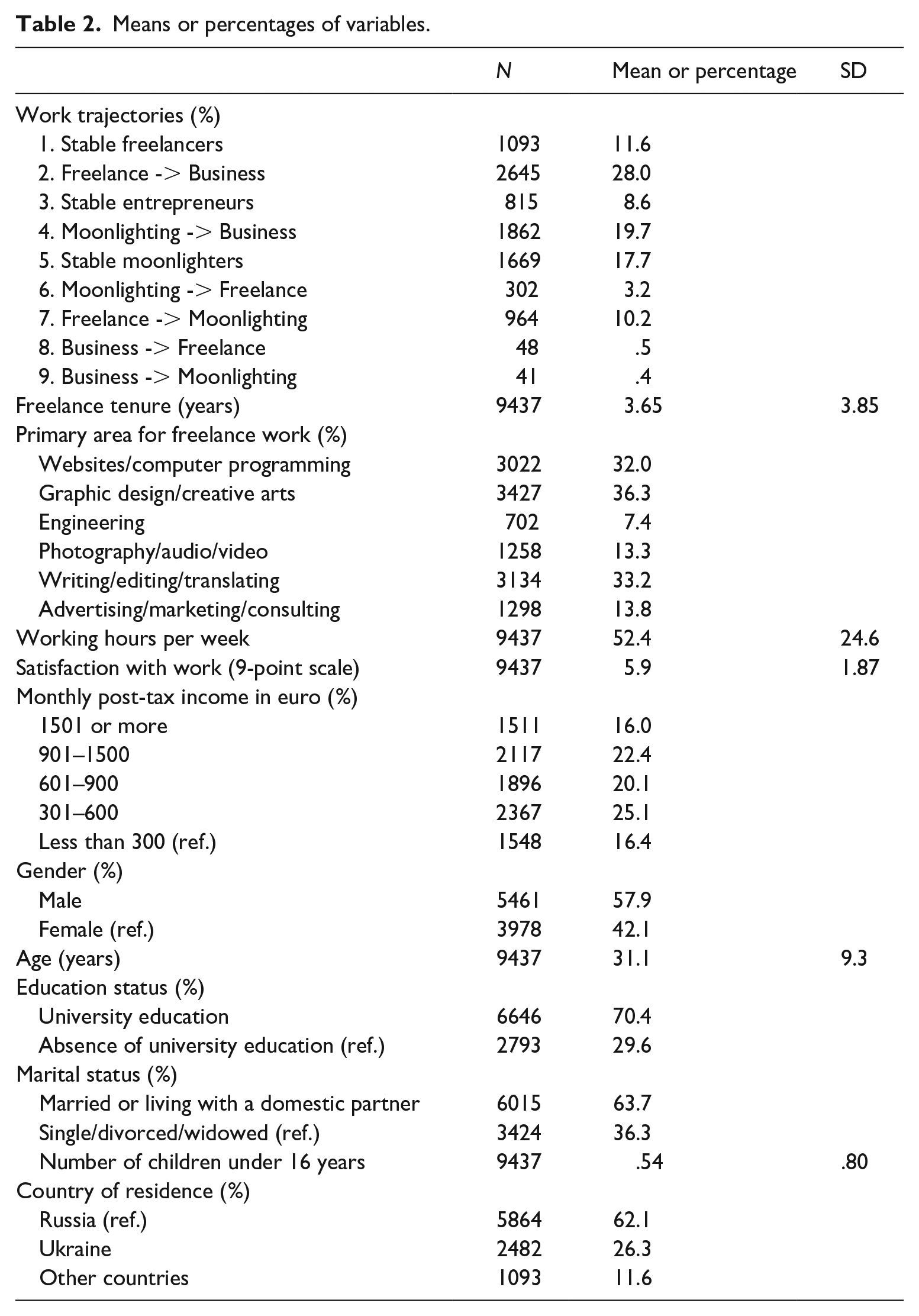
Among our respondents, 58% were male and 42% female (see Table 2). The average age of respondents was 31.1 years. Since participants in this study were engaged largely in high- and medium-skilled projects, 70% of them had a university degree. The respondents’ professional fields included graphic design and creative arts (36%), writing, editing, and translating (33), websites and computer programming (32), advertising, marketing, and consulting (14), photography, audio, and video (13), and engineering and manufacturing (7). Since online labor markets are transnational, the participants in this study represented more than 30 countries, the most prominent of which were Russia (62%), Ukraine (26%), Belarus (4.4%), Kazakhstan (2.1%), and Moldova (1.8%).
Definition and measurement of variables
Dependent variable
To construct career trajectories, we used two questions about an individual’s current and prospective employment situations:
Do you have another job besides freelancing? We distinguished three groups of respondents. First, ‘genuine freelancers’ are people for whom freelancing is a single source of income (50%). Second, ‘moonlighters’ are people who combine freelancing with working for an organization as employees (40%). Finally, ‘entrepreneurs’ are people who, besides freelancing, run their own business with hired employees (10%).
What do you plan to do in five years? Three main options were considered as future career strategies. Around 15% of respondents were going to be genuine freelancers while a quarter of respondents (27%) planned to moonlight, i.e., to combine freelancing with working in an organization as employees. 1 Finally, about 53% exhibited entrepreneurial intentions, planning to start their own businesses and withdraw from freelancing partially or completely. Respondents who said that they were not going to work at all (1.5%) or who had no answer to this question (3.6%) were excluded from the analysis.
Combining information about current and prospective employment situations, we constructed nine logically possible career trajectories. We distinguished between stable career trajectories and those where employment transitions were planned. Three core types comprised individuals who did not want to change their current employment statuses: stable freelancers, stable entrepreneurs, and stable moonlighters. The other six interjacent groups included respondents who were planning employment transitions in the near future. For instance, some moonlighters intended to quit their standard jobs and become genuine freelancers, while some genuine freelancers wanted to start their own businesses. The percentages of all work trajectories are presented in Table 2. We excluded from the regression analysis two of the nine trajectories that were extremely rare in our sample: people going to withdraw from their own business for genuine freelancing (0.5%) or an employee career (0.4%).
Independent variables
Work values were measured by the multiple-choice question identical to that from the World Values Survey (WVS): ‘Which of the following do you personally think are the most important aspects in a job?’ Respondents were urged to choose from among 12 items that covered a wide range of job characteristics. The items, numbers, and overall proportions selected by the respondents are shown in the first two columns of Table 1. To reduce the model’s dimensions and examine the factor structure underlying these work values items, a principal component analysis (PCA) with Varimax rotation was carried out. The Kaiser–Meyer–Olkin (KMO) measure was used to verify the sampling adequacy for the analysis (0.718). Communalities for individual items ranged from 0.51 to 0.90, supporting their retention in the analysis. Bartlett’s Test of Sphericity reached statistical significance (p < .001), supporting the factorability of the correlation matrix. 2
Percentages and factor loadings for work values (N = 9439).
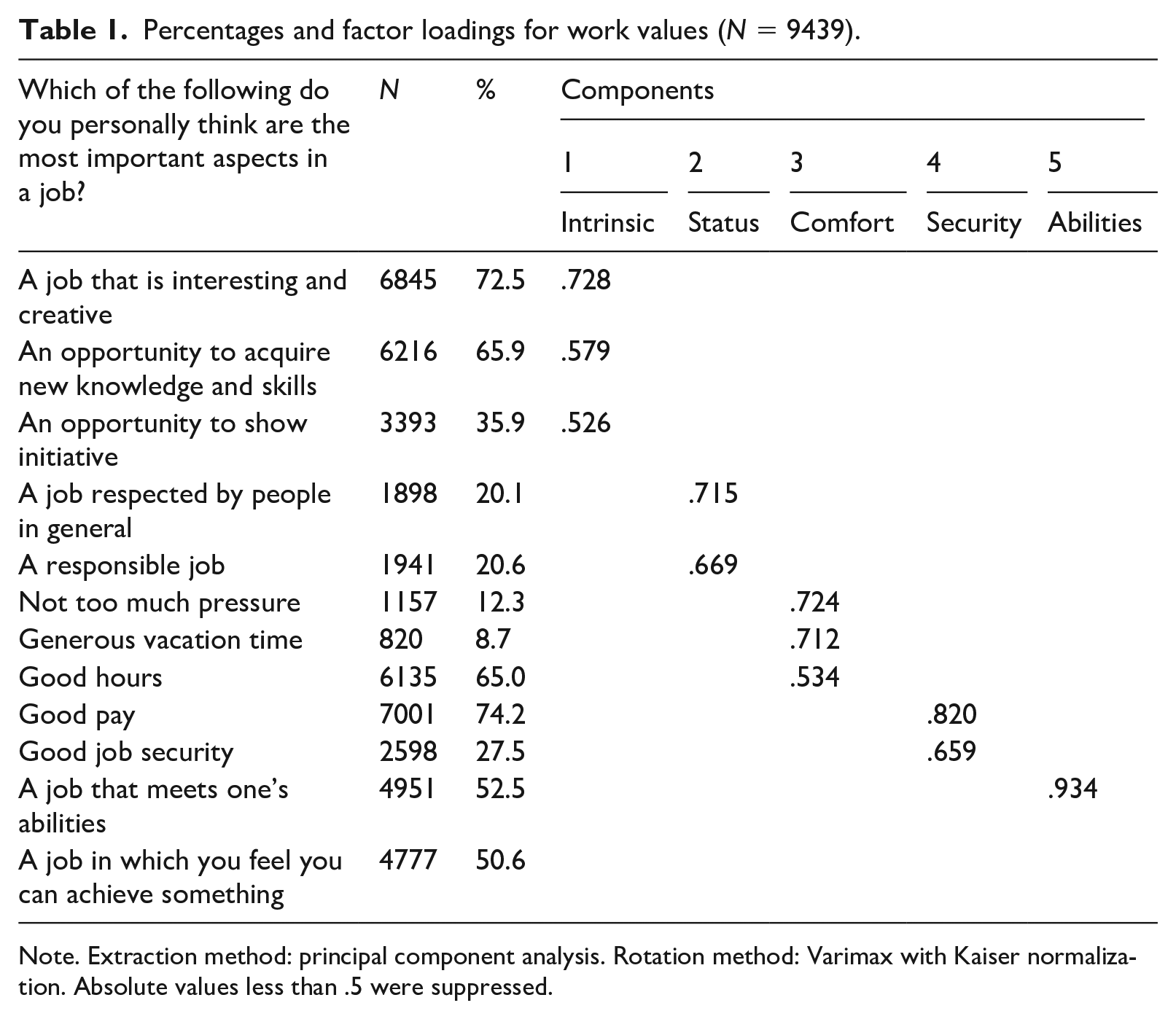
Note. Extraction method: principal component analysis. Rotation method: Varimax with Kaiser normalization. Absolute values less than .5 were suppressed.
Finally, five components representing the most important dimensions of work values structure were extracted and interpreted as (1) intrinsic, (2) status, (3) comfort, (4) security, and (5) job–abilities match (see factor loadings in Table 1). This five-factor solution provided the best fit according to the eigenvalue scree plot, the amount of variance accounted for (60%), and factor interpretability. Each factor in turn explained from 9.4% to 13.5% of the total variance. The factor decision is robust. Similar components were obtained in many previous studies. The intrinsic dimension comprised typical intrinsic work values such as an interesting and creative job, an opportunity to acquire new knowledge and skills, and initiative, although the job–abilities match forms a distinct factor. Status or the prestige dimension suggesting a comparison of the self with others in search of personal superiority included a respected and responsible job (Kalleberg and Marsden, 2013; Ros et al., 1999). We believe the intrinsic and status dimensions reveal two different conceptions of self-actualization and fulfillment in the world of work. The former stresses an inner focus and subjective success criteria, whereas the latter implies recognition in a wider social context. The comfort dimension suggested the limitation of work efforts (not too much pressure, convenient hours, and long vacations) and has often been referred to as convenience or leisure (Halman and Müller, 2006; Johnson, 2002; Kalleberg, 1977; Turunen, 2011; Twenge et al., 2010). However, following Gallie et al. (2012), we are inclined to treat this component as preferring a reasonable work–life balance. The security dimension included basic extrinsic values (good pay and job security) and has been reproduced in many studies (Kalleberg, 1977; Ros et al., 1999; Turunen, 2011). Although in this component ‘good pay’ had a higher loading than ‘job security’, we assumed that people preferred predictable material outcomes and a secure future.
Control variables
Control variables included the work and socio-demographic characteristics of the respondents. Among work characteristics, we considered freelance tenure, occupation (primary area for freelance work), number of working hours per week, satisfaction with work, and level of income. Freelance tenure was calculated from the item ‘In what year did you begin working as a freelancer?’ Occupations were defined using the multiple-choice question ‘Which of the following best describes your primary area for freelance work?’ as dummy variables (1) websites/computer programming; (2) graphic design/creative arts; (3) engineering; (4) photography/audio/video; (5) writing/editing/translating; and (6) advertising/marketing/consulting. Respondents were asked two questions about the hours worked on all jobs: ‘About how many days a week [hours a day] do you usually work? Please count not only freelance but also the other forms of paid activities, if there are any.’ We multiplied these figures and received the number of working hours per week as a continuous variable.
Satisfaction with work was measured with a question ‘Are you satisfied with your work in general?’ by means of a 9-point Likert scale. Higher scores indicated higher levels of satisfaction with work. Earnings were measured by a single item: ‘What was your total monthly post-tax income in the past year including freelance and all other paid activities?’ with five groups: (1) less than 300 euro; (2) 301–600 euro; (3) 601–900 euro; (4) 901–1500 euro; and (5) more than 1500 euro. The set of socio-demographic characteristics included gender, age, level of education, family status, number of children under 16 years, and region of residence. Means and standard deviations or percentages of control and independent variables are presented in Table 2.
Means or percentages of variables.
Analytic strategy
We used a multinomial logistic regression because the dependent variable was categorical. The .05 level of significance was selected to discuss significant relationships highlighted by significant models. All analyses were conducted using IBM SPSS Statistics 21.
Main results
We estimated the association of five work values components to membership in particular trajectory groups via a multinomial logistic regression. First, we compared stable freelancers and stable moonlighters with stable entrepreneurs (Model 1 and Model 4 in Table 3). Then, we compared those freelancers and moonlighters who were going to be entrepreneurs in five years with stable entrepreneurs (Model 2 and Model 3 in Table 3). This comparison led us to several important conclusions.
Multinomial regression results with ‘stable entrepreneurs’ as the reference category.
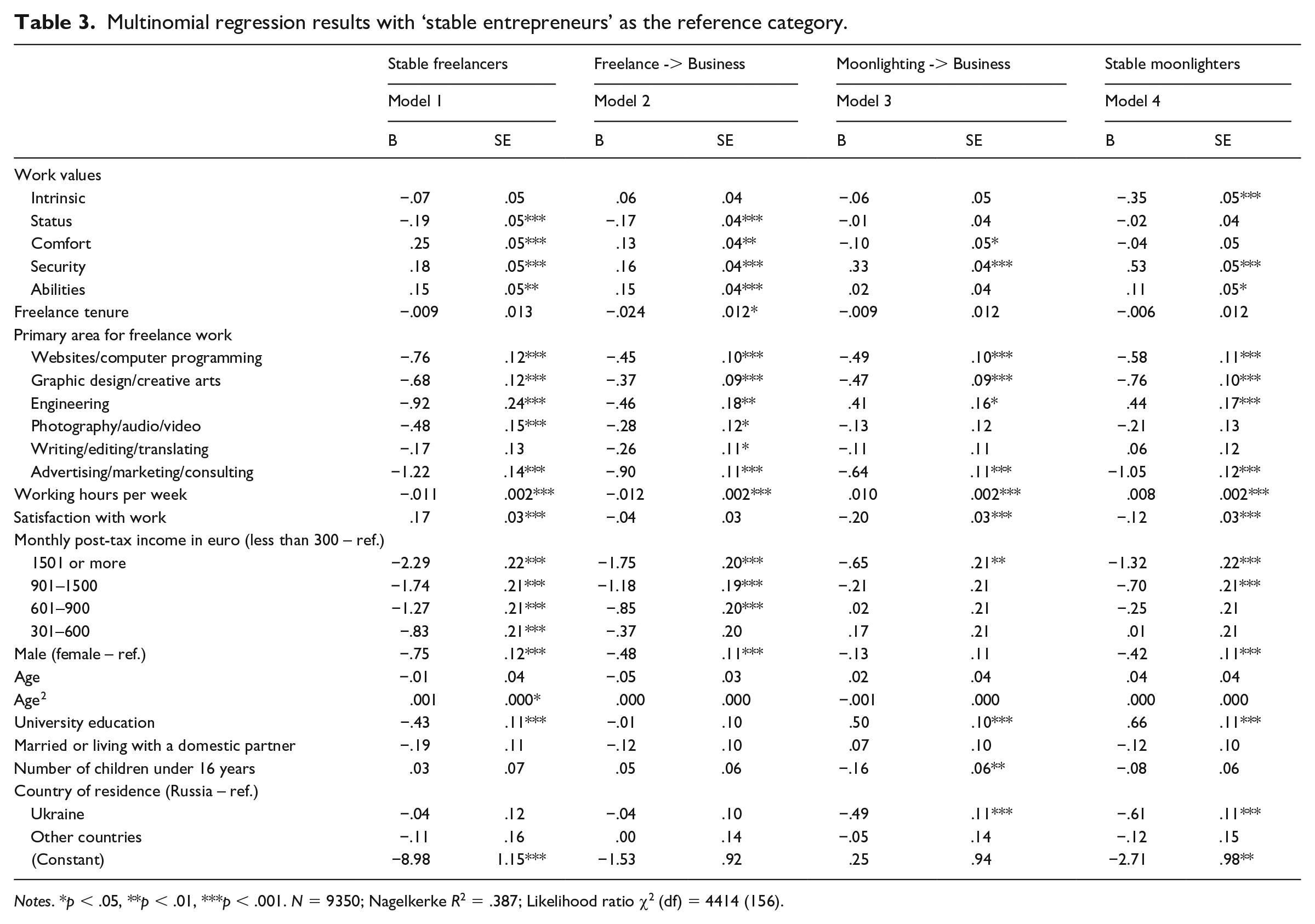
Notes. *p < .05, **p < .01, ***p < .001. N = 9350; Nagelkerke R2 = .387; Likelihood ratio χ2 (df) = 4414 (156).
Persons with poorly expressed intrinsic values are more likely to be stable moonlighters. On the other hand, there is no significant difference between stable freelancers and stable entrepreneurs in their focus on intrinsic self-actualization and fulfillment. It is noteworthy that moonlighters who are going to be entrepreneurs in the future have the same level of intrinsic values as their ‘target group’.
Persons with poorly expressed status or prestige values are more likely to be stable freelancers. Conversely, both stable moonlighters and stable entrepreneurs are very similar in their preferences for a respected and responsible job. Moreover, freelancers who declare their entrepreneurial intentions show insufficient demand for status and are more similar to their ‘original group’.
Persons with a high preference for work comfort are more likely to be stable freelancers. Other conditions being equal, they put more value on good hours, generous vacation time, and not too much pressure at work. There are no significant differences in this indicator between stable moonlighters and entrepreneurs. Two interjacent groups show more tolerance for hard work than the ‘original groups’. Freelancers with entrepreneurial intentions are approximately in the middle between stable freelancers and stable entrepreneurs, while moonlighters with entrepreneurial intentions are ready to work even more intensively than stable entrepreneurs.
Persons with highly expressed security values are more likely to be stable moonlighters. Good pay and job security are of high priority to them. On the other hand, among entrepreneurs, this value is the least pronounced. Stable freelancers take an intermediate position. There are significant differences for this indicator between all three stable career trajectories. It is interesting to note that moonlighters with entrepreneurial intentions have significantly less preference for security than stable moonlighters but still more than stable freelancers and much more than their ‘target group’ of stable entrepreneurs. Freelancers with entrepreneurial intentions do not differ from stable freelancers in this component.
The odds of being an entrepreneur decrease significantly if one prefers to have a job that meets one’s abilities. Conversely, both stable freelancers and stable moonlighters consider this item as being very important. There are no statistically significant differences between them. Freelancers with entrepreneurial intentions do not differ from stable freelancers in this component. Moonlighters thinking about starting their own business are very close to stable entrepreneurs and differ significantly from their ‘original group’.
Thus, stable freelancers and stable entrepreneurs are very similar in terms of intrinsic and security dimensions and differ significantly from stable moonlighters (see Figure 1). On the other hand, in terms of status and the comfort dimension, stable entrepreneurs are closer to stable moonlighters and differ significantly from stable freelancers. Two interjacent groups with entrepreneurial intentions are very different when compared to their ‘target group’ of stable entrepreneurs. Freelancers with entrepreneurial intentions still differ significantly from stable entrepreneurs in four out of five value dimensions (the only exception is intrinsic values). Moonlighters with entrepreneurial intentions are very close to stable entrepreneurs, and even surpass them in their readiness to work hard. However, moonlighters with entrepreneurial intentions still appreciate job security very much. It is reasonable to assume that the two interjacent groups with entrepreneurial intentions will face different challenges in achieving their goals.
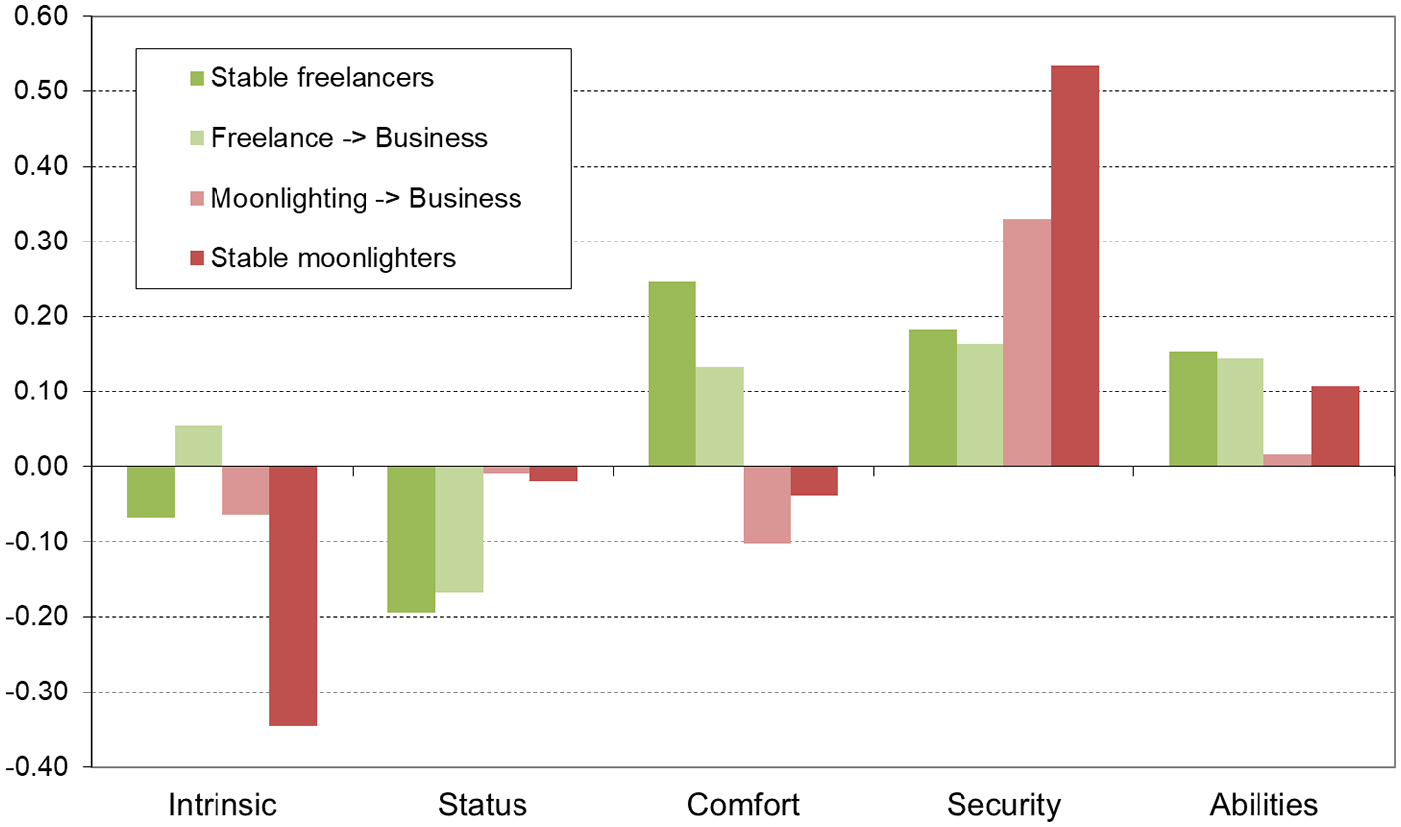
Regression results with ‘stable entrepreneurs’ as the reference category.
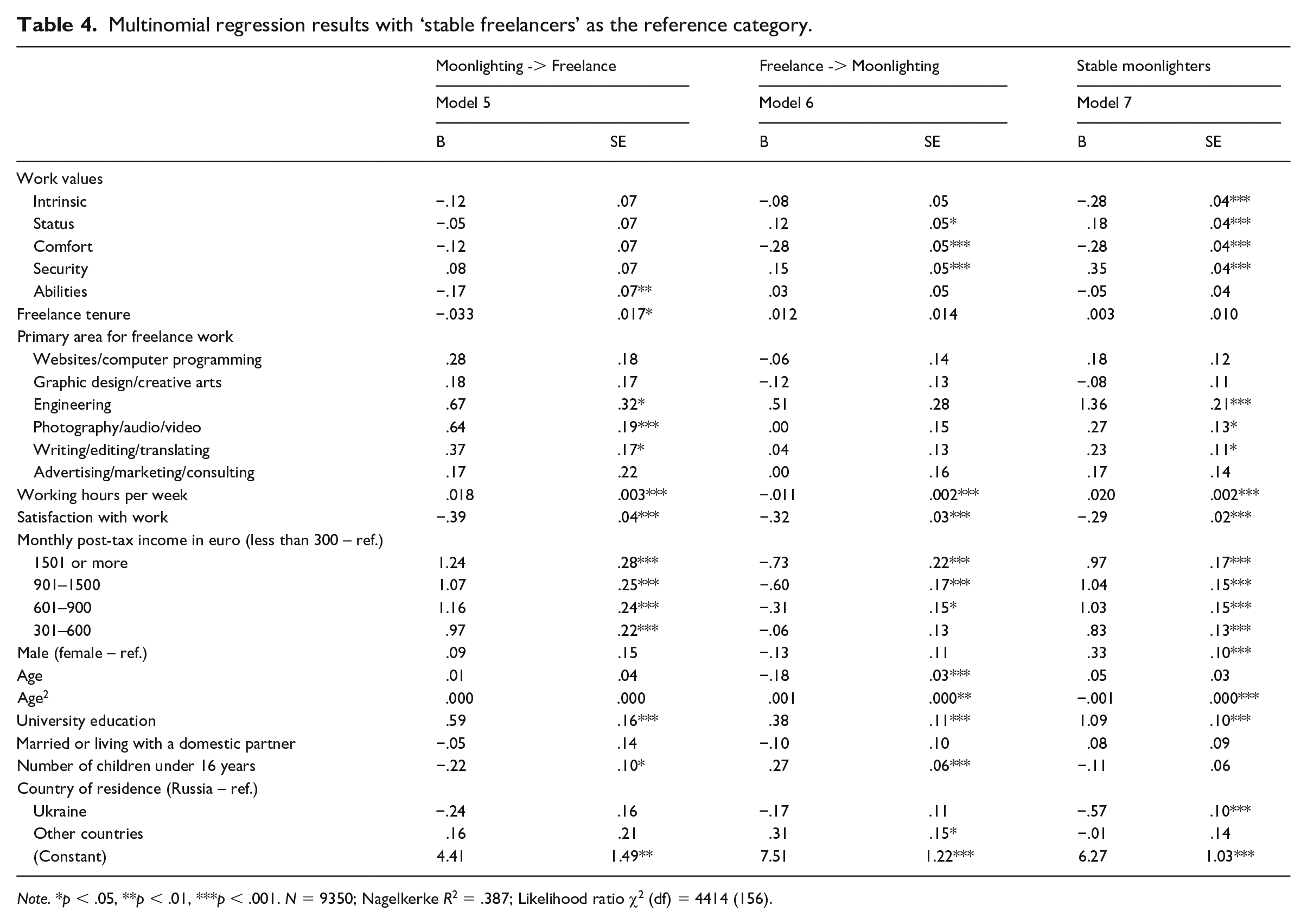
We have analyzed five out of seven career trajectories. To examine the two remaining interjacent trajectories (Moonlighting -> Freelance, Freelance -> Moonlighting), we compared them with stable freelancers (Model 5 and Model 6 in Table 4). To emphasize the differences, regression results for stable moonlighters have also been added to Table 4 (Model 7).
Multinomial regression results with ‘stable freelancers’ as the reference category.
Note. *p < .05, **p < .01, ***p < .001. N = 9350; Nagelkerke R2 = .387; Likelihood ratio χ2 (df) = 4414 (156).
Among both interjacent groups, the intrinsic values were less pronounced than among stable freelancers (however, these differences are not statistically significant). Both interjacent groups differ greatly from the group of stable moonlighters characterized by the lowest expression of intrinsic values. On this dimension, individuals willing to change their status in one or the other direction are much closer to stable freelancers than to moonlighters.
Both interjacent groups have approximately the same level of status and prestige values as their ‘target groups’. People willing to withdraw from freelancing to moonlighting do not differ from their ‘target group’ of stable moonlighters. Likewise, people planning the transition from moonlighting to freelancing do not differ from their ‘target group’ of stable freelancers.
A similar pattern was observed in the case of comfort values. Freelancers willing to become moonlighters do not appreciate much comfort, similar to stable moonlighters. Moonlighters willing to become genuine freelancers take an intermediate position and differ significantly both from the ‘target’ and ‘original’ groups.
In terms of the security dimension, the two interjacent groups took an intermediate position; however the difference between moonlighters going to become genuine freelancers and stable freelancers is not statistically significant.
In terms of the job–abilities match, there are no significant differences between stable freelancers, stable moonlighters, and freelancers willing to become moonlighters. Unexpectedly and counterintuitively, moonlighters going to become genuine freelancers have the lowest preference for this item.
Thus, both interjacent groups (Moonlighting -> Freelance, Freelance -> Moonlighting) take an intermediate position between stable freelancers and stable moonlighters with a tendency to be closer to their ‘target’ group than to the ‘original’ group (see Figure 2). Similar to stable freelancers, moonlighters planning to become genuine freelancers in five years appreciate intrinsic and comfort values and do not appreciate status and security values. Freelancers planning the transition to moonlighting, like stable moonlighters, show a preference for status and do not appreciate comfort. However, unlike stable moonlighters, they pay more attention to intrinsic values and are not so interested in job security.
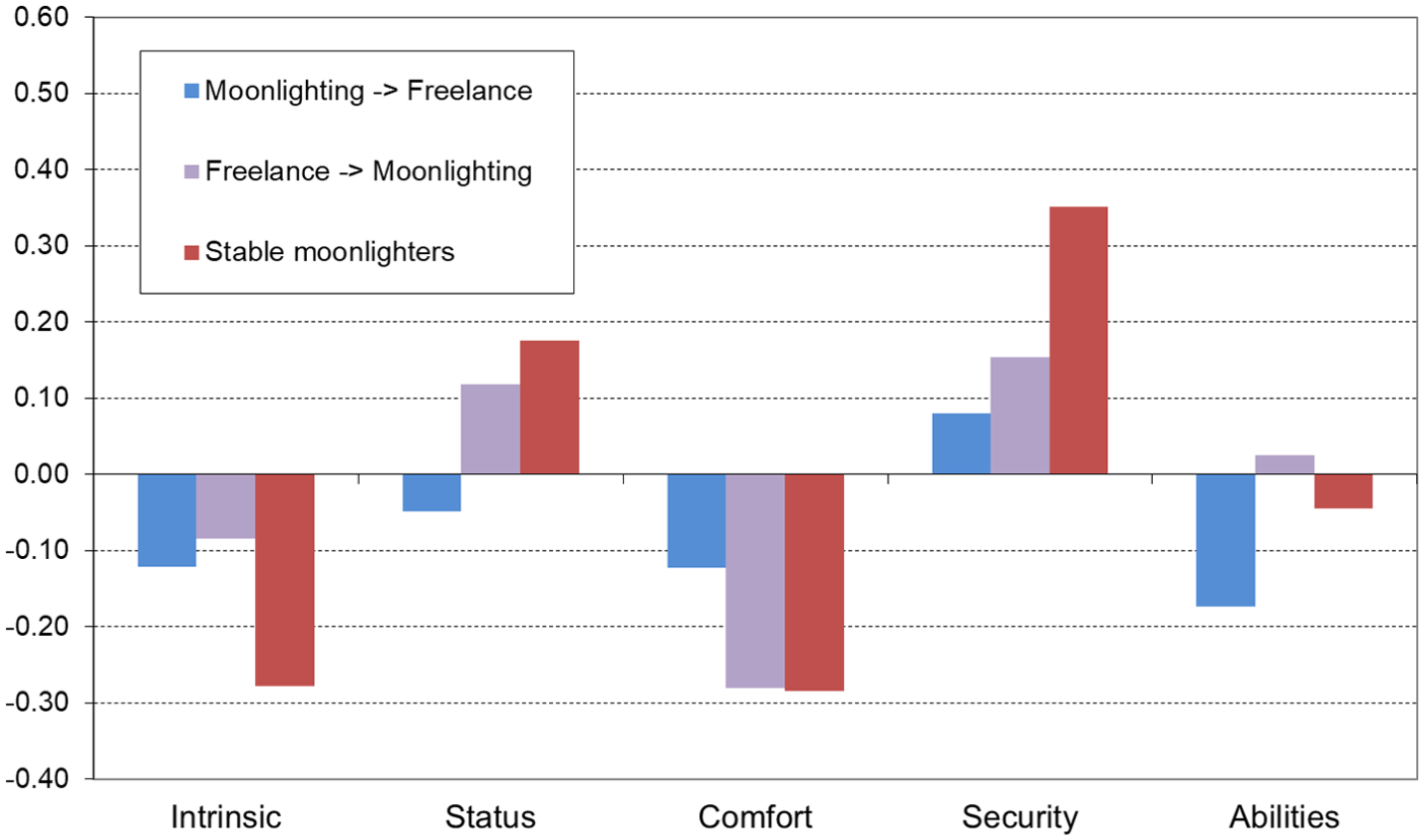
Regression results with ‘stable freelancers’ as the reference category.
Among the control variables, satisfaction with work is of particular interest. The findings reveal that stable career trajectories are associated with greater work satisfaction than interjacent groups. The only exception includes freelancers with entrepreneurial intentions, who are more satisfied than stable moonlighters but less satisfied than stable entrepreneurs and stable freelancers.
Discussion and conclusion
Proponents of the gig economy speculate in a lively manner about the ‘free agency’, whereas critical studies strive to uncover the dark sides and precariousness of short-term on-demand work. This study illuminated a more nuanced and empirically based picture of divergent self-employed careers in the gig economy as represented by freelancers working remotely through an online platform. Besides ‘genuine freelancers’, who are primarily own-account workers, we examine ‘hybrid self-employment’ (or ‘hybrid self-employed careers’), often neglected in the literature, when an individual simultaneously holds two jobs of different employment types. For this purpose, we distinguished between ‘moonlighters’, who freelance while retaining a ‘day job’ in an organization, and ‘entrepreneurs’, who start a business with hired employees while remaining engaged as a freelance worker.
In contrast to rather vague speculations about gig economy workers’ motives and reasons, we relied on a theoretical framework well-established in sociology and social psychology. We utilized a notion of work values as motivational goals and the idea of worker–job fit to shed light on how individual ‘conceptions of desirable’ matter in the gig economy. We argued that particular types of employment provide more opportunities for a successful realization of some work values than others and that people tend to self-select into the types of jobs with preferred characteristics. Then people with a good values–job match would like to retain their jobs while mismatched workers would be dissatisfied and may look for more appropriate jobs. We concluded that the work values of those people who want to retain their jobs may better reflect the congruence between particular work values and types of employment.
In our study, we found an association between work values and career trajectories, constructed as a combination of current and prospective employment situations. People with three stable career trajectories who do not want to change their employment status (stable freelancers, stable moonlighters, and stable entrepreneurs) have distinct sets of work values reflecting the opportunities and constraints in getting particular work rewards. In contrast to stable moonlighters, stable freelancers and stable entrepreneurs are similar in their relative preference for intrinsic values and ignoring security values. In contrast to stable freelancers, stable entrepreneurs and stable moonlighters value social recognition but do not seek a comfortable job. In contrast to stable entrepreneurs, stable freelancers and stable moonlighters prefer a job that meets their abilities. Transitory work trajectories implying a prospective change in employment situation are typically associated with transitory sets of work values lying between the values of the initial and target group. For instance, moonlighters going to start their own business express intrinsic self-realization values which are unimportant for the initial group of stable moonlighters, but are essential for the target group of stable entrepreneurs. 3 We conclude that in this study individual work values are strongly associated with a worker’s employment situation and career plans.
These results have important implications for a better understanding of heterogeneous and hybrid careers in the gig economy. Although volatile market conditions and powerful structural factors constrain individual choices, workers’ preferences should not be ignored. Work values are an important factor determining the particular forms of participation in the gig economy and mobility in the labor market. In our study, work values predicted whether an individual would choose to work as a genuine freelancer, moonlighter, or entrepreneur. Alternatively, we revealed the distinct work values profiles of different types of workers in the gig economy. These findings help to reflect on extant theoretical perspectives in studies of the gig economy. The values profile of stable freelancers is consistent with the vision of ‘free agents’ as people who rely on subjective criteria of success and leave corporate hierarchies to engage in interesting work while promoting the desired lifestyle (Pink, 2001). The values profile of stable entrepreneurs illuminates the popular image of the entrepreneur as a creative, achieving person who is tolerant of uncertainty and who attains higher social status (Shane et al., 2003). Finally, the values profile of stable moonlighters resembles the figure of a traditional employee who finds a second job to make a living or boost their income. These people rather represent industrious laborers than an entrepreneurial workforce.
We argue that this study contributes not only to gig economy debates but also benefits general scholarship on the relationship between work values and jobs. First, using a large sample from the gig economy provides opportunities for a more nuanced and detailed analysis of those groups of workers that are typically underrepresented in national representative samples. Second, we cover hybrid employment situations and mixed identities, which are virtually ignored in the work values literature. Third, although we only studied workers involved in self-employment, our findings may shed light on the general differences between own-account workers (solo self-employed), employees, and entrepreneurs. In our sample, people with hybrid work situations (dual jobs) can be viewed either as freelancers or according to their second work status as employees or entrepreneurs. It is up to the specific research focus to decide whether the glass is half full or half empty. From the half-full position, we can claim that the stable entrepreneurs and stable moonlighters in our study bear the qualities of traditional entrepreneurs and employees. Indeed, we found that workers only partly involved in wage-earning organizational employment or running their own small businesses rely on different sets of work values than genuine freelancers. 4 We propose that future research replicates our methodology to test the association between work values and principal employment statuses in representative samples.
Our approach may also help to test the future socio-economic attainments of people willing to change their employment situation. We hypothesize that the odds of a real change in employment status are greater if the current work values of an individual are closer to the values of the target group. Similarly, we assume that people have more chances of socio-economic success the closer their work values are to the target group. These hypotheses can be tested using a longitudinal research design.
Limitations
Some limitations of our study should be noted. First, we used a single choice question about career intentions, while people may consider multiple future directions. Second, the share of respondents who consider switching to standard employment was very small to include in the regression models, which limits substantially our analysis of the career trajectories.
Third, the cross-sectional design prevents us from claiming strong causality. The problem of possible endogeneity is a serious issue for studies of this kind. We suggest that the association between work values and career trajectories, constructed as a combination of current employment situations and career plans, results from people selecting particular jobs that match their work values. However, we recognize it is plausible that causality could partially run in the opposite direction. The potential for adaptive preference formation is a well-known problem when looking at subjective appraisals of jobs (Burchell et al., 2013: 465). People often redefine their preferences by following what they expect the outcome to be. For instance, freelancers might value security less than moonlighters as they have justified their lack of security to themselves to reduce cognitive dissonance. It is also possible that things like the preference for income security would seem to be heavily linked to whether one is responsible for providing for a family at the moment. Nevertheless, we believe that the inclusion of future career intentions as key elements in work trajectories in our analysis partially removes this problem. Since the human action is aimed at the future, we assume that it is the current work values that determine the expected and desired status of employment, and not vice versa. Therefore, we conclude that if there is a disjuncture between work values and actual working conditions one can suggest that workers have not simply adapted their values to fit their circumstances. On the contrary, they act (or at least wish to act) in accordance with their values.
Fourth, the study dealt with a distinct segment as represented by skilled freelance work and only one platform in Eastern Europe. However, many of our respondents worked for several platforms simultaneously and came from more than 30 countries. The overwhelming majority of our respondents resided in Russia and other countries that used to be parts of the former Soviet Union. Although the Soviet Union was dissolved 30 years ago, the population in these countries typically grew up on the same work values, which differ significantly from those in established market economies. However, in this study, our focus was on how the work values of freelancers with different employment situations vary within the sample. We encourage further investigation of various segments of the gig economy in different parts of the world.
Footnotes
Declaration of conflicting interests
The authors declared no potential conflicts of interest with respect to the research, authorship, and/or publication of this article.
Funding
The authors disclosed receipt of the following financial support for the research, authorship, and/or publication of this article: This research was supported by the Basic Research Program of the National Research University Higher School of Economics (HSE University) for the first and the second author is gratefully acknowledged.
