




Abstract
Ground source heat pumps (GSHPs) are increasingly used in cold-climate retrofits of multi-apartment buildings (MABs), yet empirical knowledge of their design and sizing remains limited. This study presents an exploratory analysis of a national survey of Finnish GSHP contractors, examining system design, sizing, configuration, and controllability in MAB retrofits. Respondents (n = 7) were categorised by experience level and together reported 605 projects, covering about 21% of the Finnish GSHP-equipped MAB stock, although the distribution was markedly uneven. Results show that GSHPs were typically sized to cover 75–85% of peak heating demand, with backup and top-up heating almost exclusively electric. The electrical grid connection was increased in 70% of these projects, although earlier studies based on historical consumption data suggest that the need for such enlargements is uncertain. Control functionalities based on electricity use or power demand appeared in fewer than 10% of systems. Despite broadly similar design outcomes, calculation tools, input data, and sizing rationales varied widely between contractors, reflecting the absence of shared standards and the predominance of investment-cost considerations. Findings highlight a gap between modelling-based optimisation and contractor practice and indicate directions for more consistent design guidance and assessment of grid-level impacts of GSHP retrofits in cold-climate MABs.
Practical application
This exploratory survey clarifies how GSHP retrofits in Finnish MABs are typically designed and sized. GSHPs were most often sized for partial capacity (75–85% of peak heating demand), while systems generally rely on electric backup and top-up heating. Grid connections were frequently enlarged, although earlier studies based on historical consumption data suggest that the need for such upgrades is uncertain. Control functionalities based on electricity use or power demand were present in fewer than 10% of systems. These findings help designers and contractors refine sizing ratios and grid-connection design, and they provide baseline data for researchers and guideline developers.
Keywords
Introduction
Heat pumps are increasingly recognised as a central technology in the global transition to sustainable heating. 1 Within this broader group, ground source heat pumps (GSHPs) are particularly relevant in cold-climate countries, where they perform especially well due to stable ground temperatures. 2 They offer a means to reduce reliance on fossil fuels and district heating (DH) networks while enabling more distributed and renewable-based heating solutions. In Finland, a growing number of multi-apartment buildings (MABs) have been retrofitted with GSHP systems, typically designed and delivered by specialised GSHP contractors, often replacing the most common heating method, DH.3,4 Unlike in many other countries, GSHP systems in Finland are generally designed to provide both space heating and domestic hot water (DHW). According to national statistics, by the end of 2024, there were 2845 MABs equipped with GSHP, corresponding to approximately 4.2% of the entire MAB stock. 5 This trend reflects not only policy ambitions, such as Finland’s national carbon neutrality target for 2035, 6 but also the growing maturity of GSHP technology and contractors’ capacity to design and deliver large-scale retrofits.
A typical GSHP retrofit in an MAB includes a borehole field, one or more heat pumps, integration with the existing heating system, a control system, thermal storage tanks for space heating and DHW, and an auxiliary heat source when required. Compared with smaller buildings, MAB retrofits face greater technical challenges, including larger and more variable heating loads and limited plot space for boreholes.7–10 Some practical challenges, such as limited technical space for equipment within existing buildings, remain underexplored in the literature.
Beyond these technical factors, retrofits are embedded in regulatory, institutional, and socio-technical contexts. In Finland, GSHPs are technically feasible alternatives to DH, but the dominance of DH has been supported by institutional lock-ins and market structures, making their coexistence politically contested.4,11 In particular, GSHP investments compete with DH on profitability grounds, as owners’ return expectations and DH pricing methodologies shape the attractiveness of different options. 11 For example, hybrid heating customers may not be explicitly addressed in DH pricing schemes. 11 These aspects underline that contractor-level decision-making takes place within broader institutional and economic constraints, not only technical ones. Contractor practices are also shaped by commercial incentives, which may affect how much effort is invested in systematic design and integration at the proposal stage; however, empirical evidence on these practices in MAB GSHP retrofits remains scarce.
GSHPs are characterised by high and stable efficiency across the year, with only marginal performance losses during cold periods. From a power demand perspective, however, system sizing is one of the most critical factors in MAB retrofits. Heat pumps can be designed either as full-capacity systems, covering the entire peak heating demand, or as partial-capacity systems, covering only a portion of it. An optimisation study from Canada suggested that the cost-optimal GSHP share of peak heating demand lies between 25 and 66%, 12 while a study from China identified a clear optimum of around 60%. 13 Finnish studies have also quantified optimal sizing. One optimisation analysis found the cost-optimal share to be 28%. 14 Another Finnish study found the most profitable HP sizes to be 30–44% of peak heating demand, still covering approximately 93–97% of annual heating energy, with a 50% share covering on average about 98%. 11 Importantly, the reported optimal rates vary depending on building type, boundary conditions and the availability of auxiliary heat, underlining that sizing cannot be generalised across all contexts. In addition, these optimisation studies assess cost-optimal sizing from the building-level perspective, focusing on life cycle or investment cost minimisation rather than system-wide or network-level impacts. In practice, however, according to Motiva – the Finnish state-owned expert organisation on energy and sustainable development – GSHPs in MABs are typically sized to cover 60–80% of peak heating demand, which corresponds to roughly 95–99% of annual heating energy. 15 In such designs, back up and/or top-up heating is usually supplied by electric heaters or DH to cover the remaining demand. Comparable practical benchmarks have been established in Sweden and Canada, where a 70% power coverage is commonly used as a design guideline, and this level typically results in more than 90–95% of the annual heating energy being supplied by the GSHP.12,16
When replacing non-electric heating systems such as DH with GSHPs, the hourly average maximum power of MABs may increase markedly. In a previous Finnish case study, 17 the increase ranged from 17 to 255%, while Hirvonen et al. 18 reported 46–153% in their modelling study of Finnish MAB renovations. Similar concerns have been raised in residential-sector and distribution-network analyses, where large-scale adoption of partial-capacity GSHP systems with electric top-up heaters markedly increased transformer peak loads, 19 and where distribution system operators (DSOs) have highlighted that such systems may cause short-term winter peaks that strain power grid capacity. 20 In cold climates, sizing decisions therefore affect not only building-level energy efficiency but also grid-level performance. Peak-demand can increase either on the electricity system when top-up heating is electric,17–20 or on the district-heating network when top-up is supplied by DH. 21 Consequently, optimal sizing represents a trade-off between investment cost, life-cycle performance, and resilience to power-demand fluctuations.11,18,22
Recent studies have shown that time-varying and spot-based electricity tariffs can incentivise flexible operation of heat pumps and thermal storages, with potential cost savings and increased utilisation of thermal storage.23,24 However, the impacts are highly dependent on building efficiency, tariff structure and control strategy: while some studies highlight added value and savings, others show that flexibility can increase energy use or shift rather than reduce peak loads.23,24 At the system level, modelling studies have further shown that decentralised heat-pump flexibility can lower overall electricity-system costs, emissions, and renewable curtailment. 25 At a smaller scale, coordinated electricity-market participation of aggregated GSHP systems can reduce operational costs and enhance their provision of flexibility services to the electricity system. 26
From a regulatory perspective, EU legislation requires distribution tariffs to be cost-reflective and to provide incentives for flexibility through power-based structures. 27 In Finland, the Act amending the Electricity Market Act (201/2025), which entered into force on 1 July 2025, enables the introduction of power-based distribution tariffs. 28 Harmonisation work led by the national regulator is ongoing to standardise tariff design across DSOs. 29 At the EU level, the Electricity Balancing Guideline requires all Member States to move to a 15-min imbalance settlement period by 2025, which further increases the importance of controllability and demand flexibility. 30
For building owners, controllability and system integration are essential not only to maintain indoor comfort and ensure sufficient DHW supply, but also from an economic perspective, since the ability to adapt to tariff structures and dynamic pricing directly shapes operating costs.31,32 Advanced control approaches, including AI-based and model-predictive control, have shown that optimised operation can reduce costs, improve energy efficiency, and enable load shifting, particularly when integrated with thermal storage. 33 At a broader scale, aggregated residential GSHP loads in a community of houses, coordinated by a load aggregator, can achieve additional economic benefits through electricity-market participation. 26 In large-scale GSHP systems, rigorous monitoring, data validation and reconciliation are required to ensure that design intentions are met and that controllability and performance can be verified in practice. 34 These considerations highlight that design choices – sizing, configuration, backup and/or top-up heating solutions, controllability, and storage – are consequential at both building and system levels, yet empirical evidence on contractors’ actual design practices remains limited.
In Finland, research on GSHPs has so far concentrated on techno-economic feasibility, modelling-based optimisation, and case-specific analyses.11,14,17–22,35 Simulation-based studies have examined GSHP system integration and performance in Finnish MABs 18 and cost-optimal sizing in other building types such as daycare facilities. 14 The analyses have included radiator-based systems and, in some cases, combined GSHPs with exhaust-air heat recovery (EAHR), wastewater heat recovery and solar thermal collectors to assess their effects on annual energy and hourly power demand. Other Finnish work has explored GSHP systems peak-power impacts at both building and grid levels17,19,20 and cost-effective control strategies for GSHP–DH coupling, 21 while empirical studies have documented realised GSHP projects combined with EAHR. 35 Internationally, similar themes recur, including optimisation frameworks and system-design studies7,12,13,16,36 and comprehensive reviews of GSHP development in cold climates. 2 In addition, GSHPs have also been explored in combination with solar thermal and other renewables,8–10 alongside long-term monitoring in case studies such as Backadalen in Sweden 37 and the Aalto University Campus Complex (ANCC) in Finland. 34 However, these studies concentrate on technical feasibility and operational outcomes rather than on how systems were initially designed and implemented. Consequently, little empirical knowledge exists on actual contractor practices in system sizing, system configuration, backup and/or top-up heating solutions, storage tanks, controllability, or the role of heat recovery, either in Finland or internationally.
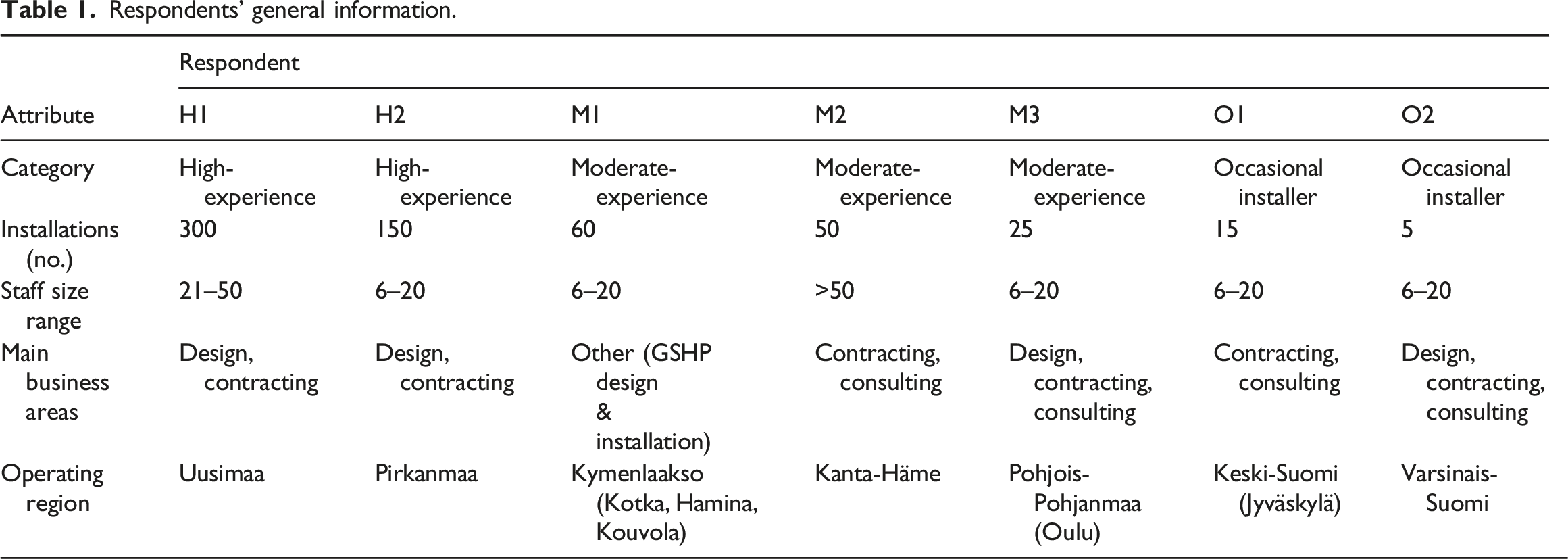
This study addresses the research gap by analysing results from a national survey of GSHP contractors active in Finnish MAB retrofits. The survey included 42 questions covering system sizing, design tools, system configuration, backup and/or top-up heating systems, storage tanks, controllability, demand response capabilities and heat recovery. Respondents were categorised into high-experience contractors (H), moderate-experience contractors (M), and occasional installers (O), based on the number of completed projects, irrespective of company size. Although only seven contractors responded, they collectively covered 21% of the Finnish GSHP-equipped MAB stock (n = 605). This coverage, though unevenly distributed between respondents, provides an empirical window into actual design practices.
In summary, this article provides rare empirical insights on how GSHP systems are designed and dimensioned in Finnish MAB retrofits. These findings contribute to understanding the diversity of current contractor practices, the rationales behind them, and their potential consequences for building performance and the energy system. The results also provide valuable insights for future GSHP system modelling and for assessing energy and grid impacts in cold-climate MABs. In addition, the survey makes it possible to examine similarities and differences both within and between contractor groups, offering insight into the absence of standardised design guidelines in the industry.
Methodology
Survey preparation
The survey was designed to capture contractor-level data on GSHP retrofit practices in Finnish MABs, including the number of completed projects, partial-capacity design ratios, and specific design choices. Survey development began in early 2025 and was informed by consultations with major heat-pump suppliers and consultants, who identified a targeted contractor survey as the most effective way to gather information on GSHP system sizing, design and implementation. The first draft was prepared as a Microsoft Word document and reviewed iteratively by six experts. None of the experts involved in the review process participated in responding to the survey itself.
First, feedback from a senior industry expert led to additional questions and reorganisation into thematic clusters. Second, a senior technical expert refined question clarity and technical precision. Third, a representative of the Finnish Heat Pump Association added forward-looking items on refrigerant transitions and corrected certain technology labels. Finally, a building-services design specialist standardised the technical terminology, and a junior expert reviewed the final version to confirm overall clarity and internal consistency.
The final version was implemented and distributed using the LimeSurvey online platform hosted by Tampere University of Applied Sciences. The survey was pilot-tested three times by the reviewing experts to ensure usability. Final adjustments were made after a one-hour joint review session with the last expert, an MAB GSHP system contractor, during which the entire online survey was tested and discussed for usability and clarity. Minor revisions were made following this session, including the removal of two non-essential questions.
The completed survey comprised 42 questions grouped into six thematic sections: (1) General information (A1–A2) (2) GSHP retrofit statistics (B1–B3) (3) GSHP sizing (C1–C12) (4) Details of sizing (D1–D13) (5) Electrical capacity and controllability (E1–E10) (6) Future developments in GSHP technology (F1–F2)
The classification into these six thematic sections was refined during the expert consultation process to align with the study’s analytical aims. Each section addresses a distinct dimension relevant to understanding contractor-level GSHP practices, including background context, market coverage, sizing approaches, electrical implications, and forward-looking perspectives. The ordering of questions prioritised data critical to the research objectives and respondent completion, rather than representing any operational or project-based sequence. Question types included closed-ended multiple-choice items with optional comments, percentage-range and numerical fields, and open-ended responses for qualitative input. Both mandatory and voluntary questions were used. The complete Finnish-language version of the survey is provided in printable format in the supplemental materials.
The survey was distributed by email on 6 May 2025 to 210 contractors identified from the public partner and reseller lists of major heat-pump manufacturers. Contractors were included if they had listed themselves as installers of large-building or property-scale GSHP systems. Two reminders were sent in mid-May and early June. However, it was not known in advance whether these contractors were active in MAB retrofits. The survey closed on 8 June 2025. All responses were collected anonymously, and the survey did not gather any identifying information about contractors or individual projects.
Survey results and descriptive analysis
Respondents were categorised as high-experience contractors (H), moderate-experience contractors (M), or occasional installers (O) based on the number of completed GSHP retrofit projects in MABs. This categorisation was applied consistently throughout the analysis. Depending on the question, data were analysed using descriptive statistics, with weighted averages calculated according to the number of reported projects so that contractors with larger portfolios had greater influence on the results, while respondent-level values were also examined for comparison. Qualitative items were interpreted thematically. Quantitative responses were presented as frequency distributions and weighted shares, while open-ended questions were synthesised to highlight recurring themes and contrasts between contractor groups. All open-ended comments were translated verbatim from Finnish to English to retain nuance and context. Given the small number of respondents and the uneven distribution between categories, results were interpreted cautiously, and the exploratory nature of the study was emphasised.
Results
General information and GSHP retrofit statistics (A1–B3)
Respondents’ general information.
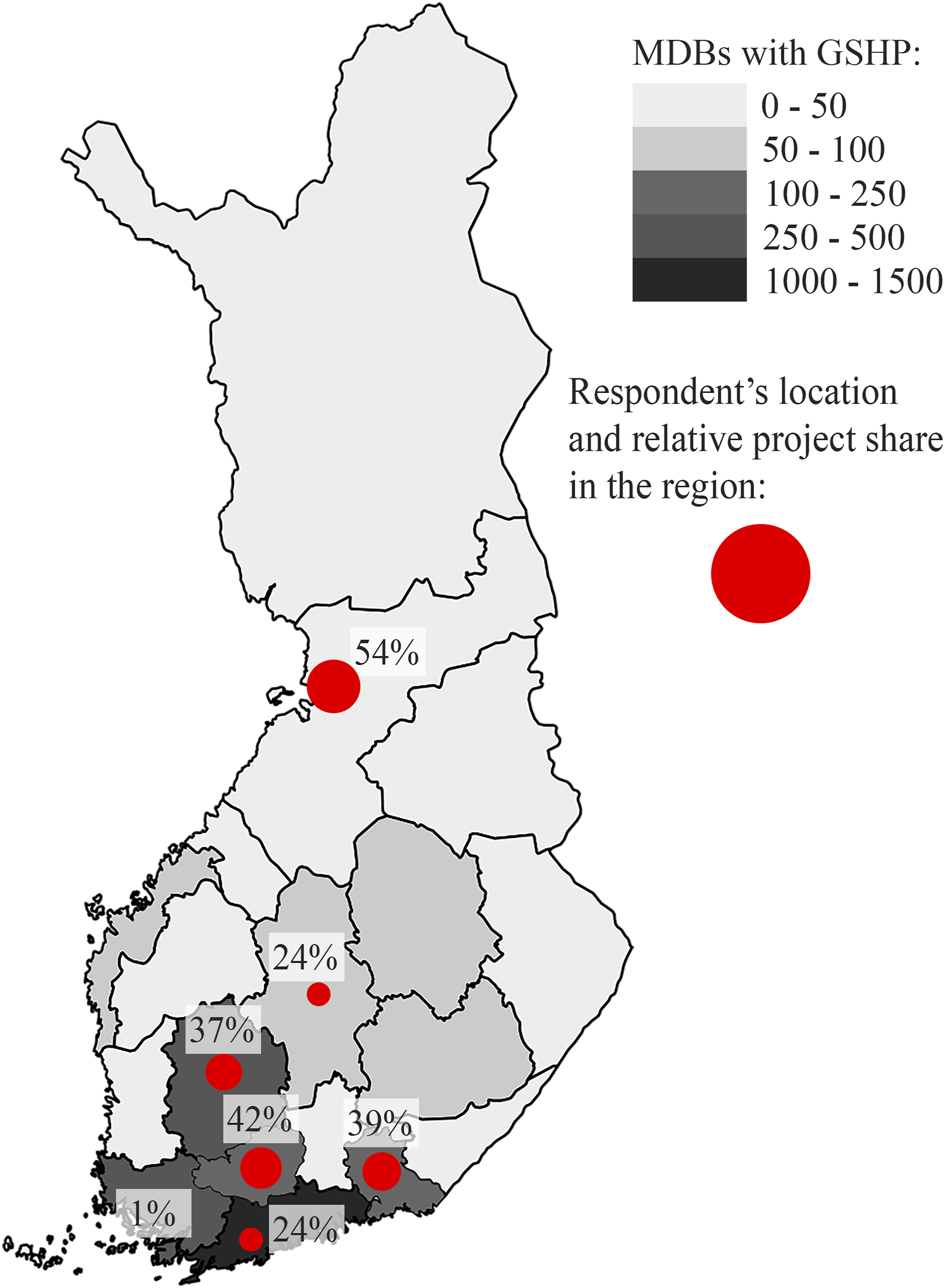
Distribution of GSHP-equipped MABs by region in finland, 5 including survey respondents’ project locations. Percentages indicate the share of respondents’ projects relative to the regional total.
As part of the GSHP retrofit statistics collected in the survey, respondents were asked to estimate the age distribution of the MABs they had retrofitted. The weighted results indicate a clear concentration in buildings constructed between 1960 and 1980, whereas retrofits in post-2000 buildings were rare and none were reported after 2020. Installer categories differed: moderate-experience contractors and occasional installers focused heavily on 1960–1970 buildings, while high-experience contractors showed a more even distribution across the 1950–1990 stock. The aggregated distribution is illustrated in Figure 2. Age distribution of MABs with GSHP systems installed by the survey respondents.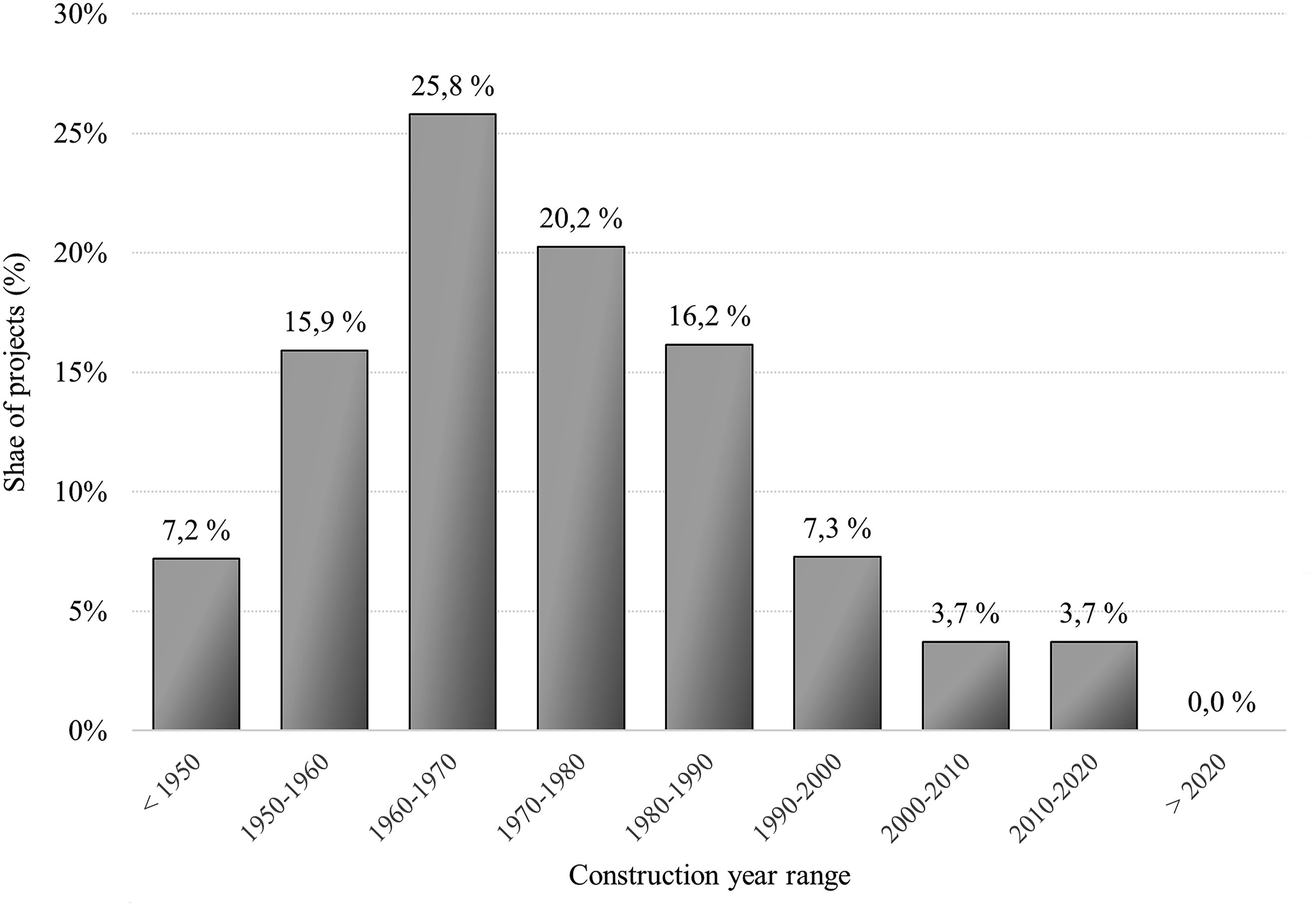
GSHP sizing (C1–C12)
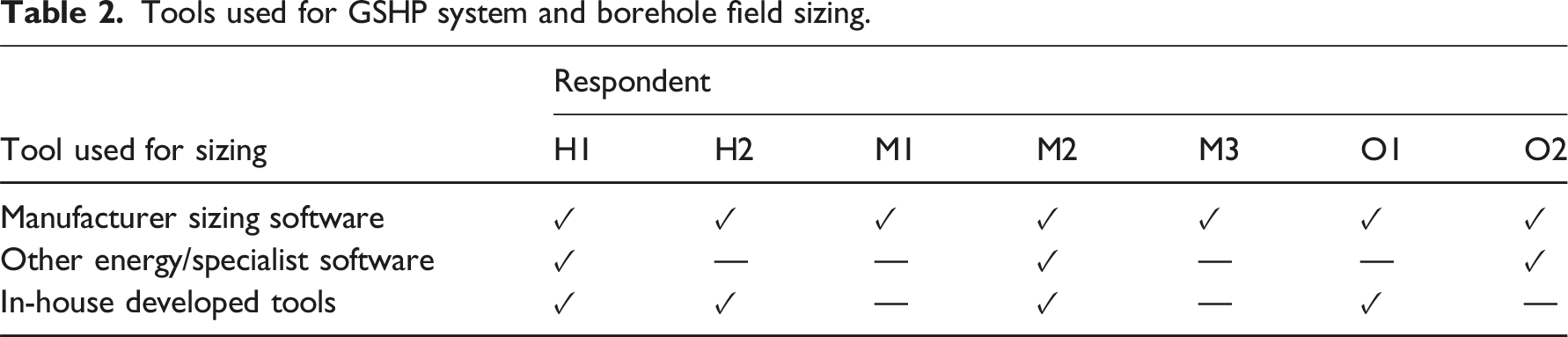
Tools used for GSHP system and borehole field sizing and design
Tools used for GSHP system and borehole field sizing.
Basis of design for system sizing
Respondents were asked to rank the most common basis of design for sizing GSHP systems in retrofit projects, from the most (1) to the least (7) frequently applied. One installer (M3) did not rank all available options. The distribution of rankings is shown in Figure 3. Distribution of respondents’ rankings of the most common basis of design for sizing GSHP systems in retrofit projects.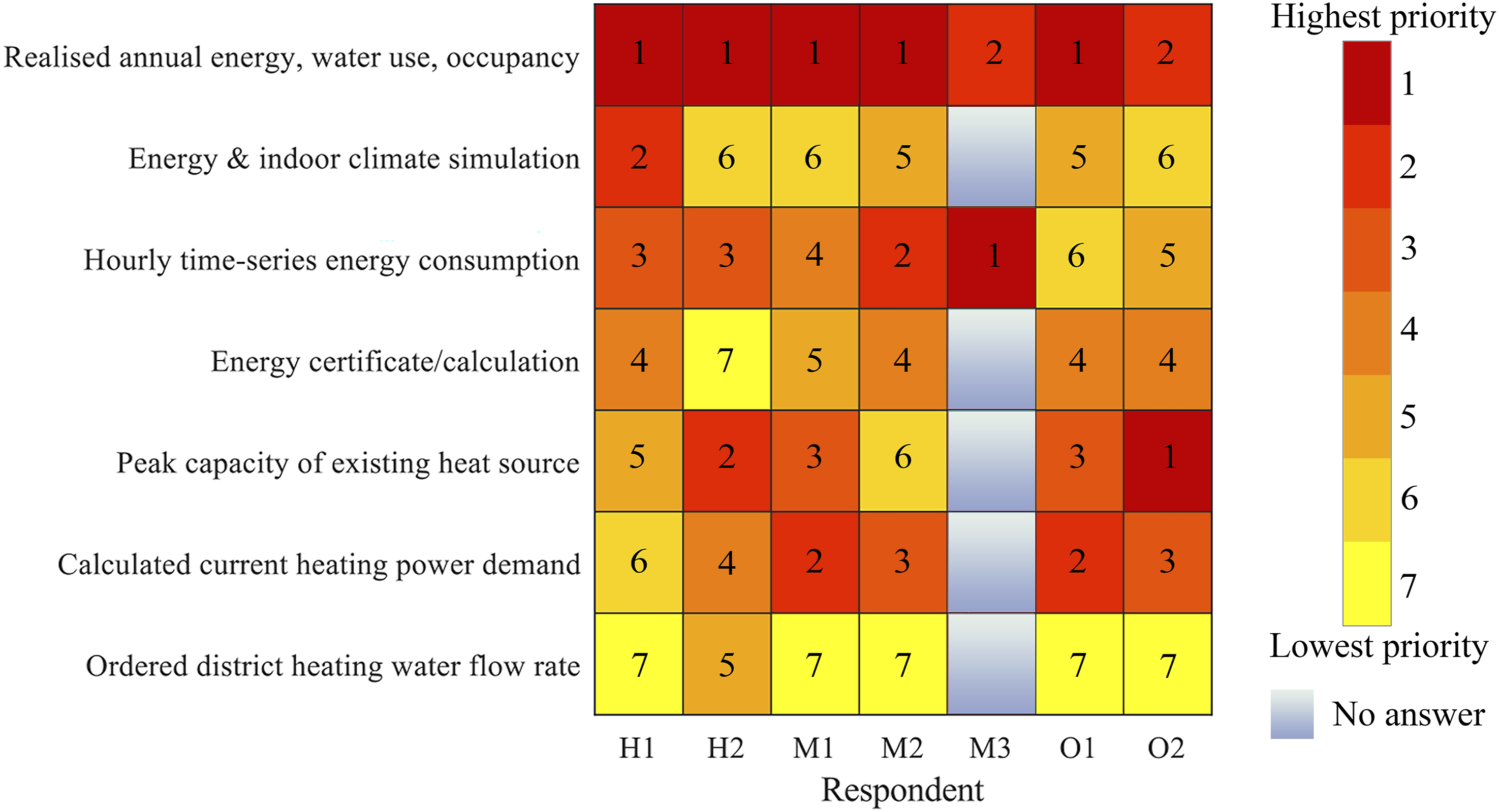
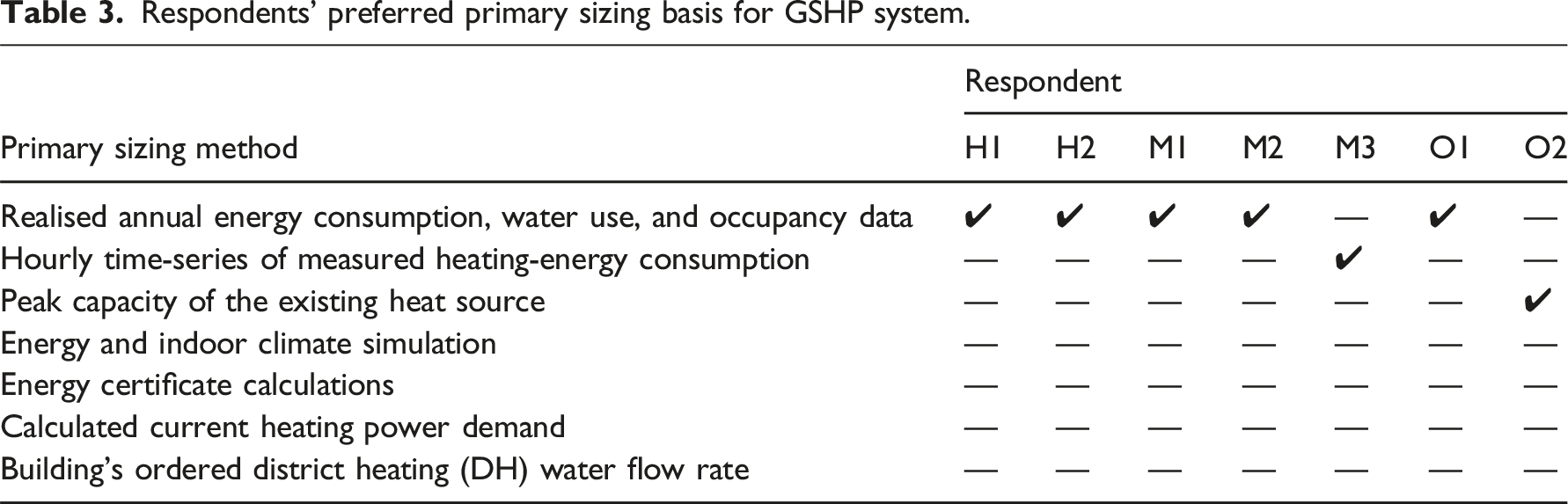
Across all respondents, “realised annual energy consumption, water use, and occupancy data” was the most commonly used basis, ranked first by five installers (H1, H2, M1, M2, O1). One installer (M3) ranked hourly time-series energy consumption first, while O2 most commonly used the peak capacity of the existing heat source. Other frequently used inputs included energy and indoor climate simulations, calculated current heating power demand, and hourly time-series energy consumption. Less common inputs were the building’s ordered DH water flow rate and energy certificate-based calculations.
Respondents’ preferred primary sizing basis for GSHP system.
Partial-capacity GSHP sizing and backup/top-up heating arrangements
Respondents reported the GSHP’s designed partial-capacity level for their completed retrofit projects. As shown in Figure 4, designs were strongly concentrated between 70 and 90% of peak heating demand, with the single most common range being 75–80%. High-experience contractors tended to cluster around 75–85%, moderate-experience contractors reported a broader range (65–85%), and occasional installers most often used ≥80%. Projects below 70% or above 90% were rare. Distribution of GSHP partial-capacity levels, shown for all projects and by respondent category.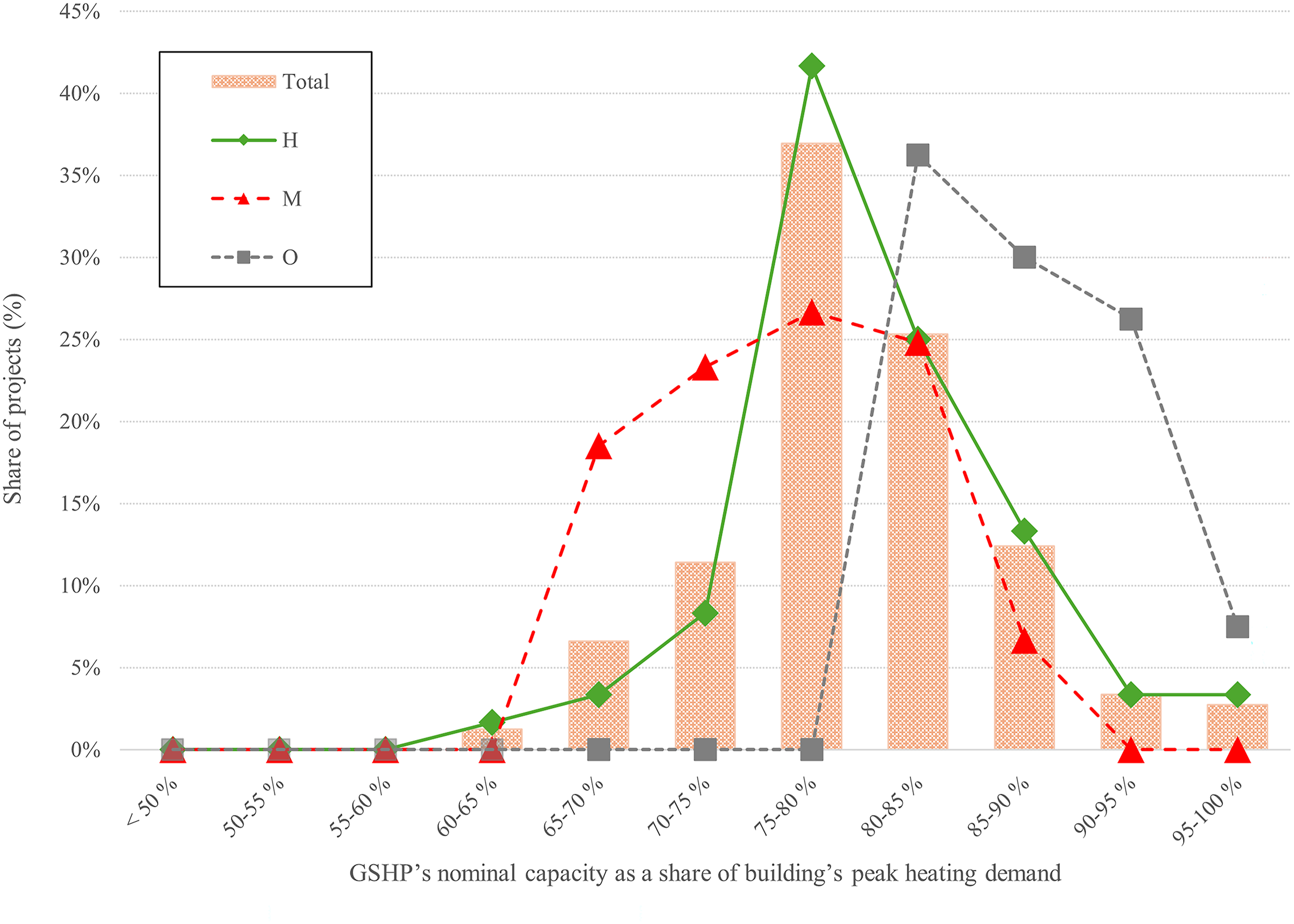
Regarding the main reasons for designing specific GSHP partial-capacity level, most respondents (H2, M1, M2, O1, O2) cited investment cost as the primary determinant. However, H1 emphasised life-cycle cost, whereas M3 referred to site-specific constraints such as limited space for boreholes. Additional comments indicated a trend toward higher sizing: H2 noted that: “Sizing has become more generous; previously we sized clearly more for partial load. Recent volatility in electricity prices and concerns about adequacy have clearly pushed sizing larger. Cost is the main driver, but life-cycle cost must remain reasonable.” M1 added: “We favour on/off GSHPs; consequently partial-capacity design is typically the solution.”
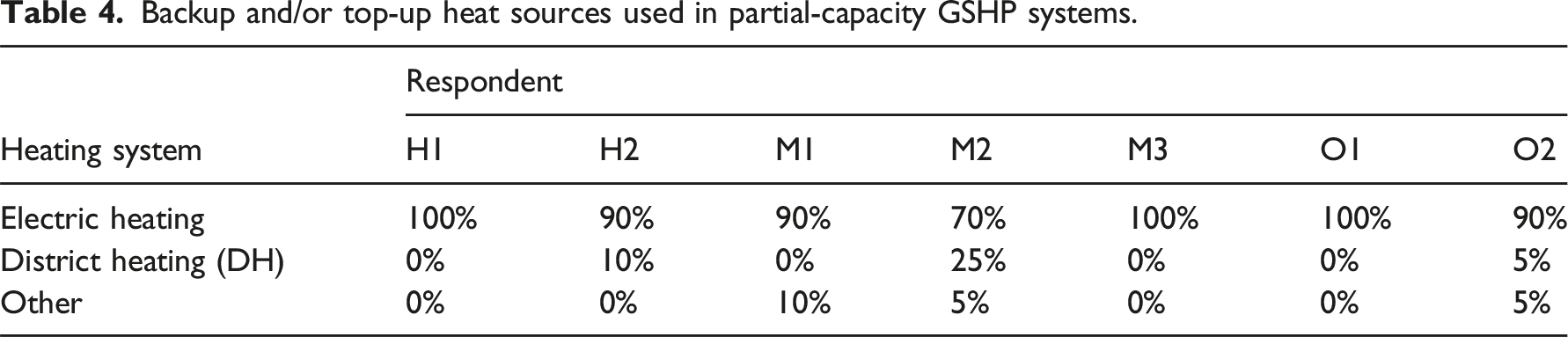
Backup and/or top-up heat sources used in partial-capacity GSHP systems.
Borehole field design basis for sizing and heat recovery utilisation
For borehole-field sizing, high- and moderate-experience contractors (H, M) reported using annual energy consumption as the main design basis, whereas occasional installers (O) relied primarily on peak heating demand.
EAHR utilisation rates in projects where installation was technically feasible.

Respondents were also asked how the utilisation of heat recovery in their projects affects GSHP system sizing, if at all. Five respondents provided comments. H1 reported that it: “Reduces the need for borehole length by approximately 30%, but this should be approached critically and no greater reduction should be allowed. It also improves the annual COP by about 0.2 units according to our measurements, although the sample period is short, at most 8 years.” H2 stated more briefly that: “it affects borehole sizing, fewer boreholes are needed.” M1 explained that: “it affects the design, enabling reductions in borehole depth.” O1 noted that it: “affects the number of boreholes needed and the temperature level of the brine circuit.” Finally, O2 emphasised that: “it affects borehole sizing, meaning that heat recovery reduces the required drilling length.”
Details of GSHP sizing (D1–D13)
Installation of multiple heat pumps
Reported reasons for installing multiple heat pumps in the GSHP system.
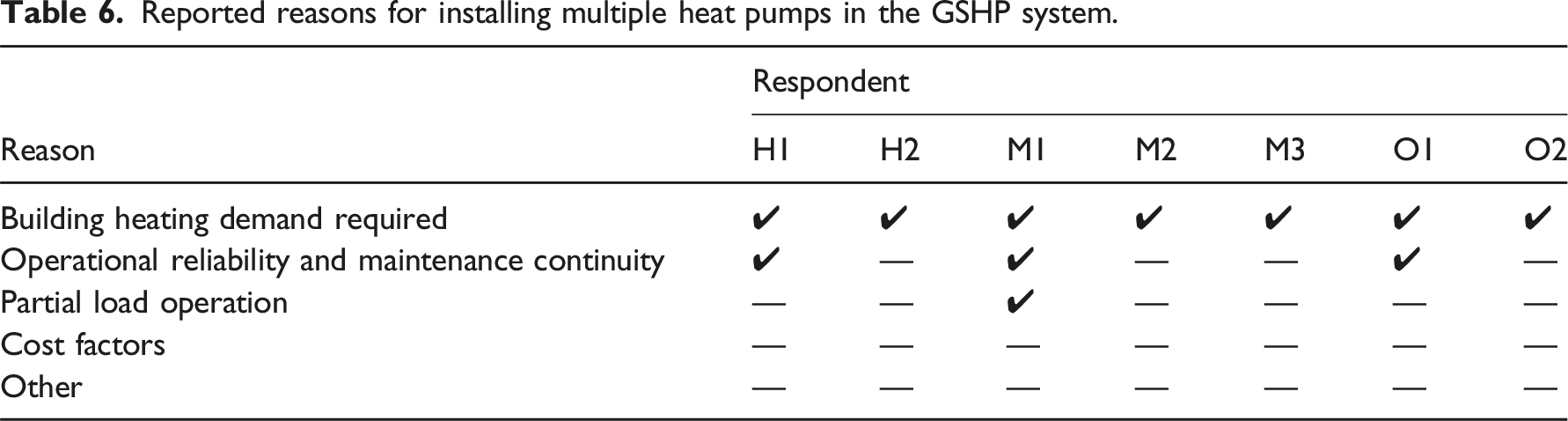
Regarding the heating-demand threshold for installing multiple heat pumps, open-ended responses included: “Usually if more than 90 kW of heat pump capacity is needed” (H1); “At 80–100 kW there is no longer a single product available in this size range” (H2); “60 kW” (M1), “If the top-up system does not allow a full-capacity electric boiler” (O1); and “Depends on the building, available space, and other factors.” (O2).
In the open comments on installing multiple heat pumps, H1 added: “The output capacity of the most common factory-made large building heat pumps is slightly below 100 kW, and therefore several heat pumps are often needed. In addition, operational reliability improves when there are multiple heat pumps. Domestic hot water production also plays a significant role here.”
H2 also commented: In retrofits, the available space in the building can also be a limiting factor, making it easier to fit one GSHP rather than several. The investment cost is also higher if there are several GSHPs instead of one larger GSHP. The choice also depends on the customer’s needs and preferences, and what aspects are prioritised.”
M1 further noted regarding the use of multiple pumps: “Depending on the capacities of the models we use, we employ on/off GSHPs.”
Heat distribution methods and storage tanks sizing
Weighted by the number of completed projects, radiators were by far the dominant heat-distribution method, used in approximately 80% of the retrofits. Radiators combined with supply-air heating represented about 9%, underfloor heating about 7%, and underfloor heating combined with supply-air heating about 4%. No other heat-distribution types were reported among the retrofitted buildings.
Reported typical buffer tank sizes in the heating circuit were 500 L (M1, M2), 750 L (H1, O2), and 1000 L (H2, O1). When weighted by the number of projects completed by each respondent, the average buffer tank capacity was approximately 774 L.
DHW storage tank dimensioning showed broader variation in both capacity and design principles. H1 reported the use of 750–1000 L tanks, typically two to four in parallel, and highlighted the importance of considering coil heat-transfer capacity. In the open comment field, H1 added: “Buffer tanks in the heating circuit should preferably be equipped with a coil, enabling preheating of domestic hot water through the same tank. Boosting of domestic hot water temperature should be arranged in the upper section of the domestic hot water tanks.” H2 explained that tank size is determined by the number of residents or the design flow rate, applying a rule of thumb of 1000 L for 20–30 residents and 2000 L for 50–60 residents. M1 reported a range of 500–1500 L depending on the heat-pump capacity, while M2 stated that sizing is calculated precisely according to demand. O1 indicated that the number of residents is the basis for sizing and noted that design is case-dependent, varying with building spaces and occupancy. O2 described the typical configuration as 750 L coil tank + 500 L boost tank and added: “It depends on the project–what spaces are available and how many residents the building has.” M3 did not provide an answer to this question.
Sizing of backup and/or top-up heaters
Of the seven respondents, six answered the question regarding electric backup and/or top-up heating in partial-capacity GSHP systems. Among these six, the dimensioning of the electric heaters was split evenly between full-capacity and partial-capacity design. Respondents H1, O1 and O2 stated that the electric heating is designed to cover 100% of the heating demand in the event of a heat pump failure. The other three (H2, M1, M2) reported lower capacities: H2 indicated 50–70% of the peak heating demand, M1 referred to approximately 50% of the heat pump capacity, and M2 specified 60–70% of the peak heating demand in failure situations, adding: “Redundancy in multi-unit GSHP systems partly reduces the need for full backup capacity, as certain models already include two compressors per GSHP.”
Regarding the use of electric top-up heating in the DHW subsystem, all respondents confirmed that DHW storage tanks are typically equipped with electric heaters. The dimensioning principles, however, varied. H1 stated: “It must be able to secure domestic hot water if the heat pumps are under maintenance or in failure.” H2 explained: “According to the need for domestic hot water. 1–2 units of 9 kW resistors per 1000 L.” M1 noted: “6 kW fits in a 500-L tank, so that is installed.” O2 commented: “It depends on the size of the tank and how many resistor connections there are in the tank and whether there are reserves in the electrical switchboard.”
When DH remains alongside the installed GSHP system, all respondents explained that the existing DH heat exchanger is either retained or replaced with a unit of equal capacity, designed to cover 100% of the heating demand if necessary. In the open comments, M1 stated: “In practice, district heating is always disconnected when a GSHP system is installed,” while O1 added: “In Jyväskylä it is not accepted, due to the district heating company’s jealousy about profitability.” O2 noted a more case-dependent approach: “The old exchanger is left in place if it is still in such condition that it can be used.
Utilisation of ground cooling
The use of ground cooling (free cooling) in GSHP-retrofitted MABs was reported to be rare, at around 4% of all projects when weighted by the number of buildings across all seven respondents. Individual estimates varied. H1 estimated that free cooling had been used in about 5% of their projects and explained: “When the construction of a cooling distribution network is as cost-efficient as possible. Usually, the lines are installed in connection with pipe renovations. Fan coil units are installed in apartments.” H2 reported a slightly higher share of 10% and commented: “Implemented in few cases as costs rise so high. But fan coils are the common method. Easiest to implement in ventilation if there is already a cooling coil.” O2 likewise estimated around 10% and described: “With ceiling-mounted fan coils, a main distribution line runs from bottom to top, with branch connections to the units, and loop circulation on each floor.” M1, M2, M3 and O1 each reported that free cooling had not been implemented in their projects.
Electrical capacity and controllability of GSHP systems (E1–E10)
In the survey, the section on electrical systems and controls was made highly voluntary, based on the assumption that most contractors have an HVAC background and limited electrical expertise. Responses to this part were provided by H1, H2, M1, M2 and O2, together covering approximately 19.9% (n = 565) of the Finnish GSHP-equipped MAB stock.
The first question addressed the design responsibility for system functionalities, automation, and control solutions in GSHP retrofit projects. Among the respondents, two approaches were reported. H1, M2, and O2 indicated that these solutions were designed individually for each project, whereas H2 and M1 answered that they primarily relied on manufacturer-provided standard connection diagrams.
Need to increase grid-connection capacity
When electric heaters were used as the backup and/or top-up system, a grid-connection upgrade was required in most projects: on a respondent-weighted basis, 70% of projects needed an increase. When DH remained as the auxiliary system, the need was uncommon, about 8% of projects.
H1, H2, M1, and M2 reported that the need for an upgrade is assessed based on on-site electricity measurements and/or DSO consumption data combined with the calculated electrical power of the GSHP system. O2, by contrast, stated that it is based on the existing main-fuse size together with the calculated electrical demand of the GSHP. O2 further explained: “The base load is determined first, and then the power demand of the equipment is calculated. Based on this, the new main distribution board is sized.”
When an upgrade is required, H1 and M1 typically increase the connection by one fuse size step, whereas H2, M2, and O2 reported that two steps are more common. As O2 emphasised: “It depends on how tightly the system is dimensioned.”
Control possibilities and demand response
The share of projects equipped with control functionalities based on electricity use or power demand was estimated at 10% (H1), 5% (H2), and 100% (O2), while M1 and M2 did not provide estimates. When weighted by the number of projects reported by H1, H2, and O2 (n = 455), the average share of GSHP-retrofitted MABs equipped with such control functionalities was approximately 9%. Nevertheless, all respondents agreed that in their GSHP retrofit systems, “both the GSHPs and the electric heaters” are generally controllable.
When asked how many of the systems are currently connected to demand-response schemes, the reported shares were very low. H1 estimated about 5% with spot-price-based control (15 buildings), whereas O2 indicated that 100% of their systems (5 buildings) are connected to both spot-price- and demand-tariff-based control. Other respondents reported no implementations.
Heat pump types and operational constraints
Weighted by the building numbers covered by the respondents, the results show that about 53% of projects employed ON/OFF heat pumps and 47% inverter-driven GSHPs. The relative shares of ON/OFF versus inverter-driven heat pumps were 50/50 (H1), 90/10 (H2), 100/0 (M1), 20/80 (M2), and 0/100 (O2).
Regarding ON/OFF heat pump operational restrictions, H1, M1, M2, and O2 stated that “there are no requirements beyond ensuring heating and DHW sufficiency.” H2, however, explained: “All heat pumps have minimum running and idle times. Minimum 10–20 min.”
Electric backup and/or top-up heaters and boiler staging
The question explored the controllability staging of electric heaters, with responses distinguishing between electric boilers for space heating and resistors in DHW tanks. For electric boilers, H1 explained that: “Electric boilers for the heating network usually have 10 steps.” H2 added: “Boilers 15 steps.” O2 noted: “It depends on the boiler and the number of steps.”
For DHW tanks, H1 reported that: “Resistors in domestic hot water tanks are typically 9–10 kW each, with 1–2 resistors per tank.” H2 described that: “Resistors usually have 3 steps, maximum combined resistor capacity can be 80 kW.” Two respondents gave only numerical answers without specifying whether they referred to boilers or DHW tanks: M1 stated simply: “3” and M2: “7.”
Future developments in GSHP technology (F1–F2)
This voluntary section asked respondents how GSHP sizing practices have changed over time, how they expect system controllability to develop, and how new refrigerants such as R290 may influence future design and implementation. All respondent groups provided input. H1 and H2 offered detailed descriptions of how sizing practices have evolved, while M1 and M2 gave shorter answers focused on practical aspects; O2 mainly highlighted long-term trends in borehole drilling.
Respondents reflected on how GSHP system sizing practices have changed over the years and how they expect systems and their controllability to evolve in the future. According to H1, the criteria in requests for quotation as well as supplier practices have become more precise and developed, and the borehole field is often dimensioned on the basis of a specific extraction-energy target. As H1 explained: “[Sizing] has changed. The criteria in requests for quotation and supplier practices have become more precise and developed–for example, the borehole field is dimensioned for extraction energy below 100 kWh/(m 2 ·a). The sector would benefit from standardisation in sizing, but life-cycle cost must be considered: if everything is sized safely at 110%, such projects will no longer be carried out because of the investment cost.”
H2 also reported clear changes, stating that systems are now dimensioned with higher power coverage and that inverter GSHPs have influenced targets. Yet, H2 noted, the benefits of inverters diminish in larger plants as capacity steps accumulate. As H2 observed: “[Sizing] has changed. Systems are dimensioned with clearly higher power coverage. Previously, the limit was 65–70 and that was fine–there are even smaller partial-dimensioned cases in the field. Currently the lower limit is 80–85 for on/off GSHPs. Inverters have also changed things somewhat and for them the sizing target is 100%. The benefit of the inverter somewhat diminishes in larger plants, because there are already more capacity steps as the number of heat pumps increases.”
By contrast, M1 stated simply: “No changes; we use the factory design program.” M2 reported a narrower shift: “In terms of the energy [borehole] field, yes. Otherwise no.” O2 highlighted a long-term drilling trend: “The total drilled metres of boreholes have increased over the years.”
New refrigerants such as R290 were expected to affect GSHP design and dimensioning, although the extent varied between respondents. H1 emphasised both opportunities and challenges, including flammability-related safety measures, cost effects, lower operating pressures (potentially improving component reliability), and higher achievable supply temperatures. As H1 described: “It will have an impact, but not all answers are clear yet. For example, propane is easily ignitable and requires safety measures that must be taken into account in design, which slightly increases cost. The operating pressure is lower, which does not stress the heat-pump components as much as with conventional refrigerants. This is very good, because at the moment failures of refrigeration circuits and compressors arise far too early and too often. A higher supply temperature is also a good thing.”
H2 stressed safety but anticipated little change in sizing: “Refrigerants are explosive. This may make the design of spaces more challenging. Sizing will remain roughly the same.” M1 pointed to practical design constraints: “Design must account for safety clearances and other restrictions.” M2 expected minimal effect on sizing but significant implications for implementation: “Hardly any effect on design and sizing–much more on practical implementation.” Finally, O2 underlined ventilation and exhaust requirements: “Not necessarily on dimensioning, but definitely on design, since R290 is an explosive gas; in design one must consider, for example, the size of exhaust pipes and fans.”
Discussion
Regional coverage and MAB stock characteristics
This study provides rare empirical insights into how GSHP systems are designed in Finnish MAB retrofits. The reported projects represent approximately 21% of the total GSHP-equipped MAB stock in Finland. However, the number of respondents was limited (n = 7) and the distribution of reported projects between contractors was uneven. As a result, the dataset primarily reflects design practices in regions with high GSHP retrofit activity, while other parts of Finland remain underrepresented. The findings should therefore be interpreted as indicative of prevailing practices in high-activity regions rather than as a statistically representative description of the national market.
Regarding building characteristics, the reported project concentration in MABs constructed between the 1960s and 1980s mirrors the age distribution of the Finnish MAB stock. 38 This correspondence is technically relevant, as buildings from this period share common system characteristics – such as high-temperature radiator-based heat distribution and mechanical exhaust ventilation – which influence typical GSHP retrofit solutions, system dimensioning, and the feasibility of complementary measures such as EAHR.
System design context and methods
Although all respondents are responsible for GSHP system design as part of retrofit delivery, several described their role as extending beyond contracting to include broader design and consulting functions. The survey item was intended to capture how contractors perceive and frame their own design role, rather than whether they perform design tasks per se. In practice, GSHP system design in MAB retrofits is typically embedded within contractor-led turnkey delivery and is rarely commissioned as a separate assignment. Design services are commonly provided free of charge during the bidding process, which may influence how design effort is prioritised across projects, although this cannot be assessed empirically in the present survey.
Regarding design approaches, the survey responses show that Finnish GSHP contractors rely on a mix of standardised and self-developed methods. While all respondents reported using manufacturer-provided software, several complemented this with in-house or specialist energy calculation tools. The reliance on proprietary tools by these respondents, combined with a comment from one contractor questioning the accuracy of manufacturer software, suggests that some contractors do not consider manufacturer tools sufficient on their own. The basis used for design varied between contractors: the most common approach was to use realised annual energy consumption combined with water-use and occupancy data, whereas individual contractors relied on hourly time-series data or the peak capacity of the existing heat source. Notably, respondents reported no discrepancy between their preferred and applied basis of design. This suggests that current practices largely reflect established design routines, while potential data-availability constraints were not identified by respondents as a limiting factor. Taken together, these findings indicate that although sizing is embedded within turnkey delivery, the choice of calculation tools and design bases remains contractor-specific, reinforcing the absence of unified design practices across GSHP retrofits.
Compared with earlier research, these findings highlight a gap between modelling methodologies and actual contractor practice. Ahmed et al. 7 developed a capacity-design method for GSHPs that accounts for the simultaneous control of space heating and DHW, while Alavy et al. 12 proposed an optimisation framework integrating multiple load profiles, and Ni et al. 13 analysed cost-effective design-load ratios under top-up heating scenarios. These approaches align with the international review by Adebayo et al., 2 which emphasises the need for careful system design and optimisation. Yet, the survey indicates that Finnish contractors rarely employ such formal methods, relying instead on empirical data, manufacturer software, and in some cases clearly articulated rule-of-thumb criteria (e.g. 1000 L for 20–30 residents in DHW tank sizing). This points towards a pragmatic, tool-driven design culture in GSHP retrofits, where design decisions are guided primarily by available tools, empirical experience, and delivery constraints rather than by formal optimisation frameworks.
Taken together, the heterogeneity of software tools, input data, and decision-making criteria reinforces that no unified sizing standards currently exist for GSHP systems in MAB retrofits, as also noted by one respondent: “The sector would benefit from standardisation in sizing.” Consequently, design outcomes may depend as much on contractor-specific practices as on building characteristics, rather than on a nationally agreed methodology.
When interpreting these findings, it should be noted that the present survey captures reported design intentions rather than realised system performance. Actual operational efficiency depends on a combination of commissioning quality, control optimisation, maintenance practices, and the realised sizing of system components, which may deviate substantially from design-phase assumptions. 39 Evaluating the long-term performance implications of differing design tools and decision-making criteria therefore requires longitudinal studies linking documented design inputs to measured operational performance. Such evidence would also provide a necessary basis for developing a unified design evaluation framework, in which sizing assumptions, input data, and control strategies are assessed against comparable performance indicators across projects.
Sizing principles and capacity coverage
Among the reported projects, GSHPs were typically sized to cover a high share of peak heating demand, most commonly in the range of 75–85%. Respondents described an ongoing shift toward more generous sizing, which they linked to technological developments such as inverter-driven units and deeper boreholes, as well as more recent concerns related to electricity-price volatility and security of supply. This may help explain why the reported sizing levels exceed the 60–80% partial-capacity range commonly described as Finnish practice by Motiva. 15 However, the reported sizing ratios should be interpreted as design intentions rather than verified indicators of operational performance, as the present survey does not include data on realised load dynamics or long-term system operation. Evaluating how well such sizing aligns with temporal fluctuations in actual heating demand and associated risk conditions would require longitudinal monitoring of GSHP system operation across multiple heating seasons under varying operating conditions.
The reported GSHP designs diverge from Finnish modelling-based optimisation studies. For instance, Kontu et al. 11 identified a life-cycle cost-optimal sizing at 35.4% coverage of peak heating demand in an MAB, while Sankelo et al. 14 found a cost-optimal coverage of 28% in a daycare building. In both cases, GSHP sizing was optimised from a building-level perspective with the objective of minimising life-cycle costs, without explicitly accounting for network-level impacts. Compared with these modelling-based optima, the survey results indicate that Finnish contractors typically apply substantially higher sizing ratios, suggesting systematic oversizing relative to such theoretical benchmarks. At the same time, the findings broadly align with practical heuristics observed in other cold-climate countries. For example in Sweden and Canada, design guidelines often assume around 70% coverage of peak heating demand.12,16
One factor influencing sizing is the underlying rationale for partial-capacity design. The survey responses confirm that the primary determinant for limiting the GSHP size was the system’s investment cost, whereas life-cycle cost considerations and site-specific constraints, such as limited available space for boreholes, were prioritised only in individual cases. A similar pattern was observed in borehole field sizing: high- and moderate-experience contractors dimensioned the borehole field according to annual energy consumption, whereas occasional installers based it primarily on peak heating demand, thereby producing higher-capacity designs. This distinction reflects differing design philosophies, revealing that sizing choices are guided not by a single rationale but by a combination of economic priorities, contractor experience levels, and technical constraints.
Backup and/or top-up heating practices were dominated by electric heating, reported in approximately 94% of all projects, while DH accounted for only about 5%. This strong reliance on electricity reflects the structure of Finnish DH pricing, where energy and demand charges, together with connection fees, often make DH-supplemented designs economically unattractive. 11
Notable differences were observed in electric heater sizing schemes: some respondents reported designing the backup and/or top-up heat source to cover 100% of demand in the event of heat-pump failure, while others installed lower-capacity heaters sized at 50–70%. Reported sizing practices varied across respondents and were not clearly patterned by experience group. The responses suggest that the chosen backup capacity is closely linked to system configuration rather than experience alone. In multi-unit GSHP systems, contractors may consider full-capacity backup unnecessary due to the low probability of simultaneous failure of all heat pumps. In such systems, respondents consistently identified the required heating demand as the primary reason for installing multiple heat pump units, while operational reliability and maintenance continuity were viewed as secondary benefits. Partial-load control or optimised sequencing was identified by only one respondent, despite prior studies indicating that such optimisation can yield additional efficiency gains. 40 Notably, cost factors were not considered decisive in backup-capacity selection.
Storage integration, grid connection, and demand-response capabilities
Storage design practices exhibited notable diversity, particularly regarding DHW tank sizing, which appeared largely case-specific and dependent on occupancy. From a system perspective, however, relatively large buffer and DHW tanks were generally included. In terms of distribution, the dominance of radiator-based networks implies higher supply temperatures that challenge GSHP efficiency. The survey responses nevertheless suggest that these limitations can be partly mitigated by integrating exhaust-air heat recovery (EAHR), which respondents reported utilising in approximately 41% of the sites where they considered its installation technically feasible. According to respondents, EAHR can enable moderate improvements in system efficiency or allow a reduction in the required borehole field size. Similar results have been reported in Finnish simulation studies of MABs, where GSHPs combined with EAHR and further supplemented with solar thermal collectors and wastewater heat recovery reduced the need for purchased GSHP systems energy during summer periods to zero. 18 None of the respondents, however, reported implementing wastewater heat recovery, and the use of solar thermal systems was not covered by the survey.
Regarding grid connection capacity, the survey reveals a cautious approach among contractors. Weighted by the number of reported projects, the connection capacity was increased in 70% of cases where electric heaters were used for backup and/or top-up, compared to only 8% where district heating was retained. Even among contractors who based decisions on measurements, practices varied: some typically increased the connection by one fuse size step, while others opted for two.
Previous Finnish studies confirm that partial-load GSHPs with electric backup and/or top-up heaters can markedly increase building-level hourly maximum power.17,18 However, empirical evidence suggests that realised loads have typically remained well below nominal grid connection capacity. For example, Kallioharju et al. 17 reported average maximum loading rates in the range of 39–74% of the nominal connection capacity after GSHP retrofitting, while Lepistö et al. 20 found a mean loading rate of 48% across 41 retrofitted MAB properties in Helsinki. Both studies concluded that heating renovations can often be implemented without enlarging the grid connection. However, these findings are based on historical DSO metering data, which may not capture coincident extreme cold conditions or heat-pump failure events. In contrast, contractors commonly design backup heaters to cover 50–100% of peak heating demand, reflecting a precautionary approach to technically credible but rarely observed worst-case scenarios. This discrepancy highlights that while academic studies primarily reflect realised operational data, contractor decisions address unobserved but technically credible peak-load scenarios. Closer coordination between contractors and DSOs could help harmonise assumptions about worst-case boundaries, potentially limiting precautionary grid-connection upgrades driven by uncertainty rather than evidence. Although the probability of coincident extreme weather and heat-pump failure is low, the consequences in MABs are severe and cannot be tolerated in practice. Consequently, the widespread use of full-capacity backup heaters represents a consequence-driven risk-management strategy rather than simple overdimensioning, albeit one that locks buildings into permanently higher distribution costs. Future research should therefore investigate whether probabilistic reliability analysis – accounting for building thermal inertia, fault durations, redundancy, and acceptable risk thresholds – could support more differentiated backup-capacity strategies while maintaining supply security under rare but critical failure scenarios.
Design habits for automation and control varied considerably. Some respondents reported designing system control individually for each project, while others relied primarily on manufacturer-provided standard connection diagrams. Regardless of the design approach, the level of implemented controllability remained similar. All respondents stated that GSHPs and electric backup and/or top-up heaters are generally controllable, and the technical potential for power control was significant: inverter-driven GSHPs represented 47% of reported installations, and storage power-control staging ranged from three or more steps in DHW tanks to up to 15 steps in heating boilers. Nevertheless, control functions based on electricity price or power demand were rare. Weighted by the number of reported projects, only about 9% of GSHP retrofits were equipped with such features, with the share of systems using spot-price-based control estimated below 6%.
International and modelling-based research has shown that dynamic electricity tariffs and advanced control strategies can significantly reduce operating costs and improve energy efficiency when GSHP systems are optimised for flexibility, although potential savings depend on tariff structure and system configuration.23,24 Advanced control and predictive optimisation have been shown to enhance GSHP energy efficiency and enable load shifting, provided that accurate system modelling and data availability are ensured.31–33,36 In Finland, however, the survey results suggest that these potential benefits remain largely unrealised in GSHP retrofits, primarily because advanced control strategies are rarely implemented in practice. This discrepancy reflects the fact that, under prevailing Finnish retail electricity and distribution tariff structures, direct and predictable economic incentives for demand-side flexibility have remained limited. A recent national survey of Finnish housing companies reports that decision-making is strongly influenced by risk aversion and a preference for price stability, and that knowledge of economically optimal electricity contract types is incomplete among decision-makers. 41 Recent evidence also indicates that the share of electricity contracts based on the day-ahead spot price among Finnish housing companies has increased markedly since 2022, although it remains lower than among household consumers. 41 Consequently, under prevailing Finnish market and tariff conditions, advanced automation has often not been perceived by building owners as offering sufficient immediate economic benefit to justify higher upfront investment, encouraging prioritisation of lower initial investment costs. From a regulatory perspective, the 2025 amendment to the Electricity Market Act (201/2025) enables power-based distribution tariffs, and the EU-wide shift to a 15-min imbalance-settlement period further increases the technical relevance of controllable operation.28,30 However, as the survey indicates, these regulatory drivers have not yet translated into established market practice. Overcoming these obstacles will likely require that emerging financial incentives are complemented by improved stakeholder competence at the level of housing company decision-making, 41 as well as clearer implementation pathways across the design and delivery chain.
Overall, the findings indicate that while the technical challenges of grid connection sizing are routinely addressed by contractors, the opportunities for demand-side flexibility remain underutilised. The differences between contractor groups in grid connection assessment, control-system design, and automation practices further highlight the absence of shared guidelines. This reinforces the broader conclusion that electrical integration in GSHP retrofits is not standardised, leaving substantial room for divergence between contractors and misalignment with emerging regulatory frameworks.
Conclusions
This study examined system design, sizing, and controllability practices in ground source heat pump (GSHP) retrofits of Finnish multi-apartment buildings (MABs) from a contractor-practice perspective. Although GSHP retrofit delivery in Finland is technically mature, the findings reveal substantial heterogeneity in how systems are dimensioned, integrated, and prepared for future electricity-system interaction. The key findings are summarised as follows. (1) High partial-capacity design is prevailing practice. GSHPs are most commonly dimensioned to cover approximately 75–85% of peak heating demand, exceeding the 60–80% partial-capacity range commonly reported in Finnish practice. Together with respondent comments, this reflects a shift towards higher partial-capacity design, driven by technological developments, electricity-price volatility, and security-of-supply considerations rather than formal life-cycle optimisation. (2) Backup and top-up heating as well as grid connection sizing are shaped by risk management rather than observed operation. Electric heaters are commonly dimensioned to cover 50–100% of peak demand to ensure reliability under fault conditions. While this strategy addresses low-probability but high-impact scenarios, it contributes to precautionary grid-connection upgrades that may exceed loads observed in historical metering data. (3) Demand-side flexibility remains largely unrealised. Despite the technical capability for power control at the component level, only a small share of systems are equipped with, or actively use, electricity-price-based or power-based control strategies. Under prevailing Finnish market and tariff conditions, weak economic incentives, risk-averse decision-making, and the limited immediate payback of advanced automation have outweighed the potential benefits of demand-side flexibility. (4) Design methodologies remain contractor-specific. In the prevailing turnkey delivery model, no unified approach to GSHP system sizing exists. Contractors rely on a diverse set of design bases and calculation tools, ranging from empirical energy-use data to simplified heuristics, indicating that design outcomes depend strongly on contractor-specific routines rather than standardised evaluation criteria.
Taken together, the findings highlight the absence of shared design guidance for GSHP retrofits in Finnish MABs, particularly at the interface between thermal system sizing, electrical integration, and controllability. Addressing this gap would support more consistent design outcomes, reduce unnecessary grid impacts, and better align retrofit practice with emerging regulatory and market conditions.
Supplemental material
Supplemental material - Design and sizing practices of ground source heat pump systems in Finnish multi-apartment building retrofits
Supplemental material for Design and sizing practices of ground source heat pump systems in Finnish multi-apartment building retrofits by Kari Kallioharju, Juho Ylipaino, Aki Kortetmäki, Antti Virta, Pertti Järventausta and Piia Sormunen in Building Services Engineering Research & Technology
Footnotes
Acknowledgments
The authors thank Senior Lecturer Antti Mäkinen, Project Engineer Rami Kotilainen and Building Services Engineering student Mr Eero Ojala from Tampere University of Applied Sciences for their valuable technical support and assistance during the research.
Declaration of conflicting interests
The authors declared no potential conflicts of interest with respect to the research, authorship, and/or publication of this article.
Funding
The authors disclosed receipt of the following financial support for the research, authorship, and/or publication of this article: This work was conducted as part of the SIDE – Sector Integration and the Electric Decade project, funded by STEK – The Association for Electrical Technology and Energy Efficiency.
Ethical considerations
This study involved an anonymous survey and did not include personal data or identifiable human participants. Ethical approval was therefore not required.
Consent to participate
Participation was voluntary and anonymous; completion of the survey constituted implied consent.

Data Availability Statement
The survey results are available from the corresponding author upon reasonable request.
Supplemental material
Supplemental material for this article is available online.