




Abstract
Heat pumps are considered a key technology for the decarbonisation of space and water heating in domestic dwellings in the UK. Heat pumps that employ high-temperature working fluids such as CO2 have the potential to be used in retrofit applications. This paper presents the characteristics of a CO2 heat pump developed at Brunel University of London and the simulation results of its application to provide space and domestic hot water heating in a well-insulated four-bedroom semi-detached house with four occupants. The heating system is assumed to employ water thermal energy storage. Analysis has shown that storage volumes between 200 L and 300 L can satisfy the space temperature control requirements of the domestic dwelling if a heat pump capacity of 4.5 kW at 7°C ambient temperature and 60°C water flow temperature is employed. A comparison of the heat pump with a gas boiler reveals that with current gas and electricity prices, running costs for the heat pump can be 91% higher and CO2 emissions 40% lower than those of the gas boiler. Further design and control optimisation of the heat pump is expected to reduce both its running costs and CO2 emissions.
Practical application
This paper examines the practical application of a 4.5 kW heat pump with water thermal energy storage for domestic heating. The system operates efficiently at 7°C ambient and 60°C water flow temperatures, and can be retrofitted in two-thirds of UK homes without upgrading radiators. For a four-bedroom house, 200–300 L thermal storage volumes are optimal. While running costs are 91% higher than a gas boiler, the heat pump reduces CO2 emissions by 40%, offering a more sustainable heating solution.
Introduction
The primary usage of energy in domestic buildings in cold and temperate climates, including the UK, is for the provision of space heating and hot water. Data from the International Energy Agency (IEA) shows that in 2021, space and water heating accounted for about half of the world’s building energy demand, resulting in direct CO2 emissions of 2450 million tonnes. The highest percentage of domestic energy consumption is for space heating, which accounts for 66% in Europe, 37% in the US, 54% in China, and 65% in the UK. 1
In the UK, 80% of existing dwellings use gas boilers for the provision of space heating and hot water and to decarbonise this energy input, heat pumps are considered to be the key technology. They can provide 2 to 4 times higher energy conversion efficiency than gas boilers and if the electricity grid is decarbonised, electrically powered heat pumps will have close to zero greenhouse gas emissions. 2 Despite this potential, heat pumps have so far failed to gain wide market penetration in the UK due to high capital cost, inability to provide high enough temperatures to be used with existing radiators in retrofit applications and requirement for thermal energy storage to provide domestic hot water demand, make use of low tariff electricity and provide demand services to the grid for reduced running costs. 3
The use of hydrochlorofluorocarbon (HFC) refrigerants with relatively high Global Warming Potential (GWP), such as R410A (GWP = 2,088), R134a (GWP = 1,430), and R407C (GWP = 1,774), has raised concerns, particularly regarding refrigerant leakage into the environment during installation and servicing. This issue has become increasingly significant with the widespread adoption of heat pumps. In response, the Paris Agreement of 2015, followed by the Kigali Amendment to the Montreal Protocol in 2016, accelerated efforts to phase out HFCs. The amendment introduced a target for an 80%–85% reduction in HFC usage by 2040. 4 If successfully implemented and enforced, the global phasedown of HFCs is expected to prevent up to 0.5°C of global warming by the end of the century.
Although newer refrigerants such as R32 (GWP = 677), R290 (GWP = 3) and R441A (GWP = 1) have lower Global Warming Potentials (GWPs) than traditional HFCs, the optimal approach is to utilize natural refrigerants, such as carbon dioxide (CO2) and hydrocarbons (HCs), which exhibit zero or near-zero GWP values and favorable thermophysical properties. Carbon dioxide (CO2, R744) offers several advantages, including non-flammability, non-toxicity, high thermal conductivity, low dynamic viscosity, large thermal capacity, and low cost. Additionally, its relatively low critical temperature (31.3°C) and high critical pressure (7.37 MPa) enable it to operate at higher delivery temperatures than many alternative refrigerants. 5
At low ambient temperatures, CO2 as a working fluid in a transcritical cycle has a higher coefficient of performance (COP) than conventional refrigerants. Furthermore, conventional single stage air to water heat pumps (AWHPs) that use R410A or R134a cannot produce outlet water temperature high enough to satisfy the heat demand through conventional radiators that serve as heat emitters in the vast majority of domestic dwellings. To address this challenge, AWHPs employing CO2 as refrigerant is a promising alternative technology for commercial and residential applications, as they can also deliver hot water up to 80°C to satisfy hot water and space heating requirements. 6
Using thermal energy storage to support the operation of AWHPs is essential to ensure the availability of domestic hot water when the heat pump is not in operation and ensure sufficient hot water flow rate to satisfy showering requirements. The most common thermal storage medium is water but the use of phase change storage media is receiving increased attention due to their ability to reduce storage volume requirements for the same thermal storage capacity compared to hot water storage.
The introduction of government grants of £7500 for the installation of heat pumps 1 is expected to increase the interest and market for heat pumps in the UK but the overall thermal efficiency of the installation should be increased to provide confidence to homeowners on their ability to provide thermal comfort equivalent to that of gas boilers as well as economic alongside environmental benefits.
This paper contributes to this challenge by addressing the optimum sizing of a CO2 heat pump and thermal storage for a four-bedroom semi-detached domestic dwelling in the London area of the UK. The paper presents the characteristics of the building and hourly simulation of the thermal loads for space heating and domestic hot water. Results of the influence of the thermal energy storage tank (TES) on the indoor temperature are presented alongside the optimum tank size to maintain indoor temperatures in the house within comfort limits during the occupied period. Carbon emissions and economic analysis are also given to identify areas for further investigation and performance improvement.
Building characteristics and thermal loads
Characteristics of a 4-bedroom semi-detached dwelling
The dwelling simulated was a 4-bedroom semi-detached single-family house on two floors and a total heated floor area of 102 m2. It was assumed to be located in the greater London area and therefore, the weather station in London (Latitude: 51.51; Longitude: −0.09) was selected from the Meteronorm database.
7
The occupancy level was assumed to be 4 persons, including 2 adults and 2 children. Figure 1(a) shows the floor plan of the building and Figure 1(b) a 3D view created in Sketchup (2022/TRNSYS 3d plug-in).
8
(a) Floor plan of the studied semi-detached four-bedroom house, (b) 3D model of the dwelling.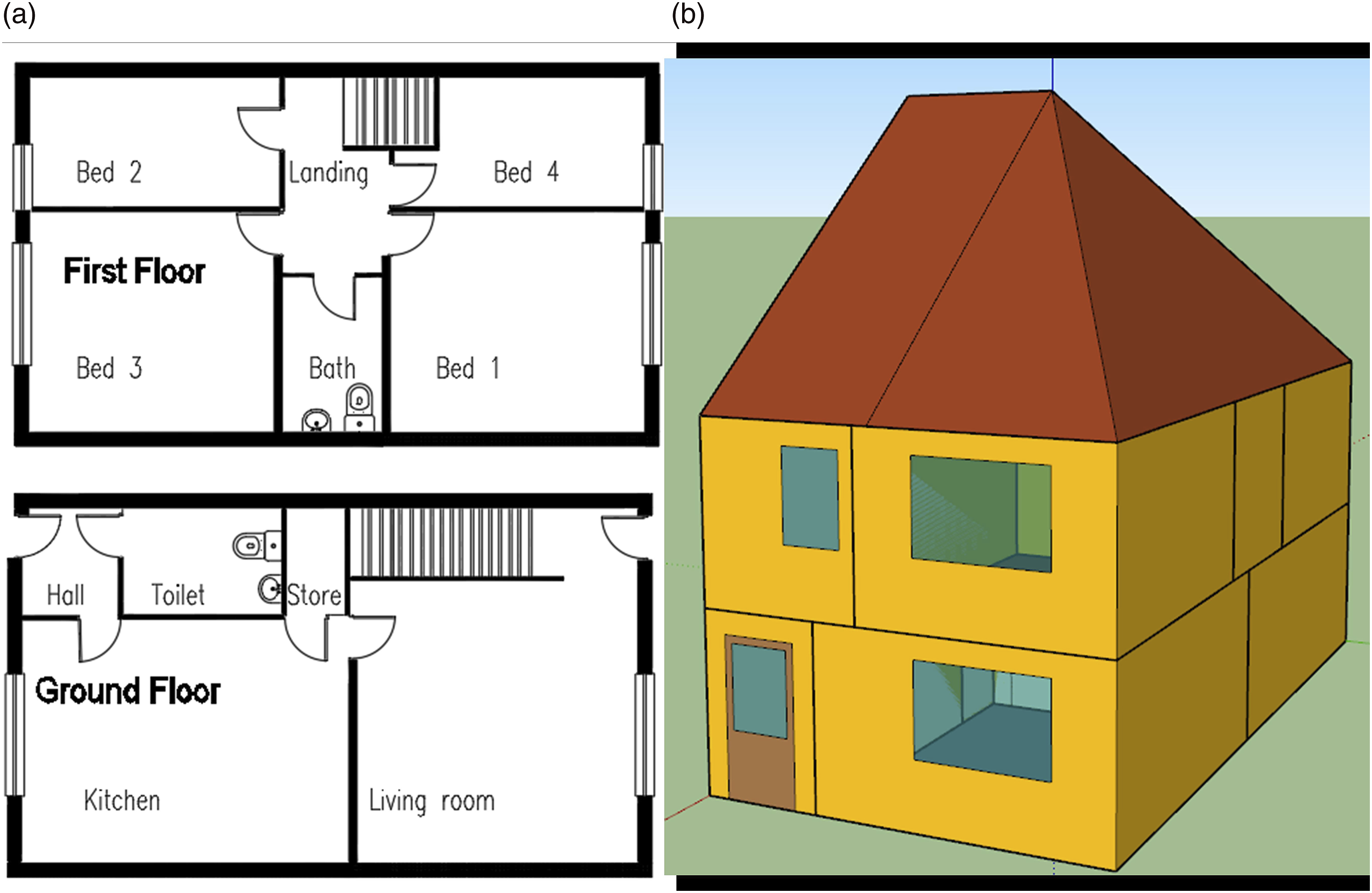
Maximum overall heat transfer coefficient for the new buildings.
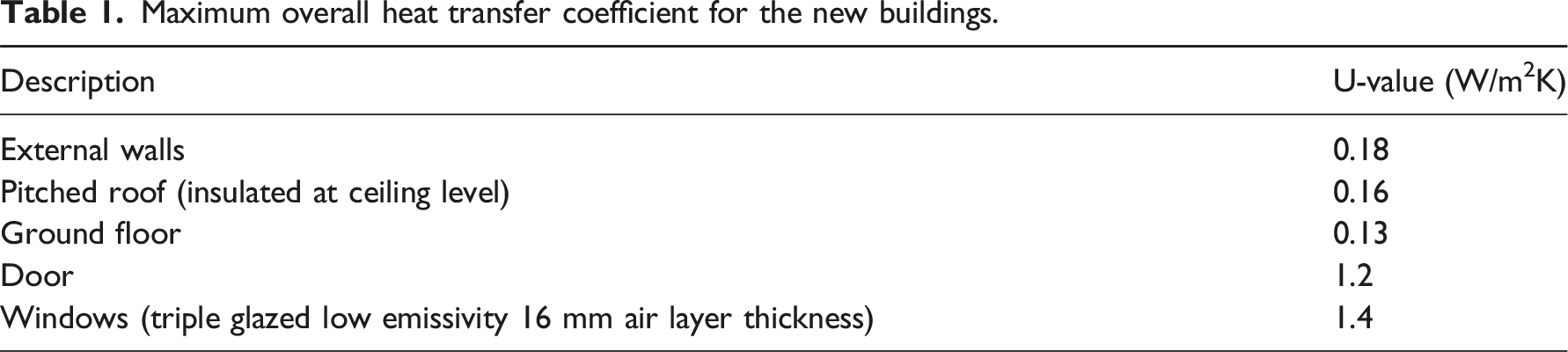
Infiltration was assumed to be 0.15 air changes per hour and ventilation 37 L per second for the whole house. These were apportioned to the various spaces in the dwelling according to their floor area. 10
Domestic hot water demand profile
To calculate the hot water demand of the dwelling, data produced by the LEEDR project, which included measurements of hot water consumption profiles for different types and sizes of domestic dwellings in the UK, was used.
11
The average hourly hot water demand profile for a four-bedroom dwelling with four occupants over a 24-h period is shown in Figure 2. From this, the average daily demand was determined to be 119.7 L per day. Average hourly hot water demand profiles derived from 12 months of measured data in LEEDR for 24 hours.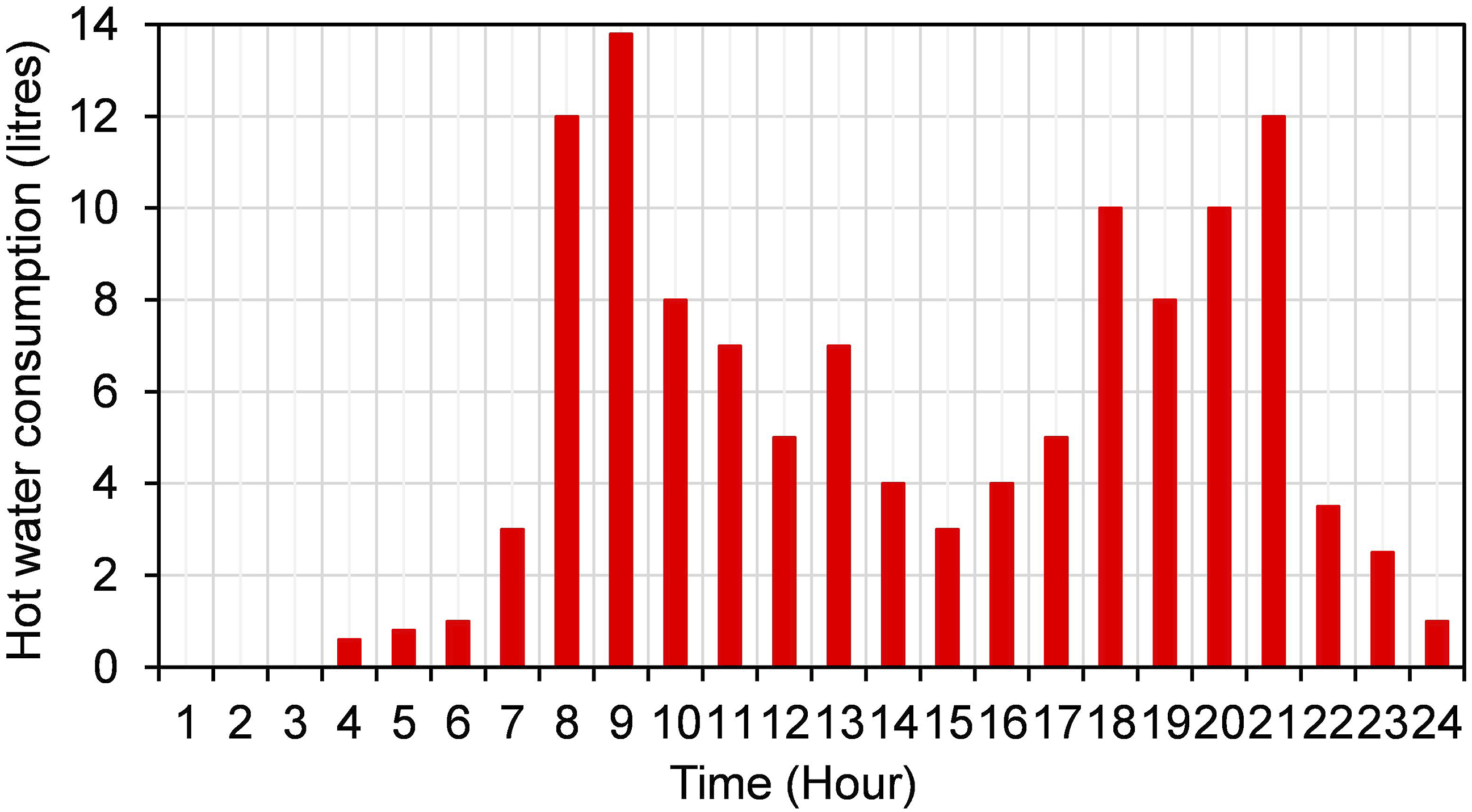
CO2 heat pump
The heat pump model was based on experimental data from tests performed on a CO2 air-to-water heat pump (AWHP) developed in the laboratory at Brunel University. The heat pump is a two-stage air-to-water system that can deliver hot water at temperatures up to 80°C. The tests were carried out in an environmental chamber across a range of ambient temperatures from 0°C to 20°C and water return temperatures to the heat pump from 17.5°C to 47.5°C. Measurements of heat delivered and electrical power consumption were used to calculate the Coefficient of Performance (COP) of the heat pump, which was plotted in a performance map as shown in Figure 3. It can be seen that an increase in the ambient temperature leads to an increase in the COP, whilst an increase in the water return temperature leads to a reduction in the COP. This is because it reduces the heat transfer that can be affected in the gas cooler of the heat pump and, hence, its heating capacity.
12
A performance map was used to simulate the performance of the heat pump within the TRNSYS simulation environment. Performance map of the CO2 AWHP.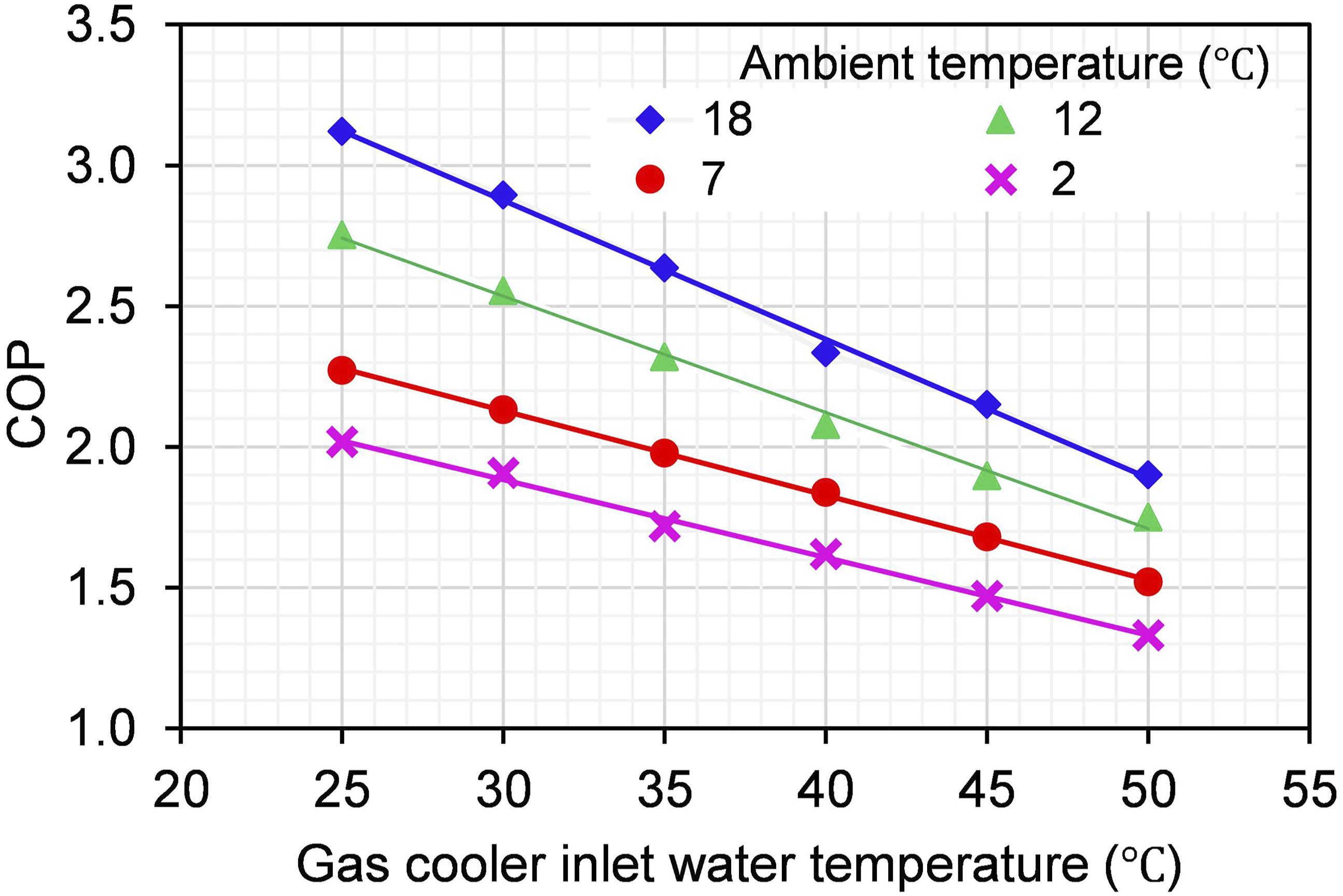
Integrated heating system
Figure 4 shows a schematic diagram of the heating system, which includes a CO2 heat pump, thermal energy storage (TES) tank, heat distribution system, and domestic hot water supply. The schematic of the whole system.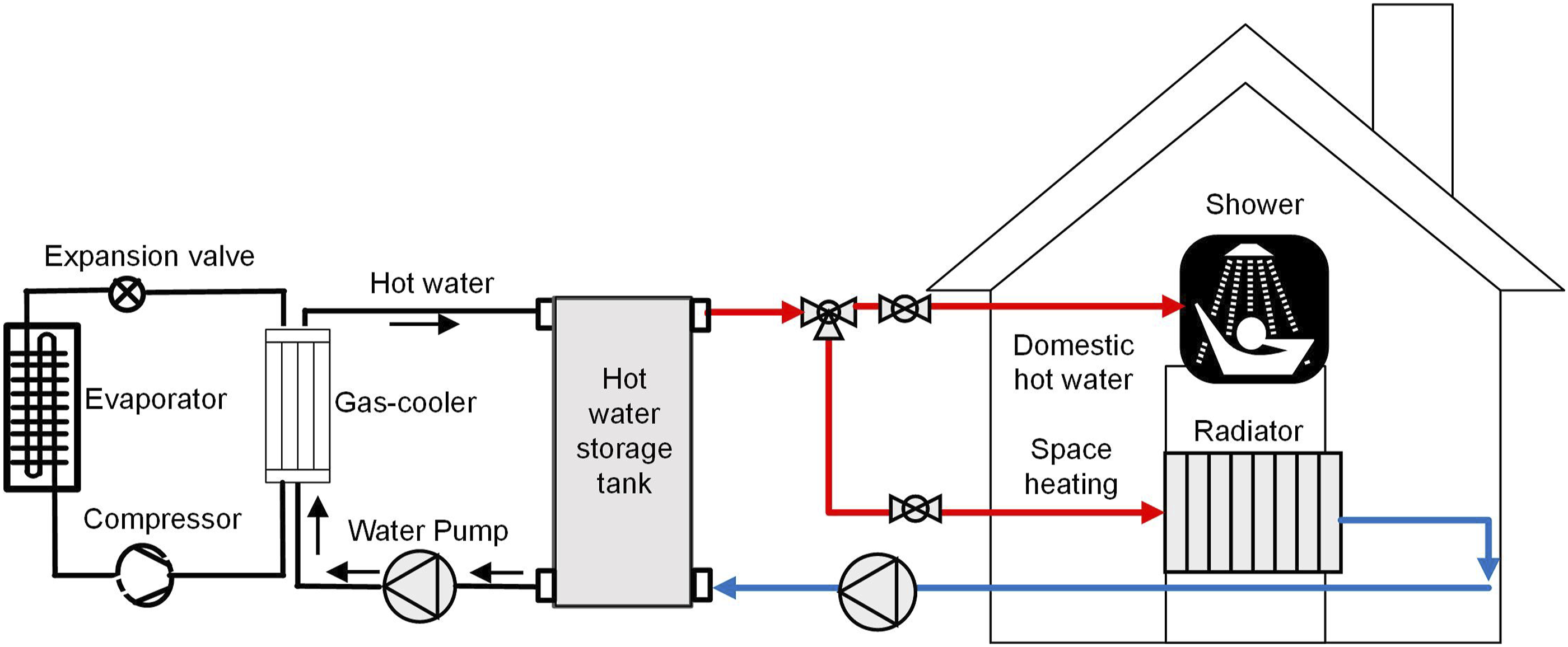
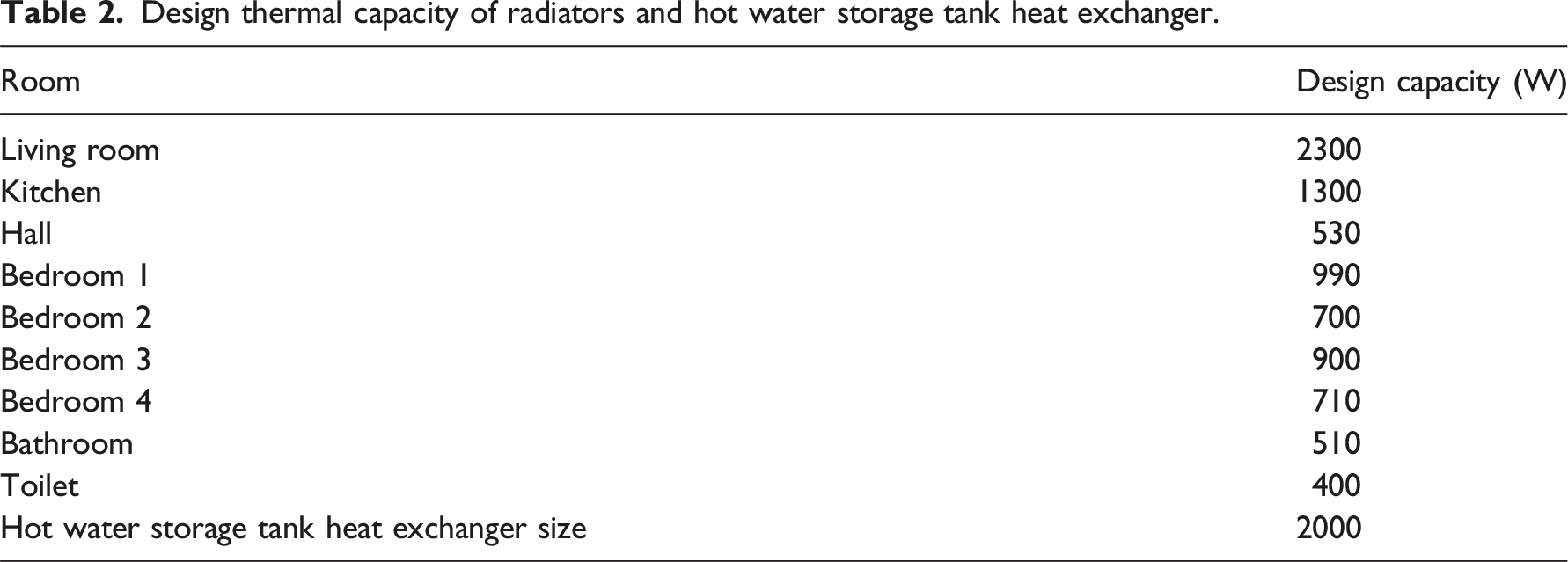
Design thermal capacity of radiators and hot water storage tank heat exchanger.
Simulation results and discussion
The hourly simulation of the heating system was performed using the TRNSYS 18 software platform.
13
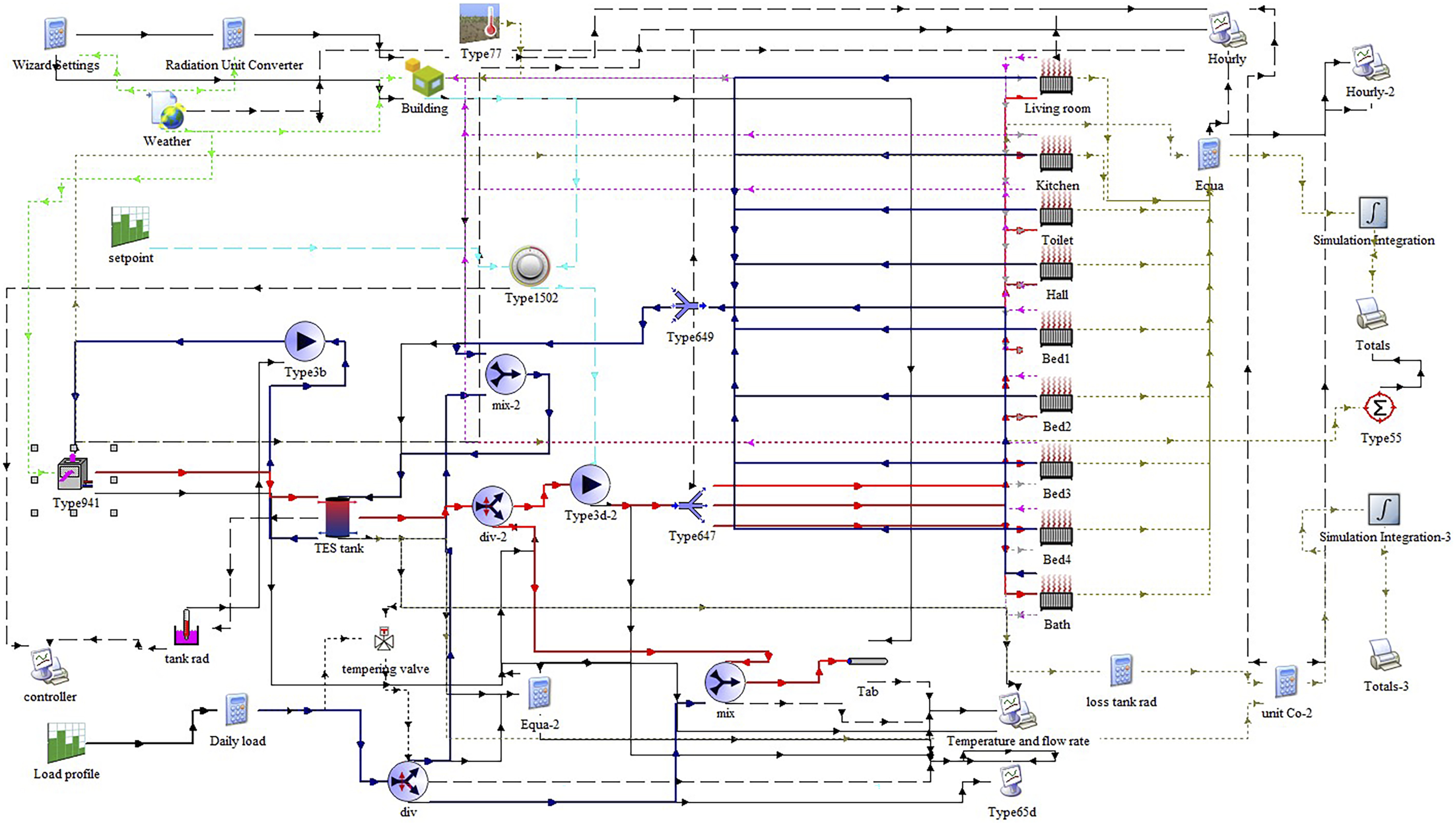
The simulation flow diagram is shown in Figure 5 and the components and data flows are illustrated in Figure 6. Space heating (SH) is controlled by a thermostat located in the living room. For the simulations, the thermostat was set at 20°C with a dead band of ±1.0°C. This dead band is fairly standard in most domestic thermostats to provide reasonable control of internal space temperature without excessive cycling of the heating system that can lead to a reduction in efficiency and lifetime of the heating system (boiler or heat pump). The set-point temperature was selected based on thermal comfort requirements and a recommendation by Public Health England to minimise health risks in winter
14
). The space heating schedule, shown in Figure 7, was chosen for an initial base case, based on the occupancy pattern of the dwelling during the week. The temperature in the storage tank was assumed to be maintained constant by the heat pump at 60°C with a ±3°C dead band. TRNSYS simulation flow chart. TRNSYS model of the proposed system. Space heating schedule.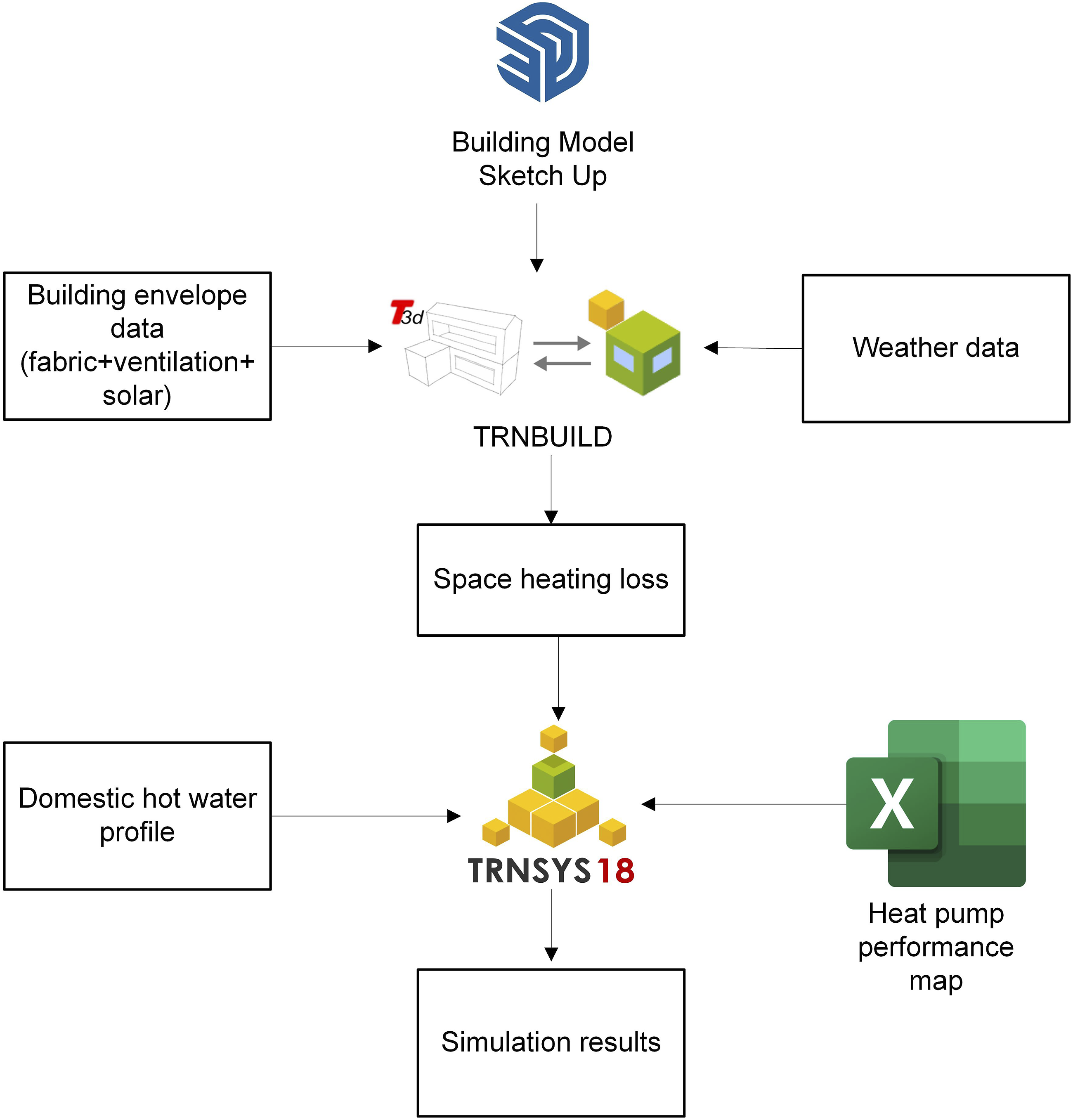
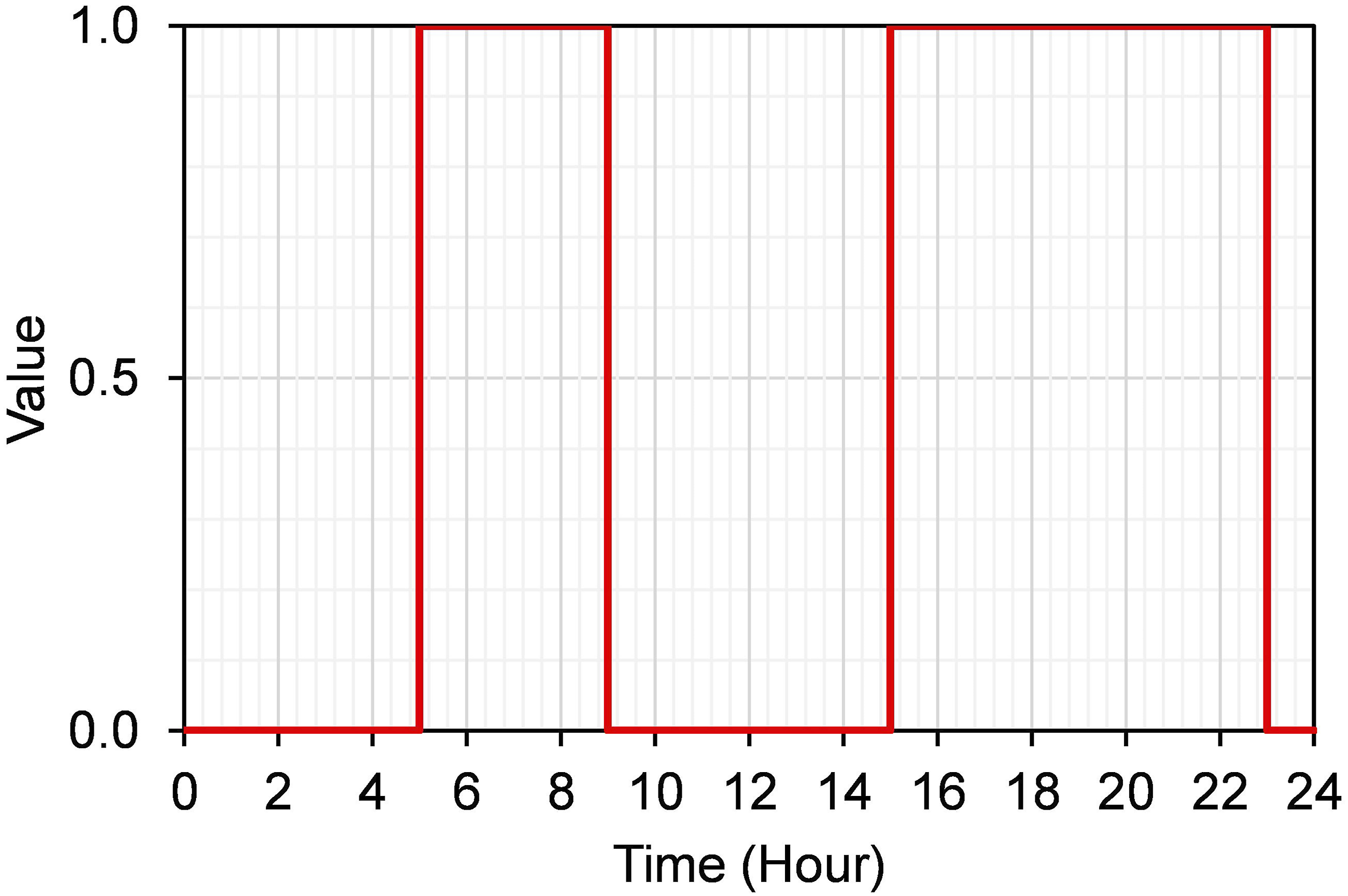
Heating systems in the London area of the UK are normally designed to meet the heating requirements at an ambient temperature of −3°C. 15 Based on this external temperature, the building characteristics and the indoor design temperature, the thermal load at design conditions was determined for every space in the dwelling without including internal or external heat gains. This gave the thermal capacity of the radiators and a maximum space heating load of 8.34 kW. The domestic hot water (DHW) load was determined to be approximately 2.0 kW based on the average hot water consumption of 119.7 L per day, at 60°C temperature setpoint in the tank and 45°C temperature at the taps.
Sizing of thermal energy storage tank
The focus of this analysis was on the investigation of the impact of the thermal energy storage tank size on the performance of the integrated heating system. The storage tank considered was of typical cylindrical construction with 25 mm polyurethane insulation providing an overall heat transfer coefficient through the wall of 0.83 W/m2 K.
Figure 8 illustrates the variation in supply and return temperatures within a 200 L thermal energy storage tank for a 3-day space heating schedule in January. It can be seen that at the start of the cycle, the supply temperature from the tank to the radiators is approximately 60°C and then drops to 55°C during the space heating period. At the end of this period, the heat pump continues to run to heat the water in the storage tank to 63°C, which is the upper set point of the tank thermostat. The ON period of the heat pump depends not only on the space heating schedule but also on the time that will be required to charge the storage tank to its full capacity after the schedule controller turns off space heating. Heat pump operation and supply and return from 200 L storage tank.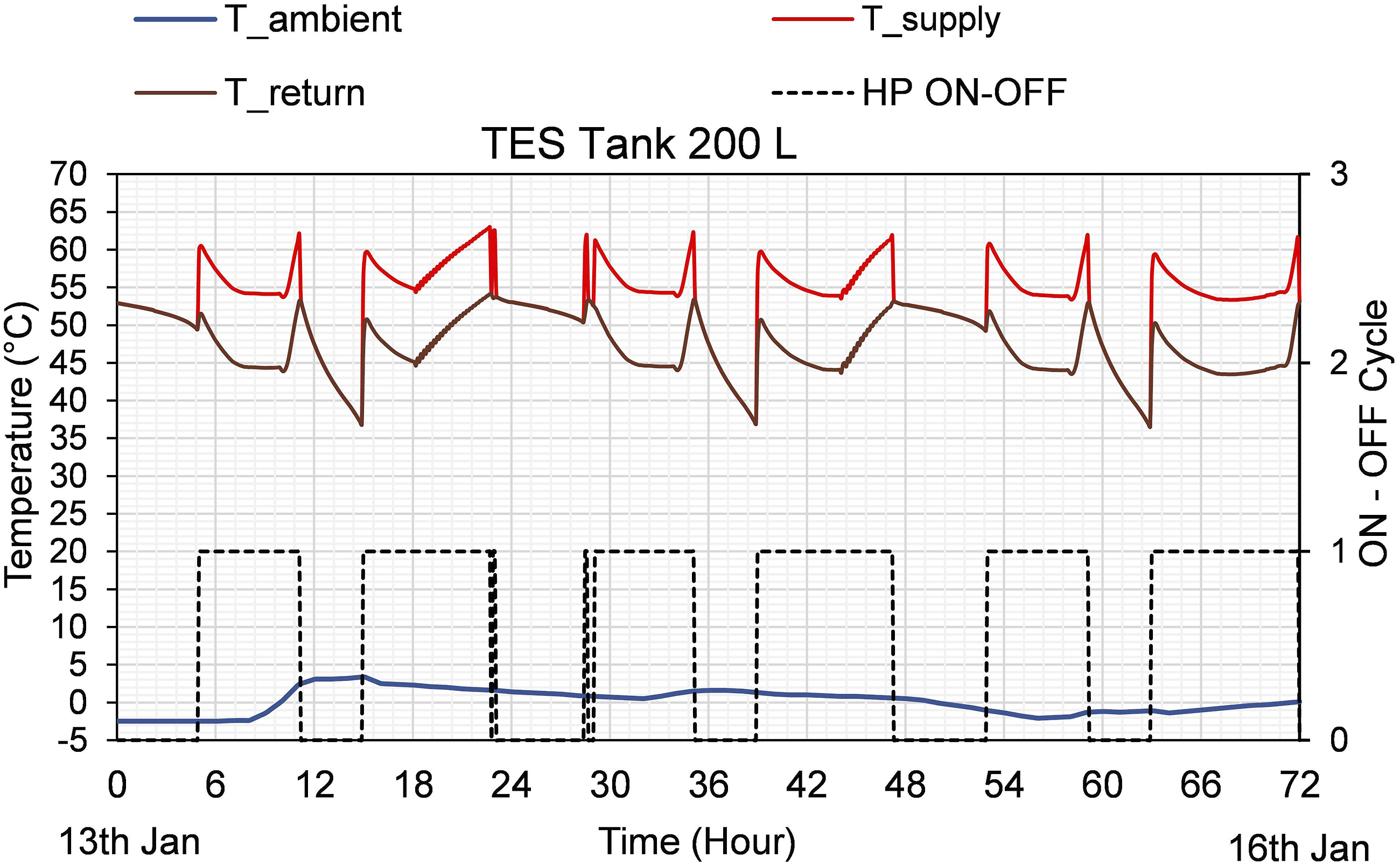
The influence of the thermal storage size on satisfying the temperature in the living room of the dwelling for the reference space heating schedule in Figure 7 was considered using storage volumes of 200 L, 300 L, 400 L and 500 L, for the 10 coldest days of the year, in January. The ambient temperature and variation of the living room temperature for the reference space heating schedule are shown in Figure 9. It can be seen that for ambient temperatures of 5°C and above, all storage volumes can provide the required temperature in the living room. For ambient temperatures between −1°C and +2°C, the storage volumes of 200 L and 300 L struggle to meet the indoor temperature in the morning, with the 300 L tank performing slightly better. Variation in temperature in the living room for different hot water storage volumes during a 12-hour operating schedule.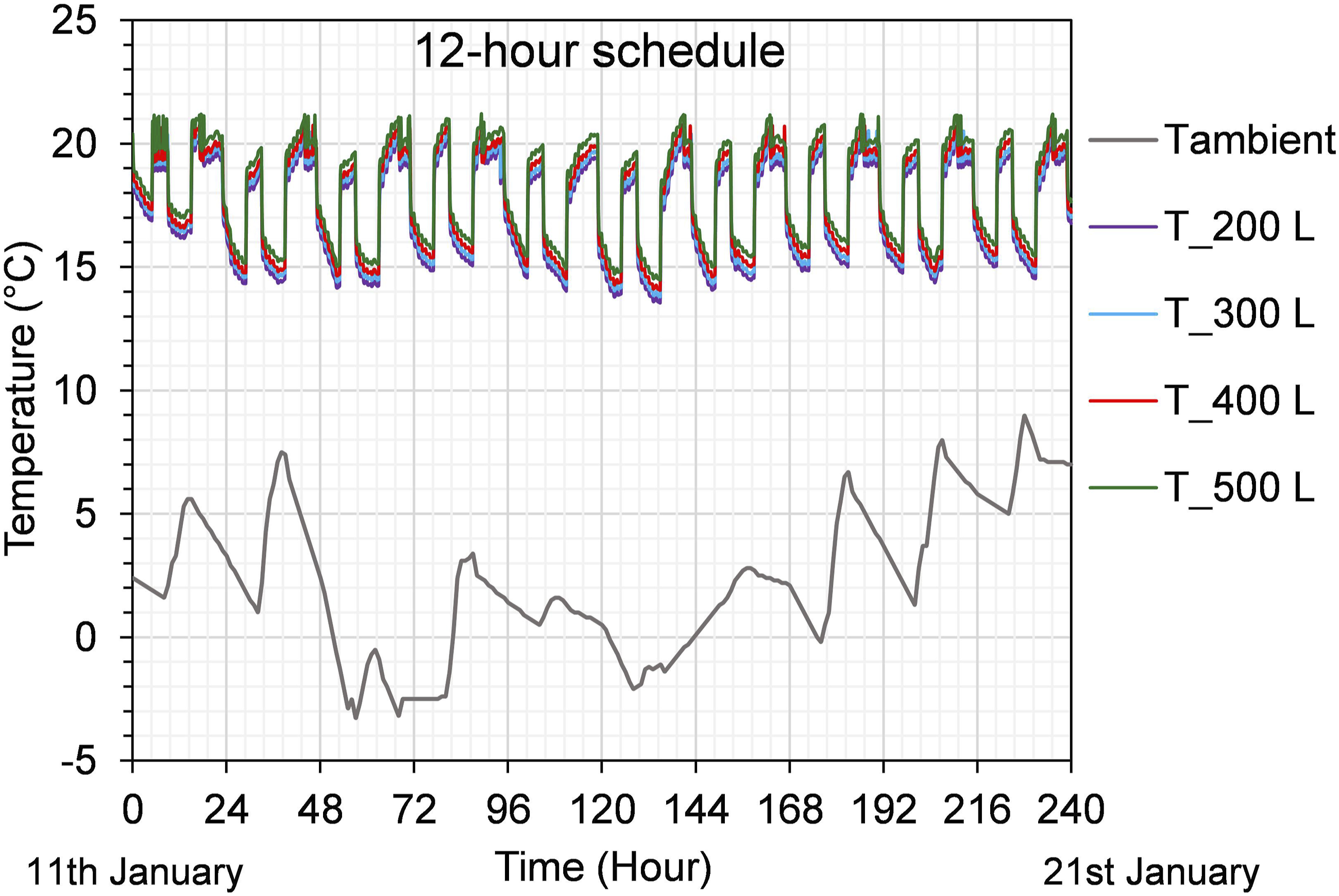
Figure 10 shows the total annual energy consumption of the heat pump, the heat delivered to the radiators, the heat used for domestic hot water, the thermal energy losses from the four storage tank sizes and the number of heat pump on-off cycles for the year. Using the domestic hot water schedule for the building shown in Figure 2 with the assumption of two showers in the morning and two in the evening, the annual thermal energy for domestic hot water was determined to be 1780 kWh per year. The total heat delivered by the heat pump increases from 8100 kWh for the 200 L tank to 8900 for the 500 L tank, whereas the heat delivered to the radiators only increases slightly from 5800 kWh to 6060 kWh. The difference between the total energy delivered by the heat pump for the 200 L and 500 L storage tanks is the higher heat losses from the larger storage tank. Thermal energy generated and losses for different storage tank sizes.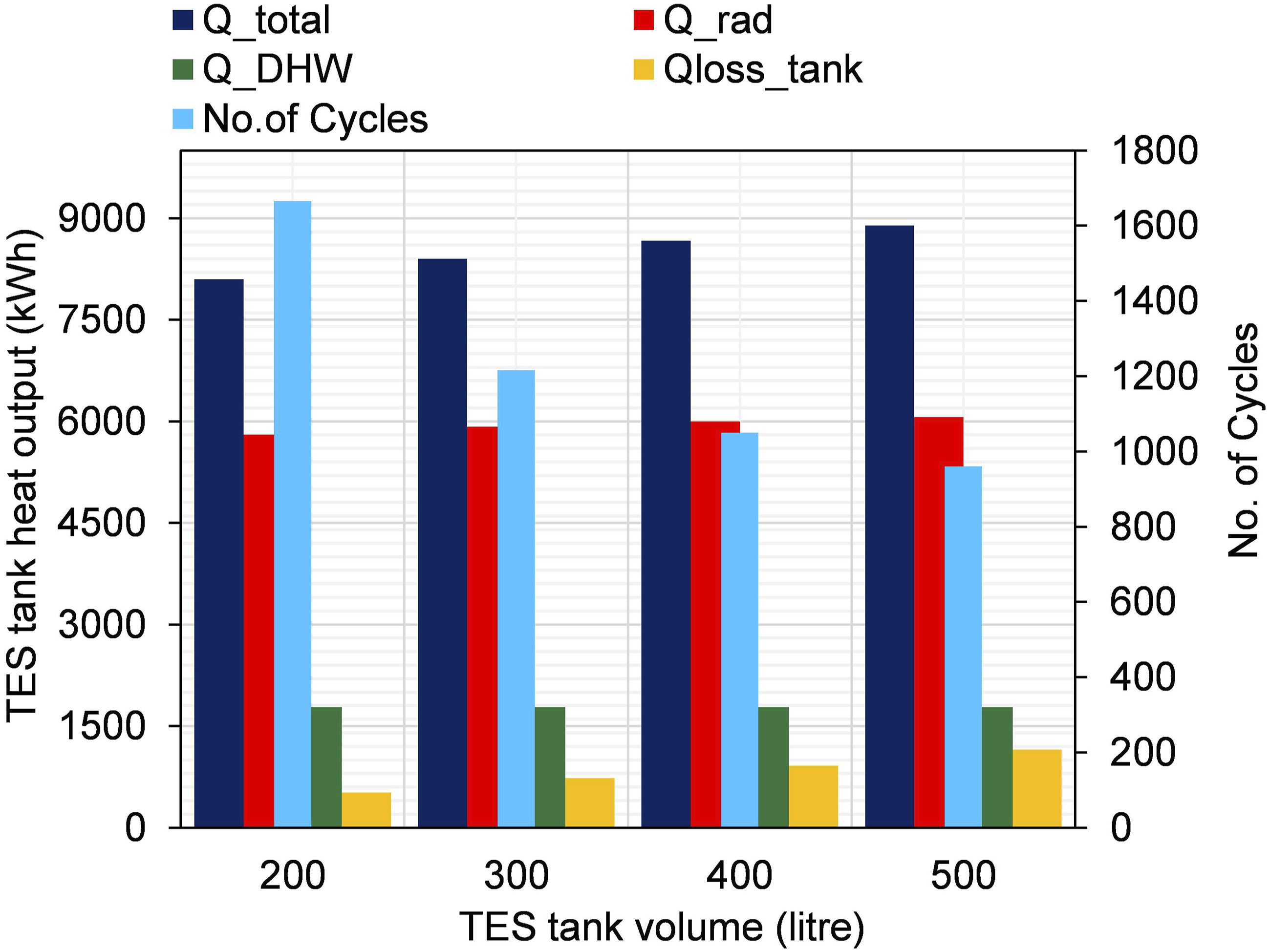
The cycling rate of the heat pump will increase with the smaller storage tank from 960 for the 500 L to 1670 for the 200 L. Although lower cycling rates are preferable for an extended compressor lifetime, an average of 5 cycles per day for the 200 L tank is not expected to have an adverse impact on the lifetime of the heat pump compressor.
Extended heat pump operating period
A way of improving the performance of the heat pump system during low temperature winter weather conditions is to increase the operating time of the heat pump. The impact of this was investigated by running the simulations with an extended period of operation of 1 hour in the morning. The results are shown in Figure 9. It can be seen that with this change, the system with the 300 L tank satisfies the internal temperature requirements for the entire period; however, the 200 L tank struggles to meet the required living room temperature when the ambient temperature falls below +3.0°C. To address this, the operating schedule of the heat pump was extended to 14 hours by starting the heat pump at 4.00 a.m. From the results, it can be observed that with this schedule, all storage tank sizes can satisfy the required temperature in the living room.
Comparing the data in Figures 9, 11 and 12, it can also be observed that increasing the period of operation of the heat pump increases the minimum temperature in the dwelling during the unoccupied period from 13.5°C for the 12-h schedule to 16°C for the 14-h schedule providing a higher temperature in the dwelling during the unoccupied periods and quicker warm-up when the heating system is switched on. Variation in temperature in the living room for different hot water storage volumes during a 13-hour operating schedule. Variation in temperature in the living room for different hot water storage volumes during a 14-hour operating schedule.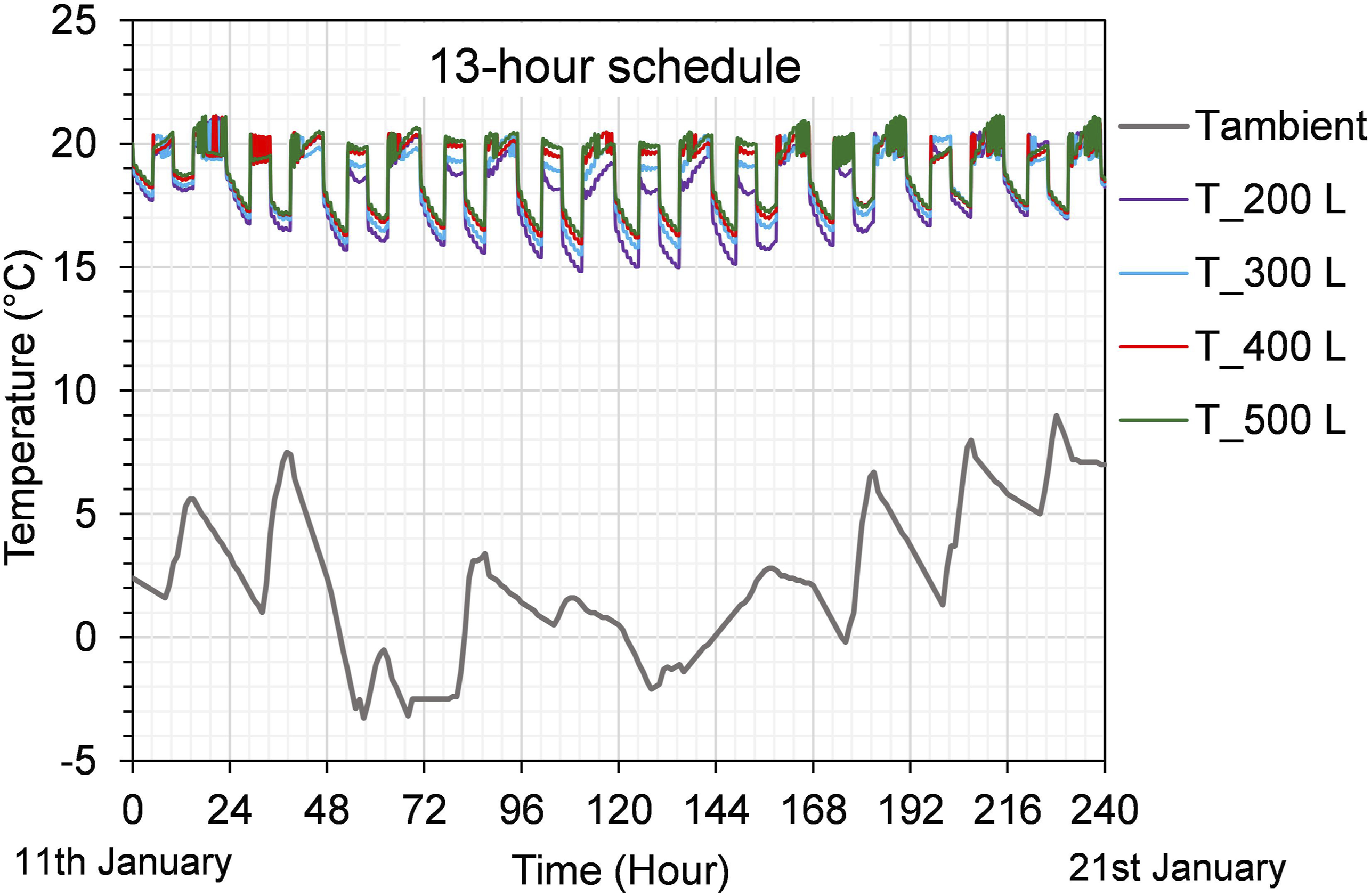
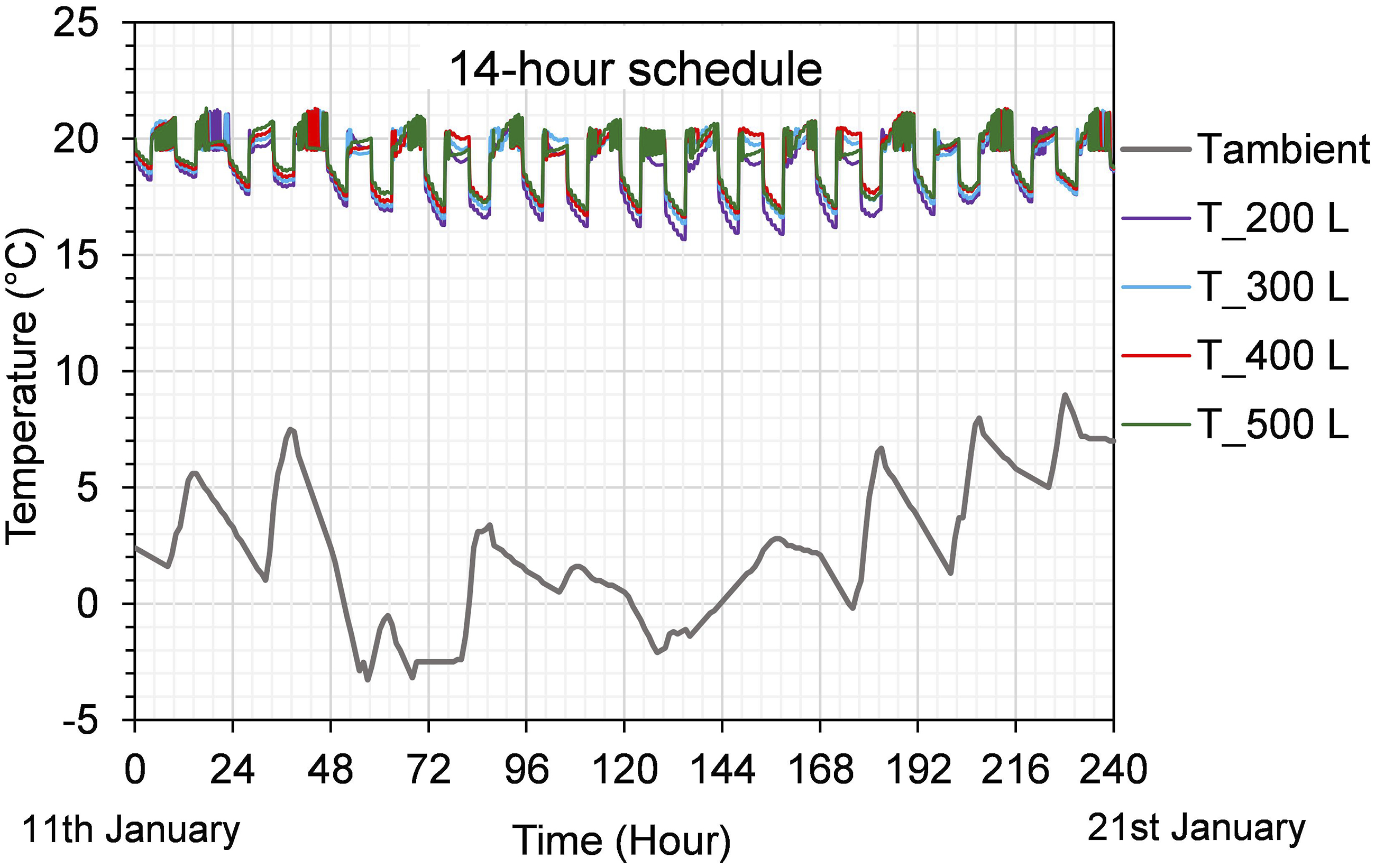
Figure 13 presents an energy comparison between the 200 L and 300 L storage tanks for extended periods of operation, specifically 13 and 14 hours on cold winter days. The difference in energy consumption between the storage volumes is small, with the larger tank consuming approximately 300 kWh more. Extending the space heating schedule time from 13.00 h to 14.00 h will only lead to 100 kWh higher energy consumption due to the small number of hours the heat pump will be operating at low ambient temperatures in the winter months. Energy comparison between 200 L and 300 L storage tanks.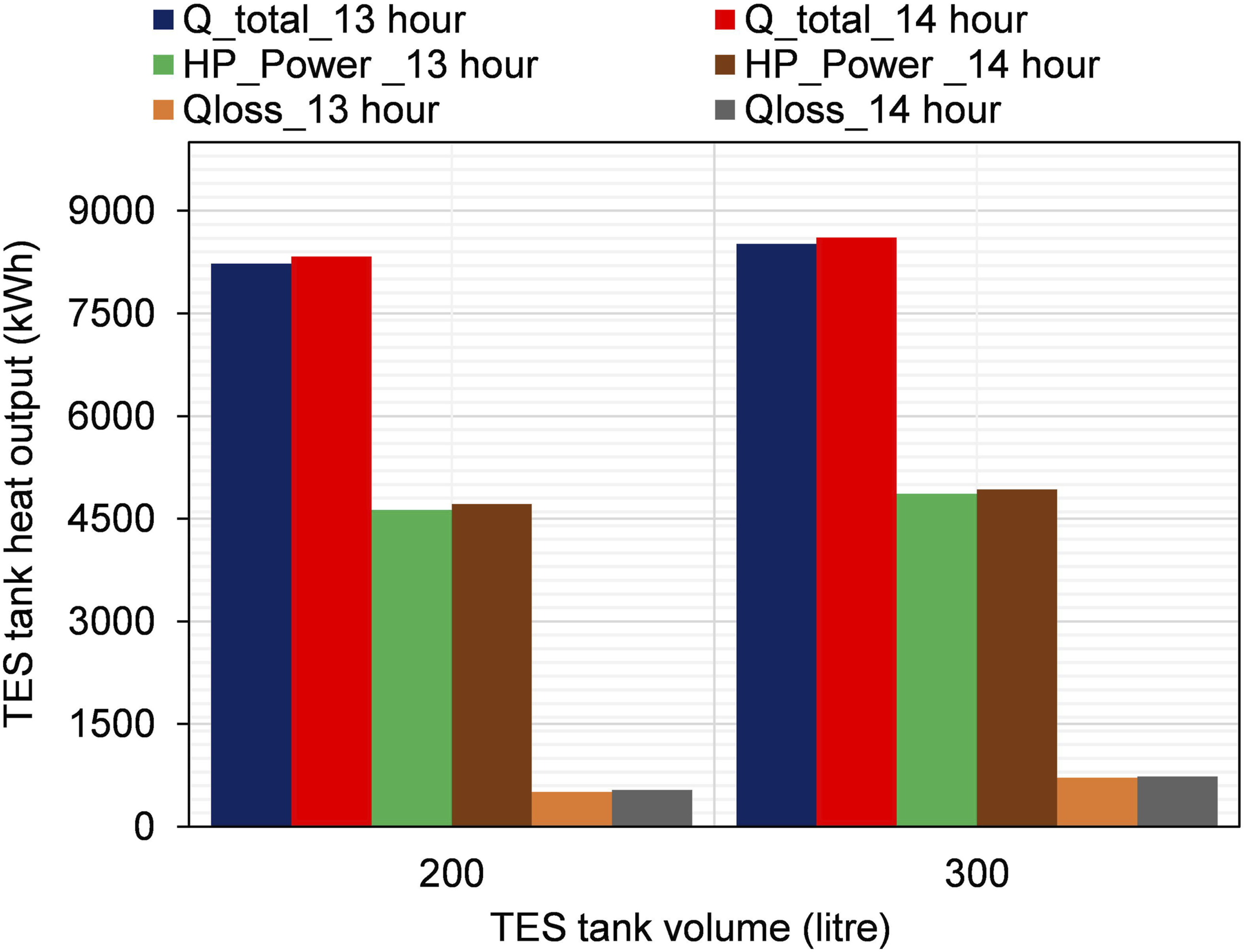
These results indicate that, by keeping the size of the heat pump constant, a combination of storage tank size and varying space heating schedules can provide the design thermal conditions in the dwelling during occupied periods. The choice of storage tank size will, therefore, depend on space availability and the flexibility that the larger storage tank will provide in the use of domestic hot water, particularly for showers and bathing.
Comparison of heat pumps and gas boilers in domestic dwellings
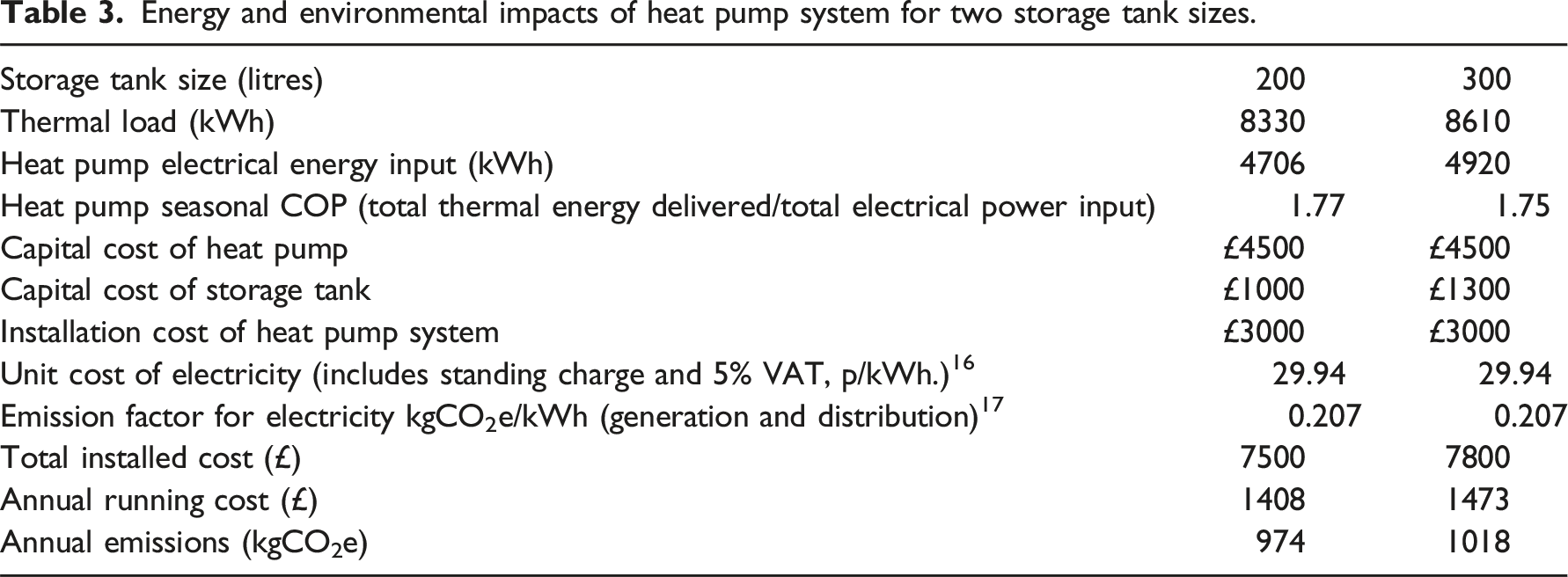
Energy and environmental impacts of heat pump system for two storage tank sizes.
Energy and environmental impacts of gas boiler system for two storage tank sizes.
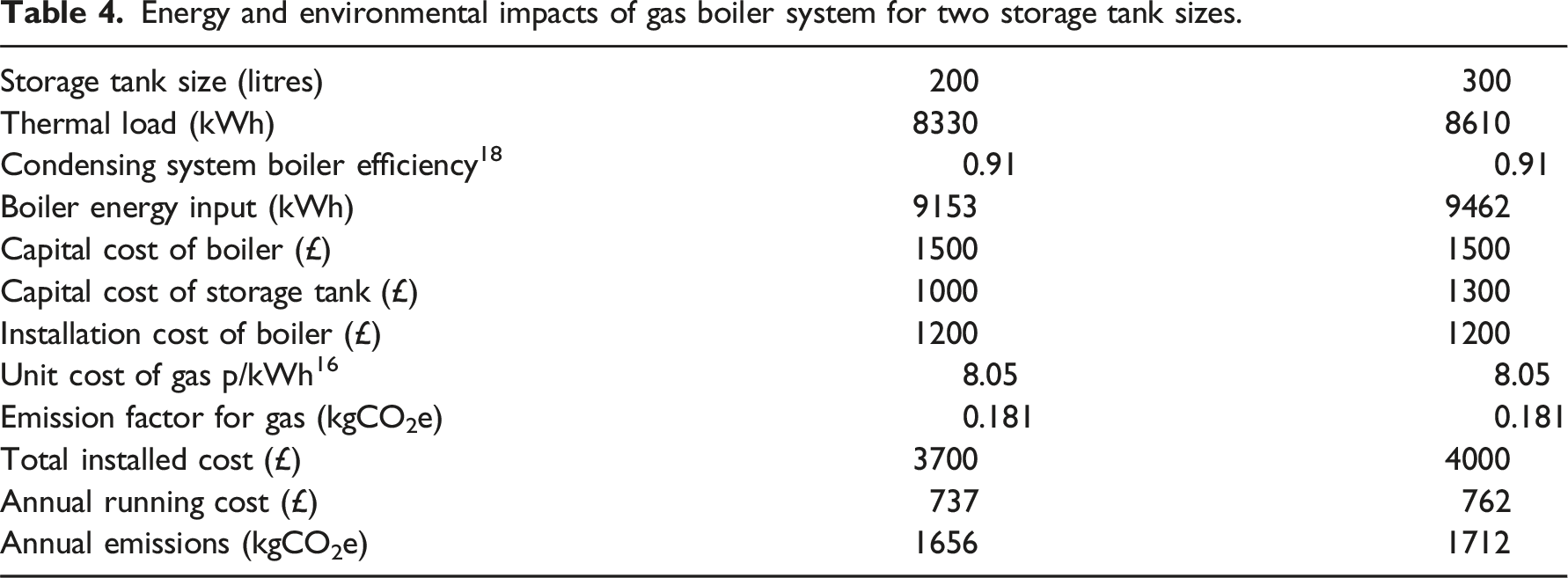
The capital and installation costs of a 4.5 kW thermal capacity heat pump at an ambient temperature of 7°C and hot water delivery temperature of 60°C and a 12 kW system gas boiler as well as the cost of the two thermal storage tanks are average costs obtained from manufacturers.
The results show that the use of the 300 L storage tank will lead to a slightly higher capital cost of approximately £300 and slightly higher seasonal energy consumption in the case of both the heat pump and the gas boiler. However, it will provide higher flexibility in the use of domestic hot water for showers and better temperature control in the space, especially in colder winter conditions. Therefore, the main determinant in the choice of storage tank will be the availability of space to accommodate a 300 L tank. Another option is to use a combination gas boiler rather than a system boiler, which will eliminate the need for a storage tank but will necessitate the use of a higher capacity boiler of the order of 24 or 28 kW to satisfy the domestic hot water flow requirements of the dwelling. The total capital cost of such a system may be lower by approximately £500, but the control of hot water flow for showers will be affected by the other simultaneous hot water use in the dwelling.
The cost of radiators and piping has not been included in the analysis as it has been assumed to be the same for the CO2 heat pump that will be able to deliver hot water at 60°C and the gas boiler. The 60°C delivery temperature is considered satisfactory for well-insulated dwellings for both heat pumps and gas boilers. The latest Part L regulations recommend a flow temperature of 55°C. 19
Thermoeconomic analysis of heat pumps and gas boilers
It is now universally accepted that heat pumps will play a significant role in the decarbonisation of space heating in domestic dwellings. Heat pump technology is now becoming available that can provide water flow temperatures similar to those of gas boilers and therefore can be used as a direct replacement of gas boilers without the need to replace existing radiators. The COP of the heat pump, though, reduces as the hot water supply temperature is increased.
A heat pump will require a thermal storage tank to satisfy the domestic hot water requirements and supplement the heat pump output when there is a simultaneous demand for space and domestic hot water heating. Thermal storage can also enable the heat pump to be switched off during periods of maximum grid demand, thus enabling the provision of demand services to the grid.
Even though many small domestic dwellings nowadays use combination boilers that do not require thermal storage external to the boiler, better thermal comfort and management of domestic hot water usage for larger dwellings can be achieved through the use of ‘system’ boilers that require thermal storage if space is available for the installation of the storage tank.
As the market and skilled personnel for the installation of heat pumps increase, their installed cost is expected to decrease. Experience with their use will also increase the confidence of prospective users of the technology. The current government grant of £7,500 for the installation of heat pumps reduces the cost below that of boilers for new installations in well-insulated dwellings. In the UK, however, 80% of the dwellings that will be in use in 2050 have already been built. The decarbonisation of these dwellings presents a significant challenge due to the high cost of retrofitting to enable low-temperature heat pumps that deliver heat up to 55°C to be effective.
The CO2 heat pump developed at Brunel University of London has been demonstrated to be able to deliver hot water temperatures up to 80°C, which is equivalent to that of domestic boilers. Their use will enable the retrofit of heat pumps in existing dwellings without the need for extensive and costly retrofit and the replacement of radiators in the near term. The results of tests at high temperatures and the use of Phase Change Material storage, which halves the volume of storage required compared to hot water storage, will be presented in a follow-up paper. Design optimisation studies aimed at improving the seasonal Coefficient of Performance (sCOP) of the heat pump will also be presented.
Conclusions
In this paper, a study of a transcritical CO2 air-to-water heat pump heating system integrated with a hot water thermal energy storage tank to satisfy the heat demand of a well-insulated 4-bedroom semi-detached dwelling in the London area (UK) is presented. The heat pump performance characteristics were obtained from controlled tests in environmental test chambers at Brunel University and the performance of the integrated heating system integrated heating system was modelled using the TRNSYS simulation software. The following are the key outcomes of the study. • The CO2 air-to-water heat pump, which was designed and built by the authors of the paper in the laboratories of Brunel University, was demonstrated to be able to deliver hot water temperatures up to 80°C similar to those of conventional gas boilers. The results presented in this paper are for between 55 and 60°C flow temperatures that are recommended for well-insulated domestic dwellings. • It has been shown that hot water storage tanks between 200 and 300 L can provide the required thermal environment in the domestic dwelling during the occupied periods. The smaller storage tank will struggle to maintain the indoor temperature during outdoor ambient temperature below 3°C. This shortcoming can be addressed by running the heat pump longer during the morning period. The smaller storage tank may also have limitations if more than two dwelling occupants decide to have a shower during the same time. The 300 L storage tank offers more flexibility but at slightly higher capital and running costs for the system. The higher running cost arises from the higher thermal losses from the tank. The choice between the two tanks will mainly be based on space availability for the larger tank and the flexibility in temperature control for space and domestic hot water heating it provides. • For the heat pump tested and current domestic electricity and gas prices and emission factors, the annual running cost of the heat pump was found to be approximately double that of the gas boiler but offering 40% reduction in CO2 emissions. • With design and control optimisation it is expected that the sCOP of the CO2 heat pump can reach 2.5 at hot water flow temperature of 60°C. The ability of the CO2 heat pump to provide water flow temperature at different levels depending on the thermal load and heat distribution system make it suitable for a wide range of applications. Further work will focus on the design and control optimisation of the integrated heat pump based heating system for domestic applications with both hot water and PCM thermal energy storage.
Footnotes
Acknowledgments
The authors would like to acknowledge the funding received from the Active Building Centre and the Centre for Sustainable Energy Use in Food Chains (CSEF) for this work. The data used in the study are included in the paper, but if further data is required, it can be obtained by contacting the corresponding author.
Declaration of conflicting interests
The author(s) declared no potential conflicts of interest with respect to the research, authorship, and/or publication of this article.
Funding
The author(s) disclosed receipt of the following financial support for the research, authorship, and/or publication of this article: this work was supported by the Active Building Centre and the Centre for Sustainable Energy Use in Food Chains (CSEF).
