




Abstract
Much of the world has an urgent need for housing yet simultaneously have set binding targets on reaching zero-carbon. The buildings sector is responsible for 31% of global CO2 emissions, 50% of which results from operational energy use in housing and 18% from embodied carbon emissions. Previous research has claimed that reducing both operational and embodied carbon to net zero is impossible with current building methods. In this paper, we introduce a new time-series based whole-life carbon analysis methodology for examining such problems globally. This combines operational and embodied modelling together with current and predicted grid carbon intensities. As a demonstration of the approach, a model for UK housing demand was created, predicting the carbon impact if a modular Passivhaus approach was used to meet the housing target of 300,000 homes per year. By 2050, this housing solution only consumes 90% of the total embodied and operational carbon budget allocated to new housing (545 of 604 MtCO2e). It is therefore concluded that with a modular approach, the housing target can be met whilst remaining within the carbon budget, suggesting that the approach has the potential to help solve housing need and the need to reach net zero rapidly and globally.
Practical Application
If the construction industry is to stay buoyant yet not undermine carbon targets it needs to move towards construction techniques that simultaneously reduce operational and embodied emissions. Although once upon a time sustainability was seen as a move in a direction, it is increasingly framed as a numeric target – zero. Hence the industry needs approaches that meet this target and accountancy methods that make this evident. This work demonstrates both.
Keywords
Introduction
Achieving net-zero carbon is one of the most significant challenges that the construction industry faces worldwide. Currently, 149 countries have set net-zero targets, up from 124 in December 2020 1 demonstrating the growing global commitment to averting the worst impacts of climate change. The total carbon dioxide emissions from buildings is responsible for 31% of global emissions, with operational and embodied emissions representing 50% and 18% respectively 2 . Evidently, the housing industry has a significant impact on whether net-zero goals can be achieved in any country aiming to expand housing or replace older stock.
Simultaneously, many nations are suffering a mass housing crisis or rapid urbanisation in general. In the UK, the supply of homes has failed to meet demand since 1947, and recent government goals to provide 300,000 homes per year have not been met 3 . In 2022-23, 234,000 homes were completed, 4 which is 22% fewer than the target.
These two needs are seemingly contradictory. So, how can the world produce more housing whilst simultaneously reducing carbon emissions? Internationally, there are no policies that require whole life cycle reporting in the construction industry, despite being widely recommended. This paper aims to develop a new methodology of timeseries whole life cycle analysis to inform sustainable design choices, particularly in early design stages, and to show this will lead to radically different conclusions compared to only considering part of the life-cycle.
The new approach is then demonstrated by combining super low energy design (Passivhaus) with modular construction as a solution and evaluating the hypothesis:
The UK housing target of 300,000 new homes per year can be achieved whilst remaining within the UK 2050 carbon budget via a mass rollout of modular Passivhaus construction.
Background
Targets
In the Climate Change Act 2008 (2050 Target Amendment) Order 2019, 5 the UK Government committed to a 100% decrease in greenhouse gas emissions compared to 1990 levels. The Net-Zero Strategy published in 2021 outlines significant commitments to improving the efficiency of homes, primarily through the phasing out of natural gas boilers and increasing the minimum energy efficiency standards of homes 6 . For new housing, the Future Homes Standard will be enforced from 2025 which imposes tighter regulations on energy performance and aims to align the housebuilding industry with the Net-Zero Strategy 7 . However, this has been met with controversy, with some saying that it is not ambitious enough given the current climate emergency. In an industry consultation, 72% of survey respondents (2388 individuals) said that the Future Homes Standard should reduce CO2e emissions from housing more than the 75-80% that it currently aims for 7 .
Other independent bodies have released best practice regulations for building standards. The RIBA 2030 Climate Challenge Design Guide 8 outlines voluntary performance targets that help practices align themselves with the Net-Zero Strategy. It contains embodied and operational carbon targets for all building types, as well as providing frameworks and tools to help achieve these targets 8 . Though these targets are not legally enforced, they demonstrate the awareness and urgency expressed by the institute, and aspirations to reform the industry and produce lower-carbon buildings. The ability of the RIBA targets to allow the UK to reach both housing and net-zero targets will be analysed in this research and compared against the modular Passivhaus approach.
Modular design
The modular design approach aims to solve the problems that follow traditional on-site building methods. Building components (or sometimes entire buildings) are produced and assembled in a manufacturing facility and then transported to site9,10. Thus, construction can be faster and more efficient11,12. However, since this is a relatively new technology, little data is available on the comparative benefits of modular against traditional construction. Maslova et al. 12 raise that these cost and time savings may only be produced when construction is deployed at a greater scale. Growth and investment in the industry will help to reap the benefits of modular construction 13 which is already commonplace in some countries such as Japan, where 113,000 pre-fabricated homes were built in 2022 14 . In the UK, around 3300 modular homes are built per year, however Make UK predicts that manufacturing capacity can grow to 20,000 homes per year by 2025 9 . With further development, this industry has scope to have substantial impacts on the future of construction.
Passivhaus
Passivhaus is an internationally recognised energy performance standard, with over 395 certified projects completed in the UK 15 . These developments cover most of the major construction sectors, including commercial buildings, educational facilities and domestic housing. The standard aims to reduce operational energy use in buildings, therefore minimising the resulting carbon emissions. This is primarily conducted by improving insulation in the building fabric and imposing stringent infiltration limits, thus reducing heat losses 15 . It has been proven that Passivhaus buildings can achieve net-zero energy standards, however the associated higher material use may lead to more embodied carbon in a building 16 .
Traditional housing construction
Operational carbon in traditional construction
In 2018, operational carbon represented 81.8% of emissions from domestic buildings 17 . These are defined by the Low Energy Transformation Initiative (LETI) as “the greenhouse gas (GHG) emissions arising from all energy consumed by an asset in-use, over its life cycle” 18 and represent Module B6 in the life cycle modules.
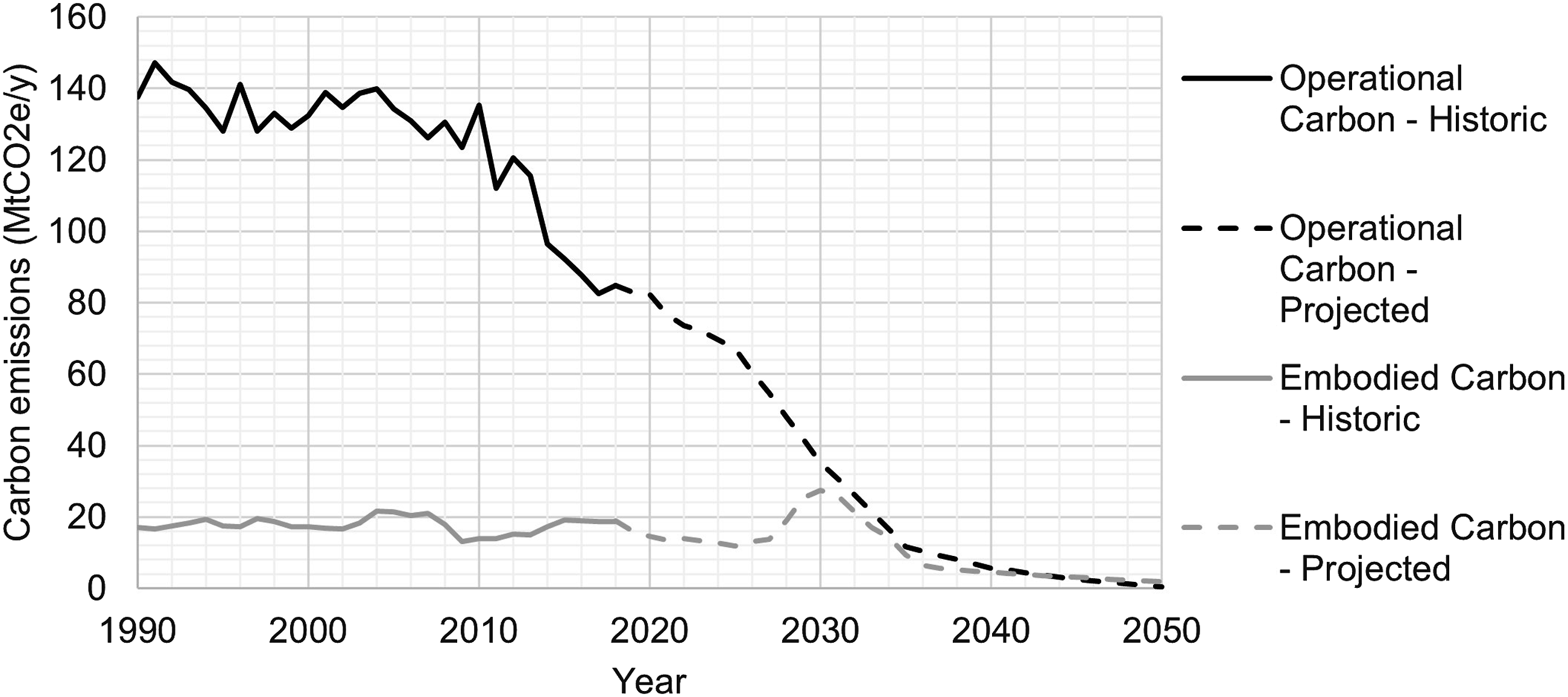
Numerous policy frameworks have been produced to provide intermediate targets in the journey towards net-zero 2050. Figure 1 shows the historical embodied and operational carbon emissions in the UK from 1990, and outlines the necessary emission reductions required up to 2050 calculated by the UK Green Building Council
17
. As shown, a steady decline in operational carbon emissions is required, accelerating between 2025 and 2035 as government policies tighten. The most significant of these policies as outlined in the Net-Zero Strategy
6
are outlined below: • Phasing out natural gas boilers, with installation of new and replacement boilers prohibited by 2035. • Increasingly stringent minimum energy performance standards, such as Future Homes 2025 which aims to reduce total carbon emissions in new housing by 75%. • Retrofitting of poorly performing homes to EPC Band C through the Home Upgrade Grant and Social Housing Decarbonisation Fund. This is expected to start in 2025, causing the rise in embodied carbon emissions between 2025 and 2035 in Figure 1. • Continuation in the decarbonisation in the UK power supply to reduce reliance on fossil fuels. Historic and projected carbon emissions in UK housing (data from UKGBC
17
).
Although these strategies show a growing commitment to the reduction of operational emissions in homes, they currently fail to provide robust and sufficient energy standards. RIBA has conducted a review of the Future Homes Standard and voiced concerns, particularly in the lack of specific targets for carbon emissions 19 which is key to driving substantial change in the sector 20 . Responses gathered from the public consultation share this view, with 72% of respondents agreeing that the proposed carbon reduction is too low and that the Future Homes Standard should be more ambitious and require all buildings to be designed to net-zero 7 . Few et al. 21 have highlighted that the Energy Performance Certificate (EPC) Band C reflects a Primary Energy Use Intensity (PEUI) of 280 kWh/m2/year which is much higher than the 60 kWh/m2/year target suggested by RIBA 8 .
The UK Green Building Council (UKGBC) pathway requires 97% of existing homes to be retrofitted to a 50 kWh/m2/year space heating demand by 2040 17 . For new homes, a 15kWh/m2/year space heating requirement by 2025 is proposed. This aligns with a study conducted by Serrenho et al. 20 , who conclude that net-zero 2050 can only be achieved through an immediate implementation of net-zero housing policies coupled with a rapid retrofit programme for existing homes.
Embodied carbon in traditional construction
Embodied carbon, as defined by LETI 18 , refers to the carbon emissions produced from material and construction processes during a building’s lifespan, including maintenance and end-of-life. These correspond to Modules A0-A5, B1-B5 and C1-C4 in the EN 15,978 Life Cycle Modules 22 . Upfront embodied carbon refers to Modules A0-A5, which relate to the production and construction of the asset. Module D, concerning emissions outside of the system boundary, is communicated separately from whole life carbon reporting as it includes inherent uncertainties regarding building components 23 .
As building operational carbon emissions decrease, the proportion of embodied carbon produced becomes more significant 24 . It has been predicted that embodied carbon will represent 50% of built environment emissions by 2035, and will tend towards 100% by 2050 17 as more buildings progress to becoming operationally net-zero. The carbon emissions associated with material and construction processes are often overlooked in policy frameworks, yet they are equally important in the pathway to net-zero 24 .
Despite efforts in the reduction of carbon emissions, it will be difficult to reach zero if new buildings are still being constructed 25 . Previous research by Drewniok et al. 25 has investigated possible routes to satisfying future housing requirements whilst still reaching net-zero upfront embodied carbon by 2050. In the research, a “shell and core” embodied carbon analysis was conducted for different housing types, which includes the superstructure, substructure, façade, doors, windows, partition walls and ceiling finishes, but excludes mechanical, electrical and plumbing (MEP) services. Rodriguez et al. 26 estimate that these services add between 40 and 75 kgCO2e/m2 to the building’s total embodied carbon. Additionally, only upfront embodied carbon was considered in the study (Modules A1-A5). This paper will include a full life-cycle analysis of embodied carbon (Modules A-C), therefore extending the research produced by Drewniok et al. 25 and enabling a whole-life perspective on the embodied carbon in housing. This approach aligns with the methodology used by RIBA 8 and LETI, 27 allowing a direct comparison to be made with these existing standards. Drewniok et al. 25 have concluded that with maintaining current emissions and construction rates, the industry will spend all of its 2050 upfront embodied carbon budget by 2036 (160 MtCO2e).
Calculating whole-life carbon emissions
The ISO 14040 28 and BS EN 15978 22 standards have provided standardised methods for the calculation and reporting of WLCAs. These include the definition of the sources of carbon emissions from buildings, categorised into different modules. Following their release, the Royal Institute of Chartered Surveyors (RICS) have published the ‘Whole life carbon assessment (WLCA) for the built environment’ – a standard that is now widely adopted in the industry and endorsed by RIBA, UKGBC and the future UK Net-Zero Carbon Buildings Standard 29 . The RICS WLCA covers modules A-C and must include all emissions associated with the project including substructure, superstructure, finishes, groundworks and utilities/services, as detailed in the standard 23 . Any biogenic carbon that has been sequestered through the use of timber is included in reported values, in line with guidance from IStructE 30 who advise that sequestration should only be considered with emissions when end-of-life processes are also included, as to appropriately consider re-emission of any stored carbon.
A limitation of the WLCA method concerns its reliability and potentially high level of uncertainty31–33. Marsh, Allen and Hattam 32 have highlighted the danger of presenting LCA results as deterministic values and ignoring uncertainty, especially when using LCA to compare the environmental impacts of different design choices. These uncertainties stem from a multitude of sources in a building LCA, such as availability/reliability of Environmental Product Declaration (EPD) data, the definition of project boundary, and assumptions regarding end-of-life processes32,33. Several methods exist to simulate uncertainties in modelling results, such as the Monte-Carlo sampling approach32,34 and sensitivity/scenario analysis 34 . Despite this, uncertainty analysis in building LCAs “remains largely untouched”, due to the perceived complexity and computational time required 34 . Marsh, Allen and Hattam 32 have further highlighted the lack of uncertainty reporting at both a product and building level, recommending an immediate focus on defining a standard procedure for dealing with uncertainties. In this paper, the RICS WLCA method of introducing uncertainty factors is adopted, adding a 10% allowance to embodied carbon values.
UK housing supply
In 2022, then Secretary of State Michael Gove confirmed the Government’s commitment to delivering 300,000 new homes in England every year by the mid-2020s. 3 This value was calculated by considering past and future housing trends, affordability adjustments, and factors due to urbanisation and migration 35 . The current government has continued this ambition, and pledges to deliver 1.5 million new homes for England in the next 5 years 36 .
It is difficult to estimate exactly how many homes are required in the future due to economic and behavioural uncertainties 3 . Another paper has predicted that 380,000 new homes are required every year in the UK, and has emphasised the growing unaffordability of homes for low-income individuals 37 . Nonetheless, this requirement for more homes does not necessarily mean that more homes should be built. In 2022, there were approximately 750,000 vacant homes in the UK, which are defined as homes which have been unoccupied for over 6 months. Additionally, there were an estimated 588,000 second homes in the UK, most commonly used as holiday homes or property investments 25 . Drewniok et al. 25 predicted that the occupation of these vacant homes could lead to 45% embodied carbon savings by 2050, whilst still delivering UK housing requirements.
Similar embodied carbon reductions could be produced through change-of-use conversions 25 . It is predicted that around 25,000 homes could be created every year by converting existing office/retail buildings into housing 17 . In London, 8.5% of office space is currently vacant, representing 20 million sq. ft of empty space 38 . This could equate to a predicted 28,000 homes, potentially emitting up to 25% less upfront embodied carbon than new construction 17 . These carbon savings would likely allow more new homes to be constructed, and could be an alternative low-carbon housing solution than that discussed in this research.
Modular housing in the UK
Introduction
The term ‘modular’ has a variety of definitions within construction and is widely discussed as a Modern Method of Construction (MMC)11–13. MMC, as defined by the Government, refers to “…forms of off-site manufacture for construction, including modular and panellised systems, and timber or steel framed homes” 39 . In 2019, the MMC definition framework was published to avoid confusion and set out discrete categories for different levels of housing prefabrication 10 . These are numbered in order depending on the complexity of the technology, with Category one representing entirely pre-manufactured 3D structural systems and Category 7 describing process and productivity improvements 10 . Categories 1, 2, 3 and 5 are concerned with the pre-fabrication of building elements, to different extents, and are the main subjects of this research. All of these approaches have benefits9,11 however Category one is described as “the single MMC approach most aligned to creating additionality of capacity in the market” and has the most potential to create added value 11 .
The Government’s Industrial Strategy updated in 2019 supports the adoption of MMC across the country, naming offsite manufacturing as one of the three strategic areas which will drive sustainable growth in the construction industry 40 . The housing crisis, combined with growing concerns about affordability and overall housing quality has led to growing interest in MMC as a possible solution 13 - both in industry and government9,40. New modular developments such as George Street in Croydon (at the time, the tallest modular residential scheme in the world) exhibit the potential of MMC approaches 11 . Make UK estimates that 3300 Category one modular homes were constructed in 2022 9 , and further predictions show a potential growth in output to 50,000 additional homes per year in the next decade 11 .
Potential benefits and risks
In the 2019 Industrial Strategy Construction Sector Deal, the UK Government has outlined its goals to “be the world’s most innovative economy” 40 , and highlights the importance of MMC as a tool to achieve wider socioeconomic goals. It aspires to transform the construction industry into “a sector that can build new homes in weeks – and even days – rather than months; that can deliver new buildings at a third of the cost; that can provide affordable, energy efficient homes” 40 . With some modular case studies showing an estimated increase in delivery speed of up to 50% and 10% whole-life cost savings compared to traditional construction 11 , its impact could contribute significantly to achieving government housing ambitions 39 .
Aside from productivity and economic benefits, significant embodied carbon savings can be produced 9 , with one case study of a modular high-rise apartment building producing 40% fewer carbon emissions than traditional construction 11 . Another study conducted in California found an 18% reduction in embodied carbon for modular homes compared to traditional construction 41 . For small scale domestic buildings one clear carbon advantage of the modular approach is the potential to use large quantities of natural building materials, for example wood for framing.
Despite these benefits, the rollout of large-scale modular construction presents a challenge for the industry, with a number of issues resisting the uptake of the approach. Off-site construction requires large up-front investment in facilities, materials and new workforce training12,13 - which is unattractive to lenders due to the higher associated risk. It appears that there is insufficient incentive for developers in the UK to change the current housebuilding model and further support is needed to motivate the industry towards the adoption of MMC12,13.
Net-zero housing
Net-zero energy or net-zero carbon?
When discussing net-zero buildings, it is imperative to clarify the definition of the term and whether carbon emissions or energy use is the focus when referring to ‘zero’ 42 . A study on solar energy for net-zero buildings has concluded that “the interpretation of the results depends greatly on the criteria used in the definition” 43 . Although the terms zero energy buildings (ZEBs) and zero carbon buildings (ZCBs) are familiar in the construction industry, a common definition does not exist, and discrepancies arise when looking at the scope of different classification methodologies 42 .
Parkin, Herrera and Coley 44 have further analysed the implications of ZEB/ZCB definitions and found that of all 24 million cases analysed, 62% were ZCB and only 35% were ZEB. This led to the conclusion that a zero definition that focuses on carbon emissions is easier to achieve than if an energy metric is used.
Passivhaus
Although the use of Passivhaus can significantly reduce operational energy use, there is the potential for higher material quantities, especially for thermal insulation. A case study by Andreou et al. 16 found that a Passivhaus home in Scotland would produce 19% less embodied carbon if instead built to the Part L Building Regulations Standard. This illustrates the need for balancing a building’s operational energy with the carbon intensity of its material usage, “avoiding reduction of one at the expense of the other” 16 . Currently, embodied carbon is not mentioned in the Passivhaus guidelines. Andreou et al. 16 argue that the standard is “well-placed” to enforce stricter embodied carbon targets; an important piece of the pathway to net-zero carbon buildings. This research further enforces the case made by Ibn-Mohammed et al. 24 , who have highlighted the importance of a holistic policy framework which considers both operational and embodied energy when assessing the life-cycle emissions of buildings.
The performance gap
The potential ‘performance gap’ between designed energy performance and the actual measured performance of a Passivhaus building is widely discussed in the industry45,46. This gap can stem from multiple factors, such as occupant behaviour, inaccuracies in modelling the thermal performance of the building fabric, and actual efficiency of building systems46,47. Field testing has shown that space heating demand in new build homes can be 100-150% higher than predicted values from energy modelling45,47, however this performance gap is smaller for Passivhaus homes47,48. In a study of 188 homes, the performance gap for whole house heat loss in Passivhaus homes was found to be a quarter that of non-Passivhaus homes 47 . Analysis for airtightness yielded similar results, with an average performance gap of 0.5 m3/h/m2 @ 50 Pa for Passivhaus and almost four times higher for non-Passivhaus 47 . Furthermore, previous concerns about the significant effect of occupant behaviour on energy consumption in Passivhaus homes has been deemed “unfounded” by Blight and Coley 49 , who conclude that Passivhaus is less sensitive to occupant behaviour than anticipated. Despite these studies, this paper will directly consider the performance gap to more comprehensively question the effectiveness of Passivhaus as a low-carbon housing solution.
Methodology
Hypothesis and objectives
The following hypothesis was evaluated:
The UK housing target of 300,000 new homes per year can be achieved whilst remaining within the UK 2050 carbon budget via a mass rollout of modular Passivhaus construction.
Evaluation was completed through four main objectives: 1. Calculate the embodied and operational carbon in an example modular Passivhaus house design using the RICS WLCA methodology. 2. Determine whether the design can be classified as ZEB or ZCB, using the UKGBC definitions. 3. Compare the carbon savings produced by 2050 to traditional housing construction and RIBA targets, scaling to include different housing types. 4. Conclude whether the Government can reach its 300,000 new homes annual target whilst remaining within the defined 2050 carbon budget, if the modular Passivhaus method is widely adopted in the UK.
The terminology used in this research is taken from the RICS Whole Life Carbon Assessment standard
23
, with modules referred to consistent with those described in EN 15978
22
, EN 17472
50
and EN 15643
51
. As discussed, there is a lack of clear definition when referring to ZEBs/ZCBs, particularly concerning the scope of analysis and requirements. To avoid confusion, this research has employed the UKGBC definitions, as published in the 2019 definition framework
52
: • Net-zero carbon – whole life (or ZCB) “When the amount of carbon emissions associated with a building’s embodied and operational impacts over the life of the building, including its disposal, are zero or negative.” • Net-zero carbon – operational energy (or ZEB) “When the amount of carbon emissions associated with the building’s operational energy on an annual basis is zero or negative. A net-zero carbon building is highly energy efficient and powered from on-site and/or off-site renewable energy sources, with any remaining carbon balance offset.”
RIBA 2030 Climate Challenge target metrics for residential buildings. 8
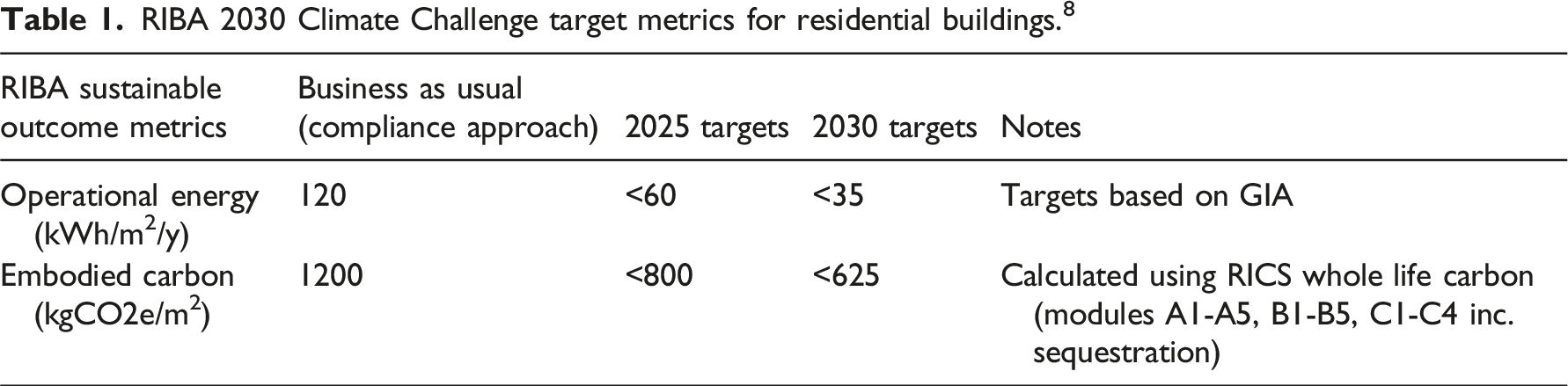
The business-as-usual and 2025/2030 target values in Table 1 have been used to compare against the modular Passivhaus approach.
The model
The modular Passivhaus chosen was the Kiss House system. This is centred around several ‘cassettes’ which make up the floors, walls and roof. Each timber-based component can be combined to create different housing sizes and layouts and can be customised under a finite set of architectural rules 52 . The initial (base) example used in this report is a 3-bedroom detached house in Bristol (see Appendix A).
To calculate the Module B6 operational energy, ZEBRA Operational Carbon 53 was used, which, like the Passivhaus Planning Package (PHPP) is based on EN ISO 52016-1:2017 54 . Fosas, et al. 55 compared the predicted energy consumption from ZEBRA with results from PHPP and found an average difference of 0.9 kWh/m2/y with a standard deviation of 0.6, showing that ZEBRA can produce reliable results.
Building information and sources used in the ZEBRA analysis are presented in Appendix A.
IStructE’s ‘Structural Carbon Tool – version 2’ 56 was used to calculate the embodied carbon emissions. Where EPD data was incomplete (e.g. for Stage C emissions or transport to site), the IStructE recommended values were used, based on the material type. It is expected that these assumptions have a minimal impact on overall results, given that transport and end-of-life emissions only account for 4% and 2% of life cycle embodied carbon emissions respectively 52 . A summary of element EPDs and data sources used in the Structural Carbon Tool is presented in Appendix B.
Benchmark data for comparison
It is necessary to collate existing benchmark data for the embodied/operational carbon content of ‘business-as-usual’ new-builds and RIBA carbon target metrics to allow a comparison to be made. Two different benchmark values were considered, both taken from the RIBA 2050 Climate Challenge
8
: the business-as-usual values and the 2025/2030 target carbon metrics. The former represents a standard compliance domestic new build, and the target metrics represent future goals to promote the reduction of operational energy usage in new homes. The operational energy usage for the modular Passivhaus as calculated by ZEBRA is also computed, and the values for the three scenarios can be summarised as follows: • Business-as-usual: 120 kWh/m2/y • Target carbon metrics: <60 kWh/m2/y by 2025, <35 kWh/m2/y by 2030 • Base modular Passivhaus: −8.78 kWh/m2/y
To calculate the total operational carbon produced by 2050 for each of these scenarios, Equation 1 was employed.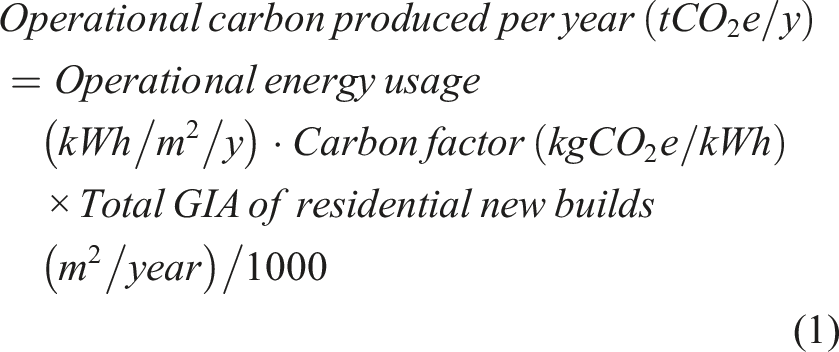
Then to calculate the total cumulative operational carbon produced from 2024 to 2050, the operational carbon produced per year was summed together. Carbon factors were taken from the Treasury’s Green Book supplementary guidance
57
, which contains historic and projected carbon factors. For each year, the respective carbon factor was used in calculations. The total GIA of residential new builds per year was calculated using Equation 2, where the GIA of each housing type (semi-detached, bungalow etc.) was factored by its proportion of total new builds, such that: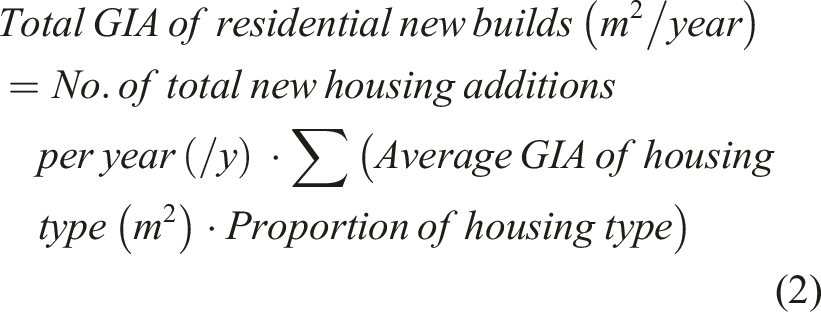
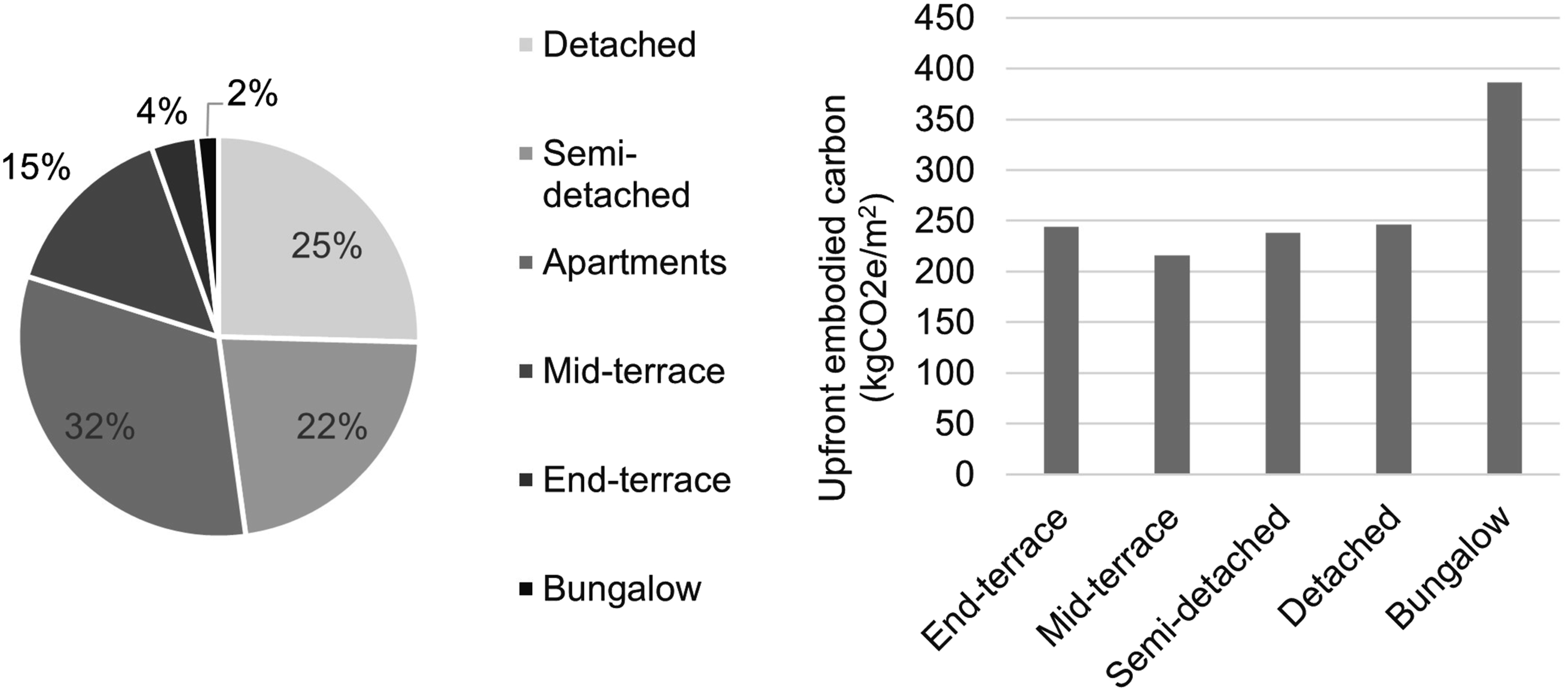
In this analysis, the following housing types were modelled: detached, semi-detached, bungalow, mid-terrace, end-terrace and apartments. The proportion of each housing type shown in Figure 2 (left) was calculated as a mean average across all new housing additions from 2008 to 2020, using data from the National House Building Council
58
.
The average GIA of each housing type was taken from the 2018-19 English Housing Survey 59 .
Embodied carbon
For the modular Passivhaus scenario, it is important to consider the embodied carbon in all of the different housing types, not just the detached house for which the WLCA was produced. Although it is possible to calculate the embodied carbon per m2 from the base modular Passivhaus, it is necessary to consider that detached houses are often more carbon intensive to produce compared to other housing types. This analysis follows work by Drewniok, et al. 25 who have calculated the upfront embodied carbon in different housing types, as shown in Figure 2 (right). In all of the construction methods evaluated, bungalow homes had a higher embodied carbon per m2 than any other housing type (57% more than detached homes). To account for this, it was necessary to scale the embodied carbon value produced by the base modular Passivhaus to represent different housing types. The percentage difference in embodied carbon was calculated for each housing type using the data produced by Drewniok, et al 25 . The data that was selected for use in this analysis represents timber-frame housing, therefore is most appropriate to use with the modular Passivhaus considered.
The proportion of housing type and their average GIA was also considered. The embodied carbon of the new builds was then calculated for each housing type, using Equation 3.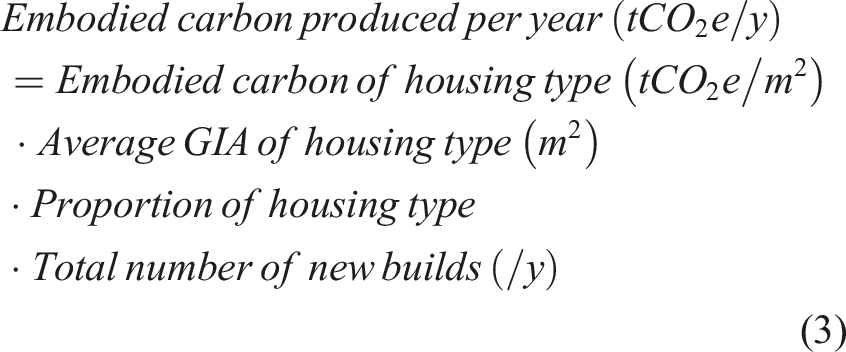
Then, for a given year, the total embodied carbon produced by new builds was given by the sum of embodied carbon across all housing types. To calculate the total cumulative embodied carbon produced from 2024 to 2050, the embodied carbon produced per year was summed together.
Comparing against the pathway to net-zero
This paper aims to analyse the potential carbon savings of using modular Passivhaus against national net-zero targets. No figures have currently been published for the 2050 carbon budget for new housing, therefore this was informed by available information from the Climate Change Committee (CCC) and UKGBC. The Net Zero Whole Life Carbon Roadmap Progress Report 60 has estimated that upfront embodied carbon for domestic housing totalled 29.2 MtCO2e in 2022. IStructE estimates that upfront embodied carbon only accounts for 71% of a building’s total embodied carbon 52 , therefore this value was divided by 0.71 to calculate the whole life embodied carbon for domestic housing as 37.9 MtCO2e in 2022. This value was linearly extrapolated to 0 MtCO2e in 2050 to model the embodied carbon budget to reach net-zero targets. This assumes a linear trajectory to net-zero 2050, which is the same methodology used in similar work by Drewniok et al. 25
For operational carbon, the CCC has published trajectory data for the Balanced Net-Zero Pathway 61 . This data includes predictions on the operational carbon emissions of new housing, assuming 300,000 new homes are built per year with high levels of energy efficiency and low-carbon heating systems. To calculate the total WLC budget for new housing to 2050, the emissions from operational and embodied carbon were added together.
Results
Operational carbon
The results from the ZEBRA Operational Carbon modelling of the modular base Passivhaus are summarised in Figure 3. Annual primary energy consumption and generation of the base modular Passivhaus.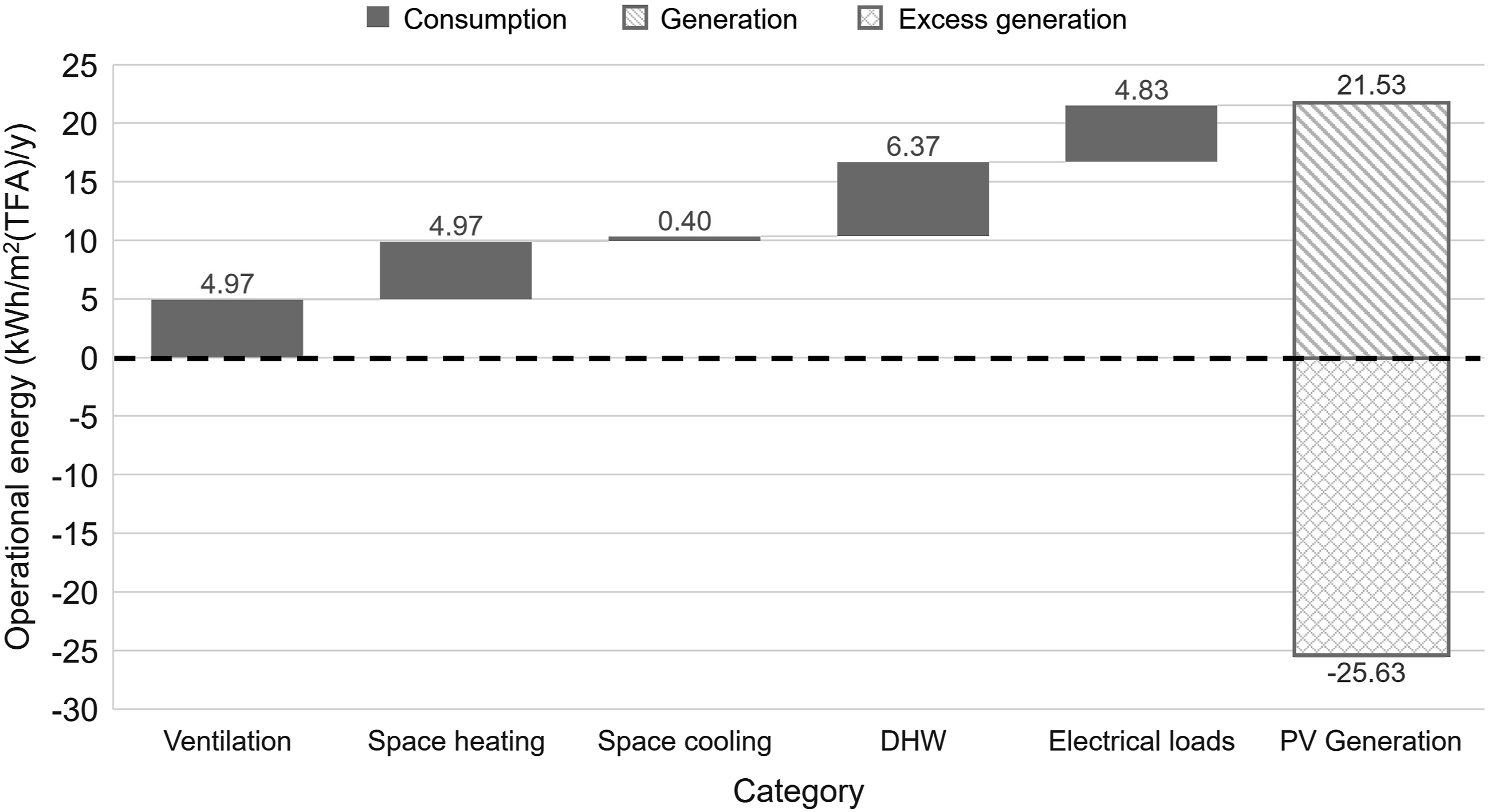
The energy required for space heating is 14.89 kWh/m2 (TFA)/y, which corresponds to a primary energy requirement of 4.97 kWh/m2 (TFA)/y once energy factors and system efficiencies are considered. The total primary energy requirement of the entire house is 21.53 kWh/m2 (TFA)/y, or 19.37 kWh/m2 (GIA)/y. This is significantly lower than the Passivhaus requirement of 60 kWh/m2 (TFA)/y, and the RIBA 2030 target goal of 35 kWh/m2 (GIA)/y.
Figure 3 shows the significance of including on-site energy generation. The PV panels can generate 10,900 kWh of energy every year, corresponding to a primary energy of 47.2 kWh/m2 (TFA)/y. In this analysis, it is assumed that 75% of the roof area is suitable for PV, corresponding to an area of 69 m2. Further analysis shows that only 27 m2 of gross solar panel area is required to offset all of the primary energy requirements of the building. The effect of PV area on whole-life operational carbon is shown by Figure 7.
Converting the primary energy into net operational carbon produces a value of −7.9 kgCO2e/m2 (TFA)/y, therefore the base modular Passivhaus can be classified as a ZEB.
Expanding the study to the target of 300,000 new homes per annum yields Figure 4. Comparison of cumulative operational carbon produced when 300,000 homes are built per year i.e. a total of 8.1 million homes by 2050.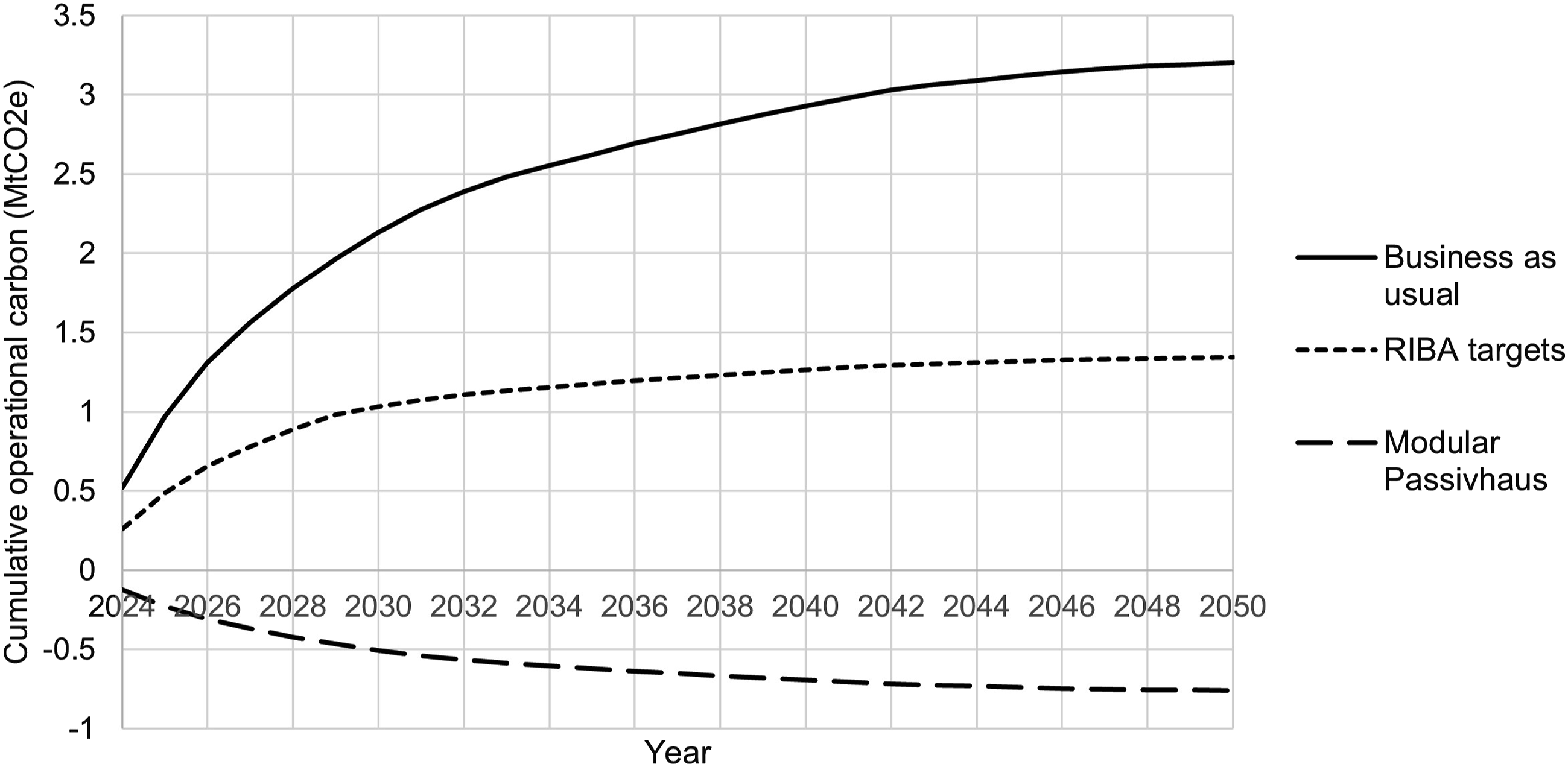
The three series represent the three different scenarios, with the following net primary energy values: • Business-as-usual: all 300,000 new homes per year are built to current regulation standards (120 kWh/m2 (GIA)/y) • RIBA targets: all 300,000 new homes per year are in line with RIBA Climate Challenge targets (<60 kWh/m2 (GIA)/y by 2025, <35 kWh/m2 (GIA)/y by 2030) • Modular Passivhaus: all 300,000 new homes per year are built using the Passivhaus modular approach, using the base modular Passivhaus as a benchmark (−28.4 kWh/m2 (GIA)/y)
As the UK electricity grid decarbonises, carbon intensity factors will decrease, causing the curves to plateau over time in Figure 4. Evidently, by 2050, the modular Passivhaus construction approach has a net-negative operational carbon emission of −0.76 MtCO2e which is 2.1 MtCO2e less than the RIBA target approach and 3.96 MtCO2e less than the business-as-usual approach. This is a significant carbon saving, showing that the Passivhaus modular approach can not only meet, but exceed net-zero 2050 goals.
Embodied carbon
The results from the embodied carbon analysis are summarised in Figure 5. Summary of embodied carbon analysis for base modular Passivhaus, by element.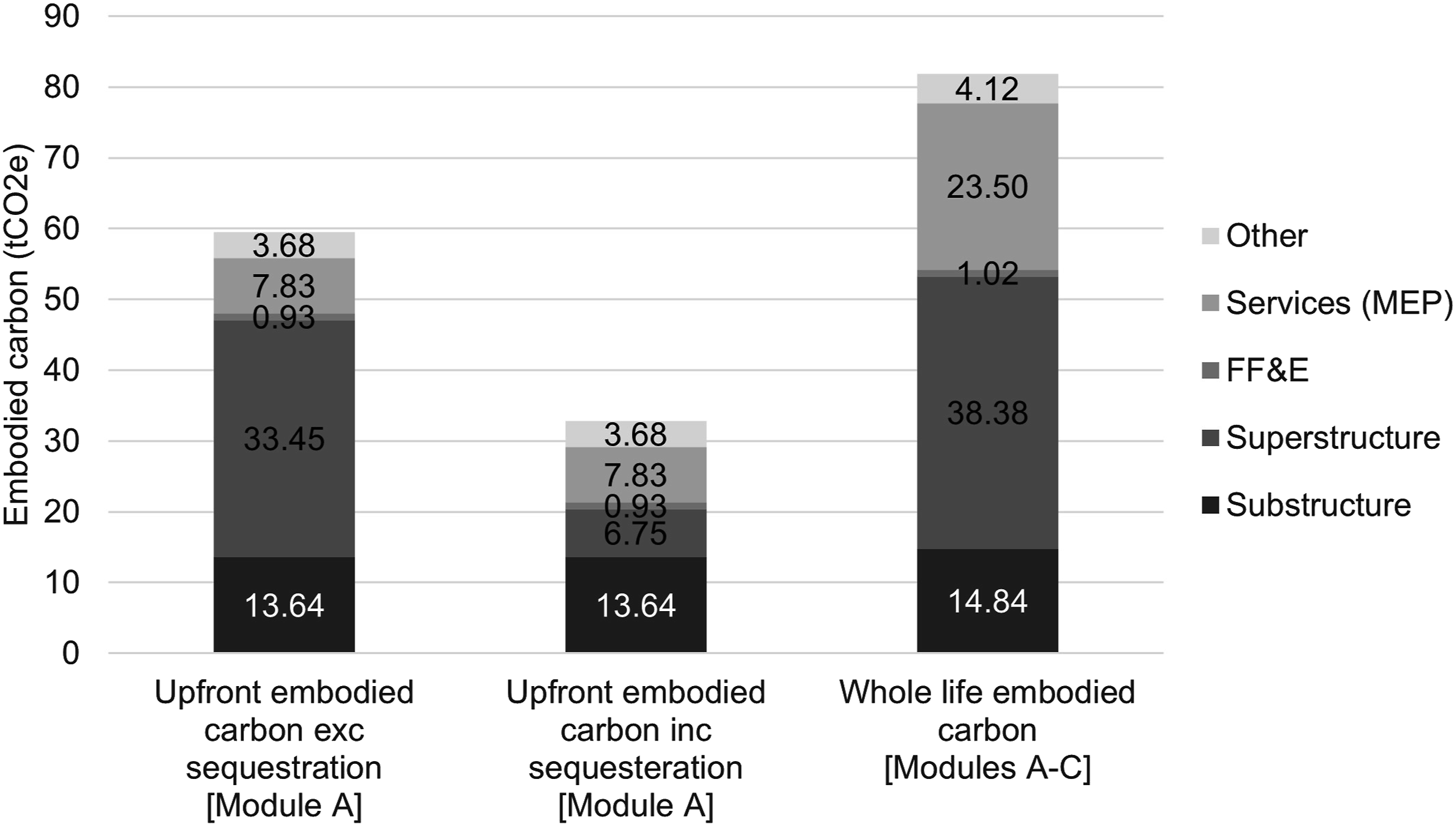
The ‘Other’ category includes asset-level emissions, such as site construction and end-of-life demolition activities.
The total upfront embodied carbon in the base modular Passivhaus is 59.54 tCO2e, or 32.84 tCO2e including sequestered biogenic carbon. This shows the embodied carbon benefits of the timber frame used in the modular design, which is primarily made of sawn timber and orientated strand board (OSB). However, the end-of-life processes show a significant impact on the whole life-cycle embodied carbon of the frame (Module C). In this analysis, the IStructE default values were used to calculate C3 and C4 modules. This assumes that 55% of the timber used in the base modular Passivhaus is recycled, with 44% incinerated for energy recovery and 1% going to landfill.
Another notable observation is the influence of MEP services. It only contributes to 13% of the building’s upfront embodied carbon but this rises to 29% when looking at the whole life embodied carbon, once in-use maintenance and replacement are considered. This emphasises the importance of considering whole-life carbon for services, aligning with the argument previously proposed by Rodriguez, et al 26 .
The total whole-life embodied carbon (excluding operational carbon) of the base modular Passivhaus is 634.6 kgCO2e/m2. This is slightly more than the RIBA 2030 target of 625 kgCO2e/m2, but is still significantly below standard regulation homes, which have an estimated embodied carbon of 1200 kgCO2e/m2. This shows that building to Passivhaus standards does not necessarily increase the whole-life embodied carbon emissions of a house, as previously suggested by Andreou, et al 16 .
Scaling to cover the whole UK housing demand, the embodied carbon emissions are given by Figure 6. Comparison of cumulative embodied carbon to produce 300,000 homes per year, i.e. a total of 8.1 million homes by 2050.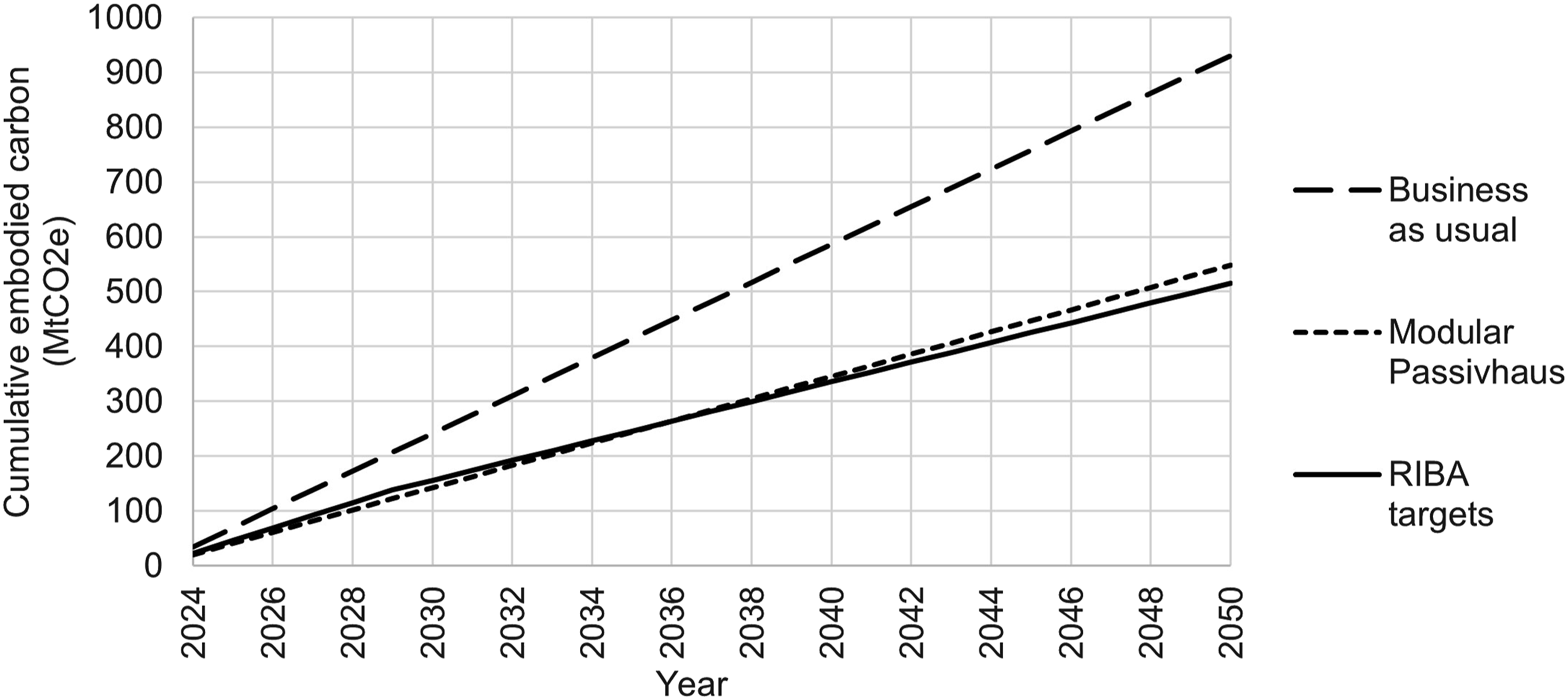
Each scenario represents the cumulative embodied carbon produced by the construction of 300,000 new homes per year, using each of the three construction methods. The embodied carbon per home produced in each scenario is assumed to remain constant until 2050, indicating the materials will decarbonise more slowly than the grid.
As shown in Figure 6, the roll out of modular Passivhaus produces 14 MtCO2e less embodied carbon emissions than the RIBA target approach, and 430 MtCO2e less than the business-as-usual approach by 2050.
Whole life carbon
From the WLCA, the total carbon emissions across the whole lifetime of the base modular Passivhaus were predicted, as shown in Figure 7 This data includes the uncertainty factors. Upon evaluation of the data and sources, these were determined as a 6% contingency factor, a 3% carbon data uncertainty factor, and a 1% quantities uncertainty factor. Summing these together gives an uncertainty factor of 10% which is added to the values obtained from the Structural Carbon Tool to be presented in the RICS WLCA. Whole life carbon emissions of the base modular Passivhaus. Left: non-decarbonised scenario, right: decarbonised scenario.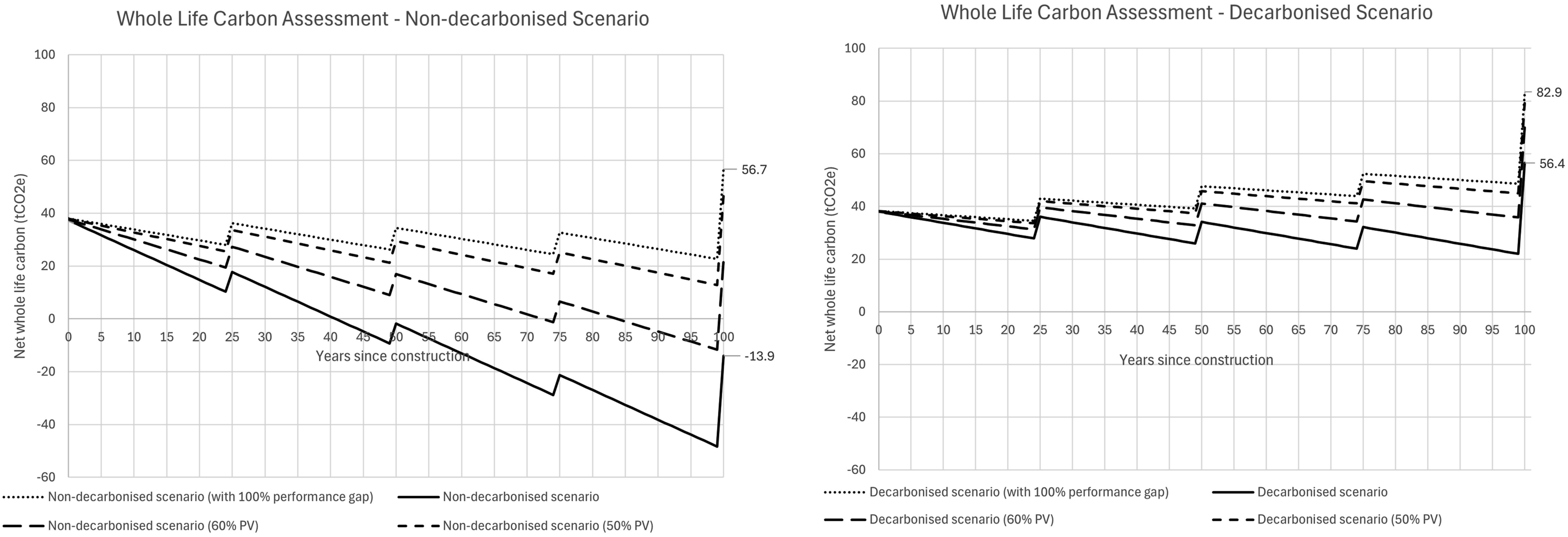
Figure 7 depicts the net embodied and operational carbon emissions over time, with the in-use embodied carbon from the replacement and maintenance of MEP services shown at the 25, 50 and 75-year marks. As required by the RICS guidance, two scenarios are presented: one using the current 2024 electricity carbon factor (left, non-decarbonised scenario, 0.136 kgCO2e/kWh 53 and another using the average predicted carbon factor across the building (right, decarbonised scenario, 0.051 kgCO2e/kWh 57 . Different proportions of PV are also shown to illustrate the significance of PV energy generation on total life cycle carbon emissions.
In the non-decarbonised scenario, the case study is shown to be a ZCB, with a lifetime net-negative carbon balance of −14 tCO2e at the end of its 100-year lifespan and a carbon payback time of 41 years. However, the net carbon balance for the decarbonised scenario never goes below zero due to the lower carbon savings produced by renewable energy generation. Although the case study was shown to be a ZEB, it is difficult to accurately predict how electricity carbon factors will change in the future so it cannot be defined as a ZCB. This analysis shows that the overall net carbon footprint of buildings is sensitive to changes in the carbon intensity of electricity generation, and therefore decarbonisation of nationwide energy supply is crucial for ZCBs.
Summary of embodied and operational carbon emissions of modular Passivhaus, RIBA targets and business-as-usual scenarios.
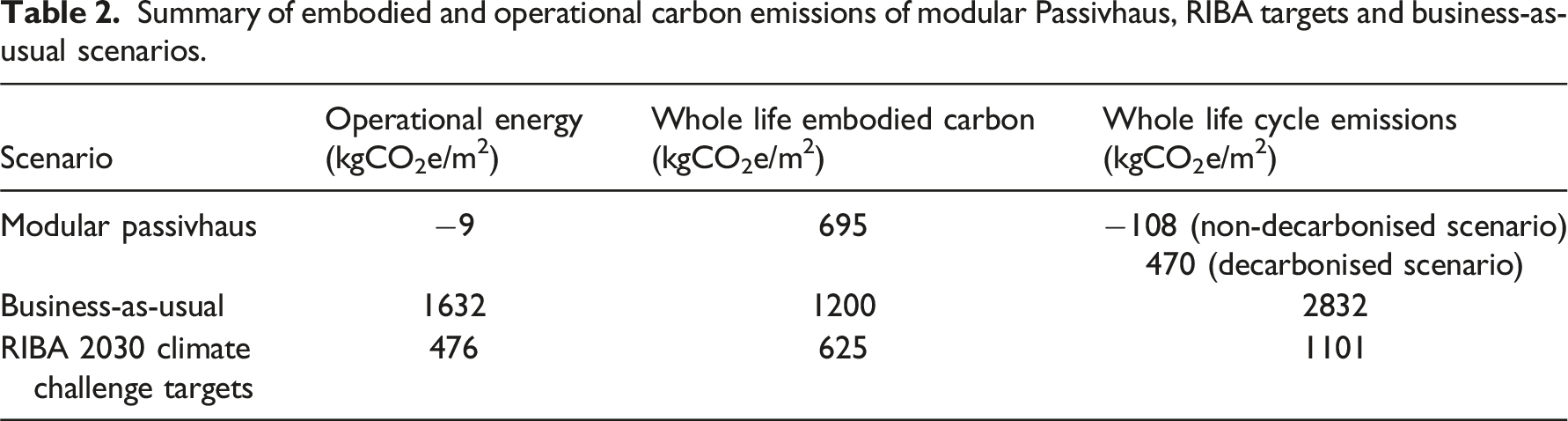
Figure 8 shows the whole life carbon (WLC) results when the modular Passivhaus approach is used to build 300,000 homes per year. Two lines are shown for the modular Passivhaus solution: the upper bound representing 0% PV on-site and the lower bound representing 100%. Cumulative WLC emissions to produce 300,000 homes per year compared with the WLC budget for new housing, i.e. a total of 8.1 million homes by 2050.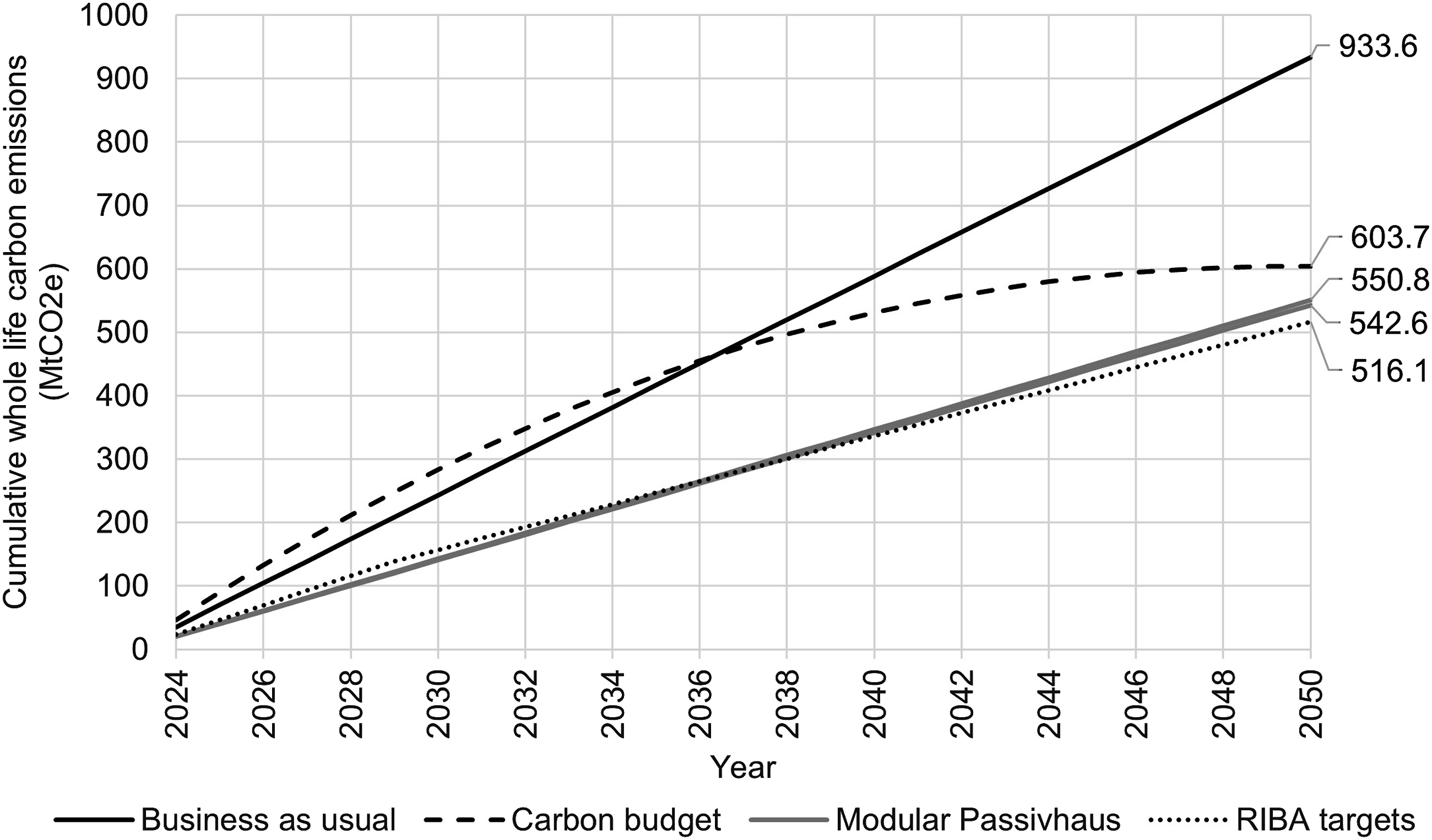
The total whole life carbon budget for new homes to reach net-zero by 2050 was calculated as 603.7 MtCO2e. The total whole life carbon produced to build 300,000 homes per year using the modular Passivhaus construction method is between 542.8 and 550.8 MtCO2e depending on the proportion of PV installed on-site. Using business-as-usual construction methods, the carbon budget apportioned to housebuilding is used up by 2036, which is the same conclusion reached by Drewniok, et al 25 . However, using the Passivhaus modular approach, the target of 300,000 new homes can be reached whilst simultaneously adhering to the 2050 carbon budget. Although the case study is not a ZCB, this analysis shows that this construction method has significant potential to solve the UK housing crisis, whilst still performing in line with net-zero 2050 targets. It is also shown that while the effect of PV on whole-life carbon is significant when looking at individual homes, it makes little difference when looking at the entire housebuilding industry. Using this construction method, the carbon budget and housebuilding targets can still be met without any on-site PV, however including renewable energy still benefits homeowners and remains critical in the journey towards net-zero.
Discussion
Figure 8 also demonstrates the need for implementing stricter building regulations in order to achieve both the housing and net-zero targets. The Government has stated that both objectives are “not mutually exclusive”
7
, but this result shows otherwise if current building standards are maintained. The Future Homes Standard to be implemented in 2025 aims to lower carbon emissions in an average home by at least 75%
7
, however fails to address embodied carbon emissions in buildings. This is a recurrent theme in government regulations; embodied carbon is often ignored when looking at the carbon emissions in housing, which supports the concerns raised in previous literature7,19. IStructE has estimated that operational carbon only represents 23% of a building’s total life-cycle emissions, with embodied carbon accounting for the remainder
61
. Although reductions in operational emissions are beneficial in the journey to net-zero, a simultaneous reduction in embodied emissions is imperative. Figure 9 shows how the embodied and operational carbon budgets for new housing must decrease to reach net-zero by 2050. The required trajectory for operational and embodied carbon emissions in housing to reach net-zero 2050.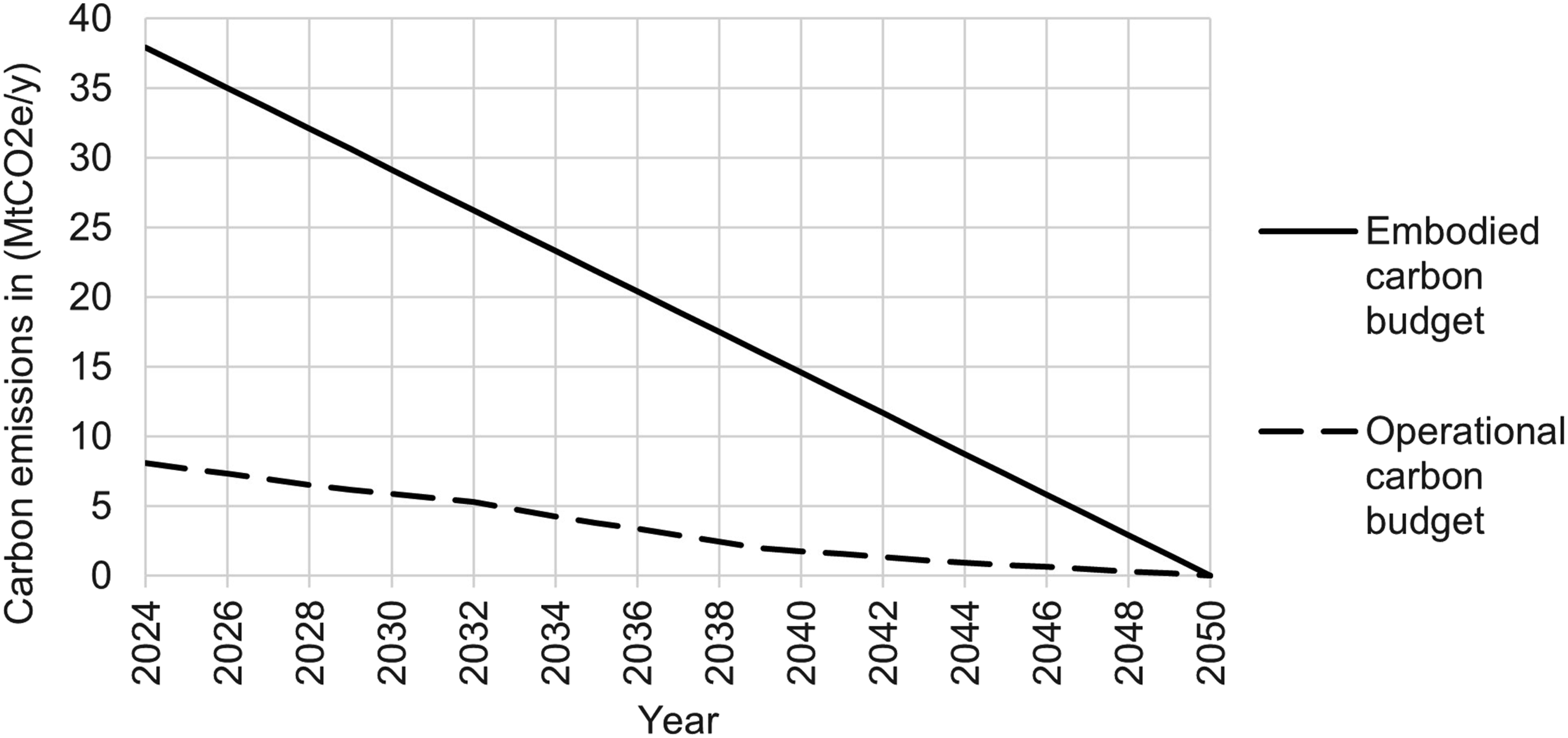
As shown in the graph, embodied carbon emissions must decrease at a rate five times faster than operational carbon emissions. It is therefore important that government regulations reflect this and impose tighter restrictions on the embodied carbon emissions of new homes, especially if more homes are being built per year. If construction is to continue whilst maintaining net-zero emissions in 2050, homes need to be net-zero – both in terms of energy and carbon. The Future Homes Standard needs to set more ambitious targets for a net-zero housing stock to properly guide the construction industry through this transition.
Figure 10 demonstrates the performance of the Passivhaus modular approach against the calculated carbon budgets, separated into embodied and operational carbon. Comparison of operational and embodied carbon performance of modular Passivhaus against the carbon budget for new housing.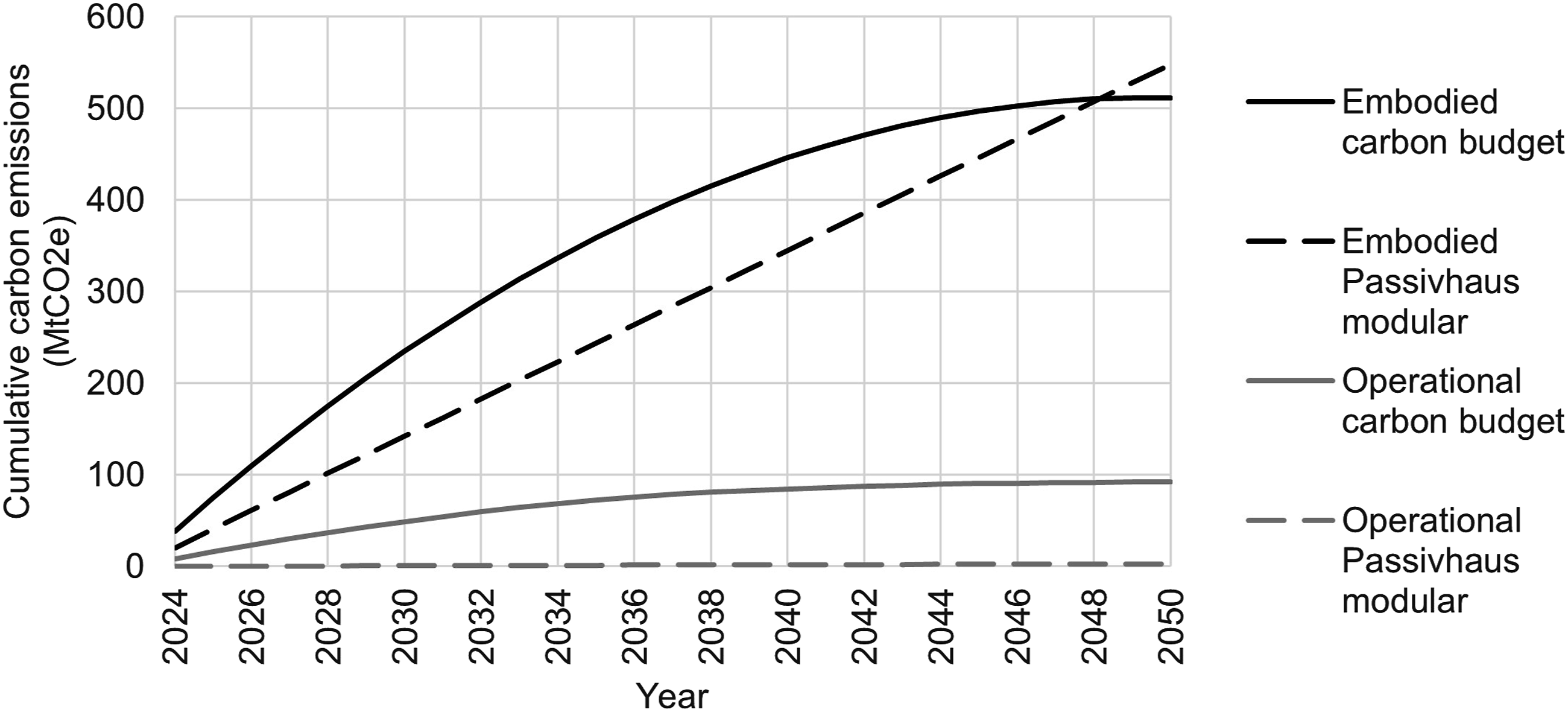
The base modular Passivhaus was found to be a ZEB and with a net-negative energy balance if more than 27 m2 of solar panel is installed on the roof area. Therefore, no carbon emissions are produced from operational energy use and the 2050 budget of 92 MtCO2e will never be exceeded. In terms of embodied carbon, the emissions from building 300,000 homes with the Passivhaus modular approach will consume the 2050 carbon budget in 2048. However, the savings from operational carbon mitigate this and the overall budget is not exceeded.
From Figure 8, the total carbon cost of Passivhaus modular construction can be linearly extrapolated to predict that the carbon budget will be consumed in 2053. Thus, although modular Passivhaus buildings can be ZCBs, the rate of housebuilding cannot continue past 2053. This aligns with previous research from Drewniok et al. 25 , who conclude that net-zero emissions are only achievable if the rate of housing provision also reaches zero.
However, this does not mean that the UK cannot meet housing demand after 2050. The paper by Drewniok et al. 25 has highlighted other potential pathways to meeting housing demand, such as through change-of-use conversions and the occupation of vacant properties. Though these solutions have proven to be effective in the UK, there is a wide range of associated economic and political barriers which need to be overcome. The Government has acknowledged issues regarding housing supply including delays in the planning system, inadequate support for small/medium housebuilders and lack of available land3. The issue of second homes and their detrimental effects on housing availability has also been discussed, prompting several measures such as a higher stamp duty land tax for those purchasing second homes 62 . It is so far unclear whether these measures are sufficient to create significant change in the industry, and create a more equitable use of housing to meet demand 63 .
This research has demonstrated the potential benefits of modular and Passivhaus construction methods through a time-series based whole life carbon analysis, drawing upon various data to estimate the carbon cost of new homes in the coming decades. This work has represented the Passivhaus concept via a single archetype. Further case studies would be useful in formulating a full illustration of the power of the approach.
Conclusion
If the world is to meet its growing need for housing, and the rapid urbanisation of the global south, yet not increase overall carbon emissions, a way needs to be found to build housing in a whole-life carbon neutral way. This work has demonstrated a methodology for calculating whole-life mass building time-series, then used the approach to compare and contrast at large scale the whole-life emissions from both typical housing and modular Passivhaus.
When compared with UK housing targets, it is found that the roll out of modular Passivhaus with a large natural material input can simultaneously reach the net-zero 2050 goals, and the desired construction rate. However, it was found that the carbon budget will still be exceeded in 2053 if the rate of construction continues.
Furthermore, whilst targets for operational energy are widely discussed in regulations around the world, this research has demonstrated the need for equivalent measures based on whole-life carbon time series modelling and reporting.
Footnotes
Acknowledgments
The authors are grateful for the help from Mike Jacob in discussions regarding Passivhaus and modular construction methods, and for providing information and plans regarding the base Kiss House.
Declaration of conflicting interests
The author(s) declared no potential conflicts of interest with respect to the research, authorship, and/or publication of this article.
Funding
The author(s) received no financial support for the research, authorship, and/or publication of this article.
