




Abstract
To meet the UK’s 2050 net zero carbon targets, Whole Life Carbon Assessment (WLCA) is used to calculate the lifetime carbon emissions of building projects. This paper aims to compare different estate regeneration scenarios for meeting the interim 2030 benchmarks for the 2050 target. The research consists of a case study employing co-design and WLCA experiments, and impact evaluation surveys. The results of the WLCA demonstrate the lower operational impacts of fossil-fuel-free scenarios, and lower embodied and overall carbon emissions of retrofitting scenarios. To make an informed decision towards the future of the estates, different regeneration scenarios need to be studied, and the stakeholders should understand the carbon emissions of different materials and systems. The findings of this study can be used to compare regeneration schemes of other building types.
Keywords
Introduction
United Kingdom’s legislative commitment to achieving net zero greenhouse gas (GHG) emissions by 2050 1 in the building industry refers to reducing the net carbon emissions during the construction and operation of the buildings to zero. This means that any emissions produced are reduced, and the remaining emissions are offset through various measures such as renewable energy generation or carbon offsetting schemes 2 to offset an equivalent amount of greenhouse gases from the atmosphere, such as reforestation or carbon capture and storage technologies.
The urgency of this target is amplified by the considerable environmental footprint of the construction sector, which is implicated in nearly 40% of the total carbon emissions 3 when taking into account the full lifecycle of the built environment. This includes the embodied carbon from the manufacture and transport of building materials, the operational emissions from energy use in buildings, and the eventual impacts of demolition and waste processing. 4 To navigate this complex terrain, a holistic, lifecycle-based approach in planning is required. 5 Whole Life Carbon Assessment (WLCA) is a methodological framework that measures the carbon emissions associated with all stages of a building’s life, from resource extraction and material production to construction, operation, and ultimately disposal or recycling. 6
Although the WLCA methodology is well-established, there are methodological gaps in any lifecycle-based assessment method, 7 which is beyond the scope of this paper. In the UK, in many cases, conducting WLCA has predominantly focused on a comparison of new construction with existing buildings, giving less attention to the retrofitting of existing structures as a carbon-efficient alternative. This oversight is critical for meeting the UK net zero target, as retrofitting often provides a lower-carbon pathway to extending the life of the built environment, reducing the demand for new resources, and preserving the embodied carbon within the existing structures.
In incorporating WLCA for decision-making over the regeneration of the estates, a just approach is required.8,9 O’Beirne et al. 10 cite the trivalent theory of justice to emphasise the interconnectedness of equity in distribution, recognition of differences, and equitable participation in understanding and addressing of issues. In addition to the fairness of the participatory processes, research has shown the impact of stakeholders’ participation in reducing the environmental impacts of buildings.11–14 In addition, to enable informed decision making, the impacts of different regeneration schemes should be discussed with and understood by the stakeholders. 15 While justice and impact are important factors for participating with the communities, this is now a legislative requirement in the UK. 16 In their pathway to meet the UK net zero trajectories, UK Green Building Council (UKGBC) has developed a pathway for action plans of different stakeholders in the building industry. 8 All this research demonstrates that for a just and viable transition to net zero, low-carbon literacy and competency should be advocated across different stakeholders.8,9
In exploring these avenues, this paper sets out to elucidate the potential of an inclusive and informative approach in contributing towards the UK’s net zero carbon trajectories. It aims to explore different estate regeneration scenarios for scrutinising their potential in better meeting the UK’s net zero targets with less need for carbon offsetting. To do so, this study challenges prevailing practices and advocates for a more inclusive and just application of WLCA, engaging with the community of an estate regeneration scheme and providing the community (NGOs and residents) with the data and analysis needed to make informed decisions that align with the overarching goal of having a lower Climate Change impact.
Methodology
Regeneration scenarios and modelling assumptions for WLCA.
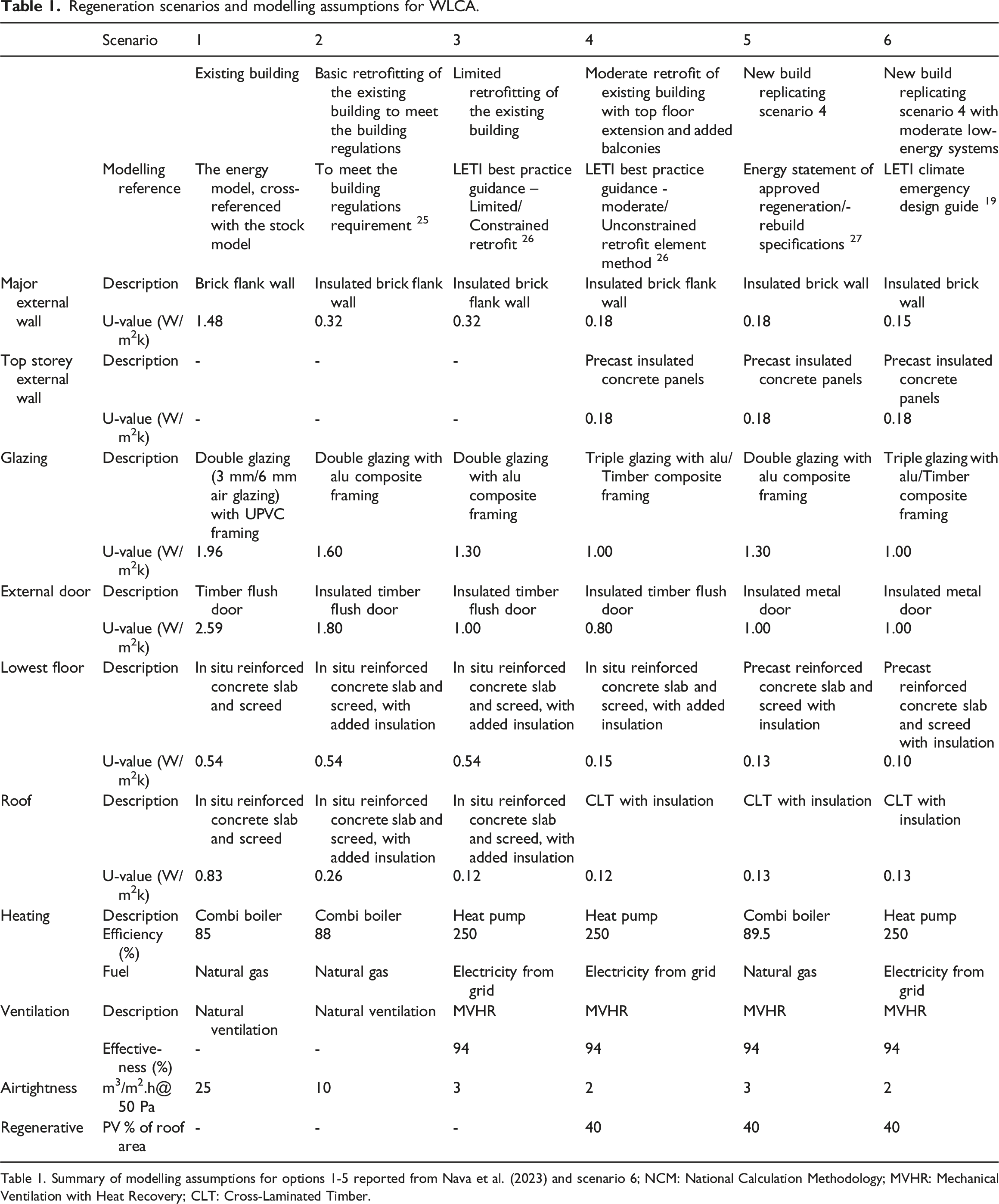
Table 1. Summary of modelling assumptions for options 1-5 reported from Nava et al. (2023) and scenario 6; NCM: National Calculation Methodology; MVHR: Mechanical Ventilation with Heat Recovery; CLT: Cross-Laminated Timber.
Through a series of online co-design workshops, which were vital in assimilating the community’s insights and sustainability preferences into the plan, a regeneration scenario was developed with different stakeholders to retain, retrofit, and extend the existing estate, in response to the local council’s previously approved scheme to demolish and redevelop the estate. 17 The collaborative co-design workshops were conducted between a multidisciplinary team from UCL, consisting of architects, urbanists, planners, and researchers, and the community of Alton Estate in London (UK), consisting of the residents and Alton Action community group. 17 At the two sustainability co-design workshops with the community and the research team, the terms Net-Zero, operational energy, embodied carbon and carbon offsetting were discussed with the participants. The properties of different materials and building systems were also explored. Selection of materials and some of the building systems for the new parts of the building, timber framing system and lightweight unenforced concrete panel for the top floor extension, and introduction of solar panels to the roof were some of the results of these discussions.
WLCA studies
Following the selection of materials and regenerative systems during one of the co-design workshops for the scheme developed by Sendra et al.,
17
referred to as
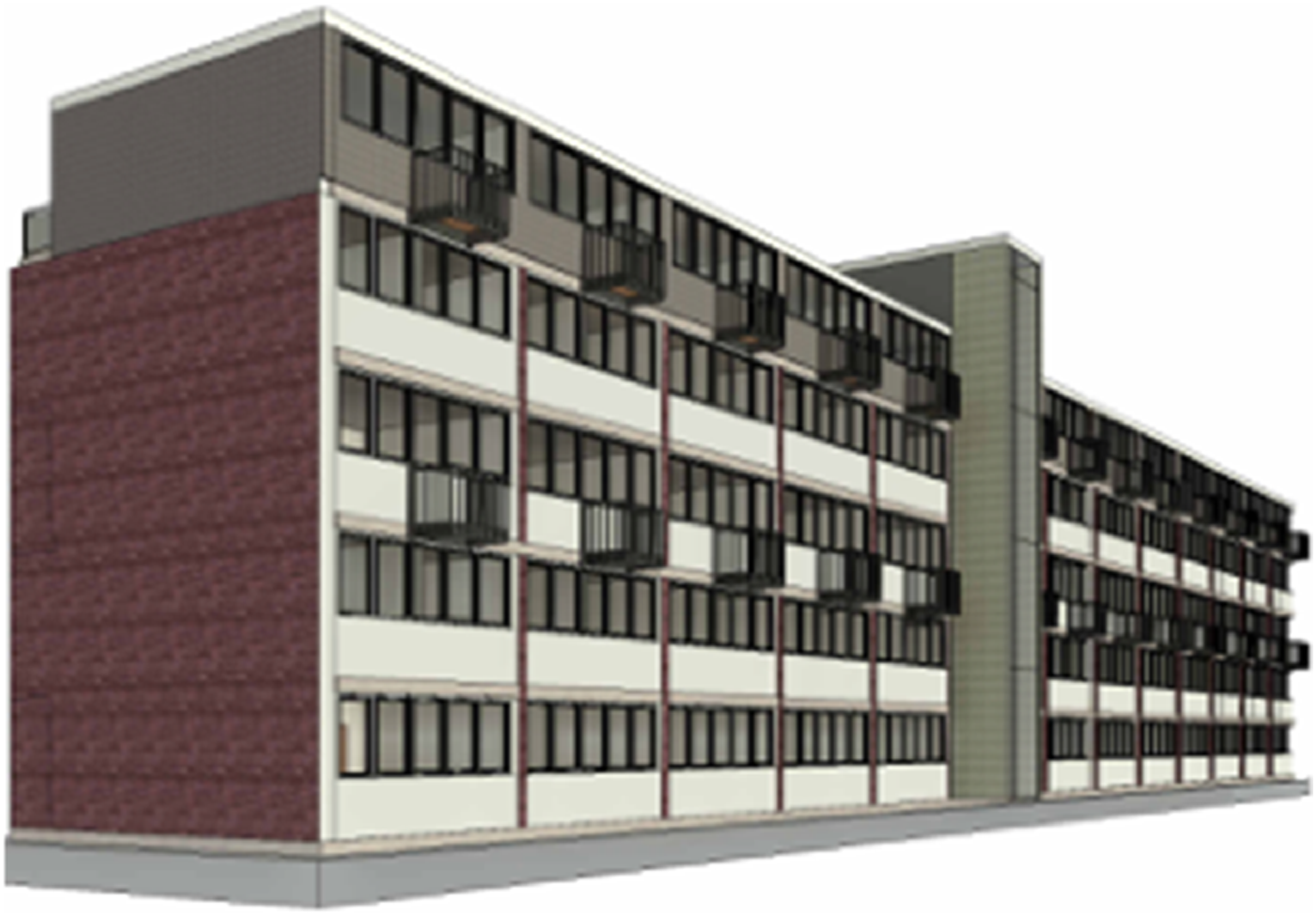
Figure 1 presents the existing four storey maisonettes and Figure 2 illustrates the 3-dimensional (3D) model of the scenarios with added storey on top ( Alton estate, harbridge avenue, four storey maisonettes. View from Autodesk Revit illustrating the model with the added storey for Scenarios 4, 5, and 6.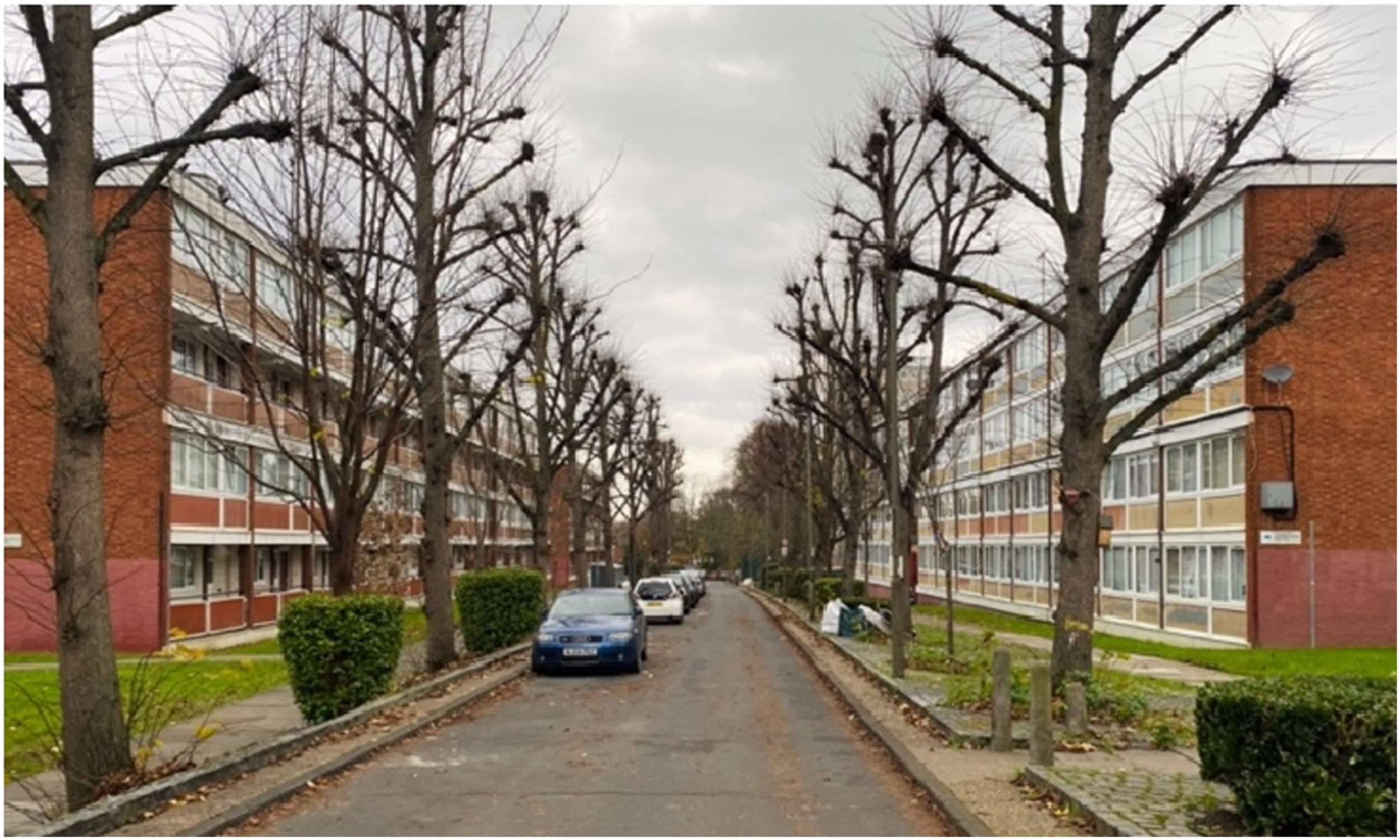
The system boundary for the WLCA is established as ‘cradle-to-grave’, which encompasses modules A to C of the whole life building lifecycle, including product stage (A1-A3), construction stage (A4-A5), use stage (B1-B5), and end-of-life stage (C1-C4), following the EN15978 4 building lifecycle modules and RICS’ guidelines. 20
For preparing the 3D models of different scenarios, Autodesk Revit 21 was used. The gbXML formats of the 3D models have been imported to DesignBuilder 22 for energy modelling of different scenarios using EnergyPlus. 23 For measuring the embodied carbon impacts of different scenarios, the Revit models were updated using the data from DesignBuilder for specifying the materials. This data was then imported to One Click LCA 24 and further adjusted for selection of materials and for consistency between the energy model and the material database. The results of the WLCA have been further explored in this paper for reaching the UK Net Zero target.
Impact evaluation
Two evaluation surveys were conducted to find out about the impact of knowledge exchange and learning about the properties of materials and building systems, and understanding the assessment results, on the community’s decision making. The first survey was conducted at one of the online workshops using Zoom 28 poll, where the participants were asked if learning about the carbon footprint of materials and systems impacted their decision making over different options.
At a later workshop the WLCA results were presented and discussed with the participants. The participants were then asked to use seven-point scoring (1 being the lowest value and 7 being the highest value) to describe How much their decision-making for regeneration scenarios was impacted by learning about the sustainability assessment results. At this workshop, twenty-one participants from different stakeholder groups including the residents, non-profit community groups, architect/researchers, and members of the council participated in the evaluation survey.
Findings
WLCA results
Annual operational energy
The findings of the energy modelling are presented in Figures 3 and 4. Figure 3 shows a layered bar chart of the Normalised Annual Energy Use Intensity (EUI) in kWh/m2 for various regeneration scenarios, categorised by energy source and normalised by Gross Internal Area (GIA). The results illustrate the highest energy consumption for fossil-fuelled heating and domestic hot water (DHW). The minimal energy requirements are for lighting, and auxiliary energy across all scenarios indicate effective design measures that minimise operational energy demand. As noted in the modelling assumptions, the designated u-values for the external fabric in scenarios 3 and 4 are based on LETI guidance
26
and the revised planning proposal for the regeneration of the Alton Estate.
27
The assumptions for scenario 6 are based on best practice guidelines for new buildings.
19
As a result, the lower heating demand of scenarios 3 to 6 is a result of the lower thermal transmittance of the fabrics of these scenarios. The results reveal a notable divergence in EUI among the scenarios, with scenarios 3, 4, and 6 exhibiting the lowest energy profiles. These scenarios stand out due to their exclusive use of electricity for heating and domestic hot water (DHW). This transition from gas to electric, as per the grid’s supply, contributes to their lower EUI, aligning with the shift towards decarbonised energy sources. As these results illustrate, a minimal intervention to the existing building to meet the building regulations
25
would result in reducing the heating demand by almost 66%, about a third of the required heating for scenario 1. In comparison of the EUI of scenarios 1-6, it needs to be noted that scenarios 4, 5, and 6 have an added storey consisting of 13 studio flats. The different usage intensity of the added storey has had an impact on the normalised EUI and as a result, despite similar assumptions, scenario 3 demonstrates a lower EUI for Room Electricity than scenarios 4 to 6. Normalised annual energy use intensity (EUI) kWh/m2 (Area in GIA) of the regeneration scenarios. Overall EUI kWh/m2 (Area in GIA) of the regeneration scenarios compared to RIBA 2030 Benchmark.
29
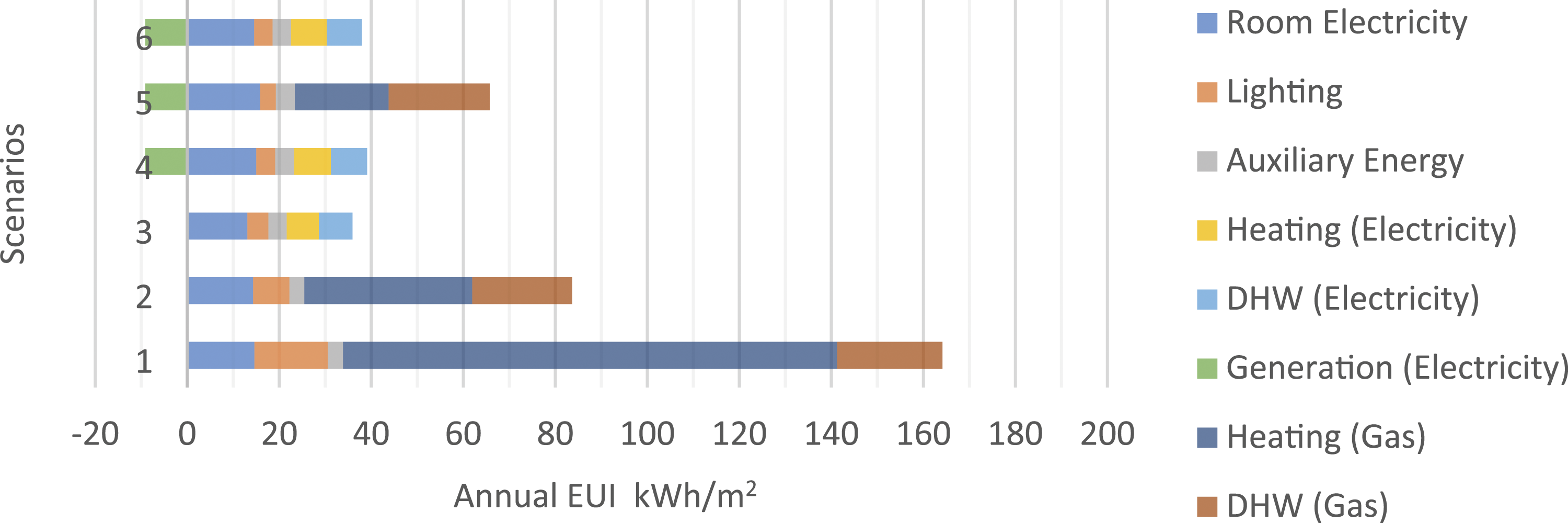
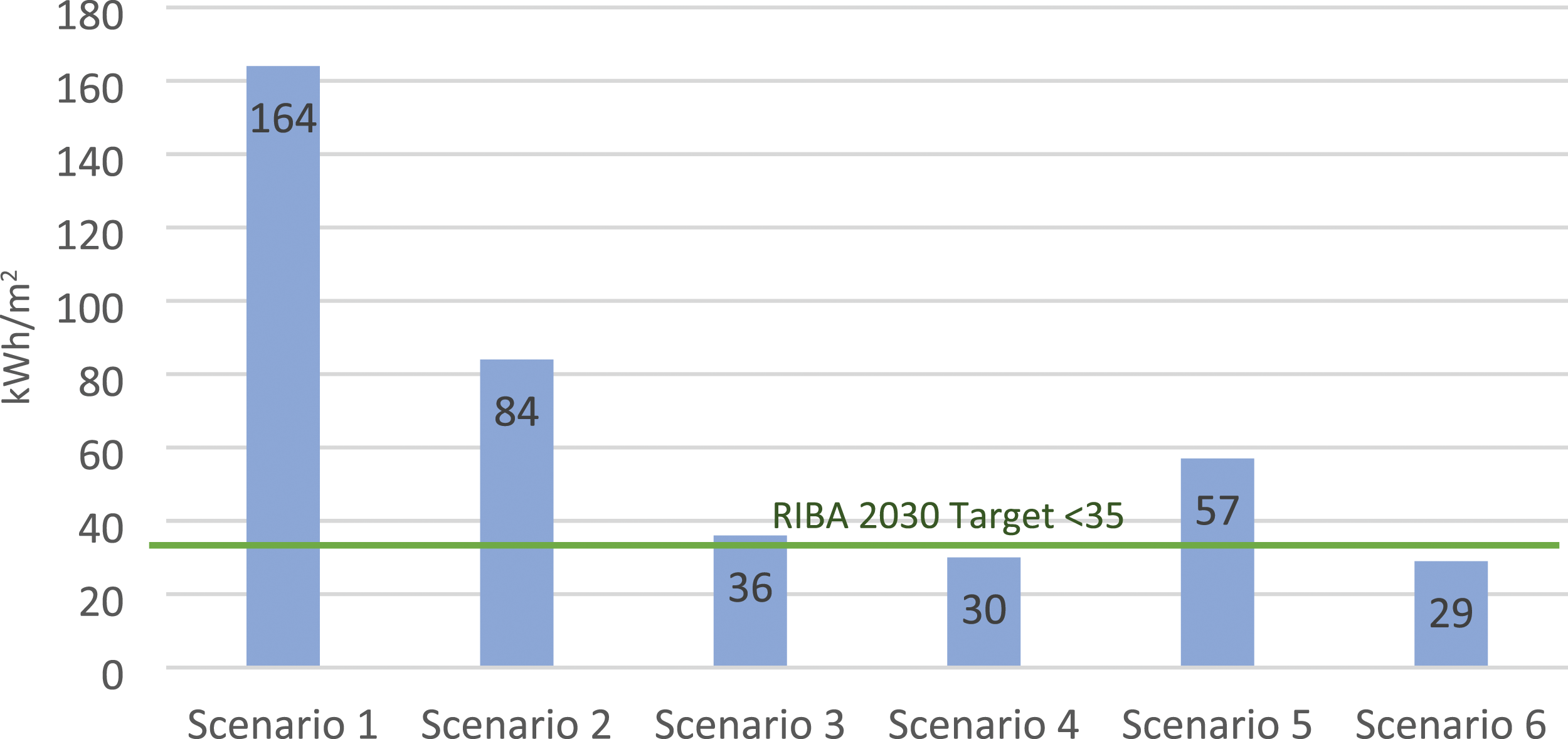
Breakdown of the energy consumption of different scenarios illustrated in Figure 3 presents the potential energy savings achievable through strategic building upgrades, challenging the presumption that newer buildings are automatically more energy efficient.
The aggregated comparison of the Overall EUI in kWh/m2 across the regeneration scenarios, juxtaposed against the RIBA 2030 target of less than 35 kWh/m229 is illustrated in Figure 4. As the bar chart demonstrates, the stark contrast in EUI between the existing scenario 1 and retrofitted and new build scenarios2–6 is evident, with scenario 1 far exceeding the benchmark at 164 kWh/m2, indicative of the inefficiency of existing configurations without intervention. As the retrofitting interventions are introduced, a remarkable reduction in EUI is observed, with scenario 2 cutting the figure to 84 kWh/m2, and scenarios 3 and 4 and the best practice new build 6 dipping even further below, achieving figures that are not only substantially lower than scenario 1 but also falling close or below the RIBA 2030 Target. 29 This descending trend underscores the efficacy of retrofitting strategies that incorporate high-performance building fabrics and decarbonised energy systems. The results of the analysis of the operational energy of the schemes show that the lowest EUI is achieved in scenarios 4 and 6. This difference is due to the introduction of photovoltaics for 40% of the roof of these scenarios, which is presented in green bars in Figure 3. These results confirm one of the questions posited by the study: that through careful planning and implementation of retrofit measures, renewables, and fossil-fuel-free building systems, existing buildings can indeed surpass new builds in terms of energy efficiency, meeting, and even exceeding stringent net zero benchmarks. However, the limitations of this hypothesis, such as the performance gap between the predicted and actual measures should be noted. It can be argued that these limitations apply to different retrofit and new build scenarios.
Whole life embodied carbon
The results of the embodied carbon footprint of different scenarios for One Click LCA
24
over a 60-year period, expressed in kgCO2e/m2 and normalised by Gross Internal Area (GIA), have been presented in Figures 5 and 6. The detailed stratification of carbon emissions across the lifecycle stages, from material acquisition (A1-A3) to disposal (C4), has been illustrated in Figure 5 for a transparent assessment of each scenario’s embodied carbon impact. Scenarios 5 and 6, which represent the new build schemes, display a considerable embodied carbon footprint, due to the impacts of materials for construction at stages A1-A3. The most substantial carbon contributions across all life cycle stages for all scenarios occur in modules B4-B5 for the replacement of materials followed by the carbon footprint of materials for scenarios 2 to 6 in modules A1-A3 underscoring the high GWP commonly associated with new constructions. Breakdown of 60-years embodied carbon kgCO2e/m2 (Area in GIA) across life cycle stages. Whole Life Embodied Carbon kgCO2e/m2 (Area in GIA) Compared to RIBA 2030 Benchmark (RIBA, 2021).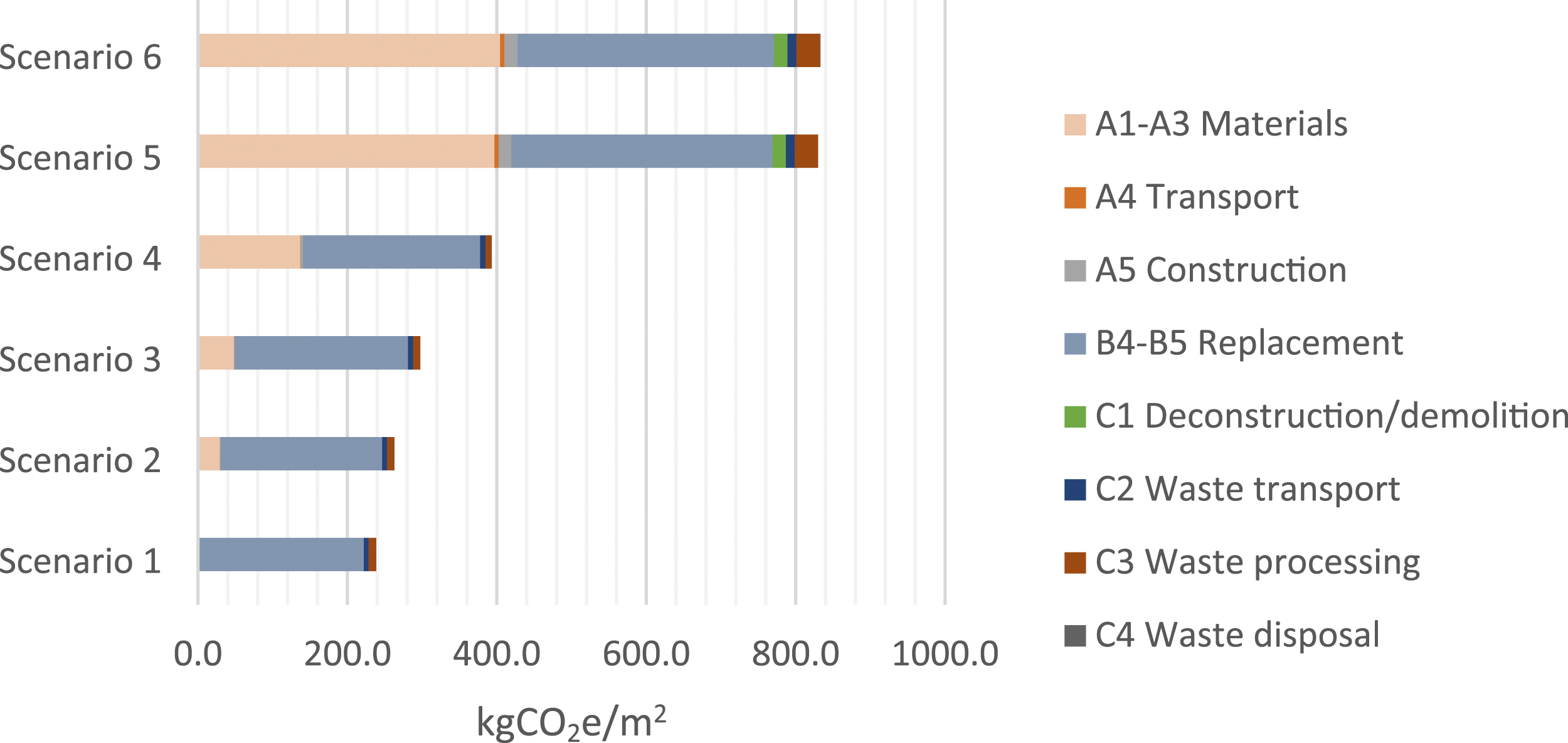
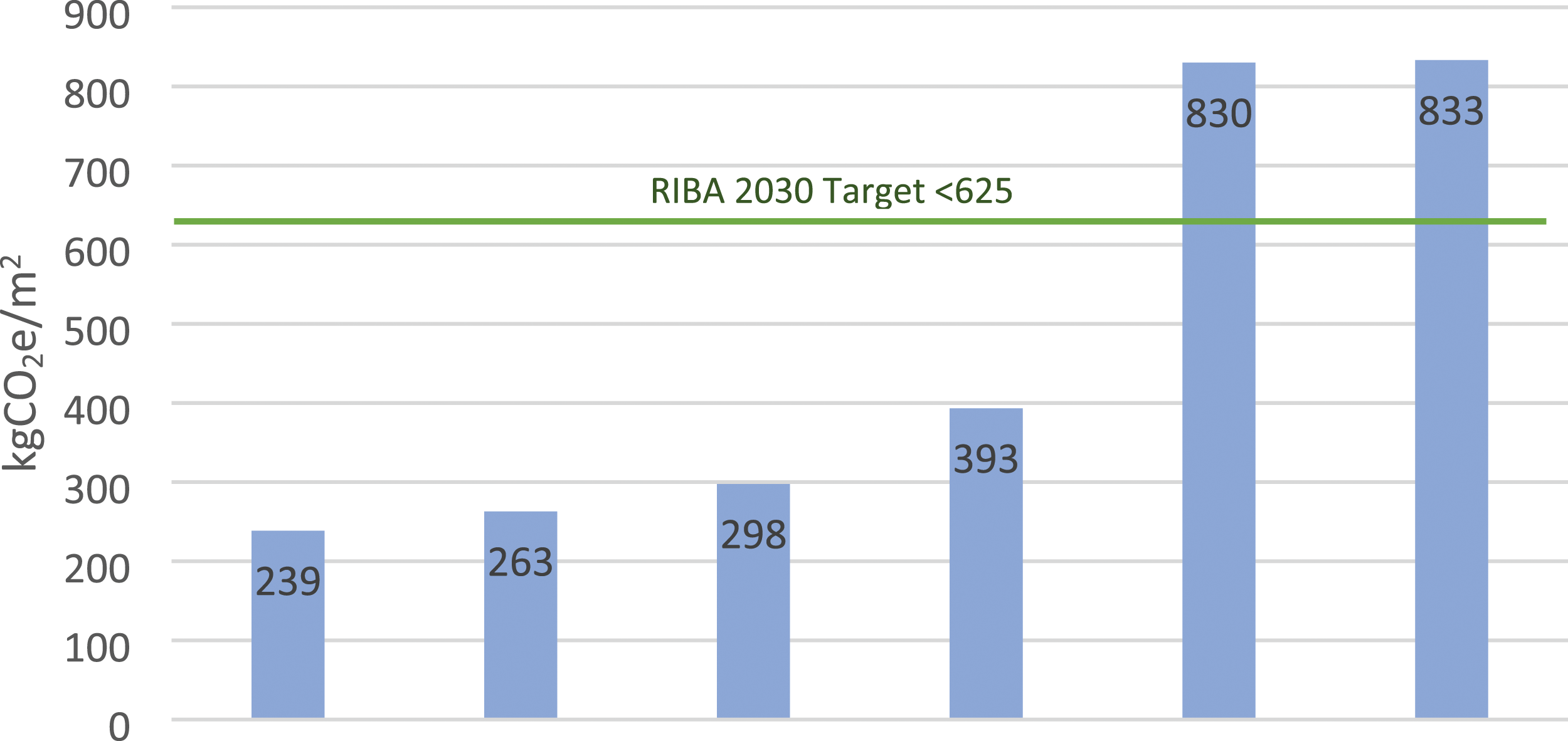
The staggered results of 60-years embodied carbon of different scenarios are compared against the RIBA 2030 benchmark of below 625 kgCO2e/m229 in Figure 6. The graph reveals that scenarios 1 through 4 maintain a carbon footprint below the target, with scenario 1 (the existing building) exhibiting the most favourable outcome at 239 kgCO2e/m2. In stark contrast and expectedly, scenarios 5 and 6 with results soaring to 830 and 833 kgCO2e/m2, respectively, fail to meet the target, highlighting the significantly higher GWP of new build scenarios. The analysis evidently demonstrates the advantage of retrofitting over new builds from a carbon footprint perspective. The embodied carbon associated with material replacement, as well as the initial material and construction phases, are critical considerations that contribute to the overall lifecycle emissions. However, in interpreting the Whole Life Embodied Carbon results, it needs to be noted that the new build scenarios explored in this study have focused mostly on typical building materials in the industry and described in the planning documents of the previously approved new build scenario and have not explored new build scenarios with lower embodied carbon properties.
Whole life carbon
To compare the overall WLCA results of all scenarios, the normalised operational energy kWh/m2 results have been converted to operational carbon, using the carbon emission conversion factor proposed by SAP,
30
indicating the B6 module of life cycle stages for operational energy .
4
The converted results for stage B6 in kgCO2e/m2 have been calculated for 60 years and added to the results of the other life cycle stages. Figure 7 illustrates the staggered results of WLCA for all scenarios stratified across various lifecycle stages. Overall normalised GWP (kgCO2e/m2) for 60 years through different lifecycle stages for scenarios 1 to 6.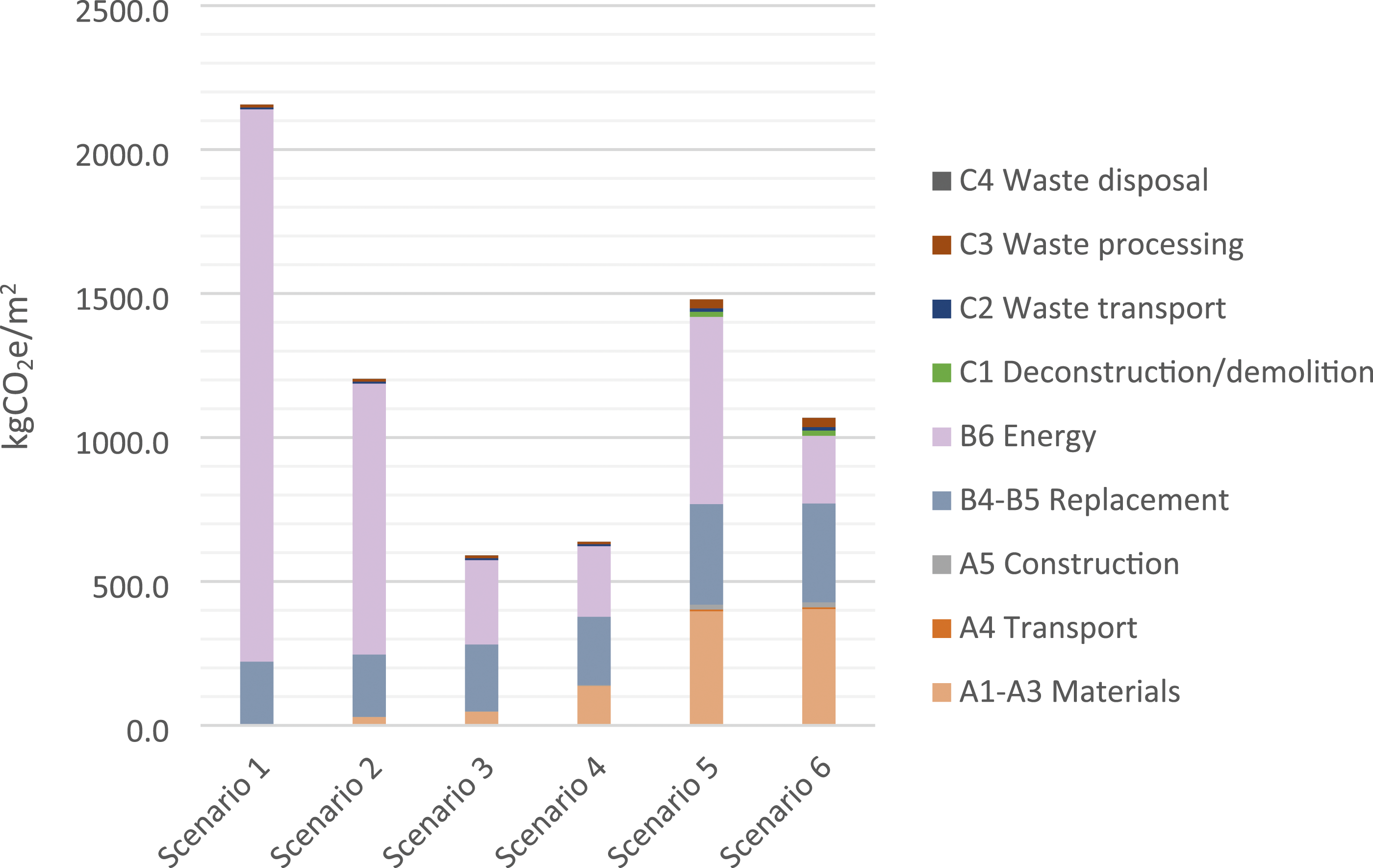
As the WLCA illustrate, scenario 1, exhibits an extraordinarily high carbon footprint, primarily driven by the energy use of the scenario, module B6. Although this scenario expectedly had the lowest embodied carbon impact, as illustrated in Figure 6, the high heating demand of the current buildings and the need for fossil-fuelled heating and DWH overrides the low embodied impact of the existing scenario without any interventions. The results demonstrate that scenario 2, the scheme with the lowest intervention to the existing scenario to meet the legislative building regulations, 25 has a lower GWP than the previously approved scenario. 5 Expectedly scenario 5 ranks second for the overall impacts, due to the high embodied and operational impact. Although the improved scenario 6 has the lowest operational energy performance, the embodied carbon emissions from the extraction, manufacturing, and transportation of raw materials make the overall performance of this scenario only marginally better than the fossil-fuelled scenario 2. The improvements in the operational energy efficiency of scenarios 3 and 4 for moderate retrofit and the low embodied impact of these schemes significantly mitigate the overall carbon footprint of these schemes to make them the most suitable scenarios for meeting the net zero targets holistically. It can be understood that operational carbon can account for 22% (scenario 6) to 89% (scenario 1) or the overall GWP of the studied regeneration scenarios. This is an important finding to debate demolition and redevelopment of housing estates due to their poor energy performances, as the proportion of operational carbon to total emissions for the two new build scenarios varies between 22% (scenario 6) and 44% (scenario 5). This ratio for moderate retrofit schemes varies between 38% (scenario 4) and 50% (scenario 3). In discussing the findings of the WLCA, it needs to be noted that the scenario specification for retrofit scenarios 3 and 4 used the moderate specifications suggested and case studied by LETI, 26 and not the deepest retrofit guidelines, to allow for the limitations and potential technical difficulties in decarbonising the existing buildings.
Impact evaluation results
Results of the online evaluation poll found that 88% of the 17 participants believed that learning about the carbon footprint of materials and renewables impacted the participants’ decision making for their selection options.
The findings of the workshop evaluation survey in which 21 participants from different stakeholder groups of the project took part are presented in Figure 8. As these results illustrate, learning about the WLCA results had a considerable impact on the participants’ decision making over their choices. Workshop Evaluation Results on the impact of finding out about the WLCA results on the stakeholders’ decision making for regeneration scenarios.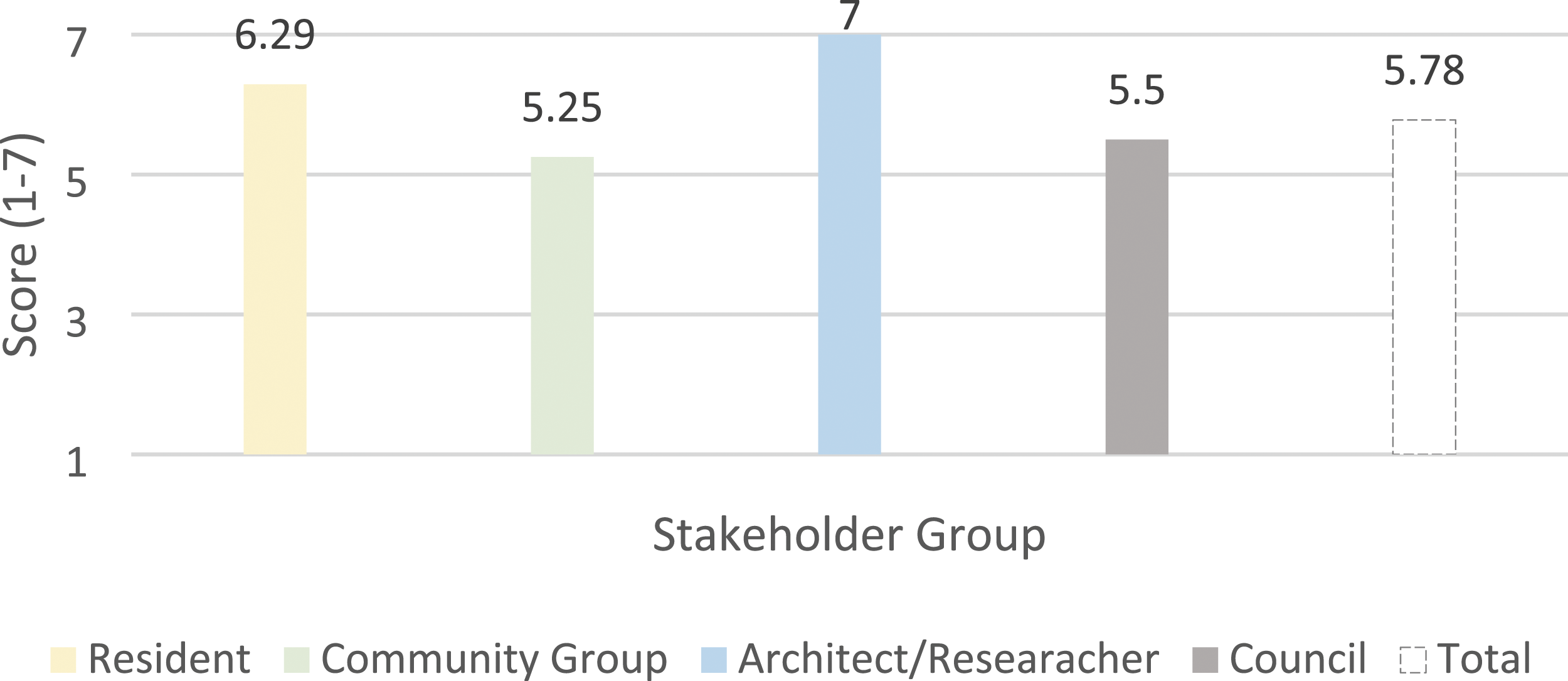
Discussion
Decisions made at the early stages of the design can have considerable impacts on the cost and performance of buildings. 31 As the TM61 document 31 presents, decisions over different metrics such as materials, building systems, and renewables should be made at early stages of the design projects.
In addition to alternatives to carbon-intensive building specifications, an equitable transition is required to support the stakeholders, especially low-income families with retrofitting their energy-intensive homes. 32 Including the communities in all aspects of the regeneration of their estates is not only needed for a just approach 9 but is also a legislative measure in the UK. 16
The findings of the WLCA of this paper articulate the multifaceted nature of carbon accounting in building projects, emphasising the need for holistic approaches that address each lifecycle stage to minimise the overall carbon footprint. Reflecting on the benefits of carbon-efficient strategies, the results accentuate the effectiveness of incorporating sustainable materials and practices throughout the building’s lifecycle to meet stringent carbon reduction targets and advance towards net-zero ambitions.
The results from the WLCA also solidify the argument that when it comes to the regeneration of housing estates, retrofit scenarios can surpass new builds in terms of GWP. The data presents a compelling case for the carbon emission savings offered by refurbishment scenarios, with energy consumption and whole life carbon figures substantiating significant reductions. Despite these anticipated outcomes, predicated on the modelling assumptions for each scenario, it is notable that scenarios 2 to 4—which advocate for retrofitting—are seldom included in practical studies, often overshadowing the potential for achieving lower GWP impacts.
Critically, the new build scenario, scenario 5, was less energy-efficient in its HVAC system compared to scenario 4. Yet, it is imperative to acknowledge that the specifications for scenario 5 were derived from the planning application information, whereas those of scenario 4 conformed to LETI 26 guidance for a moderate retrofit, falling short of the more demanding deep retrofit standards. The findings of WLCA of scenario 6 prove that the overall impacts of a fossil-fuel-free new build scenario would remain elevated due to the inherent high embodied carbon of new build projects. This revelation calls into question the adequacy of current legislative frameworks, as the WLCA outcomes for scenarios 2 and 5, following legislation for retrofitting and new build elucidate.
While the GWP impacts are complex and often not fully grasped by communities due to the specialist nature of WLCA studies, this research has unveiled the interest amongst community members in understanding the assessment methodology and integrating its insights into their decisions. The feedback from the evaluation surveys underscores how knowledge of different building systems and the carbon footprint of various materials and regeneration scenarios profoundly influence the stakeholders’ decision-making processes.
Given the urgency of meeting net zero targets, the reduction of carbon offsetting becomes a salient point. 33 This study illustrates that retrofit scenarios not only contribute to a reduction in direct emissions but also reduce the reliance on carbon offsetting, which is a critical component in the broader strategy to achieve net zero. 32 Although it has been recommended to offset the remaining carbon emissions to meet net zero through recognised schemes, 34 offsetting should not be considered before prioritising retrofitting, where the necessity for drastic offsets is diminished, fostering a more sustainable and direct path to net zero.
It should be noted that this study has not taken into account any structural implications for the retrofit works due to the sound appearance of the building under study and the lightweight retrofit measures and structural system of the extended storey. If some structural interventions were required, this would have resulted in a slight increase in the embodied carbon results of Scenario 4 where an added storey is introduced. It should also be considered that as the industry moves towards decarbonising the materials and the supply chain, we may reach a point where the gap between the overall WLCA for new build and retrofit scenarios is reduced. However, it still remains necessary to conduct WLCA for each regeneration study and to discuss the overall WLCA and other important environmental and socioeconomic impacts of different regeneration scenarios with the communities to lower the overall negative impacts of different scenarios. While this research has mostly focused on working with the communities to explore WLCA of different regeneration scenarios, priorities of different stakeholder groups and different impacts of regeneration on communities and other stakeholders should be explored for a holistic comparison of different regeneration scenarios.
Conclusion
This study reinforces the potential superiority of retrofitting over new builds, where a holistic strategy towards GWP and meeting the net zero target is implemented. This serves as a clear call for the inclusion of retrofit options in the analysis of diverse regeneration and redevelopment scenarios. The study’s outcomes also highlight the pivotal role of stakeholder engagement in comprehending the GWP impacts of materials and systems, influencing the participatory development and evaluation of regeneration scenarios. This holistic approach is paramount to devising strategies that not only minimise carbon footprints but also align with net zero ambitions, thereby ensuring environmentally and socially responsible estate regeneration.
We note the limitations of this study as not including sequestered carbon and benefits from Module D in the system boundary for WLCA. In addition, the study has not explored further scenarios with different low carbon materials for reducing the embodied carbon footprint of different schemes. As GWP is not the only metric of sustainability, 35 we recommend for future research to further explore the impact of low-embodied materials on new build scenarios and consider a broader range of environmental impacts for LCA. Furthermore, financial factors as key performance metrics for clients, overshadowing the wider impacts of the schemes, and social indicators are considerable factors in decision making which should be studied alongside other metrics.
Footnotes
Acknowledgements
The community plan (People’s Plan) of Alton Estate has been developed collaboratively with a team of UCL researchers (17) – Pablo Sendra as the principal researcher, and Sahar Nava as one of the researchers – in partnership with Alton Action and Just Space and the community of Alton Estate, funded by the Knowledge Exchange Innovation fund, Higher Education Innovation Fund (Research England), managed by UCL Innovation & Enterprise. We would like to thank all our participants from the Alton Estate community, and Alton Action group who have generously taken the time and energy to take part in our research.
Declaration of conflicting interests
The author(s) declared no potential conflicts of interest with respect to the research, authorship, and/or publication of this article.
Funding
The author(s) disclosed receipt of the following financial support for the research, authorship, and/or publication of this article: This research is funded by Engineering and Physical Sciences Research Council (EPSRC) – Grant Reference EP/N509577/1 and EP/T517793/1.
