




Abstract
Results of an online survey conducted during the COVID-19 lockdown among 848 home workers living in London (United Kingdom) and in Italy are reported with a focus on (1) the impacts of building services on the perception of the acoustic environment while working and relaxing at home and (2) the factors associated with window opening behaviour. The analyses showed no significant difference in soundscape appropriateness for relaxation depending on the heating, ventilation and cooling system typologies, and in soundscape appropriateness for working from home (WFH) based on the ventilation strategy. Higher soundscape appropriateness for WFH was associated with houses equipped only with radiant floors for heating in Italy and with air-cooling systems in London. In London, air systems resulted in higher perceived dominance of noise from building services compared to other systems. Overall, rooms with less dominant sounds from building services were evaluated as more appropriate for working and relaxing. The dominance of sky or buildings from the window view, outdoor noisiness, noise sensitivity, age and gender were not significantly associated with participants’ window opening behaviour while WFH. Differently, participants viewing more vegetation from windows in Italy were more likely (odds ratio: 1.279) to keep the window open while WFH.
Practical application
This paper focuses on the mutual interrelations between indoor soundscapes, building occupants, building services and window opening behaviour. The knowledge derived provides initial insights into 1) criticalities in the design and operation of building services and 2) factors driving window opening behaviour. Notably, knowledge on the drivers of occupants’ interaction with windows is relevant for those practitioners and researchers modelling occupant behaviour in energy simulation programmes as this can affect indoor air quality, thermal conditions and cause gaps between the predicted and the actual energy performance of buildings.
Introduction
Since the COVID-19 outbreak and the introduction of lockdown measures, people have spent a large amount of time at home. An increasing part of the literature has dealt so far with the effects of the environmental conditions on building occupants’ health, mental health and quality of life,1–3 and several studies have specifically focused on the quality of the domestic environment for building occupants’ during the COVID-19 lockdown.4–6 Industry and research are debating on the design and operation of buildings7–9 in the light of the new home uses (e.g. working from home, WFH) and the need to control the spread of the virus (e.g. ventilation requirements in buildings). However, while rethinking the post-COVID design of the built environment, the interaction between occupants and the built environment should be carefully considered.10,11 Sub-optimal environmental conditions can trigger unintended behaviours by building occupants that can result in increased energy consumption during building operation and in potential health risks.
As far as acoustics is concerned, building services feature among the noise sources that could impact acoustic comfort in residential buildings.5,12,13 Their effect might be even more disruptive in presence of cognitively demanding tasks, 14 as in the case of home working, which has been and will be increasingly adopted after the outbreak of COVID-19. 15 Acoustic discomfort can hinder natural and mechanical ventilation in domestic environments. Noise from home ventilation systems has often been reported as one of the reasons why these systems are not used as intended by the designers.16–19 Occupants may turn off their ventilation systems to avoid the noise annoyance or turn them down to a level of noise that can be bearable. 17 Outdoor noise pollution can induce annoyance and changes in occupants’ behaviour concerning window opening. In modern airtight dwellings, this can lead to inadequate ventilation and poor air quality. In absence of an integrated design, 20 building occupants are thus left with the burden of choosing which comfort domain to prioritize21,22 (e.g. acoustic comfort) at the expense of others (e.g. contact with the outside, indoor air quality (IAQ) and thermal comfort), thus forcing trade-offs which may result in negative health and performance outcomes (e.g. stress, sick building syndrome symptoms).
In the present paper, results from an online survey are presented to investigate the impact of sound from building services in participants’ own dwellings on the perception of the acoustic environment (i.e. the indoor soundscape13,23) at home during the COVID-19 lockdown. Differently from studies that have reflected a negative attitude towards sound and its outcomes (i.e. how much were you annoyed by these noise sources?), the present survey has been designed from a soundscape perspective,24–26 in order to characterize the positive and negative effects of sounds and noises, as a function of the specific task performed at home during the confinement period (i.e. relaxation and WFH). The survey was carried out in London (United Kingdom) and Italy, that represent different climatic areas and ventilation habits. Although the different scale of the two study areas (i.e. the city of London and the Italian country) does not allow for a proper cross-national analysis, 27 the availability of data on the two regions allow to generalize some common trends and to preliminarily describe some of the observed differences, to be further investigated in future studies.
A further focus of the present study is on window opening behaviour. Investigating the drivers of occupants’ interaction with windows is important as this has significant effects on indoor air quality, building energy use and can result in gaps between the predicted and the real energy performance of buildings.10,28 If window opening behaviour has been traditionally studied in relation to thermal, visual, air quality, contextual and person-related factors,28–30 the literature calls for more research on the relationship between the acoustic context and window operation. 31 In the present study, window opening behaviour has been studied in relation to the reported acoustic context, the quality of the window view and to person-related factors.
Research questions underpinning the study are as follows: 1. How does heating, ventilation and cooling systems affect indoor soundscape appraisal while working and relaxing at home? 2. Do the acoustic context, the quality of the view from the window and person-related factors have an effect on window opening behaviour?
The knowledge derived can aid to highlight criticalities in building service design and operation and to further clarify factors driving window opening to be integrated into energy model simulations.
Methods
Participants
An online survey has been administered to adult participants (18–65 years old), reporting no hearing difficulties, and working from home during the COVID-19 lockdown via Prolific participant pool.32,33 Given the different availability of recruitable participants in Prolific from the two countries, the survey has targeted the city of London and Italy as study areas. A questionnaire in English language has been completed by participants that indicated London as area of residence, while an Italian translation was proposed to individuals living in Italy. Study data from the online survey were collected and managed using REDCap electronic data capture tools hosted at University College London (UCL).34,35 The survey has been conducted on 18 and 19 January 2021, while London was in a lockdown condition 36 and Italy was interested by several containment measures depending on the risk level in the different territorial areas. 37 After excluding participants that failed attention checks, 464 UK participants (181 men, 282 women and 1 other; mean age: 32.2 years; SD: 9.1 years) and 384 Italian participants (215 men, 166 women and 3 other; mean age: 29.6 years; SD: 8.9 years) were considered for the data analysis. The study was approved via the UCL IEDE Ethics departmental low-risk procedure on 26 November 2020.
Questionnaire design
The survey was made of five main sections focusing on: (1) the WFH activity, (2) relaxation at home, (3) housing features, (4) the urban context and (5) person-related characteristics. The analysis presented in the following focuses on a subset of items employed to answer to the research questions of interest. A more detailed description of the survey can be found elsewhere. 38
Questionnaire excerpt.
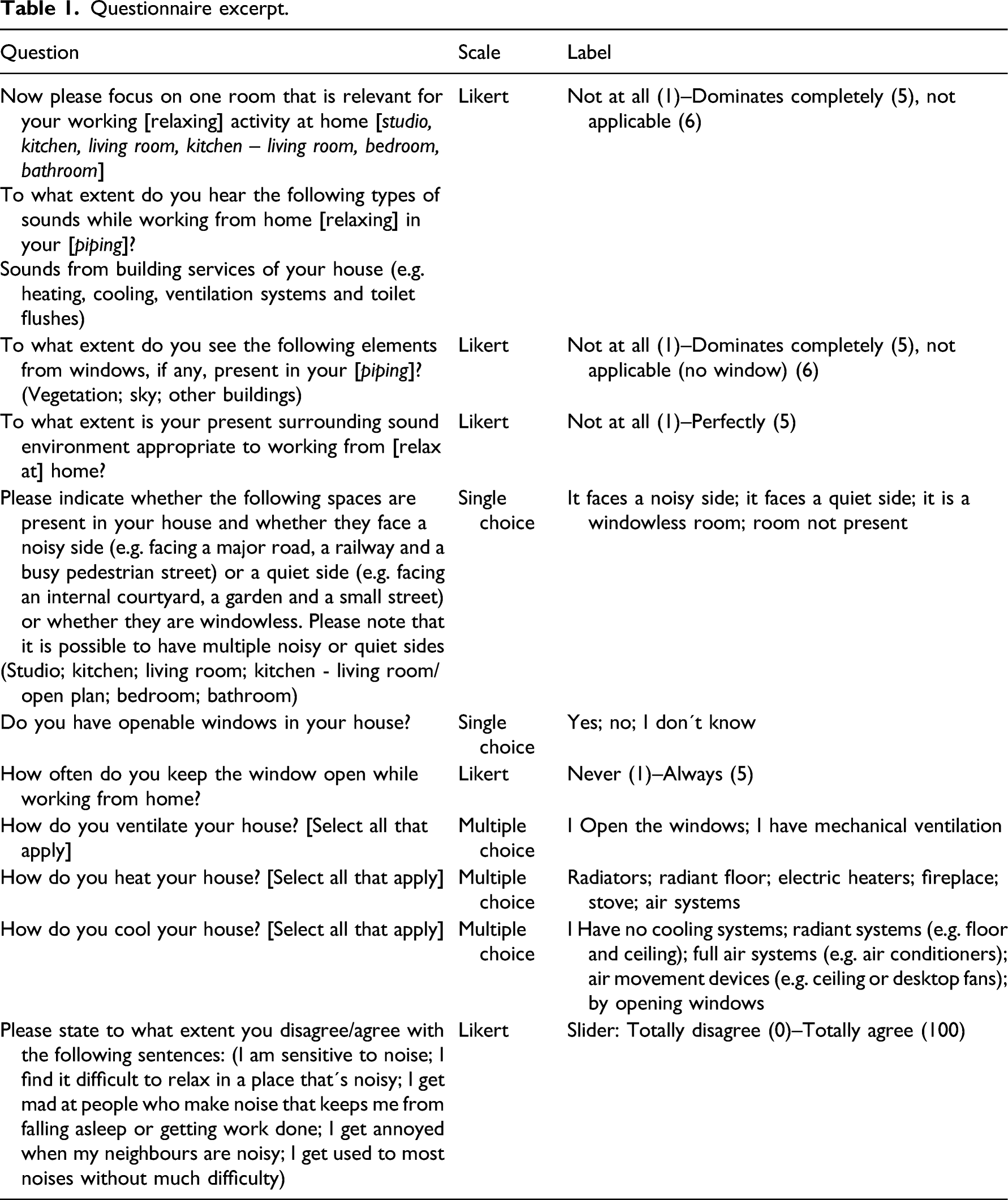
Noise sensitivity was evaluated through a reduced scale 39 extracted from the Weinstein’s Noise Sensitivity Scale. 40 Lastly, demographic information about gender and age were collected.
Data analysis
Statistical analyses were run in IBM SPSS Statistics. 41 Frequency distributions were processed in order to explore categorical and ordinal variables. ‘Not applicable’ and incongruent responses (e.g. participants giving conflicting information across different questions) have been treated as missing values and deleted listwise. Mann-Whitney U tests and Kruskal–Wallis tests were utilized to evaluate differences respectively between two or more groups. In case of significant differences in the Kruskal–Wallis test, pairwise comparisons were evaluated using Dunn’s procedure and the Bonferroni method was applied to adjust the p-values, in order to account for the increased chance of incorrectly rejecting a null hypothesis (i.e. type I error). Finally, a cumulative odds ordinal logistic regression with proportional odds was run to determine the effect of noisy sides, window view, noise sensitivity, age and gender on the frequency of window opening while WFH, treated as an ordinal variable with five levels ranging from ‘never’ to ‘always’. Variables related to the dominance of vegetation, sky and buildings from the window view have been treated as continuous. The statistical significance threshold was set at 0.05.
Results
Most of participants, both living in London and in Italy, reported that the noise from building services was not dominating their places for working and relaxation at home, as shown in Figure 1. Data show a higher percentage of environments with dominant sound from building services in Italy (moderately & a lot & dominates completely: 30.2% for WFH and 27.3% for relaxation) than in London (19.2% for WFH and 14.9% for relaxation). Percentage of responses on the dominance of noise from building services in the room chosen for working from home (WFH) and relaxation (REL), in London and in Italy. N London = 464, N Italy = 384. Percentages for ‘not applicable’ responses are not reported.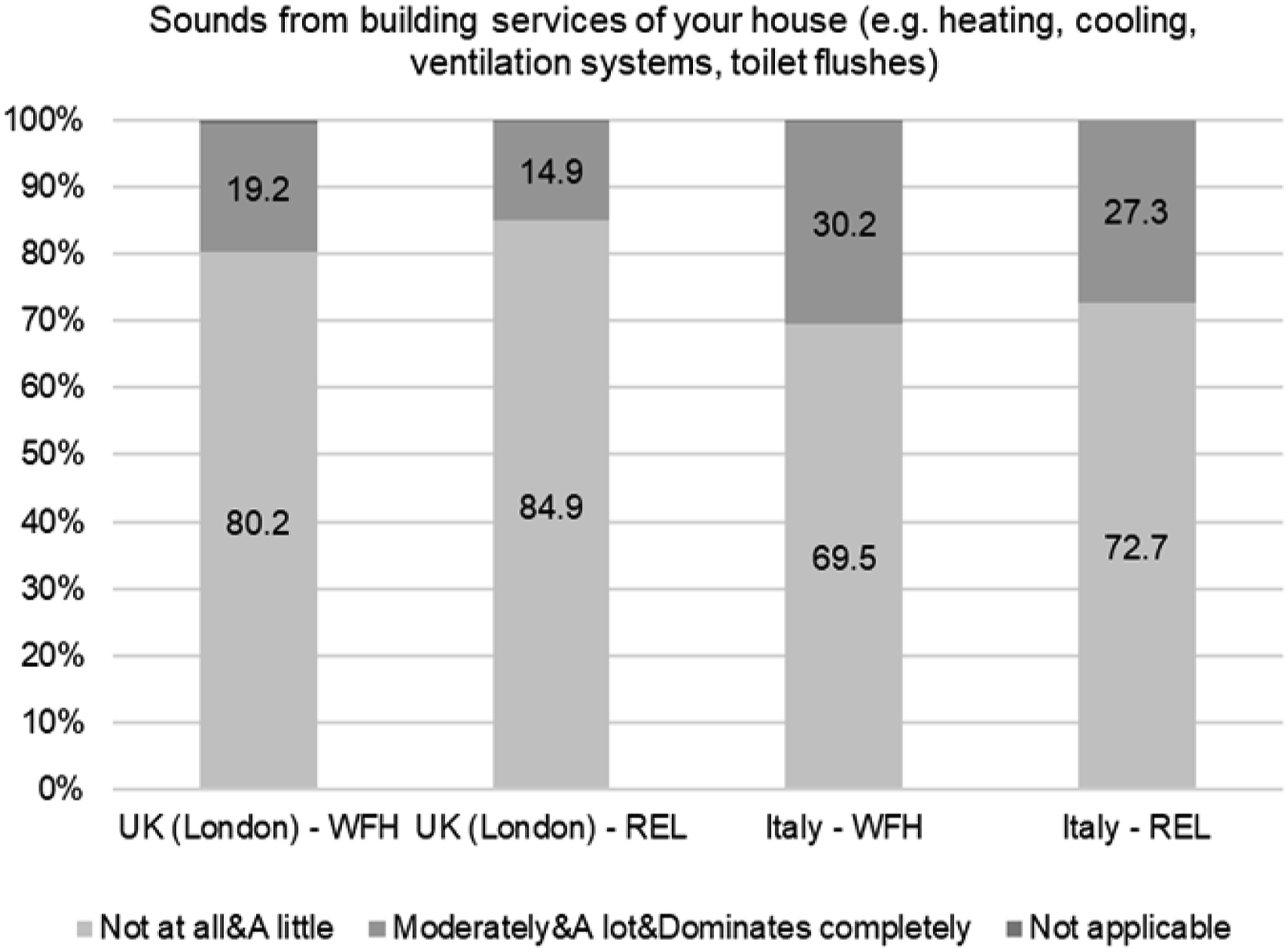
Data collected from multiple choice questions returned several combinations of building services installed in the homes of UK and Italian participants. In order to isolate the effect of the different typologies, combinations have been collapsed into a reduced number of exhaustive and mutually exclusive categories. A summary of heating, ventilation and cooling system typologies after the coding are depicted in Figure 2 for UK (N = 464) and Italian (N = 384) samples. Percentage of building services typologies for (a) heating, (b) ventilation and (c) cooling systems in the homes of UK and Italian participants. N London = 464, N Italy = 384.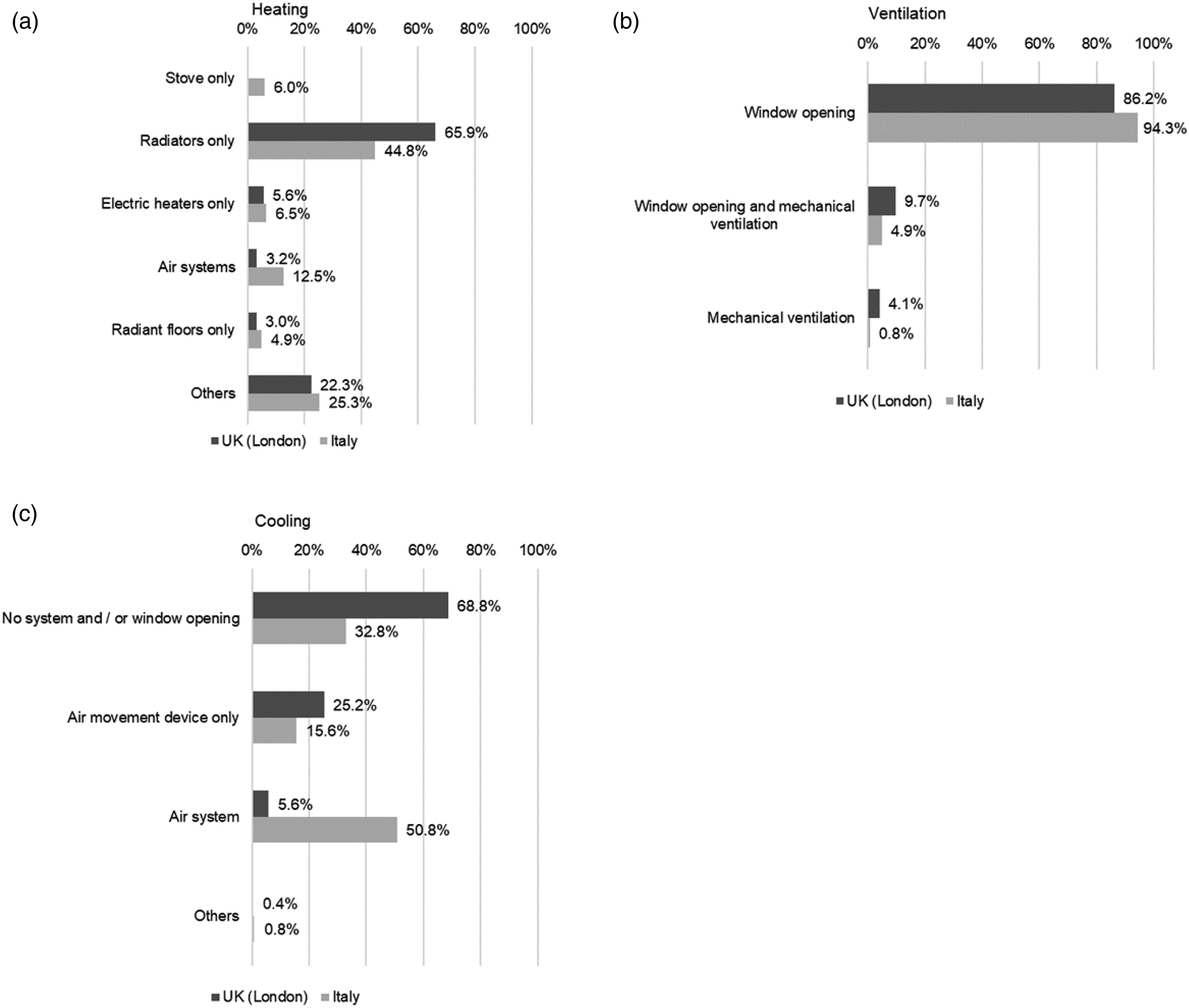
With regard to heating systems, most participants reported having only radiators, in both London (65.9%) and Italy (44.8%). In London, this was followed by houses equipped only with electric heaters (5.6%), air systems (3.2%, alone or in combination with other systems), only radiant floors (3.0%) and with other systems (e.g. a fireplace) or a combination of the previous ones except for the air systems (e.g. radiators and radiant floors), totalling 22.3%. In Italy, houses equipped only with radiators were followed by those equipped with air-systems (12.5%, alone or in combination with other systems), only electric heaters (6.5%), only stoves (6.0%), only radiant floors (4.9%) and other systems (25.3%).
Ventilation was mainly performed by opening windows in both London (86.2%) and Italy (94.3%), followed by windows opening and mechanical ventilation (9.7% in London and 4.9% in Italy), and by the exclusive use of mechanical ventilation (4.1% in London, 0.8% in Italy). It should be noted that only three Italian participants had mechanical ventilation at home. However, this was kept as a separate group, for symmetry with the English case, which was more numerous (N = 19).
The majority of London participants had no cooling system at home and/or opened windows for cooling purposes (68.8%). This was followed by those using air movement devices (e.g. ceiling or desktop fans, 25.2%) but no full air systems, those adopting air systems (alone or in combination with other systems, 5.6%) and others (e.g. radiant systems, 0.4%). In Italy, most of participants’ house was equipped with air systems (50.8%), followed by those having no system and/or opening windows for cooling (32.8%), using air movement devices (15.6%) or other systems (0.8%).
Among those opening windows, alone or in combination with mechanical ventilation (N London = 445, N Italy = 381), most of participants reported keeping the windows open at least sometimes while WFH both in London (sometimes and most of the times and always: 68.3%) and in Italy (60.4%), as shown in Figure 3. Percentage values of responses on the frequency of window opening while working from home in London (UK) and Italy by those not using exclusively mechanical ventilation (MV). N London = 445, N Italy = 381. Percentages of those having no window in the room are not reported.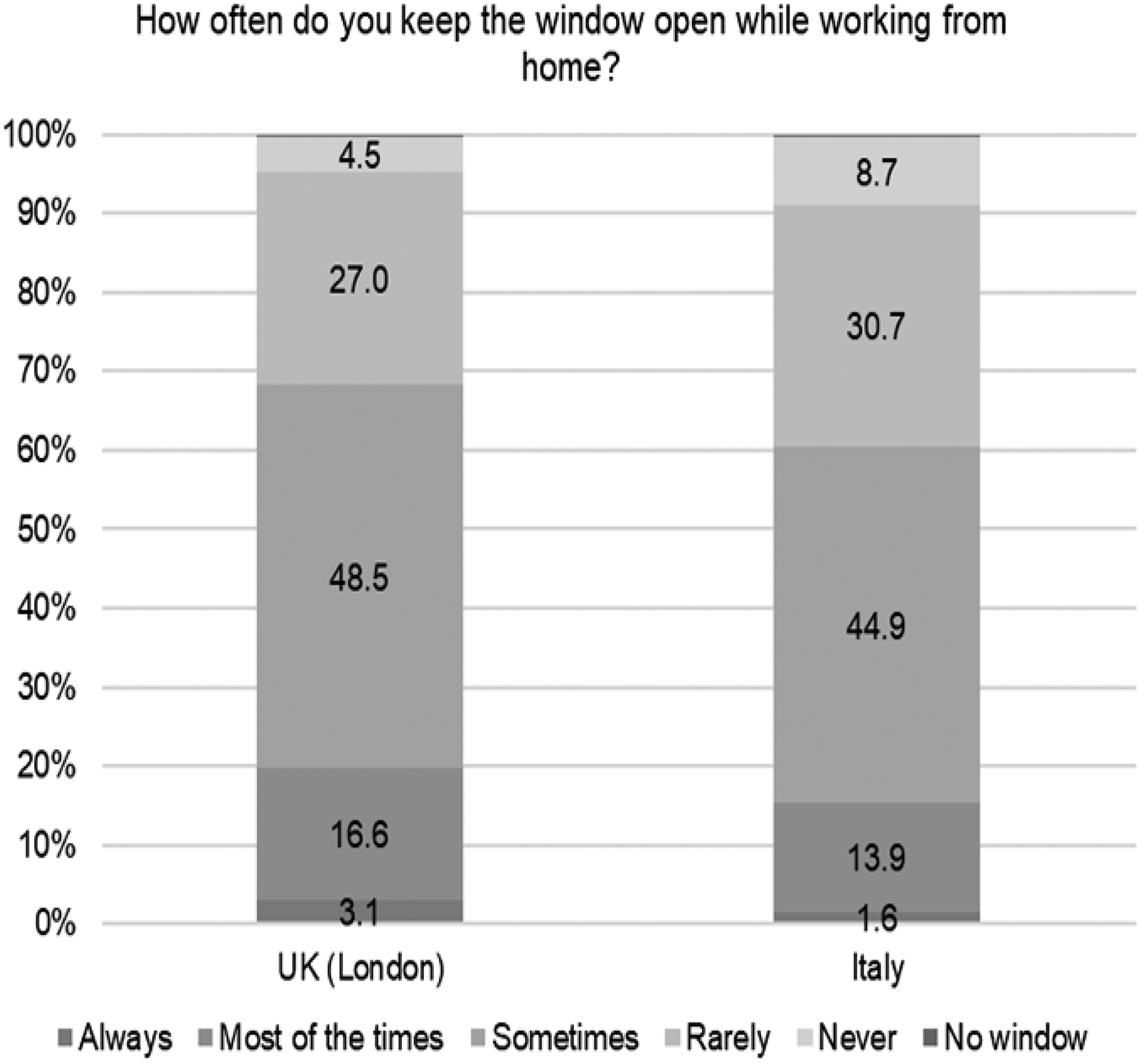
The spaces where people worked and relaxed at home overlooked urban areas that were mostly described as quiet both in London (52.6% of the rooms used for WFH and 51.1% for relaxation) and in Italy (58.3% for WFH and 64.8% for relaxation), considering the whole dataset (N London = 464, N Italy = 384). Rooms exposed to noisy sides were higher in London (45.9% for WFH and 48.3% for relaxation, 1.5% and 0.6% missing) than in Italy (40.9% for WFH, 34.9% for relaxation, 0.8 and 0.3% missing).
The view from windows in rooms employed for working (WFH) and relaxing (REL) was most often dominated by the view of sky and other buildings and to a lesser extent by vegetation. Higher dominance of vegetation was reported in Italy compared to London, as shown in Figure 4. Percentage values of responses on the dominance of vegetation, sky and buildings when viewing out of windows, if any, present in the room used for working from home and relaxation in London (UK) and Italy. N London = 464, N Italy = 384. Percentages for those having no windows are not reported.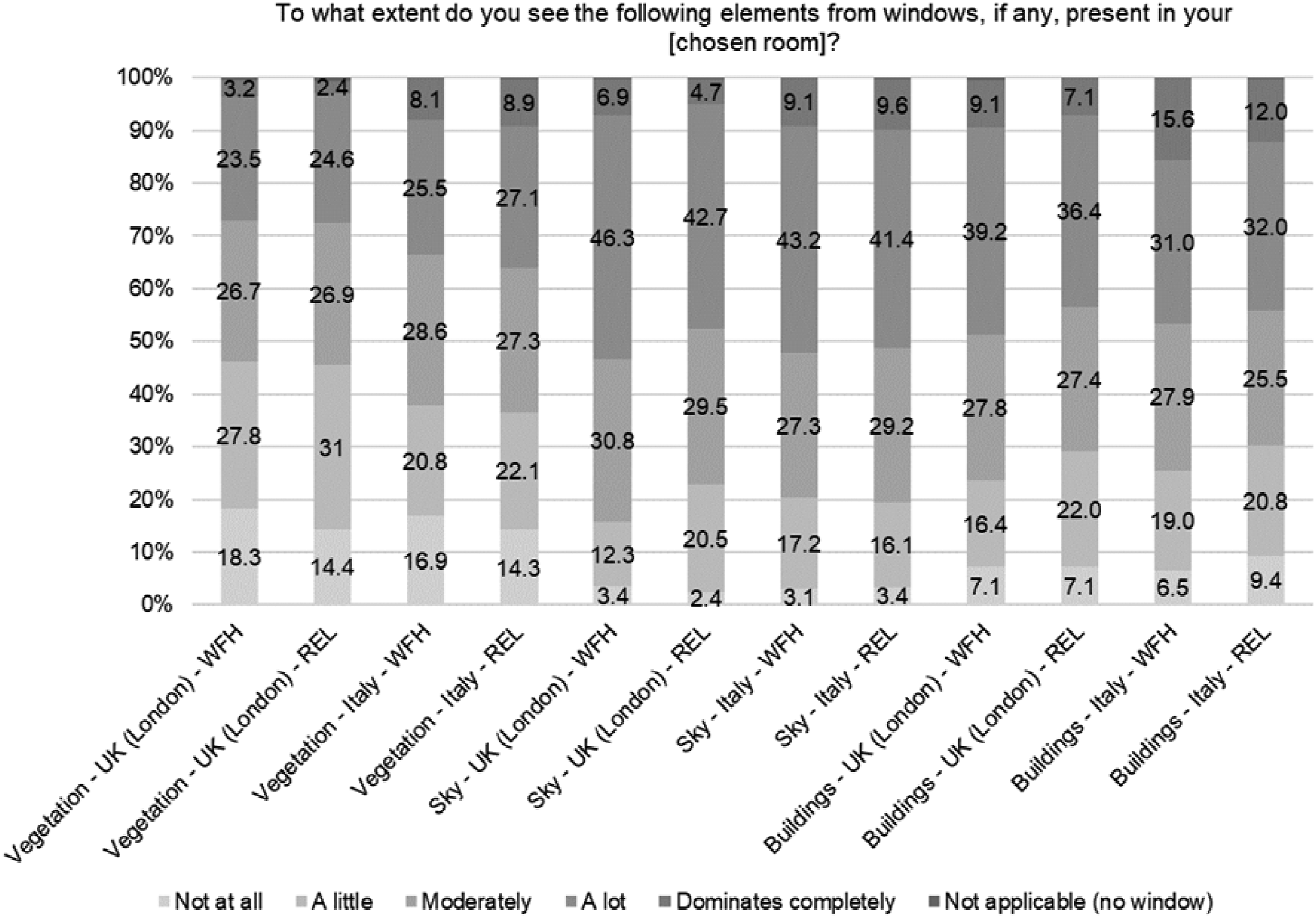
Noise sensitivity index scored on average 64.19 ± 19.25 (mean ± SD) in London and 66.00 ± 18.45 in Italy, with higher scores denoting higher sensitivity to noise.
In the following, results related to the two research questions are presented.
Impact of building services on indoor soundscapes while WFH and relaxing
Difference in perceived dominance of sounds from heating, ventilation and cooling systems depending on the building service typology
A Kruskal–Wallis test was conducted to determine if the perceived dominance of sounds generated by building services (2 categories: not at all & a little; moderately & a lot & dominates completely) in the rooms employed for working and relaxing at home was different across the different typologies of heating, ventilation and cooling systems. No significant differences were detected in the Italian sample, meaning that different building service typologies did not result in different sound dominance.
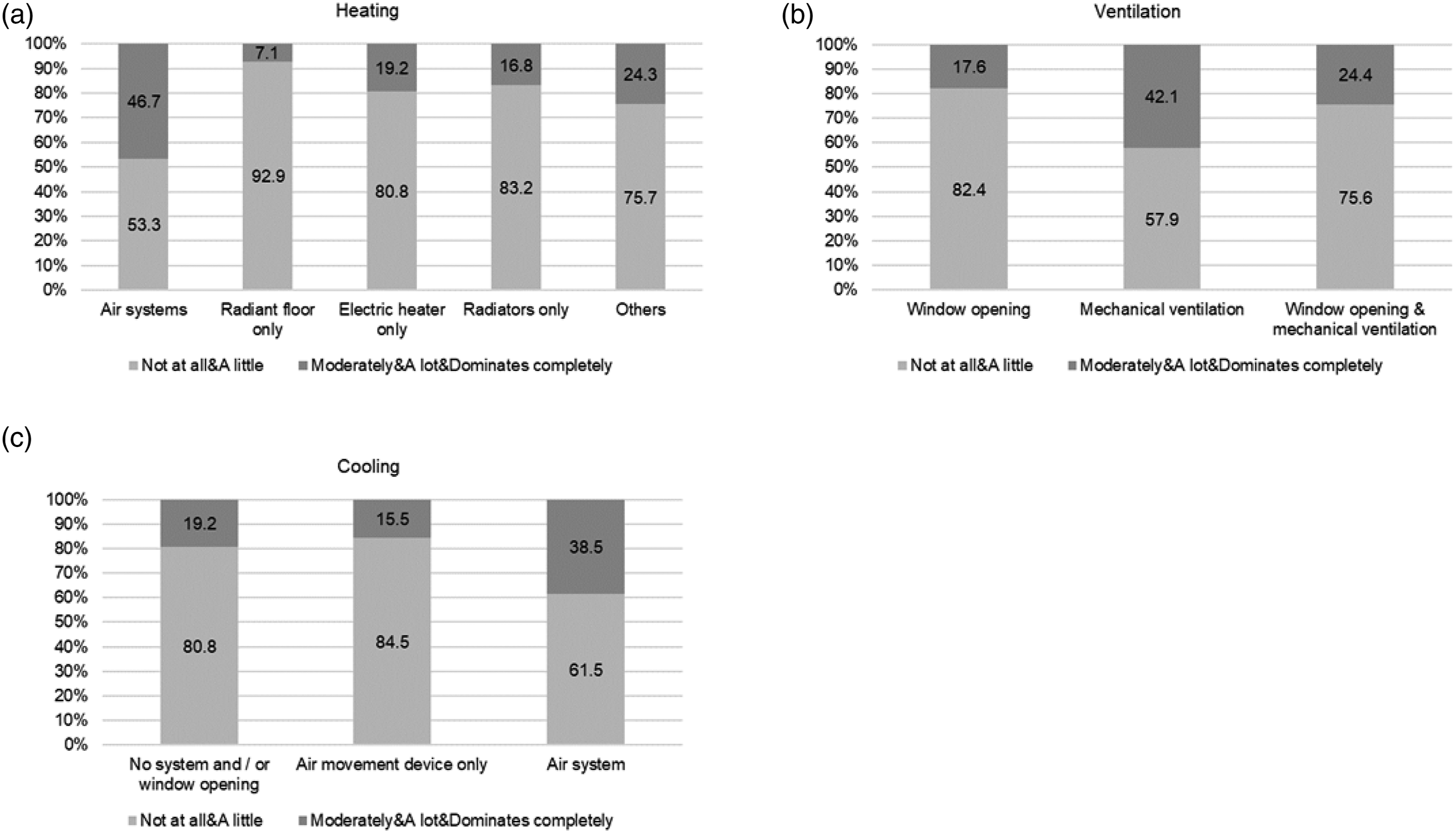
In the London subset, the perceived dominance of sound while WFH was significantly different across the investigated building service categories, both for heating, χ2(4)London = 11.334, p = .023, ventilation, χ2(2)London = 7.799, p = .020 and cooling systems, χ2(2)London = 7.152, p = .028 (cf. Figure 5). Pairwise comparisons were performed across the different technologies. As regards the heating systems, the post hoc analysis showed that sounds from building services were significantly more dominant in presence of air systems (mean rank London = 294.07) than with radiators (mean rank London = 225.30) (p = .043). With regard to the ventilation strategy, mechanical ventilation resulted in higher noise dominance (mean rank London = 283.55) compared to natural ventilation (mean rank London = 227.14) (p = .025). Across different cooling systems, sounds from building services were significantly more dominant in presence of air systems (mean rank London = 273.77) compared to air movement devices (e.g. ventilators) (mean rank London = 221.11) (p = .023) or in absence of cooling system (mean rank London = 229.66) (p = .050). Significant differences were detected only in the evaluation of sound dominance in relation to working from home, and not for relaxing at home. Percentages related to the perceived dominance of sounds from building services while working from home in London by building service typology: (a) heating, (b) ventilation and (c) cooling systems from Torresin et al.
42
.
Difference in the perceived appropriateness of the sound environment based on the dominance of sounds from building services
A Mann-Whitney U test was run to determine if there were differences in the perceived appropriateness of the sound environment for working and relaxing at home based on the perceived dominance of building services (2 categories: not at all & a little; moderately & a lot & dominates completely) while working or relaxing at home. Both in London and in Italy, spaces with less dominant sounds from building services while WFH (mean rank London = 238.16, mean rank Italy = 198.54) were judged to be more appropriate for home working than those with more dominant sounds (mean rank London = 201.08, mean rank Italy = 176.95), z London = −2.657, p London = .008, z Italy = −2.022, p Italy = .043. Similarly, spaces with less dominant sounds from building services (mean rank London = 237.31, mean rank Italy = 198.56) were assessed as more appropriate for relaxing at home than those with more dominant sounds (mean rank London = 201.67, mean rank Italy = 176.39) both in London and in Italian houses, z London = −2.369, p London = .018, z Italy = −2.045, p Italy = .041.
Difference in the perceived appropriateness of the sound environment based on building service typologies
Differences in the evaluation of the appropriateness of the sound environment for working and relaxing at home were investigated across the different typologies of heating, ventilation and cooling systems.
As regards the heating strategies, no significant differences in appropriateness were detected in London, for both WFH and relaxation, and in Italy, with regard to relaxation. A Kruskal–Wallis test showed significant differences in the reported appropriateness of the acoustic environment for WFH in Italy across different types of heating systems, χ2(5) Italy = 17.516, p = .004. Pairwise comparisons revealed a higher appropriateness for WFH in houses with only radiant floors (mean ranks Italy = 254.53) compared to those equipped with only stoves (mean ranks Italy = 145.20), p = .012, and to those with only electric heaters (mean ranks Italy = 142.40), p = .007.
The appropriateness of the sound environment for WFH and relaxation was not significantly different between the different types of ventilation systems, both in London and in Italy.
As regards the cooling strategies, the analysis showed significant differences in the reported appropriateness of the acoustic environment for WFH across different types of cooling systems, both in London, χ2(2) London = 6.873, p = .032 and in Italy, χ2(3) Italy = 10.133, p = .017, but not with regards to relaxation. In London, spaces were rated more appropriate for WFH in presence of air systems (mean rank London = 284.87) than when no cooling system was available (mean rank London = 223.14) (p = .050), while no significant difference was detected between those systems and air movement devices (mean rank London = 242.44). In Italy, only a trend could be observed, with air-cooling systems resulting in higher appropriateness for WFH (mean rank Italy = 201.22) than when only air movement devices were available (mean rank Italy = 162.18), p = .070.
Factors affecting window opening behaviour while WFH
A cumulative odds ordinal logistic regression with proportional odds was run to determine the effect of a noisy side of the dwelling where WFH, the amount of vegetation, sky and other buildings seen from the window, noise sensitivity, age and gender on the frequency of window opening while WFH, among those utilizing, only or in part, window opening as ventilation strategy. There were proportional odds, as assessed by a full likelihood ratio test comparing the fitted model to a model with varying location parameters, both for the London model, χ2(21) London = 20.366, p = .498, and for the Italian model, χ 2 (21) Italy = 25.451, p = .228.
As shown in Table 2, in the London model none of the investigated variables was significantly associated with an increase in the odds of opening the windows more often while WFH. In Italy, the odds of opening windows by those who had more access to vegetation through the window view was 1.279 (95% CI, 1.055–1.550) times that for those in which window view was less dominated by vegetation, χ2 (1) Italy = 6.274, p = .012. The odds of opening the window while WFH was 22% less in London (OR: 0.775, 95% CI, 0.540–1.114) and almost 30% less in Italy (OR: 0.707, 95% CI, 0.476–1.052) by those working in rooms overlooking noisy areas compared to those overlooking quiet areas. Though odds ratios suggest an association, no conclusive claim can be done due to a lack of statistical significance in the relationship between outdoor noisiness and window opening behaviour, χ2 (1) London = 1.890, p = .169, χ2 (1) Italy = 2.922, p = .087.
Odds ratio (OR) and 95% confidence interval for variables in relation to the frequency of window opening while working from home in London (UK) and in Italy.
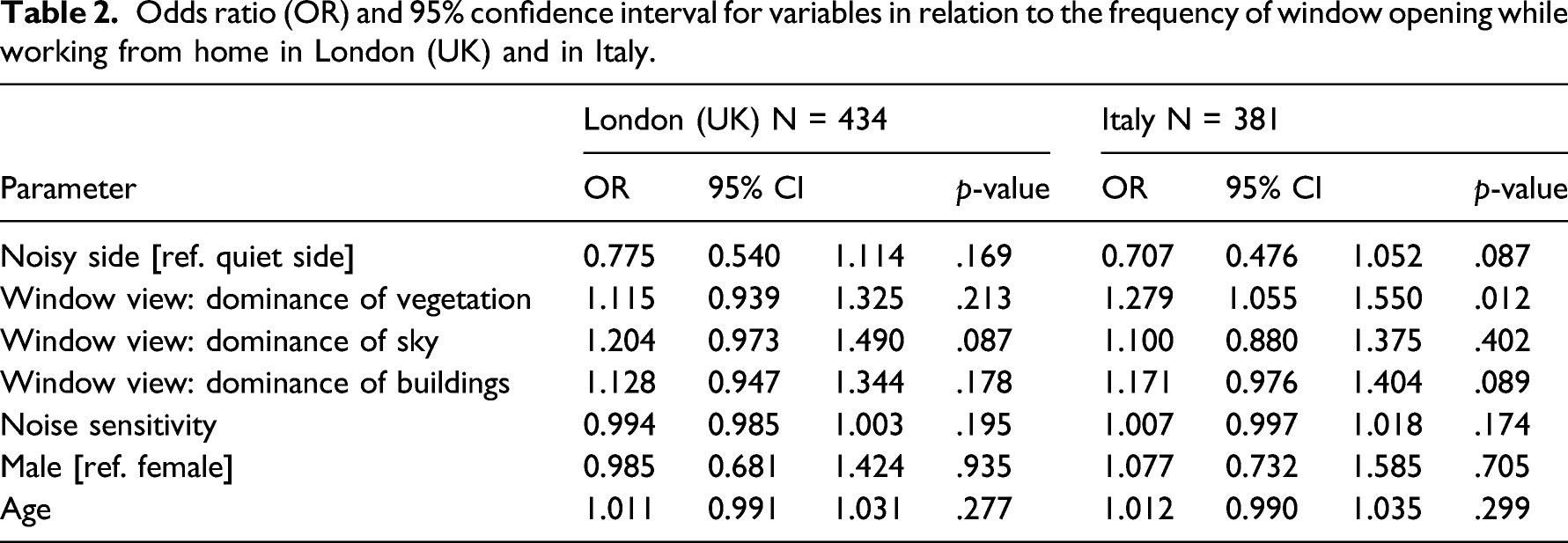
The dominance of sky or other buildings from the window view, the sensitivity to noise of the participants, age and gender were not significantly associated with an increase in the odds of opening the window.
Discussion
The study presented the results of an online survey conducted among home workers during the COVID-19 sanitary emergency in order to investigate 1) the relationships between building service typologies and the perception of the acoustic environment at home and the 2) factors influencing window opening behaviour while WFH. In the following, the two main research questions are discussed.
Indoor soundscapes and building service typologies
A similar distribution was observed in London and Italy as regards the typologies of building services for heating and ventilation (cf. Figure 2). Most of participants’ houses were equipped with radiators and adopted window opening for ventilation. Due to warmer summers, a higher number of Italian houses were equipped with air-cooling systems compared to UK ones, where window opening was most often used for cooling purposes.
The main results on the associations between building service typologies and indoor soundscapes are graphically depicted in Figure 6. The evaluation of the indoor acoustic environment during relaxation was in general not significantly different depending on the type of building services present at home. With reference to home working, no difference was detected between different types of ventilation strategies. As regards heating systems, a higher appropriateness for WFH was found in Italy in houses equipped with only radiant floors compared to those with only stoves or only electric heaters. This might be due to the fact that radiant floors provide a low-noise solution for heating, that might be particularly beneficial for home working. Moreover, the presence of radiant floors could be a proxy for newly built or retrofitted houses that may be able to provide better overall acoustic conditions compared to older houses, which are more likely equipped with stoves or electric heaters. As regards the cooling strategies, the presence of air-cooling systems (e.g. air conditioners) was associated with more appropriate spaces for WFH in both London and Italy, in the latter case as a tendence. However, as the survey has been administered in the heating season (i.e. with cooling systems off), differences might be attributable to the fact that houses equipped with air-cooling systems are more likely newly built or retrofitted. Graphical representation of the main results on the effects building service typologies on indoor soundscapes while working from home (WFH) and relaxing.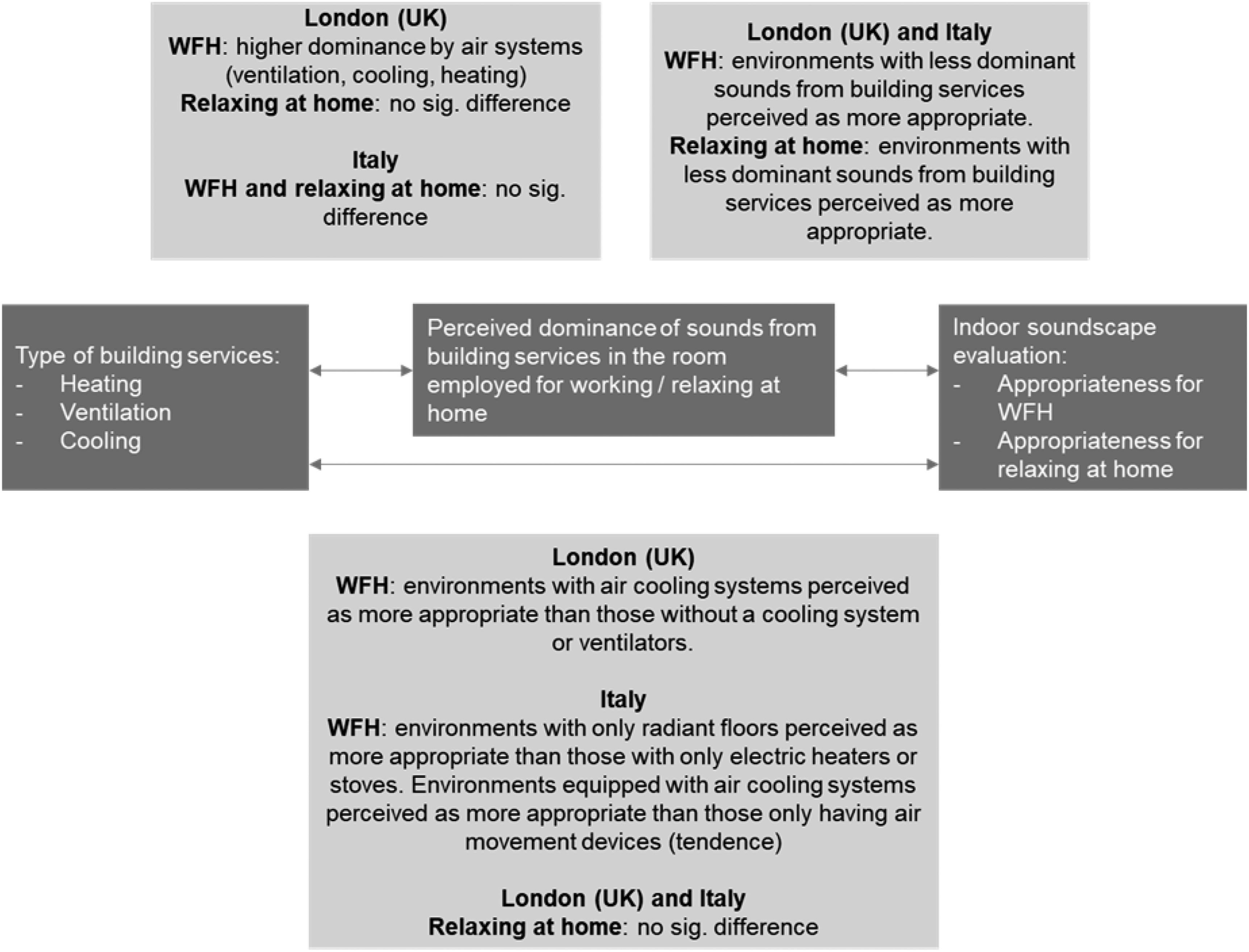
In most cases building services were not dominant sources inside dwellings. A higher percentage of participants reported that sound from building services was dominant in Italy compared to London, both with reference to WFH and relaxation. This might be due to the fact that sounds from building services are more likely masked in London by outdoor sources than, on average, in Italy. In London, air systems for heating, cooling and ventilation resulted in higher perceived dominance compared to other systems (cf. Figure 5). Sound dominance was in turn related to the evaluation of the sound environment made by participants. Spaces with less dominant sounds from building services were evaluated as more appropriate for working and relaxing at home, both in London and in Italy.
As most of the differences have been observed with reference to home working (cf. Figure 6), building occupants might be more vulnerable to the acoustic conditions while WFH, thus suggesting a demand of higher acoustic quality in the design of post-pandemic houses.
Window opening behaviour and natural ventilation
Results have shown that the quality of the window view can affect the window opening behaviour. Notably, building occupants viewing more vegetation from windows in Italy were more likely to keep the window open while WFH. Differently, the dominance of buildings or sky in the window view, the sensitivity to noise, age and gender were not significantly associated with the window opening behaviour while WFH neither in London nor in Italy. As regards the impact of the outdoor acoustic environment, only a (non-significant) trend could be observed: people reporting that their room overlooked a noisy area tended to be between 22 and 30% less likely to keep the window open while WFH, respectively for London and Italy. This is consistent with the results from an extended analysis on the London dataset,38,43 that showed that rooms exposed to noisy urban areas were associated with indoor soundscapes perceived as more annoying and less appropriate for WFH and relaxation. In few cases, participants spontaneously reported the need to close windows while WFH because of noise. 38 The data showed that, among those using natural or mixed-mode ventilation, 67% of participants in London (N London: 311) and 60% of the participants in Italy (N Italy: 231) keep the window open at least sometimes while WFH. By selecting those who work in environments overlooking noisy urban areas (N London: 205, N Italy: 157), those opening the window at least sometimes are still the 65.5% and the 56.7% of those living respectively in London and in Italy. Despite working in rooms that are exposed to noisy urban contexts is not ideal, people tend to keep windows open, even in winter. Previous literature 31 identified a number of factors driving the interaction with window, mainly related to indoor and outdoor thermal states, outdoor and indoor air quality, visual conditions, contextual factors (e.g. time of the day, season) and personal factors (e.g. thermal sensation, preferences). In an office space in Washington, 44 it was found that in winter windows were opened mostly to cool down the room and/or to improve air circulation, while in summer and fall occupants opened the windows to cool the room, add some background noise and circulating air.
The present study suggests that even in presence of noisy contexts there might be other benefits linked to the availability of an open window that can compensate for higher noise levels. This would be consistent with the existence of an ‘adaptive acoustic comfort’20,45 in NV buildings, in analogy with the concept of adaptive thermal comfort theories.46,47 According to this, a different noise sensitivity could be assumed in NV compared to MV buildings, due to a lower expectation of low noise levels, a different availability of control compared to sealed MV buildings, the connection with outside and the non-acoustic benefits linked to window opening (e.g. sense of fresh air in overheating conditions).20,45,48 Despite the concept of an adaptive acoustic comfort being currently only supported by anecdotal evidence, the investigation of the multiple cognitive and behavioural factors impinging on comfort under NV conditions through multi-domain research31,49 would be important for the definition of acoustic criteria tailored for naturally ventilated buildings. 20
Natural and mixed-mode ventilation can enable improved energy efficiency for cooling and ventilation and reduce greenhouse gas (GHG) emissions.50,51 However, outdoor acoustic and air pollution can be limiting factors for the adoption of NV. According to Song et al., 52 considering noise pollution, the average percentage of hours in which NV might be feasible in Greater London would be 71% and the average cooling energy saving potential via NV is 16.64 kWh/m. 2 In their simulation-based study, the hours considered as suitable for NV were defined based on noise level thresholds suggested by the World Health Organization. 53 However, acoustic requirements and noise limits set by standards and guidelines do not consider neither the potential differences in perception between NV and MV buildings, nor the presence of pleasant outdoor acoustic contexts. In such cases, the recommended noise limits that in many cases impede the adoption of NV might be relaxed, at least up to levels that impede the onset of annoyance or other critical health risks identified by the WHO.20,22 This would foster a wider application of natural and mixed-mode ventilation, leading to even higher cooling and ventilation saving potentials, by setting target indoor noise values that take into account how occupants experience the indoor environment and interact with windows as a function of the outdoor contexts, the availability of control and other person-related and contextual factors.
Overall, the discussion points out the importance of accessing green areas through windows to maximize NV potential, and call for further research on the multiple benefits associated with NV and on potential ‘adaptive acoustic comfort’ opportunities provided in naturally ventilated buildings.
Limitations
Some limitations need to be considered when interpreting the results reported in the present study. One of the shortcomings is related to the cross-sectional nature of the study, which does not allow to establish any causal relationship on the observed associations. As a further point, the study focused on the impact of the sound environment on daytime activities. Due to the potential impacts on sleep quality, findings cannot therefore be extended to the night time period, but they can help to maximise the potential of NV during the day, possibly combined with MV at night and at certain times of the year (i.e. mixed-mode ventilation). Although much work has been caried out on the effects of noise on sleep,54–56 further and dedicated research would be needed to explore soundscape influence on sleep quality. The research relied on self-reporting questionnaires, that might be affected by respondents misunderstanding or not correctly estimating and reporting the aspects under investigation. Due to the adoption of an online survey and to the pandemic situation, no in situ acoustic measurements could be done at this stage. Moreover, the lack of reference data in the pre-pandemic period, did not allow to determine the impacts, if any, in the observed results that are due to the altered psychological status of participants during the lockdown period. However, the study helped to highlight associations to be further analysed and reviewed in future longitudinal studies.
Conclusions
The study reported the results from an online survey administered to people living and working from home in London and Italy during the COVID-19 lockdown. The analyses have provided some preliminary findings on (1) the impacts of the type of buildings services on the perception of the acoustic environment while working and relaxing at home and on (2) the factors associated with window opening behaviour. Main findings are: • No significant difference was found in soundscape appropriateness for relaxation depending on the heating, ventilation and cooling system typologies, and in soundscape appropriateness for working from home (WFH) based on the ventilation strategy. Higher soundscape appropriateness for WFH was associated with houses equipped only with radiant floors for heating in Italy compared to those with only stoves or only electric heaters and with air-cooling systems in London compared to those without any cooling system. In most cases, building services were not dominant sources inside dwellings, especially in London. Higher perceived dominance was only related in London to air systems for heating, cooling and ventilation, compared to other systems. In general, spaces with less dominant sounds from building services were evaluated as more appropriate for working and relaxing at home, both in London and in Italy. • As regards window opening behaviour, the dominance of sky or other buildings from the window view, noise sensitivity, the availability of a quiet side, age and gender were not significantly associated with participants’ window opening behaviour while WFH. Differently, participants viewing more vegetation from windows in Italy were more likely (Odds Ratio: 1.279, 95% confidence interval: 1.055–1.550) to keep the window open while WFH. Among those using natural or mixed-mode ventilation and exposed to noisy urban areas, still the majority of participants in London (65.5%) and in Italy (56.7%) kept the window open at least sometimes to always while WFH, suggesting the existence of benefits from natural ventilation (NV) in winter able to compensate for higher noise levels.
Overall, the results offer some initial hints on the importance of the ‘perceived’ acoustic dominance of sound by building services for indoor soundscape assessment. Most of the differences in soundscape evaluation have been observed with reference to home working and not to relaxation, thus suggesting a different sensitivity to noise from building services across the two domestic uses and the need to reconsider the acoustic requirements in residential buildings in light of the new tasks performed at home in the post-pandemic era, as in the case of home working.
Findings on window opening behaviour are relevant for those modelling occupant behaviours in energy simulation programmes. The survey has been conducted in winter and the results cannot be generalized to other seasons, given the seasonal effects on window opening behaviour reported in the literature. 57 Future longitudinal studies coupled with in situ monitoring campaigns are needed to further verify the associations highlighted in the present study and to link ‘perceived’ sound dominance with objectively measurable metrics. Moreover, by focussing on major Italian cities (e.g. Rome, Milan), it will be possible to test climate and cultural effects across the two countries. Lastly, future research would be useful to explore the multiple benefits associated with natural ventilation, thus providing evidence on the potential ‘adaptive acoustic comfort’ opportunities provided by NV buildings.
Footnotes
Declaration of conflicting interests
The author(s) declared no potential conflicts of interest with respect to the research, authorship, and/or publication of this article.
Funding
The author(s) disclosed receipt of the following financial support for the research, authorship, and/or publication of this article: This work was funded by the Chartered Institution of Building Services Engineers (CIBSE) within the project ‘Home as a place of rest and work: the ideal indoor soundscape during the COVID-19 pandemic and beyond’. This work was supported by the Programma di cooperazione Interreg V-A Italia-Svizzera 2014–2020, project QAES [ID no. 613474]; and the European Research Council (ERC) under the European Union’s Horizon 2020 research and innovation programme [grant agreement No. 740696].
