




Abstract
School psychology practice is evolving toward embracing inclusive education as a barrier-removing process. This transition emphasizes equity and collaboration, shifting from conventional individual-focused approaches to a broader ecological framework. In this study, within Portugal's inclusive education framework, we examined the perceived efficacy and frequency of inclusive education practices of 464 school psychologists. A latent profile analysis based on the perceived efficacy identified three distinct profiles: the individual-focused approach profile (11%) viewed their practices as least effective, focusing mainly on individual student assessment; the community-focused approach profile (44%) perceived their practices as highly effective, aligning with contemporary inclusive approaches; and the transitional approach profile (45%) felt their practices were moderately effective. The results indicate a trend toward providing more indirect services by supporting teachers, families, and the broader school community, rather than direct student assessment and counselling in the context of inclusive education. These findings offer crucial insights into the diverse perceptions and practices of school psychologists. Yet, they highlight the need to address the challenges faced by school psychologists in applying more diversified practices. Appropriate support strategies and customized professional development are needed to overcome those challenges. Such strategies are essential to enhance the role of school psychologists in promoting inclusive education.
Keywords
Global education policy now widely acknowledges inclusion as a key goal (Organisation for Economic Co-operation and Development [OECD], 2023). Inclusion involves complex, multifaceted challenges across pedagogical and organizational areas (Messiou et al., 2022; Rapp & Corral-Granados, 2021) and requires major structural transformations within educational systems and practices. These changes aim to support all pupils in fully participating in general education activities and curricula alongside their peers (Nilholm, 2021).
This transformation calls on the entire school community to collaborate in creating high-quality learning environments that cater to the needs of all students (Jimerson et al., 2021). Moving toward an ecological, community-focused approach, the focus is on holistic inclusion, where every community member contributes to the learning process (Hardy & Woodcock, 2023). Despite differing interpretations of inclusive education found in the literature (Magnússon, 2019), we adopt a community definition of inclusion. In this model, the needs of all students can be met in general education and heterogeneous classrooms through support and collaboration among community members, including families, students, related services, and teachers (Nilholm, 2021; Slee & Tait, 2022).
This transformative approach presents challenges for school psychologists, as it departs from the traditional emphasis on individual assessment and student deficits, shifting instead toward a more systemic focus. Rather than centering on individual diagnoses, the current approach prioritizes enhancing school systems and supporting adults who work with students (Bartolo, 2015; Burns et al., 2015; Conoley et al., 2020; Newman et al., 2018; Palomo et al., 2023; Panteri et al., 2021; Rosenfield, 2021). This paradigm shift challenges school psychologists to adopt new practices and work methods that align with these broader goals.
In contemporary times, one of the most significant challenges for school psychologists is addressing inclusion, which requires a deep understanding of the ecological context of schools to effectively promote diversity, equity, and inclusion (Rosenfield, 2021). Previous studies have primarily focused on teachers’ perspectives regarding inclusive education (e.g., Savolainen et al., 2022). However, there is still a lack of research exploring school psychologists’ perspectives, particularly concerning the perceived efficacy of their practices in promoting inclusive education within school contexts.
Considering that Portugal has been recognized by the international community as a role model in terms of inclusive policy and legislation (Ainscow, 2020; OECD, 2022), this study aims to investigate perceptions of school psychologists in the Portuguese context regarding the efficacy of their practices within the field of inclusive education. Central to our analysis is the application of latent profile analysis (LPA), a statistical technique grounded in a person-centered approach (Ferguson et al., 2020). The person-centered approach recognizes the individuality of school psychologists’ experiences and perceptions. It allows for the exploration of heterogeneity within the population, thereby uncovering potentially unique profiles of practice efficacy in promoting inclusive education (Howard & Hoffman, 2018). This methodological choice reflects our commitment to understanding the complexities of inclusive education from the perspectives of those directly involved in its implementation.
Theoretical framework
Inclusive education is a complex concept marked by inherent contradictions, dilemmas, and conflicting objectives, which have led to diverse interpretations (Hardy & Woodcock, 2023; Magnússon, 2019; Maguire et al., 2015). Recently, the international perspective relies on considering inclusive education as a principle that embraces diversity among all learners (Ainscow, 2020) rather than as an action serving only children with disabilities. This broader understanding underscores the role of inclusive schools in promoting the well-being of all students by encouraging participation, fostering a sense of belonging, and strongly rejecting discrimination (OECD, 2023; UNESCO, 2020). This shift is mainly driven by the recognition that solely attributing educational difficulties to individual factors, without considering contextual, organizational, and community aspects, risks perpetuating student marginalization (Magnússon, 2019; Slee & Tait, 2022).
To contribute to the development of inclusive education, school psychologists are called to take action. These professionals are increasingly viewed as inclusion engineers, with their primary role involving supporting teachers and families, as well as the wider community, in the creation and design of inclusive learning environments for all children (Jimerson et al., 2021; Rosenfield, 2021). This type of professional practice is known in the literature as indirect services, where consultation takes a prominent role (Rosenfield, 2013). Additionally, because school psychologists have been trained to act at the individual, group, and organizational levels, they seem to be the best qualified professional group to meet the challenges facing psychology practice in schools (NASP, 2020; Schanding et al., 2023).
In delving into the professional realm of school psychologists, Jimerson and colleagues’ seminal research in partnership with the International School Psychologists Association has been pivotal in expanding knowledge about school psychologists’ roles globally (Jimerson et al., 2004, 2007, 2008, 2010). These studies offer comprehensive insights into school psychologists’ characteristics, training, responsibilities, and challenges, highlighting a focus on psychological evaluations, counselling, and individual psychoeducational assessments (Jimerson et al., 2004). While other tasks like consultation and staff development are vital, especially in inclusive education, these tasks are less common compared to assessment and counselling (Farrell et al., 2007; Jimerson et al., 2004, 2007, 2008, 2010). Critically, Farrell (2006, 2010) argues that school psychology overly relies on a medical model. This approach, focused on individual deficits and often neglecting environmental influences, has shaped education policies and practices limiting the progression toward more inclusive methods in school psychology (Palomo et al., 2023).
More recently, and perhaps influenced by inclusive policies worldwide, various studies have examined the evolving role of school psychologists (Albritton et al., 2019; Meroni et al., 2021), their collaboration with teachers (Jortveit, 2023; Panteri et al., 2021), their contributions to promoting children's well-being in the school context (Hernández-Torrano et al., 2021), and their specific role in implementing inclusive education (Nkoma & Hay, 2018; Palomo et al., 2023; Vivash & Morgan, 2019). Again, these studies emphasize the well-established roles of school psychologists in conducting assessments, supporting special education, and providing individualized assistance. These studies also highlight school psychologists’ desires to extend their professional roles and identify the challenges they perceive to be hindering such growth.
Nevertheless, recent research continues to highlight the substantial time and effort that school psychologists dedicate to specialized evaluations, special education processes, and, most notably, individual psychoeducational assessments and student counselling (Albritton et al., 2019; Hernández-Torrano et al., 2021). Further analysis underscores a strong emphasis within this role on fostering individualized relationships, particularly in assessment contexts and in providing tailored support for students with special educational needs (Meroni et al., 2021). This commitment to supporting students with special needs is consistently reinforced across studies examining the core functions of school psychologists (Jortveit, 2023; Nkoma & Hay, 2018; Vivash & Morgan, 2019).
Notwithstanding the strong commitment to student assessment and individualized support, research also points to an interest in diversifying the roles of school psychologists and expanding their engagement within the broader educational environment. While responsibilities related to assessment tasks occupy the majority of psychologists’ time, studies indicate a growing advocacy for broadening their roles beyond these tasks, aligning with the global objective of fostering inclusive, equitable, and high-quality education for all students (Hernández-Torrano et al., 2021; Palomo et al., 2023; Panteri et al., 2021). However, school psychologists acknowledge the presence of systemic obstacles hindering progress toward a more inclusive educational framework. These barriers mainly relate to school organization and pressure to maintain a traditional guidance model, which significantly shapes school psychologists’ day-to-day professional tasks (Palomo et al., 2023). Findings regarding school psychologists’ efforts to expand their roles and the systemic barriers they face shed light on various challenges and ambiguities inherent in their professional responsibilities. The necessity for clearer role definitions, specialized training, and strategies to address power imbalances and vulnerabilities in collaborative relationships are recurrent themes across the studies. The findings from previous studies demonstrate that school psychologists play a critical role in assessment, special education, and providing individualized support (Albritton et al., 2019). At the same time, there is a clear drive among these professionals to broaden their roles, foster collaborative practices, and advocate for more inclusive approaches (Palomo et al., 2023). Nevertheless, their work often centers on one-on-one interactions, particularly in assessment and special education, underscoring the distinctive and vital contributions they make to educational settings. It must be noted, however, that this traditional focus, while necessary in many respects, also poses challenges to advancing more inclusive practices (Panteri et al., 2021).
Building on international insights, the research in Portugal offers a similar picture to these international trends. There are three main studies that have tried to characterize Portuguese school psychologists’ practices (i.e., Coelho et al., 2016; Mendes et al., 2014, 2017). The results of the studies by Mendes et al. (2014) and Coelho et al. (2016), which surveyed 477 and 803 school psychologists, respectively, align with the previously described international studies. Specifically, it was found that in the Portuguese context, professional practices are clearly oriented toward individual pupils’ assessment and intervention.
Finally, Mendes et al. (2017), using cluster analysis of a sample of 446 Portuguese school psychologists, identified three distinct profiles based on practitioners’ time distribution among different target audiences. School psychologists from the first profile reported working most of the time with students. The second profile included school psychologists who divided their time between adults and students, while the third profile consisted of school psychologists concentrating their time mostly on adults. Despite these profiles, the time dedicated to working with individual students was consistently higher compared to the time dedicated to any other audience.
The present study
Data from national and international research consistently indicate that school psychologists often embrace traditional roles, dedicating most of their time to individual psychoeducational assessments and student counselling. This emphasis often results in a neglect of ecological and community approaches, impeding their potential contribution to the creation of inclusive environments and limiting their ability to play a constructive role in promoting diversity, equity, and inclusion (Farrell, 2010; Rosenfield, 2021). Furthermore, reviewed studies primarily concentrate on describing with which target audience they allocate their work time, instead of focusing on the specific practices they undertake. Additionally, it is noteworthy that previous research did not delve into school psychologists’ perspectives regarding the efficacy of their practices in promoting inclusive education.
In the context of Portugal, there is a unique opportunity to examine the perceived efficacy of school psychologists’ practices. Since 2018, Portugal has been recognized for its leading role in inclusive education (OECD, 2022). Portugal's comprehensive legislation and policies, particularly Law 54/2018, outlaw disability discrimination and create a solid framework for inclusion (Ainscow, 2020; Ministry of Education, 2018). According to this framework, intervention does not necessitate categorization or diagnosis. Instead, the emphasis is on understanding the complex interactions between students, their peers, teachers and educators, families, and the entire school system, prioritizing indirect support (Burns et al., 2015; Ministry of Education, 2018).
Moreover, Ainscow (2020) and Alves et al. (2020) commend Portugal's socio-ecological approach, which aligns students’ capabilities with the demands of the educational environment, ensuring adaptability, participation, inclusion, and active engagement in learning communities. Notably, this approach moves away from a medical model perspective (Moriña & Carnerero, 2022). This structural change brings about a significant shift, placing the practice of school psychology under substantial pressure to undergo transformation. School psychologists are now expected to serve as consultants and inclusion experts, working closely not only with teachers and school staff but also with families and the wider community (Bartolo, 2015; Rosenfield, 2013; Sewell et al., 2022). In this role, they actively support and advocate for strategies and approaches that ensure all students, regardless of their abilities or backgrounds, have equal opportunities to participate and succeed in the educational environment (Rosenfield, 2021).
Given the crucial role that school psychologists can play in fostering inclusive education, it becomes imperative to examine their practices and, most importantly, their evaluation of the effectiveness of their practices. Understanding how these professionals perceive their impact can offer invaluable insights into the promotion of inclusive educational environments. Furthermore, recognizing that these practices are not uniformly developed, it is essential to investigate how frequently they are employed and whether this frequency varies accordingly to the perceived efficacy.
Given the above considerations and that the aforementioned studies in Portugal were mainly conducted prior to important legislative changes, this study seeks to address the following key questions: (a) what profiles of school psychologists can be discerned based on their perceived efficacy of practices in promoting inclusive education? and (b) do participants in these profile groups exhibit differences in the frequency with which they utilize these practices? By exploring these questions, this study aims to contribute to the ongoing discourse on inclusive education and the pivotal function school psychologists serve within it.
This profile analysis is particularly relevant because it allows for the identification of patterns and provides a nuanced and comprehensive view of how different strategies are perceived in conjunction, which is essential for understanding the complexity of inclusive education practices. School psychologists employ a diverse array of methods and approaches in their work, which are not accurately represented by descriptive statistics alone (Mendes et al., 2017).
Methods
Participants
Participants were 464 psychologists (91% female) working at either public (88%) or private schools. Participants were recruited through invitations sent to Portuguese schools whose contacts were publicly available in two web portals. Participants’ ages ranged from 25 to 67 years (M = 45, SD = 9.01). Years of experience ranged from 0 to 42 years (M = 18.3, SD = 9.27), whereas the experience working in the same school ranged between 0 and 37 years (M = 12.1, SD = 9.20). In terms of professional qualifications, 55% were educational psychologists, 39% were clinical psychologists, and the remaining 6% were either social and organizational psychologists, developmental psychologists, or individuals who reported having other psychology degrees. The number of participants is significant, as it was documented in national reports that during the 2020–2021 school year there were approximately 635 psychologists working in schools in Portugal (Conselho Nacional da Educação, 2022).
Measure
We developed a questionnaire to assess school psychologists’ perception of practices in promoting inclusive education in terms of their effectiveness and use frequency. The construction of the questionnaire was based on previous international and national research considering psychologists working in schools (e.g., Coelho et al., 2016; Jimerson et al., 2004; Nkoma & Hay, 2018; Palomo et al., 2023). The questionnaire was subject to structural validity and reliability analysis, utilizing a calibration sample for exploratory factor analysis (EFA; n = 229) and a validation sample for confirmatory factor analysis (CFA; n = 235). Detailed results on scale development, validity, and reliability are provided in the supplementary material. The optimal model solution consisted of 29 items organized into four dimensions, as proposed in previous research (e.g., Meroni et al., 2021), representing the support provided to various audiences (a) supporting teachers in diversifying teaching practices (11 items); (b) student assessment and counselling to address a range of challenges related to learning, emotional well-being, and social interactions (5 items); (c) supporting families’ engagement in the educational process (6 items); and (d) supporting the engagement of the various members of the school community through reflective and educational activities (7 items).
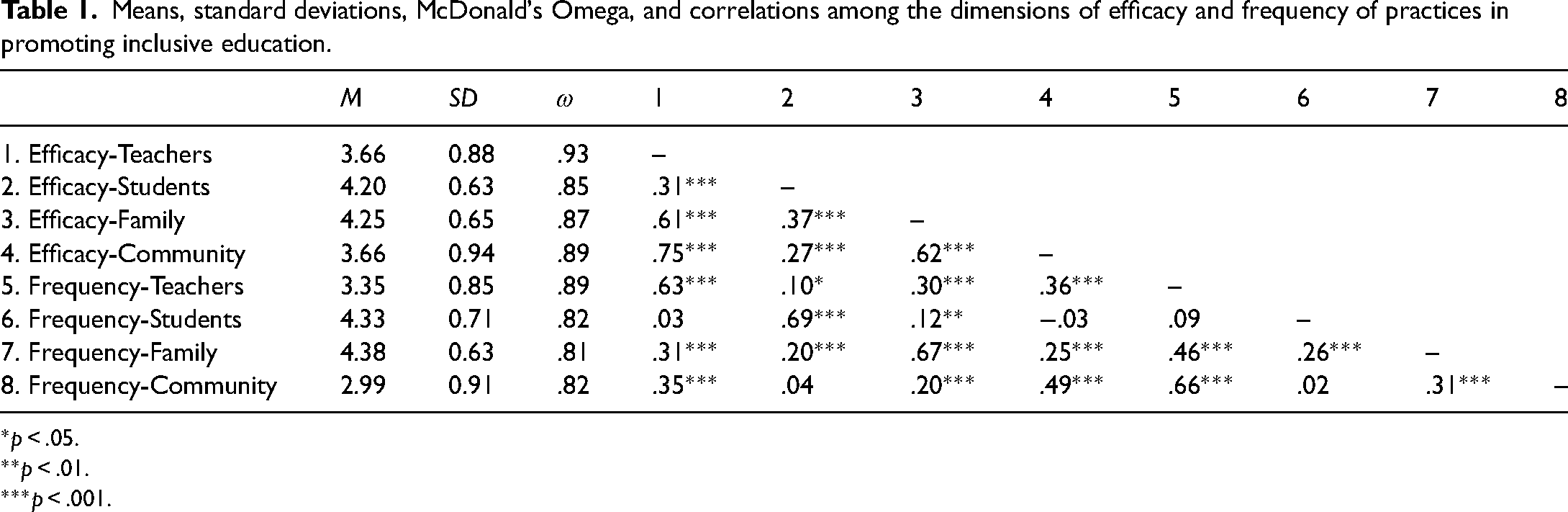
The results from the CFA showed adequate fit to the data for both efficacy, χ2(371) = 804.700, p < .001, RMSEA = 0.07 (90% CI = 0.06–0.08), TLI = 0.95, CFI = 0.95, and frequency, χ2(371) = 883.271, p < .001, RMSEA = 0.08 (90% CI = 0.07–0.08), TLI = 0.92, CFI = 0.93 subscales. Each item was accompanied by 6-point response scales for both efficacy and frequency, respectively, ranging from 1, Not effective/Never to 6, Completely effective/Almost Always. Internal consistency was considered satisfactory for all the dimensions, ranging between McDonald's omega (ω) ω = .81 and ω = .93 (see Table 1). Mean scores for item responses in each dimension were calculated. Additionally, while participants evaluated both the frequency and efficacy of each practice within close contextual proximity, it is important to note that no formal equating procedure was performed to establish a direct equivalence between the two scales (Kolen & Brennan, 2014). The frequency scale (e.g., 1 = never, 6 = almost always) and the efficacy scale (e.g., 1 = not effective, 6 = completely effective) are distinct constructs, and comparisons between them should be interpreted with caution. Our comparative observations are intended to highlight patterns and trends rather than imply a definitive equivalence between levels on these scales. This interpretive approach aligns with the exploratory nature of the study, providing insights into how school psychologists perceive and engage in their practices.
Means, standard deviations, McDonald's Omega, and correlations among the dimensions of efficacy and frequency of practices in promoting inclusive education.
p < .05.
p < .01.
p < .001.
Procedures
Data collection
Our study was granted formal approval by the independent ethics committee of the Portuguese Ministry of Education's General Directorate of Education (DGE), through the School Environment Survey Monitoring System (MIME). Participants were recruited via emails sent to the schools, requesting the dissemination of the online questionnaire to the psychology department. The first page of the questionnaire included the consent form. Participation was voluntary, and confidentiality was guaranteed. The questionnaire was administered using Qualtrics. All items were mandatory, ensuring no missing data in the final dataset.
Data analysis
To address our research questions, we conducted a three-step LPA approach using the Bolck, Croon, and Hagenaars (BCH) method in Mplus 8.10 (Asparouhov & Muthén, 2021; Ferguson et al., 2020). This approach has the advantage of preserving the integrity of the latent profiles while allowing the inclusion and testing of auxiliary variables or covariates (e.g., gender, specialization, age, experience) as well as distal outcomes (e.g., frequency of practices) in post hoc analyses.
The data analysis followed a structured, three-stage approach, adhering to established guidelines (Asparouhov & Muthén, 2021; Ferguson et al., 2020). The Mplus script is provided in the supplementary material. For this purpose, we used the mean scores obtained for the four efficacy domains.
The first step addresses our initial research question, aiming to identify distinct profiles or groups of psychologists based on varying efficacy levels. We followed the recommendations of Ferguson et al. (2020) by testing multiple models with different numbers of profiles. Competing models were evaluated using the Bayesian Information Criterion (BIC), Sample-Adjusted BIC (SABIC), and Akaike's Information Criterion (AIC), with lower values indicating better fit to the data (Ferguson et al., 2020). Entropy was used to support the decision, where values above 0.8 indicate higher accuracy of class assignment (Ferguson et al., 2020). Additionally, we used bootstrap likelihood ratio test (BLRT) to compare the models in which a non-significant BLRT suggests a better fit of the more parsimonious model (Ferguson et al., 2020). Finally, we considered the size of each profile by only accepting profiles with at least 5% of the sample (Ferguson et al., 2020). The model with the best fit was then theoretically evaluated to check the conceptual value and interpretability of the emerging profiles. After selecting the best profile solution, we calculated BCH weights to account for classification uncertainty in profile membership, and further analyses were conducted using these weights (Asparouhov & Muthén, 2021; Ferguson et al., 2020).
The second and third steps addressed the second research question by testing differences in auxiliary variables (i.e., gender, specialization, age, and experience) across profiles and examining the effects of profile membership on distal outcomes (i.e., frequency of practices). We used the BCH weights in a single model to simultaneously analyze auxiliary variables and distal outcomes. To ease interpretations of the estimates, gender and specialization were coded as dummy variables, and the remaining continuous variables were standardized. The relevance of categorical variables was assessed using chi-square tests, while mean comparisons were applied for continuous variables. The BCH approach allowed for an unbiased examination of distal outcomes. Finally, this three-step analysis, executed within a single model, provided robust insights into profile composition and associated practices while maintaining the interpretability and stability of the latent profiles (Asparouhov & Muthén, 2021).
Results
In Table 1, we present the descriptive statistics for both efficacy and frequency dimensions and the correlations between the dimensions of the scales.
Latent profiles of school psychologists’ perceived efficacy practices in promoting inclusive education
Several LPAs were performed to test our first goal, estimating from two to six profiles. Table 2 provides the fit indexes for each model. The best fitting model consisted of three distinct profiles in terms of perceived efficacy in working with the different targeted audiences. The option for the model of three profiles was theoretically and empirically grounded. A four-profile solution wasn’t viable due to one of the profiles having less than 5% of the sample. Moreover, opting for three profiles provided more nuanced distinctions between participants than the two-profile solution.
Fit indices for the efficacy latent profile models.
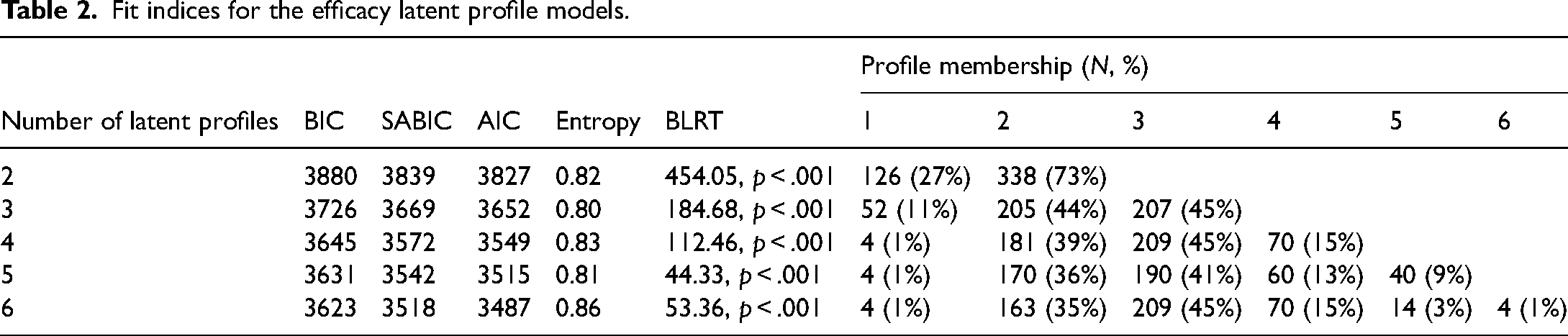
The profiles revealed three levels of perceived efficacy. As shown in Figure 1, participants from Profile 1—individual-focused approach (52 participants, 11%) considered their practices as generally ineffective in promoting inclusive education, with a focus on individual assessment and counselling and supporting their families. They may adhere more to the medical model of school psychology, possibly overlooking the broader impact of their roles in fostering inclusion.
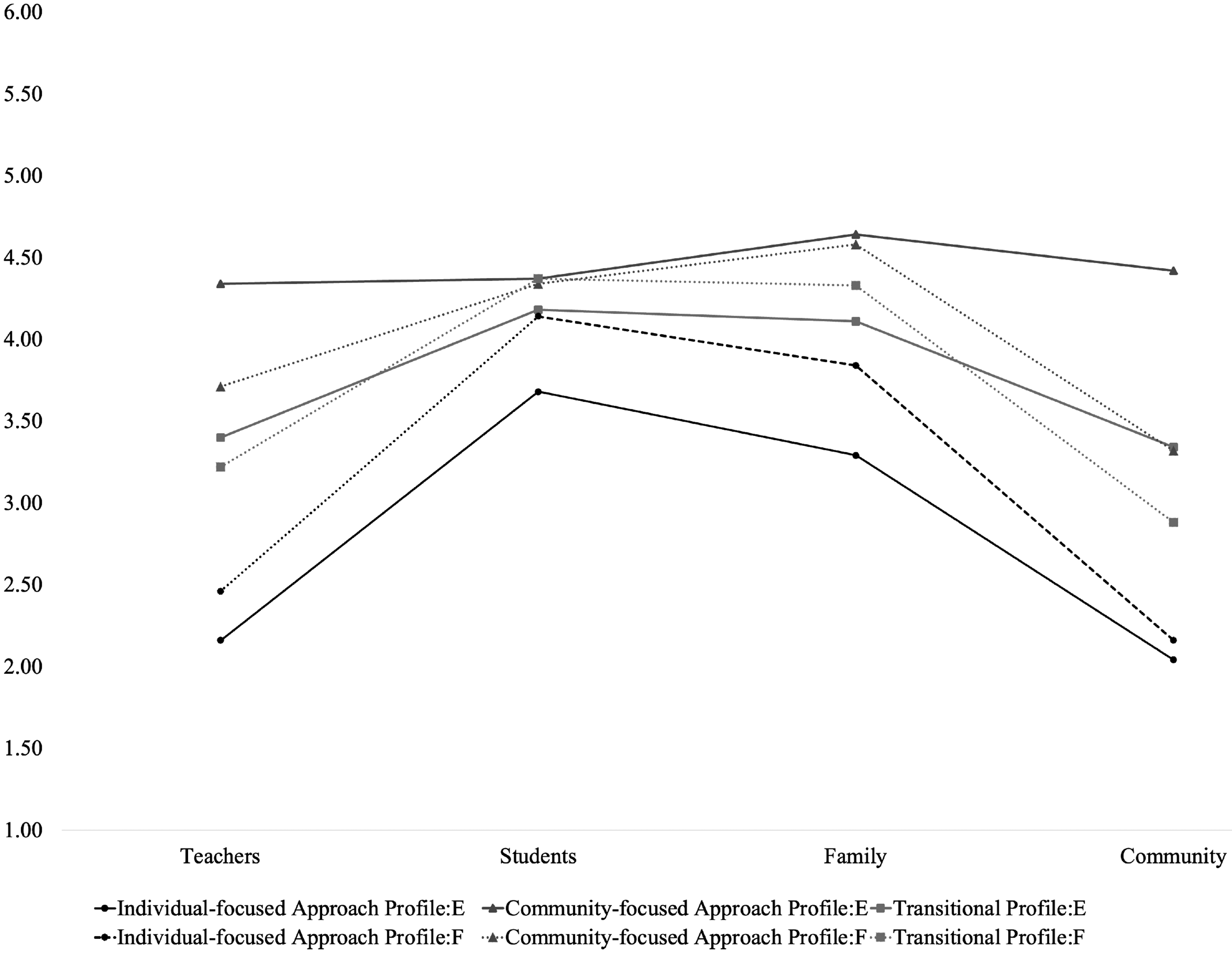
Efficacy and frequency scores among the profiles. Note. E = Efficacy, F = Frequency.
Conversely, psychologists from Profile 2—community-focused approach (205 participants, 44%) viewed their collaboration with all members of the school community (students, families, teachers, and wider community) as effective in promoting inclusive education. This approach aligns with contemporary paradigms and ecological models, suggesting a holistic and integrated approach to support well-being and inclusion.
Finally, Profile 3—Transitional Approach—included 207 school psychologists (45%) who saw their work as slightly effective in promoting inclusion but also recognized some effectiveness in individual and family intervention. They appeared to be navigating a complex profile of incorporating new inclusive education models while simultaneously valuing individualized approaches, indicating a potential transitional phase toward more inclusive practices.
Regarding differences in cluster composition in terms of gender, age, specialization and professional experience (Table 3), results revealed statistically significant differences in profile composition regarding specialization (χ2(2) = 7.50, p = .023). Specifically, professionals with an educational psychology specialization were overrepresented in the community-focused approach profile in comparison to the individual-focused approach profile (χ2(2) = 4.37, p = .037) and the transitional approach profile (χ2(2) = 5.49, p = .020). The remaining tested variables yielded no differences in the distribution across the profiles: χ2(2) = 3.68, p = .159 for gender, χ2(2) = 2.52, p = .283 for age, and χ2(2) = 4.10, p = .129.
Demographical and professional characteristics by latent profiles.
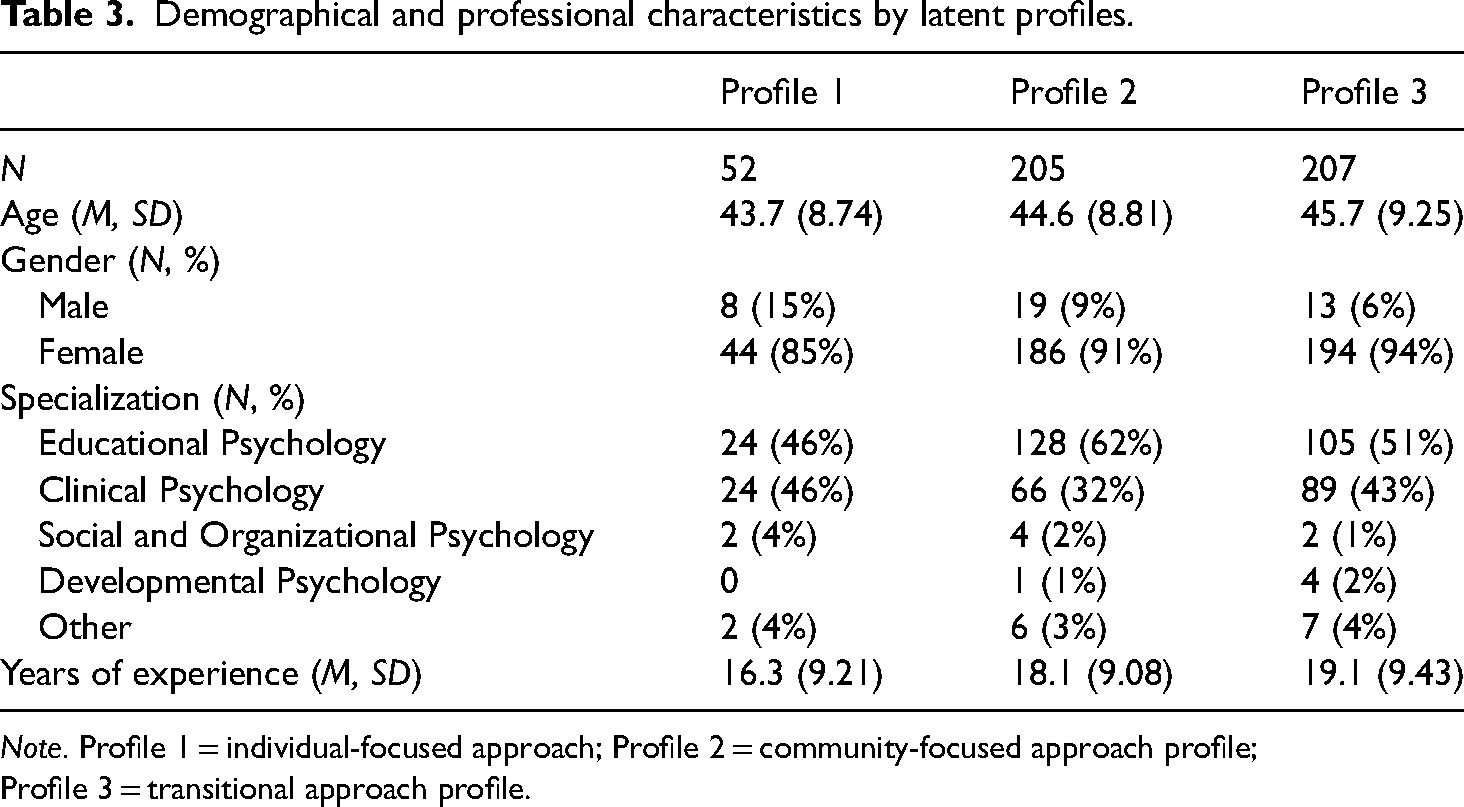
Note. Profile 1 = individual-focused approach; Profile 2 = community-focused approach profile; Profile 3 = transitional approach profile.
Use frequency of practices promoting inclusive education among latent profiles
Our second research question regards testing whether the different profiles revealed differences in usage frequency of practices related with the different targeted audiences. Figure 1 depicts the differences between the profiles considering both efficacy and frequency. Notably, the results for frequency are generally consistent with those found for perceived efficacy, as addressed in our first research question. Differences among the profiles were found in the usage frequency of practices in supporting and working with teachers (χ2(2) = 94.35, p < .001), families (χ2(2) = 37.75, p < .001), and the wider community (χ2(2) = 73.88, p < .001). No statistically significant differences were found in usage frequency of practices of students’ counselling and guidance (χ2(2) = 4.15, p < .127).
Pairwise comparisons showed that school psychologists from the community-focused approach profile differed from the professionals in the remaining profile groups in that they reported a higher frequency of practices in supporting and working with all target groups, especially teachers (χ2(2) = 86.02, p < .001 compared with individual-focused approach profile, and χ2(2) = 33.96, p < .001 compared with transitional approach profile), families (χ2(2) = 86.02, p < .001 compared with individual-focused approach profile, and χ2(2) = 33.96, p < .001 compared with transitional approach profile) and the community (χ2(2) = 30.43, p < .001 compared with individual-focused approach profile, and χ2(2) = 15.60, p < .001 compared with transitional approach profile). Additionally, it was only observed in the community-focused approach profile higher levels of efficacy in comparison to frequency.
Similarly, as depicted in Figure 1, participants from the individual-focused approach profile presented major differences between efficacy and frequency responses. Considering the frequency of working with the different members of the school community, the mean levels are less negative compared to those observed for efficacy and, inclusively, were found to be close to the remaining profiles in the dimension of working with students.
Finally, participants from the transitional approach profile presented very similar and average levels of efficacy and frequency in working with most of the targeted audiences. However, their scores on both efficacy and frequency in working with students and their families were slightly higher than average scores. Pairwise comparisons also showed that the transitional approach profile departs from the individual-focused approach profile by presenting greater frequency of practices in supporting teachers (χ2(2) = 36.83, p < .001), families (χ2(2) = 14.99, p < .001), and the wider community (χ2(2) = 35.62, p < .001).
Discussion
School psychology is evolving due to global recognition of inclusive education as a barrier-removing process (Slee & Tait, 2022). With growing emphasis on equity (Ainscow, 2020; OECD, 2023), psychologists are shifting from focusing on individual deficits to a broader ecological approach, involving collaboration with all members of the educational community (Bartolo, 2015; Rosenfield, 2013; Sewell et al., 2022). This study, in the context of Portugal's recent inclusive education framework (Ainscow, 2020; Alves et al., 2020), explored school psychologists’ perceived efficacy and frequency of practices in this field.
Identifying psychologists’ profiles through LPA
To answer the first research question, a LPA was conducted, revealing three different profiles. In the individual-focused approach profile, school psychologists felt that their practices were generally ineffective in promoting inclusive education, with a focus on individual student assessment and counselling (Coelho et al., 2016; Jimerson et al., 2008; Mendes et al., 2014). Psychologists in this group may not fully recognize the potential impact of their contributions in promoting inclusive education (Bartolo, 2015; Burns et al., 2015; Hardy & Woodcock, 2023; Jimerson et al., 2021; OECD, 2022, 2023; Rosenfield, 2021). Moreover, they may adhere to the medical model of school psychology as a privileged approach to inclusive education (Conoley et al., 2020; Farrell, 2010; Magnússon, 2019; Moriña & Carnerero, 2022).
In the community-focused approach profile, school psychologists consider their collaboration with all target audiences to be highly effective in promoting inclusive education. This perceived effectiveness suggests an alignment with contemporary inclusive education paradigms and ecological models (Bartolo, 2015; Burns et al., 2015; Hardy & Woodcock, 2023; Jimerson et al., 2021; OECD, 2022, 2023; Rosenfield, 2021). Such alignment may provide a strong foundation for school psychology practices that support the well-being of students, families, and teachers (Conoley et al., 2021). In the transitional approach profile, school psychologists considered their work with various target audiences to have slight to moderate efficacy in promoting inclusion. Similar to the individual-focused approach profile, they viewed individual work with students and their families as slightly more effective. This preference for individual work may suggest a complex or transitional phase in which school psychologists, while attempting to incorporate contemporary inclusive education paradigms and ecological models (Bartolo, 2015; Burns et al., 2015; Hardy & Woodcock, 2023; Jimerson et al., 2021; OECD, 2022, 2023; Rosenfield, 2021), still regard individual support as essential for promoting inclusion (Albritton et al., 2019; Conoley et al., 2021; Hernández-Torrano et al., 2021; Meroni et al., 2021).
Perceived efficacy and practice frequency across profiles
Findings addressing our second research question highlighted significant differences in the frequency of practices between the three profiles in all dimensions, except for the dimension of supporting students. Regardless of the efficacy attributed, working individually with students was constant across all profiles, as extensively demonstrated in prior studies (Albritton et al., 2019; Coelho et al., 2016; Farrell et al., 2007; Hernández-Torrano et al., 2021; Jimerson et al., 2004, 2007, 2008, 2010; Jortveit, 2023, Mendes et al., 2014, 2017; Nkoma and Hay, 2018; Vivash & Morgan, 2019). The higher frequency of individual support across all profiles raises questions about the possibility of different interpretations of inclusion: external pressure, systemic expectations regarding the individual engagement of school psychologists with students, or a mismatch between personal perspectives and external demands (Newman et al., 2018; Palomo et al., 2023).
Examining the efficacy–frequency relationship, the individual-focused approach profile exhibited an intriguing disconnect between perceived efficacy and frequency, especially in their work with students. This group still clearly allocated most of their time to student assessment and counselling, reinforcing their potential adherence to the medical model approach to school psychology (Farrell, 2010; Jimerson et al., 2004, 2007, 2008, 2010; Jortveit, 2023; Meroni et al., 2021; Nkoma & Hay, 2018; Vivash & Morgan, 2019). Psychologists’ low frequency and perceived efficacy of practices suggest disengagement from inclusive education. Their focus on individual assessment and counselling at the expense of broader approaches suggests a potential disconnect from effective inclusive strategies (Ainscow, 2020; OECD, 2023) and may be misaligned with current legislation (Ministry of Education, 2018).
Profiles and practices: challenges and opportunities in school psychology
The emergence of the transitional approach profile, which included participants reporting both average efficacy and frequency levels across all domains, could suggest that these school psychologists are somewhat cautious about the impact of their work to inclusive education. As Alves et al. (2020) noted, this cautiousness could be related to the transition to a new legal framework, and to the broader definition of inclusion, which could lead to more vague conceptions. Moreover, policies that do not promote strong monitoring of implementation leave a wide space for situated construction and interpretation (Maguire et al., 2015). Additionally, like the individual-focused approach profile, this group shows higher levels of frequency in their practices compared to their perceived efficacy. Overall, while they recognize the importance of their role, which contrasts with the individual-focused approach profile, they might be aware of the challenges and limitations within the inclusive education system that affect the outcomes of their practices. As previously stated, these challenges and limitations could stem from the external pressures and demands, particularly systemic expectations regarding their engagement with students (Jortveit, 2023; Mendes et al., 2017; Palomo et al., 2023; Panteri et al., 2021).
Finally, the community-focused approach profile is distinguished by a consistently higher frequency of engagement across all areas, suggesting a proactive involvement in collaborative practices and alignment with inclusive and ecological paradigms (Burns et al., 2015; Jimerson et al., 2021; Jortveit, 2023; Rosenfield, 2021). This group's high perceived efficacy in interacting with teachers, students, families, and the school community, coupled with their high frequency of supporting these groups, likely reflects their commitment to contemporary inclusive education paradigms and the new legal framework (Hardy & Woodcock, 2023; Messiou et al., 2022; Ministry of Education, 2018; OECD, 2022). Interestingly, despite their high frequency and perceived efficacy in all domains, this group uniquely views working individually with students as less effective and, thus, engages in such practices with less frequency. The lower frequency of individual work with students suggests a more significant emphasis on collaboration with teachers, families, and the wider school community as a means to promoting inclusive education. Their approach combines theory and practice, focusing on a holistic, community-centered perspective in inclusive education (Burns et al., 2015; Jimerson et al., 2021; Rosenfield, 2021). Moreover, contrary to the other profiles, the efficacy perceived by this group exceeds the frequency of their practices. A potential paradox arises, possibly due to external regulatory factors that limit the frequency of their activities, despite their willingness and the perceived importance of these activities (Palomo et al., 2023; Panteri et al., 2021).
Most notably, the greater representation of school psychologists in the community-focused and transitional approach profiles contrasts with the lower number in the individual-focused approach profile. This may suggest a paradigm shift, recognizing the efficacy of indirect services over direct individualized student support in promoting inclusive education (Ministry of Education, 2018; Rosenfield, 2013, 2021). Profile composition is extremely relevant and may reflect the transformative approach expressed in the framework for inclusive education in Portugal (Ainscow, 2020; Ministry of Education, 2018; OECD, 2022). Nevertheless, there seems to be a prevailing belief that direct support is crucial, especially for students with difficulties (Farrell & Woods, 2017). Full implementation of new conceptions of school psychology services seems to be a work in progress. As Sandoval et al. (2021) expressed, schools are on their journey to inclusive education, and support is needed to transform policies into practices.
Additionally, professionals with an educational psychology specialization were more commonly represented in the community-focused approach profile compared to the other profiles. This pattern of representation suggests that specialization, influenced by training and professional culture, impacts practice. Since educational psychologists are trained in ecological models and in education theories, they appear to be the most qualified professional group to address the challenges facing psychological practice in schools (NASP, 2020; Schanding et al., 2023). These findings suggest psychologists working in schools must have formal education in education theory, learning, and instruction, and particularly in inclusive practices in order to effectively manage the complexities of inclusive education (Farrell & Woods, 2017; OECD, 2023).
Implications for school psychologists
Our study sheds light on the critical role of school psychologists in Portugal's inclusive education system, revealing essential insights for practice, professional development, and policy formulation across the field. Our research highlights the preference for collaborative and ecological approaches among school psychologists as strategies to advance inclusive education. Practitioners with this orientation, and often with a background in educational psychology, showcase the advantages of specialized training in ecological models and educational theories (NASP, 2020; Schanding et al., 2023). This observation stresses the importance of continuous professional development for school psychologists, focusing on holistic, systemic perspectives in student support.
The study also identifies challenges that necessitate targeted training and support, such as overcoming reliance on the medical model and fostering a deeper commitment to inclusive practices. It calls for an enhancement of school psychologists’ understanding of their roles within the inclusive education framework and a bridge between their perceived efficacy and the frequency of practice. Overcoming these hurdles requires a unified move toward collaborative, school-wide strategies that go beyond supporting individual students, aligning with the overarching goals of inclusive education (Ainscow, 2020; OECD, 2023). This transition is pivotal for school psychologists to effectively contribute to a more inclusive educational environment, addressing the diverse needs of the student population.
Study limitations and future research directions
Regarding study limitations and direction for future research, it is important to note that, despite the good fit indices, the measure we used was an entirely new questionnaire that must continue to be developed. Additionally, school psychologists’ views of inclusion and how they think about their specific roles were inferred by their self-reported practices. To gain a deeper and more nuanced understanding of school psychologists’ practices and their role in inclusive education, qualitative methods would be beneficial. Specifically, we suggest future studies address school psychologists’ conceptions about inclusive education, the external demands or pressures on their roles, and potential explanations for variations in practice frequency and efficacy perceptions. These insights are crucial for designing professional development and informing policy reforms to fully implement inclusive education through school psychology practices.
Summary of findings
Our research underscores the evolving role of school psychologists amidst the global trend toward inclusive education, highlighting a transition from traditional, individual-focused approaches toward more collaborative, systemic models. This shift is evidenced by the emergence of the community-focused approach profile, comprising psychologists who adopted holistic strategies and embraced a significant paradigm shift. Yet, the continued reliance on conventional practices by psychologists in the individual-focused approach and transitional approach profiles’ signals a pressing need for enhanced professional development and systemic reforms to fully embrace inclusive educational models. Our analysis stresses the need for school psychologists to receive formal training in inclusive education principles and practices, which are pivotal for addressing the multifaceted needs of today's diverse student populations. Additionally, our findings reveal a discrepancy between the growing appreciation for indirect services and the prevailing implementation of direct methods, influenced by various factors including systemic pressures, professional dynamics, and practical challenges (Farrell & Woods, 2017; Jortveit, 2023; Magnússon, 2019; Messiou et al., 2022; Newman et al., 2018; Palomo et al., 2023; Rapp & Corral-Granados, 2021; Rosenfield, 2021; Schanding et al., 2023). Addressing these elements is crucial for realizing a fully inclusive school psychology practice and for bolstering the role of school psychologists in promoting inclusive education.
Supplemental Material
sj-docx-1-spi-10.1177_01430343241312903 - Supplemental material for Inclusive horizons: School psychologists’ efficacy profiles in inclusive education
Supplemental material, sj-docx-1-spi-10.1177_01430343241312903 for Inclusive horizons: School psychologists’ efficacy profiles in inclusive education by Sérgio Gaitas, Joana Pipa, and Margarida Botelho in School Psychology International
Footnotes
Declaration of conflicting interests
The authors declared no potential conflicts of interest with respect to the research, authorship, and/or publication of this article.
Ethical statement
In conducting our research, we strictly adhere to the highest standards of ethical integrity, which are fundamental in the pursuit of scientific knowledge. This commitment is evidenced by our compliance with the rigorous ethical guidelines that ensure the protection and rights of research participants. Our study has been granted formal approval by the independent ethics committee of the Portuguese Ministry of Education's General Directorate of Education (DGE), through the School Environment Survey Monitoring System (MIME), with the approval number 0374900040.
Our ethical approach prioritizes the protection and dignity of research participants, adhering to international standards. Informed consent was obtained, ensuring participants were fully aware of the study's aims and their rights. We maintained strict confidentiality measures and minimized risks to uphold privacy and safety. Our methodology emphasized transparency, with regular updates to the DGE ethics committee, underscoring our commitment to ethical standards. The approval from DGE's ethics committee underscores our dedication to conducting research that is both scientifically sound and ethically responsible, building trust with participants and advancing our field responsibly.
Funding
The authors disclosed receipt of the following financial support for the research, authorship, and/or publication of this article: This work was supported by the Portuguese Foundation for Science and Technology (FCT) under the references https://doi.org/10.54499/UIDB/04853/2020 and  .
.
Supplementary material
Supplementary material for this article is available online.
The dataset used in this study is available from the corresponding author upon reasonable request.
Author Biographies
References
Supplementary Material
Please find the following supplemental material available below.
For Open Access articles published under a Creative Commons License, all supplemental material carries the same license as the article it is associated with.
For non-Open Access articles published, all supplemental material carries a non-exclusive license, and permission requests for re-use of supplemental material or any part of supplemental material shall be sent directly to the copyright owner as specified in the copyright notice associated with the article.
