



Abstract
A survey of school psychology practice in Nova Scotia was conducted to update and extend previous work. Thirty-one school psychologists completed a survey about their practice across the six areas of competency identified by the Canadian Psychological Association (CPA) and their current versus preferred time in various areas of psychology practice. Results indicated that most participants currently practice across all areas of competency to some degree but spend most of their time engaged in assessment and evaluation. Findings suggest that the role of the school psychologist in Nova Scotia has changed very little since the previous work was completed and that school psychologists would like to diversify their practice to include more intervention and professional development. With appropriate training and supervision, the time is right to expand school psychology services to provide much-needed mental health services to a broader range of children and families. Recommendations for training and role diversification are discussed.
School psychology has been described as an essential public service in Canada (Canadian Psychological Association [CPA], 2014) and comprehensive school-based psychological services should include both direct and indirect service provision for children, families, and schools at both the student- and system-level (King et al., 2016; National Association of School Psychologists [NASP], 2010). The CPA (2007) practice guidelines for school psychologists also support this model of service delivery, suggesting that school psychologists can provide a wide range of services to schools. However, the role of the school psychologist is often viewed as that of “tester” in a traditional “refer, test, place” model of care, rather than being a skilled clinician with a range of competencies that could contribute meaningfully to the delivery of more comprehensive school-based mental health services (King et al., 2016; Saklofske et al., 2007; Splett et al., 2013).
Although school psychologists are often viewed primarily as testers, they have been described as the “most highly trained mental health professionals in schools” (Sheridan & Gutkin, 2000, p. 488) and, given their training, could bridge the gap between the education and healthcare systems to provide care to youth with a range of mental health needs (King et al., 2016; van Den Heuvel et al., 2016). School psychologists are highly skilled with respect to assessment, diagnosis, and treatment of behavioral and learning disorders and difficulties, as well as mild-moderate anxiety and mood difficulties (CPA, 2002). However, the expertise of school psychologists is often not recognized, meaning that they are an underused resource at a time when there is a high demand for increased access to youth mental health services (see King et al., 2016 for a discussion). Several years ago, Kirby and Keon (2004) argued that schools and school psychologists are a logical place to provide primary mental health care to youth, with Splett et al. (2013), van Den Heuvel et al. (2016), and King et al. (2016) echoing this sentiment more recently.
School psychologists have often indicated that they would like to provide a broader range of services to students, families, and schools (e.g., Saklofske et al., 2007; Splett et al., 2013). In a survey of 27 Nova Scotia school psychologists conducted by Corkum et al. (2007), respondents indicated that they spent approximately half their time conducting psychoeducational assessments and that, whereas they recognized the importance of providing this service and wished to maintain this as their primary role, they also desired some role diversification, especially with respect to providing consultation, prevention, and intervention services. The authors provided recommendations to expand school psychology services and advocated for changes to school psychology training (e.g., increased training and supervision in evidence-based intervention and extending the length of school psychology training programs) to ensure adequate competency among school psychologists providing a broad range of services.
It is not clear whether the role of the school psychologist in Nova Scotia has changed since Corkum et al.’s (2007) study, whether school psychologists still wish to include more consultation, prevention, and intervention in their practice or whether the current system will allow for changes in school psychology service delivery. The most recent guidelines for school psychology practice issued by the Nova Scotia Department of Education and Early Childhood Development (DOEECD; School Psychology Guidelines Committee, 2009 [no longer available]) stated that school psychological services should be focused on providing support for educational planning and programming and that school psychologists’ activities should be directed toward assisting students to meet educational outcomes. These guidelines stated that school psychologists should consult with and refer to community-based mental health practitioners to provide mental health services to students, which is a much narrower description of services than that of NASP, CPA, and provincial licensing and professional bodies (King et al., 2016). Diversification of school psychology practice will be required if comprehensive mental health services are to be offered in schools as noted above.
Practice diversification will inevitably involve challenging and changing perceptions of school psychology training and practice both within the field of psychology and among educators, administrators, and government. Additionally, it will be important to ensure appropriate training and supervision for pre-service school psychologists as well as currently practicing school psychologists who wish to expand their scopes of practice. Indeed, some authors have suggested that school psychologists do not feel competent to offer services other than assessment and evaluation, even though they value intervention and consultation and would like to provide these services (e.g., Stoiber & Vanderwood, 2008). With this in mind, it is important to gather updated information about school psychologists’ competencies, as well as their current and preferred roles to advocate for role diversification and to ensure that training programs can prepare clinicians to meet the changing needs of the education system. The purpose of the current study was to update and extend the work of Corkum et al. (2007) by surveying school psychologists in Nova Scotia about their current role(s), as well as their preferred scope of practice across the CPA’s six areas of competency, with the goal of informing recommendations for role diversification, service provision, and training.
Method
Participants
To participate in the study, psychologists were required to be employed primarily in a school setting. Sixty-five surveys were distributed and 32 were returned, representing a response rate of 49%, which is similar to Corkum et al. (2007). One participant did not meet the inclusion criteria, therefore the final sample consisted of 31 school psychologists from multiple Regional Centres for Education (RCEs; equivalent to a school board or school district) in Nova Scotia. This represents 20% of Nova Scotia psychologists with self-declared competency in School Psychology (N = 155), as per the Nova Scotia Board of Examiners in Psychology (Nova Scotia Board of Examiners in Psychology [NSBEP], 2010) registry (see King et al., 2016). All participants identified as female. As shown in Table 1, mean age of participants was 36.4 years (SD = 8.7 years; Range = 26–61 years), with a mean of 9.6 years of experience (SD = 8.7 years; Range = 1–36 years). Participants were instructed to only consider their practice in schools when responding to surveys if they were employed in more than one setting.
Participant Demographics (N = 31).
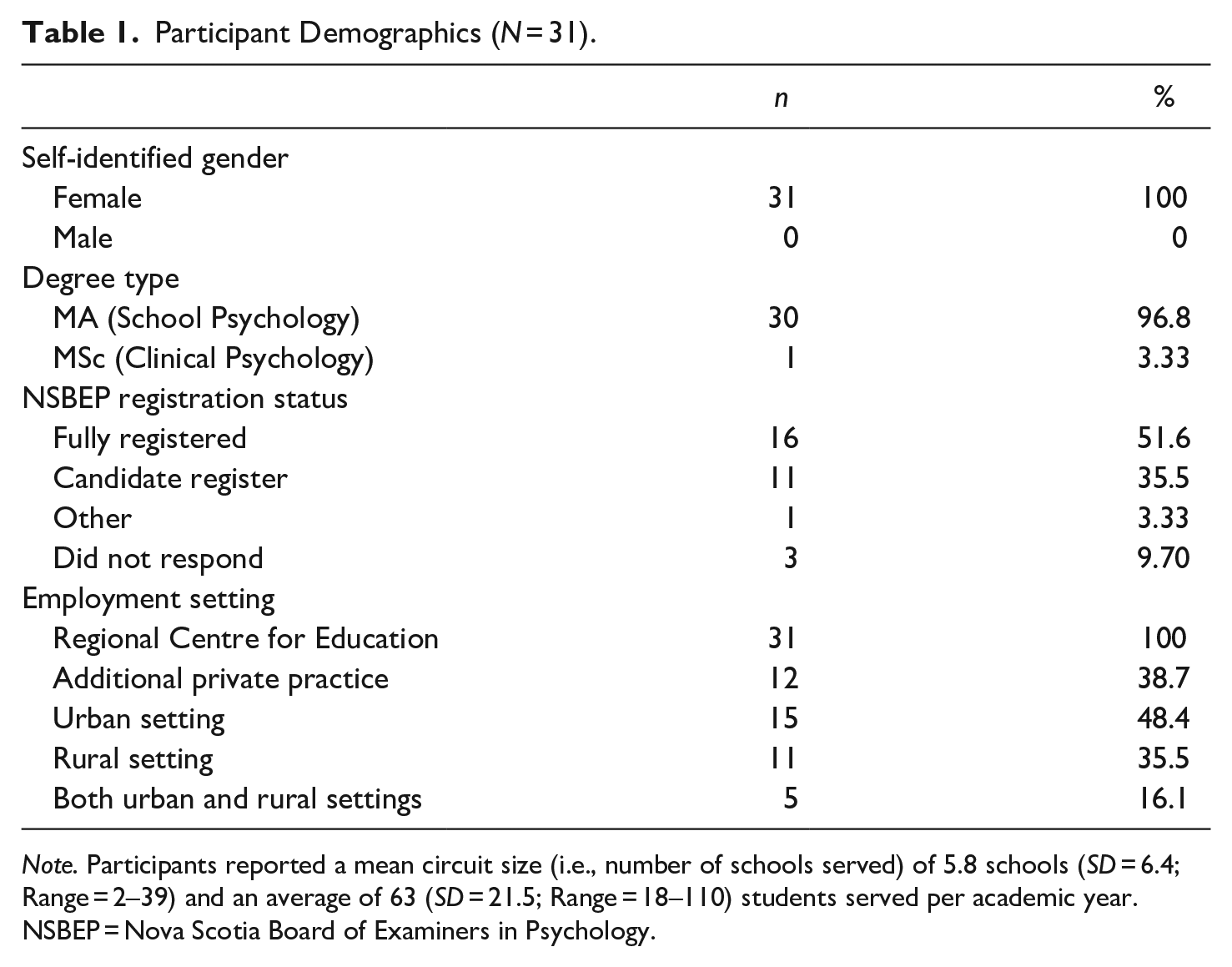
Note. Participants reported a mean circuit size (i.e., number of schools served) of 5.8 schools (SD = 6.4; Range = 2–39) and an average of 63 (SD = 21.5; Range = 18–110) students served per academic year. NSBEP = Nova Scotia Board of Examiners in Psychology.
Measures
A survey adapted from the one used by Corkum et al. (2007) was developed for the purposes of the current study (with permission of the author). The survey was divided into three distinct sections: Section 1: Demographics; Section 2: Current practice in each of the CPA competencies: (a) assessment and evaluation (e.g., time spent engaged in psychoeducational and behavioral assessment; components included in assessments); (b) intervention and consultation (e.g., time spent engaged in intervention and consultation; types of intervention referrals received); (c) research (e.g., time spent engaged in research; methods of staying up-to-date with research); (d) ethics and standards (e.g., types of commonly encountered ethical dilemmas; approach to resolving ethical dilemmas); (e) interpersonal relationships (e.g., barriers to establishing relationships; experience working with diverse clients and professionals); (f) supervision (e.g., number of students or candidate register psychologists supervised; barriers to taking on supervision responsibilities); and Section 3: Current and preferred time spent engaged in specific psychological services. Rather than using a Likert scale or a forced-choice format, participants were asked to estimate, to the best of their ability, the actual percentage of time spent across each area of practice. Participants were invited to provide additional details about their practice by responding to open-ended questions at the end of each competency-based section. An extensive qualitative analysis of these comments was not part of the current study; however, a brief qualitative descriptive analysis was completed (see Sandelowski, 2000) and themes were generated when there were sufficient comments to do so.
Procedure
Participants were recruited from two sources: (1) a monthly meeting of local psychologists with an interest in child and adolescent psychology and (2) at a yearly provincial school psychology professional development conference. Participants were provided with a numbered envelope containing the informed consent form and a paper copy of the survey and were given the option to complete the survey immediately and return it to the researcher or to complete the survey later and to return the survey to the researcher by mail.
Results
Practice in CPA Designated Competency Areas
Assessment and evaluation
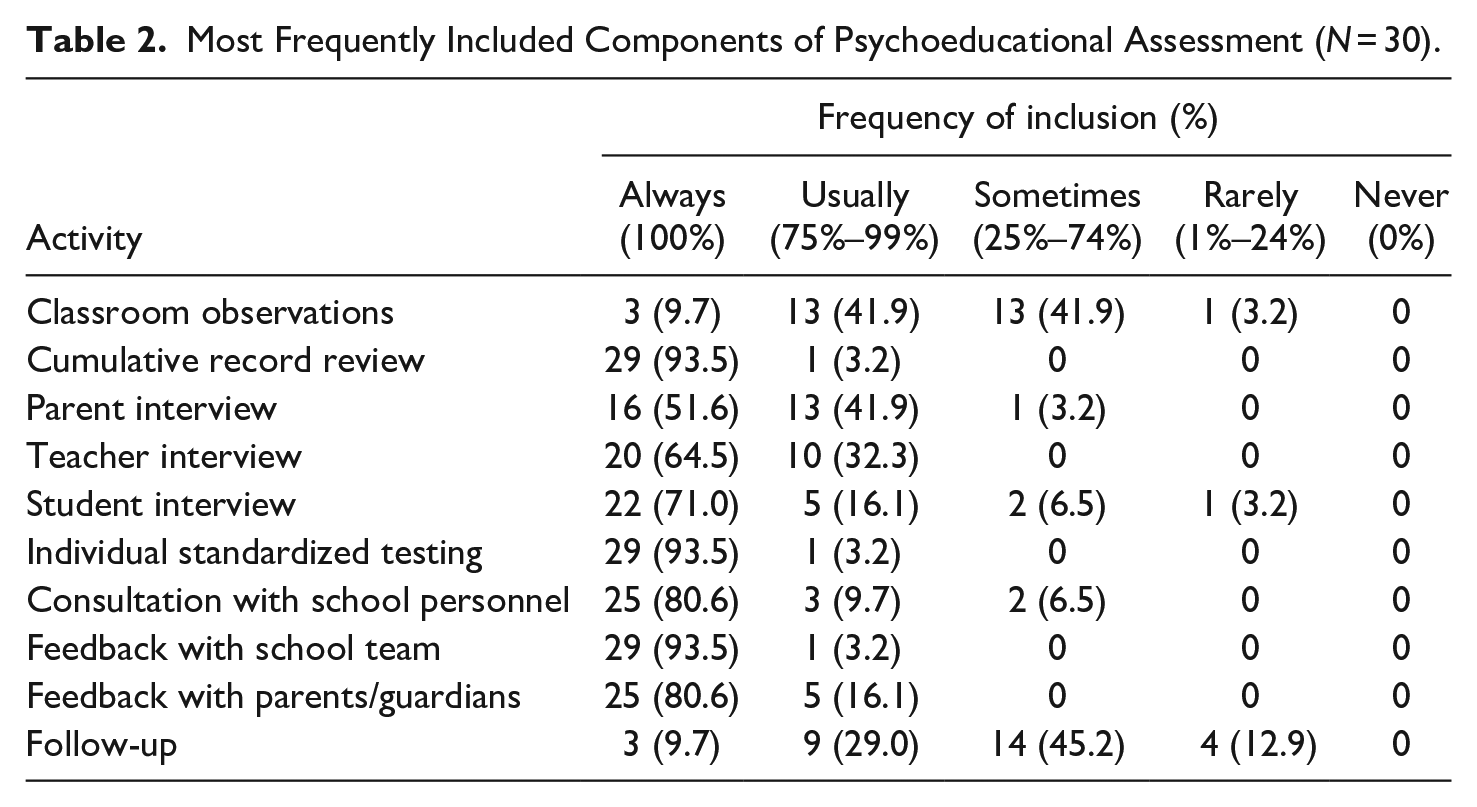
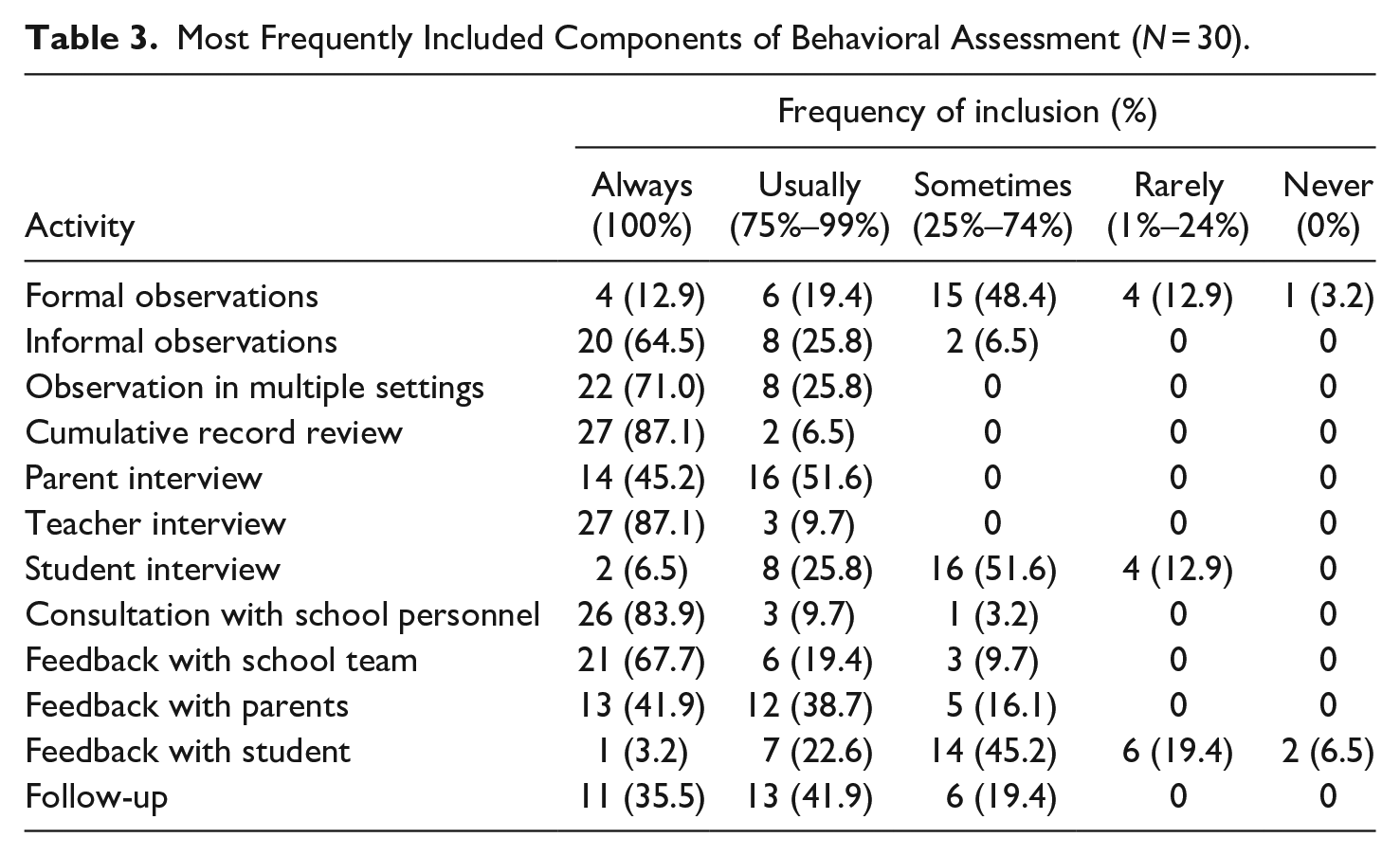
A total of 30 participants out of 31 responded to items probing assessment and evaluation practices. All 30 participants reported that they complete psychoeducational assessments. Estimated number of psychoeducational assessments conducted per academic year ranged from 12 to 60 (M = 33.6; SD = 10.3). Most participants reported that they always include standardized testing, a cumulative file review, and feedback to the school team as part of a psychoeducational assessment. The least frequently included components of the psychoeducational assessment were student interview and follow-up (see Table 2). Thirty participants also reported that they complete behavior assessments. The most frequently included components of the behavioral assessment were teacher interview, cumulative file review, and informal observations. The least frequently included components of the behavioral assessment were formal behavior observations (i.e., using standardized functional behavior assessment forms) and feedback to the student (see Table 3). Participants reported that students are most frequently referred for academic difficulties, behavioral difficulties, and attention difficulties. Most common diagnoses were Learning Disability, Intellectual Disability, and Attention Deficit Hyperactivity Disorder (ADHD).
Most Frequently Included Components of Psychoeducational Assessment (N = 30).
Most Frequently Included Components of Behavioral Assessment (N = 30).
Intervention
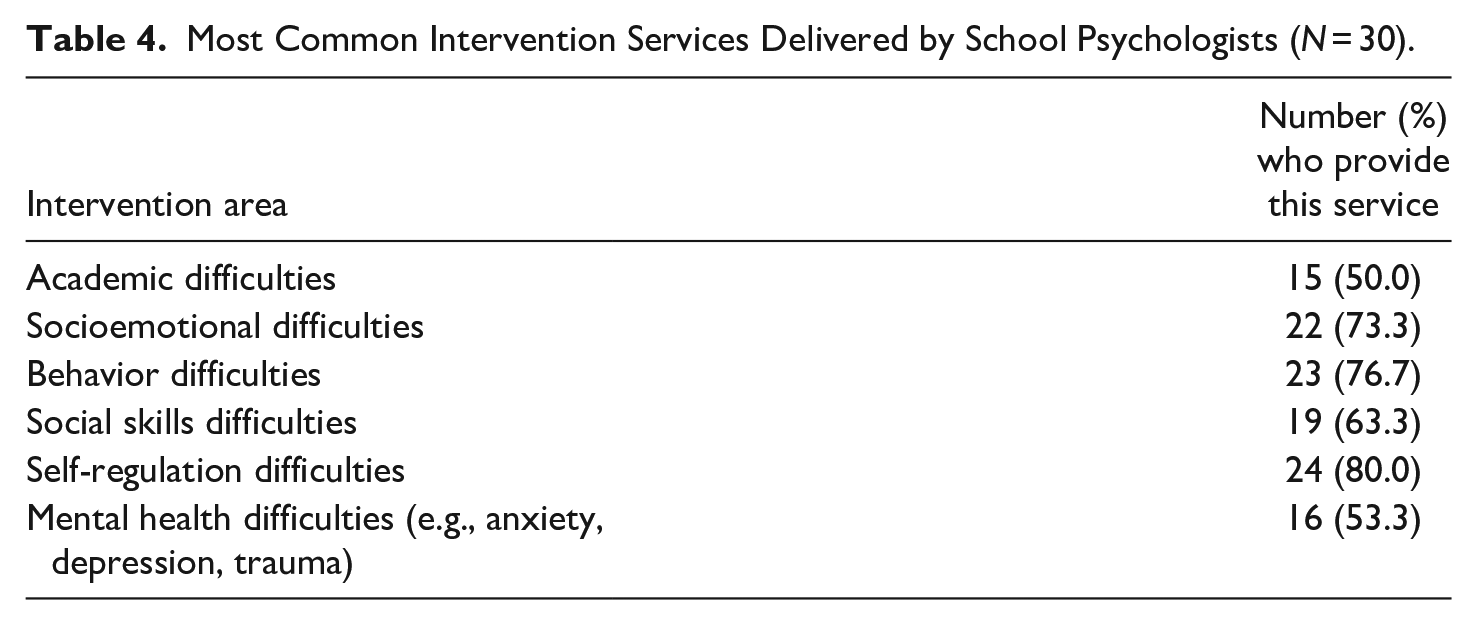
Thirty participants out of 31 provided information about the types of interventions they provide in schools. The most common referral question was self-regulation, followed by behavioral and socioemotional difficulties (see Table 4). When asked how they develop recommendations for intervention, 30 participants reported that they most often research specific strategies or resources, followed by consultation with teachers and/or other school personnel (n = 29), and considering parent input (n = 26). Nineteen participants out of 31 responded to items related to the number of students seen for intervention in a typical academic year. The average number of students seen for individual intervention per year was approximately 15 (SD = 21.8; Range = 0–85) and the average number of group interventions provided per year was approximately 12 (SD = 14.8; Range = 0–45).
Most Common Intervention Services Delivered by School Psychologists (N = 30).
Ethics and standards
A total of 25 participants out of 31 responded to items probing ethics and standards. All 25 reported that they had experienced an ethical dilemma at some point in their career, with the most common dilemma being related to a conflict between workplace policy and the Canadian Code of Ethics for Psychologists, followed by conflict between employment demands and the Code. When asked how they resolved the reported ethical dilemma(s), participants reported that they most often consulted with their peers (n = 22), used the ethical decision-making model of the Code (n = 18), sought supervision from their NSBEP supervisor (n = 17), and consulted with a workplace supervisor or senior colleague (n = 12). Participants reported that they often encounter ethical dilemmas related to differences in scope of practice as outlined by DOEECD policy and NSBEP guidelines for school psychology practice. One participant specifically indicated that differing perceptions and understanding of confidentiality is an area of frequent conflict between educators and psychologists in schools.
Research
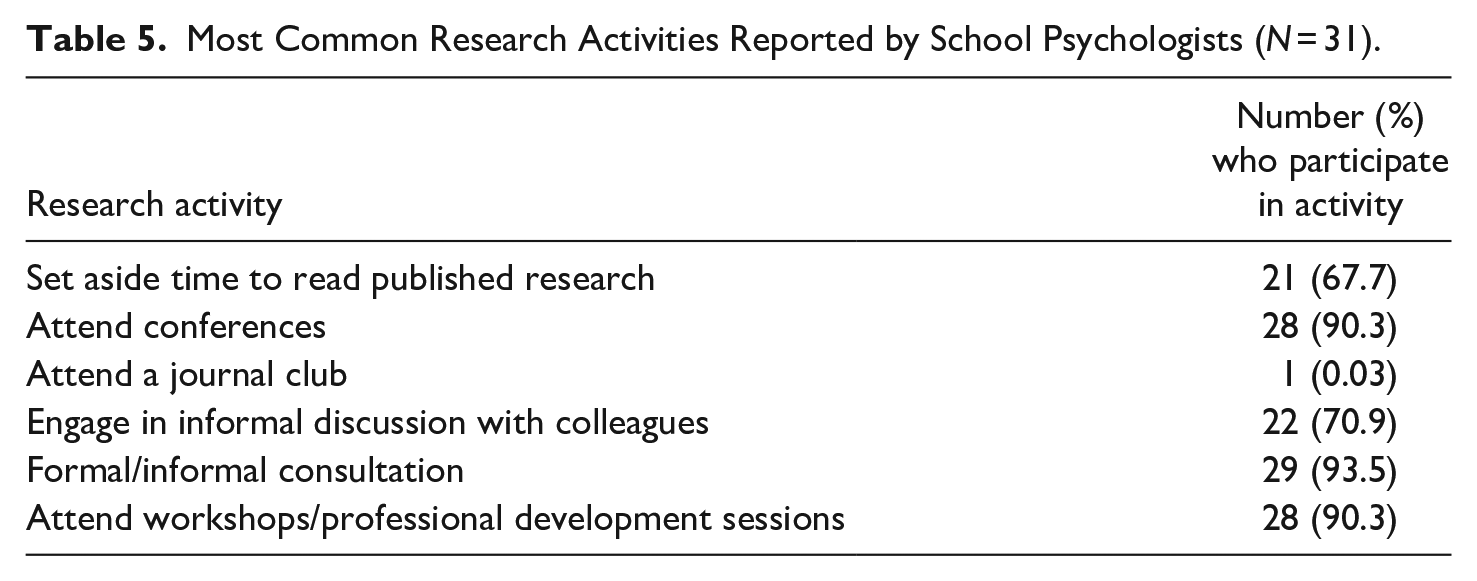
Only one participant out of 31 reported that they were currently conducting independent research, whereas two reported assisting a researcher to conduct research. Participants reported engaging in formal or informal discussions with colleagues, and attending conferences, workshops and/or professional development sessions to keep up with research in the field. Twenty-three participants out of 31 reported that they incorporate recent and relevant research into talks or presentations given to school personnel and parents, with the most common topics for research presentations being learning disabilities, anxiety, ADHD, and managing problem behavior (see Table 5).
Most Common Research Activities Reported by School Psychologists (N = 31).
Interpersonal relationships
A total of 30 participants out of 31 responded to items probing interpersonal relationships. Participants identified scheduling time to meet with parents/caregivers (n = 25), getting in touch with parents/caregivers (n = 25), and misconceptions about psychologists and psychology (n = 20) as the most common barriers to establishing and maintaining rapport with students and their families. Twenty-six participants reported having the experience of working with diverse populations in their practice, with ethnicity (n = 26) and socioeconomic status (n = 26) being the most encountered types of diversity and physical ability (n = 16) and religion (n = 15) being the least frequently encountered. Participants’ open-ended comments indicated that many did not feel prepared to assess students who speak English as a second language and do not typically have access to resources such as testing materials or translators to work with this population. Participants indicated that obtaining consent from parents with low literacy levels and understanding cultural nuances and norms contributed to difficulty working with students from diverse backgrounds.
Participants reported that they were most likely to involve teachers, principals, and guidance counsellors in the assessment and/or intervention process and less likely to collaborate with physicians and community psychologists. Based on participants’ open-ended responses, the most frequently encountered challenge related to interpersonal relationships with school personnel and other professionals was finding time to speak or meet with other professionals, especially from outside agencies. Participants also indicated that educators and other professionals often do not understand the role and scope of practice of the school psychologist, have limited understanding of behavioral principles, and often do not “buy in” to psychologists’ recommendations, making it difficult to provide appropriate services to students.
Supervision
Three participants out of 31 reported receiving formal training in supervision, with the most common type of training being a workshop. On average, participants reported supervising fewer than one practicum student over the past 5 years (M = 0.10; SD = 0.54; Range = 0–3), fewer than one internship student over the past 5 years (M = 0.61; SD = 1.09; Range = 0–4), and fewer than one candidate register psychologist over the past 5 years (M = 0.39; SD = 0.72; Range = 0–2).
Twenty participants out of 31 responded when asked to report perceived benefits to supervising a student or candidate register psychologist; the most frequently cited benefit of supervision was staying up to date on current trends in research and teaching, as well as the ability to reflect on their practice, giving back to the profession, and the reward associated with seeing growth in the supervisee. Twenty-two participants out of 31 responded when asked to describe perceived barriers to supervising an intern. The most frequently cited barrier to supervising an intern was increased workload during the day (n = 19) and increased workload after hours (n = 19). Participants also cited being unsure about an intern’s competency (n = 11) and taking responsibility for an intern’s work (n = 10) as other barriers to supervising an intern. Examination of comments regarding intern supervision indicated that some psychologists were reluctant to take on interns if interns had “poor executive functioning or interpersonal skills”, did not supply their own testing materials or were “not ready for practice.”
Seventeen participants out of 31 responded when asked to describe barriers to supervising a candidate register psychologist. The most frequently cited barrier to supervision was increased workload (n = 13) and the time commitment involved in supervising a candidate (n = 13). One participant stated that it is often preferable to supervise a candidate register psychologist over an intern, as one can be more certain of the candidate’s competency prior to taking on the responsibility of supervision.
Current Versus Preferred Practice
As shown in Table 6, participants who responded to this section of the survey reported spending most of their time completing psychoeducational assessments, followed by behavior assessment, consultation with schools, and feedback meetings. Participants rarely reported engaging in threat assessment, student supervision, consultation with community psychologists, and research as part of their current practice.
Current Versus Preferred Time Engaged in Various Psychological Services.
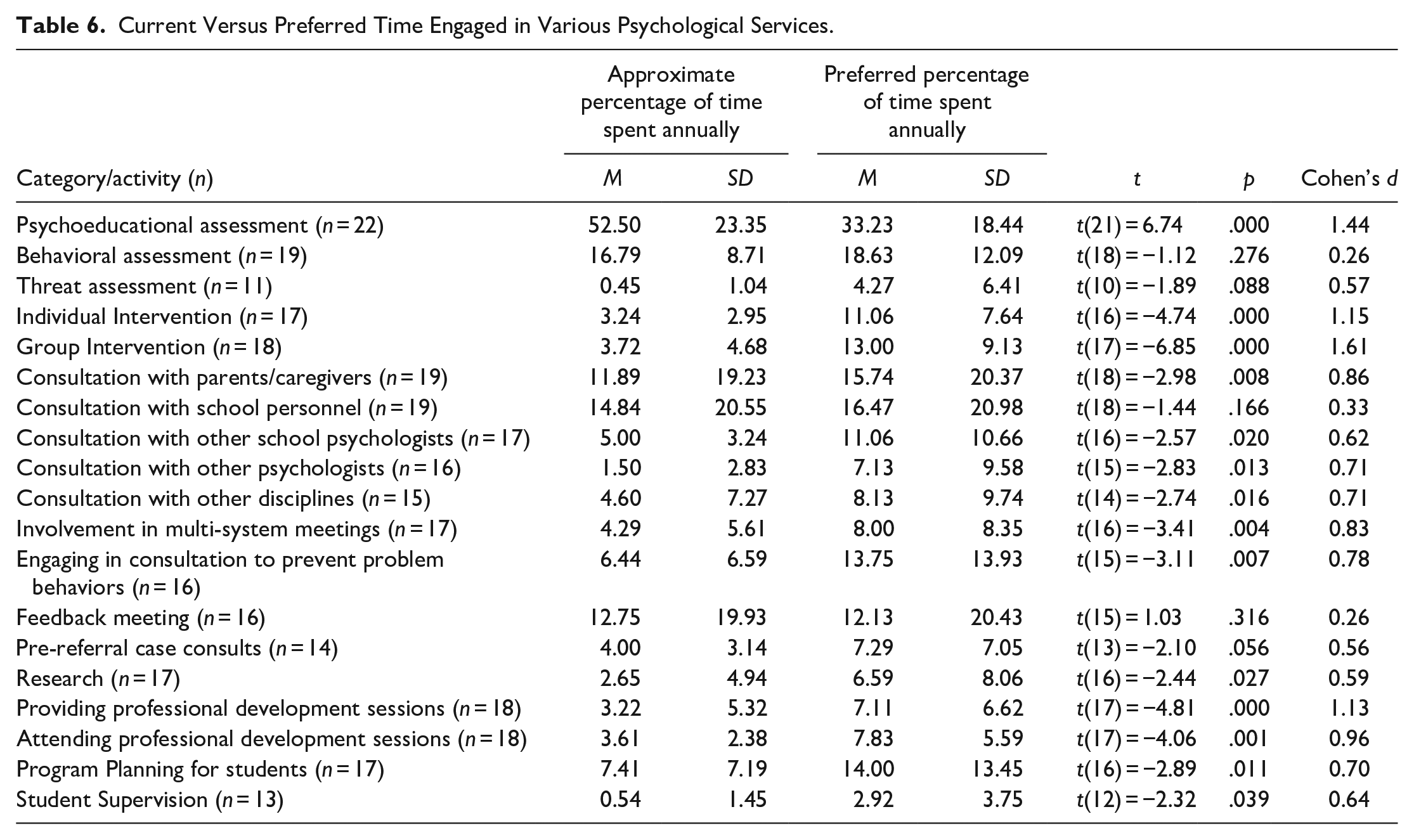
A series of paired samples t-tests was used to examine current versus preferred roles, with missing values excluded on an analysis-by-analysis basis to ensure the most accurate representation of current and preferred practice. Results of t-tests should be interpreted with some degree of caution as the assumptions (i.e., normality and lack of outliers) were not consistently met due to the small sample size. However, the results presented here are useful in understanding broad themes with respect to school psychology practice, as there were several areas in which there were statistically significant differences and large effect sizes between current and preferred practice.
Similar to Corkum et al. (2007), results indicated that school psychologists in Nova Scotia spend about half their time engaged in assessment and evaluation activities but wish to diversify their roles by decreasing the time spent conducting psychoeducational assessment [t(21) = 6.74, p < .05, d = 1.44], while maintaining this activity as the primary focus of their jobs. Participants reported that they wished to significantly increase time spent engaged in individual intervention [t(16) = −4.74, p < .05, d = 1.15], group intervention [t(17) = −6.85, p < .05, d = 1.61], and providing professional development [t(17) = −4.81, p < .05, d = 1.13]. Moderate-large effect sizes were observed for current versus preferred practice in the areas of consultation with other psychologists and professionals, prevention activities, involvement in program planning and multisystem meetings, attending professional development sessions, research, and student supervision. There were no differences in current versus preferred time spent engaged in behavioral assessment, threat assessment, consultation with school personnel, feedback meetings, and prereferral case consultations. See Table 6 for a complete overview of current versus preferred school psychology practice.
Discussion
The purpose of this study was to update and extend previous work by Corkum et al. (2007) to determine whether school psychology practice in Nova Scotia has changed over the past 15 years and whether school psychologists still wish to diversify their practice. Extending the earlier study, this study also asked participants to describe their current practice across each of the six CPA core competencies to determine area(s) in which school psychologists feel most and least competent for the purposes of making recommendations about role diversification.
Practice Across CPA Areas of Competency
Participants reported practicing in most of the CPA areas of competency, but, given the applied focus of their jobs, they overwhelmingly indicated that their practice was focused primarily on assessment and evaluation. Results indicated some variability in school psychology practice, which is reflective of the general approach to school psychology practice in Nova Scotia (i.e., job responsibilities are highly dependent on school and/or Regional Centre need). It was not surprising to find that most participants reported that they are not actively involved in research activities, as this is typically not possible due to the demands of their practice; all participants, however, indicated that they frequently consult the research literature when developing treatment plans or recommendations, indicating an appreciation for and commitment to evidence-based approaches to practice.
Current Versus Preferred Areas of Practice
Similar to Corkum et al. (2007), participants in this study reported that they spend approximately half their time involved in psychoeducational assessment, suggesting that school psychology practice in Nova Scotia is relatively unchanged since that time, despite earlier work suggesting that school psychologists would eventually move away from providing primarily assessment services (Janzen et al., 1994). These findings are also not aligned with recommendations provided by major associations, as both the CPA (2002, 2007) and NASP (2010) practice guidelines suggest that school psychologists can provide a wide range of services. Additionally, there is a growing need for more accessible and comprehensive mental health services for children and their families in the province and school psychologists could be well-positioned to offer many of these services at the school level (see CPA, 2014; King et al., 2016; Kirby and Keon, 2004; Sheridan & Gutkin, 2000; van Den Heuvel et al., 2016). Limiting school psychologists to the role of tester seems somewhat antiquated and contrary to recommendations from national and international bodies (e.g., CPA, 2002, 2007; NASP, 2010).
Examination of preferred roles of participants in this study indicated that school psychologists in Nova Scotia wish to diversify their practice across a range of areas, but especially in the areas of individual and group intervention and provision of professional development. These findings are consistent with previous findings from this and other jurisdictions (e.g., Corkum et al., 2007; Stoiber & Vanderwood, 2008) and indicate a willingness to provide a wider range of services to schools, which could subsequently allow for the delivery of more comprehensive mental health services in schools. However, given the relatively small amount of time currently engaged in activities other than assessment and evaluation, combined with minimal opportunity to practice in other areas, it is not clear whether school psychologists are currently competent to expand their practice into the area of intervention. It will be important to ensure adequate proficiency across all areas of competency, especially intervention, before advocating for a broader scope of practice for school psychologists in Nova Scotia, as there is likely a significant gap between the types of services valued by school psychologists (i.e., prevention, intervention, consultation) and the services they feel most comfortable and competent to provide (i.e., assessment and evaluation) (see Stoiber & Vanderwood, 2008 for a discussion).
If school psychologists are to have an expanded role in Nova Scotia, the capacity of training programs to provide sufficient opportunity to learn, practice, and obtain supervision in each of the CPA competency areas must be considered, especially with respect to intervention. Currently, most school psychologists in Nova Scotia hold MA degrees from Mount Saint Vincent University (MSVU). The MSVU MA is an intensive 2-year, full-time program comprised of 20 half credits, a thesis, and a full-time 6-month internship (see King et al., 2016 for details) and, although the program aspires to ensure that students receive training in evidence-based practice in all CPA competencies, this is challenging, given the short time frame in which to do so. Additionally, given the current reality of the job of the school psychologist in most jurisdictions, training is focused on developing competency in assessment and evaluation. Given the time and intensity required to train school psychologists who will be highly skilled in each of the CPA competency areas, especially intervention, the current 2-year MA in School Psychology offered by MSVU is not sufficient.
It is anticipated that the doctoral degree will soon be the standard entry-level qualification for registration as a psychologist in Nova Scotia (see King et al., 2016). In response to this anticipated change, work is currently underway to transition the current 2-year MA program at MSVU to a 4-year Doctor of Psychology (PsyD). Adding additional time to school psychology training is not only consistent with the CPA (2012) position that the doctoral degree should be the minimum standard for practice, but, on a more practical level, would allow more time to provide school psychologists with the theoretical and practical training they will need to provide greater depth and breadth of service, especially in intervention.
Another area of competency in which it will be important to increase proficiency is in supervision, as participants in this study reported minimal experience with student and candidate register supervision. Increasing opportunities to provide and receive supervision has implications for the provision of more comprehensive psychological services in schools, as this will allow for more training opportunities for students and practicing psychologists to develop and practice skills across varied areas, thereby increasing their ability to offer more comprehensive mental health services in schools. Workload was the most frequently cited reason for not taking on supervision responsibilities, suggesting that supervision of practical and internship must be included in school psychologists’ job responsibilities, much like in hospital or clinic settings, if they are to feel comfortable taking on the role of supervisor.
Expanding training and supervision opportunities is only part of the solution to broadening school psychologists’ scope of practice in Nova Scotia; systemic changes with respect to the definition and understanding of the role and expertise of the school psychologist will also be necessary. In addition to understanding the demands and purpose of supervision, educators and administrators must understand the differences in practice requirements for psychologists and educators if school psychologists are to practice autonomously and to make clinical decisions that are in the best interests of students. It will be especially important for educators and administrators to understand the ethical code to which psychologists must adhere if school psychologists are to practice effectively. As reported by participants in the current study, although school psychologists are school staff, they are required to adhere to an additional code of ethics and standards than their educator colleagues, making it challenging to navigate ethical dilemmas. Finally, a set of clear guidelines outlining the scope of school psychology practice will be needed to ensure that school psychologists can practice effectively and autonomously.
Relevance to the Practice of School Psychology
Participants’ reports of current versus preferred practice suggest that there is a desire to extend the scope of school psychology training and practice in Nova Scotia. With the increased need for mental health services in communities across Nova Scotia, it is recommended that school psychology practice in Nova Scotia be expanded to include student-focused direct and indirect intervention, system-wide intervention, and research, as outlined in the CPA Task Force Position Paper (CPA, 2014). This will require significant changes to school psychology training in the province and cooperation from many stakeholders, as well as a change in the perception of the training and competencies of school psychologists. Additionally, it will be important for the provincial licensing body and psychologists working in other specialties (e.g., clinical psychology) to recognize the competency and scope of practice of school psychologists.
To ensure understanding of the scope of school psychology services, it is recommended that a set of comprehensive school psychology practice guidelines be developed in consultation with practicing school psychologists, experts in school and educational psychology, educators/administrators, and government officials. Although practice guidelines were produced in 2009 by the NS DOEECD, these have now been removed from the DOEECD website. With the removal of these guidelines, it is difficult to ensure the provision of consistent school psychology services in all areas of the province. However, this provides an opportunity for psychologists, educators, administrators, and government officials collaborate to develop a set of practice guidelines that more closely align with the guidelines suggested by both CPA (2014) and NASP (2010). Given the current focus on implementing a multi-tiered system of supports (MTSS) model of intervention in the province, this could be an opportune time to develop updated practice guidelines.
It is recommended that supervision be recognized as an essential part of school psychologists’ jobs and that they be provided with the time and/or resources to engage in supervision activities. School psychologists would benefit from opportunities to receive direct instruction in supervision, both as part of their graduate training programs and as professional development following graduation. This will ensure that practicing school psychologists feel comfortable engaging in supervision of students, interns, and candidate register psychologists. Increased opportunities to receive supervision (and supervision of supervision) could increase the number of school psychologists able to provide a wide range of mental health services in schools.
Although the current results suggest that there appears to be little change in the role of the school psychologist in Nova Scotia since 2007, this study provides a much-needed update of current and preferred school psychology practice in the province. School psychologists have been identified as the most highly trained mental health professionals in schools (Sheridan & Gutkin, 2000) and, as such, should be afforded the opportunity to use their skills to provide essential services to children and families in Nova Scotia schools. In this respect, the current results were encouraging, as they suggest school psychologists are eager to broaden their scope of practice. Allowing for the expansion of school psychology services could not only serve to decrease the burden of mental health care provision in the public health system but could have a lasting effect on the mental health and wellbeing of children and communities in Nova Scotia.
Footnotes
Acknowledgements
The authors are grateful to Dr. Penny Corkum for allowing the use and modification of her survey. We thank Ms. Carlotta Heymann for her assistance with data entry and analysis.
Declaration of Conflicting Interests
The author(s) declared no potential conflicts of interest with respect to the research, authorship, and/or publication of this article.
Funding
The author(s) received no financial support for the research, authorship, and/or publication of this article.
