




Abstract
The current study investigated null and overt pronominal choice in bilingual Russian–Hebrew-speaking children, for whom Russian is their heritage language (HL) and Hebrew is their societal language (SL). While both Russian and Hebrew permit null subject and object pronouns, the mechanisms for licensing null elements differ between the two languages. The investigation of pronominal elements within this language dyad aims to deepen our understanding of pronominal choices in bilinguals. Participants included 97 children (ages 4–8) and 40 adults: bilingual Russian–Hebrew children (n = 57), monolingual Russian children (n = 20) and adults (n = 22), and monolingual Hebrew children (n = 20) and adults (n = 18). Bilinguals were tested in both languages. Children’s morpho-syntactic abilities were evaluated using LITMUS Sentence Repetition Tasks. Results indicated that bilinguals exhibited lower morpho-syntactic abilities compared to both monolingual control groups. However, no significant differences were found between their HL and SL at the group level. To assess pronoun choice, we used a pictorial elicitation task targeting third-person subject and object pronouns. Results revealed clear cross-linguistic differences: Russian adults predominantly used null subjects, while Hebrew adults preferred overt pronouns. Turning to bilingual children, in Hebrew, they showed more adult-like patterns than monolingual peers, suggesting accelerated development in the SL. In Russian, both monolingual and bilingual children overused overt pronouns, indicating a shared developmental delay rather than transfer effects. Age, but not morpho-syntactic skills or age of onset of bilingualism, predicted pronoun use, pointing to a general maturational trajectory. Findings partially support the Interface Hypothesis and highlight the role of developmental constraints and discourse-level processing challenges, consistent with the Silent Problem framework.
Keywords
Introduction
General background of the study
The comprehension and production of referential expressions are crucial in language. Pronominal elements, whether overt or null, substitute for full referential expressions conveyed by noun phrases (NPs) or determiner phrases (DPs) in languages that possess DP structures. These referential expressions typically refer to entities already introduced or known in the discourse, often serving to avoid repetition. Languages vary in whether and how they license null pronominal elements, falling broadly into three categories: (a) null subject (pro-drop) languages, where the omission of subject pronouns is licensed by rich verbal agreement morphology (e.g., Italian, Spanish), but object pronouns generally remain overt; (b) topic-drop languages, where null arguments are allowed in certain—usually, sentence-initial—positions, typically conditioned by discourse features such as an empty Spec-CP (e.g., German, Dutch), as in Huang (1984); and (c) discourse-drop languages, where null arguments can occur in both subject and object positions and are largely regulated by discourse-pragmatic factors rather than clause-internal syntax (see Sigurðsson, 2011).
The choice of referential expressions lies at the syntax–discourse interface. Previous research, consistent with the predictions of the Interface Hypothesis (Sorace, 2011; Sorace & Filiaci, 2006), suggests that selecting the most appropriate expression to refer to a discourse entity poses challenges for bilingual children and adults. The Interface Hypothesis proposes that while narrow syntax properties may be fully acquirable by advanced second language (L2) speakers, properties at the interface between syntax and other cognitive domains, such as pragmatics, may be subject to divergence. A substantial body of research has explored the vulnerability of the syntax–discourse interface, particularly regarding the use of referential expressions in bilingual children. Studies have primarily focused on language pairs such as Italian/Spanish/Greek (pro-drop languages) as heritage languages (HL) and English (a non-pro-drop language) as a societal language (SL), as well as Dutch/German (topic-drop languages) and French/Italian (non-topic-drop languages; e.g., Hulk & Müller, 2000; Müller & Hulk, 2001).
This study examined null and overt third person pronominal choice in bilingual Russian–Hebrew-speaking children, where Russian serves as their HL and Hebrew as their SL. Investigating pronominal elements in this language dyad aims to deepen our understanding of pronominal choices in bilinguals. Hebrew syntactically permits first- and second-person subject pro-drop, while third-person subject and object drop are discourse-bound (Doron, 1999; Landau, 2018; Taube, 2013). Russian functions as a discourse-drop language (Franks, 1995; Gordishevsky, 2007; Gordishevsky & Avrutin, 2003).
The use of null and overt pronominal elements in Russian and in Hebrew
Despite being typologically different languages, Russian and Hebrew show considerable similarities in their pronominal elements, along with some inherent differences. Both languages have pronouns that are inflected for number, gender, and case. Both languages, Russian and Hebrew, have subject-verb agreement and very rich verbal inflectional paradigms. On the other hand, neither language has object-verb agreement. Below, we will show where the two languages are similar and where they differ with respect to the licensing of null pronominal subjects and objects.
Third-person null and overt subject pronouns in Russian and in Hebrew
Russian presents a rather complicated case with respect to null subjects, in general. For long, there has been no agreement on the classification of Russian with respect to subject pro-drop. Russian is labeled as a non-pro-drop language (Franks, 1995), or a partial pro-drop language (e.g., Barbosa, 2011a, 2011b). For a more detailed discussion on the use of subject pronominal elements in Russian see Ivanova-Sullivan (2014). Subject pro-drop is not licensed by morpho-syntax, regardless of person marking, as demonstrated in (1) (e marks a null pronominal element).
(1) a. * vchera e xodil v shkolu. yesterday went.MASC to school ‘Yesterday I/you/he went to school.’ b. *e slomal stul. broke. MASC chair ‘(I/you/he) broke a chair.’ c. *e lomaju stul. break.1S chair ‘(I)’m breaking a chair.’ (based on Gordishevsky & Avrutin, 2003, pp. 3–4)
However, in Russian, null subjects are possible in subordinate clauses if a pronominal element is co-indexed with a lexical NP in the matrix clause (see (2)). It should be noted that in example (2), the null pronoun appearing in the subject position of the subordinate clause may refer either to the matrix subject (Ivan) or to a different, contextually available referent. In other words, a disjoint (non-coreferential) interpretation is also possible. Crucially, the sentence structure does not inherently favor one interpretation over the other.
(2) Ivan skazal, chto e pridet. Ivan said.MASC that will-come ‘Ivan said that he would come.’
As mentioned above, Russian allows null pronominal subjects under the discourse-drop condition (see (3)).
(3) A: Mashina priexala. car.FEM arrived.FEM ‘A car arrived.’ B: Chto e privezla? what brought.FEM ‘What did (it) bring?’ (Gordishevsky & Avrutin, 2003, p. 6)
Hebrew presents a somewhat different picture, although some similarities between the two languages exist. Unlike traditional pro-drop languages (e.g., Italian, Spanish), which allow omissions of subject pronouns, and traditional non-pro-drop languages (e.g., English), which require overt subject pronouns, Hebrew shows a mixed pattern. Hebrew is labeled as a “partial pro-drop” language, exhibiting a very complex pattern of licensing subject null pronominal elements (Holmberg et al., 2009; Melnik, 2007; Shlonsky, 2009). While first- and second-person pronominal subjects may be omitted in the past and future tenses, third-person subject pronoun omission is not morpho-syntactically licensed. Compare the examples in (4) from Melnik (2007, p. 175): (4) a. e axalta/toxal tapuax ate/will-eat.2.S.MASC apple ‘You ate/will eat an apple.’ b. * e axal tapuax ate.3S.MASC apple ‘(He) ate an apple.’
Although third-person subject drop is not typically licensed by the person feature, it is still possible. Melnik (2007) argued that third-person subject drop occurs in adjunct subordinate clauses (such as adverbial clauses, relative clauses, and co-subordinated clauses) if a pronominal element is co-indexed with the controller or any lexical NP in the matrix clause (see 5).
(5) ha-xevra hodi’a ki e hixlita al afsakat yitsur ha-memisim. . . DEF-company.FEM announced.3S.FEM that e decided.3S.FEM on stoppage production DEF-solvents ‘The company announced that it has decided to stop producing the solvents.’ (Melnik, 2007, p. 180)
Furthermore, third-person null subjects in Hebrew are possible under the discourse-drop condition, which is illustrated in (6). In such cases, an antecedent is contextually (linguistically or situationally) available, on a par with Russian (as illustrated in (3) above).
(6) A. ma hi osa? what she does? ‘What is she doing?’ B. e ro’a televizia. watches TV ‘(She) is watching TV.’ (Schaeffer & Ben Shalom, 2008, p. 255)
To summarize, although Russian and Hebrew are typologically distinct, neither language syntactically licenses third-person subject pro-drop. However, in both languages, such omissions are attested under two conditions: in subordinate clauses and when supported by discourse context. Note that the two contexts serve essentially the same role: they provide a referent for the omitted pronominal element, laying the ground for subject omission under the discourse-drop condition. To the best of our knowledge, preferences for subject drop under these conditions have not been systematically reported in adult speakers. Therefore, our study includes monolingual speakers of Russian and Hebrew to establish a baseline against which to interpret child monolingual and bilingual data.
Third-person null and overt object pronouns in Russian and in Hebrew
Neither Russian nor Hebrew has object-verb agreement; thus, object drop is not morpho-syntactically licensed. Similar to subjects, Russian allows null pronominal object elements under the discourse-drop condition, as demonstrated in example (7). Both subject and object pronouns can be omitted under this condition.
(7) A: chto ty sdelal so stulom? what you did with chair ‘What did you do with the chair?’ B: e slomal e. broke.MASC . ‘(I) broke (it).’ (Gordishevsky & Avrutin, 2003, p. 1)
Similar to Russian, there is evidence that omissions of object pronouns are possible in Hebrew under the discourse-drop condition (see (8); Doron, 1999; Landau, 2018).
(8) a. ha-uga mecuyenet. ta’amti e lifney reg’a DEF-cake delicious. tasted.1S e ago second ‘The cake is delicious. (I) tasted (it) a moment ago.’ (Doron, 1999, p. 128) b. A: macata et ha-maftexot? found.2S ACC the-keys ‘Did you find the keys?’ B: ken, macati e. yes found.1S ‘Yes, I found [them].’ (Taube, 2013, pp. 1–2)
In summary, while Russian and Hebrew lack object–verb agreement and therefore do not morpho-syntactically license object pronoun drop, both languages permit null object elements under discourse-driven conditions. However, as with subject drop, the extent and patterns of preference for object pronoun omission remain unclear in adult speakers of these languages. To address this gap, the inclusion of adult monolingual Russian and Hebrew speakers provides a crucial baseline for interpreting pronominal drop in child monolingual and bilingual populations.
Pronominal elements in monolingual and bilingual acquisition
Previous research suggests that young monolingual children do not exhibit adult-like patterns in their pronominal choices during language acquisition. There is ample evidence indicating that young monolinguals diverge from adults in both pro-drop and non-pro-drop languages (see Guasti, 2002 for a review). For example, English-speaking children produce sentences with null elements (e.g., “hug mom”; see Bloom, 1990, p. 491). Similarly, Shin and Erker (2015) demonstrated that children aged 6 to 8 speaking Spanish (a [+pro-drop] language) used fewer overt pronouns compared to adult controls. Additionally, research indicates that development may vary for different referential expressions. For instance, Iraola Azpiroz et al. (2017) found differences for two overt anaphoric forms (hura “that” vs. bera “(s)he, him/herself”) in Basque-speaking children.
In bilingual children, evidence regarding pronominal use is mixed. On one hand, studies indicate that bilinguals perform on par with monolinguals in pronominal production. For instance, Genevska-Hanke and Hamann (2023) found that Bulgarian–German bilinguals closely resembled monolingual children and adults in HL-Bulgarian, using overt and null pronominal elements similarly across grammatical and discourse conditions. Likewise, Polish–German-speaking children, regardless of age or language, showed comparable performance to monolingual controls in a study by Brehmer et al. (2023). Similarly, English–Spanish bilinguals performed on par with monolinguals in both subject omission and copula use, showing no evidence of acceleration or cross-linguistic influence (J. Liceras & Fernández Fuertes, 2019; J. M. Liceras et al., 2012). These results suggest that bilinguals’ grammars can develop independently in each language. On the other hand, bilingual children may exhibit accelerated development in the use of null versus overt subject pronouns when their two languages differ in this parameter, as observed for French in both bilingual and trilingual contexts (Arnaus Gil et al., 2021; Müller, 2024).
Numerous studies have demonstrated divergence in null and overt pronoun usage among bilingual children, whose languages vary in pronominal subject realization, overt pronouns versus null elements, potentially indicating cross-linguistic influence in pronominal element realization, as posited by the Interface Hypothesis (Sorace, 2011; Sorace & Filiaci, 2006). For instance, bilingual children learning a subject [+pro-drop] language alongside a subject [-pro-drop] language tend to overuse overt subject pronouns in their [+pro-drop] language (e.g., Hacohen & Schaeffer, 2007; Paradis & Navarro, 2003; Serratrice & Sorace, 2003; Serratrice et al., 2004; Serratrice et al., 2012). On the one hand, the overt use of subject pronouns by bilinguals speaking languages that disallow subject pro-drop (e.g., English) alongside languages permitting subject pro-drop (e.g., Italian, Spanish, Greek) may stem from cross-linguistic influence from a language not allowing subject pro-drop (see Serratrice et al., 2004, for a detailed explanation). In an extensive meta-analysis of 750 bilingual children from 26 experimental studies, Van Dijk et al. (2022) found that cross-linguistic influence is more likely from one’s stronger language into one’s weaker language. This phenomenon was confirmed in the use of referential expressions among bilingual Greek–Albanian, Greek–English, and Greek–German children (Torregrossa et al., 2021), highlighting the relationship between language experience, language dominance, and monolingual-like referential choice. On the other hand, it has been proposed that not only cross-linguistic influence may drive changes in children’s use of overt versus null pronouns, but also variability in the input they receive. Specifically, when input providers are bilingual speakers themselves, they may overuse overt pronouns, leading to divergent input patterns (Paradis & Navarro, 2003).
In contrast to predictions based solely on cross-linguistic influence, bilingual speakers of two [+pro-drop] languages have also been observed to overextend overt pronouns in contexts where monolinguals typically use null forms (Sorace, 2016). This over-explicitness is attributed to bilinguals’ higher threshold for ambiguity encoding. This phenomenon is hypothesized to arise from enhanced perspective-taking abilities of bilingual children (Sorace, 2016), and has been linked to broader processing-based difficulties with unpronounced elements, known as the Silent Problem (Laleko & Polinsky, 2017; Polinsky, 2018, 2025). These cognitive accounts suggest that bilingualism itself, independent of specific language pairings, can lead to increased use of overt pronouns. However, empirical findings from contact scenarios involving two null subject languages paint a more nuanced picture. While several studies have examined subject pronoun expression in such contexts (e.g., Spanish–Catalan, Spanish–Italian), results are not as consistent as these theoretical accounts might suggest. For example, de Prada Pérez (2015) found that bilinguals and monolinguals used similar overall rates of overt subject pronouns. However, the factors influencing pronoun choice, the constraint hierarchies, differed between the groups. In bilinguals, some lower-ranked constraints showed either weakening or strengthening, pointing to a reorganization of the grammatical system rather than simple convergence with the dominant language. These findings underscore that bilingual patterns in [+pro-drop] subject contexts are not uniform and must be understood within a broader range of variation.
The current study: research questions and hypotheses
First and foremost, we aimed to assess whether bilingual Russian–Hebrew-speaking children differ from their monolingual peers in the choice of referential expressions in subject and object positions in both languages. To address this overarching aim of the study, we formulated three separate research questions:
Although Russian and Hebrew differ typologically, both allow third-person null subjects and objects under discourse licensing. We aimed to establish a unified baseline for pronominal choice in Russian and Hebrew, which would serve as a reference point for analyzing child monolingual and bilingual data.
To better understand the differences between bilingual and monolingual children, we first aimed to assess the extent to which monolingual children exhibit adult-like performance. This serves as a benchmark for interpreting bilingual development. Given the mixed findings in the literature for bilinguals (Polinsky, 2018, 2025), we considered multiple possible outcomes. One scenario is that bilingual children will pattern similarly to their monolingual peers in both languages, consistent with studies showing minimal differences between groups and suggesting structural autonomy in bilingual development (Brehmer et al., 2023; J. Liceras & Fernández Fuertes, 2019; J. M. Liceras et al., 2012). Another possibility is that bilinguals may exhibit accelerated development, converging with adult-like patterns more rapidly than monolinguals (Arnaus Gil et al., 2021; Müller, 2024). Alternatively, bilinguals may show cross-linguistic influence, aligning with monolingual norms in their HL (HL-Russian) while diverging in their SL (SL-Hebrew), or vice versa. It is also plausible that bilinguals diverge in both languages due to bidirectional cross-linguistic influence, reflecting mutual interaction between their linguistic systems (see Mykhaylyk & Ytterstad, 2017). A further possibility is that bilingual children may overuse overt pronouns in both languages due to increased sensitivity to ambiguity and challenges in processing unpronounced elements (Laleko & Polinsky, 2017; Sorace, 2016).
RQ3 addresses which factors predict the use of null versus overt pronouns in bilingual children. We considered several developmental and bilingual indices, including chronological age, age of onset of bilingualism (AoB), and morpho-syntactic proficiency in each language. We hypothesized that as children grow older and their morpho-syntactic abilities strengthen, their pronominal choices would become increasingly target-like, approximating both monolingual child and adult preferences. With regard to AoB, we anticipated asymmetrical effects on the two languages: children with later AoBs were expected to show more target-like performance in their HL, while potentially demonstrating lower accuracy or delayed development in their SL.
Methods
The data, the tasks, and the analysis script for the current study are available from the OSF depository: https://osf.io/sbdc3/?view_only=0bf915732cfd4ea598936b4f4e6901e3.
Participants
Overall, 137 participants took part in the current study. The children comprised three groups: 57 bilingual Russian–Hebrew-speaking children (BiliCh), 20 monolingual Russian speakers (MonoCh-Ru), and 20 monolingual Hebrew speakers (MonoCh-He). The adults comprised 2 groups: 22 monolingual Russian speakers (MonoAd-Ru) and 18 monolingual Hebrew speakers (MonoAd-He).
All children (monolingual and bilingual) had no prior parental concerns about their language milestones, as determined by parental questionnaires. All children were attending mainstream educational settings. They were recruited via social media and absorption centers for new immigrants in Israel. Background information was collected via the “BIPAQ” parental questionnaire for bilingual children and the “MONOPAQ” parental questionnaire for monolingual children (Abutbul-Oz & Armon-Lotem, 2022). Details for the child participants are provided in Table 1.
Background Information of the Child Participants in Each Group.
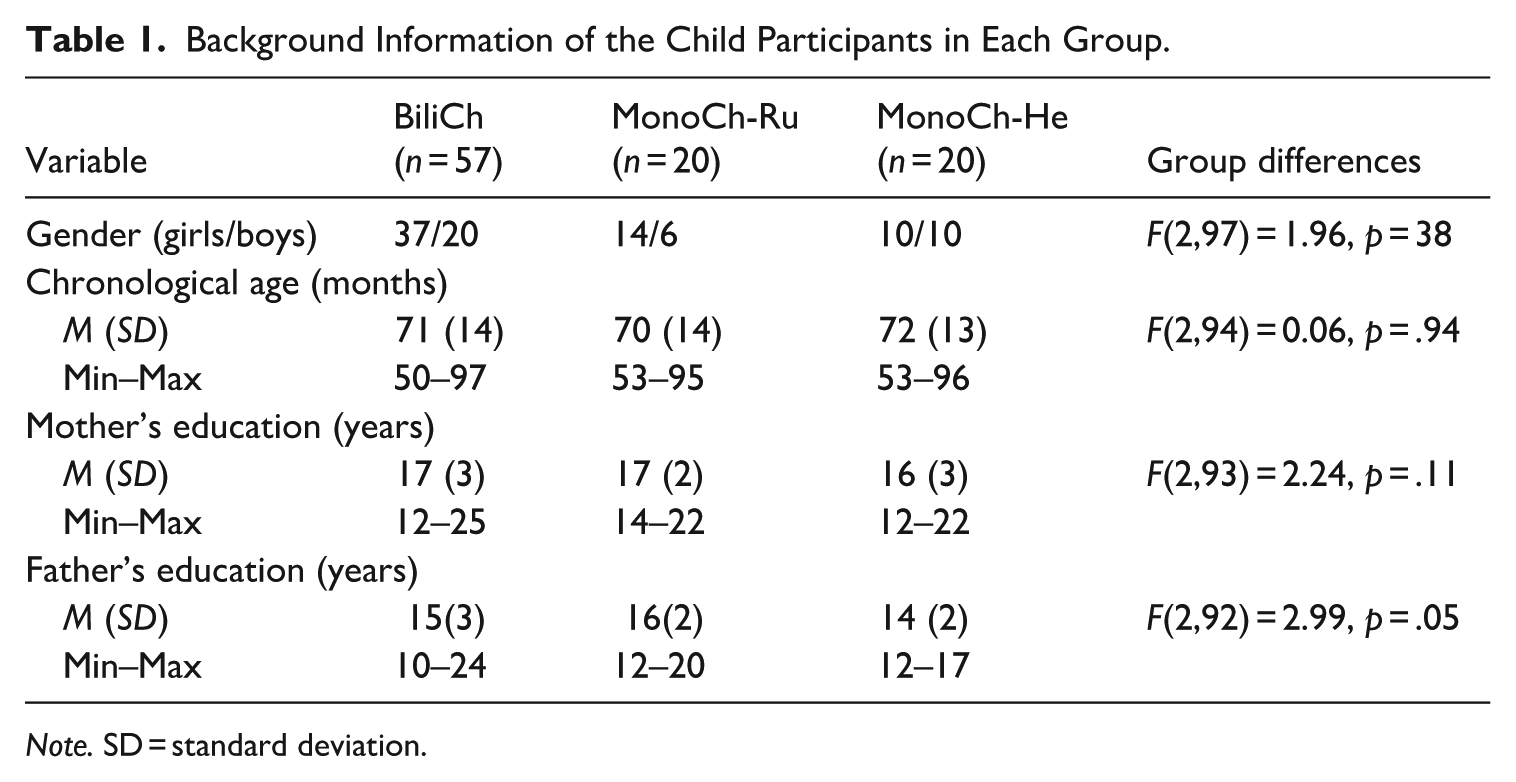
Note. SD = standard deviation.
The three groups of child participants did not differ in chronological age (F[2, 94] = 0.06, p = .94, η2 = .01) or gender distribution (χ²[2, N = 97] = 1.96, p = .38). A one-way ANOVA indicated that the groups did not significantly differ in socio-economic status (SES) as measured by mothers’ years of education (F[2, 93] = 2.24, p = .11, η2 = .05). The group difference in SES based on fathers’ years of education did not reach the conventional threshold (F[2, 92] = 3.00, p = .05, η2 = .06).
The bilingual children were all born to at least one Russian-speaking parent in Israel. At the time of testing, they were attending mainstream preschools/schools in which Hebrew is the language of instruction. One bilingual child was excluded from the analysis due to being at risk for Developmental Language Disorder, as evident in low scores in both languages on the Sentence Repetition task (for more detail, see section “Background Tasks: Morpho-Syntactic Abilities”). The bilingual participants were exposed to Russian and Hebrew either simultaneously from birth or sequentially before the age of 4. The mean AoB was 8.6 months (SD = 13.9), and the average length of exposure to L2-Hebrew was 62 months (SD = 19.5) ranging from 21 to 96 months. As reported in parental questionnaires, 49.1% of the children used Russian when speaking with their mother, 14.0% used Hebrew, and 36.8% used both languages. When speaking with their father, 24.6% of the children used Russian, 36.8% used Hebrew, and 38.6% used both languages. Thus, while Russian remained the dominant language with mothers, bilingual interaction patterns were more evenly distributed with fathers. Considering the overall pattern of language use at home, 70.2% of the children were reported to use both languages, 22.8% used only Russian, and 7.0% used only Hebrew.
The monolingual Russian-speaking child controls were all born to monolingual Russian-speaking parents and were raised in Russia. At the time of data collection, they were either living in the Russian Federation or immigrated to Israel and spent between 0 and 3 months in Israel and had no command of Hebrew.
The monolingual Hebrew-speaking child controls were born and raised by monolingual Hebrew-speaking parents and attended Hebrew-speaking educational settings. Two monolingual children whose performance on the Sentence Repetition task was below a cut-off criterion (60% and 46.7%) were excluded from the study (for more detail, see section “Background Tasks: Morpho-Syntactic Abilities”). Table 1 presents the final sample included in the current study.
In addition to the child groups, two adult control groups of monolingual speakers were recruited. The majority of the participants in both adult groups self-reported a university degree. Both adult participant groups completed the pronoun task to obtain a baseline on third-person subject and object pronoun use in Russian and Hebrew, respectively. The Hebrew adult data were previously reported in Meir and Novogrodsky (2019), whereas the data for child groups and the Russian monolingual adult controls were collected for the purposes of this study.
Procedure
The study protocol was approved by the Review Board of Bar-Ilan University. Adult participants provided written informed consent; for children, written or electronic parental consent and oral child assent were obtained prior to participation. Testing was conducted individually in a quiet and familiar environment, either at home or afterschool settings, primarily during afternoon hours.
All participants completed the background and experimental tasks following the same administration protocol. Trained native speakers of the corresponding language conducted the sessions, providing brief instructions and practice items to ensure task comprehension. Sessions lasted approximately 30 to 40 min, with breaks offered when necessary to minimize fatigue. Testing conditions were kept consistent across monolingual and bilingual groups to reduce external variability. Bilingual children were tested in both Russian and Hebrew during separate sessions, with the order of languages counterbalanced and sessions scheduled at least 1 week apart.
Background tasks: morpho-syntactic abilities
To obtain an index of morpho-syntactic abilities among the child participants in the current study, we administered the LITMUS sentence repetition tasks (SRep-30), encompassing various morpho-syntactic structures (for further details, see Armon-Lotem & Meir, 2016; Meir et al., 2015). Sentence repetition tasks have been shown to be reliable indicators of underlying morpho-syntactic competence, as they require not only short-term memory but also the processing and reconstruction of complex syntactic structures, making them particularly sensitive to grammatical proficiency in both monolingual and bilingual populations. Additionally, the parallel versions available for Russian and Hebrew allow for direct cross-linguistic comparisons in bilinguals while minimizing task-related variability (see Meir et al., 2015). For bilingual participants, the Russian and Hebrew tasks were conducted in separate sessions. The participants’ repetition responses were scored based on the target morpho-syntactic structures. A score of 1 was assigned if the utterance was grammatical and included the target syntactic structure, regardless of whether the response contained phonological or lexical-semantic errors or substitutions.
Figure 1 displays the accuracy scores of monolingual and bilingual groups for the Russian and Hebrew LITMUS SRep tasks. A between-group analysis revealed that in both Russian and Hebrew, bilingual children (BiliCh) scored significantly lower compared to their monolingual peers (MonoCh-Ru and MonoCh-He), as determined by independent samples t-tests respectively: Russian: t(75) = −4.01, p < .001, Cohen’s d = 1.04, and Hebrew: t(75) = −3.81, p < .001, Cohen’s d = 0.99. Moreover, as shown in Figure 1, within the bilingual group, the difference between the Russian and Hebrew SRep scores did not reach statistical significance, t(56) = 1.70, p = .09, Cohen’s d = 0.32. Notably, considerable individual variability was observed in both languages. This variability reflects the well-documented heterogeneity in bilingual language development, as bilingualism is increasingly conceptualized as a continuum rather than a categorical state (Kremin & Byers-Heinlein, 2021; Paradis, 2023; Rothman et al., 2023). Differences in exposure, proficiency, and dominance are inherent to bilingual populations and capturing this variability allows for a more ecologically valid investigation of cross-linguistic influence.
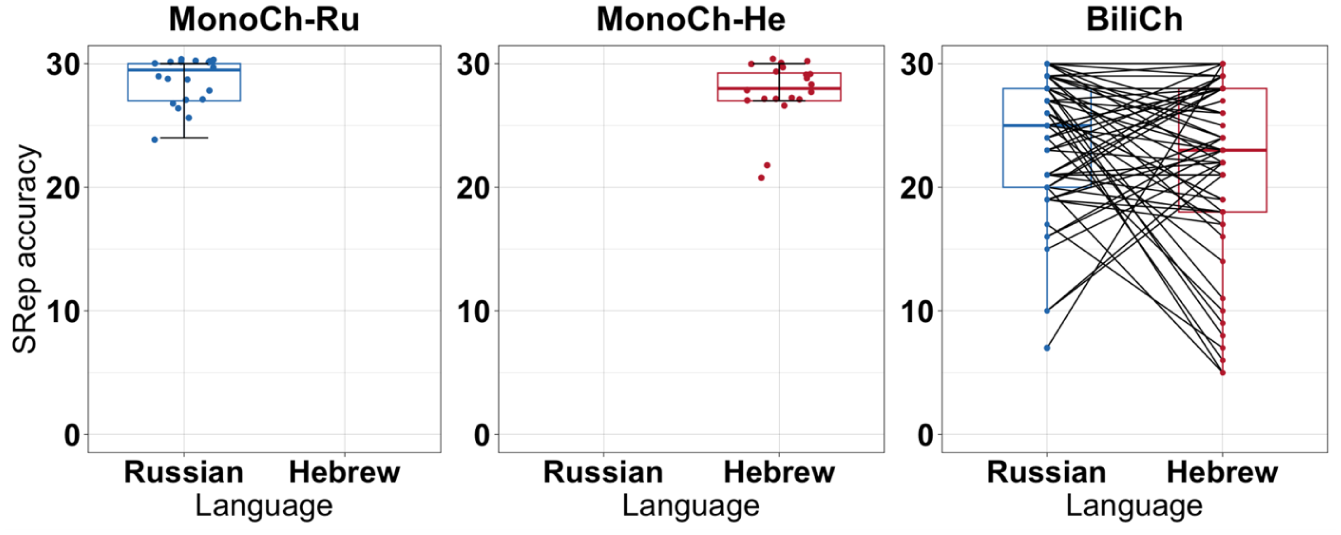
Accuracy scores on the Russian and Hebrew LITMUS SRep tasks in monolingual and bilingual children.
Experimental tasks: pronoun elicitation task
For this study, pronoun elicitation tasks in Russian and Hebrew were used to elicit third-person subject and object pronouns. The Hebrew task had been previously utilized with different groups of monolingual and bilingual children with and without autism (see Meir & Novogrodsky, 2020). The Russian version of the task was adapted from the Hebrew version specifically for this study. The elicitation tasks in each language consisted of 12 items: 6 items targeting pronouns in the subject position and 6 items targeting pronouns in the object position. All targeted pronouns were singular, encompassing both masculine and feminine forms. Participants were instructed to complete a sentence based on a given picture following a prompt (see Table 2). The target null or overt pronoun was elicited in the subordinate clause following a causal connective (“because. . .”), with the prompt establishing the discourse context (e.g., “The dog is wet because. . .”). Both subject and object positions were tested. The discourse context favored topic continuity to promote pronoun use over full DPs. While full DPs were not prohibited, the discourse context made their use pragmatically redundant; such responses were rare and not considered target-like.
Experimental Items.
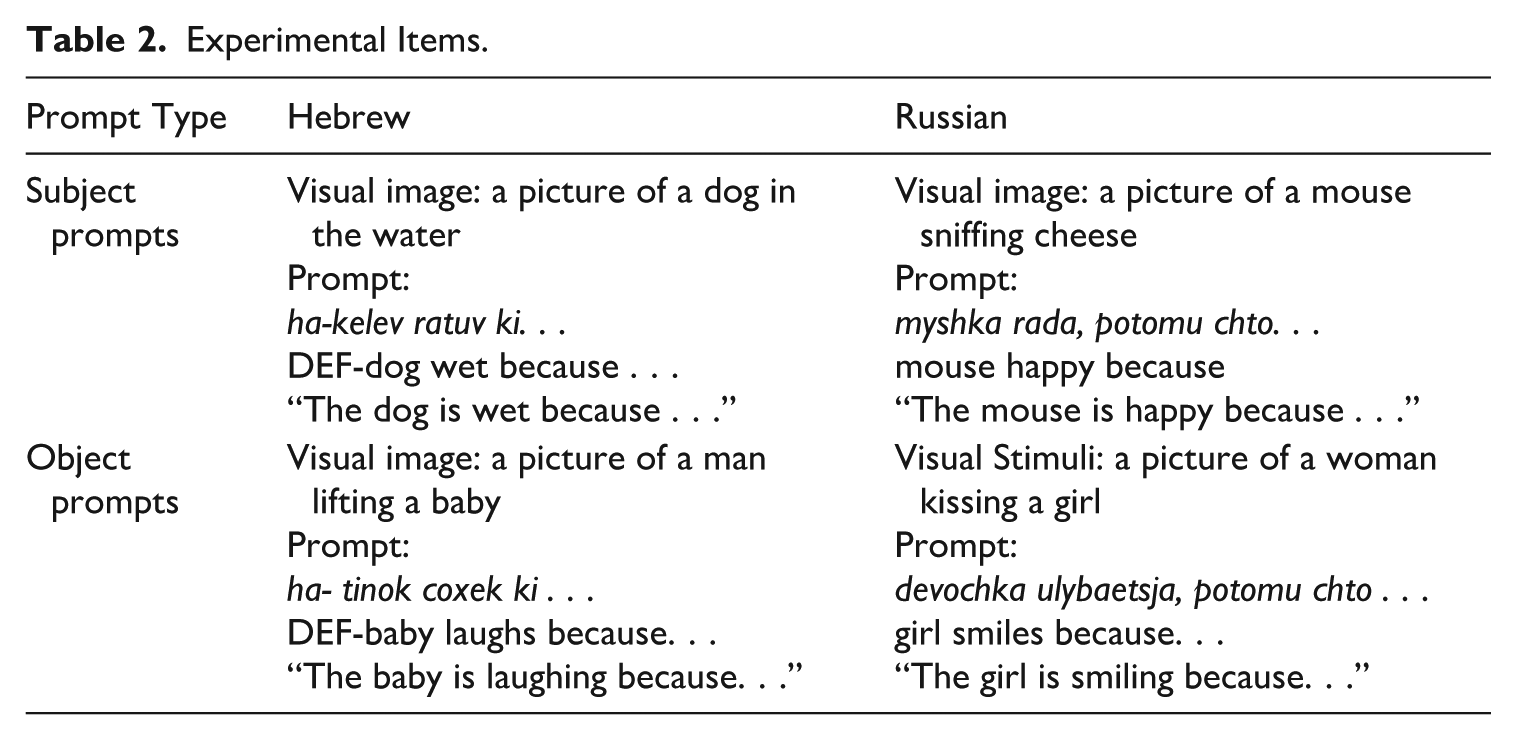
For the complete list of stimuli in both Russian and Hebrew, see the OSF depository: https://osf.io/sbdc3/?view_only=0bf915732cfd4ea598936b4f4e6901e3.
Coding
Regardless of the target structure, we coded the participants’ responses with regard to the anaphoric relation between the lead and the (pro)nominal element(s) used. The coding schemata are presented in Table 3. For the purposes of our analysis, we used three main categories, which incorporated Overt pronoun (1a, 2a, and 3a), Null pronoun (1b, 2b, 3b), and Full NP (1c, 2c, and 3c) for Subject, Object, and Other syntactic positions, respectively. Responses with absent answers (0a) and no anaphoric relation (0b) were coded separately. In total, 59 out of 2328 responses (approximately 2.5% of the data across both Russian and Hebrew) were excluded from the final analysis. These responses were classified as non-codable and removed based on strict exclusion criteria: the child (1) did not produce a response, (2) provided an incomplete or off-topic answer, (3) switched languages, or (4) failed to produce a pronoun-based construction.
The Coding Schemata Used in Russian and in Hebrew.
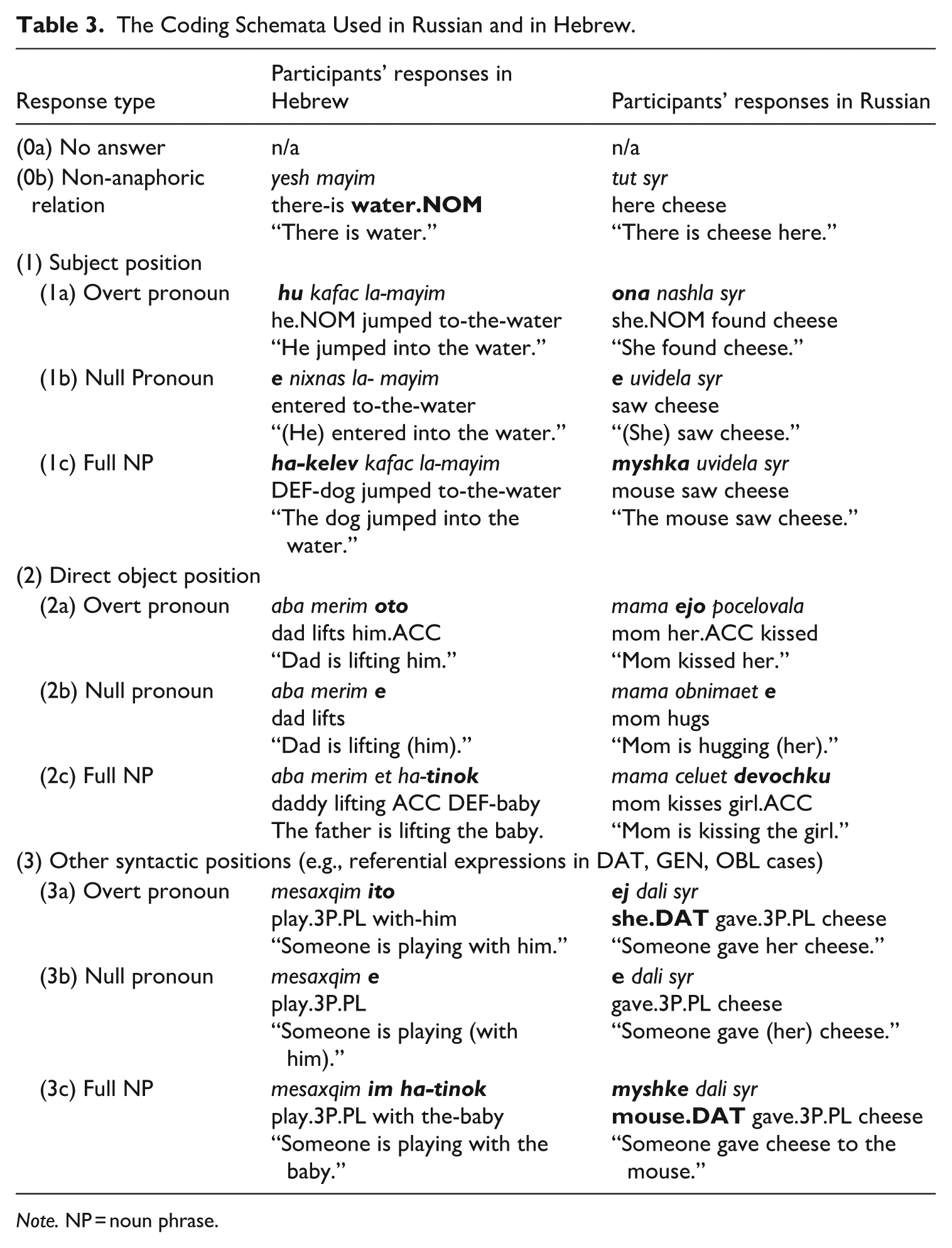
Note. NP = noun phrase.
Results
In order to shed light on the referential choice in bilingual children compared to their monolingual child and adult controls, we fitted binomial mixed-effects logistic regression models. We utilized R statistical software, version 4.3.1 (R Core Team, 2023) and RStudio (version 2024.12.1+563), to run data processing and to conduct a generalized linear mixed-effects model for binomial data using the lme4 package. The dependent variable, Referential Choice, was coded as 1 for Overt Pronoun and 0 for Null pronoun. Responses with lexical NPs were excluded from the analysis due to their infrequency. Firstly, we fitted models for the adult dataset to examine inherent differences in referential choice between Russian and Hebrew. Secondly, we built separate models for Russian and Hebrew, comparing bilingual children to monolingual child and adult controls. Thirdly, we investigated predictors of referential choice in bilingual children across their two languages.
We applied a stepwise model-building procedure and report the best-fitting, parsimonious models in the section “Results.” We began with intercept-only models as a baseline, followed by null models including both by-subject and by-stimulus random intercepts. Subsequently, Group as a fixed effect (Model 1: MonoAd-Ru and MonoAd-He; Model 2 for Russian: BiliCh, MonoCh-Ru, MonoAd-Ru; Model 3 for Hebrew: BiliCh, MonoCh-He, MonoAd-He), Syntactic Position (Object, Subject, Other), and their two-way interactions were added. To examine the potential influence of verb tense on referential choice, Verb Tense in the subordinate clause was subsequently added as an additional fixed factor after Language and Syntactic Choice had been entered into the model. Pairwise post hoc comparisons were conducted for significant interactions using the emmeans package with Bonferroni adjustments for multiple comparisons. In Models 4 and 5, which focused on the bilingual child data, we included predictors such as Language (Russian, Hebrew), Age, AoB, morpho-syntactic abilities, and their two-way interactions with Language.
Overt and null pronoun choice in the adult data
First, to answer our RQ1, we analyzed the adult data to investigate if there are any inherent differences in referential choice between Russian and Hebrew in adult controls. Figure 2 visualizes the adult data for Russian and Hebrew referential choices. The final optimal model for the adult data is presented in Table 4. Although the two-way Language*Syntactic Choice interaction did not reach the statistical difference, including it led to a significantly better model fit compared to the version without the interaction (χ² = 18.5, p < .001). Therefore, the interaction was retained. Estimated marginal means were computed using the emmeans package to facilitate interpretation of referential choice patterns across languages and syntactic contexts (see Table 5).
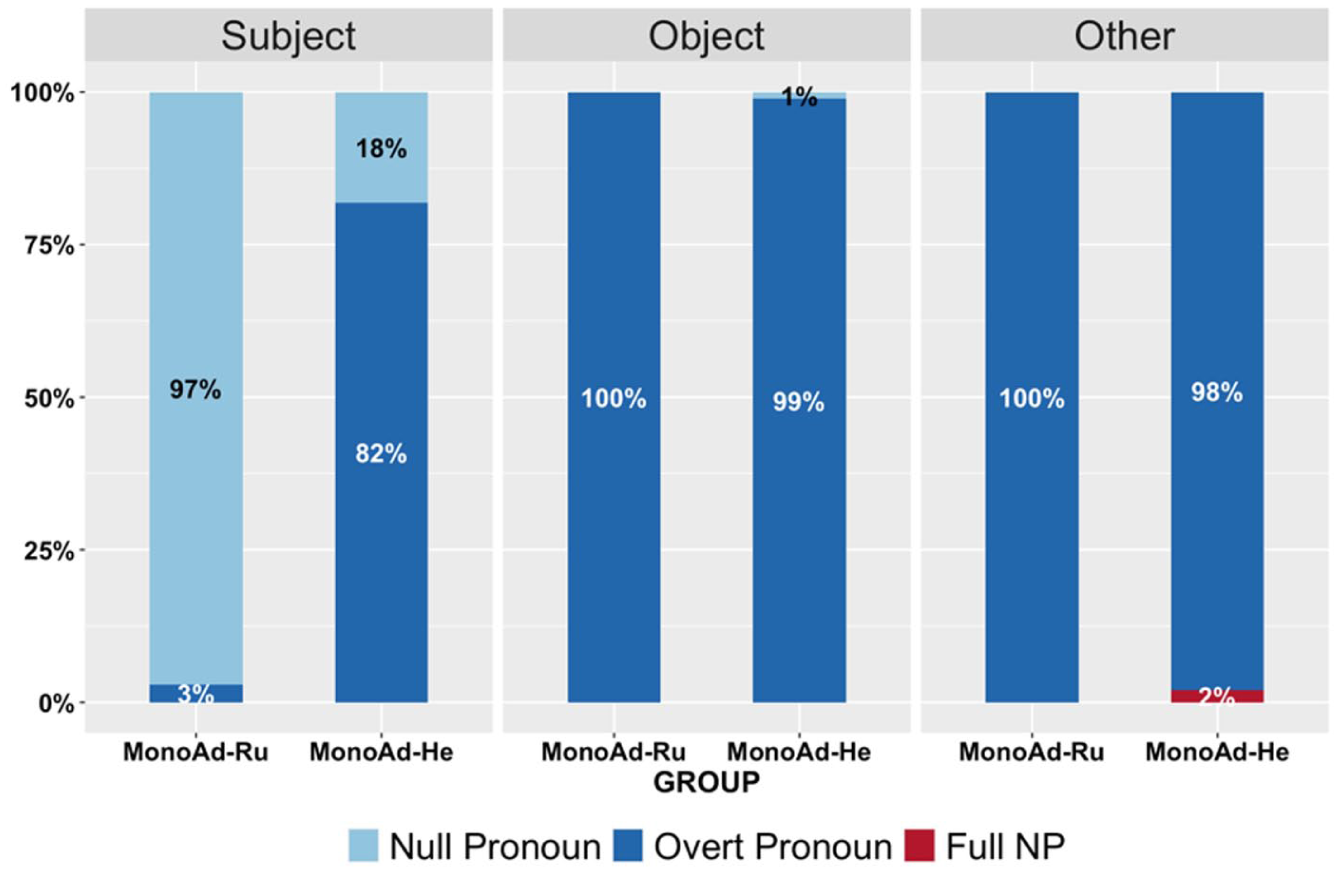
Referential choice per syntactic position in monolingual adult speakers.
The Model Results for the Referential Choice in Monolingual Adult Speakers.
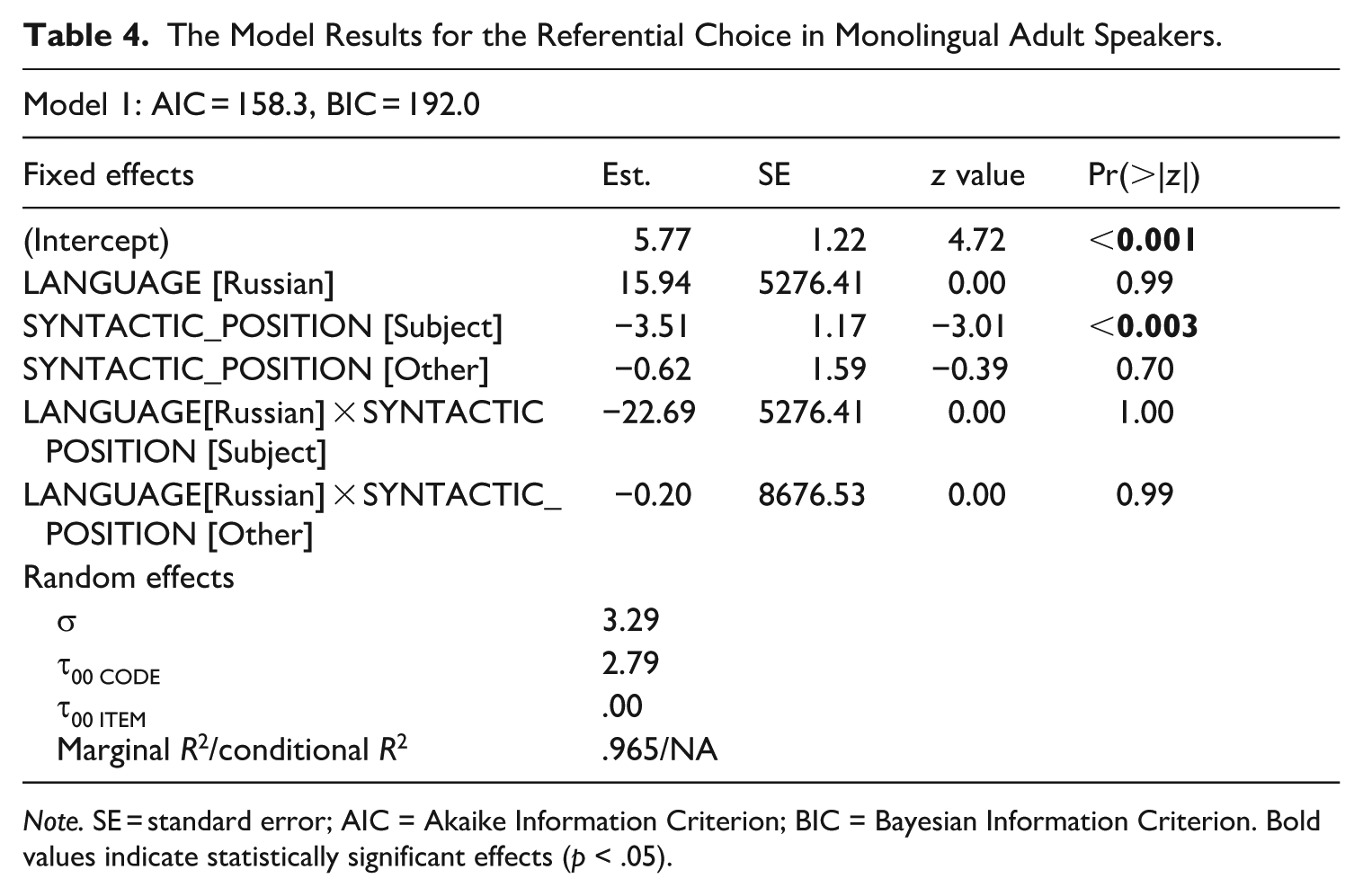
Note. SE = standard error; AIC = Akaike Information Criterion; BIC = Bayesian Information Criterion. Bold values indicate statistically significant effects (p < .05).
Pairwise Contrasts for Subject, Object, and Other Null-Versus-Overt Pronoun in Monolingual Adult Groups (Hebrew Monolingual Adults vs. Russian Monolingual Adults).
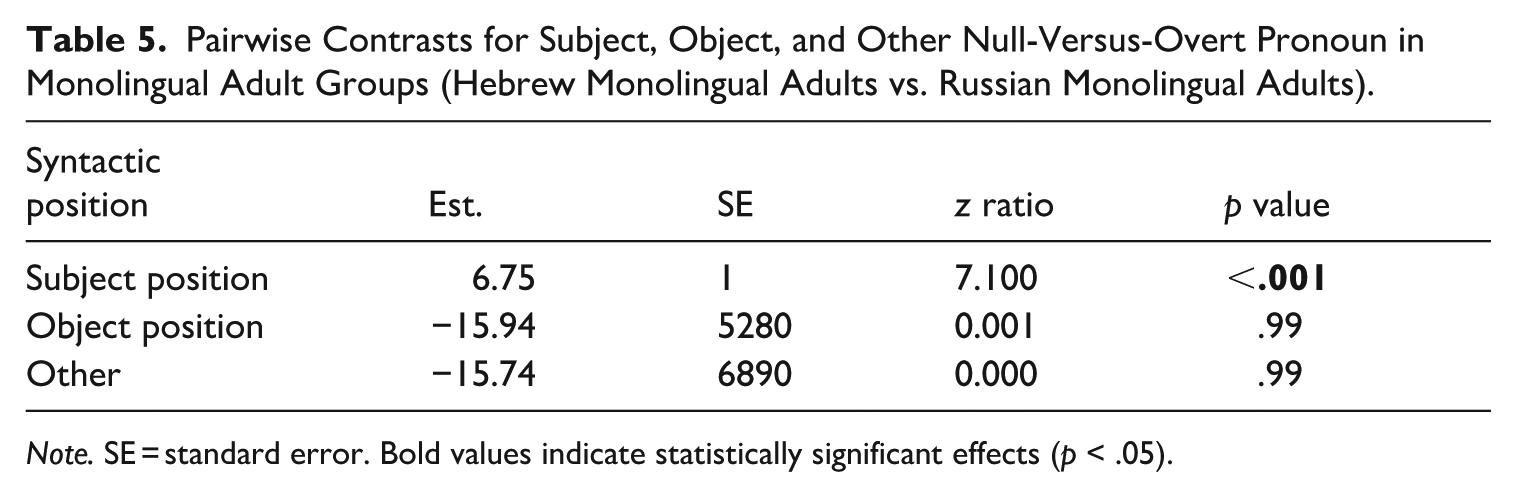
Note. SE = standard error. Bold values indicate statistically significant effects (p < .05).
Pairwise comparisons revealed significant differences in the subject position: Russian-speaking adult controls were more likely to use null pronouns than their Hebrew-speaking counterparts, whereas no significant differences were observed in the object or other positions. Moreover, to assess whether the grammatical tense of the verb influences referential choice, we included Verb Tense as an additional fixed factor after entering Language and Syntactic Choice into the model. However, its inclusion did not significantly improve model fit. It exhibited unstable parameter estimates and inflated standard errors, likely due to sparse data in certain combinations of Language, Syntactic Position, and Verb Tense. Thus, it was excluded from the final interpretation of Model 1.
Overt and null pronoun choice in bilingual children compared to monolingual child and adult controls: Russian and Hebrew
Secondly, to address our RQ2, we analyzed the Russian and Hebrew data separately, comparing bilingual children to monolingual child and adult controls (see Figures 3 and 4 for Russian and Hebrew, respectively), while considering the differences observed between the two adult control groups.
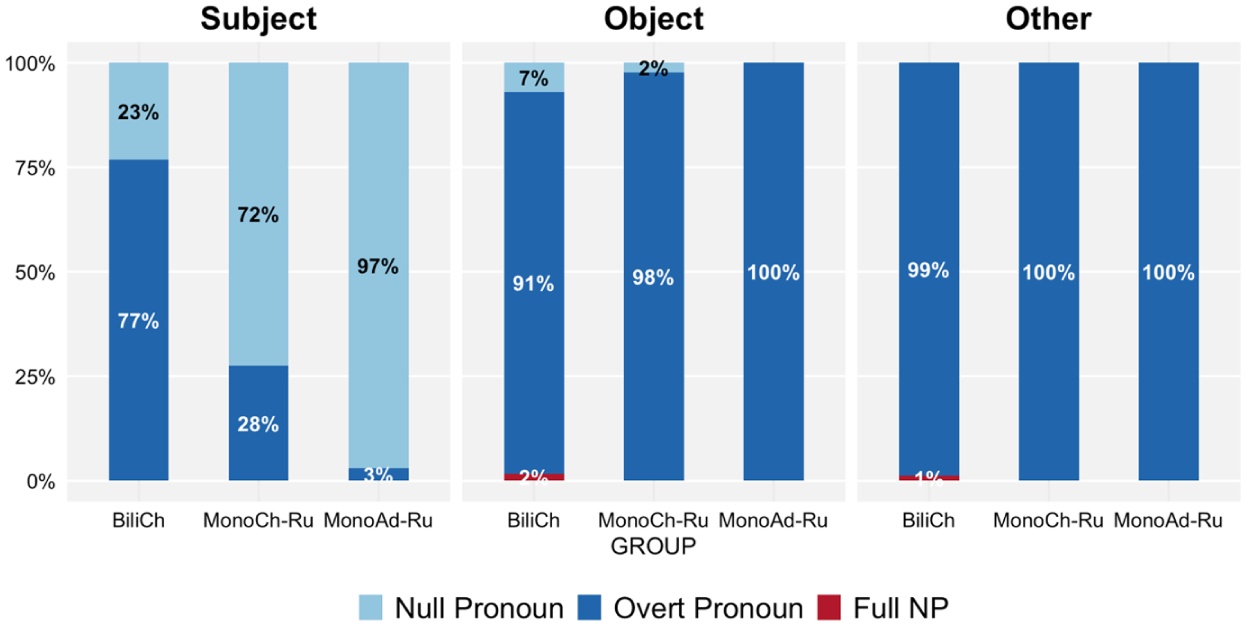
Referential choice in Russian per syntactic structure per group.
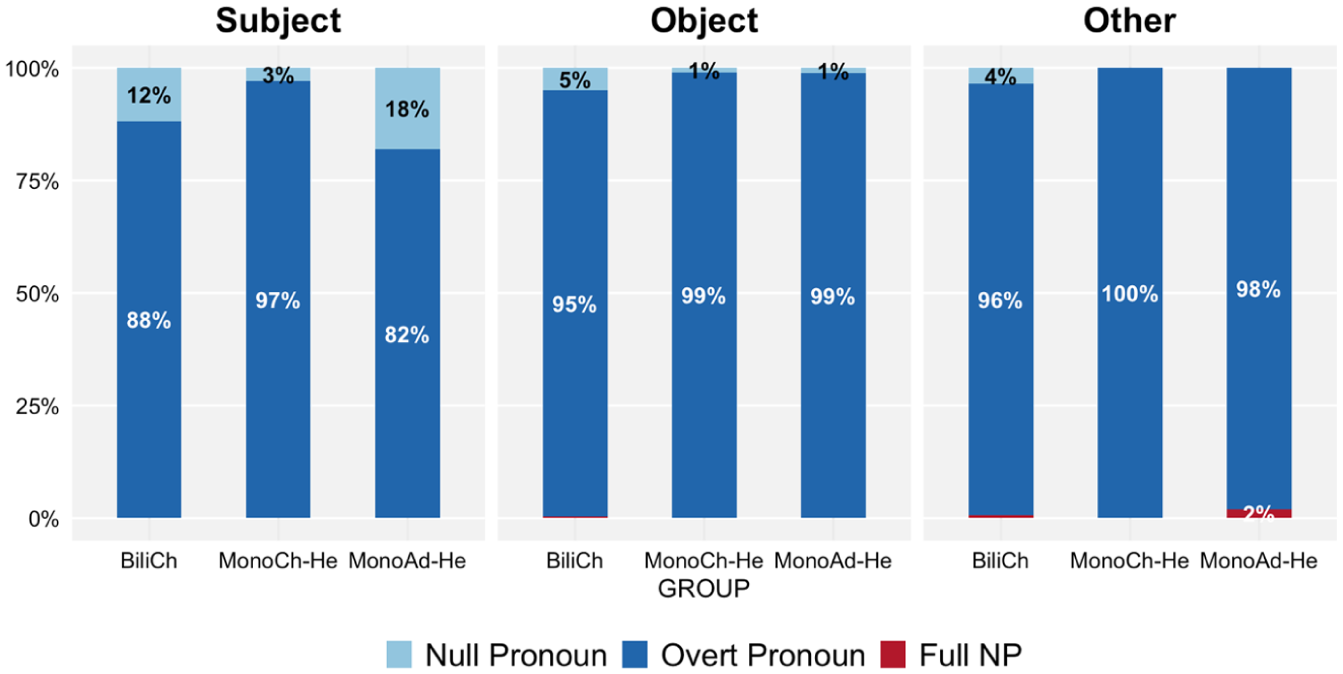
Referential choice in Hebrew per syntactic structure per group.
Starting with Russian, the final optimal model included Group, Syntactic Position, Verb Tense, and the Group × Syntactic Position interaction as fixed effects. The model revealed significant main effects of Syntactic Position and a significant Group × Syntactic Position interaction, while the main effects of Group and Verb Tense were not significant (see Table 6). Although adding Verb Tense significantly improved overall model fit, none of the specific verb tense contrasts reached significance. We also tested a three-way interaction between Group, Syntactic Position, and Verb Tense, but it did not improve model fit and was therefore excluded. Post hoc pairwise comparisons of the Group × Syntactic Position interaction indicated no group differences for object and other syntactic positions; however, significant group differences emerged for subject position (Table 7). Bilingual children were more likely to produce overt pronouns compared to both monolingual child and adult controls (both p < .001). Additionally, monolingual Russian-speaking children produced overt pronouns significantly more often than adults (p = .01).
The Model Results for the Pronoun Use in Russian.
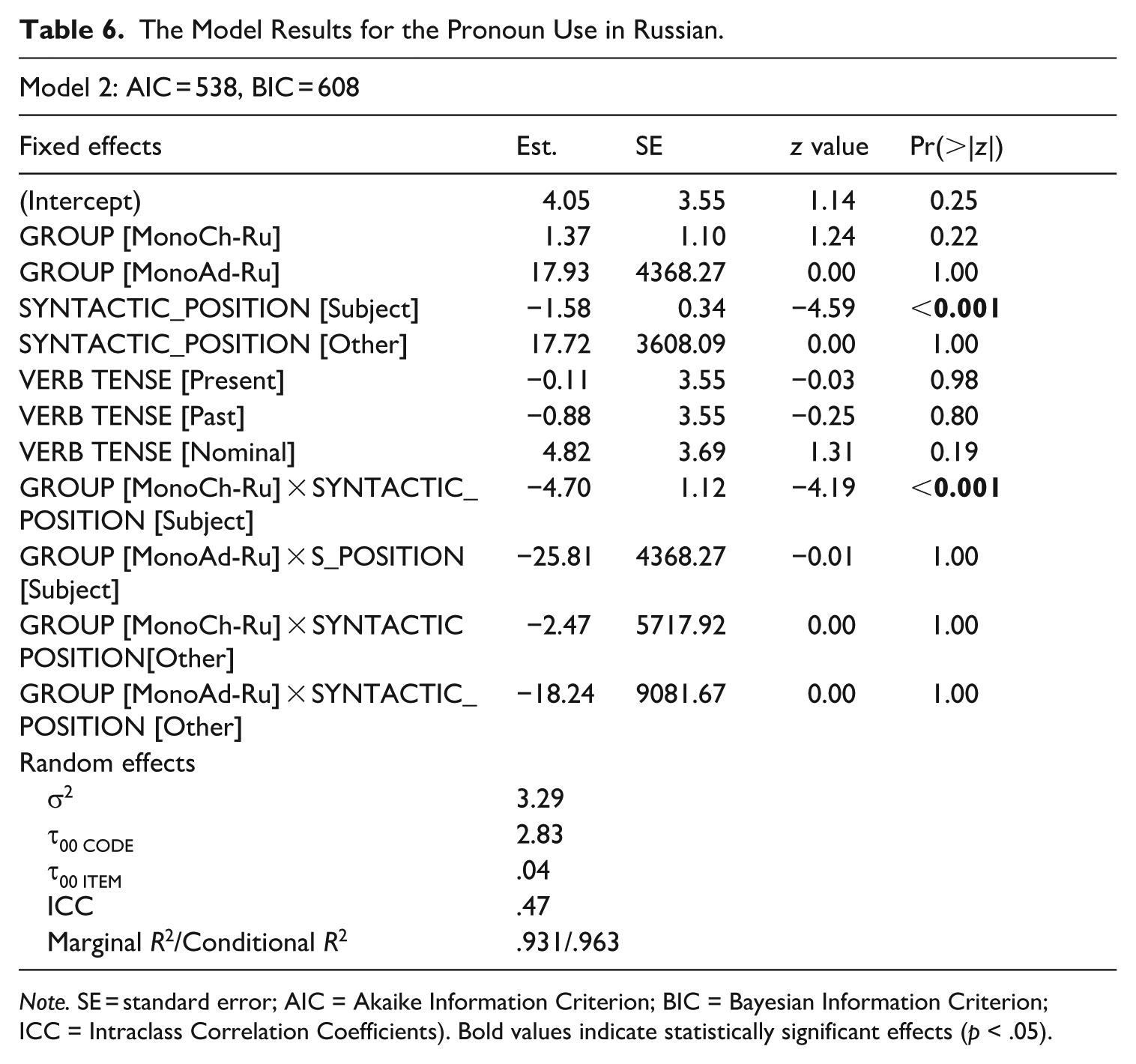
Note. SE = standard error; AIC = Akaike Information Criterion; BIC = Bayesian Information Criterion; ICC = Intraclass Correlation Coefficients). Bold values indicate statistically significant effects (p < .05).
Pairwise Contrasts for Subject Null-Versus-Overt Pronoun in Russian.
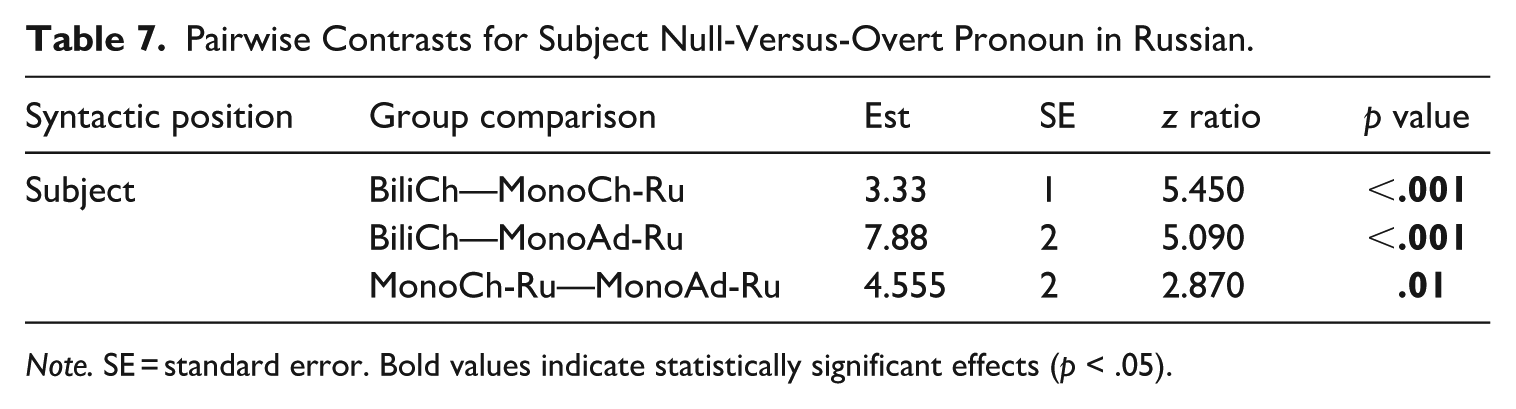
Note. SE = standard error. Bold values indicate statistically significant effects (p < .05).
Turning to Hebrew, the results revealed a different pattern (see Figure 4). The final optimal model included fixed effects for Group, Syntactic Position, and their interaction (see Table 8). Although both Group and Syntactic Position reached significance during model selection, only Syntactic Position remained significant in the final model (p = .01), reflecting differences between subject and other syntactic positions. Group was not a significant predictor on its own, and the Group × Syntactic Position interaction did not substantially improve model fit. The addition of Verb Tense also failed to enhance model fit, and none of the individual tense contrasts reached significance. Pairwise post hoc comparisons confirmed that bilingual children did not differ significantly from either monolingual child or adult controls across syntactic positions (see Table 9). Only one group comparison, between monolingual children and adults in the subject position, reached significance (p = .04).
The Final Optimal Model Results for the Pronoun Use in Hebrew.
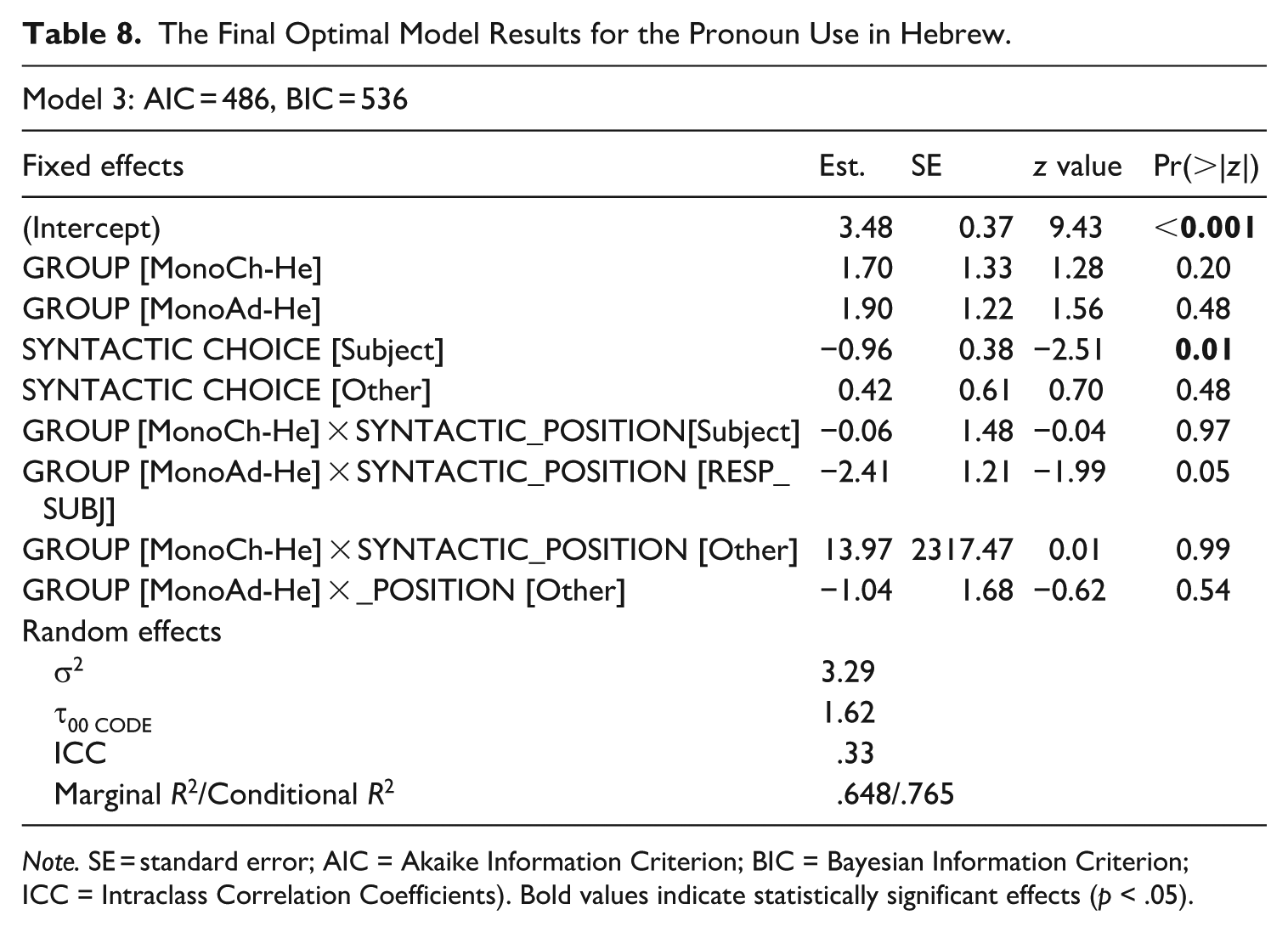
Note. SE = standard error; AIC = Akaike Information Criterion; BIC = Bayesian Information Criterion; ICC = Intraclass Correlation Coefficients). Bold values indicate statistically significant effects (p < .05).
Pairwise Contrasts for Subject Null-Versus-Overt Pronoun in Hebrew.
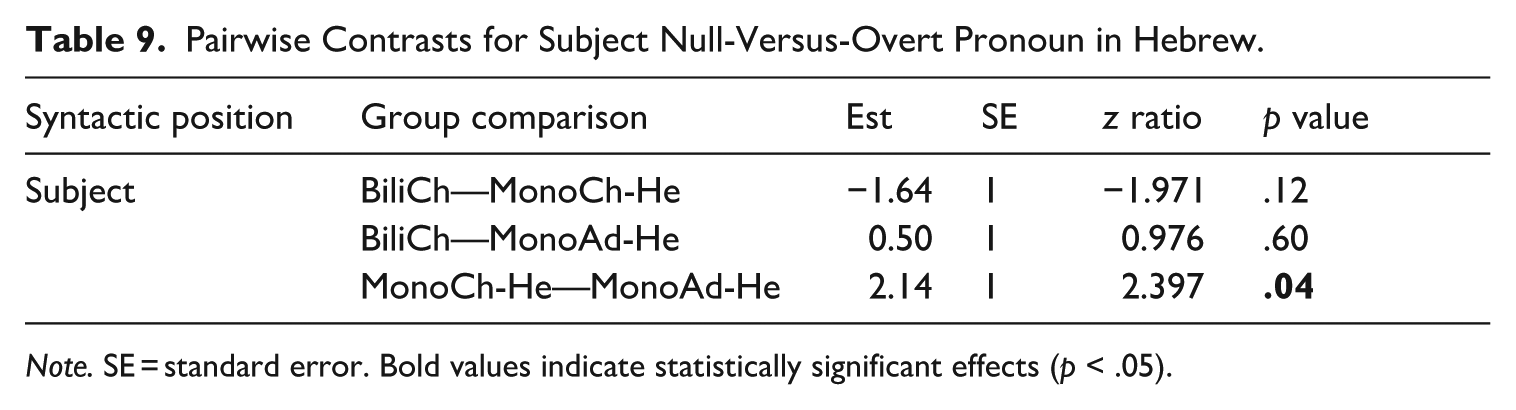
Note. SE = standard error. Bold values indicate statistically significant effects (p < .05).
Omissions in the object position in the bilingual children are presented in (9). Such sentences are ungrammatical for monolingual Hebrew-speaking adult and child controls, who almost never produce null pronouns in the object position, with omissions occurring only in isolated cases (approximately 1%).
(9) Direct object omission in BiliCh—Hebrew: A. Prompt: ha-dubi tzoxeq ki . . . the-teddy-bear laughs because Child response: ha-yalda medagdeget e the-girl tickles (him) B. Prompt: ha-yalda mexaexet ki . . . the-girl smiles because Child response: aba metzalem e daddy photographs (her)
Mechanisms of overt and null pronoun choice in bilingual children in both languages: effects of age, AoB, and morpho-syntactic abilities
Finally, to address RQ3, examining which background and language variables predict referential choice in bilingual children, we fitted a series of mixed-effects logistic regression models focusing on subject position, where group-level differences were most pronounced. The final model (see Table 10) included fixed effects for Age and Language. The analysis revealed a significant main effect of Language (p < .001), with overt pronouns produced more frequently in Hebrew than in Russian. Age also emerged as a significant negative predictor (p = .02), indicating that older children were somewhat less likely to use overt subject pronouns (Figure 5). This age-related decline in overt pronoun use was observed across both languages, suggesting a general developmental trajectory rather than language-specific cross-linguistic effects. The pattern likely reflects increasing grammatical and pragmatic competence, as older children become more sensitive to discourse cues and more proficient in omitting pronouns when the referent is accessible.
Predictors of Overt Subject Pronoun Use in Bilingual Data.
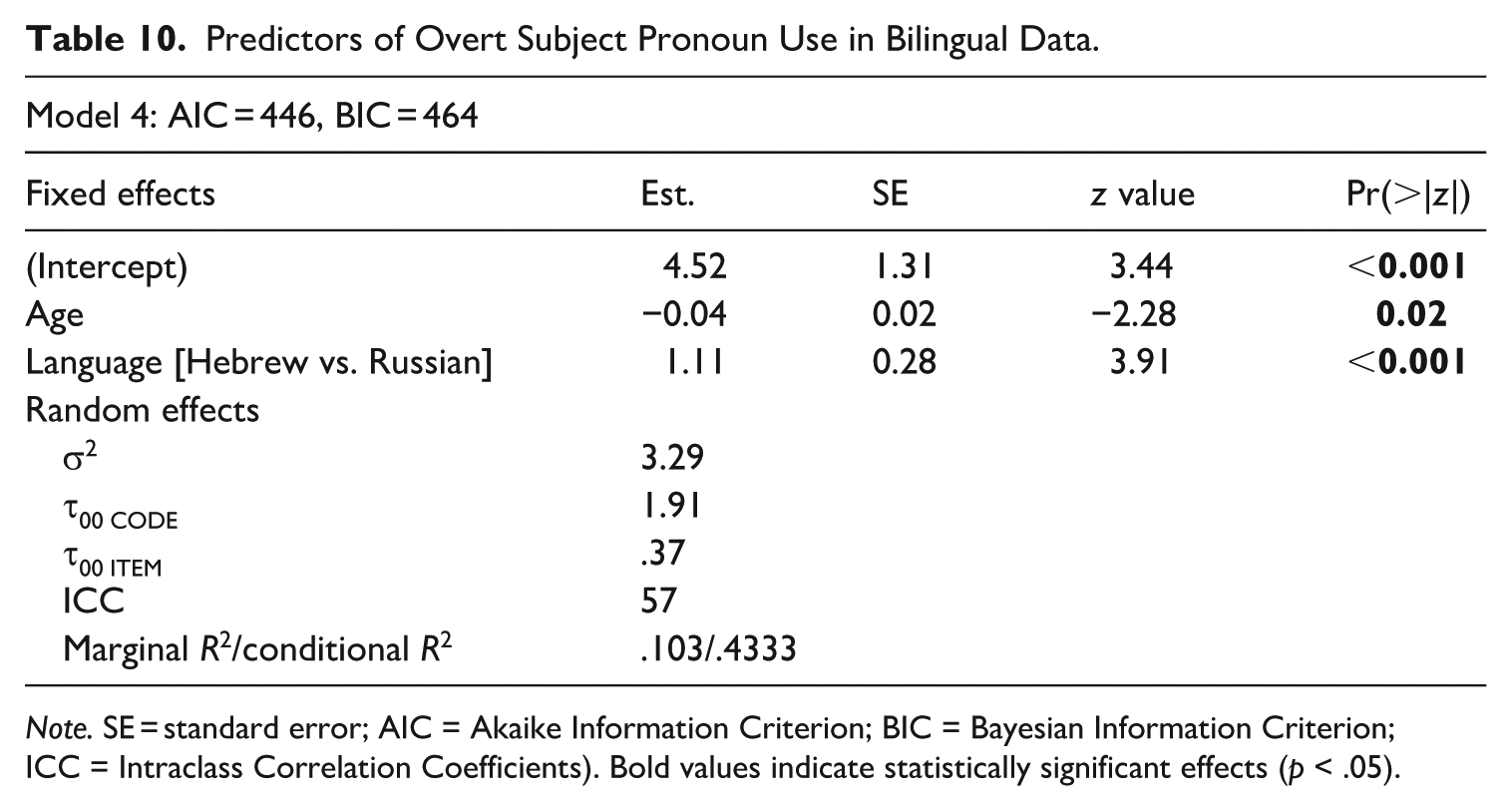
Note. SE = standard error; AIC = Akaike Information Criterion; BIC = Bayesian Information Criterion; ICC = Intraclass Correlation Coefficients). Bold values indicate statistically significant effects (p < .05).
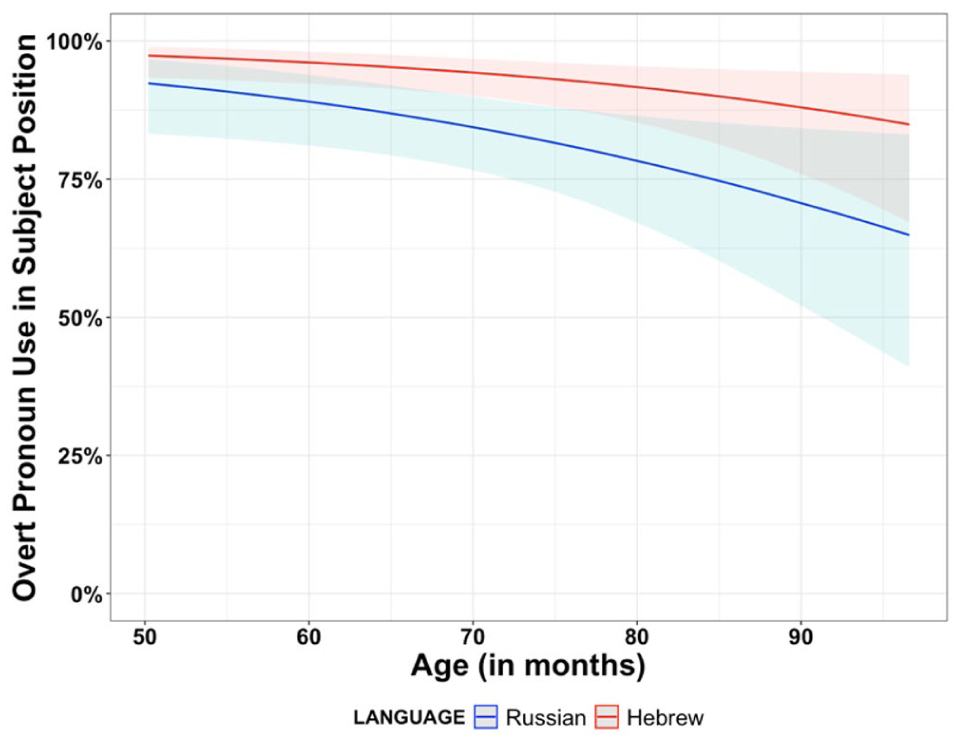
Effects of language and age on the likelihood of overt subject pronoun production in bilingual children’s subject position.
Moreover, although often considered a relevant factor in bilingual development, AoB did not significantly predict overt pronoun use, nor did its interaction with Language. Similarly, the inclusion of morpho-syntactic abilities and their interaction with Language led to only a marginal improvement in model fit (p = .06), and thus these variables were not retained in the final model. This pattern suggests that age-related developmental factors and cross-linguistic differences play a more prominent role in predicting referential choice than individual variation in morpho-syntactic proficiency or age of L2 acquisition. In other words, while syntactic abilities may differ across children, their contribution to overt pronoun use appears to be outweighed by broader developmental and language-specific influences.
In a supplementary analysis, we also examined subject and object pronoun use in monolingual children across Russian and Hebrew to assess whether age and morpho-syntactic abilities predicted referential choice in this population. In both languages, individual differences did not significantly predict overt pronoun use (Russian: p = .19 for both Subj and Obj; Hebrew: p = .40 for Subj and p = .70 for Obj). In Russian object data, limited observations resulted in unstable model estimates, while Hebrew models converged but yielded no significant effects.
Unlike the subject position, where item-level variation significantly improved model fit, no such effect was observed in the object position, suggesting that children’s responses were more uniform across items in this context. Moreover, referential choice in the object position exhibited a ceiling effect, with overt pronouns used almost categorically, and no language-specific effects emerged. Given the lack of variability, statistical modeling in this context was not informative.
Discussion
The overarching aim of this paper was to investigate the extent to which bilingual Russian–Hebrew acquisition of third-person subject and object realization follows the monolingual pattern or alternatively diverges from it. To achieve this goal, we first compared the pattern of third-person subject and object realization in monolingual adult speakers of the two languages. Subsequently, we compared the data from bilingual children to that collected from adult and child monolinguals. Finally, we explored the variables that can predict null versus overt argument choice by bilingual children, that is, age, AoB, and morpho-syntactic proficiency. Our study was motivated by the scarcity of previous research on bilinguals’ two languages that permit null pronominal elements by discourse-driven mechanisms rather than classical syntactic pro-drop mechanisms.
Regarding the first research question, which examined differences in adult controls, our findings revealed a consistent and robust contrast between Russian and Hebrew, aligning with previous descriptive accounts of subject omission in these languages. As previously noted, Russian is not a classical pro-drop language but permits extensive discourse-licensed topic-drop of both subjects and objects (Ivanova-Sullivan, 2014). In contrast, Hebrew exhibits partial pro-drop behavior: it licenses null subjects in first- and second-person contexts in the past and future tenses but does not syntactically license third-person subject pro-drop. However, it allows limited discourse-driven omission when the referent is salient in the immediately preceding context (Holmberg et al., 2009; Melnik, 2007; Shlonsky, 2009). This distinction was clearly reflected in our adult control data: subject omission occurred in 97% of cases in Russian but only 18% in Hebrew. Importantly, null objects and other arguments were rarely omitted in either language, underscoring a broader asymmetry in the realization of different argument types. Serratrice et al. (2004) attribute this asymmetry to the informativeness of grammatical roles: subjects, often serving as topics, carry lower informational weight and are thus more prone to omission, whereas objects, typically introducing less accessible information, are more likely to be overtly realized. Nonetheless, future studies should further explore referential preferences in Russian and Hebrew adult speakers to clarify how discourse and grammatical factors interact in shaping pronominal omission. Although our analysis considered linguistic features such as tense, these did not significantly improve model fit. Notably, all pronouns were elicited in subordinate clauses, raising the need for future research to examine which parameters specifically condition overt versus null pronoun use in these two languages, both of which exhibit non-classical pronoun omission profiles.
Addressing the second research question concerning pronominal choice in monolingual and bilingual children, we first examined the developmental trajectory of null versus overt pronoun use in monolingual Russian- and Hebrew-speaking children, prior to analyzing the bilingual data. Our findings revealed significant differences between the child and adult monolingual groups, particularly in the subject position. While both Russian- and Hebrew-speaking monolingual children aligned with their adult counterparts in the object domain, they diverged in their use of subject null versus overt pronouns. Specifically, monolingual Russian-speaking children exhibited a significantly higher rate of overt subject pronouns compared to Russian-speaking adults, and a similar pattern, though less pronounced, was observed in Hebrew, where monolingual children also overused overt pronouns relative to adult norms. These results contribute to the broader, and often conflicting, body of cross-linguistic research on pronominal development. While some studies have documented omissions of obligatory subjects in non-pro-drop languages (e.g., Bloom, 1990), others have reported overuse of overt pronouns in pro-drop languages (e.g., Serratrice et al., 2004; Sorace et al., 2009). Our data support the latter, suggesting that even by ages 5 to 8, monolingual children may not yet have reached adult-like proficiency in managing the syntax–pragmatics interface for referential choice. The observed preference for overt pronouns where adults use null forms indicates that overt pronoun use may be a developmental default. Future studies should adopt cross-linguistic and cross-sectional designs to further clarify how pronominal systems mature in monolingual children across different typological contexts.
Turning to referential choice in the two languages of bilingual children, our study extends prior research by providing novel evidence from Russian–Hebrew bilinguals, an underexplored language pairing in this domain. Referential choice is known to pose challenges at the syntax-pragmatics interface, as described by the Interface Hypothesis (Sorace, 2011; Sorace & Filiaci, 2006; Sorace & Serratrice, 2009). While previous studies have shown that bilingual children can perform on par with monolinguals in both of their languages (e.g., Brehmer et al., 2023; Genevska-Hanke & Hamann, 2023; J. Liceras & Fernández Fuertes, 2019; J. M. Liceras et al., 2012), other research has documented either divergence or acceleration. Acceleration effects, where bilinguals reach adult-like performance earlier than monolinguals, have been reported in contexts involving partial or asymmetric parameter overlap (e.g., Arnaus Gil et al., 2021; Müller, 2024). Divergence, in contrast, has been attributed to cross-linguistic influence, increased sensitivity to ambiguity (Sorace, 2016), or processing difficulties with unpronounced elements, the so-called Silent Problem (Laleko & Polinsky, 2017; Polinsky, 2018, 2025).
Our findings revealed that bilingual children patterned like adult monolinguals only in Hebrew, their SL, while diverging from both monolingual children and adults in Russian, their HL. At first glance, the increased use of null subject pronouns in Hebrew may suggest cross-linguistic influence from Russian, a language with a stronger discourse-driven preference for subject drop. However, this interpretation is complicated by the fact that morpho-syntactic proficiency measures did not indicate Russian dominance in these bilinguals, undermining a straightforward dominance-based transfer account. Alternatively, the observed asymmetry may reflect acceleration in the acquisition of pronominal choice in Hebrew, where bilinguals outperformed their monolingual Hebrew-speaking peers by exhibiting more adult-like behavior. This pattern aligns in part with findings from French bilingual acquisition, where acceleration has been reported when French, a non-pro-drop language, is acquired alongside a pro-drop language (Arnaus Gil et al., 2021; Müller, 2024). However, in contrast to the typologically clear-cut pro-drop versus non-pro-drop distinction in those studies, both Russian and Hebrew permit null pronouns under certain discourse conditions, though to varying extents. This typological proximity creates more subtle contrasts and likely contributes to the complex and asymmetric developmental outcomes observed here.
Turning to Russian, the bilinguals’ HL, their elevated use of overt pronouns might superficially suggest influence from Hebrew. Yet again, this explanation is not supported by morpho-syntactic proficiency scores, which did not predict pronoun realization patterns. Instead, we propose that the bilinguals’ pattern in Russian reflects a developmental trajectory shared with monolingual Russian-speaking children, who also overused overt pronouns relative to adults. This delayed mastery of pronominal choice in HL-Russian suggests that bilingual children’s referential systems are partly shaped by language-internal developmental constraints. Supporting this interpretation, regression analyses demonstrated that as morpho-syntactic skills improved, bilinguals’ referential behavior in both languages became more adult-like, favoring overt pronouns in Hebrew and null pronouns in Russian. An alternative account is that bilingual children have a general bias toward overt pronouns across both languages due to heightened sensitivity to ambiguity or processing challenges related to silent elements, consistent with the Silent Problem framework (Laleko & Polinsky, 2017; Polinsky, 2018, 2025). This increased sensitivity to potential referential ambiguity leads children to prefer overt forms, as these provide explicit cues to antecedent identity and reduce the cognitive load associated with discourse integration (Sorace, 2016). This interpretation is supported by the elevated rate of overt pronouns in Russian, which exceeded that of both monolingual children and adults.
To address our third research question investigating the mechanisms underlying referential choice in bilingual children, we examined the predictive role of age, AoB, and morpho-syntactic abilities. The findings revealed that age was the only significant predictor of subject pronoun use, with older children more likely to resort to null pronouns. This developmental trend was consistent across both Russian and Hebrew, suggesting that improvements in discourse integration and pragmatic competence with age may reduce reliance on overt forms. Thus, referential choice appears to be guided more by general maturation than by language-specific transfer. In contrast, AoB and morpho-syntactic proficiency did not significantly contribute to pronominal choice. Despite frequent assumptions that earlier bilingual exposure or stronger syntactic skills facilitate more native-like performance, our data suggest these factors play a limited role once children reach a functional level in both languages. Furthermore, the absence of significant predictors in the object position, likely due to ceiling effects in overt pronoun use, underscores that bilingual children’s referential challenges are more pronounced in subject realization, where discourse integration is more complex. Overall, these results highlight the importance of developmental factors and language-specific constraints over individual variation in syntactic maturity or timing of bilingualism onset.
In conclusion, the adult data confirmed robust cross-linguistic differences in referential choice: Russian speakers strongly favored null subjects, whereas Hebrew speakers consistently preferred overt forms, underscoring a typological contrast that frames the bilingual context. Furthermore, the study revealed developmental influences on referential choice in both monolingual and bilingual Russian–Hebrew-speaking children. While children in both groups overused overt pronouns in contexts where adults preferred null forms in line with the Silent Problem framework (Laleko & Polinsky, 2017; Polinsky, 2018), this pattern was more pronounced in Russian than in Hebrew. Bilingual children performed similarly across both of their languages, and in Hebrew, they even approximated adult-like patterns more closely than their monolingual peers, suggesting an acceleration effect in the SL. These findings challenge traditional transfer-based accounts, as no asymmetries were observed between the bilinguals’ HL and SL morpho-syntactic skills. While transfer effects in bilingual acquisition of pronominal elements can indeed be bidirectional (e.g., Mykhaylyk & Ytterstad, 2017), the present results suggest that age-related maturation and processing demands provide a more parsimonious explanation for the observed asymmetries. Age emerged as a key predictor, with older children demonstrating more target-like use of null pronouns, while neither age of onset nor morpho-syntactic abilities significantly influenced performance. Taken together, the findings underscore the importance of examining both languages in bilingual development and call for a broader, developmentally informed perspective on referential choice.
Footnotes
Author contributions
Declaration of Conflicting Interests
The authors declared no potential conflicts of interest with respect to the research, authorship, and/or publication of this article.
Funding
The authors disclosed receipt of the following financial support for the research, authorship, and/or publication of this article: The study received partial support from the Israel Science Foundation (ISF) under grant No. 552/21, Towards Understanding Heritage Language Development: The Case of Child and Adult Heritage Russian in Israel and the USA, awarded to Natalia Meir.
