




Abstract
Language development can be framed as the process of learning how to mean (Halliday, 1975). From this perspective, the role of communicative function is central to the language-learning process with development being guided by interaction with experienced others. In the current study, we present a detailed analysis of the communicative functions used in interaction with prelinguistic infants aged 10–12 months from three cultural groups living in the United Kingdom. The findings indicate that caregivers from all three groups used a wide range of communicative acts when interacting with their infants, ranging from directives to discussions of inner thoughts and feelings. In addition, we identified significant differences in the frequency with which different communicative acts were used across our three groups. The study complements the positive contributions made by pivotal studies on language socialisation by highlighting the diversity and variation of caregiver speech at the functional level.
Keywords
Introduction
The expression and comprehension of communicative intent, defined as the functions for which language is used, is the driving force behind human communication. In its most basic and, at the same time, most complex form, language is a vehicle for getting things done with words (Austin, 1962). The emergence and early development of communicative function in children has been well documented (e.g. Bates et al., 1975; Cameron-Faulkner et al., 2015; Carpenter et al., 1998; Halliday, 1975; Liszkowski & Tomasello, 2011; Snow et al., 1996; Tomasello, 1999) and is indicative of an emergent system which involves the child’s development of key socio-cognitive skills alongside episodes of communicative interaction with experienced others (Carpendale & Lewis, 2004; Tomasello, 1999). The nature of communicative function in the language children hear has attracted attention over the years, and two key themes have emerged: those relating to the relationship between caregiver function type and language development and those relating to cultural differences in caregiver function type.
Much of our understanding of the nature of communicative function in caregiver language stems from studies focussing on the effects of the input on early language development as opposed to descriptions of caregiver language in and of itself. A number of detailed studies investigated the effects of particular communicative functions produced by caregivers on the early stages of language development. The main distinction drawn related to utterances defined as referential, that is, the use of language to refer, describe and explain, (e.g. That’s a ball) versus regulatory language, that which is used to direct and regulate actions and behaviour (e.g. Put the ball down). While studies appear to be consistent in terms of the positive effects of referential utterances on vocabulary and grammatical development (e.g. Tamis-LeMonda et al., 2012), the effects of regulatory utterances present a more complex picture. Some studies reported a negative relationship between regulatory utterances and early language development (e.g Hampson & Nelson, 1993; Rowe, 2008) while others found the opposite (e.g. Barnes et al., 1983; Pine, 1992). Follow-up studies highlighting the importance of joint attention indicate that regulatory utterances display a positive relationship to vocabulary development if the utterances are produced within a joint attentional frame (Akhtar et al., 1991).
Studies of cultural differences in caregiver speech can be broadly divided into two types: those that investigate the language context of cultural groups from different countries or locations (e.g. Richman et al., 1992; Schieffelin & Ochs, 1984) and those that investigate cultural differences between different communities living in the same country (Casillas et al., 2020; Heath, 1983; Tamis-LeMonda et al., 2012). These studies clearly demonstrate differences in the language socialisation practises of caregivers in interaction with their infants and young children and allude to both similarities and differences in the communicative functions used in interaction (see Lieven, 1994). More recently, researchers have combined cross-cultural research with studies investigating the relationship between function and language development. For example, Tamis-LeMonda et al. (2012) studied caregiver-infant interaction in three cultural groups living in North America: Mexican, Dominican and African American. The findings of the study indicated differences in caregiver speech at both the structural and functional levels during interaction within semi-structured tasks and a positive effect of referential utterances on vocabulary scores. Abels et al. (2021) also identified significant differences in the types of speech acts addressed to young children in the Hadza community of Tanzania, when compared to similar cultural communities. Specifically, the authors identified higher levels of request for actions in the language of Hadza caregivers.
Methodological advances in recording techniques, namely the development of day-long recording devices (i.e. LENA), have resulted in a step change in sampling procedures used in cross-cultural research. Research on caregiver interaction from a range of cultures and communities provides robust and ecologically valid contributions to our understanding of the variation and shifts the focus towards a more representative consideration of the nature and role of caregiver interaction in the language-development process (e.g. Bergelson et al., 2019, 2022; Casillas et al., 2020; Cristia et al., 2019; Montag, 2020). In the current study, we complement the rigour of these methodological advances by providing a fine-grained analysis of the functional dimensions of caregiver language across cultures and build on the referential/regulatory distinction.
The use of the referential/regulatory distinction has provided valuable insights into caregiver styles of interaction with young children, but there are a number of reasons why the distinction may be best thought of as the origins of our exploration of communication function in caregiver speech as opposed to the definitive categorisation. First, as mentioned earlier, while the relationship between referential communication and language development appears overwhelmingly positive, the effects of regulatory communication are more difficult to disentangle. While it is very likely that the complexity relates to non-linguistic factors (i.e. whether the regulatory communication is produced within a joint attentional frame), it is also possible that the regulatory category is a heterogenous category encompassing a range of regulatory ‘sub-types’, which in and of themselves may contribute to the language-development process to varying degrees (e.g. asking the child to repeat their communicative bid, warning the child of danger, commands produced within the context of role-play). For example, Rantalainen et al. (2022) divided caregiver directives (a form of regulatory communication) into three categories, namely supportive (e.g. Could you pass me the blue crayon), intrusive behavioural (e.g. Let’s go and do something else) and intrusive attentional (e.g. Oh look, there’s a cat), and found while intrusive directives had a negative effect on vocabulary development, intrusive attentional directives had a positive effect on expressive vocabulary development in the 30-month sample of girls. The study highlights the value of taking a more fine-grained approach to the categorisation of communicative functions than afforded by the regulatory/referential dichotomy.
Second, communicative function is difficult to categorise and define. As researchers, we tend to carve up the functional space according to our specific research questions, leading to an almost one-to-one relationship between studies and communicative function taxonomies (see Cameron-Faulkner, 2014). In addition, in some cases, additional categories relating to discourse features or other aspects of communication are included, and this means that taxonomies may go above and beyond the coding of intent. Consequently, comparisons between studies can be problematic, and the opportunities to re-use the detailed and resource-intensive datasets generated through the transcription and coding of communicative intent in secondary data analysis may be limited.
For these reasons, we adopt the detailed, systematic and well-documented Inventory of Communicative Acts (abridged; INCA-A; Ninio et al., 1994) which not only provides the most systematic coding taxonomy of communicative function but is also incorporated into the CHILDES system (MacWhinney, 2000; Nikolaus et al., 2021) in its abridged form (Ninio et al., 1994). In addition, exploratory work has been conducted on the automatisation of the taxonomy on naturalistic data (see Nikolaus et al., 2021), meaning that in years to come, the resource burden associated with functional coding may be significantly reduced. INCA-A has its theoretical foundations in Speech Act Theory (Austin, 1962; Searle, 1969) and studies of talk-in-interaction (e.g. Goffman, 1961). This duality is expressed through the coding of utterances at two levels: the interchange level (i.e. the interactive function of one or more communicative turns such as discussing an object in joint focus or negotiating a change in activity) and the speech act level (e.g. asking a question or producing a command). In total, INCA-A comprises 23 interchange codes and 67 speech act levels, the latter of which are organised within 11 higher-level categories (i.e. Directives, Speech Elicitations, Commitments, Declarations, Markings, Statements, Questions, Performances, Evaluations, Text editing and Vocalisations). The detailed nature of INCA-A affords an inclusive approach to communicative coding, which supports cross-study comparison and has the added advantage of being suitable for the categorization of both adult and child communication. Furthermore, unlike the binary regulatory/referential distinction, the fine-grained coding taxonomy has the potential to capture patterns of caregiver and child interaction relating to a range of important aspects of language development, such as the expression of internal states and emotions, decontextualised language and indirect speech acts, and can provide a valuable point of reference for studies focusing on children who may be at risk of language development problems (e.g. Snow et al., 1996). For these reasons, we believe it is justified to acknowledge the pioneering work relating to the referential/regulatory distinction and build on this valuable body of literature by examining the potential of a more fine-grained coding taxonomy.
Our study focuses on caregivers and infants from three different groups living in the United Kingdom: Bengali heritage, Chinese heritage and English heritage. The selection of the three communities was based primarily on practical reasons relating to established and trusted links with particular community groups in our research location, the size of the heritage communities and the extent to which the heritage communities had access to services and settings that could support their heritage culture. Very little has been published on the parenting styles and patterns of parent-child interaction in families of Bengali heritage or Chinese heritage living in the United Kingdom (Cameron-Faulkner et al., 2021), and as a consequence, any generalisations or hypotheses relating to the expression of communicative function need to be made with extreme caution to avoid othering or stereotyping. There is some evidence in the literature to suggest that families of South Asian heritage may adopt a more caregiver-focussed form of interaction during play as opposed to following into the infant attentional space (Simmons & Johnston, 2007) compared to Western families. Research on Chinese families is also suggestive of a more adult-led training approach to interaction with infants as compared to Western families (e.g. Zhang et al., 2008), but there is also evidence to suggest that Chinese families may spend more time in joint triadic interaction than European infants (Salomo & Liszkowski, 2013). However, given the lack of research specifically related to functional accounts of parent-infant interaction, we maintain an exploratory approach in the current study. We focus on parent-infant interaction in the earliest stages of infant intentional communication, that is, between the ages of 10 and 12 months during which much of the infant communication takes the form of gestures (Bates et al., 1975; Cameron-Faulkner et al., 2015; Carpenter et al., 1998; Halliday, 1975; Liszkowski & Tomasello, 2011; Snow et al., 1996) since these early interactions have been demonstrated to have significant effects on the trajectory of gesture and language development across cultures (e.g. Cameron-Faulkner et al., 2021; Salomo & Liszkowski, 2013; Tamis-LeMonda et al., 2012; Wu & Gros-Louis, 2014).
Our aims are as follows: (1) to present a detailed analysis of caregiver communicative functions used in interaction with prelinguistic infants aged 10–12 months and (2) to ascertain whether cultural differences exist during interaction in a semi-structured play session.
Methods
The study is based on an existing dataset of 59 caregivers and their infants drawn from three cultural groups: Bengali heritage, Chinese heritage and English heritage living in the United Kingdom (see Cameron-Faulkner et al., 2021). Data collection began in October 2014 and ended in June 2016. One caregiver and infant pair did not complete the study due to infant mortality. All infants were aged 10 months at the beginning of data collection with an equal number of boys and girls in each group. The caregivers in the study were the mothers of the infants and were not engaged in employment outside the home. The highest level of education for 18 of the Bengali mothers was the completion of high school, and for two, the completion of primary school. The highest level of education for all the Chinese and English mothers was the completion of high school education. The caregivers from the Bengali and Chinese groups were first-language speakers of Bengali and Mandarin or Cantonese, respectively. We did not directly measure acculturation levels as this may have resulted in a barrier to participation but instead asked a short set of language-related questions about the caregivers’ participation in majority culture/English-medium activities (i.e. activities provided by English-speaking children’s centres such as family-based play sessions). The caregivers from the Bengali and Chinese groups reported very low levels of proficiency and use of English and very low levels of participation in majority culture, English-medium family-focussed activities. Consequently, we were confident that the caregivers from the three groups would reflect cultural differences during caregiver-infant interaction should these exist. The study received ethical approval from the University of Manchester Research Ethics Committee. All caregivers were given a certificate of completion in the study along with a copy of the 12-month naturalistic data-collection session.
Materials and procedure
The data analysed in the current study are taken from a semi-structured free play activity conducted when the infants were aged 10, 11 and 12 months. The longitudinal nature of the data collection allowed for individual differences in the onset of intentional communication on the part of the infants, which typically can occur anywhere between 10 and 12 months (e.g. Bates et al., 1975) and thereby ensured that the patterns of interaction included in the study were comparable to those in previous studies in terms of infant developmental stage. All testing was conducted in local community centres and in the mother’s home language by two trained research assistants who were fluent in the language of the participants (i.e. Bengali, Mandarin, Cantonese and English). The mothers and infants were asked to take part in two 10-minute free play sessions on the floor. Two sets of toys were provided and switched over after 10 minutes to avoid boredom. Free play in infancy can be viewed as a form of object exploration, and our decision to use this semi-standardised task was based on our motivation to provide all participants with the same affordances and opportunities to interact. We do acknowledge that there may be cross-cultural differences in the extent to which caregivers engage in this type of infant-directed play. The research assistants recorded the sessions with handheld video cameras from the corner of the room.
Transcription and coding
All video recordings were coded and transcribed by trained native/near-native speakers of the target languages using ELAN (Sloetjes & Wittenburg, 2008). A verbal utterance could contain more than one phrase or sentence so long as they were not separated by a pause of 2 seconds or more. Utterances containing only single-word communicators (e.g. oh, hey, uh-oh) were not included in the analysis. The maternal speech was coded for communicative function using INCA-A (Ninio et al., 1994). INCA-A codes on two levels: the interchange level and the speech act level. Each utterance then is represented by a combination of two codes. For example, (1) the caregiver’s first utterance is coded as Discussion of Joint Focus (interchange type) and Statement (speech act), while the second is coded as Negotiating the Immediate Activity (NIA; interchange type) and Yes-No question (speech act). INCA-A abbreviations for the respective categories are shown in brackets.
Caregiver and child are playing with a set of stacking cups. The caregiver is helping the infant to build a tower
Caregiver: These are nice cups. Discussion of Joint Focus (DJF): Statement (ST) Caregiver: Shall we build a tower? Negotiating the Immediate Activity (NIA): Yes-No question (YQ)
We conducted analyses comparing the proportional frequencies of communicative function at the interchange level, the speech act level and in terms of interchange:speech act units.
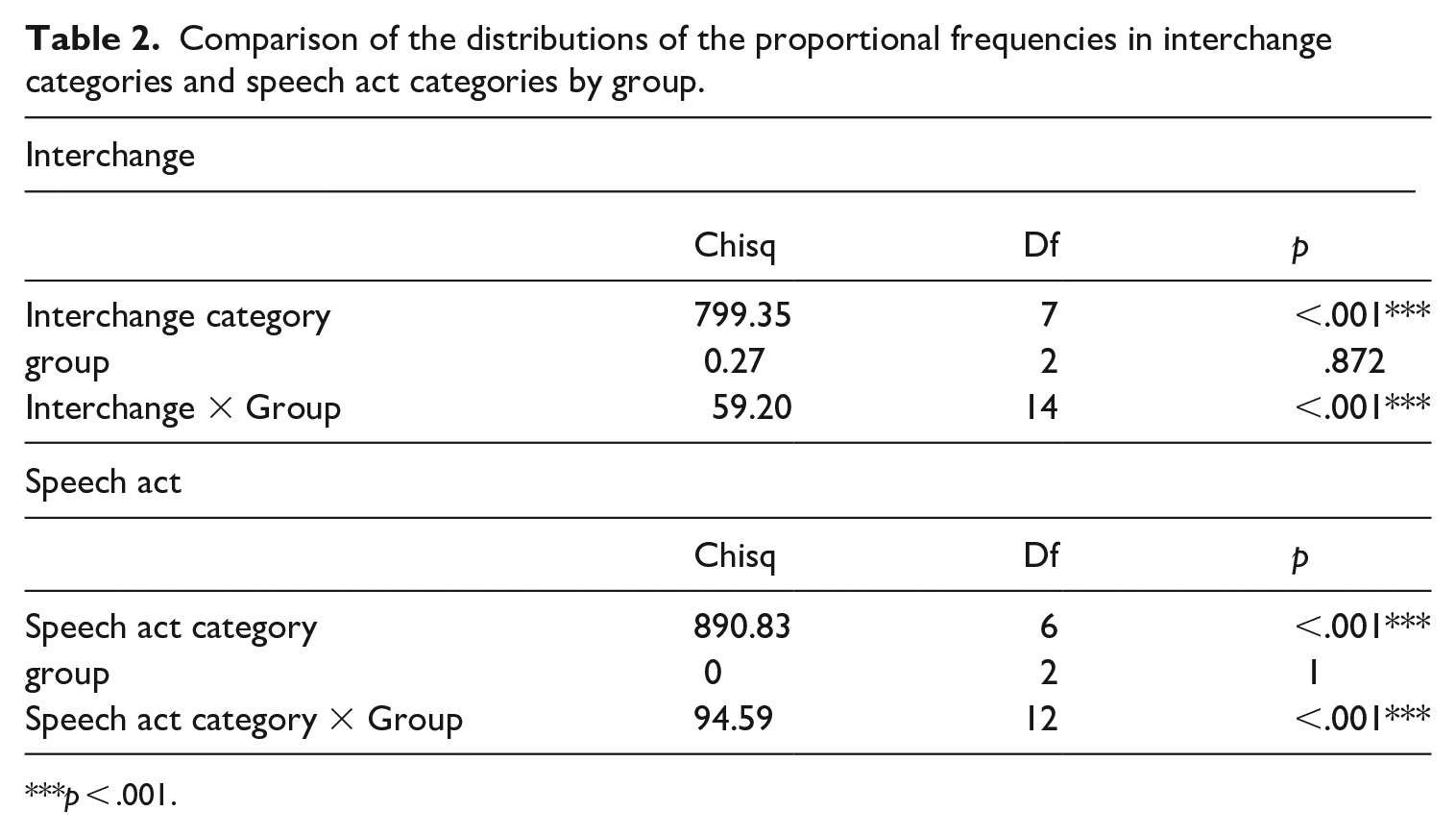
Analysing communicative function using a fine-grained coding taxonomy such as INCA-A provides analytical challenges for two main reasons. First, a number of coding categories are quite specific and occur with relatively low frequency. A second issue concerning statistical analyses based on INCA-A relates to the multi-level nature of the system (i.e. the fact that each utterance is coded for both interchange and speech act). While the double coding is a strength of INCA-A in terms of describing communicative function, it results in a large number of different interchange and speech act combinations. To account for the first issue at the interchange level, we combined related low-frequency categories where possible, and we omitted any category with an average raw frequency of less than three counts from the analysis in cases where the categories could not be combined. Thus, the following amendments were made to the original INCA-A coding taxonomy, and the full set of categories used is displayed in Table 1 (please see Appendix 1 for the original version of the INCA-A coding taxonomy).
INCA-A codes used in the current study.
(i) Interchange level.
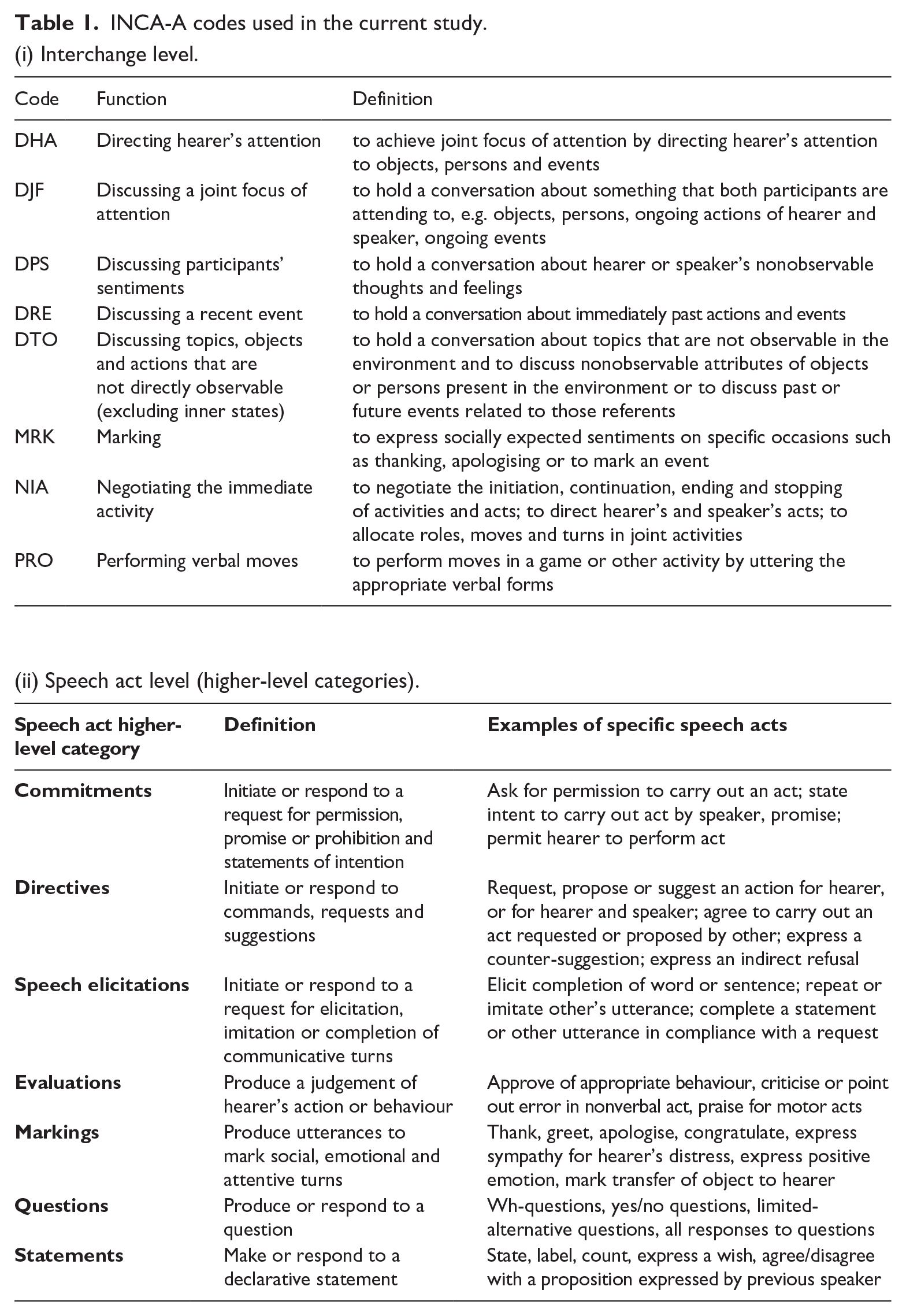
(ii) Speech act level (higher-level categories).
Amendments to original INCA-A coding taxonomy (interchange level)
Two new categories were created:
Discussing Hearer’s Sentiments (DHS) and Discussing Speaker’s Sentiments (DSS) were combined into a new category
Discussing the Non-present (DNP), Discussing the Fantasy World (DFW) and Discussing the Related-to-Present (DRP) were combined into
Low-frequency interchange categories were excluded:
The following categories were removed from the analysis: comforting (CMO), discussing clarification of action (DCA), discussing clarification of communication (DCC), negotiating an activity in the future (NFA), noninteractive speech (NIN), negotiating possession of objects (PSS), showing attentiveness (SAT) and reading written text (TXT). In addition, negotiate mutual attention (NMA) was combined with the established INCA-A category of marking (MRK) due to issues with reliability of code use. Unintelligible (OOO) and uninterpretable (YYY) utterances were omitted since by definition their function could not be ascertained.
In order to conduct statistical analysis at the speech act level, we used the higher-level INCA-A categories shown in Table 1 (i.e. Directives, Questions, Statements) as opposed to category-internal codes of which there were 67 different types. For example, both ‘Okay, have it your way’ and ‘Put that down’ would both be coded at the INCA-A higher-level speech act category of Directive as opposed to the finer-grained speech act categories of Give in; accept other’s insistence or refusal (INCA-A code ‘GI’) and Request, propose or suggest an action for hearer or for hearer and speaker (INCA-A code ‘RP’), respectively (see Appendix 1 for full list of INCA-A speech act codes). The use of higher-level INCA-A speech act categories means that both initiations and response speech acts are combined within each category (e.g. Wh-Question and Answers to Wh-question were both counted as instances of the Question speech act category). The data for the current study involved interaction with prelinguistic infants, and consequently the speech acts produced by the caregiver were overwhelmingly (if not exclusively) linguistic initiations rather than responses to infant linguistic turns.
Exclusion of low-frequency speech act categories
Declarations, Performances and Text editing were excluded due to low frequency (average raw frequency less than 3), and Vocalisations were excluded since they constituted utterances without a clear function or form.
We approached the second analytic issue (i.e. the high volume of interchange:speech act combinations) by limiting our interchange:speech act unit analysis to the five most frequently used combinations for each of the three groups as opposed to including all attested combinations.
Reliability coding was conducted on 20% of the data by three trained coders and signalled moderate levels of reliability at the interchange level (K = .77) and strong reliability at the speech act level (K = .83). For reference, the frequencies of all original INCA-A categories identified in the original data sample are provided in the Appendix 1 (Tables 3 and 4).
Results
Statistical analysis was conducted in R (R Core Team, 2022), with the ‘glm’ function, the ‘Anova’ function from the ‘car’ package and the ‘pairwise.wilcox.test’ function. In the following section, we provide descriptive and inferential statistical analysis at the interchange and speech act levels and descriptive analysis at the interchange and speech act combination level.
Analysis 1: comparison of interchange categories across groups
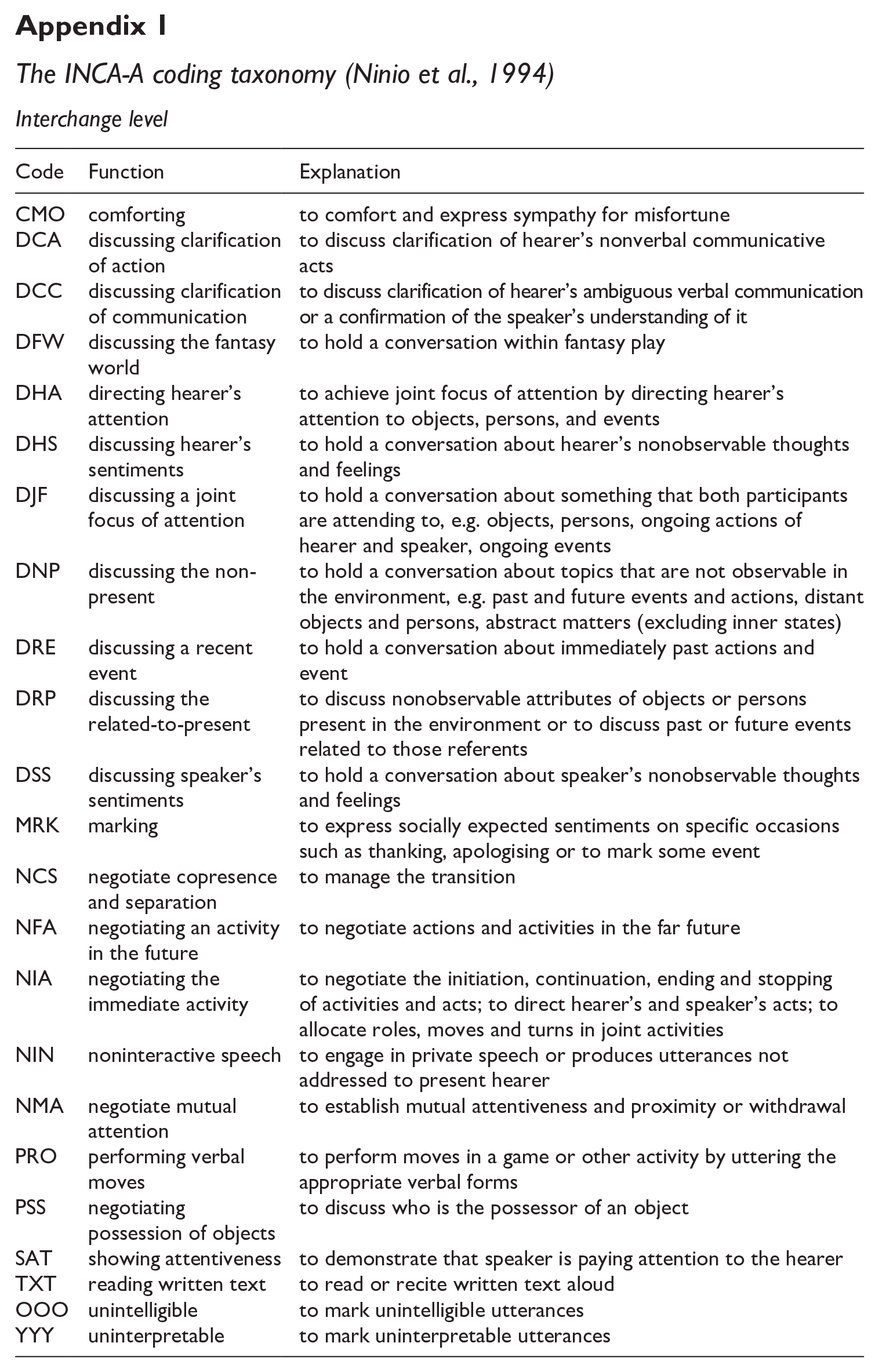
The proportional frequency data were analysed with a quasi-binomial generalised linear model with the logit-link function. Interchange category, group and the interaction between interchange category and group were entered as predictors. The full model output is summarised in Table 5 in Appendix 1. Statistical significance of the fixed effects is summarised in Table 2.
Comparison of the distributions of the proportional frequencies in interchange categories and speech act categories by group.
p < .001.
The main effect of interchange category suggested that there were differences in the frequencies of the interchange categories across the three heritage groups. Specifically, Negotiating the Immediate Activity (NIA) was the most frequently used interchange function across all three groups, with Discussing Joint Focus (DJF) and Directing the Hearer’s Attention (DHA) being highly frequently used categories in all groups. DPS, Discussing Recent Events (DRE), Markings (MRK), Discussing topics, objects and actions that are not directly observable (DTO) and Performing Verbal Moves (PRO) were produced in all three groups but with much lower frequency than the ‘here and now’ interchange types (i.e. NIA, DJF, DHA).
The interaction between interchange category and group suggested that caregivers from the three heritage groups showed different distributions of frequencies across interchange categories. Post hoc pairwise comparisons were followed up, and p values were corrected with False Discovery Rate using the Benjamini–Hochberg method (Benjamini & Hochberg, 1995). p Values are marked in Figure 1 and are shown in Table 7 in the Appendix 1.
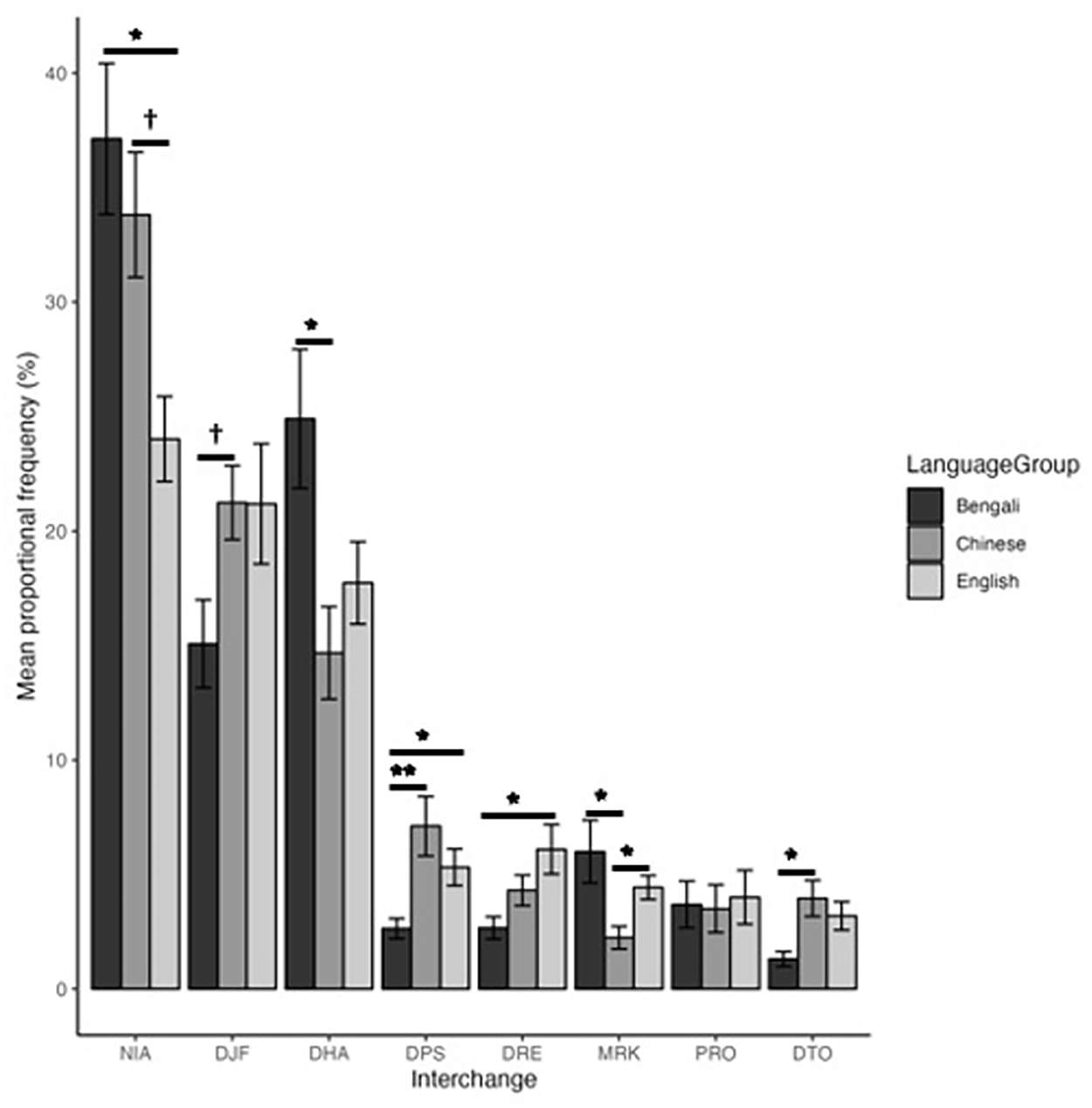
Proportional Frequency of Maternal Interchange Categories Across Groups.
Although Negotiating Immediate Activity (NIA) was produced with the highest frequency for all groups, the proportional frequency was highest among the Bengali and Chinese caregiver groups and the lowest among the English caregiver group. The Bengali caregiver group displayed the highest frequency of DHA and MRK, and the Chinese caregiver group displayed the lowest frequency. In the case of DRE, a higher proportion was found in the English group than in the Bengali group. For DPS and DTO, the Chinese and English caregiver groups had a higher proportional frequency than the Bengali group. Interestingly, marginally significant differences were found within the proportional frequency of DJF (p = .055), which occurred with a moderate degree of frequency in all groups.
To summarise, the group differences appear to point to a greater proportional frequency of the more regulatory types of interchanges (i.e. NIA, DHA and MRK) for the Bengali caregiver group. Proportional frequency of the ‘prototypical’ form of caregiver-child referential speech, namely DJF, was produced with similar levels of proportional frequency across the groups, but group differences were found in other referential categories namely DRE, DPS and DTO, with the English caregiver group and Chinese caregiver group showing higher proportional frequencies. It should be noted that interchange categories relate to the general context of a communicative exchange, that is, the type of talk and interaction engaged in by caregiver and infant, as opposed to a specific move within the interaction. With this in mind, we now turn to the speech act–level analysis.
Analysis 2: comparison of speech act categories across groups
The proportional frequency data were analysed with a quasi-binomial generalised linear model with the logit-link function. Speech act category, language group and the interaction between the speech act category and language group were entered as predictors. The full model output is summarised in Table 6 in the Appendix 1. Statistical significance of the fixed effects is summarised in Table 2.
The main effect of speech act category reflected the patterns of frequency found in the interchange analysis; namely that particular speech acts (i.e. Directives, Questions, Statements and Markings) were produced with higher frequency within all three of the groups, while Commitments, Evaluations and Elicitations were produced with lower frequencies across the three groups.
The interaction between speech act category and group suggested that caregivers from the three groups showed different distributions of frequencies across speech act categories. Post hoc pairwise comparisons were followed up, and p values were corrected with False Discovery Rate using the Benjamini–Hochberg method (Benjamini & Hochberg, 1995). p Values are marked in Figure 2 and are shown in Table 7 in the Appendix 1.
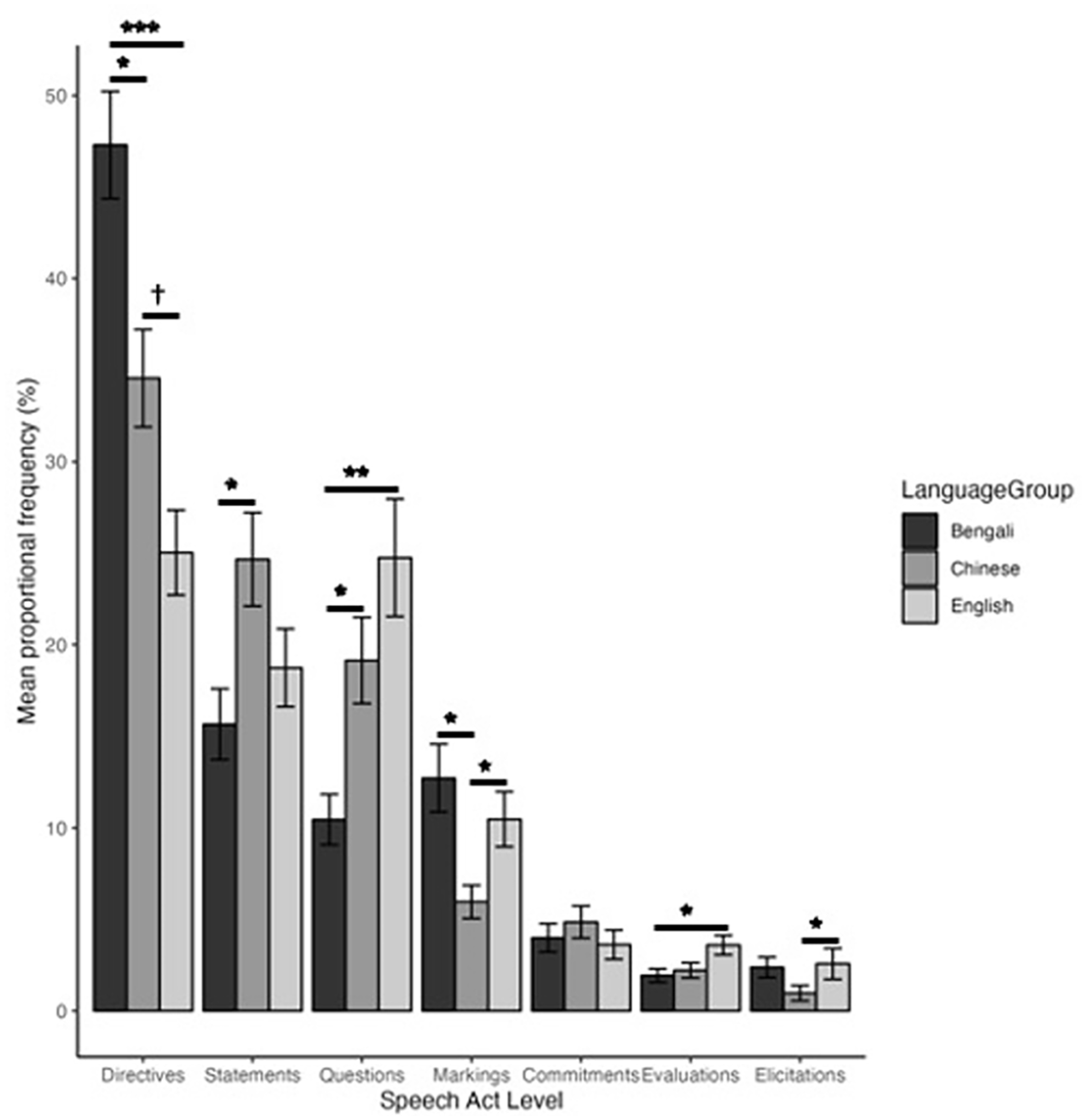
Proportional Frequency of Maternal Speech Act Categories Across Groups.
The highest proportional frequency of Directives was found in the Bengali group, and the lowest proportional frequency was found in the English group. A significant difference was found between the Chinese caregiver group and the Bengali caregiver group in terms of Statements proportional frequency, with the former displaying higher frequency than the latter. The highest proportional frequency of Questions was found in the English and the Chinese groups, and the lowest proportional frequency was found in the Bengali group. The higher proportional frequency of Markings was found in the Bengali and the English groups, with the lowest proportional frequency in the Chinese group. The English caregiver group displayed significantly higher proportional frequency of Evaluations and Elicitations than the Bengali and Chinese caregiver groups.
In summary, the Bengali caregiver group showed higher proportional frequency of Directives and Markings; the Chinese caregiver group showed higher proportional frequency of Statements and the English caregiver group showed higher proportional frequency of Questions, Evaluations and Elicitations.
Analysis 3: comparison of interchange and speech act combinations across groups
In our third analysis, we focussed on the five most frequently used Interchange and Speech Act combinations (see Figure 3). Given the extensive range of combinations, it was not possible to conduct meaningful statistical analyses on the combinations. Instead, we present the proportional frequencies for each group focussing specifically on the two most frequent Interchange & Speech Act combinations used within each group.
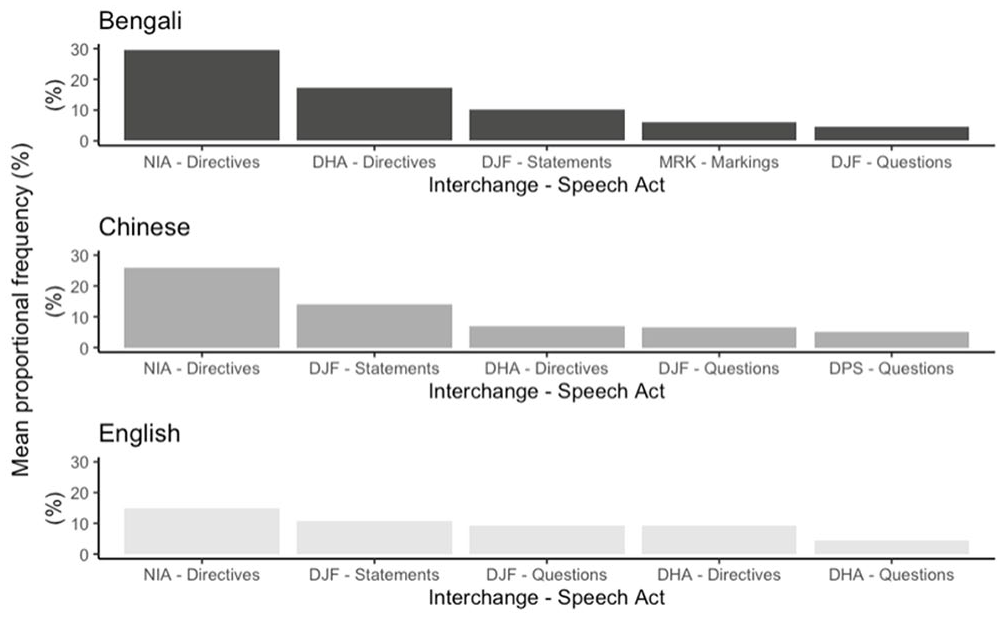
Proportional Frequency of the Five Most Frequent Interchange: Speech Act Combinations in Each Group.
In all three groups, the production of Directives within the interchange NIA occurred with the highest proportional frequency accounting for 14.68% (English caregiver group) to 29.38% (Bengali caregiver group) of all utterances. Examples 2a-c provide instances of the NIA:Directive combination from each language group:
2a. Participant B4 (Bengali caregiver group): The infant is exploring the press button car key toy. The caregiver takes the toy to demonstrate how the button makes a noise and encourages the infant to press the button too. *MOT: Amake koro. Do it with me. 2b. Participant E1 (English caregiver group): The infant holds and explores a teddy-shaped rattle toy. The caregiver looks to infant and the toy and prompts the infant to shake the teddy rattle. *MOT: You can shake teddy. 2c. Participant C20 (Chinese caregiver group): The infant is trying to pull a set of stacking cups apart. The caregiver puts out her hand towards the child and prompts the infant to pass her the cups in order to assist. *MOT: 給媽媽. Give it to Mummy.
In both the Chinese group and the English group, Statements produced by caregivers within the DJF interchange were the second most frequent category (13.84% and 10.68%, respectively). Examples 3a-c provide instances of DJF:Statement from each of the three groups
3a. Participant E1 (English caregiver group): The infant smiles at the caregiver while holding a balloon and moving it up and down. The caregiver smiles while watching, and comments on the object: *MOT: Bouncy ball. 3b. Participant B4 (Bengali caregiver group): The infant is holding and exploring a toy which comes apart. The caregiver takes one part of the toy:
*MOT: Ei, baar hoyeche.
Hey, it’s come out finally. 3c. Participant C20 (Chinese caregiver group): The infant is trying to put stacking cups together. The caregiver is watching and comments:
*MOT: 那個太小啦.
This one is too small.
The Bengali caregiver group produced Directives within the DHA interchange as the second most frequently occurring combination (17.12%). Examples 4a-c provide instances of DHA:Directives from each of the three groups
4a. Participant C20 (Chinese caregiver group): The caregiver is holding a set of stacking cups and points to the toy giraffe for the attention of the infant.
*MOT: 你看
You look at that. 4b. Participant B4 (Bengali caregiver group): The infant is playing with two stacking cups. The caregiver manipulates a different toy and holds it up in the child’s view. *MOT: Ei dekh. Look here. 4c. Participant E1 (English caregiver group): The infant is crawling to the door. The caregiver attempts to re-engage the infant with the toys in the middle of the room. *MOT: Look.
Together, the first two combinations account for 46.5% of the Bengali caregiver group, 39.71% of the Chinese caregiver group and 25.36% of the English caregiver group, indicating that differences in the dominance of particular combinations is attested in the sample as well as differences in the type of combinations used.
Discussion
The study provides a detailed account of the functional nature of caregiver speech to prelinguistic infants from three distinct cultural groups in the United Kingdom. The findings indicate that during a naturalistic free play context, caregivers from all three groups used a wide variety of communicative acts when interacting with their infants ranging from directives to discussions of inner thoughts and feelings. This provides an important insight into the complexity and diversity of the communicative functions expressed by caregivers during interaction. Second, the results are suggestive of cultural differences in the frequency with which some of these communicative functions are used. In the following section, we discuss these findings and draw out their implications for our understanding of caregiver-infant interaction.
From a functional perspective, caregiver speech is commonly claimed to be focussed on the current action and observable objects (e.g. Snow & Ferguson, 1977). An emphasis on the ‘here and now’ is important from a language-development perspective since the caregiver’s speech can be mapped onto events and objects in the immediate environment with lesscognitive effort expended by the infant (e.g. Shatz, 1979; Tomasello & Farrar, 1986). In the current analyses, interchange types with a strong ‘here and now’ focus (e.g. Discussion of Joint Focus; Negotiating the Immediate Activity) were the most frequently expressed categories across all three groups. In fact, many of the interactions took the form of running commentaries on infant action as illustrated by example (5).
5. Participant E1 (English caregiver group): The infant and caregiver are sat opposite each other with the toys in between them. The infant explores a set of stacking cups. The caregiver watches and provides the following commentary: *MOT: What’s that?
*MOT: You clever girl. *MOT: Stacking cups. *MOT: Are you taking them out?
Caregivers from all three groups displayed a preference for ‘here-and-now’ communicative functions, and these interchange types accounted for a large proportion of the caregivers’ speech. These types of communicative bouts provided infants with accessible and, in many cases, embodied exemplars of how their language maps on to the world around them.
However, the functional analysis afforded by the use of INCA-A clearly demonstrates that caregivers, even with very young infants, during a relatively mundane activity, used a range of functions that go beyond the here and now. Caregivers discussed their infants’ thoughts and feelings, praised their behaviours and engaged in fantasy/pretend play even before their first birthday. The development of mental state verbs and concepts is a central component of language development, which links to a range of later-developing cognitive abilities such as theory of mind development and self-regulation (Binns et al., 2019; De Villiers & de Villiers, 2014). The results of the current study show that the infants are engaged in linguistic interactions regarding their thoughts and feelings from early in development. Furthermore, interactions involving consideration of inner thoughts and feelings and also (rudimentary) pretend play may expose infants to forms of interaction which focus on abstract topics and thereby provide support for the claim that even abstract concepts and meaning can potentially be learned through interaction (e.g. Borghi, 2020). To summarise, the inclusive but fine-grained nature of the INCA-A coding taxonomy affords a more detailed and informative representation of communicative function than the traditional referential/regulatory distinction and highlights the presence of specific communicative functions of relevance to a range of cognitive and conceptual domains.
Turning now to differences between our three groups, we found that even in this relatively structured task, there was evidence of differences between the three groups at the interchange level, the speech act level and in terms of interchange-speech act units. The findings indicate that the functional nature of the caregiver-interactions, that is, the specific forms of linguistic action taken by the caregivers, also varied between groups. This is particularly interesting given the fact that the task (free play) and objects (basic toys) were the same for all groups. In addition, the group differences in caregiver talk from a communicative function perspective are in contrast to the analysis of quantity of speech, amount of contingent talk reported in Cameron-Faulkner et al. (2021) in which no group differences were found. Together, these two points underline the importance of incorporating a functional dimension into any analysis of caregiver talk and also to take seriously the notion of group differences at the cultural level in multicultural contexts.
Analysis of communicative intent is complex both in terms of coding taxonomies and analyses. In the current study, we aimed to provide a systematic, detailed analysis of communicative function in three culturally distinct groups. The study comes with limitations. First, the sample size is relatively small. Even though our analysis is based on a large amount of naturalistic data (60 minutes of recording for each of the caregiver-infant pairs), the sample consisted of only 20 caregiver-infant dyads per group. Furthermore, our attempt to standardise the task comes at the expense of ecological validity; that is, our analysis does not capture the everyday patterns of our participants, and we recognise that engaging with our 20-minute structured play tasks may have been more familiar to some families than others. We also have avoided proposing potential explanations for the attested variation across groups, which at best would be speculative and at worst play to cultural generalisations and stereotypes. Our study aimed to document similarities and differences in three UK-based cultural groups with different heritages. We believe this is an important first step as we cannot address the ‘why’ question of cultural differences before establishing the ‘what’ question. Future work, ideally conducted through participatory multi-methods approaches between researchers and families from target communities, is essential in providing explanatory models of how cultural heritage shapes caregiver-infant interaction and the ways in which we as researchers and practitioners can support and promote cultural diversity within multicultural communities.
Footnotes
Appendix 1
Funding
The author(s) disclosed receipt of the following financial support for the research, authorship and/or publication of this article: Chen Zhao, Ludovica Serratrice, Elena Lieven and Thea Cameron-Faulkner are members of the International Centre for Language and Communicative Development (LuCiD), for which they gratefully acknowledge the support of the Economic and Social Research Council (ES/L008955/1 and ES/S007113/1). Further support for the project was provided by the European Union’s Horizon 2020 programme under grant agreement number 952324. The authors sincerely thank the families who kindly participated in this study. Finally, we most gratefully acknowledge the time and expertise provided by the two anonymous reviewers and the editors in the reviewing of the paper.
