




Abstract
This study deals with speech acts addressed to Hadza infants in Tanzania, a group that has traditionally lived off hunting and gathering. Three research questions are addressed: How do Hadza speech acts compare with those found in previous studies in other cultures? Are there differences between child and adult speakers? And do speech acts differ with camp livelihood patterns? Speech acts are seen as a part of language socialization, which reflects overarching cultural values and socialization goals. The results indicate that Hadza infants experience many requests for action/imperatives—a way of expressing hierarchies—more than the infants in the comparative cultural communities, in spite of the fact that hunter–gatherers have been described as egalitarian in the past. Children’s and adults’ speech acts differ in several ways: adults use more requests for action and information (questions) with infants, while children use more assertives. Finally, the comparison of camp livelihoods revealed differences mainly between camps living off tourism and those that are more isolated from outside influence. The former use more imperatives, the latter more vocatives. The results are discussed in terms of cultural change toward more hierarchical structure related to livelihood activities, particularly tourism, and different activities that children and adults engage in when interacting with infants.
Introduction
Infants learn to use language in their daily environment by hearing others speak and by starting to participate in verbal interactions. Language socialization describes how communities socialize infants through language and create contexts that enable infants to acquire language (Ochs, 1986). These interactions also transport ‘principles of social order and systems of belief (ethnotheories)’ to the infant (Ochs, 1986, p. 2). Thereby, infants not only learn to speak, but also acquire information about how to use language in meaningful ways, and more generally about the social world in which they live (Ochs, 1986). In ‘Western’ cultures, the amount and type of language a child hears seems to be an important factor in shaping the speed of language acquisition and the diversity of the language an infant learns (see Brown & Gaskins, 2014, for a discussion). However, the amount and type of speech addressed to infants has been shown to differ between different human societies (e.g. Brown, 2011; Harkness, 1990; Schieffelin & Ochs, 1986). In some societies, infants are addressed frequently and caregivers use a specific style of talking and interacting. In other communities, infants are rarely addressed directly, but are part of multiparty conversations (Lieven, 1994; Mavoa et al., 2003; Ochs & Schieffelin, 1984; Rabain-Jamin, 2001).
Speech act theory is one way of approaching language use (Austin, 1962). Besides other approaches, speech acts can also be used to describe differences in early language socialization (e.g. Rabain-Jamin, 2001). One aspect of speech acts that has been studied in relation to language socialization is their ‘illocutionary’ aspect, which describes the pragmatic intention of the speaker when communicating. Nine primitive speech acts have been described for children (Dore, 1975). When analyzing interactional partners’ speech addressed to infants, three categories have been assessed consistently (Harkness, 1977; Mavoa et al., 2003; Rabain-Jamin, 2001), namely, requests for information (labeled questions by some authors), assertives (also labeled statements or comments), and requests for actions (also labeled imperatives, commands or prescriptives). These three types of speech acts are chosen as a focus here because they have been shown to differ across cultures and they can be assumed to be related to more general cultural preferences and child-rearing strategies, particularly the endorsement of a hierarchical versus an egalitarian social structure. Moreover, they have been related to differences in infants’ language acquisition. A fourth category, vocatives, is included because infants in some cultural communities hear their own name frequently and the psychological effects of this are still unknown.
Requests for information and assertives
European children are more frequently addressed with questions than children from other cultural communities (Mavoa et al., 2003; Rabain-Jamin & Sabeau-Jouannet, 1997; Schröder et al., 2013). Infants in these communities are expected to participate as quasi-equal conversational partners in interactions with their caregivers from early on (Keller, 2007), and are expected to participate in conversations both by answering these questions and asking questions of their own (Mavoa et al., 2003). Assertives can be answers to these requests for information. They can also be used in an elaborative style of talking when describing the world, a style which is more common with European children than children from other cultural communities (Schröder et al., 2013; Wang, 2001).
Requests for actions
In other cultural communities, for instance, in farming families in sub-Saharan Africa, children are expected to adhere to hierarchical interaction norms (Keller, 2007). They are expected to acquire an early action autonomy, for instance, to foster their ability to help with chores (Keller, 2012), and are correspondingly frequently addressed with imperatives or requests for actions (Harkness, 1977; Rabain-Jamin, 2001; Rabain-Jamin & Sabeau-Jouannet, 1997; Vogt et al., 2015). A community whose speech acts toward children have been studied in the past are the Wolof (Rabain-Jamin, 2001; Rabain-Jamin & Sabeau-Jouannet, 1997). Rural Wolof live predominantly as farmers in Senegal and Gambia and their social structure is hierarchical (Gamble et al., 1985; Rabain-Jamin et al., 2003). Therefore, they can be considered as representative of the language socialization pattern described above. Although the use of imperatives has sometimes been related to an impeded language development in the child (Newport et al., 1977), this evaluation is not shared universally. The effect of imperatives seems to depend on the infants’ language proficiency and the way in which they are used, with children just learning language profiting from the use of imperatives (Akhtar et al., 1991; Barnes et al., 1983). Additionally, requests for actions permit infants to participate more fully in interactions, for example, their older peers’ games (Maynard, 2002; Rabain-Jamin, 2001).
Vocatives
Another aspect of the speech addressed to infants are vocatives; the way an interactional partner is addressed. It has been suggested that their own names are ‘among the first and most frequent words’ infants hear and recognize (Mandel et al., 1995, p. 314). The main functions of vocatives include summoning attention, addressee identification (i.e. distinguishing the intended recipient from others), and to establish or maintain a social relationship (Leech, 1999). A different function has been discussed by Leech (1999) with the following example: a parent calling ‘Egon!’ in protest, implying: turn down the music!. In this case, the vocative is actually a complaint and a request for action.
Furthermore, in developmental psychology knowing one’s own name has been seen in the context of self-recognition (Bertenthal & Fischer, 1978; Bullock & Lütkenhaus, 1990), although these do not necessarily emerge at the same time (Bullock & Lütkenhaus, 1990; Harter, 1983). There is some debate on this association, for instance, from a comparative perspective (Bard et al., 2006; Gallup, 1982), however, mentioning one’s name when faced with a mirror is still widely used as an indicator of self-recognition (see Bard et al., 2006 for an overview). It has been argued that it is possible that children merely learn to associate their name with their mirror image without true self-recognition (Gallup, 1982). In the absence of mirrors such as in the Hadza infants’ environment, this may be less of a concern. Considering their frequency, vocatives can be considered an understudied aspect of speech addressed to infants. While this study will not be able to address the question of the function or functions of vocatives, we include them to assess the relative frequency with which they are used by Hadza speakers toward infants.
While studies have been done on many different communities throughout the world, the language socialization of hunter–gatherers has rarely been studied. In addition to contributing to a desired diversity of studied cultural communities, from an evolutionary point of view, hunter–gatherers provide insight into interactional settings that may have been similar to those of our ancestors (Marlowe, 2010). The Hadza have long lived as hunter–gatherers close to Lake Eyasi in Northern Tanzania and are one of the least culturally complex societies in the world, even when compared with other hunter–gatherer societies (Marlowe, 2010). They have been described thus because they use very basic tools, have hardly any religious beliefs and few taboos, and little specialization in terms of tasks or skills, besides by gender (Marlowe, 2010). Hunter–gatherer societies have frequently been characterized as egalitarian. For instance, it has been reported that hunter–gatherer infants receive little direct instruction (Boyette, 2016; Hewlett et al., 2011; Marlowe, 2010), and this has been seen as a way to foster children’s autonomy (Lew-Levy et al., 2017). For this reason, hunter–gatherers can be expected to use fewer requests for actions with their children than farming communities, which are generally much more hierarchical. However, recent research on hunter–gatherers has also shown that teaching strategies are present in caregiver–child interactions (Hewlett & Roulette, 2016), and that instructions are used to promote sharing (Boyette, 2016; Lew-Levy et al., 2017). In addition, when foragers settle, an increase in direct instructions for subsistence-related activities can be observed (Lew-Levy et al., 2017).
Hadza infants, like infants of other hunter–gatherer communities (Tronick et al., 1992), spend time with many caregivers, often in close body contact (Marlowe, 2010). As infants grow older, other children seem to become particularly important interactional partners (Boyette, 2016; Crittenden & Marlowe, 2008; Hewlett, 1991; Lew-Levy et al., 2017). In other sub-Saharan communities, speakers of different ages have been shown to use different proportions of speech acts when interacting with infants. When compared with mothers, Kokwet children used fewer questions, but more statements when addressing infants (Harkness, 1977). In Wolof children, an age effect has been observed (Rabain-Jamin, 2001): 3–5-year-old siblings used many requests for actions and few requests for information, while older children used more questions. Considering the importance of other children as interactional partners and potentially teachers (Boyette, 2016; Hewlett, 1991; Lew-Levy et al., 2017), it seems important to consider differences in how adults and children interact with Hadza infants.
Recent changes in livelihood have been observed in present-day Hadza camps, the beginnings of which were first observed over 15 years ago (Marlowe, 2002). While camps used to be very mobile to follow seasonal changes in availability of food (Marlowe, 2010), this is not the case to the same extent anymore. Game and resources related to tree and plant growth have become scarce; for instance, by the expansion of farm and grazing land used by the neighboring tribes. Many families receive financial support from the government and contact with neighboring farming and herding tribes is frequent. While some camps are still somewhat isolated and retain some of their old livelihood activities, others have developed new strategies, or are struggling and seem in transition. Some camps have started raising poultry and gardening. Farming introduces an element of long-term planning that was not characteristic of the traditional Hadza lifestyle (Marlowe, 2010; Woodburn, 1982) and undermines egalitarianism and sharing (Woodburn, 1982).
Other camps are regularly visited by tourists who pay money for their visits and souvenirs (Yatsuka, 2015). Besides enabling people to buy food, clothes, alcohol, and other products available in the market (Yatsuka, 2015), hierarchies also develop through these contacts (Marlowe, 2010). In addition, money undermines the previous Hadza norm of sharing on demand (Marlowe, 2010), because money can be hidden much more easily than food. Introducing a more market-oriented economy has been described as leading to pervasive cultural changes in other cultural communities as well (Greenfield, 2016).
An increase in direct instruction has been observed when foragers settle (Lew-Levy et al., 2017). Considering this, caregivers in camps involved in more market-oriented activities can be expected to use more imperatives with their infants. As Hadza livelihoods have started to diverge so dramatically, speakers from different camps are assumed to differ. Specifically, speakers in camps involved regularly in tourism should use more requests for actions than Hadza who live a comparatively more isolated life. Speakers living in camps involved in farming or those who are transitional (i.e. who have reduced hunting and particularly gathering, but do not have a clearly distinguishable new livelihood pattern) probably fall in between speakers from tourism camps and isolated camps. This is assumed because of increased contact with the market economy compared with the isolated Hadza and other changes in lifestyle, but less regular contact with money and outsiders than the Hadza in tourism camps.
Based on these aspects, we address the following research questions in this study:
How do Hadza speech acts compare with those found in previous studies in other cultures? Are hunter–gatherer child-rearing ideals reflected in caregivers’ speech acts?
Are there differences between children’s and adults’ speech acts?
Do speech acts differ with camp livelihood?
Methods
Families with infants aged approximately between 6 and 27 months were visited in their camps. The study was introduced to the members of the camp by the researcher and a local assistant, who was either familiar with the camp through charitable work there or herself a Hadza. If the members of the camp agreed to participate in the study, the camp was visited several times before interactions were video-recorded. The study was carried out following the guidelines and with approval of the Tilburg School of Humanities Research Ethics Committee, the European Commission, the Tanzania Commission of Science and Technology, and the Tanzanian National Health Research Ethics Committee.
Participants
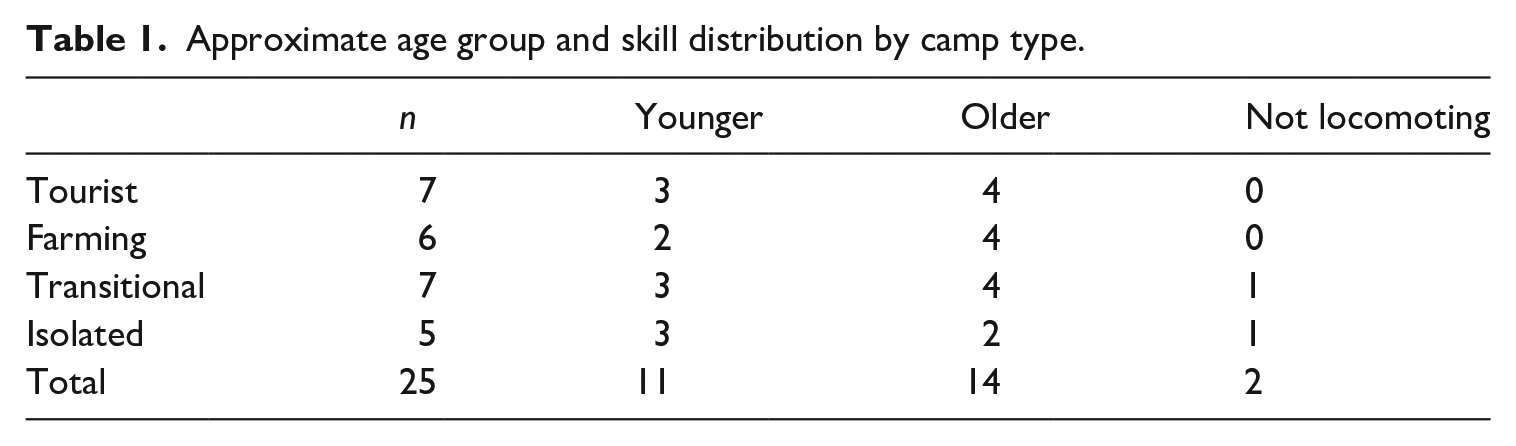
Twenty-five infants (10 females and 15 males) participated in the study. Members of the camps were asked to identify children who could ‘not speak’. However, during the observations, it became apparent that caregivers included some children who were verbal. Their ages were approximately between 6 and 27 months. Ages were assessed by asking caregivers and community members about infants’ birthdates. As these were often unknown or doubtful, important events, time of the year (rainy or dry season) and/or seasonally available foods at the time the child was born were assessed to help in estimating the participating infants’ ages. In addition, caregivers were asked to judge their own child’s age in comparison with others, so that an approximate age rank could be established. The different types of camps did not differ in the infants’ estimated age in months, the average age rank of the children studied or distribution in two (below or above 1 ½) or three different age groups. Almost all of the children could locomote, most by walking, some by crawling. The distribution in age groups and locomotion skills by camp type is depicted in Table 1.
Approximate age group and skill distribution by camp type.
Nineteen infants lived in the same camp as their mothers, five were with their grandmothers, and one with his father and a distant aunt. It should be noted that there is some mobility in Hadza camps, so that the primary caregivers and the location of infants may change. Overall, Hadza camps seem to move less than they have historically (Marlowe, 2010), probably due to new modes of subsistence. However, new camps are still established and people join or leave camps. The first author’s 1 impression was that generally primary caregivers chose a type of livelihood for themselves. While the primary caregiver may move between camps, they remain in the same type of camp. At other times, caregivers visited other camps, often because other family members lived there. They would then return to their own camp. Infants and their caregivers did not seem to be the most mobile demographic in the Hadza. During the fieldwork for this study, two cases were observed in which grandparents came to collect infants (and their mothers) from camps involved in tourism, presumably because they did not agree with the child-rearing arrangement there. In one case, data collection had been finished before the move, the other child dropped out. In two more cases, children were moved from tourism camps to their transitional ‘grandmothers’ for other reasons (one mother started a job in a city and the other child’s parents divorced and argued about the child’s custody). One child was observed before their move, the other after. Importantly, in the two latter cases, the caregivers remained in the same environment.
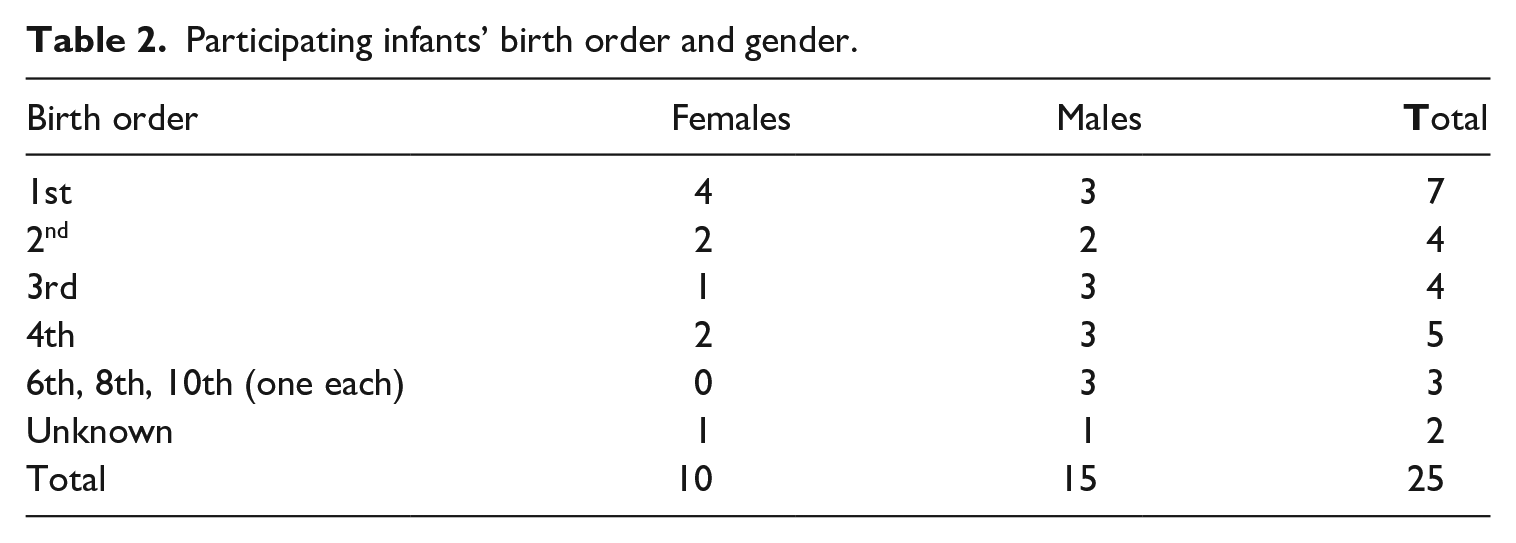
Except for one first-born girl, participating infants were their mother’s/caregiver’s youngest child, although at least two mothers were pregnant at the time of data collection. Children’s birth orders and gender are displayed in Table 2. The parents’ formal education is displayed in Table 3.
Participating infants’ birth order and gender.
Parents’ formal education.
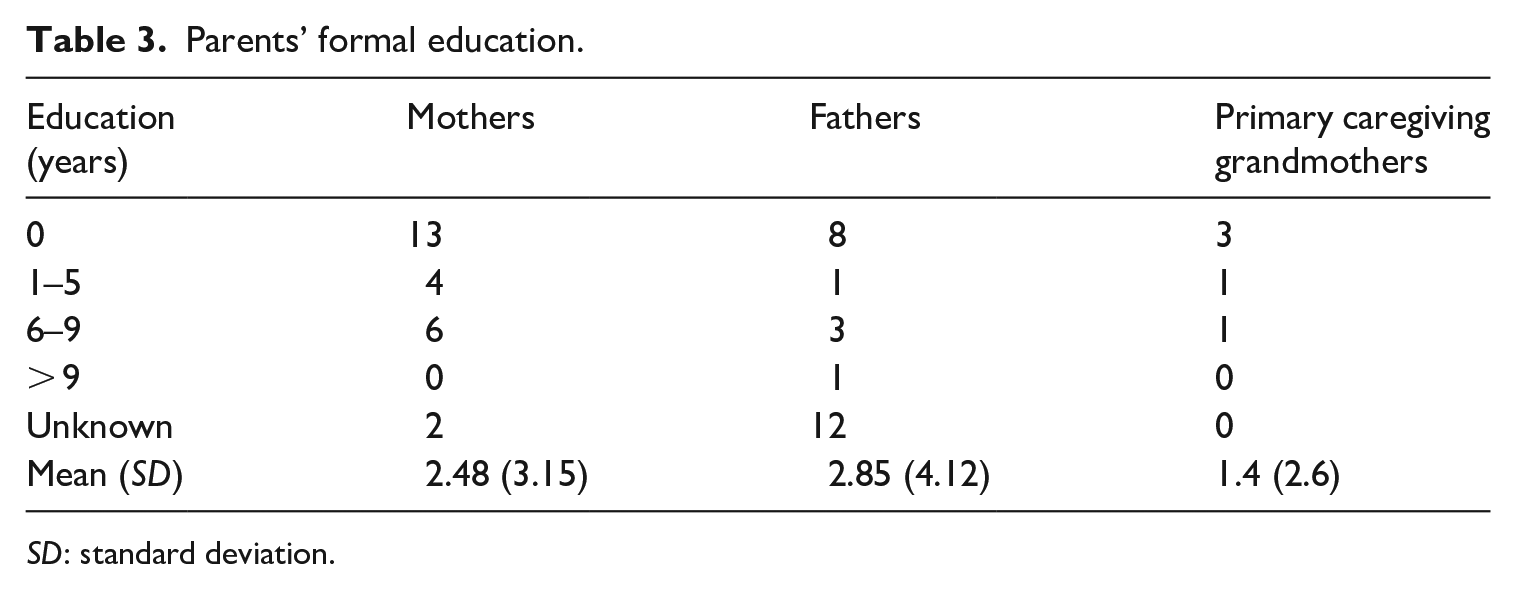
SD: standard deviation.
Procedure
The children were video-recorded in their typical surroundings, in or close-by the camp in which they were living at the time. No instructions were given for the video-recordings, with the aim of obtaining recordings that were as naturalistic as possible. Video-recordings are on average 113 minutes per child (range: 33–176 minutes). They typically include interactions with the primary caregiver and other children, and activities, such as playing and eating. When they are small, infants stay close to their primary caregivers while they work (e.g. producing bead jewelry). As they get older, they spend more time with other children. They can, and do, wander off freely, usually as a group, for instance, to a nearby cliff overhang or big tree close to the camp. A noteworthy difference between the isolated camps and the other camps was that in the isolated camp more children of varying ages were present. On the one hand the two families with the largest numbers of children in the sample resided in isolated camps. On the other hand, caregivers in the isolated camps seemed to choose to send their children to (boarding) school less frequently than in the less isolated other camps. Nevertheless, infants in all types of camps spent time with children exclusively and the percentage of speech acts addressed to the infants by children did not differ significantly across camps.
Commercially made toys are extremely rare in all types of camps, but sometimes, toy bows or huts are made out of sticks (both observed in transitional camps). Hadza children have already been observed playing with toy bows or huts earlier (Crittenden, 2016), and these toys are therefore not assumed to be a modern influence in Hadza children’s lives. In one (farming) camp, a mother was also observed to make a rag doll for a child. While it may be novel to make a rag doll, dolls made of mud or baobab fruit have also been used by Hadza children before (Crittenden, 2016). Children’s games also sometimes include objects, such as pieces of wood or pebbles. These are used individually or by groups: for example, for pretend play (e.g. several children riding on a stick pretending they are on a motorbike). Children also sometimes play with beads or thorns used as tools by the women, or imitate subsistence activities, such as grinding baobab.
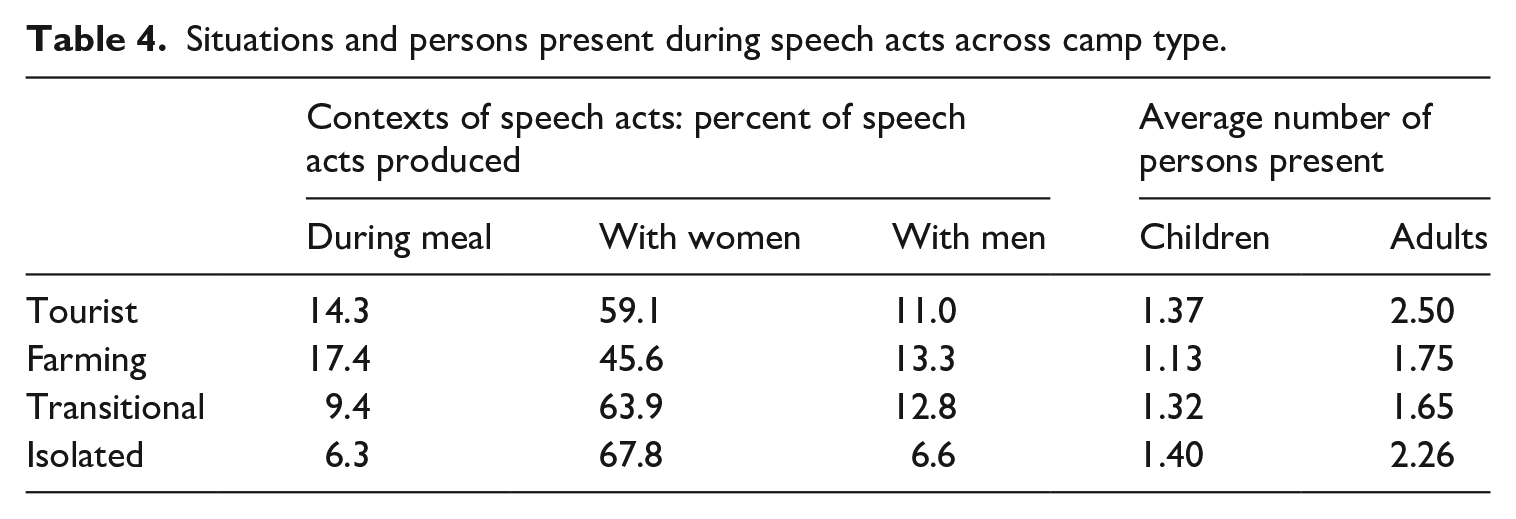
Eating is usually a communal event in all types of Hadza camps, in which everybody gathers around the food. Food is eaten by hand out of shared dishes. In larger camps, men, women, and children sometimes eat separately or in family groups. If a group of children eat on their own, there is often an older child who takes on the role of mediator to ensure that the food is distributed to everybody. Table 4 shows the percentage of speech acts addressed to infants in different settings, as well as the average number of children and adults visible on the videos during speech acts in the different camp types.
Situations and persons present during speech acts across camp type.
All the child-directed speech in the video material was transcribed into Hadzane by native speakers, who were supervised by the first author. The transcripts were then translated into English. Several transcriptions were made jointly by the first author and a native speaker to ensure the precision of the transcription and translation. The handwritten transcriptions were transferred into ELAN by the first author, who had also recorded the videos, and was therefore familiar with the recorded situations and persons present. Speech acts were coded as described by Rabain-Jamin (2001) as ‘Assertives,’ ‘Requests for Information,’ and ‘Requests for Action’. In addition ‘Vocatives’ (Van de Weijer, 1999) were coded. The speech acts were coded on the basis of their grammatical markers such as imperative verb forms and intonational contours for questions. All codeable speech acts addressed to the participating infants were included in the analysis. There were often multiple speakers in the videos, who were categorized into one of five person categories: primary caregiver; male or female child, or adult. Reliability was calculated for three random video transcriptions between the first and the last author and resulted in an overall Cohen’s kappa = .96.
Hadza camps were distinguished by some apparent characteristics that were observed during fieldwork. Tourist camps were defined as those that receive regular visits from tourists, at least several times a week, but sometimes as often as daily. Some camp sites seem to be chosen by the Hadza specifically to attract tourists. They are located off main roads but are nevertheless easily accessible by off-road vehicles and are sometimes distinguished by interesting landmarks such as large baobab trees or caves. The farming environment is characterized by the presence of poultry and/or gardening. The isolated environment is in a more remote location that is not as easily accessible to tourists. Although there is also interaction with members of other tribes and food items such as corn and spaghetti can be found here, Hadza living in this environment seem to be more involved in their traditional livelihood activities, such as hunting and collecting honey, or gathering fruit and tubers. The transitional camps are mainly located close to the village Mangola. They often follow mixed strategies. Some receive occasional visits from tourists, or individual members of the camp (usually grandmothers from the perspective of the participating infants) go to tourist camps to sell their bead work. The men usually go hunting, but often with limited success.
In the first analysis in the article, we aim to explore how Hadza infants’ language socialization compares to the European and sub-Saharan socialization described above. For this comparison, we utilize data previously published on speech acts addressed to Wolof and French infants (Rabain-Jamin, 2001; Rabain-Jamin & Sabeau-Jouannet, 1997). The French families in this study represent the European model of interacting with children, the Wolof incorporate the model of child-rearing described for sub-Saharan families above. The data used here are from five Wolof and four French infants of 4 months of age and seven Wolof infants of 21–24 months of age and their mothers (for details, see Rabain-Jamin, 2001; Rabain-Jamin & Sabeau-Jouannet, 1997). As the data in this study do not fulfill all the assumptions of analyses of variance (particularly that of normal distribution) and sample sizes are quite small, the data were analyzed with nonparametric tests.
Results
We begin the “Results” section with a table containing the frequencies per minute of each type of utterance by camp type and by infants’ age group (see Table 5). The difference between the sum of the individual speech acts and the total is due to utterances that were not codeable (e.g. because they were nonsensical or consisted of singing) and of utterances that were not fully audible (e.g. because of a windy environment). The younger age group contained infants approximately below 18 months of age, the older age group the ones older than 18 months, thereby containing the more mobile and verbal children. The speech acts addressed to children of different ages do not seem to differ, however. Only when looking at children talking to infants do we see that children produce more vocatives when talking with younger infants and more assertives when talking to the older infants (as depicted in Figure 1: mean percentages and SDs of speech acts addressed to infants of different ages by children).
Frequencies of different speech acts in the recorded material and length of the video recording by type of camp and infants’ age groups.
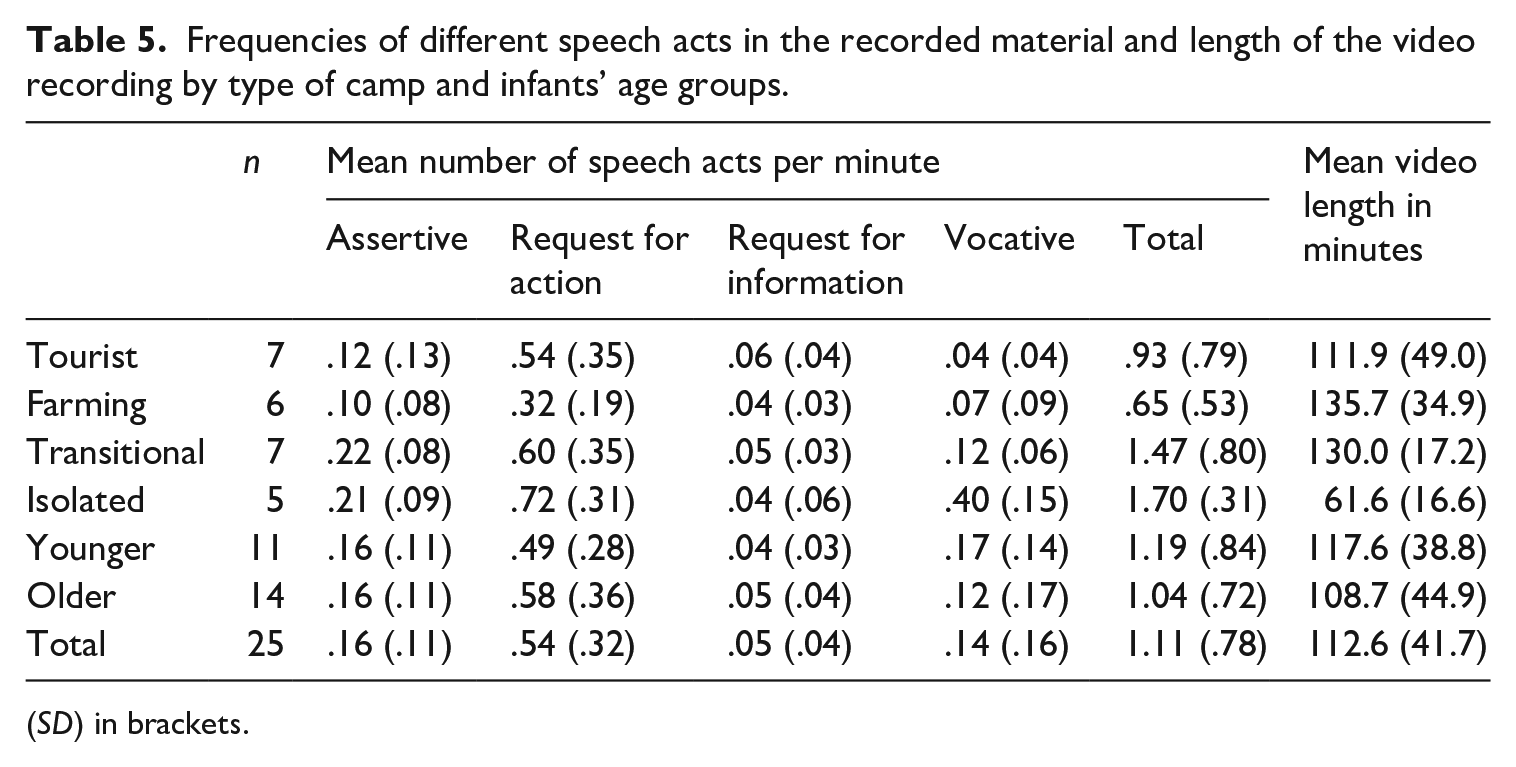
(SD) in brackets.
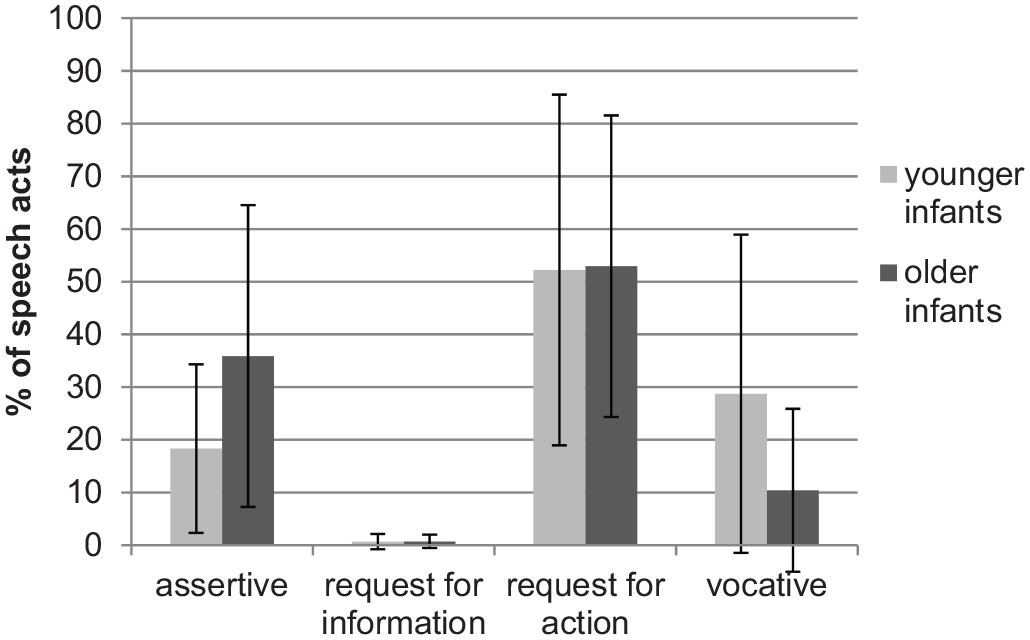
Mean Percentages and SDs of Speech Acts Addressed to Infants of Different Ages by Children.
RQ1. How do speech acts compare with those found in previous studies in other cultural communities?
To answer this question, Hadza primary caregivers’ speech acts were compared with speech acts produced by mothers of Wolof toddlers in Senegal (Rabain-Jamin, 2001) and mothers of French and Wolof babies in France (Rabain-Jamin & Sabeau-Jouannet, 1997). Our coding shares the codes ‘requests for information,’ ‘requests for actions,’ and ‘assertives’ with the previous studies. Therefore, proportions of these codes were calculated while other codes that were not shared across studies (e.g. the ‘vocatives’ included in our study but not included in the previous studies, or ‘expressives’ included by Rabain-Jamin (2001) but not in our study) were not included in the sum. The means and standard deviations for the four samples are depicted in Figure 2.
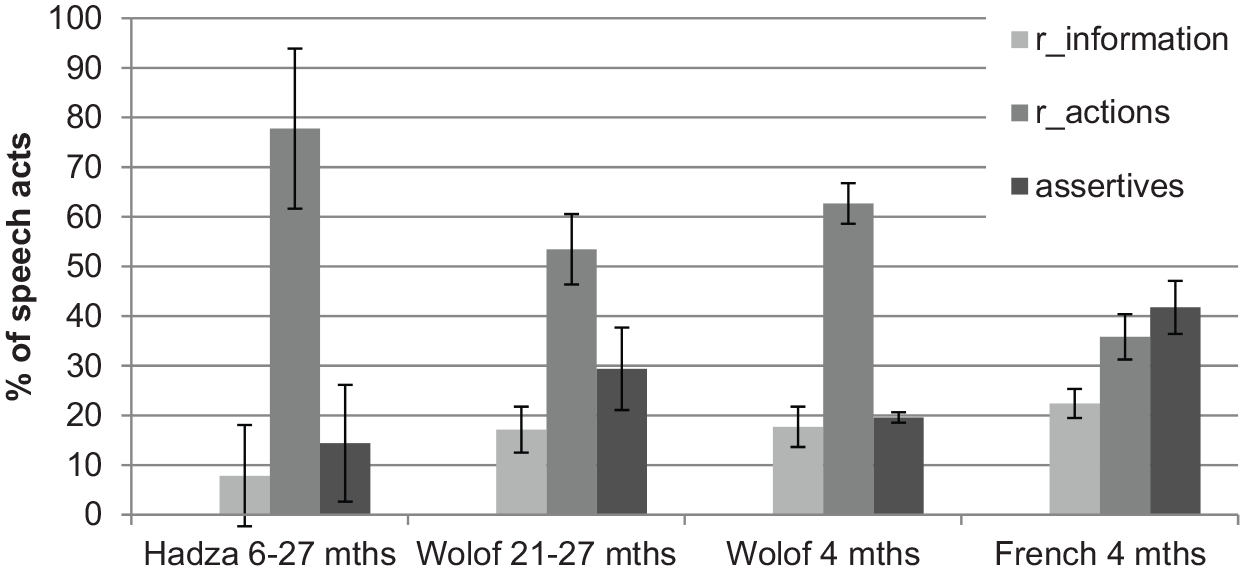
Mean Percentages and SDs of Requests for Information (r_information), Requests for Actions (r_actions) and Assertives Produced by Hadza Primary Caregivers and Wolof and French Mothers.
To compare the speech acts of the Wolof and French mothers with those of the Hadza, we calculated Kruskal–Wallis H tests using the samples as independent variables, and the percentages of speech acts as dependent variables. These were supplemented with pairwise comparisons between the Hadza and each of the other samples to find out which pairs differed significantly. The results indicate differences between the samples on all three measurements. Hadza primary caregivers show most similarity with the Wolof mothers of 4-month olds. These groups were not significantly different according to the pairwise comparisons. Hadza primary caregivers produced a significantly higher proportion of requests for actions and a lower proportion of assertives than Wolof mothers of 21–27 months olds and French mothers. They also produce a lower proportion of requests for information than French mothers (see Table 6).
Median percentages of speech acts addressed to Hadza infants compared with Wolof and French samples.
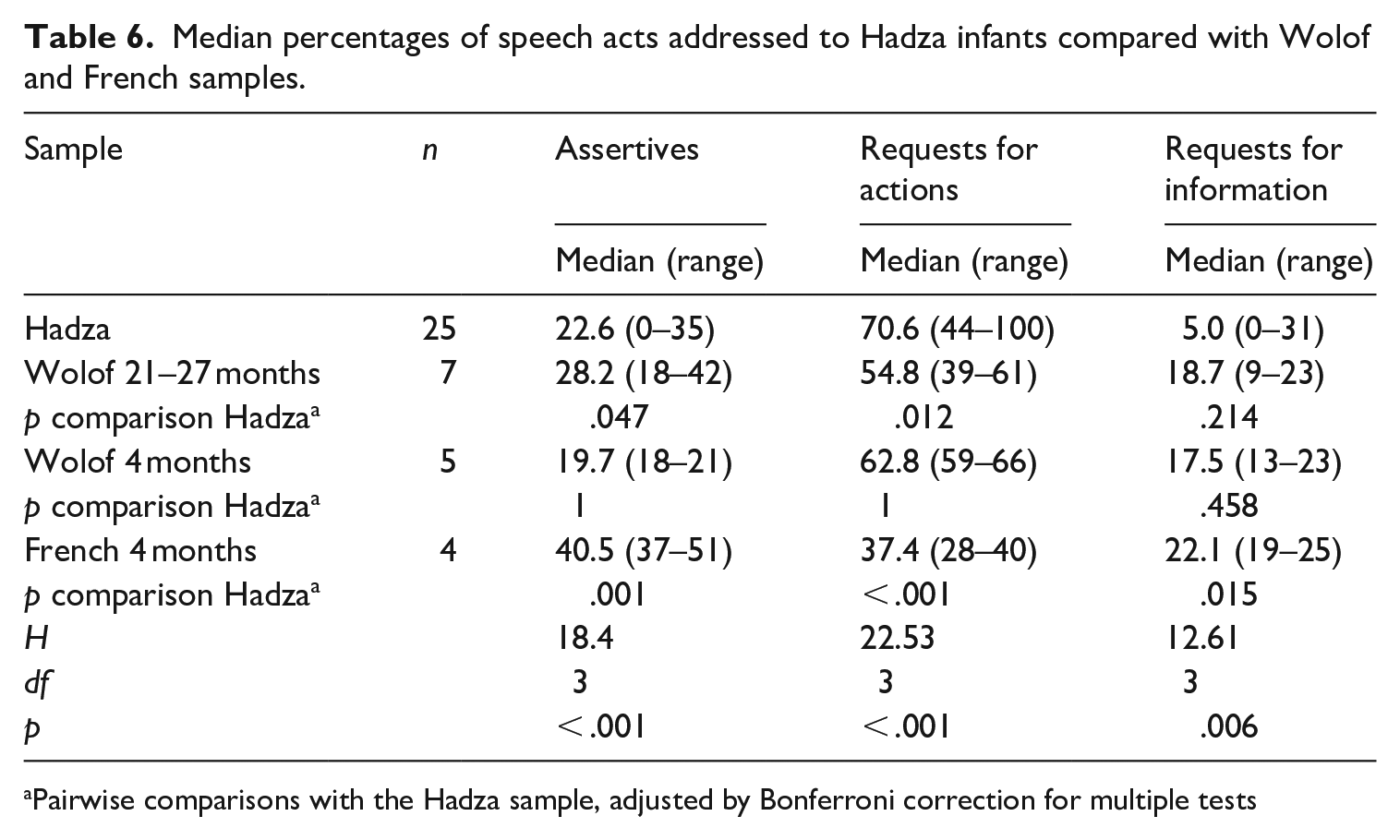
Pairwise comparisons with the Hadza sample, adjusted by Bonferroni correction for multiple tests
We would like to add a description and an example of how Hadza speakers interact with infants to convey a deeper understanding of the children’s speech environments. A large percentage of the requests for actions Hadza children hear, are very short, such as ‘bichoo!’ ( ‘come!’) or ‘peleke!’ ( ‘give!’). The most frequent requests are to go (somewhere), to come and to take (something). An example of such an exchange is the following from an isolated camp (lasting app. 110 seconds). Example 1:
Father: walk (ithlikwaa) Father: walk, you (ithlikwaa, we) Mother: come (bicho) Mother: come (bichoo) [Mother talks to sister] Mother: take [child’s name] (alee [child’s name]) Mother: take (alee) Mother tries to get the infant’s brother to bring the infant to her, talking to him several times; then she addresses the infant again: come, baby (bichoo, baba)
As can be seen from this excerpt, both speakers use mainly requests for actions with the infant. While the requested action changes several times in the excerpt, the style of speaking with the child does not vary much. The speakers repeat their short requests for actions without providing any additional information (assertive) or requesting the child to provide any information or vocal/verbal reply. The child seems to be encouraged to act, not to speak.
RQ2. Are there differences between children’s and adults’ speech acts?
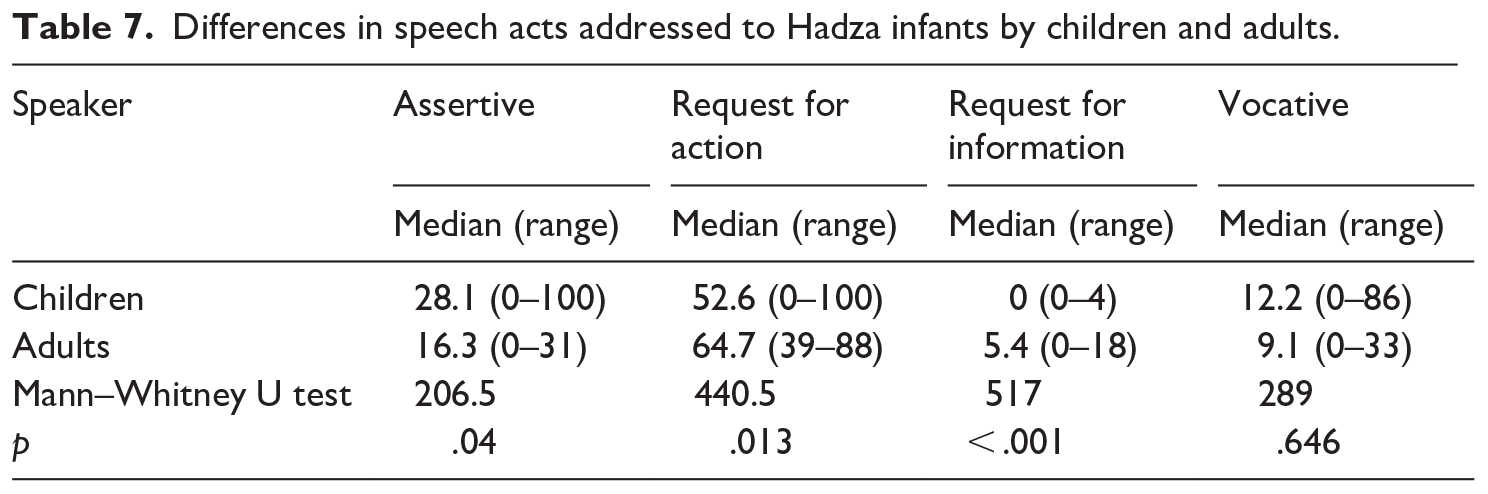
To answer the question, whether there are differences between children’s and adults’ speech acts, Mann–Whitney U tests were calculated with age (child vs adult) as the independent variable and the percentage of the four different speech acts as dependent variables. 2 The results for each type of speech act can be found in Table 7: Children use a significantly higher proportion of assertives, but a lower proportion of requests for actions and requests for information than adults. There is no significant difference in the proportion of vocatives adults and children use.
Differences in speech acts addressed to Hadza infants by children and adults.
While infants are generally not discouraged from speaking, they are also rarely encouraged to speak. Children engage infants in playful interactions and incorporate them into the children’s group. Here is an example of an interaction in a children’s group in a transitional camp, which seems to encourage the infants’ verbal expression. They pretend that they are seeing a car. The children in the group repeat and improvise on each other’s utterances in their game. Example 2 is a transcription of the exchange which lasts approximately 20 seconds
Boy: This is a car, a bus (hio ni gari, ni basi) Infant: Car (gariko) Girl: The car is there (gari nana) Infant: car (gariko) Boy: <imitating engine sound> (brrr) Girl: There is a car ([inaudible] nako gariko) Boy: [meaning unclear] (kando, kando) Girl: There is the car, it stopped (Nako gariko, ikata) Infant: There is a brrr (Nako brr) Girl: There is the car (Nako gariko)
The children are developing their game mainly through assertives about an imaginary object (the car). While the infant is not verbally encouraged to participate there are also no requests for actions, as in Example 1. This probably provides room for the infant to contribute verbally and develop his language skills. As shown in Table 7, assertives are not the most common speech act used by children, but children’s speech contains more assertives than adults’ speech. Intense interactive periods, such as this one, are interspersed among long silent phases in which hardly anything is said.
A notable exception of adults’ general way of interacting with infants, as seen in Example 1, is the following episode in which a grandfather and his granddaughter interact. The grandfather models words and sentences for the child to call the grandmother: ‘ugali (a food), we are hungry, come quickly, grandmother!’ (manaketa, !oowano hatse, welawela ham, bibi!). The grandfather keeps this style of interaction up, although the granddaughter is not responding verbally. This type of conversation in which the child is actively encouraged to speak seems very rare in Hadza speakers’ interactions with infants. This (transitional) camp may be exceptional as it is very small; at the time of video-taping the only other child in the camp was absent.
RQ3. Do speech acts differ with camp livelihood?
To examine the effect of camp livelihood on speech acts, speech acts addressed to children in different camps, those with regular visits by tourists (n = 7 children), those living in more isolated camps (n = 5), and those living in camps involved in keeping animals and gardening (farming, n = 6) and transitional camps (n = 7) were compared in Kruskal–Wallis H tests. The independent variable was camp type and the dependent variable was the percentage of the four different speech acts. These were supplemented with pairwise comparisons between the different camp types to find out which pairs differed significantly. The results show that all speech acts except requests for information differ significantly by camp type (see Table 8). The pairwise comparisons show that speakers in tourist camp produced a significantly higher proportion of requests for actions and a significantly lower proportion of vocatives than speakers in the isolated camps. Farming and transitional camps fall in between, and do not differ significantly from either camp type. The pattern is different for assertives, with the transitional camps showing the highest relative frequencies. They differ significantly from the tourist camps, which show the lowest frequency of assertives, while isolated and farming camps fall in between.
Different speech acts addressed to Hadza infants by interactional partners in camps with different livelihood strategies.
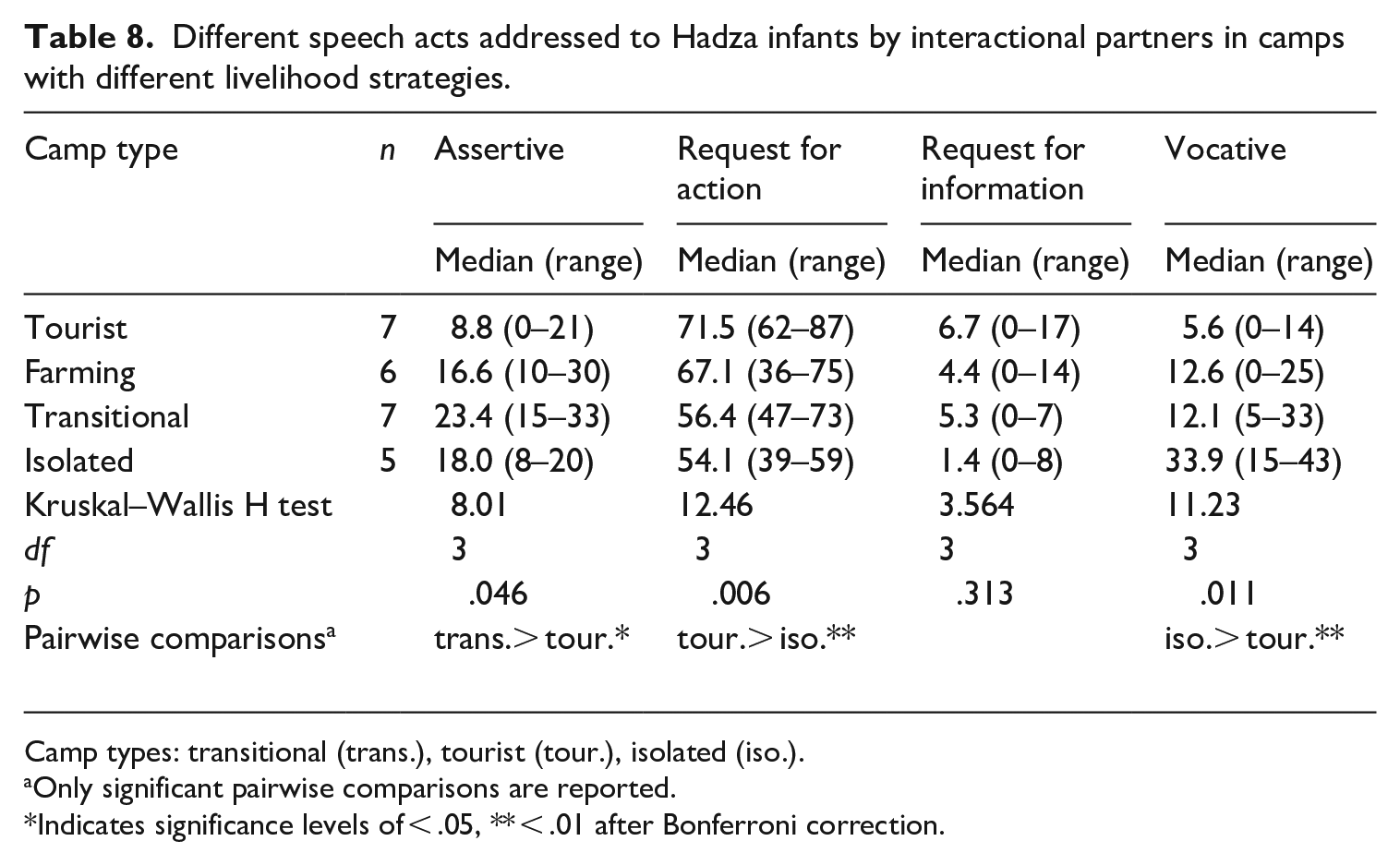
Camp types: transitional (trans.), tourist (tour.), isolated (iso.).
Only significant pairwise comparisons are reported.
Indicates significance levels of < .05, ** < .01 after Bonferroni correction.
As can be seen from Example 1, requests for actions in isolated camps are often accompanied by vocatives. In this example, ‘you’, the child’s name and ‘baby’ are used. Overall, the most common vocative is the child’s name. In other camps, interactions may look quite similar, but contain fewer vocatives. In addition, there are interactions in which infants are called by their name repeatedly, sometimes rhythmically as part of a playful interaction (also see Demuth, 2009).
Discussion and conclusion
We addressed three main research question in this study concerning a comparison between Hadza speakers and speakers from other cultural communities, differences between child and adult speakers, and speakers from camps with different livelihood patterns. We expected that Hadza speakers would use few requests for actions, reflecting the egalitarian social order described for hunter–gatherers. For the same reason, we expected fewer requests for actions in isolated camps than in those living off tourism. Speaker age and several other aspects of the study were more exploratory and did not warrant any specific hypotheses.
Cultural comparison
The results suggest that Hadza infants experience speech acts similar to those of other infants in sub-Saharan Africa (Rabain-Jamin, 2001; Rabain-Jamin & Sabeau-Jouannet, 1997; Tronick et al., 1992), characterized mainly by requests for action. The result that Hadza infants hear so many requests for actions is somewhat surprising, as it contradicts reports on hunter–gatherers making few explicit requests of their children (Akhtar et al., 1991; Barnes et al., 1983; Boyette, 2016; Hewlett et al., 2011; Marlowe, 2010), which led us to expect fewer requests for actions by Hadza interactional partners than in other sub-Saharan African cultural groups. As there are few systematic studies on this topic in hunter–gatherers, it is difficult to interpret this result.
We will discuss some hypotheses that we have concerning this result, although they are very speculative. It is possible that earlier reports on the scarcity of requests focused on children of a different age. As described earlier, infants who are still learning the language may profit from request for actions (Akhtar et al., 1991; Barnes et al., 1983). This could also be the case for Hadza speakers, who address many short and simple requests to infants (e.g. ‘come,’ ‘go,.’ ‘eat,’ see Example 1). Another interpretation we would like to discuss reevaluates the importance of social cohesion, which we may have underestimated in formulating our original hypothesis. While autonomy has been described as a major cultural value in hunter–gatherers, it must also be important to foster group cohesion that ensures everybody’s survival through sharing (e.g. Marlowe, 2010) and the acquisition of livelihood skills in children through observation and participation (Hewlett, 2017). The usage of requests for actions to encourage sharing behaviors were extremely rare in our data set (e.g. the command to ‘share’ is used in only two of the more than 1500 requests for action) may be because the participating children were mainly the youngest ones of their families and camps and therefore more likely to be the recipients of sharing than distributors. During data collection, cases of ‘tolerated theft’ have also been observed, where somebody else took a part of the infants’ food without asking them to share beforehand (Blurton Jones, 1984). How sharing is encouraged without verbal instruction is an interesting topic for future research. Other authors have also pointed out that requests for actions enable infants to participate in others’ activities (Maynard, 2002; Rabain-Jamin, 2001), which is another way of enhancing group cohesion. It is also possible that Hadza culture has changed recently, an interpretation which will be discussed in more detail in relation to RQ3.
Speaker age
Hadza children address infants with fewer requests for information and action and more assertives than do adults. This is in line with some earlier findings on child speakers (Harkness, 1977) and might be related to differences in children’s and adults’ roles. Children’s play (as seen in Example 2) is at least partially composed of assertives, with which they co-construct their (pretend) world. In this context, they may at other times also request specific actions of each other to make the game work. This could also explain the age difference suggested in Figure 1, namely that children address infants differently depending on the infants’ age. They can be assumed to make a distinction in addressing a baby who stays close to the primary caregiver and a mobile participant in the children’s group. Becoming a member of a children’s group is a process, the beginnings of which can be observed in the age range studied here.
Camp livelihood
We found some differences in speech acts between camps with different livelihoods. Speakers in isolated camps addressed infants with more vocatives and fewer requests for actions than those living in camps regularly visited by tourists. These differences could indicate that Hadza culture is changing; for instance, through tourism. The higher proportion of requests for actions in camps depending on tourism for their livelihood may be a reflection of an increase in hierarchy in these camps. While earlier camps did not have a leader, it is now necessary to have a contact person for the tour guides, who will also receive the money and have some authority to decide how it will be spent. Farming and transitional camps fall in between isolated and tourist camps. It therefore seems that there are greater changes related to contact with tourism and the increased participation in market economy (Greenfield, 2016) than related to settling (Lew-Levy et al., 2017). A factor contributing to these differences could also be education. Livelihood and education cannot be separated in case of the Hadza, as the mothers in the isolated camps had not undertaken any formal education and anecdotal evidence seems to suggest that inhabitants of the isolated camps were still reluctant to send their children to school.
We have found a high prevalence of vocatives in Hadza speech acts, particularly in the isolated camps in which they constitute a median of 33.9% of the speech acts. Interactional partners in tourist camps also use fewer assertives than interactional partners in transitional camps. The interpretation that this is an artifact of different levels of education seems unlikely, as primary caregivers in both groups have an equally high average education (3.6 years) and, in both cases, primary caregivers who have attended school slightly outnumber those who have not. It is possible that the transitional camps that are neither defined by the traditional Hadza lifestyle nor have found a definite new livelihood, such as animal husbandry or tourism, have the greatest need to raise children who can adapt dynamically to changing circumstances. Using a large proportion of assertives with them may help in fostering mental flexibility.
As the data in this study are not longitudinal, the question whether the culture is actually changing or whether the camps differ for other reasons cannot be answered. It would be necessary to conduct longitudinal studies or analyze archival material to address this issue. In future studies, it would also be important to interview children’s interactional partners about their understanding of their role in the children’s lives and their perception of cultural change.
This study has several limitations that make it necessary to regard these results and interpretations cautiously. The sample size is quite small, particularly when split into the subsamples by camp livelihood. This is partially due to the Hadza being a very small ethnic group. In addition, the isolated lifestyle seems to be disappearing, due to dwindling of the traditional resources and other factors the Hadza are facing. Another aspect of the sample is that the age range is wide and the exact ages of the children are unknown. As Hadza births are rarely recorded or dates exactly remembered by the infants’ family members, it is difficult to access this information. While this is a limitation, we assume that Hadza speech act patterns are fairly consistent, similar to the consistencies visible in Wolof speech acts between 4 and 21–27 months (see also Table 2). Nevertheless, larger scale, longitudinal studies, potentially containing archival data of cultural communities that have rapidly changed in the recent past, as well as interviews with infants’ interactional partners would help clarify some of the open questions in future research.
Footnotes
Acknowledgements
The authors thank all participating infants and caregivers. They are indebted to Ruth Matiyas, Mariamu Anyawire, Gudo Mahiya, and Bernadetha Sanka for their help in data collection, transcription, and translation. They are grateful to John Ogondiek from the National Institute of Medical Research for his help in organizational issues in Tanzania. They would like to thank Camilla Power from the University of East London for her help in planning and organizing this research as well as her invaluable input on Hadza culture. They would also like to thank Christina Jean Forbes Neerland for proof reading this manuscript.
Author contributions
Funding
The author(s) disclosed receipt of the following financial support for the research, authorship, and/or publication of this article: This work was supported by the European Union through a Marie Skłodowska–Curie Actions Individual Fellowship (H2020-MSCA-IF-2014) for the project Hadza Communication with the grant agreement 657937.
