




Abstract

Introduction
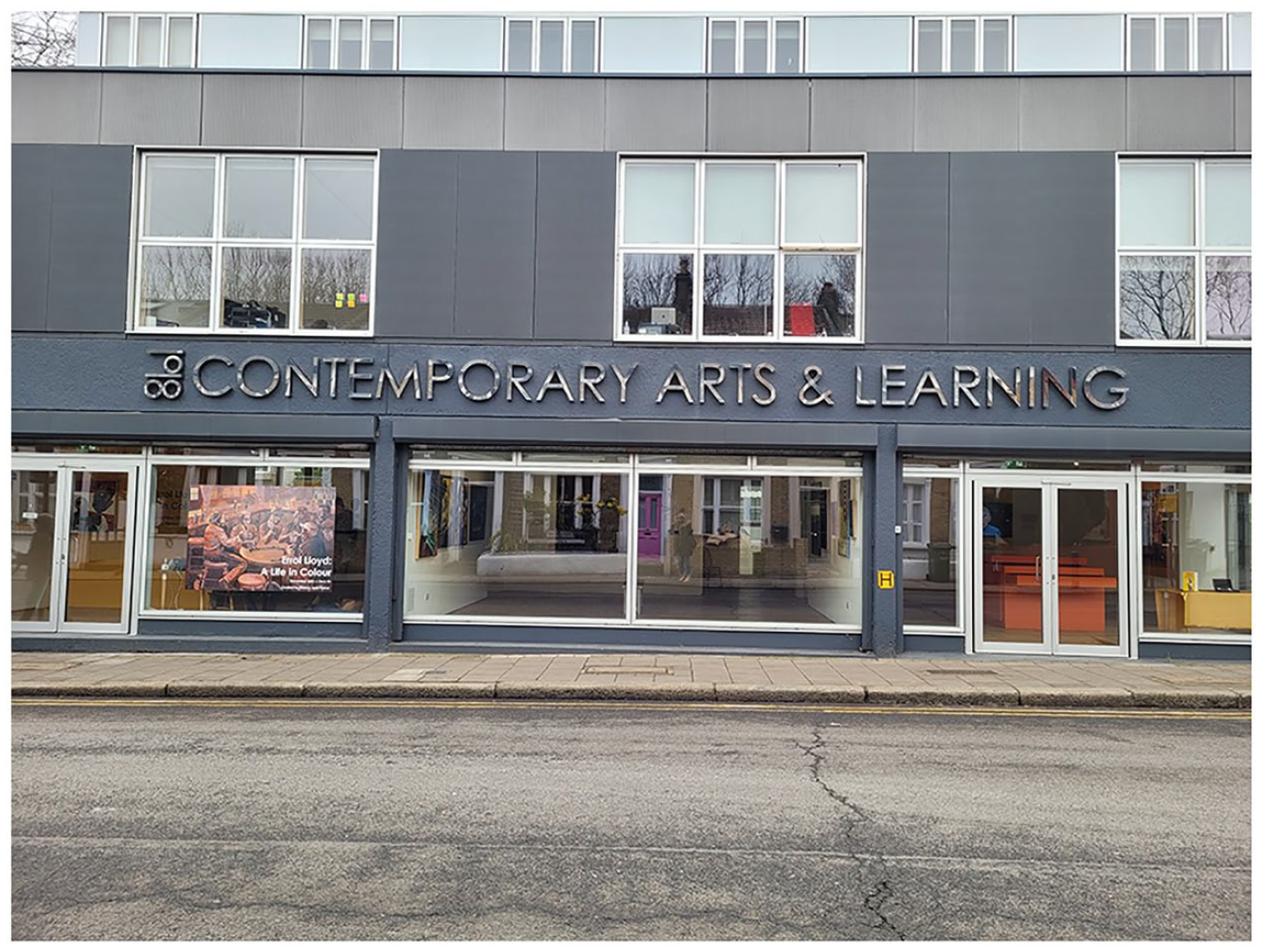
Feminist Review (FR) editors Nydia A. Swaby and Amber Lascelles met at 198 Contemporary Arts and Learning, Brixton, London in February 2023 to record a conversation exploring Black feminism as an ‘object’ (Lewis, 2020) in our writing and research. This dialogue reflects on the journal’s Black feminist genealogies, our reasons for joining the editorial board, FR’s move to 198 Contemporary, how we navigate Black feminist epistemologies and how community and care influence the journal and shape our writing. We sat in the new office, surrounded by FR journal back issues and inspiring Black feminist texts. Quotations from these Black feminist texts, and others we think with, are interspersed throughout the piece to act as a ‘presence’ (Lewis, 2017).
Declarations of presence
Here then is a declaration of presence, not just an unwanted independence, through the double and inseparable vectors ‘black’ and ‘female’ proclaimed as a desire for recognition and space in a multitude of struggles that have a history of erasing, marginalising and even denouncing some aspect of who she is and might become.
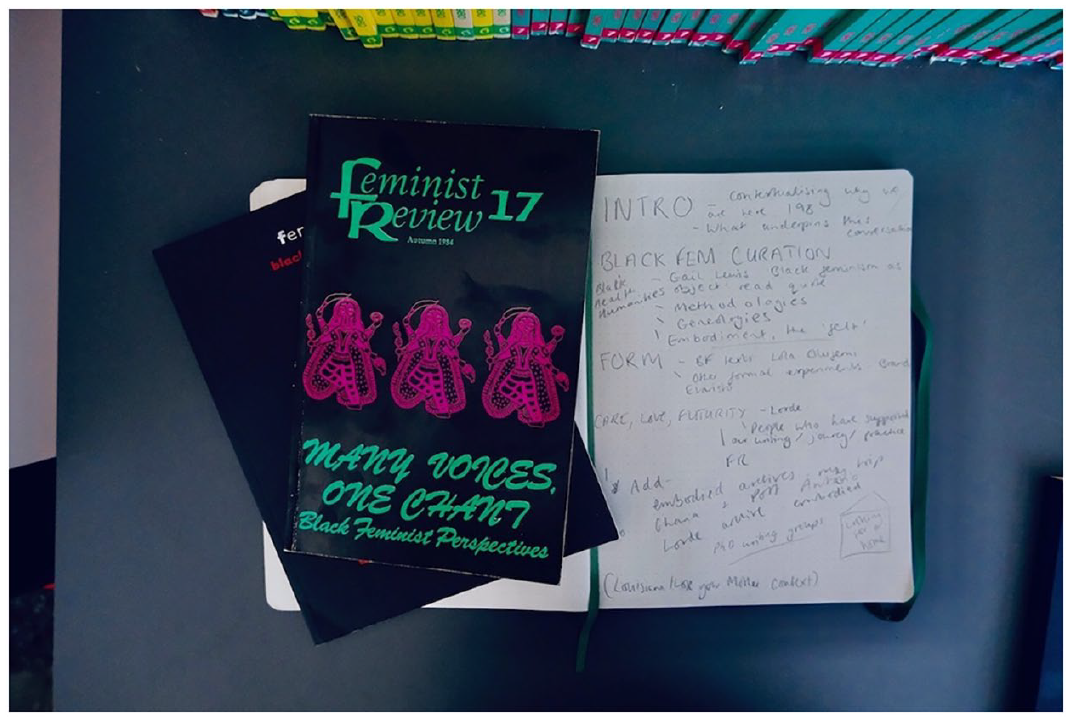
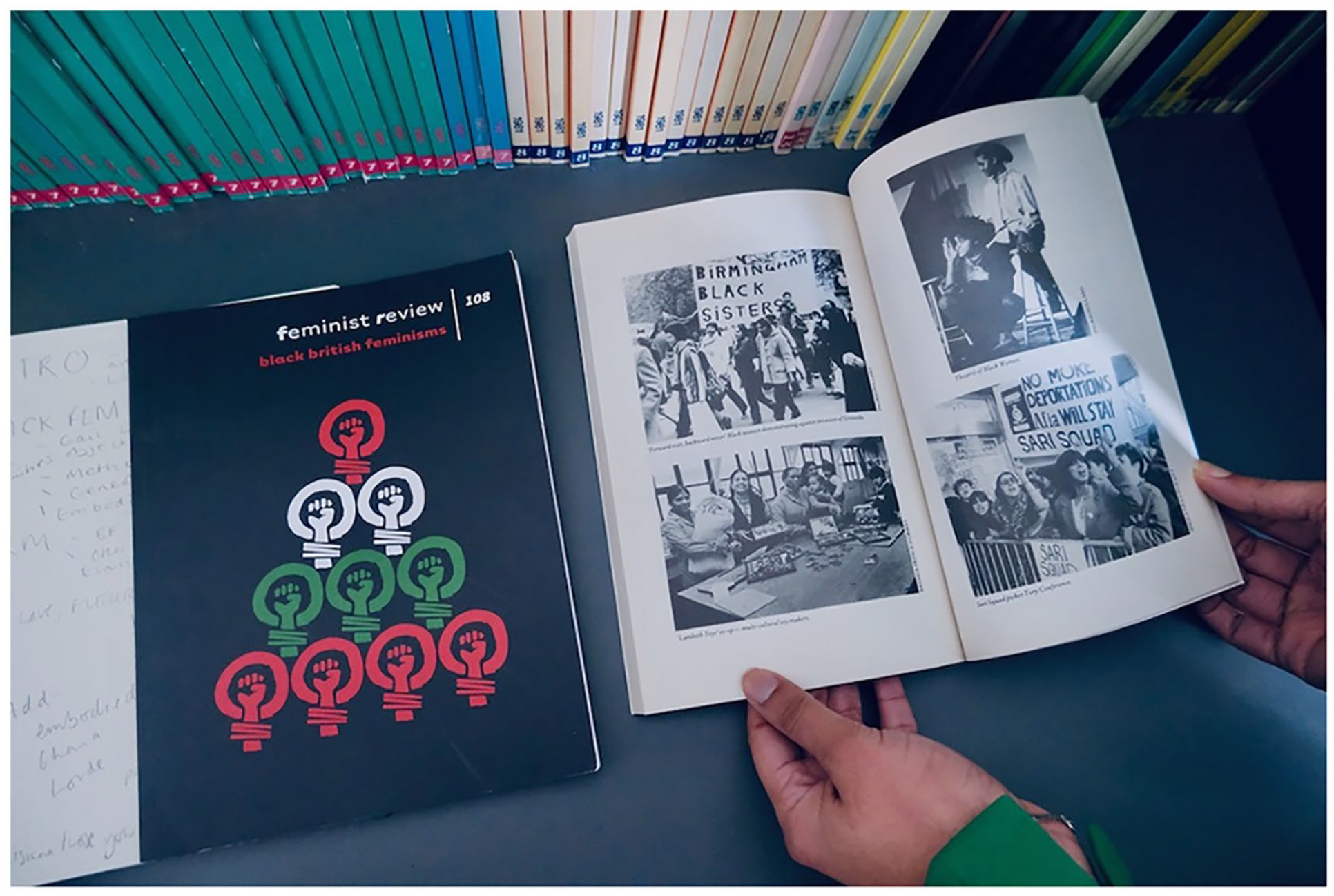
To start, I have a question for you, Nydia. Why do you think that the 1984 FR issue ‘Many Voices, One Chant: Black Feminist Perspectives’ was so much more visual than the issues we publish today? On almost every page, there’s photographs of protests, there’s illustrations, there’s a poem by Perminder Dhillon (1984) called ‘I Am Woman’, with a whole visual element …
… There’s a whole section on poetry, there’s ads for Outwrite magazine, for Race and Class magazine, there’s ‘So You Think I am a Mule’ by Jackie Kay (1984), which is also republished in the opening to Black British Feminism: A Reader (Mirza, 1997).
This is all speculation,
They were also documenting images of Black women organising as being a critical part of creating something that archived, or documented and captured, a particular moment in Black feminist organising in the UK, and that longer history of it as being connected to the formation of groups like the Organisation of Women of African and Asian Descent (OWAAD). The issue came out in 1984 so it’s after some of those groups have folded, but it reflects on that moment.
Some of the people who were involved in the publication were academics with a big ‘A’, but the editors Pratibha Parmar, Gail Lewis, Amina Mama and Valerie Amos, of those, the ones who have gone on to have doctorates or teach in the academy are really only Amina Mama and Gail Lewis. Pratibha Parmar is an artist and a filmmaker, and she’s situated within a genealogy of Black feminist knowledge production, but she’s a visual studies person. Valerie Amos, of course, goes on to be involved in politics in a slightly different way.
So, I wonder if it’s also reflective of the shift of both the kinds of things that they’re trying to capture and document about Black women’s organising at that time, which builds on the same type of things you would have seen in OWAAD’s magazine, FOWAAD, or in general, articles, journals like Outwrite and other Black feminist or feminist publications where women of colour were also involved. They took that approach and put it into this issue of FR.
It also maybe reflects the difference between that issue and some of the later issues of FR, the way the journal became more and more of an academic journal over time. So, yes, the vast majority of us on the editorial team right now are trained in academia in the ‘classical’ way. Many of us have doctorates or are currently finishing them up.
We’re now probably seeing more issues that reflect different forms of practice. For example, in the ‘Archives’ issue I co-edited with Chandra Frank and Yasmin Gunaratnam in 2020 (Swaby, Frank and Gunaratnam, 2020), we commissioned a poem and an illustration, photographs by a seed librarian, and we include a roundtable discussion between an archivist, a scholar and an artist. The issue was curated to make these different types of interventions as a queer feminist diaspora archive, not just a traditional academic intervention. There are long journal articles in there as well, but a lot of them are Open Space pieces and reflections from people at different points in their career.
That’s what you see in the 1984 FR issue—some of the articles and poems are not written by people who are in the formal space of the academy. Yeah, that’s my thinking on it. That’s also true with the 2014 issue ‘Black British Feminisms: Many Chants’ (Anim-Addo, Gunaratnam and Scafe, 2014). There are interventions made by people who are journalists or artists like Lauren Craig, thinking about Black feminist ecofeminism, and there are visual elements in certain places, but it’s not nearly in the same way that the older issues are.
Claiming space 1
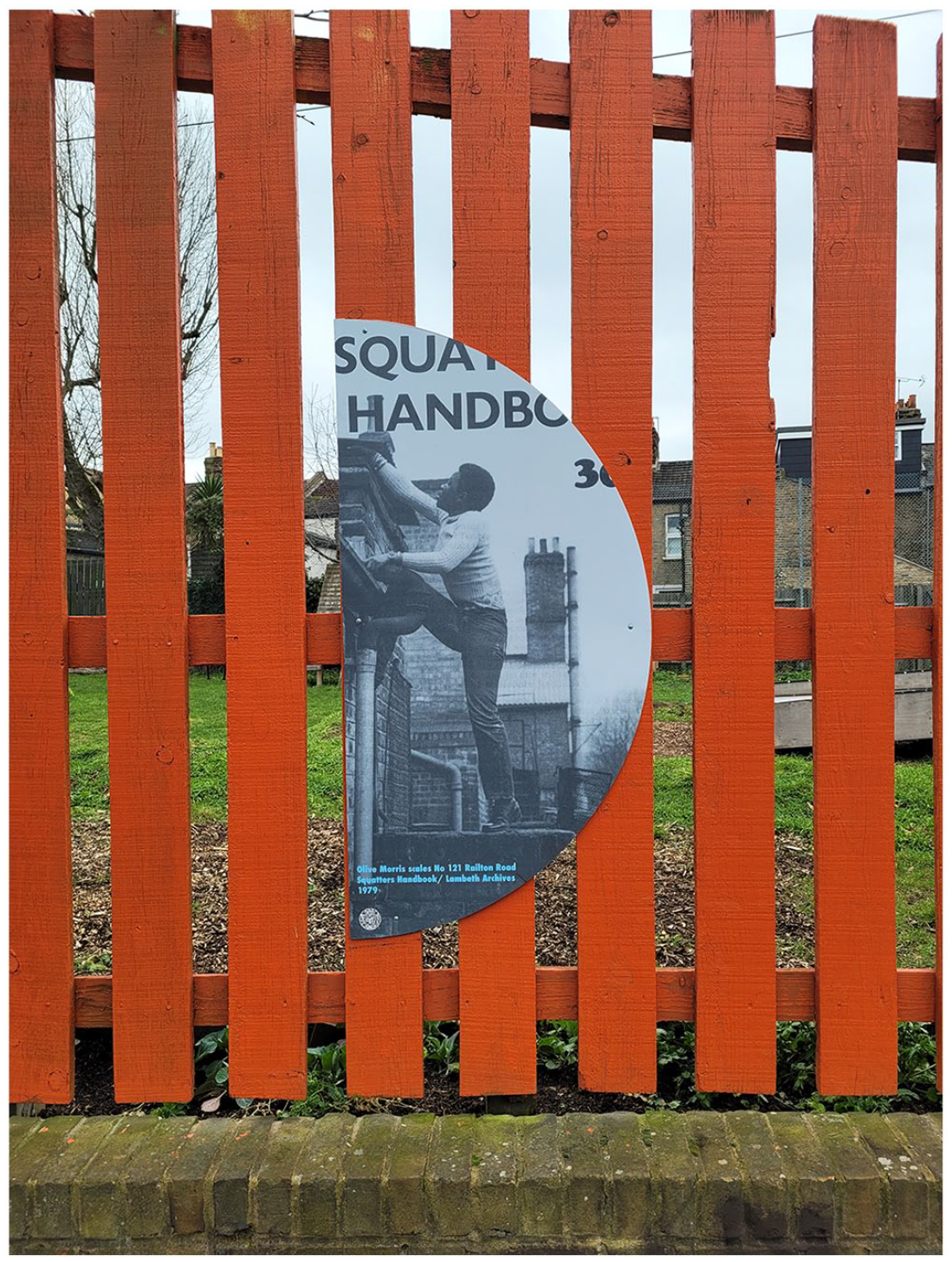
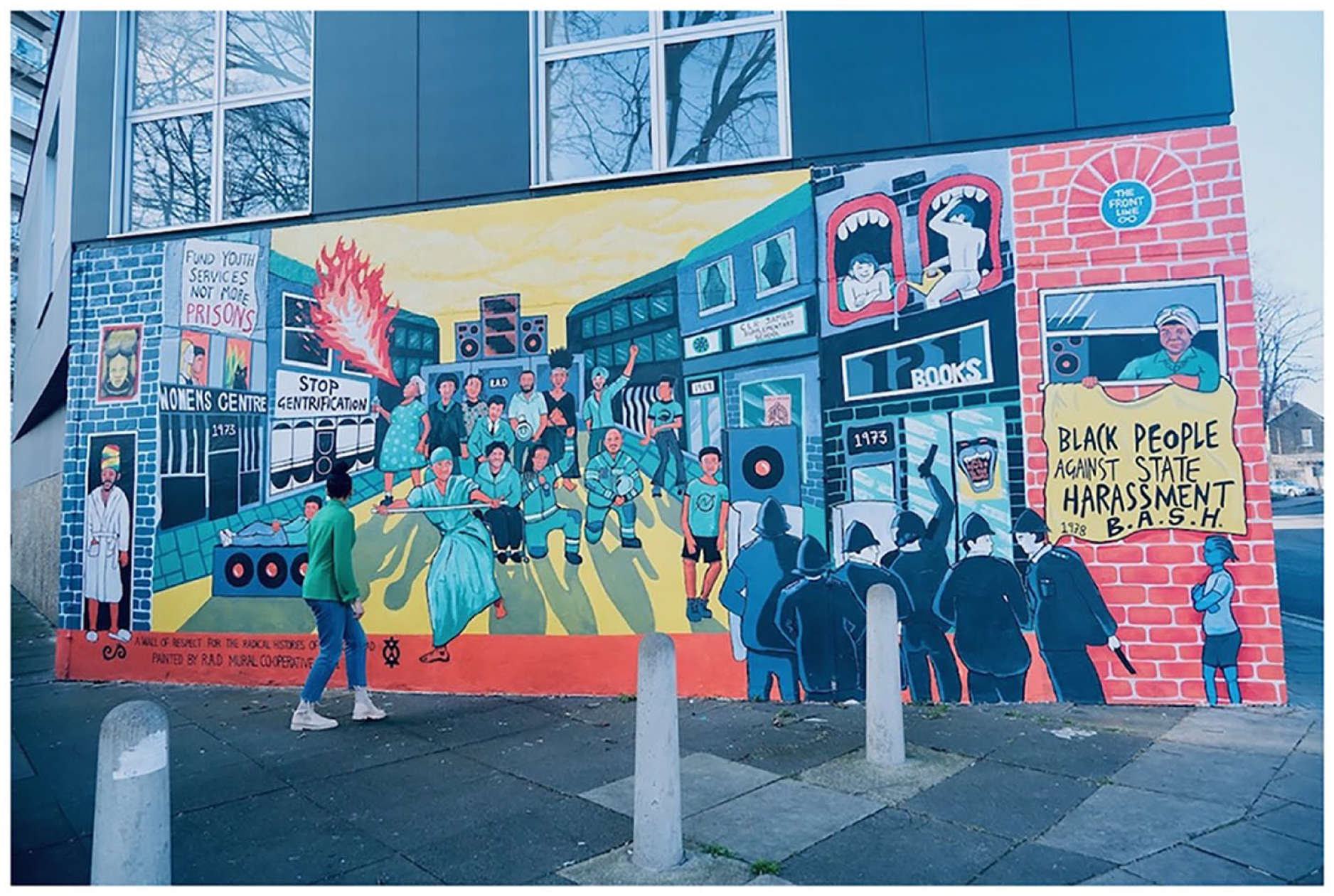
When Olive and Liz decided to move into 121 Railton Road, they didn’t know it would become the site of one of the longest running squats in London history, or that Olive would end up on the cover of the Squatters Handbook. They just needed somewhere to stay, and it was easy enough to get in through the launderette windows and secure the outside. They spent many nights there together planning and plotting, letting the Panthers and BASH use the space to figure out how to escalate their campaigns against the SUS law. That’s when she felt the purest kind of contentment, surrounded by comrades in the struggle, friends in arms. That was what made the harassment bearable—coming back to a house full to the brim with sound, with all the rejects of this world who wanted to build another.
There’s a real rich history of Black political organising that has happened in this area around Railton Road. 198 has been part of a space that parents mobilise to create so that their kids could have access to the arts, and after-school programmes. So if we have to pay money to have a space, we’d rather it be going into a place that has programmes that support the local community that is rooted within some of the very histories and communities that are discussed in the earliest iterations of FR.
I walked past Dexter Road Play Project on my way here—they have afterschool clubs and a play area decorated with coloured fences, and on those fences there’s posters about Olive Morris, Darcus Howe, Linton Kwesi Johnson and others. I haven’t seen that in many places in the UK; it’s a place for young people that’s also educating them about local Black history.
We’ve seen the erosion of public space in the past ten years because of the Tory government. I don’t spend a lot of time in Brixton but I have heard so much about gentrification, and as I was walking down the road, I was glad to see that the things that make Brixton, Brixton, are still here. I experienced them all at once within a twenty-minute walk: people nodding to me, the smells, the Caribbean shops, the hair shops, the plantain! That’s what I want to feel.
It’s funny you say that because as someone who moved to the UK ten and a half years ago, who has only ever lived in the Greater Brixton area, I often talk about how much Brixton has changed and the types of things we used to be able to access. I used to be able to go out and sit down in a Caribbean restaurant, whereas now the majority tend to be takeaways and the ones you sit down in are chain restaurants owned by people who are not from the local area, who might not be from a Caribbean background. Or how we used to be able to go out for reggae or bashment in certain clubs and now those clubs have closed. There’s all these new restaurants and shops, and there are times of day where I walk through certain parts of the market and there’s nothing but white people having brunch in the middle of the day.
Black feminist legacies 3
I was in the Brixton Black Women’s Group before OWAAD, and the Black Panther movement before that, and that’s the way we wrote, with no names. There was a history, a practice that we simply contributed as a collective. You would have an editorial collective where you might do the writing, but somebody else would be doing the layout or typesetting – that was our way of working. So initially there was the idea that we three women would put our names to the book; we had to be part of a collective experience. But there was a very strong sense that we wanted to not only be generating and recording that experience, but speaking with and on behalf of other black women.
We also wanted to address the way we’ve come together to be part of FR, and the reasons why we joined. We’re all interested in disrupting what an academic journal should be, what kind of conversations it should invite and who should be invited to be part of those conversations, or feel like it’s the space for them, rather than necessarily needing an invite—an ‘open space’ for them to want to come into. I think it’s a really exciting moment to be part of FR.
Oh, that’s so interesting. Because I feel like my reason for joining it is the opposite.
Yeah, I really appreciate that. I came to that place through the process of joining the journal and feeling like, oh, it’s going to legitimise my rightful place as a Black feminist academic. The work I do that is creative, that’s interdisciplinary, it has a home. Often, I would be shortlisted for roles, and I remember two separate occasions where I was told: ‘well, we decided to go with someone who was a more classic sociologist’, or ‘we decided to go with someone who does more traditional forms of history’. I wondered, where’s my place in the academy?
Because FR is an interdisciplinary journal, I was able to get something published. I thought it was a natural home for my next phase of being an academic. Then what I actually found within the space was a kind of flattening of the variety of ways people come to and articulate knowledge production; for example, things said about what the structure of the journal should be, and debates or tension about what constitutes a ‘real’ article. It didn’t necessarily fit with what I thought I would be entering into. There was a really heavy concern around the Research Excellence Framework (REF) and the journal being able to sustain its quality and its status on the basis of what articles we publish.
The reality was in direct contrast with this idea of FR resisting the neoliberalisation of feminist academia; that was not the nature of the conversations happening within the space of the journal at that time. So, it became a place that very quickly felt like a continuation of my dissatisfaction with what I thought academia would enable in terms of being able to be creative and open to experimentation. I thought, it’s going to be a space that is an anchoring for me to experiment with different ways of articulating knowledge production. One way I saw that come to life was in a discussion that happened around the ‘Archives’ issue, where there was a very uncomfortable and really demoralising discussion; someone described the issue as ‘quite thin’ because most of the pieces are Open Space. They asked, ‘what is the intention for this issue?’. I remember thinking, they had not read any of the texts, they didn’t know what any of them were doing in actuality and some of the most brilliant things discussed within the issue were in the Open Space pieces. That was one moment among multiple that led up to the ‘crisis of care’, where many of us had come to this journal thinking that we’ll be able to disrupt. Some of us had come looking for a home for our way of exploring what knowledge, what Black feminist knowledge, or feminist knowledge, can do. Instead, we’d been demoralised.
What we are trying to rebuild is this space we’re co-creating together, where we can say that someone can write something profoundly transformative, making a new intervention into feminist or gender theory, and it can be a five-page Open Space piece. It can be a critical response to a film. It doesn’t have to be loaded with citations and only of value in the context of what can be ‘REF’-able by your individual academic institution. The work of getting to that place, on a personal level was about a transformation in my own value, what academia is and what knowledge is and what producing academic knowledge is.
Maybe it’s useful to think about where we’re at now. So much of what I see happening in FR over the past two years I’ve been a part of it is using those moments as a catalyst in order to do things differently. The people who’ve joined bring expertise, experiences, creativities, from different places in the world, in different academic contexts that are not as influenced by the way feminist academia can operate within Britain. A conversation I’ve had most often with different editors is rethinking that whole idea of, what is an article, and what is an Open Space piece?
I’ve been back and forth with other editors about whether a piece fits in Open Space or whether it’s an article, but at times we’ve pushed for Open Space pieces to become articles even if they are more reflective, or personal, or ‘unfinished’ as if the author is still processing things in a way that isn’t usual to see in academic articles. The structure is usually: we know the answer, and we’re going to take you to the answer in this structured way. This reflects the unlearning that you have to do as an editor when you’ve been trained within a particular discipline.
Where do we draw those boundaries as editors? Because we’re still trying to coax and shape people’s ideas to almost glow and be the best they can be, but how do we do that without making it gatekeeper-ish?
Other ways of knowing
The otherwise requires a commitment to not knowing. Are you ready for that?
In one of our meetings before this conversation, we both talked about how inspired we were by an essay Gail Lewis published in FR in 2020, ‘Once more with my sistren: black feminism and the challenge of object use’. In terms of thinking about using Black feminism as an object, or as a kind of curatorial object within the context of the research I was doing at the National Maritime Museum,
I was trying to think about, what would it mean to ‘curate’ a group of practitioners who don’t have the same type of relationship with looking at this type of archival material in the way that I do? I have become, I would not even say desensitised, but accustomed to engaging with this material. I still find it quite difficult and painful and fraught to be looking at a plantation register with a list of the names of Black people who were enslaved, while sitting in a maritime history archive that is named Royal Museum Greenwich, in a part of London that is linked to the transatlantic slave trade. I sort of wind up getting kind of meta with it. I’m sitting in there thinking about the bigger impact of it, and then come back down and think about this individual’s personal name in that space.
But I was so accustomed to doing research with those types of archives that I had to think a little bit differently about how to commission the people to be in this film I made out of the research, called Daughter(s) of Diaspora (Swaby, 2023). I had to think about: what does it mean to ask them to be with it? I tried to give them a directive, a variety of different types of archival objects to look at: images, plantation registries. I encouraged them to look through databases of the names, being able to look at different registries of plantations or search family names or names of individuals in Ancestry.com. I did this to try to give them lots of different ways to enter that archive and its afterlives, but also put a disclaimer that you don’t have to respond to everything. Just respond to what speaks to you and where I want you to create from is from what comes up for you when you look at this material. So I was just trying to think of that as a way of being like, well, I’m so accustomed to this, but I recognise that other people are not.
In facilitating a space and being with them, it was really interesting to get different responses. One of the participants, Selena Seballo, wrote a song in the voice of a Negro spiritual to use the feelings that came up when looking through this material. She said to me, Nydia, I had to at a certain point step away from the archives and watch documentaries because it felt like an easier way to digest it and to take it in. She said, ‘I found myself feeling very angry’. In the song she’s written, the lyrics say: ‘I feel rage’. There’s a real anger that comes through and she winds up singing it in the film.
I also worked with Foluke Taylor, who I asked to look at a series of extracts about these enslaved Africans who were marked as being born on the passage from Africa, or born on a ship. I was trying to prompt thinking about the conditions of giving birth, being born in the conditions of this voyage and in the conditions of plantation slavery: about mothering and the impact that it has. She ended up writing this very beautiful piece that was thinking about what can’t be known about these people, just by the simplicity of their names in the register. She said to me, I clicked through and saw that you sent me some images, and I opened and then closed them immediately: I just couldn’t look at the photographs, but I could look at the plantation registry and think about the list of these names of people. She was saying, ‘we don’t know anything about their birth dates or rising signs. We don’t know anything about their mothers!’.
So that was the thing for me about the unknown, and what can be known became the thing that came up for me and that I could respond to. Foluke Taylor was another person where I felt like, okay, I’ve created a space where you feel you can use your emotions to guide the way you respond to this archive, and use the feelings that come up for you as a way of saying: I’m not going to engage with some of the stuff that’s more difficult, you know?
I completely understand what you mean. During my postdoc at Bristol, I worked on a project established by Josie Gill at the University of Bristol, who used a Wellcome Trust grant to put together a network of researchers working on Black health, very broadly defined, called Black Health and the Humanities. This was in the midst of the COVID-19 pandemic, so one of the main challenges was how we can build trust within the group when navigating these difficult, traumatic topics. One of the things that we tried to do within the online space is to bring everyone together in a way that built trust and community in a context where we’re talking about Black health during a pandemic. Everyone was exhausted, overworked and uncertain about where their research is going or where their career or life is going.
I turned quite often to Black feminist methods to try to overcome those challenges. But I also felt there was a gap that was really difficult to bridge between the Black feminist practice of caring for one another in the space, having particular ground rules, trying to make it a safe space, trying to make sure everybody’s heard and then the practicalities of actually doing those things.
We had to consider the emotions everyone brought to the space. We realised that sometimes it’s important to give people the opportunity not to engage, because Josie and I felt quite similarly to you, not just desensitised, but accustomed to some of these materials, especially fictionalised experiences of enslavement. We come armoured to these conversations, but not everybody has that armour.
Armoured is such a great way of saying it.
So we needed to think about a way that we could practise that, especially in a space where we are not physically with one another.
For me, that’s connected to the politics of looking, the politics of experience, the politics of embodiment.
Maybe it’s about the journey I’m on with my own scholarship: everything involves experimenting with the unknown. It does speak to what I think Lola Olufemi (2021) is articulating in Experiments in Imagining Otherwise, and when Gail Lewis was talking about Black feminism as ‘a space of play’. How can I bring expansiveness and openness to the spaces I’m creating within the context of curating this film, or within the form of my writing? How can I make different entry points for someone experiencing the work I’m creating?
Care in community
Migrations of the subject refers to the many locations of Black women’s writing, but also to the Black female subject refusing to be subjugated. Black female subjectivity then can be conceived not primarily in terms of domination, subordination or ‘subalternization,’ but in terms of slipperiness, elsewhereness.
We wanted to talk about people who have supported us as scholars, writers, curators, however we label ourselves. I mentioned FR being one of the first places my academic work was published, and that being one of the draws I had to thinking FR would be a space for me. I want to acknowledge Yasmin Gunaratnam, who edited the 2014 issue ‘Black British Feminisms’ (Anim-Addo, Gunaratnam and Scafe, 2014).
Yasmin supported and nurtured my writing, and my creativity, in multiple different ways. She was my editor for the article ‘Gendered political blackness and the politics of solidarity’ (Swaby, 2014), and through that process we had multiple conversations. After my submission was accepted, she would call me on the phone to help me to read the responses from reviewer’s notes, and decide what to respond to. There was a point where I felt I was too busy with my PhD to finish it, but she said, ‘no, no, let’s talk, you can finish it!’. She nurtured a feminist editorial practice in me that I have tried to bring into my own editorial role, especially into the way I give feedback.
Thinking about my work on Amy Ashwood Garvey, Carole Boyce Davies has been key in supporting my book. Early on when I was writing the dissertation I spoke about Amy Ashwood Garvey at conferences, and I remember Carole was at the Association for the Study of the Worldwide African Diaspora conference. She sat in the front row during my presentation! She asked me some incredible questions. Afterwards she approached me and said, ‘it’s really exciting to see someone working on Amy Ashwood Garvey, here’s my email address, keep in touch’. Every once in a while, she writes to me and shares information about Amy with me. When you’re a Master’s student, having someone who is that established and recognised nurture the work you’re doing, and take the time to have conversations with you, it can make a world of difference.
I’d also like to of course mention my PhD supervisor, Parvathi Raman. She nurtured my writing in this amazing way. She would print out my dissertation and handwrite her comments, then sit with me and go through them. She would give you a copy so you could look at the notes: the value of having that to edit with! She also organised writing groups for our cohort, bringing us all together. Lennon Mhishi, who was in the Black Health and the Humanities Network you co-curated, was also in the group—we finished our PhDs around the same time. We would meet once a month to share excerpts of writing, or say, this month we’re going to talk about methods, and we would share some of that section. We’d all read it and discuss it. That space really … broke down the isolation of writing up a PhD. I will forever value that.
The last space I would want to mention are the writing workshops that were curated by Kyoung Kim, managing editor of FR, and Yasmin Gunaratnam. The workshops were organised into two groups and in each of them there was a mixture of members of FR and early career researchers who had recently finished a PhD and were working on a draft of an article. I was in a group with Feminist Review editors Kyoung Kim and Yasmin, Athambile Masola, Oumou Longley, Arely Cruz-Santiago and Shatha Almutawa. It was this incredible space designed to break down the barrier between editor and author. Some of us editors were still trying to figure things out. There were people in South Africa, the USA, parts of the UK and Europe who were all part of it. That moment of sharing writing, at the beginning part of the pandemic over Zoom, was a very formative part of my writing practice.
I also went on some writing retreats with a group of feminist colleagues during my PhD, but some of the ones that were the most powerful were writing retreats with Chandra Frank, Portia Malatjie, Akanksha Mehta, Barby Asante and Foluke Taylor. We would rent a house, go away somewhere and write in separate parts of this huge house, in weird parts of England! Then we’d go and have lunch. It was structured around what the aim of the writing retreat was and what we were all trying to accomplish. We’d write, then go for walks in the country or on the beach. It was this very beautiful space we created. The idea for the archives issue of FR came out of Chandra and I being in one room writing for days, talking about wanting to do something about archives. Those are the people I would mention as important in supporting my writing.
To start with, I definitely wouldn’t be here without Josie Gill. Through the Black Health and the Humanities Network, Josie wanted to provide support for early career scholars, which led to me being employed through the grant to develop the network. It allowed me to think about Black feminist care and networking as a method, but I also appreciate her for the care with which she invited me to push my work and reshape my PhD thesis which had these different threads but didn’t necessarily have a very clear framing that could then develop into a book.
Oh my god, that is such an underrated element of it, it’s so critical.
Exactly! He was always very willing to celebrate milestones. He really encouraged me to just sit with the text, read it and allow it to speak for itself. I attribute the way that I read to his mentorship, in terms of really listening and paying attention to texts and not just having a theory or wanting to extract an idea from the text. We used to have these back-and-forth conversations, because I studied for my MA in World Literature at Warwick I internalised a very Marxist, slightly distant way of positioning the text as representative of class struggles. John encouraged me to think more expansively: okay yes, Marxist class struggle, but also allow the text to do something more nuanced and careful and more real than that.
So, I can’t not mention John, but going back to people who have informed our Black feminist practice in particular, the idea to talk about Black feminists who have supported our work came from us both having these random encounters with Carole Boyce Davies! She gave a lecture at the University of Leeds. Afterwards we ended up going to a Caribbean takeaway in Leeds called Maureen’s, and I was chatting about my thesis and where I saw myself in academia. She was so generous with her time.
We also both talked about Suzanne Scafe, who helped edit my first publication. I went to a conference and gave a paper about diasporic imaginings in Edwidge Danticat and Chimamanda Ngozi Adichie’s short stories at a conference at London Southbank called ‘Caribbean Women and (Post) Diaspora’, which Suzanne organised. She encouraged [that] part of the conference to develop papers into articles for a journal special issue. I was in quite a conservative institution where I was encouraged to only focus on my PhD, which was not really engaged in the contemporary moment and the demands you need to meet to continue a career in academia. Some people can take a year off and don’t need their PhD to lead to a job, but I didn’t have that privilege. Suzanne was so generous as an editor. I saw her at a conference last year and I told her about my lectureship at Royal Holloway, saying, thanks for working on that publication with me, it meant a lot.
One thing that connects what we’re both saying is that there’s a care certain people have shown us as emerging Black feminist scholars, whether that is doing something super informal like, let’s go somewhere and eat some Caribbean food, or let me talk to you about who you are and where you’re going. Sometimes the emails I’ve got from Carole Boyce Davies have been two sentences like she was shooting me a text! The relationship we have, it’s not an especially deep or longstanding connection, but there’s a kind of ease with it.
You feel seen, right?!
Yeah!
Within the first group of people joining the journal and the second more recent group including yourself, we have all had many challenging experiences with academic publishing, or with academia full stop. For example, the devaluing of our knowledge production, whether that’s due to racism or sexism, or our work being viewed as marginal in certain departments in an institution, or putting your heart and soul into an article and sending it off to be published, but receiving comments back that tell you everything that’s not there and don’t engage with what’s there at all.
As editors we are all interested in trying to take the moments in which we felt cared for, seen and tended to as scholars, as writers, as academics and finding ways of creating a feminist editorial practice. I do imagine a time when we will be able to do workshops, nurture different forms of writing and invest in creating a different type of space. I really look forward to a time where we can disrupt the thing that happens when you’re editing from behind the digital editorial platform and remove that barrier to work directly with, say, a group of emerging Black feminist writers. I would love for us to organise an event like that with the other editors, Yassin and Parise. For example, we could work with people who don’t have to be situated within a PhD, but anyone who wants to engage with Black feminist study in their forms of writing, including poetry or fiction or whatever, and create a workshop where we can all come together and experiment with ideas and extend the care we have received from others.
As we talk about care and futurity, I want my time with FR to work towards building a future. I feel like we’re building towards that right now. Honestly, there have been times where the work of evolving the organisation has been exhausting. Currently I’m making a film, doing a fellowship, writing a book and getting ready to have a baby! But I’ve not left because I feel there’s a future that hasn’t yet happened but will and must.
These little steps that we’re taking together and these conversations we’re having will shape the space that will be opened up in the future.
Footnotes
Notes
Author Biographies
Amber Lascelles is Lecturer in Global Anglophone Literature at Royal Holloway, University of London. Her current research explores embodied solidarities in contemporary Black feminist fiction. She was previously Research Associate on the Wellcome Trust funded project ‘Black Health and the Humanities’ at the University of Bristol, and she is a member and editor of Feminist Review.
Nydia A Swaby is the Curator of Talks and Research at ICA London. She was the inaugural Caird Research Fellow jointly based at the Centre for the Study of the Legacies of British Slavery and the National Maritime Museum. Nydia is currently writing an imagined biography about Pan-African feminist Amy Ashwood Garvey that uses her archive, life and activism to ask broader questions about the futurity of Black feminist archives. She is a member and an editor of Feminist Review.