




Abstract
Introduction
Maurice H Pappworth (1910–1994) was an English physician who had developed a deep concern for the ethics of human research. In 1966, while researching his book – Human Guinea Pigs, which would be published the following year
1
– he wrote to Ivy regarding experimentation on prisoners. Andrew C Ivy (1893–1978) was an eminent physician and physiologist and according to Moreno
2
‘by the end of the war he was probably…the most famous doctor in the country [US]…the prototype of today’s media medical expert’. Perhaps because of this status, and the fact that he had been actively involved in research involving prison inmates, he had been invited to serve as the American Medical Association’s (AMA) adviser to the Nuremberg prosecutors (Figure 1). Ivy responded to Pappworth’s enquiry
3
on 6 April 1966 and began by stating:
I was considering the subject of your letter before I testified at Nuremberg and gave the Judges my Version of the Code Andrew C Ivy being sworn in at the Nuremberg Doctors’ Trial, June 1947.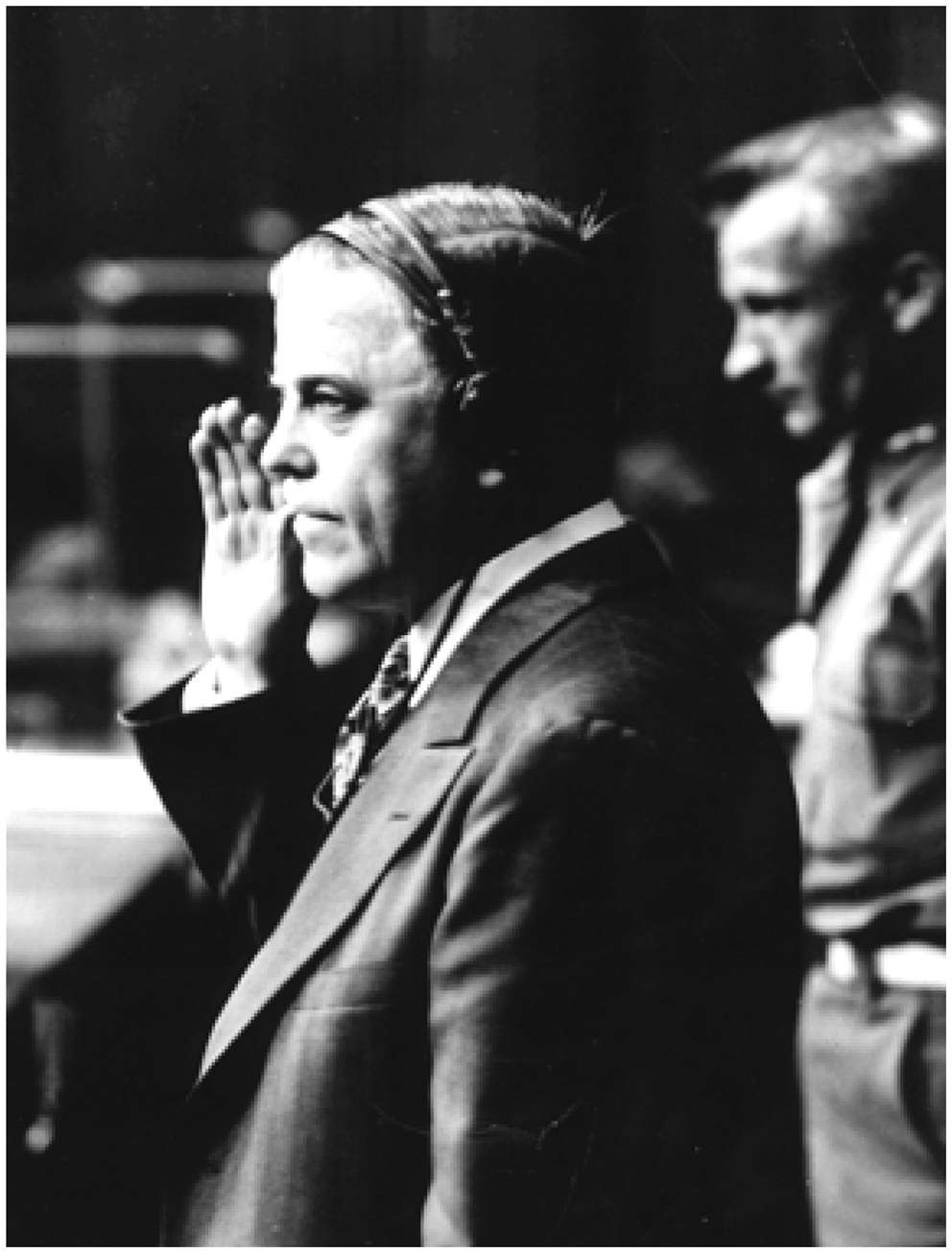
To the Pappworth letter, Ivy attached a copy of another letter he had sent in March 1964 to three academic colleagues (Ladimer, Newman and Curran). That letter set out Ivy’s version of ‘the origin and development’ of the Nuremberg Code and the copy in Ivy’s own archive at the University of Wyoming has already been discussed in the literature.4,5 However, what has not previously been realised is that the copy he sent to Pappworth in 1966 carries an additional penciled note in Ivy’s own hand claiming unequivocally that he was the author of the Code with the exception of a single word in Article 5.
This annotation to the Pappworth version states: Note: I did not include the word “perhaps” in the 5th article of the Nurenberg [sic] Code when I turned … over to the Judges my version of the Code. Nothing else in my version was materially changed. I see NO rational or defensible reason for the word “perhaps”. This provides the scientist to believe that he is intrinsically worth more than his experimental subject, and is contrary to the best historical heritage. I do not know who introduced the word “perhaps”. The remainder of the code I turned in was not essentially changed.
3
Claims to authorship
The Code, although largely ignored shortly after it was pronounced, had, some two decades later, acquired a much greater significance.6,7 With its authorship unclear from the outset, the potential for rival claims for its genesis was great. Who was present in Nuremberg at the time? Who had the ear of the judges? And, who could see the need for such a code of conduct? Ivy was certainly there – indeed he had attended portions of the early trial and he was the key rebuttal witness for the prosecution, taking the stand for four days late in the trial in mid-June 1947. As the most senior physician present he would certainly have had access to the judges and indeed he claimed to have been invited to lunch by the judges in January 1947 – just over a month into the trial – where they explained to him their concerns for the case before them. 3 That Ivy would also have been acutely aware of the need for a code of conduct may be safely assured from his long experience as a clinical researcher.
The other main contender who may reasonably claim authorship of the Code, apart from the judges themselves, is Leo Alexander. He was an Austrian-born American physician who served first as a medical war crimes investigator and then as medical expert to the Nuremberg Doctors’ Trial. 8 Like Ivy, he prepared and submitted several sets of ethical principles to the court, but because of the lack of documentary evidence detailing the judges thinking while drafting their ruling we must speculate as to the relative importance of each man’s contribution.
In this speculation timing seems to be all-important. As we shall see when we examine the development of Article 5 of the Code, Ivy’s drafts do appear to have precedence over Alexander’s, but neither present the exact wording used by the judges and it is necessary to invoke the bench’s involvement either collectively or singly, perhaps most credibly in the person of Judge Sebring. Brigadier General Telford Taylor, the Chief Counsel for the Prosecution, believed Sebring to be the author of the Code and later described him as ‘the moving spirit on legal and evidentiary problems on the court’. 9
Ivy clearly claims credit for the Code in his letter to Pappworth, 3 but equally Alexander 10 some three decades after the trial, would also claim its sole authorship. Does it matter who wrote the Code? In one sense – no. Irrespective of its authorship it remains a key contribution to the development of clinical research ethics. However, in another sense, an historical one, it matters greatly. How was the Code conceived, in what context and to what ends? These questions may only be meaningfully answered if the author of the Code is identified.
If Ivy was the author, as he claims unequivocally in his letter to Pappworth, then we may view the Code, not as a minor aside within the judgement at Nuremberg that has since, perhaps by accident, achieved a wider significance, but rather as the culmination and completion of a strategy conceived by Ivy before the trial began. Indeed, in his 1964 letter he states: I might add that I accepted the invitation to serve at the Nurenberg [sic] Trials only because I had in mind the objective of placing in an international judicial decision the conditions under which human beings may serve as subjects in a medical experiment, so that these conditions would become the international common law on the subject. Otherwise I would have had nothing to do with the nasty and obnoxious business. I believe in prevention, not a “punitive cure” … The Judges and I were determined that something of a preventative nature had to come out of the “Nurenberg Trial of the Medical Atrocities”.
3
However, setting aside the legal arguments, this story of objective setting may be one argument against Ivy’s version of events and for this being a piece of revisionist history. Rarely, in practice, does a complex plan like this come to pass – much easier to revise the sequence of events, even some of the key facts, to make the story a better and more coherent one.
If this was the case then this would not be the first time Ivy had adjusted the facts to suit the narrative. Indeed one historian has described him as a ‘master of the white lie’. 12 In his testimony at Nuremberg, Ivy referred to the report of a committee that had been established to evaluate prison research. During his cross-examination he all but perjured himself 2 for, in reality, the committee had never met and the ‘report’ referred to was written by Ivy alone. After the trial, the committee did meet to ratify the so-called Green Report and it was subsequently published, but the sequence of events had clearly been manipulated by Ivy for his own ends. 12
Article 5
Almost irrespective of our conclusions on the veracity of Ivy’s claim to be the sole author of the code we must examine separately his obvious concern over the exact wording of Article 5 of the Code, which states: 5. No experiment should be conducted where there is an a priori reason to believe that death or disabling injury will occur; except, perhaps, in those experiments where the experimental physicians also serve as subjects.
6
The first formulation of what would become Article 5 appears in a document prepared by Ivy for a meeting of the International Scientific Commission on Medical War Crimes in Paris on 31 July 1946. This meeting had been convened to investigate and document medical war crimes. Section IIIc of Ivy’s ‘Outline of Principles and Rules of Experimentation on Human Subjects’ runs: The experiment should not be conducted if there is a priori reason to believe that death or disabling injury will occur.4,13
Ivy’s Code was submitted to the AMA on his return to the US and was eventually ratified on 10 December 1947 in a shortened and considerably weaker form entitled ‘Principles of Ethics Concerning Experimentation on Human Beings’ and was published on 28 December 1946 in their journal. 14 Any reference to the specifics that would comprise Article 5 had been lost.
Ivy expanded his Paris Code in an undated memo written, according to Schmidt,
15
sometime between 9 August and 16 October 1946 and submitted this to the Prosecution Team in Nuremberg at approximately the same time as his AMA report.
16
This report again contained three principles and IIIc states: The experiment must be conducted … so, that, on the basis of the results of previous adequate animal experimentation, there is no a priori reason to believe that death or disabling injury will occur, except in such experiments as those on Yellow Fever where the experimenters serve as subjects along with non-scientific personnel.
16
At the same time, Alexander was also actively seeking the ear of the Prosecution Team and 48 hours before the start of the trial in December 1946 he submitted a memo to Telford Taylor, entitled ‘Ethical and Non-Ethical Experimentation on Human Beings’ in which he also defined three principles. His principle 2 states: It is ethically permissible for an experimenter to perform experiments involving significant risks only if the solution, after thorough exploration along all other lines of scientific investigation is not accessible by any other means, and if he considers the solution of the problem important enough to risk his own life along with those of his non-scientific colleagues, such as was done in the case of Walter Reed’s yellow fever experiments.
10
If there is a priori reason to believe that death or disabling injury might occur, the experimenters must serve as subjects themselves, along with the nonscientific personnel
Ivy, in his note to Pappworth, takes great exception to the inclusion of the word ‘perhaps’ in this Article. Why? It has been argued that this Article of the Code was specifically included to counter one of the lines of defence put forward by the counsel for the Nazi physicians and administrators in Nuremberg, that is, that previous US military research had knowingly put the lives of research subjects at risk. 19 In particular, the example of Walter Reed and the Cuban yellow fever experiments from 1900 was cited. Perhaps to counter this specific charge, Ivy’s revised version of what would become Article 5 refers to ‘such experiments as those on Yellow Fever’ and this pre-emptive reference to the Walter Reed experiments was also echoed by Alexander’s memos to Telford Taylor.
Interestingly, Ivy was not concerned with the omission of any reference to the yellow fever experiments in the final version of the Article, but rather to a softening of the self-experimentation exception. Perhaps he was aware that Walter Reed himself was never a subject of the mosquito experiments designed to prove the aetiology of yellow fever, only his junior medical staff participated, and one physician – Jesse Lazear – paid for it with his life. 17 But, even if an investigator is willing to be the first subject in a potentially life-threatening experiment, does this really make it ethical to put others at risk? Self-experimentation, it has been argued by Annas, 19 is not research at all, but simply ‘self-indulgence’ or even ‘self-abuse’. Clearly, those involved in drafting the Nuremberg Code did not share this distinction and believed that the personal participation of the investigator in the experiment lent a special justification to putting the lives of others at similar risk.
However, the insertion of the word ‘perhaps’ would seem to indicate that even this caveat is not absolute. The jurists may have wished to indicate that not every life-threatening experiment could be justified in this way. Alternatively, they may have wished, as Ivy seems to have interpreted it, to indicate some lack of parity between the investigator and the subject. If someone, as important as a physician, is willing to risk his or her life in an experiment then maybe that should be sufficient to justify the recruitment of ordinary subjects. Indeed in his letter to Pappworth, Ivy emphasised his concern here by stating, ‘the idea that the experimenter is worth more than the subject is ruinous. This ideology has crept into American Clinical Investigation to some extent. In 1947 I predicted it would do so’. 3
Overall, this seems a relatively small point for Ivy to labour and to highlight to Pappworth almost 20 years later. Ivy’s disproportionate concern over the insertion of a single word into Article 5 of the Code is interesting, as this addition does not fundamentally change the meaning of the Article as Ivy seems to contend. What exactly is going on here? Perhaps his concern, real or manufactured, reveals more about his state of mind in the mid-1960s than about the detailed drafting of the Code. By focusing on such a small discrepancy is Ivy in effect emphasising his ownership of the whole, which particularly at this stage in his life he may have been eager to do?
In 1964, two years before writing to Pappworth, Ivy along with three others had been indicted for fraud over the alleged anticancer drug Krebiozen. 20 The court case was lengthy and although Ivy and his co-defendants were finally found not guilty the following year, his reputation would have been tarnished. Perhaps, the letters Ivy wrote in 1964 to Ladimer, Newman and Curran, and in 1966 to Pappworth were part of his personal rehabilitation strategy. With an eye on his legacy, the 73-year-old Ivy may have wanted to emphasise the part he had played in the development of the pre-eminent code of research ethics to compensate for any perceived misconduct. By conspicuously drawing attention to a single word that was not his, he was firmly staking his claim to the other 499.
Ivy’s last letter to Pappworth was in June of the following year requesting a copy of Human Guinea Pigs, which had just been published. ‘I am sure I shall profit by reading your book’, he noted. 21 Whether he did or not we are unlikely ever to know.
Conclusion
Ivy’s professed intention of participating in the Nuremberg Doctors’ Trial in order to place a code of ethical conduct in the context of international common law may have been not only a revision but a reversal of the true course of events. However, the reality of what took place after 1947 must have gone beyond even Ivy’s ambitions, real or re-imagined. The Nuremberg Code not only entered the legal landscape, but also became the prototype for all future codes of ethical practice across the globe. Shuster 6 has described the Nuremberg Code as ‘the most important document in the history of the ethics of medical research’. To be recognised as the author of such a document would be a prize worth fighting for, especially if, as in Ivy’s case, any doubt had been cast on your professional reputation. Ivy’s claims for virtually exclusive authorship made almost 20 years after the fact do, however, seem to be at odds with some of the key facts and given his history of manipulation of other narratives, we may express reasonable doubt about the truth of his claims. That said, he undoubtedly played an important role in the genesis of the Code, but so did others including Leo Alexander and the judges. 22 The Code began as a relatively minor component of a tribunal judgement; what it then became was a touchstone for the development of modern research ethics, acquiring a significance that transcended any issue of individual authorship. Shuster 6 has argued eloquently that the Code was the product of the trial proceedings and perhaps in this light the true author of the Code should be identified as justice itself.