




Abstract
Objective
To examine the effect of the 24-h doctors’ strike on 21 June 2012 on hospital activity in English NHS hospitals.
Design
Retrospective descriptive study of inpatient, outpatient and Accident and Emergency (A&E) activity in NHS hospitals over the strike period.
Setting
All English NHS hospitals.
Participants
Patients admitted to hospital, patients with outpatient appointments and A&E attendances over a three-week period (from 11 to 29 June 2012), excluding weekends and spanning the strike day.
Main outcome measures
Numbers and percentage change of inpatient admissions (elective and emergency), day surgery cases, outpatient appointments cancellations, A&E attendances and in-hospital deaths on the day of the strike compared with patient activity on the Thursday before and the Thursday after the strike week.
Results
There were a total of 795,267 admissions, 5,602,971 outpatient appointments, 356,645 outpatient cancellations (by NHS provider), 4,470,208 outpatients seen by medical staff, 986,322 A&E attendances and 13,857 in-hospital deaths over the three-week period. Compared with the non-strike period, on the day of the strike, emergency admissions fell by 2.4% while the elective admissions decreased by 12.8%. There was a 7.8% drop in the number of outpatients seen by medical staff on the day of the strike and a 45.5% increase in the number of cancelled appointments by NHS hospitals, while A&E attendances dropped by 4.7%. The impact of the strike across regional Health Authorities in England was varied. The North West Health Authority was affected the most while the least affected Health Authorities were the South West, East of England and South Central.
Conclusions
The 24-h doctors’ strike in England on 21 June 2012 significantly affected the provision of healthcare by NHS hospitals. We observed regional variations on NHS service levels on the day of the strike.
Introduction
On 30 May 2012, the British Medical Association (BMA), which represents two-thirds of medical practitioners in the UK, announced their decision to take industrial action on Thursday 21 June 2012 due to disagreements over government pension reforms.1,2 It was the first time in 37 years that UK doctors had gone out on strike. 3 According to the Trade Union and Labour Relations Act, doctors are prevented from action that puts the public at risk. 4 Therefore, the BMA announced that all emergency and urgent cases would be dealt with as usual.
Although exact figures are not known, it was reported that 8% of doctors across England took industrial action. 5 The Department of Health received information from individual NHS trusts to reveal a varied picture. In the London area, >90% of all hospitals worked normally (approximately 10% of planned operations were postponed) and 83% of GP practices were said to have worked normally, with the remaining 17% open but dealt only with urgent cases. 6 The general view reported in the national news was that non-emergency cases and outpatient appointments were affected and a significant number of cancelled appointments had to be re-scheduled. 7
We set out to assess the effects of the doctors’ strike using a national hospital administrative data-set for England that records information on NHS activity. It gives us a unique opportunity to analyze trends in the number of admissions (inpatients), outpatient appointments cancellations, Accident and Emergency (A&E) attendances and in-hospital deaths on the strike day and to compare these with the expected numbers based on a non-strike period.
Methods
We used the routinely collected administrative database Hospital Episode Statistics (HES) containing information on all inpatient admissions and outpatient appointments in NHS hospitals in England.
8
We extracted records for a three-week period, excluding weekends, spanning the strike (11–29 June 2012). We examined inpatient activity by extracting daily counts of elective (planned), emergency admissions and day surgery cases. To examine outpatient activity, we extracted daily counts of total appointments and outpatient attendance. There are eight outpatient attendance types categorized in HES under the field ‘Attended’:
Future appointment (N/A) Appointment cancelled by patient Patient did not attend – no warning given Appointment cancelled (or postponed) by hospital health provider Patient seen by medical staff on time Patient late but seen by medical staff Patient late – not seen by medical staff Not known
We focused on outpatients seen by medical staff, either on time or late (categories 5 or 6), and cancellation of appointments by the NHS hospital (category 4) as we believe these would be the most affected categories during a doctors’ strike. We also extracted daily counts of all attendance records for A&E departments including Minor Injuries and Walk-in Centres. We extracted counts of in-hospital deaths that took place on the strike period.
Due to seasonal and daily variation in NHS patient activity,9,10 it is necessary to follow a strict day-to-day comparison between a strike and a non-strike period. As the strike took place on a Thursday, we defined the non-strike period as the Thursday before and the Thursday after the strike week. We then compared hospital activity on the day of the strike with the expected activity based on the non-strike period. The expected numbers were derived as the average from daily counts for the non-strike period. We assumed that patient counts were described by a Poisson distribution and used a Chi-squared test to evaluate significance. p values < 0.05 were considered statistically significant.
Results
For the three-week period (11–29 June 2012), there were a total of 795,267 inpatient admissions (302,675 emergency admissions and 492,592 elective, of which 346,077 were day surgery cases) and a total of 5,602,971 outpatient appointments of which 4,470,208 were outpatients seen by medical staff. There were 356,645 outpatient cancellations (by the hospital). There were 986,322 A&E department attendances and 13,857 in-hospital deaths.
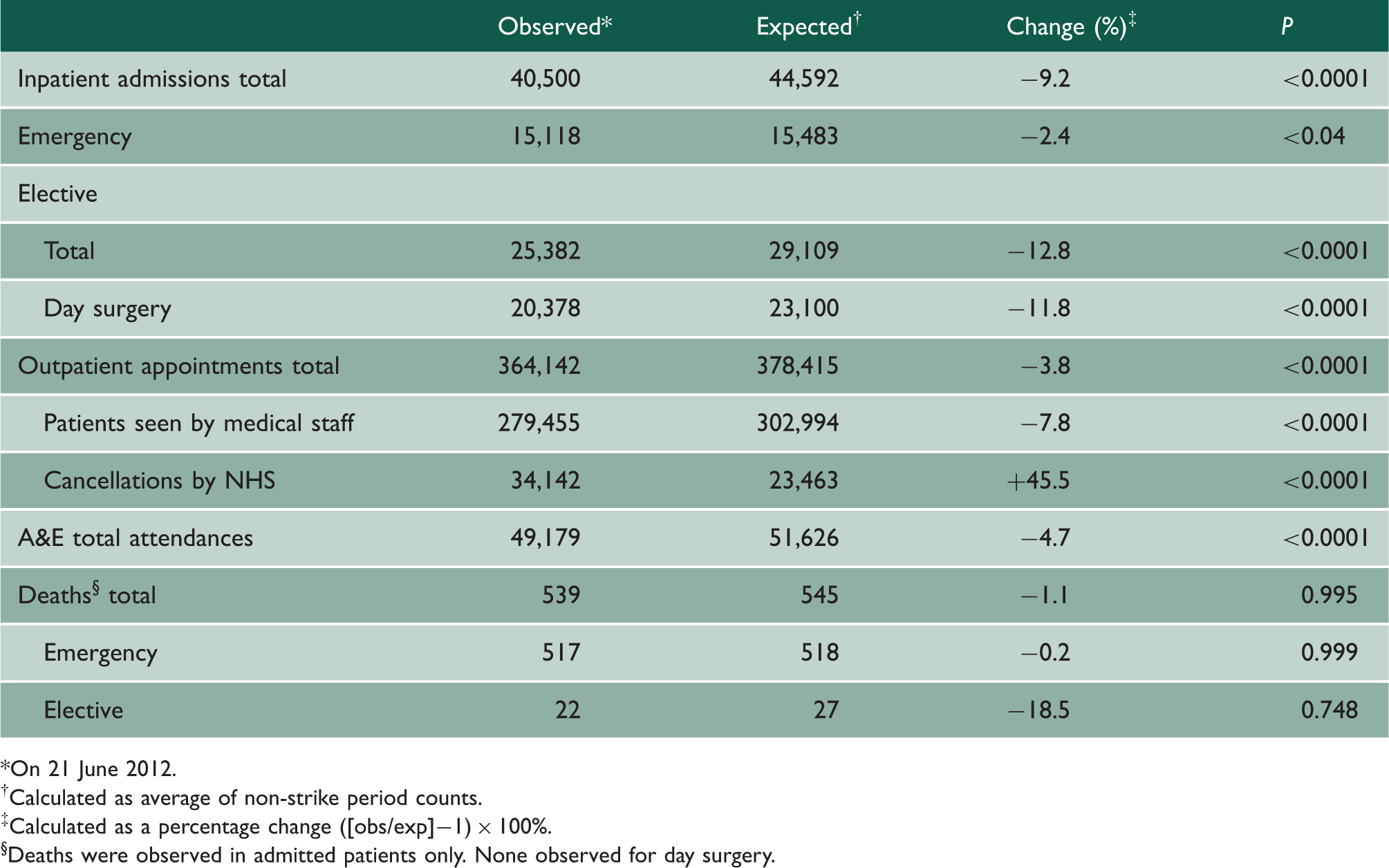
On the day of the doctors’ strike, the total number of inpatient admissions (including day surgery cases) to NHS hospitals in England decreased by 9.2% (p < 0.0001). The emergency admissions dropped by 2.4% (p < 0.04) while the elective admissions decreased by 12.8% (p < 0.0001). Within the elective admissions, day surgery cases decreased by 11.8% (p < 0.0001). See Table 1 for summary. Figure 1 shows inpatient admissions per weekday over the three-week period highlighting the strike week.
Number of elective, day surgery and emergency admissions per weekday over the three-week period. The red line corresponds to the week of the strike. *Δ corresponds to change in numbers (percentage change in brackets) between strike day and the average for non-strike period. Observed and expected number of inpatient admissions, outpatient appointments, A&E attendances and in-hospital deaths on day of doctors’ strike. On 21 June 2012. Calculated as average of non-strike period counts. Calculated as a percentage change ([obs/exp]−1) × 100%. Deaths were observed in admitted patients only. None observed for day surgery.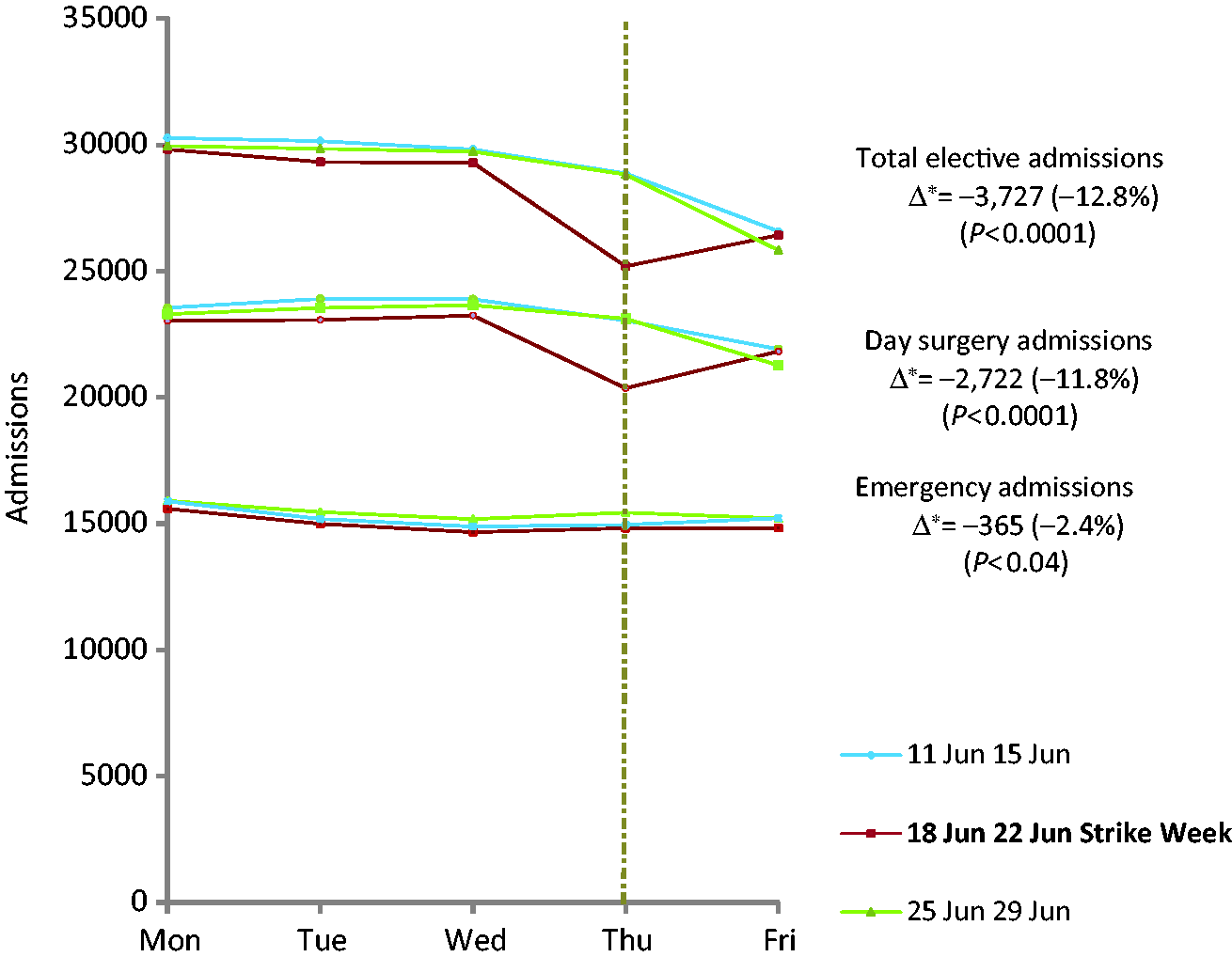
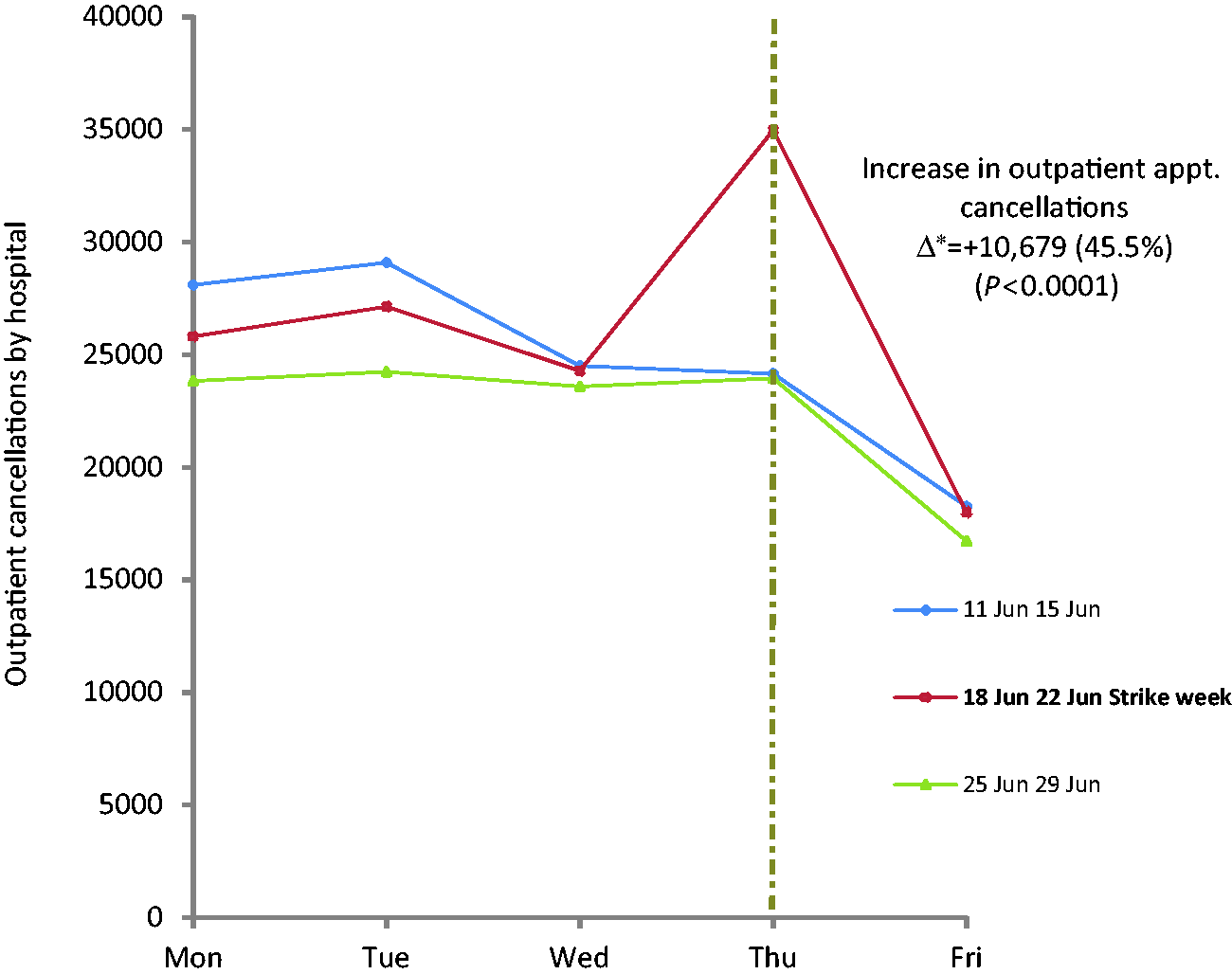
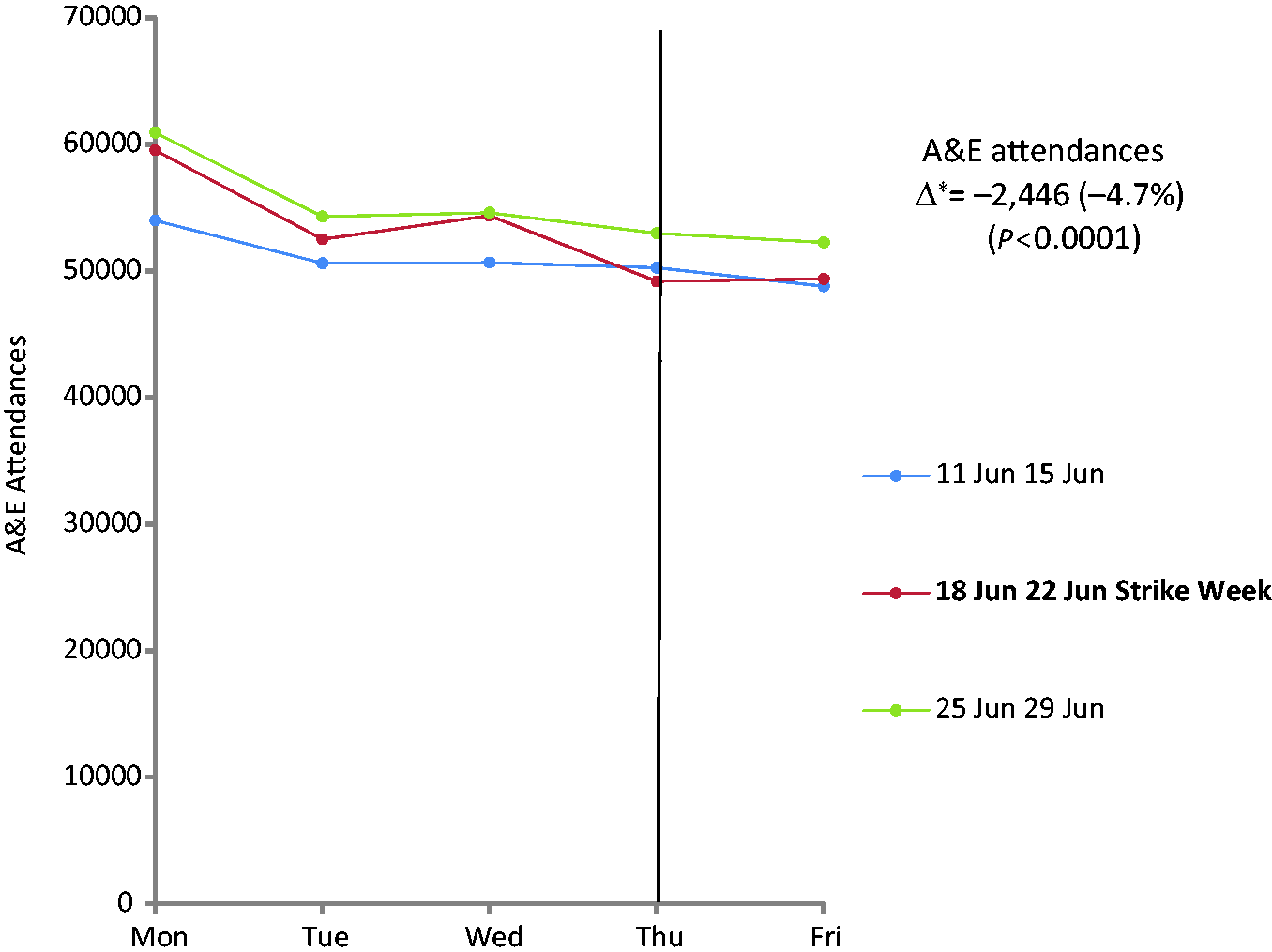
The total number of outpatient appointments on the day of the strike decreased by 3.8% (p < 0.0001). The number of outpatients seen by medical staff on the day of the strike dropped by 7.8% (p < 0.0001). Figure 2 shows the number of outpatients seen by medical staff per weekday over the three-week period highlighting the strike week. The most significant effect of the 24-h doctors’ strike was seen in the number of outpatient appointment cancellations (by hospitals) with an increase of 45.5% (p < 0.0001). Figure 3 shows the number of outpatient cancellations over the three-week period. A&E departments across England experienced a drop in attendance numbers of 4.7% (p < 0.0001). Figure 4 shows the A&E attendance numbers over the three-week period.
Outpatients seen by medical staff per weekday, over the three-week period. The red line corresponds to the week of the strike. *Δ corresponds to change in numbers (percentage change in brackets) between strike day and the average for non-strike period. Outpatient appointment cancellations by NHS hospitals in England per weekday, over the three-week period. The red line corresponds to the week of the strike. *Δ corresponds to change in numbers (percentage change in brackets) between strike day and the average for non-strike period. Total A&E attendances per weekday, over the three-week period. The red line corresponds to the week of the strike. *Δ corresponds to change in numbers (percentage change in brackets) between strike day and the average for non-strike period.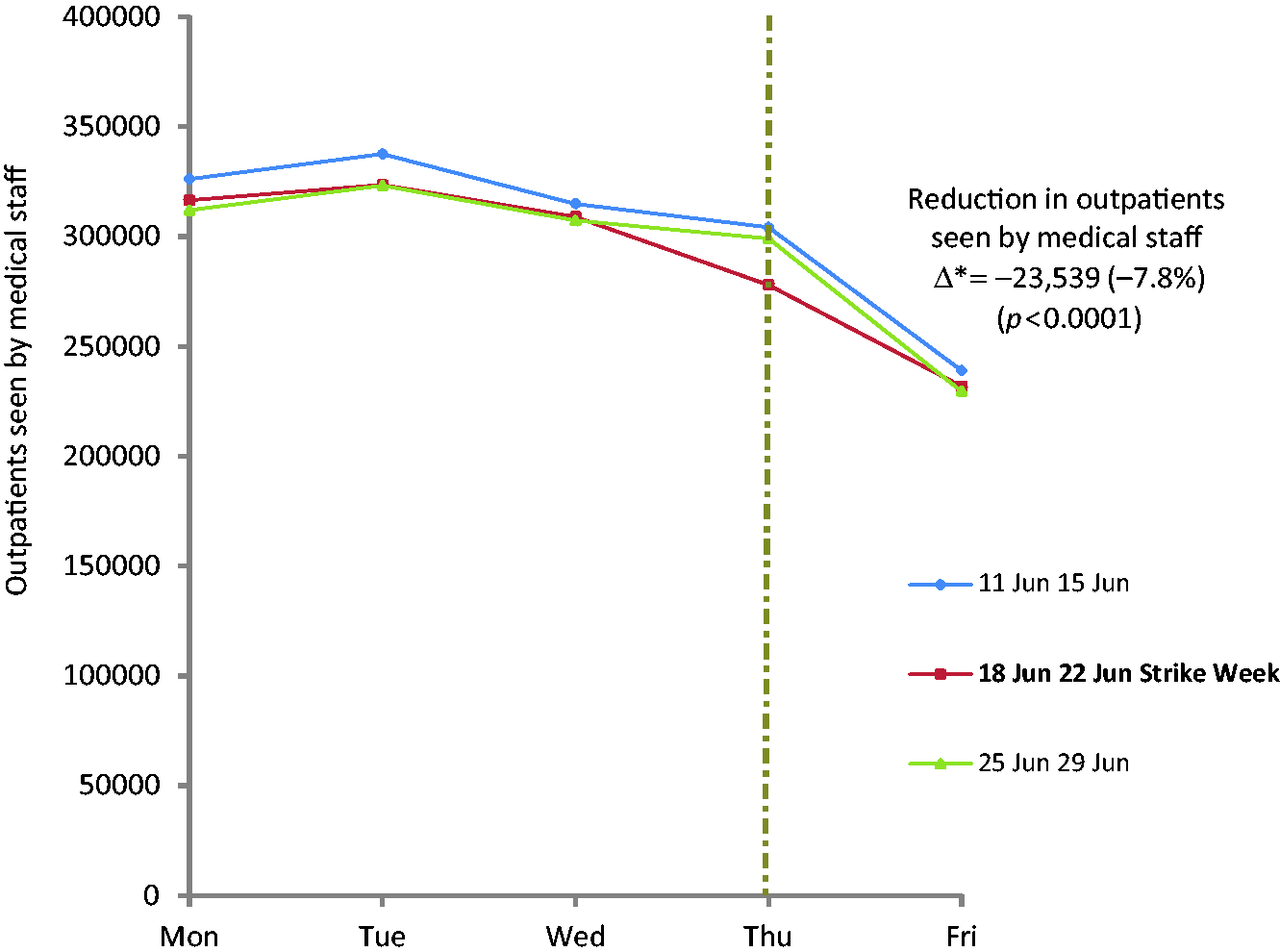
A similar analysis of hospital activity by Strategic Health Authority (SHA) showed a varied picture across the country. The North West Health Authority was significantly affected, with more than a doubling in the number of outpatient appointment cancellations by hospitals in the North West SHA. It also had one of the largest drops in the number of outpatients seen on the day (10%) and the largest drop of patients admitted for either elective (16%) or day surgery (15%) on the day of the strike. West Midlands was the only SHA to see an increase in the number of emergency admitted patients (2.3%), while London and East of England SHA experienced no change in the number of emergency admitted patients on the day of the strike. Yorkshire, North East and North West SHAs experienced the largest drop in A&E attendances (9.7%, 8.7% and 6.4%, respectively). Overall, the least affected Health Authorities were the South West, East of England and South Central. See Figure 5 for details of counts by strategic health authority.
Inpatient (a), outpatient (b) and A&E (c) activity change (%) on day of strike (21 June 2012) by Strategic Health Authority. The percentage change is in comparison to the average for each SHA during the non-strike period.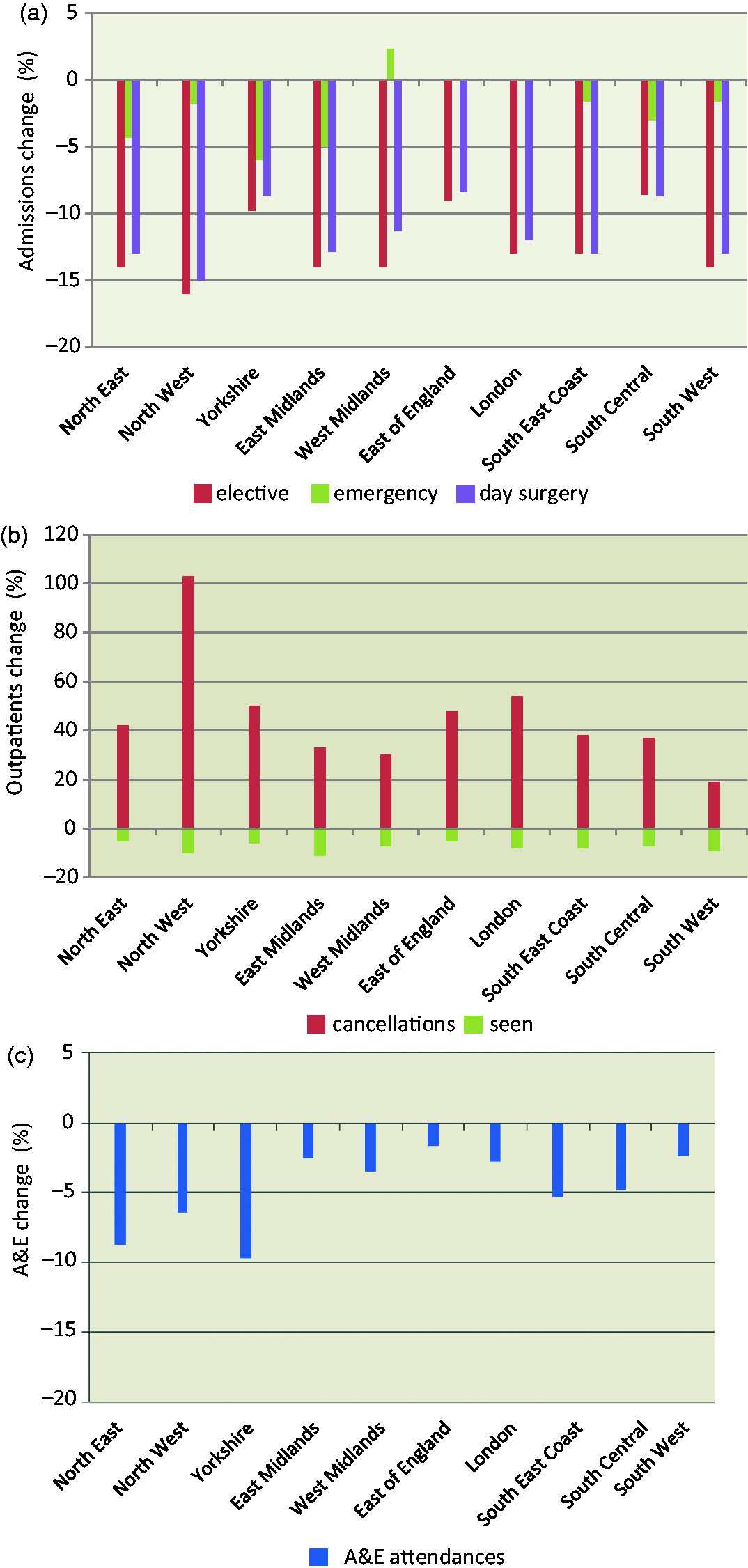
Deaths
There were a total of 539 in-hospital deaths for admitted patients on the day of the strike (1.3% of the total admissions) compared with the expected 545 (a decrease of 1.1%, p = 0.995). Of the total in-hospital deaths, 517 were on emergency admissions and 22 in elective admissions, compared with the expected 518 (a drop of 0.2%, p = 0.999) and 27 (a drop of 18.5%, p = 0.748), respectively. There were no deaths recorded for either day surgery or A&E on the strike day. There is no significant difference in the number of in-hospital deaths between the strike and the non-strike period. See Summary in Table 1.
Discussion
We examined more than six million hospital records (split into inpatients, outpatients and A&E) for a three-week period spanning the day of the doctors’ strike. In spite of the small percentage of doctors taking part in the industrial action (8% across England 5 ), the effect of the strike was felt in the outpatient, inpatient and A&E departments across hospitals, with substantial numbers of cancelled appointments and reduced numbers of patients seen on the day. Most affected were outpatient clinics, with an increase of 45.5% in cancelled appointments by the NHS hospitals. Emergency admissions suffered a marginal but significant 2.4% decrease in numbers, when compared with the average counts for the pre- and post-strike Thursday. However, the difference between the pre- and post-strike Thursday counts was greater and reflects variability in daily admission counts. We therefore suggest that the observed reduction in emergency admissions on the day of the strike is not clinically significant. A&E departments were affected by a significant decrease of 4.7% in attendance numbers; however, by examining the pre- and post-strike counts of A&E attendances (Figure 4), we conclude that the observed drop on the strike day could be simply due to daily count variability.
The strength of this study is the use of a national data-set (HES), which contains information of all hospital admissions in a timely and uniform manner. Although there may be a debate as to the accuracy of clinical diagnostic coding within HES, 11 the counts of activity (and cancellations) are unlikely to suffer from similar bias. The observed changes in hospital patient numbers on the strike day could be due to confounding factors such as seasonal variability. However, we attempted to minimize seasonal variation by comparing numbers from the weeks immediately before and after the day of the strike. We specifically avoided the use of data from early June, as national events took place which could have potentially affected hospital activity (Queen’s Jubilee celebrations and extra Bank Holiday); the day of the strike did not experience any unusual or extreme weather and was not a faith-related celebratory day. Thus, we conclude that the observed changes in hospital activity in England on 21 June 2012 are likely to be due to the industrial action taken by doctors.
As this was the first time in 37 years that doctors went on strike across the country, we are unable to compare the results of this study with similar episodes in the country. An unavoidable limitation of this study is the relatively short period of the strike action (24 h) which significantly reduces our ability to interpret the effect of the strike action on mortality. A comprehensive review on hospital mortality during doctors’ strikes of various durations around the world that took place between 1976 and 2003 reveals the paradoxical pattern that mortality is either reduced or stays the same when doctors strike. 12 Similarly, a study of a 20-day strike in a South African hospital in 2010 reports a decrease in total mortality. 13 These studies show that, contrary to common expectations, the lower mortality observed during doctors’ strikes highlights the fact that, overall, fewer patients are able to have elective (non-urgent) surgical procedures which could otherwise result in death, thus lowering mortality. Although we did observed a reduced number of in-hospital deaths during the 24-h doctors’ strike, the observed change was not significant. Interestingly, when nurses in New York decided to strike during striking intervals between 1984 and 2004, 14 the in-hospital mortality increased by 19.4%, due in part to the withdrawal of the hands-on work that nurses deliver. In New Zealand, a series of junior doctors’ strikes took place in emergency departments between 2006 and 2008. Although mortality rates have not been made public, the efficiency of emergency departments was increased due to the seniority of staff who took over the duties of junior doctors.15,16
Conclusions
It appears that the doctors’ strike on 21 June 2012 had an impact on activity within NHS hospitals in England. A significant number of patients were affected with a reduction in elective admissions and cancellations of outpatient clinics while A&E departments experienced a reduction in total attendances. There may of course be other more long-term consequences of the doctors’ strike that are difficult to discern in our data. Routinely collected data are useful in examining the impact of industrial action within the health service.