




Abstract
The purpose of this study is to understand the determining factors of in-migrant population registration in various counties or cities in Taiwan. Panel data from counties and cities in Taiwan from 2000 to 2021 were adopted, and spatial econometric analysis was conducted using the spatial Durbin model. In terms of spatial spillover effects, the in-migrant population of each county or city is influenced by the fiscal expenditure and economic opportunity factors of neighboring counties or cities, such as (1) expenditure on education, science and culture, (2) number of employed population, (3) average annual regular income per household and (4) average disposable income per household.
Keywords
Introduction
Government fiscal policy is one of the primary means through which governments achieve economic policy goals and provide public resources and services. The impact of public resources and services on population mobility, especially on the family-oriented mobility of the population, is not a simplistic social process. Studies on the influence of public resources and services on population mobility can be traced back to the “vote with their feet” theory proposed by Tiebout. Tiebout (1956) introduced the theory of “vote with their feet,” suggesting that consumers (voters) “vote” with their mobility by choosing localities or communities, implying that each locality or community has a mix of taxes and public goods. This system of “voting with feet” can mimic the operation of market mechanisms. Tiebout (1956) posited that generally speaking, wherever a locality or community can effectively provide public products and services that align with the consumer preferences of certain individuals, it will experience an influx of population; if it cannot do so effectively, it will face the phenomenon of population outflow. Tiebout’s proposition initiated the prologue of the study in local public economics and has become an important reference in urban economics research. Subsequently, Oates (1969) conducted empirical research and development on the “vote with their feet” theory. The core of his research can be summarized as the capitalization of public services. The basic logic of his study is that the level of local public services will affect the residential choices of inhabitants.
The issue of regional disparity has always been one of the significant concerns for geographers, economists and government administrators (Gu et al., 2021). Regional disparity is a universal phenomenon in economic development, and the internal migration of residents directly reflects the economic and social developmental disparities (Gu et al., 2021). Cross-regional internal migration has a tremendous impact on regional economic and social development (Gu et al., 2021). Internal migration—the mobility of residents between different locations and regions within a country—results in a major redistribution of the national population (Charles-Edwards et al., 2019). However, in terms of the spatial dependency of domestic population migration, the migration behavior of the resident population in a geographical region is not independent; it has some spatial correlation with adjacent geographical areas. In other words, the distribution of domestic population migration behavior has certain spatial patterns. The population migration in different geographical regions within a country will be affected by some local factors and the neighborhood effect, meaning the influences of adjacent areas.
There is a wide range of studies about internal migration exploring different influential factors. Some studies done in Asia include the following: Zhao’s (2023) study, which posits that young people migrating to major cities like Beijing, Shanghai, Guangzhou and Shenzhen in China show a positive correlation with income realization; the economic benefits obtained by young people are greater compared to migrating to other places within the country. This study also validated the “escalator region hypothesis” 1 first proposed by Fielding (1992). Lu (2023) explored the causal impact of the equalization of basic public health and medical services in China on the long-term urban settlement intentions of the floating population. Zhou and Guo (2023) argue that internal population mobility in China has led to a large influx of rural populations into cities, and compared to urban residents, they face more structural and policy-based disadvantages in the cities. In Indonesia, Malamassam et al. (2021) suggest that highly educated people are mainly concentrated in large cities or metropolitan areas. The migration decision-making process of educated migrants to smaller cities is driven by promising career developments. Yu et al. (2019) believe that employment opportunities and wages have led to an imbalance in China’s population migration patterns, although amenities have also become an important pull factor for migration. Kone et al. (2018) think that policies between different states within India create obstacles to domestic resident migration, such as those related to healthcare and education. Park and Kim (2015) explored the factors affecting the migration decisions of elderly people in South Korea. Additionally, some studies explore the impact caused by domestic internal migration, including Long et al. (2022) who believe that during the process of internal migration in China, the modes of production and consumption usually change, ultimately leading to alterations in ecological footprints. Ma and Tang (2020) researched the impact of population mobility between cities in China on local welfare, suggesting that further relaxing the Hukou restrictions in major Chinese cities could improve the welfare of local residents.
However, upon reviewing past literature, there is relatively limited research discussing the influencing factors of internal migration behaviors within Taiwan. Taiwan currently has six special municipalities, 13 counties and three cities, making up a total of 22 administrative regions as the highest level of local autonomous entities. Additionally, among the studies with Taiwan as the background, fewer studies utilize the perspective of spatial effects to explore relevant issues. Hence, this paper primarily analyzes two aspects: Local fiscal expenditure and economic opportunities.
Firstly, regarding fiscal expenditure, past research has already discussed that there is a significant relationship between government spending and population migration (Bonin et al., 2000; Day, 1992; Fox et al., 1989; Tiebout, 1956). Based on Tiebout’s (1956) “vote with their feet” theory, this thesis specifically explores the impact of expenditures on economic development, education, science and culture, social welfare, community development and environmental protection on in-migrant populations.
Secondly, in terms of economic opportunities, previous studies have elucidated that economic opportunities have a significant impact on population migration (Lee, 1966; Ravenstein, 1885; Todaro, 1969). The studies on the impact of economic factors on population migration are mostly focused on the influence of economic development opportunities. This paper, based on Ravenstein’s (1885) “The Laws of Migration” and Todaro’s (1969) “Model of Labor Migration,” specifically investigates the impact of the number of registered companies, employed population, average annual regular income per household and average disposable income per household of in-migrant populations. In addition, the empirical model of this study also includes medical and educational-related control variables.
Therefore, the research objectives of this study are as follows: (1) to explore whether there is an overall spatial autocorrelation clustering phenomenon of the in-migrant populations in various counties and cities in Taiwan, and the clustering conditions of specific counties and cities; (2) to investigate the direct effects of local fiscal expenditure and economic opportunities on the in-migrant populations in local counties and cities; and (3) to study the spatial spillover effects of neighboring counties’ and cities' fiscal expenditure and economic opportunities on the in-migrant populations in the local counties and cities.
The next section will elucidate the development of the hypotheses, the data and research sample, the research variables and empirical models. The results of the empirical analysis include descriptive statistics and the results of correlation analysis, spatial autocorrelation tests, LISA cluster diagrams, and the analysis results of the spatial Durbin model, direct effects and spatial spillover effects. Finally, the research findings and policy implications concerning internal migration in Taiwan are presented.
Literature review
Fiscal expenditure and in-migration population
Local finance is an essential component of national finance, and the fiscal efficiency of local governments directly determines the quality of local public services. It reflects the level of administrative efficiency of local governments and is related to the vital interests of the masses. A region with more comprehensive environmental regulations on infrastructure not only influences its development but also has greater attractiveness to the capital, labor and other production elements of neighboring areas (Boarnet, 1998). Government expenditure is one of the primary tools of macroeconomic stabilization policies. Regional differences in living function or quality are also one of the significant factors affecting population migration. Through fiscal expenditure, various constructions can be carried out locally to create a suitable living environment and promote various developments to attract more in-migrants. Past studies have shown that regional living function or quality does have a substantial impact on population migration (Cushing, 1987; Porell, 1982). For example, Porell (1982) believed that people tend to migrate to regions with higher levels of public services, that is, areas with better living function or quality. Cushing (1987) found that people value regional comfort and would rather forsake wages to choose to live in more comfortable areas. Regarding the air quality of the living environment, Zhang et al. (2022) believe that, compared to cities with dirty air, migrant workers are more likely to settle in cities with clean air. Air pollution only affects the permanent settlement intentions of the floating population and does not affect their short-term stay intentions.
Moreover, Fox et al. (1989) and Day (1992) posit that the differences in the scale and structure of fiscal expenditure have diverse impacts on the migration behavior of residents. Bonin et al. (2000) further point out that fiscal expenditure elevates the motivation for population migration by directly affecting the level of public services. However, excessive in-migration can have effects on the economy and society of the destination area. Therefore, the fiscal policies and other administrative measures employed by local governments not only have direct or indirect impacts on the endowment and mobility of production elements, such as labor, capital, technology and information, but also bring significant external effects to the living environment. Naturally, this would attract the population from other counties or cities to register as residents in this county or city. Gu et al. (2021) believe that per capita fiscal expenditure is positively correlated with the willingness to migrate in. Hence, this study establishes the following hypothesis (direct effect):
An increase in the fiscal expenditure of this county or city has a significant impact on the in-migration population of this county or city.
Case et al. (1993) explored the interrelated effects of fiscal policy and budget spillovers in the United States (USA). They suggested that neighbor effects could be considered as the degree of similarity between local governments, implying that public expenditure can influence each other, primarily due to certain similar characteristics existing among local governments. The higher the similarity between local governments, the stronger the spillover or demonstrative effects likely generated by each other’s public expenditure. Through empirical analysis, Pereira and Roca-Sagalés (2003) and Cohen and Morrison Paul (2004) found that the public expenditure of a region, especially infrastructure construction, has a positive spatial spillover effect on the economic growth of neighboring areas. López et al. (2017) believe that the key function of local governments is to provide a wide range of public services, and these services create spatial spillovers between neighboring cities. Kameda et al. (2021) also argue that due to the strong interdependence of local economies in the absence of border effects, government expenditure in local economies easily spills over to other local economies. Banzhaf and Walsh (2008) validated Tiebout’s theory, suggesting that improvements in public goods lead to an increase in population density in neighboring areas. Therefore, this study establishes the following hypothesis (spatial spillover effect):
An increase in the fiscal expenditure of neighboring counties or cities has a significant impact on the in-migration population of this county or city.
Economic opportunity and in-migration population
Migration refers to the movement of migrants between two places over a period of time and can be viewed as a behavior of people changing their residence (Clark et al., 1996). Additionally, it is a reaction to the economic, social and demographic forces in the environment (Bogue, 1969). In earlier literature, after observing the data on the place of birth and residence of the population, Ravenstein (1885) proposed the “Laws of Migration,” believing that the factors attracting migration are mostly economic incentives (dominance of economic motive). Under this theory, the number of migrants increases with the development of industry, commerce and transportation, and long-distance migration generally tends to move to industrially and commercially developed urban centers.
On one hand, the viewpoint of neoclassical economics explains the reasons for migration from economic factors, believing that differences in the labor market, such as job opportunities and wage structure differences, are the main factors causing population movement, reflecting a kind of “labor migration.” For instance, Hicks (1932) regarded economic benefits as the main influencing factor for population migration, and Lee (1966) noticed that human migration behavior is affected by push and pull factors and established a push-pull system. The push-pull system explains that in a market economy, with free movement of population, people migrate and emigrate to improve living conditions—that is, to have better economic opportunities (Lee, 1966). Todaro (1969) proposed a model of labor migration, suggesting that labor in rural areas would be influenced by job development opportunities in urban areas, generating migratory behavior. Davies et al. (2001) explored inter-state population migration in the USA from 1986 to 1997, considering that per capita income has a positive impact on in-migration, indicating that people tend to migrate to regions with relatively high average income or expected higher economic opportunities.
Meanwhile, the “new economics of labor migration” theory believes that the purpose of migration is to maximize household income (Ryndyk, 2020). Conway and Houtenville (1998) investigated the influence of living costs, amenities and the public sector on immigration decisions. Chen and Coulson (2002) explored the reasons for the change in the number of urban population migrations in China, thinking that the development environment and development potential created by enterprises have a significant impact on attracting immigrants. Yu et al. (2019) investigated the impact of amenities and economic opportunities on migration patterns in China, finding that most migrants tend to migrate to major cities in the eastern coastal areas and a few major cities inland, to seek more development opportunities. Li and Pan (2023) believed that Foreign Direct Investment (FDI) encourages internal migration by investing in labor-intensive export sectors, and this impact varies over time and space. Huo et al. (2016) proposed a dynamic model based on migration rules, which considered migration cost as a function of migration distance, and higher economic benefits would promote migration. Chen and Coulson (2002) believed that per capita urban total income has a significant impact on migration. Therefore, this study establishes the following hypothesis (direct effect):
The creation of economic opportunities in this county or city has a significant impact on the in-migrant population of this county or city.
As previously discussed, the spillover effect of environmental regulations has always been the focus of many scholars (Boarnet, 1998; Cohen and Morrison Paul, 2004; Frère et al., 2014; López et al., 2017; Pereira and Roca-Sagalés, 2003). When the living environment or economic development opportunities in neighboring counties or cities are worse than those in the local county or city, residents of neighboring counties or cities will migrate to the local county or city to seek better economic development opportunities or a more comfortable living environment. Therefore, this study establishes the following hypothesis (spatial spillover effect):
The creation of economic opportunities in neighboring counties or cities has a significant impact on the in-migrant population in this county or city.
Methodology
Data and sample
Numbers of in-migrants and out-migrants in Taiwan from 2000 to 2021.
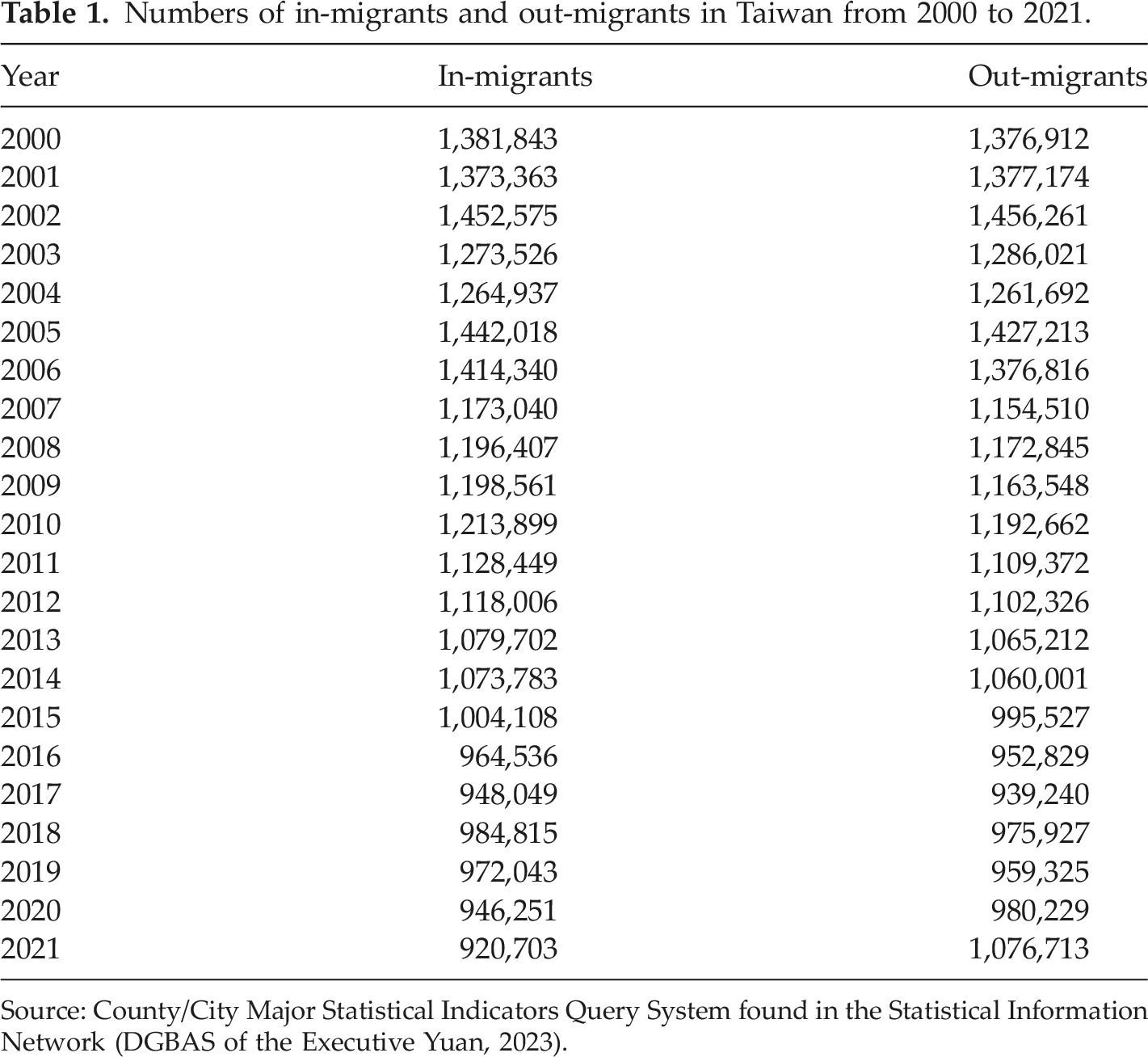
Source: County/City Major Statistical Indicators Query System found in the Statistical Information Network (DGBAS of the Executive Yuan, 2023).
Statistics of in-migration and out-migration population registrations in Taiwan’s six municipalities across six stages.
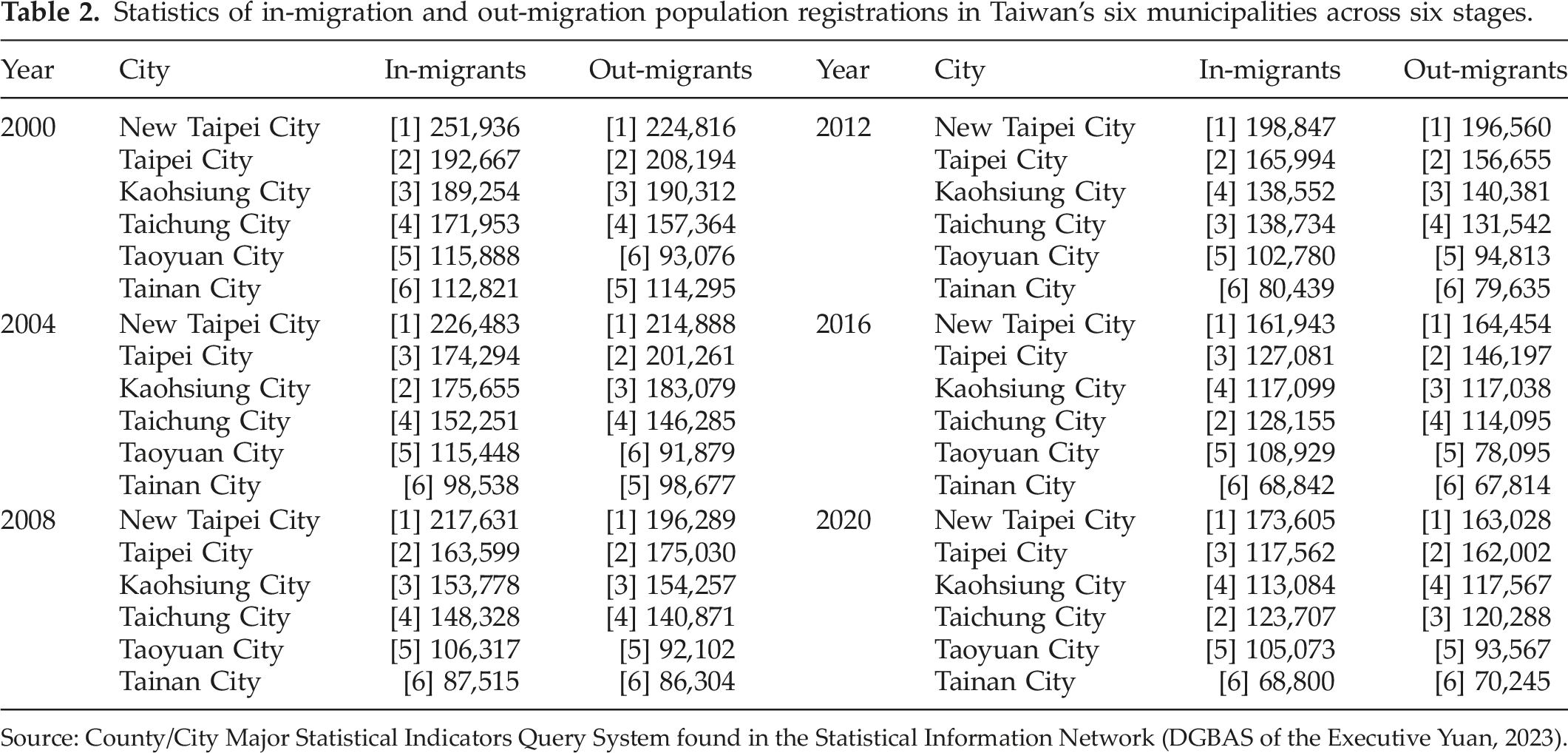
Source: County/City Major Statistical Indicators Query System found in the Statistical Information Network (DGBAS of the Executive Yuan, 2023).
Research variables
This research utilizes empirical models, and the definitions and explanations of dependent variables and independent variables are as follows:
Dependent variable
1. In-Migration Population (persons) (
Independent variables for fiscal expenditure
1. Economic Development Expenditure (in millions of New Taiwan dollars (TWD)) ( 2. Education, Science and Culture Expenditure (in TWD millions) ( 3. Social Welfare Expenditure (in TWD millions) ( 4. Community Development and Environmental Protection Expenditure (in TWD millions) (
Independent variables for economic opportunity
1. Number of Company Registrations ( 2. Employed Population (in thousand persons) ( 3. Average Annual Regular Income Per Household (TWD) ( 4. Average Disposable Income Per Household (TWD) (
Control variables
In-migrants driven by economic opportunities also consider the quality of life, such as education and health conditions, in cities. Firstly, regarding education conditions, mobile populations with higher education levels are generally more willing to settle in destination cities than their peers (Lao et al., 2022). Those migrating with children have the strongest intention to move internally, considering the education of their children in the destination cities (Lao et al., 2022). Secondly, regarding health conditions, the supply of health services is a significant determinant of elderly migration (Norman and Boyle, 2014). Gu et al. (2022) believe that the provision of health services has a push-pull effect on the mobility of elderly people in China, especially for those whose health conditions are deteriorating with age. Therefore, this research introduces two control variables related to education and health to verify the robustness of the empirical analysis results. 1. Percentage of Civilian Population Aged 15 and Above with College Education or Above (percent) ( 2. Average Number of People Served Per Medical Institution (persons/institution) (
Empirical model
LeSage and Pace (2009) introduced the Spatial Durbin Model (SDM), which includes lagged terms of the dependent variable as well as lagged terms of the independent variables. The SDM constructed in this study is as follows: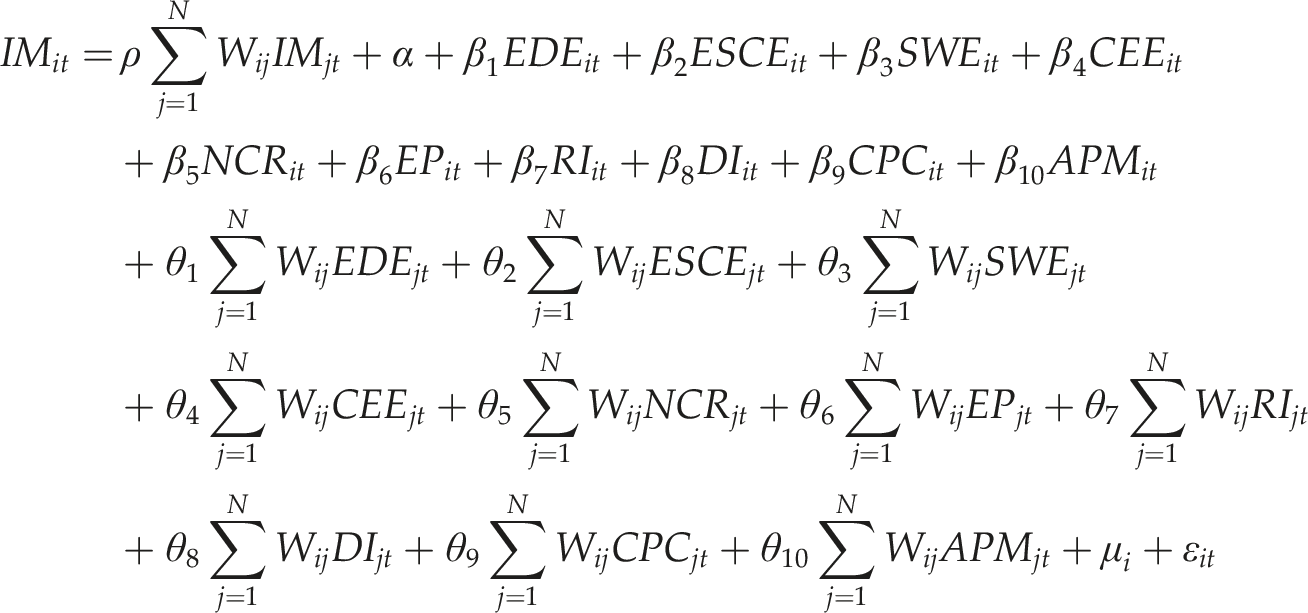

i, j represent the various counties and cities in Taiwan.
t represents the years (t = 2000∼2021).
W is the spatial weight matrix, a square matrix symmetric from top-right to bottom-left, with the number of rows and columns equal to the number of counties and cities (this study includes 22 counties and cities). This study adopts queen contiguity to define spatial adjacency. Queen contiguity implies that counties and cities are adjacent if their edges or corners touch (Sawada, 2004). The “contiguity matrix” is used to define neighboring relationships: If two counties or cities are defined as “neighboring,” its value is 1; otherwise, it is 0, and the diagonal is also 0 (a place does not neighbor itself). Taiwan has three island counties, and these do not have neighboring relationships with other counties, their value is 0. The spatial weight matrix is defined as
Results
Descriptive statistics
Summary of descriptive statistics.
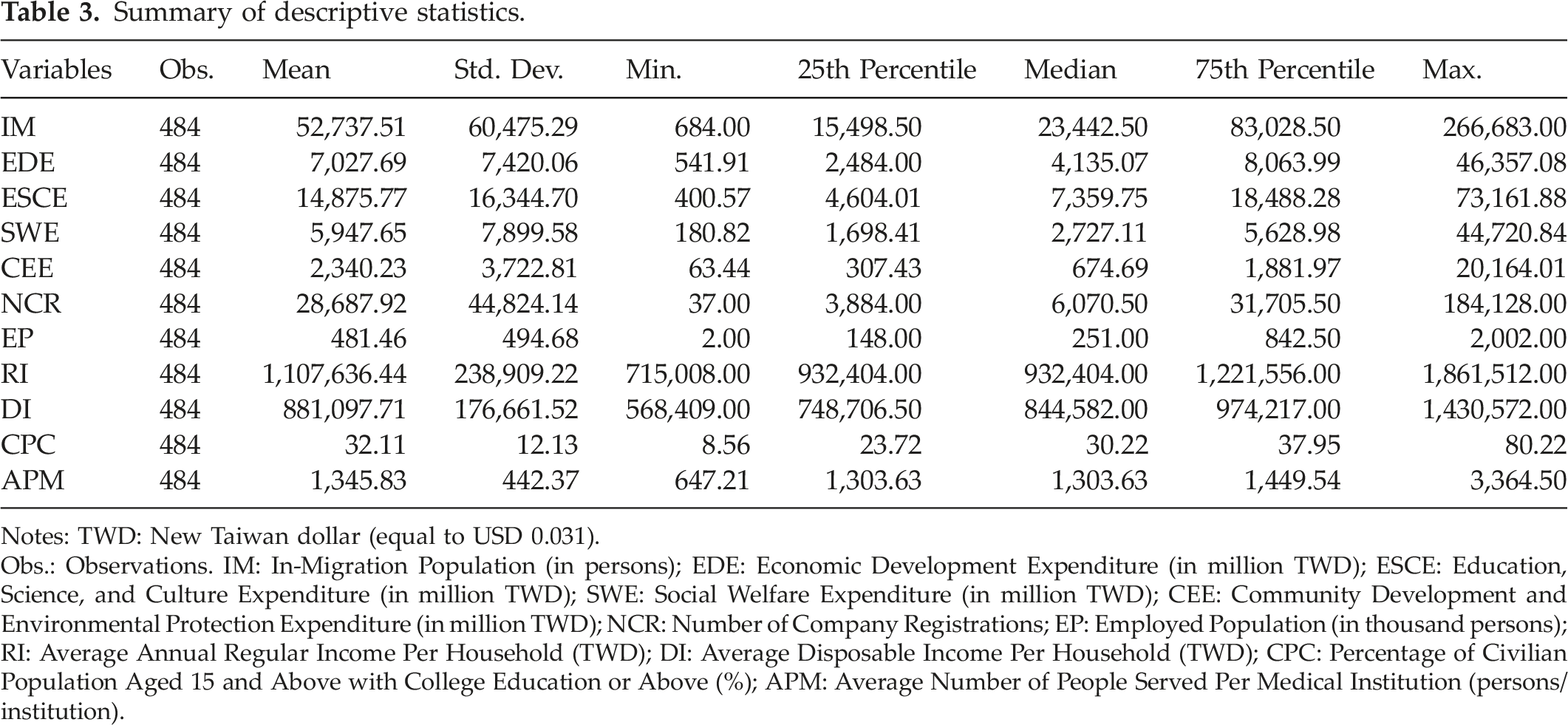
Notes: TWD: New Taiwan dollar (equal to USD 0.031).
Obs.: Observations. IM: In-Migration Population (in persons); EDE: Economic Development Expenditure (in million TWD); ESCE: Education, Science, and Culture Expenditure (in million TWD); SWE: Social Welfare Expenditure (in million TWD); CEE: Community Development and Environmental Protection Expenditure (in million TWD); NCR: Number of Company Registrations; EP: Employed Population (in thousand persons); RI: Average Annual Regular Income Per Household (TWD); DI: Average Disposable Income Per Household (TWD); CPC: Percentage of Civilian Population Aged 15 and Above with College Education or Above (%); APM: Average Number of People Served Per Medical Institution (persons/institution).
Pearson correlation analysis.
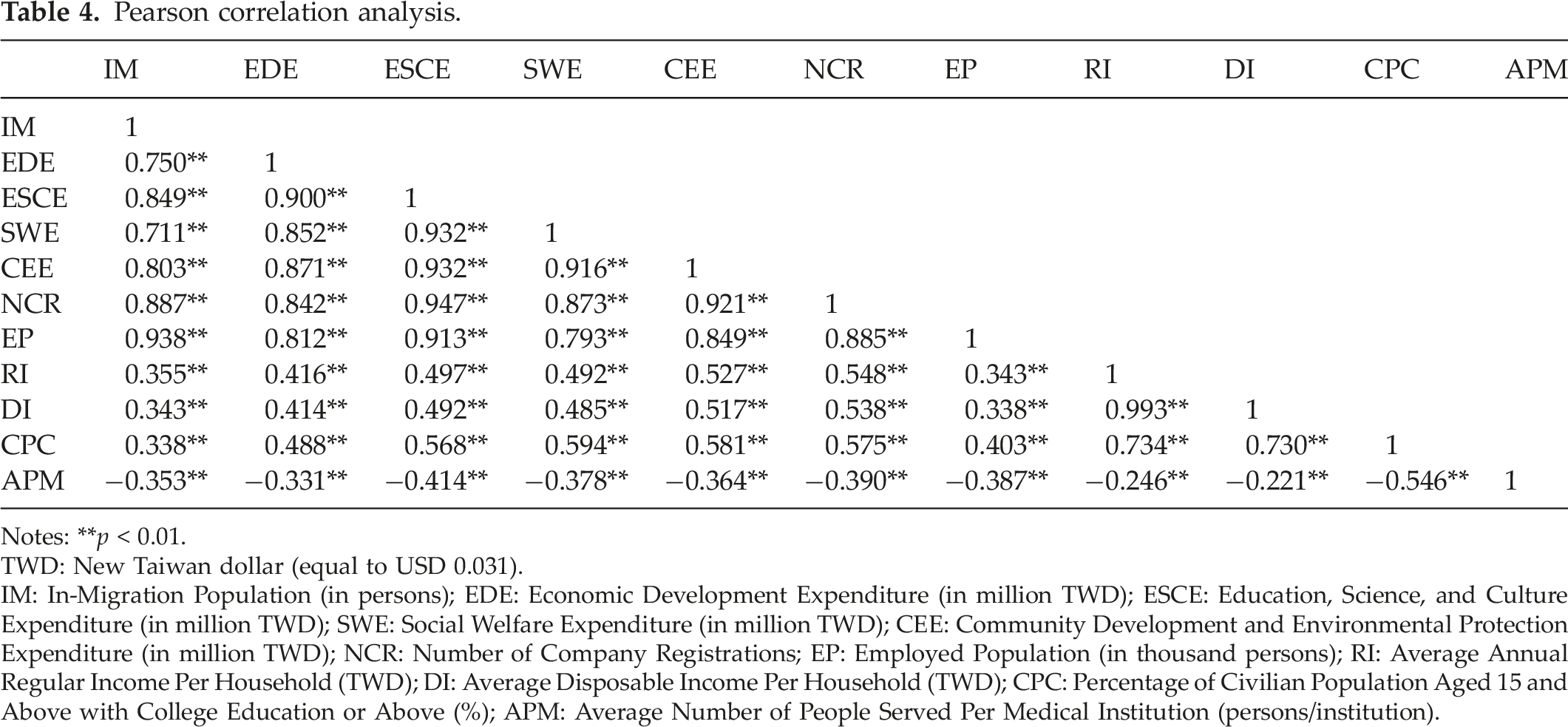
Notes: **p < 0.01.
TWD: New Taiwan dollar (equal to USD 0.031).
IM: In-Migration Population (in persons); EDE: Economic Development Expenditure (in million TWD); ESCE: Education, Science, and Culture Expenditure (in million TWD); SWE: Social Welfare Expenditure (in million TWD); CEE: Community Development and Environmental Protection Expenditure (in million TWD); NCR: Number of Company Registrations; EP: Employed Population (in thousand persons); RI: Average Annual Regular Income Per Household (TWD); DI: Average Disposable Income Per Household (TWD); CPC: Percentage of Civilian Population Aged 15 and Above with College Education or Above (%); APM: Average Number of People Served Per Medical Institution (persons/institution).
Spatial autocorrelation test results
Spatial autocorrelation indicators from 2000 to 2021.
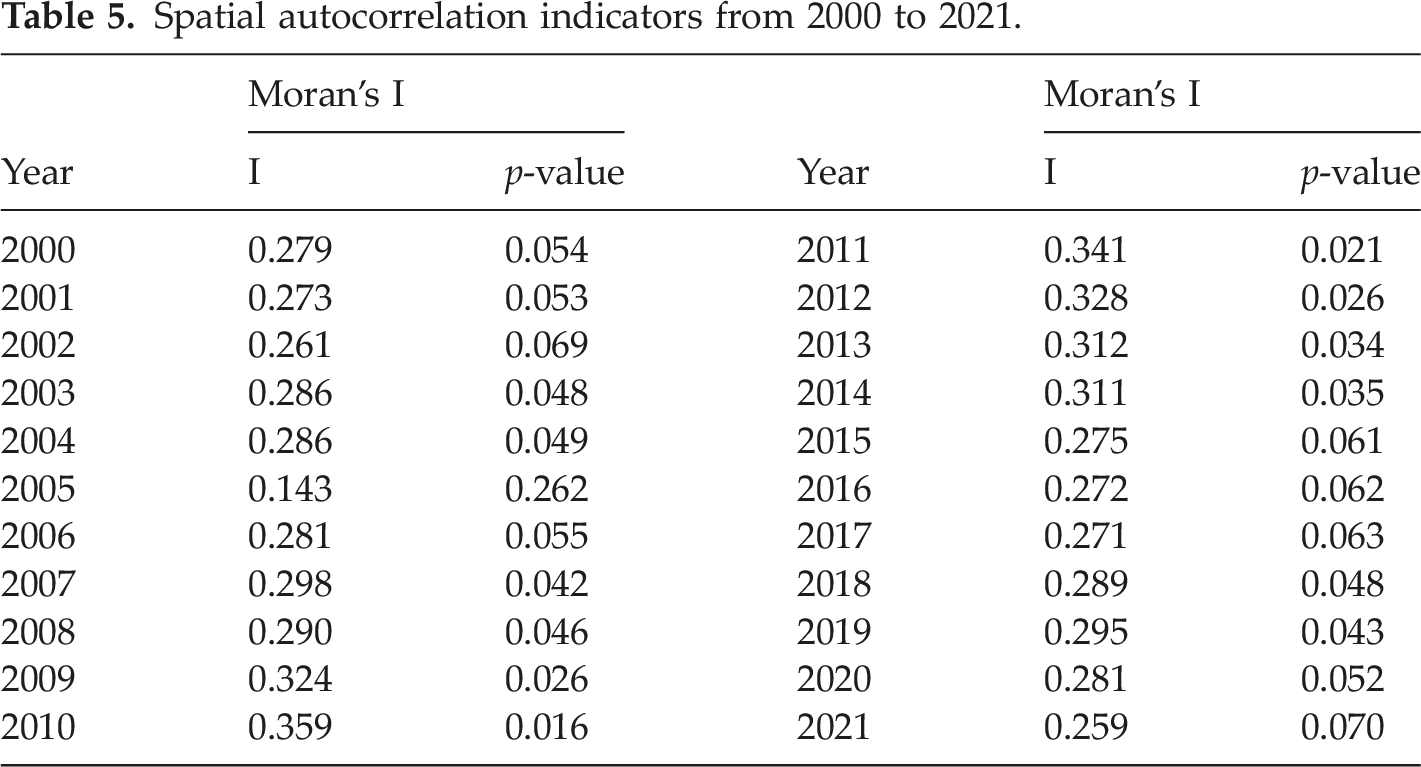
Moran’s I does not display the spatial clustering between different counties and cities and cannot illustrate the spatial autocorrelation features of the cities, but Local Indicators of Spatial Association (LISA) can supplement this gap. Anselin (1995) divided LISA into four quadrants according to the degree of spatial clustering, representing the spatial relationship between the local county and neighboring counties. The results of LISA statistical testing are presented through maps, distinguishing regions reaching significance with different colors, allowing observation of variations in LISA clustering at different times and understanding the changing spatial structure over time.
In the LISA clustering map, the first quadrant represents hot spots where both the local and neighboring counties have high in-migration, denoted as High-High (HH). The third quadrant represents cold spots where both have low in-migration, denoted as Low-Low (LL). The second quadrant represents a low value surrounded by high values, with the local county having low in-migration and neighboring counties high, denoted as Low-High (LH). The fourth quadrant represents a high value surrounded by low values, with the local county having high in-migration and neighboring counties low, denoted as High-Low (HL).
Figure 1 displays a LISA cluster map in six phases to illustrate the changes in the in-migration population across various counties and cities in Taiwan. The years represented by these six stages all coincide with the years when presidential elections were held. From 2000 to 2020, Taiwan experienced two political party turnovers (Central Election Commission, 2023). Some counties and cities underwent changes through central political party alternations. For instance, before 2016, whether the Kuomintang (KMT) or the Democratic Progressive Party (DPP) governed at the central and local levels, the clustering condition in Yilan County was not significant. However, after 2016, the clustering status of Yilan County belongs to Low-High (LH), indicating that the in-migrant population of Yilan County was lower while the in-migrant population of neighboring counties and cities was higher after 2016. Meanwhile, from 2000 to 2020, regardless of which political party governed at the central and local levels, Keelung City always exhibited a Low-High (LH) clustering status, indicating a lower in-migrant population in Keelung City and a higher in-migrant population in neighboring counties and cities during these years. LISA cluster diagrams of in-migrant household changes in various counties and cities of Taiwan across six stages.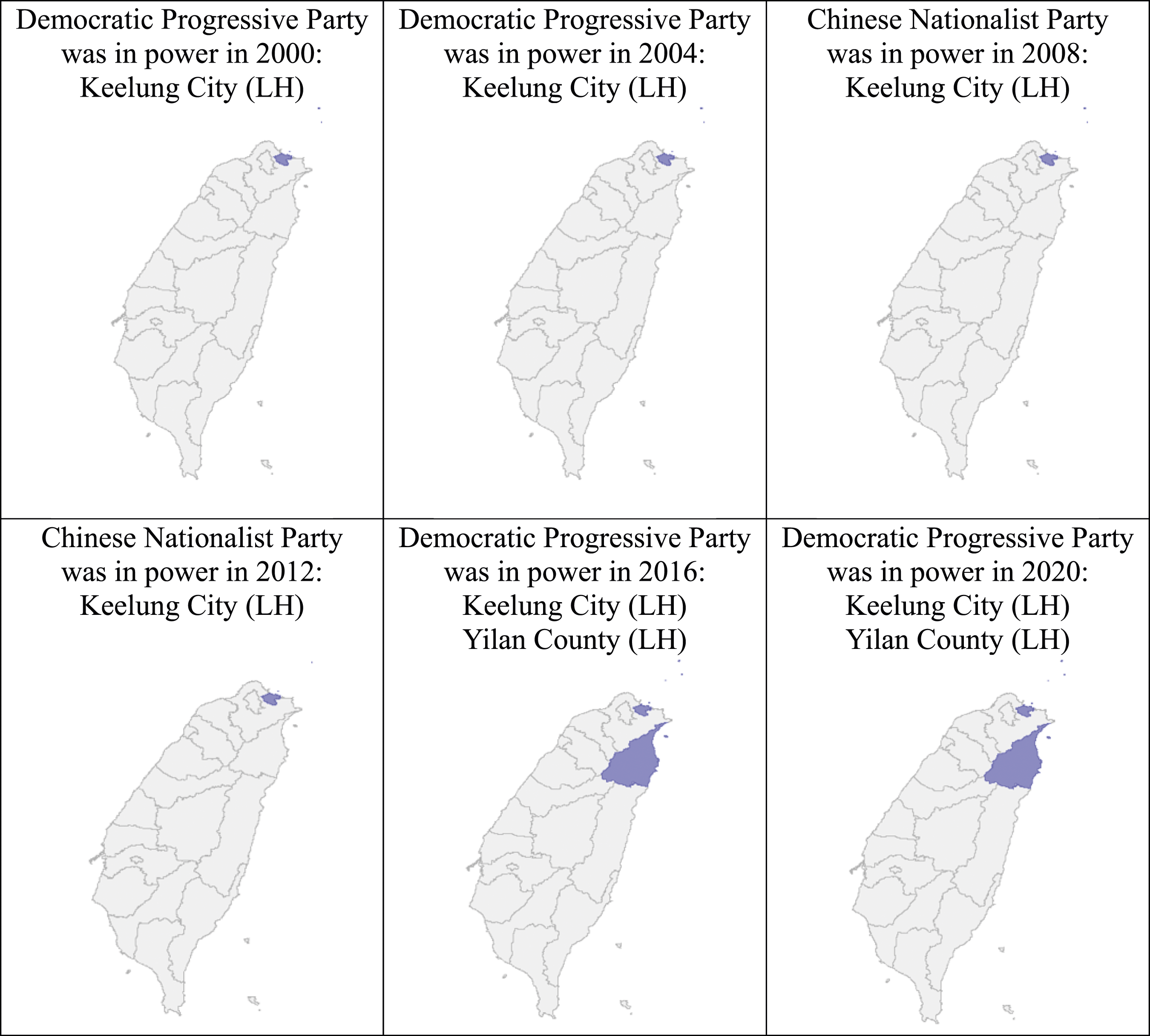
SDM analysis results
LeSage and Pace (2009) and Elhorst (2010) contend that the SDM can be simplified to either the spatial lag model (SLM) or the spatial error model (SEM). Model selection is conducted through testing the following hypotheses. If H0:
Spatial Durbin model analysis results.
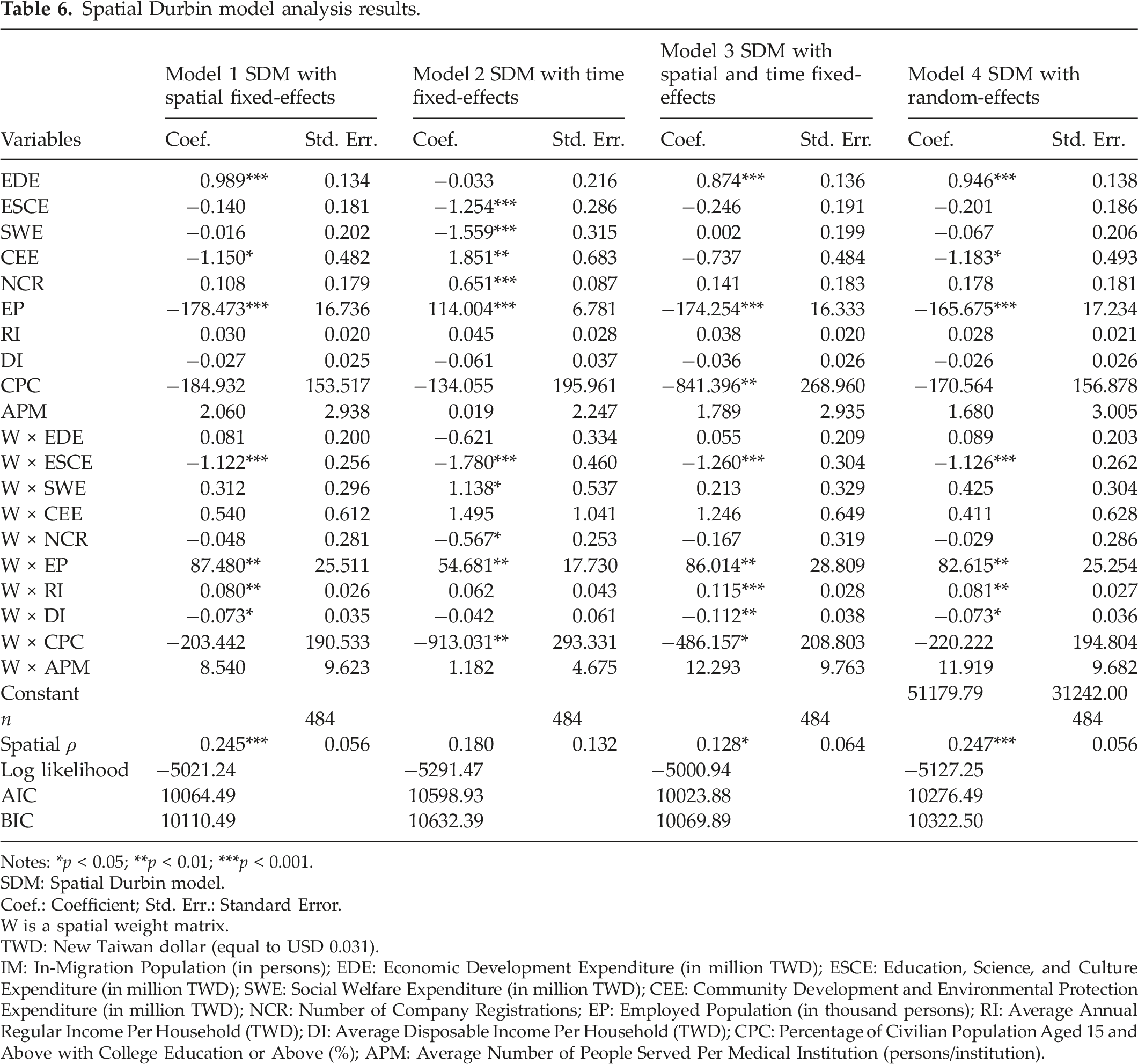
Notes: *p < 0.05; **p < 0.01; ***p < 0.001.
SDM: Spatial Durbin model.
Coef.: Coefficient; Std. Err.: Standard Error.
W is a spatial weight matrix.
TWD: New Taiwan dollar (equal to USD 0.031).
IM: In-Migration Population (in persons); EDE: Economic Development Expenditure (in million TWD); ESCE: Education, Science, and Culture Expenditure (in million TWD); SWE: Social Welfare Expenditure (in million TWD); CEE: Community Development and Environmental Protection Expenditure (in million TWD); NCR: Number of Company Registrations; EP: Employed Population (in thousand persons); RI: Average Annual Regular Income Per Household (TWD); DI: Average Disposable Income Per Household (TWD); CPC: Percentage of Civilian Population Aged 15 and Above with College Education or Above (%); APM: Average Number of People Served Per Medical Institution (persons/institution).
Model 3, with its Log likelihood, AIC and BIC values, outperforms Model 1, Model 2 and Model 4. Notably, the spatial lag coefficient
Decomposition results of the SDM with spatial and time fixed-effects
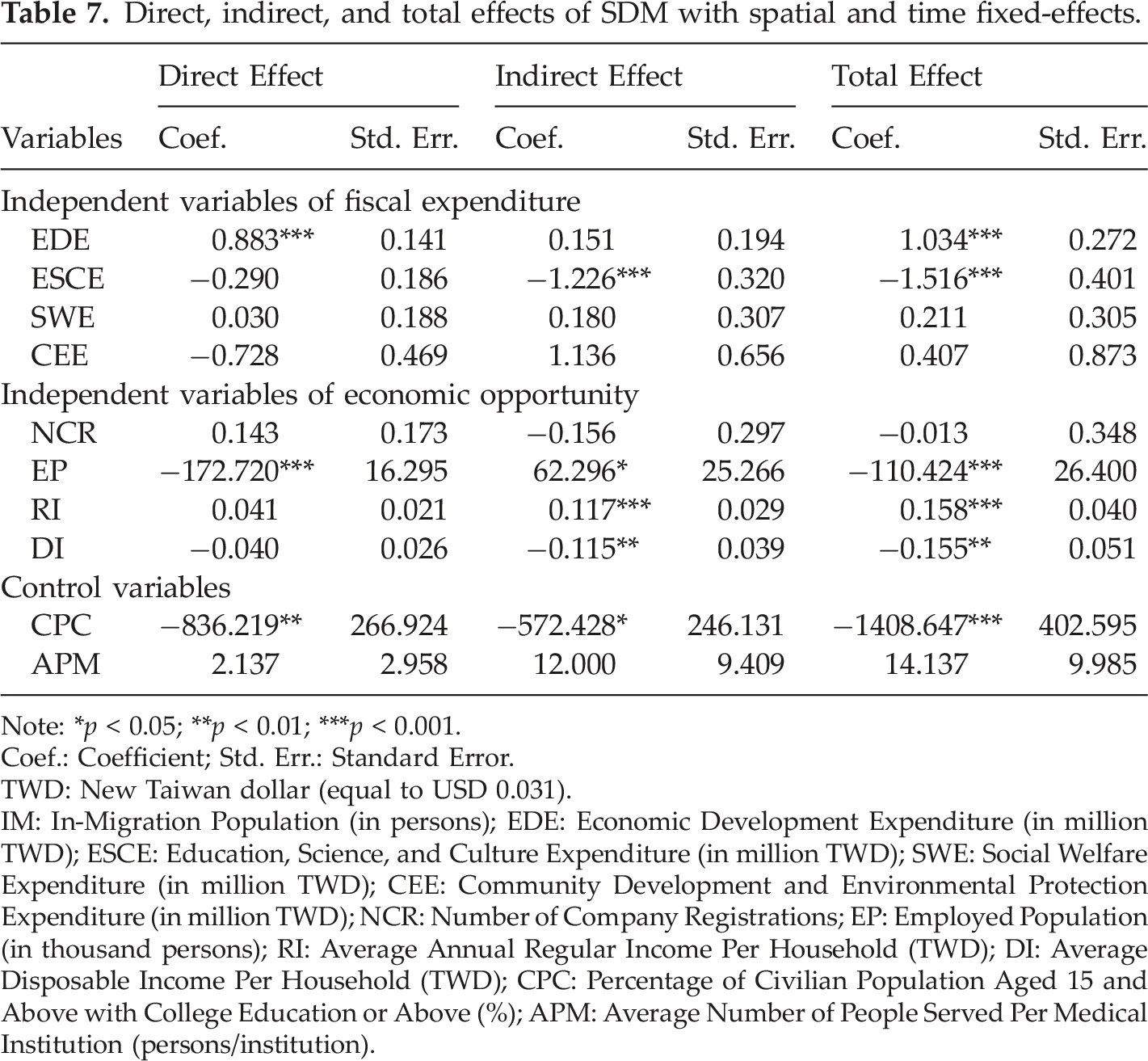
Direct, indirect, and total effects of SDM with spatial and time fixed-effects.
Note: *p < 0.05; **p < 0.01; ***p < 0.001.
Coef.: Coefficient; Std. Err.: Standard Error.
TWD: New Taiwan dollar (equal to USD 0.031).
IM: In-Migration Population (in persons); EDE: Economic Development Expenditure (in million TWD); ESCE: Education, Science, and Culture Expenditure (in million TWD); SWE: Social Welfare Expenditure (in million TWD); CEE: Community Development and Environmental Protection Expenditure (in million TWD); NCR: Number of Company Registrations; EP: Employed Population (in thousand persons); RI: Average Annual Regular Income Per Household (TWD); DI: Average Disposable Income Per Household (TWD); CPC: Percentage of Civilian Population Aged 15 and Above with College Education or Above (%); APM: Average Number of People Served Per Medical Institution (persons/institution).
Regarding the determinant factors of in-migration population related to fiscal expenditures, firstly, an increase in expenditures for economic development (in TWD millions) will drive the growth of the in-migrant population in the local counties or cities. Every additional unit increase in economic development expenditure will lead to a 0.883 unit increase in the in-migrant population in local counties or cities. However, the growth in economic development expenditure does not have a significant impact on neighboring counties or cities. Secondly, increases or decreases in expenditure on education, science and culture (in NTD millions) will not affect the growth of the in-migrant population in the local counties or cities. However, it brings about a negative spatial spillover effect on neighboring counties or cities. For every additional unit increase in education, science and culture expenditure in neighboring counties or cities, the in-migrant population in the local counties or cities decreases by 1.226 units.
In terms of economic opportunities affecting in-migration decisions, firstly, the growth in employment population (in thousand persons) will suppress the growth of the in-migrant population in local counties or cities. For every additional unit increase in the employment population in local counties or cities, the in-migrant population decreases by 172.72 units. However, the growth in employment population brings a positive spillover effect on neighboring counties or cities, with every additional unit increase leading to a 62.296 unit increase in the in-migrant population in local counties or cities. Secondly, increases or decreases in average annual regular income per household (TWD) do not affect the growth of the in-migrant population in the local counties or cities. However, it brings a positive spillover effect on neighboring counties or cities. For every additional unit increase in average annual regular income per household in neighboring counties or cities, the in-migrant population in the local counties or cities increases by 0.117 units. Thirdly, increases or decreases in average disposable income per household (TWD) do not impact the growth of the in-migrant population in the local counties or cities. However, it brings a negative spillover effect on neighboring counties or cities. For every additional unit increase in average disposable income per household in neighboring counties or cities, the in-migrant population in the local counties or cities decreases by 0.115 units.
Concerning control variables, the growth in the proportion (percent) of the civilian population aged 15 and above with an education level of college or above will suppress the growth of the in-migrant population in the local counties or cities. For every additional unit increase in this proportion in local counties or cities, the in-migrant population decreases by 836.219 units. Additionally, the growth in this proportion brings a negative spillover effect on neighboring counties or cities. For every additional unit increase in neighboring counties or cities, the in-migrant population in the local counties or cities decreases by 572.428 units.
Conclusion
Research findings on internal migration in Taiwan
From 2000 to 2020, Taiwan underwent various political party turnovers, reflecting the deep-seated impact of different policies and ideologies of the parties on population migration and clustering conditions across different counties and cities. For instance, the clustering condition in Yilan County after 2016 underwent a significant change, exhibiting a Low-High characteristic of a relatively sparse population, while neighboring counties showed a more concentrated population. Simultaneously, Keelung City consistently displayed this characteristic throughout the observation period. This study found that regardless of which political party is governing or the implementation of proposed policies, the current Low-High condition of in-migrant population in these two counties and cities cannot be altered. That is to say, irrespective of which political party is in power at both central and local levels, they are impotent in effecting change in the clustering condition of the in-migrant population.
Concerning fiscal expenditures, studies reveal that local counties’ economic development expenditure has a notable positive effect on in-migrant populations. This could be due to economic development investments stimulating local employment and economic activities, attracting more in-migration. However, it doesn’t have a significant impact on the in-migration of neighboring counties and cities. Conversely, the expenditure on education, science and culture does not have a significant effect on the local counties' in-migrant populations, but it generates negative spatial spillover effects on neighboring counties, likely due to the concentration of educational resources attracting populations from surrounding areas.
In terms of economic opportunities, an increase in the number of employed individuals tends to suppress the growth of in-migration population in the local counties and cities. This implies that more job opportunities do not necessarily attract more in-migrant households, possibly because local residents can find employment nearby without needing to migrate. However, for neighboring counties, an increase in the number of employed individuals will bring about a positive spillover effect, possibly due to residents from surrounding areas migrating in search of better employment opportunities. Meanwhile, changes in the average annual regular income per household and average disposable income per household do not directly impact the in-migrant population in the local counties and cities, but rather exert both positive and negative spillover effects on the in-migrant population in neighboring counties. This could be because the local living costs (for instance, housing prices and rents) might grow proportionally with income, resulting in residents not experiencing an increase in disposable income or an enhancement in quality of life even with higher incomes.
In terms of educational levels, an increase in the proportion of populations with a college degree or above suppresses the growth of in-migrant populations in the local counties and generates negative spillover effects on neighboring counties. This may be because individuals with higher education tend to reside and work in metropolitan areas with abundant educational resources and numerous employment opportunities.
In conclusion, the migration and agglomeration conditions in Taiwan are shaped by multifarious factors, including the policy changes brought by party alternations, fiscal expenditures, economic opportunities and educational levels. The interaction of these factors determines the divergences in the internal migration and agglomeration patterns across various counties and cities. To promote regional balanced development and optimize population structures, it is imperative to delve into the influential mechanisms of these factors to formulate more scientific and precise development strategies and policies.
Policies to manage internal migration in Taiwan
In Taiwan, managing internal migration is crucial for achieving balanced regional development, maintaining social harmony and addressing disparities between different regions. Below are some policies for managing internal migration that Taiwan can consider implementing:
Balanced regional development and area investment
Implement comprehensive planning nationwide, strengthen inter-regional coordination and connection and establish integrated objectives for balanced regional development. By mutually reinforcing policies, mitigating and alleviating developmental disparities, and curbing excessive population concentration. Increase investments in infrastructure like transportation, communication and public services, such as education and health, especially in economically lagging regions, to enhance their attractiveness.
Expansion of the labor market and employment
Formulate corresponding policies to promote industrial transformation and upgrading, guiding enterprises and investors to relocate to regions with high out-migration rates, and offering diverse employment opportunities. Implement flexible and diverse labor policies, strengthening adjustments to the labor market to ensure a balance in labor supply and demand in all regions.
Enhancement of educational resources and training
Promote balanced national education development by providing more educational resources, especially to remote and underdeveloped areas. Actively develop diversified vocational education and training opportunities, enhancing the professional skills of the workforce to meet the industrial development needs of different regions.
Optimization of living environment
Implement and refine various housing support policies, provide affordable housing, ensuring the residential needs of all social strata are met. Strengthen urban and rural planning, and improve public facilities and the environment, making people willing to reside in these areas.
Enhancement of medical resource allocation and promotion of health
Strive to improve and increase medical resources in remote and underdeveloped areas, enhancing the level of medical services for local residents. By optimizing health resources and strengthening public health education, raising the health level and quality of life of the population.
Through these comprehensive and profound policies, Taiwan can not only manage and guide internal migration more effectively but also promote comprehensive economic and social progress through coordinating the development of various regions and constructing a more harmonious and stable society.
Footnotes
Declaration of conflicting interests
The author(s) declared no potential conflicts of interest with respect to the research authorship and/or publication of this article.
Funding
The author(s) received no financial support for the research authorship and/or publication of this article.
