




Abstract
Background
Online undergraduate programs are increasingly popular, yet students often enter with inaccurate expectations about academic requirements.
Objective
This study aimed to determine whether mismatches between students’ initial and current expectations are associated with their approaches to learning, academic achievement, and wellbeing.
Method
We measured 113 online undergraduate students’ expectations of their undergraduate studies, learning approaches, university-related stress, anxiety, burnout, and academic achievement in an online survey.
Results
When current expectations fell short of initial expectations (a negative mismatch in expectations), students reported greater study-related stress, anxiety, cynicism, and adopted surface learning approaches. Students reported greater academic efficacy, higher GPA, more study time, and more deep and strategic learning approaches when their expectations were exceeded (a positive mismatch). Further, students’ learning approaches mediated the relationship between mismatched expectations and wellbeing.
Conclusion
This study confirmed that when online undergraduate students experience a mismatch between their expectations of higher education and their actual experiences, this mismatch is associated with their approach to learning, wellbeing, and academic performance.
Teaching Implications
Higher education institutions should set realistic expectations for new online students and encourage the adoption of a strategic approach to learning, thereby enhancing student wellbeing and academic success.
The rapid rise of online learning has transformed higher education over the past two decades. Since 2000, global online enrollments have surged by 900% (Oxford Learning College, 2024). In the United States, the share of undergraduates taking at least one online course tripled from 15.6% to 43.1% between 2004 and 2016 (Snyder et al., 2018). By 2019, 79% of colleges offered online programs, driving further growth (Shankar et al., 2023). This trend is projected to create a $336.98 billion industry by 2026 (Syngene Research, 2019). Beyond flexibility and accessibility, online learning reshapes how students engage with learning. While some thrive, others struggle with the increased autonomy, reduced instructor guidance, and greater need for self-regulation that online education often requires (Mingoia et al., 2025; Yan & Pourdavood, 2024). These differences highlight the need to understand how students adapt, especially when their academic experience differs from their expectations.
Expectation Mismatches in Online Education
Research has extensively documented expectation mismatches—instances where students’ anticipated learning experiences differ from what they actually encounter—in higher education (for a review, see Tomlinson et al., 2023) and have become increasingly salient in online learning, particularly after COVID-19 (Garip et al., 2020; Lobos et al., 2022; Reid et al., 2024; Yalçın & Dennen, 2023). Many students begin online programs expecting a combination of flexibility, accessible learning materials, regular feedback, and structured support. In reality, however, online students face greater autonomy, fewer structured activities, delayed instructor responses, and limited interaction with both faculty and peers, conditions that can lead to frustration and disengagement (Ang et al., 2019; Maloshonok & Terentev, 2017). A common challenge in online learning is instructor availability: students anticipate frequent feedback and guidance but often experience delayed responses and fewer opportunities for clarification (Garip et al., 2020; Reid et al., 2024; Yan & Pourdavood, 2024). Similarly, peer interaction is often more limited than anticipated, contributing to isolation and reduced engagement (Lobos et al., 2022; Yalçın & Dennen, 2023). Without informal opportunities—such as casual conversations with peers or spontaneous interactions with instructors—to recalibrate expectations, students may struggle with self-directed learning, increasing the risk of disengagement or reliance on ineffective study strategies (Reid et al., 2024; Yan & Pourdavood, 2024).
Psychology as a Case Study for Expectation Mismatches
While expectation mismatches affect students across disciplines, psychology students represent a particularly instructive case for examining these phenomena due to widespread misconceptions about the field itself. As one of the most popular undergraduate disciplines worldwide (Murphy, 2024; The Condition of Education, 2024), psychology attracts students whose fundamental assumptions about the discipline often diverge dramatically from its academic reality. Specifically, psychology students often anticipate curricula centered on self-reflection, therapeutic skills, or clinical training, yet they frequently encounter programs grounded in research methods, statistics, and scientific theory (Collisson et al., 2023; Rowley et al., 2008; Winstone & Bretton, 2013). This misalignment extends to career expectations, with many students assuming undergraduate degrees provide direct pathways to clinical practice. In reality, postgraduate clinical training remains highly competitive, with approximately 80% of students unable to progress due to limited program capacity (Australian Psychological Society, 2022; Cranney et al., 2022). These structural barriers contribute to stress surrounding career progression (Cruwys et al., 2015) and may amplify disillusionment with the discipline (Rowley et al., 2008).
Unsurprisingly, psychology students report higher psychological distress and lower wellbeing compared to population norms, particularly as they progress through their studies. While students often attribute this distress to workload, evidence suggests it may also reflect persistent expectation—reality mismatches, particularly when anticipated support, structure, or course content fails to align with reality (Rowley et al., 2008; Winstone & Bretton, 2013). Many students begin their studies with optimism but report declining academic self-efficacy as they encounter unexpected academic demands or unclear pathways to their career goals. Among first-year psychology students, lower self-efficacy and feelings of disconnection have been linked to reduced wellbeing and engagement, particularly during transitional periods when students’ expectations go unmet or their coping strategies are insufficient (Denovan & Macaskill, 2017). These challenges may be particularly acute in online learning environments. As noted above, online education typically offers more limited real-time feedback and less structured support compared to traditional settings, potentially hampering students’ ability to recalibrate expectations and regulate their learning effectively (Garip et al., 2020; Lobos et al., 2022; Yalçın & Dennen, 2023; Yan & Pourdavood, 2024). The reduced instructor interaction and fewer informal opportunities characteristic of online learning may leave psychology students facing a greater risk of persistent mismatches between their expectations and the realities of the course.
This vulnerability is significant because the gap between expectations and reality may influence how students approach their learning and maintain motivation (Biggs, 2001; Fryer, 2017). While research in traditional educational settings demonstrates varied student responses to academic challenges—with some adapting their strategies while others become overwhelmed (Asikainen et al., 2020; Asikainen & Gijbels, 2017)—the specific manifestations of these patterns among online psychology students remain underexplored. Students’ approaches to learning (SAL) offer a useful lens for understanding these varied responses.
SAL: A Lens for Understanding Expectation Mismatches
Students’ approaches to learning can be categorized into three types: deep, surface, and strategic (Entwistle et al., 2000). A deep approach involves active engagement and the development of a comprehensive understanding by applying critical thinking and seeking connections with the subject matter (Asikainen & Gijbels, 2017). A surface approach relies on rote memorization and minimal effort, often driven by fear of failure rather than a desire to understand (Vanthournout et al., 2013). The strategic approach, sometimes called organized studying, focuses on structured learning, time management, and goal-oriented effort to maximize academic performance (Diseth, 2007; Entwistle & McCune, 2004).
Research demonstrates that students’ learning approaches influence both academic success and wellbeing. Deep and strategic learning are linked to higher achievement, with strategic learners benefiting from organization and effective time management (Asikainen et al., 2020; Richardson et al., 2012). In contrast, surface learning is associated with lower performance and greater study-related burnout, including exhaustion, cynicism, and feelings of inadequacy (Asikainen et al., 2020; Richardson et al., 2012). Deep and strategic learners tend to experience lower burnout, likely due to greater engagement and self-regulation (Asikainen et al., 2020; Räihä et al., 2024).
Because surface learning is linked to lower academic performance and higher stress, anxiety, and burnout (Asikainen et al., 2020; Richardson et al., 2012), we measured these to examine how mismatches in expectations may impact both students’ psychological outcomes and academic functioning. Although we use the term wellbeing outcomes throughout, our focus is specifically on negative indicators of wellbeing, such as stress, anxiety, and burnout, which research indicates may meaningfully impact overall student wellbeing (Dias Lopes et al., 2020; Slimmen et al., 2022). Together, these outcomes allow us to examine how mismatched expectations affect both academic functioning and psychological wellbeing.
The Relationship Between Student Expectations and Outcomes Through Approaches to Learning
To understand how unmet expectations influence both academic achievement and psychological wellbeing, we draw upon Biggs’ (2001) Presage–Process–Product (3P) model and perceived control theory (Fryer, 2017; Skinner, 1995). The 3P model proposes that Presage factors, such as autonomous motivation, prior achievement, and instructional design, shape the Process of learning through students’ approaches to study (deep, surface, and strategic), which then determines the Product: academic performance and psychological wellbeing (Wang et al., 2013).
Empirical evidence supports each stage of this theoretical sequence. Students with higher autonomous motivation are more likely to adopt deep learning strategies, even under heavy workloads (Kyndt et al., 2011), while collaborative activities foster metacognitive awareness and deep processing (Beccaria et al., 2014). Valadas et al. (2016) traced the full pathway, showing how prior achievement, study time, and course satisfaction led to strategic approaches, which improved exam scores. Additional research establishes connections between learning approaches and wellbeing outcomes: surface learners consistently report elevated stress levels and diminished life satisfaction, whereas deep and strategic learners demonstrate greater academic engagement and enhanced wellbeing (Asikainen et al., 2014; Diseth, 2007). Collectively, these findings demonstrate that presage conditions systematically influence learning approaches, which in turn shape both academic and wellbeing outcomes.
Despite this empirical support, the 3P model leaves an important question unanswered: Why do certain conditions lead students toward one learning approach rather than another? Fryer (2017) bridged this gap by incorporating the theory of perceived control. In his extended model, students’ beliefs about their ability to influence their learning environment became the key mechanism: those who feel they have control engage deeply or strategically, while those who feel powerless resort to surface approaches. Although researchers have not fully tested this integration, related research supports its logic, as studies consistently link higher perceived control and self-efficacy to deeper learning, and lower control to surface strategies (e.g., Prat-Sala & Redford, 2010).
We extend this reasoning in the current study by proposing that expectation mismatches—when coursework proves more demanding than anticipated—threaten students’ perceived control. When students encounter unanticipated academic difficulties, their sense of agency may be compromised, leading to an increased reliance on surface learning strategies. Conversely, when academic demands align with expectations, students likely maintain perceived control, thereby supporting deeper or strategic engagement. Guided by this extended theoretical model, we hypothesized that learning approaches mediate the relationship between expectation mismatches and both academic and wellbeing outcomes—specifically, that mismatches shape students’ learning approaches, thereby affecting academic and wellbeing outcomes. While previous research has examined how general course satisfaction relates to learning approaches (Asikainen et al., 2014; Diseth, 2007; Hua et al., 2024), research has yet to explore the specific role of expectation mismatches in this process—a gap the present study sought to address.
The Current Study
Despite growing interest in online education and student learning approaches, several gaps remain. First, although prior research has examined how presage variables, such as prior academic performance and course evaluations, shape learning approaches and academic outcomes (e.g., Asikainen et al., 2014; Diseth, 2007; Hua et al., 2024), research has paid less attention to the specific role of mismatched expectations as a predictor. In particular, few studies have examined individual-level changes in expectations, instead relying on group-level changes that may obscure meaningful differences in individual student trajectories (Asikainen & Gijbels, 2017; Cronbach & Furby, 1970; Hauser-Cram & Krauss, 1991). A residual change score approach offers a more sensitive way to assess mismatches by quantifying how much students’ actual experiences deviate from their initial expectations, categorizing them as unmet (negative scores), met (scores close to zero), or exceeded (positive scores) (Hauser-Cram & Krauss, 1991).
Second, research has extensively studied learning approaches in traditional classroom settings; however, their role in online education remains underexplored. Few studies have examined how online students adapt their engagement strategies in response to unique challenges such as increased autonomy and reduced external accountability (Asikainen & Gijbels, 2017; Beenen & Arbaugh, 2019). Understanding how students navigate mismatched expectations in these settings is particularly important given the expansion of online education.
Finally, Biggs’ 3P model suggests that students’ expectations, learning strategies, and academic outcomes are interconnected. However, few empirical studies have tested these relationships in online learning, particularly the potential mediating role of learning approaches between mismatched expectations and student outcomes. Clarifying these links can inform pedagogical strategies to support student adaptation and success. To explore these relationships, the present study examined the following research questions:
Do individual differences in the mismatch of expectations among undergraduate students correlate with their approaches to learning (surface, strategic & deep)? Are approaches to learning (surface, strategic, and deep) correlated with academic achievement and wellbeing outcomes? Do student approaches to learning mediate the relationship between a mismatch in expectations and academic achievement and/or wellbeing outcomes?
Method
Research Design
This study used a cross-sectional survey design, collecting data from 113 students enrolled in courses offered in the University of South Australia's fully online (UniSA Online) Bachelor of Psychology and Bachelor of Psychological Science and Sociology programs. In these programs, every course in the 3-year curriculum is delivered asynchronously online, with no on-campus requirements. Following ethics approval from our institution (Protocol: 205621), we advertised the study on program discussion forums and via e-mail in selected first-, second-, and third-year courses. Recruitment at a single time-point yielded a sample that exceeded the G*Power3 estimate of 77 participants needed to detect a medium effect size (0.5) with 0.80 power (Faul et al., 2009). Each student could participate only once. On completion, participants could enter a draw to win one of five $100 prepaid MasterCards.
Measures
Participants
We asked participants to report their age, gender, degree commencement year, and the number of courses they had completed to date in their program. They also indicated their enrollment load (full- or part-time), whether they were a domestic or international student, and whether they were the first in their immediate family (i.e., parents, guardians, or siblings) to attend university. Additional items captured prior to higher education study in psychology and/or other disciplines, as well as weekly hours spent studying, in paid employment, and unpaid childcare or other caring roles.
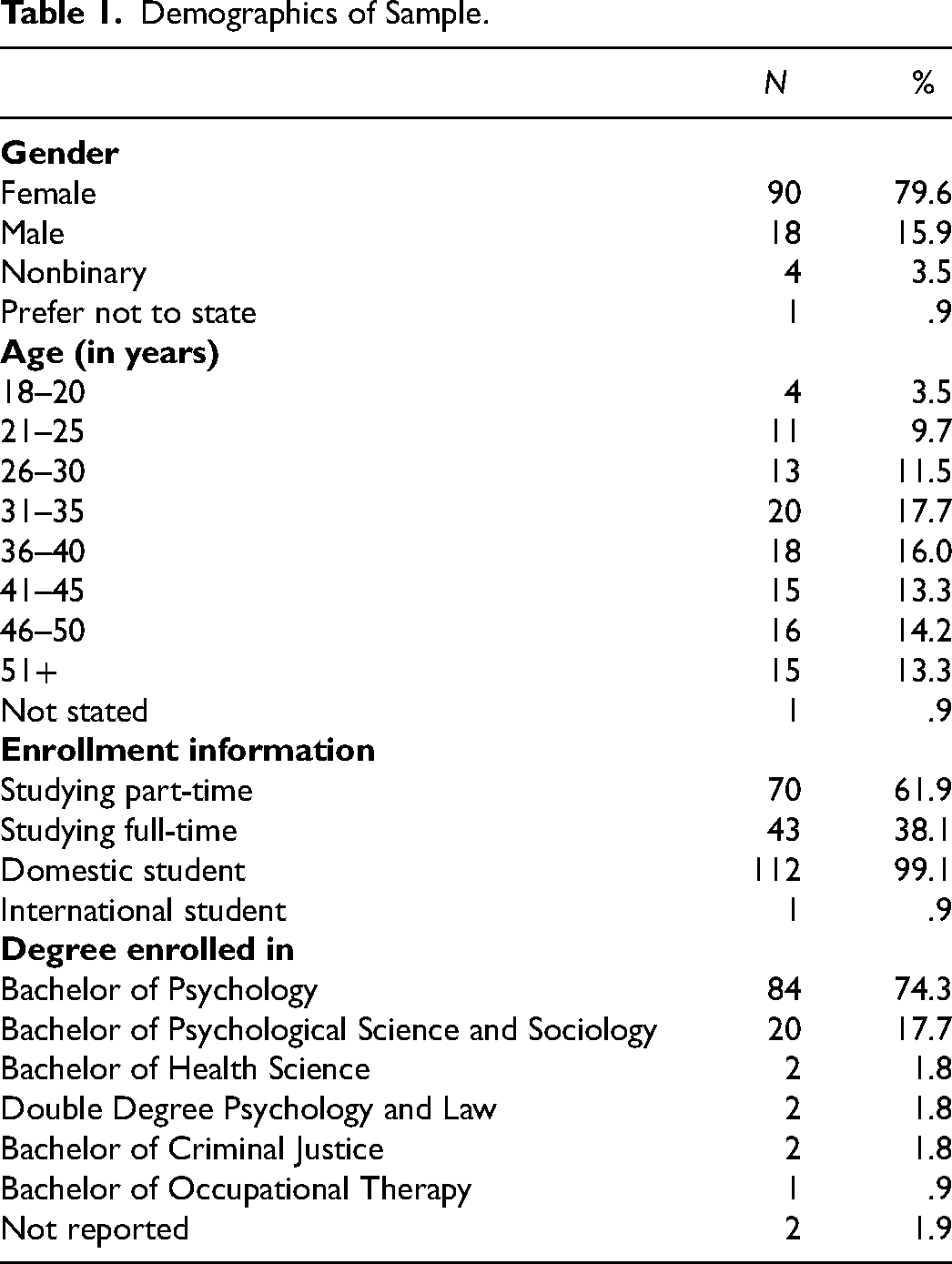
Most of the sample identified as female (n = 90, 79.6%). Participants were primarily enrolled in the Bachelor of Psychology degree (n = 84, 74.3%) or the Bachelor of Psychological Science and Sociology degree (n = 20, 17.7%). Participants ranged in age from 18 to 71 years (M = 38.0, SD = 10.4), and all participants except one were domestic students. While we did not collect data on participants’ racial or ethnic backgrounds, country of birth information within these programs indicates the following distribution: Oceania (67.85%), Europe (6.74%), Asia (6.03%), Africa (3.62%), Middle East (1.28%), North America (0.78%), and Central and South America (0.71%). See Table 1 for more demographic information.
Demographics of Sample.
Expectations of Undergraduate Studies
We measured expectations using the 13-item scale developed by Rowley et al. (2008), which assessed preparedness for the study, generic study issues, subject-specific study issues, personal goals, and worries. Participants responded on a six-point Likert scale (1 = strongly disagree to 6 = strongly agree). An example item is “I expect to carry out a large amount of independent reading.” Participants responded to the items in two scenarios, one being their initial expectations before commencing the degree (α = .72), and the second being their current expectations (α = .79). Reliability for the mismatch residuals, calculated using Malgady and Colon-Malgady's (1991) formula, was good (α = .72).
SAL
We measured SAL with the 18-item short version of the Approaches and Study Skills Inventory for Students (ASSIST) scale (Entwistle & Ramsden, 2015), which includes subscales for deep, surface, and strategic approaches to learning. They responded on a five-point Likert scale (1 = disagree to 5 = agree), with six items for each of the three subscales and a higher score representing greater engagement in that approach to learning. An example of the deep approach is: “When I’m reading an article or book, I try to find out for myself exactly what the author means.” Internal consistency for scores in the present study was good: deep α = .64, surface α = .79, and strategic α = .86.
University-Related Stress
We measured stress with the 21-item University Stress Scale (Stallman & Hurst, 2016), which assesses the cognitive appraisals related to common environmental stressors experienced by higher education students. Participants responded on a four-point Likert scale (1 = not at all to 4 = constantly) to indicate which of the 21 stressors had caused them stress over the past month. We calculated a mean score, with higher scores indicating greater stress. Example stressors include academic/coursework demands, study/life balance, and the online university environment. Stallman and Hurst (2016) found scores had good internal consistency among Australian university students (α = .83) and good convergent validity with the stress scale of the Depression Anxiety Stress Scales (DASS; r = .47). Internal consistency for scores in the present study was α = .81.
University-Related Anxiety
We measured anxiety using a six-item scale developed for this study to assess anxiety specific to online tertiary education. Existing academic anxiety scales were unsuitable, as many were designed for younger populations (e.g., Academic Anxiety Scale for Children, Singh & Sengupta, 2013), focused on general anxiety rather than higher education demands (Adult Manifest Anxiety Scale—College Version [AMAS-C], Reynolds et al., 2003), or emphasized test and classroom anxiety (Academic Anxiety Scale, Cassady et al., 2019; Gogol et al., 2014). Many were also too lengthy (e.g., AMAS-C: 49 items) for practical use. No existing scale adequately captures the modern challenges of tertiary education, such as navigating digital platforms, managing time in flexible environments, and engaging in online classrooms. To address this, we developed a concise, targeted measure assessing academic anxiety in digital learning contexts.
Participants rated their anxiety on a six-point Likert scale (1 = not at all anxious to 6 = extremely anxious), with higher scores indicating greater anxiety. An example item is: “How anxious do you feel about your ability to succeed academically in online learning?” The measure demonstrated good reliability (α = .85). We used scores in subsequent analyses to explore relationships with student outcomes.
University-Related Burnout
We measured burnout with the 16-item Maslach Burnout Inventory-Student Survey (MBI-SS; Shi et al., 2018). Kim et al. (2018) found the MBI-SS was the most commonly used measure of student burnout as per their meta-analytical review, and it is a validated measure of emotional exhaustion, cynicism, and academic efficacy in university students (Shi et al., 2018). Participants responded on a seven-point frequency rating scale (0 = rarely to 6 = always), with higher scores indicating greater burnout. An example item is “I feel emotionally drained by my studies.” Internal consistency for scores in the present study were exhaustion α = .89, cynicism α = .89, and academic efficacy α = .82.
Academic Achievement
We measured academic achievement using a single item that asked participants to self-report their grade point average (GPA). We calculated GPA as the sum of grade points multiplied by course unit values, which we then divided by the sum of course unit values. GPA ranges from 1 to 7, with higher scores indicating greater academic achievement.
Data Analyses
We exported data from Qualtrics to SPSS version 29 for cleaning and screening. After testing statistical assumptions, we conducted the following analyses to address the research questions. To quantify expectation mismatches at the individual level, we used a linear regression model, deriving unstandardized residuals where initial expectations predicted current expectations. Positive residual values indicated that students’ current expectations exceeded their initial expectations (positive mismatch), while negative residuals indicated that initial expectations were unmet (negative mismatch).
For research questions 1 and 2, we used Pearson correlations to estimate the association between expectation mismatches, students’ learning approaches (deep, surface, and strategic), wellbeing (i.e., anxiety, stress, and burnout), academic achievement (i.e., GPA), and expectations of undergraduate psychology studies (i.e., preparedness, generic and subject specific study issues, personal goals, and worries). For research question 3, we conducted mediation analyses using model 4 of the PROCESS macro (Hayes, 2013) with 5000 bootstrapped samples in SPSS (version 29). Separate models tested whether learning approaches mediated the relationship between expectation mismatches and academic achievement and wellbeing outcomes.
We detected outliers using the z-score method (threshold: 3 SD from the mean; Osborne & Overbay, 2004). Two outliers were identified on cynicism (MBI-SS) and one on deep approach to learning (ASSIST), which were winsorized by replacing them with values 1% higher/lower than the closest nonextreme value (Tabachnick & Fidell, 2007). One GPA outlier was excluded from analyses involving GPA. Table 2 provides the descriptive statistics for the sample.
Descriptive Statistics for 113 Online, Undergraduate Students.
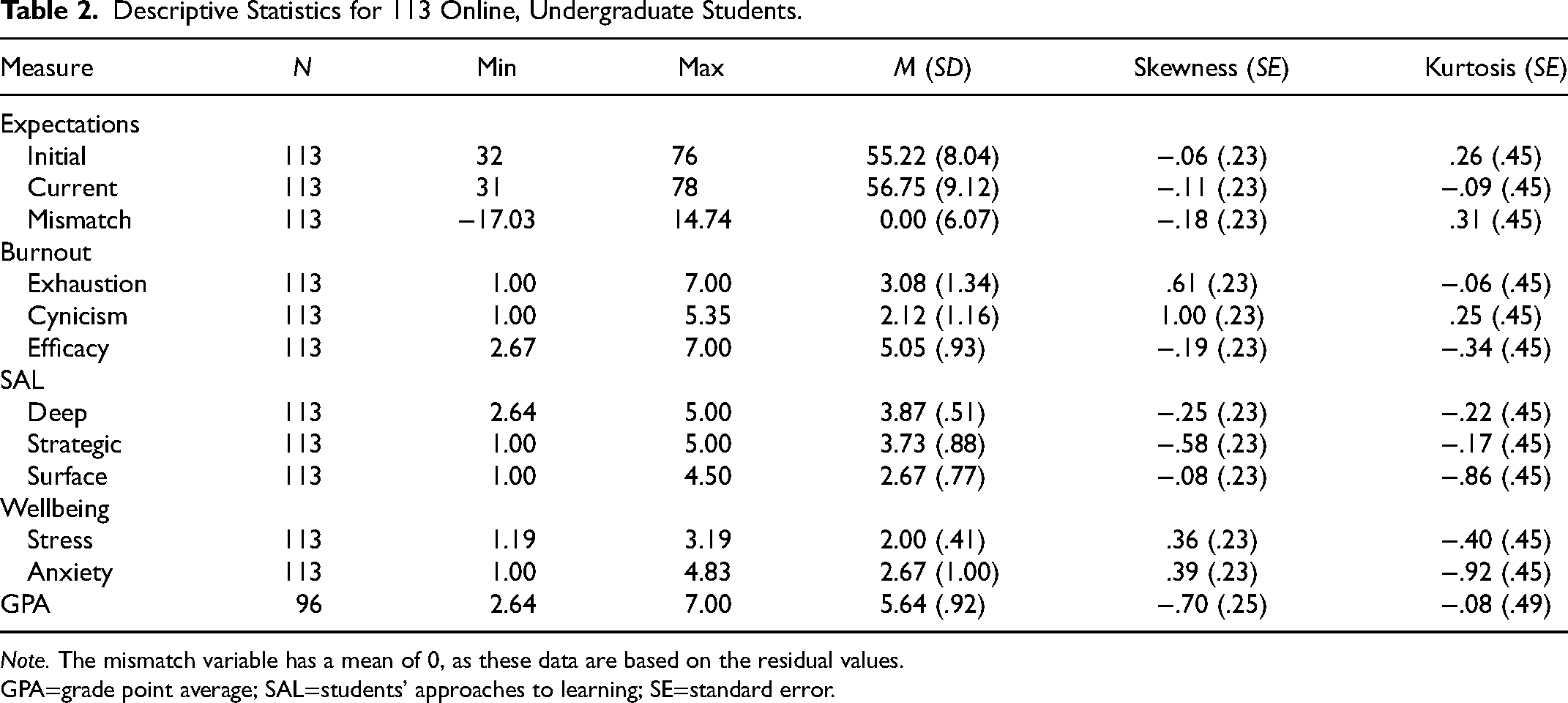
Note. The mismatch variable has a mean of 0, as these data are based on the residual values.
GPA=grade point average; SAL=students' approaches to learning; SE=standard error.
All distributions met parametric analysis assumptions (skew < |2.0 and kurtosis < |9.0; Bishara & Hittner, 2012; Edgell & Noon, 1984). Variables showed considerable variability (i.e., large standard deviations, Table 2), with no floor or ceiling effects, indicating that our measures effectively captured the variation among participants.
Results
Associations Between Expectations, SAL, Academic Achievement, and Wellbeing
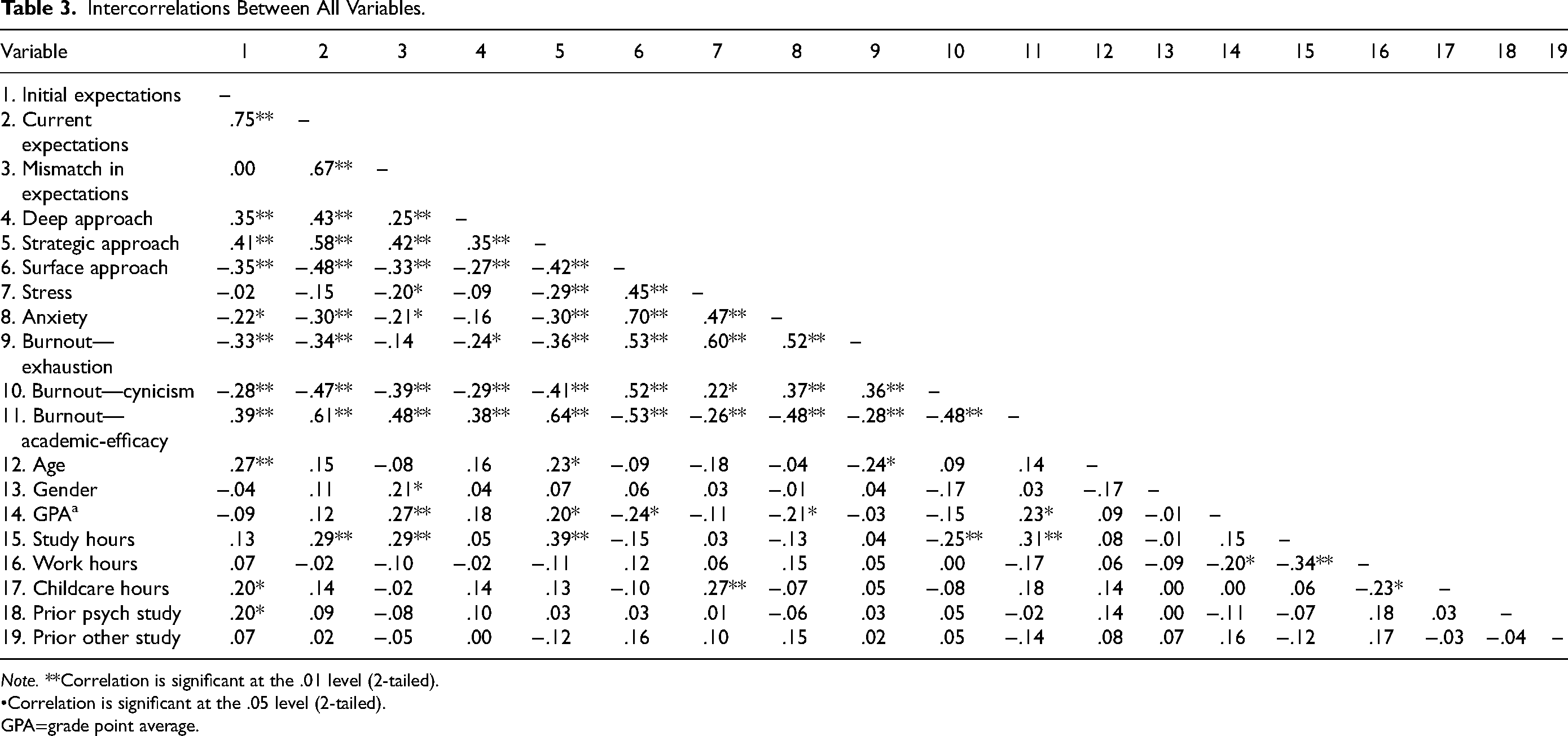
Research question 1 examined whether expectation mismatches were associated with learning approaches. Results showed that students’ unmet expectations were significantly linked to greater surface learning, while exceeded expectations were associated with more deep and strategic learning (see Table 3).
Intercorrelations Between All Variables.
Note. **Correlation is significant at the .01 level (2-tailed).
•Correlation is significant at the .05 level (2-tailed).
GPA=grade point average.
Research question 2 explored whether learning approaches correlated with academic achievement and wellbeing. Findings indicated that a surface approach was significantly associated with higher stress, anxiety, exhaustion, and cynicism, as well as lower academic efficacy and GPA. In contrast, a strategic approach correlated with lower stress, anxiety, exhaustion, and cynicism, alongside higher academic efficacy and GPA. A deep approach was negatively associated with exhaustion and cynicism and positively linked to academic efficacy (see Table 3 for effect sizes).
Although not a primary focus, we also found a significant association between gender and expectation mismatches. People who identified as male were more likely to have unmet expectations than people who identified as female. Additionally, older individuals were more likely to adopt strategic learning methods, and this approach was associated with a greater number of hours spent studying per week.
Mediation Pathways
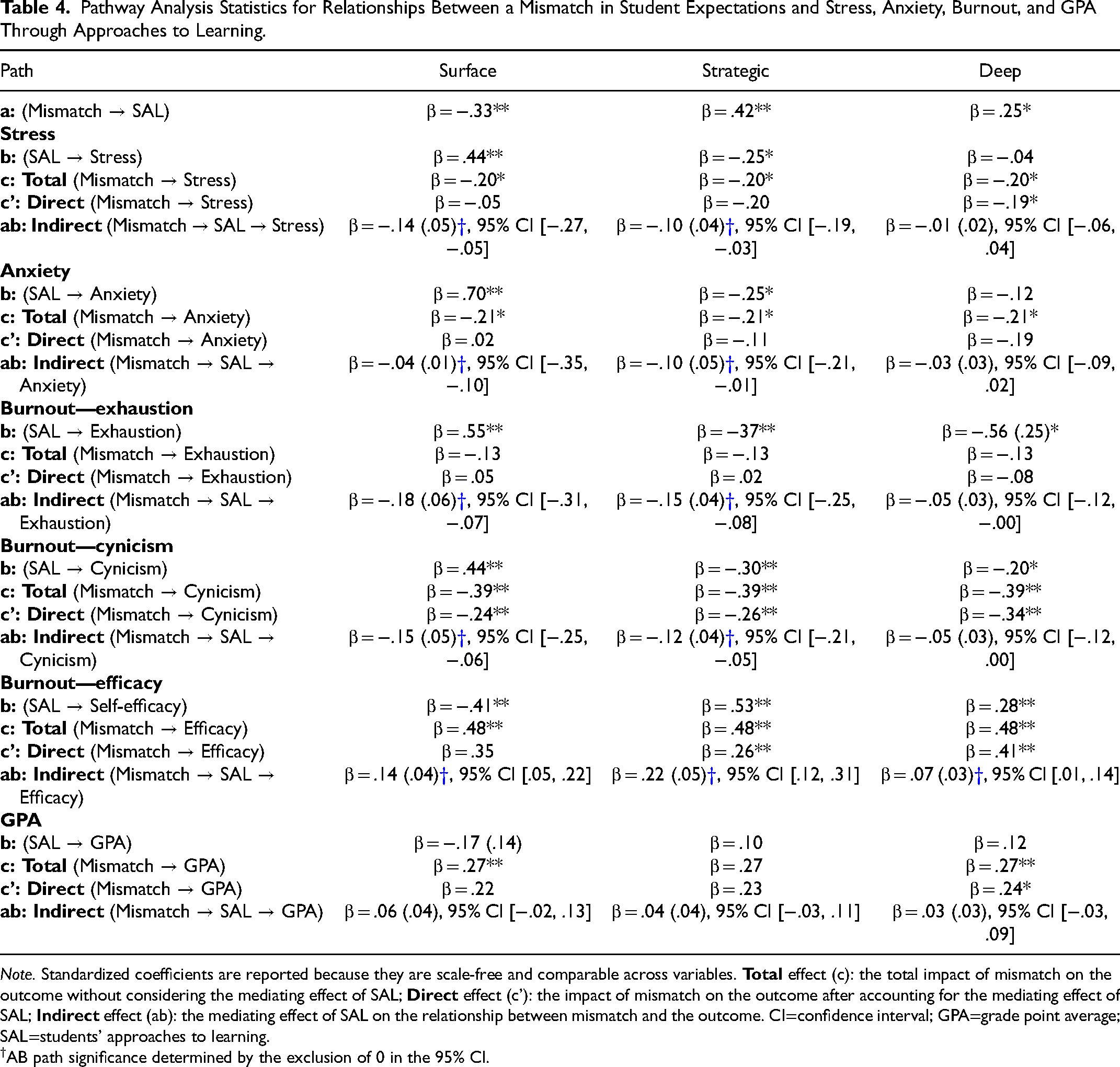
Research question 3 sought to determine whether students’ approach to learning mediated the relationship between mismatches in students’ expectations and their academic and wellbeing outcomes. Our analysis revealed that surface and strategic learning approaches were significant mediators between mismatches in students’ expectations and wellbeing outcomes (see Table 4 for all effects).
Pathway Analysis Statistics for Relationships Between a Mismatch in Student Expectations and Stress, Anxiety, Burnout, and GPA Through Approaches to Learning.
Note. Standardized coefficients are reported because they are scale-free and comparable across variables.
†AB path significance determined by the exclusion of 0 in the 95% CI.
Stress and Anxiety
For stress, surface learning approaches exacerbated the impact of negative mismatches, significantly increasing stress levels (indirect effect: β = −.14 (.05), 95% confidence interval [CI] [−.27, −.05]). Conversely, strategic approaches ameliorated stress where positive mismatches occurred (indirect effect: β = −.10 (.04), 95% CI [−.19, −.03]). Deep learning approaches did not show a significant mediating effect on stress (indirect effect: β = −.01 (.02), 95% CI [−.06, .04]). Similarly, anxiety patterns reflected those of stress, with surface approaches increasing anxiety under negative mismatch conditions (indirect effect: β = −.04 (.01), 95% CI [−.35, −.10]) and strategic approaches reducing anxiety under positive mismatches (indirect effect: β = −.10 (.05), 95% CI [−.21, −.01]). Again, deep approaches did not significantly mediate anxiety.
Burnout—Exhaustion, Cynicism, and Academic Efficacy
Surface approaches significantly mediated increases in exhaustion and cynicism related to negative mismatches (indirect effects: β = −.18 (.06), 95% CI [−.31, −.07] for exhaustion; β = −.15 (.05), 95% CI [−.25, −.06] for cynicism). Strategic approaches showed a protective effect, particularly evident in enhancing academic efficacy (indirect effect: β = .22 (.05), 95% CI [.12, .31]). Deep learning approaches did not have significant mediating effects on any burnout dimensions.
GPA
Neither surface, strategic, nor deep learning approaches significantly mediated the relationship between mismatches and GPA. The indirect effects were small and not statistically significant (surface: β = .06 (.04), 95% CI [−.02, .13]; strategic: β = .04 (.04), 95% CI [−.03, .11]; deep: β = .03 (.03), 95% CI [−.03, .09]).
Discussion
Student expectations influence academic engagement and performance (Tomlinson et al., 2023), and mismatches between expectations and experiences can lead to stress, disengagement, and lower achievement (Asikainen et al., 2020; Winstone & Hulme, 2019). While most research has focused on in-person learning, little is known about how expectation mismatches affect the academic and wellbeing outcomes of online students. This study examined the role of learning approaches in mediating these relationships in an online undergraduate psychology program.
We found that students’ unmet expectations were linked to higher stress, anxiety, and burnout, while exceeded expectations correlated with better well-being and higher GPAs. Learning approaches mediated the relationship between expectation mismatches and wellbeing but did not significantly mediate academic outcomes. Notably, strategic learning emerged as a potential protective factor, with students who had exceeded expectations engaging more in strategic learning, which in turn was associated with lower stress and greater academic efficacy. These findings extend prior work on student adjustment and align with the 3P model of student learning (Biggs, 2001), which suggests that presage factors (e.g., expectation mismatches) influence learning processes and subsequent outcomes.
A Mismatch in Expectations and Outcomes
Consistent with prior research (Asikainen et al., 2020; Tomlinson et al., 2023; Winstone & Hulme, 2019), our study confirms that mismatches in expectations are a common experience among online students and are associated with both wellbeing and academic performance. We found negative mismatches—where students’ experiences fell short of their expectations—were linked to increased stress, anxiety, and burnout (both exhaustion-related and cynicism-related). These students also reported lower GPAs, illustrating the consequences of unmet expectations on academic outcomes, which is particularly concerning given that GPA influences postgraduate opportunities. In contrast, students who experienced positive mismatches—where their academic experiences exceeded initial expectations—reported higher academic efficacy, greater study engagement, and improved GPAs. Students with exceeded expectations also reported studying more hours per week, suggesting that positive expectation mismatches may foster greater academic motivation and engagement.
Our findings also revealed gender differences in expectation mismatches, with men more likely than women to report unmet expectations. Prior research suggests that men are less likely to seek social support or engage in verbal coping strategies when facing academic challenges, instead relying more on avoidance and withdrawal (García-Jiménez et al., 2024). Although our findings did not indicate significant gender differences in stress levels, men exhibited slightly higher levels of cynicism. This trend suggests that unmet expectations may contribute to feelings of detachment from studies, particularly in online learning environments where opportunities for informal social interaction are limited. Future research could explore how gendered coping styles influence academic adjustment and retention in online psychology programs.
The Mediating Role of Approaches to Learning for Wellbeing Outcomes
Our findings align with the 3P model of student learning (Biggs, 2001), which suggests that presage factors (e.g., expectation mismatches) influence learning processes, which in turn shape student outcomes. Strategic learning buffered the relationship between expectation mismatches and wellbeing, with structured, goal-oriented study strategies linked to greater academic efficacy and lower stress. Students who engaged in structured, goal-oriented study strategies reported greater academic efficacy and lower stress, consistent with Skinner's perceived control theory (1995). This theory suggests that students’ beliefs about their ability to manage their learning environment influence their engagement strategies and wellbeing. When students feel capable of adapting to academic challenges, they are more likely to adopt structured, goal-oriented behaviors (i.e., strategic learning), which reinforces their sense of control and reduces stress.
Conversely, students who relied on surface learning strategies—which are often used as coping mechanisms when students feel overwhelmed (Fryer, 2017; Skinner, 1995)—reported heightened stress, anxiety, and burnout. This suggests that surface learners may lack the self-regulatory skills necessary to navigate discrepancies between expectations and reality, making them more vulnerable to academic stress and disengagement.
While deep learning was linked to some wellbeing benefits, such as lower burnout and greater academic efficacy, it did not significantly mediate the relationship between expectation mismatches and wellbeing. In online settings, strategic learning—focused on time management, self-discipline, and structured study strategies—may be more adaptive, as students must independently regulate their learning. Given that many online students balance academic, work, and family commitments, strategic approaches may be more practical than deep approaches, which prioritize intellectual curiosity but require sustained engagement with content (Räihä et al., 2024).
It is also possible that students who use deep learning approaches are already predisposed to higher baseline motivation (Kyndt et al., 2011). For example, Asikainen and Gijbels (2017) found that students who adopt deep learning often have stable individual characteristics such as motivation. Higher baseline motivation may limit deep learning approaches as a mediator because deep learners may be able to remain motivated regardless of a mismatch in expectations. Additionally, Marton and Säljö (1976) suggest that deep learning approaches are driven by the motivation to understand meaning and integrate knowledge, rather than achieve immediate performance outcomes. Therefore, the benefits of deep learning may unfold over longer timeframes and may not align closely with the short-term measures of stress, anxiety, or burnout used in this study.
Approaches to Learning and Academic Performance
Although strategic and surface learning mediated the effects of expectation mismatches on wellbeing, they did not significantly mediate the effects on GPA outcomes. Although GPA was associated with expectation mismatches, learning approaches did not mediate these relationships, suggesting that other factors—such as motivation, self-selection biases, and discipline-specific demands—may play a stronger role in academic performance (Asikainen et al., 2020). Psychology students, particularly those intending to enter competitive postgraduate programs, may persist despite mismatches in expectations, adjusting their study strategies as needed.
Additionally, our sample only included students who remained enrolled, meaning that we did not capture students who withdrew due to severe mismatches in our data. Prior research suggests that expectation mismatches contribute to student attrition (Hyllegard et al., 2008). Future studies should examine whether students who leave psychology programs due to unmet expectations exhibit different learning patterns and academic trajectories.
Finally, the lack of mediation effects for GPA may reflect limited variability in the self-reported data. GPA scores were relatively high and clustered (Table 2), which may reduce statistical power. Additionally, students self-reported their GPA, which may introduce bias or error if students overestimate or round up their grades. Future research using objective academic records may more accurately capture links between learning approaches and achievement.
Implications for Psychology Education
Our findings highlight several key implications for psychology education, particularly in online settings. Addressing mismatches between students’ expectations and the realities of psychology programs is essential for fostering wellbeing and academic success. Transparent communication about program demands, career pathways, and postgraduate requirements could help mitigate unrealistic expectations and improve student retention.
Promoting strategic learning approaches should also be a priority. These approaches not only enhance academic performance but also support student well-being by reducing stress and fostering academic efficacy (Beenen & Arbaugh, 2019). Psychology educators can integrate structured time management exercises, self-regulation training, and mentoring programs into first-year courses to help students develop effective study habits.
Our findings further challenge the assumption that students naturally transition from surface to deep learning over time (e.g., Lake & Boyd, 2015). Evidence remains inconsistent on whether students develop deeper learning approaches as they progress (for reviews, see Asikainen & Gijbels, 2017; Baeten et al., 2010). Instead, our results suggest that strategic learning serves as a valuable intermediate step, particularly for online students balancing multiple responsibilities. Higher education providers should explicitly teach strategic learning techniques rather than assuming students will adopt them independently.
Given that strategic learning was associated with better wellbeing outcomes, psychology programs—particularly in online settings—should prioritize interventions that promote self-regulation and psychological flexibility. Providing clearer pre-enrollment guidance on coursework demands could also help prevent expectation mismatches. Research suggests that structured self-reflection exercises, time management training, and mentoring programs may improve student adjustment (Räihä et al., 2024). One potential avenue for supporting the development of strategic learning is fostering psychological flexibility—the ability to adapt to challenges and persist despite setbacks. Recent research suggests that interventions based on Acceptance and Commitment Therapy (Hayes et al., 2006), which focuses on self-regulation and resilience, can enhance psychological flexibility and, in turn, promote strategic learning behaviors. Researchers have found these interventions reduce burnout in online education (e.g., Räihä et al., 2024). Hence, students may benefit from structured interventions that promote self-reflection, time management, and proactive coping strategies, helping them navigate expectation mismatches more effectively when they arise.
Another important consideration is the development of an “online learner identity,” which refers to students’ ability to adapt to the self-directed nature of online education and take ownership of their learning (Garip et al., 2020). Students who struggle to establish this identity may face challenges with motivation, time management, and self-regulation, increasing their reliance on surface learning approaches when their expectations do not align with reality. Instructors can support this process by integrating structured time management exercises, goal-setting activities, and self-reflection prompts into course design. Strengthening students’ capacity for self-directed learning may be a key factor in fostering strategic learning approaches in online psychology programs.
In addition to promoting strategic learning approaches, course design itself can play a role in reducing expectation mismatches. A systematic review by Álvarez et al. (2022) found that incorporating scaffolding techniques, such as metacognitive prompts, into dashboard-based tools can improve students’ self-regulated learning by encouraging students to independently identify gaps in their learning. Moreover, interactive content (e.g., quizzes and progress checklists) allows students to more effectively self-regulate their learning by allowing them to independently track their progress, adjust their study strategies, and identify misunderstandings in real time (Nadeem & Al Falig, 2020).
Strengths and Limitations
This study addressed key gaps in research on the online undergraduate student experience. A major strength was its focus on fully online students, contributing to a growing area of interest as online education continues to expand. Another strength was the direct measurement of expectation mismatches rather than relying on course evaluations. Much of the existing literature has examined whether course evaluation data or student approaches to learning predict academic achievement (e.g., Asikainen et al., 2014; Diseth, 2007; Hua et al., 2024). However, routine course evaluations, while useful for gauging satisfaction, do not typically capture the subjective experience of learning or how students adjust their approaches in response to academic demands.
Despite these strengths, researchers should consider several limitations. Our sample was limited to undergraduate psychology students studying online, meaning the findings do not generalize to other disciplines or on-campus learners. Additionally, while we identified approaches to learning as mediators, we assessed mediation using cross-sectional data. Although common in social science research, this design limits causal inferences, and future studies should use longitudinal designs to confirm the proposed mediation sequence. Finally, we measured expectations retrospectively at a single time point, requiring participants to recall their initial expectations after starting their program. A longitudinal approach tracking expectations before and after enrollment would provide a more reliable assessment of expectation mismatches over time.
Conclusion
This study highlights the complex role of expectation mismatches in student learning, wellbeing, and academic performance. While learning approaches mediated the relationship between mismatches and wellbeing, they did not explain the differences in GPA. This suggests that other factors, such as motivation and self-regulation, play a more significant role in academic success. Strategic learning emerged as a key protective factor for wellbeing, reinforcing the importance of structured self-regulation strategies in psychology education. Given the persistence of expectation mismatches in online learning, future research should examine how individual differences, including motivation, cognitive load, and adaptability, moderate the effects of mismatches on student outcomes. Longitudinal research could further clarify how student expectations evolve and whether shifts in learning approaches predict sustained wellbeing and academic achievement in online education.
Footnotes
Acknowledgements
The study has been financed by a UniSA Online Research Incentive Fund from the University of South Australia.
Declaration of Conflicting Interests
The authors declared no potential conflicts of interest with respect to the research, authorship, and/or publication of this article.
Ethics Approval
This study was performed in line with the principles of the Declaration of Helsinki. Approval was granted by the University of South Australia Human Research Ethics Committee (Protocol: 205621).
Funding
The authors disclosed receipt of the following financial support for the research, authorship, and/or publication of this article: This work was supported by a UniSA Online Research Incentive Fund from the University of South Australia.
Consent to Participate
Informed consent was obtained from all individual participants included in the study.
Consent for Publication
The present manuscript does not include any individual person's data in any form including individual details, images, or videos.
Data Availability Statement
The data that support the findings of this study are available upon reasonable request from the corresponding author.
