



Abstract
Background
In the United Kingdom, psychology departments are responding to growing calls for curriculum decolonization. However, there remains limited dialogue and sharing of best practice.
Objective
We aimed to catalyze discussion among key faculty members involved in curriculum decolonization, learn from their experiences, and collaboratively develop recommendations for psychology curriculum decolonization.
Method
Eleven contributors shared their insights regarding their departments’ decolonization efforts and how they navigated challenges.
Findings
Reflexive thematic analysis generated five themes. Motivation to decolonize the curriculum highlighted the student-centric, institutional, and ethical reasons driving curriculum decolonization. Approaches to curriculum decolonization described the varied ways in which curriculum decolonization is being envisioned. Efforts towards decolonizing the curriculum included two subthemes: review, revise, and reform discussed the initiatives for decolonizing the content-related aspects of the curriculum, and train, collaborate, and empower highlighted the efforts that complemented these initiatives. Supporting curriculum decolonization explained how decolonization work could be sustained, and creating a conducive ecosystem discussed the need for a supportive environment.
Conclusion
Our study highlighted the potential of collaborative efforts, institutional support, critical reflection, and inclusive dialogue to reimagine, restructure, and decolonize curricula. Teaching implications: we propose 12 concrete, co-produced, evidence-based recommendations to help initiate and advance psychology curriculum decolonization.
Keywords
Psychology education has traditionally been grounded in theories and research that reflect White, educated, industrialized, rich, and democratic (i.e., WEIRD) perspectives (Henrich et al., 2010). This focus inadequately represents the diversity of human psychology, as highlighted in the UK's Quality Assurance Agency for Higher Education's (QAA, 2023) recent psychology benchmark statement. Organizations like the American Psychological Association (APA, 2023), the British Psychological Society (BPS, 2019, 2021), and the Australian Psychological Society (Dudgeon, 2017) have recently called for greater emphasis on antiracism, Indigenous knowledge, and inclusivity within the discipline. Responding to growing dissatisfaction with psychology education, psychology departments in the United Kingdom (and elsewhere) are increasingly prioritizing decolonization of the curriculum as a strategic goal and an ethical responsibility.
Colonialism is the systematic control and exploitation of territories and people for economic and political gain (Ahmed-Landeryou, 2023). Colonial legacies also manifest in education as meta-colonialism which upholds narratives that benefit the interests of some groups over others (Bulhan, 2015). Quijano (2000) describes this as coloniality of knowledge, where Eurocentric knowledge is perceived as most appropriate, and knowledge emerging from Global South and Indigenous communities is marginalized. One consequence of this is colonized curricula (Ahmed-Landeryou, 2023) and the institutional structures and practices that support them.
The curriculum decolonization movement aims to reform education by dismantling colonial knowledge systems and creating educational materials that are culturally relevant and valued by the students (Ahmed-Landeryou, 2023; Meda, 2020). It involves rethinking, reframing, and reconstructing the curriculum to embrace diverse cultures, perspectives, and voices. It entails challenging traditional educational power dynamics through inclusive dialogue, collaborative engagement, and critiquing established systems to create an equitable and respectful learning environment (Keele University Student Union et al., 2018). Importantly, this process does not seek to eliminate existing Eurocentric knowledge but instead aims to contextualize it alongside other perspectives (Phiri et al., 2023).
In implementing curriculum decolonization, institutions have engaged in a range of practices, including module revisions, critiquing the positionality of knowledge, fostering relational learning, and enhancing external partnerships (Shahjahan et al., 2022). This has led to initiatives like diversifying reading lists, curriculum audits, development of decolonization toolkits, collaborations with speakers from diverse backgrounds, inclusivity workshops, and forming decolonization committees or action groups (e.g., Ahmed-Landeryou, 2023; Ghai et al., 2023; Howe, 2021; Schucan Bird & Pitman, 2020; Thomas et al., 2020; Wilson et al., 2022). However, these efforts have not always achieved their intended goals. For instance, despite dedicated efforts in two UK universities, revised modules still predominately featured White perspectives and did not reduce racial awarding (achievement) gaps (Transforming Access and Student Outcomes in Higher Education, 2022). Furthermore, multiple studies have revealed biases against Global South research and researchers (e.g., Peng et al., 2021; Peters & Ceci, 1982; Reidpath & Allotey, 2019). Although decolonizing the curriculum goes beyond merely diversifying reading lists, the presence of such biases raises doubts about whether such efforts can ever work as intended.
In the United Kingdom, the BPS supports curriculum decolonization (e.g., Phiri et al., 2023). However, their accreditation standards may make curricular changes difficult, as adding new content is often perceived as requiring the replacement of historically relevant topics or overloading students (de Lucas et al., in review). Other obstacles include high workloads, conflicting priorities, academic freedom concerns, unfamiliarity with decolonization, and insufficient guidance and training (Charles, 2019; de Lucas et al., 2024; Loyola-Hernández & Gosal, 2022). Although we know anecdotally that psychology departments are taking steps to overcome these obstacles, their experiences and efforts often remain undocumented or not publicly accessible. Additionally, it appears that psychology departments often work in isolation, presumably limiting insight sharing and opportunities for collective learning. More open dialogue and exchange could contribute to the iterative development of a framework for curriculum decolonization, saving time, effort, and expense, resulting in better, more inclusive outcomes.
Although some studies have examined student perspectives on curriculum decolonization (see Maine & Wagner, 2021) and to a lesser extent those of psychology faculty members (e.g., Mashiyi et al., 2020; Zhong, 2022), the views and experiences of decolonization initiative leaders remain unexplored. Within this context, we brought together decolonization leaders from UK universities to facilitate a collaborative learning process and develop recommendations for decolonizing the (mostly undergraduate) UK psychology curriculum. These leaders have firsthand knowledge of implementing curriculum decolonization strategies. Their experiences can offer valuable insights into the effective execution of curriculum decolonization initiatives. They can also assist in identifying and navigating potential challenges, which might lead to better implementation and more efficient use of time and resources.
In this study, we employed a co-production approach that aligns with decolonial principles by promoting collaboration, inclusivity, and respect for diverse knowledge systems (e.g., Mulvale et al., 2024). The Person-based approach (PBA) inspired our approach, a methodology commonly used to develop accessible, evidence-based, and person-centered health interventions (Yardley et al., 2015). Coproduction within the PBA framework involves a partnership among experts, researchers, and intended beneficiaries as equal contributors, collaboratively identifying the key elements for interventions based on people's lived experiences (Muller et al., 2019).
Although PBA is typically used in developing health interventions, its emphasis on coproduction and equitable collaboration extends beyond health research. We chose the PBA-inspired coproduction approach for its flexibility, which enabled us to engage with a critical group of contributors and codevelop practical and efficient recommendations for curriculum decolonization. Stakeholders (referred to as contributors in this study) were involved at multiple stages of the research process. This ensured that the resulting recommendations were both theoretically sound and resonant with the real-world experiences and needs of those involved in the decolonization process.
Method
Contributors
The study was approved by the School of Psychological Science Student Research Ethics Committee, University of Bristol (approval code: 15108). We used convenience sampling to identify and email heads of departments (HODs) with a study outline. We requested their involvement or referral to their departmental decolonization lead (who were, in some cases, Equity, Diversity, and Inclusion [EDI] lead). After providing written informed consent, 11 contributors (one HOD and 10 decolonization leads; collectively referred to as decolonization leads hereon) took part in the study (six White women, two White men, one Black woman, one South Asian Indian woman, and one mixed-other ethnicity man). We removed potential identifiers (e.g., university names and courses) from our transcripts. We gave collaborators identifiers that do not correspond to the order in which they are listed in our Acknowledgements.
Procedure
The first author, GS, conducted 30 to 60-minute one-on-one online meetings inviting contributors to share their experiences and challenges when decolonizing the psychology curriculum. GS then co-developed strategies for curriculum decolonization with each collaborator. After each meeting, we sent a debrief sheet outlining the study aims, confidentiality, potential use of anonymized quotes, and opportunities for further collaboration. GS transcribed, de-identified, and reviewed the transcripts. During the analysis, he actively and critically reflected on his emerging thoughts with the other authors. Although contributors were not involved in the analysis, we sought their feedback after the initial analysis and during manuscript preparation. They responded positively to our findings and made no substantive suggestions for change or improvement.
Analysis
Data analysis was led by GS and supported by his co-authors. We used reflexive thematic analysis (Braun & Clarke, 2019, 2022). After giving succinct, meaningful labels to small segments of transcripts, we grouped and regrouped codes into thematic patterns most relevant to the research. We then refined these initial themes, ensuring each captured a central concept related to our research. After that, we developed descriptive summaries of the themes, mapped their relationships, and gave them meaningful names. Throughout the analysis, we engaged in critical discussions to reflect on how our values, assumptions, and motivations might have influenced the analysis.
We identified two broad ways in which our contributors approached curriculum decolonization: (a) as a distinct endeavor characterized by continuous reflection on colonial legacies, the active dismantling of these legacies, and contextualizing US-Eurocentric knowledge systems or (b) as part of broader EDI initiatives. This divergence has also been observed by other researchers (e.g., Liyanage, 2020). Although both approaches have merits and limitations, we lean toward the former and critically examine our transcripts to understand the potential of various departmental initiatives in furthering curriculum decolonization. We also acknowledge that diversity can refer to various identities (e.g., gender, sexuality, religion, abilities, etc.). In this article, we have used diverse, diversify, diversification, and diversity specifically for different racial and/or ethnic identities.
Positionality, Experience, and Philosophical Position
GS, a cisgender man from India, a former British colony, led this MSc research and is now undertaking doctoral research on the same topic. Prior to this study, GS learned about qualitative methods in two psychology MSc programs and conducted three published studies involving qualitative analyses. His supervisors, PA, CK, and LY, are White. LY was the lead supervisor for this study and is particularly skilled in qualitative and coproduction research, having pioneered the PBA. Throughout the study, we encountered feelings of confusion, resistance, compromise, and at times, contentment. Actively reflecting on and discussing these helped provide practical clarity and motivation.
Our approach was informed by critical realism and pragmatism. Critical realism (see Fryer, 2022; Vincent & O’Mahoney, 2018) focuses on uncovering underlying mechanisms and developing causal explanations. This also helped us understand contributors’ experiences within their social and cultural contexts. Pragmatism (see Kaushik & Walsh, 2019; Yardley & Bishop, 2008) focuses on developing practical solutions to real-world problems while centering complexity and human context. Critical realism and pragmatism combined helped us abductively explore contributors’ experiences and their potential causes and propose practical recommendations to help navigate challenges in curriculum decolonization.
Results
From our analyses, we developed five themes: (a) Motivation to decolonize the curriculum, (b) Approaches to curriculum decolonization, (c) Efforts toward decolonizing the curriculum, (d) Supporting curriculum decolonization, and (e) Creating a conducive ecosystem. Quotations have been shortened for brevity (e.g., by removing repetitions) with careful efforts made to maintain the key information.
Motivation to Decolonize the Curriculum
This theme explores the factors driving curriculum decolonization initiatives in UK psychology departments. Curriculum decolonization was seen as an ethical imperative, with some contributors highlighting the need to acknowledge and redress the harms caused by psychology's colonial past and deliver a more responsible education. They believed that a decolonized curriculum that is reformed, relevant, and representative might foster a sense of belonging. Others highlighted the advantages of introducing decolonial ideas for employability, preparing students to become professionals with a global perspective: “We have people who are gonna be future managers, future heads of the department; we need to introduce [decolonization concepts] to them” (C02).
Some contributors felt that decolonization efforts might best succeed when aligned with the university's broader priorities, including diversity, student performance, and national and international rankings. Contributors reflected on how contextual factors like an institution's location and student demographics might also impact decolonization initiatives. For example, departments located in culturally diverse areas or with diverse student populations might support curriculum decolonization because it makes the curriculum more relevant and representative. Departments with less diversity might pursue curriculum decolonization to cultivate an inclusive culture that might attract a broader student base and complement other widening participation activities. For example, “…is our curriculum sufficiently diverse and inclusive that we can better attract students who are not majority White British?” (C06).
Approaches to Curriculum Decolonization
Approaches to decolonization varied. Some contributors saw it nested within EDI efforts, while others advocated for distinct actions. For example, departments treating decolonization within EDI might prioritize adding multiple perspectives and diversifying reading lists. On the other hand, those treating decolonization distinctly may encourage more critical and decolonial reflections on diverse course materials. This divergence led some to contemplate whether decolonization should be an “explicit framework” or addressed more subtly by “drawing examples from different approaches” (C06). Several contributors acknowledged “that we are yet to come to a point where we have a… shared understanding of what [decolonization] is” (C05). This created confusion amongst faculty, which might lead to inactivity and the belief that there is nothing to decolonize. This highlights the importance of a shared understanding of curriculum decolonization.
All contributors agreed on the value of fostering critical thinking skills to decolonize curricula. These skills were seen as crucial for empowering students to engage critically with Western-centric theories and research and to build critical consciousness for incorporating decolonial insights: “It shouldn't be that we… avoid teaching about [Western theories and research]. But rather that we teach about [them], but also get people to… take critical thinking approach… and think… ‘where is this information coming from?’” (C10). One contributor described how their department provided foundational lessons on how knowledge is constructed and how students can use this understanding to critically engage with their learning. But beyond this, our contributors did not elaborate on other aspects of critical thinking.
Efforts Toward Decolonizing the Curriculum
We found that curriculum decolonization efforts could be categorized into two subthemes: Review, revise, and reform described actions directly related to changing the taught aspects of the curriculum. Train, collaborate, and empower described efforts supporting and complementing these actions.
Review, Revise, and Reform
The most described decolonization initiative was auditing teaching materials to examine their content and demographic representation. Many departments conducted these audits with students. Some also encouraged faculty to reflect on their course material using surveys, quality checklists, and discussions with decolonization leads while also thinking carefully about the contextual relevance of citations to ensure they are “used in a context that would justify that citation” (C10). Collaborative efforts often involved students providing feedback on module gaps and working with faculty to decolonize it. Additionally, a contributor noted that content repetition across modules was a challenge: “Students keep encountering the same thing… [and] we keep saying the same things” (C04). Another contributor highlighted a related concern: Students have the tendency to compartmentalize bits of information they learn. So, if something is presented to them in the context of historical considerations of psychology, they might not necessarily take that with them to evaluate other units of learning, unless they are specifically reminded to. (C11)
Raising student awareness about decolonization was another strategy to prompt discussions on the merits of decolonization. To this end, visual aids depicting curriculum reforms over time, resource sharing, and promoting opportunities to get involved were recommended. However, since many contributors expressed concerns about how decolonization discussions might cause discomfort, disclaimers, and providing lecture content in advance to help students prepare were recommended.
Train, Collaborate, and Empower
Some contributors felt that psychology faculty members may need help understanding decolonization, otherwise they might perceive it as irrelevant to their specialization. Others are willing to engage but struggle with practical ways to approach it: When I say ‘decolonizing the curriculum’… everyone's really psyched, right? They're like, ‘yes, we have to do this,’ and ‘yes, this is a good thing,’ but no one knows what it means. No one knows what they can do. No one knows how it affects them. And that's a big struggle, the struggle we are in, which has affected why not much has been done, I think, is because of this lack of knowledge. (C05)
Some contributors highlighted reluctance among White faculty to engage with decolonization. It was suggested that these faculty members felt under-prepared or under-confident to discuss potentially sensitive topics. To combat this, a contributor suggested allyship, antiracism, and EDI training to promote active engagement with decolonization, theorizing that by becoming active allies, faculty members might gain confidence in discussing decolonial topics in the classroom. Extending this training to students might also help them develop skills relevant beyond university. Another contributor suggested that declaring positionality might help White allies support decolonization while being transparent about their background, experiences, and motivations.
Many contributors advocated for collaborative decolonization efforts and lauded student involvement in curriculum decolonization work. Some also proposed that expanding research and teaching collaboration with diverse scholars might help promote the academic and professional growth of students. To action this, one contributor is currently exploring co-teaching modules with diverse scholars from the United Kingdom and abroad. Contributors also aspired to connect with others working on curriculum decolonization across departments and institutions to foster a supportive network and share reflections and learnings. Reflecting this, C08 said: There's loads of stuff happening currently in different places, but people are not necessarily sharing those or there is no kind of clear communication channels and that could be because we're just too busy or because the resources are not there.
Supporting Curriculum Decolonization
Contributors emphasized the need for institutional support for decolonization initiatives. Key concerns included heavy workload and time. Contributors were worried that adding decolonial learning in present academic structures might increase the academic load for students, leading to superficial engagement due to numerous competing priorities: “Students don't have time to decolonize because we're so deadline-driven” (C05). One contributor suggested making decolonization a key learning outcome to emphasize its relevance. This may also help faculty members as it will “enable different lecturers to bring out what that means in their topic area in different ways” (C07).
Heavy faculty workloads comprising teaching, research, and administrative responsibilities were another significant challenge, exacerbated by COVID-19 and recent industrial action in the United Kingdom, resulting in the de-prioritization of curriculum decolonization. However, contributors stressed the need for reprioritization with “renewed vigor and enthusiasm” (C06). Some departments addressed this by explicitly adding decolonization to regular module review and revision exercises. Additionally, contributors thought that engaging students in coproducing the curriculum would not only have more impact (“because if it's not shared, then it's less likely to have the impact” C02), but may also help ease faculty workloads.
Another notable issue was limited funding for decolonization projects, which often necessitated voluntary student participation. Contributors called for greater financial support: I'm trying to see if I can find any funding to… give them [students] something to say ‘thank you’… That's the kind of a challenge I've got at the moment because I'm doing this without any kind of financing… and eventually, you know, how many times will people keep coming to the meetings without getting any kind of thank you? (C09)
Many contributors requested more guidance on actionable steps for curriculum decolonization. Although universities and libraries offer an abundance of resources, scanning through these to identify relevant materials could be overwhelming for time-constrained faculty members. Addressing this, a contributor (C09) intends to create a psychology-specific repository: I wanted to create our own list away from the main university list… because I knew I don't have time to go through that repository. So, I'm gonna create one very specific to psychology… up to date with relevant texts… something that staff can feel very easy, comfortable to look at and dip in. One of the main challenges is having space in the curriculum to adequately and appropriately incorporate [decolonization] discussions… so thinking about the BPS core curriculum and the volume of curriculum we have to cover in the time we have available with the students makes it challenging. (C11)
Creating a Conducive Ecosystem
Contributors emphasized the importance of a conducive departmental environment for decolonization. Some advocated for making decolonization a core value, rather than treating it as a standalone goal, and aligning all research and teaching with this value. This might emphasize cultural integration over merely focusing on course content: “I think about decolonization … [as] how you build an environment that enables everybody to maximize and reach their potential… and that's a core value… [and you] can be strategic in how you get there” (C01) and “I think having [decolonization at the] core [of]… values and culture, rather than ‘let's design a course that talks about people of color within psychology’” (C03).
Contributors stressed that effective decolonization requires efforts from everyone. In predominantly White departments, they cautioned against spotlighting faculty from diverse backgrounds to lead decolonization work. Instead, they advocated for shared responsibility. A conducive school culture might motivate everyone to engage in decolonization, while allowing people to make and learn from mistakes, easing fear and backlash: “Student feedback is a salient part of our job. And if someone says the wrong thing, are they gonna get ‘canceled’? Or… get some backlash against them? There's some really genuine anxiety around that” (C07).
Contributors also emphasized the need to create safe, supportive environments for everyone to explore and learn about decolonization. One department facilitated this by organizing regular meetings of a decolonized book club. Finally, strong, motivated leadership at both the departmental and university levels were considered key to fostering a conducive culture: What you want in the end is strong leadership that recognizes the importance of the [decolonization] work… and says, ‘right, we're doing this, this is important’ and makes the time and tries to develop the space for it… Showing that desire from the top, I think, can be the key steer. (C01)
Discussion
Global movements like “Rhodes Must Fall” and “Why is My Curriculum White?,” alongside concerns about awarding gaps, progression rates, and global majority student experiences have motivated universities toward decolonization (Ahmed-Landeryou, 2023). As a result, curriculum decolonization is increasingly included in university strategic plans. In this context, we aimed to explore how UK psychology departments are undertaking curriculum decolonization and collaborated with key faculty members to co-produce some recommendations for decolonizing the psychology curriculum.
The proposed relationships between our themes are illustrated in Figure 1. We theorize that motivations and approaches behind curriculum decolonization independently and interactively shape a conducive ecosystem for implementing decolonization initiatives. Although our model is informed by abductive thinking and requires empirical examination, it offers insights into how departments can begin or advance their decolonization work. Table 1 proposes some recommendations to support these efforts. These recommendations are not exhaustive, and we encourage ongoing refinement.
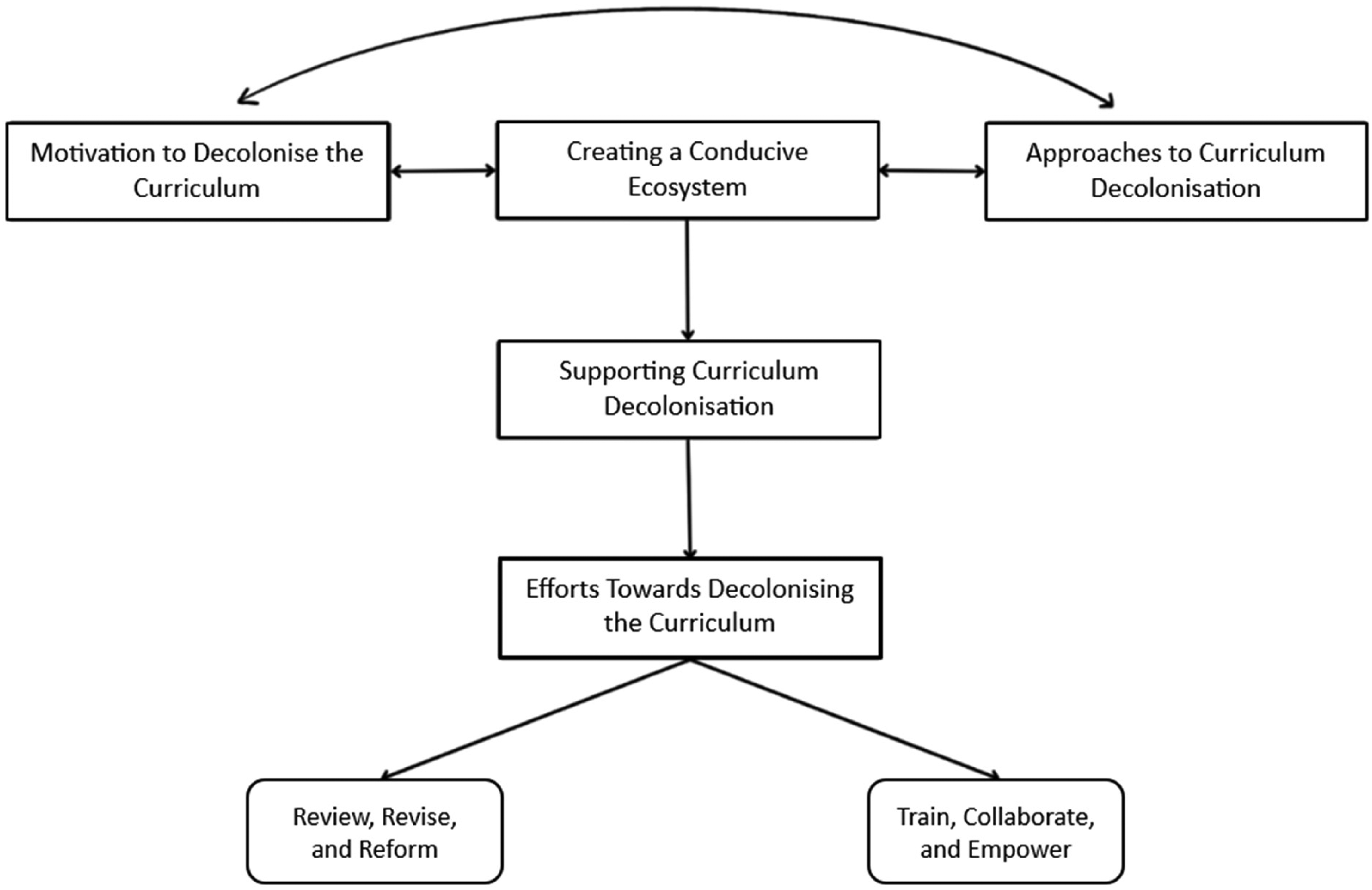
A model depicting possible interaction of our themes leading to curriculum decolonization efforts.
Key Recommendations for Decolonizing the Curriculum Based on Our Findings.
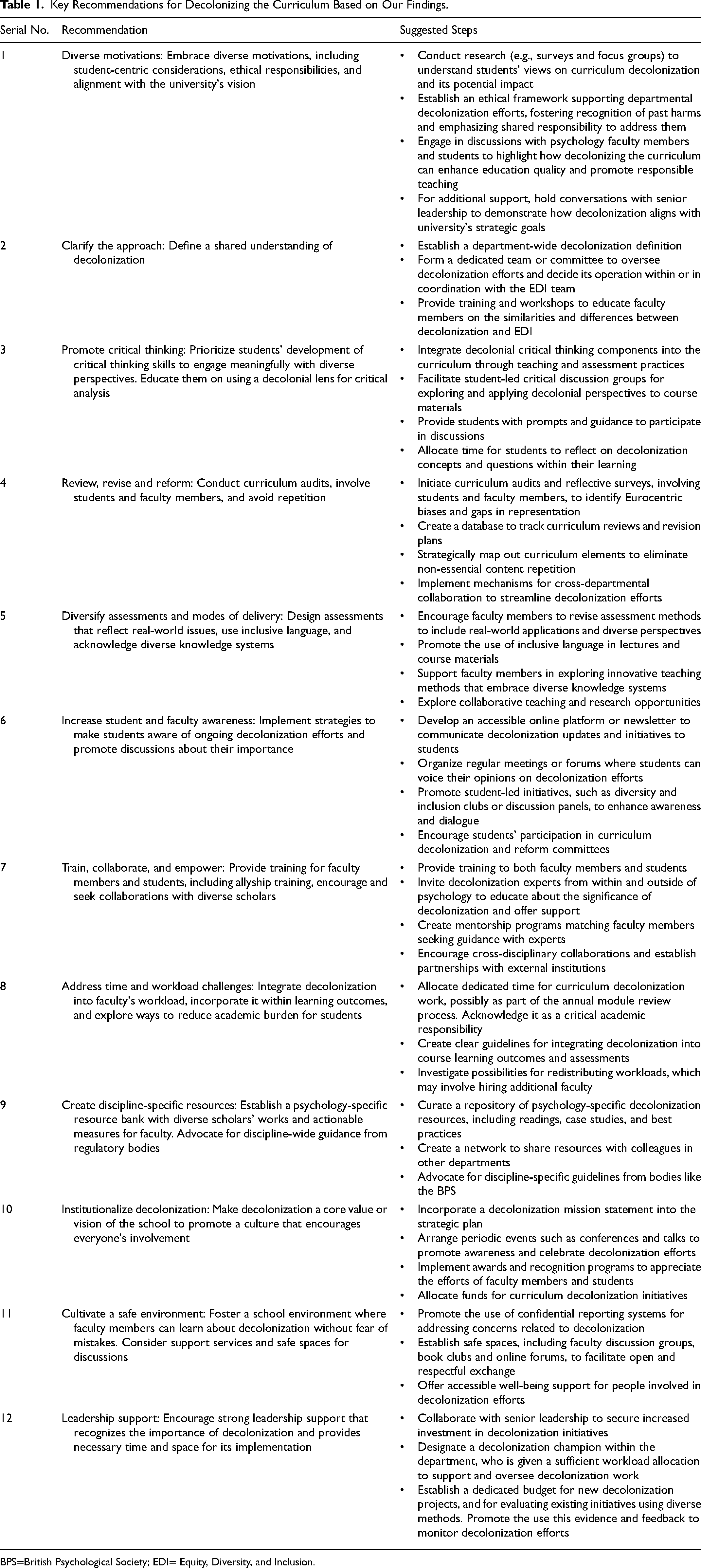
BPS=British Psychological Society; EDI= Equity, Diversity, and Inclusion.
A key motivation behind curriculum decolonization is its potential to positively impact students’ sense of belongingness. Consistent with previous research (e.g., Hall et al., 2022; Meda, 2020), our contributors felt that a decolonized curriculum could foster belongingness as it might resonate more with the diversity of students and their perspectives. This is important as lack of belongingness might lead to feelings of disconnection and isolation (Elhinnawy, 2023). Decolonization can potentially make the curriculum more accessible and relevant (Motala et al., 2021), with diverse perspectives enriching the educational experience and enhancing academic rigor (Liyanage, 2020). Moreover, the APA's acknowledgment of psychology's role in perpetuating systemic inequalities and racism (APA, 2021) and the QAA's (2023) recognition of a WEIRD-centric bias in UK psychology courses highlight the ethical and pedagogic rationales for decolonization.
Figure 1 proposes that motivations for curriculum decolonization can influence the approach a department adopts. Recognizing the diverse motivations within a department, it is crucial to develop a shared local understanding of curriculum decolonization (see recommendations 1 and 2 in Table 1). This could build momentum, as our contributors felt the lack of a clear understanding of decolonization may hinder engagement.
Our contributors told us that active participation of both faculty and students is key to the success of curriculum decolonization initiatives. Correspondingly, Jankowski et al. (2022) suggested low faculty engagement and resistance (e.g., minimal use of curriculum decolonization resources provided to them) as primary reasons for minimal changes in reading lists, even after 3 years of decolonization efforts. As contributors acknowledged superficial engagement as a potential barrier, recommendations 4, 5, 6, and 7 offer some ways in which students and faculty can be involved in curriculum decolonization work. However, our findings suggest that engagement depends on appropriate departmental support. Addressing issues like lack of understanding of decolonization, workload pressures, and resource limitations might help overcome this challenge by creating more space and capacity for engagement (see recommendations 8 and 9).
Our contributors felt that (White) faculty members often lacked confidence in discussing and engaging with decolonization work. As Wilson et al. (2022) suggested, many educators hesitate due to the fear of making mistakes or appearing uninformed. In the classroom, they may worry about negative student reactions, especially as some students view decolonization, or a decolonial approach to learning, as irrelevant, psychologically demanding, or confrontational (Maine & Wagner, 2021). Measures like awareness programs, training, and allyship development might help faculty manage discomfort. Recommendations 7, 9, and 11 offer some ways for departments to build a safe environment for learning and engaging in decolonization work.
Our contributors valued a critical thinking framework to decolonize the curriculum, though they did not describe this in any detail. The BPS's (2019) accreditation standards emphasize critical thinking as essential to psychology education and highlight the importance of diverse viewpoints to enhance critical evaluation skills in psychology courses. Critical thinking is also a key standard in other disciplines (e.g., QAA, 2018). Indeed, decolonial initiatives framed as broadening the curriculum to include international perspectives tend to gain greater acceptance (UPP Foundation, 2021), and reduce resistance. However, it is important to distinguish between merely adding cross-cultural examples or antiracist content and the more comprehensive transformative process of decolonization (Ahmed-Landeryou, 2023), with the latter involving active reflections and challenges to underlying colonial structures in teaching and learning.
Decolonization aims to decenter, not eradicate, mainstream Western knowledge from the curriculum (Meda, 2020). It involves foregrounding nonmainstream perspectives and interrogating them appropriately, rather than simply contrasting them as alternatives to White-Western norms (Gillborn et al., 2023). A transformative, critical, multicultural education provides opportunities to learn from diverse perspectives and encourages students to think critically about their implications (Arphattananon, 2018). The wide popularity of critical thinking framework in universities provides an opportunity to incorporate decolonial critical reasoning (see Naegeli Costa & Bedir, 2022). Students might reflect on the colonial matrix of power (Quijano, 2000), critically contextualizing their learning, and examining the influence of their own values in learning processes (Ferguson et al., 2019).
Decolonization may initially be confusing and uncomfortable. However, sustained efforts, as Castell et al. (2018) suggested, can help students overcome uncertainty and develop a deeper decolonial understanding of their learning. Moreover, involving decolonial experts can support both students and faculty in developing and applying a decolonial lens. Overall, this approach may enrich the learning experience, while also aligning with the evolving educational standards that prioritize diversity, inclusivity, and critical engagement. Recommendation 3 provides some ways to apply decolonial critical thinking.
Reflections can be useful when developing and implementing curriculum decolonization initiatives. Acknowledgment and interrogation (Gillborn et al., 2023) may prevent decolonization efforts from appearing tokenistic, as often perceived by students (Francis & Scott, 2023; Winter et al., 2022). Simply acknowledging a scarcity of Global South representation or adding diverse reading material without addressing the reasons for their historical exclusion may seem like a tick-box approach (Moncrieffe et al., 2019). Students may see these reading materials as an add-on to the mainstream canon without fully embedding decolonization or addressing deeper structural issues. This risks perceptions of “decolonial washing” (le Grange et al., 2020, p. 26), and can give a misleading impression of decolonization that does not address deeper structural issues. Deep interrogation is necessary for decolonization. For instance, student feedback may prompt faculty members to reflect on and address biases that might be present in their modules.
Contributors emphasized collaboration between faculty and students for curriculum decolonization. They advocated for students as active co-creators rather than passive consumers of knowledge (see also Fuentes et al., 2021; Joseph Mbembe, 2016; Meda, 2020). Involving students in pedagogic decisions and institutionalizing curriculum decolonization (Takhar, 2023) can help ensure student voices are heard and respected. This is important, given that only 63.3% of UK students understand how their feedback leads to actionable changes (Office for Students, 2023), and just 23% believe their voices are heard in the curriculum decolonization process (Takhar, 2023).
This perspective aligns with critical pedagogy principles and challenges the traditional teacher-centric banking model of education (Freire, 1972). In doing so, it promotes an emancipatory framework, where students are co-creators of their education, shaping what they study and how (Freire, 1972). This partnership amplifies student voices, allowing them to incorporate their stories and personal backgrounds into the knowledge exchange and creation processes. Educators, in this context, act as facilitators guiding a collaborative learning process (Duncan-Andrade & Morrell, 2008). Recommendations 1, 4, and 6 suggest ways students can contribute to various stages of curriculum decolonization. Collaborations between universities and Indigenous and Global South scholars can be valuable and more accessible than ever, thanks to the expanded opportunities for global digital partnerships prompted by the COVID-19 pandemic (Meda, 2020). However, these partnerships must be grounded in mutual trust, respect, and academic integrity, avoiding extractivist practices that appropriate local knowledge or reinforce existing power dynamics.
Consistent with prior research (Moncrieffe et al., 2019; Wilson et al., 2022), our collaborators told us that time and workload pressures were significant barriers to curriculum decolonization. Effective decolonization requires recognizing the extensive effort involved and restructuring workload models for sufficient time (see recommendation 8). Without this, there is a risk of creative accounting, where existing content is merely justified to meet the new requirements without any substantial changes. Furthermore, strict BPS accreditation guidelines were also seen as obstacles. It is important to raise the issue that BPS's partnership-centric accreditation approach offers curriculum designers opportunities for collaboration. Course leaders can work with the BPS on decolonization without risking de-accreditation. Curriculum leaders in other locations (and disciplines) may collaborate with their local accreditation bodies to explore ways to decolonize their curriculum. We also urge faculty members to advocate for greater guidance on curriculum decolonization from bodies like the BPS (recommendations 9 and 10).
Curriculum decolonization may rely on institutional and leadership reform, as an institution's vision shapes pedagogical approaches (Wilson et al., 2022). Fostering a supportive culture for decolonization is crucial for success. Contributors suggested making decolonization a core departmental value, a view supported by organizational psychology research, which shows that aligning individual and organizational values boosts motivation toward achieving shared goals (Herbst & Houmanfar, 2009; Paarlberg & Perry, 2007) and encourages leadership support (Tsai, 2011). These sentiments are reflected in recommendations 10 and 12. However, cultural transformation within organizations can be slow and challenging, making it important to evaluate the effectiveness of this suggestion. Such evaluation should assess whether integrating decolonization as a core departmental value streamlines decolonization efforts, boosts engagement, and mitigates reluctance among faculty and students.
Strengths and Limitations
We aimed to initiate a dialogue on curriculum decolonization and engage key psychology faculty members to exchange learnings and best practices. Our goal was to streamline efforts, potentially saving time and resources while providing some clear direction for curriculum decolonization. Our coproduction approach was a methodological strength. Besides offering collaborative opportunities, its core values—equality, inclusivity, and engagement (Michelle Makey et al., 2023)—align closely with decolonial principles. Moreover, although studies exist on students’ and faculty's perceptions of curriculum decolonization, to our knowledge, ours is the first to collaborate with decolonization leads who are at the forefront of decolonization efforts within UK psychology departments.
Curriculum decolonization initiatives risk being absorbed within EDI efforts. Although examining this in detail was beyond the scope of this study, we recognize how such initiatives can appear as decolonial washing (le Grange et al., 2020). This raises important questions about how decolonization covers other (seemingly) positive EDI initiatives. Broadly, it also makes us ponder the extent to which decolonization of the curriculum is possible within a Western university, which is an inherently colonial space (e.g., Gopal, 2021). Future research should critically explore these perspectives.
A key challenge is measuring the impact of the complex interlinked mechanisms in Figure 1. Determining the success of decolonization efforts beyond psychological outcomes like a sense of belonging takes time and effort. Although universities and national bodies may attempt to use awarding gaps (argued as educational debt owed to students of color by Ladson-Billings, 2006 or institutional ineptitude by Fuentes et al., 2021) or student evaluations, the multifaceted student experience makes it hard to pinpoint specific impacts of curriculum decolonization. This complexity should encourage university leadership to look beyond the curriculum to broader educational and pedagogical elements, such as educational spaces, communication, and opportunities.
Though we acknowledge that the relationships proposed in Figure 1 require empirical examination, they highlight that implementing curriculum decolonization depends on multiple contextual factors and their interactions. In this study, we attempted to foster understanding and develop recommendations (Table 1) with transferable potential. However, our realist perspective reminds us that context is key to whether decolonization efforts will work (or not). Therefore, we invite further examination of our non-exhaustive list of recommendations in Table 1 to address the realist questions (in the language of Pawson & Tilley, 1997): when would a curriculum decolonization initiative work (or not), for whom, under what circumstances, and why?
This study initially intended to gather insights from HODs due to their close work with faculty, students, and university leadership. Most HODs recommended involving their decolonization or EDI leads instead, thus expanding the study's focus. This redirection was beneficial, providing deeper insights from decolonization leads. However, the study potentially lacks nuances that HODs could provide. For example, workload was noted as a prominent challenge in curriculum decolonization. Understanding the perspective of HODs on feasible ways to manage this would have been valuable.
Moreover, our findings are based on a self-selecting group of contributors who may not fully represent other psychology departments’ perspectives and experiences. These departments may have similar, different, or critical views on curriculum decolonization and may use different approaches to address various challenges. Additionally, although our contributors held key academic positions, others may be better positioned to understand the nuances of implementing curriculum decolonization initiatives, particularly in different subfields. They may also have deeper insights into grassroots efforts on curriculum decolonization and how students respond to them. Future studies should include a broader range of perspectives.
Although not necessarily a limitation, an important consideration is the influence of our positionality on the study's findings. An ethnically South Asian Indian man with personal and research interests in decolonization led the research. This undoubtedly impacted our meetings with collaborators and interpretations. Additionally, interactions with predominantly White contributors may have been influenced by sensitivities around race, potentially affecting their willingness to express critical viewpoints around decolonization.
Conclusion
In conclusion, we have provided an overview of the successes and challenges faced in leading curriculum decolonization initiatives across 11 UK universities and coproduced some recommendations for curriculum decolonization. We highlighted the role of collaboration among faculty members, students, and decolonization experts in creating an inclusive and relevant curriculum. Despite challenges such as faculty engagement, workload pressures, and existing biases, we have emphasized the need for continuous, meaningful engagement and critical reflection within a decolonial framework. This holistic approach calls for more than superficial changes, aiming to reshape educational experiences and standards. Although our contributors were psychologists, our recommendations could apply to other disciplines with similar educational contexts.
Footnotes
Acknowledgements
Dr Angie Makri, Dr Chris Walton, Dr. Heather Cleland Woods, Dr. Ioanna Kapantai, Dr. Karisha Kimone George, Prof. Michael Banissy, Dr. Sara Vestergren, Prof. Sarah Beck, Dr. Sarah Bayless, and Dr. Syka Iqbal were contributors in this study. They read this manuscript and consented to their acknowledgement herein. We also acknowledge one further contributor who declined to be named in the manuscript.
Declaration of Conflicting Interests
The authors declared the following potential conflicts of interest with respect to the research, authorship, and/or publication of this article: LY is a National Institute for Health Research (NIHR) Senior Investigator, and her research programme is partly supported by NIHR Applied Research Collaboration (ARC)-West and NIHR Health Protection Research Unit (HPRU) for Behavioural Science and Evaluation.
Funding
The authors disclosed receipt of the following financial support for the research, authorship, and/or publication of this article: This work was supported by the Economic and Social Research Council (grant number ES/P000630/1)].

Correction (February 2025):
Article type has been updated in the article since its online publication.