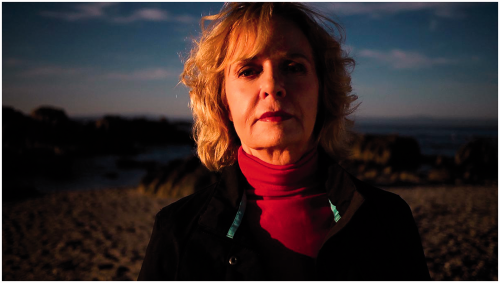
In this interview, author Gwyneth Cravens talks with the Bulletin’s Dawn Stover about why nuclear power should play a greater role in the response to climate change. Cravens describes her conversion from nuclear protester to nuclear supporter, and calls for expedited approval of reactor construction and new designs. She dismisses typical fears about radiation and nuclear waste as ignorance, and explains why she believes that changing people’s minds about nuclear power is not as difficult as it might seem.
Author Gwyneth Cravens published five novels and worked as a fiction editor at The New Yorker before she became so curious about nuclear energy that she began researching what eventually became the nonfiction book Power to Save the World: The Truth about Nuclear Energy (Knopf, 2007). With Sandia National Laboratories nuclear expert Richard (Rip) Anderson and his wife Marcia Fernandez as her guides, Cravens embarked on a nuclear journey that took her to the Waste Isolation Pilot Plant, Yucca Mountain, a uranium mine, and other sites—and transformed her from an antinuclear protester into a nuclear proponent who now hopes to change the minds of others. Cravens, who grew up in Albuquerque in the shadow of the atomic bomb, was one of the “stars” of the 2013 documentary film Pandora’s Promise, which spotlighted prominent environmentalists who were once fervently opposed to nuclear power but now support it. Here Cravens talks about the myths and misconceptions surrounding nuclear power, and why the world needs more reactors.
BAS: Your book on nuclear energy was published in 2007—before the Fukushima nuclear meltdowns, the virtual bankruptcy of the nuclear company Areva in France, and the rapid growth of wind and solar power. How would the book be different if you were writing it today?
Cravens: I don’t think it would be that different. Areva’s conking-out was a big surprise. I don’t know what happened there, but nuclear plants are continuing to thrive in France, despite the current government plan to ratchet back nuclear. Fukushima was a big blow, even though not one person died as a result of radiation exposure. The unfortunate deaths could have been completely avoided by not feeding mass hysteria or taking people out of old folks’ homes and hospitals and sending them to shelters where they died. That’s the unfortunate aspect of Fukushima, not the radiation.
BAS: Can probabilistic risk assessment, which failed to anticipate the chain of events at Fukushima, be trusted to anticipate human errors—for example, packing barrels of radioactive waste with the wrong kind of kitty litter, which caused an accident at the Waste Isolation Pilot Plant in New Mexico last year?
Cravens: I talked to Rip Anderson about that, because he worked on probabilistic risk assessment for the Waste Isolation Pilot Plant. Who knew that the people in Los Alamos who packed the barrels had changed to green kitty litter, which causes an explosion when it’s packed the way it was? That was a crazy, crazy thing. One of the things Rip did, which people continue to this day to praise him for, was to assemble a group of people who were not part of the Sandia Laboratories complex to come in as a group to see whether they were doing the risk assessment wrong. There were sociologists, there were historians, there were all kinds of people, because this waste is supposed to be safe for 10,000 years.
BAS: But even if you include a variety of experts, how does probabilistic risk assessment anticipate explosive kitty litter?
Cravens: If some chemist like Rip had been told what was in green kitty litter, it could have been avoided. Nothing is perfect, and you can’t think of everything. They did think of huge numbers of things when they were working on the WIPP. For example: “What if some kind of fast train one day went underground from Los Angeles to the East Coast, and it went through New Mexico?” If we had visited Fukushima on the nuclear journey, which we did not do, Rip would have said, “What in the hell are those generators doing up next to the seawall?” In the United States, there is much more attention to things like that. And WIPP now has a new protocol for testing materials in the barrels that are delivered for storage.
BAS: Were you an antinuclear activist before you began exploring this topic?
Cravens: To some extent. I protested the Shoreham nuclear plant being built on Long Island. I thought Shoreham was incredibly dangerous because that’s what Greenpeace and everyone was saying. I’m not a scientist, I’m not an engineer; I just bought it.
BAS: If you had to pick a turning point when you went from being antinuclear to pro-nuclear, what would that be?
Cravens: It took an encounter with someone I respected very much to change my mind. I didn’t know what Rip did at Sandia Labs, but I got to know him as a friend and as a very interesting, smart guy. I was outraged that the government was going to dump nuclear waste into Carlsbad Caverns in southern New Mexico, my home state. That’s what I thought the Waste Isolation Pilot Plant was. Rip said, “Well, it’s not exactly like that. Would you like to go see it?” And that’s how I found out he was involved with it. I grew up knowing you never ask a scientist in New Mexico what they do. And I said, “Yeah, I would really like to do that.” So we went to the WIPP and had a tour of it, and it was so different from what I had imagined. When you go down in the elevator 2,150 feet below the surface, you begin to realize that things are not going to get out of that place, and that even high-level nuclear waste could be safely put there. Just don’t use the wrong kitty litter.
BAS: Within the scientific community, global warming is widely acknowledged to be a dire problem. What role should nuclear power play in the response to climate change?
Cravens: It has a huge role to play, and more and more people are changing their minds about nuclear power. When I was writing the nuclear book, I heard Ted Nordhaus and Michael Shellenberger of the Breakthrough Institute interviewed on public radio. They were talking about wind and solar, and the interviewer asked, “What about nuclear power? That doesn’t emit carbon dioxide either.” And they said, “Oh no, that’s not a good idea at all.” So time passes, and then around 2008 I get a phone call from Shellenberger and Nordhaus. They kept asking me questions, and I kept answering. And finally I said, “You’re asking all these nuclear questions, but I remember that you said on the radio that you didn’t think nuclear power was worth considering.” And they said, “Well, we read your book. We changed our minds.” We became friendly, and I became part of the Breakthrough Institute.
BAS: Several scientists have told me that the institute motivated them to speak out more about nuclear power.
Cravens: I think that they have been important in explaining to people the ecological benefits of nuclear power. If you want to talk about carbon dioxide emissions and costs per kilowatt-hour, wind power is something like four and a half times more carbon dioxide-loaded than nuclear, because of all the concrete and steel that has to be made by burning coal or another fossil fuel. And land that was wild is now being occupied by these huge objects.
BAS: There has been widespread support for nuclear power from successive US governments. The Obama administration has provided hundreds of millions of dollars for nuclear energy research and development, and subsidized the construction of new reactors. Yet the future of nuclear power in the United States still looks relatively bleak. What more can the government do?
Cravens: The Nuclear Regulatory Commission takes forever to license an advanced nuclear reactor design. There are some very good designs. They have been tested every which way, at national labs and so on. Small modular reactors can be a very good idea: If you need more power, you just order another small reactor. But it’s taking about 12 to 15 years to get that approved by the Nuclear Regulatory Commission. It surely could be streamlined.
BAS: Should the rules for licensing be loosened too, or just the approval of new designs?
Cravens: I think there has to be another look at everything. Any time you deal with the bureaucracy, you get old rules that don’t apply anymore, but you have to follow them. My sense is that they are not keeping up, and they’re not allowed to, because the NRC is basically controlled by Congress.
BAS: There are lots of experts who support the expansion of nuclear power, but typically they have in mind an advanced generation of reactors that would be safer and more economical than existing reactors. Realistically, how long would it take before a significant number of these reactors—enough to really make a dent in global warming—could be up and running in countries like the United States?
Cravens: Well, China is building our American-designed reactors quickly. They’re light water reactors, and that’s probably what’s going to continue. In fact, that’s all the NRC will deal with at this point. Anything you’ve got that’s odd, like a molten salt reactor—it’s very safe, and it can burn spent fuel from other nuclear plants, but I don’t know when that will be OKed. I’m guessing 2030.
BAS: Does it really make sense to spend time talking about any of these designs that can’t be implemented quickly?
Cravens: Additional reactors can be installed at existing plants—as is happening already in Georgia, South Carolina, and Tennessee. The amazing thing is that these plants can go on for decades. In some plants, just about every piece of equipment has been replaced. And they keep operating! There has never been a death in the United States from a commercial nuclear reactor. Not one. Yes, people get tools dropped on their heads and the like. Things happen, like they happen in any industry. But in terms of the operation of the reactor: no deaths. And we’re talking nearly 50 years here. It’s important to keep that in mind.
BAS: So you would support a major expansion of nuclear power even if it meant using existing technology, rather than advanced designs?
Cravens: Yeah. The advanced ones have to jump through a lot of hoops. Everything has to be tested nine ways from Sunday.
BAS: What about the economic issues, though? Because even the reactors that are being built in the Southeast are over budget and years behind schedule. Who’s to blame for that?
Cravens: This is just an opinion of someone who’s not an engineer, but I think that the contractors know how to get their money. For example, Yucca Mountain: I visited there with Rip and Marcia before it was canceled for political reasons. I said, “Building this is going to take forever,” and Rip said, “It’s the contractors. They don’t want to leave. If you’ve got a nuclear plant, and you’ve got a couple thousand people working on it, they make it last as long as they can.”
BAS: If there was a way to power the world without using fossil fuels or nuclear energy—say, with renewable energy, increased energy efficiency, and storage technologies—would you still be in favor of expanding nuclear power?
Cravens: I haven’t seen any other technology that has what nuclear power has. Wind and solar are weak and intermittent. They operate only a small percentage of the time and rely on fossil fuels as backup. Tidal energy is interesting. But all of these things have drawbacks. Guess what happens to wind towers in the North Sea—they’re corroded by salt, and then the gales blow. So yes, if wind and solar were very beautifully taking over. They’re not. They contribute less than 5 percent to the grid. And they cannot provide baseload electricity.
BAS: Your book has a lot of information about radiation and health risks. Why did you focus on radiation so much?
Cravens: That was my own fear. I read science fiction novels as a kid. I was afraid of atomic bombs, because I went to school with kids whose fathers went to Nevada and blew up atomic bombs. The Trinity explosion was in my home state of New Mexico. Radiation seemed really mysterious and frightening. That was the main motive for my saying no to the Shoreham nuclear plant; I pictured the radioactive clouds messing up my organic garden. That was ignorance. Rip explained a lot about radiation, and then I talked to a bunch of scientists about it. These were people who had done a lot of research, and put it in perspective for me.
BAS: You mentioned earlier that no one has died from commercial nuclear power in the United States. But radioactive contamination can have enormous impacts on the lives of people in a place like Fukushima or Chernobyl. Do you think it’s fair to gauge the safety of an energy source by how many people die or get cancer from it?
Cravens: I feel very sorry for those people. They’re now going back to their homes, but there is a huge amount of ignorance. One of the radiation scientists I know said, “If they took old people from the Fukushima prefecture and put them in planes and brought them to New Mexico, their radiation exposure would go up, because there’s a lot of uranium in the soil in New Mexico.” You have to make these comparisons.
BAS: So you’d feel safe living in Fukushima?
Cravens: No problem. There are probably some hot spots that have been identified and roped off. I get that. But the deaths that have happened were mostly because of confusion and panic. Antinuclear folks from the United States scared the Japanese with dire predictions. It’s horrendous. I hope that today schoolchildren everywhere are getting better education about radiation, what it does and does not do.
BAS: Why do you think that so many people who are concerned about climate change oppose nuclear power?
Cravens: Well, they’re like I was; they’re just ignorant. But I keep hearing about people who now have become much more open-minded, seeing how very serious global warming turns out to be.
BAS: The premise of the movie Pandora’s Promise was that prominent environmentalists are changing their minds about nuclear power. What did you think of the movie? Was it effective in creating more converts?
Cravens: When the movie premiered at the Sundance Film Festival, its sponsors did a study. Before they saw the film, about 80 percent of the audience said they were opposed to nuclear and 20 percent were for it. The figures switched. After they had seen Pandora’s Promise, and they took the questionnaire again, 80 percent were okay with nuclear power and 20 percent were against it.
BAS: Is it prudent to forge ahead with building new nuclear plants when governments and utilities still haven’t figured out what to do with waste generated decades ago?
Cravens: They have figured it out. At one time, I thought there were hundreds of square miles of nuclear waste stashed away somewhere. Actually, the high-level waste could all fit in one New York City apartment, if you could isolate it.
BAS: Just the waste from commercial nuclear power plants? Because there’s already enough high-level nuclear waste in the United States to more than fill the proposed Yucca Mountain repository, but a lot of that is from the defense program.
Cravens: Yes, and there’s another thing: When you start seeing what is nuclear waste, a typical bunch of stuff that would be put into WIPP is all these safety outfits they have to put on: hazard suits, masks, gloves. You only wear it once and then it goes into the dump. Most of the “stuff” in these repositories is like that.
BAS: You describe several possible ways to dispose of nuclear waste, all technically feasible in your view. But if waste is mainly a political problem, how would you solve that?
Cravens: I’m convinced, and I think most people in the nuclear world are convinced, that it is only a political problem, not a technical problem. It’s partly because science is not very well taught anymore in the schools. Science is not the important thing it was during the Cold War, and so you have all kinds of superstitious stuff.
BAS: You became convinced by listening to Rip. Could you take Rip or his surrogate to Congress, or to communities that are considering hosting a nuclear waste repository? Who are the trusted figures out there?
Cravens: The former governor of New Jersey [and former EPA Administrator] Christie Todd Whitman is an example. She helped found one of the pro-nuclear groups, and she’s quite active.
BAS: But when a politician spreads the word—Al Gore, for example—doesn’t that make the message seem less trustworthy to some people? You trusted Rip not just because he was a scientist but because you knew him personally, right?
Cravens: Yes, and I knew he’s a very honorable, helpful guy. But everything Rip told me, I checked with other sources. Every single thing. He’d tell me some mind-blowing thing, and I’d say, “Wow, is that true? Surely waste will leak out of the WIPP.” I had to ask a lot of other scientists. Generally, the response was extremely comforting. It’s not something to worry about; it’s something to be aware of. Those guys who were wading around in the water barefoot in Fukushima, trying to cool the reactor as it was burning through the bottom of the reactor container, those were really brave people. And they’re okay.
BAS: Do people fear radioactivity because they associate it with nuclear weapons?
Cravens: Yes. Whereas coal started with railroad trains. And what’s better than having a nice, speedy train instead of a horse and buggy?
BAS: Many of the utilities in the United States and elsewhere are large corporations that own both nuclear plants and fossil fuel plants. This is perhaps why they have not been major supporters of climate change legislation.
Cravens: That’s the reason.
BAS: But without such legislation, it is unlikely that significant climate mitigation measures will be taken. How would you propose getting out of this bind?
Cravens: I wish I had a magic answer for you. The fossil fuel industry, the Koch brothers, very powerful billionaires—they rule. There are some people that I wouldn’t have expected who are changing their minds and saying “Yes, less fossil fuels, more nuclear power.” They are beginning to get it, but it’s a slow process. Our descendants are going to wonder why we didn’t do something.
BAS: Nuclear power is growing most rapidly in developing countries like China, which are perceived—fairly or not—as being more lax on safety than the United States or France. Does that worry you?
Cravens: Their designs are American designs, so they’re basically getting what we have here, except it’s newer. I think that one of the things they’ve got to know is that if they do this in a shabby way it could be devastating for them and their kids.
BAS: Here in the United States, nuclear power just can’t compete with cheap, abundant natural gas. How would you change that?
Cravens: I can’t really speak in a general way about it, but my husband and I spend three months of the year in Carmel, California, and I remember 10 to 15 years ago there was this huge hike in natural gas prices. Suddenly there were these little old ladies in Carmel who had to live in one room of their house because that’s the only one they could afford to heat with gas. Right now gas is cheap and abundant, but let’s see how long that lasts. These energy companies just live in the moment.
BAS: In your book, you set yourself up as the doubter who asks questions of Rip and other nuclear experts at all the places you visited. That structure works well for building the case for nuclear, but doesn’t it leave out the antinuclear experts?
Cravens: I did think about it, and I followed what the antinuclear claims were—very often not based on science. It doesn’t hold up if you start doing the research. I thought, “This book is long enough already, and if I start interviewing those guys, forget it.” And I was one of those guys. So I hold up myself as an example of someone antinuclear.
BAS: How did people respond to your book?
Cravens: When I called my agent and told her I was working on a book about nuclear power, there was a very long silence. She sighed, and then she said, “Send me a proposal, and I’ll see.” She was passionately antinuclear. She said, “If you can convince me in a proposal, I can get you a publisher.” Well, it took about three or four tries before it was something she thought she could submit to a publisher. And now she blogs about nuclear power. I think other countries, like China, may just wake people up to the idea: “If they’re building reactors quickly, why can’t we?” My hope is that with clean, large-scale energy—not just in our own country but around the world—people will be healthier, happier, and live longer. All these things happen when you have energy. And you don’t have to have wars.