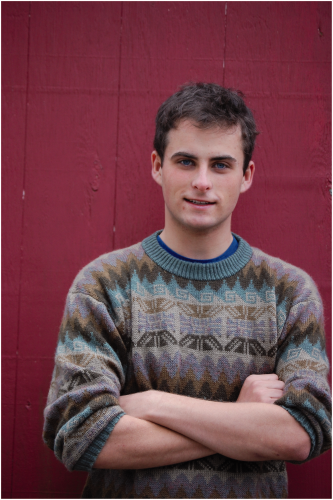
In this interview, Tufts University sophomore Henry Jacqz talks with the Bulletin about the Massachusetts-based group Students for a Just and Stable Future and its efforts to spur action on climate change. Jacqz describes the nationwide campaign to divest university endowments from the top publicly traded fossil fuel companies, and explains why he sees the financial case against divestment as a feeble one—and the moral case in favor of divestment as a slam dunk. He also describes student efforts to push for bolder action on climate at all levels of government, including student senates and the Massachusetts state Legislature and governor's office. Jacqz talks about the best ways to communicate the divestment narrative to the public, and the challenge of convincing students that they can have a meaningful impact on the climate dialogue. His group hopes to make politicians aware that students care a great deal about climate, and to spark public discussion about the pollution impacts and social inequities caused by fossil fuel companies that remain committed to intensifying climate change.
In the fall of 2007, four college students who met through a national leadership gathering of the Sierra Student Coalition decided to form a group called Mass Youth Climate Action. Its first success was to help pass a Massachusetts bill, the Global Warming Solutions Act, which mandates 80 percent greenhouse gas emissions reductions statewide (below 1990 levels) by the year 2050. By 2008, the student group had become Massachusetts Power Shift, promoting the goal of 100 percent clean electricity. The following year, the group again changed its name, to Students for a Just and Stable Future (SJSF).
In recent years, SJSF has been involved in protests against fossil fuels and the Keystone XL oil pipeline, as well as campaigns to divest college and university endowments from major coal, oil, and natural gas companies. The group describes itself as “a network of student and youth activists who work to fight climate change and the systems that perpetuate it.” It connects campus climate justice groups across New England, although its activities are currently concentrated in Massachusetts.
SJSF is a horizontal organization with no official leaders. All members are invited to provide input and are encouraged to take on as much responsibility as they can. One such member is Henry Jacqz, a 19-year-old sophomore at Tufts University who is also a member of the campus-specific organization Tufts Climate Action. Jacqz is from Newburyport, Massachusetts, and is majoring in computer science and economics. The Bulletin spoke with him about SJSF, divestment campaigns, and how students at some of the nation's elite universities are confronting the threat of climate change.
BAS: How did you become a member of Students for a Just and Stable Future (SJSF)?
Jacqz: Freshman year, I arrived on Tufts' campus and realized pretty quickly that I wanted to get involved in climate activism. So I got involved with the Tufts divestment campaign and also SJSF, which is inter-Boston schools.
BAS: Is divestment the biggest issue for SJSF?
Jacqz: It's not the only one. SJSF supports the college divestment campaigns by allowing activists from different schools to share ideas and contribute to each others’ campaigns, but a lot of that work actually goes on at the campus level. SJSF also provides an opportunity to do other forms of activism, such as engagement at the state level to get serious and bold action on climate change in Massachusetts.
BAS: I can't help noticing that you use the word “stable” in the group's name, rather than “sustainable.” Is there an important difference?
Jacqz: I'm speaking about a group that was founded before I arrived, but I think that “sustainability” is a term that has probably lost a lot of its bang over the years, and sometimes it can be more powerful to use a fresh word. “Stable” also signifies that we see catastrophic climate change leading to a world that will be unstable in so many ways.
BAS: Not just energy supply?
Jacqz: One thing that has drawn myself and so many other young people to the climate change movement recently is the focus, or refocusing, on social impacts and inequities that will be expanded and amplified by climate change. People who have had the least impact in contributing to climate change are feeling some of the most severe effects.
BAS: Is the word “just” in your group's name a reference to those people? Or to climate justice for people of future generations?
Jacqz: It's both, and more. It's future generations who are going to be living on a planet that's a lot less habitable and prosperous, and people in other parts of the world who are feeling the adverse effects of our massive overconsumption of fossil fuels, and also the people who are facing the health impacts of fossil fuel extraction and refining right now. That third group should not be forgotten; every day there are people who are experiencing disease because of the toxic mining pollution that the fossil fuel industry is spewing into the environment, and air pollution from the combustion of coal. That's a current and immediate impact that people often forget.
BAS: How do students at elite colleges like Tufts and Harvard help give a voice to people in poor communities affected by pollution?
Jacqz: No one in our group would claim to speak for those people. Our work is focused on staving off climate change at large, which we think will adversely affect ourselves as well as other people. It's a challenge: growing empathy and trying to realize how much of a bubble a college campus can be, and how isolated we are from the economic ramifications of our daily lives. Divestment is a great example of that, because we have an endowment that no one on campus thinks about. It's this big pot of money that, on a daily basis, even the administration doesn't think about. But that money is invested in the stock market and getting returns from a business practice that is completely unsustainable—and is based on bringing about catastrophic climate change.
BAS: Why divestment? What are the motivations for taking this approach to combating climate change?
Jacqz: Divestment is first and foremost a statement about what is moral. It's clearly immoral to be profiting off a rogue industry that is spending tens of millions of dollars to prevent our politicians from passing legislation that will enable us to transition to a clean energy economy, and that is also actively polluting the environment and adversely affecting people's health. The second big motivation is to send a political message that sparks a national debate and stigmatizes the fossil fuel industry, so that politicians can't continue accepting the industry's campaign contributions and responding to its immense lobbying efforts.
BAS: Are there particular companies that you want universities to divest from? Are some fossil fuel companies worse than others?
Jacqz: The national campaign is focused on the top 200 publicly traded fossil fuel companies in terms of their current reserves of coal, oil, and gas. Other divestment campaigns around the world are using that same bar. It makes sense because the scientific understanding that we have today is that four-fifths of the proven reserves of all fossil fuel companies need to stay in the ground in order to avert dangerous climate change. So we're picking the publicly traded ones that universities invest in, based on how much these companies are planning on selling and seeing converted into greenhouse gas emissions.
BAS: Are you pushing for universities to make specific investments as well as to divest from these 200 companies?
Jacqz: Fossil fuel investments are usually around 5 percent of the total investment at universities. We're not asking them to reinvest in green energy, because it's an easier demand when we're saying: “Just create a negative screen on fossil fuels. You can invest in the rest of the stock market as you see fit.” Obviously we want to see more capital going toward renewable energy solutions. That's where money needs to go, and divestment is complementary to that, but not requisite.
BAS: What about nuclear energy? Is it part of the problem or part of the solution?
Jacqz: In the climate change activist community, nuclear is an infrequently-talked-about issue, because there are definitely different opinions on it. We all agree on reducing the carbon intensity of our energy industry, but some of us would probably be in favor of expanding nuclear energy, and others would probably see downsides. Renewables are less controversial replacements, but when it comes to scaling energy supplies some would say that nuclear might allow us to do that a lot more quickly.
BAS: How does your group intend to respond to Harvard president Drew Faust's continued insistence that divestment is not the best way to reduce carbon emissions?
Jacqz: I can't speak for the Divest Harvard campaign, but I think that the students there are escalating the campaign because that's the only choice they have. Their university has failed to take leadership, so they're left with the option of increasing pressure until they win. They know that they're going to win.
BAS: There are many pots of money that universities invest; they can have big endowments like Harvard, of course, but retirement systems also collect huge amounts of money from employees and invest it. For example, the California Public Employees' Retirement System, or CalPERS, holds more than $290 billion in investments for a variety of public employees, including some working at California's public universities. So what funds are you targeting in particular? And at what schools?
Jacqz: On campuses in the Boston area, we have a multitude of divestment campaigns. Additionally, in Massachusetts there was a legislative initiative sponsored by a Tufts alumnus to divest the entire state pension fund from fossil fuels, State Bill S1225, which SJSF helped advocate for, along with initiatives to divest local municipal pensions. The state bill failed to get out of committee, but I think it will be re-proposed. SJSF would definitely support divesting the entire state pension fund, which is not out of the realm of possibility.
BAS: What is your connection with 350.org? Can you talk about why your group felt that a separate organization was needed?
Jacqz: A lot of organizing comes down to which groups of people, and networks of people, can help each other most. For us in SJSF, talking with other students at the Boston schools has been the most helpful. The Divest Student Network (DSN) has done amazing work coordinating divestment efforts on the national and regional levels, but in terms of getting together and planning actions, especially non-divestment related actions, SJSF has been useful as its own group. Also, we're able to direct it as we see fit and develop our own leaders and our own relatively non-hierarchical structure. We try to generate consensus first, but in the past we've used majority voting or other types of voting when we're trying to make big decisions.
BAS: And that works pretty well?
Jacqz: Organizing is always a challenge, because you have a lot of passionate people working on something they really care about. But we think that trying to keep everyone involved pays off.
BAS: What is the most common argument you hear against divestment, and how do you respond to it?
Jacqz: The most common argument has been a pretty weak one, and that's the financial case that the endowment would make lower returns. It has been debunked numerous times by studies showing that a fossil fuel-free portfolio performs as well as a full market portfolio. Recently there has been a lot of press in the financial world about the growing realization that fossil fuel stocks might be vastly overvalued if we succeed in keeping reserves in the ground. The financial case that we're hearing from universities is their only feeble reply, and now that it is being rebuffed it's just a lack of leadership.
BAS: So there isn't any financial penalty to divesting?
Jacqz: Any time that you limit the number of sectors you're investing in, theoretically you increase the amount of risk. But with only 5 percent of endowments in fossil fuels, it's not significant enough to merit concern.
BAS: What have you learned so far about the best ways to communicate the divestment narrative to the public? Have you borrowed any strategies from earlier divestment efforts, such as the 1980s apartheid campaign?
Jacqz: It is a difficult issue to communicate on campus, especially because every year we have a new class of first-year students and we lose our seniors. Within our group, that creates a knowledge gap that we constantly have to fill. Also, our tactics are not as direct as the university's effort to put solar panels on roofs, which seems like an obvious way to reduce your impact as a school but can never create the type of political change that it's clear our country needs—and that divestment offers. Communicating that need effectively to students is a challenge, and we try to talk as much as we can in one-on-one conversations with people and at educational events. Past divestment movements—South Africa, and also the movement to divest from tobacco—do provide a lot of legitimacy, and serve as examples of how putting your money where your mouth is can create political change and can change the way that society is talking about an issue. That's what we are striving for.
BAS: If you're not asking everyone in America to stop filling up at the pump immediately, is it fair to ask universities to end their association with these companies?
Jacqz: We can't expect individuals to change the political environment. Companies exert disproportionate control, through lobbying and campaign finance, and the only reasonable way we're going to change that situation and get national legislation on climate change—which is one of the most tangible goals of the divestment campaign—is by changing the national dialogue. Whether an individual or an individual university is burning fossil fuels won't change the dialogue. What could change the dialogue is saying that these businesses are fundamentally predicated on perpetuating climate change.
BAS: Is your organization pursuing other climate change initiatives besides divestment?
Jacqz: SJSF has worked on various legislative initiatives in the state of Massachusetts. Last year we supported the fossil fuel divestment bill that I talked about earlier. We also assisted a campaign led by the nonprofit Better Future Project to pressure Massachusetts Governor Deval Patrick to use the power given to him in 2008 by the state's Global Warming Solutions Act. We called the campaign the Deval Patrick Legacy Campaign, because he really understands the climate issue and made some significant progress for our state, which we as young people appreciate. At the same time, we want to see the new governor, Charlie Baker, take even more bold action.
BAS: Does your group have any intention of becoming directly involved in elections?
Jacqz: If we feel at the time that putting our efforts behind a certain politician would enable that person to have the most impact in the political sphere, then we totally would. We try to understand the connection between politics and real solutions.
BAS: Students today do not seem very concerned about nuclear weapons. Why is climate change the threat that many students fear most?
Jacqz: Because it's the thing they should fear most. Students and general society should have been fearing climate change 10 years ago, and 20, 30 years ago even, when the science first came out. My generation is just realizing that the fact that no one has acted is ridiculous, but means we have to act.
BAS: Among your circle of friends and colleagues, there's very high awareness of the climate problem, but what about people your age in general?
Jacqz: I would say the awareness level is disconnected from the everyday lives of students. Everyone on campus understands how much of a threat climate change is. It's not that students are having trouble wrapping their heads around the issue; the challenge is getting students to understand how they can have an impact and how they have power as a result of their extreme privilege to go to a university. Our challenge as activists and mobilizers is to combine that understanding with the huge threat of not acting on climate change, and then to encourage activism in any shape or form.
BAS: Does SJSF advocate civil disobedience?
Jacqz: We don't rule out civil disobedience as a tactic. I think that it comes down to what we feel is most effective, and that could be conventional political engagement or it could be civil disobedience. There's a lot of really inspiring action around Massachusetts and the United States where we're seeing people use civil disobedience to fight against the building of new fossil fuel infrastructure, and that's something our group would commend and definitely consider when the time is right.
BAS: So there are at least some of you who feel it's still possible to “work within the system,” whether it's a big university or Congress, to get action on the climate issue?
Jacqz: When you look at it politically, the system is just people trying to get elected. Civil disobedience and pressuring state representatives are both headed in the same direction: changing the perception of what people my age care about, and that's climate. We're creating situations where it's more desirable for a university administration to divest than to face the student pressure outside their administration buildings.
BAS: Demonstrations and protests get a lot of media attention, but should that be a goal in itself? What do these events actually accomplish?
Jacqz: It's hard to evaluate any single action, and even any single tactic, in a social movement because it's so hard to judge what straw will break the camel's back, or will create an environment in which a congressperson could present a bill on climate change—like a tax on carbon pollution, for example—and have it pass with a bipartisan majority. We're constantly trying to evaluate how we can have the most impact. We have to use every tool in the toolbox, because that's how serious the fight is.
BAS: A lot of activists believe that the public is their audience, and their job is to convince enough people to vote a different way or make different personal choices. But there are other people who believe that it's easier to effect change by focusing on outreach to policy makers. Who is your audience?
Jacqz: As activists, we believe in the power of civil society to bring leadership to an issue when politicians fail to do their job. Ultimately it's going to be the politicians who act, but our goal is to create a climate in which they aren't afraid of taking away subsidies from fossil fuel companies. So we're trying to change public opinion on the issue, but we understand that action is probably going to come in the form of legislation or executive action.
BAS: Who are your biggest critics? Do they have any valid criticisms?
Jacqz: Actually, we face a dearth of critics. The only obstacles that we're facing on campus are apathy in the student body and fear of change in the administration. The lack of vocal critics speaks to how clear the right choice is. No one is speaking up in favor of the university presidents who have said no to divestment.
BAS: What are you most proud of accomplishing so far?
Jacqz: At Tufts, we passed a student referendum with 74 percent of the student body in favor of a divestment resolution. We got a Tufts Senate vote with 24 votes for divestment and only one against. So I'm proud of all that work, and I take pride in every single conversation where I think the peer listening to me has changed his or her mind by the end of it. And I take the most pride in seeing people who were previously unengaged in the climate issue get engaged. That's how I transformed in my first year of college. But I'm not going to be satisfied until we reach divestment.
BAS: What is the toughest lesson you've learned or the biggest challenge for you personally?
Jacqz: There's constant doubt about whether you could be putting more time into activism or whether it's futile. The biggest challenge is just maintaining a positive outlook and optimism despite the uncertainty, because there's a lot of uncertainty when you're dealing with a social movement. You don't know what a win is. It's hard to take encouragement from individual actions when you won't know whether you succeeded in reaching the larger goal until many years from now. I try to find solace in a belief that every little thing is a step in the right direction, and also in remembering that preventing really, really catastrophic climate change—even if we're going to see some climate change—is still a better outcome.