




Abstract
Climate scientist Katharine Hayhoe is an evangelical Christian and makes no secret of that. In this interview, she describes how both her scientific expertise and her faith inform her efforts to explain climate change to the general public and especially to climate skeptics. She emphasizes the importance of responding to common questions and explicitly addressing misconceptions, and of starting climate conversations with a discussion of shared values—which, for Christians, means talking about the commandment to love one’s neighbors. Hayhoe talks about what it’s like to be a climate scientist whose work is under attack, and how her negative experiences with Rush Limbaugh and Newt Gingrich are symptomatic of a culture in which opinions and gut feelings often take precedence over facts.
Keywords
Credit: Mark Umstot.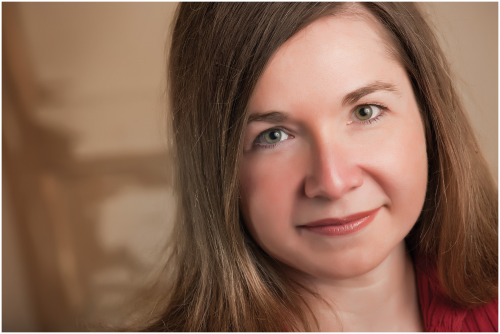
But don’t take Hayhoe’s perky personality to mean she lacks seriousness. She is an associate professor in the Department of Political Science and director of the Climate Science Center at Texas Tech University. She is also an expert reviewer for the Intergovernmental Panel on Climate Change and a lead author of the 2013 US National Climate Assessment.
Hayhoe specializes in developing new ways to analyze and quantify climate impacts at the regional scale and has led climate impact assessments for the city of Chicago, the state of California, and the northeastern United States. As the founder of the consulting firm ATMOS Research, she provides climate information to businesses, nonprofit groups, and government agencies.
One Texas online newspaper, the San Marcos Mercury, described Hayhoe as “a one-person demolition team for stereotypes.” A Canadian living in West Texas, she was recently featured in PBS’s “The Secret Life of Scientists & Engineers” series as a climate change evangelist. Together with her husband Andrew Farley, a professor and part-time pastor, she wrote A Climate for Change: Global Warming Facts for Faith-Based Decisions (FaithWords, 2009), and she is as transparent about her faith as she is about her science.
Hayhoe came to national prominence in late 2011 when Rush Limbaugh ridiculed her as a “climate babe” because she accepts the scientific consensus that humans are the main cause of climate change. Subsequently, then-presidential candidate Newt Gingrich hastily dropped a chapter that Hayhoe had been asked to write from his upcoming book on climate change. Both before and after, Hayhoe has been plagued with waves of blog attacks and hate mail.
Rather than retreat to the safety of the ivory tower, Hayhoe has redoubled her efforts to speak publicly about climate science. Like the late Stephen Schneider, who had what his fellow climate scientist James Hansen called “the gift of gab,” Hayhoe has emerged as a masterful communicator who tries to convey “the realities of a changing climate to those who will be affected most by it.” 1 The Bulletin spoke with Hayhoe about the challenges of explaining climate science and how she blends her faith and her work.
We know—thanks to Milutin Milanković, a Serbian engineer who worked on the calculations while imprisoned during World War I—how changes in Earth’s orbit around the sun cause ice ages: Over thousands of years, the shape of the orbit regularly becomes more oval-shaped and then more circular, and the tilt of Earth’s axis of rotation also changes direction and wobbles over time.
Just last year a paper published in Nature Geoscience crunched the numbers to show that the next event in our current orbital cycle is another ice age—not a warmer period. And in fact if you look at the Earth’s temperature over the last 6,000 years, we were on a long-term cooling trend—until the industrial revolution, that is. So our current warming cannot be due to orbital cycles. According to them, we should be cooling.
Meanwhile, internal natural cycles such as El Niño and La Niña move heat around within the Earth’s system: from the ocean into the atmosphere, for example. Sometimes they bring drier or wetter weather; sometimes they bring colder or warmer weather. They can’t create heat or destroy it—they just move it around. So if our atmosphere were getting warmer because of one of these cycles, the increasing heat in the atmosphere would have to be coming from somewhere else inside the Earth’s system, like the ocean. However, we can look at how the heat content of the atmosphere and ocean and land and ice have changed, and what we see is that over the last 50 years, all have increased!
Also, we’re really bad at making long-term decisions. There’s no debate over what type of food we should be eating or how often we should be exercising, but we make poor choices even when there’s no uncertainty.
Finally, with climate change, there’s also the issue that this time we’re the bad guys, and it’s hard to admit that. It’s nearly impossible to acknowledge the reality and the seriousness of a problem if we are not given viable, attractive solutions to address it. What solutions have we been offered so far? Higher taxes. Restrictions. Economic hardship. If these are the solutions that we associate with climate change, then it’s no surprise there’s so much resistance to doing something about it.
All of these things are designed to intimidate and to silence and to belittle. Most of the attacks are from men, so there’s a gender component to this that can be perceived as threatening. But many of my male colleagues are being attacked in the same way, and many of them have been attacked to an even greater degree than I have, so I feel fortunate that I have been able to walk in their footsteps in terms of learning how to cope with these situations.
We agree that the planet supports our physical life, that all the resources we have come from this planet, that we all need air to breathe, and water to drink, and a healthy environment to live in. And most of us agree it’s a bad thing to be wasteful.
Here in the United States, everyone is concerned about a healthy economy and a better life for their children.
And when you get down to the Christian community, we have even more in common. We believe that God created the Earth, and that God gave the Earth to people to take care of. We also agree that the greatest commandment we have is to love God and love our neighbor. We are told repeatedly to care for the poor, to care for the widows, to care for the weak, to work hard for a living, and to use what we earn to take care of those who do not have as much. We might not live up to those values, but we agree that they are part of our faith.
In our Christian faith, we know that one of our core values is to love our neighbor. Clearly we are not doing that. We are hogging the world’s resources; we are running through them at an increasing rate; we are producing all kinds of impacts on the planet that are disproportionately affecting the poor and the disadvantaged.
I’ve also learned that people are not a blank slate when it comes to climate change. We all have ideas—and, increasingly, misconceptions—about climate change that need to be addressed head-on before we can move forward. For example, many schoolchildren, when asked why the seasons occur, will say that it’s because Earth is closer to the sun in the summer and farther away in winter. But obviously that isn’t true, because Australia has summer when we have winter. Research has shown that unless you actually walk people through why their current theory doesn’t hold water, they will not retain the correct information later.
My husband—who is a linguistics professor and also a pastor at a local church—was getting lots of questions about climate from people in the congregation and in the community. So we decided to write a book together, talking about the facts of climate change and why we should care about them in light of our Christian faith.
The book has led to some hostility—but it wasn’t from the sources I expected. Today, I get probably 10 times more hate mail from Christians than I get from atheists. In contrast, I have felt very encouraged and supported by the scientific community, even by many people who do not share my faith in any way, as well as by many Christian organizations such as Sojourners and World Vision.
There are many reasons to make ourselves more resilient to climate extremes, reduce our dependence on fossil fuels, and conserve energy that have nothing to do with climate change. First, by using energy more efficiently, we will save money and preserve limited resources for the future. Second, by reducing our use of coal and other dirty fuels, we’re going to reduce air pollution, which is already responsible for illness and death in many children and elderly people and others with respiratory disease.
We don’t often think about the fact that fossil fuels and nuclear power require a great deal of water, which will become increasingly scarce as demand continues to rise. Renewable energy uses a lot less water, so increasing our use of renewable energy would free up water resources that we need for other things and eliminate the risks of having to shut down electricity generation during a heat wave or drought.
Another reason to reduce our use of oil is because we get a significant amount of it from countries that are not always friendly to the United States: Saudi Arabia, Venezuela, Iraq. It would be much safer to develop our own energy and invest in our local economies at the same time.
Ultimately, however, this is a tragedy of the commons; individual people do not have sufficient incentive to reduce their emissions to what’s required in order to mitigate the impacts on all of us. That’s why we need overarching policies and guidance, and these have to happen at the federal level. That’s what government is for.
The second message is that the manifestations are unique to each region, because they interact with the existing vulnerabilities of that region—many of which occur because we’ve built them into the system. In West Texas, for example, we don’t have enough water. We’re becoming increasingly dependent on precipitation for our agriculture because we have depleted the aquifer that we’ve been using for so long. Climate change raises temperatures—which increases the risk of severe drought, increases evaporation rates, and makes precipitation patterns less predictable. That’s how climate change plays out in West Texas. If we didn’t have a highly agricultural area built on irrigation from a rapidly depleting aquifer, we wouldn’t be that worried about water shortages.
In contrast, New England has seen huge increases in heavy precipitation, which causes flooding, so they’re very concerned about too much water there. They’re also concerned about rising sea level and storm surges. In New England, if we didn’t have homes, roads, bridges, wastewater treatment plants, and factories that could be flooded, we wouldn’t be so worried about heavy rainfall or sea-level rise.
I think that’s the wrong question to ask. What we have to ask is: Did climate change alter the risk of this event? And increasingly the answer is yes, because climate has already altered the background conditions.
Our precipitation here in Texas is always variable. We have a history of severe drought extending back into the paleoclimate record, so drought is nothing unusual in this area. What is unusual is the extreme heat that accompanied it, which was very likely exacerbated by climate change.
In addition, I have faith in people: that when we recognize the seriousness of the problem, we will do something about it. My main concern right now is that we might not recognize the seriousness in time to prevent impacts on people who can’t protect themselves.
Finally, my faith plays a big part in my attitude. We are told that God is not about being fearful of the future; God is about reaching out and loving other people.
We need spokespeople from every walk of life. We need people from the Defense Department to talk about how this affects our national security. We need people from the business sector to talk about how it affects our economy. We need people from the public-health sector to talk about how it affects the quality of the air that we breathe and the risk of infectious diseases. We need people from Africa and the Arctic to give us eyewitness accounts of how it’s affecting their homes and their livelihoods. We need people from our coasts to talk about how the sea level is creeping up on them and they’re worried about losing the house that their grandfather built.
We need everybody to be talking about this issue.