




Abstract
The rapid expansion and urban development of eighteenth-century London altered existing drainage patterns and increased flood risk. The early modern sewer commissions, set up to deal with the status quo, struggled to cope with these changes. As the city expanded, a network of public and private drains and sewers was built up haphazardly over time, resulting in an exceedingly complex system that was difficult to manage and almost impossible to know. While most previous histories of London’s sanitation and drainage have been centered on the larger-scale sanitation schemes of the nineteenth century, this study sheds light on the water infrastructure and administration that preceded these interventions. It shows that eighteenth-century London’s management of water was an iterative process of reactive decision-making rather than a grand plan.
Eighteenth-century London was a watery city. Contemporary maps such as the 1746 Rocque map show an abundance of visible surface water: open sewers, ponds, canals, docks, basins, mill ponds, pools of water, and of course rivers. 1 In addition, there were fountains, conduits, and water pipes, as well as open and underground sewers. This visibility of water in close proximity to where people lived and worked reflects the fact that access to water was a biological necessity for London’s inhabitants and that organizing, controlling, and mastering its circulation and flow was, and to some extent still is, the basis upon which urban growth is predicated. 2 The provision of water for daily activities such as washing, cooking, and industrial use, the availability of ready supplies to fight fires, as well as the protection from flooding were all essential aspects of London’s expansion during the eighteenth century. Creating the institutional frameworks and technological capacity to provide water and protect against fire and flood both underpinned this growth. 3
By the end of the eighteenth century, London had developed the largest private water supply network in the world, with a system that was private in both senses of the word: water was delivered into individual households rather than to a communal pump, and it was supplied by commercial companies. While this history of water supply has received recent scholarly attention, the management of London’s surface water, and particularly its pre-nineteenth-century drainage, has been largely ignored. 4 Histories of London’s drainage and sanitation have been centered on the larger-scale sanitation schemes of the nineteenth century. Studies like these and others on “improvement works” such as paving, cleaning, and sanitation are often couched in terms of public health and mainly saw the shortcomings of the pre-modern systems. 5 Popular attention on London’s natural drainage and “lost rivers” such as the Fleet and the Westbourne ignored the fact that these, as much as artificial drainage, had to be managed.
This lack of scholarship is surprising, considering that over the course of the eighteenth century, London became the largest city of Europe. Estimations show that London as a whole had 575,000 people in 1700, 750,000 in 1750, and around 900,000 at the time of the 1801 census. 6 In addition to this growth in population, eighteenth-century London grew faster in “bricks and mortar”; by the end of the eighteenth century, the built-up area covered more than twice as much land as at the beginning. 7 This rapid urbanization and intensification of land use altered existing drainage patterns and increased flood risk: two aspects that had to be managed. Fortunately, the Commissioners of Sewers, the institution set up to deal with both drainage and floods, have left a wealth of archival material documenting decisions over flood control and drainage, as well as their interactions with the people affected by these issues.
The work of the various London sewer commissions was eclipsed by the large-scale nineteenth-century sewerage works, which left the sewer commissioners with a bad reputation based on their inability to deal with London’s sewers and waste problem. 8 It is important to remember, however, that this was not the purpose for which they had been set up. In the eighteenth century, a sewer implied a “drainage channel” rather than the later definition of a channel that carries wastewater. Hargrave’s 1732 treatise The Laws of Sewers defined a sewer as “a fresh Water Trench, or little River, encompass’d with Banks on both sides,” which was distinguished from a ditch by having a constant current in it. 9 Sewers were meant only to channel excess rainwater, and as the 1732 definition “little river” implies, they were not very different from the natural streams that drained London in ancient times. In fact, the urbanized parts of the Thames’ tributaries were treated as sewers; the river Fleet, for example, was labeled “Fleet sewer” on the 1797 Stockdale map. 10
Until 1815, it was illegal to dump any household waste or effluent into the sewers, but this practice happened regularly. Solid waste, theoretically at least, was to be collected in cesspools and laystalls, while solids mixed with the water in the streets were supposed to be filtered out by the grates, so as to not block the flow in the sewers. In practice, sewers had many different functions, ranging from domestic and industrial water supply, a source of power, washing, as well as waste disposal. In urban areas, the close proximity and concentration of people and different activities frequently led to uses of the sewer system that were incompatible with its drainage function.
The process of urbanization involved major modifications to the physical environment that collectively resulted in higher rates of run-off water, meaning that drainage systems had to be extended. These include a variety of alterations: a reduction in infiltration capacity arising from the expansion of the built-up area; the removal of vegetation; changes in topography that involve leveling of the surface; and the construction of sewers and gutters, which can drain water away too quickly for the downstream infrastructure. 11 Failure to make alternations would result in flooding, which as a result of the growth in population affected more people. The sewer commissions, responsible for preventing flooding and facilitating drainage, experienced an increase in their workload over the course of the eighteenth century—an indication of the greater need for drainage management as the built-up area expanded. This management consisted of several key tasks. The physical network had to be extended as more houses required connection to a sewer, meaning that greater quantities of water had to be channeled over longer distances. In addition, the functionality of this network had to be maintained, ensuring sufficient flows of water and to prevent blockages. Finally, there was the requirement to balance finances.
The sewer commissions encountered several restrictions that curbed their power to manage eighteenth-century London’s drainage. As the providers of a public good, they could not exclude connection to their network, and as a result drainage management often involved managing patterns of behavior regarding the sewers, in terms of use as well as contributions toward maintenance of the system. The main problem that the commissions encountered, however, was that under their original legislation they were only allowed to maintain the sewers, but not to alter them or construct new ones. This posed particular problems in an expanding city, as it became necessary to turn to other agents to construct the network of sewers. The result was a hybrid system of both private and public drains and a multiplicity of actors and decision makers. In turn, this complicated the issue of contribution to the network: both sewer commissions and owners of private sewers had to circumvent the free-rider problem, and ensure that everyone who benefited from changes contributed to their costs.
This article explores how the urban sewer commission tackled their key responsibilities of flood prevention and drainage in eighteenth-century London. 12 First, it discusses the background and institutional framework through which the sewer commissions operated. Next, the article introduces a case study of an eighteenth-century drainage conflict, through which the complexities of dealing with infrastructure alongside uneven and unpredictable development are explored at neighborhood level. Finally, it discusses how the sewer commissions maintained and financed their networks.
The Institutional Framework: The Commissioners of Sewers
The administrative framework by which London was governed at this time was little short of chaotic. There was no single municipal authority and by 1800 at least 300 different bodies were responsible for aspects of London’s governance. 13 The defense of land from encroachment by the sea, which was the sewer commissions’ original purpose, had a history of being organized on an ad hoc basis, separately from the parish or county government. Since the failure of existing flood protection structures would endanger the general safety of the public, protecting them fell under the special prerogative of the Crown and trumped other property rights. 14 Under these powers, specially appointed justices had been sporadically in charge of this issue since at least the thirteenth century. They often lacked the authority, however, to force people to comply with their measures. To solve this problem, the 1531 Bill of Sewers empowered the state to appoint sewer commissions wherever they were required, which in turn were authorized to make their own bye-laws and raise money by taxing everyone who benefited from repairs. 15 These commissions were originally mandated for a set number of years, but over time, as their duties increased, they evolved into permanent institutions.
Around London, the need for drainage as well as protection from the Thames prompted the creation of various commissions, the first one being the Commission for Surrey and Kent in 1554, which was the area that suffered most from flooding. London’s need for drainage was reflected in a separate Sewer Act of 1605, which authorized the several sewer commissions in the metropolitan area with powers over all “Walls, Ditches, Banks, Gutters, Sewers, Gotes, Causeys, Bridges, Streams and Watercourses, navigable or not, within the Limits of Two Miles, of and from the City of London, which Waters have their Course and Fall into the River of Thames.” 16 Under this Act, the London sewer commissions were given jurisdiction over water courses and structures at a distance from the Thames banks, and they were evidently set up to facilitate the area’s drainage. The river itself fell outside the sewer commissions’ jurisdiction and was managed by a separate administration.
By the eighteenth century, the administration of the sewers in London was organized by eight commissions (see Figure 1). Seven were appointed by the Crown: those of Westminster, Surrey and Kent, Holborn and Finsbury, Poplar, St Katharine, Tower Hamlets, and Greenwich (not shown on this map). The City Corporation appointed the City Commissioners of Sewers. The commissions’ areas were based on historical administrations rather than on natural drainage areas, although the boundaries between jurisdictions were not always clear. 17 As a result of this problems could arise, particularly when properties drained through more than one jurisdiction. There were particular difficulties for commissions that had no direct access to the Thames. The Holborn and Finsbury commission, for example, had to channel its drainage through the city commission’s sewers. 18
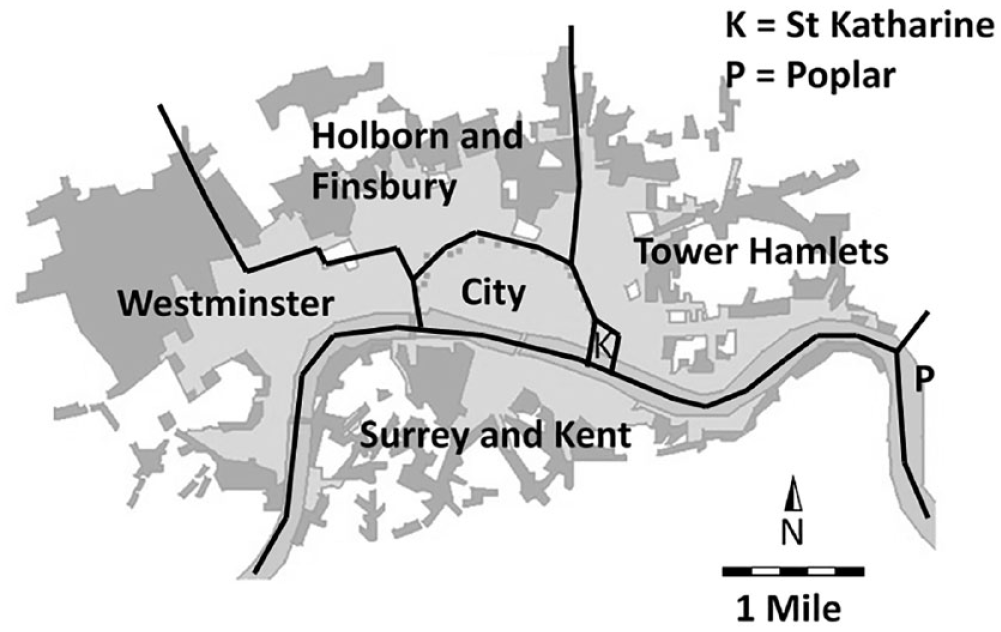
Note: The London sewer commissions.
The areas that the London sewer commissions administered were diverse, ranging from the most built-up parts of the city to long stretches of marshland. In some places, they had to administer sluices and embankments in uninhabited lowlands, in others, they had to deal with wastewater in densely populated urban districts. 19 The southern commissions had to deal with flooding, as some of their land was below the high tide water mark, which meant that they could only discharge their sewage into the river for a few hours a day. 20
The earliest sewer commissions had been set up as judicial bodies. 21 Commissioners met at a Court of Sewers in which cases of nuisances, disrepair, or other sewer-related issues were presented and decided on by a jury. 22 Commissioners had the same powers as Justices of the Peace: to tax, charge, and punish people, and with executive power to carry out jury decisions. 23 This jury did all the practical work: jurors inspected sewers, sluices, and river walls in the commission’s district, made “presentments” about what needed repairing or cleaning, and decided who would be held responsible for the works to be done. 24 Presentments could be either “private” or “public.” Private presentments occurred when the obligation of repair was to be laid on the owners, and these owners were presented with a date by which the issue should be dealt with, or face the prospect of paying a fine. Public presentments occurred when no landowner could legally be saddled with the costs and were paid by a rate levied on all the inhabitants benefiting from the repairs. 25 This latter type of presentments usually occurred when the repairs exceeded the usual maintenance, or after larger calamities. 26
This model of administration remained unchanged as long as the sewer commission’s area was still predominantly rural. When an area became more urbanized, the administration moved toward courts of sewers in which the commissioners themselves played a bigger role. This happened over time in the commissions of Westminster, and Holborn and Finsbury, and to lesser degrees in those of Tower Hamlets, and Surrey and Kent. 27 Over the course of the seventeenth century, as their area dealt with a surge of new building developments, the Westminster Commissioners of Sewers appointed salaried officers, including a clerk, a cryer, a bailiff, and several surveyors. 28 While the 1531 Bill of Sewers had allowed for these functions to be carried out and paid for from taxes, these had previously been done on an ad hoc basis. In addition, the Westminster Commissioners of Sewers organized a permanent standing committee of accounts with a chairman, which took executive decisions. The role of the jury slowly disappeared over time, as they were not present at the meetings of the standing commissions, and by the eighteenth century the jury’s duties were rather insignificant. After 1776 the commission developed an even more executive style of management, with additional standing committees for rates and works. 29 These measures are indicative of a changing organization as they dealt with an increase in work (specialized committees), as well as increasing sums of money to be raised (permanent salaried officers).
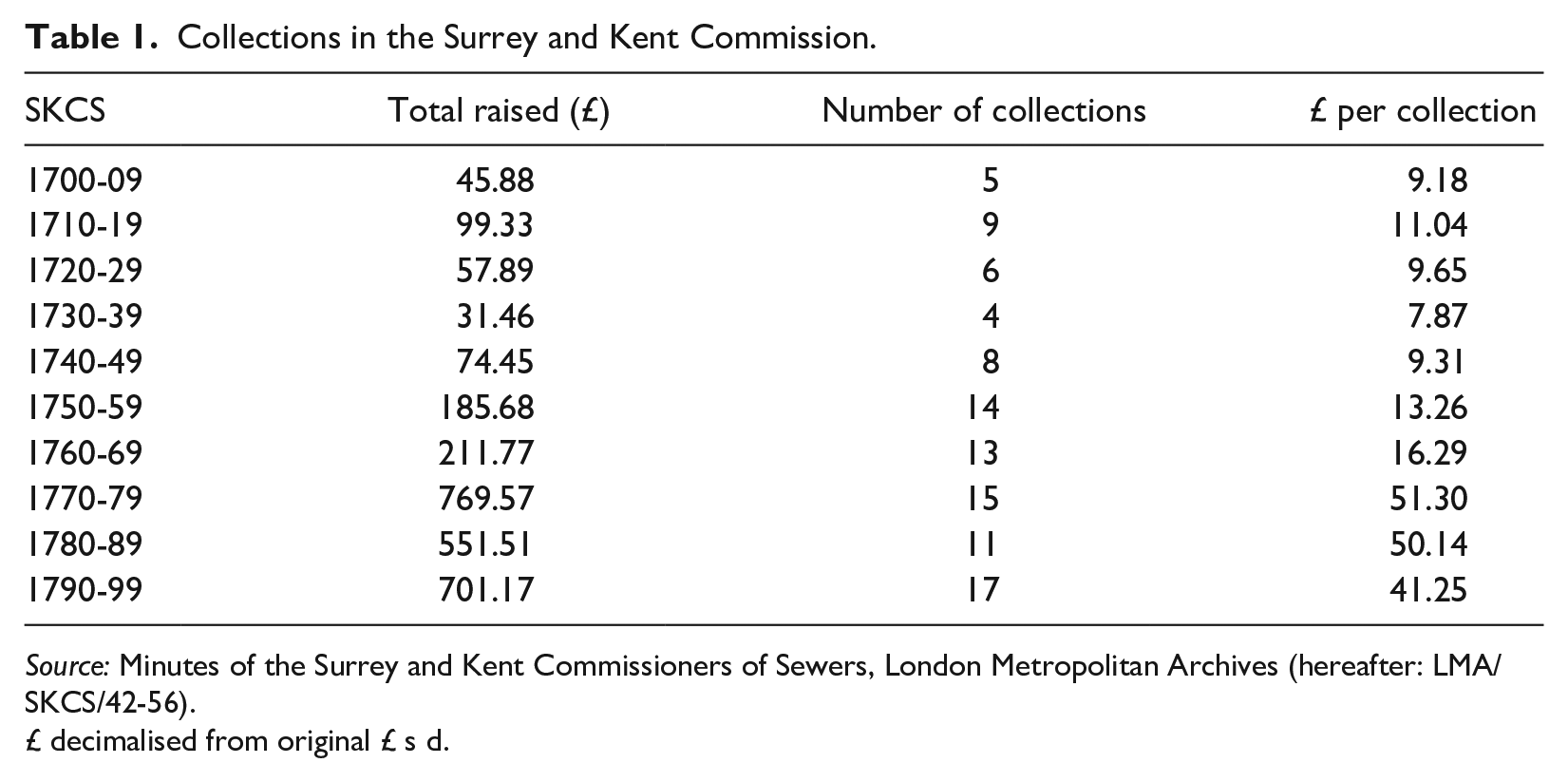
These measures are also evident in other commissions, especially the Surrey and Kent, which at the start of the eighteenth century had administered one of London’s most rural areas, but that by the later part of the century was rapidly urbanizing. Table 1 shows the tax that the Surrey and Kent commissioners raised, as well as the number of collections it carried out per decade. As the century progressed, the commissioners had to raise money more often, an indicator of the increase in work. It also shows that the amount raised per collection increased over the century, revealing that the alterations they made were more extensive. The 1770s and 1780s, were particularly busy as a result of rapid urbanization in this area following the construction of Blackfriars Bridge.
Collections in the Surrey and Kent Commission.
Source: Minutes of the Surrey and Kent Commissioners of Sewers, London Metropolitan Archives (hereafter: LMA/SKCS/42-56).
£ decimalised from original £ s d.
The larger amounts raised were also a result of a change in the way that the commission could collect taxes. In 1771, increasing complaints of nuisance led the Surrey and Kent Commissioners of Sewers to obtain powers to levy a “general tax” on larger districts, rather than just on those who directly benefited from the repair of a particular sewer. 30 In the later decades of the century, rates were to be levied on “levels,” areas drained by connected sewer systems that emptied into the Thames via a sluice, which allowed money to be directed toward general repairs around the level. As shown in Table 1, this facilitated larger sums to be raised from each collection in the last three decades of the century. At the same time, the commission also gained an increasingly executive structure to manage the flow of money: a standing committee was established, with an expeditor general who was in charge of all income, and who also paid for all works. 31 The Holborn and Finsbury sewer commission followed a similar trajectory as its area urbanized. 32
Commission records contain valuable information on how, why, and who altered water features, covered sewers, and connected drains. 33 Residents who wished to make changes to the sewers had to apply to their local commission, which would generally allow them to make an alteration. Consent was based on certain conditions, usually related to their size and material used, as well as impact on other residents. If someone made alterations without informing the local commission, and this was discovered, the commissioners fined the offender and ordered the sewer to be restored to its previous state. If the changes in the network would have otherwise been allowed, and a subsequent application was made, most commissions allowed the changes to stand, and waived the fine. From the commissions’ records, therefore, it is possible to gain an understanding of how and why changes in the network took place, as they include alterations that were made through the official institutions as well as alterations that were constructed “illegally” and subsequently discovered.
Draining Pimlico
The interrelation and complexity between the tasks faced by the sewer commissions can be illustrated by the case of Belgrave Place in Westminster. This area saw expansion in the number of buildings as well as alterations in water structures made by a private landowner, Chelsea Waterworks, one of the private waterworks established in this area to supply households in the nearby West End. Moreover, this was a low-lying area prone to floods. In the early eighteenth century, the Pimlico area that was eventually to become Belgravia was still mainly unoccupied marshland. Over the course of the next 100 years, it underwent major changes. In the 1720s, Chelsea Waterworks created a series of canals in the lower marshes, while the surrounding fields were either still used as farmland or landscaped into gardens such as those of Chelsea College or the Ranelagh pleasure gardens. The 1746 Rocque map, shown in Figure 2, depicts this area as fields with trees, crossed by roads and streams, and shows the presence of standing pools of water. In the latter half of the eighteenth century; however, this started to change. The growth of the West End over this time meant that by the 1790s several streets with residential houses had been constructed south of Green Park and to the west of Chelsea Waterworks’ canals, as can be seen on the 1790s Horwood map in Figure 2. 34 Some of the first streets in this area were Belgrave Place and Belgrave Road, located directly to the west of Chelsea Waterworks’ canals. This urban development necessitated changes in drainage, which was reflected in an increase of work for the Westminster Commissioners of Sewers. While very few issues are on record for the first sixty years of the eighteenth century for Pimlico, the number of cases the commission had to deal with increased significantly after the late 1760s as an indication of the impact of construction. 35
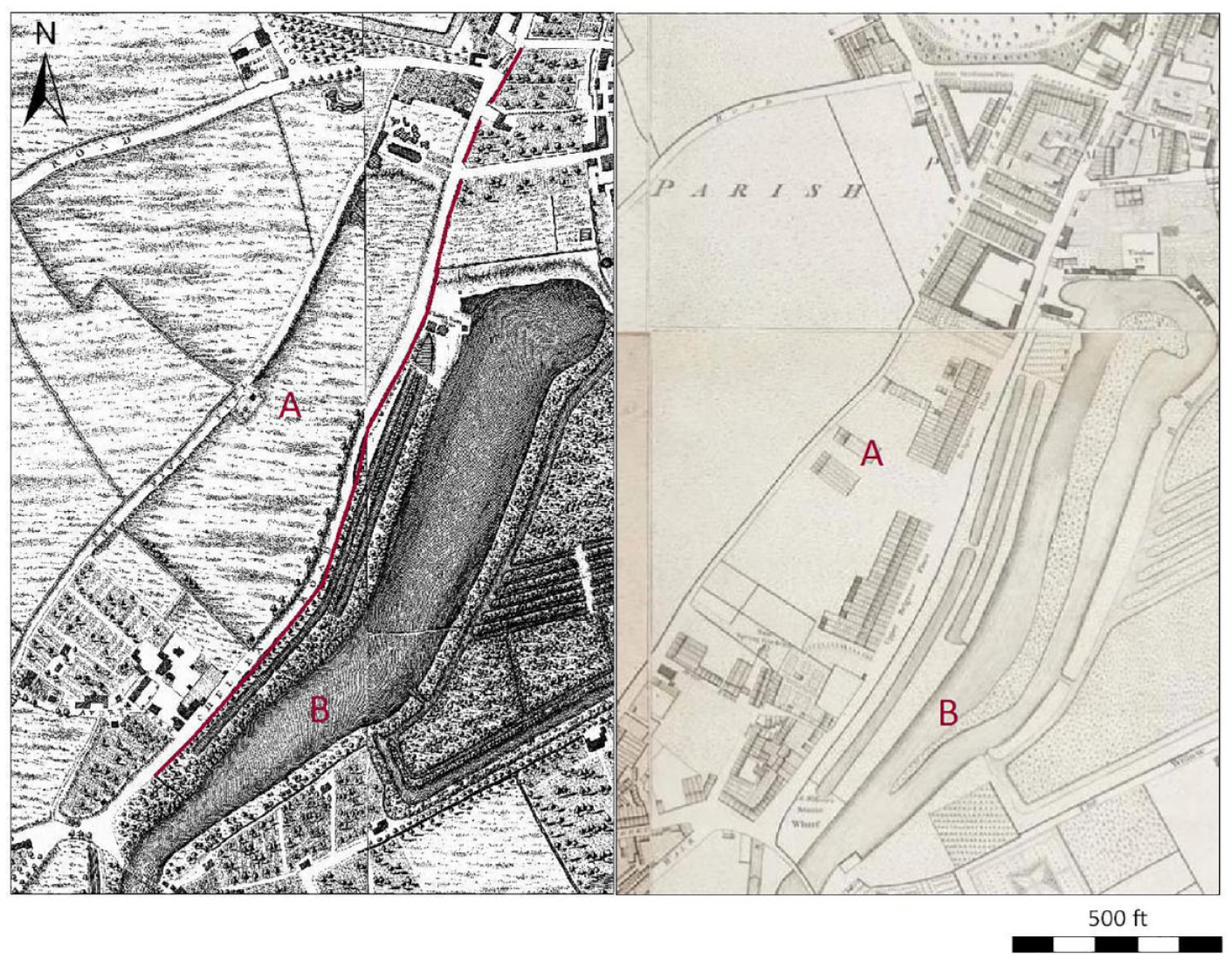
Belgrave Place.
In the mid-1790s, several builders that were developing Belgrave Road applied to Chelsea Waterworks to construct drains that would feed into a water course on the company’s property. 36 They complained that as the common sewer, which had previously drained this area, had been partly filled up, the houses in Belgrave Place and along Belgrave Road were affected by water from “land springs” as well as “foul water from their kitchens,” and that their inhabitants experienced frequent flooding. 37 The request to connect drains was made to Chelsea Waterworks as this company owned the land between the new buildings and the Thames, meaning that any drainage would have to pass across their property. In response, the company went back over its records to investigate how and why Belgrave Place was drained. Their investigation into the flooding and drainage of this area illustrates the complications that arose when drainage structures changed, the problems inherent in the network, as well as the need to cooperate along the course of a drainage channel.
When Chelsea Waterworks had bought the ground in the mid-1720s, there were only three houses in the area. The company had noted that the land was marshy fields with a few drainage courses emptying in the Thames. There had been a ditch along the road adjoining the waterworks, which drained the area that was to become Belgrave Place as well as the road alongside the waterworks but the fact that it was referred to as a ditch and not a sewer indicates that it probably did not have flowing water throughout the year. By 1773, the company had realized that the ditch was difficult to clean as it had a very limited fall, again indicating stagnant water. In response, its directors ordered some alterations: the water was diverted into one of the canals made by the company, the ditch was filled up, and by 1785 formed part of a footpath. It was the stoppage of this ditch that was the cause of the poor drainage experienced by the inhabitants of Belgrave Place. The alteration also meant that all water in the ditch, from the houses and the road, flowed into the company’s canals and was eventually distributed to its customers. 38
Between the 1720s and the 1790s, the company recorded that about 170 houses had been constructed in Chelsea and Belgrave Place, all of which except thirty-six used the ditch as a common sewer in the 1790s. The greater number of houses meant there was an increase in the amount of water that entered the company’s canals, and as further development was expected between Chelsea Road and Five Field Walk, the company decided it was necessary to stop drainage and wastewater from entering their supply. As a result, it was decided that the inhabitants of Belgravia needed a new sewer and the company, as well as some of the builders, applied to the Westminster Commissioners of Sewers that the filled ditch should be restored as an ancient waterway. 39
The case of Belgrave Place showcases most of the issues related to the drainage of the expanding city that the sewer commissions had to deal with, and highlights some of the complexities that plagued London’s drainage system in the eighteenth century. First, this example shows the need to adapt natural drainage courses as a result of London’s expansion. Builders recognized the need to link new houses to the drainage system and applied to the commissioners to do this. Second, it shows the interconnectedness of the network. Chelsea Waterworks, as the landowners of a lower-lying area between the West End and the Thames, had to deal with drainage arising from developments higher up than theirs. Third, large sewer systems involve both private and public interests and between these two, tensions could arise. The required changes affected one landowner but were mainly of benefit to those at higher elevation. As the city expanded, ever greater numbers of people were connected to this network, and the sewer commissions needed to ensure that the collective good of the system was maintained so that those who benefited contributed to those who had to make the changes. Finally, it shows the problems that could arise as a result of a lack of proper drainage: because the old drainage ditch was covered over, houses could not drain their wastewater and their inhabitants complained of flooding, while the company’s supplies were polluted. In effect, water was present in the wrong place, and the sewer commissions had to manage the flow in the watercourses to prevent or remedy this situation.
Expanding the Network: Private Interest and Public Needs
The complex history of drainage in London involved both public and private elements of the network, which makes it important to understand the relationships between the two. Part of the drainage network had always been private; houses were connected to sewers in the street via a brick drain, which were called “private drains,” and remained the responsibility of the house owners. 40 The sewer commissions, meanwhile, were responsible for the “common sewer” in the street. When a new house was built, either its builder or the developer of the plot petitioned the local sewer commission to let the houses drain into the common sewer. When a larger area was being developed, builders, and developers had to construct the sewers themselves. These were often worded as “private drains” or “private sewers” as well, even though they could connect anything from two houses to the 166 houses William Puttney applied to connect at the same time. 41 Builders and developers therefore were effectively the ones who created new sewers and expanded the network.
The private sewers remained the property of their maker. As they were connected to the larger public network, they were also subject to the jurisdiction of the sewer commissions, which had to regulate the amount of water that flowed through their networks. New houses that connected to a private sewer had to obtain permission from both the owner of that sewer as well as the local sewer commission. 42 Sewer owners were not allowed to connect houses without the consent of the commission as, first, the commission had to know how much water the sewer had to process and, second, the connected houses would have to contribute toward that sewer. To exert control over the sewers, the Tower Hamlets Commissioners of Sewers, for example, threatened to destroy any private drain into which the owners had allowed other houses to drain. 43 Conversely, when drains were connected illegally to someone’s private sewer, the owner could apply to the commission for help in their removal. 44
Over time, private sewers were built to drain large parts of London and were prominent in those areas in which the largest building expansion took place: Westminster, the City of London, and as the century wore on, the western parts of Tower Hamlets. By the mid-eighteenth century only a few of the large sewers in the City of London were public while the rest of the network was private. 45 In practice, however, the distinction between a private and common sewer was often blurred. Not all institutions kept clear records of land use as the Chelsea Waterworks had done, and the absence of records showing which sewers were built by whom could make it extremely difficult to trace who was ultimately responsible for maintenance, repair, and permission to connect. For that reason, unless an owner could be tracked down, the sewer was considered public. In some cases, the commissioners had to resort to individual memory rather than the written word. When in November 1702, William Pannett wanted to connect his house to the sewer in his street he was asked to provide proof that it was a common sewer. In the absence of any definitive documentation, elderly residents in the locality were asked to confirm if the sewer had been there for a long time. 46 As the years passed by and ownership of a sewer was forgotten, or the owners’ family had passed away, a private sewer could pass into public ownership.
The hybrid network presented challenges for builders, who in addition to asking permission from the sewer commission often had to negotiate with landowners to connect their sewers. 47 While Chelsea Waterworks had been quite willing to cooperate with the builders, most likely because they themselves had an interest in the better drainage of these houses, elsewhere obtaining permission to connect private sewers was more complex. The problems were especially intense in the more densely populated areas, where there was less public space through which to run sewers, and where routes had to be negotiated with multiple owners of private courts, yards, and houses. 48 As a result, individuals could often frustrate the drainage efforts of others, especially if they did not receive any benefit from that particular drain themselves. For instance, William Gore, a house owner in courts near Colchester Street, City of London, applied to the City Commissioners of Sewers to construct a private drain to remove spring and wastewater from his cellars and vaults. Unfortunately, there were houses standing over and adjoining his intended route, the owners of which refused their permission. 49 The inhabitants of these places appealed to the commission that they did not want this drain on the grounds that it would damage their tenements, and the commission decided that William Gore would have to construct his drain another way. 50 Gore found a new route that also went through places which were not “Publick streets, lane or common passages,” but in this case, it did not have to go through houses and he obtained permission to construct his sewer from these owners. 51
While the commissioners of sewers could force people to pay a rate or enter their houses to see how it drained in the case of public sewers, when a sewer was private, they had no real power to make people comply, and it was up to the builder or owner to find and negotiate a route, with the commissions merely acting as facilitators. Fortunately, people often appeared to cooperate in order to ensure better drainage for all concerned: when several developers applied to make drains for a piece of land between Warwick, Glasshouse, Swallow, and Leicester Streets for intended buildings, another developer heard about the plans and proposed to join them so the drain could cross his land between Vine Street and Glasshouse Street, and drain into the Piccadilly common sewer. 52 Private collaboration and negotiation therefore played as much a role as official institutions in the creation of eighteenth-century London’s infrastructure.
Floods and Flood Control
The main problem experienced by the inhabitants of Belgrave Place, flooding, illustrates the need for adequate drainage infrastructure. The floods were caused by the high water table in the Five Fields marshlands (the “land springs”) as well as by wastewater from their houses (the “foul water from their kitchens”). Small-scale flooding, which affected only a few houses or streets, was a common occurrence in eighteenth-century London. 53 In the more built-up commissions, it was not uncommon to come across at least ten mentions of flood nuisance a year. 54 As the commissions only responded to floods about which complaints were made, it is likely that many more occurred and went unreported. 55 In most cases, there was an identifiable issue with the sewers. Sometimes, this was a structural defect of the network; for example, when houses in Lombard Street flooded in 1742, it came to light that the sewer was at a higher elevation than the cellars it was supposed to drain. 56 Other problems arose when drains in the street were too small to convey water into the sewers. 57 In other cases, the flooding was a result of conflicting uses of the sewer network; certain trades relied on water to power mills and factories, and built penstocks or even diverted sewers for their own use. 58 Issues of this type were resolved by the sewer commissions, which had the power to remove blockages and were able to take action to repair sewers to ensure better flow.
In many other cases, sewers were blocked by an accumulation of mud or filth. This was partly due to an inadequate fall in the network allowing solid particles to build up in the pipes, but it was also amplified by the use of sewers for waste disposal. This created a complex set of problems. The commissioners had two strategies to deal with blocked sewers: they could scour and clean them but also try to prevent solid material from entering the system in the first place. Much of their time was taken up by such measures. Of the sixty-three cases which the Holborn and Finsbury Commissioners of Sewers dealt with in 1772, thirty-seven were associated in one way or another with the prevention of solid matter entering the network, an indication of the difficulties of managing a drainage network that often also functioned as a receptacle of waste. 59 Although the disposal of solid waste into the sewers was illegal, it was nevertheless a widespread problem. The records show that the keeping of animals often posed problems, especially pigs, which were described as a “common nuisance” in 1742. 60 Once a problem had arisen, it was notoriously difficult to establish responsibility, and to enforce penalties. 61
The commissions summonsed suspected miscreants to their courts. The Surrey and Kent Commissioners of Sewers called up Ralph Thrale for stopping up the sewer with soil from his dog kennel. 62 The Tower Hamlets Commissioners of Sewers summonsed Benjamin Truman, owner of one of the largest breweries in London situated in Brick Lane, to explain why hops and grain had been washed from his brewery into the public sewer in the street, causing the blockages that resulted in local flooding. 63 There were complaints of rakers, scavengers, and nightsoil-men leaving waste on the streets, and allowing it to enter the network. 64 Finally, throughout all of London, private individuals swept rubbish into the sewers. 65 Preventing solid waste entering the sewer network was a major task for the commissioners and took up much of their time.
Their main aim was to separate solid waste from liquid drainage, although the latter still included some wastewater, through physical adaptations to filter out solids as well as measures to regulate people’s behavior. The basic sewer system already included grates, which functioned to prevent sand and rubbish from entering the network. The abovementioned Ralph Thrale was acquitted because he could prove he had a grate that prevented soil from the dog house entering the common sewer. 66 Benjamin Truman was ordered to construct a grate in the gateway leading out of the brewery to filter the solid waste from the water. 67 Maintaining the flow of water by reducing blockages was, at least in theory, a relatively simple matter that entailed little more than some basic civil engineering.
This alone, however, was not always sufficient and some further deterrents were needed to dissuade people from blocking the sewers. In this respect, the commissioners sought to impose fines on frequent offenders, as well as encouraging the general public to report illegal uses of the sewage network. The City of London Commissioners of Sewers, who struggled with ongoing problems with sugar bakers and soap boilers disposing of toxic clay and lime into the sewers, frequently issued fines. While the fine for a first offense was 40s, this went up to £5 and then £10 for repeat offenders. 68 In addition, they offered financial incentives for witnesses to come forward at the Court of Sewers to give evidence against offenders. 69 In 1732, a similar incentive was provided by the Tower Hamlets Commissioners of Sewers, which ordered that any person giving evidence leading to a conviction would be paid ten shillings. 70 While this reward was not always necessary to persuade people to give evidence—in 1732, inhabitants of Bishopsgate complained to the City Commissioners of Sewers that they had seen Mr Wood pour soil from his house of easement into the sewer without being paid for this information—it could prove an incentive to take the time to testify before the court. 71
While the commissioners were mainly concerned about preventing solids entering the sewer network, they also received complaints about the foulness or stench from open sewers. 72 Across the capital, there were cases of people applying for sewers that contained particularly offensive smelling water to be covered. For example, inhabitants of King Street, St Margaret Westminster, were greatly annoyed by a “cook shop” from which “cabbage water and other offensive water” drained into a kennel above ground. The inhabitants believed that this smell endangered their health and requested that the water be diverted underground into a sewer. 73 This was not an isolated case: markets, slaughterhouses, and other activities producing foul-smelling waste generated similar complaints. 74 In instances like these, where the problem could not be solved by filtering, the solution was to cover the sewer and hide the water underground.
The River Fleet provides a case study of a sewer being covered because of complaints about nuisance. The Fleet was the once-navigable part of the largest tributary of the Thames in the central London area, the Holbourne River. It had once been a major part of London’s natural drainage, and at the start of the eighteenth century, it was still an open river, as can be seen on the Morgan map in Figure 3. 75 The Fleet had many competing functions: it drained the areas it passed through, turned the many waterwheels located along its course, and acted as an illegal waste disposal for many of the industries on its banks. The Holborn and Finsbury Commissioners of Sewers, which administered its course, often mentioned the Fleet sewer as being full of industrial and domestic waste. 76 Its foulness was legendary. In 1710, Jonathan Swift composed a poem describing the sort of filth that flowed through it, which included “Sweepings from Butchers Stalls, Dung, Guts, and Blood, Drown’d Puppies, stinking Sprats, all drench’d in Mud, Dead Cats and Turnip-Tops,” many of which originated from the meat market at Smithfield. 77 To minimize its nuisance to surrounding inhabitants, the Fleet was covered over in 1733 up to Fleet Bridge, and fully covered over by 1766, turning it into an underground sewer. 78 Figure 3 shows the Fleet in its different stages of this process as depicted on the maps.
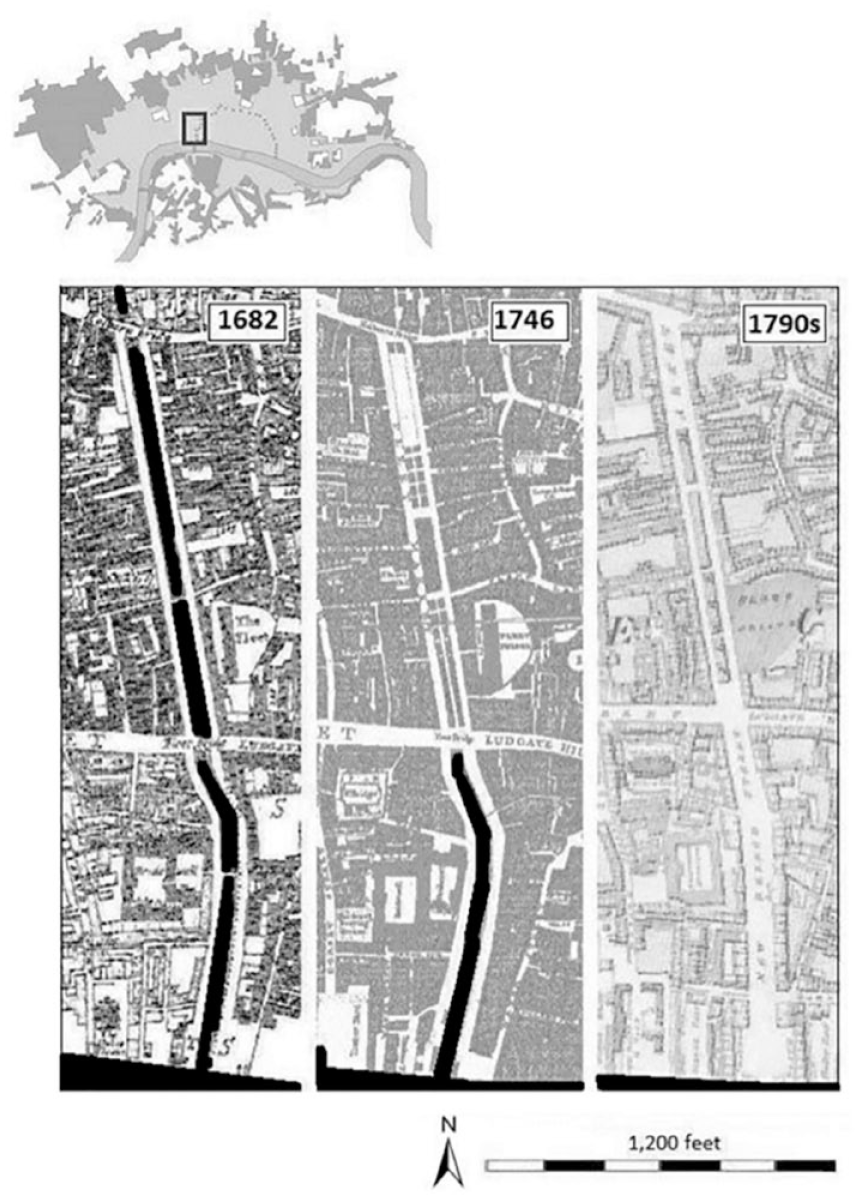
The changing Fleet.
The fate of the river Fleet exemplifies the wider process of covering waterways that changed the city’s waterscape during the eighteenth century. As the population increased, the nuisance of offensive open water intensified, resulting in pressure to have it covered over. The covering of open sewers occurred throughout London, and appeared to gather pace as the century progressed. By the end of the 1840s, all sewers in the City of London were covered, as were 82 percent of those in Tower Hamlets, and 96 percent of Westminster’s sewers. 79 The practice of covering urban sewers in response to nuisances associated with urban growth had also been identified internationally, as cities including Brussels and Vienna transformed their water infrastructures over the course of the nineteenth century to combat the effects of industrialisation, urban expansion, and disease. 80
Maintenance and Costs
While prevention of filth entering the system was the favored course of action, once there, the sewers had to be cleaned. The maintenance of sewers had traditionally been the responsibility of the owners whose land they crossed. 81 Over time, and especially in the more urbanized areas, landowners deferred to the sewer commissions to arrange and fund the maintenance of sewers. 82 As public authorities, the commissions had the ability to recoup the costs from everyone who benefited from sewer maintenance and could force people to contribute. This was done in two ways: first, the commissions charged a fixed fee per new house connected either to a private or public sewer, as each connection entailed an increase in the amount of run-off entering the system. 83 Second, they charged rates on houses that benefited from the repair or cleaning of a particular sewer. Rates were determined by property value and were usually levied on inhabitants occupying houses on a particular level. 84
The commissions had the power to tax all inhabitants that benefited from specific works, but this was not always a clear-cut issue. In 1762, the benefit rule was defined as anyone who “might receive benefit by the repair, or injury by the neglect” of a certain sewer. 85 In practice, however, it was quite often difficult to determine who exactly benefited from repairs, particularly once sewers came to be seen not just as means to protect against flood, but increasingly to drain away surface water. Most commissions operated on the understanding that not only the households connected to the sewers should pay rates but that all householders in the vicinity of a sewer derived benefit from drainage and should therefore be liable to pay the rates. The Tower Hamlets Commissioners of Sewers judged that all houses within one mile of a sewer were likely to benefit, although such a rule was not normally followed by the other commissions. 86
Determining which households benefited and thus had to contribute was far from straightforward as drainage structures were not always obvious. For example, some houses drained half into one sewer and half into another and were charged half the normal rate. In addition, precise knowledge of the system was rarely easily available which created the opportunity to challenge the rates. Generally, objectors had to attend the commission’s next session and make their case in court, where they had to provide physical evidence of how their house was drained. In 1732, for example, Elizabeth Romney refused to pay a rate on the Pall Mall sewer as she claimed she had her own private drain. The Westminster Commissioners of Sewers visited her house but upon opening the drain found that it contained no water, thus suggesting that it flowed elsewhere. As a result, her appeal was rejected and she had to pay the rate: the fact that there was no water in her private drain proved she derived benefit from the common sewer. 87
Identifying which individuals were linked to the sewer network was difficult in itself, but given that the sewers were part of a wider system connecting different parts of the city, establishing who was responsible for events that had repercussions elsewhere in the network could also be problematic. In 1782, several Battersea householders rejected paying rates that had been levied by the Surrey and Kent Commissioners of Sewers for repairs on the Lambeth level. They failed in their appeal because, although at some distance, their houses nevertheless drained through the Lambeth network of pipes. 88 Determining the physical extent of the drainage network was therefore important in determining who precisely was required to contribute.
To deal with rate refusers, the commissions had powers similar to Justices of Peace to force people to pay. Householders in Tower Hamlets who refused to pay, but could not demonstrate a reason why they should be exempted, were liable to have their possessions confiscated. 89 Households could also be blacklisted. In 1722, the Westminster Commissioners of Sewers postponed fixing a burst sewer in St James Park as the Duchess of Buckingham had not paid her rates. 90 In the same year, householders applying to connect houses near Glasshouse Street to the network were refused permission because the landowner had not paid for connecting his houses in nearby Brewer Street. 91 Non-payment therefore had consequences for future drainage on one’s property.
In the case of private sewers, the duty of cleaning and maintenance fell to the owners of the sewer, although under the jurisdiction of their local sewer commission, they could be ordered to clean or repair them. In rapidly expanding urban areas, it often happened that many houses benefited from a private sewer, and at times, owners of private sewers approached the sewer commissions to help spread the costs. When the northern stretch of a sewer on the west side of Kensington Square had to be cleaned in 1702, the Westminster Commissioners of Sewers ordered the owners of new houses that drained into this sewer to contribute to the cost incurred by the owner, Mr Kemp. 92 Similarly, when the Long Alley sewer near Moorfields blocked up and caused flooding, local people appointed Mr Emerson, the local landowner, to arrange for the repair. As the costs were estimated to come to £600, he approached the Holborn and Finsbury sewer commission for money from the rates, or at least the means to collect the money “properly” via the commission, and all those who would benefit by no longer being flooded were made to contribute toward Emerson’s work. 93 The commissions therefore were able to enforce collectivity if people felt they were paying for a public good.
Conclusion
This article has shown how an institution, meant to deal with the status quo, struggled to cope with the changes to drainage inherent in the processes of urban growth. The sewer commissions were equipped to deal with the prevention of floods by cleaning and maintaining sewers and were able to recoup the costs through the rates. In situations where there were no existing sewers to clean, floods could only be remedied by the creation of new drains prior to development, and here the commissions reached the limits of their authority. The limitation of the sewer commissions’ power under their Tudor statutes prohibited them from building new sewers, necessitating the cooperation of private builders and developers. In the process of this expansion, a network of public and private drains and sewers was built up haphazardly over time, resulting in an exceedingly complex system that was both difficult to administer and almost impossible to know.
While this solution was successful in the sense that new sewers were being constructed as the city expanded, the reality of a network in which parts were owned privately, and other parts were public, made its management exceptionally complex. As some of the examples show, builders and house owners had to negotiate their own sewers, and as the interest of private property remained paramount in eighteenth-century England, this was not always easy. The Belgrave Road inhabitants were fortunate; as their drainage created problems for Chelsea Waterworks in the long term, it benefited the company as much as the inhabitants to cooperate and make a sewer. In other cases, it was generally easier to find a new route rather than forcing this cooperation to occur. The commissioners of sewers operated in a context of increased scale—a growing network and the need to connect more people over a wider area—and had to balance this with the management of the physical infrastructure and their finances. The restrictions they encountered were part of their institutional limits as public authorities operating under outdated statutes.
This case study of eighteenth-century London acts as a reminder that decision-making in the context of water infrastructure goes far beyond the official institutions set up to manage water and often depend on a multiplicity of actors. Moreover, many of the infrastructural changes made over the course of the century were reactive decisions in response to nuisances, which in turn depended on individual reporting. Change in urban water infrastructure over the eighteenth century was therefore an iterative process rather than a fully articulated plan. This was to change in the nineteenth century, as continued urban expansion and its associated nuisances led to a large-scale overhaul of both the infrastructure and institutions managing London’s water.
Footnotes
Acknowledgements
This article is based on chapters from Carry van Lieshout, “London’s Changing Waterscapes: the management of water in eighteenth-century London,” PhD diss., (King’s College London, 2013). The author would like to thank David Green for his advice on the original thesis, the anonymous reviewers for their comments on an earlier version of this article, and Lionel Frost and Martin Shanahan for their tireless efforts in putting this collection together.
Declaration of Conflicting Interests
The author(s) declared no potential conflicts of interest with respect to the research, authorship, and/or publication of this article.
Funding
The author(s) disclosed receipt of the following financial support for the research, authorship, and/or publication of this article: The PhD on which this article is based was funded by the AHRC as a Collaborative Doctoral Award between King’s College London and the Museum of London.