




Abstract
Considering the age of socio-ecological crises in which we live, the urgency of understanding the complicated relationship between society and nature is apparent. To achieve this, unfolding the urban metabolism of cities through metabolic flows from the perspective of urban political ecology will grow increasingly essential in the future. This paper aims to explore the concept of urban political ecology as a perspective for understanding emergence of a new urban metabolism in İstanbul in the nineteenth century through metabolic flows of water. The context of “metabolic” emphasizes labor as an agent for the very production of nature as urbanized nature through tap water, waste, and sanitation. It shows the transition and the conflict between the labor-intensive urban metabolism and capital-intensive urban metabolism of İstanbul, which started in the nineteenth century. The metabolic flows of water in terms of infrastructure were affected by the first impacts of foreign capital investments and capitalist relations.
This study aims to explore how the production of nature as space is materialized through the metabolic flows of water that helped to define the emergence of a new urban metabolism of İstanbul
1
in the nineteenth century. The socio-natural understanding of İstanbul from the perspective of urban political ecology is quite new and essential. Concerning the nineteenth-century Ottoman reforms in İstanbul, a discourse focused on legislative developments for the urban landscape and the reforms undertaken mainly by the elites with their desire for “Westernization” will offer us only a partial explanation. Çelik renders the ongoing transformations between 1838 and 1908 in the context of the “Westernization effort,”
2
and administrative lines operated to meet the relevant needs as described by scholars such as İhsanoğlu,
3
Hanioğlu,
4
and Gül.
5
This study tries to offer new insights into the grasping characteristic of the urbanization process in İstanbul in the nineteenth century in terms of the metabolic flows of water through the emergence of a new urban metabolism under the influence of the first foreign capital investments. In the nineteenth century, the urban metabolism of the city still depended on animal and human labor, and efforts to resist were at center stage throughout the period considering the emergence of the capital-intensive urban metabolism. In this study, “labor-intensive” refers to the direct intervention, protection, and production of flows such as water that are embedded in the urban metabolism, aiming to understand how such flows are organized as a mode of space-making and transformation. It is furthermore aimed to move beyond the common use of “labor-intensive” as a counterpart of industrial or mechanized organization and contribute to the critical urban scholarship that rightfully situates labor power within the context of urban environmental history in Ottoman cities.
6
The reform era known as Tanzimat (1839), apart from being a key turning point in Turkey’s history, holds symbolic meaning for the urban metabolism of İstanbul. The duality between nature and humans began to emerge in the second half of the nineteenth century as an industrial discipline through flows of water, as Işın reminds us: During the transition from the nomadic to sedentary way of life the concept of nature in Turkish culture is divine; following the Tanzimat however it loses its human content and becomes an exclusively bureaucratic problem. As long as the bureaucracy, which has now imposed itself between man and nature, adjusts environmental awareness to the policies of the current regime, the quest for paradise on earth will never be more than a pipe dream.
7
Representing the bureaucracy mentioned here by Işın, the Ottoman Government Archives and Mühimme Defterleri, a series of notebooks containing information on settlement policy, the environment, municipal services, health, and education, provide vital information about the management and conditions of water system works; they are also critical sources for understanding the metabolic flows of water in the nineteenth century. Furthermore, this study provides critical insights for imagining the socio-natural future of İstanbul, which seems to be in crisis, and taking actions via looking to the nineteenth century.
In urban-based studies in recent years, interest in urban space has increased while taking into account social networks and the flow of materials and ecosystems as well as the complex relationship between environmental issues and the urban context. Such studies have largely focused on mathematical models and calculations considering flows of materials, energy, and sources. 8 There has been a restoration of sorts of urban theory based on considering the city as an ecological system, and a related debate has emerged. 9 Recently, the growth of a shared ecological perception and a different turn in the relationship between the capitalist economy and nature have reinforced the need for a more critical discourse about the city. At this point, the field of urban political ecology is expanding with the contributions of scholars from various disciplines. Urban political ecology approaches the city and nature as a single interacting system, whereby change in any part will have results for the whole. 10 Traces of the separation of nature from the mode of production may still be seen in urban studies. On the other hand, since the second half of the 1990s, many scholars have written on the issue of nature in the current mode of production, 11 and many of them have worked in particular on the urban political ecology concept. 12 The expanding literature on urban political ecology reflects how changes in the production of nature are strongly related to urbanization processes. 13 Urban political ecology gives a process-oriented account of metabolism; asserts the significance of history, politics, and power relations; and expands metabolic analysis to include political, economic, and cultural dimensions. 14 According to the recent study by Tzaninis et al., 15 the utilization of urban political ecology in urban studies has been undertaken with four unique discourses. The first is a contribution to Lefebvre’s planetary urbanization thesis in terms of the socio-ecological understanding of urbanization processes. 16 The second takes a feminist perspective of urban political ecology for the sake of the possibility of a broader range of urban experiences. The third tries to merge academic efforts and policy-making, while the fourth addresses not only human actors but also more-than-human actors while considering how non-human natures are urbanized. 17 The present paper deploys the urban political ecology approach with the aim of understanding urban metabolism within the context of critical urban studies and the urbanization historiography of nineteenth-century İstanbul.
The developing concept of urban metabolism is based on the unhistorical human body in scientific thought. Research on metabolism has shifted from the human body to private households, to industry, to urban areas, and to regions as larger anthropogenic systems throughout history. Marx and Engels used the term “metabolism,” which spread in the nineteenth century, defined as the exchange of matter between man and nature affected by labor. 18 Stoffwechsel, the original word for metabolism in German, means “change of matter.” The concept of metabolism, taken from Justus Freiherr von Liebig (1803-1873), considered to be the founder of organic chemistry, was used by Marx and Engels for the first time in the context of the dynamics of socio-environmental changes through labor. 19 That is to say, the concept of metabolism itself is not new, but the context in which Marx used it was new and worthy of notice. The industrial revolution was a turning point for the shifting of animal and muscle power to the modern labor process, as Marx called it, or what current ecological Marxists call the “socio-natural metabolism” for explaining the power relations reshaping life and space between humans and nature. 20 This study used the concept of urban metabolism based on a critical analysis of production, resource allocation, and transformation modes in cities. In doing so, efforts are made to combine social and ecological approaches for an understanding of the urbanization processes of nature in İstanbul through continuous flows as the urban metabolism of the city. “Urban metabolism” in this study is thus taken as a “continuous socio-ecological transformation” whereby records of metabolic flows are crucial for understanding urbanization processes and any understanding of a city separated from nature or as a purely social space is unlikely. 21
Accordingly, this study attempts to explore the emergence of a new urban metabolism in the context of nineteenth-century İstanbul beyond the limits of input-output calculations of the materials that keep us at work, at play, and at home using equations, mathematical modeling, or simulation tools, as some scholars have done before. 22 Furthermore, data availability and access and the matter of the reliability of data on inputs as well as outputs for a city are matters to be questioned for various reasons such as security that have emerged as challenges in computational and mathematical models. This study uses the concept of metabolic flows for embracing the urban metabolism of İstanbul under different production modes. It draws theoretical inspiration from Swyngedouw’s framing of metabolic circulation. 23 Moreover, metabolic flows of water are accepted not as a source or material but as a socio-natural relation embedded in the political reconfiguration of space via struggles and mode of production. In short, this paper offers a new model for understanding the relationship between metabolic flows of water and urbanization processes in critical urban studies of İstanbul. This study aims to show the mutual relationship between changing flows of water and emergence of a new urban metabolism in İstanbul in the nineteenth century, both rendering and affected by uneven urban environments in the cases of accessing tap water, waste removal, and sanitation. By exploring these three flows of water, this study tries to understand the urban metabolism of İstanbul in light of the production regime and struggles to protect the labor-intensive and artisan character in the context of the city’s integration into the broader market system in the nineteenth century.
Metabolic Flows of Water in İstanbul
The Bosporus, the Golden Horn, open and covered cisterns, fountains, reservoirs, water conduits, dikes, water levels (su terazisi), aqueducts (su kemeri), water tanks (maslak), chambers (maksem), lakes, and springs were all essential parts of the urban metabolism of İstanbul related to water dating from Roman and Byzantine to Ottoman times. İstanbul has enjoyed a lucky geographical setting for its fresh water supply systems through the centuries compared with other parts of the world. However, increasing problems in accessing tap or potable water in İstanbul started with the population boom. In turn, new demands for watering the new quarters, increasing the repair works on existing water conduits, and pursuing economic restructuring after the Tanzimat period in the nineteenth century also arose. Thanks to the unique metabolic conditions of İstanbul, water conduits, aqueducts, and dikes—all water supply systems—were created based on gravity and slopes and the tradition of preserving water sources by direct human and animal labor. Preservation reached advanced levels concerning the spatiality and managerial features of the city’s water supply system. Furthermore, it was traditional to consume spring water at its source, with the surrounding environment used for recreational purposes. The Ottomans demonstrated their interest in healthy water access for the public by both administrative and sanitary organization. 24
In the history of İstanbul, spring waters were sources of wealth and health. They maintained the water levels and the pipes to break pressure tanks, with the water finally reaching a palace or a fountain. Transportation routes and the final destinations of conveyed waters were designed to meet the needs of the palaces (e.g., of the Sultan, pashas, and bureaucrats) in the case of tap water. Fountains, meanwhile, had been built as charity works for the dwellers of İstanbul. In the nineteenth century, accessing tap water was made possible with its transportation and distribution by the saka, a water carrier with a donkey (Figure 1), who carried waters from fountains to the houses of ordinary people, controlled by the municipality (Şehreminlik). In some cases, the saka also worked to help extinguish fires in İstanbul. Toward an industrial discipline, water and human labor acted together as a significant catalyst in the mechanization and modernization of the early nineteenth century. At this point in time, water had just started to be controlled, channeled, directed, and sanitized as well as commodified by industrial discipline in the context of İstanbul. The modern urban waterfronts of the city and the expansion of urbanized nature was possible in the nineteenth century through waters metabolized into an industrial discipline. The Terkos Water Company, established in 1869 and controlled by the municipality, constituted another essential change for disciplining nature via technology. On one hand, we witness here the loosening of the strict socio-organizational character of the metabolic flows of water in terms of protection by direct human and animal labor 25 and management by the state/Sultan. On the other hand, emerging techno-managerial aspects of the social production of nature by technology-driven private companies and in terms of management by the municipality were being applied, while still meeting the needs of the palace. All of these developments and attempts to discipline nature explain the radical change on behalf of the labor-intensive and artisan character of the metabolic flows of water in İstanbul.
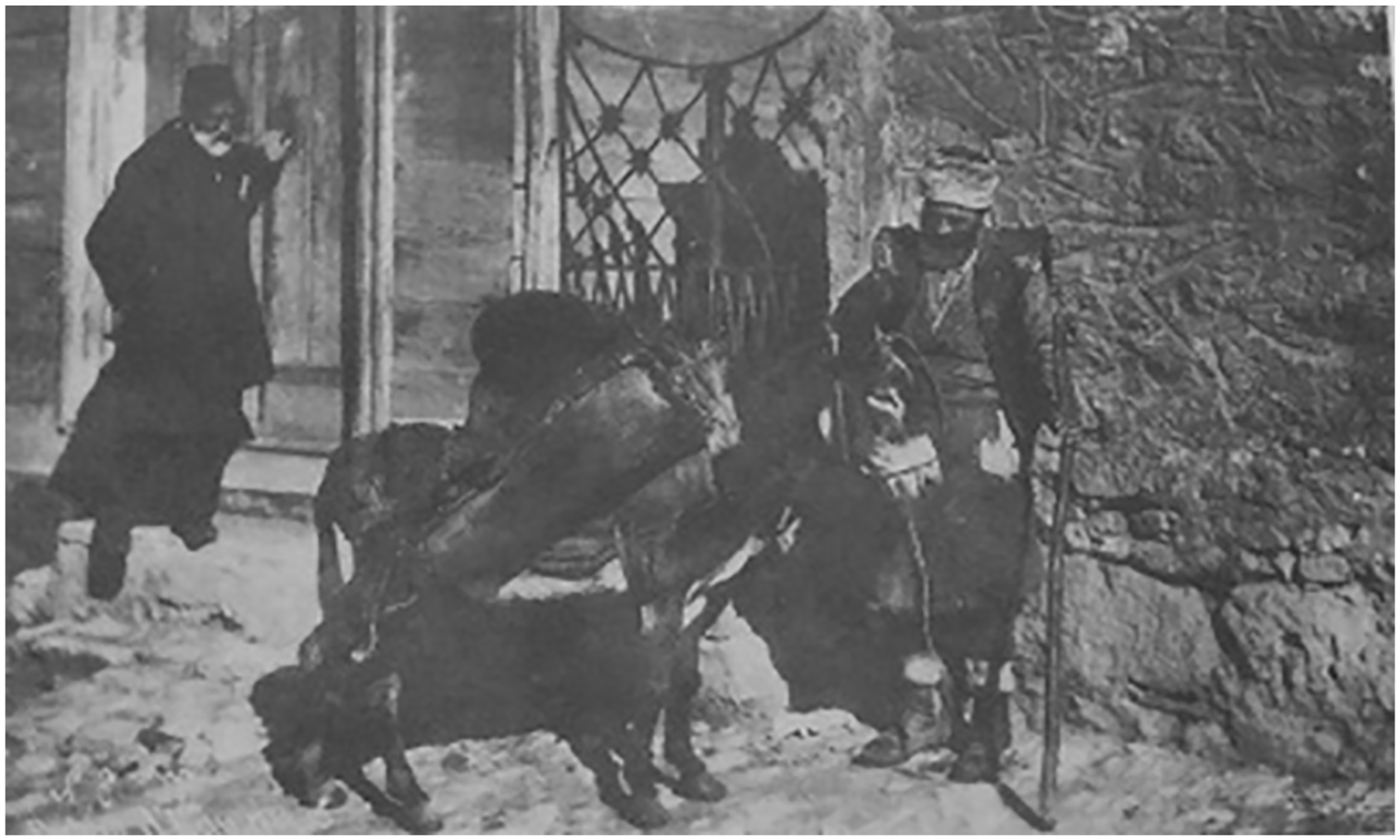
“Saka–Water Carrier, G. Berggren.”
In this era, the first steps of the “service revolution” and “industrial discipline” were taken throughout the city for the sake of improving “sanitary conditions” and public health via metabolic flows of water, as described here. The metabolic flows of water also had a vivid relationship with the fires and earthquakes of İstanbul in this period. After new fires and earthquakes, the water infrastructure was accordingly redesigned. The houses that were lost and the waterways and fountains that were destroyed, as well as property relations and street networks, were all aspects of transformation via the new metabolic flows of land and water. For instance, according to Kuban, 26 after the great fires, if we consider the numbers of new fountains and their locations, a tendency to move toward the Bosporus is easily seen. After the fires and concomitant regularizations, the very material structure of the urban fabric was radically changed. This study argues that these changing relationships and the first insights of a new urban metabolism in the context of İstanbul can be clearly illustrated by examining three particular flows of water in the nineteenth century: tap water, waste, and sanitation.
Tap Water
The hills on both sides of the Bosporus were still important basins for springs in the nineteenth century. These springs, offering health, quality, and flavor, were identifiable to people throughout the nineteenth century. Helmuth von Moltke, a Prussian military officer who traveled widely in the Ottoman lands, wrote letters in the 1830s that explained how, at that time, İstanbul’s water could be compared to wine in terms of understanding where it came from: Just as wine experts in our country can taste wine and tell the vineyard it comes from and its vintage, a Turk can, by taking a single sip, tell if a glass of water comes from this or that popular spring, whether it is from Çamlıca or Bulgurlu on the Asian side, whether it is from the Kestane spring from Büyükdere or the Sultan spring near Beykoz.
27
Tap water sources like the Çıçır, Hünkar, and Kestane springs, as well as other streams in İstanbul, were also used for recreational purposes, apart from being sources for potable water, until they were channeled, controlled, or urbanized for the city’s growth and extension. For a deeper understanding of the metabolic flows of water and their relation with urban metabolism and urbanization, Maria Kaika describes this new relation of urban areas and nature: It signaled the moment when nature’s water could be controlled and channeled at man’s will and announced a new relationship between nature and the city . . . However, the same process that liberated the city from the constraints posed by lack of water also signaled the city’s perpetual dependency on the production of (new) nature in order to sustain its life, its form, and its metabolism. Now water not only could, but also had to be tamed, managed, channeled, and redirected in order to sustain the city’s growth and expansion over space and in time.
28
Moreover, the accompanying increase in the disposal of wastes into the water basins and the contamination of tap water basins resulted in widespread cholera. While exercising the tap water in the late nineteenth century’s geographical context, according to Zeynep Çelik, the supply of tap water to the “fashionable and westernized quarters” of the city seemed to be a concern for “public” health: Possibly as a consequence of the concern for public health, the Gavand/Ritter project was revived in 1902 and the waters of the Kagithane River were carried to Pera and to some Bosphorus villages. The operation was undertaken after a scientific investigation which concluded that “there existed no water of such high quality as the Kagithane River water in any other European capital.” The neighborhoods that benefited from the Kagithane waters were once again Sisli, Nisantasi, Tesvikiye, Harbiye, Taksim, parts of Pera flanking the Grande Rue, Tophane, Dolmabahce, and Besiktas to Ortakoy, namely, the fashionable and westernized quarters to the north of the Golden Horn.
29
In the above quotation, the uneven characteristics of metabolized socio-natures in the nineteenth century are briefly explained through the relations between tap water supply and the quarters that benefited from that tap water. Due to the population boom in this century in İstanbul after the Tanzimat reforms, the problems of the city related to tap water were increased.
Concerning the nineteenth century, the solutions that appeared in terms of infrastructure, commodification of nature (water) as space, and extension of urbanized nature were intended to change the labor-intensive character of the metabolic flows of water in İstanbul. The new metabolic relations left the artisans known as löküncü, those who worked with the water structure, unemployed. Iron pipes, produced in manufacturing processes, began to be used in water infrastructure and took the place of the labors of the löküncü. Socio-natural problems gave a new modern face to these solutions. On one hand, the need for watering new quarters along the waterfronts accelerated the repair works of the water infrastructure, while, on the other hand, the earthquakes of İstanbul were also responsible. Saadi Nazım Nirven states that in 1900 an earthquake caused damage to the majority of the Halkalı waters and the infrastructure needed to be repaired. 30 In the Ottoman Archives, an earthquake was mentioned in 1902 that was responsible for the damage and collapse of the water conduits of Babıali. 31 After earthquakes, the existing structure would need to be repaired, but Çeçen argues that people who worked to ensure the flow of the water supply (suyolcuları) resisted repair projects after the earthquake of 1900 to fix the water conduits by connecting separate lines into one line, and the water lines were sabotaged in 1905. 32 However, it is debatable whether these laborers really did sabotage the water conduits to establish operations contradictory to previous rules, whether they were paid as they should be, or whether the working conditions were growing worse and they were faced with unemployment.
To understand the metabolic flows of water, it will be useful to compare the periods before and after Tanzimat as two crucial eras, between the sixteenth and nineteenth centuries. In the sixteenth century, many outstanding waterworks had been established by the administration; moreover, Sinan, the Chief Architect of the empire, was an essential figure for extending the water supply system in this era. The management and conditions of the water system between the sixteenth and twentieth centuries can be understood from the Ottoman Archives and particularly from the records of the Mühimme Defterleri. In the sixteenth century, water sources and water conduits were carefully protected by the Department of Water (Su Nezareti) under the Director of Waterworks (Subaşı) and the Sultan. After 1870, all waterworks were undertaken by the municipality of İstanbul (Şehreminlik). In the late nineteenth and early twentieth century, private companies became responsible for the water supply system and repair works, like the Terkos Water Company, with the municipality overseeing it all. 33
In the sixteenth century, according to the records of the Mühimme Defterleri, No: 5 (MD. No: 5), all water sources, even rainwater courses, were significant, and any construction (walls or houses) that would block them was forbidden 34 and punished by law, including demolition (MD. No: 19). 35 According to law, about three meters on each side of a stream should be left vacant (MD. No: 12). 36 Any bostans, gardens, or agricultural facilities on/near water sources were forbidden, too (MD. No: 12). 37 Concerning the tradition of preserving water resources, the significant point in the above examples is that ecological buffer zones for protection around streams were implemented and guaranteed in the Ottoman cities along with water sources like lakes or streams, which were under strict rules in the sixteenth century. The case in the sixteenth century is a fruitful example for understanding the conditions of Ottoman cities concerning metabolic flows of water. In this socio-natural context, it was essential to understand whether a water source or a water conduit passed through a village and whether the consent of people was obtained or not, and any infringement on waters would be checked (MD. No: 3) in order to protect water bodies. 38 In the nineteenth century, on the contrary, these policies were abandoned quickly. This implies the radical transformation from streams to streets and from bay areas to waterfront palaces.
In the second half of the nineteenth century, the existing water infrastructure frequently needed repairing for various reasons, which resulted in new material flows. For instance, a record exists from 1884 about fixing the water conduits of Halkalı (Figure 2) and Kırkçeşme (Figure 3) and efforts to increase the supply of tap water for public needs as well as the ordering of iron pipes for repairing them, which was essential considering new material flows. 39 From 1895, a record notes the cost of exploration for repairing ruined water conduits of Kırkçeşme, 40 and in the same year, another record exists on the costs of repairing the water conduits of Kırkçeşme, Halkalı, and Taksim (Figure 4), which will be detailed below. 41 In 1900, a record in the archives about fixing the aqueducts along the water conduits of Kırkçeşme 42 reveals a very new situation regarding the metabolic flows of water. Fixing the water conduits required new material flows, such as iron pipes, lead metal, and timber. These new material supplies generated new material flows from Europe to İstanbul and from the peripheral forests of İstanbul (supplying timber for water conduits) to the center by the municipality.
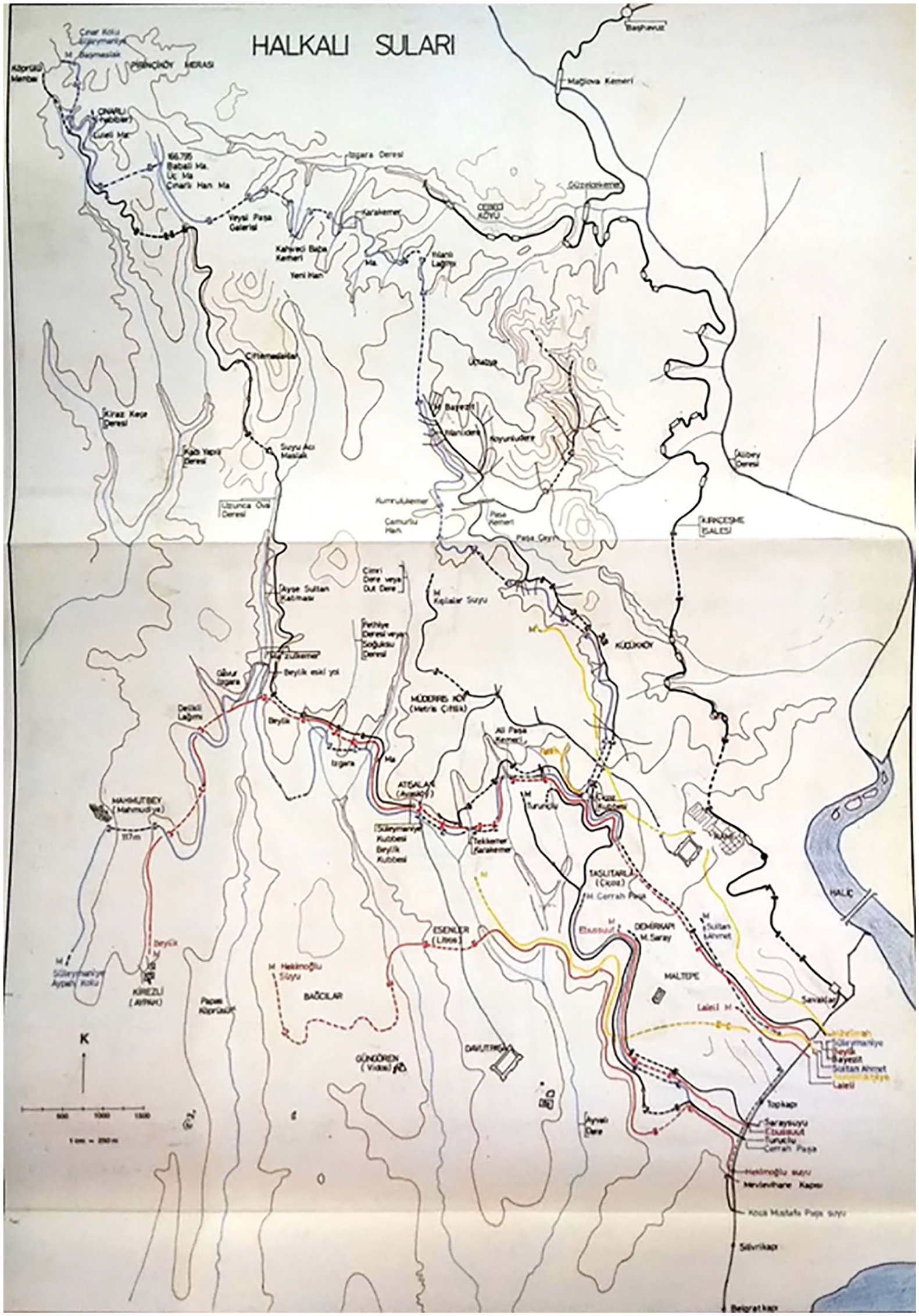
Halkalı waters conveyance system, from the source to the depot.
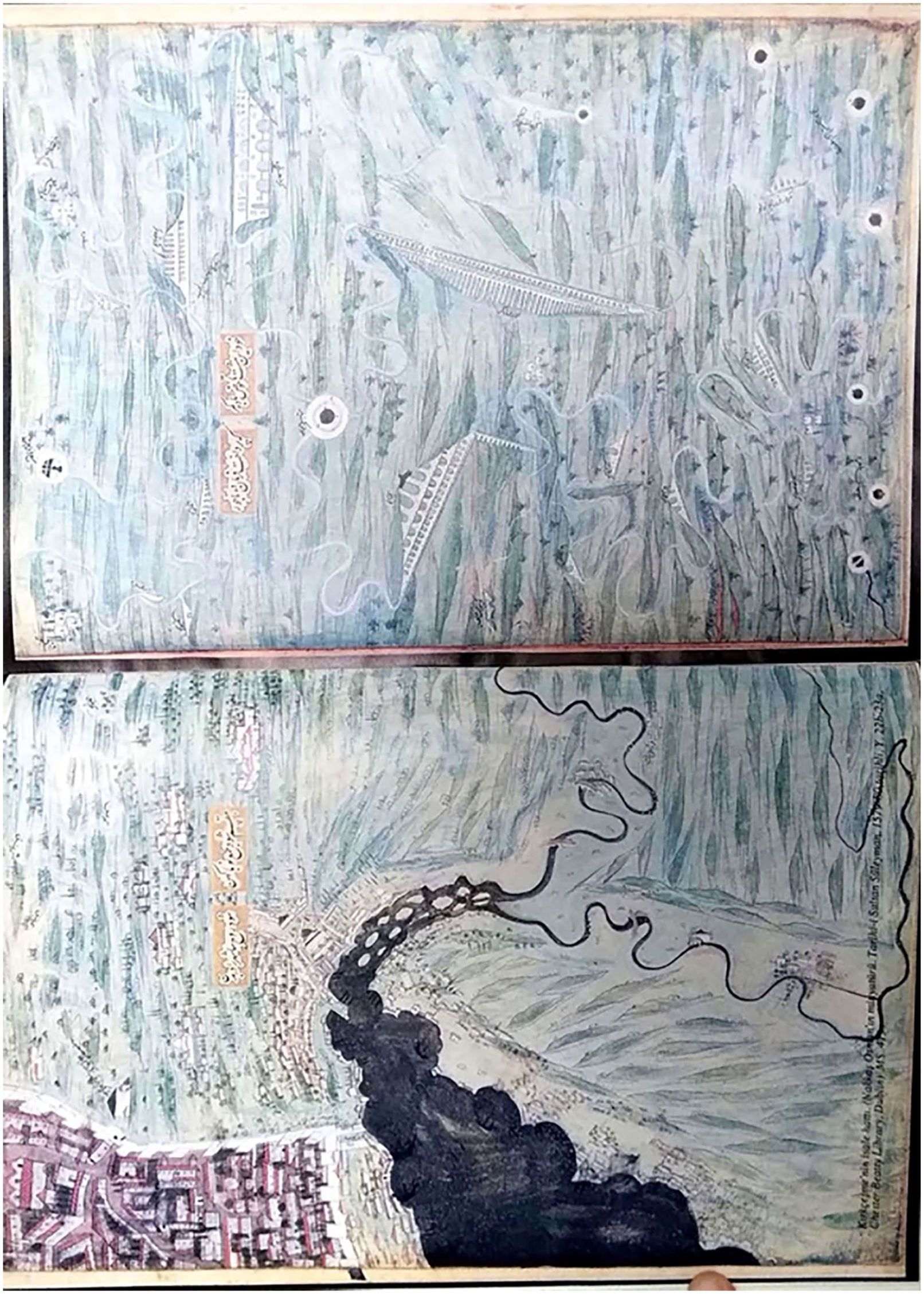
Kırkçeşme waters conveyance system: a miniature by Nakkaş Osman.
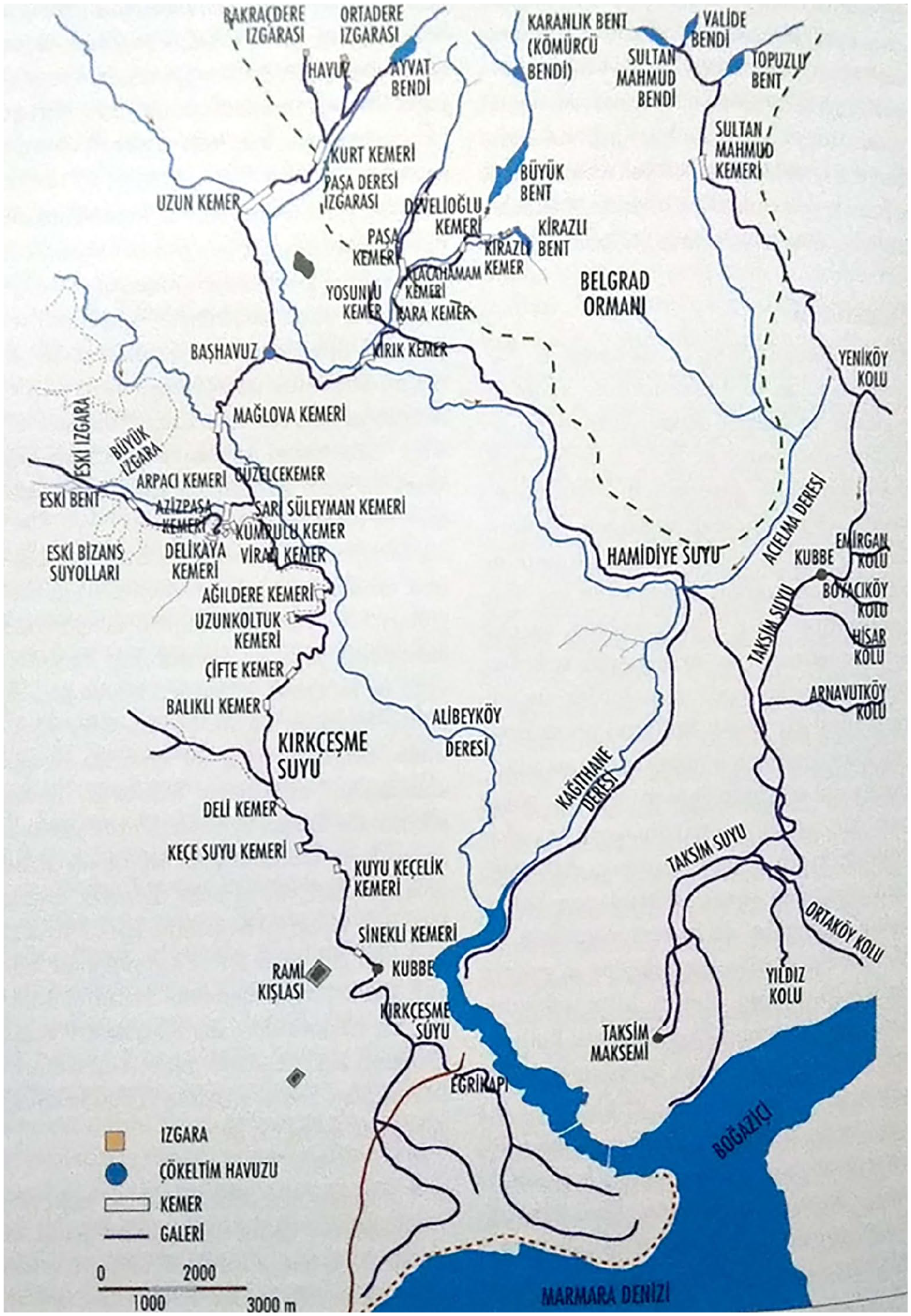
According to Kazım Çeçen, the waters conveyance system of Kırkçeşme, Taksim, and Hamidiye.
The Ottoman Archives also show this metabolic flow at work in the repairs of the Taksim water conduits of Yıldız Palace. 43 We see a change in the economic burden, shifting from the Sultan to the people, as, according to records in the Ottoman Archives, repair costs of the water conduits of Tophane were met by the Sultan in 1799. 44 On the other hand, repair costs of the water conduits of Kırkçeşme, contaminated by the waters of cesspits, fell upon citizens in 1852. 45 Also, concerning the geographical distribution, nourishment such as wheat for the laborers in the extensive works of the water supply system could be provided from the periphery of İstanbul. 46 A proposal for supplying tap water from the basins of the Istranca Mountains (finally realized between 1995 and 1997) to the city by a private company’s associated partners, Stanifort, Oppenheim, and Guarracino, had its roots in the nineteenth century, too.
Dersaadet Anonim Şirketi (İstanbul Anonymous Company), also known as the Terkos Water Company, was established in 1869, and in May 1882 it had a statute for the following 75 years to provide the infrastructural network for supplying Terkos water to İstanbul. This private company started to control, channel, and direct water for its commodification by industrial discipline through the mechanized vision of the nineteenth century’s context. Supplying tap water from Terkos Lake via the Terkos Water Company was the proposal of Eugene Haussmann. 47 The company’s importance also came from its serving Dolmabahçe Palace and Yıldız Palace. The main water conduit between Terkos and Feriköy, which supplied fresh water to the palaces, was critical and specially protected. Moreover, telephone line infrastructure was also constructed by the Terkos Water Company in 1910 between Terkos and Feriköy in order to exchange information about problems of and damage to the water conduits in a timely manner. 48 Furthermore, the Terkos Water Company substituted the existing water structure when required. A record from the archive shows that when the water conduits and dikes of Kırkçeşme needed to be repaired in 1894, Terkos would provide fresh water to the forty fountains. 49
All of these transformations regarding tap water are significant pieces of evidence of the emergence of a new urban metabolism. In parallel, new materials started to flow from long distances after Tanzimat in the nineteenth century.
In short, on one hand, we witness here the loosening of the strict socio-organizational character of the metabolic flows of tap water in terms of protection and production by direct human and animal labor, and management by the state/Sultan. On the other hand, we see the emerging techno-managerial aspects of the social production of nature by technology-driven private companies and in terms of management by the municipality while still meeting the needs of the palace. Tap water’s flows in terms of infrastructure were under the effects of the first impacts of foreign capital investments and capitalist relations. These included privatization programs, health problems, and a population boom along the waterfronts with the growth of capitalism in the nineteenth century. Furthermore, they started to metabolize new materials such as telephone lines and iron pipes, lime, and timber from long distances for infrastructure. The next subsection will explore the metabolic flows of water in the cases of waste and sanitation.
Waste and Sanitation
Considering the nineteenth century, it is not possible to understand waste removal and sanitation separately; they must be considered together in both local and global contexts. For that reason, they are addressed together in this section. Martin V. Melosi describes the nineteenth century as taking an “out of sight, out of mind” approach to wastes, 50 and it would not be wrong to say that this is still valid today, perhaps even as a “modern” attitude. Edwin Chadwick was an essential figure in the mid-nineteenth century in both American and European contexts with his influence on sanitary laws in relation to the health of urban dwellers and waste collection. However, organizations such as those for waste management progressed slowly. At this point, bacteriology helped create a shift concerning the idea of a relation between public health and material conditions within the city. Therefore, infrastructural developments (e.g., sewerage) in many cities worldwide, including İstanbul, were delayed in the nineteenth century and only “fully” completed in the twentieth century with the flourishing of bacteriology. For İstanbul, flows of waste were determined by a system characterized by poor drainage, dirty waters, inadequate sewerage (sewer holes or toilets a la Turca), and solid wastes generated by horses, scavengers, tanzifat quays, garbage boats, waterfronts, and water basins found in the city at that time. Waste disposal management and the flow of wastes along the waterfronts of İstanbul have carried essential metabolic interactions throughout the ages.
Concerning the nineteenth century and the very first years of the twentieth century, the labor-intensive and ad hoc character of these interactions involving flows of waste through water was still essential and dominant. The ad hoc precautions taken about flows of waste for keeping the Golden Horn healthy, as an enclosed water body, created a particular line of work for salaried men on duty for controlling nature by municipal order. Especially during the periods of cholera outbreaks, a particular tax was paid, sanitation works were taken seriously, and sewage projects were prepared as the very first infrastructural development (1918-1920). Within this chaotic environment, the municipality had tried to solve the problems about sanitation mostly with the loans taken from foreigners, contracts with private enterprises, and legislations. 51
Sanitation and sewer systems have a long history and can be seen in many ancient cultures, but they did not show a universal and widespread character for the citizens of the ancient world. The ancient Greeks organized the first municipal dumps in the Western world around 500 BC. According to Melosi, the municipal dumps defined the city’s borders, and the first known legislation about forbidding garbage from being thrown into the streets can be seen from the ancient Greeks. 52 All of the waterfronts of İstanbul had been used as random disposal areas before the second half of the nineteenth century. Moreover, a la Turca toilets were an essential part of the sewerage in the houses of İstanbul concerning sanitary conditions and epidemics, which could only be maintained by wealthy people with adequate water access in this period. 53 Lack of a closed sewer system regarding the relation between random open sewer holes and water basins in dense urban areas is emphasized as a significant cause of cities’ unhealthy conditions around the world.
The evolution of a new understanding of the natural and unnatural, a decline in hygienic conditions, uneven developments of the drainage system, certain regulations on health and the environment implemented by the municipality, the disciplining of nature and bodies in general (e.g., chemical treatments), and the spatial agenda of waterfronts (e.g., quarantines) were the main issues considering waste and sanitation in İstanbul. Ulman and Yıldırım 54 provide essential details in their study about how epidemics spread and unevenly affected the inhabitants of İstanbul according to environmental conditions. The uneven developments and socio-natural conditions of the city threatened public health through the metabolic flows of water in the context of waste and sanitation. Cholera resulted in widespread loss of lives in perhaps the most important relationship with the emergence of a new idea of “disciplining nature” at the turn of the new era. Managerial steps and new codes and regulations were established for health and the environment with a more or less holistic approach (Turuk ve Ebniye Nizamnamesi, Sıhhat-i Umumiye, Beynelminel Sıhhiye Meclisi) by the municipality.
Concerning medicine and public health care in the Ottoman Empire, the nineteenth century was again significant. Uneven implementations of drainage works impacted the metabolic flows of water. Widespread sewage vaults were built as an infrastructural development in direct relationship with public health and cholera after the passing of legislation on urban structuring (Turuk ve Ebniye Nizamnamesi, 26 November 1861). Concerning preventive medicine, the first institution with a quarantine office in İstinye appeared in 1831, while the first health care management committee (Beynelminel Sıhhiye Meclisi) was established in 1839 and the Ottoman government issued the 1888 Regulation about the health of waters and established quarantines (tahaffuzhane) on the waterfronts.
The tanzifat quays (or the çöplük iskelesi, garbage dump) were sprinkled along the waterfronts of İstanbul. The garbage of the city was transported to these tanzifat quays (Figure 5) as dumping points along the waterfronts. Metabolic flows of waste in this period included steps of separation, purification, transportation, and collection, and transformations through the waterfronts. Mazak and Güldal summarize the records of 1861 on the regularization of waste management from the Government Archives, which explained that waste disposal should be done in the Kumkapı and Yenikapı areas, not along the waterfronts of the Golden Horn any longer. 55
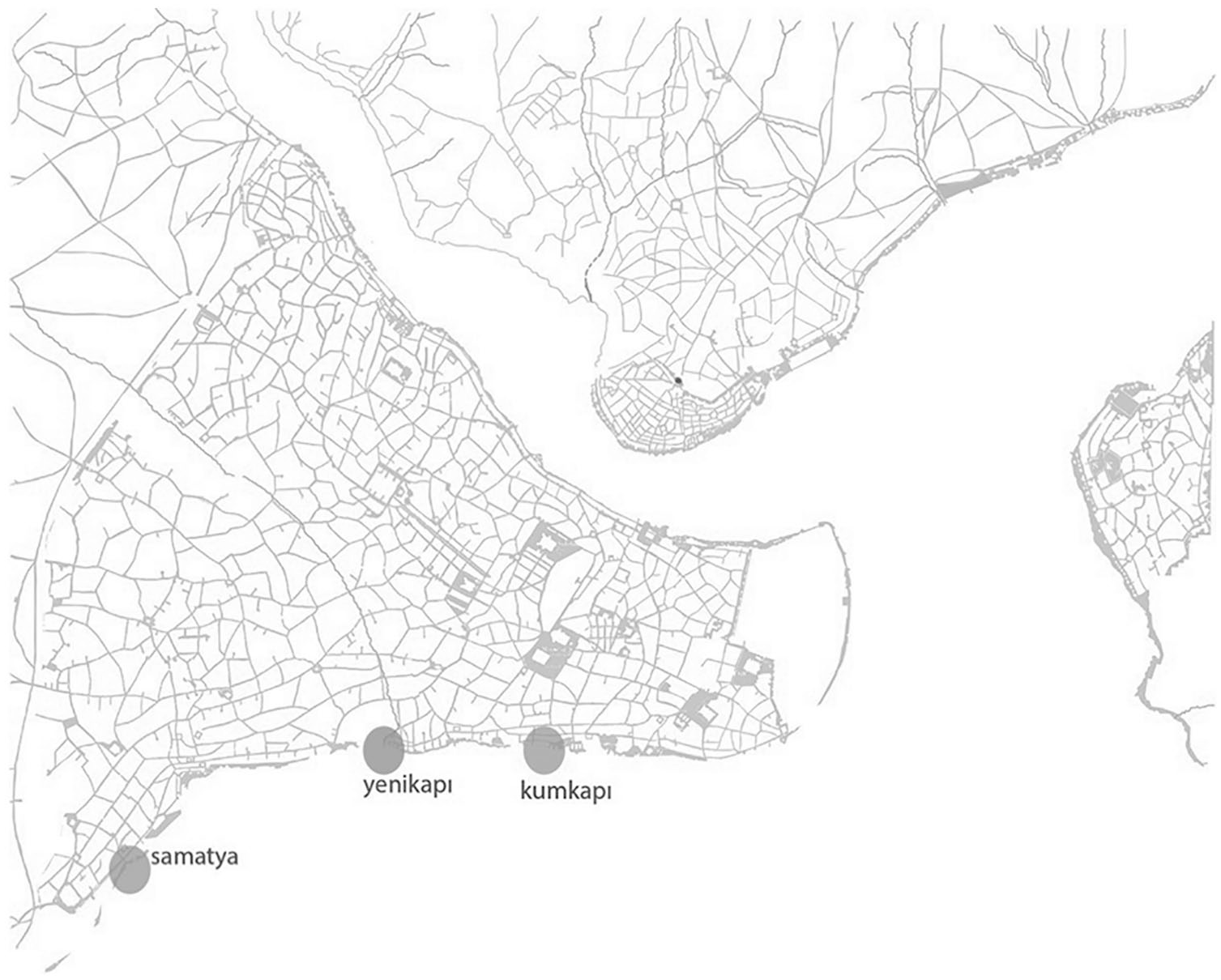
The garbage of İstanbul was transported to dumping points or tanzifat quays on the waterfronts through the second half of the nineteenth century with the regularizations of the municipality.
In the eighteenth and nineteenth centuries, “scavengers” were also known as garbage men and were given the name tanzifat amelesi (Ottoman street sweeper) in 1868, being responsible for cleaning the streets and bazaars. In the same year, the tanzifat amelesi with his wooden wheelbarrow could be seen in Kadıköy, too. It was very typical to see a tanzifat amelesi walking the streets of İstanbul, collecting garbage on his back into a basket (küfe) to sustain his life. After 1860, a tax (Tanzimat Resmi) was applied for collecting garbage under municipal order with salaried sanitation workers.
From records in the archives, we know about the cost of repairs of the tanzifat quays and that Kasımpaşa 56 (1905), Beşiktaş 57 (1895), and Hatabkapısı 58 (1902) were the locations where tanzifat quays were found. According to the records, the tanzifat quay at the Galata Fish Market 59 had been demolished before and was reconstructed again in 1901. The garbage was separated by a scavenger or çöp esnafı, searching for important things and cleaning and separating the waste materials using seawater at the tanzifat quays (Figure 6). After separation, garbage was transported by boats to the open seas near the islands of İstanbul like Yassıada (Figure 7). The metabolic flows of waste entailing separation, purity, transportation, and collection were made possible by direct human and animal labor as a municipal service in this way. Bonkofski Paşa, responsible for sanitation works providing precautions against cholera outbreaks, took the responsibility for Municipalities 1, 2, 6, and 9 in 1893. 60 Mösyö Ojen Mon Dragon from Paris was appointed for sanitation works in İstanbul in the same year. 61
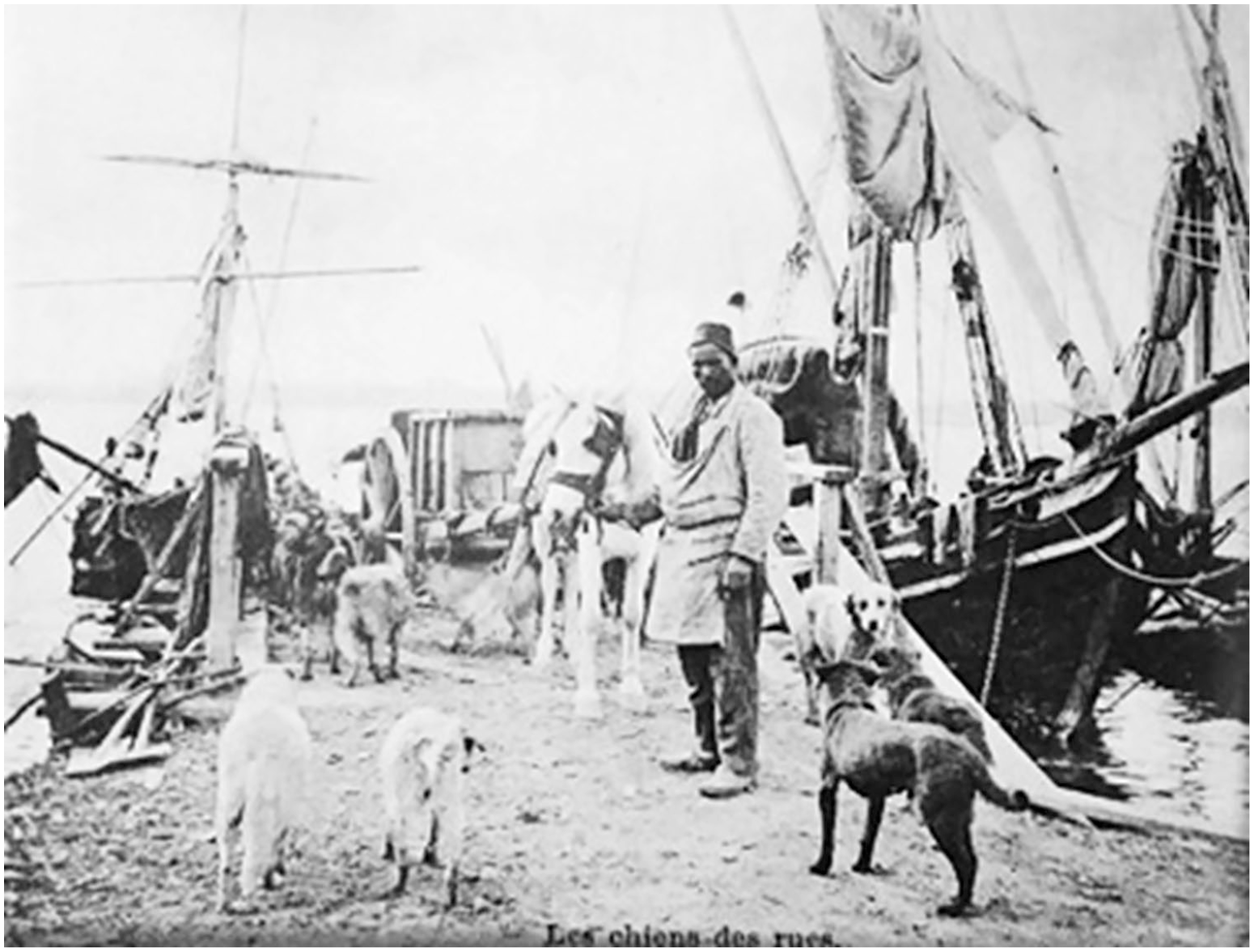
A tanzifat quay before 1905.
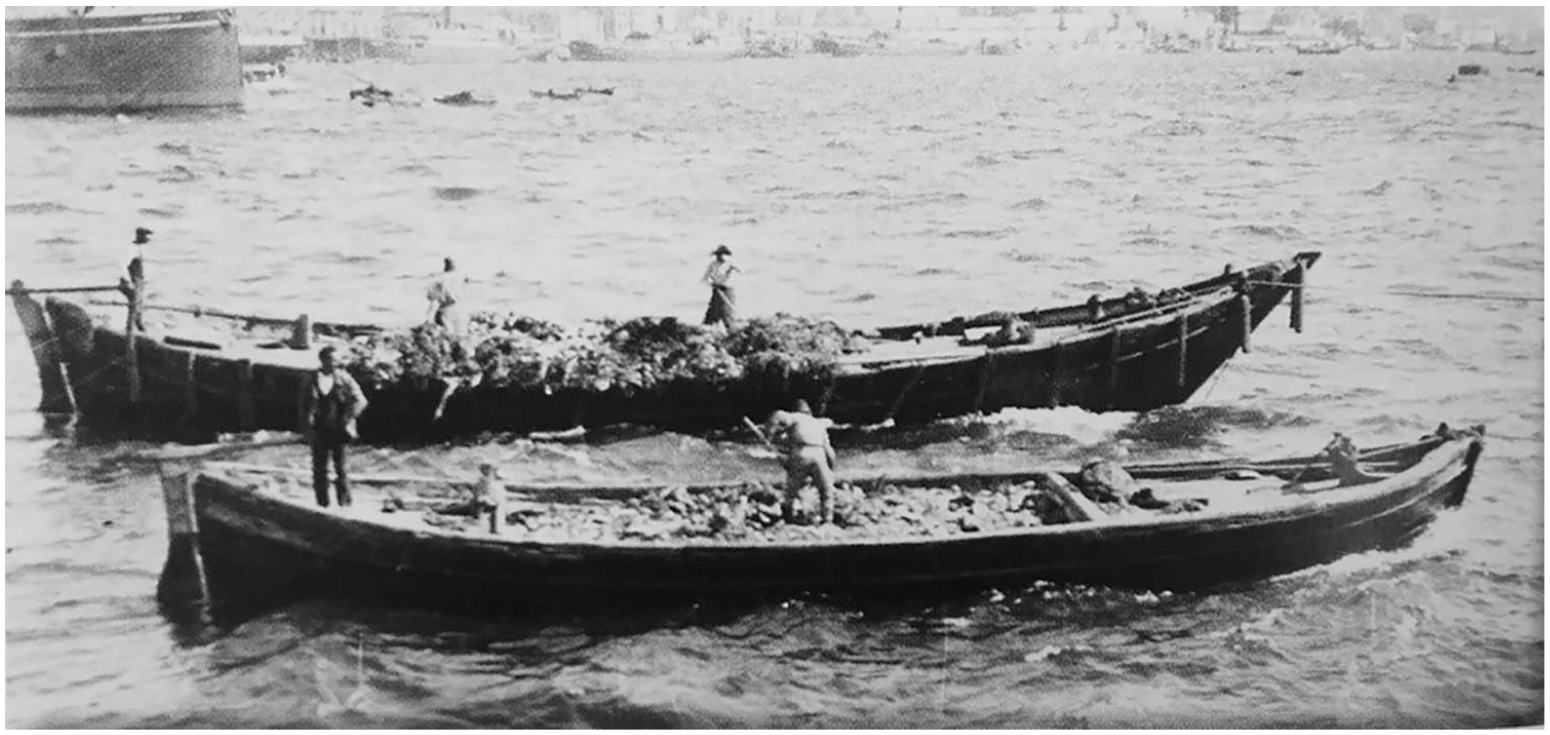
Garbage boats before transporting wastes near Yassıada in the first half of the twentieth century.
Concerning sewers as an infrastructural development, if we look at Western countries, Joel A. Tarr mentions that no city had sewage facilities for discharging human waste before 1850. 62 Furthermore, the sewers constructed after 1880 by municipalities were mainly for storm water collection and conveying water. In some countries, collecting waste in such sewers was forbidden by acts and laws. Even at the beginning of the twentieth century in the United States, privy structures and pumps not suitable for healthy environments could be seen together near dwelling areas. A French company developed general sewage projects between 1918 and 1920 for İstanbul. Only the streets of Fatih, Laleli, and Beyazıt were included, where those sewage systems are still used today. Kaika describes the development of urban sanitation systems and hygienic environments via technology as matters of “national prestige and pride for a Western metropolis” in the nineteenth century. 63 For instance, London, with its “Great Stink” problem emanating mainly from the River Thames in 1858, saw hard times concerning public health and diseases like cholera in the city. With the help of campaigns for increasing awareness in the media of the day, however, the development of large-scale engineering works and embankments on the Thames and the construction of an urban sewage system provided an improved environment, particularly regarding the river’s urban landscape. We can see similarities in İstanbul with the first emergent examples of a service revolution of municipal organizations and a kind of industrial discipline for the sake of “public health.” However, concerning the total legitimization of these developments and the creation of healthy environments, İstanbul had to wait for a new political project, the Republican Regime, in the twentieth century.
In short, we see in this period of İstanbul the first examples of a service revolution of municipal organizations via legislations blended with direct human and animal labor through salaried cleaners and foreign loans. The tanzifat amelesi worked for the municipality. As a result of a meeting held in 1866, called the International İstanbul Sanitary Conference, the first municipal hospital was also founded and new regularizations of health issues came into effect. 64 However, concerning the total legitimization of these improvements and visions of “public health” in contemporary terms, İstanbul had to wait for the Republican Regime in the twentieth century. In contrast to the general legitimization process with nation-state intervention in Western countries in the nineteenth century, this section has sought to highlight Turkey’s distinct context for dealing with sanitary conditions and waste via flows of water through labor-intensive characteristics.
Conclusion
In this paper, the metabolic flows of water in İstanbul have been grasped as both the cause and effect of the very first insights of foreign capital investments in the nineteenth century concerning the emergence of a new urban metabolism. These insights encompassed privatization programs, legislations, foreign loans, as well as health problems, and the population boom along the waterfronts with the growth of the first capitalist relations in the nineteenth century. Concerning the urban political ecology context, it can be said that the examples of producing nature as space by urbanizing nature in capitalist relations under uneven conditions was seen in İstanbul in this period. At the same time, despite many fruitful developments, İstanbul still depended on the labor-intensive, small-scale, and rural characteristics of its urban metabolism on a practical and daily level. All of the visions and attempts to discipline nature revealed radical changes to the labor-intensive and artisan character (e.g., the saka, löküncü, and suyolcuları) of the metabolic flows of water in İstanbul. Extended urbanization along the waterfronts, made possible via access to tap water in far corners of the Bosporus, both resulted from and caused the emergence of a new urban metabolism of İstanbul with a “modern” but uneven water supply system. The exercise of the flows of waste and sanitary conditions showed characteristics of being labor-intensive, uneven, and ad hoc. A tendency to shift toward the idea of sanitary conditions by disciplining waste with the help of foreign loans can also be observed in terms of municipal orders. We see that garbage collection and waste disposal depended on both human and animal labor, and municipal service in the hands of capital investments resulted in uneven conditions. At that particular moment in history, İstanbul was a stage for the emergence of a new urban metabolism. The transition and the conflict between the labor-intensive urban metabolism and capital-intensive urban metabolism of İstanbul, which started in the nineteenth century, has been explored here.
This study has aimed to contribute to the readings of İstanbul’s late nineteenth century and early twentieth century based on regularization attempts defined as the rules of “Western-minded” legislation. Moreover, efforts to understand the city through socio-natural relations give knowledge about how the new urban metabolism emerged, as well as the relations with urbanization and changes in the ideology of nature in this period. Extended urbanization in İstanbul embedded in the metabolic flows of water through tap water, waste, and sanitation resulted in and caused the emergence of a new urban metabolism that was both “modern” and “uneven.” Considering the current socio-naturally hazardous environment of İstanbul, the İstanbulites faced with dying of the Marmara Sea with massive sea-snot plagues in the marine environment are strongly related to extended urbanization, wastewater, and sanitation. I hope that this research will contribute to our collective efforts and urban authorities’ actions to create socio-naturally just environments and promote livable environments for more-than-humans.
Footnotes
Declaration of Conflicting Interests
The author(s) declared no potential conflicts of interest with respect to the research, authorship, and/or publication of this article.
Funding
The author(s) received no financial support for the research, authorship, and/or publication of this article.
