




Abstract
The revolutionary contributions of Black women psychologists have significantly deepened the science and practice of psychology. Translating this legacy into clinical practice honors their work and responds to the lived realities of Black women. This article operationalizes the concept of sacred spaces for adaptive coping, rooted in theories and concepts introduced to psychology by Black women. The authors present The Sacred Healing Circle, a curriculum-based model that demonstrates the translational utility of Black women’s scholarly contributions. This culturally responsive group therapy intervention is specifically led by Black women, created for Black women, and intentionally grounded in scholarship by Black women in psychology. Designed to support psychological wellness at predominantly White institutions (PWIs), the curriculum provides actionable strategies that center healing, resistance, and empowerment. By drawing from Black psychological theory, The Sacred Healing Circle affirms identity, fosters collective care, and creates space for culturally grounded clinical practice. This work continues a legacy of psychological activism and serves as a model for liberatory practices that center the needs and voices of Black women.
Throughout history, Black women have been fiercely dedicated to the fight for freedom from patriarchy and racism. From examples such as Harriet Tubman and Ida B. Wells-Barnett in the 19th century, to the founders of Black Lives Matter (Alicia Garza, Patrisse Cullors, and Opal Tometi) and the #MeToo movement (Tarana Burke) in the 21st century, Black women have consistently expanded the breadth of what it means to experience and inspire Black liberation (Day, 2015; Larson, 2022; Neville & Cokley, 2022; Ohlheiser, 2017; Silkey, 2015). However, being both Black and a woman means existing at a demographic intersection that has historically been—and continues to be—rendered invisible. In psychology, recognizing that Black women’s professional history aligns with their broader societal history has meant confronting hegemonic structures that attempt to devalue their wellness and limit their professional worth (Thomas, 2004).
This devaluation extends to higher education, where the issue of race-based affirmative action in admissions and hiring has been disputed in the policy arena, with many states banning the practice from all public universities (Liu, 2022). Despite these significant challenges, and the underrepresentation of Black women across professional domains in psychology—particularly in the professoriate (American Psychological Association [APA], 2020)—the intellectual activism of Black women has transformed the way we research, teach, practice, and lead in the field of psychology.
Universities, especially predominantly White institutions (PWIs), have historically served as the primary gatekeepers in determining the value for psychological knowledge through curriculum, training, and research. This standard has largely reflected the attitudes and beliefs of those already in positions of power, primarily White men (Guthrie, 2004). As Black students and professionals began to enter these institutions of higher learning, their protest against the myth of Black inferiority often went ignored or made little or no impact on the White psychology community (Stewart & Valian, 2018). Nevertheless, Black students and Black psychologists have continued to advocate for equity and inclusion in PWIs while also creating spaces for their own narratives (e.g., Association of Black Psychologists [ABPsi], research labs, Black Student Union, and Black Greek organizations; Tichavakunda, 2024; Williams, 1974).
Although the body of research on the experiences of Black women in psychology remains limited, research has illustrated the parallels of invisibility, belonging uncertainty, and gendered racial microaggressions that exist between professional Black women and Black women in the larger social context (Bernard et al., 2020; Dortch & Patel, 2017). For example, Thomas et al. (2013) detail in their work a phenomenon known as “pet to threat” to describe such experiences for Black women in higher education. This phenomenon describes how Black women are initially viewed as beloved anomalies but are met with hostility and suspicion once they achieve unexpected success. The consequences of this treatment often include tokenism, silencing, and invisibility.
More specifically, in the social sciences, the contributions of Black women are further erased when terms like “intersectionality” are used to define complexity rather than the specific oppression of Black women as originally intended (Alexander-Floyd, 2012; Crenshaw, 1989). When we examine similar themes in college students, we recognize that college years are generally marked by a process of self-discovery, a greater sense of independence, and negotiating interpersonal relationships and academic concerns (Mills, 2021). While Black college students share similar developmental tasks and challenges as their White counterparts, they are uniquely impacted by additional stressors such as racism and hostility at PWIs (Ball et al., 2024). For example, Fischer (2010) found a negative correlation between racial campus climate, academic performance, and the graduation rates of Black students.
For Black women attending PWIs, the ability to synthesize the complexities of their identities—both as Black individuals and women—while also contending with and managing the nuances, expectations, and oppression attached to their existence is critical (Dickens et al., 2023). This process is a key indicator of successful personal and professional identity development for this group (Williams & Lewis, 2021). Given the sociopolitical and professional challenges Black women psychologists face, their contributions to psychology often center the lived experiences of Black women while also dismantling limitations that try to force-fit their experiences into mainstream psychological frameworks.
Black women psychologists are particularly well suited to attend to critical aspects of Black womanhood and wellness, especially before students transition to more stable roles of adulthood. This is especially important considering that traditional college years coincide with a critical developmental period and that the peak onset for mental health concerns typically occurs before the age 24 (Kessler et al., 2007). Furthermore, given that Black women receive more than 50% of all degrees conferred to Black students across institutional types, it is essential to improve support services offered to this population to promote their wellness and success (Inniss-Thompson et al., 2024; Snyder and Dillow, 2012). Universities present a unique opportunity to provide mental health support given the integrated support services, and free or subsidized health services offered at these institutions (Choi et al., 2010).
One such opportunity involves creating what we refer to as sacred spaces for Black women. In these spaces, Black women are not only visible but are also affirmed and venerated for who they are and the unique ways they navigate the world. The inception and development of the Black woman-centered group therapy curriculum, The Sacred Healing Circle, described here, represents a deliberate effort to counter the invisibility narrative associated with Black women’s scholarship and to demonstrate the translational utility of Black women’s contributions to psychology, particularly for Black women at PWIs.
We submit that by developing sacred spaces for Black women at PWIs, we can increase the likelihood that Black women experience retention in positive ways and thrive holistically in these environments (Platt, 2022). Toward this goal, we focus on the contributions of Black women in psychology that have redefined scholarship to establish a basis for the creation of sacred spaces. Our discussion is anchored in Black Feminist Thought (BFT) which centers the perspectives of Black women, ensuring that their voices and contributions are integral to the framework of support and healing within these spaces.
A Legacy of Making Strides: Black Women in Psychology
Black women in psychology have consistently demonstrated enduring resilience, thriving in the face of chronic dehumanization (Waldron, 2019). The pioneering efforts of Inez B. Prosser and Ruth Howard, who became the first Black women to earn doctoral degrees in psychology, serve as early examples of Black women making professional strides that would influence generations of Black women psychologists. Prosser earned her EdD in 1933 from the University of Cincinnati, while Howard earned her PhD in 1934 from the University of Minnesota (Fouad et al., 2000). Since then, Black women in psychology have stood as a vanguard for freedom and equity. A historic example of this is the legislative influence of Mamie Phipps Clarke, who, alongside her husband Kenneth Clarke, conducted their groundbreaking doll study on racial preferences. Their work played a pivotal role in the Brown v. Board of Education of Topeka (1954) Supreme Court case, which dismantled school segregation and marked a turning point for race relations in the United States (Clark et al., 2004).
This same resilience in the face of systemic barriers has continued to be mirrored by Black women in psychology who have long refused to wait for opportunities to be granted. In 1969, born in part out of frustration with sexism in psychology, E. Kitch Childs helped establish the Association for Women in Psychology (Crawford & Marecek, 1989). Childs’ work largely focused on using feminist approaches to therapy to confront societal “isms” and encourage self-understanding and empowerment (Richardson, 2018). The founding of the ABPsi arose from a similar sense of exclusion. Black psychologists were largely denied meaningful inclusion in the mission and vision of the APA and their concerns often ignored (Guthrie, 2004). In response, Black women like Sylvia O’Bradovich, Mary Howard, De Lorise Minot, and Jane Fort Morrison played critical roles in establishing ABPsi in 1968, with Ruth E. G. King to follow as the first woman president in 1976 (ABPsi, 2023).
The legacy of Black women’s leadership continued to evolve with Jessica Henderson Daniel’s 2018 election as the first Black woman president of the APA since its founding in 1892 (APA, 2021). Daniel paved the way for future presidents, including Rosie Phillips Davis in 2019, Jennifer F. Kelly in 2020, and Thema Bryant-Davis in 2022. Together, their leadership, scholarship, and activism have been instrumental in solidifying a commitment to diversity and diversity science. Through their work, they have confronted the inequities associated with racism and other forms of dehumanization or oppression in psychology.
Despite some progress, there remain significant gaps in the field of psychology, particularly in the failure to adequately acknowledge the perspectives and contributions of Black women psychologists (Cole, 2020). The underrecognized contributions of Black women in psychology have hindered the comprehensiveness of mental health knowledge available to scientists, practitioners, and society at large (Spates, 2012). The unique cultural knowledge that Black women bring to psychology plays a crucial role in understanding the culturally specific viewpoints, behaviors, and outcomes, not only among Black women but also in the broader Black community (Moradi & Grzanka, 2017). Without this knowledge, the potential for biases, misdiagnosis, and misapprehension related to the experiences of Black women is likely to persist or worsen (Nair & Vollhardt, 2020).
Addressing these gaps in knowledge requires a repositioning of scholarship within psychology, making it more contextually responsive to the unique lived experiences of Black women. Although leaders in psychology have made significant strides toward advancing diversity, equity, and inclusion efforts within the field, these efforts have yet to fully reflect the changing roles, statuses, and attitudes imposed on and held by Black women (Huq, 2019).
Fortunately, Black women often exhibit a spirit of permission-giving and cooperation, grounded in a deep understanding of the relational nature of freedom and a recognition of their linked fate due to the various intersections of oppression they experience (Dawson, 2020). In other words, the social, political, cultural, and historical consciousness possessed by Black women in psychology is a unique and irreplicable tool. This distinct perspective, which sets them apart from other groups, helps to cultivate spaces where Black women heal and thrive.
A Legacy of Theory Advancement: Theoretical Frameworks for Black Women’s Healing
As history has shown, “differentness” often leads to dissonance between groups. Due to majoritarian comparative psychology, the experiences of Black women have historically been viewed through the distorted lens of White Americans (Crenshaw, 1992). For example, the Jezebel (hypersexual) and Sapphire (angry/aggressive) stereotypes of Black women stands in sharp contrast to the far more feminine and nurturing stereotype associated with White women (Collins, 2004; West, 2008). Therefore, understanding how Black women maintain psychological well-being in the face of societal responses to their identities requires exploring the adaptive strategies they employ.
A growing body of scholarship suggests that the marginalization experienced by Black women often motivates higher levels of resistance and engagement to combat its effects (Stokes‐Brown & Dolan, 2010). Recognizing how Black women continue to thrive under oppressive conditions challenges pathological narratives and prompts a critical question that Black women in psychology have worked to answer: Where do Black women go to heal? This question has served as a guiding light for Black women in the science and practice of psychology and has illuminated a path toward redefining scholarship that explores specific acts of resistance supporting the psychological well-being of this group. Rooted in the wisdom, specificity, and empowerment of BFT, we seek to answer this question. Doing so led us to several theories and areas of scholarship developed by Black women psychologists. By expanding the utility of BFT, we integrate additional frameworks and theories that support centering Black women’s experiences. In the following section, we provide an overview of how Phenomenological Variant of Ecological Systems theory, gendered racial microaggressions, and optimal psychology intersect through the lens of Black feminist thought, highlighting multiple factors influencing Black women’s healing and the spaces where this healing occurs.
Black Feminist Thought (BFT)
As an epistemology, BFT aptly offers a compelling framework through which the complexity of Black women’s experiences can be explored (Collins, 2005; see also Collins, 2009, 2022; Howard-Hamilton, 2003). BFT is an interdisciplinary, recursive interpretative framework that encourages Black women to develop, redefine, and tell their stories while simultaneously providing a space for self-evaluation, self-definition, and knowledge validation (Collins, 2005; Howard-Hamilton, 2003). Distinctively, BFT focuses not only on oppression but also on resistance, activism, and politics of empowerment (Alinia, 2015).
The five tenets of BFT include: (1) interlocking systems of oppression - sites of domination exist on the individual, systemic, and cultural level and these systems are interconnected. (2) Standpoint epistemology - expertise regarding the experiences of Black women must be yielded to Black women themselves. (3) Everyday knowledge - Black women are agents of knowledge, possessing both individual and collective wisdom. (4) Dialectical images in the US - refers to the need to understand and decipher images within media that consistently normalize the oppression of Black women. (5) Social justice praxis - engagement of scholarship, social justice, and action (Collins, 2009, 2022).
Together, these tenets coalesce to provide valuable insight into the quality of spaces that foster Black women’s liberation and well-being. BFT frames Black women’s ways of knowing and highlights their power to construct new knowledge, reprocess, redefine, and reclaim their narratives as inherently sacred.
Phenomenological Variant of Ecological Systems Theory (PVEST)
Building upon the tenets of BFT, a deeper examination of contextual factors that shape Black women’s experiences is a critical step in determining what makes a space sacred for this group. PVEST is a framework for understanding how resiliency, identity, and competence formation within Black communities are shaped by cultural context. Developed by Margret Beale Spencer (2006), PVEST describes the interplay between an individual and their environment while also examining risk and protective factors which influence development, life outcomes, and identity formation (Spencer et al., 1997).
These factors impact both the challenges individuals face and their access to support, which is closely linked to actual and perceived stress. This stress is filtered through a process of self-appraisal to determine what coping strategies—be they adaptive or maladaptive—individuals employ (Spencer, 2006). Coping responses, when used repeatedly over time, contribute to life stage outcomes. For instance, coping mechanisms such as avoidance, acceptance, and silencing may effectively reduce immediate stress but can also result in prolonged psychological symptoms and heightened experiences of hostility for Black women (Utsey et al., 2000).
For Black women to operate in ways that promote their well-being and ability to thrive, it is necessary to critically assess the structural and cultural implications of the spaces they occupy. This requires acknowledging specific features of the environment which facilitate or inhibit positive outcomes. Black women alone are the producers of this knowledge. Thus, contextualizing ecological spaces—such as PWIs—through the lens of multiple marginalized identities reveals the degree of safety and equity available. Such an approach provides a fuller understanding of life outcomes for Black women.
Gendered Racial Microaggressions
Black women’s experience, particularly in predominantly White settings, cannot be fully understood without first grasping intersectionality. Intersectionality theory and related frameworks show that environmental stressors contribute to the psychological distress experienced by Black women (Crenshaw, 1989). According to intersectionality, systems of oppression based on gender, sexuality, race, and ethnicity cannot be viewed separately.
Building on this understanding, gendered racial microaggressions have emerged as a critical concept in the literature. Gendered racial microaggressions are often accompanied by marginalization, silencing, and objectification (Cole, 2020). Many Black women experience microaggressions daily, often in the form of targeted stereotypes. For instance, the “angry Black woman” stereotype attributes common (and often justified) expressions of anger, dissatisfaction, or disapproval to internal factors instead of considering external triggers such as systemic inequalities, workplace discrimination, and social injustices based in gendered racial biases that contribute to these emotional responses (Walley-Jean, 2009).
Within PWIs, Black women frequently encounter gendered racial microaggressions (Banks & Landau, 2021; Lewis et al., 2013). These experiences contribute to the risk of self-confirming stereotypes about one’s cultural group, limiting the ability to experience the full range of their emotions or advocate for themselves when necessary (Geddes & Stickney, 2011). This limitation can lead to negative psychological outcomes and impact well-being and academic retention for Black women at PWIs (Gupta & Bhawe, 2007; Lewis et al., 2016; Smith et al., 2019). The intersection of racism and sexism places Black women at an increased risk for psychological distress (Woods-Giscombé & Lobel, 2008). As they navigate the dual burdens of race and gender while also contending with challenges in higher education, it becomes imperative to recognize and address these issues (Patton and Croom, 2016). Without such an understanding, spaces and the individuals within them remain limited in their ability to support and attend to the lived experiences of Black women.
Optimal Psychology
Recognizing these challenges, it is essential to explore frameworks that not only address oppression but also offer pathways to healing and empowerment. One such framework is optimal psychology (OP), developed by psychologist Linda James Myers (Myers, 1993). OP postulates that existence is divine or spiritual (Myers, 2013). It situates self-knowledge as the basis of all knowledge and asserts that a sense of self is multi-faceted and includes ancestors who have passed on, future generations, community, and all aspects of nature. OP positions individuals as healers on a journey of liberation through the building of community, collective support, and reinforcement. This attention to the soul provides Black women with a framework that prioritizes restoration and collective healing.
Taken together, these frameworks create a foundation for self-definition at both the individual and collective level while also challenging the harmful narratives perpetuated at the intersection of sexist and racist ideologies. BFT and PVEST broadly inform and necessitate the need for sacred spaces for Black women. While PVEST frames the structural and environmental factors that shape Black women’s developmental trajectories in terms of risk and assets, BFT deepens this analysis by highlighting the significance of self-definition, self-evaluation, and collective empowerment. This combined perspective both underscores the challenges Black women face and affirms their agency in shaping their own identities and experiences. Building on this foundation, OP offers a pathway toward resilience and healing in response to the harmful effects of gendered racial microaggressions by emphasizing spiritual restoration, community-building, and self-knowledge as essential tools for empowerment. Rather than focusing solely on survival, these theories provide a model for thriving—one that nurtures both individual and collective well-being.
Aligned with the purpose of this article, we use the above theories and frameworks to honor and call attention to the contributions of Black women in psychology. Their scholarship is integral to the field and essential for the development of clinical models, such as the one explored in the following section, which supports healing among Black women attending PWIs.
A Legacy of Black Women’s Healing Spaces: Toward a Definition of Sacred Spaces in Psychology
As we consider the healing potential of Black women’s scholarship, we must first examine the broader context in which these contributions emerge. Marginalization, defined as the subjugation of a person or group to a powerless or unimportant position within society, influences institutional and social norms that shape perceptions of safety for Black women (Rabelo et al., 2021; Young, 2018). These perceptions vary depending on the way identities intersect and are often indicative of how systems engage (or fail to engage) with Black women (Maffini & Dillard, 2021). Holding multiple marginalized identities can facilitate an environment of discomfort, neglect, and fear for Black women and increase threats of violence, be it physical or psychological. Furthermore, identifying with multiple marginalized groups also limits access to available resources and spaces considered safe (Collins, 1990; hooks, 1981; Jones & Shorter-Gooden, 2003; Maffini & Dillard, 2021).
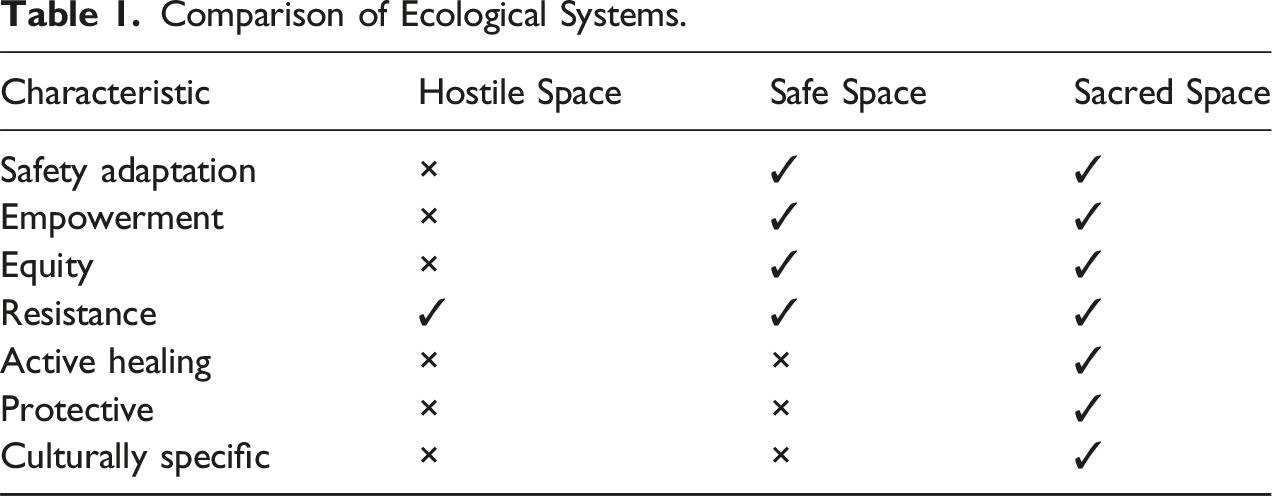
Comparison of Ecological Systems.
Hostile Spaces
Hostile spaces are defined by the damage they inflict on the physical, mental, and spiritual well-being of individuals within oppressed communities (Kwate et al., 2003; Williams & Williams-Morris, 2000). These spaces are often recognized by the visceral discomfort they create, and tragically, the reality that Black bodies are often unsafe within them (Jordan & Gabbidon, 2010). The work of social psychologist Jennifer Eberhardt et al. (2004) speaks to this reality and sheds light on the unconscious, deeply embedded ways in which individuals categorize people based on race. In particular, her research highlights the psychological association between race and criminalization. This association is central to the systemic marginalization of Black communities and can be seen in contemporary instances of police brutality and violence, such as the deaths of Breonna Taylor and Ma’Khia Bryant. These tragedies, and an unsettling number or others, demonstrate that hostility often extends beyond a specific setting and reflects the implicit basis historically seen in all major institutions in American society—including the justice system, healthcare, and education (Eberhardt et al., 2006; Lynn, 2006; Prather et al., 2018; Threadcraft, 2021).
Hostile spaces are constructed to govern against the interests of marginalized communities (Watkins et al., 2007). These spaces limit access to services, resources, and opportunities while fostering both internal and external harm to Black communities. For example, as Black student enrollment at PWIs has increased, so too have perceptions of racial tensions—manifesting as microaggressions, discrimination, threats, and violence (Chekwa et al., 2013). For Black women, in particular, a group which has drastically increased their enrollment rates over recent decades, seeking higher education may be seen as a form of active resistance against patriarchy, racism, economic marginality, and miseducation (Isoke, 2013). However, when this pursuit occurs within institutions which have historically upheld these oppressive structures, Black women become more vulnerable to the risks associated with racial hostility, aggression, isolation, and microaggressions (Maffini & Dillard, 2021). In predominantly White environments, continued exposure to hostile spaces, if left unaddressed, can lead to the internalization of oppression and the development of a deficit view of adaptation (David, 2013).
Safe Spaces
In response to these challenges, the creation of safe spaces has emerged as a crucial countermeasure, offering marginalized communities’ environments of refuge and empowerment. The concept of safe spaces has a rich history as a part of the women’s movement during the late 20th century and in activist and academic communities (Kenney, 2001). Often referenced in the discussion of lesbian, gay, bisexual, transgender, queer and/or questioning, intersex, asexual/aromantic/agender (LGBTQIA+), womanist, and critical race theories, safe spaces can be traced back to the “kitchen legacy”—a reference to the quiet yet powerful resistance of Black women during the time of enslavement (Davis, 1999; Roestone Collective, 2014). This legacy of resistance has persisted throughout history, including during the civil rights era, when historically Black colleges and universities (HBCUs) became safe headquarters and training grounds for scores of activists, leaders, and psychologists like Mamie Phipps Clarke (Bracey, 2017).
The term safe space is also often used in the context of higher education to promote academic theory, student support services, and didactic classroom environments (Ali, 2017). Across all contexts, safe spaces are designed to increase the safety and visibility of marginalized communities. These spaces are often characterized by several key components, including: (1) varying opinions encouraged and met with civility, (2) ownership of intentions and impact of one’s actions, (3) individuals choose to participate in the space free of outside pressure, (4) respect, and (5) individuals agree to not intentionally inflict harm on one another (Arao & Clemens, 2013). Safe spaces are designed to challenge patriarchal, racialized, heteronormative, and class-based societal structures by acknowledging the specific safety needs of those who fall outside dominant norms (Stengel & Weems, 2010). Spaces that provide an avenue for marginalized voices to be heard and foster an environment of inclusivity serve as the blueprint for optimally functioning safe spaces.
While many spaces are designated as “safe,” these spaces often exist within hostile systems and in proximity to individuals who perpetuate harm against marginalized communities, thereby increasing the risk of exploitation. This duality leads to consequences such as tokenism, silencing, and marginalization, which can negatively impact the overall psychological well-being for Black women (Thomas et al., 2013). Given these challenges, safe spaces may be better understood as contested spaces—spaces in which change-making occurs through challenge, dispute, and collaboration rather than the mere absence of conflict (Ludlow, 2004). Understanding this distinction allows for a more nuanced perspective on creating safe spaces for Black women. It underscores the need for a proactive and transformative approach that reconfigures existing social norms, ensuring that safe spaces serve as sites of resistance, empowerment, and genuine inclusion.
Sacred Spaces
Given the complexities of hostile and safe spaces, the question previously posed—Where do Black women go to heal?—remains unanswered. The answer to this question is not novel. Instead, the ability of Black women to create and protect spaces of refuge is a narrative which has reverberated throughout Black women’s struggle for liberation from a patriarchal, White supremacist society (Collins, 2002). The answer to this question extends beyond psychological domains with mention of sacred spaces appearing across various academic disciplines. For instance, while limited use of the term sacred spaces has been used in social work to describe Black feminist therapies, in education to denote spiritually grounded and culturally relevant teaching methods, and in religion to characterize sites of powerful spiritual occurrences, none provide a comprehensive operationalization of sacred spaces (Jones, 2015; Kilde, 2008; Kwa Salaam, 2003). Psychology too has yet to fully explore this concept. The current article contributes to this emerging work and stands out for its comprehensive approach to operationalizing sacred spaces in support of psychological wellness among Black women.
Beyond academic discussions, what is known about sacred spaces for Black women emerges directly from their lived experiences. For instance, in her seminal work Yearning: Race, Gender, and Cultural Politics, author bell hooks offers a description of the “homeplace” as a space in which Black women gather in solidarity, resistance, and healing. She writes: “This task of making homeplace was not simply a matter of Black women providing service; it was about the construction of a place where Black people could affirm one another and by doing so healed many wounds inflicted by racist domination. We could not learn to love or respect ourselves in the culture of White supremacy, on the outside; it was there on the inside, in that “homeplace,” most often created and kept by Black women, that we had the opportunity to grow and develop, to nurture our spirits. This task of making a homeplace, of making a community of resistance, has been shared by Black women globally, especially Black women in White supremacist societies” (hooks, 1997, p. 384).
hook’s words “to grow, develop, and nurture the spirit” echo Linda James Myers OP Theory which emphasize that spirituality is the vehicle through which knowledge of self, others, nature, life, and ultimate meaning is obtained (Myers, 1993). This perspective aligns with the Africentric worldview, which emphasizes group orientation, unity, and harmony with nature and underscores the importance of collective responsibility, cooperation, and interdependence, while also maintaining a balanced view of both past and present (Baldwin, 1984). By honoring both spiritual and material realities equally, an Africentric worldview provides Black women with a means to resist the harmful effects of racism and sexism and support their understanding of themselves as women of African descent (Jackson & Sears, 1992; Wallace & Constantine, 2005).
Spaces which center an Africentric worldview, paired with self-knowledge as an antecedent of spirituality, challenge the status quo and call for a redefinition of these spaces as sacred spaces—sites of empowerment, resistance, and healing. Through the lens of Black feminist thought, these spaces must be culturally specific, created through an intentional, positive effort, and deeply rooted in collective self-determination. Sacred spaces are affirming, protective environments created and led by those who share similar histories, identities, and social experiences. These spaces provide a network of mutual servicing and aid and an exchange of experiences and ideas which progress the interest of the collective. Sacred spaces are revered for their spiritual and emotional significance, offering refuge from the daily hardships of marginalization. In these spaces, Black women can heal, grow, and strengthen their sense of self and community.
The aim of the current article is to advance the creation, promotion, and protection of sacred spaces for Black women at PWIs to buffer and obtain victory over the psychological stressors faced in these environments. Previous research indicates that Black students at PWIs experience significant racial discrimination, which has a detrimental effect on their psychological well-being (Pieterse et al., 2010; Williams et al., 2021). Aligned with the Africentric principles of collective responsibility, cooperation, and interdependence, Black students often turn to other Black community members for support in managing race-based stressors (Carter & Forsyth, 2010; Marshburn & Campos, 2022). Mutual understanding and social support within these communities has been shown to help Black students cope with the psychological burdens they experience (Benight & Bandura, 2004). However, despite these collective efforts, the numbers reveal a stark challenge. In 2021, only 1.9 million of the over 15 million undergraduate students in the United States were Black, and just six percent of faculty at PWIs were Black (National Center for Education Statistics [NCES], 2023a, 2023b). These statistics underscore the difficulty Black women face in finding a supportive community within these spaces.
By creating and facilitating sacred spaces at PWIs, Black women in psychology demonstrate an intentional effort to invite Black college women into a protected space where they can leverage their strengths and support one another in overcoming hardships. Black women in psychology have long demonstrated through their scholarship, leadership, and activism that their cultural knowledge provides invaluable perspectives on healing and psychological well-being. Through this perspective, sacred spaces at PWIs offer critical support to Black college women in navigating the challenges they face. A model of sacred healing—referred to as The Sacred Healing Circle—offers a curriculum-based framework for developing these spaces. Through these intentional, culturally grounded practices, Black women can foster environments where healing, empowerment, and resilience are cultivated. In doing so, they contribute to the creation of spaces where Black women can thrive, both individually and collectively, in their academic and professional journeys.
Translating Black Women’s Legacies to Clinical Practice: A Model for Developing Sacred Spaces for Black Women at Predominantly White Institutions (PWIs)
While the enrollment rates of Black women at PWIs have steadily increased, their graduation rates continue to remain below those of White and Asian women (Winkle-Wagner, 2015). Black women face challenges that exceed individual ability or academic preparation, impacting their chances to succeed at PWIs. A robust body of research has explored the often-intersecting challenges encountered by Black students in higher education (Commodore et al., 2018; Watson et al., 2023). What is clear is that Black students’ success at PWIs is mediated by relationships with faculty, families and friends from home, and support from peers in Black student led organizations (Guiffrida & Douthit, 2010). Commonalities among these support systems speak to direct relational transactions that are prominent in sacred spaces.
While some PWIs have developed interventions to address the academic disparities experienced by Black students, there is a gap in scholarship addressing the lived experiences of Black students and factors which foster identity development and mental well-being (Flowers, 2004; Rodgers & Summers, 2008). Therapeutic interventions that incorporate Black feminist thought, self-knowledge, and address both risk and protective factors for mental health can support Black women in navigating issues such as adjustment, cultural incongruence, isolation, and all other forms of social difficulties. These interventions also support the development of individual and collective definitions of Black womanhood, which are essential for Black women’s success at PWIs (Elliott & Lee, 2021).
As stated earlier, sacred spaces for Black women are intentionally created and led by Black women. This intentionality should also be reflected in the theories and frameworks used in the development of such spaces. By recognizing key themes from scholarship on gendered racial microaggressions and integrating elements of Black feminist thought and optimal psychology, sacred spaces can effectively capture and address the experiences of Black women at PWIs, while also providing means for resistive, collective, and self-protective coping, as seen through the lens of the PVEST. By applying the scholarship of Black women in psychology to practice, we can achieve a more holistic and self-defined perspective of Black womanhood, grounded in self-knowledge, culture, and spirit.
The Sacred Healing Circle is a curriculum-based, semi-structured, process group therapy model designed to promote adaptive cognitive and emotional regulation, and individual and collective coping skills. The model is structured around a 10-week curriculum, aimed at strengthening a Black feminist consciousness and an Africentric worldview for Black women attending predominantly White postsecondary institutions. In line with the theoretical framework of optimal psychology, as described in earlier sections, this curriculum integrates Myers et al.’s (1991) Optimal Theory Applied to Identity Development (OTAID) model to promote the goals of sacred spaces. The six phases of the OTAID model are as follows: • Phase 0: Absence of Conscious Awareness - commonly associated with infancy, lack an awareness of self as separate or distinct from one’s environment. • Phase 1: Individuation - individuals lack awareness of self beyond that of the meaning introduced by their families and may lack awareness of parts of themselves devalued by society. • Phase 2: Dissonance - individuals begin to experience conflict between perceptions of self and aspects of self that may be devalued by others. This process may evoke feelings of anger, insecurity, isolation, or sadness. • Phase 3: Immersion - individuals embrace others like themselves and begin to explore and appreciate devalued aspects of self through cultural engagement. During this phase, individuals are likely to experience pride and a sense of belonging toward one’s own group and distrust and rage toward the dominant group. • Phase 4: Internalization - individuals have effectively associated feelings of worth with their salient identities, increasing a sense of security. • Phase 5: Integration - individuals have strengthened their sense of self and inner security which reflect their relationships and perceptions of others. • Phase 6: Transformation - individuals shift their worldview toward one which emphasizes “the interrelatedness and interdependence of all things and are empowered define their reality based on spiritual awareness rather than external circumstances” (Myers, 1993, p. 60).
The Sacred Healing Circle Curriculum and Application of Relevant Frameworks.
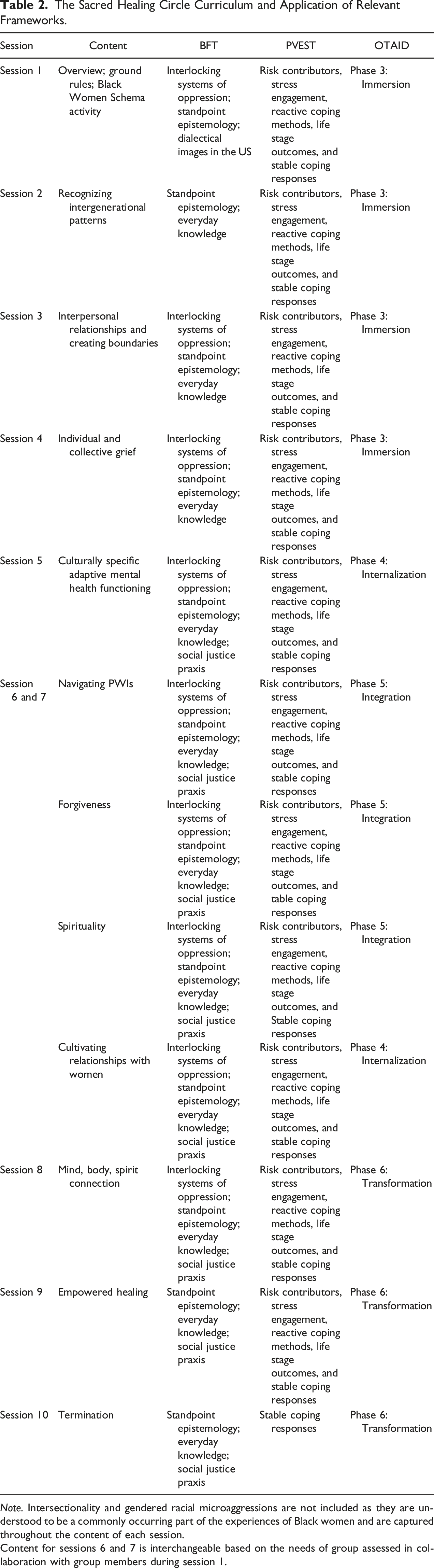
Note. Intersectionality and gendered racial microaggressions are not included as they are understood to be a commonly occurring part of the experiences of Black women and are captured throughout the content of each session.
Content for sessions 6 and 7 is interchangeable based on the needs of group assessed in collaboration with group members during session 1.
As participants progress to the Internalization phase, facilitators introduce psychoeducation on strategies for adaptive mental health functioning during session 5, including Africultural coping strategies and exploring culturally specific perceptions of mental health (Utsey et al., 2000). To facilitate the Integration phase, facilitators use the information gathered on individual and collective goals during Session 1 to select the focus for Sessions 6 and 7. Options include navigating PWIs, forgiveness, spirituality, or cultivating relationships with women.
Sessions 8 and 9 prepare participants for the final phase of the OTAID model, Transformation. These sessions provide both psychoeducation and space to process the interconnectedness of physical, mental, and spiritual well-being as it relates to individual and collective healing through topics including practicing “radical self-care” as a strategy for living a value led life (Nicol & Yee, 2017). Session 10 serves as the termination session, allowing for reflection and closure.
This curriculum is designed to be comprehensive, with recognition that learning about the self, and self as part of a collective, is a lifelong and dynamic process. Participants will not reach full self-understanding in a 10-week program; rather, the curriculum lays the foundation for ongoing development, healing, and empowerment.
Group Recruitment, Screening, and Utilization of Curriculum
Facilitators of The Sacred Healing Circle actively engage in culturally specific outreach and recruitment efforts. The recruitment process takes place over a period of 2-3 weeks each academic semester. Recruitment methods include social media, departmental listservs (e.g., academic advising), the distribution of flyers, tabling, and intentional outreach through Black student organizations (e.g., Black/National Pan-Hellenic Council [NPHC] sorority meetings and the Black Student Union). Women interested in participating are screened by co-facilitators to ensure the group is an appropriate fit. Inclusion criteria require participants to identify as women of Black/African descent. Women are excluded if they are in crisis (e.g., demonstrating suicidality) or cannot engage in the primary tasks of the group (Yalom, 1970; Yalom & Leszcz, 2005), and they are referred to other counseling resources to meet their specific needs.
Each cycle of The Sacred Healing Circle accommodates 8–12 women. The curriculum is structured for 10-weekly group sessions. In the current application, the group is co-facilitated by two Black women doctoral-level practicum interns and supervised by a licensed psychologist. All recruitment materials emphasize the sacredness of the space, specifically noting that the group is facilitated by Black women to address the unique concerns of Black women students.
This point is emphasized to honor the relational intimacy among Black women. Collins (2002) posits that spaces where Black women can engage in meaningful relationships with one another and be empowered by Black mentors are vital for self-definition, resistance, and escape from hegemonic ideologies. It is essential that Black women serve as the primary facilitators of this sacred space. This ensures that the voices and lived experiences of Black women are centered exclusively within the space.
In utilizing The Sacred Healing Circle curriculum, the authors also intentionally incorporated the use of opening and closing rituals for each session. These rituals may include readings, media, culturally informed activities (e.g., calling in the names of women ancestors and self/community/spiritual care planning), and the creation of affirmations. The intentional use of the term “ritual” serves to emphasize the sacredness of the group space, helping to orient members to the cultural practices that inform both the application of scholarship and clinical interventions within the group.
Group Format
Session 1
In the first session, facilitators welcome the group members and provide an overview of the group’s purpose, expectations, confidentiality, and the overall format. Participants then introduce themselves, sharing their identities and any other important factors they feel are relevant. Members are invited to discuss their expectations and what they hope to gain from this sacred space.
Next, facilitators guide the group in establishing ground rules and provide an overview of the curriculum. The group members are encouraged to share feedback regarding the curriculum, which is rooted in Black Feminist Thought, Intersectionality, and Black culture. This collaborative approach invites participants to contribute to the curriculum by sharing key points they wish to address. Facilitators might ask questions like, “What is most important to you about this topic?” or “What would you like to understand about this topic?”
The first session is 90 minutes in duration. Forty-five minutes are spent on the components mentioned above, and the remainder of the group is spent engaging in the Black Women Schema activity. This activity serves as an exercise in intersectionality and self-determination, recognizing the many roles, identities, and perceptions associated with Black womanhood. Facilitators begin by posing the broad question: “How are Black women defined by society?” This question guides discussion and encourages group interaction. Participants are asked to reflect on the messages they've received about Black women through various sources like relationships, culture, media, and the university environment. Members write down their responses on pieces of paper provided by facilitators. This activity can also be adapted for virtual spaces using the chat feature on video conferencing platforms. Facilitators then read the responses aloud and allow space for reactions and discussion. This should take approximately 10–15 minutes. Afterward, facilitators provide psychoeducation on the power of renaming and redefining through the lens of BFT. Participants are invited to develop their own definitions of what it means to be a Black woman, which they share with the group. Facilitators create space for validation, affirmation, and discussion. Facilitators then guide the group in developing a shared concept of Black womanhood, which aligns with the task of self-determination and serves to promote collaboration and cohesion among the group. After the activity, participants reflect on their thoughts and reactions, and facilitators close the session.
Sessions 2–9
The subsequent sessions follow a similar structure: check in, opening ritual, introduction of content, group processing, psychoeducation, culturally informed practice, and closing ritual. Each session lasts 60 minutes. Facilitators design each session to incorporate the shared cultural knowledge of the group members related to the session topic (Table 2). Each session begins with an opening ritual that introduces the topic in a culturally relevant way. For instance, during Session 2, on “Recognizing Intergenerational Patterns,” the ritual involves group members calling in the names of women ancestors who significantly impacted their lives. This ritual aligns with key elements of OP which emphasize the importance of ancestral knowledge as sacred (Myers, 1993).
Following the ritual, members share their understanding of relevant terms or concepts, fostering connectedness and establishing a collective understanding. Facilitators provide psychoeducation as necessary. Facilitators then guide members exploring the contextual factors related to the topic using the lens of PVEST and intersectionality. In doing so, the facilitators invite members to consider the strengths and challenges of navigating their experiences based on feedback from their environment and related to their experiences as Black college women. Throughout the session group members are encouraged to provide each other with feedback and support. Facilitators further the discussion using reflective listening, empathy, unconditional positive regard, and congruence (Rogers & Dorfman, 1951).
Facilitators then guide the group in identifying current coping strategies and offer psychoeducation on strength-based coping. Emphasis is placed on mutual support and community-building as a way to navigate multiple stressors while also fostering healing and joy. Each session ends with a closing ritual. For example, during Session 2, the closing ritual involves members sharing a new generational pattern they wish to create, framed from a strength-based perspective. Facilitators conclude the session with a debriefing exercise and introduce the topic for the next session.
Termination
In the termination session, facilitators do not conduct opening or closing rituals and do not present new content. The primary focus of this session is to honor the work done by group members throughout its duration. At their discretion, facilitators may offer a small memento to commemorate participation in the group such as a personalized letter from the facilitators.
After expressing gratitude for sharing in the group process, facilitators guide the group through a reflection on their therapeutic goals, both collective and individual. Many participants are motivated to exchange contact information to stay connected post-termination, and some may express interest in transitioning into individual therapy. Facilitators will also discuss pathways for continued care, as desired by the group members. As in the first session, facilitators emphasize the symbolic nature of the circle, noting that a circle never ends. This serves as a reminder of the lasting impact of the lessons learned throughout the group process and encourages continued engagement with sacred spaces beyond the group.
Acknowledging the Legacy: A Call to Attention
Just as the group process emphasizes the importance of continued engagement with sacred spaces, it is crucial to acknowledge the broader legacy of Black women’s continued resistance and resilience. This legacy, woven through both historical and contemporary examples, serves as a foundation for creating spaces that nurture healing and freedom. In recent years, Black women’s labor and sacrifices within higher education spaces have garnered increased media attention. Instances of harassment, lack of support, calls for resignation, and, most tragically, death by suicide have been sensationalized but the structural factors that contribute to these outcomes are often overlooked (Breeden, 2021; Carter & Craig, 2022; Rollock, 2024). African/Black psychologists have developed the standard of proficiency necessary to create solutions which protect the psychological well-being of Black people. Recent advancements in Black psychology related to intersectionality theory (gendered racial identity), trauma, and anti-Black racism have been greatly advanced by Black women (Collins, 2022; Lewis, 2023; Lewis et al., 2016; Walley-Jean, 2009). However, despite these advances, the challenge of deconstructing colonizing practices remains. At PWIs, these practices “reproduce the existing conditions of oppression by failing to challenge the hegemonic views that marginalize groups of people, perpetuate deficit-based ideologies, and continue to disenfranchise diverse clients and communities” (Goodman et al., 2015, p. 148).
Psychological interventions in the United States were historically developed through the ethnocentric lens of White males (Guthrie, 2004), leading Black women psychologists to create foundational frameworks that address the unique sociocultural needs of Black women in clinical practice (Landrine, 1995). By centering the experiences of Black women in clinical practices, Black psychologists can combat the hostility inherent in colonized spaces and protect, heal, and potentially save the lives of Black women at PWIs. Achieving this requires first acknowledging and valuing the contributions, theories, and frameworks of Black women in psychology as essential to this objective. Advancing this work through practice and application not only honors those who came before but also fosters an environment in which future generations of Black women in psychology, and all Black women who pass through PWIs, may continue along the path of liberation.
It is time we attend to the contributions of Black women in psychology. Rather than a call to action, we issue a call to attention to increase the visibility and translation of Black women’s scholarship and labor to the field of psychology. This call involves: • Creating, protecting, and respecting sacred spaces designed for Black women to name and explore their unique experiences, providing personnel and fiscal resources to develop and maintain these spaces. • Acknowledging Black women’s legacy in psychology and its connection to the personhood of Black women societally. • Citing Black women and utilizing their scholarship to frame and inform professional endeavors in the science and practice of psychology. Such endeavors may include but are not limited to empirical research, clinical interventions, policy initiatives, education, and training. • Systemically recognizing the contributions of Black women to specific areas of science and practice in psychology through awards, special issues, and practice spotlight features as examples.
It is through the aforementioned acknowledgments and intentional efforts that we can challenge the systemic inequities Black women face and uplift spaces that support healing and wellness for this population. While research suggests Black student success greatly benefits from relationships with Black faculty, Black students are often unable to form these relationships due to lack of diversity among faculty at PWIs (Bitar et al., 2022; Guiffrida & Douthit, 2010). As such, we also acknowledge this effort requires the investment of all who are genuinely dedicated to advancing and promoting culturally relevant theoretical perspectives and methodologies for Black women. At PWIs, this investment must come from administrators, faculty, deans, academic advisors, student organization advisors, university counseling center staff, and all other student-facing positions. In each capacity, it is important that proponents of sacred spaces teach and model the purpose, utility, and distinction of scared spaces from all other spaces students encounter (i.e., hostile spaces and safe spaces). Considerations at these different levels of influence may include: • Targeted training focusing on supporting the intersectional identities of students for staff and faculty • Small group office hours dedicated to fostering a sacred space or pathways to sacred spaces • Developing programming and workshops which provide support for Black women students • Contracting and promoting mental health resources that specifically address gendered racial stress • Advocating for university policies that guarantee equitable treatment representation for Black faculty, staff, and students (e.g., mentorship initiatives, bias incident reporting, and faculty/staff retention programs)
Together, these efforts foster sustainable support and actionable strategies to address the issues affecting Black women students and those who support their well-being. To this end, we also encourage non-Black individuals at PWIs, particularly those who are not psychologists, to contribute to the progression of sacred space utilization, scholarship, and advocacy through consultation and collaboration with Black women psychologists and researchers with expertise in the experiences of Black women. Promoting and attending to the contributions of Black women in professional psychology advances the pursuit of increasing Black women’s visibility in psychological science and practice. Elevating the work of Black women in psychology will help us overcome continued marginalization and make progress toward a central goal in the field: developing comprehensive, culturally relevant interventions that contribute to the health and wellness of those we serve.
Conclusion
Previously we asked the question: Where do Black women go to heal? Through the creation of sacred spaces, we seek to ground Black women in a protected, affirmative, compassionate space—free of judgment, expectations, and limitations. Still, one question remains: If given the opportunity to engage in sacred spaces, how might Black women in PWIs thrive? The Sacred Healing Circle is a culturally responsive group therapy intervention specifically led by Black women, created for Black women, and intentionally grounded in scholarship by Black women in psychology. The curriculum for this group intervention offers valuable insight into how to translate Black psychology theories and frameworks into practice, providing healing spaces for Black women at PWIs. This work, much like the work of the Black women psychologists who inspired it, was created in the spirit of psychological activism, serving as a catalyst for improved outcomes for Black women. Through the integration of BFT, PVEST, gendered racial microaggressions, and OP, we continue the work of answering the aforementioned question and moving the mission of Black liberation forward.
Footnotes
Declaration of conflicting interests
The author(s) declared no potential conflicts of interest with respect to the research, authorship, and/or publication of this article.
Funding
The author(s) received no financial support for the research, authorship, and/or publication of this article.
