




Abstract
Organizational managers serve as ethical role models in their capacity as leaders. Mainstream research on ethics leadership is multidisciplinary, although empirical research is dominated by business administration and psychology scholars with less empirical work in public administration. This article develops and tests a categorical framework for ethical leadership behavior by applying it to data from a national survey of Chief Administrative Officers (CAO) of local governments in the United States. A Structural Equation Model (SEM) is used to test six dimensions of ethical leadership behavior and support is found for the model. This research is novel, since it extends the ethical leadership research in business administration and psychology to local government managers and by extension to public managers in general.
Keywords
Introduction
This article uses ethical leadership behavior as reported by top managers in United States local governments to test a categorical framework derived from the literature on ethical leadership in public and business administration. In doing this it aims to resolve four issues in that literature. The first is the divergence between the dominant concepts of ethical leadership for organizational management in the business and public administration literature. Second is the difference between ethical organizational leaders regarded as moral persons and moral managers. Third, in public management the empirical basis for ethical organizational leadership is largely missing. Fourth, and perhaps most importantly, is the lack of an appreciation in public administration of top local government managers’ role as ethical leaders in their organizations: the categorical framework we develop from the scholarship on ethical organizational leadership applies propositions about leadership behaviors to data from local government administrators and by extension, to public managers in general.
The difference between ethical and moral considerations can be defined as follows for this research. In general, morals are internalized, personal, fixed principles that guide an individual’s judgment of the rightness or wrongness of conduct, irrespective of the context of the action being judged (Saban, 2011). Conversely, ethics are external, impartial, group, changeable rules that guide an individual’s judgment about the rightness or wrongness of conduct depending on the context of the action being judged (Lewis, 2008). Morals are religious, social, and cultural beliefs, whereas ethics are disciplinary, occupational, and organizational norms. They are similar in that they both lead to judgments of right or wrong conduct, but ethical rules may change depending on the professional context, while moral principles do not (Maesschalck, 2004). Because morals are grounded on beliefs, they may appear irrational, while ethics are attached to practical values in a context and may seem wrong but not irrational.
This introduction presents key background for our study of ethical leadership: the importance of looking at local government for the study of ethical leadership in public administration; the necessity of a multidisciplinary basis for any examination of ethical leadership in organizations; and the purposes of this study. Then, we summarize relevant literature review and the six dimensions of the leadership framework used to analyze the data. We discuss our research methods and analysis procedures and present our findings in the next section. The final section discusses these findings and concludes with recommendations for public administration research and practice.
Ethical Leadership and Local Government
The use of data from local governments in this study is an important element. Local governments in the United States are distinctive laboratories for studying ethical leadership since they are numerous and have individual democratic mandates and limited governance. In this context, they must carry out specific responsibilities for delivering critical public services (Downe et al., 2016). Local governments’ compliance is key for state-mandated ethics reforms to be effective. Research shows that lack of effective oversight, insufficient funding, and local resistance to global priorities mitigate against promoting ethical behavior in local governments (Fording et al., 2003; Menzel, 1992; Menzel & Benton, 1991). Leaders play a key role in creating ethical organizations. This research focuses on local government Chief Administrative Officers (CAOs) who must exercise leadership as part of their managerial role. Like many public managers, local government leaders are constrained by high expectations from the public and scarce resources. They can be under intense citizen pressure for reform but lack the resources to implement the changes demanded.
In this research, the survey respondents are Chief Administrative Officers CAOs of local governments. CAOs are the top-level managers of their government organizations and are what should be considered executive managers. They are employed by their government organizations. Therefore, when asked questions that refer to their role in directing other employees, they are managers, but when queried about their role as an organization member they are regarded as employees.
Leadership is a managerial function or role. City “managers” are “managers,” and in practice they lead others. They may have different titles—city manager, town administrator, county executive, to name a few—but they all oversee the day-to-day business of local governments. They provide leadership, vision, and a focus on results that are needed to administer communities (Demir, 2009). Empirical research corroborates the leadership roles of city managers (Demir & Reddick, 2012). Their leadership is not limited to policy advice and initiation but also includes activities ranging from conflict resolution and community mobilization to goal setting. Demir and Reddick (2012) contend that complex environments of local governments characterized by limited resources, diverse expectations, and complex problems prompt professional city managers to adopt increasingly prominent leadership roles.
Scholarship that examines ethical leadership behavior in local governments in general is lacking. For instance, Downe et al. (2016) found in a qualitative study of English local governments that ethical leadership is based on leaders who provide positive role models. In a multi-country quantitative analysis of ethical leadership in local governments, Erakovich and Kolthoff (2016) found that leaders who promote an ethical climate help to promote ethical behavior in local government. Both studies argue for the importance of ethical leadership in the context of local governments.
Multidisciplinary Background of Research on Ethical Leadership
Mainstream research on ethical leadership is multidisciplinary and has been dominated by the literature on business administration and psychology (Van Wart, 2003). The study of ethical leadership in the private sector started in the mid-2000s with a seminal paper by Brown et al. (2005) and was viewed as distinct from traditional leadership studies. Their paper defined ethical leadership as demonstrating ethical conduct through personal action and interpersonal relationships. Brown et al. found that fostering ethical conduct in organizations through two-way communication, reinforcement, and decision-making is essential to ethical leadership activities.
Van Wart (2014), writing on ethical leadership in the field of public administration, took a different view than Brown et al. (2005) and focused on leadership style, arguing that leadership styles change with the circumstances of a public sector institution. Public sector leaders use three different styles of ethical leadership (Van Wart, 2014). The first is integrity-oriented, wherein the individual leader’s character and values drive the actions taken in the organization. Integrity is built in the organization by the leader promoting and maintaining professional activities and associations. The second style is compliance-oriented action taken to achieve or fulfill appropriate socio-legal ends and expectations. This encompasses not just organizational goals and suitable means but also compliance with legal mandates and public and legislative oversight. The third style is grounded in a utilitarian perspective that aims at the right action as informed by an overall organizational good. These right actions can include ways of calculating an overall good, such as cost-benefit analysis.
For studying ethical leadership in public administration, Asencio (2022) introduced an important distinction between two aspects of how ethical leaders can be regarded: the moral person and the moral manager. A leader who is seen as having personal ethical traits such as integrity and honesty and acts based on ethical principles like fairness and concern for others is regarded as a moral person. Organizational leaders who act in their organizational capacity to influence subordinates’ conduct and to bring it in line with relevant organizational and professional expectations, whether by making these known, shaping them, or reinforcing them, act as moral managers. Asencio maintains that genuine ethical leaders need to be regarded as both moral people and moral managers.
Few studies have examined ethical leadership in the public sector, with most of the research on the private sector (Hassan et al., 2014). Yet, ethical leadership is especially important for public administration. Research indicates that government agencies lacking an ethical work environment can diminish citizens’ confidence in public officials and weaken government effectiveness (Fattah, 2011). Therefore, ethical leadership is critical to ensure trust in public institutions (Shakeel et al., 2020).
Our study of ethical leadership borrows heavily from social learning theory. This theory explains behavior in terms of social learning (Bandura, 1977). Individuals learn behaviors by imitating others. According to this theory, individual learning occurs in a social context and is influenced by social norms. Imitation is a function of successful modeling; through such modeling, individuals reproduce the desirable behaviors exhibited by their leaders. Modeling is effective when the modeled behavior can be applied to a situation (O’Fallon & Butterfield, 2012). Leaders influence followers’ ethical conduct through exemplary behavior and by creation of an environment suitable for ethical behavior (Downe et al., 2016).
Aims of This Study
Our study aims to make four contributions to current research on ethical leadership for public administration. First, it highlights the tension between the business organizational notion of ethical leadership put forth in Brown et al. (2005) as a set of individual actions in an organizational management context and the public administration idea of predominant organizational management styles set out in Van Wart (2013). We do this by placing the persistent and repeated organizational activities of ethical leadership found in the literature into a categorical framework that crosses both bodies of literature. We call this framework the dimensions of ethical leadership behavior. Each of these dimensions proves to be of nearly equal importance in understanding ethical leadership in the organizational context of local governments.
Second, by looking at ethical leadership as a framework of behaviors, we dissolve the moral person and moral manager distinction. Specifically, this work challenges the premise that an understanding of ethical leadership behavior needs to include or distinguish between personal as well as managerial roles. Instead, it seeks to unify these roles by understanding how they relate to and rely on each other in organizational practice.
Third, we add to the sparse empirical research on ethical leadership in public administration by using survey data from practicing public sector managers at the local level and testing our ethical leadership behavior framework on it. Using the ethical leadership dimensions framework, we empirically validate leadership behaviors for local government managers, and by extension, for public managers. This study helps to put the understanding of ethical leadership in the public sector on firm empirical ground by testing propositions about ethical leadership behavior in public administration.
Fourth, the study not only tests larger propositions on ethical leadership by public managers but also adds to the understanding of local government, because our model is applied to data from local government managers. Local governments are especially important for public administration research because they are seen as crucial hubs of government innovation in management (Downe et al., 2016).
Literature Review: Six Dimensions of Ethical Leadership Behavior
In general, organizational leaders are responsible for maintaining sound systems for an efficient and effective organization (Van Wart, 2003). In addition, they are responsible for ensuring that technical problems are resolved and that the organization operates efficiently. In practice, ethical leadership establishes core organizational values, shapes organizational identity, and structures decisions and behaviors, which are preconditions for trust in public agencies (Toleikienė et al., 2022).
The Dimensions of Ethical Leadership Behavior are drawn from the literature and thus are, at the very least, necessary components for the framework this research examined. If the relationships among them are strong, as shown by our Structural Equation Model (SEM), then they may well be sufficient, but testing that hypothesis is not a goal of this research. The dimensions were chosen using two additional important criteria. First, each is a distinctly identifiable leadership behavior within organizations—that context is a focus of this research. Second, they fall into two tightly related, distinct, and mutually exhaustive categories of individual behavior in organizations—Personal Action and Interpersonal Relations. The first category is behavior that does not have as its intent to influence others whereas the second does. So, the dimensions of Action Commitment and Decision-Making belong in the former category, while the other dimensions fall into the latter (Brown, Treviño, & Harrison, 2005).
Ethical leadership comprises both formal and informal organizational activities in the public sector. Formal activities include the implementation of relevant public laws and ethical codes, as well as organizational vision, mission, and rules, and such activities involve professional standards, memberships, and networks (Toleikienė et al., 2022). At the same time, informal activities may consist of less tangible social activities related to the advancement of professional values and conduct, such as management style, motivation, decisions, and communications.
This article does not focus on examining ethical leadership styles. Our review of relevant scholarship on leadership and ethics emphasizes the behaviors used by ethical leaders in their roles as moral managers. Although it encompasses the aforementioned styles, it emphasizes the key organizational tasks that are the main dimensions of ethical leadership in the public sector. Moreover, it highlights the behavioral aspects of the activities that compose these dimensions.
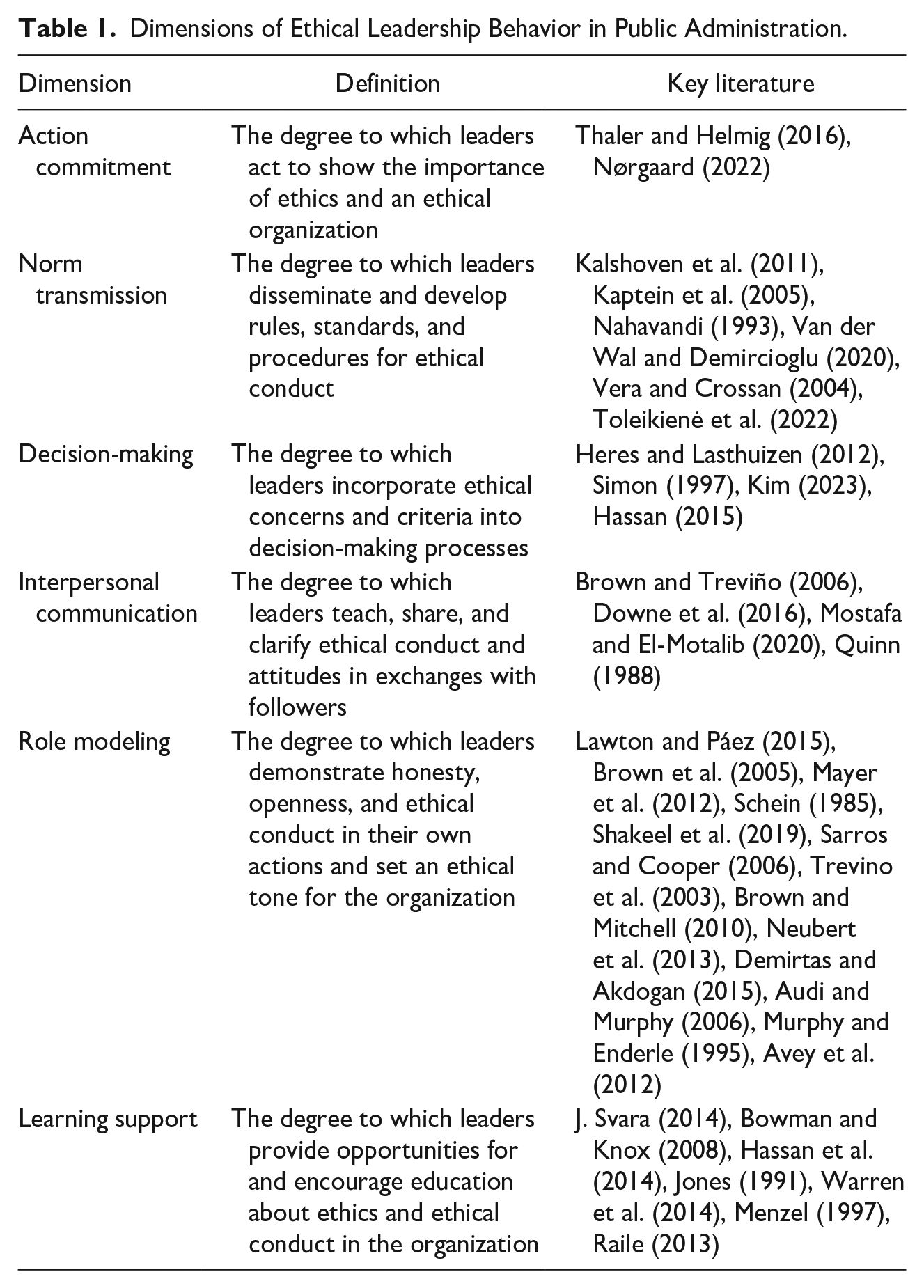
Our review suggests that there are six fundamental categories of activities in which public managers engage to realize ethical leadership in organizations. This study examines and tests these dimensions of ethical leadership behavior found in the literature. Table 1 summarizes the six categories. It presents, defines, and shows the literature related to each. Then, each category is discussed in more detail. We apply these six dimensions to the context of local government.
Dimensions of Ethical Leadership Behavior in Public Administration.
Action Commitment
The action-commitment dimension of ethical leadership behavior is the degree to which leaders act to show the importance of ethics and an ethical organization. An example of this in action is the development and use of organizational codes of conduct. Codes of conduct are organization-wide documents providing written guidelines on ethical behavior for management and employees alike. Typically, they prescribe conduct and how to deal with violations. Codes guide public sector organization employees to what is right or wrong behavior to ensure good conduct in the organization. A key part of ethical leadership is developing and establishing these codes to guide and stabilize the organization’s ethical culture (Eskridge et al., 2012).
The International City/County Management Association (ICMA) has a Code of Ethics, which consists of 12 tenets. Adopted in 1924, the ICMA Code of Ethics is defined as “the principles that today serve as the foundation for the local government management profession and set the standard for excellence.” When one becomes a member of the ICMA, they sign to certify that they will abide by the Code and are subject to its enforcement. A review of violations of the Code showed that it was more concerned with character than the acts of the violator (Eskridge et al., 2012).
However, research has examined organizational codes of conduct and their relationship to ethical leadership and suggests that the codes themselves may be less important for creating ethical values in an organization’s employees than their use by management. In their online sample of German public administrators, Thaler and Helmig (2016) found that codes of conduct do not influence government employees’ ethical attitudes or their behavioral intentions. Conversely, they showed that the development of codes by managers in exercising ethical leadership did affect employee views of ethical behavior. This rejects the notion that the promulgation of codes of conduct themselves is a solution to maintaining an ethical organization. Rather, they are most effective when used as tools of ethical leadership and by organizational leaders to show commitment to an ethical organization and prompt a positive impact on employees’ attitudes.
Research suggests that stakeholders have an impact on ethical leadership. Based on interviews with Dutch public servants, Nørgaard (2022) found that managers consider different approaches to ethical leadership depending on their stakeholders. The author found that managers used their organizational stakeholders as a reference point for promoting an ethical organization. For instance, when considering external stakeholders, hospital executives focused on sector-oriented ethical conduct, which is related to being politically loyal and professionally objective and acting in the public interest. Other hospital leaders, when considering internal clients, took a patient-oriented point of view in which the primary referents for maintaining an ethical organization are treating patients equally, caring for them, and following best practices for treating patients. The bottom line is that leaders’ views of how to maintain organizational ethics are significantly affected by their positioning regarding organizational stakeholders.
Norm Transmission
Another dimension of ethical leadership is norm transmission or the degree to which leaders disseminate and develop rules, standards, and procedures for ethical conduct. Ethical norms are the collection of a government organization’s explicit rules, regulations, and processes for ethical conduct and ethics reporting. Organizational leaders are responsible for communicating and clarifying roles, expectations, and performance goals so that subordinates know what they will be judged on and understand what they need to do to be successful (Kalshoven et al., 2011, p. 360). Leaders have the obligation to inform employees of ethical norms and their implications. Similarly, they have a responsibility to let employees know about changes and the effects of the norms.
The way ethical norms are disseminated is an essential factor in understanding ethical leadership. Promulgation of ethics standards can be done in various ways, including through employee training, communication, security measures, hotlines, as well as disciplinary and enforcement actions (Kaptein et al., 2005). Some public sector organizations study reporting by employees to monitor compliance with ethical norms. Ethical leaders can use this as information about how to better or more broadly communicate norms and understand ethical behavior within the organization. Ethical leaders periodically examine the levels of ethical misconduct and communicate this information as a way to take steps to reduce it. By periodically updating employees on standards and ethical improvements, leaders reinforce institutional learning of them (Nahavandi, 1993).
Ethical norms may be involved in and have an impact on operational, financial, and legal processes. Employee knowledge of organizational ethical policy can be important to an organization’s operational outcomes. When measuring ethical leadership in an empirical study of innovation in the public sector in Australia, Van der Wal and Demircioglu (2020) focused on the role of leaders’ ethical standards, formal guidelines or policies, and expectations and how they influenced innovative behavior. Their research showed that ethical leadership in those areas was associated with greater innovation in government organizations. One key goal of leaders propagating ethical norms is to set organizational limits for achieving organizational aims. Leaders can indicate how unethical behavior, even when it benefits the organization, will not be condoned (Vera & Crossan, 2004). A survey of Lithuanian municipalities showed that leadership’s use of ethical standards for local government organizations was necessary for a well-functioning municipality (Toleikienė et al., 2022). Council members and municipal administration employees not only expect behavior following ethical norms from the person leading the municipality, but they expect their administrative managers to use them to solve ethical problems.
Decision-Making
Decision-making is the degree to which leaders incorporate ethical concerns and criteria into their decision-making processes. Ethical leaders are expected to make sound ethical decisions (Heres & Lasthuizen, 2012). Leaders need to carefully weigh the consequences and ethical implications of their own decisions. The decision-making process involves various stakeholders, interests, and consideration of the implications of decision alternatives (Heres & Lasthuizen, 2012).
In addition, leaders must provide employees with the information necessary to make informed ethical decisions. They need to work with employees to ensure they are making ethical decisions. A key part of ethical leadership is influencing the “decision premises” of subordinates for ethical decisions to be made consistently across the organization and over time (Simon, 1997). A survey administered to 24 U.S. federal organizations found that having an ethics program in place created better ethical decisions in federal agencies. Robust ethics program operations both reduce the amount of unethical behavior and improve ethical decisions by management (Kim, 2023).
An analysis of survey data from a large state agency in the U.S. showed that ethical leadership creates an environment in which employees feel comfortable making decisions to act ethically and voicing their ethical concerns to management (Hassan, 2015). Ethical leaders value transparency in their decision-making and foster employee input. They are more likely to be receptive to employee inputs and pay close attention to the issues raised by employees, which provides information that improves decision-making. These findings highlight how by using ethical decision-making, leaders can create a sense of belonging for employees, which encourages their sense of responsibility. Under these circumstances, public employees are more likely to use an improvement-centered voice in organizational communication for decision-making (Hassan, 2015).
Interpersonal Communication
Interpersonal communication is how leaders teach, share, and clarify ethical conduct and attitudes in exchanges with followers. Leaders support an organizational environment in which employees can learn desirable behaviors, ethics codes, and professional norms. Leaders encourage followers to learn and develop. Babalola et al. (2019) argue that when leaders hold strong convictions that they are not willing to discuss, they signal that their ethical opinion is absolute and, therefore, not open for debate. This discourages desirable employee postures such as organizational citizenship.
Another study linked management communication on ethics in a public sector organization to a more desirable work climate for employees. Using structural equation modeling with a sample of Egyptian public hospital nurses, Mostafa and El-Motalib (2020) showed that nurturing ethics in public sector organizations increases the employees’ sense of work meaningfulness. Essentially, strong communication leads to improved work meaningfulness and work engagement for employees.
A significant part of ethical leadership is facilitating ethical change in others within the organization by motivating them to examine their behavior. Ethical leaders can use interpersonal communication as well as education and training, to emphasize self-awareness and self-improvement in others and help them discover and do the right thing for themselves, others, and the organization (Quinn, 1988).
Role Modeling
Role modeling is the degree to which leaders demonstrate honesty, openness, and ethical conduct in their own actions and set an ethical tone for the organization. Ethical leaders practice what they preach and show consistency between their beliefs and actions. They conform to moral principles, norms, and values and demonstrate exemplary moral behavior consistent with appropriate laws and codes (Lawton & Páez, 2015, p. 641). This conception is in line with Brown et al.’s (2005) widely adopted definition of ethical leadership as “the demonstration of normatively appropriate conduct through personal actions and interpersonal relationships, and the promotion of such conduct to followers through two-way communication, reinforcement, and decision making” (p. 120).
Leaders’ adherence to honest behavior reinforces followers’ mindfulness of moral standards. This occurs because leaders are attractive models due to their high position, rank, and status, and followers tend to emulate their behavior (Mayer et al., 2012). As Schein (1985) argues, role modeling, teaching, and coaching are primary embedding mechanisms organizational leaders use to create cultures.
An ethical leader has a strong, virtuous character (Shakeel et al., 2019), and their actions evidence this so that they are able to serve as role models. Ethical leaders make the morally right decision even when it is difficult (Sarros & Cooper, 2006). This indicates their character strength and conviction and signals their high commitment to ethical behavior in their organizations.
Many organizational decisions involve vague and ambiguous ethical dilemmas. Followers can reduce this ambiguity by emulating their leaders’ behaviors. Leaders set the moral tone in the organization with their exemplary behaviors, and their moral attitudes trickle down to their followers. Trevino et al. (2003) argue that individuals in power, like managers, must be seen as strongly moral persons or chance being viewed as unethical leaders, even if they are not. A strongly moral person who is not a strong ethical manager risks being seen as an ethically neutral leader, suggesting to employees that the leader does not prioritize ethics (Brown & Mitchell, 2010, p. 585). Research shows that leaders influence the regulatory focus of their employees, meaning that individuals adjust and align their mindsets and behaviors with the examples of leaders (Neubert et al., 2013).
Honesty is one of the central elements in the literature on ethics (Demirtas & Akdogan, 2015). Leaders are important in promoting ethical behavior in their organizations by being honest (Audi & Murphy, 2006). For example, not lying to the public about an organizational failure is an example of honesty. Qualitative studies also highlight the importance of openness and honesty in leadership behavior (Murphy & Enderle, 1995). Openly discussing ethical issues with subordinates increases their commitment to ethics. In an empirical study of adults across multiple organizations, Avey et al. (2012) found that ethical leaders promote employee psychological well-being, but employee voice plays a mediating role. The authors argue that when employees feel a sense of ownership due to their leader openly sharing information with them, being honest in interactions, and valuing honest relationships, they tend to experience a sense of meaning and develop a greater degree of ownership of their organizational actions.
One way to do this is to openly apply ethical standards and principles when working with employees. Another is to take the time to explain the importance of ethics to employees and reinforce them when they think and act ethically. Ethical leadership may result in employee and organizational transformation. It emphasizes organizational values, vision, and intellectual stimulation for employees as behavioral supports. Ethical leadership focuses on management that achieves high ethical aims by using these methods to influence followers’ ethical behavior (Brown & Treviño, 2006). Case study research of English local councils showed that the actions of leaders could be significant in fostering an ethical culture and boosting good conduct (Downe et al., 2016). Leaders who acted in ways that showed they valued ethical behavior in their local councils motivated ethical conduct in others.
Learning Support
Learning support is the degree to which leaders provide opportunities for and encourage education about ethics and ethical conduct in the organization. Ethical leadership should support organization-wide ethical learning as well as growth in employees, resulting in ethical conduct.
One of the ways to achieve organization-wide learning is through training. Ethics training requires resources and shows a leader’s commitment to an ethical organization. By investing in ethics training, leaders try to create strong cultures that promote values such as integrity, transparency, democracy, public interest, social equity, professional excellence, virtue, and accountability (J. Svara, 2014). Ethics training also reduces liability for the organization in case of alleged misconduct by employees. Ethical leaders are expected to demonstrate commitment to ethics training for these reasons.
Through ethics training, leaders make ethical awareness and thinking an integral part of an organization’s key processes and culture. Evidence shows that strong and well-implemented programs, combined with the critical support of organizational leaders as role models and enforcers (Bowman & Knox, 2008; Hassan et al., 2014), can drive a strong ethics culture in organizations (Jannat et al., 2022). Ethics training creates the capacity for making the right ethical choices by improving the accessibility to employees of morals and moral concepts (Jones, 1991). Comprehensive ethics training uses relevant models of the desired behaviors and reinforcement to support ethical behavior (Warren et al., 2014).
Public sector research supports the value of ethics training. For example, Menzel (1997) found that employees become more ethical when they are introduced to knowledge about ethics. When employees acquire the knowledge, skills, and ability to make ethical judgments, their self-efficacy or confidence increases. Knowledge about ethics topics influences perceptions of ethical climate and advice-seeking behavior in a positive way (Raile, 2013). By advocating ethics training, leaders help to establish an organizational culture that values ethical behavior. Moreover, the opportunity to participate in ethics training serves as a perceived contract between organizations and employees, creating an obligation to adhere to moral principles, values, and norms.
Research Design
Sample, Survey, and Data Collection
The study’s survey was developed based on a comprehensive review of available surveys in the literature, especially the ones administered to private sector executives. Considering a lack of validated ethics surveys in the public administration literature, it was necessary for us to benefit from the broader organizational studies literature.
We designed this study was designed in collaboration with the ICMA. The initial survey instrument was tested with a small sample of local government managers, and improvements were made based on statistical analysis and written comments of participating managers. The final instrument was distributed digitally through email to the managers by the ICMA.
ICMA administered the survey in 2022 to examine the views of practicing local government managers on ethical processes, leadership, and culture. The survey was open to respondents for 1 month, from February 28 to March 28, 2022. After that, four rounds of reminders were sent to increase the response rate. In total, the Chief Administrative Officers (CAO) of 3,218 local governments were surveyed. As a result, there were 724 completed surveys, representing a response rate of 22.5%. Of 724 respondents, 158 (21.8%) were female and 566 male (78.2%). 1
During the development phase of the survey instrument, we extensively reviewed the literature to determine the latent constructs to include in the specified model. The pilot study helped improve content validity of the constructs. Further, statistical tests confirmed convergent and discriminant validity of the latent constructs.
The response rate is characteristic for this type of surveys. A concern is with non-response bias. Since 75% of the local government administrators did not respond, this might raise concerns about the reliability of the results. ICMA did not mark responses by wave such as early and late responders (who tend to share characteristics of nonresponders). This is why we could not conduct a comparative analysis. Some empirical research, however, notes the lack of a strong relationship between nonresponse rates and nonresponse bias (Groves, 2006; Groves & Peytcheva, 2008; Olson, 2006).
Table 1 details the characteristics of both the local governments surveyed and the respondents by location (geographic division), governance (form of government), and size (population of locality). In addition, it presents a picture of how well respondents represent the overall population for each category. For example, in the category of geographic region, all areas have around a 20% response rate, with only one, Middle Atlantic, falling below 20%, and the highest being 25% from the Mountain region.
Similarly, as shown in Table 1, response rates from mayor-council (22.8%), council-manager (22.8), and county council-administrator/manager (24.5%) forms of government are all close to 20%, with the latter nearing 25% response rate. Although other government forms greatly exceed or fall short of this response rate, they have too few respondents to be considered in depth. For example, given the small number surveyed (7) but the high number of responses (3), the survey over-represents county commissions at 42.9%. The response rates of jurisdictions by population size also cluster around 20%. These range from an 18.8% response rate for local governments with populations of 5,000 to 9,999 to a 27.6% response rate for local governments with populations of 100,000 to 249,999. The surveyed jurisdictions appear to represent the different population sizes local governments serve.
Table 2 indicates that municipal and county government types have similar response rates of near 20%, with the former at 22.3% and the latter at 24.4%. Municipal governments make up a greater number of all respondents to the survey (640) than county governments (83), but this reflects the relative number of municipal and county governments in the U.S.
Responses to the Local Government Ethics Survey.
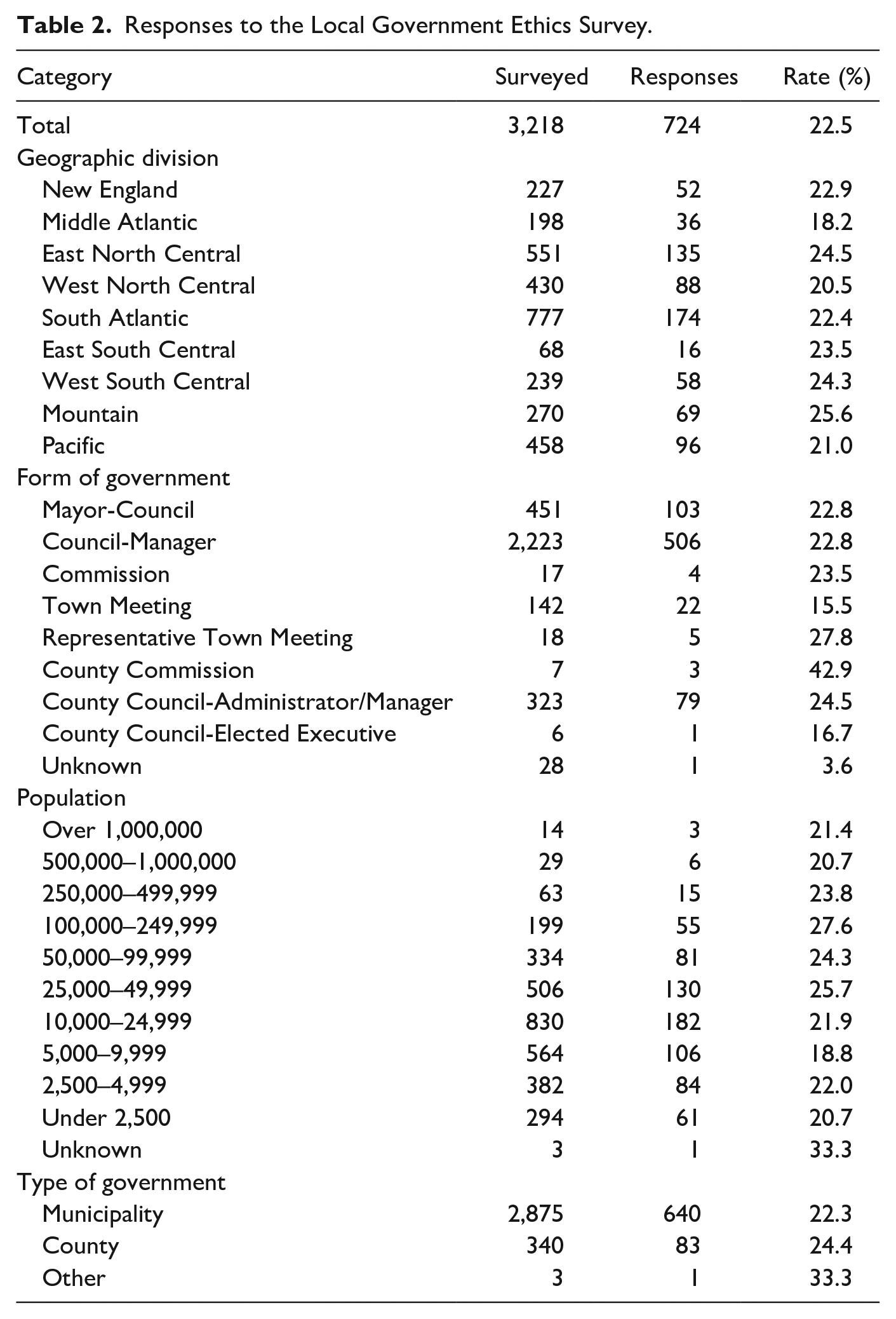
From our analysis of respondent data in Table 1, we conclude that the responses by respondent category effectively mirror this survey’s overall response rate of 22.5%. In addition, the overall sample of respondents to the survey is broadly representative of local governments in the U.S.
Data Analysis
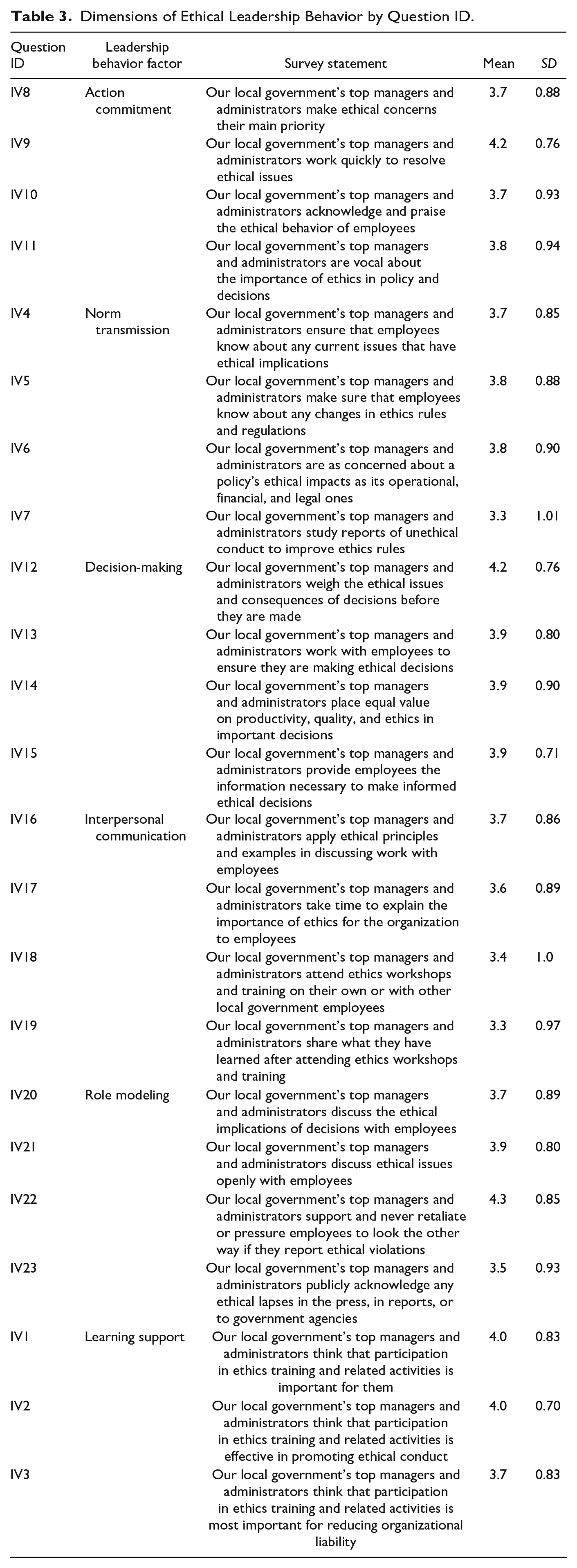
We specified a second-order measurement model to test our ethical leadership behavior theory based on the six behavioral dimensions discussed earlier. Prior to testing the second-order model, we conducted a Confirmatory Factor Analysis to see if each of the six first-order latent constructs is valid. Each of the survey statements is on a 5-point Likert scale. The results confirmed the validity of the model with adequate values of fit indices. The Likert-type survey statements used in our analysis are shown in Table 3, along with the mean and standard deviation values.
Dimensions of Ethical Leadership Behavior by Question ID.
Unlike exploratory analyses, in SEM researchers begin with an a priori model, and the test confirms if the model specified fits the observed data. An adequately fitting model provides empirical support for the theory underlying the model. Alternative models, however, are possible, and they might even fit better. SEM is particularly useful for building theories. Since the test partials out measurement errors when estimating model parameters, it is a robust statistical technique to use, especially with large datasets.
To evaluate the model fit to the data, fit indices must be reviewed. SEM programs generate a large number of fit indices. Yet, there is no consensus in the literature on which ones should be used to assess the goodness of the model fit. Kline (2015) suggests reporting at least four fit indices. Hooper et al. (2008) recommend reporting Root Mean Square Error of Approximation (RMSEA), Standardized Root Mean Square Residual (SRMR), Comparative Fit Index (CFI), and one parsimony index such as Parsimony Normed Fit Index (PNFI). Hu and Bentler (1999) propose a two-index format.
We used CFI and RMSEA to assess model fit because they are least affected by sample size (Fan et al., 1999). The values of comparative fit indices such as CFI indicate the proportion of improvement of the overall fit of the researcher’s model relative to a null model. The typical null model is an independence model in which the observed variables are assumed to be uncorrelated. For example, a value of 0.90 for CFI is interpreted to suggest that the relative overall fit of the researcher’s model is 90% better than that of the null model estimated with the same sample data (Kline, 2015, p. 129). The values of CFI should be at least 0.90 to suggest an adequate model fit. RMSEA reports how well the model, with unknown but optimally chosen parameter estimates, would fit the population covariance matrix. Values of RMSEA lower than 0.08 suggest an adequate model fit (MacCallum et al., 1996). Our model yielded an RMSEA value of 0.07, a CFI value of 0.91, and a PNFI value of 0.73, which is greater than the suggested threshold of 0.5. Figure 1 shows the parameter estimates. Loading of each of the six first-order factors is higher than 0.8 and statistically significant (p < .001). All indicator variables that tap their respective first-order latent constructs obtained loadings higher than 0.6 and are statistically significant. The model, as specified, fits the data adequately, and our hypothesis that six seemingly different yet interrelated dimensions are accounted for by ethical leadership behavior is supported.
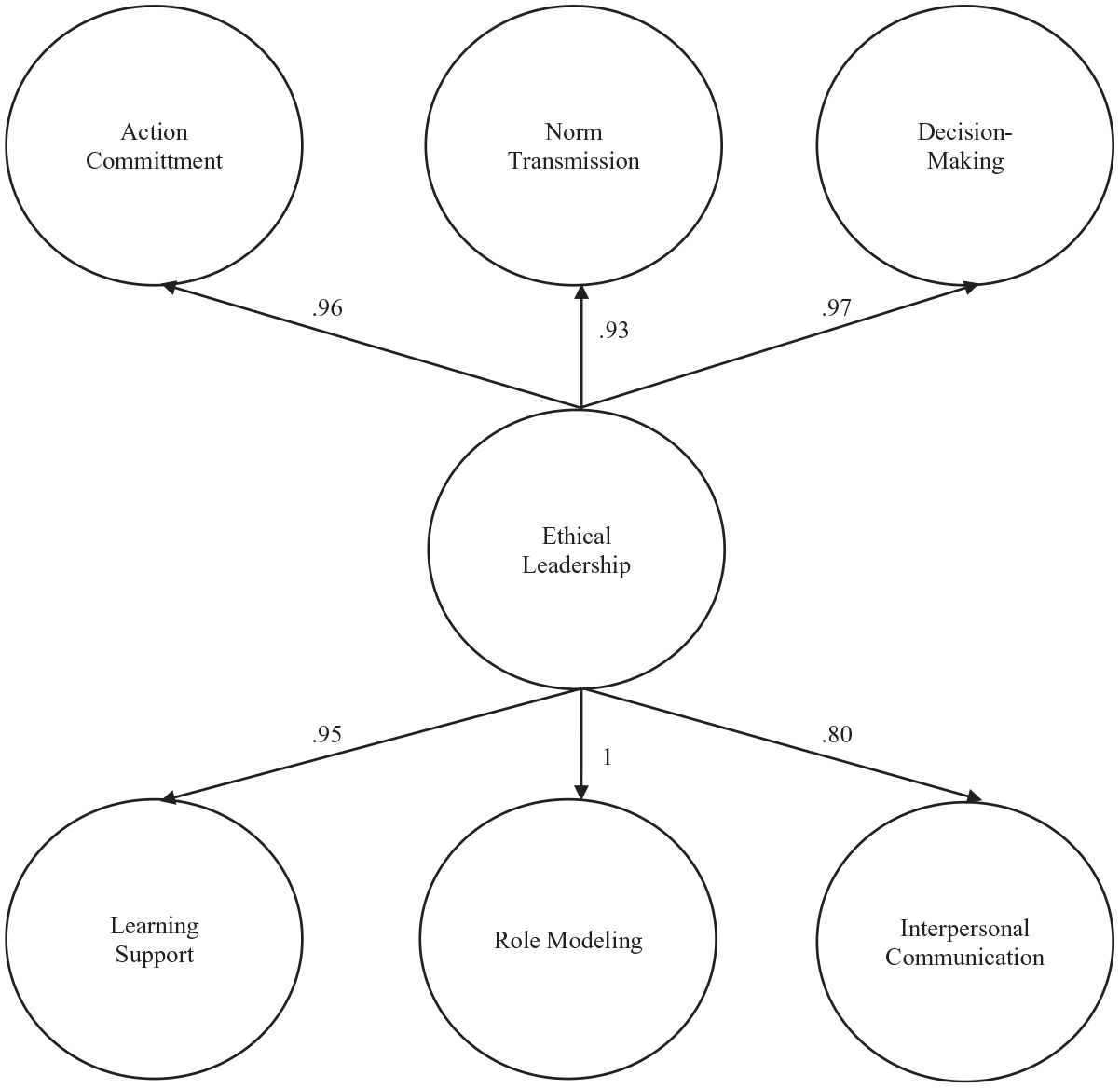
Dimensions of ethical leadership behavior in local government.
An important issue in self-reported survey research is the possibility of common source bias, which can distort substantive relationships when all study variables are collected from the same source (Podsakoff et al., 2003). The literature suggests several methods to rule out common source bias. We implemented the Common Latent Factor technique in SEM to accurately model the variance attributable to common source bias (Jakobsen & Jensen, 2015; Meier & O’Toole, 2013). The shared common variance was less than 33%, and the cutoff was 50%. We also performed Harman’s single-factor test and found that less than 42% of the variance was explained by one factor.
Our model obtains both convergent and discriminant validity. All indicator variables converged on their respective latent constructs with high and significant factor loadings. For the discriminant validity of the factorial model, we examined the correlations between the six latent constructs to see if they are sufficiently distinguishable. The inter-factor correlations ranged from .65 to .97, indicating that six latent constructs specified in the model are seemingly different yet interrelated. Only the correlation between supporting decision-making and role modeling was higher than .95. Dropping either decision-making or role modeling and repeating the test with the 5 first-order factors did not improve the model fit. Finally, scale reliabilities for each construct were inspected.
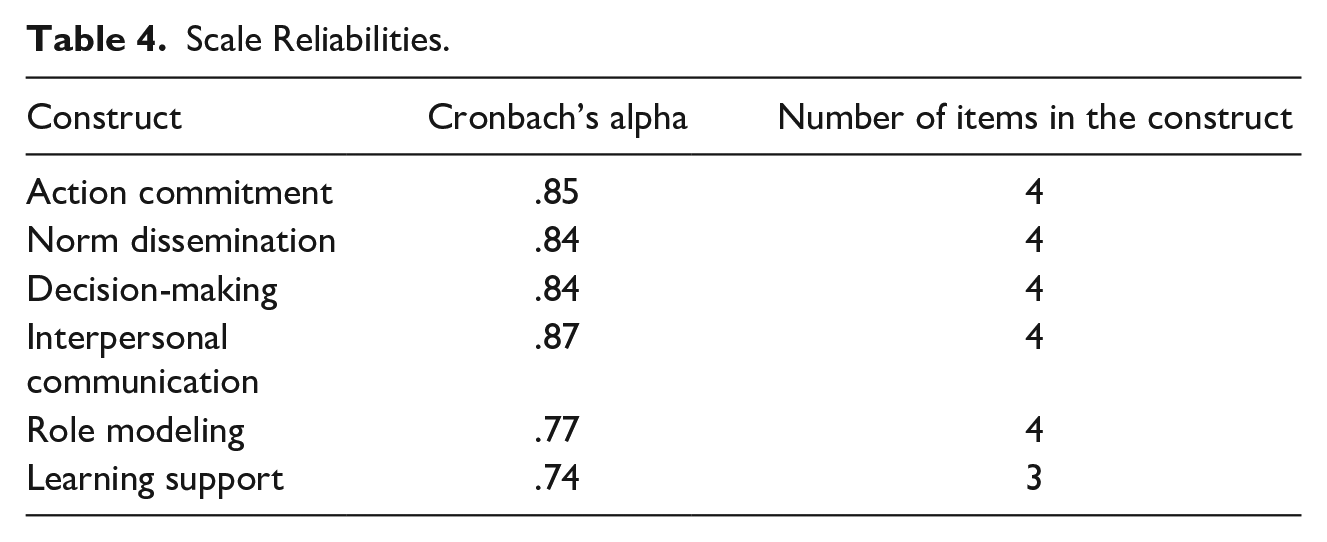
Cronbach’s Alpha values are reported in Table 4. 2 A major concern before testing a measurement model is to confirm the internal consistency of a scale that consists of several interrelated items. Scale reliability refers to a lack of random error, and using Nunnaly’s (1978) suggestion, a minimum value of .7 is considered sufficient to judge a scale as reliable. A meta-analytic study of 4,286 publications (Peterson, 1994) found that the mean coefficient alpha reported was .77. Four out of the six scales used in our measurement model have alpha values greater than .8. Two of the six scales exceed the recommended value of .7.
Scale Reliabilities.
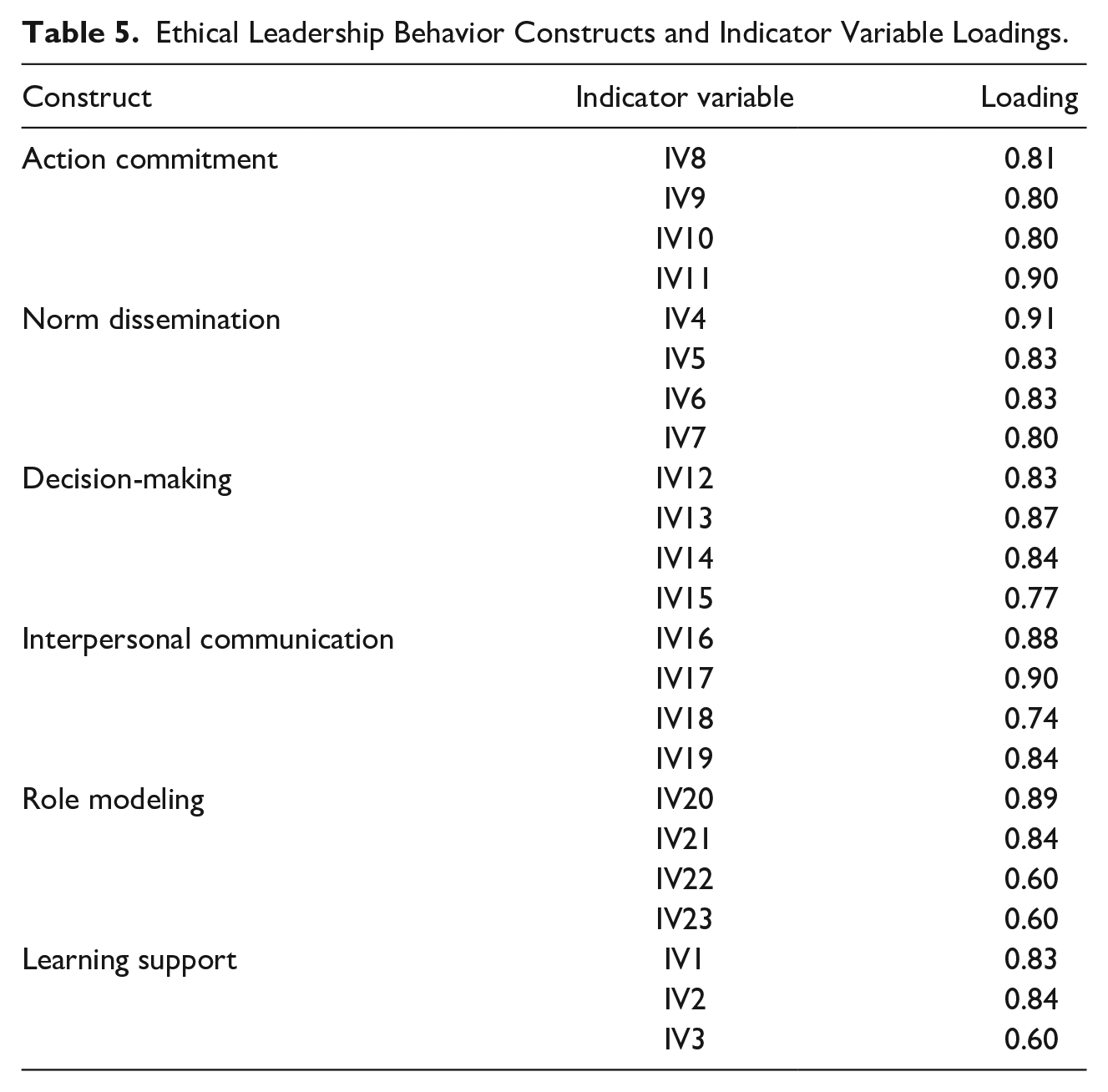
The variable loadings are shown in Table 5. Our measurement model includes 6 first-order factors. As reported in Table 5, each first-order factor has several indicator variables of its own. All indicator variables have high loadings between 0.60 and 0.91, and each loading is statistically significant at the .001 level.
Ethical Leadership Behavior Constructs and Indicator Variable Loadings.
The second-order measurement model was tested using the ML Estimation Method. The second-order model hypothesizes that the six interrelated dimensions are accounted for by a higher factor called ethical leadership behavior. The specified model converged after 13 iterations (chi-square: 1,116.721, p < .001).
Figure 1 shows the ethical leadership behavior model. As visually represented in the figure, we examine the existence of a second-order construct that can explain the correlations between the lower-order factors. Loadings of the first-order factors on the second-order factor are adequate, ranging from .80 to 1, and all are statistically significant at the .001 level. The test confirms that ethical leadership behavior accounts for the correlations of the six factors, each representing a set of interrelated leadership behaviors. In other words, the model empirically supports our theory that ethical leaders demonstrate certain behaviors. It finds that they act to build and maintain an ethical organization, communicate ethical norms, rules, and standards to followers, incorporate ethics criteria into decision-making, strive to develop the ethical capacity of their staff, serve as role models for employees, and invest resources and time in educating their followers about ethics.
The model as validated suggests that ethical leadership behaviors are all related. The literature may tend to emphasize one behavior over the other, commitment to norms (e.g., compliance-based ethics management models) or role modeling (integrity-based ethics management models), but substantively results of our test show that leaders need to incorporate both compliance- and integrity-related behaviors. Soft and hard measures of ethical management work together to define what leadership takes to promote ethical behavior. Dichotomizing rules versus leadership might provide an incomplete understanding about ethical leadership. Both action and relationship matter. Considering local resistance, lack of funding for ethics policies and reforms, political culture of the locality, and lack of effective oversight, it is critical for local government leaders to emphasize ethical content with their decisions, actions, communication, and role modeling. Our model demonstrates the importance of an integrative approach to ethics management by leaders. It is an approach that focuses not just on rules but also on action, not only on compliance assurance but also on integrity building, driven by both short-term reactive methods and by long-term developmental methods. As the results of statistical analysis unequivocally confirm, they are all correlated and constitute a more holistic approach to ethical leadership.
Discussion
Empirical studies of leadership are plentiful in the social science literature, but the ethical content of leadership behavior has received much less attention. Ethical leadership has been studied in business administration and psychology. Yet, there has not been as much empirical research on ethical leadership in public administration, and very little of it has focused on the local level. The research reported here contributes to the emerging empirical literature on the ethical dimensions of leadership and more specifically in local governments.
Through a survey of CAOs in U.S. local governments, our research models the activities that make up ethical leadership by local government managers and potentially those in other public agencies. Our SEM results show that all six factors culled from the public administration literature are essential and interrelated in understanding ethical leadership at the local level. Furthermore, our results suggest that each factor is important in approximating the content of ethical leadership behavior in local government management. The factors work together but not separately, and this is likely the same for other government managers. Although it focused on management behavior (self-reported) rather than management styles, our research supports Van Wart’s (2013) earlier research that ethical leadership is multifaceted.
It is not surprising that organizational local government managers associate ethics with their role as leaders (J. H. Svara, 2003). The notion of leadership is often linked with virtuous trait-based ideas like character, heroism, and outstanding achievement. Our study provides empirical support about how organizational leaders report acting to use their high visibility and organizational status to create positive ethical cultures. They do this through specific practices, which our research shows are categorized into related and reinforcing dimensions of ethical leadership behavior: system maintenance, norm dissemination, decision-making, follower development, role modeling, and social education. By furthering ethical actions and providing learning and development in ethics, managers in their role as organizational leaders form positive ethical climates and strong ethical cultures.
Ethical problems faced by organizational managers may be complex and controversial, even more so in public administration. Vague and ambiguous legislative mandates can be exacerbated by conflicting expectations of multiple stakeholders and shifts in the political environment and public opinion. Nonetheless, public administrators should figure out what actions are ethically sound to take in implementing policies and programs. Some, like Rohr (1989), prescribe a broad Constitution-centered approach to ethics and the practice of ethical leadership for public managers. For them, leadership education and training should center on the Constitution and U.S. Supreme Court rulings. Our study focuses on multiple dimensions of leadership behavior and types of information to incorporate ethical content. More like Bowen and Power (1993), our research suggests a communicative ethics process that requires leaders to consider various opinions, check self-serving biases, obtain feedback, and cooperate with others in ethical leadership.
Our ethical leadership model rests on a collective understanding of the responsibility for ethical behavior: ethical leaders play a vital role in making ethics everyone’s job. The six dimensions of ethical leadership point to this critical function: in the spirit of exemplary management, ethical leaders get things done through others but also contribute to the achievements at the local government level. This is consistent with Brown et al.’s (2005) understanding of ethical leaders.
Some limitations of this research should be noted. First, the number and scope of the survey questions that we could ask of the CAOs were somewhat restricted. Additional questions could help capture ethical leadership or augment ours. Second, the sample of CAOs have specific functions in local government, and this may limit the generalizability of our results to other governments or agencies. In the future, we plan to modify our survey instrument with what we have learned and examine other agencies or governments in the U.S. and other countries. Another possibility for extending this research is to use the model developed here to compare ethical leadership between the public and private sectors. We hope this could turn up interesting differences or even more important similarities.
Conclusion
This study provides analytical and quantitative insight into six dimensions of ethical leadership behavior by examining reports from practicing public managers. It focuses on these leadership dimensions in the public sector, using data from U.S. local governments. It makes two significant contributions. First, by looking at ethical leadership as distinct empirically based managerial behaviors rather than as a single abstract or philosophical notion, it is more descriptive of actual management practice than most studies and thus more related to management in general. Unlike other studies, it focuses on managers’ reports of their ethical leadership behavior rather than their style, psychology, or normative background. Thus, it avoids conjecture about personal morality, legal responsibility, or organizational legitimacy. Second, using data from local government managers extends our understanding of ethical leadership behavior, ethics, and management at the local level and thus across government generally. Because so much rides on trust in government, this is not only an important area of research but also a principal contribution of the study. How public servants can work ethically in the public interest and deliver services to local communities is of paramount interest to public administration.
Admittedly, ethical leadership is an inherently complex subject. Alternative models premised on different sets of factors should be proposed and tested in future research. These model-building efforts are fruitful in advancing theories and gaining deeper insights into this important topic. Our study aimed to fill a gap in the public administration literature by offering a theoretical model of ethical leadership and subjecting it to a rigorous test with comprehensive local government survey data. We recommend conducting more research on ethical leadership behavior, as public leaders are catalysts for change and should be selected with an understanding of that part of their jobs. This can provide a helpful roadmap for the recruitment and selection of future leaders, their training and development, and the effectiveness of leadership processes.
Footnotes
Data Availability Statement
Please contact the corresponding author for information about the data and specific analyses.
Declaration of Conflicting Interests
The author(s) declared no potential conflicts of interest with respect to the research, authorship, and/or publication of this article.
Funding
The author(s) received no financial support for the research, authorship, and/or publication of this article.
