



Abstract
Quasi-markets in employment services often follow social policy turns toward activation. Critics see this as no accident, arguing that marketization is intended to raise the odds that workfare policies will be implemented. Drawing on surveys of Irish frontline activation workers, this study harnesses a natural policy experiment whereby Ireland introduced a Payment-by-Results quasi-market alongside a parallel program contracted without outcomes-based contracting. Although the demandingness of activation remains modest in Ireland, the study finds that regulatory approaches are more common under market governance conditions, which in turn has been associated with significant workforce changes and stronger systems of performance monitoring.
Introduction
Recent decades have seen an unfolding trend across welfare states toward reconfiguring social security systems into vehicles for motivating employment. Summarizing decades of reform, Patrick (2017) argues that welfare has become “mobilised as a tool of governance” for reconfiguring citizens into “active” labor market participants (p. 293). This reform trend has accelerated since the financial crisis, proceeding along two tracks. The first is the so-called “activation turn” (Bonoli, 2010, p. 435) in social policy, an umbrella term describing the reconfiguration of labor market policies toward “supply-side employability interventions” (Whitworth & Carter, 2020, p. 845) focused on rapidly moving claimants into work. Within the vast literature on activation, a distinction is often drawn between enabling measures such as training and work experience programs designed to build skills and subsidies to support recruitment of the long-term unemployed, and demanding measures that try to stimulate employment through regulatory means such as tighter eligibility criteria for payments, benefit reductions, and sanctions for noncompliance with work-related conditionality requirements (Dingeldey, 2007). Whitworth and Carter (2020) argue that this demanding approach, also termed “workfare” or “welfare-to-work” (Bonoli, 2010; Dingeldey, 2007), has “become the standard welfare orthodoxy at the heart of international welfare systems,” motivated by governments’ pursuit of austerity and “desire to responsibilise individuals for their own welfare provision” (p. 845).
The second reform track that has gathered pace is the parallel “governance” (Bredgaard & Larsen, 2007) reforms in operational services that have unfolded alongside these activation dynamics. Of particular significance is the growth of “quasi-markets” in employment services which, Jantz et al. (2018) argue, have become a “striking feature” of welfare reforms across Europe (p. 322). Employability services that were once directly provided by state agencies are increasingly contracted from agencies competing in tendering processes to win clients and government contracts. The contracts, in turn, are often (though not always) performance-based in that providers are paid for the outcomes they generate rather than the services rendered. This competitive procurement of public employment services (PES) is underpinned by a New Public Management (NPM) orientation toward exposing public sector provision to market competition to stimulate innovation, enhance flexibility, and reduce costs. While NPM incorporates a range of related governance orientations, including corporate “goal driven” approaches based on steering agents through targets and performance monitoring, recent years have seen an intensification of “market governance” modes based on using “competition or results-based payments to motivate actors” (Considine et al., 2015, p. 23). However, these governance variants are often “hybridised” (Jantz et al., 2018, p. 324) in practice. Considine et al. (2015) observe how the conceptually distinct corporate and market governance modes are increasingly blended in practice such that they associate NPM with a hybrid “corporate-market” governance model (pp. 133–135). For instance, agencies that are contracted through Payment-by-Results may use corporate governance instruments such as performance monitoring to motivate employees to deliver payable outcomes for the organization. Accordingly, quasi-market reforms are argued to constitute processes of “double” (Considine et al., 2015, p. 30; McGann, 2021b), or even “triple” (van Berkel, 2013) activation that go beyond targeting the behaviors of claimants to using economic and other performance incentives to motivate those agents responsible for implementing welfare-to-work with jobseekers.
Ireland is among the latest countries to turn toward both activation and PES marketization. Since 2011, benefits have been cut and obligations introduced for claimants to job-search and participate in activation. Meanwhile, in 2015, a new JobPath employment service for the long-term unemployed was commissioned through competitive procurement and performance-based contracting. A key question for those who study the frontline delivery of activation concerns the intersection between these two reform tracks: whether formal social policy turns toward workfare are intensified by market governance implementation reforms. This stems from the long-standing recognition within street-level bureaucracy (SLB) research that policy rarely arrives “fully formed” but takes shape through how it is enacted by multiple actors at the ground level (Newman, 2007, p. 365). The field of SLB addresses the key role played by case managers and other administrative officials as not only program implementers but also policy producers who continue the process of policymaking as services are delivered. This was among the key insights of Lipsky’s path-breaking study on the dilemmas facing public service workers. Bureaucratic elites and political officials may determine major dimensions of welfare policies such as eligibility rules and payment levels, but lower-level workers still hold considerable discretion in determining the nature of services and perhaps, more importantly, the use of any sanctions required by their agencies (Lipsky, 2010, p. 13). Because governance modes change the conditions under which, and by whom, formal policies are determined at this micro level, they have important consequences for what shape policies eventually take. While “new ways of public management” (van Berkel & van Der Aa, 2005, p. 331) may be introduced under the pretext of administrative efficiency, they can also be “form[s] of policy politics” (Brodkin, 2011, p. i273) that bring about “far-reaching” (Bredgaard & Larsen, 2007, p. 288) changes of policy substance.
Drawing on a comparative analysis of Ireland’s “mixed-economy” of activation and “pluri-governance” model, this study harnesses a natural policy experiment to assess this criticism of market governance: that it reconfigures street-level practices to “raise the odds” that workfare policies will be enacted by street-level workers exercising “discretion in ways that enforce obligations and curtail deviance among the poor” (Soss et al., 2011, pp. i203–i204). The term “pluri-governance” is used to differentiate the commissioning of parallel services within the same administrative space via alternative governance modes, from the concept of “hybrid” governance, which describes elements of different governance modes (e.g., procedural, corporate, and market) being woven together into an overarching regime that is “hybrid in nature” (Benish & Mattei, 2020, p. 282). Rather than different governance modes being combined into one blended framework, different governance modes with alternative accountability instruments coexist in parallel as some services are coordinated by one governance architecture, and other services within the same administrative space are coordinated via another. This is currently the case in Ireland, where JobPath was introduced alongside the country’s existing network of Local Employment Services (LES).
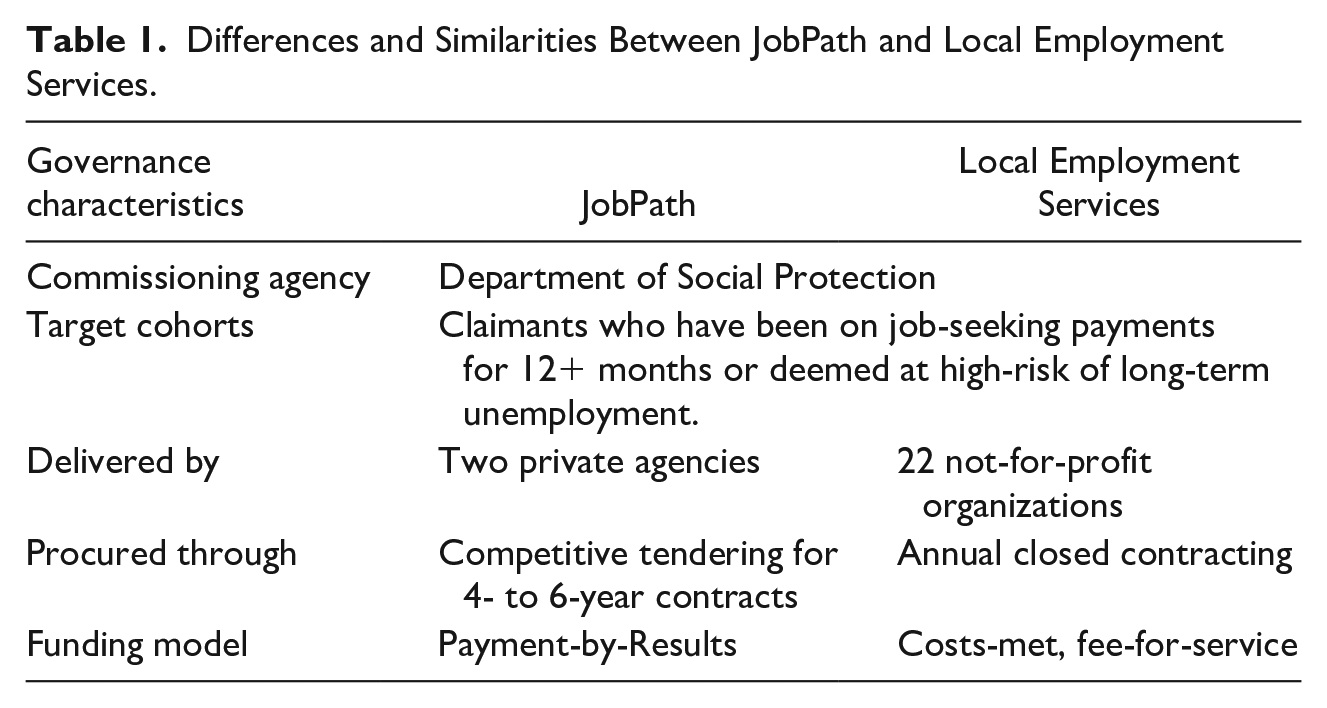
Both JobPath and LES provide PES to people on jobseeker payments under contract to the Department of Social Protection (DSP). However, whereas JobPath is delivered by private agencies on a Payment-by-Results basis, LES are delivered by not-for-profit organizations under “fee-for-service” contracts that are renewed through closed contracting. Taking advantage of this “pluri-governance” approach, the study draws on survey research with frontline JobPath and LES staff to consider whether market governance arrangements are associated with a more demanding model that emphasizes “work-first” and the enforcement of conditional obligations rather than the provision of enabling supports. This question has been explored in several previous studies, including the effects of market governance reforms on the frontline delivery of PES in Britain (Considine et al., 2020; Fuertes & Lindsay, 2016), Denmark (Bredgaard & Larsen, 2007; Greer et al., 2017), the Netherlands and Australia (Considine et al., 2015). However, those studies have predominantly involved analyzing changes in frontline delivery over time, following quasi-market reforms (e.g., Considine et al., 2015), or case studies of providers delivering performance-based contracts (Fuertes & Lindsay, 2016), rather than comparative research on frontline workers delivering PES under varying governance conditions but to the same client cohorts and under the same social policy settings. Moreover, the governance reforms analyzed in previous studies have often unfolded in the context of dynamic shifts in social policy such as the introduction of new conditionality requirements, making it difficult to interpret whether the changes observed reflect the effects of market governance reforms or higher-level social policy reforms to eligibility conditions and payment levels. Ireland’s “mixed-economy” of activation avoids this issue while also providing an opportunity to understand whether the relationship between workfare and PES marketization follows a different trajectory in a country that has historically been characterized by a less residualized welfare state model than its Anglophone counterparts (Hick & Murphy, 2020).
In what follows, Ireland’s “mixed-economy” of activation is introduced followed by a discussion of the intersections between market governance and workfare implementation. This discussion highlights two key pathways by which market governance reforms purportedly drive workfare practices: through subjecting street-level discretion to more intensive performance monitoring and precipitating workforce changes that result in the de-skilling and de-collectivization of activation work. Evidence for these two pathways, and for whether “workfarist” practices are more prevalent under market governance conditions, is then examined through a comparison of Ireland’s contracted PES workforces.
Ireland’s “Mixed Economy” of Activation
As Whitworth and Carter (2014) observe, the trend toward welfare-to-work “underpinned by NPM and quasi-marketisation” (p. 104) accelerated internationally after the financial crisis. Nowhere was this more apparent than in Ireland’s “rapid turn to austerity” (Dukelow & Considine, 2014, p. 56) following the arrival of the Troika (International Monetary Fund, European Central Bank, and European Commission) after the country’s bailout in late 2010. Until then, Ireland had resisted the workfare-style policies that were adopted by other liberal welfare regimes in the 1990s, and which gained traction in Europe over the early 2000s. It was considered a “laggard” (Murphy, 2016, p. 448) “at the edge” (Dukelow & Kennett, 2018, p. 486) of the family of liberal welfare states. Although regulation of wages and employment conditions was weak, welfare payments were high compared with other liberal regimes with “minimal monitoring and sanctions” (Cousins, 2019, p. 32). This remains the case. Pre-Covid, the rate paid to single adults on jobseeker payments was more than double paid to Universal Credit claimants in Britain (Hick & Murphy, 2020). Wiggan (2015) attributes this to years of “propitious economic growth” preceding the crisis, which had enabled successive governments to enhance benefits without developing a comprehensive activation strategy. Murphy points to Ireland’s system of proportional representation and corporatist social partnership model during the 1990s and early 2000s, as creating a policy culture of “incrementalism and consensus” (Murphy & Hearne, 2019, p. 452) that enabled unions and civil society organizations to veto workfare measures.
With the arrival of the Troika, policy making became centralized in new institutions such as the Ministry for Public Expenditure and Reform, and an Economic Management Council. The ideational case for reform was also crystallized in an early Organisation for Economic Co-operation and Development (OECD) review, which critiqued the high cost of existing job creation and training programs and urged the adoption of “a more coercive approach” (Grubb et al., 2009, p. 130). The Troika insisted upon welfare “modernisation” as a condition of bailout (Hick, 2018), committing the Irish Government to implement a new activation strategy that would provide greater work incentives coupled with major institutional reforms. In 2010, benefit cuts were introduced along with “penalty rates” (25% of total payment) for those on jobseeker payments if they breached “mutual commitments” mandated by the DSP. In 2013, eligibility conditions for lone parent payments were tightened, shifting tens of thousands of lone parents onto jobseeker payments and extending the range of claimants subject to activation (Cousins, 2019). Boland and Griffin (2018, p. 101) liken the degree of reform to a transformation of “the entire spirit of welfare” despite the use of sanctioning in Ireland remaining “very modest” (Cousins, 2019, p. 39) compared with other OECD countries. Nonetheless, between 2012 and 2017, there was an 11-fold increase in the number of penalty rates applied despite a fall in claimant numbers (Cousins, 2019).
These policy changes unfolded under a Pathways to Work strategy that also promised institutional reform to achieve “more regular and ongoing engagement with non-employed people” (Murphy, 2016, p. 439). Before 2010, the main PES were An Foras Áiseanna (FÁS), the national training and employment service, and the network of LES. These were established in the mid-1990s in parallel to FÁS to provide intensive guidance to those with greater employment barriers who participated voluntarily. This changed during the crisis, when jobseekers started to be referred directly to LES as part of their “mutual commitments.” LES have since become contracted on an annual “costs-met” basis (INDECON, 2018, p. iii) and subjected to more intensive performance monitoring by the DSP. Since 2016, all LES have an annual target of progressing 30% or more of their caseload into 30 hours of employment per week (INDECON, 2018, p. 10). However, in contrast to Ireland’s main contracted PES, no financial penalties or rewards are attached to their performance.
JobPath was commissioned at the tail end of Ireland’s turn to austerity to augment the existing PES capacity provided by the LES and the DSP’s newly established one-stop activation service, Intreo, which replaced FÁS in 2012. With a threefold increase in the number of claimants during the crisis, caseloads were exceptionally high (1,000 clients per case officer) by international standards (DEASP, 2019). Accordingly, in December 2013, bids were invited for a new Payment-by-Results program that closely resembled a neighboring PES quasi-market, Britain’s Work Programme (WP). Bidders were given indicative volumes of client referrals and invited to bid for registration fees and outcome payments (Wiggan, 2015). Two agencies, Seetec, a for-profit agency, and Turas Nua, a partnership between the U.K.-based Working Links and FRS Recruitment (an Irish cooperative), were awarded initial 4-year contracts to deliver JobPath in two separate regions, from July 2015. Coincidentally, both Seetec and Working Links also delivered the WP, which had been introduced by the Cameron government in mid-2011 and which served as the United Kingdom’s main contracted welfare-to-work program until it was disbanded in 2019.
Ireland’s JobPath differs from Britain’s WP in several ways. First, it is not internally competitive. Each provider enjoys “monopoly like delivery responsibility for half of the country” (Murphy & Hearne, 2019, p. 448). One reason the DSP eschewed an internally competitive market was the concern that having more than one provider per region would make the contracts less attractive to bidders, especially in the low-density regions outside Dublin. Having fewer providers also made contracts easier to manage, as the DSP had almost no experience in managing Payment-by-Results contracts. As such, JobPath violates one key condition by which quasi-markets are theorized to drive higher-quality services: a competitive market structure with “a sufficiently large number of service providers” (Struyven & Steurs, 2005, p. 214). The DSP’s primary means of incentivizing performance is the contract’s payment model. Outcome payments for placements of 13 to 52 weeks’ duration constitute 90% of the €3,718 total possible payments per client that providers can earn (DEASP, 2019, p. 17). However, the actual amount received by providers since JobPath commenced has averaged below €850 per client, due to the low number of participants who have sustained employment for 52 weeks. Of the 235,000 jobseekers who completed JobPath up until November 2020, just 22,000 sustained employment for 52 weeks (PAC, 2020). The DSP can also reclaim up to 15% of payments if providers achieve poor ratings in user-satisfaction surveys, giving it a mechanism to hold providers accountable not only for “hard” employment outcomes but also softer client-satisfaction and service-quality outcomes. However, it is a mechanism that has rarely been used in practice. In addition, JobPath incorporates a “grey” rather than “black-box” design insofar as there are minimum servicing standards that the government can enforce through caseload audits, spot checks, and monthly review meetings. For these reasons, Wiggan (2015) argues that JobPath represents “a more cautious embrace of market rationality” than Britain’s WP, which afforded providers wide discretion to determine the frequency of appointments and the nature of supports provided to clients. Nonetheless, compared with Ireland’s LES, it represents a radically different governance mode (see Table 1).
Differences and Similarities Between JobPath and Local Employment Services.
Market Governance and Workfare Policy Practices
It is important to acknowledge that quasi-markets are “not one thing” (Meagher & Goodwin, 2015, p. 3). Between and within countries, quasi-markets vary in terms of the degree to which they enable client choice, embed privatization, and are steered through competition rather than regulated by the state. For example, Gingrich (2011) distinguishes between state-driven, consumer-driven, and producer-driven markets, arguing that “[b]ehind a common language of markets lies a diverse set of outcomes” (p. 2). Greer et al. (2017) analyze marketization in terms of four aspects: openness to new participants, pricing mechanisms, the level of service standardization, and the frequency of transactions. The more opportunities there are for new entrants to join the market, to compete on price, and to determine what services are produced, and the greater the use of performance-based contracting, the more quasi-markets adhere to market governance principles. Conversely, if services are heavily specified by the state, purchased on a costs-met basis, and only infrequently tendered, then the degree of market governance weakens. In the case of JobPath, Wiggan (2015) characterizes it as a producer-driven market in that the balance of power over service delivery has shifted away from the state, not toward citizens or civil society, but toward commercial providers.
Acknowledging this distinction between quasi-markets and market governance, critics see market governance and workfare as “two sides of the same coin” (van Berkel & van Der Aa, 2005, p. 330). Both promote transitions to work by “looking ‘downstream’ at the motivation and action of frontline workers and service users” (Wright, 2012, p. 312). To this extent, workfare policies are underpinned by an individualistic problem figuration of unemployment that, critics argue, exaggerates the agency and responsibility of individuals for overcoming their exclusion from work. The problem is represented as the high value of out-of-work payments and claimants’ weak work-motivation, and the solution as “sanctions applied to the failure to find, or prepare oneself for, paid work” (Evans, 2007, p. 31). This feeds into policy narratives that stigmatize claimants as work-shy depends who must change their behaviors, while presuming that the targets of activation policies have the capacity to “alter their conduct to avoid a financial penalty” (Fletcher et al., 2016, p. 179). However, many of those who are targeted by such policies are long-term unemployed claimants who experience a range of structural and personal challenges (e.g., mental health issues, housing insecurity, and substance misuse) that can curtail their capacity to respond to behavioral incentives. Those who are long-term unemployed may require more “enabling and coping” (Lindsay et al., 2007, p. 539) services, based on coordinating supports from across agencies working in different policy fields so that employability support is integrated with housing, counseling, and other flanking social services (Fuertes et al., 2020). One concern is that the problem figurations of unemployment animating workfare discourses may narrow the strategies that caseworkers envisage with clients. Dunn’s (2013) study of WP advisors found that most believed that a “dependency culture” existed among their clients, and that significant proportions did not want to work (p. 355). Jordan (2018) sees this as unsurprising, arguing that workfare’s conduct-shaping dimension requires “by definition, a strong belief in the existence of a pathological, welfare-dependent underclass” (p. 71).
As further detailed below, the performance incentives and competitive pressures within PES quasi-markets may further hinder the provision of more holistic employability supports by focusing caseworkers’ attention on achieving short-term placement targets and limiting the resources at their disposal for responsive adaptations to clients’ needs (see Considine et al., 2020; Fuertes & Lindsay, 2016). The concern here is that marketization may function as a governance strategy for disciplining providers and caseworkers into enacting policy practices with “more perceptibly hard edges” (Brodkin, 2013, p. 6). There are at least two main pathways by which the administrative turn toward market governance purportedly produces these effects. The first concerns how the performance measurement orientation associated with marketization disciplines what Brodkin (2011) describes as “the calculus of street-level choice.” The second, which has received less attention in the literature on liberal welfare regimes, concerns how marketization leads to workforce changes that result in a reconfiguration of frontline workers’ professional identities and understandings of unemployment.
One way of approaching market governance is as a way of “taming” street-level discretion. As Brodkin (2011) argues, NPM principles “implicitly accept discretion” (p. i254) as an inherent feature of policy implementation but try to harness it through linking performance to economic incentives. Payment-by-Results models are an archetypal example. Although applied at an organizational level, it is assumed that agencies in quasi-markets will “in one way or another send signals to workers about the performance expected from them” (van Berkel & Knies, 2016, p. 63). Studies suggest that this performance measurement orientation leads caseworkers to adopt more regulatory approaches, as workers adapt by zoning in on “meeting performance targets and organizational needs” (van Berkel & Knies, 2016, p. 64). When performance is only counted in hard outcomes such as job placements, an emphasis on speed and “the quantitative rather than qualitative dimensions of job placements” (van Berkel, 2017, p. 29) may eclipse any disposition toward addressing clients’ personal issues or building their skills to enable more sustained employment. Interventions that would bring people closer to employment such as referring clients to housing or counseling services may become neglected if their immediate performance pay-off is uncertain. Similarly, performance incentives may motivate caseworkers to intensify behavioral requirements in clients’ action plans, or threaten sanctions, as a way of pressuring people to accept any job. For example, Brodkin’s studies of welfare-to-work agencies in Chicago found that performance monitoring based on work participation rates made it “that much harder” for caseworkers to exempting clients from obligations on grounds of need. Caseworkers who did so would “be called on the carpet” by supervisors and pressured “to justify any case that did not contribute to participation benchmarks” (Brodkin, 2015, p. 13).
Soss et al. (2011), again writing from the perspective of the U.S. experience, offer a more nuanced reading of how performance measurement produces sanctioning. Unlike accounts that see sanctions as a strategy that caseworkers deploy “to rid themselves of low-performing clients” (Soss et al., 2011, p. i219), they position sanctioning as a “last-resort” that caseworkers use when there is little else available to them to influence performance numbers. With little training and few resources for addressing clients’ real-life problems, caseworkers turn frustratedly to “sabre rattling,” hoping that compliance will follow and “performance numbers will improve” (Soss et al., 2011, p. i224). One well-documented way that caseworkers adapt to performance measurement is through “creaming” and “parking” clients: prioritizing those who are perceived as easiest to realize performance targets with while withholding meaningful support from those considered “harder-to-help.” The “profit-seeking” motive of private agencies may make such frontline “selection practices” (van Berkel & Knies, 2016, p. 64) especially likely in quasi-markets, as suggested by studies of creaming and parking under Britain’s WP (Carter & Whitworth, 2015; Greer et al., 2017).
Beyond performance targets, the exercise of street-level discretion is also shaped by workers’ professional identities “and categories of understanding” (Soss et al., 2011, i225). Maynard-Moody and Musheno (2000) argue that SLBs are torn between two identity-orientations, being simultaneously state-agents, accountable to public managers, and citizen-agents, who must respond to people’s real-life needs. In quasi-markets, frontline workers face even greater tensions about “who to serve” as they are not only accountable to citizens or the state but also to their commercial paymasters. Van Berkel et al. (2010) describe activation workers as “professionals without a profession” in that they are called upon to exercise judgment to personalize services but with little recognized professional body of knowledge or “systematic processes of professional accountability” (p. 462). While, in Nordic countries, activation is often subsumed within social work, PES welfare-to-work services are now increasingly delivered by workers with widely different occupational backgrounds (van Berkel, 2017). The “professionalism” of activation work may come under further pressure if commissioning PES via market governance instruments leads service delivery to be transferred toward organizations with weaker collective bargaining, lower pay rates, and fewer qualified staff in associated professional fields. This has been the experience in several countries that pioneered quasi-marketization, including Australia, where the proportion of PES staff who held university qualifications, were trade union members, or were older than 35 years markedly declined following the move toward full competitive tendering (Considine et al., 2015).
Market governance produces this “disorganisation of employment relations” (Greer et al., 2017, p. 108) for several reasons. Price competition leads bidders to reduce costs to win contracts. They do this through “lean staffing . . . and inexpensive programme content” (Vanes Fuertes & Lindsay, 2016, p. 536), hiring less-skilled staff to provide standardized services that can be implemented at scale for lower costs. Payment-by-Results reinforces these incentives “to siphon resources out of services” (Greer et al., 2017, p. 141) through the threat of no pay without cure and time-limited contracts. Providers shift these risks onto workers through their hiring and remuneration practices, while tightening “management control over the labour process” (Baines, 2004, p. 7) to ensure targets and payments are achieved. Within this work context, training in fields such as career guidance or social work may become eclipsed by a preference for “hiring staff on the basis of results orientation” (Greer et al., 2017, p. 111). This is not to say that professionalism is incompatible with a results-orientation per se. However, the disposition toward “results-oriented” staff, combined with pressures to reduce costs, may change the type of employees favored by providers. Lower-paid workers from occupations accustomed to performance monitoring (e.g., retail, sales, and telemarketing) may become prime recruits over experienced social workers or guidance practitioners. Workers “professional” identities thus become more porous, disrupting frontline workers “entrenched practices and ethos” (Maron, 2021, p. 3) but also, crucially, limiting expertise to personalize services to clients’ complex needs and employment barriers (Greer et al., 2017). As van Berkel (2017) argues, these changes in workers’ identities “might not be without consequences for welfare-to-work practices” (p. 23), given studies indicating that caseworkers’ understandings of unemployment are partly related to their occupational backgrounds. Research undertaken in both Nordic and liberal welfare regimes indicate that less experienced caseworkers, and those without social work qualifications, are more likely to blame unemployment on jobseekers’ lack of motivation and believe that clients “need to be forced into the workforce” than their more experienced and qualified peers who endorse more structural understandings of unemployment (Kallio et al., 2013; McDonald & Marston, 2008, p. 320).
Figure 1 summarizes this performance monitoring and workforce dynamics by which market governance purportedly catalyzes workfare practices. Both dynamics are conceptually independent. If we hold workers’ professional identities constant but reshape street-level choice through performance measurement, we should expect the production of more regulatory practices (and vice versa). In practice, however, the two mechanisms will likely intersect to be mutually reinforcing.
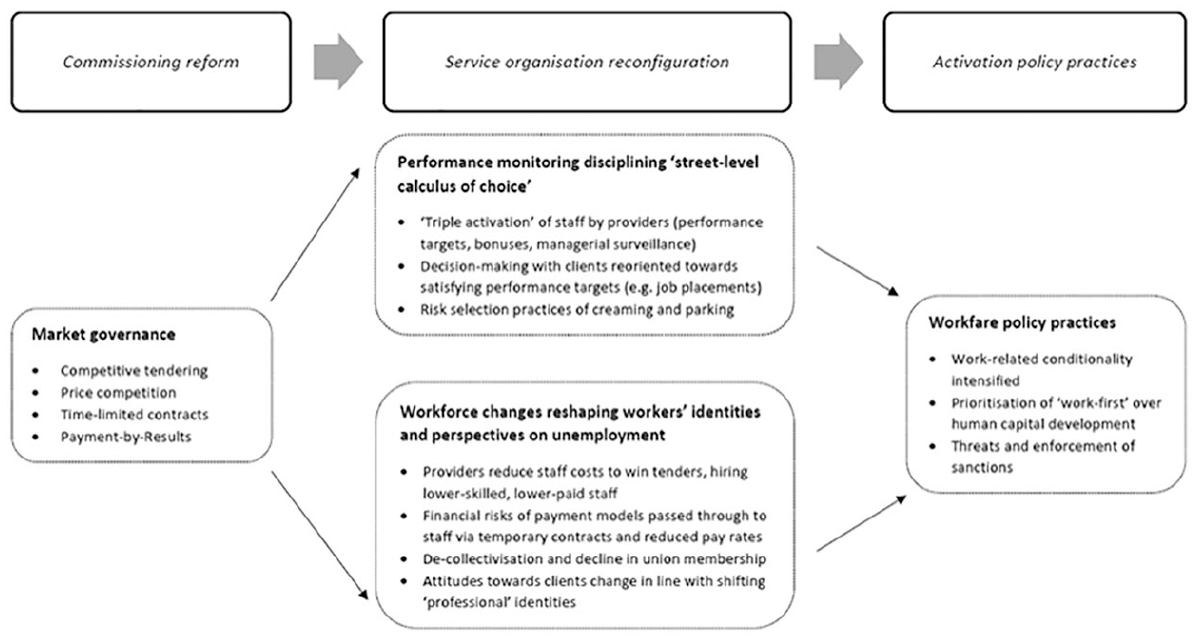
How quasi-marketization reshapes street-level practices to drive workfare policy practices.
Method
Ireland’s mixed economy of activation provides a rare opportunity to examine the impact of market governance on the street-level delivery of activation. The data reported are drawn from an online survey of frontline staff conducted between July 1 and August 14, 2020. The instrument was adapted from that used by Considine et al. (2015, 2020) to track the impacts of quasi-marketization on frontline welfare-to-work delivery in Australia, the United Kingdom, and the Netherlands in 1998 and, most recently, in 2016. The Irish version comprises approximately 60 questions concerning the characteristics of frontline workers—defined, in this study, as staff who “work directly with jobseekers to find employment”—their belief structures about unemployment, disposition toward using behavioral policy instruments, and various other aspects of how they do their jobs. The Irish instrument also included additional questions on workers’ occupational backgrounds and views about the generosity of welfare payments that were not included in previous versions of the survey.
All JobPath and LES providers were approached (and agreed) to participate in the survey, which was forwarded to all frontline staff. A total of 189 responses were received, including 77 (out of 253 potential) JobPath respondents and 112 (out of 170 potential) LES respondents. This number of responses is a function of the small size of Ireland’s activation workforce rather than a low response rate (the response rate was 66% among LES staff and above 30% for JobPath staff). Further demographic details on the respondents (e.g., age, qualifications) are reported below, along with data on a range of attitudinal and behavioral factors related to whether frontline delivery under market governance conditions is associated with the implementation of more demanding activation practices. Specifically, the study addresses whether there are any differences between JobPath and LES staff in terms of the degree to which they prioritize rapid labor market attachment when working with clients, or in their willingness to report clients for noncompliance with activation measures. It also examines whether there are any differences in terms of their patterns of working with other social service providers such as addiction and housing services, which we would expect to be largely neglected within workfare-oriented models. Moreover, to explore the dynamics of quasi-marketization, the study also explores differences in the identities (qualifications, beliefs about clients) and systems of performance measurement that LES and JobPath staff work under.
SPSS software was used to analyze these data, and differences in responses between groups were tested for statistical significance at the 5% level. Where the dependent variables were continuous, the Mann–Whitney U-test was used. This is a nonparametric equivalent to the independent-samples t-test that can be used to test whether differences in the dependent variable for two independent groups are significant even where data are asymmetrically distributed. Differences in the mean ranks rather than medians are reported due to the a-similarity in the shape of the distributions of LES and JobPath responses on the dependent variables. Where dependent variables were ordinal, Fisher’s exact test of independence was chosen due to the small number of responses on some items, which precluded using chi-square tests.
Relying on frontline workers’ self-reports as indicators of differences in value orientations and practices is not without its limits. One issue is the problem of recall bias and potential for responses to be skewed by participants’ optimistic self-assessments. Another issue, well known from SLB bureaucracy research, is that there is often a gap between what people report and what they actually do (Jerolmack & Khan, 2014). Although these issues of recall bias may conceivably differ between the LES and JobPath respondents, it is assumed that any such effects will be generalized across the sample and will not undermine the value of the overall comparative analysis. Similarly, in relation to any concerns about the timing of data collection, which was shortly after Ireland’s economy reopened following the first wave of the Covid pandemic. These unique public health circumstances may mitigate against drawing any comparisons between this study data and similar data collected in other countries or at different (more typical) times. Nonetheless, the LES and JobPath respondents completed the survey during the same period and faced with the same public health and economic conditions.
Findings
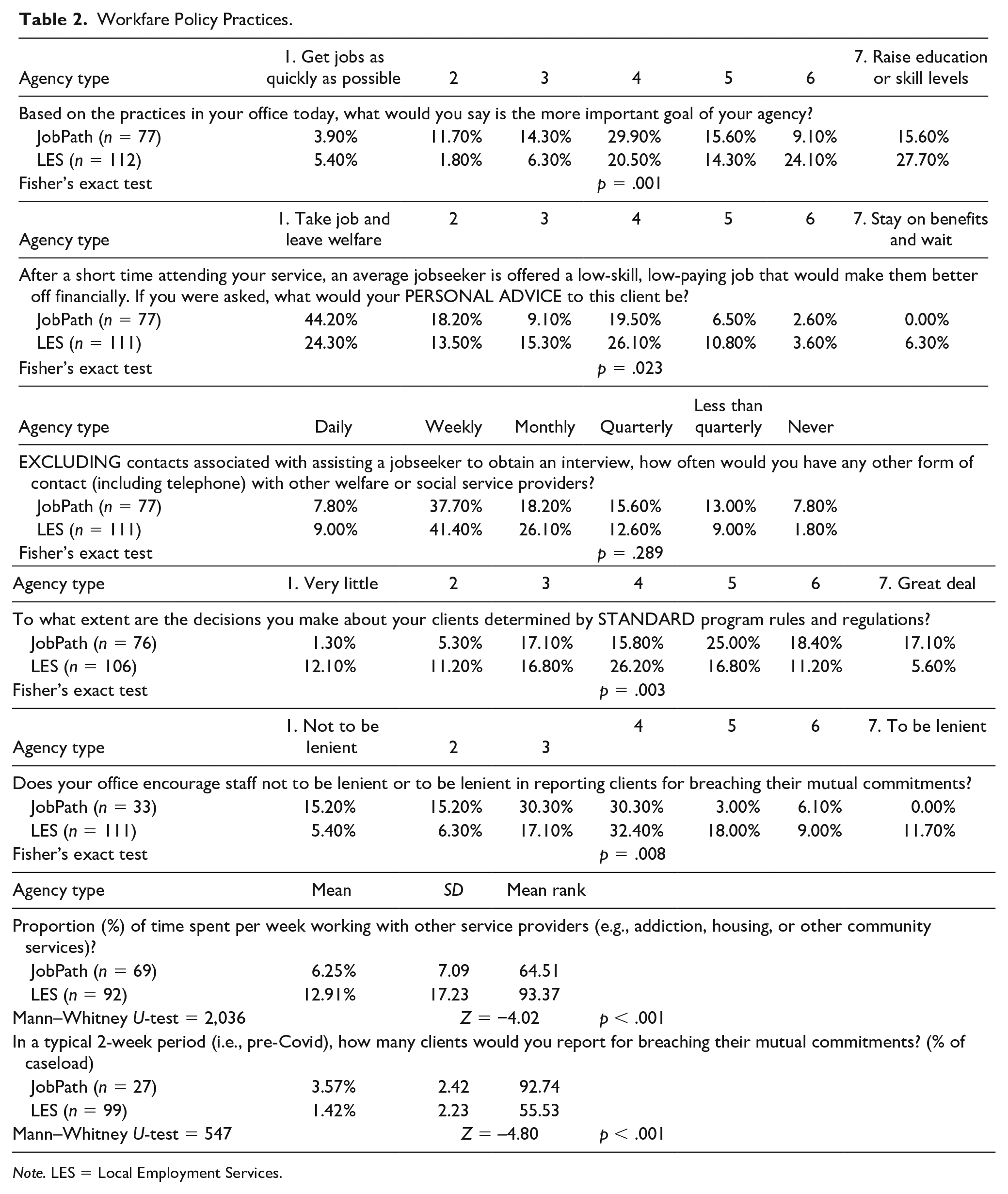
Table 2 reports the findings of items tracking the extent to which caseworkers are oriented toward demanding activation. Two aspects of a demanding activation model are considered. First, whether caseworkers are “work-first” in their approach in terms of prioritizing rapid job placement over supporting clients to build their skills or working to address personal issues and complex barriers to employment. Second, whether caseworkers are regulatory in their approach in terms of being rule-bound in their decision-making and reporting clients in cases of noncompliance with conditionality requirements. Although the nature of the data does not permit drawing causal inferences, it does suggest that a disposition toward demanding activation is more prevalent among those delivering PES under market governance conditions.
Workfare Policy Practices.
Note. LES = Local Employment Services.
When asked which is the more important goal of their agency—to get clients into jobs as quickly as possible or to raise clients’ education or skill levels—just less than 30% of JobPath respondents reported that rapidly placing clients into employment was the more important goal of their agency. This compared with fewer than 14% of LES respondents, the majority of whom (66%) reported that raising clients’ education and skill levels was the more important goal of their agency. These differences in response were statistically significant, as were the differences in how LES and JobPath staff responded to the question about what their personal advice would be to a client who is offered a low-skill, low-paying job that would make them better off financially. Respondents were asked to indicate, along a 7-point Likert-type scale, whether they would recommend clients “Take the job and leave welfare” or “Stay on benefits and wait for a better opportunity.” The question, with its focus on low-skilled, low-paid employment, is designed to track whether workers prioritize rapid labor market attachment over welfare. Overall, most respondents indicated a “work-first” orientation although JobPath staff tended to report a stronger “work-first” orientation than their LES counterparts. More than 44% of JobPath respondents reported that they would advise clients “take the job and leave welfare” in the strongest possible terms compared with just 24% of LES respondents. Conversely, more than 20% of LES staff reported that they would advise staying on benefits and waiting for a better opportunity compared with just 9% of JobPath respondents.
Other proxy indicators of whether workers are narrowly focused on “work-first” are provided by the questions concerning respondents’ frequency of contact with flanking social services such as housing and addiction services. We would expect “work-first” oriented staff to focus less on addressing clients’ personal issues and therefore to be in less frequent contact with flanking social services. As shown in Table 2, LES staff report marginally more frequent contact with other social services (e.g., addiction, housing, and community services), although this difference is not significant. However, the amount of their time that LES staff report spending each week, on average, working with other service providers (almost 13%) is more than double that reported by JobPath respondents. This difference is statistically significant, although one interpretation could be that JobPath staff have less need to engage with external social services due to such services being available within their own organizations. However, this is unlikely to be the case in practice because both JobPath providers are specialist employment agencies that do not deliver any other welfare or social services. So, they are unlikely to provide nonvocational support to jobseekers from within their own organizations.
The data in Table 2 also include several items concerning the degree to which caseworkers perceive that their decision-making with clients is rule-bound, as well as their disposition toward reporting clients for compliance breaches. For example, when asked whether their decisions are determined by standard rules and regulations, 60% of JobPath respondents indicated that this was the case compared with only a third of LES respondents. This difference was statistically significant, suggesting that JobPath staff adopted a more rule-bound stance with clients. This was further reflected in how JobPath and LES staff responded to questions about sanctioning. When asked whether their office encourages staff to be lenient in reporting clients for noncompliance, 61% of JobPath respondents but fewer than 29% of LES respondents indicated that they were encouraged not to be lenient. Respondents were also asked to indicate the number of clients that they would usually report for noncompliance in a typical (i.e., pre-Covid) 2-week period. To control for differences in the number of clients on respondents’ caseloads, and whether respondents worked on a full- or part-time basis, this number was converted into a percentage of respondents’ caseload. On average, JobPath staff indicated that they would usually report 4.8 clients, or 3.6% of their caseload, for noncompliance in a typical 2-week period. This was considerably higher than the average of 1.4% of their caseload reported by LES staff. These differences in response to the two question items related to sanctioning were statistically significant but should be interpreted cautiously. JobPath advisors generally see clients more frequently (every 2 or 3 weeks) than LES mediators (monthly). Jobseekers therefore face potential compliance breaches more frequently under JobPath than LES. Also, one JobPath agency did not permit its staff to be asked about sanctioning because of concerns about the political sensitivity of the results.
Accountability and Performance Monitoring
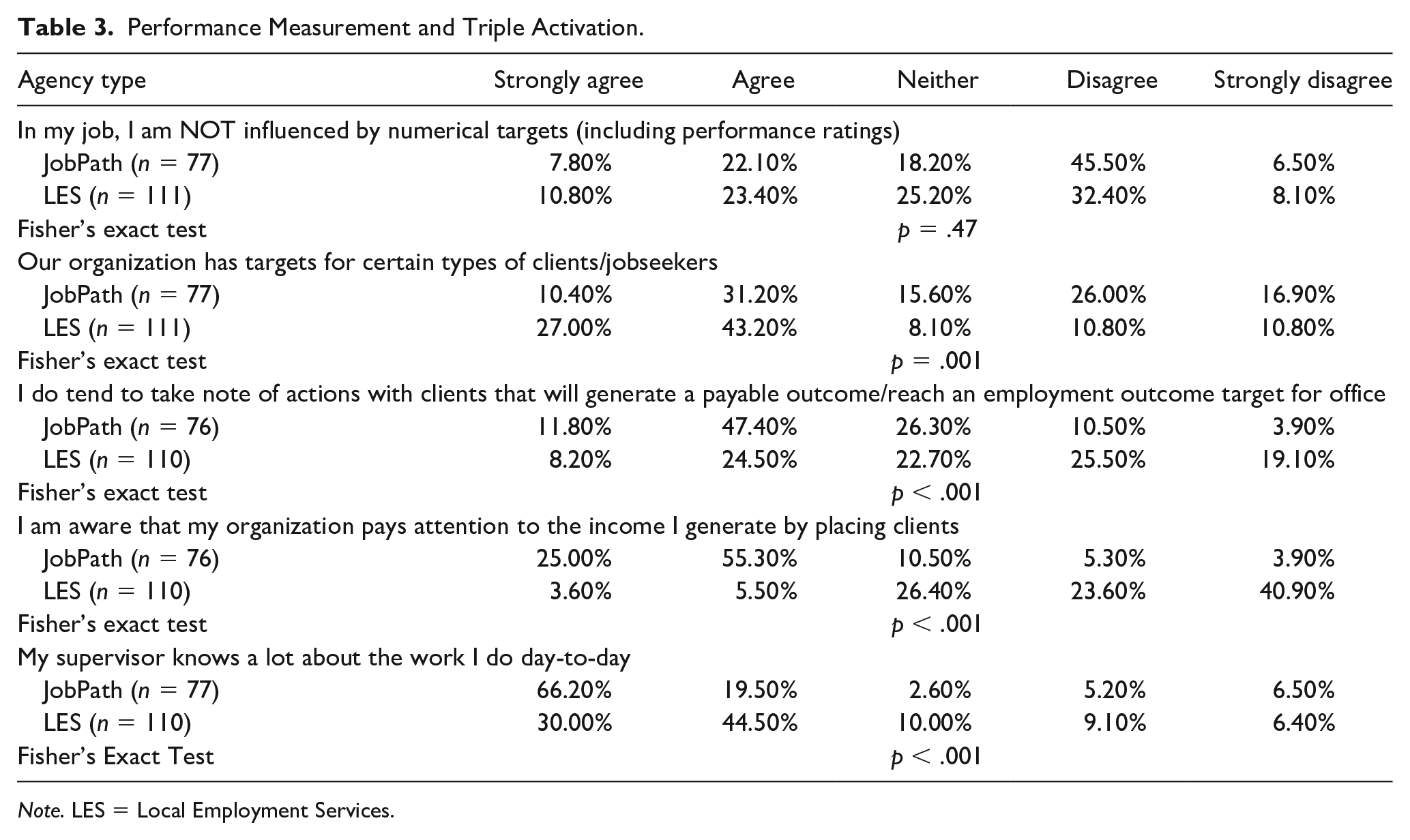
The data reported above accord with the presumption that steering PES delivery via market governance tends to be associated with more regulatory activation practices at the street-level. However, they tell us little about how or why market governance instruments produce these effects. One theory, we have seen, is that the performance measurement orientation associated with marketization disciplines the choice architecture facing street-level workers to increase the likelihood that frontline workers will adopt a more demanding, work-first approach. Although the survey data do not allow us to determine whether the performance monitoring of frontline staff causes workers to be more demanding in their approach, they do afford us insights into the nature of the accountability regimes that JobPath and LES staff work under and the ways in which they differ. This is shown in Table 3, which reports the findings on five survey items related to the level of performance monitoring and supervisory oversight that frontline workers perceive they are subject to and the degree to which performance targets influence their decisions with clients. With the exception of the question about the extent to which respondents believe they are influenced by numerical targets, the differences between JobPath and LES staff on these items are all statistically significant. In relation to JobPath, the data provide strong evidence for what van Berkel (2013) describes as “triple activation”: where agencies whose performance is monitored by the purchaser apply this performance measurement orientation internally to their staff to “activate” them to achieve targets. Indeed, a high proportion of both JobPath and LES respondents agree or strongly agree that their organization has targets for certain types of jobseekers. Where the two workforces differ is in relation to their reported tendency to take note of actions with clients that would satisfice a performance target or payable outcome, and their awareness of the monetary value of their actions being monitored by their employer. For example, just 14% of JobPath respondents disagreed or strongly disagreed that they tended to take note of actions with clients that would generate a payable outcome or satisfice an employment target, compared with 46% of LES respondents. Indeed, the overwhelming majority of JobPath respondents (59%) reported that they tended to take note of such actions, whereas 80% (compared with fewer than 10% of LES respondents) agreed or strongly agreed that their organization pays attention to the income they generate by placing clients.
Performance Measurement and Triple Activation.
Note. LES = Local Employment Services.
These differences in response are not surprising given the Payment-by-Results nature of the JobPath contract, but they do suggest that the financial incentives embedded within the contract are filtering down to the frontline. What is perhaps more surprising is the difference in supervisory oversight reported by JobPath compared with LES staff. When asked about the level of supervisory oversight they are under, two thirds of JobPath staff “strongly agreed” with the statement “my supervisor knows a lot about the work I do day-to-day.” This was more than double the proportion of LES staff (30%) who strongly agreed with this statement. In short, compared with LES staff, JobPath staff report being more likely to take note of actions with clients that will achieve a performance target or payable outcome, being more cognizant that their employer pays attention to the income they generate from placing clients and, overall, feeling under a greater level of supervisory oversight.
De-skilling, De-Collectivization, and Other Workforce Changes
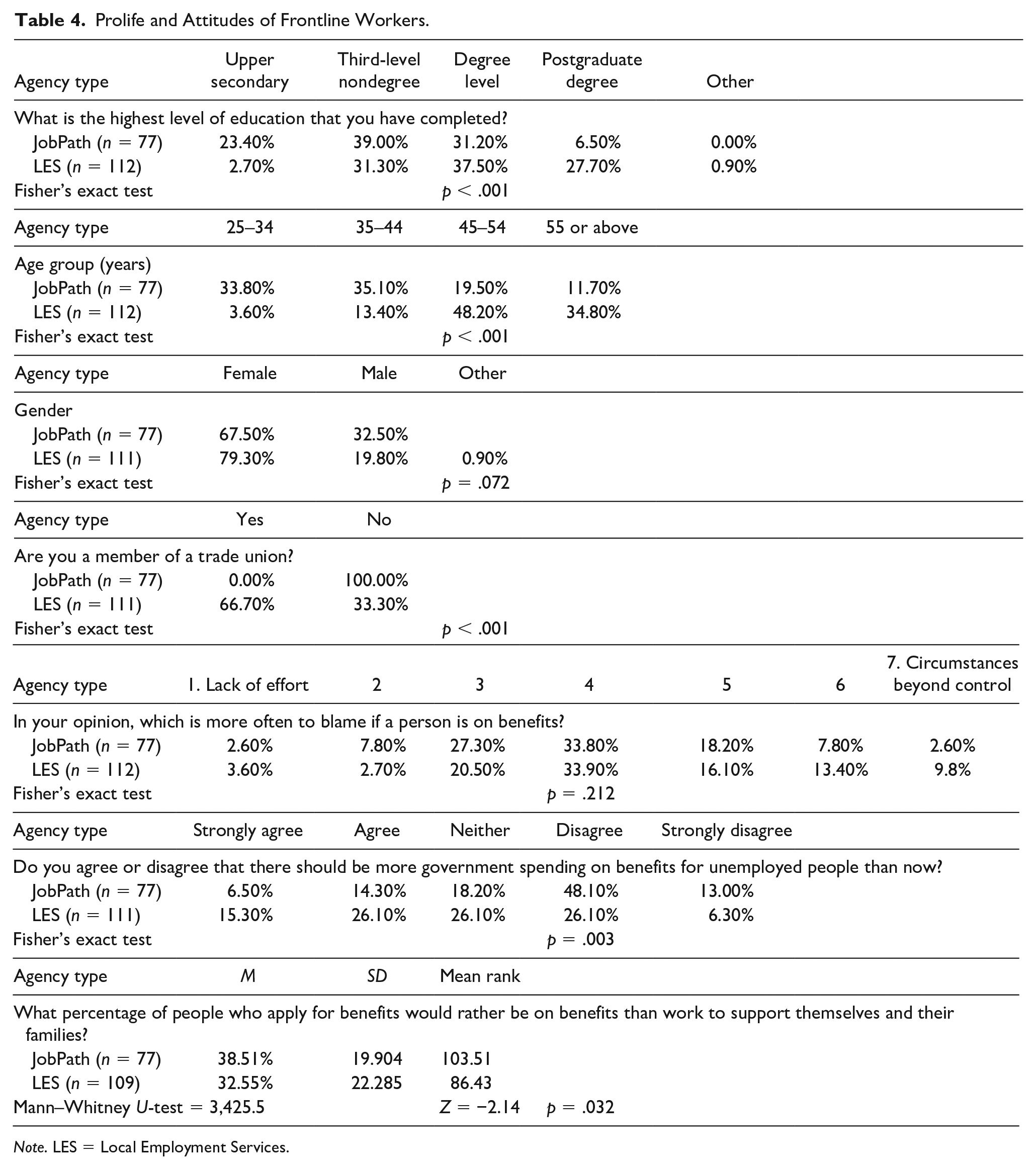
Besides intensifying the level of performance monitoring that frontline workers are subject to, another important way in which market governance supposedly restructures street-level practices is through its effects on the composition of the frontline workforce. As we have seen, critics argue that marketization transfers service delivery toward providers with lower-paid, lower-skilled, and nonunionized workforces (Greer et al., 2017). In the case of Ireland, JobPath was an entirely new program introduced to augment pre-existing PES. So, the commissioning of PES via marketization did not displace the existing PES workforce as such. Nonetheless, as Table 4 shows, the survey data indicate that the profile of those delivering PES under JobPath differs significantly from the profile of those who work in LES, and in ways that are consistent with concerns about an association between marketization and a de-skilling and de-collectivization of frontline PES staff.
Prolife and Attitudes of Frontline Workers.
Note. LES = Local Employment Services.
Most notably, none of the JobPath staff surveyed reported membership of trade union, compared with two thirds of LES staff. Similarly, the age and qualification levels of the two frontline workforces were also markedly asymmetric. The vast proportion of LES staff (at least two thirds) held a university degree and were aged 45 years or above. In contrast, fewer than 38% of JobPath staff held a degree-level qualification and nearly a quarter had no post-secondary qualification. JobPath staff also reported being younger, with three quarters below 45 years of age. This aligns with data, reported elsewhere (McGann, 2021a), on the industries that frontline workers indicated working in previously. In the case of JobPath, 26% of those surveyed indicated that they had worked in the retail or hospitality sectors before joining employment services compared with just 5% of LES staff. A further 17% reported that they had previously worked in financial and insurance activities compared with just 4% of LES staff. By contrast, the predominant industries that LES staff reported having worked in prior to employment services were administration and support services (30%), health and social work activities (18%), and education (12%). The proportions of JobPath staff that reported working in these industries prior to employment services were 17%, 12%, and 3% respectively.
In addition to significant differences in union membership, qualification levels, age, and occupational profile, the data also show differences in JobPath and LES staff’s normative understandings of welfare and unemployment. These were explored in the survey through a combination of items asking respondents to reflect on the reasons why they perceived most jobseekers were claiming benefits, whether they attributed this to a lack of work motivation, and whether they supported greater government spending on benefits for the unemployed. As shown in Table 4, when asked “which is more often to blame if a person is on benefits—a lack of effort on jobseeker’s part or circumstances beyond their control,” 38% of JobPath respondents attributed being on benefits to jobseekers’ lack of effort compared with 27% of LES respondents who held this view. Conversely, 39% of LES respondents but fewer than 20% of JobPath respondents attributed being on benefits to circumstances beyond jobseekers’ control. However, these differences were not statistically significant although the differences between LES and JobPath respondents on the other attitudinal items reported in Table 4 were. For example, when asked to estimate the proportion of people who apply for benefits who they consider would rather be on benefits than work, JobPath respondents estimated that, on average, 39% of claimants would rather be on benefits than work to support themselves and their families. LES respondents, by contrast, gave an average estimate of below 33%. Likewise, when asked about the sufficiency of government spending on unemployment benefits, only one in five JobPath respondents agreed or strongly agreed that spending on benefits for the unemployed should be increased, compared with more than 41% of LES respondents. Indeed, the overwhelming majority of JobPath respondents (61%) disagreed or strongly disagreed that there should be more government spending on benefits for the unemployed, whereas only 32% of LES staff were against greater spending on benefits for the unemployed.
Discussion and Conclusion
Compared with other liberal welfare regimes, the demandingness of activation in Ireland remains light. This is a legacy of Ireland’s pre-crisis welfare state model, which was less residual and more orientated by the provision of generous income supports and optional training programs than its Anglophone liberal counterparts. Nonetheless, since 2011, the country has turned significantly toward a more demanding activation model and, as in several other countries, this has been swiftly followed by market governance implementation reforms. Critics see this as no coincidence, arguing that activation and market governance are “cut from the same neo-liberal cloth” (Soss et al., 2013, p. 138). Just as workfare treats claimants “as individual units of (paid) labour which need to be financially incentivised to sell their labour,” market governance treats delivery agents “as market agents which need to be financially incentivised to place people in paid work” (Shutes & Taylor, 2014, p. 217). And this process of “double activation” bears “down hard on street-level practices, often in ways that emphasise workfare’s regulatory features” (Brodkin, 2013, p. 12). This arises partly from how the intensification of performance monitoring under marketization redirects street-level discretion toward the achievement of short-term targets over and above responding to clients’ needs. But, it is also connected to workforce changes associated with marketization that have implications for the qualification and experience levels, as well as worldviews and normative understandings, that caseworkers bring to the street-level delivery of activation.
Ireland’s mixed economy of activation provides a rare opportunity to gain insights into the relationship among market governance, workfare practices, and changes in the labor processes and accountability regimes within which the frontline delivery of PES is embedded. Although generally considered to be a liberal welfare regime, the country’s commencement along the double path of welfare-to-work and NPM reform is still nascent. As such, this study offers a window into the capacity of market governance reforms to reshape street-level practices in the short-term and in cultural contexts that have historically been resistant to workfare discourses. It also enables the analysis of implementation and governance reforms to be separated out from the effects of parallel activation turns in social policy due to Ireland’s “pluri-governance” commissioning model. While it is not unusual for activation programs to be contracted via different approaches within countries, this usually takes the form of either regional differences in commissioning (cf. Wiggan, 2015) or alternative contracting models for programs dealing with different cohorts. It is rare to find a quasi-market coexisting in the same policy space and targeted at the same cohorts as a program commissioned by the same purchaser using neither competitive tendering nor Payment-by-Results.
The study finds clear practice and organizational culture differences between the frontline delivery of PES under market governance and non-marketized conditions. No doubt these differences partly stem from the specific history of Ireland’s LES and how they were established in the mid-1990s to provide intensive guidance services for the long-term unemployed oriented by a voluntary engagement model and an emphasis on re-skilling to promote mobility in depressed local labor markets. As Whelan (2021) argues, the LES’ original ethos was based around a “supportive and informal environment where people seeking employment could discuss their personal relationship with the world of work and their specific labour market challenges” (p. 92). The compulsion underlying the workfare model is anathema to the guidance model that the LES were originally anchored in. However, initiating such cultural change within provider organizations through reconfiguring workforces is precisely one of the reasons why market governance implementation reforms are aligned to workfarist activation. As Bredgaard and Larsen (2007) argue, shifting delivery responsibility to agencies and workers whose worldviews are more amenable to deploying behavioral incentives “may be one of the intended political motives behind the reforms” (p. 294).
Although the nature of the data do not permit establishing a causal link between market governance and the enactment of more demanding activation practices, they do provide strong prima facie evidence that workfare-style policies are more likely to be evident under market governance conditions. Compared with LES frontline staff, JobPath staff are more likely to prioritize “work-first” over skills development; they spend less time working with flanking social services such as addiction and housing services (that might be required to enable more enabling forms of support), and appear less lenient when it comes to reporting clients for breaching conditionality requirements. Moreover, the findings show that two of the key mechanisms by which marketization purportedly produces these effects are evident in Ireland’s Payment-by-Results quasi-market. The first is the management of frontline workers through a more intensive performance-measurement orientation. We observe this in JobPath staff’s heightened awareness of being subject to daily supervisory oversight and of the “commodity” status of their achievements with clients being tracked by their employer. More than this, they also report internalizing this performance-measurement orientation when it comes to the decisions taken with clients.
The second important dynamic that emerges strongly are the differences in professional identities and attitudinal frames between those delivering PES under market governance conditions and those delivering the community-based LES. The former are nonunionized, younger, and less likely to hold university qualifications, with significant proportions having previously worked in sectors such as hospitality, retail, and financial and insurance activities. Their belief structures about welfare and unemployment are also “harder” in that JobPath staff perceive that higher proportions of claimants would rather be on benefits than work, and higher proportions of JobPath staff oppose increasing benefits for the unemployed. These are the kinds of attitudinal frames underpinning the demanding “work-first” activation model, although an important limitation of the associational analysis reported in this study is that we cannot establish if the associations observed are in fact causally connected.
Given the multiple pathways between the market governance of PES and street-level workers’ disposition toward implementing workfare practices reported in this study, further analysis using regression-based approaches is needed to establish the strength of the association between the different factors and the enactment of workfare policy practices. For example, whether the relationship between quasi-marketization and frontline workers’ disposition toward workfare practices is primarily mediated by the association between market governance and differences in frontline workers identities and normative attitudinal frames, on one hand, or by the association between market governance and more intensive systems of performance measurement and monitoring, on the other, cannot be determined from the analysis. This is a question for further study, although it is likely that these two dynamics are inter-related (see Greer et al., 2017, pp. 106–111). Labor process changes that result in activation workers becoming de-skilled and de-collectivized will amplify and reinforce the sensitivity of workers’ decision-making to the influence of performance monitoring. Similarly, the study did not account for other possible explanations as to why market governance implementation reforms tend to motivate the pursuit of more demanding activation practices on the ground.
One issue not addressed is the influence of caseload sizes on frontline workers’ behaviors and dispositions toward clients. Elsewhere, quasi-marketization has been shown to lead to higher caseworker-to-client ratios as larger caseloads afford providers a way to reduce their costs (Considine et al., 2020). High caseloads may intersect with performance pressures to raise the odds of risk selection practices (van Berkel & Knies, 2016) as well as caseworkers favoring “speed-over-need” (Brodkin, 2011, p. i266). A further consideration is the extent to which the differences reported in this study between marketized and non-marketized activation workers are unique to Ireland’s “mixed economy” of activation. Would we expect them to be replicated in other countries? As noted previously, quasi-markets are not homogeneous in form and can vary substantially in terms of the degree to which they are steered through market governance instruments. The impact of quasi-marketization on street-level practices may vary substantially in state- or consumer-driven rather than producer-driven markets. Further international comparative research on the impact of difference governance modes on frontline practices is needed to address this question. Studies of the impact of governance changes over time have contributed much in this regard (cf. Considine et al., 2015), although a limitation of such studies is that the governance changes they examine frequently occur in tandem with substantive policy reforms. For example, the shift to “black box,” Payment-by-Results contracting under Britain’s WP coincided with significant legislative changes under the 2012 Welfare Reform that intensified welfare conditionality and toughened sanctions. Hence, it is difficult to disentangle whether the changes in frontline practices observed reflect the filtering down of top-level policy reforms or the impact of governance modes on sharpening how policies are produced at the street level. What this study has been able to achieve is a synchronous comparison between marketized and non-marketized implementation structures within the same policy settings. It adds to the existing body of literature on the intersections between market governance and demanding activation in liberal regimes. But it advances this literature by integrating into the analysis not just the disciplining effects of performance monitoring on street-level choice but also the more subtle ways in which market governance reforms may reconfigure who is exercising street-level discretion in the first place.
Footnotes
Acknowledgements
The views expressed are those of the author alone. Neither Maynooth University nor the European Commission is responsible for any use that may be made of the information in this article. The author would like to thank Mary P. Murphy, Nuala Whelan, Phuc Nguyen, and two anonymous reviewers for their constructive feedback on earlier drafts, not to mention the frontline staff who took time out to participate in this research. The author would also like to thank Mark Considine, Jenny M. Lewis, Siobhan O’Sullivan, and Phuc Nguyen for supporting this work and allowing an Irish replication of their surveys of frontline employment services staff.
Declaration of Conflicting Interests
The author(s) declared no potential conflicts of interest with respect to the research, authorship, and/or publication of this article.
Data availability

Funding
The author(s) disclosed receipt of the following financial support for the research, authorship, and/or publication of this article: This research has received funding from the European Union’s Horizon 2020 research and innovation program under the Marie-Sklodowska-Curie grant agreement no. 841477.
Author Biography
Michael McGann is a Marie Sklodowska-Curie Fellow in the Department of Sociology and Social Sciences Institute at Maynooth University. He specialises in street-level bureaucracy and the governance of activation, with a particular focus on issues related to welfare-to-work and the marketisation of public employment services. He is the guest editor (with Mary P. Murphy) of a recent special issue of Administration on ‘Ireland’s activation turn-Ten Year’s on’ and co-author of the forthcoming book Buying and Selling the Poor: Inside Australia’s Privatised Welfare-to-Work Market.