




Abstract
In contemporary public governance, leaders of public organizations are faced with multiple, and oftentimes conflictual, accountability claims. Drawing upon a survey of CEO’s of agencies in seven countries, we explore whether and how conflictual accountability regimes relate to strategic behaviors by agency-CEO’s and their political principals. The presence of conflictual accountability is experienced as a major challenge and is associated with important behavioral responses by those CEO’s. This article demonstrates empirically how conflictual accountability is related to (a) controlling behaviors by principals, (b) constituency building behaviors by agencies, and (c) a general pattern of intensified contacts and information processing by both parties.
Introduction
The contemporary world of public governance is characterized by multiplicity in a dual sense. On one hand, the execution of many public tasks has shifted upward, sideward, or downward (Hooghe & Marks, 2003) to a large variety of agencies that fulfill public tasks while enjoying arm’s-length relationships with elected politicians (Dommett & MacCarthaigh, 2016; Pierre & Peters, 2020). On the other hand, these agencies often find their de facto discretion and autonomy restricted by the existence of dense webs of accountability (Page, 2006) in which they are held accountable by central governments as their principals yet also have to cope with (de facto) accountability claims from many others, such as regulatory authorities, courts of audit, clients, and societal stakeholders. This creates one of the prominent accountability challenges for executive organizations in contemporary governance: coping with the conflictual expectations emanating from a multiplicity of “accountability forums” (Bovens, 2007; Martin et al., 2018) who operate on the basis of divergent institutional logics (Romzek & Dubnick, 1987; Thomann et al., 2018).
The dominant stream in the public administration literature relates the multiplicity of accountability to a range of problems. It often features as a disorder (Koppell, 2005) leading to dysfunctional outcomes. The “problem of many eyes” (Bovens et al., 2014: 11) has for instance been identified as the root cause of technical disasters (Romzek & Dubnick, 1987), dysfunctional organizations (Koppell, 2005), policy failures (Halachmi, 2014), feelings of shame and embarrassment (O’Connell & Yusuf, 2018), and as a dilemma for street-level bureaucrats (Thomann et al., 2018). The basic assumption is that multiple accountability produces conflicting expectations for decision-makers with dysfunctional effects on various aspects of their behavior. There are, however, also studies that highlight the potential advantages of multiple accountability (Schillemans & Bovens, 2011; Scott, 2000; Willems & Van Dooren, 2012). Here, conflictual expectations are not seen as problematic per se, but, rather, as stimulating more reflective and thorough decision-making processes which produce “better” outcomes in the sense that those agencies integrate more relevant values into their decisions. Conflicting values and expectations are key in both streams, yet the latter stream interprets the effects of multiple accountability on behaviors more optimistically.
While the challenges of multiplicity and conflictual accountability pressures have often been noted in the public administration literature, empirical insights are so far scattered, at times contradictory and often unconnected. Against this background, this study aims to further our understanding of the behavioral effects of conflictual accountability in settings of delegated governance. The purpose is to study the effects of conflictual accountability on behaviors of leaders in agencies and their counterparts in ministries.
We aim to make three contributions. We first of all aim to make a small but significant conceptual contribution by distinguishing conflictual accountability from multiple accountability. Many public administration studies on accountability explore the tensions arising from multiple accountability relations, mechanisms, or institutions (Posner, 2002; Romzek & Dubnick, 1987; Thomann et al., 2018; see Supplemental Appendix 4 for an overview). In these studies, multiplicity is often coterminous with conflictuality. This, however, need not necessarily be the case. In principle, multiple accountability “forums” (using Bovens’, 2007, concept) can in principle hold similar or conflictual expectations of what an agency should do. We therefore distinguish between the multiplicity of forums and the conflictuality of their expectations: a distinction with important empirical relevance, as we will see in this article.
Second, although many studies explicitly or implicitly state that conflictual accountability has major effects on the behaviors of decision-makers in public administration (Halachmi, 2014; Koppell, 2005), those effects have not been identified and studied systematically. This article therefore aims to further our understanding in a more systematic way by focusing on two important behaviors of decision-makers which can be affected by a conflictual accountability environment. We first look at patterns of interaction. Put simply, with whom do they talk? (cf. Busuioc & Lodge, 2016; Flinders & Tonkiss, 2016; Wood, 2015). We then look at information processing in decision-making. Again put simply, how thoroughly do they read and inform themselves when taking decisions? (cf. Aleksovska, 2019; Hall et al., 2017; Schillemans & Busuioc, 2015). Insights from behavioral sciences are included to develop these behaviors theoretically.
Third, most empirical accounts of multiple or conflictual accountability are based on stand-alone, qualitative case studies (Willems & Van Dooren, 2012; Yang, 2012) without comparisons across countries or counterfactuals. To further our knowledge beyond the (relevant) specifics of cases, we have therefore studied conflictual accountability and its behavioral effects in seven countries through original data collection. We surveyed the highest ranking managers (“chief executives” or “CEOs”) of agencies at arm’s length of government in Australia, Denmark, the Netherlands, Norway, Sweden, Switzerland, and the United Kingdom. We measured the extent to which CEOs experienced their external accountability context to consist of multiple salient accountability forums, gauged whether these forums held conflictual views and studied patterns of interaction and information processing by CEOs and their parent departments.
The analysis will show that almost all CEOs experience a context with multiple salient accountability forums. However, only in approximately half of the cases, they perceive those multiple forums to actually hold conflictual expectations of what their agency should do. This strongly suggests that multiple accountability is not necessarily experienced as conflictual by CEOs. We will subsequently see that conflictual accountability has a strong impact on both patterns of interaction as well as information processing by CEOs and their departmental counterparts. We will discuss these findings in “conversation” with literatures from public administration and behavioral sciences.
Multiple and Conflictual Accountability
Accountability
Accountability is a key concept of democratic governance that has failed to reach an uncontested definition across academic disciplines. In this study, we follow Bovens (2007) and many others, who see accountability as a relational concept that relates an agent or actor with the power to take decisions with an account-holder or accountability forum who may scrutinize those decisions (cf. Busuioc & Lodge, 2016; Mulgan, 2003; Romzek & Dubnick, 1987). The forum guards formal norms or holds more generally expectations to which it wants the actor to live up to. When the forum is not satisfied with the agents’ behavior, or her account of that behavior, it may use formal or informal sanctions to correct or punish the agent.
Accountability can be studied from a top-down and systemic perspective. The focus is then on the formal “accountability regime,” the sum total of all accountability mechanisms and relations within which an actor operates (Scott, 2000, p. 55; Warren, 2014, p. 46). However, accountability can also be approached from a bottom-up perspective, through the eyes of the accountable actor (Overman, 2020): in our case the CEO. The question is, to whom does the CEO feel or experience to be accountable? And what expectations does the CEO perceive that his or her salient accountability forums have? This approach dovetails with most of the studies in behavioral sciences where perceived or felt accountability takes center stage (Aleksovska, 2019; Hall et al., 2017). This bottom-up approach is helpful as we will be looking for the behavioral responses to conflictual accountability.
Five Problems
In the vast and expansive public administration literature on accountability (Bovens et al., 2014), many authors point at the multiplicity of accountability mechanisms and relations in modern governance and the conflictual expectations these produce for decision-makers. These issues feature prominently in some of the most cited public administration publications on accountability (Bovens, 2007; Hooghe & Marks, 2003; Koppell, 2005; Mulgan, 2003; Romzek & Dubnick, 1987). A majority of recent studies on accountability in public administration (36 out of 47 studies, see Supplemental Appendix 4) explicitly acknowledges multiple or conflictual accountability. In these studies, multiple accountability is mostly seen as problematic as it creates conflicting expectations for decision-makers which are hard to satisfy. Five overarching problems prevail in the literature.
First of all, many scholars simply point out that public organizations are confronted with a multiplicity of accountability mechanisms (Allen et al., 2016), accountability arrangements (Cuganesan, 2017), or accountability frames (Mills & Koliba, 2015). This may create the problem of multitasking. Decision-makers in public organizations have to cope with and attend to a multiplicity of accountability mechanisms at the same time. This is said to come with high opportunity and transaction costs for organizations and may lead to accountability overloads (Halachmi, 2014). The costs of attending to all of these accountability mechanisms may outweigh the benefits.
A second recurring issue is the problem of many eyes (Bovens et al., 2014, p. 11). For instance, government agencies (Verschuere et al., 2006) and other executive bodies (Benjamin & Posner, 2018; Wille, 2016) see themselves confronted by a large number of accountability forums, such as oversight bodies, critical societal stakeholders, and audit institutions, who cast their eyes on the behaviors and decisions of those organizations. This creates the behavioral problem of coping with multiple accountability forums who will not necessarily judge the organizations’ behavior by the same standard. Recently, the role of citizens or societal stakeholders as additional forums of accountability has received significant scholarly attention (Brinkerhoff & Wetterberg, 2016; Martin et al., 2018; Mizrahi & Minchuk, 2019). The implication of all of these perspectives is that CEOs have to take decisions in “webs of accountability” (Page, 2006).
A natural complement to the problem of many eyes is, third, the classic problem of many hands (Thompson, 1980). In modern governance, tasks are often performed in networks, collaborations, or they require collaboration between different levels of government (cf. Jones & Bouckaert, 2017). In such cases, multiple organizations and individuals have roles in the execution of public policy. This can be problematic for accountability in the sense that it is hard to pinpoint responsibility and to identify the individual or organization who is responsible for some outcome. The multiplicity of partially responsible agents can easily lead to cynical blame games (Piatak et al., 2017).
The fourth issue is more theoretical and can be understood as the problem of competing institutional logics. The basic premise is that decision-makers in public administration operate in systems that are characterized by competing institutional logics, creating competing logics of appropriateness (Olsen, 2013). In many studies, Romzek and Dubnick’s (1987) now classic typology, discriminating between administrative, legal, hierarchical, and political accountability, is applied to study those competing logics. Others have pointed at conflicting institutional logics emanating from markets, the state and professions (Klingner et al., 2002; Thomann et al., 2018) or distinctive institutional logics following from upward (vertical), sideward (diagonal), and downward (horizontal) accountability (Bovens, 2007; Hooghe & Marks, 2003). The problem of competing institutional logics is most pronounced for organizations working on the cross-roads between different institutions and regulatory regimes, such as agencies at arms’ length (Benjamin & Posner, 2018; Klingner et al., 2002; Wille, 2016).
Finally, although implicit in many of the issues above, several scholars explicitly point at what is the key problem in this study: the problem of conflictual expectations. Broadly constituted accountability regimes are easily associated with goal conflict (J. Christensen et al., 2018) and tensions between multiple relevant norms (Thomann et al., 2018). Conflictual expectations and value conflicts are sometimes also embedded within the operations of public organizations. There can be tensions between program and performance goals and also between substantive goals and budgetary rules (Siverbo et al., 2019, p. 17). Those tensions lead to goal ambiguity with important consequences for the management of public agencies (Chun & Rainey, 2005). Irrespective of whether conflictual expectations emanate from the sheer numbers of mechanisms, forums, agents, or institutional logics, the impact on organizational decision-makers is the same: it may create conflicts, making it hard, if not impossible, to take the “right” decision that satisfies all legitimate accountability expectations (Romzek & Dubnick, 1987). In this context, Koppell (2005) spoke of multiple accountabilities disorder (MAD): a problem statement resonating in many recent studies (see Amsler & Sherrod, 2017; Bertelli, 2016; Jantz et al., 2018).
In many studies, the multiplicity of accountability in terms of mechanisms, accountability forums or otherwise is equated with the problem of conflictual expectations. This, however, need not necessarily be the case, neither theoretically nor, as we will see, empirically. A multitude of accountability forums may foster aligned or even the same expectations. In the remainder of this study, we will therefore carefully distinguish between the multiplicity of accountability forums and conflictual accountability as conflicting expectations by those multiple accountability forums.
Behavioral Responses to Conflictual Accountability
The presence of conflictual expectations from multiple salient accountability holders makes it hard for CEOs of agencies to set priorities and take decisions. It has been described as a “dilemma” (Thomann et al., 2018) where no course of action is available that would satisfy all salient accountability forums. Several studies of policy failure in public administration identify conflictual accountability expectations as root cause of the eventual problematic outcome (Halachmi, 2014). In some cases, one accountability claim is prioritized above everything else which could lead to disaster (Romzek & Dubnick, 1987), whereas in other cases, CEOs try to please all of their audiences leading to a watered down compromise satisfying none of them (Koppell, 2005). In all of those cases, conflictual accountability has an impact on how CEOs take crucial substantive decisions.
We focus on two key behaviors of decision-makers at the highest level: patterns of interaction with their most relevant stakeholders and information processing in decision-making. CEOs consult with governmental and societal stakeholders, and they need to be selective in who they meet and with what frequency. CEOs and departmental officials also collect, read, and digest information when they have to take decisions and they, again, need to be selective in what they read and how much attention they allocate to specific decisions. Both behaviors are well documented in public administration research but also in behavioral studies on the effects of felt accountability (Aleksovska, 2019; Hall et al., 2017).
From the bottom-up perspective of the CEO, the presence of conflictual legitimate expectations means that the goals for which they are held accountable are ambiguous. Goal ambiguity (Chun & Rainey, 2005) and competing mandates and tasks—or, in our terms, conflicting expectations as to what one is accountable for—create ambiguity (Olsen, 2013) and make decision-makers uncertain about the proper course of action, which makes it hard to “balance missions” (Carrigan, 2018, p. 679). The CEOs of agencies and their counterparts in government departments operate amid an enormous number of potentially relevant stakeholders. They have to take strategic decisions on how to allocate their precious time and attention in ambiguous accountability environments (Noordegraaf, 2000). Conflictual expectations may serve as a trigger that draws attention to issues and increases the efforts made by CEOs and departmental officials to consult with others and to inform themselves broadly when they take decisions.
Busy top bureaucrats will only invest precious time in meeting stakeholders regularly when this is perceived to be merited for some reason. We therefore study some salient patterns of interaction for both the political leadership of the parent department as well as the CEO of the agencies, as important behavioral responses to conflictual accountability. Conflictual accountability is also related to how central government officials and CEOs digest information in decision-making. The underlying mechanism is the same as above: given time-scarcity, busy top-level bureaucrats need to be selective in how much information they digest, what reports they read, and whether or not to look up extra information when taking key decisions.
Patterns of Interaction: The Role of the Ministry
The interactions between ministries and agencies are constituted in part in regular, formal meetings, in which the most important substantive, budgetary, and procedural issues are discussed. The CEO normally represents the agency in those meetings, whereas the ministry can be represented by several persons. The seniority of departmental representation is a clear signal of the perceived relevance of a meeting to the ministry. The minister or highest ranking civil servants will only participate in those meetings when this is deemed to be strategically necessary to keep sufficient control of an agency. And conflictual accountability is likely to have just that effect. In general, low levels of interorganizational trust are related to more pronounced attempts to exert central control (Martin et al., 2018). Tighter central control is rational in a context of conflictual accountability. A recent example is provided by Kogan (2017, p. 633) in his study of the federal Food Stamp Program in the United States. This federal program is implemented locally where, in our words, there were conflicting expectations and values related to the program with a marked impact on actual implementation. In response, key decisions were centralized on the federal level and upscaled hierarchically. This relationship between conflictual accountability and centralization was already noted in an old study in Norwegian by Knut Dahl Jacobsen (1964), Norway’s first professor of political science. He argued that conflictual episodes between important stakeholders fueled contraction processes, concentrating power in ministries. The driving force behind this process then is, in more modern terms, the principal’s need for control in a context where he or she may have less trust that the agent’s behaviors are aligned with her preferences (Moe, 1984).
Patterns of Interaction: The Role of the CEO
Agency CEOs generally have no choice in relations with central governments, and they have to participate in formal interactions with their principal. They do however have considerable agency in how they cope with all other societal stakeholders (or accountability forums) in their strategic environment. They make the same strategic decisions about the deployment of their scarce commodity time as ministers and, again, engaging in more frequent interactions with societal stakeholders can be interpreted as a sign of salience.
The relationship between conflictual accountability and increased interactions with societal stakeholders dovetails with recent studies demonstrating that public agencies may invest in voluntary forms of accountability (Koop, 2014) or strategic interactions with stakeholders (Wood, 2015). In doing so, agencies generally target a very wide population of strategically important stakeholders as “voluntary accountability forums.” The multiplicity of constituencies (Carpenter, 2001) can be a source of more autonomy as is also suggested in principal-agent frameworks of the effects of multiple principals (Moe, 1984, p. 769). Research on how public managers manage their accountability relations underscores this point empirically and demonstrates that managers often anticipate, combine, and prioritize various accountability demands to serve their strategic interests and guard their autonomy. From the agencies’ perspective, conflictual accountability offers opportunities as these societal stakeholders can be viable sources of autonomy vis-à-vis their principals (Busuioc & Lodge, 2016; Carpenter, 2001). In a context of conflictual accountability, there are “multiple legitimate masters” (Posner, 2002), which may make agencies less responsive toward any one of those than when he or she interacts exclusively with one pivotal principal.
Psychological research on accountability adds a further dimension to this. Here, numerous studies find that accountable actors behave as “intuitive politicians,” trying to please their various accountability forums (Lerner & Tetlock, 1999; Tetlock, 2002). A recent study in a public administration context underscores this logic of intuitive position-shifting. The study found that individual judgments and recommendations were affected by the primes exerted in one’s accountability context (Ngoye et al., 2019). Thus, for both strategic and intuitive reasons, agencies may seek support in their environments in conflictual accountability.
Information Processing: The Role of the CEO
Conflictual accountability means that various stakeholders have different viewpoints and that CEOs somehow need to cope with the ensuing conflicting expectations. Classic studies in our field have pointed at the relevance of integrative capacities of institutions (Olsen, 2013) and the mutual adjustment of competing values (Lindblom, 1959). Behavioral studies of decision-making under accountability further underscores the relevance of integrating more information and values in decisions with the concept of “integrative complexity.” An integratively complex decision is characterized by the use of high levels of information, the ability to discern different salient dimensions of a specific issue and the ability to relate those different dimensions. This leads to decisions based upon a rich set of information and different relevant perspectives which are integrated (Suedfeld & Tetlock, 2014; Doney & Armstrong, 1995). Integrative complexity has been used in many studies and has been related to numerous desirable outcomes (Conway et al., 2014, p. 607). Integrative complexity for instance improves negotiation outcomes (Tetlock et al., 2014, p. 629) while a drop in integrative complexity has been found to precede outbursts of violence (Suedfeld & Tetlock, 2014, p. 598). It leads to more systematic processing and weighing of information allowing decision-makers to distill their judgments from various salient “cues” (Hoffmann et al., 2017, p. 628). Concretely, integrative complexity denotes whether CEOs spend much time collecting and analyzing information from various sources for key decisions and whether they feel it is imperative to understand different sides to issues (cf. Doney & Armstrong, 1995; Ossege, 2012).
Information Processing: The Role of the Ministry
The logic described above applies equally to bureaucrats in ministries who also need to be selective in how they process information. In addition to that, government departments act as principals for a large number of organizations while they themselves are the agents of various political principals (see also Vosselman, 2016). Their political masters are selectively interested in what the agency does and the same holds a fortiori for the departments’ relationship to its various agencies. Previous studies have suggested that central government departments are not always equally attentive to all of its delegated agencies and are sometimes found to have very little interest in their agencies’ behaviors at all (Pollitt et al., 2001). This has been dubbed a case of “forum drift” (Schillemans & Busuioc, 2015). Even though there is formal delegation, principals may not have delegated something of their own in relationships with agencies (Benjamin & Posner, 2018, p. 572). This can make the principal appear to be ambivalent toward, or outright disinterested in, its agency; and, this may be evidenced in how information from the agency is treated. Conflictual accountability makes it more salient for ministries to pay attention to the agency and would normally imply that officials in the ministry pay more attention to the information provided by the agency.
Research Design and Method
Case Selection and Sample
We studied the (a) perceived level of conflict in multiple accountability regimes, (b) strategic patterns of interaction, and (c) information processing in strategic decision-making by CEOs of agencies and their parent departments.
We fielded a survey among the chief executives of all agencies at arms’ length of government in seven countries: Australia, Denmark, the Netherlands, Norway, Sweden, Switzerland, and the United Kingdom, drawing on earlier comparative studies of such agencies (Verhoest et al., 2012). Although there are numerous differences between the agencies in those countries and their relations with central government, they lend themselves to our research purposes. Using responses from several countries, the theoretical relations between conflictual accountability and behavioral responses are reconstructed beyond national and contextual circumstances. Also, we were able to build on previous comparative studies on the agencies in those countries where responses were compared or aggregated (Mattei et al., 2013; Pollitt et al., 2001; Verhoest et al., 2012).
The countries in our sample vary in many ways, yet they lend themselves for comparisons. Among all the countries in the world, they are among the affluent countries, with stable democratic models and established administrative systems of governance developed in the middle to north-west of Europe. The seven countries are among the “top performers” on many indicators of public sector performance, or they are at least almost always above the Organization for Economic Co-operation and Development’s (OECD, 2019) average. Furthermore, they have all gone through comparable, yet by no means similar, reforms over the last decades, which were informed by the same family of New Public Management ideas, which affects how ministries and agencies relate to each other (T. Christensen & Laegreid, 2006; Verhoest et al., 2012). In these countries, groups of agencies have been created that can be classified usefully, according to local experts, using Van Thiel’s typology (2012; see below). Many executive and regulatory functions—such as financial market regulation, various social welfare benefits, meteorology institutes, governmental shared services—are performed by these agencies in these countries. As such, there are already numerous cross-country studies on agencies focusing on (some of) our seven countries (cf. Verhoest et al., 2012).
It is substantively important that the selection of agencies is homogeneous and comparable across countries, to avoid sampling errors (Verhoest et al., 2018). We are interested in accountability of the important agencies performing public tasks in various countries, irrespective of their specific legal status. The organizational legal type is an important variable which might affect formal and felt accountability in agencies. We used the Van Thiel’s typology of governmental agencies as a unifying device because it is simple and clear and has already been applied to agencies in many countries. For our survey sampling strategy, we concentrated our efforts on the two types of agencies considered to be “most exemplary” and “most common” (Van Thiel, 2012, p. 19): Type 1 and Type 2. Type 1 organizations are defined as semi-autonomous organizations, units, or bodies without legal independence but with some managerial autonomy. Type 2 organizations are defined as legally independent organizations or bodies with managerial autonomy, either based on public law or on private law. In addition, we focused on agencies which are full organizations and not, as is common in many countries, “just” committees with the same legal status. The starting point were the country chapters collected in the volume by Verhoest and colleagues (2012), based on older surveys in the same countries (and many others). These were updated manually, based on existing (governmental) databases of agencies. Research assistants then collected personal email addresses of the CEOs of these agencies.
Through this procedure, we created a sample of 1,096 agencies at the national level in the seven countries, incorporating all Type I and Type II agencies that are actual organizations. These are the agencies that carry out public tasks with some autonomy from the politico-administrative center of the state (Van Thiel, 2012). We circulated an invitation to take part in the electronic survey between May and December 2017. We received 661 responses of which 496 were fully completed. In most countries, a response rate of about 50% was achieved, and there was an overall response rate of 45% (Table 1).
Overview Responses.

We collected additional data about nonrespondents in three countries: the United Kingdom, the Netherlands, and Denmark, to identify potential nonresponse bias. We compared the organizational size between respondents and nonrespondents using Welch t tests, which correct for potential differences in variances between groups. We also identified the (non-) respondents’ genders and gender between respondents and nonrespondents, using χ2 tests of independence. None of the t tests yielded a significant result: tuk(158.14) = 1.20, p = .23; tnl(98.13) = −0.26, p = .79; tdk(46.69) = −0.68, p = .50. Furthermore, none of the χ2 tests of independence yielded a significant result: χ2uk(1) = 2.27, p = .13; χ2nl(1) = 0.72, p = .40; χ2dk(1) = 0, p = 1.00. Combining the data of these groups did not alter the conclusions. The results of these tests imply that there are no indications of systematic nonresponse.
Measurements
Conflictual accountability was measured in three steps. First, respondents were asked to identify their most important policy task. We wanted to focus on accountability for substantive decisions and not on administrative issues. Also, we wanted our respondents to focus on the same type of issue for comparability purposes. Furthermore, as many agencies have more than one task, we wanted respondents to focus on one task they perceived to be most important. If they felt that more than one task was equally important, they were prompted to pick one.
Second, we asked respondents to indicate the perceived relevance of 18 “accountability forums” regarding their most important task. By gauging the relevant accountability forums, we were able to map the accountability regimes of CEOs from a bottom-up perspective. Our initial expectation was that we would find agencies with broader and narrower accountability regimes. However, it turned out that all CEOs responded similarly and indicated that their parent departments were their most important stakeholders yet that, in addition, most other stakeholders were fairly relevant (see Supplemental Appendix 1). Almost universally, thus, agency CEOs perceive to operate in a context of multiple accountability.
Third, we asked respondents to identify to what extent these relevant stakeholders held mostly similar or mostly different views regarding their most important task. Now responses turned out to be highly polarized. Respondents mostly saw their accountability regime as either (fairly) conflictual or (fairly) non-conflictual. The distribution of responses was bimodal (see Figure 1). Our sample thus consisted of CEOs perceiving to operate in either multiple-and-conflictual or multiple-but-harmonious accountability regimes.
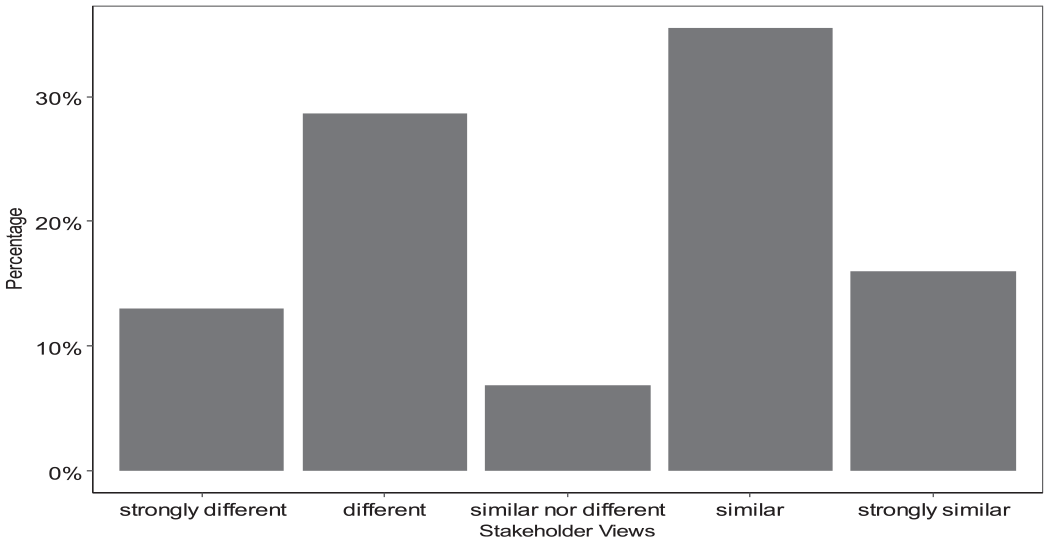
Perceptions of conflictual accountability (N = 538).
Behavioral Variables
As indicated, we focused on two types of behaviors: patterns of interaction with relevant stakeholders and use of information in decision-making. These have been gauged by surveying the CEOs of the agencies, which may incur some level of perception bias to our data. Yet, we have focused on factual questions and what the agency CEO perceives that her parent department does.
The forum’s interaction
This focused on the key dyadic relationship between agency and parent departments. We asked respondents to indicate the number of annual formal meetings they had with their parent departments. We then asked who represented their parent department in those formal meetings. Options ranged from lower ranking civil servants to the minister, thus gauging a pattern of hierarchical escalation of representation.
The actor’s interaction
Here, we focused on the relationship of agencies to societal stakeholders. Two statements were used; the first relating to whether it is important to make performance results publicly available to all stakeholders and the second about frequency of meetings with societal stakeholders at a strategic level (Wood, 2015).
The forum’s use of information was measured with two items measuring the use by the parent department of information provided by an agency (Schillemans & Busuioc, 2015). Measures included both passive use (thorough reading of received information) as well as active use (queries for information).
The actor’s use of information was measured with two items on information use in decision-making (Doney & Armstrong, 1996; Suedfeld & Tetlock, 2014). The items measure whether decision-makers spend much time collecting and analyzing information from a variety of sources prior to decision-making and whether they experience that it is relevant to understand different sides to issues.
Organizational Variables
We used seven organizational variables as control variables, mostly based on coding of extra materials. Four of those were unrelated to conflictual accountability: legal status (coded on Van Thiel’s, 2012, typology), policy field (coded on Classification of the Functions of Government [COFOG]-criteria), and location of main office (located in capitol or not?). Three other organizational variables were related to the prevalence of conflict and had some effects in our models, see below.
Country
We used the seven countries in our analysis, and this was statistically significant. There are, thus, differences between the countries, which could also be expected, yet we will focus here on the robust similarities beyond those national differences.
Size
We used numbers of Full-Time Equivalent (FTE)’s as a measure for size and coded this from various sources. FTE’s ranged from 0 to 21,127, with a mean of 651. In general, we found that larger agencies, which are generally more politically salient, were also confronted with more conflictual accountability regimes.
Task
The survey focused on accountability for substantive decisions related to one’s most important task. Respondents were asked to select one from several options describing their primary task, such as “collecting or distributing payments” or “regulation.” This was also related to conflictual accountability as will be mentioned shortly later.
Reflection
The central premise of our research design was to relate conflictual accountability to a range of organizational and behavioral variables. To this end, we used existing scales and measures where possible and overall ascertained comparability in design across national samples, to avoid common mistakes in border-crossing research (Verhoest et al., 2018). Also, we were able to build on existing research infrastructures and contacts in the seven countries. Although we believe in the strength of our approach, our research certainly has limitations. To begin with, the survey measures perceptions of behaviors by our respondents, not the behaviors themselves. This is obviously a limitation of our data, common in survey research. We contravened this in part by asking factual questions, for instance about representation in meetings (the minister either is or is not present). An additional advantage of those factual questions is that they decrease the risk of common method bias (Favero & Bullock, 2015). Also, we compared organizations and responses across countries which invokes comparability limitations. Furthermore, our analyses are also limited in terms of gauging causality. We are able to see (strong) relations between variables in the data, most of which stem from the survey but others from the additional coding, but it is difficult to disentangle cause and effect. This study shows relations yet does not prove causality; the latter can only be constructed theoretically and must therefore be read with some caution.
From Multiple to Conflictual Accountability
This article started with the assertion (see Supplemental Appendix 4) that multiple accountability features prominently in the public administration literature on accountability and is generally associated with conflicting values and expectations. Our survey of the CEOs of agencies in seven countries confirms the relevance of the first part of this statement (about multiplicity) yet nuances the second part (conflicting expectations). The agency directors surveyed underscore that they, indeed, virtually without exception, feel accountable to a large multitude of accountability forums when they take substantive decisions regarding their most important policy task. A broad accountability regime encompassing many (in)formal accountability forums is, in the eyes of those CEOs, standard reality.
However, within these broad accountability regimes, some CEOs perceive this environment to be largely conflictual while others experience their accountability regime to be largely harmonious. Our results show a bimodal sample, where respondents mostly either did or did not perceive their accountability environment to be conflictual. Figure 1 below visualizes the responses and shows a polarized, non-normal landscape. The survey indicates that agency CEOs mostly either experience their accountability regime to be broad-but-harmonious or broad-and-conflictual.
Testing Behavioral Effects Conflictual Accountability
To test the effects of conflictual accountability on patterns of interaction and information processing, a one-way MANOVA was used. This statistical test is used to analyze effects of the separation of agencies into groups on multiple outcome variables. Furthermore, it allows to control for the potential effects of other variables, including country, type, and task. This analysis was followed by a series of post hoc ANOVAs to assess the separated effects on the individual dependent variables.
The one-way MANOVA that controlled for country, type, and task, yielded a statistically significant result for the difference between similar and different views, Wills’ Λ = .939, F(4, 398) = 6.455, p < .001, partial η2 = .043. This demonstrates that there is a significant effect of non-conflictual versus conflictual views on the combined dependent variables. This effect is consistent across various alternative specifications of the model, including multiway MANOVA tests that model the interactions between the independent variables. Also these alternative specifications provide no evidence for different effects in different countries or across different agency types. These analyses underscore the robustness of the model. In the individual ANOVAs, we consistently find an effect of non-conflictual versus conflictual views on all of the dependent variables. All analyses are controlled for country and type effects.
Although this article does not focus on the antecedents of conflictual accountability, we conducted a logistic regression analysis of its prevalence in relation to organizational variables (see Supplemental Appendix 2). We found that three organizational variables were related to conflictual accountability. First of all, we noted differences between the countries; the perception of conflictual accountability was higher in some countries than in others. We mostly interpreted this as an indication of quality of the data. With a sample like ours, significant differences between the countries can only be expected, yet we also find robust relations beyond national differences. Furthermore, conflictual accountability is related to the type of tasks agencies perform. Particularly, agencies with regulatory tasks experience that they have to cope with a conflictual accountability regime. In addition to that, larger agencies also experience more conflictual accountability. These findings potentially suggest the relevance of political salience as an explanation (cf. Koop, 2014). It makes sense that higher political relevance goes together with more potential contestation and thus, more conflicting accountability. This logic of salience also seems highly prevalent in the behavioral responses to conflictual accountability, as we will discuss below.
Patterns of Interaction
Central Government: Hierarchical Escalation of Representation
We asked our respondents who represented their parent department in formal meetings. Do they generally meet lower ranking civil servants in regular meetings with their parent department or do they speak directly with the highest ranking civil servants or even the minister? Hierarchical escalation of ministerial representation is interpreted as a sign of salience that expresses the interest of the political leadership in the agency. Our analyses show that the hierarchical level at which the ministry is represented is significantly higher for agencies perceiving conflictual accountability, F(1, 406) = 15.993, p < .001, as the figure below shows. This effect suggests that there is indeed a pattern of escalation in representation when the views of various accountability forums are perceived to be conflictual and that senior bureaucrats and ministers are more likely to engage with agencies in a context of conflictual accountability. This is visualized in Figure 2.
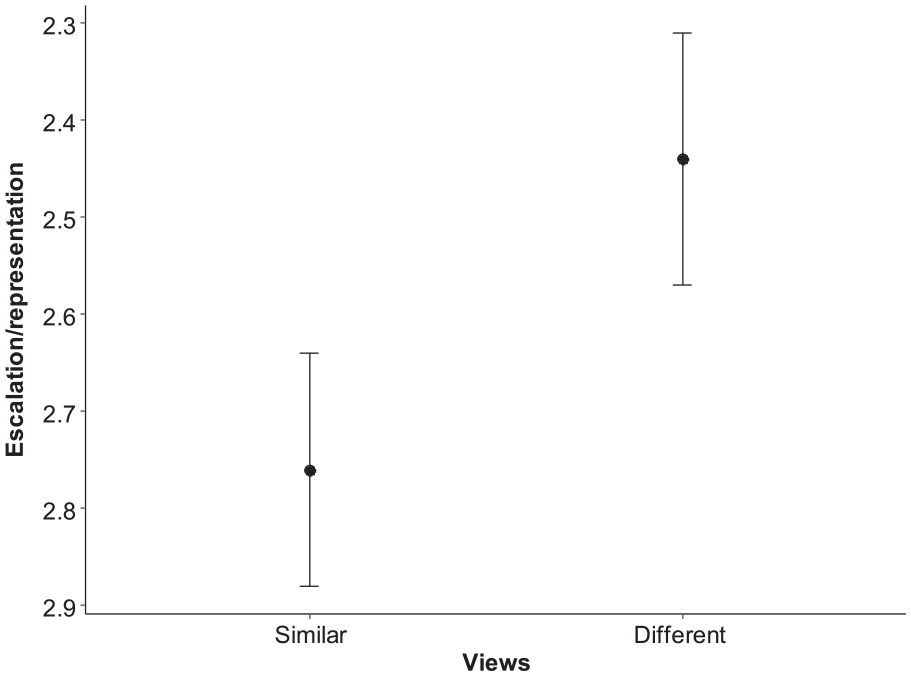
Hierarchical escalation of representation.
To corroborate this finding, we also looked at which accountability forums were indicated as most relevant by the agency (see Supplemental Appendix 1). This confirmed that when the overall accountability regime is deemed to be more conflictual by our respondents, the ministerial cabinet or central government is also described as more relevant for the agency. This finding was also statistically significant, supporting the relationship between conflictual accountability and escalated hierarchical representation in interactions.
It is common to interpret the direct personal involvement of political and administrative leaders as indicative of central control. It makes sense that broad-and-conflictual accountability regimes provoke controlling responses from central government as the context makes it more difficult to align the agencies’ behaviors to the principal’s demands. Central departmental control of arm’s-length agencies is in principle expected to be relatively loose, leaving room for quite some discretion on the part of the agencies. In conflictual settings, however, central control may be tightened to the point where it can been called “authoritarian” (Flinders & Tonkiss, 2016).
All in all, we sense a pattern of hierarchical escalation from the side of central government in relation to conflictual accountability, which we interpret as a sign of the ministries’ attempt at hierarchical control of the agency.
CEO: Intensification of Interactions With Societal Stakeholders
We gauged how our agency heads interact with broader stakeholders with two questions. We asked about the frequency of interactions with societal stakeholders and we asked whether they saw it as relevant to make their results publicly available to all stakeholders. Both questions signify a “horizontal orientation” on the policy network beyond the hierarchical relationship to central government (Wood, 2015). When we compare the interactions of CEOs in conflictual accountability settings with those in harmonious settings, we see significant differences. CEOs in conflictual accountability regimes report more frequent meetings with their societal stakeholders than their colleagues, F(1, 406) = 4.513, p = .034. See the visualization in Figure 3.
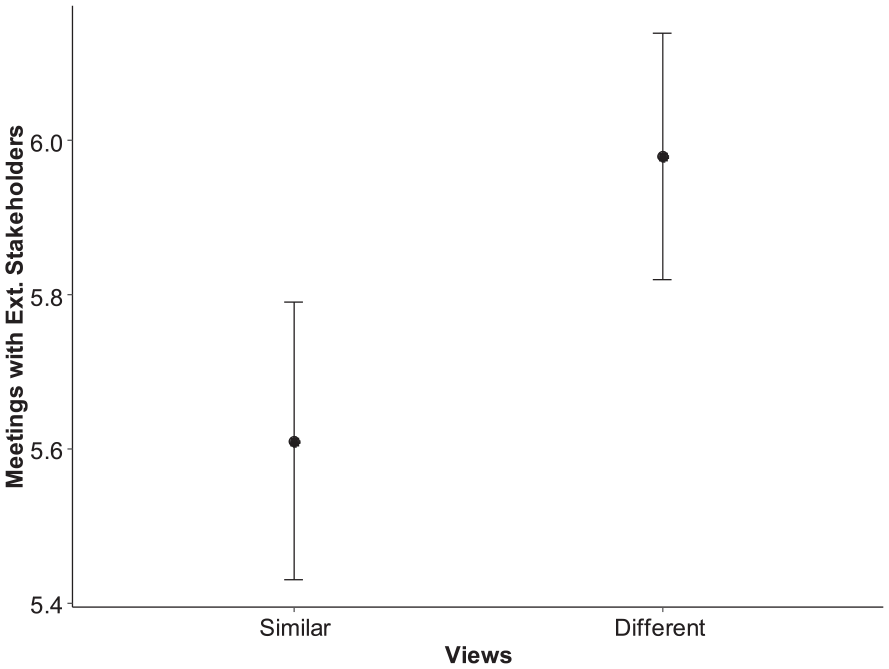
Meetings with external stakeholders.
The intensification of interactions with societal stakeholders in settings of conflictual accountability seems comparable in its strategic thrust to the hierarchical escalation of representation from the side of central government. They both signify efforts to juggle with autonomy and control (T. Christensen & Laegreid, 2006) and reinforce each other. Conflicts and centralization may stimulate “gamemanship,” where accountable actors will seek to influence their control systems (Siverbo et al., 2019, p. 4). More generally, a conflictual context with multiple accountability expectations stimulates agencies to guard their reputations as key strategic assets (Busuioc & Lodge, 2016). It becomes ever more important to manage expectations, to “keep up appearances,” and to make good impressions on the many relevant, yet conflictual, accountability forums.
Information Processing
Central Government: Increased Use of Information
We analyzed the use of information by central governments through our respondents’ perceptions of two items. Our respondents were asked whether they often received queries for information from their parent departments and whether they perceived that information and reports sent to the department were thoroughly read. Thorough reading and frequent queries indicate active and attentive focus by a parent department and better use of information. Agency CEOs perceiving more conflictual accountability report more frequent queries from parent departments than those in harmonious accountability regimes: F(1, 406) = 4.484, p = .035 (see Figure 4).
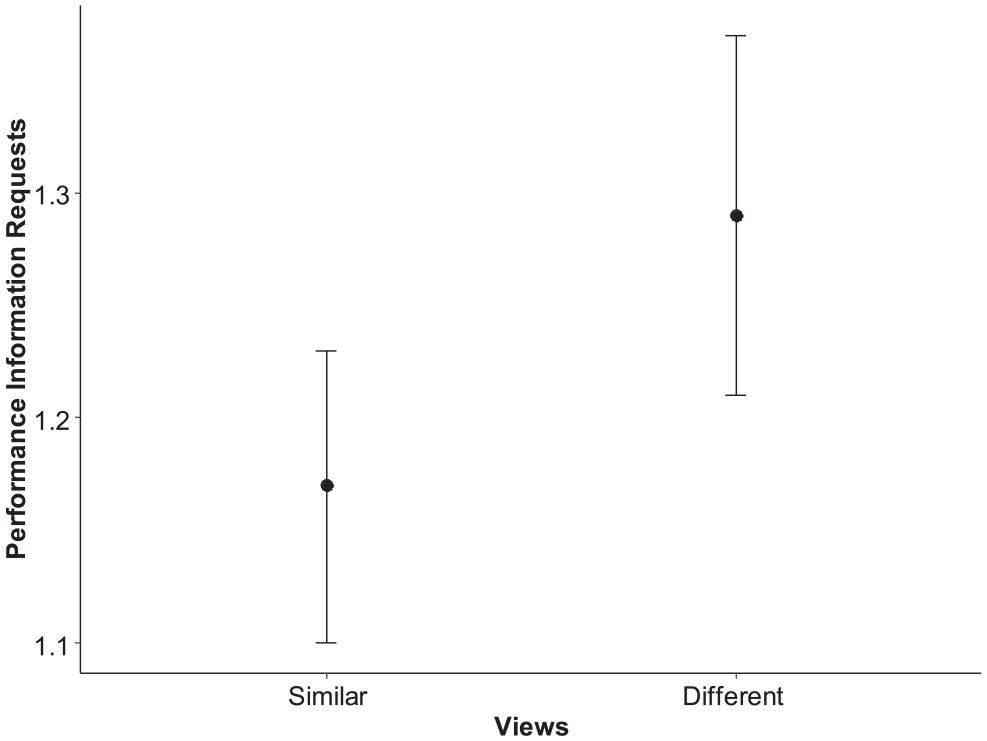
Departmental demands for information.
The link between conflictual accountability and the use of information underscores the dominant logic we see so far. Conflictual accountability makes the agency more salient in the eyes of its parent department or central government, and they expend more time in monitoring, requesting information, and reading reports from the agency. Beyond this strategic relevance of increased use of information, there is also a decisional advantage as more thorough information processing may obviously enhance the quality of decision-making (Lerner & Tetlock, 1999). In psychological studies of the effects of accountability on the quality of decision-making, more thorough and intensive information processing is seen as important, as we will elaborate below.
CEO: More Thorough Use of Information
We found that CEOs experiencing conflictual accountability report different patterns of information use in decision-making. In keeping with other studies (Aleksovska, 2019; Lerner & Tetlock, 1999), we see a clear association between the conflictual nature of views by accountability forums and the information-processing efforts reported by CEOs. We see a significant difference with regard to the importance to understand all sides to issues by CEOs. Agencies that report conflictual accountability also report more integrative complexity of decision-making, F(1, 406) = 10.261, p = .001. Conflictual accountability is thus related to higher information-processing efforts by agency heads, suggesting it is more salient to be in the know and to be well-prepared (see Figure 5).
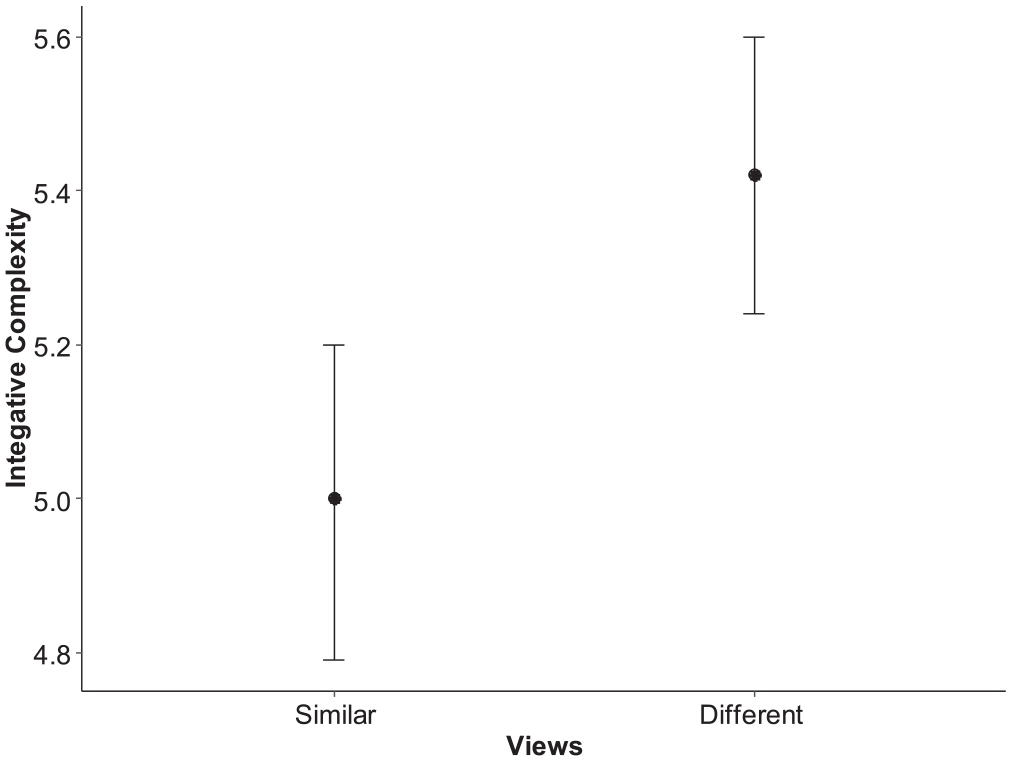
Integrative complexity decision-making.
Integrative complexity is, although never a formal goal, also an important value for decision-making in public organizations, where CEOs have to weigh several, oftentimes competing, values. This is exactly the point made in studies of multiple accountability, although expressed in different wordings (Olsen, 2013; Romzek & Dubnick, 1987; Thomann et al., 2018). Several recent studies in public administration settings implicitly support the relevance of integrative complexity. In a study of non-executive boards, for instance, Roberts et al. (2005, p. S16) found that some boards helped executives to “make as full a use as possible of the different views and experiences” leading to better decisions. In a very different study focusing on case workers, Hwang and Han (2017) found that accountability pressures had a positive effect on cognitive dimensions, such as “talk,” “discussion,” and “gathering of more information” (see also Belardinelli et al., 2018; Kogan, 2017). Interestingly, recent studies also relate integrative decision-making by managers to the “negativity bias” in their strategic environment, stimulating improved decisions (Holm, 2018; Nielsen & Moynihan, 2017). Negativity and conflictual expectations with multiple relevant stakeholders have a focusing effect on decision-makers; they exert “pre-emptive self-criticism” (Lerner & Tetlock, 1999) and weigh their own decisions from multiple angles before they commit to some course of action. This improves the informational quality of decisions in public administration and is related to conflictual accountability.
Conclusion and Reflection
This article has explored, theorized, and measured behavioral effects of conflictual accountability. Our study of the experienced accountability by the CEOs of agencies at arms’ length of government in seven countries confirms that multiplicity—being accountable to a large number of accountability forums—is the “normal state” in contemporary governance, as is suggested in many studies (Bovens, 2007; Martin et al., 2018; Romzek & Dubnick, 1987; Thomann et al., 2018). However, contrary to expectations, we find that CEOs do not necessarily equate the multiplicity of their accountability regime with conflicting expectations. Almost half of our respondents experience their environment as broad-and-conflictual whereas just more than half of them operate in accountability regimes perceived as broad-yet-harmonious.
Conflictual accountability is often understood as problematic and the source of tensions and conflicts. Pessimistic accounts have shown that the conflictual nature of accountability may lead to dysfunctional behaviors and decision-making in public sector organizations (Halachmi, 2014; Klingner et al., 2002; Koppell, 2005). Conversely, however, some empirical studies (Schillemans & Bovens, 2011; Willems & Van Dooren, 2012), in conjunction with psychological research on the effects of accountability on decision-making (Aleksovska, 2019; Lerner & Tetlock, 1999), suggest that conflictual accountability may also have positive effects on the quality of decision-making.
This article has shown that the effects of conflictual accountability on behaviors are not unidimensional. On one hand, we see that it is associated with distinctive strategic patterns of interaction and use of information. Conflictual accountability is related to apparently more strategic behaviors by agency directors and their political principals. But it is also related to decision-making processes in which more information is collected and used which theoretically leads to better-informed decisions. Better-informed decisions seem to be the normatively positive epiphenomena of increased strategic awareness by both parties in the dyadic relationship.
Table 2 summarizes our results. We distinguish between what we see in the data and how we interpret what we see. The patterns are simple, strong, and robust in the data. Under conditions of conflictual accountability, CEOs and senior officials devote more time to meetings with strategic stakeholders. And both parties pay more time and attention (Noordegraaf, 2000) to information in decision-making.
Theorizing Behavioral Effects of Conflictual Accountability.

Reverse causality, however, is a likelihood we cannot exclude. It is possible that the perception of conflictual accountability is triggered by interaction patterns and information processing rather than the other way around, although we do not find that theoretically convincing. It seems more convincing that conflictual accountability is related to increased political salience which affects behavioral responses to accountability (Busuioc & Lodge, 2016; Koop, 2014). Also, it is likely that causes and effects cannot be disentangled. From an institutional perspective on accountability (Mattei et al., 2013; Olsen, 2013), it is likely that political events, political salience, patterns of hierarchical interaction, interactions with stakeholders, and conflictual accountability are not unidirectionally related and co-evolve over time. If that is the case, our attention should be diverted from disentangling causes and effects to understanding more fundamental patterns of interaction in conflictual or harmonious accountability regimes.
One important implication from this article is that effects of conflictual accountability are not unidimensional and defy exclusively negative or critical interpretations. Conflictual accountability is related to a range of behavioral effects, which can be interpreted gloomily or optimistically, depending on one’s normative perspective. This is comparable with the related process of politicization. Our findings suggest that politicization and conflict is not necessarily problematic, as is sometimes suggested in the literature, but may have surprising positive effects on the quality of bureaucratic decision-making and may also activate their social identity as experts to withstand getting drawn into party politics (Salomonsen et al., 2016).
A second proposition emerging from the research presented here is the relevance of using insights and theories from behavioral science in studying behaviors in public administration. Many public administration scholars have implicitly or explicitly discussed the behavioral effects of conflictual accountability yet so far only very few of those have explicitly used the relevant insights and conceptual apparatus offered by behavioral scientists. By connecting those literatures, major advances in our knowledge are possible (Battaglio et al., 2018). This is not only relevant academically but also practically for decision-makers in public administration. This perspective suggests that decision-makers are influenced by subtle, institutionalized cues (see Ngoye, Sierra & Ysa, 2019, p. 262). CEOs should recognize the fact that their perceptions and judgments, as well as those of their supervisees, may be clouded by their cognitive frames-in-use, which, in turn, are primed by incidental features of their decision environments. Put differently, this suggests that conflictual accountability regimes may perpetuate certain approaches upon stimuli that decision-makers are exposed to. These effects, though subtle and nonconscious, may explain the pervasiveness of some logic or frameworks.
All in all, this article has shown that CEOs of agencies in our seven countries almost universally perceive to operate in a context of multiple accountability. This, however, is not the same as operating in a context of conflictual accountability where they have to cope with competing expectations. Conflictual accountability was found to be consistently related to some salient behaviors by agency CEOs and their departmental counterparts. It intensifies both patterns of interaction as well as the processing of information. We interpret that this signifies both increased strategic behaviors to keep control by both parties but, as an epiphenomenon, also improves the use of information in strategic decision-making.
Supplemental Material
sj-docx-1-aas-10.1177_00953997211004606 – Supplemental material for Conflictual Accountability: Behavioral Responses to Conflictual Accountability of Agencies
Supplemental material, sj-docx-1-aas-10.1177_00953997211004606 for Conflictual Accountability: Behavioral Responses to Conflictual Accountability of Agencies by Thomas Schillemans, Sjors Overman, Paul Fawcett, Matthew Flinders, Magnus Fredriksson, Per Laegreid, Martino Maggetti, Yannis Papadopoulos, Kristin Rubecksen, Lise H. Rykkja, Heidi H. Salomonsen, Amanda Smullen, Koen Verhoest and Matthew Wood in Administration & Society
Footnotes
Acknowledgements
The authors first thank Maj Grove Jeppesen (Utrecht University), and then Daniel Bailey (University of Sheffield), Martin Moos (Aarhus University), Annbjørg Ryssdal (University of Bergen), Antonia Sattlegger (Utrecht University), Manuel Quaden (Utrecht University), Amanda Waldenström (University of Gothenburg), and Ella Weisbrot (Australian National University) for their excellent research assistance.
Declaration of Conflicting Interests
The author(s) declared no potential conflicts of interest with respect to the research, authorship, and/or publication of this article.
Funding
The author(s) disclosed receipt of the following financial support for the research, authorship, and/or publication of this article: This work was supported by NWO, the Netherlands Organization for Scientific Research, NWO Vidi Grant “Calibrating Public Accountability”: NWO Vidi 452-14-008.

Supplemental Material
Supplemental material for this article is available online.
Author Biographies
References
Supplementary Material
Please find the following supplemental material available below.
For Open Access articles published under a Creative Commons License, all supplemental material carries the same license as the article it is associated with.
For non-Open Access articles published, all supplemental material carries a non-exclusive license, and permission requests for re-use of supplemental material or any part of supplemental material shall be sent directly to the copyright owner as specified in the copyright notice associated with the article.
