



Abstract
The social inclusion of military women is negatively affected by dominant masculine norms. Often, military organizations try to promote inclusion through top-down policies. However, little is known about solutions military personnel themselves propose, and what is needed to implement those. Drawing on an action research project in the Netherlands Armed Forces, we identify four systemic collaborative requirements to implement initiatives aimed at improving inclusion: (a) awareness and recognition of women’s (negative) experiences, (b) a safe environment for dialogue and joint ownership, (c) organizational trust, support and mandate, and (d) the implementation of interventions in the organizational structure. We discuss two paradoxes we identified (a) addressing inclusion in unsafe workplaces requires safety and (b) creating awareness about women’s social inclusion without putting women in the spotlight. Our results show that a dialogic and collaborative approach is promising, especially to address the complexities that arise when trying to strengthen inclusion.
Keywords
“I don’t want to be the icon of the feminist wave”
Traditionally, military organizations are inherently masculine, with masculine norms. In recent decennia, an increased number of women has joined the military services, although they are still a strong minority. This change in personnel has caused friction and led to discussion on existing gender norms (Dunivin, 1997). Gender can be defined as “not simply an aspect of what one is, but, more fundamentally, it is something that one does, and does recurrently, in interaction with others” (West & Zimmerman, 1987, p. 140). With respect to military organizations, everyday interactions that occur within masculine military culture, and thus are affected by it, ensure that existing gender norms are “sustain[ed], reproduce[d], and render[ed] legitimate” (Archer, 2012; Do & Samuels, 2020; Pendlebury, 2018; Portillo et al., 2021; Stanley & Larsen, 2019; Thornborrow & Brown, 2009; West & Zimmerman, 1987, p. 146). Traditionally, military informal (gender) norms are those associated with the image of a warrior hero, such as strength, rationality and decisiveness (Acker, 1992; Duncanson, 2009; Hauser, 2011; King, 2015; Levin, 2010; Morgan, 1994; Sion, 2008; Woodward & Winter, 2007). These norms have a significant impact on military personnel and manifest themselves in concrete ways by, for example, making it difficult to speak to colleagues or superiors if one is subject to or witnesses inappropriate behavior, and by discouraging personnel from seeking help in case of harassment or sexual assault (Allsep, 2013; McAllister et al., 2018; O’Brien et al., 2015; Silvestrini & Chen, 2023).
Servicewomen appear to be affected by these norms to a greater extent than men, as military women are more frequently subjected to social exclusion, discrimination, bullying, unwanted sexual attention, (sexual) harassment and sexual assault (Duncanson, 2009; Hauser, 2011; King, 2015; Kintzle et al., 2022; Levin, 2010; Woodward & Winter, 2007). Exclusion has a negative effect on psychological health, job satisfaction and work attitude (Shore et al., 2011). In their review on inclusion at work, Shore and colleagues argue that inclusion entails a balance between the satisfaction of the needs of both belonging and uniqueness. People want to be valued for their unique individual qualities within the group. If this was not the case, people would just be assimilated, or they would be interchangeable (Shore et al., 2011). However, to function safely and effectively, military women often adapt to the prevailing masculine norms and culture by trivializing sexual harassment, concealing their femininity and relying on support networks for and by military women (Andriessen et al., 2017; Bonnes, 2020; Carreiras, 2008; Cheney et al., 2015; Crowley & Sandhoff, 2016; Hauser, 2011; Sasson-Levy, 2003). Furthermore, women’s integration into the military, particularly in combat or special operation units, has been met with resistance, fueled by the belief that the presence of women in these units leads to the lowering of military standards and interferes with team cohesion, thus reducing operational effectiveness (Goldstein, 2018; Manninger, 2008; Reis & Menezes, 2019). These issues with military women’s experiences and (social) inclusion appear to be prevalent in all military organizations; the Netherlands Armed Forces (NAF) is no exception (de Haas & van Berlo, 2008; Giebels et al., 2018; Ministerie van Defensie, 2010; Staal et al., 2006).
Military organizations have attempted to improve military women’s social inclusion through top-down behavioral policies, for example by increasing the number of woman 1 personnel and by promoting women to higher positions (Heinecken, 2016; Langenhuizen, 2019). A strong critique on these policies is that they fail to focus on service members’ lived experiences, lack a systemic approach, and should be strengthened with initiatives to “modernize” the organization’s culture and climate, which is deemed too masculine (Basham, 2009b; Bastick, 2018; Bridges et al., 2021; Carreiras, 2008; Harris Rimmer, 2019; Winslow & Dunn, 2002). In addition, a systemic approach should incorporate the role that masculine conformity and service members’ attitudes toward group hierarchy and dominance play in the current resistance toward cultural changes within the armed forces (Wu et al., 2026). Some studies conclude that top-down management policies have had a limited effect or have even been counterproductive in strengthening military women’s social inclusion (Basham, 2009a, 2009b; Galvin & Allen, 2020; Heinecken, 2016; Johnstone & Momani, 2020). However, very little is known about the solutions military personnel themselves envision and what is needed to implement those. Most qualitative research focus on the issues women in the military face, but not on the solutions they see.
This study presents the findings of action research aimed to strengthen psychological safety in the NAF. At the beginning of this research project, it became apparent that women’s social inclusion could be identified as one of the main subthemes in psychological safety discourses with servicemembers. During this action research, carried out by military personnel and researchers, opportunities and challenges for improving women’s social inclusion became apparent, as well as systemic, collaborative requirements to implement change. In this research project, service members played an active role in the identification of opportunities for the strengthening of military women’s social inclusion within their own workplace, as well as in the bottom-up development, implementation and evaluation of interventions to improve women’s social inclusion.
Our analysis is twofold. First, we analyzed the experiences of men and women with regard to the social inclusion of women in the NAF. Participants concluded that women work under a magnifying glass, that women’s negative experiences often remain a blind spot, and that women are often adversely affected by rules that are meant to protect them. Second, based on one of the initiatives developed in the action research, we examined the systemic collaborative requirements, opportunities and complexities for the bottom-up creation of interventions by military personnel aimed at improving women’s social inclusion in the armed forces. These four systemic collaborative requirements can empower military personnel and leadership to collaboratively strengthen military women’s social inclusion.
Method
Theoretical Background
Action research is a practice that aims to initiate collective action and create knowledge about that action, with the ultimate goal to stimulate social change (Coghlan & Casey, 2001; Reason & Bradbury, 2008). It fosters collective action by actively engaging individuals who are most affected by this change; rather than making individuals subject to inquiry, they become inquiring participants within the research process. As such, experiential knowledge takes a central place within action research (Reason & Bradbury, 2008; Reason & Torbert, 2001). Furthermore, action research entails a circular rather than linear process, in which participants and action researchers collaborate in continuous cycles of planning, taking action, observing and reflecting to improve practice (Coghlan & Casey, 2001; Reason & Torbert, 2001; Wadsworth, 1989). The continuous and collaborative reflection of participants and researchers on the entire research process enables both learning and improving practice.
Within organizations, action research has been used to promote bottom-up cultural changes in the workplace through active participation and collaboration of personnel throughout the research process (Coghlan & Shani, 2018). The current action research, which aimed to strengthen military women’s social inclusion in the NAF, entails a complex change in military culture, perspectives, values and paradigms (de Caluwé & Vermaak, 2003). This action research aims to actualize these changes by the active participation and collaboration of military personnel: service members are the most knowledgeable about what is going well and what is going badly, what is at stake, what types of actions might be the most effective in promoting military women’s social inclusion in the workplace, and what problems might occur when trying to change things. Furthermore, since their experiential knowledge and ideas are taken seriously, the actions they develop are more likely to be in line with service members’ needs and less likely to face internal criticism or resistance. Finally, action research empowers personnel by encouraging speak-up behavior and emancipation among service members.
As such, our approach is connected to Brendel’s (2006) four P’s (see also Galvin & Allen, 2020): the practical dimensions of all scientific inquiry; the pluralistic nature of problems; the importance of the participatory role of those involved to find solutions; and the provisional and flexible character of solutions.
Research Set-up
Since 2019, the authors of this paper are involved in a large action research project with the goal to foster a psychologically safe culture in the NAF (see also Boskeljon-Horst et al., 2023). At the beginning of this research project it became apparent that women’s social inclusion could be identified as one of the main subthemes in psychological safety discourses with servicemembers. In this article, we present our findings regarding problems surrounding women’s social inclusion and the lessons we learned from actively trying to strengthen the social inclusion of military women in practice by means of the action research project.
In total, nine NAF locations voluntarily participated in the project: two educational institutes, one policy body, and six operational units representing the NAF’s four service branches (Army, Navy, Air Force and Military Police). Within each location, researchers collaborated with a diverse group of service members (henceforth: participants) to explore and improve practice or culture. The action research consisted of continuous research cycles each comprising three phases: exploration, action, and evaluation (see Figure 1).
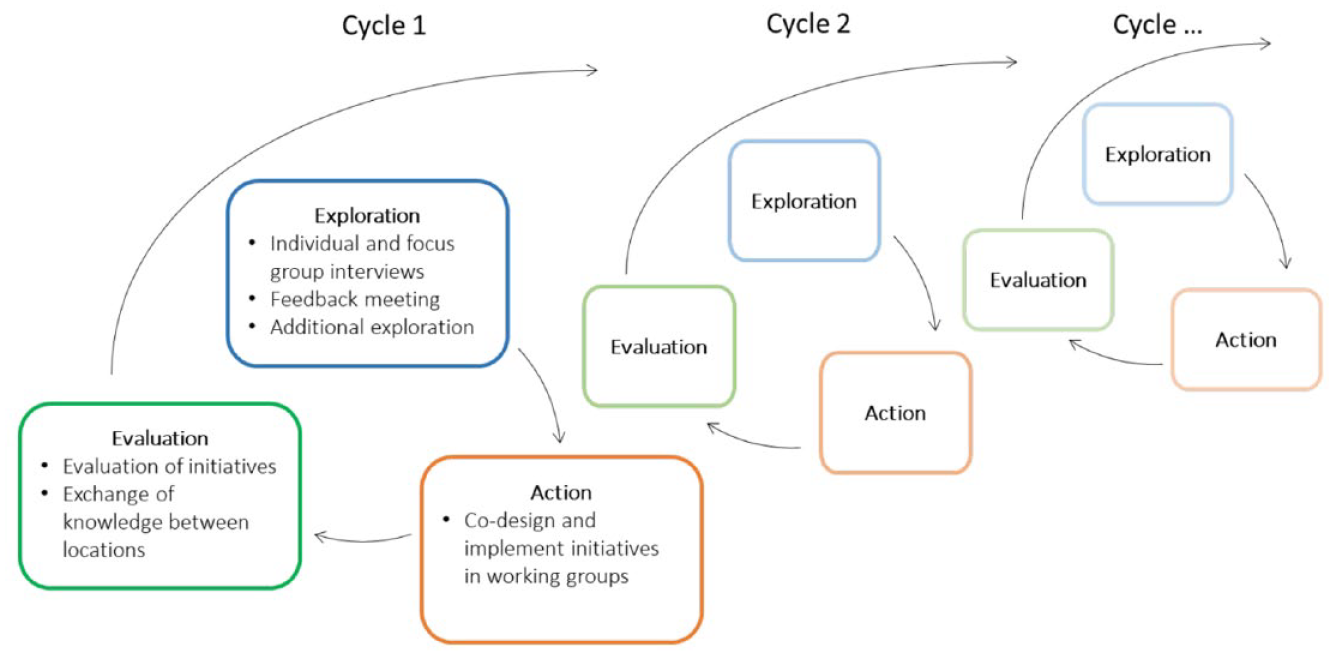
Continuous Action Research Cycles comprising Exploration, Action and Evaluation.
During the first exploration phase, participants were interviewed individually or in focus groups to explore their experiences with psychological safety and their thoughts on which (cultural) practices should be improved to foster a psychologically safe work environment. Focus groups consisted of servicemen and -women of the same rank, which were recruited by their supervisors (see Appendix for an overview of the collected data). To ensure a safe environment, at the start of the interview, researchers underlined that participation was voluntary and participants agreed that what was shared during the interviews remained confidential. In the majority of the interviews, the topic of gender inequality was introduced by participants, sometimes prompted by the researchers.
The audio-recorded interviews were transcribed verbatim and the researchers conducted an inductive thematic analysis for each location to identify key themes. At each location, the results of this context-sensitive analysis were presented during feedback meetings, to which all the interviewed participants from that location were invited. During these meetings, participants were invited and encouraged to reflect on the analysis, and to give input on how to proceed in the action phase of the research project. Participants were invited to voluntary join a working group at their location. In these working groups, participants and researchers co-created, implemented and evaluated interventions aimed at fostering a psychologically safe work environment. Annually, working group participants took part in an intervision session with the working groups from all nine participating NAF locations to discuss successes and difficulties.
Data Collection and Analysis
The data consisted of transcriptions of more than 130 hours of (focus group) interviews, notes from meetings with participants, observational notes from researchers and the evaluation of interventions that were developed and implemented in the participating locations. Data collection started in November 2019 and is still ongoing.
The data was analyzed in several stages. First, a thematic analysis was conducted in the coding software NVivo, using the transcripts of the interviews and the notes of the researchers. To increase inter-rater reliability, two researchers independently coded transcripts, and discussed and reviewed differences until agreement was reached. Second, the analysis was fine-tuned and validated by the participants during feedback meetings. Finally, data collected in the action and evaluation phase, in the form of observations, additional interview transcripts, notes from working group meetings and intervision meetings, and the evaluation of interventions, was analyzed to identify systemic collaborative requirements and the corresponding opportunities and challenges for actively and sustainably strengthening women’s social inclusion by personnel. In the latter analysis, first-, second-, and third-order reflections were incorporated (Coghlan, 2019; Reason & Torbert, 2001). First-order reflections concern individual researchers’ reflections on their inner (sentient) world, including their prejudices and emotions, and on the effect of their being and acting in the outer world. Second-order reflections concern reflections that occur within interpersonal interactions, such as reflections by action researchers and participants on (the quality of) dialogue and collaborative actions within working groups, or reflections by and among action researchers on their (shared) research experiences. Third-order reflections concern reflections that can be place in a wider context, such as an institutional, political or theoretical context.
Access and Position of Researchers
Both insider and outsider researchers were active in each participating location. Outsider researchers have no prior affiliation with the NAF, while insider researchers are already employed by the NAF in military or civilian roles. Although outsider researchers may find it more difficult to gain access to the military organization and gain the trust of its personnel, being an outsider or a civilian insider researcher has its benefits, as they bring fresh (societal) perspectives into the organization. However, although insider researchers may already be partly socialized by the organization’s norms, these researchers gain easier access due to their network and their knowledge of the workings and structure of the organization. The authors of this paper are three outsider researchers, two women (ASp, ASn) and one man (BM), and one woman civilian insider researcher (EvB). For the three outsider researchers, the start of the current action research project was their first introduction into the military organization and its culture. Although ASp and ASn played active roles as action researchers within the project, BM was not actively involved in one of the working groups as a researcher and could therefore reflect on the data with even more distance. EvB has worked at the NAF for 15 years as an Assistant Professor in Military Ethics and Philosophy.
Ethical Considerations
Before engaging with the participants, we emphasized the voluntary nature of participation. Participants in the interviews were informed about the aim of the study and gave consent for audio recording during the interviews. Interview transcripts were anonymized and pseudonyms were used to introduce quotes, to ensure participant confidentiality. Participants in the working groups were informed about the purpose of the working group and the design of the action research project. Approval of the Medical Research Ethics Committee was deemed unnecessary, since this study does not fall under the Dutch Medical Research involving Human Subjects Act and related regulations (www.ccmo.nl). The data set used and analyzed during the current study is available from the corresponding author upon reasonable request.
Findings
Problem Analysis Based on Interviews With Military Personnel
During the interviews participants in eight out of nine locations reported issues regarding the inclusion of women. Three overarching subthemes were identified that give more insight into the mechanisms that complicate military women’s social inclusion in the NAF: (a) women’s performance and behavior is put under a magnifying glass, (b) women’s negative experiences remain a blind spot within the organization, and (c) women are negatively affected by a counterproductive “code of conduct culture.” In the next paragraphs, representative quotes of servicemen and -women are included to illustrate these three subthemes.
Women Under a Magnifying Glass
Women as well as men underlined that women encounter more challenges while working in the NAF than men. Participants argued that women’s performance and behavior are regularly put under a magnifying glass by colleagues of all genders. For example, if military women make mistakes, show emotions or do not reach targets, this was often considered as a sign that they are not qualified for their job. To illustrate, Celine shared her experience that “women always have to perform above a certain norm, because if they make a mistake, others will respond with: ‘See, I told you so’.” Conversely, if military women are successful at their job, several participants (mostly men) attributed this success to their womanhood and not to their competencies or qualifications. For example, Eduard stated, “[I] find it rather frustrating that some women use their womanhood to get things done. [. . .] They manage to get tasks signed off, solely because they’re a good-looking girl.” The majority of woman participants shared that they feel uncomfortable with their “special status” and the unsolicited attention they receive within the organization. For example, women stated that they would rather be seen as soldiers or service members than as military women. Furthermore, women who do well sometimes feel pressured to be role models, as illustrated by Mila: “Someone told me that I just had to accept that I am a role model. That thought is not appealing to me. Why do I have to be a role model? I don’t even want to be one.” Some women feared to gain even more attention if they were to be perceived a role model. Participants, both men and women, acknowledged that women are faced with a complex balancing act: they are expected to conform to the masculine organizational norms while not overdoing it, for example by trying too hard to be “one of the guys.”
Women’s Negative Experiences Remain a Blind Spot
Woman participants shared various examples of negative experiences that often had a significant impact on them: superiors or colleagues asking impertinent questions about their sex life; extensive gossip; sexually transgressive behavior; double standards regarding their relationships; and unsupportive attitudes around pregnancy and breastfeeding. Furthermore, while women’s performance and behavior are under a magnifying glass, participants described a culture in which it is challenging for women to share their negative experiences with others. In addition, participants indicated that when negative situations occur, they, whether a victim or a bystander, often fear to intervene. As a result, these experiences and incidents frequently remained invisible to colleagues and superiors. Many women stated that they experience a high threshold to share or report negative or transgressive experiences, because this could result in even more unwanted attention, reputational damage or repercussions. Someone who reports such issues, regardless of their gender, is perceived as a traitor, “a bad comrade,” and/or someone who cannot stand up for her- or himself—and thus is not suited for the job. In addition, woman participants shared concerns that reporting such issues could have long-term negative consequences for their own career or, conversely, that reporting an incident could have serious negative consequences for the perpetrator. For example, Samira hypothesized, “Imagine that while we are going out, you would grab my ass. That wouldn’t sit right with me. But I would not report you, because I wouldn’t want you to suffer any negative consequences.”
During the focus group interviews it became apparent that men were frequently unaware of the negative experiences experienced by servicewomen. When women shared their negative experiences, men were frequently shocked and supportive of their colleagues. Kevin stated, “[I heard] that certain women cannot walk across the barracks at night. [. . .] If that is the case, then indeed I think it is necessary [to do something]. Because that’s really crazy.”
Counterproductive “Code of Conduct Culture”
Participants observed that there is a tendency to create more rules to protect women from sexually transgressive behavior in response to incidents. Nonetheless, service personnel, particularly women, expressed dissatisfaction with this “code of conduct culture,” as it often leads to counterproductive results. For example, as a result of this culture, women are increasingly placed in the spotlight and/or singled out. Wendy illustrated this by stating: People are already watching you because you are the odd one out. And [when new rules are installed in order to protect us] people become even more careful . . . about how they approach you or what they say to you. And so you are put under a microscope to an even greater extent.
Participants shared examples of this “code of conduct culture,” including the rule that, unless the door stayed open, women were not allowed to be alone in a room with trainers or supervisors of the opposite gender. Although this rule aimed to protect women from transgressive behavior, women stated that it put them in an exceptional position that limited spontaneous contact and normal collegiality, but also hindered them to discuss sensitive topics with their supervisors. Participants shared that, since false accusations have been made in the past, there exists a fear among some servicemen that if women report an incident, even if it is a false accusation, it will have serious consequences for the person against whom the report is made. In addition, some men experienced that servicewomen, in comparison to servicemen, were more likely to be believed if they reported an incident, a mechanism they dubbed the “woman advantage.” Patrick stated, “‘He treated me inappropriately!’ When a woman says that, you’re on your own, and despite your stellar track record, you hang. You simply hang.” In that sense, rather than primarily protecting women from transgressive behavior, rules limiting the space that men and women simultaneously occupy appeared to mainly protect men against (false) accusations made by woman coworkers.
However, in some instances women actually preferred to share spaces with colleagues of the opposite gender, for example with respect to lodging circumstances. While women and men are lodged at separate locations, one servicewoman, who was the only woman in her team, stated that she missed out on group formation processes and collaboration with her colleagues because she had a private room.
Strengthening Social Inclusion of Women: A Case Study and Lessons Learned
In the following section, we first delve into the experiences of one of the working groups that addressed the inclusion of women during multiple cycles of exploration, action and evaluation. Second, based on the experiences of all participating locations, we present four systemic collaborative requirements for the creation and implementation of interventions by military personnel to strengthen military women’s social inclusion.
A Case Study
Initial Reluctancy Changed to Growing Urgency
In one of the working groups, participants decided to develop an intervention to improve women’s social inclusion at their workplace. Initially, participants were reluctant to actively address this theme. They stated that the theme was already discussed at the management level, and participants wanted to see first what steps management would take. As action researchers, we (ASp and EvB) felt the need to keep this theme on the agenda for several reasons. First, we were struck by the multitude and the pervasiveness of the experiences and stories that were shared with us by military women during the interviews, and wanted to discuss these in the working group. Second, during the feedback meeting at this location, a participant stated without apparent reservation that “not only in the military, but in society in general, women are perceived as bitches or whores.” To us, the bluntness of this statement, and a lack of response by the other participants, further underlined the urgency of the theme. We suggested that it might be possible to address this theme in the working groups as well, in addition to actions taken by the management team. Concurrently, the lack of military women’s inclusion received critical attention in the Dutch media. This triggered a sense of urgency regarding this theme within the working group. Subsequently, space was created for substantive reflection on women’s social inclusion. Participants suggested to critically reflect on and address the so-called ‘women’s talk’.
Targeted Practice: The Women’s Talk
The “women’s talk” at the start of several military education programs is an example of how military women become acquainted with the magnifying glass and the masculine organizational norms within the NAF. This talk is a customary practice that has been in place within the organization for decades. For this talk, which takes place in an informal setting at the barracks or during a military drill, military women in training are separated from men in training by senior servicewomen in training or woman instructors. During the talk, the women are provided with practical tips, for example tips regarding menstruation, but also given warnings about promiscuous behavior. They are told they should “be aware that if you get overly friendly with military men, you will be known as ‘slut’ or ‘mattress’ for the rest of your career.” In some instances, a warning was included that if they would “misbehave,” this would negatively affect the reputation of all women at their workplace.
During the interviews, several woman participants mentioned their experiences with this women’s talk, as well as the negative impact it had on them. Servicemen stated that, although they were aware of the existence of a women’s talk, they were unaware of its content. Participants of all genders considered it unjust that only women received a warning about the consequences of overly friendly or sexually promiscuous behavior. For example, Wendy shared her frustration with the women’s talk: “What I think is offensive is that it’s called a ‘women’s talk’. Why aren’t men addressed in a similar fashion, like: ‘hey guys, this ain’t no paradise.’ Why is this considered a women’s issue?”
However, participants also emphasized the importance of military women in training being aware of gender norms within the organization; they shared examples of senior military women who, even after many years, had to deal with sexual stigma. Several participants argued that this talk has its benefits, as informing military women in training about this norm at least makes them aware of the possible risks of getting such a stigma. The effect of a stigma on senior military women was illustrated by Naomi: My supervisor said: “In training, there was a woman in my platoon who, as they say, saw all the mattresses on campus. [. . .] I still run into her on occasion [. . .] I’m always reminded of her reputation back then: ‘Oh yes, that’s the one who. . .’ [. . .] When you behave in this manner, you will be stigmatized for the rest of your career. But, of course, you are free to behave however you wish.”
The working group participants analyzed that a dialogue about gender norms in the organization was still beneficial, but that the current ‘women’s talk’ was too stigmatizing.
Developing an Alternative to the Women’s Talk
Participants decided to conduct a survey and interviews to evaluate how women perceived the most recent women’s talk. Subsequently, the working group reflected upon what an alternative “talk” should entail. Any divergent or critical views were taken seriously and incorporated. The working group also discussed ways to improve women’s social inclusion without putting women further in the spotlight. After extensive deliberation, participants reached consensus that an alternative talk should (a) assign responsibility for social norms and behavior to all personnel, (b) not treat women as a separate group, (c) not emphasize the differences between men and women, and (d) highlight the strengths of diversity in a group or team. Consequently, the working group developed a format for a “dialogue session about informal norms” (henceforth: dialogue session) as an alternative to the women’s talk.
At this stage, we provided suggestions based on our research experience for the development and evaluation of the intervention. To account for any power dynamics between action researchers and participants, we took a modest stance and made it explicit that our ideas were merely suggestions, and that participants’ ideas were equally valuable.
The designed intervention consisted of a structured dialogue with service members in training of all genders. The dialogue session centered on how service members in training treat one another, what assumptions and prejudices they have about one another, and what demands they place upon each other. By discussing these questions and topics in a safe environment under the guidance of a moderator, a dialogue like this could raise awareness, responsibility and ownership among all service members in training, while removing women from the spotlight.
Piloting the Talk and Raising Awareness Within the Organization by Seeking Management Support: Resistance and Praise Within the Organization
After developing the format for the dialogue session, participants brought their initiative to the attention of supervisors in a variety of ways. The working group piloted a dialogue session with supervisors and management as dialogue participants. At this stage, ASp and EvB considered whether they should join this meeting and use their status as researchers and faculty member to gain support from supervisors and management. After discussing this with the working group, we decided not to attend the meeting, as our presence might give the impression that the intervention was ours, and put us in the center of the attention, instead of the participants. Supervisors and management praised the dialogue session and emphasized its importance. While participants had hoped that management would play an active role in the implementation of the intervention, management instead gave the working group the “green light” to independently implement the intervention at their workplace. Participants were somewhat discouraged by this turn of events, as they had already volunteered a significant amount of their time into developing the format.
Despite this discouragement, participants persisted in putting the potential and value of the dialogue session on the agenda. Participants and researchers familiarized coworkers with the intervention and gained support for their initiative in several ways: they organized pilot dialogue sessions with colleagues and a dialogue session workshop at a NAF conference on psychological safety; they pitched the intervention during a management meeting, while emphasizing its importance and communicating their expectations of management; and one of the participants shared the working group’s experiences with the development of the dialogue session during a speech at a dinner meeting on psychological safety.
Implementation Within the Organization
It proved helpful to evaluate the impact of the dialogue session on its participants and to use the results of this evaluation to create support from management. The evaluation included questions on the perceived effect of the dialogue session and participants’ opinion on whether and why the intervention would be valuable for other colleagues. When the evaluation results were discussed in the working group, one of the participants (a staff member/instructor) took the lead to show these results to the commanding officer of this location to underline the importance and potential of the dialogue session. This in turn resulted in the commanding officer to openly support the working group to implement the dialogue session within other branches at this location. Furthermore, the evaluation of the dialogue session ensured the continuous improvement and fine-tuning of this initiative, also after initial implementation.
Due to the efforts of this working group, other colleagues became increasingly familiar with the dialogue session. Consequently, the initiative was implemented in various branches and in the curricula of service (wo)men in training at the location of the working group. The implementation of the dialogue session was tailored to the people who would facilitate the dialogue in the different workplaces at the location. While one workplace incorporated the dialogue session into its educational plan, another embed the initiative by making one staff member responsible for inspiring and encouraging (future) colleagues by emphasizing its importance and value. In addition, colleagues at other locations within the NAF, where the women’s talk was still informally executed, learned about this initiative and expressed the wish to implement the dialogue session at their own workplace. As a result, the dialogue session is now included in the training offered to NAF employees of all NAF branches and locations involved in education and training. The working group participants themselves conducted a train-the-trainer workshop on how to facilitate the dialogue session sharing their experiences.
It also proved helpful to write a constructive article on military women’s inclusion and the dialogue session for a NAF magazine to bring this initiative to the attention of colleagues at other locations within the NAF. It was challenging to find the right tone and frame for this article on women’s inclusion, due to the sensitivity of the topic. We decided to take a constructive and positive approach, as we were convinced this would ultimately lead to more impact. Thus, rather than focusing on the problems surrounding women’s inclusion, we chose to highlight the initiatives that were already developed by the working group to make improvements. Working group participants were invited to co-write the article, but they expressed the preference to co-read the article, and were mentioned in the acknowledgments. The subsequent publication resulted in renewed attention for the initiative and more interest from personnel at other NAF locations, which contributed to scaling up this initiative. Furthermore, the publication resulted in an invitation to the Dutch House of Representatives, where the dialogue session was discussed as a positive example of change toward more gender equality. Also, the facilitation of the dialogue session was included in the job description for a new staff member at the working group location, which illustrated that this initiative became increasingly embedded at the location.
Lessons Learned: Systemic Collaborative Requirements for the Creation and Implementation of Interventions by Military Personnel to Strengthen Military Women’s Social Inclusion
Based on participants and action researchers’ experiences, we identified four systemic collaborative requirements for the bottom-up creation and implementation of interventions by military personnel to strengthen military women’s social inclusion in the NAF. These systemic collaborative requirements are (a) awareness and acknowledgment of women’s (negative) experiences, (b) a safe environment for dialogue and joint ownership, (c) organizational trust, support and mandate, and (d) the implementation of interventions in the organizational structure.
Awareness and Acknowledgement
During the research project it became apparent that increasing awareness and acknowledgment of women’s negative experiences among personnel was an important first step in strengthening women’s social inclusion. In order for personnel to improve women’s social inclusion, they need to be aware of the experiences of woman colleagues regarding their (limited) social inclusion. As described earlier, servicemen were often unaware of the negative experiences of their woman colleagues. However, at several locations, we encountered interventions initiated by servicemen to get more acquainted with the perspective and experiences of their woman colleagues or subordinates. For example, several supervisors reported occasionally asking women about their experiences, either one on one or with several woman colleagues at the same time. Although such interventions have the potential to raise awareness and acknowledgment of women’s experiences, they were sometimes criticized by personnel, as they separate women from their colleagues and thus single out women once again.
Although awareness is important, participants often seemed hesitant to discuss this topic, as they feared that their negative experiences and personal narratives would take on a life of their own outside of the working groups. Indeed, in some instances this hesitance seemed to be prompted by recent negative media coverage. For example, during the course of the action research, the adverse effect of the NAF’s dominant masculine norms and culture on servicemembers in training received negative media coverage. This sparked discussions among participants in several working groups; while some participants recognized the image sketched in the media, others, both men and women, minimized the issues raised by stating that these issues were not present at their workplace or that they did not recognize these issues at all. Many participants expressed frustration with this recurrent negative publicity. While they were proud of their work at the NAF and consider it a part of their identity, in the aftermath of negative media coverage they were frequently questioned by family and friends about why they want to work for “such an organization.” In some instances, however, it seemed that the pride that military personnel take in their work could obstruct critical reflection on their organization.
A Safe Environment for Dialogue and Shared Ownership
At various locations, participants expressed the need for a dialogue between men and women, rather than having a dialogue about women or with only women. However, during the course of the project it became apparent that a basic level of safety must be achieved before an open dialogue about sensitive topics such as women’s inclusion could be fruitful. Woman participants considered it risky to openly share their own negative experiences, or to critically reflect on the current level of social inclusion of women, as this could result in further stigmatization. For example, some participants feared that work on strengthening women’s social inclusion would be sabotaged by people who did not want change, or they did not want to attract further attention to themselves. We found that some respondents preferred to operate in anonymity. For example, Anna explicitly stated that she did not “want to be the icon of the feminist wave,” but that she preferred to support the inclusion of women in ways that were not visible to her superiors. Feelings of psychological unsafety and fear of repercussions played a role in the reluctance of some participants. In addition to a fear of stigmatization, the hierarchical nature of the organization also seemed to interfere with participants’ eagerness to jointly reflect on women’s social inclusion. For example, some participants were hesitant to start a dialogue about women’s experiences, as management was already discussing this topic. They argued that it was the responsibility of management to put this theme on the agenda, stating that “with such topics, the conversation should be started by leadership and commanders.”
Still, we identified some opportunities for creating a safe environment for dialogue and shared ownership. In some working groups, we noticed it proved beneficial to temporarily move away from hierarchy to create a safe space. Calling colleagues by their first names rather than their ranks; active listening; and allowing everyone to speak all, contributed to the creation of a cordial atmosphere in which everyone’s opinion, experiences and ideas were valued. However, this safe space was not a given. For example, when personnel from higher ranks joined the working group meetings, other participants often felt less safe to share their thoughts and express themselves. If safety within the group diminished, it proved helpful to reflect on the experiences of working group participants and to collectively think of ways in which to protect the safe space in the future.
In addition to creating a safe space for dialogue, participants underlined the importance of shared ownership, as they argued that all personnel—and not only women—are responsible for strengthening the social inclusion of woman personnel. In some working groups, participants expressed that they felt less lonely, and that being part of a group strengthened them. When participants of all genders in a working group underlined the importance of joint ownership, this proved to be fertile ground for the co-creation of interventions. In the working groups, collaborative dialogue and shared ownership led to the development of interventions aimed at strengthening women’s social inclusion, which consisted of practical solutions to problems, or focused on more fundamental cultural problems, such as gender norms.
Organizational Trust, Support and Mandate
Top-down support, trust and mandate are important for the bottom-up development and implementation of interventions by participants, and for keeping participants motivated to continue to participate. In several locations, personnel felt the need to take action to improve women’s social inclusion, but did not feel supported by their superiors to openly participate in the action research project. If participants perceived a lack of top-down trust and support, they were hesitant to take action. When supervisors responded positively to their initiatives, participants felt appreciated, which increased their motivation. If, however, leadership did not recognize the need for interventions or did not act upon their ideas, it was difficult for participants to implement their interventions, which was discouraging.
Implementation of Interventions in the Organizational Structure
Finally, it proved important to implement interventions in the organizational structure. In the past, several initiatives to improve women’s social inclusion had already been conceived within the NAF, but little had been done in practice with these plans or recommendations. The high turnover of personnel within the organization seems to play an important role in this, as this means that after a while, no one felt responsible for the development and implementation of these plans. In contrast, the bottom-up creation of interventions by participants who were aware of what type of interventions has the greatest impact at their workplace, ensured that interventions gained widespread support and could be more easily embedded within the structure of their workplace.
It proved useful to broaden one’s perspective and learn from the implementation of similar initiatives throughout the organization. Interaction with locations working on similar interventions allows for the exchange of knowledge, experiences and ideas about organizing and securing interventions. Furthermore, during intervision sessions with all the participating working groups, several participants from other locations showed interest in the dialogue session format. Several insights were gained during this process of securing and implementing the dialogue session. First, it proved beneficial not to set the goals too high. Although it was not possible to implement the dialogue session immediately throughout one entire location, it proved beneficial to first set smaller goals and test the intervention with smaller groups of coworkers to gain support. Second, it helped to investigate whether there were already structures in place in the workplace that could be used, and to invite “key players” to think on the implementation of the dialogue session.
Overall, we observed that it required some time for management to get used to the proactive attitude of their personnel, as the organization is not accustomed to bottom-up initiatives. Thus, participants needed to be patient and persistent to ensure the structural implementation of their interventions.
Discussion: Complexities of the Bottom-Up and Participatory Strengthening of Military Women’s Social Inclusion
This article presents the findings of an action research project on women’s social inclusion in the NAF in the form of a problem analysis and the lessons learned from actively strengthening the social inclusion of military women by the bottom-up creation of interventions by military personnel.
In line with international literature we found that military women working in the NAF were significantly negatively affected by the masculine military culture (Allsep, 2013; McAllister et al., 2018; O’Brien et al., 2015; Silvestrini & Chen, 2023). Participants indicated that (a) women’s performance and behavior is put under a magnifying glass, (b) women’s negative experiences remain a blind spot within the organization, and (c) a “code of conduct culture” that aimed to protect women was often counterproductive, as it further isolated them.
In addition, in the action phase of our research, we identified four systemic collaborative requirements that may aid military personnel to strengthen the social inclusion of military women in practice: (a) awareness and recognition of women’s experiences; (b) a safe environment for dialogue and joint ownership; (c) top-down organizational support, trust, and mandate; and (d) the implementation of initiatives within organizational structures.
Our findings shed light on some complexities that arise while working on improving women’s social inclusion in practice. We discuss two paradoxes that illustrate the ambivalence between women’s experiences, wishes and needs, and the identified systemic collaborative requirements for social inclusion of military women.
Safety Paradox: Addressing Women’s Social Inclusion in Unsafe Workplaces Requires Safety
Our findings indicate that it is not risk-free for personnel to openly address sensitive subjects such as women’s social inclusion. Openly addressing and working on military women’s social inclusion makes personnel vulnerable, in the sense that they may receive negative backlash from colleagues or may be stigmatized. This underlines the following conundrum: to improve women’s social inclusion with a bottom-up participatory approach, a certain level of basic safety needs to be established in which women—but also men—can openly address this topic without experiencing repercussions.
Action research depends on colleagues speaking up and starting a dialogue about the norms in their workplace, and whether these are beneficial for them. As there are few women in the NAF, many participants feared that they could be identified by their quotes mentioned in this article. This balance between the risks and benefits of speaking up was a constant challenge in our research. This raises the question of how women’s social inclusion can be strengthened in workplaces, where this is most needed. We found that this requires a balancing act.
Our research shows that safety is both a goal as well as a precondition of interventions, and to discuss (a lack of) safety within an organization is in itself already a way of working to improve safety. Safety has an interactive character and it takes time to build, through displays of vulnerability and inter-personal risky actions, but it can also decline or be destroyed through a negative response to an act of vulnerability (van Baarle et al., 2015, 2019). This safety paradox can be explored together with participants to decide whether, when and how to address gender norms.
In our research, we discussed this paradox regularly during intervision meetings between the action researchers. We decided to address these issues regularly with the participants, to ensure that ownership lay with them, as many of them were passionate about change. What were they afraid of and were there negative stories to support this fear, or positive stories that counteracted this fear? What personal risks were they willing to take? How could the researchers support them? We discussed strategies with the participants when they feared negative consequences. We suggested to high-ranking officers that they could openly support the participants in their efforts by appreciating and attending initiatives developed by the working groups. Participating in our research could damage the careers of the participants, but could also benefit them, if their superiors recognized their moral courage.
Spotlight Paradox: Raising Awareness Without Putting Women in the Spotlight
To improve women’s social inclusion, it proved necessary to raise awareness of women’s negative experiences. However, many women stated that they prefer to stay out of the spotlight and are reluctant to share their negative experiences, which complicates raising awareness and acknowledgment. Interventions such as the dialogue session attempts to circumvent this dilemma by avoiding discussion of gender and focusing on norms in general. As a result, such initiatives may encounter less resistance and therefore have the potential to lead to significant improvements for all personnel. However, by failing to make informal, masculine (sexual) norms explicit, such interventions may fail to have impact on the people who are most affected by these norms, i.e., military women. Consequently, such an intervention may even reproduce existing gender norms (Silva, 2008; West & Zimmerman, 1987).
Others who have encountered this spotlight paradox have therefore outlined the importance of explicitly addressing gender issues. They emphasize the importance of a collaborative dialogue. Chua (2020) describes, for example, that it is effective to discuss practical issues around menstruation with the whole team rather than only with servicewomen, to make it a shared responsibility. Through dialogue and a collaborative search for solutions with both military men and women, women’s issues may be demystified and mutual understanding and acceptance may be fostered. Ely and Meyerson (2000), who also experienced a loss of focus on gender while working on advancing gender equity in a manufacturing and retail company, take a radical stance in solving this paradox, by claiming that gender issues should be addressed explicitly. They argue that “losing the explicit focus on gender during the intervention would clearly compromise [the] ability to achieve the gender-equity objectives” (Ely and Meyerson, 2000, p. 601). They underline the importance of the active involvement of personnel in the conscious construction of “an ongoing narrative about (. . .) change efforts and their understandings and experiences of them—one that keeps gender analysis and concerns about gender equity front and center” (Ely & Meyerson, 2000, p. 603). To ensure the construction of such an ongoing narrative, continuous interaction and conversation between personnel is required.
However, in our research, the participants outlined their reasons to try to raise awareness more indirectly. A compromise would be to regularly evaluate with the team whether the indirect approach is effective enough to strengthen women’s social inclusion, and whether this needs to be complemented with more explicit interventions.
Addressing Paradoxes by Means of Dialogue and Collaboration
Paradoxes occur when a set of beliefs remains, while external change occurs (Lewis, 2000). The paradoxes described above are inherent to the methodology of action research: the murky waters, the balancing act, no clear-cut answers. Reflection on these struggles and strategical choices, rather than top-down policies, is an important part of the process. These paradoxes provide a challenge for the process, but are also a strength of the methodology. Lewis (2000) points out that paradoxes can paralyze and polarize, but they can also spark creativity and learning. Discussing paradoxes could help identify a blind spot in polarized either/or thinking.
Hence, the way to deal with these paradoxes is in line with the methodology of action research: a dialogical, collaborative approach. If dialogue is productive, in the sense that it has a high level of relational engagement, this makes personnel more likely to develop a sense of shared responsibility, and to constructively discuss and reflect on these paradoxes to address gender norms (Tsoukas, 2009). Lewis (2000) gives several suggestions for fruitful questions to make paradoxes productive. Either/or thinking leads to vicious cycles of polarization and trench warfare. Lewis suggests to reframe either/or questions into “and” questions. That way the positive aspects of both sides are preserved. The final step is to reconsider the outcome. What would be an ideal outcome and how do we get there? Questions like these can support a productive dialogue on the tensions we identified in the paradoxes. For example, when implementing the dialogues session, the participants chose to not explicitly frame it as a ‘women’s issue’, but in this article, we outlined the importance of focusing on the inclusion of women. With regard to the safety paradox, we both acknowledge the sensitivity and try to find ways to increase the psychological safety.
While our results show that a dialogical and collaborative approach is promising, especially to address the complexities that arise when trying to strengthen inclusion, further research is required to be able to conclude that this approach fosters social inclusion of women in the armed forces.
Conclusion
Our findings shed light on systemic collaborative requirements, complexities and opportunities for the creation and actual implementation of interventions by military personnel to strengthen military women’s social inclusion.
Our main contribution to the literature involves the identification of systemic collaborative requirements that could aid in empowering military personnel to collaboratively strengthen the social inclusion of military women in their workplace, as well as the complexities of working on these systemic collaborative requirements. We discuss safety and awareness paradoxes that illustrate the complexities between women’s experiences, wishes and needs, and the identified systemic requirements for social inclusion of military women. Our results show the merits of a dialogical participatory approach in enhancing inclusion, an approach that treats military personnel as experts in their own workplace.
Footnotes
Appendix
Overview of Data Collected in the Nine Participating Netherlands Armed Forces Locations.
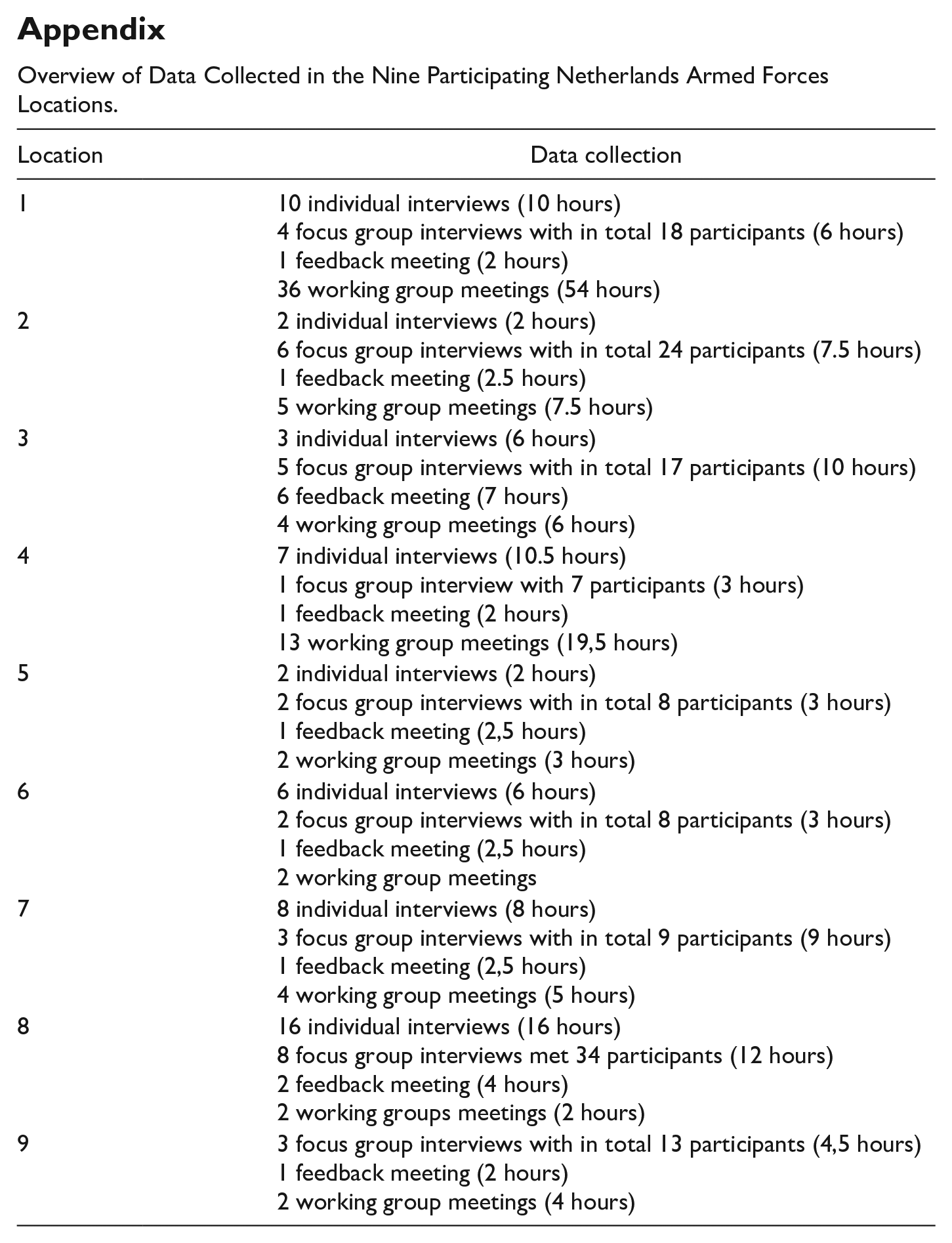
| Location | Data collection |
|---|---|
| 1 | 10 individual interviews (10 hours) 4 focus group interviews with in total 18 participants (6 hours) 1 feedback meeting (2 hours) 36 working group meetings (54 hours) |
| 2 | 2 individual interviews (2 hours) 6 focus group interviews with in total 24 participants (7.5 hours) 1 feedback meeting (2.5 hours) 5 working group meetings (7.5 hours) |
| 3 | 3 individual interviews (6 hours) 5 focus group interviews with in total 17 participants (10 hours) 6 feedback meeting (7 hours) 4 working group meetings (6 hours) |
| 4 | 7 individual interviews (10.5 hours) 1 focus group interview with 7 participants (3 hours) 1 feedback meeting (2 hours) 13 working group meetings (19,5 hours) |
| 5 | 2 individual interviews (2 hours) 2 focus group interviews with in total 8 participants (3 hours) 1 feedback meeting (2,5 hours) 2 working group meetings (3 hours) |
| 6 | 6 individual interviews (6 hours) 2 focus group interviews with in total 8 participants (3 hours) 1 feedback meeting (2,5 hours) 2 working group meetings |
| 7 | 8 individual interviews (8 hours) 3 focus group interviews with in total 9 participants (9 hours) 1 feedback meeting (2,5 hours) 4 working group meetings (5 hours) |
| 8 | 16 individual interviews (16 hours) 8 focus group interviews met 34 participants (12 hours) 2 feedback meeting (4 hours) 2 working groups meetings (2 hours) |
| 9 | 3 focus group interviews with in total 13 participants (4,5 hours) 1 feedback meeting (2 hours) 2 working group meetings (4 hours) |
Acknowledgements
We would like to express our gratitude to the participants in the Netherlands Armed Forces for their trust, willingness to share their experience and their active participation throughout the action research. We also thank our fellow action researchers Leonie Boskeljon-Horst, Marsha Meijer, Teun Eikenaar, Jelger Spijkerboer, Vivianne Dörenberg, Lia van der Ham, Nico Kaptein, Edzard Boland, Laura Hartman and Steven van Baarle for their role in the data collection for this study.
Declaration of Conflicting Interests
The authors declared no potential conflicts of interest with respect to the research, authorship, and/or publication of this article.
Funding
The authors received no financial support for the research, authorship, and/or publication of this article.
