




Abstract
Effective integration of the Regular and Reserve Armed Forces is essential to operational effectiveness, but evidence suggests that this remains problematic. Past research has focused on the professional values of Regulars and the perceptions that this group holds about Reservists. In this study, we argue that it is necessary to consider the perceptions of both Regulars and Reservists to truly understand the barriers to integration between these elements of Defence. This study investigates what Regular and Reserve Royal Marines see as the important constructs related to each group, through the use of repertory grid technique with 18 Regulars and 16 Reservists. Not only did the Regulars and Reservists in this study see different constructs as important, they also ascribed different constructs to each group. These differences are potentially problematic when aiming to integrate the Regular and Reserve Armed Forces.
Introduction
The 2010 U.K. Strategic Defence and Security Review (HM Government, 2010) encouraged a more cost-effective balance of Regular and Reserve Forces, Ministry of Defence civilians and Contractors to optimize future Defence capacity. This included an increase in the size of the Reserve Forces in the United Kingdom and the move toward a “Whole Force” (Levene, 2011) approach including the more extensive and effective use of the Reserve Forces. An essential element of this transformation is the need for the Regular and Reserve Armed Forces to integrate with each other effectively so that they can work together in a way that promotes Defence capability and maximizes operational effectiveness (Connelly, 2021).
Research suggests that the successful integration of Regulars and Reservists can be challenging. For example, Connelly (2021) reports on long-term tensions between the full-time Regulars and part-time Reservists in the British Army, drawing on Kirke’s (2008) findings that Army Officers were distrustful of Reservists of higher ranks and had negative attitudes toward Reservists serving in the Infantry. Research has also pointed to Reservists often feeling marginalized (Cunningham-Burley et al., 2018) as though they are being treated like second class citizens (Gazit et al., 2021). Research within the U.K. Ministry of Defence (MOD) has supported these issues, with evidence from Continuous Attitude Surveys (MOD 2015a, 2015b) reporting that 43% of Reservists did not feel that they were treated as an equal member of the Service by Regulars and 45% of Regulars stating that the Reserve Forces’ contribution was not valuable.
A large body of research has suggested that integration of Regular and Reserve Forces is hampered by Regulars’ perceptions of Reservists as challenging “the workplace norms of the full-time regular soldier” (Connelly, 2021, p. 662) and therefore as not being truly professional (Gazit et al., 2021). Data suggest that only 50% to 60% of Regulars viewed Reservists as integrated, professional or as making a valuable contribution, in surveys conducted between 2005 and 2019 (Connelly, 2013; MOD, 2019). Reservists are viewed as being like “Dad’s Army” (Farmer & Perry, 2014) or as “fillers” or “spare parts” (Lomsky-Feder et al., 2008, p. 603) and are viewed with “ambivalence or suspicion” (Lomsky-Feder et al., 2008, p. 603).
Regulars’ Perceptions of Reservists
Research has suggested that negative attitudes in Regulars toward the Reserve Forces often focus on concerns about whether they possess the necessary commitment or competence. Commitment to military service is seen as a key part of being a professional in the military (Parry et al., 2016). Research has highlighted the concerns of Regulars in relation to the commitment of Reservists (e.g., Connelly, 2013; Kirke, 2008; Smith & Jans, 2011). For example, within the U.K. Armed Forces, focus group research highlighted that several Regulars questioned whether Reservists “took it seriously” (MOD, 2014, p. 20). Issues such as a lack of “time served” and “24-hour availability” have meant that Reservists are characterized as both less committed and less professional due to the lower amount of time they can serve (Parry et al., 2016). Indeed, research outside of Defence has suggested that part-time workers are often seen as less committed due to their failure to be always available for their work (Lawrence & Corbin, 2003). More recently, Connelly (2021) drew on the literature on professional identity to explain that full-time professionals (in this case Regulars) often dismiss the professionalism of part-timers (in this case Reservists) because they violate the professional norms of working long hours and being ever-available. His data from focus groups with UK Army Regulars confirmed that Regulars’ (lower) perceptions of Reservists’ professionalism were influenced by their shared understanding Reservists not working long hours, not always being available, and choosing where to serve.
Concerns about time served also influence perceptions of Reservists as having lower competence compared with Regular Armed Forces personnel. These issues become more pronounced at higher ranks due to greater potential experience gaps (Connelly, 2013), with many Regulars stating they would find it difficult to accept the legitimacy of a Reserve Officer placed above them on operations (Connelly, 2013). Parry et al. (2016, p. 39) suggest that this is related to the “confluence of time served with competence for which there is a far from perfect correlation.” Perceptions of Reservists as less competent and committed are not limited to the U.K. Armed Forces. Similar issues have been found in the U.S. Army (Griffith, 2008, 2011a; Mahon, 1983; Walker, 1992), Australian Army (Ryan, 1999; Stewart & Fisher, 2007), Canadian Forces (Bercuson, 2009; Pratt, 2011), and Israeli Army (Perliger, 2011).
Broadly, these issues relate to the culture within the military that endorses values that are related to competence and commitment. The culture within the Regular U.K. Armed Forces has long been seen as a barrier toward integration between Reservists and Regulars with Walker (1990) suggesting that this culture (specifically in the Regular British Army) would continue to act as a barrier to integration between the Regular and the Reserve Forces. Specifically, Walker stated that
[T]hrough their own professional commitment to service and resultant disposition to accept their lives’ work as crucial to the nation’s security, most Regular soldiers believe . . . that the nation will always need Regular professional standing forces to meet external threats and that part time soldiers are not capable of meeting national security needs at any level of manning, training or equipment. These beliefs are driven more by socialisation and identity than by systematic observation and reflection on the reserve forces. (Walker, 1990, p. 151)
Culture and values have also been shown to be important barriers to integration in other contexts such as those relating to mergers and acquisitions. For example, research has suggested that differences in cultural values result in lower levels of acculturation (Björkman et al., 2007) and can impose barriers to human integration (Stahl & Voigt, 2008).
This literature suggests that differences in what Regulars and Reservists see as important in relation to individuals leads to potential challenges in integrating these groups. However, while previous research is useful in developing an understanding of how Regulars might view Reservists (and how this might affect integration of the two cohorts), to date, it has focused exclusively on what is important to Regulars in their perceptions of Reservists. What is missing is any consideration of the other side of this equation—what is important to Reservists and how they perceive these constructs in other members of the Armed Forces.
This oversight is important if we consider the nature of integration as a two-way process. Indeed, integration is seen in the literature as a two-way social process by which harmony between two groups is created so that they work together effectively (Parry et al., 2016; United Nations Department of Economic and Social Affairs, 2005). Integration is different from assimilation, whereby a minority group (in this case Reservists) is expected to adopt the values or priorities of the majority group (in this case Regulars). In integration, both groups keep their social identities. These definitions suggest that the integration of Regulars and Reservists is dependent on bringing together the values of both groups in relation to military service so that they can co-exist together successfully. As such, it is essential that we understand not only what is important to Regulars and how they perceive Reservists but that we also understand what is important to Reservists and their perceptions of the majority (Regular) social group. With this in mind, in this study, we examine the constructs that both groups ascribe as important to both Regulars and Reservists within the U.K. Armed Forces.
Identity of Reservists
An adjacent, but separate, literature has considered the professional and social identity of Reservists themselves and recognized that Reservists are required to balance both civilian and military identities (Griffith, 2011b). They are said to have a “hybrid civil-military character which is a basic ingredient of their social and personal identity” (Gazit et al., 2021, p. 618). Lomsky-Feder et al. (2008) likened this to “transmigrants” who move between different cultural or social spaces, and thus bring into the military the resources, skills and abilities of their civilian occupations and specializations (p. 599), allowing them to “see things in and about the military organisation that people from inside it or outside it do not see” (p. 601).
We suggest that this hybrid identity not only affects the perceptions that Regulars have of Reservists but also means that Reservists themselves will have a different set of professional values to the Regulars, even when considering their military service. Indeed Lording (2013) suggested that Reservists had a sense of “belonging” to the Reserve Forces but not to the Regular Forces, thus suggesting that they have a different social identity in relation to their military role. However, the nature of Reservists’ professional values in relation to which constructs they see as important in those that they serve with has not been examined, although these might affect the integration of the two groups. Our study addresses this weakness by examining the constructs that Reservists see as important in relation to both Regulars and Reservists.
The Current Study
In line with our arguments earlier, we focus in this study on the constructs that Regulars and Reservists see as important when discussing those with whom they serve. We distinguish here not only between the constructs identified by Regulars and Reservists but also between those that they ascribe to the two different groups. This allows us to explore not only the constructs that Regulars and Reservists draw on when describing their colleagues but also to understand how their perceptions of their own and the other group differ. This understanding provides information that could prove crucial in considering how to integrate Regular and Reservist cohorts more effectively. With this in mind, we address the following research questions:
To focus on the differences between Regulars and Reservists we have chosen to concentrate on personnel within only one Service of the U.K. Armed Forces. The vast majority of literature to date has focused on the integration of Regulars and Reservists, and the attitudes of Regulars toward Reservists, within the Army (e.g., Connelly, 2021), although the culture of other Services might be different. We chose the U.K. Royal Marines due to the high operational tempo and the fact that Regulars and Reservists undergo similar initial training within this Service. Connelly (2021) suggests (for the Army) that differences between Regulars and Reservists in relation to training and the slow operational tempo have made the lack of integration worse. We therefore focus on the Royal Marines in this study because this difference in training is minimized. In addition, the high operational tempo in the Royal Marines means that Reservists are more likely to have been deployed in operations, therefore giving Regulars and Reservists more chance of interacting and forming perceptions of each other. In turn, this might mean that the two groups have had more opportunities to integrate.
Despite their opportunities to interact, the Royal Marines face the challenge of becoming a fully integrated force composed of full-time members and increasingly of part-time volunteers. The Royal Marines have developed a deep-seated distinct ethos, manifested in their values, attitudes, and aspirations, and are seen as a “close-knit” community. This distinctiveness and close-knitted nature may pose obstacles toward the integration of Reservists into the “world” of Regulars.
Method
We applied the repertory grid technique (RGT) to uncover the personal constructs (Jankowicz, 2004; Kelly, 1991) of Regulars and Reservists that they associate with their own and the other group. The use of RGT allowed us to explore the structure and content of the implicit categories that Regulars and Reservists draw on to make sense of their experience of each other and is “systematic enough to allow the identification of shared cognitions” (Penny & Jankowicz, 2001, p. 187). RGT allows participants to articulate their “world” in their own terms rather than in terms dictated by the researcher. As such, RGT is considered a noninvasive technique designed to capture multiple dimensions of personal meanings as researchers do not use a priori categories, thereby reducing interviewer bias (Fransella & Bannister, 2004; Jankowicz, 2004). Furthermore, it allows researchers to generate data that are rich enough to examine individuals’ constructs and sufficiently parsimonious to be rigorous (Penny & Jankowicz, 2001).
A Personal Construct
Constructs are the unit of analysis in this study; they are elicited statements about what participants ascribe as important in relation to each group (Regulars or Reservists). Constructs are suggested to have polar opposite characteristics and this polarity aids our subjective meaning-making (e.g., Kelly, 1955, 1970, 1991). For example, the meaning of “good” becomes meaningful if compared and contrasted with “bad” or similar opposites.
Elicitation of a Personal Construct
We asked each interviewee to identify three Royal Marine Reservists (RMR) and three Regular Royal Marines (RM) that they had worked with. These six elements provided a basis for participants to compare and contrast the two groups iteratively to extract deep-seated constructs. Participants were then asked to consider a number of “triads”—a prescribed combination of three out of the six elements (please see an asterisk in Appendix). With regard to each triad, we asked the following central question:
Considering these three people, please think about how two of these people are similar, and thereby different from the third person, with regards to working with them?
The respondent’s articulation of the similarity and differences between elements facilitates the identification of a personal construct. Each identified personal construct is then explained and clarified by the interviewee. For example, if the construct used to compare three elements (in answer to the question above) was “experience,” the respondent was asked: “What does experience mean to you? In what way is it important to you?”
Definition of Pole and Ratings
Each personal construct was defined in relation to one end of a continuum, for example, “experienced.” Once the personal construct had been defined, it was necessary to also define the other end of the continuum. This is known as the “pole.” Using the above example of a construct of “experience,” the pole could be “inexperience.” Each participant was questioned to determine the pole for the construct that they had identified. The two ends of the continuum were thereby defined by the participant rather than the researcher, providing two (user-defined) ends of a bipolar scale. Having identified the construct and its pole, the interviewee was then asked to rate all six elements (three Reservists, three Regulars) on a scale of 1 to 5 (see example in Appendix). The ratings attributed by interviewees for each element against each construct served as the basis for the subsequent quantitative analysis.
We repeated the process of providing the respondent with a different triad (of three elements) up to 10 times to elicit multiple personal constructs. We stopped this process at the point when an interviewee struggled to identify any further personal constructs.
Sample
The participants were Royal Marines who had successfully completed their initial training. This notoriously challenging training lasts for 32 weeks and is the same for the Regular and Reservist RM. For this study, we used a single pair of Regular and Reservist units. The rationale for selecting this pair was that they had been identified as Regular and Reservist units who had recently worked together as part of a training exercise or operation. It was expected therefore that the participants had experience of working with at least three Regulars and three Reservists.
This was an exploratory study designed to generate the relevant constructs and provide the basis for future research. As such, a representative sample (taking into consideration gender and/or years of experience of participants) that would allow generalization across the whole Armed Forces was not necessary, rather it was important to reach theoretical saturation (Raja et al., 2013). In total, we carried out 34 interviews until saturation was confirmed. This included 18 Repertory Grid interviews with Officers and Other Ranks from the RM and 16 with Officers and Other Ranks from the RMR.
Aggregation of Multiple Grids
As a result of the 34 Repertory Grid interviews, we identified 267 constructs. The next step was to group together similar constructs to create construct categories. To achieve this, we qualitatively evaluated each construct to identify similarities and differences between the extracted constructs (Jankowicz, 2004). Two pairs of researchers (named here Team A and Team B) used cards that contained the interviewee’s definition of the construct and pole as well as a quote describing the construct. In a manual process, the two pairs of researchers separately compared each construct and identified groups of constructs that were similar to create construct categories. Team A identified 29 construct categories and Team B identified 34 construct categories in this initial coding round. The two pairs of researchers then assigned definitions to their construct categories, which comprised inclusion and exclusion criteria. Through an iterative process of comparison, these construct categories were refined and merged, resulting in a single set of 25 construct categories. NVivo word clouds were developed for each construct category to support this process. A second round of refinement of the construct categories led to the merging of another four construct categories with others, resulting in a total of 21 construct categories. A summary of the outcome of this process is provided in Table 1.
Coding and Refinement of Construct Categories
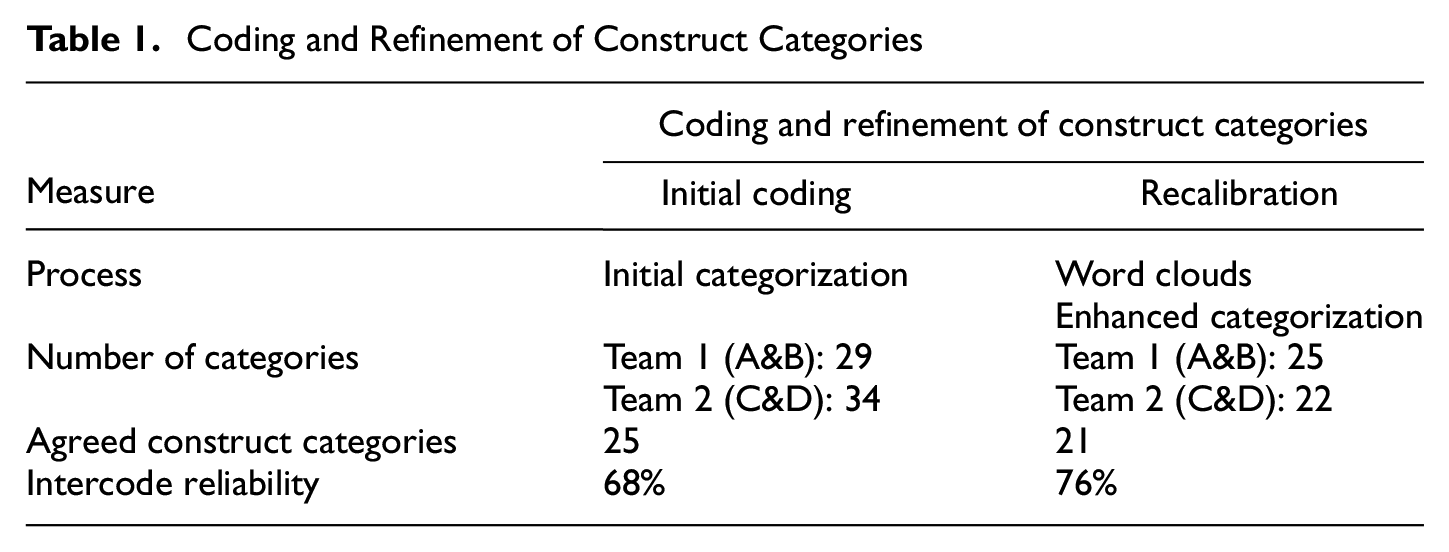
After refinement, an intercode reliability score of 76% was achieved between the two teams (in contrast with only 68% after the initial coding). This signifies the proportion of constructs (from both teams) that were allocated to the newly defined set of 21 construct categories. At the end of this process, we could not reach agreement on the allocation of 24% of constructs (64 out of the 267 identified initially) to a single construct category. These were excluded from further analysis.
Determination of Salient Constructs Categories
In a subsequent step, we examined the importance of construct category salience using an analysis of Unique Frequency (UF) and Average Normal Variability (ANV).
In relation to UF, or frequency of occurrence, we identified construct categories as “salient” if they were mentioned by at least 25% of the participants (Goffin & Koners, 2011; Goffin et al., 2006; Lemke et al., 2003, 2011; Raja et al., 2013; Shcheglova, 2009). Based on 34 interviewees, this meant that a salient construct category had to have at least eight unique mentions.
We determined the variability or spread among the ratings of the elements (Goffin et al., 2006; Raja et al., 2013), also known as Average Normal Variability (ANV). The greater the spread or ANV, the more the interviewee uses this construct to differentiate between the elements.
Results
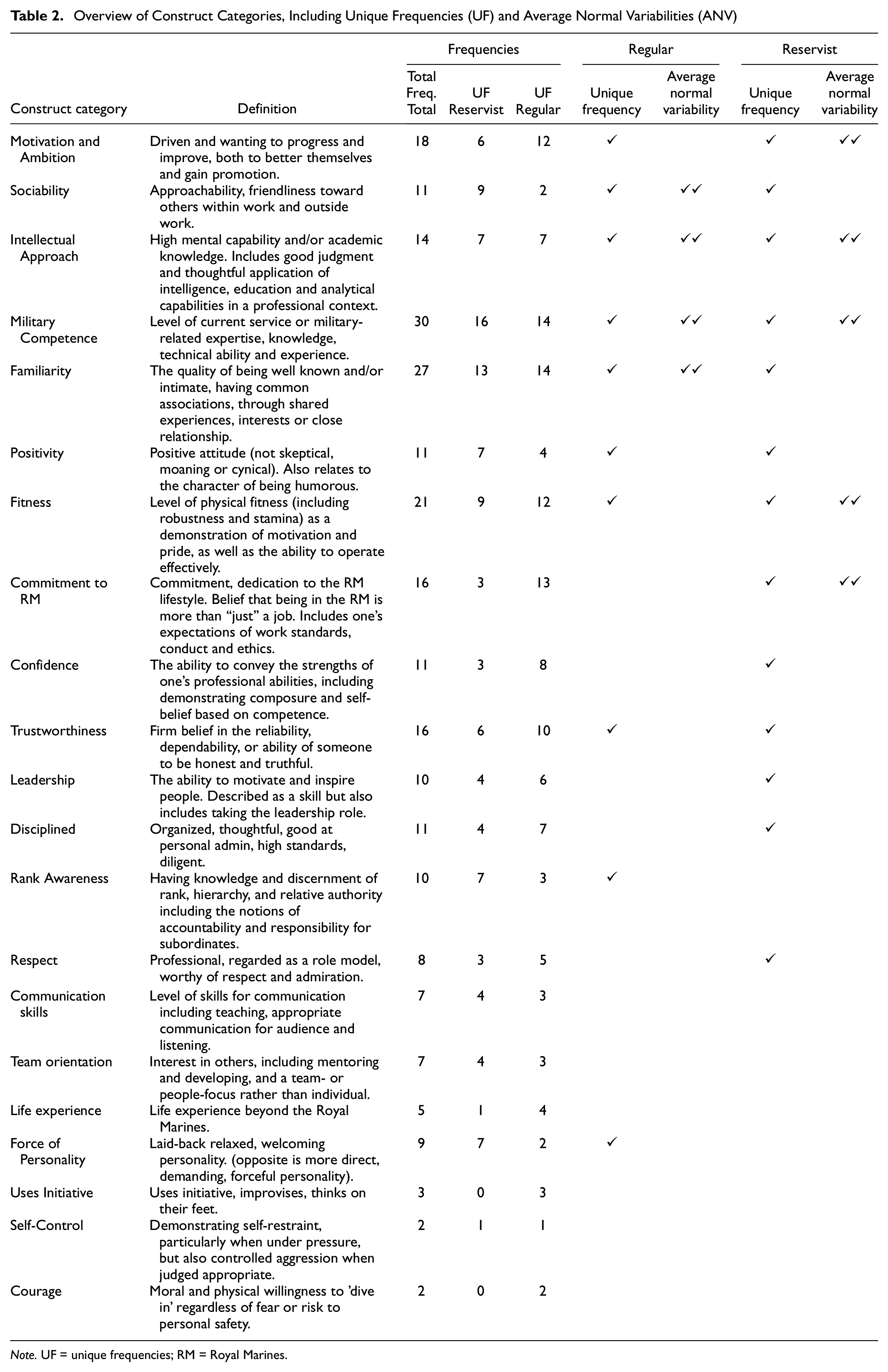
This aforementioned approach to determining construct category salience recognizes that frequency alone is not the only indicator of salient construct categories (Goffin et al., 2006). The combined analysis of UF and ANV is shown in Table 2. We analyzed all 21 construct categories: a visual indication of whether the thresholds were met is signaled by single tick (✓) for UF and a double tick (✓✓) for ANV.
Overview of Construct Categories, Including Unique Frequencies (UF) and Average Normal Variabilities (ANV)
Note. UF = unique frequencies; RM = Royal Marines.
As a result of applying the tests of UF and ANV, we excluded a further 14 (out of 21) construct categories from further analysis as they did not meet the threshold of either UF or ANV. This left seven salient construct categories for consideration (see Table 2). These were: Motivation and Ambition; Sociability; Intellectual Approach; Military Competence; Familiarity; Fitness; and Commitment to the Royal Marines. The bipolar constructs are not presented here with opposite ends of poles, only aggregated definitions are shown in Table 2.
We identified two salient constructs as important to both Regulars and Reservists: Intellectual Approach and Military Competence. This suggests that both constructs are seen as important by members of the Royal Marines, regardless of whether the individual is full or part-time. For Regulars, the salient constructs of Motivation and Ambition, Fitness, and Commitment were also seen as important constructs. In contrast, for Reservists the constructs of Sociability and Familiarity were considered important. In the next section of the paper, we use qualitative analysis to discuss each of these salient constructs in more detail.
Motivation and Ambition
Both Regulars and Reservists in this study defined Motivation and Ambition as the desire to improve and meet the high standards expected of the Royal Marine Corps, to achieve recognition and promotion. For example, one participant suggested,
Being quite driven and wanting to progress, and optimistic about their progression. Feeling they’ve got somewhere to go. (Royal Marine Reservist—Reference 5RMR.5)
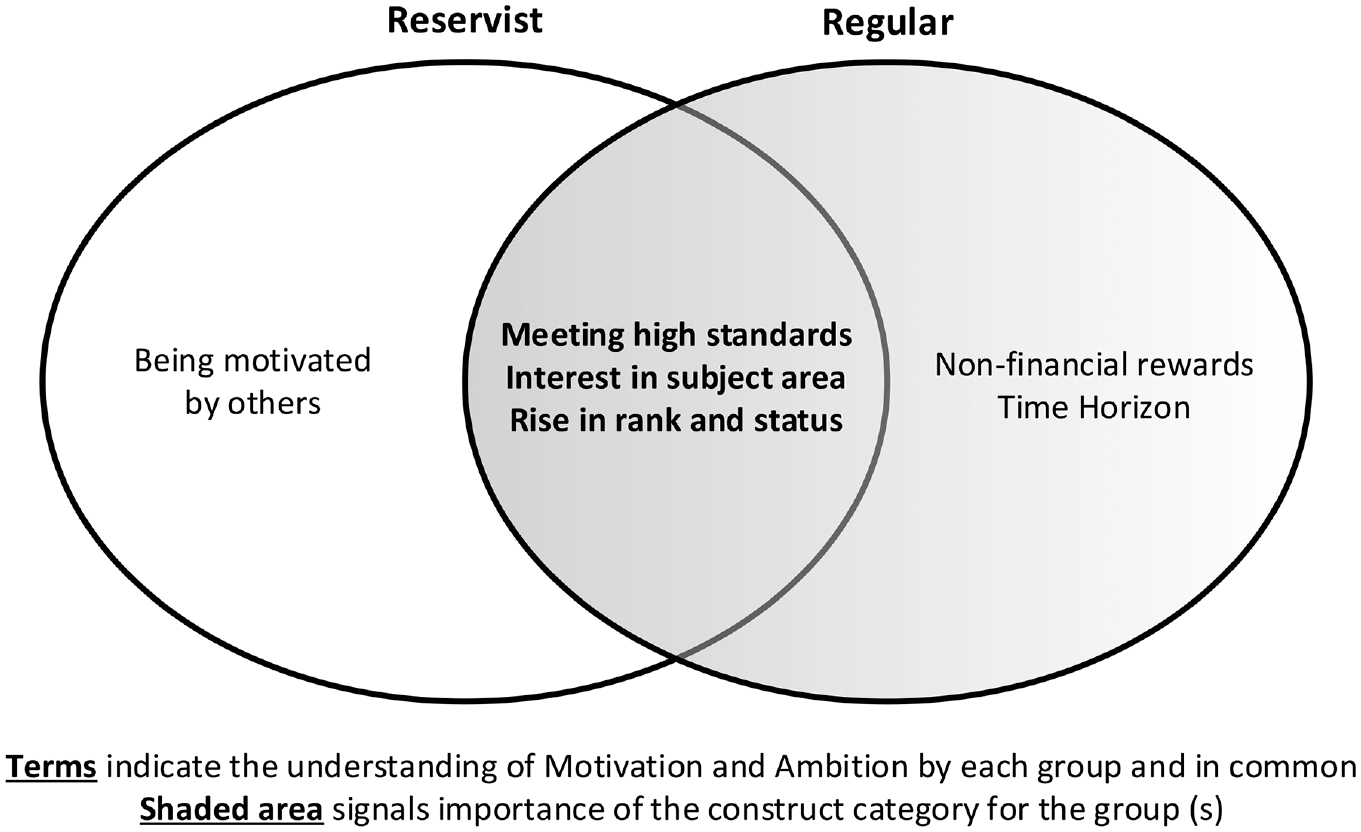
Looking at the UF and ANV, this construct was only important to Regulars. To ease visual comprehension, in the figures below, the importance that one or both groups attribute to the construct is indicated by shading. In Figure 1, the area is shaded for Regulars while it is not shaded (signaling lack of importance) for Reservists.
Motivation and Ambition.
Regulars perceived this construct as being present in Reservists, as one Regular explained:
I’d probably put the RMR lads on motivation higher up, . . . because . . . they have to show everyone else that [is] full-time [that they are] more enthusiastic. (Regular Royal Marine—Reference 30RM.2)
The qualitative data provide some further insight (see Figure 1) into the different interpretations the two groups had of this construct.
Regulars tended to talk about Motivation and Ambition as having a time-dimension, whereby they believed a Royal Marine will stay and invest themselves tirelessly with the Service and/or within their current unit over a long time period.
. . . Someone who is going to do the job to their best of ability on a daily basis . . . (Regular Royal Marine—Reference 28RM.9)
Accordingly, for Regulars Motivation and Ambition was considered to involve patience and persistence. Another dimension of this construct appeared to set Regulars and Reservists apart. For Regulars, demonstrating Motivation and Ambition involved meeting high standards and showing interest in the subject area. Regulars suggested that increases in rank or status should generally be achieved by seeking non-financial rewards. For example, a Regular talking about a fellow Regular commented,
. . . my understanding of his motivation would be he’s not striving to get promoted at the earliest opportunity, to earn more money. He’s all about providing or achieving or taking a job that he thinks is both rewarding and gives back something to the organisation. (Regular Royal Marine—Reference 19RM.7)
Reservists associated Motivation and Ambition with different factors. For example, they considered motivation by others. This construct related to encouragement one gives or receives:
. . . that could be like a teacher to a student, it’s encouraging them to come along and then just pushing them, they have to get the grade . . . (Royal Marine Reservist—Reference 12RMR.5)
Furthermore, it entailed inspiration which prompts and drives self-development and improvement:
I had to come in and prove myself and raise my physical standards and raise my technical ability and skills and drills and fit into that role and come up to their standard which I was able to do. (Royal Marine Reservist—Reference 6RMR.5)
It should be noted that although Regulars associated Reservists with Motivation and Ambition, this was not always a positive association, as Regulars evoked its undesirable features. To some extent, the focus on the financial terms of service appeared foreign and unnatural to Regulars:
[It is] not a normal [thing to do for] a Regular Marine . . . that they spoke or appeared more motivated by money or earnings . . . (Regular Royal Marine—Reference 19RM.7)
Sociability
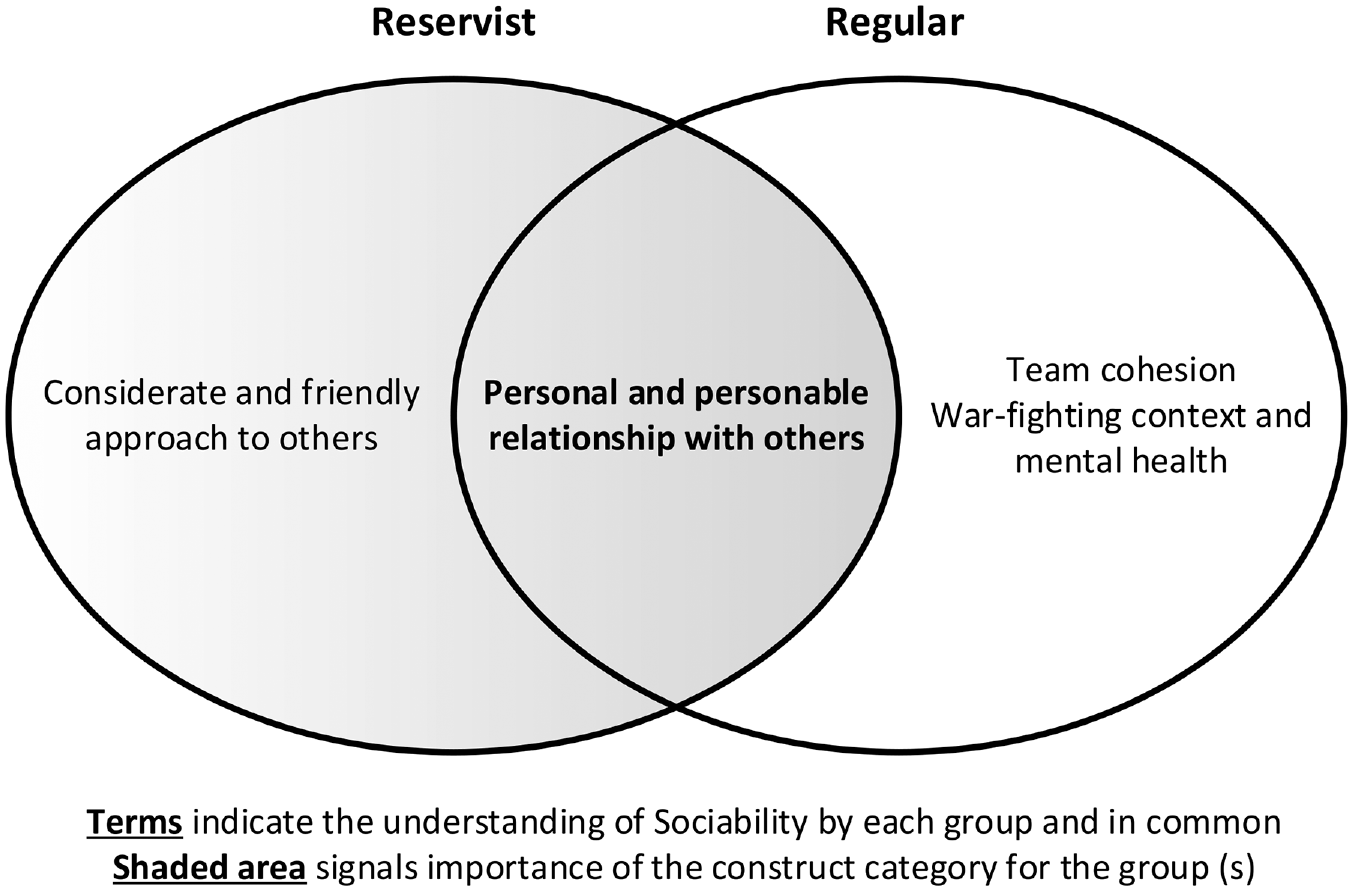
Sociability was identified as important to Reservists in this study. Reservists tended to see Sociability as an inclination to be open, friendly, and show interest in other Royal Marines. For example,
[It is] . . . being interested in people, it is being willing to engage with people, it is just being nice to people sometimes. (Royal Marine Reservist—Reference 34RMR.6)
This was seen as a desirable construct in the Royal Marine environment:
. . . it’s good to have a more personal relationship because these are the guys that you’ll be working with a lot . . . [it is important to be] socialising with them outside of your work as well. That’s more of a friendship. (Royal Marine Reservist—Reference 3RMR.1)
Reservists emphasized the informal nature of some relationships (such as going out for a drink) as a dimension of Sociability: this aspect was not mentioned as commonly by Regulars:
We used to go out drinking and you sort of feel that you’re on his level. There was no hierarchy, there was a good friendship ‘cause we’re the same sort of age, the same sort of outlook on life, worked together well. (Royal Marine Reservist—Reference 6RMR.6)
In contrast, Regulars described Sociability as the tendency for a group to be united and internally cohesive. For example,
. . . the majority of what we do is collaborative and team building work and almost everything I can think of requires people to work with other people and human interaction is a key role and aspect of our job. (Regular Royal Marine—Reference 19RM.9)
For Regulars, the professional context in which this construct plays out was important. They drew attention to the fact that Sociability is vital to confront the hardship of conflict. It emerged as a perceived antidote to the devastating effects of war on mental health, as expressed by a Regular:
I think it is, especially in our role, we are used to working in teams, we very rarely work isolated, so team cohesion, especially when you’re out in a war-fighting incident, where if you’re on ship or on a base out in Afghan for six months with people, you need someone who is a bit more sociable. Especially with the mental health issues that go along with that, it’s good to have someone who is social because you can bring things out of them and notice things. So, I think it’s relevant to our job. (Regular Royal Marine—Reference 17RM.10)
These similarities and differences are highlighted in Figure 2.
Sociability.
Intellectual Approach
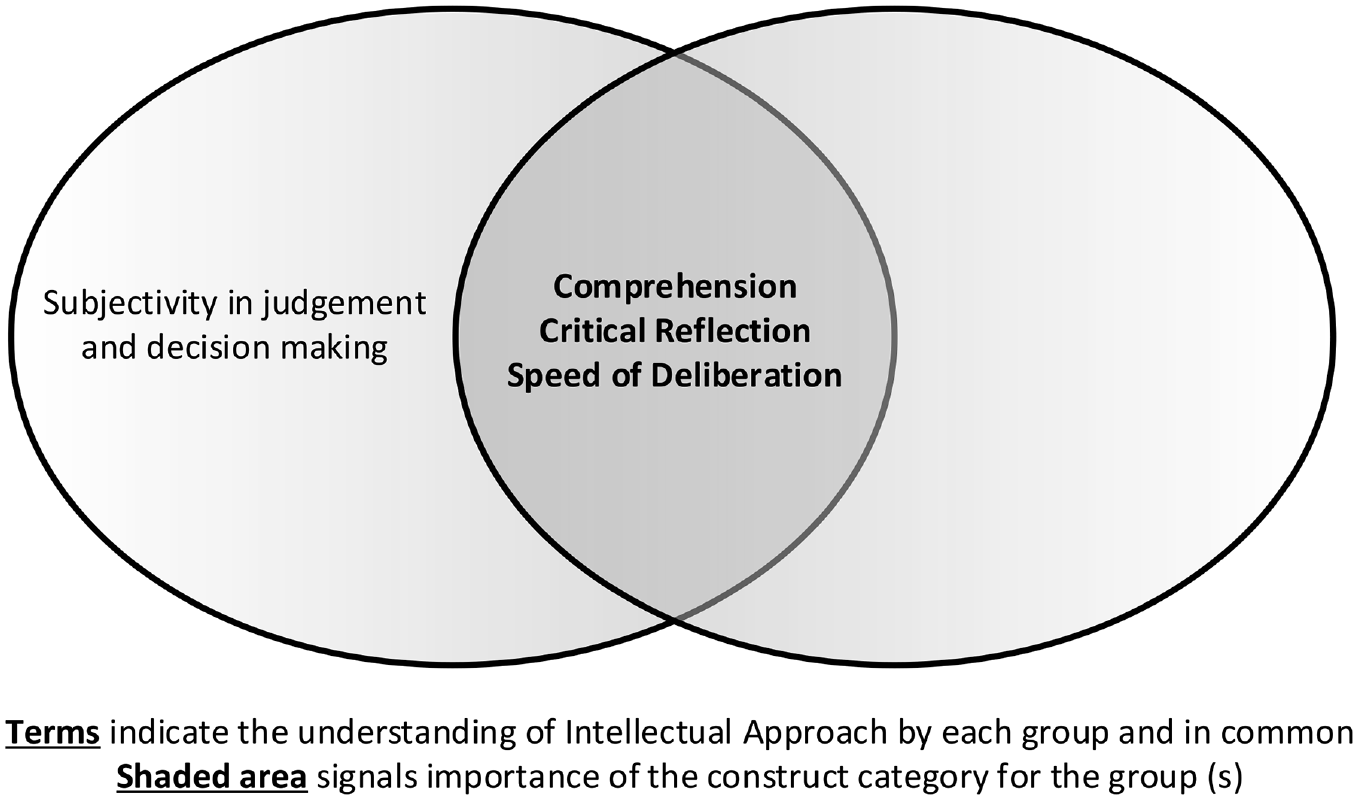
Intellectual Approach (see Figure 3) was seen as important by both Regulars and Reservists. Both groups defined Intellectual Approach as being related to the ability to understand something and to evaluate it in a critical manner. For example,
I just think these two [persons] would probably do things a bit quicker without taking a step back, whereas these two would probably take a step back and analyse things a bit more before they try to do what these people do initially. (Royal Marine Reservist—Reference 1RMR.7)
Intellectual Approach.
Intellectual Approach was also associated with the speed at which decisions are made or tasks are carried out:
. . .[It] is important because it means that decisions can be made quicker and functions can be carried out quicker. (Regular Royal Marine—Reference 25RM.8)
However, the pace enabled by an Intellectual Approach did not imply impulsive or reckless decisions. As one interviewee noted,
[Without it, people] . . . make rash decisions and judgments where they’re not guarded with their comments (Regular Royal Marine—Reference 28RM.2)
The criticality of this construct was underlined by both groups. For instance, in saying:
The military has lots of procedures and ways to do things so if you don’t understand the way that you are supposed to go about your business you could do something wrong, which ultimately could lead to, in what we do the worst-case scenario would be death, but it could be injury, being charged or a dangerous occurrence happening. So, it’s important you understand why we go about and do things certain ways. (Royal Marine Reservist—Reference 2RMR.6)
In a nutshell, this was about sound evaluation and judgment, yet for Reservists, the subjective nature of decisions that ensue was notable. For example,
Purely just from what they are saying I feel like these two know what they’re actually talking about and I know they know what’s going on. What they’re saying is, they believe in it and I believe in what they’re believing, because I feel like they’ve actually been there and done it. (Royal Marine Reservist—Reference 12RMR.6)
Military Competence
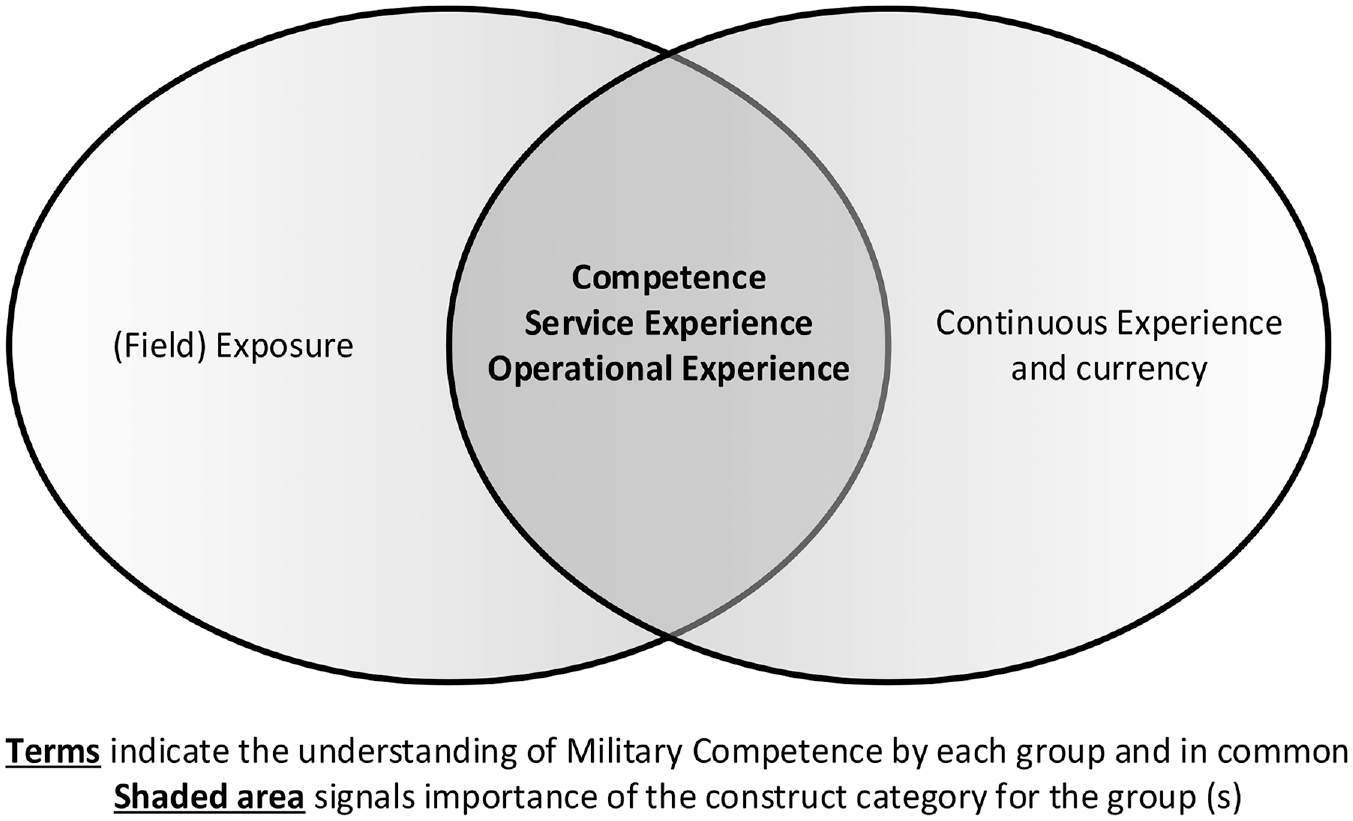
Military Competence (see Figure 4) was also identified as an important construct by both groups. This construct was associated with repeated experience and “green” skills that are practiced and developed in a military context. For example,
[Military Competence is . . .] what I’ve seen over that 30 years as opposed to a guy who’s done 10 years. There’s a lot of things that I’ve seen over that period of time from operations, from a training environment . . . I can look at something and say well I know in the past we’ve done it that way and that did not necessarily work, let’s think about doing it this way. (Regular Royal Marine—Reference 32RM.3)
Military Competence.
Regulars particularly considered “field” experience as important. For example,
. . . that is all we think about so our job is, well not our job, it’s a way of life. That is all we know. Whereas on the flip side of it, they’ve [the Reservists] also got their normal jobs that they have to think about as well . . . We tend to pride ourselves with constantly being current and always practicing and all that stuff, most days and not maybe a couple of times a month or something like that. (Regular Royal Marine—Reference 16RM.2)
In fact, some Regulars emphasized the drawback of lacking currency in Military Competence by suggesting:
Somebody who’s not current requires a little bit of extra work and a little bit more time, and you can’t give them the same level of responsibility as someone who is current. (Regular Royal Marine Reference—28RM.3)
Beyond the emphasis on experience, Reservists placed a high importance on exposure, revealing that for them it is difficult to gain the same experience as their Regular counterparts. Clearly, competence acquired in a “field” context was seen as both desirable and challenging to obtain:
[Exposure is] really important. That’s why I keep striving now to get the experiences that these people have . . . . This person’s getting lots of experience whereas we could be doing it for ten, twenty years and not getting as much experience as this person gained. (Royal Marine Reservist—Reference 1RMR.5)
A considerably higher degree of Military Competence was attributed to Regulars.
I would expect the Regulars to have more experiences, a bit more to offer in terms of advice and things. (Royal Marine Reservist—Reference 13RMR.3)
Familiarity
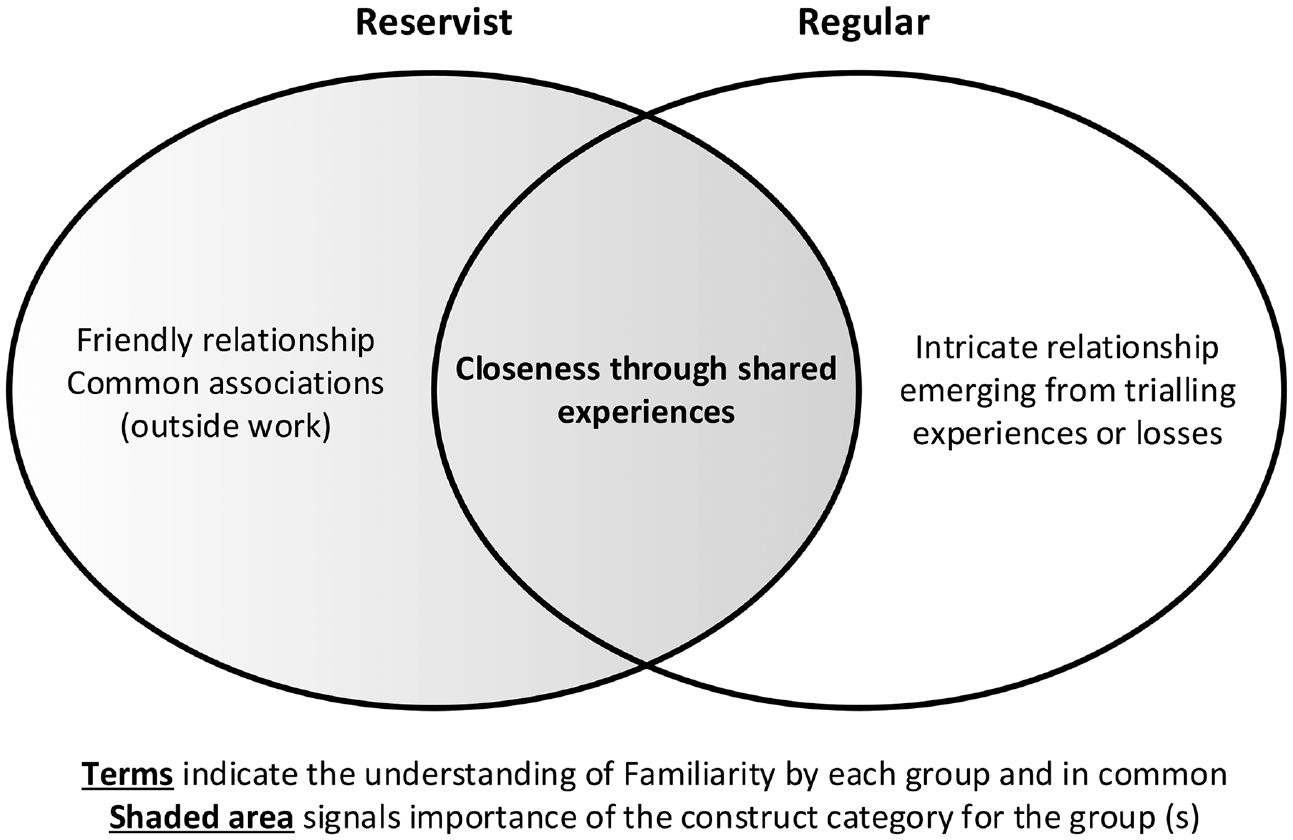
The construct of Familiarity (see Figure 5) was important to Reservists and defined by both Regulars and Reservists as a form of intimacy or closeness created through shared experiences. For example,
Those three I have more in common with, so in that way you get on with them more, you’re interacting more with each other. (Regular Royal Marine—Reference 30RM.3)
Familiarity.
Reservists described Familiarity as being born out of geographical proximity as well as sharing common associations (many outside work such as place of childhood, interest in same sports clubs):
Number one, he lives further away. Therefore, less things to relate to and talk about in conversation. That helps build the relationship. Then obviously three and four live nearby and know similar places to me, therefore that helps in conversation. (Royal Marine Reservist—Reference 3RMR.5)
Familiarity was seen as reflective of bonds that are just obvious and unquestioned:
You just know them. You know how they work. You talk, you know each other, you’ve got things in common, you get on. (Royal Marine Reservist—Reference 9RMR.6)
Importantly, it was perceived as protecting you as a family would:
If you don’t have that family sense it can be dog eat dog! (Royal Marine Reservist—Reference 8RMR.9)
Similarly, Regulars referred to Familiarity as sometimes emerging from difficult experiences or losses:
[Familiarity] be it good, be it bad, you lose someone close to you, or in your mob, in your section, or you have a contact, somebody gets blown up, it naturally, everyone pulls together tighter. So, you have a better experience with them, than someone you haven’t, someone you just worked in the office with for two years. (Regular Royal Marine—Reference 24RM.3)
Fitness
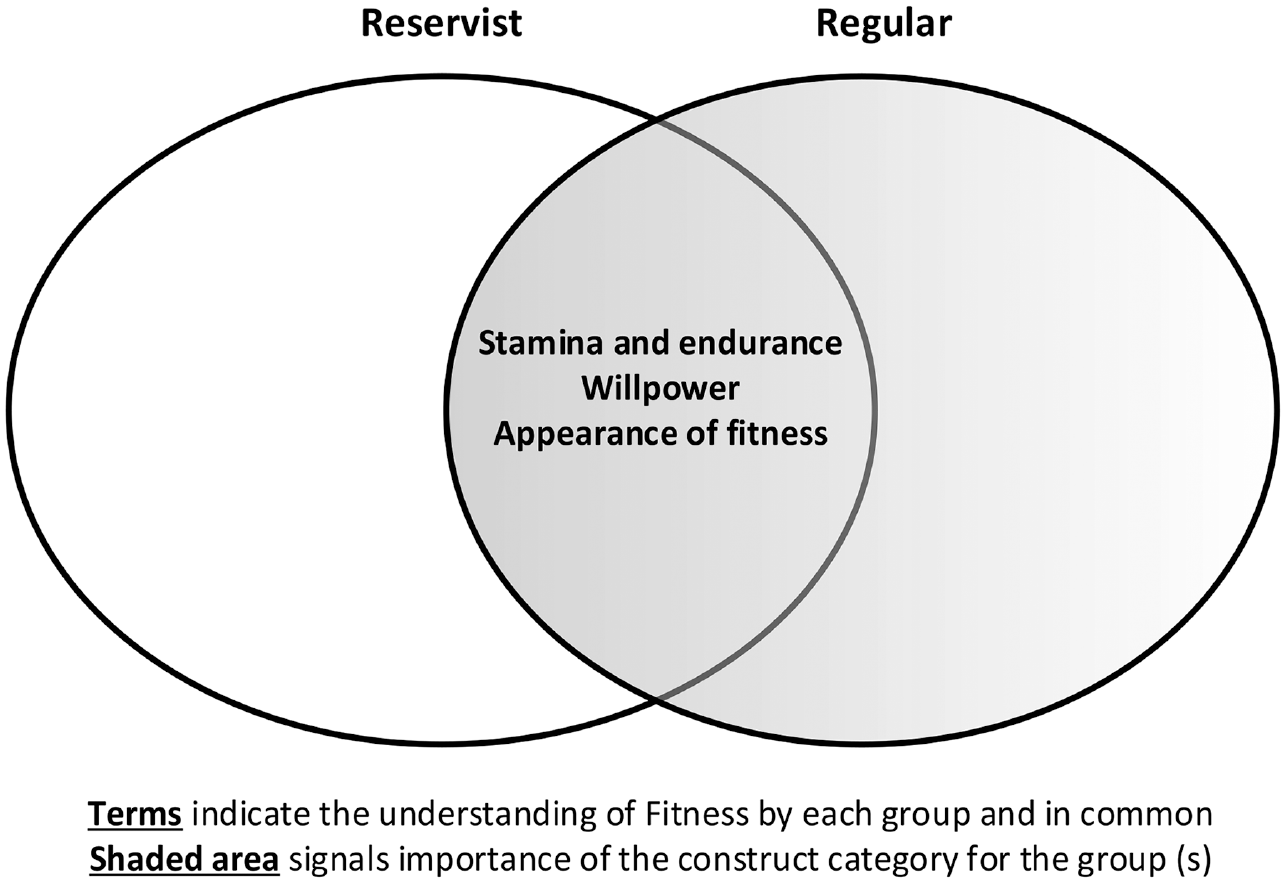
The construct of Fitness (see Figure 6) was defined as being “fit,” focusing on Royal Marines being associated with strength, stamina and endurance. There appeared to be no substantial difference in the understanding and importance both groups ascribed to Fitness. A participant explained,
. . . it’s about the dedication to fitness, which obviously speaks more about a soldier than just how fast they can do a run . . . (Regular Royal Marine—Reference 17RM.3)
Fitness.
This was thought to reflect more broadly on the way a person behaves, their willpower and what they are capable of:
His ability to soldier in arduous and difficult conditions. His ability to motivate and lead others and not become a burden to his peers, whilst operating in challenging environments. (Regular Royal Marine—Reference 19RM.4)
Fitness also referred to the way a person looks:
If you had someone who’s fat but nonetheless could do the job, they aren’t really a poster boy for the role. (Royal Marine Reservist—Reference 4RMR.8)
Commitment to the Royal Marines
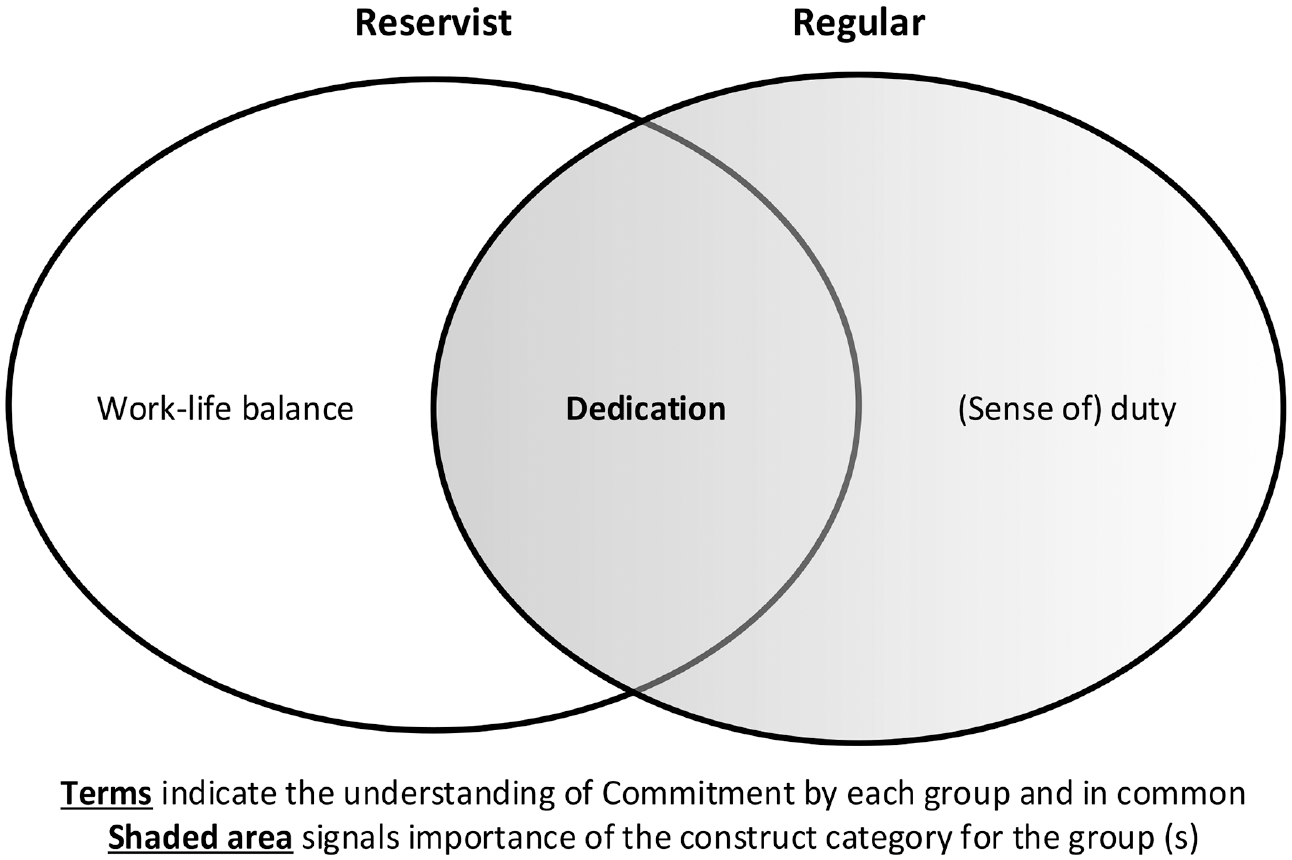
Commitment to the Royal Marines (RM) in Figure 7 was identified as an important construct to Regulars. It was seen as a form a dedication covering one’s expectations of work standards, conduct, and ethos.
I would say that their professional attitude to their job is a little more than this one, because that is their job, whereas this one not so much, this is like a short-term job if you see what I mean. (Regular Royal Marine—Reference 31RM.3)
Commitment to RM.
Both groups equated this construct to a form of devotion which goes beyond normal expectations of a job, indicating that Commitment is attached to a strong sense of duty:
It’s quite a strange job we’ve got, and you don’t just turn up for your 9-5, it is like a lifestyle . . . you don’t really get many people who turn up to the Marines day in/day out and just see it as a 9-5 job. (Regular Royal Marine—Reference 17RM.4)
Regulars openly commented on the commitment of those whose “work-life-balance” is safeguarded, as represented by the following quote:
. . . the other one is extrinsically where they are motivated for other reasons than the Service, i.e. home life is more important than the job, whereas. . . Yes, probably a better way to put that actually, where intrinsically motivated, the job comes first because that’s how they’ve always done it, extrinsically motivated is someone who considers family life more important than the job. (Regular Royal Marine—Reference 28RM.8)
Relatedly, Commitment for Reservists was acknowledged as a balancing act. This countered the views of the Regulars by arguing that it is important to maintain stability in their other (non-military) life:
[Reservists] proactively balance their opportunities with their own enjoyment as well as putting in, contributing. . .I think especially in the Reserves you need to, because it’s a certain job otherwise your family is going to start to get a bit annoyed if you’re working all week and then away at the weekends. I think that [Commitment] is a positive, within reason obviously . . . (Royal Marine Reservist—Reference 5RMR.7)
Discussion and Conclusions
In this research, we identified those constructs that are perceived as important by Regular and Reservist RM and compared how each of these two groups of Service personnel ascribed each construct to their own and the other group. We used RGT with a sample of 18 Regulars and 16 Reservists from the U.K. RM to identify constructs that were seen as important by Regulars, Reservists, or by both groups. We then examined the frequency at which each construct was suggested as important by each group and how each group rated the other in relation to these constructs. We identified seven constructs as important to Regulars, Reservists, or both. Intellectual Approach and Military Competence were important to both Regulars and Reservists. Distinctively for Regulars, the additional aspects of Motivation and Ambition, Fitness, and Commitment to RM were seen as important. Distinctively for Reservists, Sociability and Familiarity were identified as important constructs of RM.
These constructs could be suggested as being related to the professional values of each group, and, as such, build on previous literature in this area. For example, our research supports previous work that has identified commitment as crucial to military service (Parry et al., 2016). Our findings also partially support the idea that Reservists are viewed by Regulars as being less committed due to the part-time nature of their role (Connelly, 2013, 2021) Commitment was indeed seen as important by Regulars, but this group did not perceive Reservists as having lower levels of this construct. In fact, it was Reservists who viewed Regulars as having greater Commitment in this study, while there were only small differences in the ratings that Regulars ascribed to the two groups. This finding might reflect the ethos and way of working in the RM in relation to the close-knit units and the fact that Regulars and Reservists complete the same training. It might also reflect the higher operational tempo in the RM, as Regulars who have served on operations with Reservists are less likely to have concerns about their commitment to military service.
Our study also supports previous research that Military Competence is perceived as an important construct for both Regulars and Reservists. Both groups awarded higher ratings for Military Competence to Regulars. Importantly here, Reservists described the difficulty in gaining experience as a part-time member of the RM. The perception that one group is less competent than the other is likely to lead to differences in perceived status between the two groups and therefore present a barrier to integration.
We also identified constructs that are outside of the focus of previous studies: Motivation and Ambition; Sociability; Intellectual Approach; Familiarity; and Fitness. The identification of these constructs has allowed us to suggest potential differences in the professional values of Regulars and Reservists. Motivation and Ambition, Fitness, and Commitment were identified as important by Regulars in distinguishing between Regulars and Reservists. For Reservists, Sociability and Familiarity were important. Notably (with the exception of Fitness), for these constructs and also for Intellectual Approach that was perceived as important by both groups, the emphasis on exactly what was important in relation to these constructs differed. This is interesting as it suggests the possibility of fundamental differences in the professional values of Regulars and Reservists as well as differences in the ways in which the two groups are perceived. This difference may emerge from the contrast between a group that is assimilated fully into military life compared with one having a hybrid or “transmigrant” identity (Gazit et al., 2021; Lomsky-Feder et al., 2008). While integration is not about eliminating differences in professional values, these differences can lead to challenges in relation to integration. It is essential that the Royal Marines—and indeed other Services—take steps to facilitate understanding of these differences in the two groups to promote common ground as a basis for successful integration (Parry et al., 2016).
Importantly, our research suggests that it is not only Regulars who hold different perceptions of the constructs of Regulars and Reservists. The inclusion of both groups in this study has allowed us to propose that both Regulars and Reservists perceive different constructs as related to each group and that these constructs are not consistent. For example, while Regulars in our study perceived Reservists as being more motivated, ambitious, and sociable than Regulars, Reservists perceived Regulars as being more committed, motivated, and ambitious than Reservists were. Reservists also perceived their own group as being not only more sociable but as having a greater focus on Intellectual Approach and Familiarity. These differences are important as perceptions such as these may form the basis of stereotypes and biases that can influence behavior and potentially hamper integration efforts. Again, the facilitation of communication to understand these perceptions, and to encourage greater understanding of the actual constructs of each group can help address these risks.
This study is limited by its focus on only a pair of units in one Service within the U.K. Armed Forces and therefore is only intended as an initial exploration into these issues. Despite these limitations, our study makes some important contributions to our understanding of what Regulars and Reservists see as important constructs in Service personnel and how they perceive their own and the other group in relation to these constructs. Our study has provided some evidence that Regulars and Reservists not only see different constructs as important but that even within common constructs they emphasize different things. The two groups in our study also ascribed different constructs to their own and the other group. This extends previous literature (Connelly, 2013, 2021) that has focused on the professional values and perceptions of Regulars only. It is important to appreciate that successful integration is dependent on understanding the professional values and perceptions of both groups. Further research should undertake a more detailed examination of these aspects in a larger sample and in different contexts.
The fact that the results of this study differ from previous research looking at Regulars’ perceptions of Reservists might suggest that perceptions of Reservists (and Regulars) and thus the barriers to integration differ according to Service. In the RM in our study, the perception by Regulars of lower Commitment in Reservists was not as prominent as in previous (Army-based) studies. This suggests that difficulties with integration, which have been talked about as universal in previous literature, are to some extent contextually bound. Further research should undertake a systematic examination of how context (e.g., Service, unit) might influence Regulars’ and Reservists’ perceptions of each other in order to provide useful insights into how the barriers to integration might be lowered.
This difference in the findings compared with previous work might be due to the higher levels of interaction between Regulars and Reservists in the Royal Marines. This warrants further research as, if true, it highlights the importance of promoting interaction between Regulars and Reservists to promote a better understanding of each other (Parry et al., 2016). The facilitation of conversations to promote such understanding might form the basis for improved integration between these two elements of the Whole Force (Levene, 2011).
In sum, this research expands previous work that has examined the perceptions of Regulars in relation to Reservists by also considering the views of Reservists and the differences between the two groups in what they see as important in Service personnel. These potential differences in both what they see as important, and in their perceptions of each other, might form the basis of the long-discussed problems in integrating the two groups. We offer this as a useful avenue for future research with a view to supporting more effective Service operations.
Footnotes
Appendix
Declaration of Conflicting Interests
The authors declared no potential conflicts of interest with respect to the research, authorship, and/or publication of this article.
Funding
The authors received no financial support for the research, authorship, and/or publication of this article.