




Abstract
Agroecology promotes the formation of networks based on principles of closeness, trust, and collective action among participating actors and with external institutions and agencies. This institutionalized vertical power is based on hierarchical relationships, which impact access to resources, policy influence, and the ability to navigate bureaucratic systems. This qualitative case study aims to investigate the intersection between power relations and linking social capital to comprehend the challenges actors in agroecological supply chains face in accessing external resources and operating under the current legal framework governing food supply chains in Colombia. We present the case of agroecological networks in Eastern Antioquia to uncover the impact of their relationships on existing power dynamics within networks and associated institutions. Our findings suggest that social capital does not consistently facilitate the enhancement of associativity within agroecological chains. Moreover, it can function as a mechanism of oppression and promote the formation of exclusive and exclusionary groups.
La agroecología promueve la formación de redes basadas en principios de cercanía, confianza y acción colectiva entre los actores participantes, así como con instituciones y agencias externas. Este poder vertical institucionalizado se basa en relaciones jerárquicas que afectan el acceso a los recursos al igual que la influencia que puedan tener las políticas y la capacidad de navegar por entramados burocráticos. Este estudio de caso de índole cualitativa tiene como propósito investigar la intersección entre las relaciones de poder y la vinculación del capital social para comprender los desafíos que enfrentan los actores de las cadenas de suministro agroecológicas que buscan acceder a recursos externos y operar bajo el marco legal que actualmente rige las cadenas de suministro alimentario en Colombia. Presentamos el caso de las redes agroecológicas en el Oriente antioqueño para estudiar el impacto de sus relaciones en las dinámicas de poder ya existentes dentro de las redes e instituciones asociadas. Nuestros hallazgos sugieren que el capital social no facilita la mejoría de la asociatividad dentro de las cadenas agroecológicas de manera consistente. Además, puede fungir como un mecanismo de opresión y promover la formación de grupos exclusivos y excluyentes.
In response to global agribusiness expansion and the impacts of neoliberalism, the La Vía Campesina peasant movement introduced the concept of food sovereignty in 1996 (Nyéléni Declaration, 2007), with agroecology as its central tenet, providing localized solutions for global challenges and promoting sustainable food systems. Recognizing the influence of various factors on agriculture, agroecology emphasizes social, cultural, economic, political, and ecological considerations (FAO, 2018). However, the power dynamics within agroecological networks are underexplored, necessitating a nuanced understanding of their reinforcement and perpetuation. Sociopolitical approaches often overlook these complexities, focusing on industrialized agrifood systems’ power over smallholder communities (Anderson et al., 2019). Incorporating power dynamics into agroecology aligns with the sociopolitical objectives of food sovereignty movements, challenging dominant food systems. Nonetheless, it is crucial to avoid rigid legal structures and understand power relationships and social capital intricacies.
We undertook an investigation into power relations in eastern Antioquia, Colombia, proposing the integration of social capital theory to illuminate how trust, norms, and social networks shape organizational structures within agroecological networks. Despite the region’s history of violence and ongoing threats, agroecological networks exhibit resilience, explored through a place-based approach considering relationships among actors, supply chains, institutions, and Colombia’s legal framework. Our goal is to challenge the assumption that social capital invariably empowers actors within agroecological networks, questioning whether farmers can freely engage in agroecological food production solely based on trust and reciprocity. Additionally, we scrutinize the notion that power within these networks is exclusively leveraged for empowerment and mobilization towards common goals. Given the export-oriented legal framework regulating Colombian food chains, our proposed analytical framework aims to surpass these assumptions and critically examine the multifaceted nature of power dynamics within agroecological networks in this region of Colombia, focusing on vertical social capital and its relationship with institutional arrangements.
This article has five sections. First, a literature review elucidates the foundational concepts shaping our analytical framework. This framework aims to dissect power relations within agroecological networks, exploring the nuances of various types of social capital and highlighting how vertical social capital interplays with institutions and the legal framework. Next, we examine the historical context of armed conflict, displacement, and the stigmatization of associativity in the eastern region of Antioquia, Colombia. Transitioning to an analysis of Colombian public policies concerning food supply chains and systems, we scrutinize the overarching regulations governing agricultural production. This examination seeks to assess the recognition and treatment of alternative supply chains and agroecological networks within the existing legal framework. Finally, we present a case study conducted in this region by the first author, who engaged with over twenty stakeholders in agroecological supply chains and networks. The analysis considers how vertical social capital and power dynamics manifest across agroecology, encompassing productive practices, social and economic relations, knowledge dissemination, innovation, governance, and institutional frameworks.
Social Relations Shaping Power Dynamics In Agroecological Networks
Agroecology And Social Capital
Agroecology is an agricultural approach focused on optimizing interactions among plants, animals, humans, and the environment, emphasizing ecological and social diversity in food production (Altieri and Nichols, 2021). Rooted in sustainability, resilience, and social justice principles, it aims to create ecologically sound, socially just, and economically viable food systems (Gliessman, 2018; Holt-Giménez and Altieri, 2013). This alternative paradigm empowers historically marginalized peasants, countering exploitative dynamics in industrialized agrifood systems (Van Der Ploeg, 2010; Pimbert et al., 2021). Therefore, agroecology aligns with the concept of food sovereignty, fostering local control in food production and distribution (Rojas and Hoyos, 2018; Anderson et al., 2019). Emphasizing social and political processes, it integrates local communities’ knowledge and agency, developing practices harmonious with socio-ecological and cultural intricacies.
Agroecology has the capacity to challenge prevailing power structures, offering advantages such as proximity, safeguards for environmental and human health, and fostering equitable relationships (Cadavid-Castro et al., 2019). As an alternative food network, agroecology is a proposed alternative to the globalized agrifood system, countering globalized and industrialized food chains by fostering social capital through cooperation, trust, shared norms, and interconnected social networks (Bourdieu, 1986). According to Rodríguez-Alcalá, Quin, and Jeanetta (2019), social capital manifests in three distinct forms: bonding social capital, which arises from horizontal relationships within immediate networks like family, friends, and neighbors; bridging social capital, which establishes horizontal connections between social groups and other networks such as cooperatives; and linking social capital, which fosters vertical connections between social groups and institutional bodies and authorities (see Table 1).
Elements of Social Capital
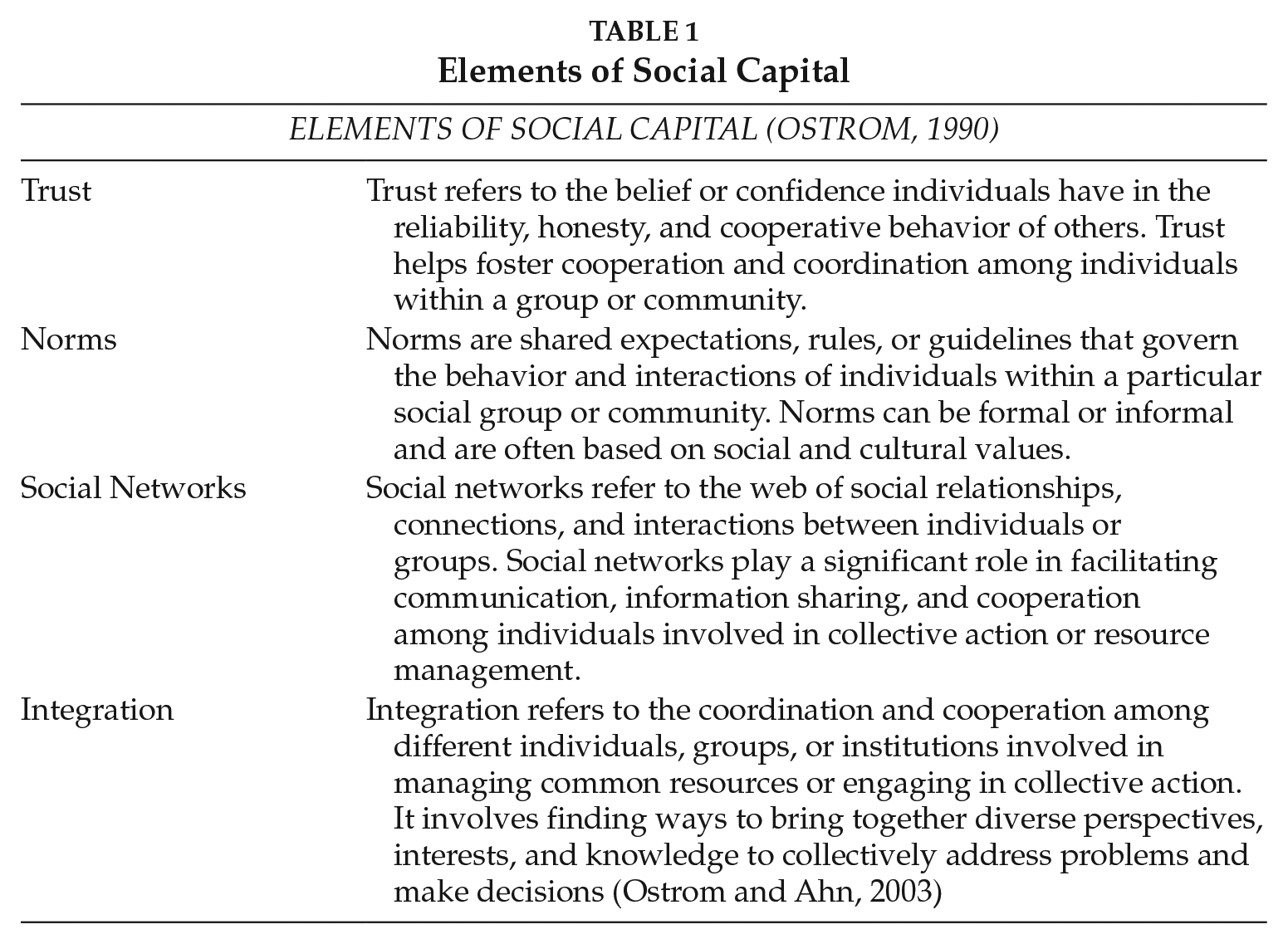
Essentially, social capital serves as a conceptual framework that enables communities to address concerns related to organization, collaboration, communication, agency, and collective decision-making. It also facilitates transaction cost reductions, promotes market access, and facilitates information sharing among individuals and groups. In their study of rural Australia, Onyx, Edwards, and Bullen (2007) explored the intersection of various types of social capital within a complex power landscape. They found that social capital functions as a source of power, exhibiting both positive (enabling) and negative (oppressive) attributes, often simultaneously (Onyx, Edwards, and Bullen, 2007: 20).
Power Dynamics And Social Capital
Power relations are shaped by forms of social capital, including bonding, bridging, and linking. Bonding social capital, concentrating power within specific groups, promotes solidarity, while bridging social capital is more inclusive, building broader coalitions (Woolcock and Narayan, 2000). Linking social capital is institutionalized, enabling access to resources and policy influence and operating within vertical and horizontal dimensions of power such as information, finance capital, and employment opportunities, while also enabling individuals to influence the decisions and actions of others. It is essential to recognize that these advantages can be utilized for various purposes and potentially lead to social inequalities by granting a competitive edge over other groups (Woolcock and Narayan, 2000).
The Neo-Marxist tradition, as recognized by Manza and McCarthy (2011), views power as multifaceted, intertwining economic, ideological, and cultural mechanisms. Power operates not only through economic means but through ideological and cultural mechanisms, perpetuating privilege and restricting access to knowledge and resources (“Power-Over”) (Onyx, Edwards, and Bullen, 2007). On the other hand, “power-to” allows smallholders to mobilize towards common goals, supporting food sovereignty movements (Osorio Bohórquez, 2017). Stable interactions with external actors play a pivotal role in shaping the impact of civic associations on communities. The social capital’s influence on power relations can exhibit significant variability, contingent on the specific context, the involved groups, and broader social and political dynamics, simultaneously reinforcing established power structures and acting as a catalyst for their challenge and transformation. Researchers advocate for qualitative research to explore the intricacies of specific contexts and their unique historical characteristics.
In 1993, Putnam introduced an instrument for assessing social capital based on participation in voluntary civic associations, assuming these groups collectively pursued community welfare and trust building. However, Svendsen and Sørensen (2006) challenged this notion in a study conducted in rural Denmark. Despite the proliferation of civic associations, they observed minimal economic impact. This was attributed to an abundance of trust within ‘bridging social capital,’ which hindered the establishment of broader networks. Therefore, stable interactions with external actors are pivotal in shaping civic associations’ impact on communities. However, the academic literature currently lacks comprehensive studies that explore the place-based interactions between these associations and external actors, especially in understanding how power relations manifest within the domain of “vertical social capital,” which can simultaneously reinforce established power structures and act as a catalyst for their challenge and transformation.
Thinking Vertically: The Importance Of Institutions And The Legal Framework To Strengthen Agroecology
Trauger, Claeys, and Desmarais (2017) argue that institutions play a significant role in shaping social relationships and individual behavior, potentially undermining alternative food networks and movements. Local communities must strategically navigate power structures to counteract this influence. Linking networks, as defined by Chazdon et al. (2013) and Huxham and Vangen (2015), often feature hierarchical power dynamics, disadvantaging communities in their interactions with external sources of power and funding. Understanding and navigating these institutional frameworks is crucial. Strengthening internal social capital networks within communities, as advocated by Van Der Ploeg (2010), enhances engagement with external institutions, fostering economic and social empowerment. In the context of agroecology, robust connections among small-scale farmers within agroecological networks contribute to sustainability and empower historically marginalized peasants. Despite supportive policies in some regions like Cuba and Nicaragua, barriers to agroecology adoption persist due to entrenched power structures and insufficient support from governments and international institutions (Sabourin et al., 2018; Holt-Giménez, 1996; Pimbert et al., 2021).
In Colombia, a lack of specific legal support for alternative food networks poses a challenge. The absence of tailored policies, exacerbated by historical violence and ongoing urbanization, disrupts access to social networks and trust, which are crucial for social capital and stakeholder collaboration. The Eastern Antioquia region exemplifies these challenges, facing economic shifts towards industries like real estate and manufacturing, diminishing the role of traditional crops and weakening the peasant economy. As the region orients towards agribusiness, the implications for small producers and alternative food networks within Colombian regulations catering to global food chains, particularly export-oriented fruits, raise critical questions (Oble Vergara et al., 2017; Cámara de Comercio de Antioquia, 2022).
Methods
To present our case, we begin with an overview of the Eastern Antioquia region, delving into its history marked by violence, ongoing gentrification, and industrialization. Our focus centers on assessing how these factors may have influenced trust and collaboration, critical elements of social capital, particularly in the context of agroecological networks. Moving to the state of Colombian public policies related to food supply chains and systems, we examine the overarching regulations governing agricultural production in the country. This scrutiny aims to evaluate how agroecological networks are recognized or addressed within the existing legal framework. Mesa Valencia conducted interviews with over twenty stakeholders involved in agroecological supply chains and networks in the region, including producers, intermediaries, consumers, scholars, and policymakers. The selected municipalities, with the highest population and concentration of agroindustry and habitation projects, were integral to this investigation (Cámara de Comercio de Antioquia, 2022). 1
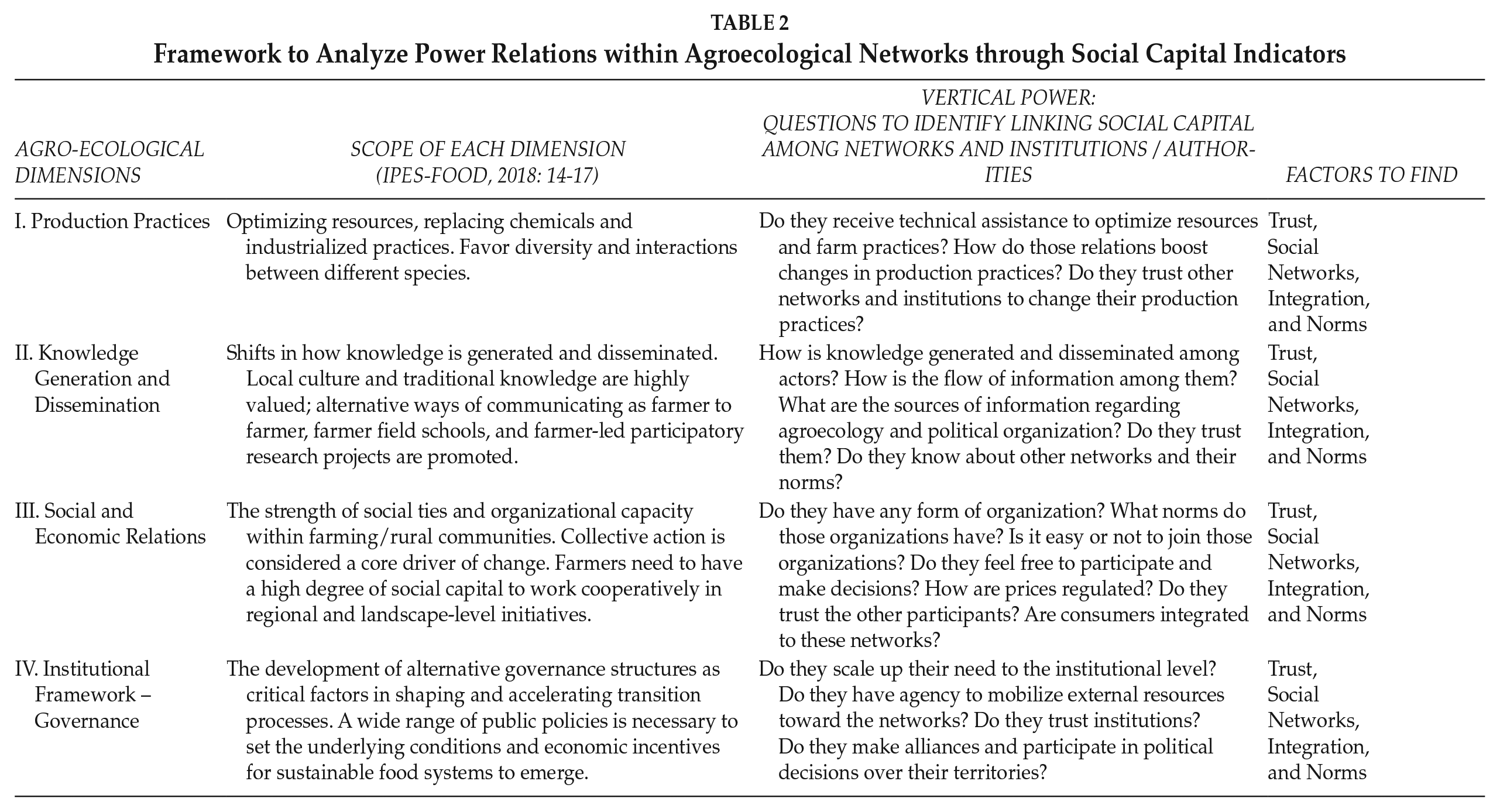
To analyze the collected information, we devised an analytical framework tailored to explore the intersection of power dynamics and social capital within agroecological networks in Eastern Antioquia. This framework, influenced by the work of Ostrom and Ahn (2003), identified key components of social capital such as trust, social networks, norms, and integration. Furthermore, it is aligned with the agroecological dimensions proposed by the International Panel of Experts on Sustainable Food Systems (IPES-Food, 2018), covering production practices, knowledge dissemination, social and economic relations, and governance. This qualitative framework informed interviews and facilitated the analysis alongside the identified legal framework elements.
Agroecology In Eastern Antioquia, Colombia: Addressing Historical Violence And Institutional Gaps
Eastern Antioquia: A History Of Violence, Displacement, And Territorial Control
Historically, migration to cities has been seen as an avenue to improve economic opportunities and living conditions. However, large-scale migrations have only led to territorial disconnections and the loss of land value as an emancipatory tool (Van Der Ploeg, 2010). The early 1970s marked a pivotal period for Eastern Antioquia as large-scale migrations unfolded due to hydroelectric megaprojects and infrastructure development, displacing families whose livelihoods depended on agriculture. These projects, driven by the global energy crisis, submerged productive agricultural land and altered trade dynamics and relationships within the region (UNDP and Asdi, 2010). By 1985, the inauguration of an international airport in Rionegro and the operation of hydroelectric plants further transformed the economic landscape, drawing wealthier families from Medellín, capital of Antioquia. This influx led to increased land prices, displacing peasants and eroding traditional social bonds based on “compadrazgo and vecindad,” which means camaraderie and proximity (UNDP and Asdi, 2010: 7; Bello, 2003: 8).
Framework to Analyze Power Relations within Agroecological Networks through Social Capital Indicators
In the 1970s, amid challenging political and social conditions, civic movements arose in Antioquia, advocating for marginalized individuals’ rights and fostering regional identity. However, accusations of connections with the guerrilla movement led to conflicts with paramilitary groups and the national army. A paramilitary massacre in 2000 in Granada caused a drastic population decline, illustrating the conflict’s brutal toll on civilians (Bello, 2003). Despite paramilitary demobilization in 2003 and a peace treaty in 2016, social leaders in Antioquia face ongoing stigmatization and violence. As of 2022, 140 human rights defenders in Antioquia have been anonymously assassinated, with the eastern region bearing a significant portion of cases (Montoya, 2023). Additionally, between 2003 and 2006, the Colombian government launched a military campaign to weaken guerrilla forces, incentivizing soldiers to misidentify and target civilians in rural areas, resulting in clashes and deaths, predominantly among peasants in eastern Antioquia (Vásquez, 2022).
Agroecology: A Form Of Resistance Amid Violence
The fragmented social fabric in Eastern Antioquia poses challenges for individuals from diverse backgrounds and those with limited incomes when it comes to participating in networks, resulting in limited opportunities for involvement in decision-making and authority, further reinforcing existing power imbalances (Roscigno, 2011; Chazdon et al., 2013). Despite the social rift and the disintegration of cultural bonds among inhabitants, civic organizations established since the 1970s persist in fighting for peasant rights, sustainable development, and environmental protection. Associativity in the area has enabled peasants to resist exclusion from the industrial development model through the formation of alternative food networks (Rojas and Hoyos, 2018). The Asociación de Productores Campesinos del Oriente Antioqueño (Association of Peasant Producers of Eastern Antioquia, Asocampo) unites small-scale farmers grounded in agroecological principles. Their primary goal is transitioning to agroecological systems, conserving natural resources, bolstering rural community sovereignty and food security, and enhancing consumer health (MCTI, 2022).
Another notable presence is the Red Colombiana de Agriculutra Biológica (Colombian Network of Biological Agriculture, RECAB Antioquia), established in 1992, comprising peasant family producers, service providers, and allied organizations. They unite to protect the territory, engage in ecological agriculture, practice solidarity economy, promote equity, and conserve biodiversity in support of food sovereignty. Gaining institutional support is crucial for agroecological associations, but trust issues hinder community engagement. Méndez and Casas (2017) found institutions with indirect citizen participation in the region had a trust level of 38%, while those focusing on human rights, the environment, and women’s issues had 69% trust. This distrust weakens vertical connections, perpetuating hierarchical relationships and impeding resource access, policy influence, and bureaucratic navigation for smallholder associations (Lugo-Morin, 2013). Consequently, actors in agroecological networks often feel underrepresented by the Colombian legal framework governing food supply chains and agriculture.
Legal Framework Of Colombian Food Systems: Losing Food Sovereignty To Gain Access To The Global Market
Legal frameworks governing food supply chains encompass laws, regulations, and policies overseeing food production, transportation, and marketing. De Schutter (2017) emphasizes that trade policies, agricultural subsidies, market structures, and educational priorities significantly influence modern food systems. Colombia’s entry into the global market has boosted national fruit production, particularly with free trade agreements, propelling fresh fruit exports from US$455 million in 2002 to US$1,055 million in 2018. Nevertheless, more than half of the land designated for fruit cultivation is predominantly dedicated to banana farming, heavily reliant on fertilizers and pesticides. Despite there being more than thirty registered supply chains in Colombia, only eight are associated with food, and there is a notable lack of detailed understanding of production processes, particularly overlooking the diverse production of fruits and vegetables that are grown in every corner of the country.
In Colombia, only one law regulates the formation of supply chains across the entire territory: Law 811 of 2003 (Agrosavia, 2024). Its main objective is to promote the development, modernization, and competitiveness of agricultural chains in the country through associativity, vertical and horizontal integration, and coordination among different chain actors, from producers to consumers. However, this law only considers industrial models and does not make reference to alternative models. In 2022, the newly elected Colombian government introduced a national development plan with a focus on enhancing food access through efficient production and distribution systems that recognize local diets and gastronomy, emphasizing the crucial role of peasant, family, and community agriculture in advancing food sovereignty (DNP, 2019. A significant proposal is to promote local governance and territorial participation in adopting good agricultural practices, food safety, and quality food standards. The government aims to facilitate an intercultural dialogue between traditional knowledge and scientific expertise to enhance territorial innovation in agroecology, native seeds, water management, and agricultural logistics (DNP, 2023: 133). If approved, this would signify a historic shift, as centralized institutions traditionally disseminate such guidelines.
Key entities involved include the Ministerio de Agricultura y Desarrollo Rurual (Ministry of Agriculture and Rural Development), the Instituto Colombiano Agropecuario (Colombian Agricultural Institute, ICA), and the Corporación colombiana de investigación agropecuaria (Colombian Corporation of Agricultural Research, Agrosavia). While national agencies and regulations guide autonomous corporations and local government secretaries overseeing agriculture, the lack of clear guidelines for alternative systems often leads to their neglect. To assess the state of the agroecological movement in Eastern Antioquia, we identified several stakeholders in the region to understand their experiences, perceptions of institutional support, assistance, and the prevailing legal framework.
Agroecology, Power Relations, And Institutional Dynamics In Eastern Antioquia: A Case Study
In general, individuals interviewed in this study express a perception that national regulations do not sufficiently support alternative systems, and the enduring impact of decades of violence on the territory remains palpable. Participants link violence to a broader process of control, suggesting that displacement was a strategic maneuver that paved the way for affluent external entities and agro-industrial companies to appropriate lands and natural resources. This historical context contributes to a prevailing sense of discouragement and isolation among farmers in the region, with power often measured by accumulated land hectares. Urban and industrial projects unfolding in the area add to these challenges, with claims that there is an attempt to displace people from their lands to transform the region into an industrialized zone.
The arrival of agroindustry to the region has sparked contention among agroecological producers. While some acknowledge progress, others note challenges such as a scarcity of local labor due to the allure of stable employment provided by flower companies. The shift in the region’s productive focus towards export crops is seen as a double-edged sword. While it brings development and opportunities, it also weakens the traditional model of the peasant family economy and exacerbates social inequality. Perceptions of public and private institutions’ roles in this phenomenon vary, with some seeing support for development and others noting negative consequences, particularly for small-scale farmers unable to meet export certification conditions. Participants’ experiences underscore the necessity for a nuanced analysis of the multifaceted relationship between institutions and agroecological networks. The discussion of these findings will follow, considering each of the agroecological dimensions proposed by IPES-Food (2018).
Dimension 1: Production Practices
According to IPES-Food (2018), improving agroecological practices at the farm level involves optimizing resources, replacing chemicals and industrialized practices, and promoting diversity and interactions between different species. In Eastern Antioquia, certain institutions have played a crucial role in facilitating these improvements. Many participants acknowledged receiving technical assistance to optimize resources and farm practices, with particular praise given to the Servicio Nacional de Aprendizaje (National Learning Service, SENA). SENA is a Colombian government agency dedicated to providing vocational training and workforce development programs. It plays a significant role in promoting technical, technological, and vocational education in Colombia, aiming to strengthen the country’s human resources and encourage sustainable practices. Some producers, such as Producer 4 in Guarne (November 27, 2021) and Producer 2 in El Retiro (December 5, 2021), specifically highlighted the valuable support they received from SENA, emphasizing its excellent agriculture and agroecology programs. However, some participants expressed criticism, arguing that these programs can be paternalistic and tend to promote industrialized agriculture in alignment with each municipality’s development guidelines.
A policymaker argues that institutions continue to perpetuate the country’s political agenda, leaving little room for alternatives (Policymaker 3, Santa Elena, November 23, 2021). As a result, and as evidence of the ease provided by social capital in terms of trust in their peers, farmers mostly rely on the successful experiences of their friends and neighbors. They adopt practices and share ancestral knowledge that, although not recognized by regulatory norms and educational institution curricula, ultimately solidify their immediate bonds and strengthen them horizontally. However, producers face the challenge of integrating agroecological approaches into their agricultural practices while conforming to the specifications of food value chains that increasingly rely on external inputs and market standards demanding products aesthetically similar to those sold in large retail outlets.
Dimension 2: Social And Economic Relations
The development of robust social and economic relations within agroecological networks heavily relies on strong social ties and organizational capacity within rural communities. Participants in the study express concern over the limited engagement of agroecological actors with consumers and the pervasive impact of market demands, which impose aesthetic standards on produce, contradicting agroecological principles. A knowledgeable academic (Academic 2, Medellin, December 3, 2021), engaged in supporting agroecological initiatives in conflict-affected communities of Antioquia, highlights the impact of market demands on agribusiness, along with the overlooking of the needs of small-scale producers. He asserts that "the inputs, seeds, or breeds of chicks are those demanded by the market. You cannot find anything else; they do not reach the towns." This power dynamic is underscored by the academic, who notes the complacency and dictatorship of consumers, leading agroecological producers to adopt standards aligned more with conventional agriculture than agroecology.
Agroecological producers in Eastern Antioquia encounter challenges within a regulatory framework that reinforces reliance on external inputs and demands standardized aesthetics. To overcome these hurdles, producers must strategize on how to engage consumers and highlight the distinctive advantages of agroecological products. Intermediaries assume a pivotal role in linking actors along the production chain, accruing influence through the enhancement of their social capital. Consumers wield substantial sway, necessitating efforts to promote agroecology that encompass not only economic dimensions, but also broader values associated with agroecological practices. This dual perspective underscores the intricate challenges and opportunities within the agroecological domain.
One of the farmers participating in this study is an agroecological leader in El Carmen de Viboral (Producer 3, Carmen, October 22, 2021). He states that having his own mini-agroecological market in town and participating in farmers’ markets has allowed him to avoid intermediaries and educate and raise consumer awareness through the creation of bonds and the strengthening of horizontal social capital: "I explain to the consumer why the tomato is small, why that cabbage did not tighten, why the carrot is also small." Reflecting on his three-decade journey in agroecology, he notes a shift in consumer attitudes, particularly heightened during the pandemic, which has brought increased recognition to agroecological practices. He expresses optimism about the influx of new settlers seeking healthy food and connection with the land, enabling him to achieve greater profitability by bypassing intermediaries.
According to Windfuhr and Jonsén (2005), farmers’ markets play an important role in promoting food sovereignty by providing a direct link between consumers and small-scale food producers. By purchasing food directly from farmers, consumers can support sustainable agriculture and contribute to the development of local food systems. A producer in Guarne (Producer 4, Guarne, November 27, 2021) claims that, in addition to farmers’ markets, he strives to build trust with his clients and other stakeholders interested in agroecology by inviting them to his farm. However, for other producers (Producer 1, Santa Elena, November 7, 2021; and Producer 2, El Retiro, December 5, 2021), the notion of opening their doors to strangers and allowing them onto their farms raises concerns. For these individuals who have personally experienced violence in the region, trusting strangers is complicated, making them hesitant to participate in networks and collaborate with external actors. Without trust, the strengthening of social capital and the inclusion of new actors are negatively impacted, as it reinforces horizontal bonding social capital but prevents these exclusive groups from interacting with others and gaining visibility to scale vertical social capital.
Café Tejipaz in the municipality of Granada is an organization committed to revitalizing the region’s social framework, restoring trust, and consolidating agroecological producers to establish linkages with external stakeholders. Despite the near destruction of the municipality by guerrillas in 2000, Café Tejipaz was established in 2016 to bolster the productive processes of those who survived the violence brought by the armed conflict. Presently, the initiative provides support to over 614 peasant families, encompassing victims of the armed conflict, single mothers, people with disabilities, and young entrepreneurs. Café Tejipaz has achieved significant success by exporting coffee produced under agroecological practices and adhering to fair pricing policies. Moreover, the association operates a coffee shop merely two blocks from the site where a bomb exploded twenty-three years ago. In this coffee shop, they not only market their products but provide a community gathering place.
Some private institutions also support the work of agroecological networks. Some participants pointed to the Colombian restaurant chain Crepes & Waffles as one of the companies that has strongly supported the production of native products in the country. Crepes & Waffles includes these products in their preparations, features them on their menu, and collaborates with the communities that produce them to become their suppliers. Some of the interviewed producers (Producer 1, Santa Elena, November 7, 2021; and Producer 2, El Retiro, December 5, 2021) sell their Andean blueberry 2 directly to this chain, which has required them to enhance their food safety and conservation practices. According to the head of Sustainability at Crepes & Waffles (Retailer 1, Medellin, March 23, 2022), their commitment to the country involves hiring single mothers, the recovery and protection of ecosystems, and collaborating closely with Colombian farmers. The company aims to support producing communities in processes of food safety standardization, access to financial resources, and association. She mentions that "more than looking for specific products, Crepes & Waffles has approached many communities because they have been impressed by the way these people engage in peaceful resistance to projects that do not align with their principles and the spirit of their territories."
Nevertheless, some participants underscore a significant challenge encountered in collaborating with smallholder communities, specifically the limited effectiveness of associativity. To form external alliances and secure institutional support, these communities must establish associations, but they often face an increased tax burden. An activist and policymaker (Policymaker 4, Guarne, November 27, 2021) emphasizes the pivotal role of associativity in gaining recognition and negotiation power, given that resources are mainly assigned to associations instead of individuals. She states: "The idea is to form peasant associations and attract resources for the territory so that the peasants can be much more at ease and produce what they do more profitably. However, if the association itself is not well-constituted, participating in these spaces does not generate any benefit." Thus, to gain negotiating power, unity is essential. Unfortunately, one of the most significant consequences of war’s impact on the area’s social fabric is the erosion of trust. People’s absence of trust undermines the formation of community bonds, thereby impeding not only social cohesion but also economic development.
Dimension 3: Knowledge Generation And Dissemination
Most participants consider the role of institutions crucial in educating consumers and empowering producers through agroecological assistance programs that consider ancestral knowledge, thereby avoiding the pitfalls of standardization and market demands. For this knowledge transfer to be effective and efficient through agroecological networks, the bonds between these networks and institutions must be strong, enduring, and egalitarian. An academic (Academic 3, Medellin, October 27, 2021) associated with the University of Antioquia expressed her perspective on the role of the academy as an institution. According to her, technicians and extension programs should not replace the community when intervening in territories. Instead, academics and practitioners should act as facilitators, identifying the community’s strengths and empowering them to control their own development. This scholar believes that the academy should acknowledge that it does not possess absolute knowledge but rather one of many types of knowledge. This understanding is necessary for the academy to establish productive dialogues with communities, avoiding any sense of superiority.
A producer in the municipality of El Retiro (Producer 2, December 5, 2021) remarks, “Many times, the little push is not even money; it is just training.” This participant also emphasizes that assistance should be freely available and advocates for educating farmers, believing that this understanding leads to greater product ownership, professionalism, improved farming, and appreciation among consumers. One of the policymakers (Policymaker 1, La Ceja, December 28, 2021) explains that the municipality has initiated technical assistance programs in collaboration with SENA. These programs aim to train farmers in technical matters and facilitate connections with buyers and marketers for export. However, a significant concern expressed by other participants is that these institutions often provide education based on the political agenda of each municipality or the preferences of the current mayor.
Regarding this, one of the academics (Academic 2, Medellin, December 3, 2021) asserts, Independent of who is in power, the academy must empower. It has the mission of training professionals with a social sensibility who empower instead of being “bosses” that only provide solutions to specific problems but increase the dependence of farmers, without dynamizing the flow of knowledge. They only use communities for their own benefit, that is, “academic extractivism.”
Furthermore, marketer 2 (Marketer 2, Medellin, November 20, 2021) cautions that educational institutions must be more connected to the reality of communities: "Institutions should seek more dynamic and flexible ways of doing things, because community reality is moving at a speed that academia is slower than, and local governments, multilateral organizations, etc., are even slower than academia.” Therefore, to strengthen social capital through increased trust in educational institutions, it is vital for these institutions to align with the needs of communities and understand that solutions must be contextualized and accessible to all.
Dimension 4: institutional framework and governance
According to IPES-Food (2018), developing alternative governance structures is critical for agroecology’s development and stability. A wide range of public policies is necessary to set the underlying conditions and economic incentives for sustainable food systems to emerge. However, we find that some interviewees view this unfavorably. One of the policymakers (Policymaker 4, Guarne, November 27, 2021) states that agricultural government projects are welfare-oriented, do not empower people, and need more continuity. According to this policymaker, it takes up to twelve months for an institutional program to start operating due to the contracting process. After two or four years, there is a change in government, and these programs are often discontinued. She mentions that “agroecology must be a way of life, not a response to the crisis, where processes remain in the community and come out of it, not vice versa from institutions.”
Another participant, who owns a small business that connects organic and agroecological producers with consumers in Medellin (Distributor 1, Medellin, November 26, 2021), claims that there is a need for coordination between institutions and market dynamics of markets and the realities of farmers. For this interviewee, government welfare programs deliver inputs, livestock, and seeds on the same day. This saturates the market when the products are ready for sale, forcing the farmer to sell at low prices. Thus, corporations have been created from the same territory, founded by residents who do not feel represented by state policies and institutions. One such corporation, located in the municipality of Marinilla, is the Corporación de Estudios, Educación e Investigación Ambiental (Corporation for Environmental Studies, Education, and Research, CEAM), which helps agrarian districts protect peasant economies and encourage agroecological production and fair markets, promoting food sovereignty, sustainable rural development, and the well-being of the population (Revista Semillas, 2009).
One of the participants in this study who works for CEAM (Policymaker 3, Marinilla, November 16, 2021) highlighted the corporation’s role in “promoting alternatives to territorial development.” However, he also identifies certification as a major challenge for developing regional alternative food networks: An organic product, if you sell it labeled as organic, must be certified, which has high costs. As we have always worked more with peasant communities, we have pursued participatory agroecology certifications. The term agroecological or artisanal is still somewhat covered in that regard because no standard certifies it, and the endorsement is based more on trust in the producer.
These certifications are based on principles of trust and proximity, which allows for the inclusion of more actors and the strengthening of horizontal social capital, as they do not require external institutions to endorse them.
Insights from an intermediary (Distributor 1, Medellin, November 26, 2021) provide a nuanced perspective on the landscape of certifications in Colombia. This intermediary, involved in training smallholders for organic and other certifications, acknowledges advances in organic production certifications. However, the predominant emphasis is on meeting international standards to facilitate exports. Collaborating with RECAB, he played a pivotal role in formulating regulations for organic production to foster agroecology. Despite some support from the Colombian State, challenges persist in democratizing seed use and expanding the number of registered families to meet escalating demand. Consequently, he notes instances where certifications are disregarded, and products are erroneously labeled as agroecological or organic. To address this, they have instituted a marketing system called ECO Mercadeo, Justo y Solidario (ECO Marketing, Fair and in Solidarity)to promote and support certified organic and guaranteed agroecological production. The trust guarantee system orchestrated by RECAB involves smallholders joining the agroecological network, ensuring transparency and integrating them into a process that assures consumers of the agroecological nature of the food products.
Finally, in terms of institutional support, the participants consider the role of the environmental authorities fundamental to the agroecology progress and the sustainable management of natural resources. The Corporación Autónoma Regional de las Cuencas de los Rios Negro y Nare (Autonomous Regional Corporation of the Negro and Nare River Basins, CORNARE) is the region’s main environmental authority, which is regulated at the national level by the Ministerio de Ambiente y Desarrollo Sostenible (Environment and Sustainable Development Ministry) (Bioplaver, 2020). All the producers assert that they have received quality advice on the sustainable management of their farms from this institution. One of its directors (Policymaker 2, El Santuario, November 26, 2021) commented during the interview that “CORNARE promotes projects that contribute to farmers by improving their productive processes through the implementation of better productive and environmental practices.” However, even if they seek to strengthen local markets in the region, their implementation depends on the political agenda of each mayor and the national government, who have more influence in promoting agroecology policies in the region.
Discussion
Chazdon et al. (2013) define social capital as the force that binds communities together, shaping effective collaboration and influencing power dynamics. Drawing from Ostrom’s work (1990), the challenges faced by associations stem from balancing individual self-interest with collective action. Success requires collaboration among individuals with diverse preferences, yet within these groups, struggles for decision-making and authority arise (Roscigno, 2011). Giraldo-Ramírez et al. (2013) note that concentrated power in associations leads to exclusive networks, which use social capital as a tool for power exertion. Consequently, maximizing individual benefits can dilute profits and power, hindering acceptance of new members, particularly from diverse backgrounds. These dynamics impact the association’s ability to access external aid programs and address local needs at the institutional level (Robayo and Pachón Ariza, 2013).
According to Trauger, Claeys, and Desmarais (2017), the stability of agroecological movements and their ability to resist the agro-industrial model largely depend on strengthening their external connections and resisting the neoliberal model. Agroecology can effectively prevent food sovereignty from losing its political distinctiveness and becoming like other "co-opted" progressive food movements. Harmonious relationships between agroecological networks and institutions, as well as external actors, should prioritize small-scale farming producers and smallholders. Disempowering them and taking away their land would undermine the very essence of the agroecological movement. Gliessman (2018) argues that peasants can remain on their land and farm profitably using sustainable practices when they have alternative models to the agribusiness and the food system oligopoly. Conversely, when peasants leave their lands or work for agribusinesses, they are often disempowered and overlooked.
This is reflected in the experiences of some displaced farmers who, after returning to their land, reconnect with their territory through alternative production systems. However, beyond than owning land, Calle-Colado, Gallar, and Candón (2013) suggest that farmers and small producers must have productive criteria and assert their knowledge. Otherwise, agribusiness and its standards will continue to endure. By deciding the type of seeds or breeds they use, farmers are gaining agency and linking the political agenda of food sovereignty to their production practices. More resilient food systems favoring ancestral and dispersed knowledge and practices over centralized ones will be created as a result. (De Schutter 2017).
We consider that agroecological movements in Eastern Antioquia are crucial for reconstructing the social fabric, fractured by historical violence in the region. Even if paradoxical, some participants see these past wounds as a catalyst for collective action, fostering resilience mechanisms and a renewed connection with the territory through association and agroecology. However, concerns persist about the ongoing reliance on regulatory frameworks and policies tailored to the needs of corporate value chains, which hinders the emancipatory potential of agroecology. To face this, increased representation of agroecological associations and networks in the policymaking process is necessary, enabling them to scale their needs, enhance negotiation power, allocate financial resources, provide specialized agroecological technical assistance, and strengthen logistics and marketing efforts.
Our findings also reveal that the presence of social networks grounded in both formal and informal norms are markedly influenced by cultural values. Within this context, individuals possessing a more connections and income are perceived as wielding significant power. Additionally, in accordance with Larrain and Madrid (2020), the "cultura paisa," referring to the attributes ascribed to individuals originating from the department of Antioquia and adjacent areas, has reinforced an identity of being a brave, bold, and enterprising people. Within this cultural framework, a glorification exists of those who engage in deceitful practices. Consequently, we posit that there is a prevalent fear of being deceived in negotiations and agreements. Undoubtedly, this apprehension has a profound impact on elements of social capital such as trust and integration, thereby also shaping power dynamics.
The history of violence and displacement also influences individuals’ willingness to establish connections with external actors. As a result, many producers heavily rely on close networks for decision-making, built on the trust cultivated among themselves. However, this level of trust is not reciprocated when dealing with external institutions. Participants in this study view institutions as entities intent on exploiting and lacking awareness of rural realities. Moreover, entities with greater financial resources are seen as the ones in control, further complicating power dynamics and potentially influencing decision-making processes within these collaborative frameworks. Regarding associations and norms, some participants believe that isolated efforts would not lead to progress, emphasizing the importance of belonging to associations and networks to form partnerships and collaborate with institutions for collective competitive advantages.
Furthermore, Kremen, Iles, and Bacon (2012) argue that unlocking agroecology’s potential requires direct connections between consumers and producers, complemented by robust institutional support. Consumer involvement in agroecological networks and supply chains becomes crucial in rebalancing power dynamics between producers and consumers and dismantling vertical power structures. These relationships should be "horizontalized," face-to-face. This is crucial because small producers currently see consumers as external actors. Therefore, as consumers we are a faceless force hidden by the logic of agribusiness. We have lost contact with rurality, and it is only seen on the supermarket shelves, ignoring the struggles of farmers and the abuse of market power over them and ourselves. As Altieri and Nicholls (2021) argue, "Consumers must be conscious that eating is an ecological and political act. And, by supporting local farmers, they are committed to promoting socio-ecological sustainability and community resilience." Therefore, public policies should recognize the role of consumers and their decision-making power to prevent the perpetuation of demands for industrial quality standards in agroecological production.
The academic sector plays an important role in educating about alternative food systems and agroecology, yet it must evolve beyond outdated models. A transdisciplinary academic discourse on agroecology requires enhancing its epistemological foundations, aligning with Colombian institutional frameworks, and fostering engagement with new actors. Universities ought to empower local communities, steering clear of vertical knowledge transfers and unsuitable technological impositions. Robbins (2020) underscores the imperative of reshaping institutions to accommodate emerging agricultural technologies, stressing the need for inclusivity, particularly for smaller stakeholders. Associativity emerges as a critical factor in extending the benefits of these advances to all players in the agricultural landscape. Rojas Cruz and Barreto Bernal (2016) emphasize associativity’s significance in sustainable rural innovation, optimizing productivity through technology use, enhancing associativity, adding value, and involving consumers in the final supply chain stage. Gil (2017) highlights the consequences of overlooking local technological adaptations, which can result in diminished productivity and subpar product quality. Hence, prioritizing the integration of tailored adjustments that align with local requirements becomes paramount for enhancing both value and productivity within agricultural systems.
Conclusion
The role of agroecology in empowering small-scale producers and strengthening the socio-political foundations of food sovereignty has been extensively discussed. However, understanding the power dynamics within agroecological networks is crucial for comprehending the mechanisms that enable their viability and for scaling their agenda to the institutional sphere. Considering the multidimensionality of agroecology, this study proposes an analytical framework that integrates elements of social capital to interpret power relations within agroecological networks and their interactions with external actors. The framework explores how social capital influences network inclusivity, shapes relationships with institutions, aids in navigating the Colombian legal framework, and transforms the resulting power relations into either opportunities or risks for network sustainability.
In the context of Eastern Antioquia, historical violence and forced displacement have evidenced agroecology’s role in preventing social capital loss and fostering trust among community members. Yet challenges such as limited market access, inadequate technical assistance, lack of organizational solidity, insufficient engagement in policymaking, and ineffective post-violence reconstruction programs persist. Insights into enhancing collective action among small-scale farmers offer pathways to empowerment and improved resource access, necessitating sustained efforts in empowerment, trust-building, collaboration, and creating a conducive social environment. Achieving sustainable development for agroecology networks in Eastern Antioquia also requires balancing bonding and bridging social capital, considering internal cohesion and external connections amid complex social dynamics, facilitating community empowerment and development. Collaborative efforts involving both public and private sectors, bolstered by extensive research, are crucial for establishing sustainable agroecological practices, fostering greater consumer engagement, and empowering communities throughout Colombia.
Footnotes
Notes
Andrés Felipe Mesa Valencia is a Colombian Ph.D. in Rural Sociology. He currently serves as a postdoctoral fellow at the Office of International Programs within the College of Agriculture, Food, and Natural Resources at the University of Missouri–Columbia. Through the Fulbright – Pasaporte a la Ciencia program in Colombia, he aims to contribute to addressing the country’s key challenge of “Society” under the Colombia Científica framework. This initiative promotes social innovation for economic development and inclusive productivity. In his research, Andrés explores a theoretical framework and proposes alternative schemes and models of rural development from the perspective of human, integral, and sustainable development, aiming to bridge the urban-rural gap. Mary K. Hendrickson is Associate Professor of Food Systems within the Division of Applied Social Sciences at the University of Missouri. Her research and teaching focus on examining power and fairness in agricultural markets, as well as examining the possibilities for alternative agrifood networks. She also directs the Interdisciplinary Center for Food Security which is committed to building resilient and food secure communities across Missouri and beyond.
This study was conducted thanks to Fulbright – Pasaporte a la Ciencia, Colombia.