




Abstract
In recent years, efforts to reduce police resistance to evidence-based policing (EBP) have gained increasing attention. Simultaneously, amid a global crisis of police legitimacy, scholarly interest in police self-legitimacy has grown. Using survey data from police officers in South Korea, this study examines the role of police self-legitimacy in reducing resistance to EBP, as well as its mediating role in the relationship between organizational factors and resistance. The findings reveal a significant negative association between self-legitimacy and resistance to EBP. Moreover, self-legitimacy mediates the relationship between organizational factors, specifically cynicism toward organizational change and supervisor support, and resistance. These results suggest that police agencies aiming to reduce resistance to EBP should implement strategies that enhance officers’ confidence in their authority. This can be achieved by fostering a positive organizational climate, including reducing officers’ skepticism about the agency’s capacity for positive change and ensuring supportive supervision and recognition.
Keywords
Introduction
Calls for adopting evidence-based policing (EBP) have increased significantly over the past three decades (Lum & Koper, 2017; Sherman, 1998, 2013; Weisburd et al., 2023). In his Ideas in American Policing lecture for the Police Foundation (now the National Policing Institute), Sherman defined EBP as “the use of the best available research on the outcomes of police work to implement guidelines and evaluate agencies, units, and officers” (Sherman, 1998, p. 3). More recently, Lum and Koper (2017) highlighted that EBP is “not just about the process or products of evaluating police practices, but also about translation of that knowledge into digestible and useable forms and the institutionalization of that knowledge into practice and policing systems” (p. 2). EBP scholars demonstrate that embracing scientific research evidence, rather than relying solely on personal experience or intuition, enables the police to more accurately identify both internal and external challenges and develop effective strategies to address them (Lum et al., 2025; Lum & Koper, 2017; Sherman, 2013; Weisburd et al., 2023; Weisburd & Neyroud, 2011).
However, implementing EBP in practice is complex and fraught with challenges, including organizational and external barriers (del Pozo et al., 2025; Kalyal, 2020a, 2020b; Kim & Lee, 2024; Kuen et al., 2023; Lum & Koper, 2017; Sherman, 2013). EBP emphasizes not only generating rigorous scientific evidence on police practices but also ensuring its effective translation, integration, and institutionalization into the daily operations and systems of policing (e.g., see Lum et al., 2025). Police officers are central to this process, serving as both producers and consumers of research evidence. Arguably, a critical component of advancing EBP lies in fostering their receptivity to research and evidence-based practices, as resistance among practitioners poses a significant obstacle to its successful implementation (Kim & Lee, 2024; Kuen et al., 2023; Telep & Lum, 2014). Addressing resistance to EBP and fostering receptivity among police practitioners are therefore the key to integrating scientific research evidence into police practice and institutionalizing evidence-based approaches within policing systems (Jonathan-Zamir et al., 2019; Lum et al., 2012; Telep, 2017).
In response, scholars have devoted considerable attention to police receptivity and resistance to EBP. While much of the focus has been on understanding the extent to which police professionals are receptive or resistant to EBP and research (e.g., Blaskovits et al., 2018; Lin et al., 2022; Lum et al., 2012; Lumsden, 2016; Telep & Lum, 2014; Telep & Winegar, 2016), a growing body of research has started to explore the mechanisms driving acceptance or resistance. Studies have explored how individual officer characteristics and experiences influence their receptivity to EBP and research (Jonathan-Zamir et al., 2019; Kim & Lee, 2024; Telep, 2017; Telep & Somers, 2019), with more recent work examining the influence of organizational environments on officers’ resistance to EBP (Kalyal, 2020a, 2020b; Kuen et al., 2023).
However, despite the well-documented negative effects of impaired police self-legitimacy on officers’ attitudes and behaviors (Bradford & Quinton, 2014; Tankebe & Meško, 2014; Trinkner et al., 2019), no research has yet examined its impact on officers’ receptivity or resistance to EBP. Self-legitimacy is crucial as it represents officers’ confidence in their authority, which can shape their willingness to embrace innovative practices and reforms even if additional efforts are required (Prince et al., 2022). Given the growing attention to police self-legitimacy amid a global crisis in police legitimacy, as well as calls for the adoption and institutionalization of EBP, exploring the potential link between these factors is both timely and necessary. In addition, building on a growing body of research finding a close link between organizational climate and police self-legitimacy (Bradford & Quinton, 2014; Gau & Paoline, 2021; Tankebe, 2019), it is worth investigating how organizational factors may influence officers’ resistance to EBP by shaping their sense of self-legitimacy.
Using survey data from police officers in South Korea, this study explores the relationship between officers’ self-legitimacy and their resistance to EBP and research. Furthermore, building on prior research, it examines the direct association between organizational factors and resistance, and the indirect association mediated by perceived self-legitimacy. By addressing these questions, this study contributes to two emerging areas of research: the sources of officer resistance to EBP and the consequences of police self-legitimacy.
Police Receptivity or Resistance to EBP
Receptivity and resistance to EBP have been central to understanding officers’ attitudes toward integrating evidence-based approaches into policing. Lum and Koper (2017) define receptivity in the context of EBP as “the willingness of police practitioners (civilian or sworn personnel) to not only be aware of and understand research and research processes, but also to be open to the value of research and demand it” (p. 134). In contrast, resistance to EBP is defined as “the degree of skepticism among police officers regarding the applicability or practicality of scientific research to policing in the real world” (Kuen et al., 2023, p. 7; see also Jonathan-Zamir et al., 2019). Enhancing officers’ receptivity to research and EBP, or reducing resistance, is the key to translating research evidence into police practices (Lum and Koper, 2017). Growing interest in EBP has led to increasing scholarly focus on both receptivity and resistance to EBP (Blaskovits et al., 2018; Kalyal, 2020a, 2020b; Jonathan-Zamir et al., 2019; Kim & Lee, 2024; Kuen et al., 2023; Lin et al., 2022; Lum et al., 2012; Telep, 2017; Telep & Lum, 2014; Telep & Somers, 2019; Telep & Winegar, 2016).
Existing research suggests that police practitioners are generally supportive of EBP and recognize its importance. For instance, studies demonstrate that police professionals have some familiarity with and support for EBP, although there is variability across agencies or ranks (Kim & Lee, 2024; Lum et al., 2012). In most of these studies, over a quarter of the sampled officers reported being aware of EBP, and more than half expressed agreement on the importance of collaborating with researchers to enhance their agency’s capabilities (Blaskovits et al., 2018; Lum et al., 2012; Telep, 2017; Telep & Lum, 2014; Telep & Somers, 2019; Telep & Winegar, 2016). Furthermore, even in countries such as Israel, Taiwan, and South Korea, where the understanding and implementation of EBP remain relatively limited, studies suggest that police officers generally hold positive perceptions of the role of researchers and research in policing (Jonathan-Zamir et al., 2019; Kim & Kuen, 2023; Lin et al., 2022).
However, EBP continues to be not well understood among police professionals (Lumsden, 2016). For example, Telep and Somers (2019) found that disparities between academic and practitioner definitions of EBP are fairly common. Research also indicates that police practitioners often prefer basing professional decisions on experience, craft, and intuition—even when they are aware of the availability of scientific evidence and acknowledge its value (Jonathan-Zamir et al., 2019). Similarly, a study of front-line officers in South Korea found that officers tend to prioritize experience over research when guiding practice, view criminal investigation as more important than crime prevention, and rarely use materials produced by crime analysts or statistical data in their daily work (Kim & Kuen, 2023). Furthermore, while police officers generally express interest in assessing policing strategies and tactics, they are often hesitant to engage in rigorous outcome evaluations, such as randomized controlled trials (Blaskovits et al., 2018; Lum et al., 2012; Telep & Lum, 2014; Telep & Winegar, 2016).
Overall, research suggests that while police officers generally hold positive attitudes toward EBP and research, various barriers persist that impede their comprehensive understanding, adoption, and active engagement with EBP. In response, a growing body of research has begun to explore the sources of receptivity or resistance to EBP (Kalyal, 2020a, 2020b; Jonathan-Zamir et al., 2019; Kuen et al., 2023; Telep, 2017), which is addressed in the next section.
Sources of Resistance or Receptivity to EBP
A large body of research on the correlates of receptivity or resistance to EBP highlights the importance of factors relevant to officers’ experiences. Telep (2017) found that officers with higher levels of education and prior exposure to research are more knowledgeable about EBP and more willing to collaborate with researchers. Similarly, studies from the United Kingdom indicate that the officers in mid- or upper-level positions (Hunter et al., 2017) and those who engage with government publications (Palmer, 2011) exhibit high levels of receptivity to EBP. Supporting this link, Telep and Somers (2019) found that officers with advanced education, particularly those holding a master’s degree, demonstrate a clearer understanding of the concept of EBP. However, not all studies identify education as a key correlate. Jonathan-Zamir et al. (2019) found that while Israeli police commanders who prioritize experience over research are more resistant to EBP, variables such as years of service, background, and education were not statistically significant in explaining officers’ resistance. Interestingly, Lin et al. (2024) recently found that increased time spent in police education significantly reduces, rather than enhances, receptivity to research. This finding suggests that police education alone may unintentionally discourage openness to evidence-based practices.
Going a step further, several studies have explored how external or internal contexts influence officers’ receptivity or resistance to EBP. This emerging line of research is important, as both organizational and external environments play pivotal roles in shaping officer values, beliefs, and decision-making processes (Paoline, 2003, 2004; Prince et al., 2022). Indeed, extensive research has demonstrated that negative external or organizational environments can lead to detrimental outcomes, such as heightened stress, job dissatisfaction, and diminished commitment among police officers (Lawson et al., 2022; Lu & Kuen, 2024; Paoline & Gau, 2020).
While not examining specific contextual correlates, Telep (2017) identified substantial variation in receptivity to EBP and research across four U.S. municipal police agencies, which makes it one of the first empirical studies to highlight the importance of external and organizational contexts. 1 More recently, Kalyal’s (2020b) qualitative study of police executives and senior civilian officers in Canada suggests that external factors, such as funding availability and oversight from external stakeholders, enhance officers’ receptivity to evidence-based practices. At the same time, this study found that internal organizational conditions, such as a supportive culture, workplace climate, and leadership support, play a crucial role in shaping officers’ openness (see also Kalyal, 2020a). Similarly, Kuen et al.’s (2023) study on front-line officers in South Korea highlights the importance of organizational environments in reducing resistance to EBP and research. They found that cynicism toward organizational change is strongly associated with officer resistance to EBP and serves as a mediator between perceptions of organizational environments (i.e., organizational justice and supervisory support) and resistance to EBP. However, they found no significant relationship between perceptions of external environments (i.e., perceived crime levels, citizen disrespect, and perceived citizen animus) and officers’ resistance to EBP.
The Potential Role of Police Self-Legitimacy in Reducing Resistance to EBP
Police legitimacy is a key concept in understanding police-community relations, with most research focusing on how to enhance community members’ perceptions of police legitimacy (e.g., see Tyler, 2025). However, Bottoms and Tankebe (2012) argue that legitimacy should be understood as an ongoing dialogue between authorities (i.e., police officers) and audiences (i.e., community members). This dialogic perspective draws attention to an expanded dimension of legitimacy: police self-legitimacy. Tankebe (2014) defines police self-legitimacy as “power-holders’ recognition of, or confidence in, their own individual entitlement to power” (p. 3). 2 To effectively navigate the complex and urgent challenges of their work, police officers must not only possess the authority to act but also have the confidence and willingness to exercise their discretion appropriately (Tankebe, 2019). This internal sense of legitimacy influences how officers perceive their role, interact with the public, and exercise their authority (Prince et al., 2022).
Officers with a strong sense of self-legitimacy, who confidently reconcile the moral complexities of coercive authority, can perform their duties with integrity, restraint, and effectiveness (Gau & Paoline, 2021). In contrast, those who lack recognition of the moral validity of their power may misuse it or struggle to cope with its psychological demands in healthy ways, putting them at risk of becoming incompetent, negligent, or even corrupt. Indeed, a growing body of research highlights the importance of police self-legitimacy in shaping officers’ attitudes, beliefs, and behaviors (Prince et al., 2022). A stronger sense of individual legitimacy can lead to behaviors that benefit the community. For example, officers with greater self-legitimacy are more likely to treat community members in a procedurally fair manner (Bradford & Quinton, 2014; Chen et al., 2021; Sarpong et al., 2025; Tankebe, 2019) and are less willing to use force against them (Tankebe & Meško, 2014; Trinkner et al., 2019).
While empirical research directly linking police self-legitimacy to receptivity or resistance to EBP is currently lacking, a theoretical connection is reasonable to expect. Officers with a stronger sense of individual legitimacy are more inclined to engage in behaviors that benefit their organization. For example, recent research has found that self-legitimacy plays a crucial role in enhancing officers’ willingness to exceed the formal requirements of their job (Hacin & Meško, 2022). Police professionals who believe in the moral rightness of their authority tend to view themselves as competent, ethical, and effective (Prince et al., 2022). Accordingly, rather than perceiving EBP as a threat to their discretion, officers with higher self-legitimacy may regard it as a valuable resource that enhances their decision-making and professional credibility. Confident in their judgment and role within the organization, these officers may be more receptive to research evidence that reinforces their effectiveness, even when it requires additional effort. In contrast, officers with lower self-legitimacy may resist EBP, viewing it as a challenge to their authority or an external constraint on their autonomy. Drawing on this rationale, this study specifies the following hypothesis:
In addition, prior research on the correlates of police self-legitimacy suggests potential indirect associations between organizational factors and resistance to EBP via self-legitimacy. One of the most well-documented antecedents of police self-legitimacy is organizational justice. Over the past decade, studies have consistently demonstrated that organizational justice (also referred to as internal procedural justice) plays a key role in fostering police self-legitimacy (Bradford & Quinton, 2014; Chen et al., 2021; Nix & Wolfe, 2017). Similarly, relationships with supervisors, such as supervisory support, perceived alignment with supervisors, and fair treatment by supervisors, have been linked to officers’ self-legitimacy (Bradford & Quinton, 2014; Tankebe, 2014; Tankebe & Meško, 2014; White et al., 2020; but see also Sarpong et al., 2025). Given the strong link between positive organizational contexts and enhanced self-legitimacy, the following hypotheses are examined in this study:
Finally, as noted earlier, cynicism toward organizational change has emerged as the strongest correlate of resistance to EBP in a study conducted in South Korea (Kuen et al., 2023). It is worth examining whether it may indirectly contribute to resistance to EBP through self-legitimacy. Although the relationship between cynicism toward organizational change and police self-legitimacy has not yet been empirically examined, a connection can be reasonably inferred. Officers who are cynical about organizational change may feel disillusioned with their agency’s leadership and decision-making processes, which could undermine their belief in the legitimacy of both their role and the institution they serve. This diminished sense of self-legitimacy, in turn, may increase their reluctance to embrace EBP. Drawing on this rationale, this study also examines the following hypothesis:
Current Study
The South Korean Context
South Korea provides an appropriate context for examining sources of police officers’ resistance to EBP, particularly in relation to self-legitimacy. Impaired police legitimacy has been a persistent issue for the South Korean police (Kuen et al., 2025). The country’s centralized police system, modeled after the Japanese system established during Japan’s colonization of Korea, has historically contributed to this issue (Kim et al., 2019). Within this hierarchical structure, the police were often used for political purposes. Until the early 1990s, coercive tactics were widely employed to monitor and control the public, suppress anti-dictatorship movements, and restrict political activities, particularly during the country’s authoritarian era (Moon, 2004). Since the democratization of Korean politics, various reforms have been introduced over the past two decades to decentralize the police system. These initiatives have aimed to limit coercive powers and transition the police toward a more community-oriented model (Kim et al., 2019; Moon, 2004). Nevertheless, public perceptions of the police remain largely negative, leaving the South Korean police in a state of legitimacy crisis (Kuen et al., 2025). This erosion of public trust and damaged legitimacy may undermine police officers’ confidence in their own self-legitimacy.
In response to this legitimacy crisis, alongside other external and internal challenges, there has been growing attention in recent years on adopting and implementing evidence-based approaches in policing (Kuen et al., 2023). For example, in early 2024, the Korean Association of Public Safety and Criminal Justice organized a conference focused on EBP. Similarly, the Korean Institute of Criminal and Justice (KICJ) hosted an international forum in 2019 titled Evidence-based Criminal Justice Policy for Public Safety, where EBP was a key theme. These initiatives aim to raise awareness of the value of EBP and encourage practitioners, particularly police officers, to make decisions grounded in rigorous scientific evidence to effectively address the challenges they face. In addition, the South Korean police have increasingly sought to embrace proactive policing strategies, including procedural justice policing, problem-oriented policing, intelligence-led policing, and hot spots policing, although these strategies are not yet fully implemented (Kim & Kuen, 2023; Kuen et al., 2023).
These underlying contexts underscore the importance of examining the sources of officers’ resistance to EBP in South Korea, particularly in relation to police self-legitimacy. The findings of this study will be instrumental not only for the South Korean police but also for police forces in other countries facing legitimacy crises and seeking to adopt and implement evidence-based approaches grounded in scientific research evidence.
Data
Data for this study were obtained through a survey conducted in collaboration with the Police Human Resources Development Institute, an educational arm of the Korean National Police Agency. The institution offers a range of training and education programs, including basic, specialized, and leadership courses, to approximately 20,000 field police officers annually. Personnel at the institution, including program managers, administrators, and instructors, facilitated the survey process and assisted with its distribution and collection. The sample consisted of police officers who participated in a training program on improving police-citizen interactions at the institute between July 1 and August 1, 2024. 3 The survey was conducted prior to the start of the training program. Data were collected using the paper-and-pencil method. Each survey included an instruction page outlining the study’s purpose, confidentiality, and anonymity. In addition, training coordinators reiterated the study’s purpose to participants before administering the survey and obtained their consent to participate. In total, 200 questionnaires were distributed, and 172 officers completed the survey, yielding a response rate of 86%, which exceeds the typical response rate for police surveys (Nix et al., 2019). As noted in the limitations section, the sample comprises officers who voluntarily attended the police training program and participated in the survey. Thus, it is important to acknowledge that they may be more receptive to academic research and EBP than other officers. 4
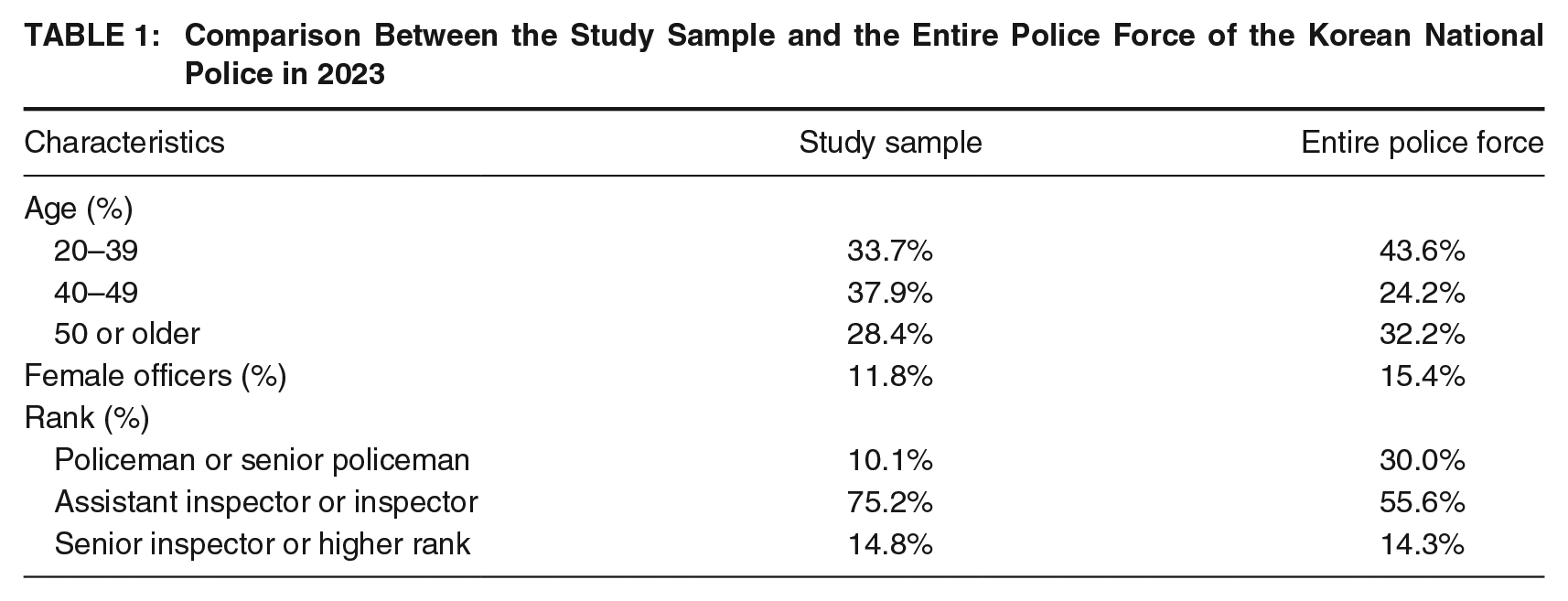
Table 1 presents a comparison between the study sample and the entire police force in the South Korean National Police Agency, using the most recent statistics from the Police Statistical Yearbook 2023. In terms of age, the study sample has a lower proportion of officers aged 20 to 39 (33.7%) compared with the overall police force (43.6%), whereas officers aged 40 to 49 are overrepresented in the sample (37.9%) relative to the national force (24.2%). The proportion of officers aged 50 or older is relatively similar between the sample (28.4%) and the overall police force (32.2%). Regarding sex, female officers account for 11.8% of the sample, which is lower than their representation in the national force (15.4%). In terms of rank, the proportion of senior inspectors or those ranked higher is comparable between the study sample (14.8%) and the overall police force (14.3%). However, the study sample includes a much lower percentage of policemen or senior policemen (10.1%) compared with the general police force (30.0%), whereas assistant inspectors or inspectors are overrepresented in the study sample (75.2%) relative to their share in the national force (55.6%). In summary, the study sample includes a higher proportion of older officers, a smaller proportion of female officers, and a greater percentage of those in senior ranks compared with the national police force.
Comparison Between the Study Sample and the Entire Police Force of the Korean National Police in 2023
Measures
An exploratory factor analysis (i.e., principal axis factoring with oblique rotation) was conducted to confirm that survey items align with their respective theoretical constructs (see Appendix A for the factor analysis results). As shown in Appendix A, all items loaded onto their intended constructs with acceptable factor loadings. Mean-scale scores were calculated for all latent constructs (see below) and used in the main analyses. 5
Resistance to EBP
To measure the skepticism among police officers regarding the practicality and relevance of scientific research in policing, four items adapted from Jonathan-Zamir et al.’s (2019) broader scale were used (also see Kuen et al., 2023). Respondents rated their agreement with four statements, including, “Studies conducted in other police forces around the world are not relevant to South Korean police” and “Studies on policing conducted in academia are disconnected from reality” (see Appendix A for the full list of items and their factor loadings). Response options ranged from 1 (strongly disagree) to 4 (strongly agree) on a 4-point Likert-type scale (α = 0.79).
Self-Legitimacy
Police self-legitimacy was measured using four items adapted from Nix and Wolfe (2017) and Tankebe and Meško (2014; see also Tankebe, 2014). Example items include, “I feel that I represent the values of the public in my local community” and “The authorities I have been granted as a police officer are morally right and just” (α = 0.82; see Appendix A). Responses were recorded on a 4-point Likert-type scale ranging from 1 (strongly disagree) to 4 (strongly agree).
Organizational Factors
This study includes three organizational factors: (a) organizational justice, (b) supervisor support, and (c) cynicism toward organizational change. Organizational justice was measured using three items capturing its key three dimensions (α = 0.72), drawn from Lawson et al. (2022). These dimensions included distributive justice (“Getting special assignments in the department depends on who you know, not on merit” [reverse coded]), procedural justice (“When an officer gets written up for a minor rule violation, he or she will be treated fairly by top management”), and interpersonal justice (“The department leadership is very interested in the personal welfare of department employees). Respondents rated their agreement on a 4-point Likert-type scale ranging from 1 (strongly disagree) to 4 (strongly agree). Supervisor support was assessed using two items adapted from McCarty and Skogan (2013) and Gau and Paoline (2021), such as “I feel my supervisor supports me and has my back” (α = 0.75; see Appendix A). Respondents rated their agreement on a 4-point Likert-type scale (1 = strongly disagree to 4 = strongly agree). Cynicism toward organizational change was assessed using four items on a 4-point Likert-type scale (1 = strongly disagree to 4 = strongly agree) adapted from Kuen et al. (2023). Example items include “I have pretty much given up trying to make suggestions for improvements around here” and “Efforts to make improvements in this organization usually fail” (α = 0.87; see Appendix A).
Control Variables
This study also accounted for several control variables that may be associated with resistance to EBP, including external environmental factors, officers’ dispositional resistance to change, professional experience, and demographic characteristics. Perceptions of public disrespect were assessed using two items measuring officers’ perceptions of citizens’ attitudes toward them (α = 0.71). Respondents rated their agreement on a 4-point Likert-type scale (1 = strongly disagree to 4 = strongly agree) for the following statements: “People are normally polite when dealing with the police” (reverse coded) and “People normally listen to the police before jumping to conclusions” (reverse coded) (Lu & Kuen, 2024; Nix et al., 2020). Perceived crime trend was measured by asking respondents, “In your best judgment, has the overall crime rate in your jurisdiction increased or decreased over the past year?” Responses were recorded on a 4-point scale from 1 (decreased greatly) to 4 (increased greatly). The responses were recoded as 1 for those who indicated “increased” or “increased greatly,” while all other responses were recoded as 0. This binary variable captured officers who perceived an upward trend in crime within their jurisdiction (Lu & Kuen, 2024; Nix et al., 2020). Perceived danger was assessed using two items (α = 0.76): “My family and friends are very concerned for my safety due to the danger of this job” and “I am concerned for my safety due to the danger of the job” (McCarty & Skogan, 2013). Responses were recorded on a 4-point Likert-type scale (1 = strongly disagree to 4 = strongly agree).
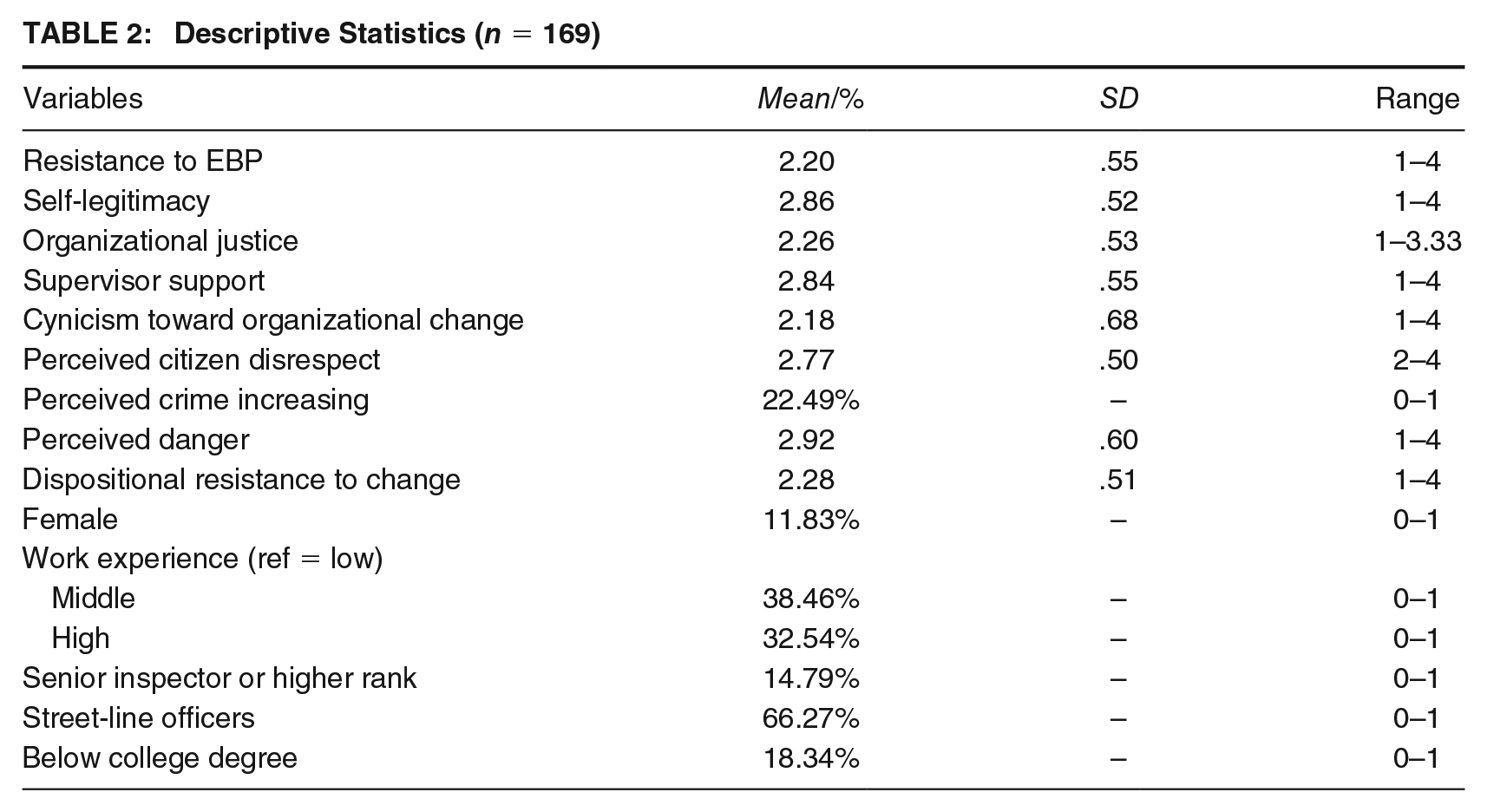
Dispositional resistance to change was also accounted for (Kuen et al., 2023). Respondents rated their agreement with three items, including “Often, I feel a bit uncomfortable even about changes that may potentially improve my life” (α = 0.75; see Appendix A). Other variables included: sex (1 = female, 0 = male); work experience, using dummy variables for middle-level experience (10–19 years) and high-level experience (≥ 20 years), with low experience (< 10 years) as the reference category; rank (1 = inspector or higher, 0 = lower than inspector); duty (1 = frontline officer, 0 = non-frontline officer); and education level (1 = below college degree, 0 = college degree or higher). 6 Descriptive statistics for all variables are presented in Table 2.
Descriptive Statistics (n = 169)
Analytical Strategy
Since the dependent variable, resistance to EBP, is continuous and the residuals meet the assumption of normality, I employed ordinary least squares (OLS) regression, which is appropriate for estimating linear relationships under these conditions. Specifically, three OLS regression models were conducted to examine both the direct association between self-legitimacy and resistance to EBP and the indirect association between organizational factors and resistance via self-legitimacy. The models were specified as follows: (a) Model 1 predicts self-legitimacy, (b) Model 2 predicts resistance to EBP, including all covariates but excluding self-legitimacy, and (c) Model 3 predicts resistance to EBP, further incorporating self-legitimacy.
In addition, to rigorously assess the indirect association between organizational factors (i.e., organizational justice, supervisor support, and cynicism toward organizational change) and resistance to EBP through self-legitimacy, I conducted mediation analysis using bootstrapping with 2,000 iterations. Bootstrapping is widely regarded as a robust approach for mediation analysis, as it provides more precise estimates of standard errors and confidence intervals for indirect effects. Multicollinearity was not a concern, as all bivariate correlations were below |0.60| (see Appendix B for correlation coefficients), and all variance inflation factors (VIFs) were below 2.50. Missing data accounted for less than 2% of the sample (n = 3), a negligible amount that did not warrant imputation. Thus, listwise deletion was applied, which yielded a final sample of 169 police officers. All analyses were conducted using Stata 18.
Findings
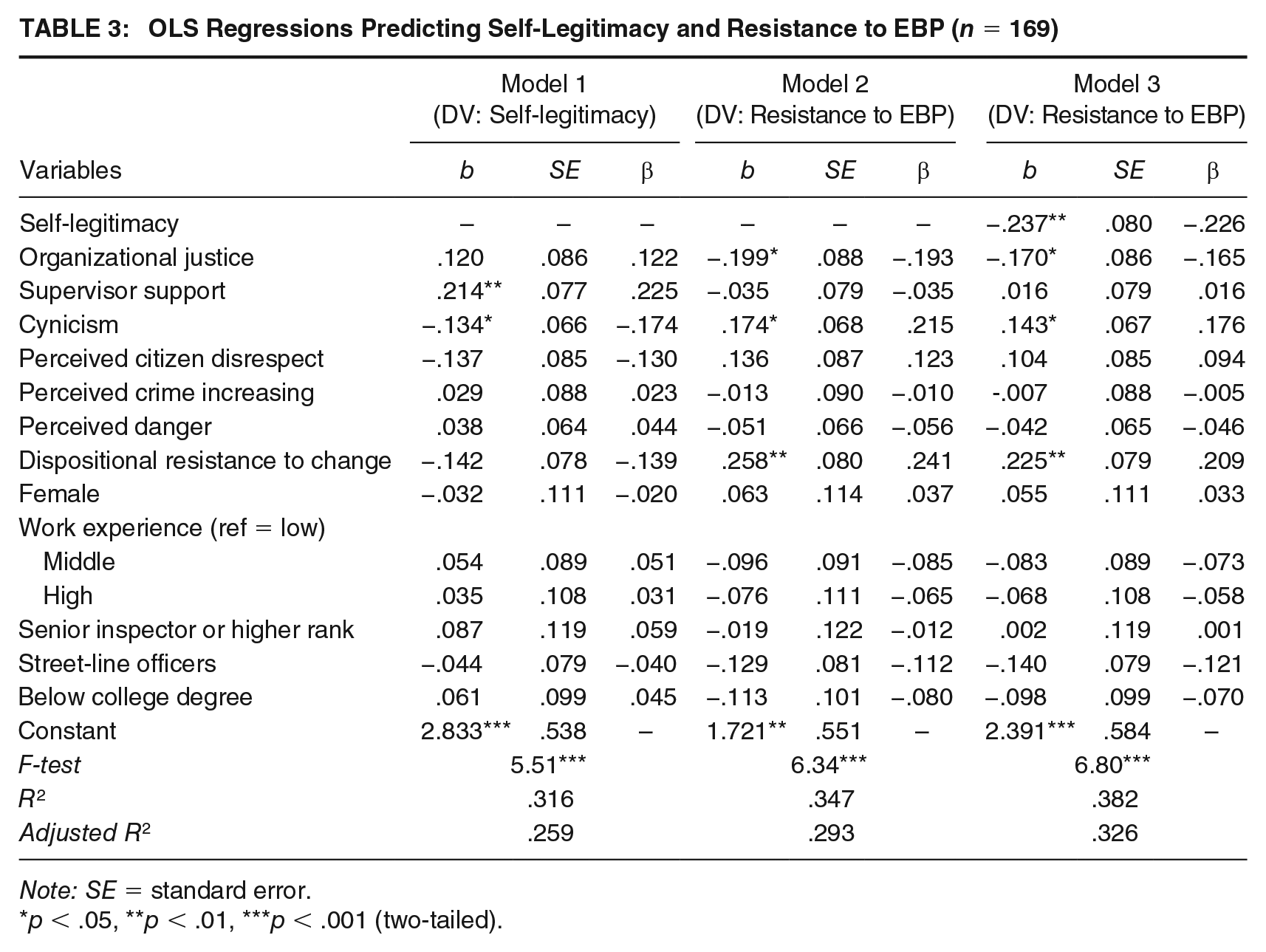
Table 3 presents the results of three OLS regressions. Model 1 examined the correlates of police self-legitimacy. Supervisor support was positively associated with self-legitimacy, with a standardized coefficient of .225 (p < .01). Cynicism toward organizational change was significantly and negatively associated with self-legitimacy, with a one standard deviation increase corresponding to a .174 standard deviation decrease in self-legitimacy (p < .05). None of the other variables reached statistical significance at the .05 level. Model 1 accounted for approximately 26% of the variance in self-legitimacy.
OLS Regressions Predicting Self-Legitimacy and Resistance to EBP (n = 169)
Note: SE = standard error.
p < .05, **p < .01, ***p < .001 (two-tailed).
Model 2 examined the correlates of resistance to EBP, including all covariates except police self-legitimacy. Two of the three organizational factors were statistically significant. Organizational justice was significantly and negatively associated with resistance to EBP, with a one standard deviation increase corresponding to a .193 standard deviation decrease in resistance to EBP (p < .05). Officers’ cynicism toward organizational change was positively associated with their resistance to EBP (β = .215, p < .05). Among all control variables, dispositional resistance to change was the only significant correlate, with a β of .241. This model explained about 29% of the variance in resistance to EBP.
Model 3 showed a significant negative association between self-legitimacy and resistance to EBP (p < .01). Specifically, a one standard deviation increase in self-legitimacy was associated with a .226 standard deviation decrease in resistance to EBP, after adjusting for all covariates. This finding led to the rejection of the null hypothesis related to Hypothesis 1. The significant correlates in Model 2 remained statistically significant in Model 3. Organizational justice (β = −.165, p < .05) and cynicism toward organizational change (β = .176, p < .05) and were both significantly associated with resistance. Dispositional resistance to change remained the only significant control variable, with a β of .209 (p < .01). Notably, self-legitimacy exhibited the strongest association with resistance to EBP among all explanatory variables. Model 3 accounted for about 33% of variance in resistance to EBP.
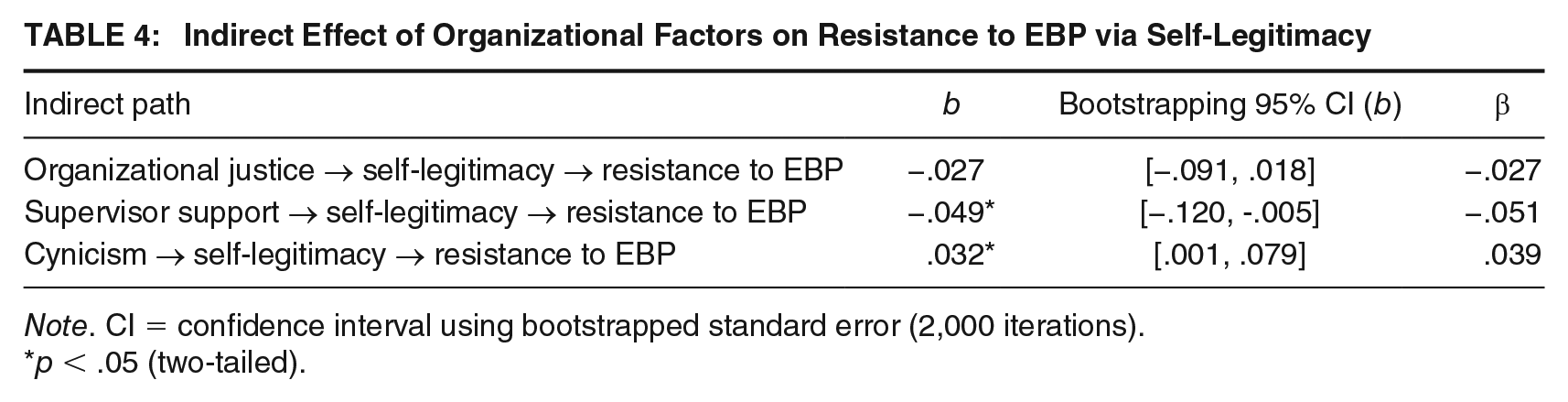
To examine the mediating role of self-legitimacy in the association between organizational factors and resistance to EBP, a mediation analysis with bootstrapping (2,000 iterations) was conducted (see Table 4). The results indicated that self-legitimacy served as a significant mediator in the association between supervisor support and resistance to EBP (β = −.051, p < .05) and between cynicism toward organizational change and resistance (β = .039, p < .05), leading to the rejection of the null hypotheses related to Hypotheses 3 and 4. However, consistent with the lack of a significant direct relationship between organizational justice and self-legitimacy (see Model 1 in Table 3), the indirect association between organizational justice and resistance to EBP via self-legitimacy was not statistically significant (β = −.027, p > .05). This finding failed to reject the null hypothesis related to Hypothesis 2.
Indirect Effect of Organizational Factors on Resistance to EBP via Self-Legitimacy
Note. CI = confidence interval using bootstrapped standard error (2,000 iterations).
p < .05 (two-tailed).
Discussion
Calls for the adoption and institutionalization of EBP have grown as evidence-based practices in policing gain prominence in response to persistent crime and disorder issues (Lum & Koper, 2017; Sherman, 2013; Weisburd et al., 2023; Weisburd & Neyroud, 2011). At the same time, police worldwide are facing escalating legitimacy crises (Kuen et al., 2025; Lum et al., 2024). Despite a growing body of studies on the positive outcomes of enhanced police self-legitimacy (Bradford & Quinton, 2014; Chen et al., 2021; Sarpong et al., 2025; Trinkner et al., 2019), research on its relationship with officers’ resistance or receptivity to EBP remains limited. Using survey data from police officers in South Korea, this study is the first to examine the association between officers’ self-legitimacy and their resistance to EBP and research. Building on the literature that demonstrates a strong link between organizational climates and police self-legitimacy (Bradford & Quinton, 2014; Nix & Wolfe, 2017; Tankebe & Meško, 2014), this study also investigates the indirect association between organizational factors (i.e., organizational justice, supervisor support, and cynicism toward organizational change) and officers’ resistance to EBP via police self-legitimacy.
The most important finding of this study is the robust association between police self-legitimacy and resistance to EBP, with self-legitimacy emerging as the strongest correlate. Specifically, this result suggests that enhancing officers’ self-legitimacy can reduce their resistance to and skepticism toward EBP and academic research. This finding aligns with prior research demonstrating the benefits of strengthened police self-legitimacy, such as a lower likelihood of using force (Trinkner et al., 2019), greater support for democratic policing (Bradford & Quinton, 2014), lower stress levels (Lu & Kuen, 2024), and an increased willingness to exceed formal duties (Hacin & Meško, 2022). In other words, police self-legitimacy not only plays a crucial role in improving police–community relations but also fosters greater openness to EBP and research, thereby encouraging officers to adopt research-driven and evidence-based strategies to enhance their performance.
Moreover, our findings indicate that self-legitimacy not only serves as the strongest correlate but also functions as a significant mediator between two organizational factors (cynicism toward organizational change and perceived supervisor support) and resistance to EBP. Put simply, negative organizational climates, characterized by widespread skepticism about an organization’s capacity for positive change and limited supervisor support, can erode officers’ belief in the legitimacy of their role as law enforcement professionals, which in turn increases their resistance to EBP and research. Notably, the association between perceived supervisor support and resistance to EBP was fully mediated by officers’ self-legitimacy. These results further underscore the critical role of self-legitimacy in mitigating officers’ resistance to EBP and research. Overall, our findings contribute to the literature on the correlates of resistance to EBP (Kalyal, 2020a, 2020b; Jonathan-Zamir et al., 2019; Kuen et al., 2023; Telep, 2017), as well as to the growing body of research on the sources and consequences of self-legitimacy (Bradford & Quinton, 2014; Nix & Wolfe, 2017; Sarpong et al., 2025; Tankebe, 2014; Tankebe & Meško, 2014; Trinkner et al., 2019; White et al., 2020).
In addition, this study found that cynicism toward organizational change and organizational justice were directly associated with officers’ resistance to EBP, with higher levels of cynicism and lower levels of organizational justice corresponding to increased resistance to EBP. As several recent studies have shown (Kuen et al., 2023; see also Kalyal, 2020a, 2020b), understanding the role of organizational factors is essential for reducing their resistance to EBP. Officers who hold a pessimistic view of their organization’s capacity for change are generally less inclined to embrace innovations such as EBP (Kuen et al., 2023). Similarly, an unfavorable internal workplace climate, characterized by low levels of perceived organizational justice, can lead officers to believe that efforts to adopt new approaches and innovations may not be fairly recognized or rewarded. Collectively, these findings align with the established literature emphasizing the importance of enhancing organizational environments to improve officers’ attitudes, work-related perceptions, and overall performance outcomes (Bradford & Quinton, 2014; Lawson et al., 2022; Paoline, 2003, 2004).
However, it is notable that there was little evidence that external environmental factors (i.e., perceived citizen disrespect, perceived crime trends in their jurisdiction, and perceived danger) were significantly associated with officers’ resistance to EBP. This finding aligns with a recent study from South Korea, which reported that frontline officers’ perceptions of citizen animus, incivilities, and crime trends were not linked to their resistance to EBP and research (Kuen et al., 2023). Nonetheless, it would be premature to conclude that external environments are irrelevant in shaping officers’ resistance to EBP. It is important to acknowledge that other external factors such as funding availability (Kalyal, 2020b) or government pressure (Sherman, 1998, 2003)—factors hypothesized to be influential but not captured in this study—could indeed play a significant role (see also del Pozo et al., 2025). Future research should investigate a broader range of external factors to better understand their association with officers’ resistance to EBP.
This study provides several policy implications. First, our findings suggest that law enforcement agencies should seek ways to bolster police self-legitimacy if they aim to improve officers’ receptivity to EBP and research. In the midst of global crises of police legitimacy, enhancing self-legitimacy has gained significant attention because it reinforces officers’ commitment to procedural fairness toward citizens (Bradford & Quinton, 2014; Chen et al., 2021; Tankebe, 2019) and reduces their willingness to use force (Tankebe & Meško, 2014; Trinkner et al., 2019). This study underscores that strengthening officers’ self-legitimacy not only improves police–community relations, as suggested by prior research, but also enhances their receptivity to research and evidence-based practices. Officers who possess a robust sense of self-legitimacy are more inclined to adopt EBP strategies and engage with academic research, which ultimately can enhance their capacity to reduce crime and disorder while fostering better police–community relations (Lum & Koper, 2017; Sherman, 2013; Weisburd et al., 2023).
A key question that follows is how to effectively enhance officers’ self-legitimacy as a way of reducing their resistance to EBP. The findings of this study suggest that improving organizational environments is essential for bolstering police self-legitimacy, which in turn reduces resistance to EBP. In particular, police agencies and their leadership should focus on transforming a skeptical climate regarding their ability to effect positive change. Such a transformation can strengthen self-legitimacy and consequently lower resistance to EBP. In addition, ensuring that officers feel supported by their supervisors and recognized for their achievements can further reinforce these positive outcomes. Given that the traditionally closed structure and culture of police organizations often impede the adoption of new initiatives (Lum & Koper, 2017), it is essential to further investigate the organizational factors that hinder receptivity to EBP (Kuen et al., 2023). Ultimately, if police agencies are committed to adopting EBP, improving organizational conditions may serve as an important starting point—rather than relying solely on efforts that promote awareness and understanding of EBP. As Kuen et al. (2023) noted, “reducing resistance to EBP and research cannot be achieved by just winning the hearts and minds of officers through training them on the values, knowledge, and benefits of EBP” (p. 13).
Surprisingly, there are few strategies or programs in policing, either in South Korea or internationally, that specifically aim to enhance the internal organizational environment, such as making officers feel more supported by their supervisors. Most reform efforts to date have focused on improving police-community interactions (e.g., procedural justice initiatives targeting citizen encounters), rather than strengthening internal structures and support systems. Consequently, rigorous evaluations of strategies to improve organizational conditions and their impacts on police agencies and officers remain scarce, especially those using experimental or quasi-experimental designs. This gap highlights a critical direction for future research: not only to assess whether such efforts can improve the internal climate of police organizations, but also to examine their potential to enhance self-legitimacy and, in turn, reduce officers’ resistance to EBP.
It is important to acknowledge several limitations of this study. First, the sample was obtained through convenience sampling. Specifically, given that the survey was administered to officers who voluntarily attended a police training program and chose to participate in the survey, the sample may be biased toward those who are open to academic research and EBP. In addition, the relatively small sample size limits the generalizability of the findings; thus, future research should replicate this study using larger, more diverse and randomly selected samples of officers to ensure broader applicability. Second, this study was conducted in South Korea, so the results may not be generalizable to other countries. Replication in other national contexts is warranted. Third, our findings are based on cross-sectional data, which limits the ability to establish causality or determine temporal order of the relationship among the examined variables. The analyses in this study identify statistical associations rather than causal mechanisms. Future research should employ longitudinal data to address the time-ordering concerns. Furthermore, as it is an observational study, other variables that may be associated with resistance to EBP may have been omitted.
Conclusion
This study found that self-legitimacy is a key correlate of resistance to EBP and further mediates the relationship between organizational factors, such as supervisor support and cynicism toward organizational change, and resistance. These findings confirm that reducing officers’ resistance to EBP requires more than just training them on its knowledge, values, and benefits (Lum & Koper, 2017). Thus, if the goal is to reduce resistance to research and EBP, police agencies and leaders should work toward strengthening officers’ recognition of the moral validity of their authority. This can be achieved through initiatives that address officers’ skepticism about the agency’s capacity to drive positive change and ensure that they consistently receive supportive supervision and recognition for their accomplishments. Given that this study is the first examination of the role of police self-legitimacy in reducing officers’ resistance to EBP, future research should further investigate how self-legitimacy functions within the broader mechanisms that mitigate resistance to EBP in law enforcement in diverse contexts. Such research is particularly critical in an era of police legitimacy crises and an increasing demand for evidence-based approaches in policing.
Footnotes
Appendix
Bivariate Correlations Between Variables
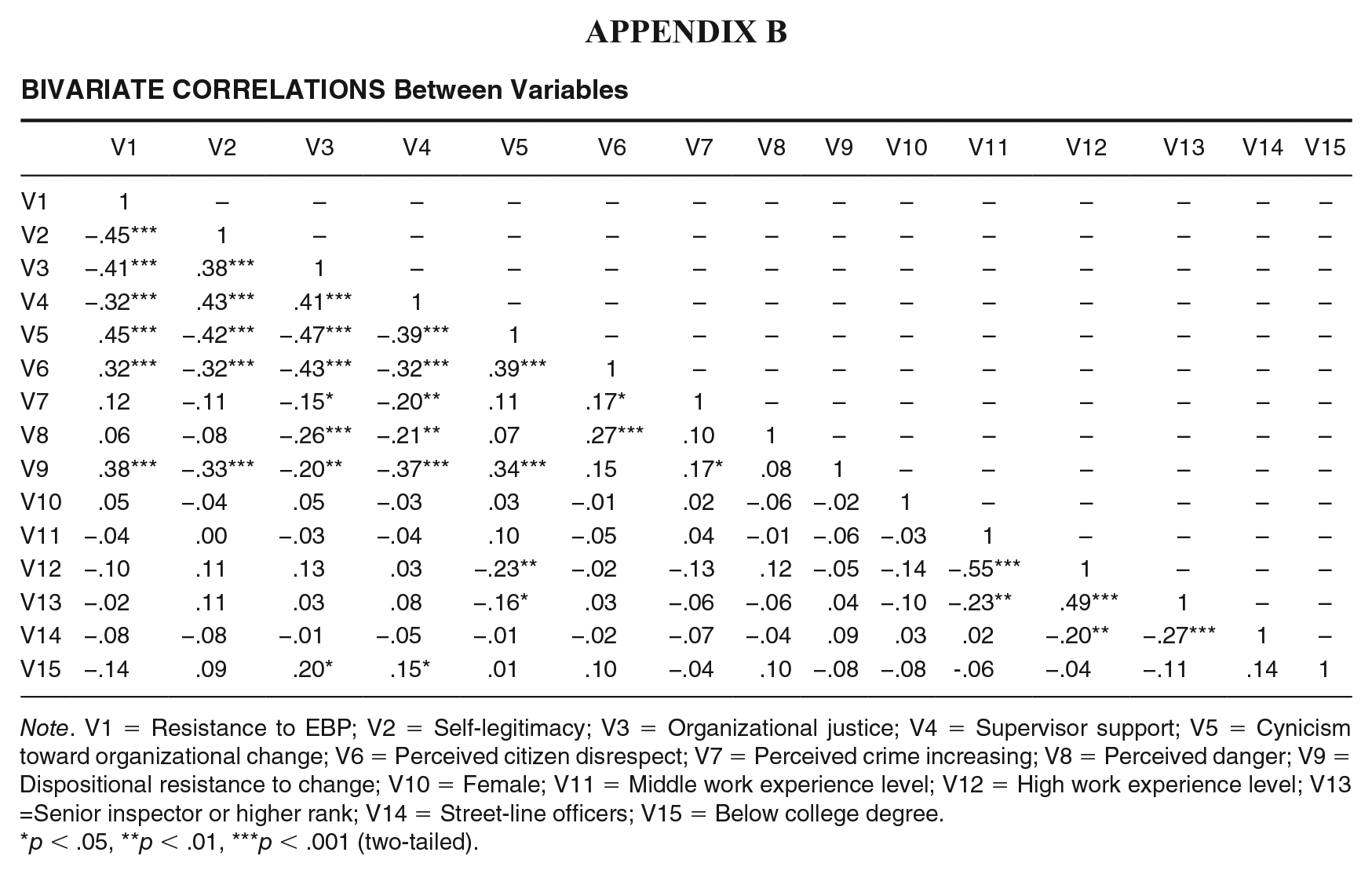
| V1 | V2 | V3 | V4 | V5 | V6 | V7 | V8 | V9 | V10 | V11 | V12 | V13 | V14 | V15 | |
|---|---|---|---|---|---|---|---|---|---|---|---|---|---|---|---|
| V1 | 1 | – | – | – | – | – | – | – | – | – | – | – | – | – | – |
| V2 | −.45*** | 1 | – | – | – | – | – | – | – | – | – | – | – | – | – |
| V3 | −.41*** | .38*** | 1 | – | – | – | – | – | – | – | – | – | – | – | – |
| V4 | −.32*** | .43*** | .41*** | 1 | – | – | – | – | – | – | – | – | – | – | – |
| V5 | .45*** | −.42*** | −.47*** | −.39*** | 1 | – | – | – | – | – | – | – | – | – | – |
| V6 | .32*** | −.32*** | −.43*** | −.32*** | .39*** | 1 | – | – | – | – | – | – | – | – | – |
| V7 | .12 | −.11 | −.15* | −.20** | .11 | .17* | 1 | – | – | – | – | – | – | – | – |
| V8 | .06 | −.08 | −.26*** | −.21** | .07 | .27*** | .10 | 1 | – | – | – | – | – | – | – |
| V9 | .38*** | −.33*** | −.20** | −.37*** | .34*** | .15 | .17* | .08 | 1 | – | – | – | – | – | – |
| V10 | .05 | −.04 | .05 | −.03 | .03 | −.01 | .02 | −.06 | −.02 | 1 | – | – | – | – | – |
| V11 | −.04 | .00 | −.03 | −.04 | .10 | −.05 | .04 | −.01 | −.06 | −.03 | 1 | – | – | – | – |
| V12 | −.10 | .11 | .13 | .03 | −.23** | −.02 | −.13 | .12 | −.05 | −.14 | −.55*** | 1 | – | – | – |
| V13 | −.02 | .11 | .03 | .08 | −.16* | .03 | −.06 | −.06 | .04 | −.10 | −.23** | .49*** | 1 | – | – |
| V14 | −.08 | −.08 | −.01 | −.05 | −.01 | −.02 | −.07 | −.04 | .09 | .03 | .02 | −.20** | −.27*** | 1 | – |
| V15 | −.14 | .09 | .20* | .15* | .01 | .10 | −.04 | .10 | −.08 | −.08 | -.06 | −.04 | −.11 | .14 | 1 |
Note. V1 = Resistance to EBP; V2 = Self-legitimacy; V3 = Organizational justice; V4 = Supervisor support; V5 = Cynicism toward organizational change; V6 = Perceived citizen disrespect; V7 = Perceived crime increasing; V8 = Perceived danger; V9 = Dispositional resistance to change; V10 = Female; V11 = Middle work experience level; V12 = High work experience level; V13 =Senior inspector or higher rank; V14 = Street-line officers; V15 = Below college degree.
p < .05, **p < .01, ***p < .001 (two-tailed).
Authors’ Note:
The author declared no potential conflicts of interest with respect to the research, authorship, and/or publication of this article. The author received no financial support for the research, authorship, and/or publication of this article.
