




Abstract
According to Moffitt’s theory of life-course-persistent offending, an early onset of delinquent behavior is often indicative of a pattern of delinquency that is persistent and insusceptible to outside influence. Prior research however has identified ample variation in the delinquent patterns of children who engage in early-onset delinquency, raising questions on the susceptibility of their behavior to external factors. Here, we use longitudinal data of children with a first police contact prior to age 12 to examine the association between within-individual changes in social bonds with parents, peers, and school and self-reported delinquency during the transition into adolescence, as well as their interaction with pre/perinatal risk and parental offending. Results from hybrid random effect models show that an increase in involvement with parents with a criminal history and delinquent peers, as well as an increase in skipping class are associated with an increase in children’s delinquent behavior.
In her dual taxonomy, Moffitt (1993, 1997) presents a theory that divides individuals who engage in delinquent behavior into two groups: those on an adolescence-limited (AL) and life-course-persistent (LCP) trajectory, who, she argues, display qualitatively distinct patterns of offending. The large group of individuals on an AL trajectory is theorized to engage in offending when they attain adolescence, only to desist from crime before reaching adulthood. The smaller and more troublesome group of individuals following an LCP trajectory is assumed to display offending behavior already from an early age and develop criminal careers that extend well beyond adolescence. This last group starts displaying signs of age-inappropriate antisocial behavior already in childhood, engage in delinquency during adolescence, and persist in criminal behavior into adulthood. While individuals on an LCP trajectory are quite rare, only accounting for 5% to 8% of the general population, studies reveal that they are responsible for a disproportionate amount of offenses (Farrington & West, 1993; Moffitt, 1993, 1997).
To explain their distinct offending patterns, Moffitt (1993, 2006) argues that individuals on an LCP trajectory suffer from a mix of individual and social risk factors in childhood. These risk factors include psychosocial vulnerabilities such as impulsivity and deficits in executive functioning, which make an early onset of delinquent behavior more likely. A combination of these psychosocial vulnerabilities and an inadequate rearing environment prior to adolescence is argued to further increase the likelihood of these children experiencing an early start of their criminal career.
The mix of individual and social risk factors in childhood, compounded by the early onset of problematic behavior, hinders these individuals’ ability to form positive relationships and integrate into conventional social structures. Due to a lack of prosocial socialization experiences, individuals on an LCP trajectory are thought to be unable to positively respond to changes in life circumstances. While individuals on an AL trajectory adapt their behavior to social factors—such as negative peer perceptions—those on an LCP trajectory are expected to be unresponsive to changes in their bonds with others (Moffitt, 1993).
In support of the dual taxonomy, prior work shows that early onset is one of the most important predictors of persistent offending. The association between early onset and persistent offending over the life course is found in numerous datasets and across various geographical settings, including Denver, Pittsburgh, Rochester, Dunedin, and London (Blumstein et al., 1985; Farrington, 2020; Loeber et al., 1999; Moffitt et al., 2002). Studies also find that those who start their delinquency prior to age 12 are two to three times more likely to follow a chronic offending trajectory than youths who start offending in adolescence (Loeber et al., 2003; Moffitt et al., 2002). In particular, being arrested by the police before age 12 has been identified as a strong predictor of persistent offending (Krohn et al., 2001; Moffitt, 1993).
Despite the robust association between early onset and persistent offending, empirical work shows that a substantial proportion of children with an early onset of antisocial and delinquent behavior desist during adolescence (Colins et al., 2025; van Hazebroek et al., 2019). These studies reveal that not all children who engage in early-onset delinquent behavior go on to develop an LCP trajectory; in fact, only half continue offending into adulthood (Moffitt et al., 2002). Importantly, and in contrast to theoretical expectations (Moffitt, 1993, 2006), previous research reveals that, even among individuals displaying delinquent behavior in childhood, distinct offending trajectories can be identified, ranging from low- to high-level re-offending trajectory subgroups (van Domburgh et al., 2009; van Hazebroek et al., 2019). This suggests that even early onset youths’ delinquent behavior may still be susceptible to external influence.
The current study addresses the question whether delinquent behavior in children with a first police registration below the age of 12 is affected by changes in life circumstances during the transition from childhood to adolescence. Using three waves of data from the Dutch Childhood Arrestees Study, we examine associations between within-individual changes in social bonds with parents, peers, and school and the self-reported frequency of delinquent behavior.
Theoretical Framework and Prior Studies
Moffitt’s Theory of Life-Course-Persistent Offending
Moffitt’s (1993) dual taxonomy distinguishes individuals on an LCP trajectory from those on an AL trajectory. Those on an LCP trajectory are assumed to begin offending in childhood and continue to commit crimes into adulthood (Moffitt, 1993). According to Moffitt (1993), the origins of stable delinquent behavior in individuals following an LCP trajectory can be traced back to pre/perinatal problems (i.e., before or at birth), which include prenatal substance exposure and brain injuries caused by pregnancy and delivery complications. Even minor pre/perinatal problems are thought to cause neuropsychological deficits, which can manifest as hyperactivity, impulse control problems, and impaired cognitive abilities (Moffitt, 1994). Generally, children exhibiting such characteristics struggle to concentrate, experience cognitive challenges, and have a hard time expressing themselves, making it hard even for competent parents to offer necessary positive guidance and support.
Unfortunately, due to the intergenerational component of risk factors for LCP offending, children with pre/perinatal problems are often born to parents with whom they share many individual characteristics. Consequently, these children are likely to have parents who are impatient, easily frustrated, and unable to adapt to their children’s hyperactivity and lack of impulse control. Moffitt (1993) therefore claims that children exposed to pre/perinatal problems likely display the kind of behavioral problems that maladaptive families struggle to address effectively; a combination of factors that further increases the likelihood of early onset and subsequent continuity of their delinquent behavior.
As these children grow older, negative interactions accumulate, causing their delinquent behavior to become rooted in their behavioral repertoire to the point where they are immune to changes in life circumstances (Moffitt, 2003). When children start off with poor relationships with their parents, they often lack relationship-building skills and the ability to develop positive communication with others, resulting in difficulties forming social bonds with peers and other adults. By the time these children reach school-going age, they exhibit behavioral patterns that cause conflict with teachers and alienate peers, further limiting prosocial interaction (Moffitt, 1994). When positive events do happen, individuals on an LCP trajectory often use these opportunities to expand rather than desist from their criminal behavior. For example, employment can lead to workplace crime, while marriage may result in incidents of intimate partner violence (Moffitt, 1997). A lack of social bonds with conventional others and insensitivity to changes in life circumstances contribute to the persistence of early-onset delinquent behavior into adulthood.
Within-Individual Change in Social Bonds and Delinquency
Most studies on changes in life circumstances and offending have focused on adults (Blokland & Nieuwbeerta, 2005; Hill et al., 2016). It is well established that stable relationships, marriage, employment, and engaging in adult-like roles generally promote positive change and desistance from crime (Blokland & Nieuwbeerta, 2005; Hill et al., 2016; Horney et al., 1995). However, recent work highlights that not all relationships exert the same socializing effect, as marriage is only associated with reduced offending when the partner is employed and financially stable (Widdowson et al., 2021). Relevant to the current study, research also finds that individuals with criminal partners are more likely to offend than those with non-criminal partners (Airaksinen et al., 2023).
Compared with studies on adults, findings on the relationship between within-individual changes in social bonds and delinquent behavior during adolescence are much more inconsistent. Some research shows that youths experiencing an increase in bonds with parents—measured as parental attachment and supervision—display a decrease in delinquent behavior (Childs et al., 2010; Copp et al., 2020; Craig, 2016; Peterson et al., 2016). Similarly, a decrease in parental bonds—measured as low attachment, low involvement, and poor parental supervision—is associated with an increase in delinquent behavior (Farrington et al., 2002; Hemphill et al., 2015). In contrast, other work finds no association between changes in parental supervision and delinquent behavior (Beardslee et al., 2018; Childs et al., 2010). A larger body of literature examining changes in social bonds with peers generally finds that increased peer delinquency is positively related to individuals’ own delinquent behavior (Beardslee et al., 2018; Childs et al., 2010; Copp et al., 2020; Craig, 2016; Hemphill et al., 2015; Janssen et al., 2015; Peterson et al., 2016; Unnever & Chouhy, 2019). Farrington et al. (2002), however, do not find an association between changes in bonds with delinquent peers and delinquent behavior. Few studies address associations between changes in bonds with school and delinquent behavior. Peterson et al. (2016) find that an increase in bonds to school—measured as school commitment and achievement—reduces delinquent behavior. In addition, school dropout (Na, 2017) and school suspensions (Mowen et al., 2020) contribute to increases in delinquent behavior. Other studies, however, find no association between changes in bonds with school and delinquent behavior (Farrington et al., 2002; Unnever & Chouhy, 2019).
Pre/Perinatal Risk and Delinquency
In accordance with Moffitt’s theory of LCP offending, the association between pre/perinatal risk and delinquent behavior is well documented (for a meta-analysis, see Pratt et al., 2006). Children exposed to such risks, including maternal substance use (Brennan et al., 2002; Gibson et al., 2006; Räsänen et al., 1999), and pregnancy and delivery complications (Oskarsson et al., 2022), face an increased risk of developing delinquent behavior. Exposure to pre/perinatal risk is associated with criminal arrest and conviction (Brennan et al., 2002; Oskarsson et al., 2022), and early-onset and persistent delinquency (Gibson et al., 2006; Räsänen et al., 1999). For example, maternal prenatal smoking increases the chance of offspring experiencing their first police contact below age 14 (Gibson et al., 2006), and continuing to commit crimes into adulthood (Räsänen et al., 1999). Together, these studies indicate that pre/perinatal risk is an important contributing factor in the development of early onset and persistent delinquent behavior.
Parental Offending and Delinquency
Moffitt’s assumption that parental offending plays an important role in children’s delinquent behavior has also received substantial empirical support. Studies show that offending behavior tends to cluster within families and is often passed down through generations (Athanassiou et al., 2023; Wojciechowski, 2023). Children with a parent who has a criminal history are two to three times more likely to experience arrest, conviction, and incarceration (Farrington et al., 2017). Parental criminal history also increases the risk of persistent and more frequent offending in justice-involved youth (Wojciechowski, 2023). In addition, it is related to early police contact (ages 5 and 13) and a slower decline in delinquent behavior between ages 10 and 17 (Athanassiou et al., 2023). These findings highlight the importance of considering parental offending when studying the development of adolescent delinquency.
Interaction Between Pre/Perinatal Risk and Social Factors
Aligning with Moffitt’s theorizing, prior research also indicates that pre/perinatal risk interacts with the social environment in predicting delinquency in children. Studies typically show that the associations between pre/perinatal risk and adverse behavioral outcomes are stronger in the context of increased social risk. For instance, pre/perinatal risk increases the likelihood of delinquency in affected offspring in the presence of poor parenting practices (Jackson & Beaver, 2016), unresponsive mothers (Wakschlag & Hans, 2002), and antisocial parents (Huijbregts et al., 2008). Similarly, pre/perinatal risk combined with inadequate parental monitoring is associated with early-onset persistent aggressive behavior (Brennan et al., 2003).
Current Focus
The current study adds to existing research by testing expectations from Moffitt’s theory of LCP offending, focusing on the development of delinquency from childhood to adolescence in a sample of children with a first police registration before age 12. Previous studies primarily used general/at-risk populations, which include few individuals with early onset of offending behavior (Moffitt et al., 2002; van der Laan et al., 2008), limiting their relevance to those who follow an LCP trajectory and are at increased risk of an early onset and subsequent persistent delinquency. Studies applying within-individual models in longitudinal surveys of populations with early-onset delinquency are therefore much needed (Farrington et al., 2016; Hemphill et al., 2015). This study specifically examines whether the delinquent development of children with a first police contact before age 12 is responsive to changes in social bonds—namely to parents, peers, and school—which typically shift during the transition from childhood into adolescence (Larson & Richards, 1991). Moffitt’s theory of LCP offending would lead us to expect that delinquent development of these children is insensitive to changes in these social bonds.
In addition, the present study explores the interaction between changes in social bonds and two key risk factors for LCP offending: pre/perinatal risk, and parental offending. Based on the dual taxonomy and prior empirical work, we anticipate high levels of pre/perinatal risk among children with early police contact. To the extent that the combination of early police contact and pre/perinatal risk offers a more accurate proxy of the LCP trajectory, we hypothesize that children exposed to both will especially be unaffected by changes in social bonds. Bonds to parents with a criminal history, in turn, are expected to have a detrimental rather than a preventive effect, especially among children who experienced early police contact but not pre/perinatal risk.
Method
Participants and Procedures
We test our hypotheses using data from the Dutch Childhood Arrestees Project, a prospective longitudinal study on children with a police registration below the age of 12, conducted by the Department of Child and Adolescent Psychiatry of the Amsterdam University Medical Centers (VUmc) (Geluk et al., 2014; van Domburgh et al., 2009). 1 Three municipal police registries in the Netherlands (i.e., Gelderland-Midden, Utrecht, and Rotterdam-Rijnmond) were used to select children who were taken to the police station or reprimanded on the spot for displaying delinquent behavior as observed by the police. These were acts that could have been prosecuted or fined from age 12 onwards, excluding status offenses like truancy, which are typically not handled by Dutch police. This selection aimed to identify a high-risk sample of children with early police involvement, allowing for the examination of within-individual changes in delinquent behavior over time.
A total of 348 children (302 males; 184 of non-Dutch origin) aged 5 to 13 participated in the first measurement occasion (Mage = 10.63, SD = 1.48), shortly after they were registered by the police between 2003 and 2005 (Mage = 10.26, SD = 1.45). These participants formed the base sample that has since been followed-up on three more occasions, after 1 year (n = 295, 85%, age range of 6–14 years, Mage = 11.79, SD = 1.53), 2 years (n = 266, 76%, age range of 7–15 years, Mage = 12.85, SD = 1.54), and 6.5 years (n = 134, 39%, age range of 11–20 years, Mage = 17.61, SD = 1.50). Among 303 children with known first offense type, 58.7% was registered for committing vandalism, 27.4% for property crime, and 13.9% for violent offenses.
The current analyses use data from the first (T1), second (T2), and third (T3) measurement wave. At each assessment, questionnaires and interviews were administered to both children and their primary caretakers (hereafter referred to as “parents”), covering self-reported delinquent behavior and a range of risk factors from multiple life domains. Comparing police records from the baseline sample with those of a Dutch birth cohort (Blokland et al., 2010) indicates that the study effectively included individuals at high risk for continued offending behavior: 45% had a new police record between ages 12 and early adulthood compared with just 14% of the Dutch birth cohort.
We examined whether participants who did and did not complete Wave 3 differed from the baseline sample in terms of several background characteristics (see top half of Table 1 for demographic details of the sample across waves). Results showed no differences in gender, χ2(1) = .10, p = .75, ethnicity, χ2(1) = 2.72, p = .10, or self-reported frequency of delinquency at Wave 1, t(307) = −.71, p = .43. Furthermore, children who did and did not complete Wave 3 did not differ in their frequency of delinquency at Wave 2 t(264) = −.16, p = .56. In addition to panel attrition, we excluded self-reports from children under eight and those with below-average verbal IQ (Wechsler, 1974) due to comprehensibility concerns (see also Geluk et al., 2014). As a result, self-reports were excluded for a total of 64 children at T1, 54 children at T2, and 48 children at T3. Children whose self-reports were and were not excluded, did not differ in terms of gender, χ2(1) = .40, p = .53, or ethnicity, χ2(1) = 2.83, p = .09. Besides the apparent absence of selectivity in attrition, potential bias resulting from loss of data is further minimized by our choice of analyses—looking at within-individual change—as each person serves as their own control by focusing on associations between changes in each person’s risk exposure and their delinquent behavior (Allison, 2009).
Descriptive Statistics for Demographic, Dependent and Independent Variables by Wave
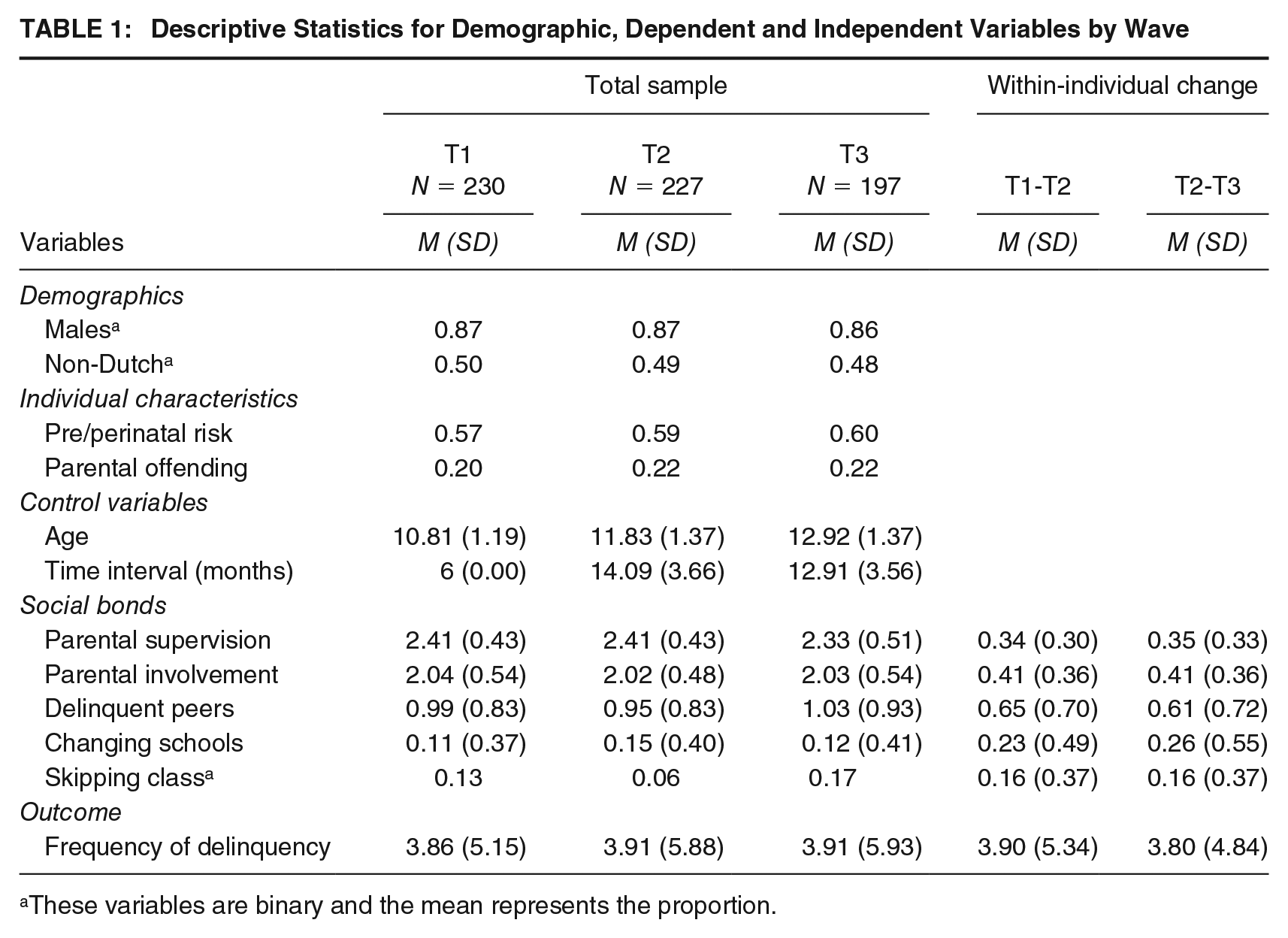
These variables are binary and the mean represents the proportion.
Measures
Delinquent Behavior
The frequency of delinquent behavior was measured using the child version of the Observed Antisocial Behavior Questionnaire (Slot et al., 1998). Participants were asked whether they had committed any of 20 delinquent acts over the past 6 months at baseline and over subsequent intervals between waves (approximately 13–14 months in Waves 2 and 3)—and if so, how many times. The delinquent acts included stealing (six items), hitting or fighting (five items), property damage and arson (five items), rule breaking and fare dodging (three items), and possession of a weapon (one item). 2 While the initial point of contact with law enforcement was based on police-observed delinquent behavior, self-reported delinquency in subsequent waves captured a broader range of delinquent acts, including those that may not have resulted in formal police contact. This approach minimizes the impact of undetected delinquency (Krohn et al., 2010). As about 5% of participants reported committing some acts four or more times, frequencies were winsorized at the 5% tail to limit the influence of outliers (see also French et al., 2004). Finally, we created a summated rating scale by summing the frequency of all items. 3
Social Bonds
Social bonds with parents, peers, and school were measured using the Social and Health Assessment (Weissberg et al., 1991):
Parental supervision: mean of eight items on children’s perception of parental control over different aspects of their lives (e.g., “My parents want to know who I am meeting up with” and “My parents say something if I don’t behave well,” rated on a scale from 0 (never) to 3 (often) with higher scores indicating more parental supervision, α = .51 at T1) 4 ;
Parental involvement: mean of six items on children’s perception of parental engagement in several areas of their lives (e.g., “My parents spend time with me” and “My parents spend time on activities at my school”), rated on a scale from 0 (never) to 3 (often) with higher scores representing more parental involvement, α = .61 at T1);
Affiliation with delinquent peers: one item on the number of friends arrested by the police, rated on a scale from 0 (none) to 3 (most or all) with higher scores indicating that a larger portion of the child’s friends consists of delinquent peers;
Changing schools: one item on the number of school changes, rated from 0 (0 times) to 3 (three or more times), with higher scores indicating more frequent changes in school;
Skipping class: one item on whether the child skipped class, rated from 0 (no) to 1 (yes), with higher scores representing that the child skipped class. 5
Pre/Perinatal Risk
A dummy variable on pre/perinatal risk (0 = no exposure; 1 = exposure) was based on parental reports of problems during pregnancy and childbirth. Following Tzoumakis and Cale (2019), pre/perinatal issues included (a) prenatal substance exposure (cigarettes, alcohol, drugs), (b) pregnancy complications (i.e., preeclampsia, anemia, uterine bleeding), and (c) birth complications (i.e., prematurity, forceps use, fetal distress). Six interaction terms were then constructed by multiplying the pre/perinatal risk dummy with each social bond variable.
Parental Offending
A dummy variable indicated whether the child’s parents (i.e., biological parents and—if applicable—their partners) had police contact for offending (0 = no parental offending, 1 = parental offending). Subsequently, we constructed two interaction terms by multiplying the dummy variable on parental offending with variables measuring social bonds with parents.
Control Variables
We included two control variables in the analyses: participant’s age at each wave, and the monthly interval between waves. The latter accounted for variations in the length of time between waves, and therefore the length of time participants reported on.
Analyses
Hybrid random effect Poisson models were performed using Stata version 15.0 (Stata, College Station, TX, USA). Poisson models were favored over negative binomial models as they yield consistent estimators in short panel data (Cameron & Trivedi, 2013). Hybrid random effect models were preferred over fixed effect models since they can control for stable covariates when the outcome is an over-dispersed count variable (Allison & Waterman, 2002), like frequency of delinquency in this study (see descriptive information in Table 1). In hybrid models, time-varying independent variables were parameterized as deviations from each individual’s overall mean (Allison, 2005), thus estimating within-individual changes while controlling for all time-invariant characteristics. Hybrid models address over-dispersion by parameterizing time-varying independent variables as deviations from overall person means (Allison, 2005). For example, if a participant’s score on parental supervision is 1.0 at T1, 2.0 at T2, and 3.0 at T3, their person mean would be 2.0, yielding deviation scores of -1.0 at T1, 0.0 at T2, and 1.0 at T3.
In our models, delinquent behavior and social bonds were measured concurrently. We expect social bonds and delinquent behavior to be closely temporally related, with changes in social bonds to be associated with an immediate rather than next-year change in delinquent behavior.
To understand main and interaction effects, we estimated four regression models. Model 1 included control variables (age, interval between waves) and all social bond variables. Model 2 added pre/perinatal risk and its interactions with social bonds. Model 3 included parental offending and its interactions with parental bonds. In Model 4, we introduced three-way interactions between pre/perinatal risk, parental offending, and both parental bond measures to assess whether associations between bonds with parents with a criminal history and children’s delinquency were conditional on pre/perinatal risk.
Results
Descriptive Statistics
Table 1 presents descriptive statistics across waves for the independent and dependent variables of the final sample used in the analyses. Table 1 shows that 57% of children completing Wave 1 was exposed to pre/perinatal risk, and 20% had at least one parent with a police contact for offending. Regarding social bonds, participants were generally well bonded to parents (M = 2.41, SD = 0.43 for supervision; M = 2.04, SD = 0.54 for involvement at T1), had “a few” friends who had been arrested (M = 0.99, SD = 0.83 at T1), and rarely changed schools (M = 0.11, SD = 0.37 at T1). Up to 17% reported skipping class per wave. Self-reported delinquent acts varied from 3.86 (SD = 5.15) at T1 to 3.91 (SD = 5.93) at T3.
Examining within-individual changes in social bonds on a 0 to 3 scale shows shifts in family, peer, and school bonds, with average changes ranging from 0.16 to 0.65 per year. Among participants reporting change, about half experienced an increase while the other half experienced a decrease in social bonds. Changes in delinquency averaged around four delinquent acts between waves, with 40% displaying a decrease and 35% displaying an increase in delinquent behavior.
Within-Individual Change in Social Bonds and Delinquency
Table 2 displays the results of the hybrid random effects Poisson regression models used to estimate associations between changes in social bonds and change in delinquent behavior.
Within-Individual Associations Between Change in Social Bonds and Frequency of Delinquency by Pre/Perinatal Risk and Parental Offending in Youth With Early Police Contact
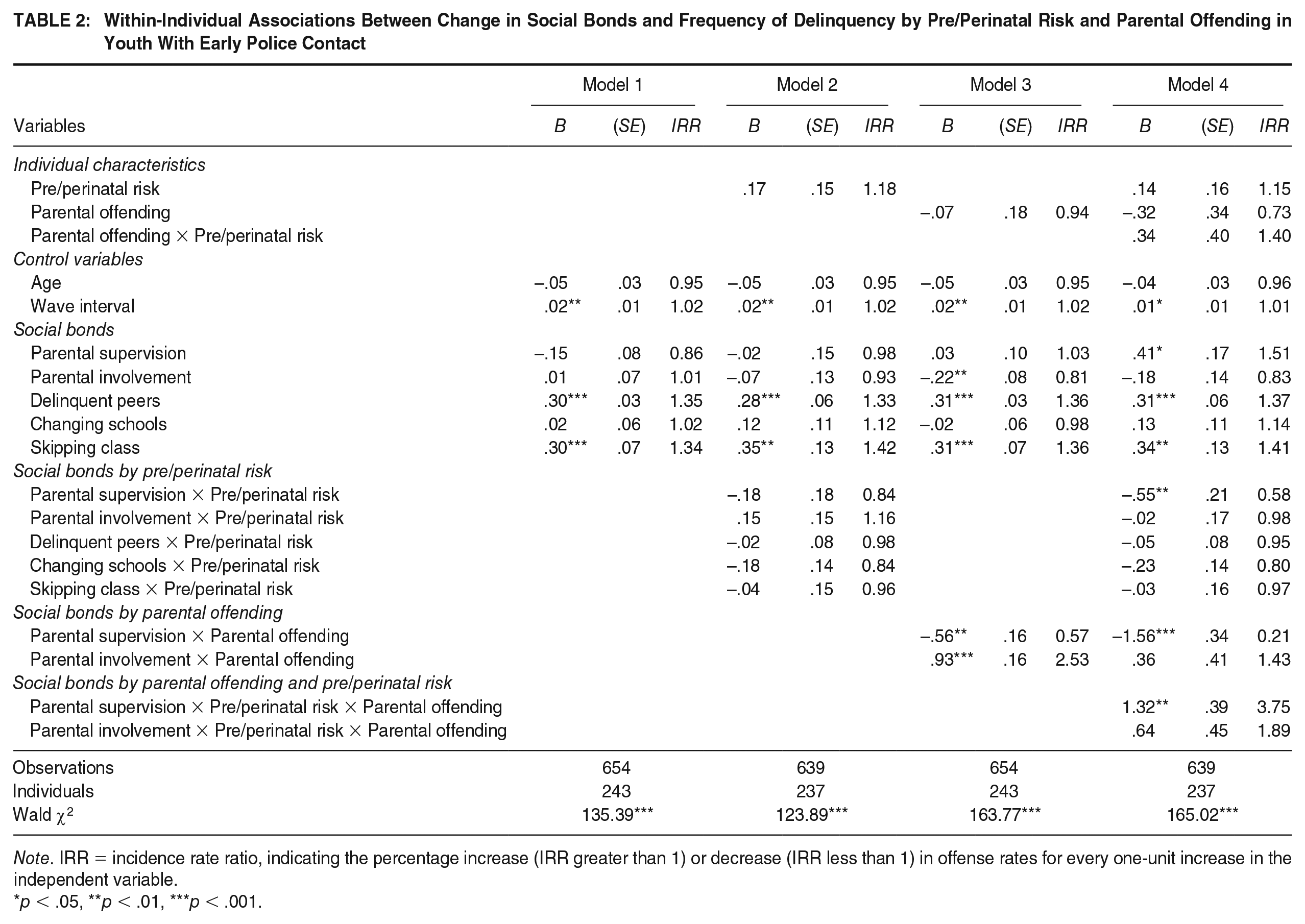
Note. IRR = incidence rate ratio, indicating the percentage increase (IRR greater than 1) or decrease (IRR less than 1) in offense rates for every one-unit increase in the independent variable.
p < .05, **p < .01, ***p < .001.
Social Bonds
Model 1 reveals no association between changes in parental bonds and self-reported frequency of delinquency. In contrast, increases in bonds with delinquent peers and truancy are associated with an increase in frequency of delinquent behavior. A one-unit increase in affiliation with delinquent peers and skipping class is associated with a 35% (IRR = 1.35, p < .001) and 34% (IRR = 1.34, p < .001) increase in the estimated frequency of delinquent acts, respectively.
Social Bonds by Pre/Perinatal Risk
Model 2 shows that the interaction effects between pre/perinatal risk exposure and changes in social bonds were non-significant. Instead, both changes in bonds with delinquent peers and skipping class are associated with variability in delinquency, irrespective of pre/perinatal risk.
Social Bonds by Parental Offending
Model 3 shows that within-individual associations between social bonds with parents and delinquency depend on parental offending, refining our findings from Model 1. Figures 1 and 2 show average marginal effects of parental supervision and involvement on delinquency based on parental offending history. The association between changes in bonds with parents and delinquency is specific to children whose parents have a history of offending. When these parents increase their supervision, their children display less delinquency (IRR = 0.57, p = .001). In relative terms, when parents with a criminal history increase their level of monitoring—for example, from “sometimes” to “often”—the estimated frequency of their children’s delinquent acts decreases with 41% (1.03 × 0.57 = [an IRR of] 0.59). Unexpectedly, when these parents increase their involvement, children’s delinquent behavior increases (IRR = 2.53, p < .001). Specifically, when parents with a criminal history increase their engagement in various areas of their children’s lives, children report committing twice as many delinquent acts (0.81 × 2.53 = [an IRR of] 2.05, i.e., an increase of 105% in frequency of delinquency). The association between bonds with parents with a criminal history and children’s delinquency thus depends on which dimension of that bond is considered. While these parents can increase their supervision in ways that reduce delinquency, their broader involvement may not have the same positive impact.
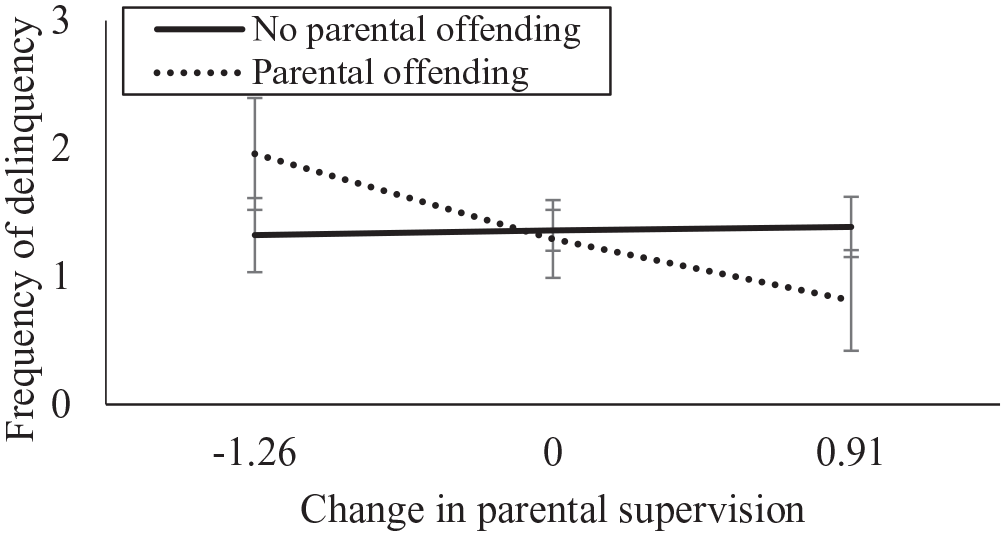
Within-Individual Association Between Change in Parental Supervision and Frequency of Delinquency by Parental Offending
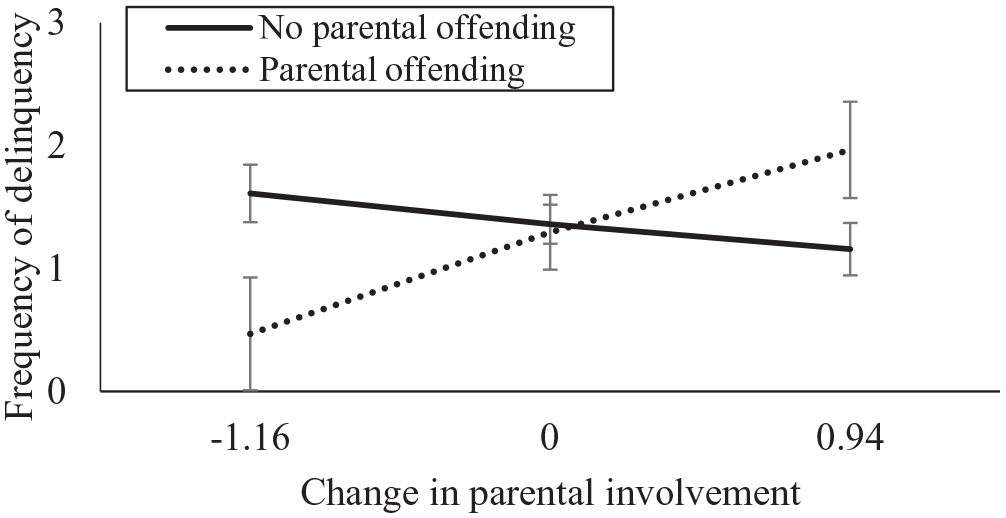
Within-Individual Association Between Change in Parental Involvement and Frequency of Delinquency by Parental Offending
Social Bonds by Pre/Perinatal Risk and Parental Offending
Model 4 shows that the association between changes in parental supervision and delinquent behavior varies across combinations of pre/perinatal risk and parental offending. Figure 3 illustrates that children with no pre/perinatal exposure and parents without a criminal history display a slight increase in delinquent behavior when parental supervision increases (IRR = 1.51, p = .02). In contrast, children with parents with a criminal history display a decrease in delinquency when parental supervision increases. This negative association between changes in parental supervision and delinquency is stronger for children who were not exposed to pre/perinatal risk (IRR = 0.21, p < .001) than for their exposed counterparts (IRR = 3.75, p = .001). When parents with a criminal history increase their supervision, children with pre/perinatal risk display a 31% decrease in delinquency (1.51 × 0.58 × 0.21 × 3.75 = [an IRR of] 0.69), whereas children without pre/perinatal risk show an 86% decrease in delinquency (1.15 × 0.58 × 0.21 = [an IRR of] 0.14). These findings support the hypothesis that children who engage in delinquent behavior and were exposed to pre/perinatal risk more closely resemble Moffitt’s theoretical LCP trajectory, and hence are less susceptible to outside influence.
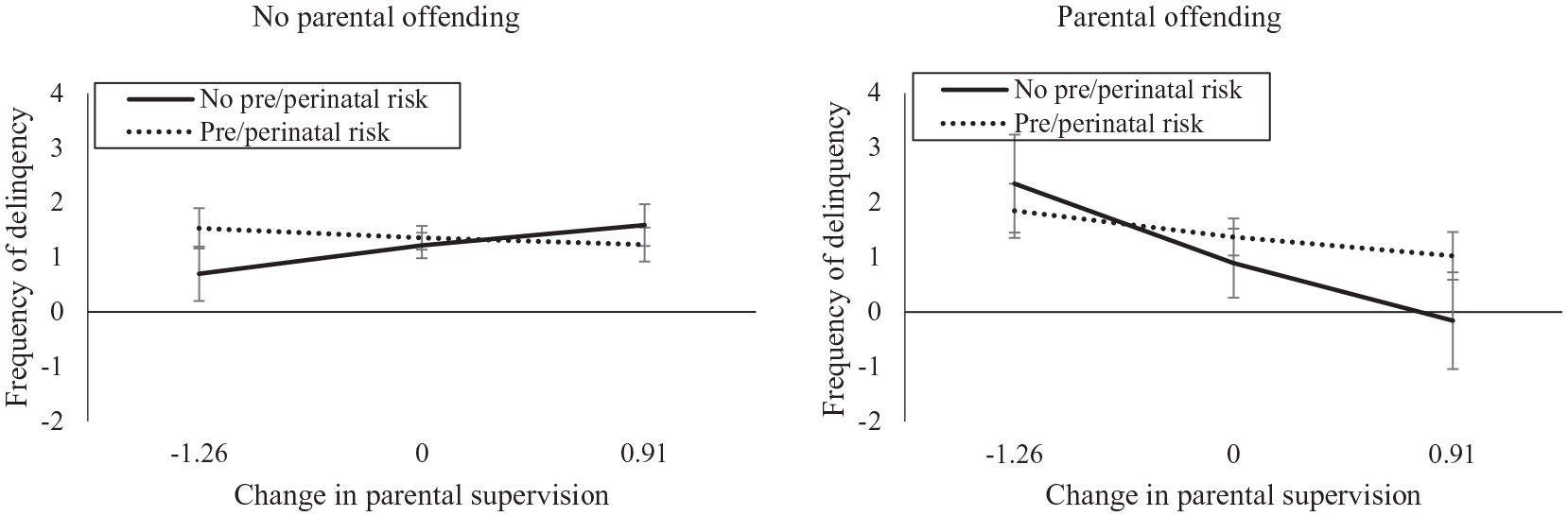
Within-Individual Association Between Change in Parental Supervision and Offense Frequency by Pre/Perinatal Risk and Parental Offending
Sensitivity Analyses and Direction of Associations
When delinquency diversity rather than frequency was used in sensitivity analyses, findings strengthen the outcomes of Model 1. 6 We found consistent positive associations for bonds with delinquent peers and skipping class. In addition to primary findings, a significant negative association was found for changes in parental supervision and delinquency (IRR = 0.82, p = .03). Findings from Model 2 revealed no significant interactions between pre/perinatal risk and social bond measures. In Model 3, interactions between parental offending and parental supervision IRR = 0.75, p = .12), and parental involvement (IRR = 1.23, p = .25) were also nonsignificant. Similar to primary findings, the three-way interaction between parental supervision, pre/perinatal risk and parental offending was significant in Model 4 (IRR = 3.50, p = .004). 7
To further complement our primary analysis, we also examined potential reverse relationships by estimating the extent to which within-individual changes in frequency of delinquency are associated with changes in social bond variables (Table 3). For these analyses, we used either linear or logistic random effect regression models for continuous or binary outcomes, respectively. Findings revealed that changes in the frequency of delinquent behavior are associated with changes in parental supervision, delinquent peers, and skipping class. Specifically, when children increase their delinquent behavior, they experience less parental supervision (B = −.01, p = .03), an increase in the number of delinquent peers (B = .04, p < .001), and an increased likelihood of skipping class (B = .09, p < .001). As both initial and reversed models for changes in affiliation with delinquent peers and the likelihood of skipping class revealed significant results, their association with changes in delinquency may have to be understood as a cyclical process.
Potential Reverse Causation: Within-Individual Associations Between Change in Frequency of Delinquency and Social Bonds With Parents, Peers, and School in Youth With Early Police Contact
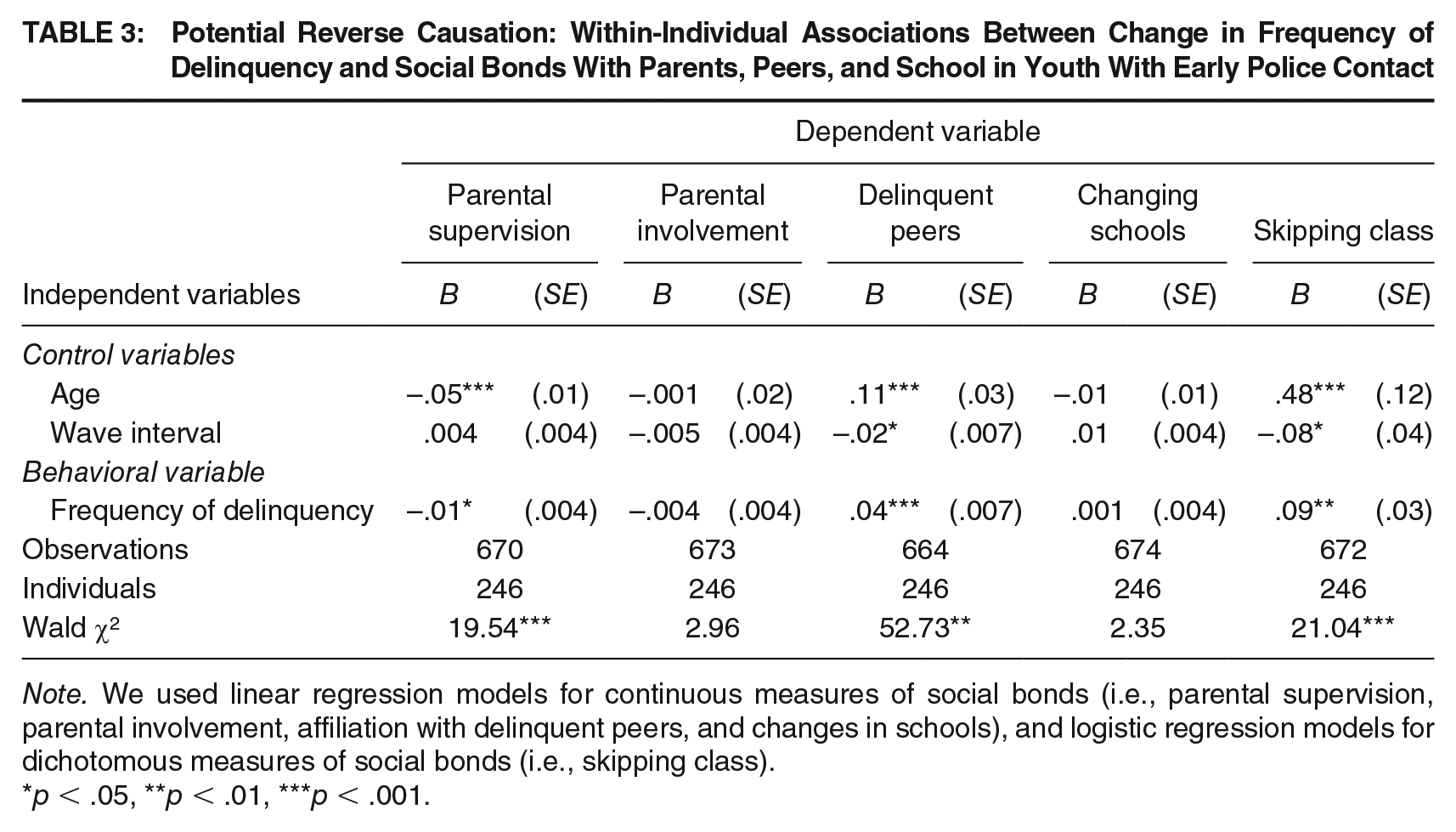
Note. We used linear regression models for continuous measures of social bonds (i.e., parental supervision, parental involvement, affiliation with delinquent peers, and changes in schools), and logistic regression models for dichotomous measures of social bonds (i.e., skipping class).
p < .05, **p < .01, ***p < .001.
Discussion
Although a vast amount of research focuses on explaining within-individual change in offending behavior over the life-course, understanding these dynamic processes in juveniles remains limited. This study aimed to fill this gap by examining (a) associations between within-individual changes in social bonds with parents, peers, and school and delinquency among children who were arrested in childhood transitioning from childhood to adolescence, and whether these associations vary by differences in exposure to (b) pre/perinatal risk and (c) parental offending.
Regarding bonds with parents, our findings underscore the importance of distinguishing between parents with and without a criminal history when studying delinquent behavior in adolescence. While no overall association between changes in parental bonds and delinquency was found, these associations were specific to children with parents with a criminal history. In line with Moffitt’s theory and our expectation regarding a lack of responsiveness to changes in social bonds for individuals on an LCP trajectory, most children with early police contact (80% with parents without criminal histories) showed limited responsiveness to potential positive changes in bonds with parents, such as increased parental supervision or involvement. However, children with parents with a criminal history showed reduced delinquency with increased parental supervision (e.g., parents correcting children’s behavior when necessary). Conversely, increased parental involvement (e.g., parents spending time with their children) was unexpectedly associated with an increase in delinquency. This counterintuitive finding suggests that these parents may be overly controlling in their supervision, while their involvement in other areas may not foster the same protective effect. Perhaps, the nature of their involvement is not as supportive or prosocial as it might be for parents without a criminal history, potentially leading to more conflict or negative interactions, and therefore an increase in delinquency in children. This suggestion is in line with prior work showing that the association between parental antisocial behavior and conduct problems in children is partially explained by parents’ harsh and rigid attitude toward their children (Smith & Farrington, 2004). Recent research supports this perspective by showing that parental hostility (e.g., harsh discipline and conflict) predicts delinquent and aggressive behavior, while parental warmth (e.g., supportive and affectionate interactions) fosters prosocial behavior (Vaughan et al., 2021).
Consistent with our expectation, pre/perinatal risk was notably high in our sample of children with early police contact, with prenatal smoking being reporting in 32% of cases, exceeding the 22% in a Dutch population-based cohort (Duijts et al., 2008). This high level of prenatal smoking aligns with past research linking prenatal smoking with early police contact in offspring (Gibson et al., 2006).
Findings further indicate that the association between parental supervision by parents with a criminal history and offspring delinquency rates is conditional upon pre/perinatal risk. In line with Moffitt’s (1993) theory and our hypothesis regarding pre/perinatal risk, findings reveal that children exposed to pre/perinatal risk are less sensitive to changes in bonds with parents compared with children who were not exposed to such risk. In our sample, children with pre/perinatal risk displayed a decrease in delinquency when their parents with a criminal history increased supervision, but this negative association was stronger for children without pre/perinatal risk. These findings support the theoretical assumption that early differences in pre/perinatal risk shape how changes in the social environment, such as increased parental supervision, influence delinquency rates. Thus, children exhibiting multiple characteristics associated with an LCP trajectory, such as early-onset delinquency combined with pre/perinatal risk, appear less responsive to external influences than those with early-onset delinquency alone.
Regarding bonds with peers, findings indicate that increased affiliation with delinquent peers is associated with a concurrent increase in delinquency rates, supporting prior work on peer influences among adolescent general population and inner-city samples (e.g., Beardslee et al., 2018; Peterson et al., 2016; Unnever & Chouhy, 2019). Our findings extend this literature by showing that sensitivity to delinquent peer influence is also found in a sample of youth with early police contact and does not appear to depend on the presence of pre/perinatal risk factors. This raises questions about the role of peer influence within Moffitt’s (1993) LCP framework, which posits that youth on an LCP trajectory are generally less responsive to external influences, including peer dynamics. If peer delinquency still affects offending behavior in these individuals, this would contradict Moffitt’s prediction. Alternatively, although youth on an LCP path may not be influenced by peers, their own behavior may attract youth on an AL path who emulate them—thereby increasing the number of delinquent peers they report over time. Given the concurrent measurement of delinquency and peer associations in our study, this reverse dynamic could explain the observed relationship between changes in peer delinquency and delinquent behavior within Moffitt’s framework for youth with an early onset of delinquent behavior.
Regarding bonds with school, findings reveal that children report more delinquent behavior at times they skip class compared with times they do not. Interpreting this link through Moffitt’s (1993) theory for LCP trajectories is challenging, as individuals with an early onset and continued offending are thought to be less sensitive to external influences, including school. However, alongside Na (2017), who underscores the importance of school bonds for adolescents involved in serious delinquency, our findings suggest that school disruptions contribute to delinquency even in high-risk groups. While this could reflect increased opportunity to offend during truancy, time-budget studies indicate otherwise: delinquent acts rarely occur during school hours when youth are absent (Gerth, 2022). Children with early police contact may be less responsive to positive changes but remain vulnerable to negative factors like school disengagement, exacerbating their delinquent tendencies. This might explain the lack of an association between school bonds and delinquency in prior studies (Farrington et al., 2002; Unnever & Chouhy, 2019), suggesting that individuals at increased risk of prolonged delinquent involvement are particularly affected by negative school influences.
Finally, an examination of causation reveals that at times youths display an increase in their delinquent behavior, they tend to experience a decrease in parental supervision, an increase in affiliation with delinquent peers, and an increase in the likelihood of skipping class. The fact that primary and reversed models revealed significant associations between delinquency and affiliation with delinquent peers and skipping class, suggests that the causal process is cyclical. The negative association between change in delinquency rates and parental supervision suggests that, on average, parents in our sample of children with early police contact provide less supervision when their children engage in more delinquent activities. Further research is needed to determine if these associations are found in other samples, and whether they are specific to children exposed to pre/perinatal risk.
Together, our findings add nuance to Moffitt’s (1993, 1994) theory on LCP offending by suggesting that, while children exhibiting delinquent behavior at a young age (especially in combination with pre/perinatal risk) are often seen as less sensitive to external influences, they are not entirely immune to change. Children with a police registration before age 12 remain sensitive to social influences, though their responses depend on the type of influence and family context. For example, increased parental supervision by parents with a criminal history was linked to reduced delinquency, whereas greater peer delinquency and school disengagement were associated with higher delinquency. This highlights the importance of early adolescence as a phase in which social changes are associated with changes in delinquency rates.
While Moffitt’s framework provides a strong explanation for persistent delinquency, it insufficiently addresses how broader societal structures may shape both early police contact and continued justice involvement. What is often conceptualized within Moffitt’s theory as intergenerational transmission of offending may, in part, reflect structural biases. Systemic disparities in law enforcement practices and criminal justice policies can reinforce disadvantage, rather than reflect inherent criminal trajectories (Wakefield & Uggen, 2010). Recent research supports this perspective, demonstrating that parental criminality increases the risk of arrest and conviction even after controlling for actual behavior, suggesting bias in the criminal justice system (Diana et al., 2023). Delinquency patterns may thus reflect not only individual and familial risks, but also structural inequalities. Future research could explore these intersections further.
Contrary to the theory’s emphasis on the cumulative nature of negative interactions, our findings suggest that while youth who begin engaging in delinquent behavior at an early age are indeed vulnerable to negative influences, they are not completely unresponsive to positive changes in their environment. These findings highlight that the early onset of delinquent behavior preceding police contact does not necessarily result in persistent offending. Even youths exhibiting significant risk, such as childhood delinquency and pre/perinatal adversity, may still benefit from a supportive and positive environment, which could help curb the escalation of their delinquent behavior. Creating an engaging school setting and minimizing exposure to delinquent peers, for instance, could play a role in preventing the escalation of delinquent behavior in children who experience early police contacts.
Limitations and Recommendations
This study provides unique insight into factors related to within-individual change in delinquent behavior in a high-risk population, but also highlights directions for future research. For instance, future studies should examine developmental processes underlying the association between within-individual changes in social bonds and future delinquent behavior in high-risk populations, as this study used concurrent measurement and could not address temporal order. Because 1-year intervals may be too long to detect causal effects, shorter intervals (e.g., 6 months) may improve temporal precision.
Another limitation concerns generalizability. Our sample of children with early police contact from three Dutch municipalities may not represent other populations. However, Dutch research aligns with international findings showing that life-course transitions (e.g., work, marriage, parenthood) are associated with within-individual change in offending in a predictable way (Blokland & Nieuwbeerta, 2005; van Schellen et al., 2012; Verbruggen et al., 2015). Similar associations between within-individual changes in parenting and peer delinquency and adolescent delinquency have also been observed (Janssen et al., 2015). These parallels suggest our findings are relevant beyond the Dutch context. Future work could test whether our findings replicate across other legal and cultural settings.
In addition, we could not differentiate between types of parental offenses. Parental criminal history was treated as a binary measure, but offense type likely matters for parent–child dynamics. For example, violent or neglectful behavior may affect children differently than nonviolent offenses. Future studies should explore how various forms of parental offending shape youth delinquency to better understand these mechanisms.
Similarly, studies should incorporate protective factors in peer and school domains. Friendships with prosocial peers and teacher-student connectedness, for example, could enrich the understanding of the link between social bonds and delinquency.
Our findings further suggest a potential link between school disengagement and peer delinquency, as both were associated with increased offending. However, we could not determine whether children were with peers while skipping class, limiting conclusions about truancy’s peer-related context. Future research could include contextual measures of truancy, such as whether children skip school alone or with peers, to better understand how school disengagement, peer influence, and delinquency interact over time.
Finally, the broader field of biosocial research would benefit from work exploring biological vulnerabilities, such as executive and psychophysiological functioning (Moffitt, 1993; Raine et al., 2014), that may moderate associations between social bonds and delinquency.
Practical Implications
Findings from the current study offer a number of practical implications for addressing delinquent behavior in children with early police contact. First, practitioners must realize that early police contact does not predestine children to long-term criminal careers. Second, it is important to recognize that children with early behavioral problems are still susceptible to change, providing a window of opportunity for intervention. Special attention in this respect should be paid to children showing signs of school disengagement and association with delinquent peers. Third, when trying to curb the delinquent development in children, we may have to look beyond the child’s social environment and also learn about any potential biological vulnerabilities that may affect the influence of that environment on the child’s behavior. Finally, interventions should go beyond increasing parental involvement by also equipping parents with the skills to positively affect their child’s behavior, as involvement alone may not suffice in reducing delinquency.
Footnotes
Authors’ Note:
The authors have no conflicts of interest to disclose. This study was supported by the municipalities of Utrecht and Amersfoort, the Rotterdam metropolitan region, and the province of Utrecht, as well as the Kinderpostzegels Nederland Foundation. Additional financial support was provided by the Netherlands Organization for Scientific Research (451-17-018) and through a center grant from Leiden University.
